Dwell

WHERE GOD IS AND WHERE YOU WANT TO BE

One day I was invited to visit the family village of a good friend, I drove a few kilometers outside the city on what was nothing more than a bumpy dirt path for donkeys. In the middle of nowhere, we came upon a cluster of small African huts. The dwellings were made of mud bricks and thatched roofs.

As I approached one of the huts, I could hear the hum of a small diesel generator. When I stepped inside the abode there was a group of men who were all watching WWE. I never expected to be in one of the remotest places on earth and see that. It was surreal. One of the young men proceeded to turn to me and ask, “How do these wrestlers not get hurt?” It wasn’t the place to explain (spoiler alert!) that those wrestlers were part of an act and it was not real.

There is something even more amazing that sometimes feels unreal: God dwells among us and abides in us! Where God is, is where we want to be. We often wrestle with this reality.

BIBLICAL REFLECTION ON DWELLING

The story of the Bible reveals a progressive unfolding of God’s desire to dwell with His people. This theme culminates in the New Testament reality that believers themselves, individually and corporately, are His dwelling place. However, let’s back up the story a bit.

God dwelled in the Garden. God has always been. When He created the world and breathed life in Adam and Eve, He walked among them. He was present and actively connecting with them. When they sinned it severed their connection with God and mankind who have been longing for intimacy with God like Eden ever since. (Genesis 2:8-15; Isaiah 51:3, Ezekiel 36:35)

God dwelled in a pillar and tent. In the Old Testament, God chose to dwell among His people in the Tabernacle and later the Temple. The sign of his presence was a pillar of cloud by day and fire by night. These physical structures symbolized God’s presence, holiness, and accessibility (albeit with limitations). This established the foundational truth that God desired to be with His people. (Exodus 13: 21-22; 25:8-9; 29:45-46; Numbers 9:15-23; 1 Kings 8:27)

God dwells among us. Jesus Himself is the ultimate “tabernacling” of God among humanity. In Him, the fullness of God dwelt bodily, making God intimately knowable and accessible. (John 1:1-5; 1:14; Isaiah 7:14; Matthew 1:18-25)

God dwells in us. Through the indwelling Holy Spirit, individual believers become temples of the Holy Spirit, and the collective body of believers—the church—becomes a spiritual house and God’s dwelling place on earth. This means that wherever pioneer workers go, and as they gather believers, they are carrying and establishing God’s presence.(John 14:15-17; 1 Corinthians 3:16-17; 6:19-20; Ephesians 2:19-22)

God dwells in His city. The future dwelling place of God with humanity is depicted in Revelation 21, where the new heaven and new earth are seen as the temple, and God will fully dwell with His redeemed people. This provides enduring hope for the pioneer, reminding them of the glorious end goal of their work. (Revelation 21:1-3; Colossians 3:1-2)

God calls us to spread His dwelling around the world. As new believers are gathered and discipled, forming new communities in Christ, they are literally building God’s dwelling place in new lands. This transforms a remote outpost into a spiritual epicenter.

What other Scriptures or biblical aspects come to mind when you consider an abiding in Christ and God’s dwelling place? Take a few moments to look up 1-2 of these verses and journal what the Lord highlights for you.

“And I heard a loud voice from the throne saying, “Look! God’s dwelling place is now among the people, and he will dwell with them. They will be his people, and God himself will be with them and be their God.” — Revelation 21:3-4

THE IMPORTANCE OF ABIDING

When you have confidence and comfort that God is with you and that you are near to Him, then you have indescribable joy. Connection with God is an utter delight. Pioneer mission work can be lonely, demanding, and often discouraging. In environments where spiritual support is scarce and visible fruit is slow to appear, the temptation to rely on one’s own strength or strategies is great. There are two foundational truths for each pioneer: the need to abide with Christ and the reality of God’s dwelling place. These truths are lifelines that sustain, empower, and bear fruit in the most challenging mission fields.

Abiding Defined: The word “abide” (Greek: meno) signifies remaining, dwelling, staying, or continuing in a close, intimate, and dependent relationship. Jesus Himself uses the powerful metaphor of the vine and branches to illustrate this vital connection. (John 15:1-11)

Necessity for Life and Connection: Just as a branch cannot produce fruit apart from the vine, a mission worker cannot truly live or be fruitful apart from Christ. This isn’t merely about occasional connection, but a continuous, moment-by-moment reliance. Pioneer contexts often strip away human comforts and resources, making the need for divine life even more stark. (1 John 2:24-28; Galatians 2:20)

Source of Nourishment and Direction: Abiding in Christ means drawing all our spiritual nourishment, strength, wisdom, and direction directly from Him. It frees us from the burden of self-sufficiency and the exhaustion that comes from trying to accomplish God’s work in our own strength. (Colossians 2:6-7)

Lasting Fruitfulness: True, lasting fruit in mission— gospel seed scattering, discipleship, church planting, transformation—flows from Christ’s life through us, not from our own efforts. Abiding ensures that our work is Spirit-led and God-honoring. This is crucial for pioneers who may see little “visible” fruit and need to trust God for the deeper, unseen work.

Peace Amid Chaos: A deep, abiding relationship with Christ provides an unshakable inner peace, even when external circumstances are chaotic, dangerous, or discouraging. This peace is a powerful witness in its own right.

Accepting the invitation to abide: In isolated and challenging fields, the pioneer is never truly alone. The God who dwells in them is present, providing comfort, guidance, and power. More than any strategy or skill, simply abiding with Christ is non-negotiable.

Expanding Mission: The central storyline of the entire Bible revolves around God’s purpose to dwell with his people, and this dwelling place is meant to expand to fill the entire earth. God’s presence with us is a comforting and empowering as we pioneer the gospel among the nations and unreached. As we go, even if it be the most challenging location, He goes with us. (Matthew 28:18-20)

PRAYER ACTION

Consider the Scriptures you cling to above. Consider the dwelling place of God. Write a prayer for the kind of person you want to be who abides with Christ and spreads His dwelling place among the unreached and unengaged.

BUILDING A PRACTICAL MINI-THEOLOGY OF DWELLING

Take some time to prayerfully draft your practical mini-theology of “God’s dwelling” by responding to these questions:

Where is God’s dwelling place? Why does this matter for me and the mission?

example: God is… We are the kind of people who… It is most like us/me to… We/I will… We/I hold to…

What does it mean to abide with Christ? What can it look like to abide with the Lord anywhere, even in isolated locations?

Once you finish share your responses with your mentor. Ask for feedback. Adjust your draft as needed.

Additional Resources for Going Deeper:
God Dwells Among Us, G.K. Beale
The Presence of God, Ryan Lister
InDwell — 7 Day Devotional

Jesus Our Great High Priest

Today, we are concluding a series of messages on the theme of the priesthood. This has been an enlightening Bible study. Honestly, it’s a theme that can seem nebulous and can mean little to Christians today. Maybe you’re like me and didn’t grow up in a culture or system with priests. I was born into a Catholic family. However, priests were more like pastors. They were different from the priests we read about in the Bible.

In the Bible, the priesthood is one of those threads that helps us to understand God and His redemptive plan. The Scriptures are like a beautiful golden tapestry on a loom. The loom represents the span of human history, from creation to the eventual fulfillment of God’s promises. Each thread represents a specific event, character, or theme within the Bible. God is like an artist weaving each thread. The threads sometimes seem out of order, but ultimately they interconnect with the overall design. 

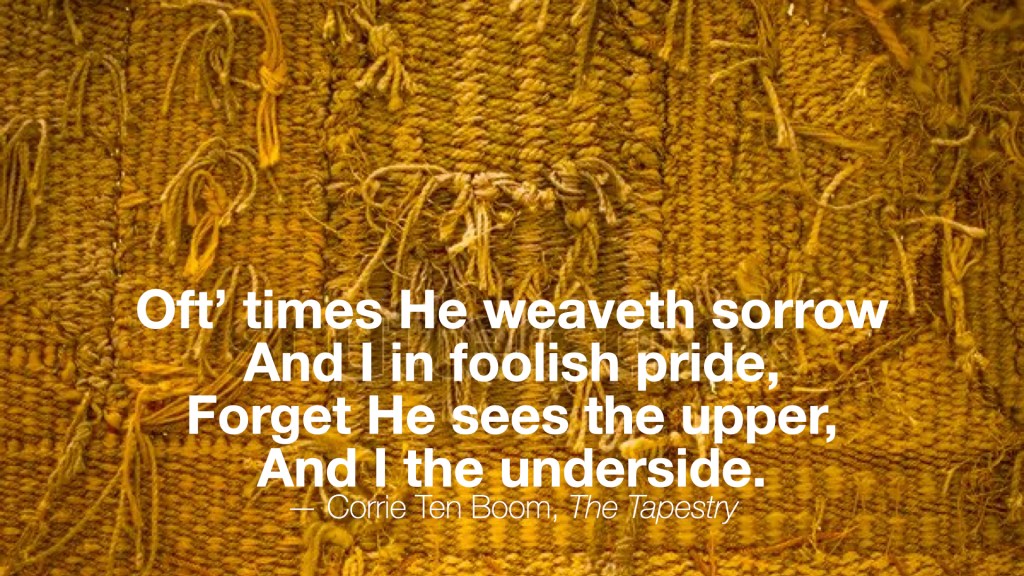
Corrie Ten Boom reflected on this through a poem called the The Tapestry. It was a testimony of her experiences in a WWII concentration camp and how she connected with God in such. hard place. As she held a small tapestry in her hand she would say,

“Oft’ times He weaveth sorrow; / And I in foolish pride / Forget He sees the upper / And I the underside.”

Looking from the backside of a tapestry can seem like a mess, but from the front it’s a masterpiece. Today, we can see most of God’s tapestry from the upper, but there is still some that remains a mystery. However, what we can see is sufficient to help us know God and His plan for mankind.

When God laid out His plan, He took His time. He didn’t rush history. Before the creation of the world, he wove history with redemption story (cf. Revelation 13:8). Why would God wait so long to unveil His plan? Like a Master Storyteller, he laid down the perfect script. He introduced and developed key characters. He followed patterns to build up a climactic moment. The moment came at the most opportune time and revealed His ultimate purposes.

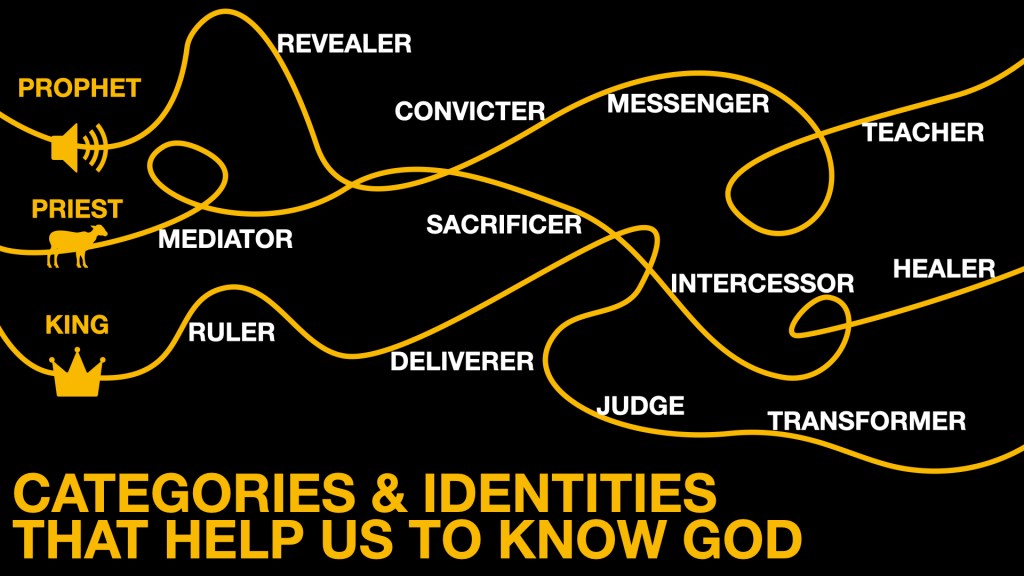
The Bible, especially the OT, gives categories and identities that help us to know and understand who God is. The three primary categories are Prophet, Priest, and King. Embedded within these categories are central descriptors and identities. We must grasp these categories from Scripture. We must also understand their context within biblical history. Otherwise, our understanding of God will be impersonal. It will also be superficial. These categories help us to see what God is like and why He came to do, did, and does now.

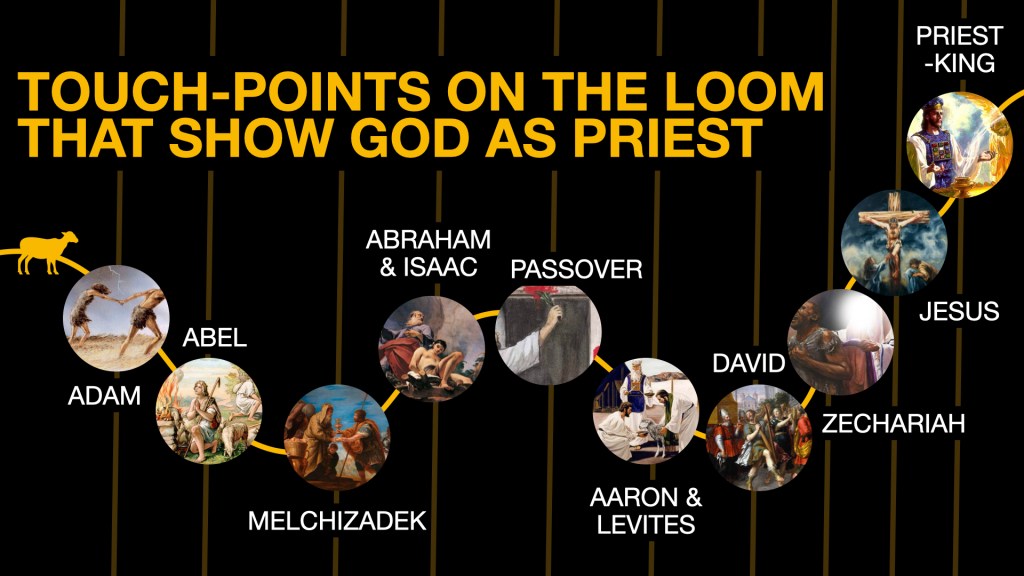
As the Bible progresses, there are touch-points on the loom. These points help us to see and know God as a priest. As we follow the thread, God’s purpose for the priesthood becomes clear. Notice how the characters model the priesthood. Observe how God acts as a priest. Each story touches on a promise.

  • Adam was given the role of caregiver of creation and the first family. It was a priestly and kingly role. When he sinned, God becomes the Sacrificer who covers sin and shame. God promised a future self-sacrificing Messiah who’d rescue mankind.
  • Abel was like a priest who gave an honoring sacrifice for God sees the heart.
  • Melchizedek is described as a priest-king of Salem (Peace) who foreshadowed the future Messiah.
  • Abraham was like a priest who willingly offered his only son on the altar. God provided a substitute sacrifice and promised a Messiah who’d come from Abraham’s lineage.
  • Moses becomes a mediator between the people and God. During the last plague, the people of Israel sacrificed lambs. They painted the lambs’ blood on their doorposts. This was to protect them from the Passover. This event would be memorialized by the Jewish sacrificial system and within the tabernacle/temple.
  • Aaron & Levites were chosen and designated as imperfect human priests to guide the people in worship of the Lord.
  • David acted like a new type of priest-king when he ate the bread from the tabernacle. He marched into the city of Peace with the ark of the covenant. God approved and later promised the Messiah who’d come from David’s lineage.
  • OT Zechariah was robed in priestly garments as a picture of the future Messiah.
  • NT Zechariah’s priestly prayers were answered as he’d be the father of the forerunner to the Messiah.
  • Jesus came and performed priestly acts—He healed, forgave sins, called people to worship God, and claimed to be the Messiah.
  • Today, Jesus sits in heaven as the intercessor who promises to come back as the Priest-King.

Imagine if you didn’t have any of these stories or their contexts. Your understanding of the priesthood of God would be quite vanilla or incomplete. Instead, these stories add color and comprehension to who God is and they signal His plan.

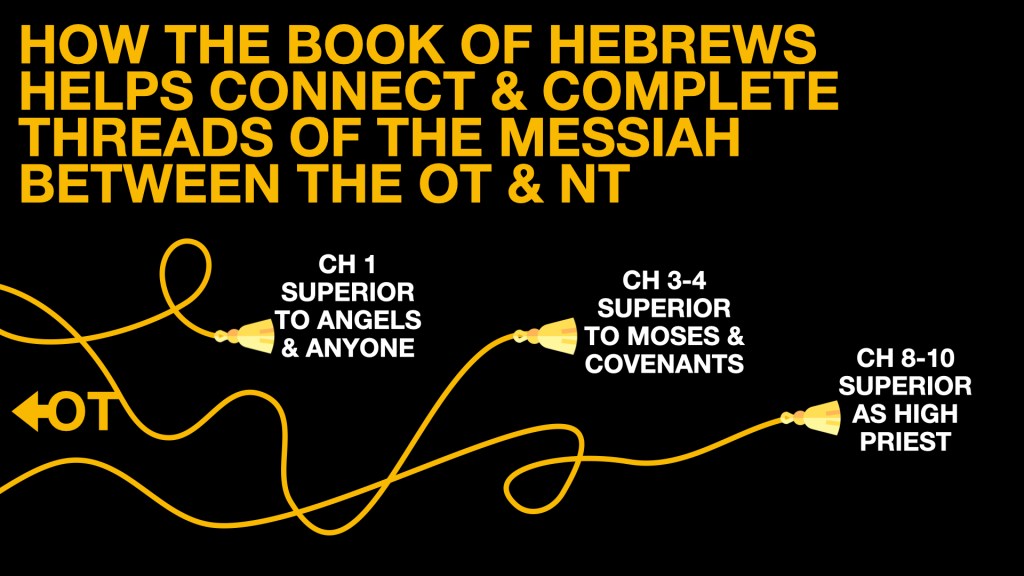
That brings us to the Letter to the Hebrews. Hurrah for Hebrews! This lengthy letter helps connect and complete a lot of threads and strands between the Messiah of the OT to Jesus of the NT. It’s the one NT book that wrestles with the OT categories, characters, and processes. It helps us to make sense of the Bible’s tapestry. It all points to Jesus. He is the One toward whom the whole story, history, and the Scriptures are supremely about. Even Jesus said it, “You study the Scriptures diligently because you think that in them you have eternal life. These are the very Scriptures that testify about me, yet you refuse to come to me to have life.” (John 5:39-40)

So let’s unravel this thread by seeing the what, the so what, and the now what of Hebrews 4:14-16. This text pierces the chaos of our crazy-busy lives. It touches our brakes. We stop and consider how wonderful our Jesus really is as a priest.

WHAT?

“We have a great high priest.” In case you and I didn’t know, we have a priest. This title tells me that we don’t need a greater something. We need a greater Someone. We need a priest. We need Jesus as a priest. Why a priest? (cf. 5:1-3, high priest job description) Overall, a priest was a symbolic service. First, a priest was chosen among men and called by God. Second, a priest represented God to the people, and the priest represented the people to God. Think of them as links between heaven and earth with a divine and human function. Third, a priest offered sacrifices to God for the sins of the people. Fourth, a priest was someone who embodied the compassion and gentle-heart of God towards others. This last point is what endears us to the role of a priest compared to a prophet or king. He isn’t cold or ceremoniously religious. We see the priest’s heart.

Jesus isn’t an ordinary priest. He is a “high” and “great” priest. A high priest, different from an ordinary priest, was chosen to offer the annual sacrifice. This sacrifice occurred on the Day of Atonement for the sins of all the people. Also, he isn’t just a high priest, but he’s The-Great-High-Priest. To be “Great” means that there isn’t anyone like him. He is far superior. He is in a category of his own. When we see Jesus as this Great High Priest, we see one who was chosen by God. He represented God to humanity. He loved mankind compassionately and gently. He also sacrificed once and for all for all people. Jesus connected all the loose ends of history. He joined them with God’s story. This was done to show Jesus as the great high priest. It is meant to be an ah-ha moment!

Since serving in Chad, I have enjoyed walking with seekers and BMBs through the OT. In the process, we cover many of these threads along the way. By the time we arrive at the NT, Jesus makes so much more sense. The most rewarding moments in discipleship are when you see eyes widen. Lights turn on. Fingers point back. Mouths say “ah ha!”

SO WHAT?

We get it that Jesus, the great high priest is like no other. So what? So there is more that we need to know about Him to make sense of Him. Hebrews 4:14-16 expands the so what:

1) Jesus had “gone through the heavens.”

We get a glimpse into Jesus’ cosmic journey. An earthly priest would pass through the temple courts. They would push back the veil to enter into the holy of holies. We get an image of the heavenly temple in Isaiah 6, where the train of his robe fills the temple and all are calling the Lord “Holy”. Jesus has access to the holiest places on earth and heaven. Again, Jesus is in a category of his own as the “Son of God.”

2) Jesus can “sympathize with our weaknesses.”

Sympathy is a psychological word. Our English definition is narrow than the biblical definition which includes sympathy, empathy and compassion. Literally in the Greek it means “to suffer with”. Jesus feels for, feels with, and feels in it with us. This is what theologians call solidarity. Jesus has a witness and nearness to us. Jesus got down to earth and really felt it with you. Listen, Jesus gets you. He’s been where you are. He knows what it’s like to live with nagging weakness, probing pain, loss and rejection, exhaustion from serving others, and daily struggles. Jesus understands. He lived it. He was exactly there. Jesus knows the intimate terrors, tensions, and toils of life—and moves to heal them. If you’re like me, then that truth gives me more sympathy for the weaknesses of others. Jesus’ perfect sympathy shapes my approach to those I serve and lead.

This week I took became more aware of my weaknesses and jotted them down each day in my journal. Here is a sampling of the weaknesses that stuck out to me:

  • I’m not able to be present with each of my four kids and my wife at the same time.
  • I’m tired and not ready to be hospitable or generous to my neighbor knocking at the door.
  • I’m tempted to compare myself with a colleague.
  • I’m seriously considering a shortcut to success.
  • My mind is cloud and I can’t for the life of me get my daughter’s algebra story problem.
  • During Friday prayer group, I’m discouraged praying for the same thing for five years with little visible results.
  • I saw the cooling system of another laborer and envied it.

Speaking of cooling systems, I recently read a NASA study that said that when temperatures are above 100 F (37 C) our work productivity is about 40%. That’s humbling, especially living in a place like Chad where it is hot most of the time. Sometime I think about my solar batteries and inverter that shutdown under the heat and I think that I can do better. My body is just as limited and my brain is defective trying to to power through. Weakness remind me that I’m not omniscient, omnipotent, and omnipresent. Not even close. I forget meeting times. I sometimes step on toes. I accidentally leave doors open. Sometimes, I burn the rice on the stovetop.

3) Jesus “has been tempted in every way.”

Some can hear that and think, “Sure, well, Jesus was tempted, but He was God. He had all the power to resist.” While that is true, it is one side and incomplete. Like Frodo on Mount Doom, the closer he got, the heavier the ring became. Jesus knows well the fullest weight of temptation because he withstood all of it. Only the sinless can know its full intensity. The one who falls yields before the last strain. We will never know temptation’s full intensity as Jesus knows. He understands the battle because He enlisted in the war. Jesus went through it so much worse because He did not yield to it. He took it to the cross!

You’ve likely faced some terrible and intense temptations. These are the kind where you sweat and agonize through the night. You might pace the room and weigh the consequences. God promises that He won’t let you be tempted beyond what you can endure. This promise is found in 1 Corinthians 10:13. You don’t have to hack through the jungle as Jesus has already made a path. He has lit the exit signs to show you the way out.

4) Jesus “was without sin.”

This is where Jesus was unlike all other human priests. He never had to cleanse Himself or wear bells on His ankles. Jesus was both a Priest (consecrated one) and a Lamb (sacrifice for others). Jesus as “our great high Priest” revealed to us what God considers to be our greatest need. We need someone to make us righteous before God. We also need to be reconciled with God. Without Him, we would be stuck in a symbolic and cyclical system of sacrifices without end. Jesus ended it! There is no more need of it.

NOW WHAT?

The priesthood might seem like an archaic and irrelevant system. However, it is hugely important to understanding who Jesus is. It explains why He and His work are important. It also shows how you and I can interact with Him today. Hebrews 4:15-16 gives two clear applications of what this means for us now:

First, “let us hold firmly to the faith we profess.” Herein, there is an action and a belief. We believe that Jesus is God and man. We believe that Jesus is prophet, king, and priest. As the Great High Priest, we believe that forgiveness is costly, the punishment due to sin was death, and without the shedding of blood, there can be no removal of sin. We believe that Jesus is both the priest and sacrifice. These are the beliefs that must act by grasping onto and professed among one another. Let’s fix our eyes on the author and finisher of our faith (Hebrews 12:2).

Second, “let us then approach the throne of grace with confidence.” Herein, we see our role and place with God. Where is God now? He’s on His throne. He is both in a heavenly and bodily temple. Both are His holy sanctuaries. Most holy places are only accessible by holy people, God considers you as such. He offers you a life-transforming invitation, “Come to the throne!” His throne is always open! Jesus is always there. He is always available and always attainable. He is always attentive and always listening. He is always joyful to see you. He is always caring and always loving.

You can approach the throne because you are a priest and you are a holy place. God dwells within you. Your body is the temple where God dwells. You are living stones being built up into a spiritual house. You are a royal priesthood. (1 Peter 2:5,9) AND in God’s story, God wraps you in His priestly robe. You represent God before the people. You represent the people before God. You may be a team leader, project manager, embassy staffer, teacher, translator, visitor, hospital worker, or church planter. Yet, you are also priests in the order of the Lord Jesus Christ. You mediate, sacrifice, intercede, heal, reconcile, serve, bless, care, love, and call others around you to worship.

PRAYER

Take a moment to step into the presence of Jesus, your Great High Priest. How do you feel in His presence? … What is His face toward you? … Would you approach his throne of grace with confidence? … What do you need from Him as your priest today? Compassion? Gentleness? Forgiveness? Purification? Restoration? Salvation? … What is He asking you to hold onto firmly? To profess about Him? … Who is He calling you to serve? What is He nudging you to do? Who is He calling you to be?

Now may the God of peace, who through the blood of the eternal covenant brought back from the dead our Lord Jesus, that great Shepherd of the sheep, equip you with everything good for doing his will, and may he work in us what is pleasing to him, through Jesus Christ, to whom be glory for ever and ever. Amen. – Hebrews 13:20-21

PRAYER

DIG DEEPER

What happens when we consciously or unconsciously leave out one of Jesus’ categories or identities? How can you see this playing out in Christian communities?

How can we guard against striping Jesus from some of His hats and at the same time striping ourselves from our responsibility in imitating Jesus?

While Jesus is the Great high Priest, what does it look like in your day being and serving as a priest?

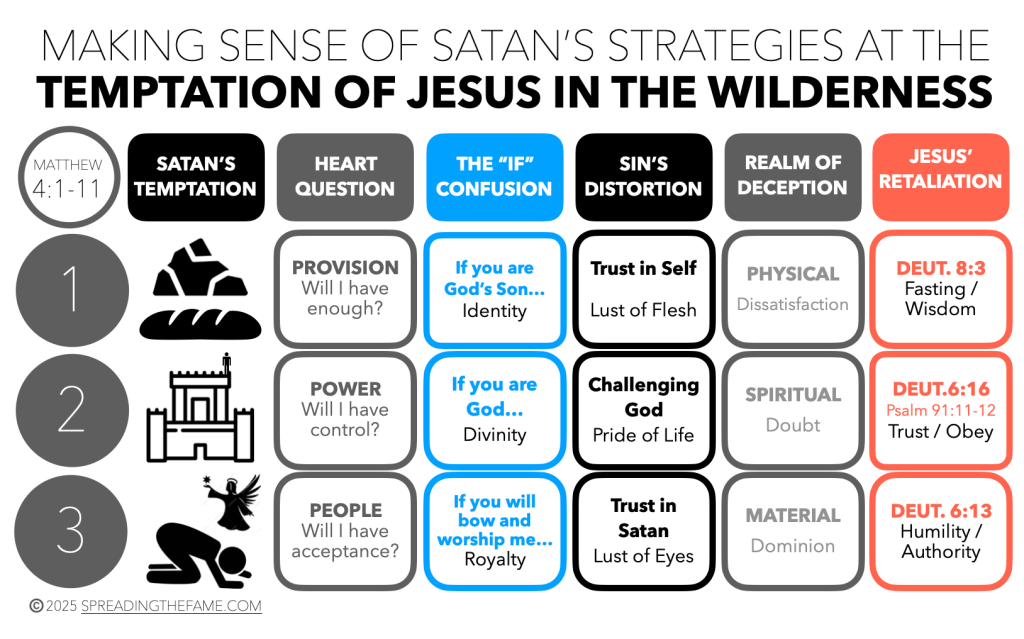
Making Sense of Temptation

Temptation is common to all people. We can make sense of most temptation by looking at home Satan tempted Adam and Eve in the Garden and Jesus in the wilderness.

Then Jesus was led by the Spirit into the wilderness to be tempted by the devil. After fasting forty days and forty nights, he was hungry. The tempter came to him and said, “If you are the Son of God, tell these stones to become bread.”

Jesus answered, “It is written: ‘Man shall not live on bread alone, but on every word that comes from the mouth of God.’”

Then the devil took him to the holy city and had him stand on the highest point of the temple. “If you are the Son of God,” he said, “throw yourself down. For it is written:

“‘He will command his angels concerning you,
and they will lift you up in their hands,
so that you will not strike your foot against a stone.’”

Jesus answered him, “It is also written: ‘Do not put the Lord your God to the test.’”

Again, the devil took him to a very high mountain and showed him all the kingdoms of the world and their splendor. “All this I will give you,” he said, “if you will bow down and worship me.”

Jesus said to him, “Away from me, Satan! For it is written: ‘Worship the Lord your God, and serve him only.’”

Then the devil left him, and angels came and attended him.

Go Toward the Mess

When we returned to North Africa a few years ago, we returned to a mess. We weren’t unknowing—we were very much knowing the mess. We learned a few weeks prior that a main believer we discipled had fallen into sin and disappeared. In the wake of his fall, the groups of disciples and house churches imploded or disbanded—disappointed and disillusioned. It was tempting to cancel our flight and stay home, but we pressed on to reunite with our team on the ground.

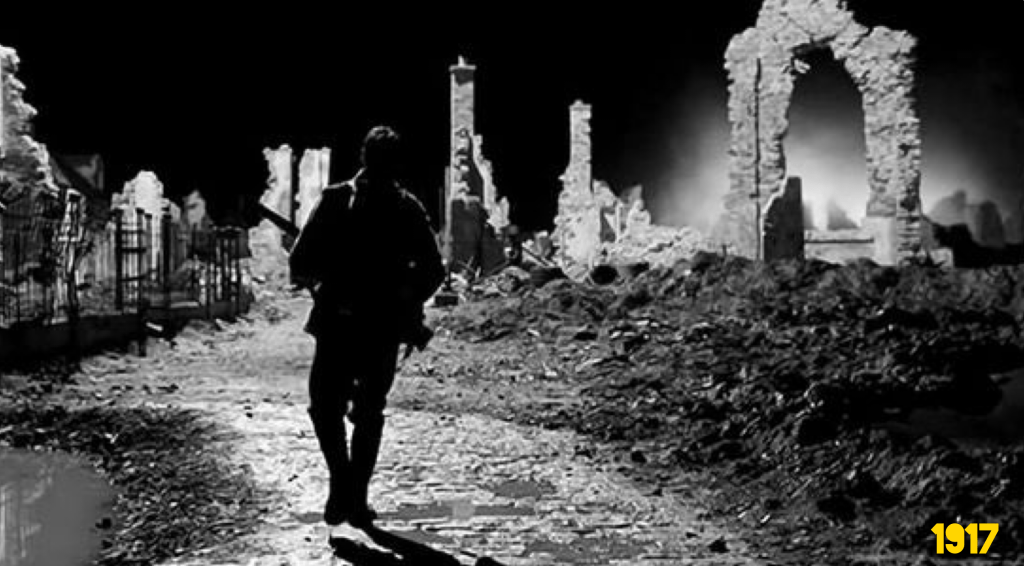
On that flight back, I watched the film 1917. I might not recommend it if you want something lighthearted. At the least, it was adapted for the airline. It was a grueling film about WWI. The film followed the true story of a British soldier named Sgt. Reid who was preparing his battalion for battle and how he dealt with day-to-day difficulties of life in the trenches, triaging terrible injuries, and enduring exhaustion from limited resources. At one point, the film became too much that I paused it. The still frame was of a bombed-out church building. Although the church was in ruins it was still recognizable. It was a power image for me.

Our team was looking to us for leadership in the aftermath on the spiritual battlefield. We came back to a church in rubble and ashes. Our first team meeting back was a puddle of tears. We grieved—what seemed like—3 years of ministry gone in a moment. We wrestled with the anger of an MBB who walked away from the Lord and inflicted damage to a fledgling flock. We questioned whether we had it in us to endure more of the same. It felt like an insurmountable mess. (And you came to be encouraged, eh!?)

Our mission is to move/go towards the mess embodying God’s grace, proclaiming the mysterious gospel, and building up the Body.

We are in a World of a Mess. All arenas of life and every aspect of society are messy. Work. Politics. Marriage. Parenting. Life. Everything humans touch becomes messy.

Even the church is touched by human messes. You shouldn’t be surprised. Some people see the church and observe what you are like and say, “I don’t want any part of that.” Those who say this need to adjust their thinking to the real world that we live in. The church is made up of sinners—saved by grace, yes—but still sinners. How can one ever think you can have a church and not have a mess? That is ridiculous, unrealistic, and a destructive expectation. The church has messes. If your church isn’t messy then you’re probably new to the church or not well connected. The church is a mess hall—a place to gather, get fed, and get ready for battle.

This leads me to Paul’s letter to the Ephesians. To give a little history, Ephesus was a church planted by the missionary and famous preacher Apollos (Acts 18:24). Later Paul stopped through Turkey on his second missionary journey to visit this fledgling church plant of about 12 people. He stayed on for 3 months. In that 3-month visit he saw a dramatic encounter with the seven sons of Sceva and a mob scene (Acts 19:8ff). He extended his stay to 3 years. So 3 years Paul was in Ephesus, forming and fortifying the church. At one point, Luke described the church in Ephesus as a place where, “the word of the Lord grew and prevailed mightily” (Acts 19:20). That sums up the church’s beginning. Ephesus was a poster church..for a little while.

George Verwer the long-time director of Operation Mobilization said,

“Where two or three are are gathered in Jesus name. Sooner or later there will be a mess.”(Messiology)

And there was a mess in Ephesus. So much so that Timothy was sent to Ephesus—not to a cushy pastoral position, rather to do clean-up duty. We don’t know the exact nature of what went wrong in Ephesus as nothing is spelled out exactly. Paul’s two letters to Timothy give us glimpses of what happened. The church was on the brink of a breakdown. Timothy was called upon to deal with certain persons and behaviors that invaded the church.

Pause for a second. Any messes in your life right now? If you’re at all like me, this probably doesn’t require a lot of mulling over.

We Know How to Make a Mess (Ephesians 2:1-3)

Kids do not need to be taught how to make a mess. That comes naturally. Humans do not need to be taught how to make a mess. Look at what Ephesians says about the mess we were in (2:1-3): v.1) We were dead and disobedient. Living in sin like the rest of the world, v.2) We were fathered by the enemy and his spirit directed our hearts, and v.3) Our desires were unhinged. This describes a hopeless condition (sick/dead). We were stuck (in a snare) in our mess and there was nothing we would do about it. Now don’t equate the word sin with simply a mess, mistake, or oops, but it is cosmic treason (spiritual bankruptcy). 2:12-13, 17 “you were at that time separated from Christ, alienated … and strangers to the covenants of promise, having no hope and without God in the world,”

What we have seen when evangelizing Muslims in North Africa that they can see that they are sinners, but they don’t see that their sin is that big of a deal. They believe humans are born innocent and pure, their prophets are perfect and sinless, and can’t see how their sin affects others or get passed on. They minimize sin and rank it (i.e. piety, lying, arguing, domestic violence). It isn’t that different in other places with other people around the world—and it may sound like our modern world. We can’t expect unbelievers to believe any differently.

Now when we have seen Muslims come to faith in Christ they bring a lot of baggage into their new faith. They have a lot of spiritual hangovers from their old faith of trying to live holy (i.e. prayer/fasting forms, renouncing vows, relating to wife/kids, redeeming shame). The discipleship journey is messy and takes time, patience, and persistence to help them walk the right path. We can wrongly expect a new follower in Jesus to get overnight what has taken us years to know and grow into. And for some of us, we are still growing into years later.

Thankfully the story doesn’t end with verse 3. There is an amazing turn of events. ”But God…” All the best parts of the Bible come after BUT GOD. What John Stott calls the greatest two syllables ever spoken in the English language. BUT GOD. God comes to the rescue. God delivers. God gives us what we need to get unstuck. What God has given us: life (2:4-9). This new life give to us is—1) a God-initiated life (vs. 4-5), 2) a God-resurrected life (vs. 6-7), and 3) a God-gifted life (vs.8-9). It was a life undeserved. The word that is repeated over and over again in these verses that helps us to understand is grace.

We Must Grasp onto Grace that is Greater than Our Sin (2:4-9)

Grace isn’t an exclusively Christian concept. At the time Paul was writing his letter to the followers of Jesus who lived in the city of Ephesus, the idea of χάρις (grace) was well established. All the way back to folks like Aristotle and Plato, you see the term grace used to describe something that is given, absolutely freely, with no expectation of return. Everyone understood grace to be about a generous gift, something you received for no reason, and something you couldn’t pay back—even if you wanted to. So that was the scroll on which Paul sketched the Christian concept of grace.

You were dead in sin, but God gave you life because you couldn’t. That’s grace. You didn’t earn it, you can’t return it, and you can’t undo it. That’s grace. In Christ, God has seated you in His system of grace. The remedy for your mess is grace.

When you read the Gospels we see Jesus stepping into your mess (our world). He was grace on display. From his birth to his death on the cross he oozed grace to bring you peace. When you consider this you cannot help but sing: Marvelous, infinite, matchless grace. Freely bestowed on all who believe! All who are longing to see His face, Will you this moment His grace receive? Grace that will pardon and cleanse within; Grace that is greater than all our sin!

God is at work in the mess. God in his patience, grace, and passion brings men and women to himself often doing great things amid a mess. Yet in the mess is not where one is to remain …

God Moves us to Go toward the Mess (2:10)

Grace is transforming. It changes you. It’s contagious. It moves your church. It has to be shared and spread. God has designed grace to be walked out (2:10). 1) You are a display of God’s workmanship. 2) God has prepared in advance. 3) God moves you to go towards the mess by embodying grace, proclaiming the gospel, and building up the Body.

Workmanship comes from the Greek word poema, which we get our word poem (handiwork, masterpiece, artistry, creativity, performed). Grace is an extension of God’s beauty and his beautiful plan. Grace in you is God’s artistry that he has designed from eternity past that you walk in it today. Walk is the action of going. God’s grace leads to action. Movement. Toward.

3 ways we extend (walk out) grace to others.

How can I show God’s grace to my family, friends, co-workers, or even strangers? 1) Extend forgiveness. First, we can forgive because we have been forgiven. “In [Christ] we have redemption through his blood, the forgiveness of sins, in accordance with the riches of God’s grace that he lavished on us.” (Ephesians 1:7) God is not a furrowed browed Father who says, “What’s wrong with you? Why can’t you get it right?” God is a tender Father who says, “I love you. You are forgiven. Get up and go at it again. I will help you!” Every day we experience God’s grace because every day we make messes. No mess is too much for God. And only God can forgive me, cleanse me, and redeem me from my mess.

Second, I can extend that forgiveness to others, “Be kind and compassionate to one another, forgiving each other, just as in Christ God forgave you.” (4:32) Messes must not separate us, but bring us together. Grace takes away judgment and leads to compassion. Grace creates a bond over our brokenness and the beauty that God makes of us.

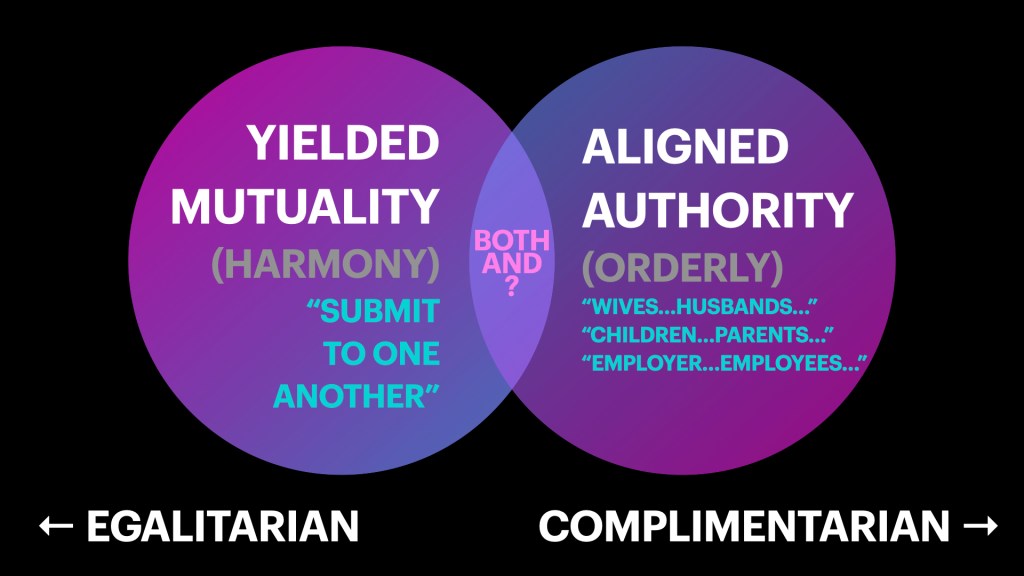
2) Extend encouragement. Grace is constructive not destructive. “Do not let any unwholesome talk come out of your mouths, but only what is helpful for building others up according to their needs, that it may benefit those who listen.” (Ephesians 4:29) And this is echoes other one another’s in the letter, “bearing with one another in love” (Ephesians 4:2) “Be kind to one another, tenderhearted, forgiving one another, as God in Christ forgave you.” (Ephesians 4:32) “addressing one another in psalms and hymns and spiritual songs, singing and making melody to the Lord with your heart,” (Ephesians 5:19) “Submitting to one another out of reverence for Christ” (Ephesians 5:21) Waiting to encourage others until their life is cleaned up and less messy is like waiting to go to the ER when they’ve stop bleeding. God doesn’t love some future version of others. He loves in the mess.

Grace gets dirty. Sarah moved Sarah to step towards a boy chained up next door, suffering, and needing deliverance. For years he had been hurting himself and tormented by demons. Sarah asked to pray over him in Jesus’ name. With permission from the head of the household, she prayed over the boy and witnessed his healing and freedom.

3) Extend the hope of the gospel. Paul described his role as a “stewardship of God’s grace… that was given to me for you,” (3:2) which means you and I carry a responsibility (moreover privilege) to give out grace as freely as we have been given grace. In the Bible, stewards were the trusted managers of a household, palace, or large estate. Royal stewards were second only to the king and often had control over the king’s treasury, his palace, and some military assets. They were also representatives of the king, carrying out his work on his behalf until he returned. That’s you! Paul continues, “To me, though I am the very least of all the saints, this grace was given, to preach to the Gentiles the unsearchable riches of Christ, and to bring to light for everyone what is the plan of the mystery hidden for ages in God, who created all things.” (3:8-9) Whether you speak, love, or serve, you are to extend hope of nothing less than greatest news in the world. You are the King’s messenger.

Sarah was able to see a breakthrough in our crusty neighborhood. She began by reading Bible stories to a group of children at a Quranic School who couldn’t afford a teacher. She met with women and children to study and memorize the Scripture. She was able to pray over a young boy who was demonized. She was able to nurture orphan children from a mother who came to faith but died. We were able to see the formation and influence of a media project ministry that touched souls around the city and country with the good news. We were able to see the launch of two new teams in Chad among the unreached. We were able to experience a new dependence upon the Lord that we would not have but through the messes, we stepped back into.

Read any mission biography and you will see men and women going towards messes. David Brainerd served a few years among the native Americans and died of TB at 29, BUT GOD used Brainerd’s diary to stir a new wave of missionaries to the unreached. William Carey lost his life’s work of Bible translations in a tragic fire, BUT GOD caused the Bengali church to grow and spread. David Svea led one boy to Christ in the Congo before he lost his pregnant wife to malaria. He left his newborn daughter and the mission field never to return. He became a drunk, BUT GOD used that one boy to lead 600 others to Christ in his village and spread the gospel to hundreds of thousands of others. We have seen carnage in Chad due to marriage conflict, team implosions, unforeseen illnesses, and more. Our own family was on the cusp of being a statistic due to burnout, depression, and identity battles. BUT GOD is building His church in Chad! What is your BUT GOD story?

Three questions to ask yourself:

1) Am I going toward the messes within me? Are you allowing God’s grace to touch all areas of your soul and life? Has the gospel taken root in you?

2) Am I going toward the messes close to me? Are you seeing the messes in your community (or church) and stepping toward them rather than away from them? Are you bringing the gospel to those around you?

3) Am I going towards the messes into new places/nations? Am I asking the question, “Where next, God?” Or even, “Who next, God?”

Go towards the mess in you, others, and the world. Watch God’s grace shine!

War on Truth & Testing the Spirits

There is a war. It is ever-going and never-ceasing. You are in the middle of it. Often your mind and heart are at the epicenter. And the war is about the Truth.

My family and I live in North Africa. We have lived there for 12 years. Our first 7 years we lived off-grid in a village bringing the good news to the least reached. For the last 5 years, we have been in an urban setting leading teams among the unreached and discipling believers in Jesus from a Muslim background. We have learned a lot about loving people in their messes. We have learned to embrace that discipleship and community are mostly walking with one another in the mess—mainly the messes we make ourselves and/or together. Believers who come out of a Muslim background have a lot of spiritual (lies, false prophet), relational (transactional, social pressures), cultural, and emotional (shame/honor) baggage.

Let me tell you a story about Bishara. I met Bishara after he was miraculously freed from the hands of his father and brothers who tried to kill him for following Jesus. He was traumatized and reeling from persecution. Bishara showed a deep love for Jesus, a hunger for God’s Word, and a passion to share his new life with others. It was exciting to see. It was a joy to disciple him through the Old Testament along with a group of men all from different unreached tribes. Outside the room, many of these men might be enemies and rivals, but because of Jesus, there was a bond. Bishara struggled to love his brothers. He had a competitive spirit and he often tried to one-up others. We didn’t catch this at first. He also had a hidden life of lies that took a while to uncover. It came out that Bishara used funds for charity for personal gain, he was womanizing and got a girl pregnant, when confronted he denied and didn’t take responsibility, and when disciplined rather than being repentant he threw some of his brothers under the bus. He ended up leading some astray because of his dual lifestyle. It was so messy and heartbreaking.

In this context of 1 John 4, John writes to the church which was experiencing some messes too. At the time, the church had grown and expanded around the known world. Some teachers had claimed to have the corner on truth. John cautioned the church encouraging them to discern truth from lies. This is so helpful for all of us because no matter where in the world we live we need to discern what is truth from within us (in our minds; in our church) and outside of us (in our world/culture/society). We are bombarded with thousands of messages each day.

“Beloved, do not believe every spirit, but test the spirits to see whether they are from God, for many false prophets have gone out into the world. By this you know the Spirit of God: every spirit that confesses that Jesus Christ has come in the flesh is from God, and every spirit that does not confess Jesus is not from God. This is the spirit of the antichrist, which you heard was coming and now is in the world already. Little children, you are from God and have overcome them, for he who is in you is greater than he who is in the world. They are from the world; therefore they speak from the world, and the world listens to them. We are from God. Whoever knows God listens to us; whoever is not from God does not listen to us. By this we know the Spirit of truth and the spirit of error.” —1 John 4:1-6

First things:

  • We are commanded to test the spirits (beings) and test what we are taught/hear.
  • Not every “truth claim” comes from God. There are false spiritual sources (teacher/demon).
  • John gives litmus tests to discern truth and lies.

Three Litmus Tests to Discern the Truth (Jesus>Spirit>Word)

There are two uses of the term ‘litmus test’. The first is scientific and it is used to determine if a liquid is acidic or alkaline. The second is used linguistically to prove or indicate truth. I will use it in the later.

Jesus Test

v.2 confesses that Jesus Christ has come in the flesh.

In John’s day, some teachers said that Jesus didn’t show up in the flesh. They said that he was God but that he didn’t put on human skin. Sounds super-spiritual. Today people flip the narrative. They believe that Jesus came in the flesh, but that he wasn’t God. They will say that was just a good teacher, one of the prophets, or a moral man. Muslims say that Jesus didn’t die but was taken. So people take either extreme—they over-humanize him or over-deify him.

We believe in the doctrine of the hypostatic union, which is the truth that Jesus was both 100% man and 100% God at the same time (hypostasis—same—inseparable natures). He is perfectly and fully human and divine. There is no mixture or dilution of either nature. In other words, we believe that Jesus was God (always was God; John 8:58) before he became man, and when he became man he became fully human (John 1:14), — False teachers disguise themselves (2 Cor.11:13-15) and their message is a false gospel that is powerless to save.

Questions to consider: What has been added/removed about/to Jesus? What impact does Jesus have on our life/walk? What does their life produce? In what ways do our lives mirror Jesus in word/action?

Spirit Test

v.4, he who is in you is greater than he who is in the world.

In the world, there are many voices. Each voice claims to be true, but not all can be true. Not all truth claims have the same source. In the Garden of Eden, there was One voice. That voice walked among men and related to men. Then came another voice that questioned the One voice—to distract, deceive, disillusion, distort, cloud out, and twist the Truth. Consider the many voices you hear each day (i.e. podcasts, blogs, YouTube, TikTok). Each day you will see 100 text messages, hear 1,000 audio messages, and filter 10,000 advertisements. What are the chances that some of those messages will not be true?

You have an enemy (“he who is in the world”) and he has many helpers. He goes by the name deceiver and accuser, tempter, and father of lies. These are his names and descriptors. He is against (anti-)Christ and his spirit is already in the world. Demons don’t get enough press in the church. Instead, we hide them in a box in the attic because we don’t know what to do with it, and we are at risk of ignoring the excluded middle.

In C.S. Lewis’ famous Screwtape Letters which depicts a conversation between two demons named Tempter and Wormwood there is a statement on one of the ways they try to deceive, “There are two equal and opposite errors into which our race can fall about the devils. One is to disbelieve in their existence. The other is to believe, and to feel an excessive and unhealthy interest in them.”

Remember that “He who is in you is greater.” You who have the Holy Spirit are indwelled. He is known as the Helper, Comforter, Guide, and Truth. Your heart is the garden. You can hear the One voice each day, everywhere you go, he goes with you. Yet you and I face the temptation with so many voices (outward and inward) to draw you away from the Truth and snooker your attention to anything other than Jesus.

Questions to consider: Who’s voice is feeding this wisdom? What does the Spirit within me say? What is the substance of the wisdom?

Word Test

v.6 Whoever knows God listens to us.

Who is “us” in this verse? It is John and he references the other eyewitnesses to Jesus. John challenges us to measure all words against their words—the words written in the Word of God. You will know counterfeits by studying the truth. Any banker will tell you that to spot a fake you must first know the genuine article.

Questions to consider: How does it weigh against the Word? What is the source of the claim? Do my/others’ words mimic the words of the Prophets, eyewitnesses, and Jesus? Who do the teachers submit their lives to?

Approach and Posture to Testing

There are a few ways we can respond when testing the messages we hear. We can attack, be active, or avoid. We can attack as heretic hunters and consider ourselves the sole guardians of truth. This approach might seem appropriate, but it might not be from a posture of love for your brothers. We can be passive followers of the Person of Jesus and avoid interacting with false messages. This approach might be the easy way out, but it also might not be from a posture of love for your brothers. What are the common ways you see others around you approach and respond? What way do you want to approach and respond?

“Truth matters. It matters not just in our relationships, in what we say to others, but inside each of us. We lie to ourselves every day, multiple times a day, when we tell ourselves things that are inaccurate, distorted, untrue, irrational, mistaken, and most important, unbiblical. The lies we tell ourselves cost us dearly. They cost us good relationships with others, a sense of meaning and purpose, emotional health, well-lived lives, confidence that we have worth, and an intimate relationship with the God of the universe, who created us in His image.” — The Lies We Believe, Chris Thurman

Three Arenas the enemy uses to deceive and accuse: And a sampling of sayings.

1) Ourselves (identity/performance)
— I am useless/worthless. I am what I do. I am who I am. (or the opposite)
— I am enough (I have what it takes). I can do it all. I am in control. I am awesome.

2) Our World (life/culture/society/media)
—People are good. Life should be easy and fair. You can have it all. You deserve the best.
—Everything is awesome! We can take on the philosophy of the Lego Movie, “You are the most important, most talented, most interesting, and most extraordinary person in the universe—you are “The Special”

3) Our Relationships (God/others)
—Trust no one. Do it yourself, if you want it done right. Stay yourself (never change). You will fail me. No one cares. I need no one. I am not lovable/forgivable.
—God isn’t…good/kind (or anything that calls question to His character).

Which of these arenas do you feel the heat of the enemy?

Consider Jesus—the True One—who also faced accusations and attacks.
—He loved God, people hated him. (the same will happen to those who teach the truth)
—He sought to please God, but people were not pleased with him.
—He said hard words and truths, but people rejected him and made it hard for him

What I learned from Bishara’s story? I was able to look into the mirror—it could be me (it caused me to guard my heart). It was sad and that was okay because so was the Holy Spirit. I will focus future discipleship on the fruit (maturity) and seek heart-level change. Discipleship is messy.

Remember you are at war. Your mind and heart are the battlefield. The war is about Truth. Test the Truth by the life of Jesus, His Spirit, and the Word of God. Approach the way you respond from a posture of love. Look to Jesus as a way to guard yourself from the accusations and deceptions of the enemy. We are stronger together!

2 Corinthians Study: Boast in Weakness

What does God want me to do with my money? How should I respond to someone who has wronged me? What is the purpose of suffering and hardships? Can’t I boast a little bit? These are some of the questions you will discover as you read through 2 Corinthians.

Paul’s second letter to the Corinthian church has a different flavor than the first. It is more personal and pastoral. You see Paul roll up his sleeves and wear his emotions on them. Paul loves the church and so should we. How can we love the church despite all its people problems? Paul gives us practical insights. There is something for everyone. Just take a look at this 2 Corinthians Study: Boast in Weakness

Click to download 2 Corithians Study

Surgery from God’s Word

For the word of God is living and active, sharper than any two-edged sword, piercing to the division of soul and of spirit, of joints and of marrow, and discerning the thoughts and intentions of the heart. (Hebrews 4:12 ESV)

1. It is a divine book (“the Word of God”). God thinks, He has spoken, and it is recorded for you in Scripture (Gen.1, 2, 12, 15, 31; Jn.1:1-14; Heb.1:2; Mt.4:4; 1 Pt.1:19-21).

2. It is a living book (“constantly actively alive”). Because Jesus Christ is the Living Word. (Js.1:21; Jer.15:16; Ps.119:50; Jn.17:17)

3. It is an active book. It is productive; it is the instrument for the production of spiritual results (Is.55:9-11). God never sends His Word without accomplishing something for His glory. It takes time for fruit to become visible, but God’s Word will change lives. You don’t have to ‘doctor’ (manipulate) it up to make it more appealing or relevant (i.e. plastic surgery), just speak it in love and let God do His work.

4. It is a penetrating book (“sharper”). The Word has cutting power (Acts 2:36-38; Phil.1:6; Ps.103:8). His Word is the divine scalpel used by the Divine Surgeon to cut and expose the cancerous sin that must be dealt with in order to gain spiritual health.

5. It is a discerning book (“judge”; cf. Jer.17:10; Ps.119:130; Eph.6:17; 2 Cor.10:4-5).

Adapted from Chapter 6 of Counsel One Another by Paul Tautges

Why do people have difficulty trusting the Bible?

The Bible is an ancient book.

It was written in Hebrew, Greek, and Aramaic by prophets, kings, tax gatherers, fishermen, and scholars. In various genres narratives, poetry, songs, apocalyptic literature, promises, stories, commands, wisdom literature, history (although not exhaustive), and letters. R. Laid Harris adds about the historical setting of the Bible,

Its historic setting changed from the Bronze Age to the Iron Age to Roman times. Its events occurred in Canaan, Egypt, Greece, and Asia Minor. No wonder it has puzzled some readers. These supposed difficulties are the result of ignorance of Bible lands, customs, and languages. Most problems fade away under deep, earnest, and prayerful Bible study.[1]

Christians do not believe that the Bible dropped out of the sky or was dictated to men who scribbled down furiously to catch every word from God. Christians believe that the Bible is both fully inspired by God and fully written by humans. Christians believe that Bible is inerrant in its original manuscripts, not the copies and translation. Christian doctrines of the Bible allows for the human elements of style to be present in the writing process and accounting for the inevitable human error that occurs in textual transmission. Some of the supposed contradictions are because of obvious copying errors. But many of the contradictions are because many skeptics or contradiction seekers do not seem to know the basics of how to read an ancient text.

The Bible is a strange book.

It is different from all other books. It deals with spiritual things that cannot be understood “naturally.” Spiritual things are “spiritually discerned” (1 Corinthians 2:14–16). Unfriendly critics and skeptics, therefore, discover problems even where no real problems exist. Nicodemus exclaimed to Christ, “How can these things be?” (John 3:9). People unwilling to accept the Bible’s spiritual message cannot understand it. So we must help them find answers through wisdom, spiritual discernment, and godly character.

People have a difficult time trusting the Bible because it is ancient and strange. But that is not what makes it most unbelievable. What makes the Bible most difficult to trust is what it says about God redemptive plan and that God calls you to believe it. The message of the Bible might just change your life, and for some self-ruled people that is too hard to swallow.


[1] R. Laird Harris, Exploring the Basics of the Bible, Wheaton, Ill.: Crossway Books, 2002), 72.

how to use the Bible in personal ministry

Connecting the Stories: How to Use Scripture in Personal Ministry

1. Some passages speak more clearly to certain issues that others, but all passages provide a lens through which to view any issue.

2. In ministry to others, we move from life to text or text to life.

3. Some passages are more easily used in ministry situations than others.

4. Major on connections that arise from the passage as a whole, not so much on isolated phrases.

5. Remember that all passages are linked some way to Jesus Christ and His redemptive work.

Adapted from the book, CrossTalk: Where Life & Scripture Meet, Michael R. Emlet. New Growth Press, Greensboro, NC. 2009. 83-88.

Read the Introduction and Chapter 1 (PDF)

implications for reading and using the Bible

Read back to front and front to back.

It means rereading any text in light of the end of the story–the coming of the kingdom in Jesus Christ. The end of the story forces you to see earlier parts in a new light. Details matter. Think about an accident scene investigation. The end of the story is clear; the debris lies on the road to prove it. Go back to the future. The end of the story only makes sense in light of what has come before. “Bidirectional reading” does justice to the unity and diversity of Scripture.
Bigger Bible, richer ministry.

Knowing that all parts of the Bible make unique contribution to the whole give us the courage and motivation to read and apply the Scriptures widely and deeply.

The centrality of God’s mission.

Seeing the Bible as a unified story of God’s redemptive mission helps us avoid introspective, individualistic application.

Bidirectional living.

No matter where you are in Scripture, you should feel the inexorable pull forward to where history will end up. The Bible shows us that we cannot live as mere “present tense” Christians. Our present moments are framed by God’s past acts of redemption and by the glorious future he has planned.

Interpretation and application are a community affair.

Scripture addresses communities with few exceptions [3 John, Philemon]. The Bible is God’s story and our story before it is really my story.

Adapted from the book, CrossTalk: Where Life & Scripture Meet, Michael R. Emlet. New Growth Press, Greensboro, NC. 2009. 53-62.

Read the Introduction and Chapter 1 (PDF)

What the Bible is Not [Primarily]

The Bible is not primarily a book of do’s and don’ts.

This view of Scripture rightly recognizes that commands, exhortations, and prohibitions are throughout the Bible. Obedience matters, and that obedience has very specific contours. Several problems arise with using the Bible principally as a kind of “rule book” for life. Much of the Bible seems to be descriptive rather than prescriptive. And an exclusive focus on commands paradoxically may minimize the God who graciously redeems us.

The Bible is not primarily a book of timeless principles for the problems of life.

First, there is a continues tendency to overlook historical, cultural, and social aspects of the Bible. Rather than draw out principles from texts, it is all too east to read principles into a text to support a cherished belief especially when a text is detached from its particular place in God’s redemptive history. Second, the Bible leans towards the triumph of the principle over the person.

The Bible is not primarily casebook of characters to imitate or avoid.

It’s natural to empathize with the people God has placed in your life. A character or example oriented approach can highlight that God reveals Himself to people who have the same basic problems we do. However, it does;t necessarily help us understand the overall plot [Jesus and His redemptive work] that incorporates all of these characters, praiseworthy or not.

The Bible is not primarily a system of doctrines.

This can minimize the depth and breadth of biblical wisdom. And if you’re a hammer-everything’s-a-nail syndrome, you will have a tendency to approach texts expecting [and perhaps seeking] to support certain theological beliefs.

Adapted from the book, CrossTalk: Where Life & Scripture Meet, Michael R. Emlet. New Growth Press, Greensboro, NC. 2009. 25-36.

Read the Introduction and Chapter 1 (PDF)

is the Bible sufficient for life?

According to 2 Timothy 3:16-17 “all Scripture is inspired.” I believe that “all scripture is inspired” means that the Bible comes from God. Every word from Genesis to Revelation is the very word of God. The implications of the inspiration of the Bible are huge since the Holy Spirit is the author of scripture.[1] Therefore, the Bible is true (Ps. 119:142) and altogether reliable (Heb. 6:18). It is powerful, working its purpose in our hearts (1 Thess. 2:13) and not returning empty to the One who sent it (Is. 55:10-11). It is pure like silver refined in a furnace seven times (Ps. 12:6). It is sanctifying (John 17:17). It gives life (Ps. 119:37, 50, 93, 107; John 6:63; Mt. 4:4). It makes wise (Ps. 19:7; 119:99-100). It gives joy (Ps. 19:8; 119:16, 92, 111, 143, 174) and promises great reward (Ps. 19:11). It gives strength to the weak (Ps. 119:28) and comfort to the distraught (Ps. 119:76), and guidance to the perplexed (Ps. 119:105), and salvation to the lost (Ps. 119:155; 2 Tim. 3:15). The wisdom of God in Scripture is inexhaustible.

Successful living means obeying the Scripture. The Scriptures are intended to impart truth in such a way that the reader is moved in a Godward direction. Not only is the Bible clear in what it affirms, but it is also self-authenticating in nature.[2] The Bible way of counseling is radically dependent on the work of the Holy Spirit to apply the Word of God to people’s lives. Our agenda in counseling is the Bible; the change comes through the agent of the Holy Spirit.

The Bible is most certainly sufficient for all of life. The Bible deals with the heart of man and says that the heart is wicked. The Bible exclaims that sin is man’s main problem, and the Bible has the answers to man’s sinful heart problem. The gospel of Jesus Christ is the answer to man’s sin. In Christ we have forgiveness and the ability to change into His image (Colossians 1:28). Why do we need the gospel? Without it we are dead in our sin without a hope of salvation [life in Christ].

Since, the Bible reveals man for who he is, effect by sin, therefore, the Bible is sufficient and must have active functional control in one’s life through the work of Christ and the power of the Holy Spirit. The Word of God offers grace to the sinner, encouragement to persevere, edification, and hope through sanctification (Acts 20:32).


[1] John Piper, The Holy Spirit: Author of the Scripture, 1984

[2] John MacAuthur, Biblical Counseling, p.24

breaking news

Have you ever received any breaking news? The kind of news that startles you for a moment and your life is never the same. Maybe you received news that your lover has just broken off the relationship, your father passed away suddenly, you failed the test, you are pregnant, you lost your job, or you watch a tragedy unfold on the breaking news today.

This is not the kind of news we want to hear, but inevitably we will all here some bad breaking news. How do you normal respond to bad news? Brace yourself; I have some more bad news for you. Ready? You are going to die. 100% of people who are born into this world will one day die. Do you know where will you go when you die? The answer to this question might be even worse news to you. The thought of death and the perplexity of an afterlife cause many to be fearful or anxious.

Not all breaking news is bad news. I have some wonderful breaking news for you: the gospel. What is the gospel, you ask? The gospel is good news. It is earth shattering, life-altering breaking news. When I am confronted with the gospel I see myself for who I really am and the way I respond to the gospel can have eternal ramifications.

The Gospel is the center of Christianity. Without a right understanding and application of the gospel you do not have a true picture of Christianity. The gospel is what makes Christianity distinct and exclusive from other faith-based systems. The gospel to Christianity is like a wrench to a mechanic or a flower to a florist. The mechanic does not sit around and ponder, “What is this wrench used for?” Nor does a florist wonder, “What is a bouquet of roses?” Without the gospel one does not understand the core of Christianity.

How good a grip do you have on the gospel? What is the good news that Christians blaa-blaa-blaa about? What is so good about good news anyway? We do know what the gospel is not, or at least what the gospel is not alone.

  • The gospel is not Jesus alone.
  • The gospel is not Jesus death, burial and resurrection alone.
  • The gospel is not a belief in Jesus alone.
  • The gospel is not being forgiven of my sins alone.
  • The gospel is not God loves you alone.
  • The gospel is not God has a special plan for you alone.
  • The gospel is not changing my life to be a better [loving] person alone.

The gospel is a belief that the Bible is absolutely true: God is a loving creator, and man has sinfully disobeyed God, therefore Jesus graciously and sacrificially died for man that they might respond to Christ’s forgiven and have a means to become right before God. The gospel is not only something I believe in for a moment that will change my life eternally, but its also the means for me to live righteously all throughout my life.

How do I know this is the gospel? How do I know this gospel is true? How do I know this gospel is for me? Could it be as simple as Bible tells me so? YES. It comes down to whether I believe God wrote a book and that this book is Truth.

How can I know that the Bible is absolute truth and authoritative? Is the Bible reliable? Other than the Bible we have three sources of so-called reliable truth. The first source of truth we have is tradition. Tradition tells us what has be true passed down from generation to generation. Some say tradition is not reliable because traditions change or generations might distort the truth to another generation. A second source of truth is reason. Reason uses mans thinking to proven or make understandable what is true. Does everybody agree on what is true? Reason often leads to skepticism and more questions rather than understanding truth. A third source of truth is experience. Some measure truth by what I can seems or feels right. What we know from experience is the experience is not a good measurement for truth. Tradition, reason, and experiences fail us more often then not. What is your standard of authority? Is it reliable? Are you sure?

So where can we find truth? I believe that God authored His Word and spoke these words to called men who recorded them in what we know as the Bible. I also believe since God is perfect and holy, the Bible is infallible and authoritative [2 Timothy 3:16; Psalm 18:30]. Therefore, the overall plan of salvation for sinful men that God lays out through His Word is absolutely true.

In the letter to the Romans the apostle Paul writes about the Gospel. He gives a concise and clear explanation of God’s purposes in Christ. He writes this letter to people who would consider themselves Christians, but Paul wants to make sure they really do understand the Gospel of Jesus Christ, “For I am not ashamed of the gospel, for it is the power of God for salvation to everyone who believes.” [Romans 1:16]

If Paul were alive today he would share the gospel with his mailman, garbage man, X-Box buddies, bowling league, and bullies at work or school. We know this because he was unashamed of the gospel in his time when Christians were killed for their faith. He was beaten, bullied and put into jail, but this did not stop him from sharing the gospel with the prison guards. The gospel was life to Paul.

What is the Gospel according to the Bible?

First, I am responsible to God. I am responsible to God because He is my Creator and Sustainer. Without God I would not be breathing. Since He is Creator He has say so over His creation. He did not just create you and leave you alone. He created you for fellowship with Him. You cannot have fellowship with a God who is far off playing Parcheesi in another planetary system. The God of the Bible says He is with us and He has made His presence know quite plainly.

ROMANS 1:18 For the wrath of God is revealed from heaven against all ungodliness and unrighteousness of men, who by their unrighteousness suppress the truth. 19 For what can be known about God is plain to them, because God has shown it to them. 20 For his invisible attributes, namely, his eternal power and divine nature, have been clearly perceived, ever since the creation of the world, in the things that have been made. So they are without excuse.

God is visible through His creation. When I look at Mount Everest, the Grand Canyon, the vastness of the Pacific Ocean, and the myriads of stars in the summer sky I am left to ponder: Could not have been created by mere chance? Could there be a greater power behind this? God says we are without excuse. It is as if He has written in the clouds, “Look around you, I am with you.” Since God is your Creator, He owns you. On that basis alone you are obligated to obey Him. Yet that is not always what happens, which brings us to the next point.

Second, I have rebelled against God. Rather than obeying our Creator and thanking Him we spit in His face and in a sense tell Him by our words and actions we do not think He is doing a good job running this world. Therefore we sin against God.

ROMANS 1:21 For although they knew God, they did not honor him as God or give thanks to him, but they became futile in their thinking, and their foolish hearts were darkened.  22 Claiming to be wise, they became fools, 23 and exchanged the glory of the immortal God for images resembling mortal man and birds and animals and creeping things. 24 Therefore God gave them up in the lusts of their hearts to impurity, to the dishonoring of their bodies among themselves, 25 because they exchanged the truth about God for a lie and worshiped and served the creature rather than the Creator, who is blessed forever! Amen.

Have you ever blamed you messes on someone else? That is exactly what we do to God. We say to God, “If you really loved me and if you were really good, my life would not be like this!” Thus we pretend to be God and create our own truth system that makes us feel good. When we replace God we think we are wise, but God says this is foolish. You cannot play pretend god for long because God is jealous and wants to be our King and True Vine. Those who do not praise God will be rejected from His kingdom and cut off as dead branches.

Since, God is Creator, He has the right to judge His creation [cf. Romans 2:1-5]. My sin condemns me to death and eternal separation from my God. This is bad news. Do you see how bad your sin really is? Sin is life altering. Yet in the shadow of this bad news there is breaking news that shines as a beacon of light to our rescue.

Third, I can be redeemed by the blood of God’s Son who died and resurrected for the sins of humanity. What is God’s solution to our sin problem? God took action. Since God is a good and loving Creator He made a way for His creation to be forgiven—by faith in the work of Jesus Christ.

ROMANS 3:21 But now the righteousness of God has been manifested apart from the law, although the Law and the Prophets bear witness to it— 22 the righteousness of God through faith in Jesus Christ for all who believe. For there is no distinction: 23 for all have sinned and fall short of the glory of God, 24 and are justified by his grace as a gift, through the redemption that is in Christ Jesus, 25 whom God put forward as a propitiation by his blood, to be received by faith.

God sends Christ to earth as visible a message: “My creation, you are not okay. You are not as good as you think you are. In fact, you are wicked. You need Me. You need My help. I have come to the rescue. Repent of your sin and follow Christ.” Now this is good news!

Fourth, I must respond to the gospel. My response is to turn from my sin and believe Christ. It’s an all-in-Jesus-is-my-King choice. There is no turning back. When we give our life over to God we are saying to God I no longer want to be enslaved to sin, but now I want to be a slave of righteousness [cf .Romans 6-8]. God draws me to the message of the gospel in His grace and I must respond in faith. Salvation is not based on how good I am, can be, or wish to be, but solely on the work of Christ. “Now to the one who works, his wages are not counted as a gift but as his due. And to the one who does not work but believes in him who justifies the ungodly, his faith is counted as righteousness [Romans 4:4-5].

You now have come face to face with the breaking news of the gospel. The gospel is indeed life-altering and earth shaking. Your response to the gospel is a matter of life and death eternally. In review the gospel is: God is a loving creator, and man has sinfully disobeyed God, therefore Jesus graciously and sacrificially died for man that they might respond to Christ’s forgiven and have a means to become right before God.

the Word

Why has God placed His authority over us? God’s authority is like an umbrella that protects us. What is the umbrella? It is God’s Word, the Bible. The Word of God is His wisdom for us. Sometimes we just wish God would chisel His plans for us in stone, paint what He is up to in our life in the sky, or speak to us for real in a loud voice. What we often fail to realize is that He does, in God’s Word.

The Bible describes itself as God’s Word [over 4,000 times from Genesis to Revelation]. It is obviously God’s Word to you and me. Yet people have many views about the Bible. Here are a few false beliefs about the Bible:

First, some deny that God wrote a book. However, it is what it is. You cannot deny gravity as being true. It is what it is, and the Bible is what it is, the Word’s of God to us. Second, some distort the Bible to fit their personal opinions, false religions or make it mean something other than what God intended. Third, others dissect the Bible like a lab rat testing its validity against science, psychology, history and archeology. As history shows the Bible affirms science. Fourth, the most common view of the Bible is to disregard its authority in their life right now [i.e. obey your parents and employers, Eph.6:1ff; anger and adultery, Mt.5ff]. You cannot just pick and choose the verse you like and throw out hard passages you do not like. It is like tearing pages out of the Bible, you cannot do that without consequences. An incomplete Bible equals an incomplete life. So what is the right way to view the Bible?

The Bible is a Love Letter. It is what it is [Jer.31:3]. I remember when I was dating Sarah we would write letters to each other weekly and sometimes more. I craved getting letters from her. I would check the mail each week with enthusiasm waiting to read what her hand penned. When I would get a letter from her I would read them over and over, almost memorizing them. I could never get enough of Sarah’s love letters. Most of the time she would draw a picture and I would put them all over my bedroom. Once she includes a glamour shot that I would carry with me everywhere. Sarah did not have to write it in the sky or sound the air siren that she loved me. It was obvious. She told me. You know God has done the same for us. The Bible is God’s love letter to us. Like a good love story is has a villain [Satan], hero [Christ] and clear message [Jesus saves]. The Bible shows God’s tender love and tough love at the same time. The Bible is tough because it reveals your true condition [sin/hell]. Sometimes we view the Bible like a pile of bills that cost us big bucks and if you don’t pay the creditor is hunting your head. Not true, it is a love letter.

The Bible is a Light. It is light a flashlight that helps us see the path before us [Ps.119:105; Prov.6:23]. Sin darkens our understanding, but God shows us the Light who is Christ [1 John 1:5-10]. The Word is like a lighthouse protecting you from the dangerous rocks that will ripped your life apart and send you sinking to the bottom. The authority of God’s Word protects us from a world of hurt.

The Bible is a Lunch. We must feed ourselves to a fill on the Word of God [Jer.15:16]. Eat this Book! The Bible is like a carbo-load that gives you energy to do as He says. How many meals do you eat a day? What if you did not eat? Not good. So it is when we neglect to dine on the Word of God.

The Bible is alive. This book is able to change a life and get to the deepest part of a person [Heb.4:12; 2 Tim.3:16-17]. Like a defibrillator the Bible is able to awaken your dead in sin soul and able to make you alive in Christ through faith in Him. By submitting to the authority of the Word of God we see that we have a great need that cannot be reached by my goodness, rather I have a great Savior.

How does the Bible come alive? Study it through. As you read it, it reads you. You see that you are a great sinner, but Jesus is a great Savior. If you are unsure where to start, begin with reading John or Romans. Pray it in. Ask God to help you understand, to be and do what you see and hear. Live it out. The Bible is not information, but it was written for your transformation.  We live it out, by obeying it. Pass it on. Show others that you are walking in the light as He is in the light. You might be the only Bible someone reads.