10 Memorable Dates

Each Friday Sarah and I religiously have a Date Night. I am sure when baby Hutts comes along we will have to be more creative and diligent to keep this as a weekly or bi-monthly tradition. Here are some of my most memorable dates-to-date with my gorgeous wife:

Beauty Mountain. It is what it is–beauty. There is nothing like lush West Virginian foliage, sheer cliffs, with a roaring river hundreds of feet below. We could just lay in the sun for hours watching the turkey vultures soar above, listen to the wind in the trees, and meditate upon the goodness of God.

France Park. It’s not in France, but in the middle of Indiana. There is more than corn in Indiana. This park is a novelty with its unique paddle fish as big as a human swimming patiently in the clear quarry. There are some great trails to get lost on. This is the place we first held hands. Also, I think we both cried with joy.

Philly People Watching. South Street Philly is quite the place, enough said. It is a place you can get a yummy cheese steak, funky new hat, and lovely wooden fish migrated from Jamaica in an overpriced store that smell like something illegal.

Dollar Date. This is fun. Give each other a buck and an hour to spend it at the mall. The goal is to buy a gift for each other. I got Sarah some groovy knick-knacks from the clearance area of the candy store and she got me a skin tight shirt with lip-kisses all over it. A quick pic in the photobooth and it’s an unforgettable night.

Plant a Tree. On a sunny day last fall we got-green. We dug up maple tree saplings from a friends wooded lot and replanted them in our yard. To this day all eight of the trees are still living. I suppose it’s because Sarah prayed diligently over each one.

Canoeing down the Creek. This is a favorite. We love to paddle down the Wildcat Creek in the fall. The colors of the leaves, coolness of the breeze, and poison ivy. Yes, I was itchy for weeks, but it was a wonderful reminder of a great day on our floating picnic.

Library Date. It’s cheap and smart. We make rounds to the various libraries in town and exchange interesting factoids with one another. You can also rent old movies that you forgot existed. Sometimes you can even walk away with really cool books that are free.

Build your Own Pizza. Yummy for the tummy and good for a day when the weather is crummy. You can both have pizza your way: Sarah has her side with veggies and I have mine with meat. There is nothing better than homemade pizza, a good movie, and a blanket to cuddle under.

Patch the Pigs. Sarah and I like art. We took some old Clorox Bleach bottles and decorated them with scraps of fabric. Quite crafty. The pigs turned out to look like colorful quilts. It was a great way to turn trash into a treasure.

A Kiss to Build a Dream On. The first time I kissed Sarah was the day of our engagement at the Tippecanoe Battlefield. Of course this is a day no man can forget. What lovely lips my lady has!

Bonus Date: Dumbo Do-Do

Footage is Coming Soon

reconciliation by the way of the cross

Hostilities and tensions between people are a serious part of this world. From the Middle East to mid-town America there are people who cannot get along even amidst peace talks. Will peace ever come? Can real peace be a part of our world? How can I be at peace with my overbearing family member, bullish co-worker, “frenemies,” or nagging church member who is consistently unfair or unreasonable?

Dealing with these deep-rooted tensions are not easy. God is well aware that we need to be at peace with one another. Peace usually does not happen through 1000-page peace talk agreements, becoming the next Dr. Phil family, grueling divorce settlements, or court ordered conflict resolution seminars. Permanent peace can only happen through the reconciling work of the cross of Christ.

Real Tensions & Religious Hostility [Ephesians 2:11-12]

When Paul writes to the Ephesians he is aware of the tensions between new Christians coming from Gentile and Jewish backgrounds. It was not easy for the new community of Christ to worship with one another. Jews and Gentiles came from radically different backgrounds, but through the cross they are can come together as one.

The tensions between Israel and the world have been happening ever since God chose them to be a His holy nation from among all the pagan and idolatrous nations of the world [Deuteronomy 14:2; Isaiah 43:1]. The Bible describes the special covenant relationship God has with the Hebrews, as His people [Genesis 17:7; Exodus 6:7; Romans 9:4-5] for His glory [Isaiah 49:3; Jeremiah 13:11]. Their circumcision marked physically their covenant relationship with God [cf. Genesis 17]. The Jews were given special access to God through their priesthood and possession of the Temple, which is where God dwelt [Exodus 29:42-43]. God designated the Hebrews as a divine picture displaying His glory to the world.

According to the Jews, the Gentiles were uncircumcised pagans who lived like wild, scavenging dogs.  Therefore, the Jews segregated themselves from Gentiles. Over time the Jews had a deep hatred towards the Gentiles for their irreligious practices and debase lifestyles. To the Jew, there was no debate, salvation was of the Jews.

On the flipside, the Gentiles viewed the Jews as weird because of their legal forms of clothing, behavior, and biased religious practices. They viewed the Jewish circumcision as mutilation of baby boys. They thought the Jews were unsociable because they refused any contact with Gentiles. Imagine what it would been like if you were a [spiritually] unclean Gentile having a Jew take a religious bath after touching or meeting with you, or calling you an “uncircumcised dog.” Not a way to win friends and influence people.

Now Paul, the author of Ephesians was a Jew, which is quite common of other characters in the New Testament. He lived by the Law and loved being a Hebrew [Philippians 3:5]. Before coming to Christ he was a Christian killer because it was offensive to think that another group of people would claim to be the people of God [Galatians 5:11]. It wasn’t until Paul met Jesus on the Road to Damascus that his eyes were opened to the reconciling work of Christ. He realized that without Christ—as a Jew or non-Christian—meant no eternal hope. Jesus, the Messiah, was a radical paradigm shift in the Jews understanding of God’s divine plan for humanity. All the promises that were given to Israel were now open to the rest of the world through Christ.

Your Spiritual Emancipation Proclamation [Ephesians 2:13-18]

“And by virtue of the power, and for the purpose aforesaid, I do order and declare that all persons held as slaves within said designated States, and parts of States, are, and henceforward shall be free; and that the Executive government of the United States, including the military and naval authorities thereof, will recognize and maintain the freedom of said persons. And I hereby enjoin upon the people so declared to be free to abstain from all violence, unless in necessary self-defence; and I recommend to them that, in all cases when allowed, they labor faithfully for reasonable wages…And upon this act, sincerely believed to be an act of justice, warranted by the Constitution, upon military necessity, I invoke the considerate judgment of mankind, and the gracious favor of Almighty God.”[1]

On January 1, 1863, President Abraham Lincoln signed the Emancipation Proclamation, which ordered all slaves to be freed. This began the long road to restoring peace and equality between all Americans. It took about 100 years before racial reconciliation took effect through the leadership of Martin Luther King in the early 1960’s. To this day these tensions are still real in our world.

In Ephesians 2:13-19, Paul writes about our Spiritual Emancipation Proclamation. Through these words, “But now in Christ,” [cf. 2:4] we are given seven distinct benefits of Christ’s peace: we are “brought near by the blood of Christ” [v.13], He “has made us one” [vs.14], He has “broken down in His flesh the dividing wall of hostility” [v.14], He “created one new man in the place of two” [v.15], He “reconciles us to God in one body through the cross, thereby killing the hostility [between Jews and Gentiles]” [v.16], He “came and preached peace” [v.17], and through Him “we have access in One Spirit to the Father” [v.18]. Herein is documented our freedom, which was bought and paid for by the blood of Jesus Christ on the cross.

Peace appears 4 times in this passage. The world’s idea of peace is often living in prosperity and happiness without the interference of harm or imposition of rights. However, the biblical idea of peace means to put together two things that have been broken. What is broken? Man’s relationship with God is broken. How is it made right? The cross of Christ reconciles mans relationship with God [vertically] and mans relationship with one another [horizontally]. To reconcile means to set up or restore a relationship of peace not existing before. It is the thought of a ravaged wife desiring to be reconciled to her husband who has left her; a worried mother longing to be reconciled to their prodigal; or a lost sinner needing to be reconciled to God. How huge it is to reconcile a sinner to a peaceful relationship with God.

In Christ, we have freedom and the gateway to become reconciled with God and man. Jesus unveils to all men—Jew and Gentile—on one eternal plan: in Christ, we have one Savior, one cross, one body, one new man, one Spirit and one Father [4:4-6; Galatians 3:18; Colossians 3:11]. Christ reconciled the gap between the Jews and the Gentiles, making it possible for any man to become right with God because “He is our peace.”

Israel was once the display of God’s glory, but now in Christ the church would be the display of His glory. Today it is common to believe there are two covenants—one for Jews and another for Christians—however, biblically there is only one New Covenant given to man in Christ. There are not two ways to God; rather there is only one way to God [cf. John 14:6]. As John Piper argues this may appear intolerant, disrespectful, undemocratic, unpluralistic, offensive or anti-Semitic,[2] rather it is biblical and Christ-centric. Jesus, the Messiah, has become the focal point of redemptive history, and both Jews and non-Christians need Jesus because He is their only peacemaker.

Together we are Building the New Temple of God—The Church [Ephesians 2:19-22]

Being one in Christ for both a Jew and Gentile Christian would have been a cultural and spiritual adjustment. Think about what it would have been like to be a Jew and hear that Christ abolished the Law of Moses or to be a Gentile and know that the Temple of God was no longer a physical structure. A Jew would ask, “Why did Jesus abolish the law?” The simple answer, is that there was no longer a need for the Law because Jesus has fulfilled the Law. The Law of Moses still has its uses, primarily in showing people their sinfulness and ultimately in providing the basis for the condemnation of Jews who do not believe in Christ [Luke 18:18-27; Romans 2:14-16].

The Jewish temple in Paul’s day was an enormous building. In fact, Herod the Great modified the Temple in Jerusalem to be an eye-catching structure. In Ephesus, there was another temple, the Temple of Diana, which was a magnificent structure that some say rivaled the Parthenon. For both the Jews and the Gentiles worship in a Temple was a vital and central part of their lives. However, those in Christ—the holy temple—within the church are now the gathering of people worshiping God. It important to realize YOU are the place God dwells? You reflect Christ.

It would have been a huge and humbling pill for a Jew to swallow to acknowledge a Gentile as being a part of God’s redemptive plan for mankind, let alone “citizen” of the same divine kingdom. Through Christ, Gentiles have been invited into God’s divine plan and believing Jews have been invited into the church of Christ.

The church at large is a beautiful picture of God’s reconciling work through the cross of Christ. The Church is the living organism, which displays the Glory of God. Jesus Christ is the Head and High Priest of the church interceding on behalf of its members. We all function as priest having access to God anytime and anyplace. We are the living stones of His Temple [1 Peter 2:5], being built up in Christ, who have Him as our chief cornerstone. Without Him the whole thing crumbles. Without Christ there is no foundation to build upon, no stones can fit together, nor can the building grow [vs.20-21].

Like was said in the beginning, dealing with these deep-rooted tensions and hostilities are not easy. God is well aware that we need to be at peace with one another. Permanent peace can only happen through the reconciling work of the cross of Christ. If God can reconcile Jews and Gentiles in Christ, what other relationships can God reconcile? Your overbearing family member, bullish co-worker, “frenemies,” or nagging church member who is consistently unfair or unreasonable.


[1] An excerpt from the Emancipation Proclamation written by Abraham Lincoln on January 1, 1863.

[2] John Piper, Israel and Us Reconciled in One Body. September 27, 1992. http://www.desiringgod.org/resource-library/sermons/israel-and-us-reconciled-in-one-body

[3] Robert L. Saucy, The Church in God’s Program. Moody Press, Chicago. 1972. 34.

what does the Trinity teach us about relationships?

Within the Trinity there is both unity and diversity: unity without uniformity, and diversity without division. This unity and diversity is at the core of the great mystery of the Trinity. Unity without uniformity is baffling to our finite minds, but there are demonstrations of this truth all around us; like a symphony, the human body, ecosystems, the church, the human race, a delicious meal, or a sporting event. Unity and diversity are woven into the fabric of the world by multiple images of the One who made it with unity and diversity.

Our human relationships uniquely and divinely reminisce the relationship between the Persons of the Trinity. This is no mistake, since man’s Maker stamped each man in His image. Most people never consider where this similarity has originated, but God has innately marked His creation with creative features that mimic Him—including our relationships. Today we will look at three distinct relationships that the Bible demonstrated both the unity and diversity of the Trinity:

Marriage is a relationship that demonstrates the Trinity’s unity and diversity [Ephesians 5:22-33]

Marriage is a wonderful picture that God uses to demonstrate His character as an unconditional, faithful, and sacrificial Lover. From the beginning of Creation God made man equal in His image [Genesis 1:26-27]. Though man and woman are quite diverse in appearance and God-given roles [Genesis 2; 1 Peter 3:1-7], they are both equally made in the image of God. If only man and woman within marriage would consider one another images of God, much of the conflict and chauvinism would dissipate.

The unifying love that Jesus has for His church is a beautiful demonstration of marriage [Ephesians 5:22ff]. Marriage is pictured in Christ sacrificing Himself for His church and the church submitted to Christ, which is paralleled by the husbands love his wife, the wife submitted to her husband, and both out of reverence towards Christ.

Church Body is a relationship that demonstrates the Trinity’s unity and diversity [Ephesians 4:1-16]

There is a glorious union between the Father, Son and Holy Spirit. Biblical Christianity stands or falls with the doctrine of the Trinity. Within the doctrine of the Trinity there are practical Implications. First, the Trinity makes God known in Christ [John 1:18; Exodus 33:20; 1 Timothy 6:16]. Second, the Trinity makes the salvation possible [Hebrew 9:14]. Third, the Trinity is fully dependent upon Himself [Acts 17:25]. Fourth, The Trinity provides the ultimate model for relationships within the body of Christ [1 Corinthians 11:3; 12:4–6; Ephesians 4:4–7].

When believers enter into a saving relationship with Jesus Christ they are adopted into God’s family—the church. The church body is made up of members who are all equal in the eyes of God. God in His divine purposes designed the church to function locally as a means for each member to grow spiritually through mutual relations and gift-oriented ministry with one another. Within His Body, God has given all a diverse role in order for the church to be unified in its display of God’s glory. God gave to the church offices: elders and deacons from the membership who are equal, but the elders are supposed to lead, the deacon’s serve, and the membership minister. When each one is doing their part the Body is a beautiful reflection of God’s unity and diversity.

Leadership (i.e. parenting & governing authority) is a relationship that demonstrates the Trinity’s unity and diversity [Ephesians 6:1-9]

The Trinity—God the Father, God the Son, God the Spirit—one God, three persons, all equal but submissive. God the Son submits to God the Father and recognizes Him as the leader. There is leadership within the Trinity. This is called relational subordination.

Jesus, though He is equal with God, willfully submits Himself to the Father. He submits to the Father out of love [John 4:34; 14:31; 15:9-10], reverence for His divine authority [1 Corinthians 11:3; 15:25-28; John 3:16-17; 10:36; 6:38], and reliance upon the Holy Spirit for power and direction [Luke 4:1-2, 16-21]. Likewise, it is marvelous how the Father shines His spotlight on the Son as He purposes all things to be subject to Jesus [Psalm 2:7-9; Ephesians 1:9-10; 5:21; 1 Corinthians 15:27-28; Revelation 5:1-5, 8-9]. Likewise, the Holy Spirit pours forth the message of Jesus in the Word of God [2 Timothy 3:16-17, 2 Peter 1:20-21, Luke 24:24-27, 44, 1 Corinthians 1:18, 23, 2:2, Galatians 6:14].

Submission to leadership practically plays itself out in two ways: through parenting and governing authorities. In the government of a home: mom, dad, and the children are equal made in God’s image, but dad’s are supposed to lovingly, humbly, and sacrificially lead [Ephesians 6:1-4]. Also, God appoints government leaders and bosses, and our response is to joyfully submit as if we are laboring for God [Ephesians 6:5-9; Romans 13:1-7]. This can be difficult especially in a world that is filled with crooked politicians, unreasonable employers, and passive fathers, but we have an awesome example to follow in God the Father, Son, and Holy Spirit.

In conclusion, the Trinity gives us a multifaceted look at relationships. Whether, in a marriage, church, home, business or nation God has demonstrated to us unity within diversity. Imagine if in each arena of your life you were to embrace the diversity rather than run from it, what unity could there be?

lessons learned from my first year of marriage

1. Marriage is sanctifying. God has used Sarah in many wonderful ways to chisel away at my insensitive parts and sinful flaws. Marriage has been molding me a like a clay model muddied and re-imaged by the Masters hands into the image of Christ [1 Peter 3:1-7].

2. Deal with conflict ASAP. By dealing with anger and communicating clearly as soon as possible resolution and restoration come quickly.

3. Create healthy and happenin’ habits:

  • Every week have a date night. Turn the phones off. Guard with care.
  • Have weekly sabbath rest.
  • Pray together daily.
  • Keep in contact with good friends.

4. Shoot for a forever honeymoon. Before marriage we got good advice, “If you live in obedience to Christ you will have a forever honeymoon.”

5. Remember your first love. Sarah and I love God first. There are times when we are jealous [in a good way] of our love for God. Only God is truly faithful [Psalm 145:7].

6. Laugh at yourself and each other. We make a habit of watching America’s Funniest Videos each morning before heading out the door. Laughing together helps you stick together.

7. Build something together.
This year we have grown a garden and done some fun art projects together. The illustration of building fits the picture of a growing marriage.

8. Do something you don’t like. I hate doing the dishes, but they got to get done. I find the most loving thing I can do is do the dishes with my delightful wife.

9. Talk-walks. We take weekly walks in the parks, through the neighborhood or downtown. Not only is it fresh air and fitness, but great times to talk together.

10. Pray, pray, and pray some more. I have a hard time talking to God if I am having a hard time talking to Sarah. Prayer is our most intimate moments within marriage [thanks to the words of wisdom in Bob & Elva Jean Lilly].

a nun, a Chinaman, and a Jedi Grand Master

A follower. What a unique word. Not many people aspire to be a follower. When we play the game follow the leader most want to be the leader and have all the followers mimicking behind them. Do you know that you are called to be a follower?

Being a follower is not like being a nun or monk hidden away in a mountain monastery. God doesn’t call us to be quiet, secluded, and sheltered about our faith. Quite the country. He calls us to be actively following Christ and seeking other followers to mentor. He does not call us to a monastic list of rules, but to a monastic view of our sacred vow to Jesus Christ. He doesn’t call you to put on the drab nun garb, rather you are called to be peculiar people because of the change Christ has done in your soul as His follower.

Have you heard of the spread of Christianity in China? It is amazing. I have never been there to see it ground level, but I have heard first hand stories from Chinese followers. There is a movement in China of Christ’s church that is rising up underground taking His message to that nation and others with relentless passion. We can learn from the Chinese followers about true followership in action. Their monastic followership resembles that of Jesus and His followers. It is like an apprenticeship: followership is incorporated with all of life, followers are considered learners, learning is viewed as a lifelong process, and maturity comes through holistic imitation of the Master.

I am not a big Star Wars fan [unlike some of my friends], but another take on followership that follows this apprentice learner mold is the way of the Jedi. Christ follower are like young padawans following their Grand Master. There is no dichotomy between secular and sacred for the progressing Jedi. There is no rush to fix everything today: patience, persistence, and practice over a lifetime will yield results [note: progression from follower to faithful follower; John 1:25ff; John 18:1ff; John 21:1ff; Acts 2:14ff; Acts 4:11-12]. Seeking to emulate the one you follow. At times the process begins when the apprentice is quite young [8 years old], but the process is lifelong no matter when the training begins.

A call to followership is not tucked away in a monastery, but visible in everyday living. Unlike China, the American church has largely lost this sense of apprenticeship. We follow our Master, Jesus Christ the Grand Master, after whose pattern we are recreated as image bearers. Followership is a lifelong process without immediacies, but you must be driven to invest in yourselves in others because that is what followers do.

a fruitful look at forgiveness

We have defined forgiveness as a decision to treat an offender as if the offense never happened at all. Forgiveness is a choice. Forgiveness is an event, not a process [i.e. Jesus on the cross]. Forgiveness is not forgetting, rather it is not dwelling. Forgiveness is like taking a trash bag full of pain and hurt and throwing it away. However, many people like to go to the dump and dig through their old dirt, but that gets you more messy and stinky.

The Bible paints a picture of forgiveness as a tree with deep roots and healthy fruits. The Bible uses this illustration to say that what comes out of a man’s mouth shows you what is in his heart [cf. Luke 6:43-46]. The root of the matter is the heart. The fruit is our behavior. Ephesians 4 gives a practical principle of how to test the quality of fruit by getting at the root issue. God has not called us to be fruit inspectors; rather we are to be root investors.

When I hold onto unforgiveness I will produce destructive fruit [Eph 4:31].

We often ignore or fail to realize the cost of unforgiveness. The cost of unforgiveness is loss of intimacy with God, loss of relationship with others, and stunted spiritual growth [i.e. put off—bitterness, rage, anger, etc.]. If I do not deal with my ungodly anger quickly it will soon be snowball that ends in a deadly avalanche.

I want you to get a real look at forgiveness [Is.55:8-9 “For my thoughts are not your thoughts, neither are your ways my ways, declares the Lord. For as the heavens are higher than the earth, so are my ways higher than your ways and my thoughts than your thoughts.”]. This is not just a passage about the bigness or smartness of God, in the context it is about His forgiveness. You see we measure our forgiveness with a yardstick: Are they worthy of my forgiveness? And how much am I suppose to forgiven them? God’s forgiveness cannot be measured or compared to our view of forgiveness. Our forgiveness is so little compared to God’s. We cannot conceive the boundaries on God’s forgiveness.

When I unleash forgiveness I produce delightful fruits [4:32a]

“Be kind to one another, tenderhearted, forgiving one another.” When I put off the fruits of the old man and begin to live as the new man Christ created me to be I begin to bear fruit that is in His likeness [cf. Gal.5:16ff]. His image has rub off on me. You cannot fake this kind of fruit for long. It is the result of an intimate relationship with the maker and sustainer of the universe.

Growing up my grandpa Dale had a few apple trees. The apple tree didn’t produce much. It just produced dry, wrinkled, brown and mushy apples. Let’s say gramps decided to fix the tree one year. He went out to the tree with trimmers, a staple gun, stepladder and a box of apples he bought from the store. He cuts off the bad apples and puts on the new store bought ones. Did he fix the tree? Stapling apples will not help because they will just rot too. Forgiveness that doesn’t reach the heart [roots] does not last. Cosmetic changes never satisfy. Are you stapling fruit? You can know if you are forgiving person if you have the freedom to give your best, most, and greatest to God and others without reservation.

Why do I need to be forgiving? What is my motivation? [4:32b-5:2]

“As God in Christ forgave you…” When I forgive I am most like God [cf. Matthew 6:12]. I want to be forgiving because I realize how much I have been forgiven. Stop for a moment. Think about all God has forgiven you. Are you amazed? How can you not be impacted by that truth? Think about those you are having a difficult time forgiving. How can God’s forgiveness motivate you to forgive today?

I am certainly no trekkie, but in conclusion we are going to take forgiveness through to the fourth dimension. Here is how we must deal with unforgiveness: First, defer to God. All forgiveness is from God—He is the final frontier [John 20:22-23]. Second, decide to take the initiative. God gives the grace, and you must you decide to enter the race [cf. Lk.15:20; Rom.12:18]. Third, disengage from your emotions. Even if you don’t feel like forgiving that is not an option [Gal.5 “fruit of the Spirit”; Is.43:25]. Fourth, the final dimension is to deliver your enemies to God through much prayer [cf. Luke 6:27-28].

speak forgiveness

Have you ever said anything that you regretted? This week, instead of saying the word song or tong, I said the word thong both in very awkward church related settings. When I refer to regretful words I am not speaking of embarrassing moments but to purposeful things you say that are hurtful and harmful to others.

In 5th Grade I was riding home from school on the bus. Behind me there was a classmate who was making fun of me by saying things that were rude and crude. I had enough and there was a decision to be made: turn the other cheek or wipe the smirk off his cheek. I chose the later. I charged back there and started wailing on him. The bus driver slammed on the breaks. I flew forward. The bus driver rushed to the back of the bus and grabbed us both by our shirts and ushered us up to the front of the bus. We didn’t make it to our homes that day; instead, we waited for our parents at the bus barn. My mother was not a happy camper.

When someone offends us we want to hold onto the hurt and anger. Or we want to pursue payback, seek revenge and retribution. Unforgiveness is controlling. When we choose to not forgive we put the perpetrator in the drivers seat and say in a sense, “You are in control, you call the shots.” Unforgiveness is like a dog leash and its master is the one who has offended you.

God knows that we struggle with forgiving and being forgiven. That is why He has given us His Bible. He communicates with us and gives us an example of how to communicate with others. He knows it is our mouths that get us into the most trouble. He builds a bridge and gives us the means to get over it. Let’s look at four fascinating truths God gives on how to be forgivers and godly communicators. If we seek to live by these it will save us from a lot of conflict.

1. Speak the Truth [4:25]. Unforgiving people love to latch onto lies. People who do not put off falsehoods will tend to say things like, “You always ____. You never _____. Every time I ____, you _____.” Rather than speaking in absolutes; gather the facts, never assume anything always ask for what is true [cf. 1 Cor.2:11; Phil 2:1-3]. Speak the truth in love to build up, not to break down [cf. 1 Cor.13:1-3; Eph.4:15]. Do not burn your bridges, rather seek to build them back.

2. Solve Today’s Situations Today [4:26-28]. Don’t let the sun go down on your anger because you more than likely will not deal with it. Not dealing with it is not dealing with it. We tend to hold off on dealing with confrontation or forgiveness until a better day when it feels right or the timing is right. But digging up the past should be left to archeologists and projecting on the future is for prophets. Adding time to anger multiplies the problem. Unresolved unforgiveness or anger leads to bitterness. Deal with your situations today by keeping current.

Here are some good questions to ask before you speak:

  • Do I have my facts right? Proverbs 18:13
  • Should love hide this? [i.e. Is it “sinful” or preferential?] 1 Peter 4:8,
  • Is my timing right?  Proverbs 15:23
  • Is my attitude right?  Ephesians 4:15
  • Are my words loving?  Ephesians 4:15
  • Have I prayed for help?  Proverbs 3:5

3. Slay the Problem not the Person [4:29-30]. Words pierce people to their core. Words can bring life or kill [Proverbs 18:21, cf. Mt.5:21-26]. Corrupting talk is when you your words, statements and tone to disintegrate others. We can be champions at putting other people down. Like Goliath we have a big mouth that gets us into trouble. David let God do the fighting for him.

Hurtful, harmful and hateful words do not only grieve the offended, but also God. Do you know why? Each and every person was made in the likeness and image of God. When we break apart peoples character it tarnishes the very God who created them. Corrupting talk does not help the situation, however, edifying words search for a solution [cf. Eph.4:15; Col.4:5-6].

4. Step ahead, don’t step back [4:31-32]. Be proactive in your speech rather than reactive. In other words, act—don’t react. We have a tendency to justify our primary sin with a secondary sin [i.e. Gen.3:8-13]. When someone offends us and we fire back in anger, wrath, bitterness, and slander we are letting them get the upper hand. God says as followers of Christ we are to step it up by putting on the character and communication of Christ.

When Jesus was ushered to His death sentence as an innocent man He never defended Himself. It is not the He was a weenie or wimp, or that He was too cowardly to stand up to His accusers. In fact, He was more courageous because He did not retaliate. He let God do the fighting for Him. In the midst of unfair and unforgettable circumstances He remained kind, compassionate and forgiving [i.e. Is.53:4-12].

Years later after the school bus brawl I had a similar situation occur. Somebody was accusing me a things that were false, slandering my character, spreading lies and gossip. Instead of heading over to their house and letting them have it, I quietly confronted them in love and grace. In time, God did the fighting for me and I did not have to do anything to prove myself. I extended forgiveness to the offender and treated them as it never happened. Do you know what happened? The kindness of the God had taught me, and the forgiveness that God had given to me was used as an instrument of brokenness in this person’s life. Forgiveness is a mighty weapon of restoration in the hands of God [Romans 12:21].

The way you communicate and extend forgiveness to others reveals your relationship with God [Luke 6:45].

unleashing forgiveness

I had just turned 16. My parents were away for 4th of July weekend and I had my step-dads truck all to myself. He had the coolest looking Mitsubishi Montero. Looking back, the man who gave oversaw my drivers test earlier that March was more into the 4×4 gadgets inside than how I was driving outside. I passed. I do not recall having permission to take out Mike’s truck that weekend, but it was the 4th of July, and my friends were banking on me taking them to the fireworks on the Rib Mountain in the Montero. So with the moon-roof down, music cranked and the 4-wheel on we head up the mountain in the Montero.  All was good and we had a great night.

The next day I had to work. Since we got in late the night before and I had to work so early I decided I would take the Montero [I usually took the bus or road my bike]. No harm, right? As I was pulling into the mall-parking ramp my foot got stuck on the accelerator and the car rammed into the concrete ramp. Cars were lining up and honking behind me. I put a $5000.00 dent into the truck. My sin had just found me out. My parents called that night and ask how I was doing? I did not mention a thing. When my parents got home a few days later my step-dad opened the garage viewed him damaged Montero and was furious. That 4th of July I had to learn a valuable lesson about forgiveness.

Forgiveness is unnatural. We want to hold onto the hurt and anger, payback, seek revenge and retribution. Have you ever been there? Have you been on the offended end of hurt, blame, finger pointing, or collateral damage? Do you really want to live like this? Who are you having a difficult time forgiving?

what is forgiveness?

It is a decision to treat an offender as if the offense never happened at all.

why should I forgive?

Peter asks this very question to Jesus and you sense he is struggling with unforgiveness [Matthew 18:21], since earlier Jesus had taught about what to do if a person offends you [18:15-20]. In Jesus’ day Jewish rabbi’s taught that if you forgave someone three times you were really forgiven, but super spiritual Peter trumps that number to seven. Jesus is going to answer the haughty question using a simple story [18:22-35].

Unforgiveness is foolish [Matthew 18:22-27]. God is like the king who forgives the servants $10 million dollars debt. In those days filing bankruptcy was not an option. If you could not pay, off to the slave market you went. What a forgiving king. God says there are endless reasons to forgive. However, we have endless excuses for not forgiving someone who has offended us. Sin is always irrational, full of excuses and deceitful. I have heard people say, “The hurt is too big.” We believe that there is no possible way to forgive ____ for doing ____ because the wound is deep, fresh and still bleeding. I have heard others say, “Time will heal it,“ “They are bound to do it again.” “I cannot forgive until I forget.” We humans have a hard time forgetting. The problem is forgiveness is the process God uses to help us forget.

Unforgiveness is like a cancerous tumor. The longer it is left unchecked the harder it is to remove, and the messier and more complicated it becomes. Unforgiveness is controlling. It is like a dog leash and its master is the one who has offended you. Unforgiveness will continue to become a weight that becomes heavier and heavier until you deal with it. When we harbor unforgiveness we are saying, “Okay, you control my life. I’m the puppet. You have the strings.” I have lived that way before, for years I was leashed to unforgiveness to my divorced parents who I blamed for my anger and sin issues.

Unforgiveness is dangerous [vs.28-30]. If we decide not to forgive it can destroy people. Think about it: the forgiving servant was forgiven $10 million dollars, but he was bent out of shape over someone who owed him $11 dollars. Ridiculous!? The same is true for one who is a child of God. If Christ has forgiven you of all your sins and you cannot forgive another for one sin, ridiculous. Unforgiveness will destroy you and others.

Unforgiveness is Godless [v.31-33]. Question: How much has God forgiven you? What does it say about God’s forgiveness if we cannot forgive an offender? It slaps God in the face. It says His forgiveness does not cut it. Unforgiveness is anti-God.

Unforgiveness is torturous [v.34-35]. If we do not deal with forgiveness it will deal with me. Ultimately it will destroy me and separate me from the Forgiver.

how do I know if I am forgiving?

Going back to Peters original question do you notice Jesus’ response? [v.22] “I tell you, not seven times, but seventy-seven times.” Jesus is not saying you should forgive 77 times, but forgiveness is over and over again. Forgiveness is to be a habit. Now I am not going to minimize how bad someone has hurt you, but do you realize what forgiveness God has given you? Forgiveness starts and ends with God. I learn forgiveness from Him, and I give forgiveness in Him. How do I know if I am a forgiving person?

First, I am not deceived by my pride. You are quick to admit what you did was wrong and seek forgiveness, or you are quick to offer forgiveness by not harboring unforgiveness. Unforgiveness is not your mother’s fault, your friend’s fault, rather own up to it yourself. Second, I am not defensive or protective. You do not have to pay back, pick that fight, or rebel to prove you are right. Instead you leave that up to God [Romans 12:19]. Third, I am motivated by Christ’s forgiveness, so I forgive. It is freeing to allow God to fight the battles for you and to rely upon His forgiveness to forgive others.

Forgiveness is unnatural, but necessary. As followers of Christ forgiveness should come more naturally. Unleash unforgiveness before you are lynched by it.

rebel without a cause

This week I have been watching the Olympics on TV. It is interesting to watch the Olympians take the podium with their bouquet and medal. What does copper, silver or gold look like before it becomes an Olympic medal? It is an ugly rock covered with mud. Before it becomes a beautiful medal you wear around your neck it must first become chiseled and purified. This is often how God uses authorities in your life. He puts parents, teachers, bosses, pastors, and authorities in your life to chisel and shape you into precious metals. You have to be willing to get under authorities in order for God to you them in our lives.

The Fall of Saul and Us All [1 Samuel 13:11-12] Saul was a bold, brunette and a beautiful man [i.e. the Brawny Man]. On the outside he was the man for the job. He was a tall, intimidating [6’6’’ to be exact], muscular warrior king of Israel. He was anointed by God to be the political, economic and spiritual leader of God’s chosen people. Though Saul was king he still had authorities to get under: God and Samuel [God’s spokesmen]. Every time the people were to go into battle Saul had to wait for Samuel to make a sacrifice to God.

One day Saul was camped at a place called Michmash. The Philistine enemies were pressing in and Saul was freaking out with fear. Saul sent for Samuel and was asked to wait seven days. After the seventh day Saul had a conniption and couldn’t wait any longer so he took matters into his own hands. He made the sacrifice himself. [Side note: going through the motions of worship never pay off spiritually] It wasn’t long after the smoke from the sacrifice cleared that Samuel showed up and asked Saul, “What have you done?”

“When I saw that the men were scattering, and that you did not come at the set time, and that the Philistines were assembling at Michmash, 12 I thought, ‘Now the Philistines will come down against me at Gilgal, and I have not sought the Lord’s favor.’ So I felt compelled to offer the burnt offering.” [1 Samuel 13:11b-12].

Does this sound familiar? When I rebel against authority I usually rationalize by saying “I saw…I thought…I felt…” We are kings and queens of excuses: I saw someone else do it, I thought it wasn’t that bad of an idea, or I felt compelled even though it was not right. Despite Saul’s disobedience God gives him a second chance.

Can We Try this Again? [cf. 1 Samuel 15:1-19, 20-22] How do you think Saul responded? Did he learn his lesson? Saul was given one command: destroy everything. Samuel showed up after the battle and not everything was leveled. Saul gives an academy award winning response, but truly lame excuse [1 Sam.15:20-21]. Saul blames the soldiers, and then says he is going to give all the remaining stuff to God as an offering. Sounds admirable, eh? God is not impressed [1 Sam.15:22].

What are the Consequences of Rebellion? [1 Samuel 15:23] We take ourselves out from under the protection of God. The prophet of God Samuel says to Saul, “Rebellion is the sin of witchcraft.” [1 Samuel 15:23] What is witchcraft? It is the same as saying you putting yourself under the authority of Satan. Rebellion is having the spirit as the devil that allows him to rule our lives.

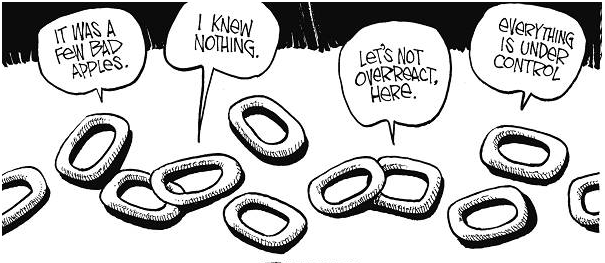
God works through authority. You are a link in God’s chain of command. God always works through authority. You have to find where you fit and place myself within that chain. If we take ourselves out of that chain we will never discover the greatness God has for us. Saul missed out on God using him personally and professionally.

What if my authorities are or ask me to do things that are illegal, immoral or unbiblical? This is a good question. What if some in authority over me are doing drugs, promoting sexual or verbal abuse, stealing money, lying to cover up, and more? I know what it is like to live daily under an authority that treats you unfair and is against you for no reason at all. In school, I had this teacher that hated me. She would send me to the principle just for smiling or raising my hand. This really tested my view of authority. Here is how God says to deal with authority:

1) Pray believing God can change hearts. You are accountable and responsible to obey God first and foremost [1 Peter 2:16-23]. 2) Confront in love and humility: Be like Samuel and call sin what it is [Matthew 18:15-20]. Humble and joyful submission to authority is a root to intimacy with God. Submission sounds like a dirty word, but when we submit to God it is the most delightful thing we can do. Submission to God is not easy, nor does it promise an easy life. Sometimes getting under authorities and obedience to God might require sacrifice, require you to surrender, and/or require you to suffer. The question is: will you allow God to use the authorities [even the bad one] in your life to chisel, mold and purify you as gold? [cf. Job 23:10]

what if those I am pouring my life into have gone empty?

Sometimes relationships go sour. Sometimes discipleship hurts. Sometimes those we invest our lives into bail on life and our efforts seem bankrupt. What do I do when I pour my life into someone and there are empty returns? What do I do when I am left speechless on the other end of and unanswered call? Or your cries are unheard or ignored?  Here are some good thoughts to remember:

Discipleship is intentional. When I invest in someone’s life I want him or her to know that I am. I intentionally let them know that I want to spend quality time encouraging their relationship with God not because I have it all together, rather together we can begin sharpening iron. Echo the voices of Jesus and Paul, “follow me.” [Matthew 4:19; 8:22; 9:9; 10:38; 16:24; 19:21; 1 Corinthians 11:1; 2 Timothy 1:13]

Discipleship is eternal. I am intentional about discipleship because I feel the weight of my responsibility before God: to reproduce my vertical relationship with others horizontally [John 15:16ff]. I am responsible for the spiritual growth of our teens. That is a heavy burden to bear, but God brings the fruit. My relationships matter to God. My relationships have eternal ramifications. That is huge.

Discipleship is generational. My relationship does not end with someone after a year or 12-class study. They last a lifetime [Matthew 28:19-20]. From one generation to another I must be willing to disciple and be discipled.

Discipleship is personal. When relationship end or the parking brake seems stuck that can be frustrating. Relationships do not come with 90-day money back guarantee. We might get burned and bruised. If you have some one you are investing in that does not want to be around you: give them over to God, keep tabs on them and don’t close the door on them ever. Chose another to invest in and press on. May our motto be, “I will most gladly spend and be spent for your souls.” [2 Corinthians 12:15]

carving faces

In America, we have weird traditions like carving faces into pumpkins. It is something I have always done since a kid. I am not sure I know where it came from in history, but I am sure if I did know I would would be so interested in carving pumpkins anymore. Sarah and I spent a date night de-gutting, carving and lighting our pumpkins. We had fun.

GODcast

Don't knock the Speedo

One of my passions is a love to fish. As a child ever summer we would spend weeks at our cottage on Lake Alma in the northwood’s of Wisconsin [as you can see in my Speedo-lishous picture above]. My dad taught me how to fish for bass, bluegills crappies and anything that swims. Any chance I get I go out fishing. You know, fishing is a biblical sport? Fishing should be your passion too!

Thousands of years ago Jesus set forth a strategy for His followers and it looks something like this. In Matthew 4:18-20, Jesus makes a very bold invitation [like asking a girl on a date], “Let’s go fishing.”  Jesus was just walking around the Sea of Galilee. There were about 30 little villages that surrounded this lake, which made their living off the lake. It was the center of thousands of people’s lives. And Jesus approaches two stinky fishermen and says, “Follow Me, and I will make you into something you are not [Fishers of Men].” And the amazing thing is they left their nets and followed Him.

The Fishing Manual for Followers of Christ:

Followers Fish. It is as simple as that. A follower of Christ fishes for other people. If you are not fishing you are not following. Jesus was fired up about fishing. From the first to the last words to His followers he lived, breath, ate and expected His followers to fish [cf. Mt. 4 & 28]. It is interesting He had fishermen as some of His followers.

Fishermen are interesting people. They are passionate, focus, patient, they always tell stories, and they love taking newbie’s fishing.

I am thankful for Mike who fished for me as a young man. Without someone fishing for me I would not know Christ. Who fished for you. Mike was an average Joe. He wasn’t a pastor. He wasn’t super spiritual. Pastors or super spiritual are not the only ones who fish, but also everyone is a fisherman for men.

It is easy to get so wrapped up in the here-and-now that we forget to fish and impact those around us with the story of the Good News. Stop thinking about the now and think eternal. The only things you can take to heaven are followers; people you fish.

Followers Fish Where the Fish are. You got to get out of the Lazy-boy to catch fish. Don’t wait until people come to you. Go out to meet unbelievers where they are. I find the best time to fish right before the weather gets bad or when it is raining cats and dogs outside. Followers fish in all kinds of elements. Sometimes fishing is dirty, stinky, slimy and uncomfortable [where’s the Purel?]. Followers don’t care because Christ is worth the cost.

Followers Fish with Fervency. Sometimes when fishing you do not get hits; the line breaks or the big one gets away. Followers keep on fishing no matter the results. It is not about patience, but persistence [not pushy]. People think fishing is boring or lame because it is a lot of sitting and waiting. Let me tell you: that’s not fishing, that’s laziness. Fishermen go after the fish with fervency.

Followers have Fish Stories to Tell. I have a dozen or more fish stories to tell. Like the time I caught a 20-inch bass without looking, or the time my Gramps caught an 18-pound Musky on 4-pound test-line while fishing for bluegills, or the time I saw a Musky bigger than my canoe oar. Believers have fish stories too. If not, you have been around the Marina too much.

Followers Fish with a Guide. I know all the hotspots on Lake Alma because my dad taught me where they are. My father was my guide. Good fishermen follow a guide. As believers our guide is God. He directs us where to fish. He equips us [John 16:13]. The Holy Spirit works within you to fish.

Followers Fish, Not Catch. Jesus did not say we are to be catchers of men. That job is up to God. We fish, He catches. The Guide does the catching we follow the Guides instructions. Fishing is hard work. It is uncomfortable at times. But the benefits and rewards are out of this world. Literally. Are you fishing for men?

How do you fish? There is no one-way to fish. Some fish with nets, others fly fish, some us real bait and others use plastic worms. This is the same with being a fisher of men. Principles for Fishing: It starts with prayer, then going to unbelieving friends/family, and it ends with relying on your Guide. Share your story of coming to Christ and how He has changed you [BC & AD]. I find that to be the most impactful.

adulterous

picture-1

We are tempted every day. No one is invisible to temptation. When the Bible talks about temptation, it is never “if”; it is always “when.” The bait is bound to lure you in and tempt to hook you. It is our responsibility to know what the bait is and how to avoid its trap.

The Bible is clear from the Seventh Commandment: “Do not commit adultery.” (Exodus 20:14) Now, adultery doesn’t happen over night. There are certain sly and stealthy steps that lead to Adultery:

It all starts with a distraction—maybe you are tired or weak, lonely or desperate, invisible or in the moment. Then that distractions leads to an attraction. It only takes a moment to notice someone of the opposite sex (walking along and BAM!); this is the the step of the second look. At this point we must stop, look the other way and change. James 1:14-15 “ But each of us is tempted when, by his own evil desires, he is dragged away and enticed. Then, after desire has conceived, it gives birth to sin; and sin, when it is full-grown, gives birth to death.” Sadly, most do not stop at this step, but are tempted to step into the trap.

The next step is infatuation (sinful attitude) or in other words adultery of the mind (heart). Your imagination starts pursuing what you would like to do with that person of the opposite sex. Jesus says adulterous attitudes are just as sinful as adulterous actions (Mt.5:28). These attitudes are just one small step away from our final step, which is the sinful action. God is clear that this is having sex with someone who is not your spouse outside the covenant of marriage.

Adultery can take on many different shapes and forms:

  • Lust—“adulterous attitude” with an imagined desire to do something with someone other than your spouse.
  • Pornography—“adulterous attitude” with an image that represents someone created in the image of God and that is not your spouse.
  • Masturbation—“adulterous attitude” bringing about an emotion connected with the sinful act.
  • Sex before of Marriage—“adulterous action”
  • Cheating on boyfriend or girlfriend—“adulterous action”
  • Affairs before marriage—“adulterous action”

There are essentially two different ways of responding to an adulterous situation. First, repent and change by seeking counsel, restoration, and forgiveness. The other is to reject and covering up by continuing to live in your sin and believe in sinful lies.

Lies are easy to come by when used to cover up adultery, here are some of the most common:

1. Marriage (or another relationship) will make it all better. If you do not change your sinful attitudes before marriage you will bring them into your marriage. This is a recipe for relationship murder. Wedding vows are a commitment for life, “till death do you part.” You choose to love God and your future spouse.

2. God wants me to be happy. Some think, “I would be happy if we could just have sex now.” Truth is: God places obedience before happiness (Ps.16:11). When we obey God’s way of doing this it brings us the most joy. It is like drinking puddle water when God offers your puree. If we disobey God it just brings about guilt and a desire to continue on sinning.

3. I didn’t do anything wrong. Pretending it never happened or denial is a quick fix, but it never really fixes the problem. Two wrongs do not make a right. Even though know one will know or might never find out, you still know and so does God. Remember, your lust grows to sin, sin leads to death, and death brings about the stench of decay. It is a matter of time before your sin finds you out. God doesn’t allow us to conceal our sin successfully.

4. My friends think it is okay. Maybe you have a support system of friends that back your sinful decisions and give you the confirmation that what you are doing is normal and all right. God calls these friends, “fools.” True friends do not lead you into sin; they protect you and bring you to God.

Have you been lured in to take a nibble or eat of adultery’s  buffet? Are you past the distraction step into the attraction, infatuation or sinful action step? Here is some ammunition to help you the next time you are tempted to sin:

1. Think about the consequences of your sinfulness. Stop to think for a moment about what this sin will do to you, your future spouse, children, or your relationship with God. A brief moment of ecstasy for a lifetime of pain. Sin is destructive and it murders relationships. And once you are cooked Satan loves to fry us in our guilt making us believe that we are now worthless and not important to God.

2. Know your weaknesses. Is there a particular time or place that brings you more temptation? (movies, tv, internet, alone, after school, late at night, tired, flirty, etc.) Avoid these if you can, if not pray for protection and seek a godly friend to keep you accountable. Do you have a good friend/leader you can talk to about this?

3. Make purity your purpose. Commit to God to do it His way: to be pure until marriage. Allow God to change you from the inside out. God what you to do it His way always, because His way always works.

are you a murderer?

small_img-1Have you ever seen the America’s Most Wanted on TV? It can be frightening to know that the person staring at you in the wanted ad is on the loose, armed and dangerous. Most of us probably don’t know a person who is armed and dangerous. However, you might be more of a murderer than you think.

The Sixth Commandment simply states, “You shall not murder.” (Exodus 20:13) In other words, we do not have the right to take the life of another human (that is wrong). Only God has that right. We are not to take the place of God and decide who will live and who will die. We are made in the image of God; we are the crown of His creation, therefore we are not to diminish the value of human life as to the killing of animals.

The 6th Commands are particularly destructive because there is no real restitution can be made for murder. A murdered human cannot be brought back to life. Even if you have not committed murder don’t sit to comfortably yet. You see, the 10 Commandments are not only to be obeyed in action, but also in attitude. Sin is not only external (actions), but moreover internal (attitudes).

Are You a Fan of Murder? Since the beginning of time humans have been carried knives, spears and guns for the purpose of killing another life. Hollywood spends billions of dollars into movies than make murder an entertainment. We act out killing in video games for pleasure (now I’m a Halo 3 and Call of Duty freak!?). We are fascinated with blood, gore and death. This is all confronted in the 6th Command.

Murder is not only physical, but verbal and mental [Matthew 5:21-22]. When Jesus says we “Raca” someone we are essentially murdering them with our words. “Raca” was an Aramaic term of hatred. If you say that another human is worthless you are essentially saying that they do not deserve to live, they are better off dead. Hateful words are murderous.

The slippery slope of hateful words is sure: unchecked anger leads to rage, rage leads to an out of control tongue (hurtful words, gossip, slander, etc), an out of control tongue leads to out of control actions. These hurtful words are like emptying a feathered pillow from a mountain top. It is easy to let the feathers go, but practically impossible to pick up the damage afterward. Eventually your hateful words will destroy someone.

Have you ever been slain by a slanderer? Have you ever murdered someone with the words that come out of your mouth? Are you are a serial slanderer?

Slander = telling hurtful and hateful words about someone else (usually a lie).
Gossip = telling hurtful and hateful words about someone else (usually a truth).

How do I stop being a murderer with my mouth? We are to put of hurtful words and put on godly ones [Eph.4:22-32; Col.3:8, 12-17]. Hurtful and hateful words can kill a relationship quickly. The Bible says that out speech is a gift from God. Your words can praise God and curse God. They can honor Him or tear relationships apart.

Truth be know, I can say hurtful things to say without thinking about it (little sarcastic comments), for these I need to apologize and change. Some practical steps for changing my murderous mouth are:

1. Confess your murders to God and the person to whom you murdered.
2. Keep you mouth shut and pray (Ps.19:14 “May the words of my mouth and the meditations of my heart be pleasing to Your eyes…”).
3. My Motto: Jesus, the Word, is the only hope for our words! (John 1:1)

we’re getting married

Sarah and Justin would like to inform you about their upcoming wedding. This site will give you most the information you need to know about their special day. Please, return frequently to check for updates or announcements.

The Date is set: May the Second, Two-Thousand and Nine

The time is set: One Thirty O’clock in the Afternoon

The Location is set: Battle Ground Bible Church in West Lafayette, IN. (www.bgbc.org)

Now are you set on being there?