I wish I had thought of the idea first. Cleaver.

[HT]


This morning I was taking care of my baby girl while her mother was washing some dishes. She played with her stuff animal doggy for a few minutes, but she quickly gravitated over to where I was sitting in a chair reading. For the next 15 minutes she was content doing nothing but being near to me. That’s so childlike. As children we love to be near our parents. There is safety, comfort and love in the presence of your maker.
So it is with God. We long to be near to God. We crave his affection and presence. There is a desire innate within all people to want to be with God and for God to be with them. Such a promise like this from God is meant to stir within all a sense of security, comfort and love from God above. Throughout Scripture the theme of God’s presence with His people is a thread that weaves through the pages of Scripture:
The greatest expression of God being with us is when He came in the skin of mankind through the person of Jesus Christ. Jesus is called Immanuel, which means God with us. He was with us for only 33-years. But those 3-decades of life impacted the world and the people of the world forever.
Indeed, the title Immanuel is appropriate for Jesus—He is “God with us.” Immanuel appears twice in the Old Testament (Isa. 7:14, 8:8) and once in the New Testament (Matt. 1:23). In the Old Testament, the name is given to a child born in the time of Ahaz as a sign to the king that Judah would receive relief from Syrian attacks. The name symbolized the fact that God would demonstrate His presence with His people by delivering them. But, this prophecy also foretold the birth of the incarnate God, Jesus the Messiah, as illustrated in the Gospel of Matthew (1:23).
More than seven hundred years passed after Isaiah’s prophecy until Jesus was born. Matthew cites Isaiah 7:14 as being fulfilled in the birth of Jesus (Matt. 1:23). Later in Matthew, Jesus told His disciples that where two or three gathered in His name He would be present with them (Matt. 18:20). At the very end of the Gospel, just before His ascension, Jesus assured them that He would be with them until the end of the age (Matt. 28:20).
Also after His death and resurrection Jesus did not leave us alone. He promised to send the Helper—the Holy Spirit—to indwell His children. Forever His Spirit with us always. The book of Revelation concludes with an affirmation that the One called “God with us” will be with us forever: “The tabernacle of God is among men, and He shall dwell among them, and they shall be His people, and God Himself shall be among them” (Rev. 21:3). What an amazing promise of security, comfort and love. God is with you! Let’s be like little children clinging to His cloak, waiting for His words, and resting in His presence.


I love this picture.
 NASA’s Hubble Space Telescope has produced the deepest image of the universe ever taken. Astronomers generated this picture by pointing Hubble at one small patch of the sky for several months and recording every tiny photon of light they could get. It is as if you took an average sized coin and held it up to the night sky. The entire image contains nearly 10,000 galaxies, but here you can see a small sample of what’s out there.
The universe is vast. Huge. Ginormous!
The Bible says, that God has given each of the stars a name,
He determines the number of the stars;
he gives to all of them their names.
Great is our Lord, and abundant in power;
his understanding is beyond measure.
(Psalm 147:4-5 ESV)To whom then will you compare me,
that I should be like him? says the Holy One.
Lift up your eyes on high and see:
who created these?
He who brings out their host by number,
calling them all by name,
by the greatness of his might,
and because he is strong in power
not one is missing.
(Isaiah 40:25-26 ESV)
Almost all the stars in the universe are collected together into galaxies. They can be small dwarf galaxies, with just 10 million or so stars, or they can be monstrous irregular galaxies with more than 10 trillion stars. Our own Milky Way galaxy contains an estimated 200 billion stars, which is average for a galaxy in the universe.
So how vast is the universe? Know one really knows nor has seen the edge of deep space. Astronomers estimate that there are approximately 100 billion to 1 trillion galaxies in the Universe [about 1024 stars] or between 10 sextillion and 1 septillion stars in the universe, but that may be on the small side of the scale. That’s a large number of stars. And God created each and knows each by name.


Thanks to a family friend we are passing on this funny, but spot on look into the brain of a toddler.

[HT]




God of truth and love; Father Son and Holy Spirit,
Hear our prayer for those who do not know You.
We ask that they may come to a saving knowledge of the truth
and that Your Name may be praised among all peoples of the world.
Sustain, inspire and enlighten Your servants who bring them the Gospel.
Bring fresh vigor to wavering faith; sustain our faith when it is still fragile.
Continually renew missionary zeal in ourselves and in the Church;
raise up new missionaries who will follow You to the ends of the world
Make us witnesses to Your goodness; full of love, strength and faith –
for Your glory and the salvation of the entire world.
[HT]


Today my baby girl surprised us all by growing way too fast. As of 4:30am this morning she has breathed 365 days on this earth. Each of those days have been a joy and blessing. Here is a letter Justus’ mom and I wrote for her today,
Dear Justus,
We are so glad that you are our first baby girl. God has used you to teach us about Himself, and He has blessed us with joy through you. We pray often that you will come to know Him and that You will love His truth. This last year has gone by really fast, which is a simple reminder that you’re going to be an adult before we know it. Some of the characteristics that God is shaping in you even now are: a gentle spirit, a love for His creation, and an obedient heart. Your smile blows us away. We hope these things continue to shape your life and are culminated by God’s Spirit in your salvation.
The last three months have not been easy for you since we’ve been traveling on the road and introducing you to alot of strangers. You’ve slept in so many places, and we hope you understand that as we prepare to raise you in a strange land, it is God’s power that we depend on and He will accomplish His purposes.
Some of the fun memories with you this year have been: flying to North Africa and taking a bumpy car ride, going to the beach with Gramp, Nana, aunts, uncles, and cousin Lyla, visiting the zoo in Indy and Green Bay, and seeing you take your first steps at the Ristau’s house.
You have done turkey calls, learned to give kisses, and become obsessed with ducks (first at the Houchen’s house) this year. We found out some special news on your special day. We can’t wait to see what God will do next year! Happy first Birthday!
Love,
Mom and Dad



Connecting the Stories: How to Use Scripture in Personal Ministry
1. Some passages speak more clearly to certain issues that others, but all passages provide a lens through which to view any issue.
2. In ministry to others, we move from life to text or text to life.
3. Some passages are more easily used in ministry situations than others.
4. Major on connections that arise from the passage as a whole, not so much on isolated phrases.
5. Remember that all passages are linked some way to Jesus Christ and His redemptive work.
Adapted from the book, CrossTalk: Where Life & Scripture Meet, Michael R. Emlet. New Growth Press, Greensboro, NC. 2009. 83-88.
Read the Introduction and Chapter 1 (PDF)


Inspired by a sermon from John Piper we heard this Sunday, If a grain dies, it bears much fruit.


It means rereading any text in light of the end of the story–the coming of the kingdom in Jesus Christ. The end of the story forces you to see earlier parts in a new light. Details matter. Think about an accident scene investigation. The end of the story is clear; the debris lies on the road to prove it. Go back to the future. The end of the story only makes sense in light of what has come before. “Bidirectional reading” does justice to the unity and diversity of Scripture.
Knowing that all parts of the Bible make unique contribution to the whole give us the courage and motivation to read and apply the Scriptures widely and deeply.
Seeing the Bible as a unified story of God’s redemptive mission helps us avoid introspective, individualistic application.
No matter where you are in Scripture, you should feel the inexorable pull forward to where history will end up. The Bible shows us that we cannot live as mere “present tense” Christians. Our present moments are framed by God’s past acts of redemption and by the glorious future he has planned.
Scripture addresses communities with few exceptions [3 John, Philemon]. The Bible is God’s story and our story before it is really my story.
Adapted from the book, CrossTalk: Where Life & Scripture Meet, Michael R. Emlet. New Growth Press, Greensboro, NC. 2009. 53-62.
Read the Introduction and Chapter 1 (PDF)



From a missionary to central Asia:
For the past few months, God has been burdening my heart heavily with the fact that so many of the old people around us are dying without knowing Christ. Usually it is more difficult to bring old people into the Kingdom as they are so set in their ways of Islam to even want to listen. Nevertheless, I started to pray for my aged neighbors. One of them is Diana’s mother-in-law, I will call “Grandma Margaret.” (Diana is our neighbor who had come to faith a few months ago. I am discipling her.) Margaret has heard my testimonies and sharing of His Word with open heart before but since she started going to the old ladies’ Koran reading group, she seemed to have become more distant.
I was so burdened for her soul that I asked God for one more opportunity to share the Truth with her. Several weeks ago, God gave me that opportunity to share but as soon as I mentioned Jesus, she started quoting the usual defensive lines about Islam. It seemed like what I was sharing was falling on deaf ears. With my heart aching for her soul, I shared with her that it is because God loves her so much that He has put her on my heart to pray for and to share with her like this. I shared with her that we don’t know how much longer we will live on this earth but that I would like to and that God would like to see her by His side in Heaven. Somehow, the reality of God loving her seemed to melt that closed heart some to enable her to finally listen. Though she said that she cannot accept Him right now, I am praying that God will be merciful to Grandma Margaret and open wide her heart to receive God’s precious gift of Jesus. Pray that she and her whole household with get to know Jesus as their Savior and Lord.
A few days later, God gave another opportunity for my husband and I to share God’s love with a 75-year-old woman we will call “Grandma Sherry.” A few months before, she didn’t agree with the Good News and even was teaching us about Mohammed. We left her the movie about Jesus called Magdalena. Even though she didn’t seem interested, she decided to watch the movie. Then when we visited a few weeks ago, with childlike faith and tears rolling down her cheeks, she said that she believed in Jesus being the Savior and the way to God! During the visit, she also mentioned that her back really hurt. So we laid hands on her and claimed Jesus’ healing over Grandma Sherry’s back, and moments later she said it was feeling better that she stood up with no pain to see us off. Praise God!
Please join us in asking God for Grandma Sherry to understand and experience the abundant life that she has received in Christ. And may her whole household and the generations come to put their trust in Jesus and surrender their lives to Him.
Thank you for your continued prayers for this city!
“The 65/95 Window? Because the Gospel is for seniors too. Much is said about the 4/14 Window (religious decisions are mostly made by youth). But in a world that is aging, how do we reach out to seniors?” Read missions commentator Justin Long’s thoughts on the 65/95 Window.
Other recommended resources: Joe Thorn writes about how “the gospel is for Senior’s.” John Piper’s talk “Getting Old for the Glory of God” and Dr. John Dunlop’s Finishing Well to the Glory of God: Strategies from a Christian Physician (Crossway, 2011). Read an excerpt of Finishing Well. Read Tabletalk’s interviewwith Joni Eareckson Tada, on the secret of her joy and contentment in the midst of relentless pain. The entire Tabletalk issue [October 2011] is devoted to death and disease from a biblical perspective.


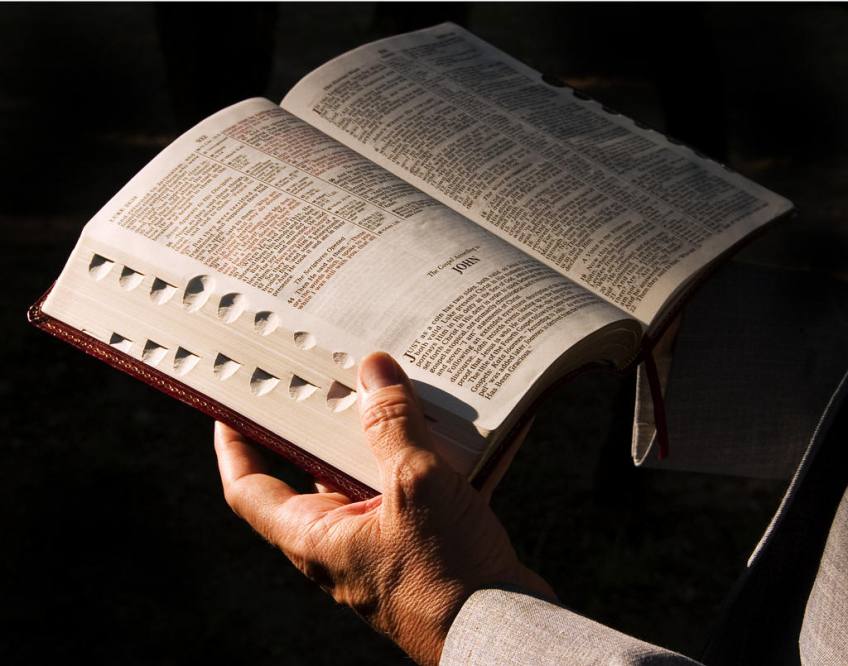
This view of Scripture rightly recognizes that commands, exhortations, and prohibitions are throughout the Bible. Obedience matters, and that obedience has very specific contours. Several problems arise with using the Bible principally as a kind of “rule book” for life. Much of the Bible seems to be descriptive rather than prescriptive. And an exclusive focus on commands paradoxically may minimize the God who graciously redeems us.
First, there is a continues tendency to overlook historical, cultural, and social aspects of the Bible. Rather than draw out principles from texts, it is all too east to read principles into a text to support a cherished belief especially when a text is detached from its particular place in God’s redemptive history. Second, the Bible leans towards the triumph of the principle over the person.
It’s natural to empathize with the people God has placed in your life. A character or example oriented approach can highlight that God reveals Himself to people who have the same basic problems we do. However, it does;t necessarily help us understand the overall plot [Jesus and His redemptive work] that incorporates all of these characters, praiseworthy or not.
This can minimize the depth and breadth of biblical wisdom. And if you’re a hammer-everything’s-a-nail syndrome, you will have a tendency to approach texts expecting [and perhaps seeking] to support certain theological beliefs.
Adapted from the book, CrossTalk: Where Life & Scripture Meet, Michael R. Emlet. New Growth Press, Greensboro, NC. 2009. 25-36.
Read the Introduction and Chapter 1 (PDF)



Today 2.6 billion people are completely unreached with the gospel. They do not have a church or gospel message in their midst. Nearly 4 billion people are unengaged by the gospel. Meanwhile the world’s major religions—Hinduism, Buddhism and Islam—are making inroads along with a variety of cults and New Age philosophies. People are not shy to hide their beliefs like this bumper sticker I saw Friday, “Born-again pagan.”
The religious culture and climate of North Africa has been unreached for nearly 1200 years. Islam has long taken root and is blossoming even to this day, which can be heard from the daily prayers echoing from the tall spires of the local mosque. Islam mixed African animism is woven into almost every fabric of their lives from mealtime, to family makeup, to laws, and to greetings. To call them to Christ is to call them to live counter-culture.
I am sure you are around people every day that are unengaged with the gospel. You could say these people are ignorantly worshiping an unknown god. If you are like me you might wonder, how am I going to reach all these different kinds of people? How do I reach out to hardnosed sibling or parent, question asking co-worker, or philosophically intelligent neighbor? There is no cookie-cutter method. However, observing the apostles in Acts 17 you can learn some valuable principles for making known the gospel of Jesus Christ Here are three truths to keep in mind:
It might seem obvious, but in order to reach the unreached or unengaged, you got to go where they are. In Acts 17, God directs Paul and Silas to crowds of unreached in Thessalonica, Berea, and Athens. Wherever they went they met a mixed bag of people. Some were unruly and hostile, some studious and skeptics, and some eager to examine the Scripture. Where do you begin with the wide variety of crowds God has placed around you?
First, ask God for a burden for the unreached [16]. Evangelism is something that doesn’t come natural to many Christ followers. In fact some dread it. Ask God for Christlike compassion for those you would normally ignore. I have been able to remedy this by paying closer attention to the forgotten people around me [waitress, postman, store clerk, etc.]. I will pray for a desire to reach them. Then ask them how they are doing or how I can pray for them. It is amazing to see the opportunities God opens up along the way.
Second, learn about the unreached around you [17-18a]. Paul was in Athens, a pagan and philosophical capital. Athens is city similar to university towns like Madison or West Lafayette. It’s a town where the average person has plethora of PhD’s. Home to philosophical legends like Socrates, Plato, Aristotle, Epicurus, and Zeno. As a secular city center, Athens was a melting pot of culture, philosophy, the arts, and a smorgasbord of gods. Towering above the city on Mars Mill sat the Areopagus. It was sort of a temple to the human brain that served as the chief courtroom and a place to hold philosophical discussions.
Two schools of thought dominated Athens. First, Epicureanism emphasized a world governed by blind chance, with the absence of an afterlife, gods were distant and uncaring, and the pursuit of pleasure was the only thing worth seeking. Second, Stoicism emphasized a world determined by fate, where human beings must pursue their duty. As John Stott said, Athens “resigned themselves to live in harmony with nature and reason, however painful this might be, and develop their own self-sufficiency.” It was a culture with a lot of similarities to ours today that challenged truth.
Third, expect opposition to absolute truth [18b-21]. The thinkers of Athens call Paul a “seed-picker,” which is a slang term [i.e. bird eating mixed grain] for a peddler of second-hand philosophy—an intellectual scavenger that picks and chooses what he wants to believe. However, Paul was no intellectual slouch. He was a straight-A student under Gamaliel in Jerusalem. He was an expert in the law. And when he came to Christ, Christ, Scripture, and the Holy Spirit shaped his worldview. Viewing life through a biblically based, Christ-centered worldview is foolish to those who do not know God [1 Corinthians 1:17-21].
Proverbs says, a fool is one who does not consider all sides of a situation. Paul teaches that Gentiles “walk in the vanity of their mind, being darkened in their understanding” because of their “ignorance and hardened hearts,” [Ephesians 4:17–24] and their thought are “vain babblings” [1 Timothy 6:20]. In fact, all around you is undeniable and inescapable proof of God—for He has made Himself known through Creation and Christ—and all men are “without excuse” [Romans 1:19–20]. The knowledge of God is “suppressed in unrighteousness”, which places men under His wrath because they “know God, yet they glorify Him not as God.” Expect opposition when speaking up for Christ.
Fourth, uncover common ground [22-23]. Paul did not have much in common with the people of Athens. Certainly he had no common ground of agreement with their erroneous philosophies. He did not try to make the gospel more palatable or tolerable. But he did see one thing they had in common—worship. Everyone worships. They worshiped their knowledge and an unknown God, while Paul worshiped a knowable God.
I find it interesting that the Omega people we are reaching out to claim their roots to be with Solomon and the Ethiopians eunuch, but for centuries they have followed Muhammad the Prophet. Most Muslims have a fascination with the Bible and Jesus Christ. Pray for hearts open to hear the gospel. The Quran commands to read the Christian Scriptures including the gospel [Injil], which will introduce them to the Prophet, Priest and King.
I am sure Paul had a certain level of frustration with his audience. He probably wondered, “How am I going to reach this puffed up knuckleheaded people?” Notice he doesn’t scream at the audience, he does sweep them off their feet with irresistible oratory or amazing argumentation, he doesn’t sell himself to the audience, he simply shows them a soul surrendered to Christ. He deflects the attention off himself onto his Savior. This is key to any apologetics or heated spiritual discussions: point people to Jesus.
First, the power of persuasion is always in the Spirit of God [24-29]. Paul points to the character of Christ. And this is how Paul preaches Christ: He gives them a brief history lesson on God 101.
Paul’s theology revolves around his Christology. Jesus is the blazing center of his universe. Athens could no longer claim ignorance, but were now cognizant of Christ and His character. The Son of God goes from unknown to renown. They could ignore the facts [as many do], but the unknown God is made known. Like a set of keys you’ve been looking for, but all the while they are in your pocket. He has not only made Him known; he’s revealed His renown!
Second, the character of Christ calls people to repent [30-31]. Paul challenges the foundations of pagan philosophy and calls the philosophers to full repentance. Paul is like Jeremiah walking into idolatrous hot bed preaching one message, “repent!” with little response. They are a people who have long thought they were god. They equated themselves with god. But God is not your co-pilot; He doesn’t even want you in the cockpit. Paul describes an incomparable Christ. He is like no one and no one is like Him.
However, God is knowable through His Son Jesus Christ. And the mystery of all ages has been revealed in Christ. The age of ignorance is over. Gentiles can know Christ too [cf. Ephesians 3:4–6]![5] In Romans 10:13–15 Paul says, “Everyone who calls upon the name of the Lord will be saved. But how are men to call upon him in whom they have not believed? And how are they to believe in him whom they have never heard? And how are they to hear without a preacher? And how can men preach unless they are sent?” And “For there is salvation in no one else, for there is no other name under heaven given among men by which we must be saved.” [Acts 4:12]
Paul is not arrogant or a pompous jerk, but is gentle and humble in his approach. He is bold when confronting them with Christ for He knows Jesus is judge.[6] After His resurrection Jesus charged the apostles “to preach unto the people and to testify that this is He who is ordained of God to be the Judge of the living and the dead” [Acts 10:42]. This truth Paul shared in the Areopagus. The power in Paul’s preaching was provided by the resurrection of Jesus Christ from the dead.[7] The same power is available to you [Matthew 28:19-20]. The power is in the gospel—God is holy, man has fallen short of God’s glory, but Jesus pays man sins debt, and man’s hope is to respond with faith and repentance. That is the gospel.
Paul was simply a vehicle—a voice box of the truth. It takes the Holy Spirit to convince people of that truth. He does God’s work in God’s way with God’s power. Not everybody responds with immediate repentance. Some doubt, some wait to hear more [sometimes the hardest to reach because they are no longer ignorant yet choose to reject the truth], but some are ready to commit to Christ. The mission to Athens was no failure. The gospel was preached and at least two people got saved that day, including one member of the Areopagus council. Two people had a radical turning point.
What are the implications today for you and me? First, today is the day of salvation. Preach the gospel boldly to all men, not hold back, but bringing them face-to-face with Jesus Christ. Second, today is the time to mobilize the church to send out locally and globally. If your church is completely inward focused you are missing your mission. Third, today is the day to live out the gospel with your life. The gospel is not just the ABC’s of your salvation; it is the A-Z’s of working out your salvation with fear and trembling. This is the desire of our family’s heart—we long to live out the gospel as parents, as husband and wife, as people living in North Africa spreading the fame of Christ name among the unreached.
Are you ignorantly worshiping an unknown god? If your faith is not rooted in a gospel-centered relationship with Jesus Christ, you are ignorantly worshipping an unknown God. If your daily life would go on as normal if God were no part of it, you are ignorantly worshipping an unknown God. When your devotion lies in the practices of your church rather than the person of Jesus Christ, you are ignorantly worshipping an unknown God. If your knowledge of how to worship exceeds your knowledge of who you are worshipping, you are ignorantly worshipping an unknown God. If the gospel ceases to be your sufficiency, dependency and satisfaction the day after you trusted Christ as Savior, you are ignorantly worshipping and unknown God.
Jesus has made Himself known. His renown will last the test of time. Only His name prevails beyond the grave. Do you know Him? Make Him known! “Your name, O LORD, endures forever, your renown, O LORD, throughout all ages.For the LORD will vindicate his people and have compassion on his servants.” [Psalm 135:13-18]
[1] cf. 14:15; Exodus 20:11; Psalm 24:1, 146:6; Isaiah 37:16; 42:5
[2] cf. 7:48-50; 1 Kings 8:27; Isaiah 66:1–2
[3] cf. 14:17; Psalm 50:9–12; Isaiah 42:5
[4] cf. Genesis 1:28; Deuteronomy 32:8; Daniel 2:21
[5] There are two parts to the mystery of Christ: 1) Gentiles are not second-class citizens in the body of Christ: “there is neither Jew nor Gentile” (Galatians 3:28, Ephesians 2:14). Both are fellow heirs of the same inheritance. 2) This Gentile privilege comes only through the gospel of Jesus Christ. Where Christ is preached and believed, Gentiles are grafted into the tree of God’s people. In Colossians 1:26 Paul says that this mystery was “hidden for ages and generations but now is made manifest to his saints.” And in Romans 16:25 he says that the mystery “was kept secret for long ages but is now disclosed.”
[6] cf. Psalm 9:8; 96:13; 98:9; Daniel 7:13; John 5:27; Romans 2:16
[7] cf. Acts 17:18; 4:2; Romans 4:25; 1 Thessalonians 1:9-10



What is grace?
Grace is not unconditional acceptance, but it is undeserved. That is a very difficult balance to strike! God’s grace comes to us without prerequisites, finding us as we are. God;s grace does not come to the “deserving” (there is no such person), and it does not discriminate. Rather, initially it comes to us freely. But once it enters into our lives, God’s grace demands changes; it holds us accountable. Why? Grace demands our holiness and growth for our sake as well as for God’s glory. Grace intercepts destructive behavior, protects us from the ravages of sin, sanctifies us so we can be “holy and happy,” two inseparable qualities.
In summary, grace is undeserved caring that intercepts destructive behavior. It is not unconditional acceptance, nor is it a legalism that says, “Shape up or I will stop loving you.” Rather, it says, “Your sin cannot separate you from me,” and then, in addition, says, “I won’t let your sin destroy you.” Grace comes to the unlovely person, but refuses to let him remain ugly.
Timothy Keller, Ministries of Mercy: The Call of the Jericho Road. P&R Publishing, Phillipsburg, NJ. 1997. 226-227.



I love being a spectator. Some might consider me a professional spectator. In the fall there is nothing better than being a spectator in a football stadium cheering on your favorite team. Do you spectate? Maybe you’re a spectator of a good movie or concert, playing video games or surfing the Internet. Whether it is a bleacher or sofa, spectators are good sitters. Spectators feed off others doing the work and paying good money to have a seat with the best view.
Sad, but true, the Christian life can be a spectator sport. Instead of sofas or stadiums, the church pew can be your seat of choice. It is far too easy to sit comfortably cheering or booing on the 11-people serving on Sunday. All the while never engaging yourselves in the ministry or doing your part to serve the church. Where are you at today? Are you sitting in the grandstands cheering from a distance? Are you standing on the sideline benched and bored? Are you retired from the game because you are no longer motivated to workout your salvation with fear and trembling? Or are you on the field running the race, fighting the good fight, eager for encouragement to keep pressing on?
In Acts 9, Paul miraculous comes to Christ on the road to Damascus. After he gets his sight back he immediately enrolls to serve for the sake of Christ [cf. Acts 9:18-20]. According to Paul, serving Christ was the greatest thing since sliced kosher beef. He worked his entire life to gain merit badges from God, but Christ gave him an entirely different motivation to work. As a recipient of God’s grace, he made it his mission to be a conduit of God’s grace. You might call him a missionary—a man on a mission. I think Paul always kept his car packed ready to go to the next place eager to share the good news that radically broke into his life. In fact, if you are believer you are an immediate missionary for Jesus Christ. Here are 3 truths that will move you from the sofa into His service or from the mundane to your mission:
On Paul’s first journey, he and Barnabus were sent out from Antioch [Acts 13]. Many Gentiles bowed their knee to Christ through their ministry. On the brink of the second missionary journey, Paul had a good plan, “Let us return and visit the brethren in every city in which we proclaimed the word of the Lord, and see how they are.” [Acts 15:36ff] Barnabus was cool with the plan, but he wanted to bring along John Mark too. Paul did not like the idea, since Mark bailed on them midway through their first journey [13:13]. Barnabus—the encourager—wanted to give his friend a second shot. It started a conflict so sharp the friends to parted ways.
So who was right? Most side with Paul since he’s the apostle, however, the Bible is silent not taking sides. It is interesting that you never hear about Barnabus again. On the other hand, later Paul would ask that Mark be brought to him because he was “useful to him for ministry” [2 Timothy 4:11]. And this Mark is the same Mark that eventually wrote the gospel of Mark. Bottom line is—we don’t know—who was right, but God did use their conflict for His purposes. They are both right and both wrong. I find it encouraging that even though Paul and Barnabus had their issues they were still willing to serve. They didn’t hang up their shoes—giving up. This shows you the attractiveness of message over the messengers. The church might be messy, but it is still the beautiful Bride of Christ.
If you serve in the church you are wise to remind yourself, first, work hard to fight for unity whenever possible. Paul says in a letter to a church, “I urge you to walk in a manner worthy of the calling with which you have been called, with all humility and gentleness, with patience, bearing with one another in love, eager to maintain the unity of the Spirit in the bond of peace.” [Ephesians 4:1-3, cf. Colossians 3:12-17] Do you think your pastors, deacons, sound techs, worship leader, nursery workers, AWANA helpers, and Sunday School teachers are aware of this need for unity? People problems can come up frequently when serving the Lord together, but whenever possible strive for unity.
The number one reason why people leave a church or the mission field is because of conflict with a person or personality. As Sarah and I go to North Africa, pray for our team. Pray for an ethos of grace that seeks to resolve conflict biblically and quickly. I could not imagine doing ministry alone. That was my favorite part of ministry at BGBC, serving along side deacons, youth leaders, and teams of people who sought unity in community.
Second, serving together is far better than serving solo. Do you notice that Paul usually serves on a team? Rarely do you see him going solo, even in prison. I have heard many of reasons why people do not like to minister with others, like, “Our personalities just don’t jive,” “I’ve had too many bail and leave me with the bag,” or “I really work better by myself.” It is exceedingly selfish to serve God alone. What might be more selfish is not even engaging in ministry. Doing ministry with others might cause friction or factions, but that is no reason not to do ministry with one another. You might think you are more effective by yourself, but the Christians faith was not meant for Lone Rangers it is to be lived in community. My church has a core value that states, “We are devoted to making every member a minister.” It takes a church to raise a Christian.
Third, serving with others closely mimics Jesus’ model of discipleship. Jesus’ idea of discipleship trains people on the job. Most people learn best by doing, which runs contrary to our culture that says you learn best by hearing. Serving with others makes ministry transitions easier. Who will take over after Sunday School or small group when you leave? Are you grooming your replacement in the food pantry or youth group? Have you asked God to give you a Timothy [or Tabitha, 9:36-43] to train [2 Timothy 2:2]? Doing ministry alone can be dangerous. It can leave a vacuum after you’re gone. It is also dangerous because it is easy to cheat and lie about your service because no eyes are watching you. Serving with others keeps you honest. Follow the model of Jesus and His disciples: never serve alone.
Need an example? Look at how Paul picks out young Timothy [vs.1-5]. Paul needs help so he grabs Tim and gets him ready to serve.[1] Paul grows to love Timothy so much that he often refers to him as his, “true child in the faith.” [1 Timothy 1:2] and, “I have no one else of kindred spirit who will genuinely be concerned for your welfare. For they all seek after their own interests, not those of Christ Jesus. But you know of his proven worth, that he served with me in the furtherance of the gospel like a child serving his father. Therefore I hope to send him immediately, as soon as I see how things go with me.” [Philippians 2:19-23] These are the kinds of relationships that make doing ministry together worth it.
The time has now arrived for Paul’s second ministry road trip. With the car packed and ready to go Paul and Timothy ventured out towards Asia [Turkey], but the Holy Spirit did not permit them to go. In fact, God says “NO!” to four cities in Asia, but He does say, “YES!” giving them permission to go to Troas [Troy], which ultimately leads them to Philippi [Macedonia; Europe]. Paul’s plan was to go where he had already preached before [15:36], but God had plans to send him to preach to the unreached people West of Jerusalem.
While in Troas, God gives Paul a vision. In the vision, a man urges him to come to Macedonia to preach the good news of Jesus Christ. This is the passage of Scripture we dub, ‘The Macedonian Call.’ It is a well-known passage that missionaries often use to validate the country they believe God has called them to evangelize. You must be very careful to label a calling to a place or a project. You will hear people say, “I’m called to the poor. I’m call to Pakistan. I’m not called to kids! I am certainly not called to be an evangelist.” Nobody would dare to argue with the calling of God on your life. But there are two problems with this. First, it ignores the fact that missions is the primary purpose of the church; and if you’re called to be a part of the church, then you’re also called to missions. You can’t be an employee of Taco Bell without selling tacos, and you can’t be a part of the church without doing missions. It’s that simple.
Second, it often misunderstands the idea of God’s calling upon one’s life. The Bible describes vocational calling to ministry as a function of the local church, not as the autonomous decision of the individual. If you are serving a place or project before you are serving a Person you got to ask yourself, who’s mission are you on? Paul is sent out from his local church to preach the gospel of Christ as an ambassador of His church. Paul’s call is fairly general. Paul’s calling to go to Macedonia never interferes with his original and overarching calling, which was Paul was to serve Christ and suffer for His namesake [cf. Acts 9:15-16]. Paul is not so much called to a place as he is called to preach the gospel in that place. Macedonia is a really big place. So the first place they decide to go is the strategic port city, Philippi.
Paul isn’t called to something new, He is called to do what he’s been doing all along—preach the gospel. Now God is simply directing his servant to do just that in a new place. Like Paul, your primary calling is to serve Christ, which will also be followed by suffering. Suffering always precedes glory. And suffering paves the way for Christ and His church.[2]
There are thousands of unreached people groups around the world and there are thousands of spiritually profitable projects needing willing servants. If you are unsure what to do or where to go: Research an unreached people group [JoshuaProject.net]. Adopt one [globalroar.org]. Give or go. Pray for people of peace around you [Matthew 10; Luke 10]. If there are none, continue on to the next place. Some soils are not ready to receive the Word of God. The point is: the kingdom of God is near, so get off your sofa callused rear!
Again, Paul and Timothy [and Luke] hop into the station wagon and head over to Philippi. It must have been a long trip—too much pork rinds and licorice. Once they reached their destination they decide to rest a few days. I imagine they scoped the place out before going gangbusters on the good news. They could not find a local synagogue [usually the first place to meet God-fearers], which means there were less than 10 Jewish men [minimum needed to start a synagogue]. In non-Jewish places Jews would gather in obscure places because Macedonians saw them as a cult. So they went outside the gate to find worshipers. They found a women’s prayer gathering on the Sabbath Day down by the river. There they met Lydia.
Lydia, owned an upper-class clothing shop in an upper-class kind of town. Like Martha Stewart or Oprah, Lydia’s an ancient independent and businesswoman women. She sold of purple fabric, which is the color most royals would wear. Lydia reminds me of a woman I met while in South Africa. Gerda, a middle-aged single woman, sold tie-dyed fabric. I met her while buying a gift for my mother. She knew I was from out of town and asked, “Where are you from?” I said, “The United States.” With curiosity she asked, “What are you doing here?” “I am hear to share Christ with your community, see His church grow and find people interested in knowing more about Him and His Word.” To my surprise she opened her home and the next week I started a small group Bible study that later became the seed to a new church.
Lydia becomes the first European convert and opens her home the church for the first church in Philippi. She is an immediate missionary. And she is a single gal with a clothing shop. God uses single females [i.e. Mary Slessor, Amy Carmichael, Lottie Moon, Elizabeth Elliott, Rachel Saint]. Today 20-25% of the missionaries are single women, and this does not count the 40% that are mom’s or wives. Women married to Jesus and His mission are so needed. You never know when you might meet the next Lydia. You might be the next Lydia!
In the church, we value male spiritual leadership because the Bible empowers men to this position. This does not mean women do not have a purpose in the church and global ministry. The church and Bible have a favorable view of women.[3] In fact, true Christianity has the most favorable view of women among all the religions of the world [cf. Proverbs 31]. God clearly gives distinct roles to men and women, but they are equal in value because both men and women are created in His image [Genesis 1:27; Galatians 3:28]. Both sexes are marked by their Makers image.
What God is interested in most is what kind of woman you are—a woman of Christlike character. Young or old, God is looking for godly gals. Some of the greatest servants I know are older women who barely venture from their home, but pray earnestly and encourage rigorously the church.
Let’s look for a moment at her turning point. First, she comes to Christ because someone told her the gospel. Faith comes by hearing. Someone must speak the gospel. The point of speaking the gospel is to give something to see. Paul was not some irresistible orator, but his God is a relentless heart pursuer. Second, the Lord is the key actor in the story, not us. You have a significant role in speaking the gospel, but it is the Lord who does the decisive work. He “opens the heart” of Lydia. This is a beautiful picture of God’s salvation. This means He takes out the hard heart of stone, and puts in the heart of flesh [Ezekiel 36:26]; He says with sovereign authority, “Let there be light,” and “shines in our hearts to give the light of the knowledge of the glory of God in the face of Jesus Christ” [2 Corinthians 4:6]. Third, she pays attention to the truth. The effect of the Lord’s opening her heart is a true hearing of the gospel. She was “granted repentance” [2 Timothy 2:25] and faith [Philippians 1:29].
Without question or complaint Paul and Timothy follow Christ’s course direction to Philippi. God leads them to a businesswoman praying to God and He opens her heart. They continue to minister and meet another girl, but she’s quiet messed up. She’s a demonized slave girl who was being exploited for her fortune-telling skills [16:16-24]. Jesus shines light into her darkness. And now there was no hiding the fact that God is at work in Philippi. Her owners get ticked because their hope of making money left with her evil spirit. So they had Paul and Timothy beaten and thrown in jail. They took a dull or dreary situation chained up in the damp dark cell and had a worship service [25-33]. What follows next is as Jerry Lee Lewis sang, there was a “whole lotta shaking going on!” God orchestrates an earthquake and all the prisoners are set free. The jailor, now out of a job, comes to Christ amidst the rubble. Ironically, the jailor is freed from the bondage of his sin.
All this, in Acts 16, is here to show you that God rewards those who sacrificially serve for His namesake. The reward is the salvation of lost souls and the planting of the first church in Europe. In its inaugural membership: a businesswoman and her household; a messed up slave-girl; and a suicidal city employee—a jailer and his household. That’s the church in Philippi that God built. And He is still building churches today and the gates of hell cannot prevail against it. In Christ, you are the beautiful Bride of Christ!
With that I encourage you to never do ministry alone, know you are never called by God to do what you are not already doing, and never underestimate the rewards of sacrificial service. Know that your ministry matters in eternity. Those kids in AWANA or Sunday School, the men and women in your Bible Study or small group, those neighbors in your neighborhood, those students in your class or bus, and those you work with at the office are looking to you to show them through your words and deeds the Son of God, Jesus Christ. He is the reward of sacrificial service. The motivation of Paul’s service was not guilt, but the grace of God he was given on the Damascus road [cf. 1 Timothy 1:12ff]. The only lasting motivation you will have to get off the sofa and into the service of Christ is meditating on the glorious grace in Jesus Christ.
Not that I have already obtained this or am already perfect, but I press on to make it my own, because Christ Jesus has made me his own. Brothers, I do not consider that I have made it my own. But one thing I do: forgetting what lies behind and straining forward to what lies ahead, I press on toward the goal for the prize of the upward call of God in Christ Jesus. [Philippians 3:12-14]
[1] He encourages Timothy to get circumcised, not because he would be a more fit to serve. The Jerusalem Council settles this debate [cf. Acts 15:1-35].Timothy’s mother was Jewish and he would be ministering to Jews. He was giving up his rights to reach the Jews [1 Corinthians 9:19-23].
[2] Cf. Romans 12:1-13; 2 Corinthians 4; Philippians 3:7-11; Hebrews 12:1-13
[3] Luke shares the stories of many women in the Book of Acts. Women like Lydia were particularly prominent in Paul’s missionary efforts in this portion of Acts—the women of Thessalonica (17:4) and of Berea (17:12), Damaris in Athens (17:34), and Priscilla in Corinth (18:2). Priscilla and Lydia took an active role in the ministry of their churches. For an excellent treatment of Lydia, see R. Ryan, “Lydia, a Dealer in Purple Goods,” TBT 22 (1984): 285–89.


I am only 11-months into being a parent. Already my little girl is teaching me many things about God:
Parenting is a temporary stewardship, which I think also means a temporary loss of sleep. I remember the first few days when we brought her home from the hospital and she would cry through the night. Sarah and I would take turns rocking her to sleep. In those frustrating moments God would remind me how dependent and needy I was, just like my little balling baby girl.
The most important work is when I get home with my family. I do not have the right to take it easy or have a break. Passive homes lead to passive kids.
She is becoming the most beautiful mom in the world. I love watching her teach, sing, and disciple one daughter, who now thinks she’s cool with her new tooth.
“Only take care, and keep your soul diligently, lest you forget the things that your eyes have seen, and lest they depart from your heart all the days of your life. Make them known to your children and your children’s children–how on the day that you stood before the LORD your God at Horeb, the LORD said to me, ‘Gather the people to me, that I may let them hear my words, so that they may learn to fear me all the days that they live on the earth, and that they may teach their children so.’” – Deuteronomy 4:9-10


 spreading the fame