what about sex before marriage?

Imagine a world without standards or limits: no traffic laws, no standards for society, or no code of conduct. There would be chaos. There are limits, governing rules, morals of right and wrong, and standards of living for the purpose of our protection. Rules are to be abided by not broken or bent. The speed limit law is not a simple suggestion and codes of conduct are not recommendations—they are requirements. Just as there are standards and rules to adhere in our country, so there are standards God gives towards our relationships.

Thus far we have discussed two of God’s standards for relationships. First, both partners must be faithful follower committed to Jesus Christ [2 Corinthians 6:14-16]. Second, marriage is a picture of a divine and permanent relationship [Ephesians 5:25-28]. Today we will discover a third standard God has set for marriage: sexual intimacy is for the marriage bed only.

Waiting to have sex until marriage is certainly not a popular message in our world today. Sex education classes promote safe sex and condom usage. TV shows and media, flaunt sexuality outside of marriage as normal. The idea of waiting until marriage to have sex is passé and seems to spoils the fun. Has chivalry gone out of style along with chastity belts? How do we reconcile God’s speed limit to wait on sex until marriage?

The Bible has three commands concerning sex [Colossians 3:5; 1 Thessalonians 4:3-8]. First, do not give yourself to adultery—having sex with anyone other than your spouse. Second, do not give yourself to fornication—having premarital sex, even with someone you intend to marry. Third, do not give yourself to sexual immorality [Grk: porneia]—having sexually stimulating activities [i.e. pornography, oral sex, masturbation, sex-ting, flirting, etc.] outside of marriage or in marriage with someone who is not your spouse [cf. Matthew 5:27-28; Proverbs 6:27-28].

sinful reasons to have sex before marriage [1 Corinthians 6:12-14]

There are many reasons people justify breaking the limits God sets on sexuality before marriage. Paul says something very wise in 1 Corinthians 6:12, “All things are lawful for me, but not all thing are helpful.” In other words, sex might seem ok, but is it really going to help the situation? Here is some common reasons people sin in order to have sex outside of marriage:

We love each other.” Many people have equated love with sex. Love does not equal sex; rather it is the gift of committed love. Real love does not tempt one another to sin. Real love is willing to wait and commit.

We need to see if we are sexually compatible.” The plea for compatibility seems good, but compatibility is not tested—it is learned. You can be compatible with anyone. Test-driving is meant for cars not relationships. 70% of women who test drive are seeking a long-term relationship [i.e. manipulation]. 90% of men who test drive are seeking a short-term solution for their sex drive [i.e. self-gratification]. Sex is not a reliable test for compatibility.

Everyone is doing it. How could it be wrong if it feels so good?” Let the truth be known: not everyone is. Even if everyone was that does not make it right. Many people do choose to wait. Peer pressure and cultural acceptance are not always right. People who have sex before marriage have a far higher divorce rates, feelings of insecurity within marriage, and greater chance of unplanned pregnancy or STD’s.

We do not have the same values as you, so stop making us feel guilty.” This is especially true in an age of tolerance, which says “Don’t push your agenda’s on me. You can believe what you want but let me believe what I want.” However, the value of waiting for sex until marriage is not meant to pour on guilt or showcase a man-made value, rather it is God’s value for your good and His glory. He is the one who created you and created marriage. He even created sex. All with their purpose and place.

Sex within marriage might seem to be helpful for fitting into culture, finding compatibility or fulfilling love, but this is not the way God intended intimacy to happen. Two questions to ask: Is it helpful? Is it enslaving? [v.12] When we bend or break the rules this leads to chaos [vs.13-14]. Disobedience brings danger like jumping the guardrails hugging a cliff.

God’s reason to save sex for marriage [1 Corinthians 6:15-20]

God gives one reason to wait. He knows how sex is multi-dimensional—physical, emotional, and spiritual—but when two people have sex they become “one flesh.” [v.16] Even within causal sexual flings this occurs. Sex creates a miraculous bond between two people. Sex is superglue that keeps two together. God did not intend for “one flesh” to be shared, except with the one person you are faithfully committed to in marriage.

Paul bases his sexual purity on his identity in Christ. First, if you are in Christ you are a “servant of Christ” [v.12]. Christ has freed you from the bondage of sin and you are at liberty to choose what is right [cf. Romans 6:1-14]. Second, you are an “eternal being” [v.14]. This world is not all there is. The joy of sex does not compare with the joy of being with Christ. Third, you are “one with Christ” [vs.15, 17]. Followers are married to Christ. Remember, marriage pictures a divine union between Christ and His church [cf. Ephesians 5:25ff]. Finally, you are the “property of Christ” [vs.19-20]. God owns you. You are bought and paid for by the blood of Christ.

Sex is a gift from God. It is something that He created as “good.” [Genesis 1:31] Sex is great in so many ways–relationally, physically, emotionally, and spiritually. Sex is a gift that is greatest when waited for within the marriage relationship. When we abuse or misuse what God created by using it our way rather than His way it complicates our relationship rather than compliment.

Sexual immorality not only affects your relationship with the other person [vs. 17-18; i.e. Psalm 51:4; 66:18], but it primarily affects your relationship with God. Sin creates a roadblock between you and God. You can try all sorts of things to get rid of the roadblock, but until you deal with the sin and commit to change it will be a barrier that you will not be able to budge. Give your sexuality to God and commit to His standard for relationships. It is for your good and God’s glory [v.19-20]. Purity is the greatest gift you can give yourself and your future spouse.

quick Q&A concerning sex:

What happens if you already had sex before marriage? Can I be forgiven? Yes. Repent and restore [1 John 1:8-10]. Recommit to purity and saving sex for marriage. I have a good friend had a sexual relationship in high school, the gal got pregnant. He lived with the guilt of his sin for years. He later tasted the forgiveness of God and recommitted to God and is being used of God in mighty ways. He is now married with beautiful children. God is faithful to forgive. Be faithful to seek His forgiveness through repentance and restoration.

Is sex in marriage really better than sex outside of marriage? You bet. Being pure is always better than settling for second best. Think of how much better it is to drink mountain spring water versus drinking from a sewer pipe. Purity satisfies completely, while sinfulness leaves you empty craving more [Jeremiah 2:13].

How can I fight the temptation of sexual immorality? Toying with your sexual desires is like a pyromaniac playing with fire. Feeding the fire of desire does not calm the temptation; it only intensifies it. You will get burned [James 1:14-15]. Pushing the limits is dangerous. Basing decisions based on feelings of right and wrong can be just as dangerous. Sex feels good, but it was never meant to fulfill what only God can. Sex was never meant to be worshiped [Romans 1:18-27; Ephesians 5:3-7].

Here are some helpful ways to fight the temptation to give into sexual immorality: First, commit to obey God. Second, learn from the Word the joy of waiting. Third, be accountable to God and a strong Christ-follower. Finally, create and implement a battle plan [purity contract]—do not touch [1 Corinthians 7:1], do not look [Matthew 5:28; Job 31:1], and do not be alone [cf. Genesis 39]. Purity never happens by accident. Make a plan to fight for it.

Great Resources to Check out:

Sex Before Marriage: How Far is Too Far? [Timothy Lane]

Guidelines for Sexual Purity [Randy Alcorn]

Sex and the Supremacy of Christ [John Piper]

why preparing for marriage matters?

Have you ever had a really difficult time picking out a new pair of shoes? It can take me months before I find the right shoe I will wear. Maybe I am just picky.  It is important for shoes to have the right blend of comfort, style, and functionality. You can’t go wrong with a pair of Chuck Taylor’s. They are classy and timeless.

Shoe shopping is a lot like finding the right relationship. It is not bad to have standards when it comes to relationships. We looked at last week God has a high standard for relationships—both partners must be faithful followers committed to Jesus Christ [2 Corinthians 6:14-16]. Finding the right relationship can be difficult. Looking at a potential relationship can be like looking at a box of Crayola Crayons and thinking, which color do I choose?

Most men and women dream of the day they will whisk away their wife or marry their hunky husband, and grow old together. I marvel at my Grandparents who stayed married for over 50 years and still call each other best friends. Marriage is a relationship most long to be in, yet most do not prepare to endure. It is said that every date is a potential mate. Learn to look at all your relationships with the opposite sex as a potential husband or wife. Better yet view them as God’s creation and your brother or sister in Christ. Many come into marriage with sinful expectations.

sinful views of marriage [or any relationship for that matter]:

Marriage makes all my problems go away. Many think that marriage is the cure-all for sexual temptations, the need for compatible companionship, or desire for happiness and lure of romance. If this is your expectation for relationships you will be severely disappointed. Marriage can certainly help, but it is not the means to an end.

Marriage raises my social status. Do you view singleness as a curse? Do you feel pressured to be in a relationship and weird because you are not? Are convents and monasteries for people unfortunate not to find the love of their life? If you marry just to raise your relational resume you will marry for all the wrong reasons.

These are false assumptions many marriages and relationships are built upon but quickly crumble. More than half of all marriages fail. Even marriages within the church crash and burn alongside these startling statistics. There are many reasons why these statistics stand, but how can they keep from falling? Who wants to get married when so many seem to peter out? Is there hope for a healthy home or romantic relationship?

biblical views of marriage and why it matters:

Marriage is a picture of a divine relationship [Ephesians 5:25-28]. Every relationship—particularly marriage—is an opportunity to model Christ’s love. This is God’s goal for marriage. What does a loving relationship look like? It looks like Christ’s sacrificial love for His church. What came first Christ and the church or man and women? This is not like a chicken or egg question, since it is fairly obvious. Marriage came first [Genesis 2:22-24], and it pictures the church’s eternal relationship with Christ [Revelation 19:7].

Marriage is a permanent relationship. It is not as disposable as people make it out to be in our day. There is a miracle in marriage that two people become one flesh forever. This is why God looks down on divorce. In fact, God says He hates divorce [Malachi 2:15-16]. Now I am a product of multiple divorces. Divorce is always difficult. It affects so many, but it primarily affects the couple. Divorce does not erase the oneness of marriage. It is like ripping apart two pieces of metal welded together. It hurts the metal and will leave pieces of one another with each other.

dealing with the wear and tear on relationships

Like shoes, relationships take on wear. So what must be done? Get a new pair? This is not so easy when it comes to relationships. Relationships take a lot of work to keep clean because they are two selfish sinners. So what is a couple to do? Clean up and restore the shine. Couples must become like mechanics looking under the hood of a used car determining what needs to get fixed. How can I inspect the danger signs of relationships? Here are some great questions to ask:

First, who’s in the drivers seat? In other words, check under the hood of their heart to see what is pushing their gas. The heart is a persons control center. In order to peer into the heart you might ask: Are you committed to your relationship with God? Do you love the Word of God and live by it? Are your knees worn out? Do you love the church? Then it is good to watch if their walk matches their talk. If not, run. If they yes, you have the making of a good match.

Second, what’s in your trunk? The trunk is where the baggage lays. Usually baggage is sins you struggle with and carry with you everyday. Baggage is not a reason to not date someone. Everyone has baggage because they are selfish sinners. Yet you need to ask yourself, “Am I willing to love this person and live with them knowing what I know?” Baggage can be dealt with and overcome, but it will take a lot of work over a long period of time only by applying what we know from the Word of God [Matthew 7:24-27].

What’s your track record? Last week, I mentioned the way someone communicates and deals with conflict with their parents is how they will deal with it with you. People model their parents. The majority of problems in relationships are because of a history of not dealing with conflict biblically or communicating unbiblically as a family. Conflict in relationships is guaranteed [1 Corinthians 7:28]. It is not a matter of if but when. When you have conflict how do you deal with it?

Marriage matters, therefore, your current relationships matter as a pattern for your future relationships. If we create sinful habits before we get into our relationships it will be difficult to change that after we get into our relationships. Thus have a biblical perspective of relationships. See them as a picture of God’s long lasting love. Be prepared in your relationships by cultivating a solid friendship that asks questions to inspect one another’s heart.

quick Q&A concerning dating, singleness, divorce and remarriage:

Dating today does not an effect way of determining a future mate. Is dating defecting? Is there a better way? Modern dating does have many deficiencies:[1]

  1. Dating skips the friendship stage of the relationship.
  2. Dating often mistakes the physical relationship for love. Infatuation is not intimacy. Sex does not equal love.
  3. Dating often isolates you from other vital relationships [friends, parents, teachers, pastors, etc.] making the one you are dating an idol.
  4. Dating can distract you from preparing for the future. You need to prepare for marriage.
  5. Dating can discourage you from God’s gift of singleness.
  6. Dating can create an artificial environment to evaluate another’s character.
  7. Dating becomes and end in itself. It becomes a game and a means of control with no checks and balances.

A better alternative to dating is courtship. Why choose courtship over dating? Courtship chooses: solid friendship, purity, wise counsel [of parents and mentors], preparation [for permanent relationship], contentment with singleness, cultivation of godly character, and bridges true friendship with marriage. Courtship is the best move towards a marriage relationship in our day because it sets the relationship standard higher. Don’t pursue a romantic relationship until your ready for love.

What about singleness? Is singleness for more than nuns and priest? 1 Corinthians 7:1-9 and 17-40 describes singleness is a gift from God and a good thing. In fact, most of the New Testament writers were single, including Paul and Jesus [Matthew 19:11-12]. A single has the freedom to devote their relationship entirely to God. Singleness for the short-term or long-term can have a lot of benefits on your spiritual walk with God. I was single for about 3 years before I began a relationship with Sarah and I would not trade away those years.

For more information on living as a godly single check out The Rich Single Life.

Is there no room for divorce and remarriage in God’s plan? There are legal divorces that Jesus considers illegitimate [Matthew 19:1-9]. There are commands that call couples to reconcile rather than remarry [1 Corinthians 7:10-11]. And there are broken relationships that God gives freedom for remarriage [Matthew 5:31-32; Romans 7:2-3; 1 Corinthians 7:12-16, 39]. Each relationship is different, therefore, it is wise to search the Scriptures to understand what God has to say about divorce and remarriage according to the state of your situation.

A great resource to check out on the permanency of marriage is: The Momentary Marriage by John Piper


[1] Adapted from I Kissed Dating Goodbye by Joshua Harris [Multnomah Publisher, Sisters, OR. 2003, 38-46]

who’s in your driver’s seat?

The first two cars I owned were hand-me-downs. When I was 16, I bought the 1987 Dodge Daytona from my stepmother for $500. She lasted about 6 months before she gave up the ghost. My second car I bought while in college—a 1989 Chevy Corsica from my grandmother. She was a fairly reliable 4-door sedan. I named her Angus, mostly because she was black and I wanted her to have a bold name for the complex I had while driving her.

Angus had issues. First, my door got stuck. I felt like one of the Duke brothers climbing through the window of the General Lee to get into my car. Second, the ignition broke, so I had a buddy hotwire a toggle switch to help start the car without a key. I was embarrassed to take dates in this car because I never knew what would happen next. On one occasion I took a gal out for dinner and it started raining really hard. I turned on the wipers to full blast and they rocketed off the windshield never to be found. I spent the rest of the ride with my head out of the window like a panting dog to see where we were going. Nothing like that to dampen your date!

I did upgrade to nicer cars, but never really got the car of my dreams. If you could have any car what would you drive? Many people desire the German BMW or Mercedes, while others adore the Italian Lamborghini, Ferrari or Bugatti Veyron. I would settle for a Ford Mustang Shelby. I often daydream about what it would be like to drive one of these hot wheels around town, feeling the roar of the engine; proud of wow-factor I get from people I zoom past.

Have ever realized how much cars and relationships have in common? The next few weeks I will share a series on dating and relationships. We are going to approach this topic from the biblical standpoint. You might be thinking, “I know what the Bible says about relationships, it’s so old fashion and culturally irrelevant.” Stay tuned. You might be pleasantly surprised how practical and helpful the Bible is when it speaks about relationships with the opposite sex.

you get what you pay for

There are two ways to look at buying a car: either you get something really cheap that quickly breaks down or you get something nice that will last you a lifetime. There is no middle of the road. When it comes to relationships, God is in it for the long haul for “nothing can separate us from the love of God” [cf. Ephesians 3:17-19, Romans 8:35-39, 1 Corinthians 13:4-7]. He has put the miles in for you and He expects you to go the distance with those you committed.

Jesus says marriage—the chief earthly relationship—is a visual illustration to the world of Jesus’ commitment to the church [Ephesians 5:25ff]. Never will He abuse, neglect or separate Himself from His Bride. The love binding together Christ and the church is eternal. He has a covenant relationship with His followers built on sacrificial love for His followers. Relationships are no small matter or a place for shallow commitment.

Do not settle for anything less than the best. What is the best when it comes to relationships? God says the best is for both partners to be committed followers of Christ. In 2 Corinthians 6:14-16, believers are commanded to set their relationship standards high, “Do not be yoked with unbelievers.” To understand this verse you must learn from the farmer. Back in the day, farmers used oxen to plow their fields. They would match up two animals that were similar in size and strength to get straight rows. A smart farmer would never match up a goat and Clydesdale, or wild stallion with an old donkey. If so he would simply spin in circles getting nowhere. Do you see the illustration God gives to us about relationships? A believer and non-believer pull each other in opposite directions, in fact, the relationship will spin in spiritual circles if both parties are not committed to Christ.

beware of lemons

Beware of the dodgy deals from the used car lot. In other words, be careful of the worldly messages you hear and see on TV, Internet, or romance novels. The message is of compromise not commitment, “Dating is just for fun and sex.” Also, be careful of ungodly advice from friends who are sinful sympathizers. His or her message is listen to yourself not your God, “You should be with someone who makes you happy or makes you feel fulfilled.”  Lemons are sour deals that as you think back on them you regrettably know you have bought into a lie and you should have been cautious enough to search under the hood of that person’s heart before you signed the paperwork. Here are common lies and excuses about dating a non-believer:

“He or she is really nice person and is very good to me.” This is admirable and chivalrous. Some non-believers truly have better character than believers. However, if they are not in Christ their motives in the relationship are always selfish. Use your friendship as a God given opportunity to share with them the gospel. Let them know that Christ wants to reconcile an eternal relationship with them.

“Don’t worry, I will share my faith inside our relationship.” Missionary dating is sin. You have already compromised the relationship. How can you tell your partner to obey God when you are not being obedient to God by dating them? It is never God’s will to sin, even if it feels so good and right.

“If God was loving He would let me date who I want.” Remember, God is the standard. What He commands is for my good and His glory. God is not being cruel when He commands you to date believers and steer away from non-believers. He is protecting your heart. Take the time to read the story of Sampson [Judges 13-16] and Solomon [1 Kings 1-11]. You see how quickly love blinds their hearts from their God to the idols of their women. God warns about inter-spiritual relationships because He knows how distracting and spiritually detrimental they are for both parties.

In order to prevent yourself from getting a lemon you need to do some research into the person you want to partner. When buying a car you will get an inspection from the mechanic, check under the hood yourself, or go to carfacts.com to see the specks and history of the car. When it comes to our relationships we must go to the Word of God. The Bible says by their fruit you will know the kind of person they are [Matthew 7:16-17; John 15:8; Galatians 5:22-23].

How can you see someone’s fruit? See how they handle conflict [Proverbs 9:8-9], probe their passions, and ask x-ray questions: First, who is driving your life? If they give you a shallow answer or they are offended you asked this should be a red flag. Second, what is your relationship like with your mom and dad? You can tell a lot about how someone will treat you by the way they treat or speak to their parents. Third, are you involved at church? If they are serving others and loving the church this gives you a seek peak at their passions and priorities [cf. Philippians 2:4]. These are not fail proof questions since people can put up good fronts or change, but they are a starting point. [Note: more on danger signs for relationships next week].

no more backseat driving

Backseat drivers are annoying. They whisper or wail in your ear what they think you need to be doing. They are never satisfied and always complaining about your driving style. Are you a backseat driver to God? Do you say to Him things like, “Stop telling me how to run my relationships,” “Can you get going already? I am tired of waiting for the right guy or gal to come along,” Now if I were God I would be like the parent who says, “If you do not stop it right now I am going to pull this car over and give you something to think about!” Good thing I am not God, but if you say that God is in your driver’s seat let Him drive.

quick Q&A about concerning biblical relationships

Just because someone is a Christian does that mean I should date them even if I do not like him or her? What if never meet a Christian that I am attracted to? Waiting is never a bad option. In fact, while you wait, your primary relationship—between you and God—can be growing some great fruit. Also, pray to God asking Him to provide you a partner that will love God more than you.

What if you are in a relationship that you are convinced is second best? Repent and respond by doing the right thing. Speak honestly with your partner and break off the relationship until you are both faithfully committed to Christ.

How can you tell who is behind the wheel when it comes to your other relationships? Here are some helpful tips:

  1. Surround yourself a great examples of faithful followers who have done it right. Take good notes.
  2. Learn from the examples of failed relationship. Don’t let history repeat itself.
  3. Keep accountable to someone wise while dating. Ask them to assess your relationships often with objectiveness.
  4. Listen to the advice of your parents and heed the warnings of the Word of God.

how to pray for your church

As a pastor, I can relate to Pastor Paul as he writes to the Ephesians. I love the church. I love the church God has called me to pastor. I am so encouraged by the people’s faithfulness and hunger for truth. I think about them often in my prayers. How should we pray for our church? In Ephesians 3:14-21, we are given a peek into the heart of Paul’s prayer for the church.

Paul begins his prayer on his knees [v.14]. There are many different ways to pray—you can pray standing up, arms raised high, flat on your face, or on your knees. Praying on your knees is the most common way we often think of praying. What is the significance of praying on your knees? Bowing to our knees is a symbol of humility to God’s authority. It is a sign of reverence [cf. Romans 14:11; Philippians 2:10]. Kneeling is the outward appearance of the inward affection. Paul in essence is bowing before his Father the Creator and name Giver.[1]

When we think about our churches it is easy to complain about what is not happening according to our expectations, but praying wish lists to God for your church are not helpful for you or your church. As Paul prays for the church he mentions three things: He prays that the power of God over that goes beyond what they can think, that the love of God for that goes beyond what they can think, and that they give God glory that He can go beyond what we can think.

1. Supernatural Strength [Ephesians 3:16-17a]

The first request for the church is for the power of God. How great is the power of God? God’s power is unfathomable. It is glorious [cf. Romans 6:4; Colossians 1:11]. Now if God were to pour all of His power into you, do you think you could stand the strain? Those who come face-to-face with the power of God are never the same.

God’s power doesn’t want to co-dwell with anyone or anything in our hearts. He wants Christ only to fit in the temple He has established within His believers. The believer’s life is like a house, through which God goes from room to room. In the library [mind], He catalogs the useless and worthless images and knowledge. In the dining room, He replaces our worldly appetite with spiritual hunger and thirst. In the living room, He challenges our worldly companions and activities. In the garage, He rummages through all the clutter. In the closet, He sheds light on the hidden sins. He desires to dwell in the entire house. Only when He had cleaned every room, closet, and corner of sin can He be at home.[2] Are there rooms you would rather God not see? What room needs the most renovation?

Prayer for the power of God is important so that the church does not waver from its commitment to Christ. If Christ has taken up residence in our hearts He has the authority to establish His rule over all that we are and do.[3] At times He will renovate the dwelling place for the purpose of cleanliness and Christlikeness.

2. Limitless Love [vs.17b-19]

The second request Paul pray’s for the church is that they know the immensity and incomprehensibility of God’s love. God’s love secures and anchors the believer in Christ. Love is the soil in which believers are rooted and will grow [rf. agriculture], the foundation upon which they are established [rf. Architecture; Colossians 1:23].[4]

Why is love so important? Without love the church has no real motivation to serve God and one another [cf. 1 Corinthians 13]. Without love you cannot grasp the greatness of God [cf. Romans 8:35-39]. What does ‘width, length, depth, and height’ indicate about God’s love? When I think about knowing the love of Christ I think of explorers charting new lands or a pioneer divers plumbing the depths of the sea. However, when I chart and plumb the love of God I do not reach an end or run out of discoveries. I will spend an eternity discovering the vast territory of Christ’s limitless love. His love surpasses knowledge. That does not give me an excuse for not trying to understand God, it just cannot be understood over a cup of coffee.

It seems strange to pray for knowledge of the love of Christ that surpasses knowledge. Equally as strange is that Paul pray’s that the church be filled with the fullness of God. What we know is that they are already share in the fullness of God at salvation [cf. 1:23; Colossians 1:19; 2:9-10]. The believers in the church simply grow in the fullness of God. They are to become what they already are—that they may become all that God wants them to be in Christ.[5]

3. Give Glory to God [vs.20-21]

As Paul meditates upon the greatness of Gods power and limitless love he is moved to give God praise.[6] Praise is often the result of meditating upon what we know about God. This is called doxology—a study of glory—praise based on doctrine. Paul is moved to praise God because He is able to do more than we can think, ask or imagine [v.20]. In other words, you cannot ask from God too much because Gods gifts exceed our capacity. Paul cannot help but give praise to God.

When you shout out the words, “Glory to God,” it’s like a football team carrying their coach off the field on their shoulders or a standing ovation to a beautiful performance. There is in the heart of every person a longing to give glory. We are wired to worship. We worship anything from rockstars to athletes to hot wheels. The main reason people do not worship God is that He is not as real to them as other things they admire. Is God real to you? Do you admire Him? Do you give Him glory?


Think of the most popular and powerful people you know. Google says Lebron James, Peyton Manning, Tiger Woods, the Kardasian’s, or Obama. Historically, Google says Obama,  Julius Cesar, Abraham Lincoln, Alexander the Great or Martin Luther King. As John Piper says, “The most admirable of men are only meteors on the sky of history—they last about a third of a second and then are gone. But God is like the sun. And generation after generation He rises and never fades in His glory.”

The arena of glory to God today is in the church. The church is the stadium and amphitheater of the God’s glory and the main character and hero of the divine drama is Jesus Christ. The mystery hidden for ages in God is “that through the church the manifold wisdom of God might now be made known to the principalities and powers in the heavenly places.” [3:10] The church reflects Gods glory to the world.

In conclusion, as you pray for your church pray for the power and love of God by giving God glory that He can go beyond what you can think. God can do more in and through your church than you can think or imagine. The church of Christ is a beautiful anthem praising the greatness of God. He is using your church even with its personal flaws to display His perfect glory.

Here are some practical ways to pray for your church:

  1. Call your pastor and ask how you can pray for the church.
  2. Get with other members of your church and pray for your church.
  3. Write a prayer for your church.

[1] God gave people names [Gen.35:26; 1 Sam.25:25] and He gives His creation names [Ps.147:4; Is.40:26].

[2] Adapted from Robert Munger’s, My Heart Christ’s Home, Downers Grove, IL: InterVarsity Press, 1954.

[3] L. Morris, Expository Thoughts on the Letter to the Ephesians (Grand Rapids: Baker, 1994), 104.

[4] Stott, 135; and Lincoln, 207. (Cf. REB: ‘With deep roots and firm foundations’)

[5] D.A. Carson, Spiritual Reformation, 195.

[6] Cf. Phil.1:19; 4:19; Col.1:9-14; 1 Thess.3:12; 1 Cor.1:5

what is your response to Jesus?

If you were to ask any person on the street, in the office cubicle next to you, or lunch buddy across the table if they know who Jesus is they would probably give you a satisfactory answer. However, if you were to probe around a little deeper and see if they really know Jesus, you might find out that there are many opinions on why Jesus came and how he deals with sin.

Pretenders, Posers, Rationalizers or Overcomer

There are many ways people respond to sin. Sin is deceptive. Sin lies to us, but it never quite follows through with what it promises to give. Therefore, the world is full of pretenders, posers and rationalizers who are still attached to their sin like an impenetrable umbilical cord feeding off its lies. How can I detect if I have been deceived by sin? Have you ever thought recently? “One sin is not going to hurt,” “I can hide my sin and know one will know,” “It is okay since everybody is doing it,” “It’s not my fault,” “It can’t be sin if it feels so right,” or “I’ll just sin, and ask God to forgive me later.”[1]

These are common lies that pretenders, posers and rationalizers sing as their rock-anthems, but they are lies from the pit of hell and they will keep them in hell. How do we stop believing these lives and begin living in truth? What is the right response to sin and the gospel of Jesus Christ? How do I finally get on the road to overcoming nagging addictions, sin/confess cycles, and secret-closet sinfulness?

The 2-Pronged Response: Repent & Believe

Jesus began His ministry by preaching, “The time is fulfilled, and the kingdom of God is at hand; repent and believe in the gospel.” [Mark 1:15] In other words, Jesus is saying, “I am the way. I am from God. I have fulfilled all the ancient prophecies. I am your promised Messiah who has come to forgive your sins. Trust me and turn from your sins.”

Throughout the OT, God and His prophets called people to believe in Him and repent of their sin. In the NT, the apostles called people to turn from their way and follow the way of the cross. Like Paul, “I have declared to both Jews and Greeks that they must turn to God in repentance and have faith in our Lord Jesus” [Acts 20:21] Repentance and Belief go together like green on grass. They are both distinctive of true followers of Christ.

You Gotta Have Faith, Faith, Faith

Faith is more than a cool 80’s song. Faith is not something you can simply muster up in your inner self through a mystical experience. You cannot buy it from the convenience store or put it on your North Pole wish list. Faith [and repentance] is a gift of God.

Faith is an active dependence upon the promises of God [Romans 4:18-5:1; Hebrews 11:1ff]. Faith is a belief in what you know to be true. People do not normal give themselves to something that they think is untrue. I believe the gospel is true and Jesus is the only Savior for man; therefore, I am all-in and no-holds-bard to following His way. I believe that if Jesus does not save me, I will die. I believe that I have no other hope but in Him. Salvation begins by believing Jesus is who He says He is and did what He said He did, “For what does the Bible say? Abraham believed God, and it was counted to him as righteousness.” [Romans 4:3ff]

U-Turn or Burn

Repentance is a turning—from sin to the way of the Savior [Acts 11:18]. Repentance is not, “I will try harder or do better.” Repentance is not feeling really sorry or shedding a few tears over your sin; however, grief and guilt can lead to repentance [2 Corinthians 7:8-13]. Peter preached in his first sermon, “Repent and turn to God so your sins may be wiped out.” [Acts 3:19; cf. 26:20]. Repentance is changing your mind from living your way back to living God’s way. Repentance is a spiritual U-Turn.

What happens if I do not repent? “… Unless you repent you will perish.” [Luke 13:3] Jesus is saying, “Unless you turn from your sin you will go to hell.” [Romans 6:23] The alternative to not turning from sin to God is hell fire and brimstone. The Bible says we are like branches and Jesus is the Vine, “Every branch in Me [Jesus] that does not bear fruit He [the Father] takes away” [John 15:2] and, “If anyone does not abide in Me, he is cast out as a branch and is withered; and they gather them and throw them into the fire, and they are burned.” [John 15:6]

God is serious as a heart attack about sin. Sin is like the fat that clogs up your arteries, and repentance is the surgery that lets the blood flow again. This is how serious God is about sin, “And if your right hand causes you to sin, cut it off and cast it from you; for it is more profitable for you that one of your members perish, than for your whole body to be cast into hell.” [Matthew 5.30] Sin is very serious and must be amputated radically before it kills you [James 1:12-15].

In summary, Repentance and faith go together like white on rice. You cannot have one without the other, or at least for the truly authentic follower of Christ. If you are really sorry about your sin you will do whatever it takes to make it right. The biblical way to make it right is by believing Jesus is the only forgiver and repentance is the means to forgiveness. The Bible is clear that Jesus came not only to save you, but also to change me from the inside you. Repentance is not as an excuse to live as you want, but as you were designed.

Quick Q&A on Repentance:

What should I repent of? [Colossians 3:5-9; Ephesians 4:17-31; Romans 1:28-32] One must repent of sin: pride [position, prestige, power], overindulging pleasures [immoral sex, substance abuse, stuff], and ungodly priorities [others, God, yourself].

How do I know if I have truly repented? According to 2 Corinthians 7, I grieve over sin [9], I am disgusted by sin [11], I am reconciled toward other people [11], I am having revival toward God [11], and I am looking forward not backward [8-9]. Also, I will perform the works in keeping with repentance [Acts 26:20; Luke 6:44; 3:8]. These fruits do not cause our salvation, but can give confirmation to it.

Why isn’t repentance easy? There are many reasons: It is humbling to submit to another authority. We love our sin too much. We do not have faith that God fulfills His promises. We do not like to experience grief [2 Corinthians 7:8-13].

What if I have already repented and I still struggle with sin? Repentance does not necessarily mean an immediate stop to sinning. It means I am taking sides with God not my sin. You chose to do war against sin rather than letting it rule you [1 Corinthians 10:13]. Temptations are still a part of this life, but in Christ we can have power to overcome.

What is your response to Jesus? Repent and Believe or remain dead in your sin [Mark 1:15].


[1] Adapted from the booklet How to Get Right With God. James MacDonald, Walk in the Word. Arlington Heights, IL. 2000, 4.

what does the Trinity teach us about relationships?

Within the Trinity there is both unity and diversity: unity without uniformity, and diversity without division. This unity and diversity is at the core of the great mystery of the Trinity. Unity without uniformity is baffling to our finite minds, but there are demonstrations of this truth all around us; like a symphony, the human body, ecosystems, the church, the human race, a delicious meal, or a sporting event. Unity and diversity are woven into the fabric of the world by multiple images of the One who made it with unity and diversity.

Our human relationships uniquely and divinely reminisce the relationship between the Persons of the Trinity. This is no mistake, since man’s Maker stamped each man in His image. Most people never consider where this similarity has originated, but God has innately marked His creation with creative features that mimic Him—including our relationships. Today we will look at three distinct relationships that the Bible demonstrated both the unity and diversity of the Trinity:

Marriage is a relationship that demonstrates the Trinity’s unity and diversity [Ephesians 5:22-33]

Marriage is a wonderful picture that God uses to demonstrate His character as an unconditional, faithful, and sacrificial Lover. From the beginning of Creation God made man equal in His image [Genesis 1:26-27]. Though man and woman are quite diverse in appearance and God-given roles [Genesis 2; 1 Peter 3:1-7], they are both equally made in the image of God. If only man and woman within marriage would consider one another images of God, much of the conflict and chauvinism would dissipate.

The unifying love that Jesus has for His church is a beautiful demonstration of marriage [Ephesians 5:22ff]. Marriage is pictured in Christ sacrificing Himself for His church and the church submitted to Christ, which is paralleled by the husbands love his wife, the wife submitted to her husband, and both out of reverence towards Christ.

Church Body is a relationship that demonstrates the Trinity’s unity and diversity [Ephesians 4:1-16]

There is a glorious union between the Father, Son and Holy Spirit. Biblical Christianity stands or falls with the doctrine of the Trinity. Within the doctrine of the Trinity there are practical Implications. First, the Trinity makes God known in Christ [John 1:18; Exodus 33:20; 1 Timothy 6:16]. Second, the Trinity makes the salvation possible [Hebrew 9:14]. Third, the Trinity is fully dependent upon Himself [Acts 17:25]. Fourth, The Trinity provides the ultimate model for relationships within the body of Christ [1 Corinthians 11:3; 12:4–6; Ephesians 4:4–7].

When believers enter into a saving relationship with Jesus Christ they are adopted into God’s family—the church. The church body is made up of members who are all equal in the eyes of God. God in His divine purposes designed the church to function locally as a means for each member to grow spiritually through mutual relations and gift-oriented ministry with one another. Within His Body, God has given all a diverse role in order for the church to be unified in its display of God’s glory. God gave to the church offices: elders and deacons from the membership who are equal, but the elders are supposed to lead, the deacon’s serve, and the membership minister. When each one is doing their part the Body is a beautiful reflection of God’s unity and diversity.

Leadership (i.e. parenting & governing authority) is a relationship that demonstrates the Trinity’s unity and diversity [Ephesians 6:1-9]

The Trinity—God the Father, God the Son, God the Spirit—one God, three persons, all equal but submissive. God the Son submits to God the Father and recognizes Him as the leader. There is leadership within the Trinity. This is called relational subordination.

Jesus, though He is equal with God, willfully submits Himself to the Father. He submits to the Father out of love [John 4:34; 14:31; 15:9-10], reverence for His divine authority [1 Corinthians 11:3; 15:25-28; John 3:16-17; 10:36; 6:38], and reliance upon the Holy Spirit for power and direction [Luke 4:1-2, 16-21]. Likewise, it is marvelous how the Father shines His spotlight on the Son as He purposes all things to be subject to Jesus [Psalm 2:7-9; Ephesians 1:9-10; 5:21; 1 Corinthians 15:27-28; Revelation 5:1-5, 8-9]. Likewise, the Holy Spirit pours forth the message of Jesus in the Word of God [2 Timothy 3:16-17, 2 Peter 1:20-21, Luke 24:24-27, 44, 1 Corinthians 1:18, 23, 2:2, Galatians 6:14].

Submission to leadership practically plays itself out in two ways: through parenting and governing authorities. In the government of a home: mom, dad, and the children are equal made in God’s image, but dad’s are supposed to lovingly, humbly, and sacrificially lead [Ephesians 6:1-4]. Also, God appoints government leaders and bosses, and our response is to joyfully submit as if we are laboring for God [Ephesians 6:5-9; Romans 13:1-7]. This can be difficult especially in a world that is filled with crooked politicians, unreasonable employers, and passive fathers, but we have an awesome example to follow in God the Father, Son, and Holy Spirit.

In conclusion, the Trinity gives us a multifaceted look at relationships. Whether, in a marriage, church, home, business or nation God has demonstrated to us unity within diversity. Imagine if in each arena of your life you were to embrace the diversity rather than run from it, what unity could there be?

why does the Trinity matter?

Is the trinity a concept for people who are really intelligent like philosophers and theologians? The Trinity to many people seems like an egg-headed doctrine that is distant from the everyday lives of people. How is the Trinity important for me today? Why does the Trinity matter?

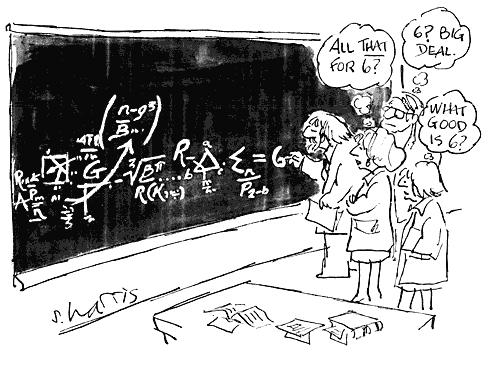
Why the Trinity matters is like asking why does gravity matter? Or why is oxygen all that important? Or do we really need to know anything about anything? I remember sitting in Algebra as a high-school student and thinking to myself, “Is this at all practical?” Indeed, it is practical. For without mathematics the very school building I was sitting in would not have been architected, planes could not fly, time and space could not be measured.

Just because something does not matter to you does not mean it does not matter. In fact, many things we do not think about matter. Imagine you stepped onto an airplane and the stewardesses did not give a safety talk before the plane took off. You would not know what to do in an emergency. If there is information about God that is important shouldn’t we seek to know and understand Him? Why does the Trinity matter?

The Trinity strengthens our relationship with God.

Can you really love something you do not know much about? This is a good question to consider. Take something you love and test it [write a list of things you love]. I love cheese. I am not an expert coinsure on cheese, but I have grown up in Wisconsin, I’ve tasted many kinds of cheeses, I have friends who work in cheese factories that cut cheese for a living, therefore, I know cheese and can appropriately love it. As lame of an illustration as that is the things we love we often learn, study, consume, relate to, experience, and take time and energy to know and understand. This in turn strengths our love and affection for it. To love God is to know and grow daily in all His ways.

God desires us to know and understand Him [Jeremiah 9:23-24; John 16:7-15]. That’s why He was given us His Word. Knowing God might not be the priority of every human being, at least right now, but it we will all one day come to the realization that knowing God is what matters the most.

The Trinity is not about ME.

I cannot wrap my melon around the scope of the Trinity, but that does not mean the Trinity does not exist. Just because I cannot fully understand something does not nix it from being real or truth.

We live in a me-centered culture that thinks everything revolves around “me”. You can spend an entire day thinking about yourself, but oblivious to the realities surrounding you. Like people prior to Galileo concluded our world was flat, but in reality it is a globe. We must face the truth that human beings are part of a larger cosmos that God created, sustains and revolves solely around Him. He is the blazing center of our universe. Man is on earth a blip on the radar screen of history, but God remains eternally. God does not exist to meet our needs, nor did He create us because He was lonely and needed little friends to keep Him company. He did not save man by sending Christ so that we could be with Him forever. Eternity exists so that we can know God—the Trinity [John 17:3].

The Trinity shows the uniqueness of Christianity.

Christianity is not like other world religions. It’s not even kind of the same. Not all religions believe in the same God [that is a contradictory statement]. It is radically different than all world religions. What separates Christianity from other belief systems? According to Christianity God became man [Matthew 1:18-23]. This God-man became the sacrifice for man’s sin. At Christianity’s core the Trinity—God the Father, Son and Holy Spirit—is unique to Christianity. Without the Trinity Christianity is dead. That truth alone helps me to understand that the Trinity matters.

are you sick?

Do you need a spiritual check up? As ministers of the gospel I find that we invest spiritual nourishment and resources into so many people and we often neglect our own spiritual health. If we are not careful we can leave ourselves depleted and drained spiritually. How do I know if I need a spiritual check up?

Meditate upon these questions and know they are not meant to drive you to despair, rather they are meant to direct you to God. God has wired me to be dependent upon Him. We will never arrive at some sacred status where we are not in need of dependence upon God. We will always need God and we will always be growing in the grace of God and His gospel. Here are Ten Questions to Diagnose Your Spiritual Health [adapted from Donald Whitney’s book]:

1. Do you thirst for God? [Psalm 42:1-2]
 What do you run to instead of God to fill your longings?
How can you grow in hunger and thirst for God? [Psalm 34:8]

2. Are you governed increasingly by God’s Word? Do you love God’s Word? Do you long to obey what God says? [Psalm 119]
 How can you foster love for God’s Word in your life? [Hebrews 4:12; 2 Timothy 3:16-17]

3. Are you more loving? [John 15:12, 17; Romans 12:10; Hebrews 10:24; 13:1]
 Have you grown in love in the past years of your Christian life?
 How would you like to grow in love in the next year?

4. Are you more sensitive to God’s presence? [Psalm 139:5-12; Jeremiah 23:24; Matthew 1:23; John 14:16-17]
 Describe how you listen for God’s gentle voice through His Word or in your spirit. [Genesis 28:16; Proverbs 15:3]
 How have you grown in sensitivity to God’s presence and work in your life?

5. Do you have a growing concern for the spiritual and temporal needs of others? Who (besides your family) is in your life right now that you are taking care of spiritually or physically? [Acts 4:33-34; Galatians 2:10; Mark 6:34-44]

6. Do you delight in the Bride of Christ? [Ephesians 5:25-27]
 Are you bitter or angry at Jesus’ church?
How are you growing in love and delight for Jesus’ church? [1 Corinthians 3:16; 6:19; 2 Corinthians 6:16; Ephesians 2:22]

7. Are the spiritual disciplines increasingly important to you? How important do you see the spiritual disciplines as being in your life right now? [1 Timothy 4:7]

8. Do you still grieve over sin? [Matthew 5:4; Psalm 51]
 When is the last time that you were broken over your own sinfulness?

9. Are you quicker to forgive? Are you still quick to hold grudges? [Mark 11:25-26; Matthew 18:21-35]
 How do you need to grow in forgiveness? [Jeremiah 31:34]

10. Do you long for heaven and to be with Jesus? How often do you meditate on heaven and the promises that will be reality to us when we pass from this life to the next? 
Do you get excited about heaven? [2 Corinthians 5:2; Romans 8:22-23]
 What about heaven do you long for?
 How do you long to grow in what Paul is talking about in these verses?

1:19 for I know that through your prayers and the help given by the Spirit of Jesus Christ, what has happened to me will turn out for my deliverance. 20 I eagerly expect and hope that I will in no way be ashamed, but will have sufficient courage so that now as always Christ will be exalted in my body, whether by life or by death. 21 For to me, to live is Christ and to die is gain. 22 If I am to go on living in the body, this will mean fruitful labor for me. Yet what shall I choose? I do not know! 23 I am torn between the two: I desire to depart and be with Christ, which is better by far; 24 but it is more necessary for you that I remain in the body. 25 Convinced of this, I know that I will remain, and I will continue with all of you for your progress and joy in the faith, 26 so that through my being with you again your joy in Christ Jesus will overflow on account of me. – Philippians 1:19-26

Why is Easter so significant?

So what? Why is Easter so significant? The simple answer is: God conquers sin and gives you a means to eternal life.

We tend to get lost in the bigness of life and we question what one person can do. We hear about the billions of people who roam this planet and it boggles our minds. There are nearly 7,000,000,000 people on this earth. That is a lot of zeros. How could anything significant or generationally impacting can from one man’s work? Oh, but without that One Man there would be no billions of people.

One man plunged mankind into sin.
One Man brought salvation to humanity.
By one man death come upon all.
Through One Man came grace to eternal life.

The resurrection of Jesus from the grave is eternally significant. It is the central theme and climax of the gospel [Matthew 28:1-10]. Without Jesus’ resurrection I have no hope of resurrection to life either. In order for Jesus to rise He had to die [1 Corinthians 15:1-4]. This is the message and truth of the gospel.

If there is no resurrection all that I am telling you is a lie [1 Cor. 15:14]
If there is no resurrection your faith is a farse [1 Cor.15:14]
If there is no resurrection your life is pointless [1 Cor.15:15]
If there is no resurrection you are not forgiven [1 Cor.15:17]
If there is no resurrection when you are dead you remain dead [1 Cor.15:18]
If there is no resurrection there is no hope of life [1 Cor.15:19]
If there is no resurrection future victory is uncertain [1 Cor.15:26]
If there is no resurrection you have no hope of lasting and permanent change [1 Cor.15:14]

I would therefore conclude that the resurrection of Jesus Christ, which we celebrate each Easter is eternally significant. Do you know Him?

What is so good about Good Friday?

“What is so good about Good Friday?” asked a girl with a quizzical look. When we scan the surface of the events surrounding Good Friday they do not seem so good, in fact, they appear grotesque. How could the horrific death of the Jesus be so good, when a bloody and baffling execution appears so bad? This question begs another:

What if Jesus never came?
Or instead, accepted immediate fame?
What if He never walked this earth?
And purposed to die from birth?

What if Jesus never willfully died?
And lived a ludicrous lie?
What if He never became the sinless sacrifice?
And tumbled in temptations vices?

What if Jesus never bore God’s wrath?
And became righteousness on my behalf?
What if He complained and moaned?
And left my sin unatoned?

What if Jesus copped out of the crucifixion?
And put a pause on propitiation?
What if to Him redemption did not matter?
Or withheld glory from His Father?

What if Jesus decided not to save?
Or remained hidden in the grave?
What if He failed to rise again?
Or reconcile mankind from within?

I thank God that He did die that day,
Demonstrating and redefining a Good Friday.
Amidst sorrow and melancholy mood,
I can confidently say, “We got IT good.”

what if those I am pouring my life into have gone empty?

Sometimes relationships go sour. Sometimes discipleship hurts. Sometimes those we invest our lives into bail on life and our efforts seem bankrupt. What do I do when I pour my life into someone and there are empty returns? What do I do when I am left speechless on the other end of and unanswered call? Or your cries are unheard or ignored?  Here are some good thoughts to remember:

Discipleship is intentional. When I invest in someone’s life I want him or her to know that I am. I intentionally let them know that I want to spend quality time encouraging their relationship with God not because I have it all together, rather together we can begin sharpening iron. Echo the voices of Jesus and Paul, “follow me.” [Matthew 4:19; 8:22; 9:9; 10:38; 16:24; 19:21; 1 Corinthians 11:1; 2 Timothy 1:13]

Discipleship is eternal. I am intentional about discipleship because I feel the weight of my responsibility before God: to reproduce my vertical relationship with others horizontally [John 15:16ff]. I am responsible for the spiritual growth of our teens. That is a heavy burden to bear, but God brings the fruit. My relationships matter to God. My relationships have eternal ramifications. That is huge.

Discipleship is generational. My relationship does not end with someone after a year or 12-class study. They last a lifetime [Matthew 28:19-20]. From one generation to another I must be willing to disciple and be discipled.

Discipleship is personal. When relationship end or the parking brake seems stuck that can be frustrating. Relationships do not come with 90-day money back guarantee. We might get burned and bruised. If you have some one you are investing in that does not want to be around you: give them over to God, keep tabs on them and don’t close the door on them ever. Chose another to invest in and press on. May our motto be, “I will most gladly spend and be spent for your souls.” [2 Corinthians 12:15]

Is Africa barbaric, forgotten or ignored?

Is Africa a continent out of control? Why are trucks loads of money, forces of relief aid, and sympathetic media attention not helping rather haunting the drifting dark land? In the past decade many regions of Africa have been blitzed by war and conflict, from the Democratic Republic of Congo (DRC) to the Sierra Leone crisis and the war in Ethiopia and the various other civil wars.

I’ve come across a book entitle Stealth Conflicts; How the World’s Worst Violence Is Ignored which, provides a useful map representing conflict death tolls between 1990 and 2007 where the square area of continents/regions corresponds to their proportion of conflict death tolls:

88% of all conflict death tolls in this period were in Africa, followed by Asia (6%), Middle East (4%), Europe (1%) and the Americas (1%)Source: Virgil Hawkins, New World Maps, Stealth Conflicts, December 30, 2008

In addition to the conflict deaths, there have been over 9 million refugees and displaced people. If this scale of destruction and fighting was in Europe, then people would be calling it World War III with the entire world rushing to report, provide aid, mediate and otherwise try to diffuse the situation. However, there is silence and no sympathy on a grand scale to extend grace to these WARnout African people.

I received this story from some friends serving in the Democratic Republic of the Congo this week, “Word had trickled out that the entire village was burned, although the inhabitants were rousted by gunfire and allowed to flee their homes.  The attack was in retaliation for ‘allowing’ government and MONUC (UN) troops to headquarter in their hamlet in a recent operation to seek out and forcefully repatriate the Hutus. Despite official claims, no success.  In classic guerilla fashion, the Hutu warlords who control columbium and tantalum ore mining – cell phones and jet engine exhausts – (google “coltan” if you are interested) and their militias had simply retreated into the heavy jungle.  Someone didn’t learn the lessons taught by the Viet Nam conflict?!”

Virgil Hawkins states, “The death toll from conflict in the Democratic Republic of Congo (DRC) is literally one thousand times greater than that in Israel-Palestine, yet it is the latter that is the object of far greater media coverage … [and where] the intricacies and nuances of the conflict, political situation and peace process are almost obsessively analyzed and presented.… [African] conflicts are frequently brushed off and dismissed as being chaotic, or worthy of some vague pity or humanitarian concern, but rarely of any in-depth political analysis. But even [when there is coverage of conflicts in] Africa, the death toll has little to do with the levels of coverage. Darfur made a rare appearance on the radar of Western concern in 2004 … at a time when the known death toll from conflict there was still 80 times smaller than that in the DRC. Similarly, political violence in early 2007 in Zimbabwe resulting in one death and a number of arrests and beatings of political leaders became the object of relatively high levels of attention and indignation in the Western media. At almost exactly the same time, political protest in Guinea was put down by government forces that fired indiscriminately into crowds of protesters resulting in a total of 130 deaths and numerous arrests. Also at the same time, street battles between government and opposition forces in the capital of the DRC resulted in between 400 and 600 deaths, and resulted in the exile of the opposition leader. Yet this violence in Guinea and the DRC was virtually ignored by the Western media.”

Q: Is Africa barbaric, forgotten or ignored?

A: All the above. It is time for the church to step up and step in.

doubt

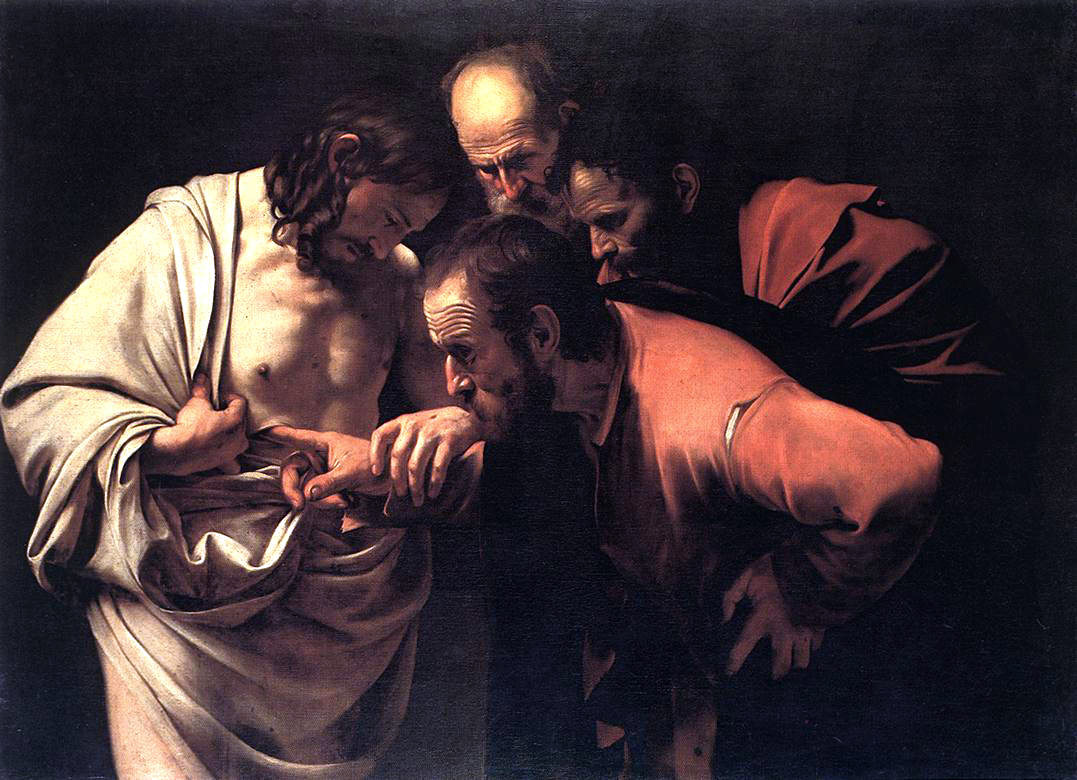
Doubting Thomas

A good friend of mine Ben Houchen posed some curious questions:

What if doubt is not the opposite of faith? What if Thomas was simply the only one willing to ask the question? What if doubt is not the opposite of belief? What if I am simply willing to ask the question? What if doubt is not the abandonment of truth? What if Jesus wanted us to hold mystery and truth together? What if doubt is not against God? What if we stopped pretending to know the answer, to hold the key, and once again look to Jesus for the strength to find answers where we can, and where we cannot, to praise Him all the more? What if doubt is not the opposite of faith? Thomas held the hand of Jesus on his way to belief, what if there is still power in the wounded hands of Christ?

“Then the eleven disciples left for Galilee, going to the mountain where Jesus had told them to go. When they saw him, they worshiped him—but some of them doubted. Jesus came and told his disciples, ‘I have been given all authority in heaven and on earth.Therefore, go and make disciples of all the nations,_ baptizing them in the name of the Father and the Son and the Holy Spirit. Teach these new disciples to obey all the commands I have given you. And be sure of this: I am with you always, even to the end of the age.’”

What if Doubt is not the opposite of faith???

plan G

plan G

A man once asked me the question of all questions, “If you were to die today where would you go?” I didn’t have a smart answer. I was curious, but though to myself, “Could anybody really know the answer to that question?”

How do I get to heaven? Many have tried to answer this question in many different ways:

  • You got to do a bunch of good deeds [hope to make the Cosmic curve for the class].
  • Do as you please [aka: heaven on earth]. This is the only life you got.
  • God is a God of love and wouldn’t send anybody to hell.
  • You got to have faith.
  • You got to follow the teachings of Buddha, Muhammad, Joseph Smith, or Jesus.

Yet these many ways do not answer the question. They just lead to more questions: How good is good enough? If this is heaven on earth, why is there so much suffering, sin and temptation? Why wouldn’t a loving God judge sin? Faith in what? How do we know which guy? What is your plan get to heaven?

PLAN A: By Being Sinlessly Perfect

If our eternity rested on our perfect performance we would all be doomed. We have all committed errors and made foul plays. This is called sin. You are not perfect. You cannot bat 1.000. Sorry to burst your bubble but you are not good enough [Rom.3:23 “all have sinned and fall short of God’s glory].

God is perfect. Our sin causes us to miss the mark of His glorious perfection.

The problem is that you and I are born sinners. You are born needy. You cry for attention. Ask any baby who desires the attention. You did not have to take sin lessons. We are educated as selfish little sinsner straight from the womb. And I have been sinning habitually ever since.

When people say that they are a “good person” or share their list of “good deeds” [i.e. help the poor, generosity] or compare themselves with “bad people” [i.e. Hitler or Bin Laden]…they are just sugar coating  the reality of their sinfulness [Prov.14:12 “There is a way that seems right to man, but in the end it leads to death.”]. PLAN A: I CANNOT CHECK

PLAN B: By Paying the Price for our Sin

Trying to be a good boy or girl only ends in disappointment and frustration because we can never quite match up. It ends in death [Rom.6:23 “For the wages of our sin is death…”]. This is more than physical death, but also eternal separation from God. Notice this spectrum of goodness [Evil being murders, rapists, and abusers / God being absolute perfection]:

EVIl and GOD Spectrum graphic

First on the spectrum is Mother Teresa [MT]. She is known for her compassion for orphans in Calcutta. Under “Christian” in the dictionary would be her picture. Some would say she is the best of all Christians, yet in her biographies she admits struggling with many sins. Second, Billy Graham [BG], the long known evangelist who was used by God to bring many into God’s kingdom. He preached to more people than anybody in history. Yet he publicly admits his fall into sin. Then there is me [JT]. I cant even be in the same category with MT & BG. Just ask my mom or wife and they will let you know what kind of sin I am!! Where would you put your initials?

Mother Teresa, Billy Graham and I are in serious trouble. We cannot match up to God’s standard. We fall way short. This applies not only us, but you too. It doesn’t matter if your parents are Christians, if your grandma prays, if you go to Africa to help AIDS children, if you go to church every time the doors are open, you will still fall short.

There is a giant chasm that separates you and me from God [cf. Bridge to Life]. It is like trying to throw a stone from where you are to the North Pole. Some might throw farther than you, but we all still fall way short. Our sin creates a separation [Is.59:2 “It’s your sins that have cut you off from God. Because of your sins, He has turned away and will not listen anymore.”]. We cannot pay the debt load for our sin. It cost too much. PLAN B: I CANNOT CHECK

PLAN G: By Trusting in the One who did

Since Plans A & B fail what other option do we have? How about Plan G? Plan G = God’s Grace. Grace us unmerited favor or a gift from God that you do not deserve. I do not deserve God’s grace even on my best day. No one deserves it. This is why it is called grace [Rom.6:23b “…but the gift of God is eternal life through Jesus Christ our Lord.”].

What does God’s grace look like? Because of His love He sent His Son to die on the cross for your sin [all your junk, funk errors, strike outs and foul plays]. His grace can at a gruesome cost; execution on a cross. Jesus did the work of Plan A & B before He went to the cross. He did what we could not do. He did it for you. The work is done. The cross bridges the separation. It is a homerun game willing deal.

Religion = DO. Do this and don’t do that. It doesn’t work.

Relationship with Christ = DONE. It is finished on the cross. [Jn.19:30]

From the moment we receive God’s grace there are many things we receive: Forgiveness, Christ’s Righteousness, acceptance into His family, reconciliation, redemption, and so much more.

How do I get God’s grace?

Admit. Admit that you have fail with Plan A & B. That you do not measure up to God’s standard. That your sin separates you from Him. See yourself as God sees you. Recognize the chasm between you and him.

Believe. Believe that God sent Jesus to die on the cross for your sin. It is not about understanding everything. It is about trust.

Receive. Let Jesus come in. Open the lid of your heart and let Him come in. Let Him change you from the inside out.

PLAN G: I CAN CHECK, DONE

are you a murderer?

small_img-1Have you ever seen the America’s Most Wanted on TV? It can be frightening to know that the person staring at you in the wanted ad is on the loose, armed and dangerous. Most of us probably don’t know a person who is armed and dangerous. However, you might be more of a murderer than you think.

The Sixth Commandment simply states, “You shall not murder.” (Exodus 20:13) In other words, we do not have the right to take the life of another human (that is wrong). Only God has that right. We are not to take the place of God and decide who will live and who will die. We are made in the image of God; we are the crown of His creation, therefore we are not to diminish the value of human life as to the killing of animals.

The 6th Commands are particularly destructive because there is no real restitution can be made for murder. A murdered human cannot be brought back to life. Even if you have not committed murder don’t sit to comfortably yet. You see, the 10 Commandments are not only to be obeyed in action, but also in attitude. Sin is not only external (actions), but moreover internal (attitudes).

Are You a Fan of Murder? Since the beginning of time humans have been carried knives, spears and guns for the purpose of killing another life. Hollywood spends billions of dollars into movies than make murder an entertainment. We act out killing in video games for pleasure (now I’m a Halo 3 and Call of Duty freak!?). We are fascinated with blood, gore and death. This is all confronted in the 6th Command.

Murder is not only physical, but verbal and mental [Matthew 5:21-22]. When Jesus says we “Raca” someone we are essentially murdering them with our words. “Raca” was an Aramaic term of hatred. If you say that another human is worthless you are essentially saying that they do not deserve to live, they are better off dead. Hateful words are murderous.

The slippery slope of hateful words is sure: unchecked anger leads to rage, rage leads to an out of control tongue (hurtful words, gossip, slander, etc), an out of control tongue leads to out of control actions. These hurtful words are like emptying a feathered pillow from a mountain top. It is easy to let the feathers go, but practically impossible to pick up the damage afterward. Eventually your hateful words will destroy someone.

Have you ever been slain by a slanderer? Have you ever murdered someone with the words that come out of your mouth? Are you are a serial slanderer?

Slander = telling hurtful and hateful words about someone else (usually a lie).
Gossip = telling hurtful and hateful words about someone else (usually a truth).

How do I stop being a murderer with my mouth? We are to put of hurtful words and put on godly ones [Eph.4:22-32; Col.3:8, 12-17]. Hurtful and hateful words can kill a relationship quickly. The Bible says that out speech is a gift from God. Your words can praise God and curse God. They can honor Him or tear relationships apart.

Truth be know, I can say hurtful things to say without thinking about it (little sarcastic comments), for these I need to apologize and change. Some practical steps for changing my murderous mouth are:

1. Confess your murders to God and the person to whom you murdered.
2. Keep you mouth shut and pray (Ps.19:14 “May the words of my mouth and the meditations of my heart be pleasing to Your eyes…”).
3. My Motto: Jesus, the Word, is the only hope for our words! (John 1:1)

real question: miracle?

question-door1Ned Anzers: I would certainly believe God is real if He would show me a sign. Why doesn’t God just give me a miracle?

We all love magic tricks. We know that they are just illusions, but they still fascinate us into believing they are real. Jesus was no magician. No doubt He was the real deal. The miracles He did were seen and experienced by many. Some of His miracles include: Calming a storm, feeding 5,000 people with 5 pieces of bread and 2 fish, walking on water, turning water into wine, healing the sick, paralyzed and blind, and raising a person from the dead.

Why did Jesus do miracles? Certainly it wasn’t to show how cool He was, but to help others believe He was God. Miracles did catch the attention of those watching. So why doesn’t God do similar miracles today as He did through Jesus? If He did certainly everyone would believe in God, right?

To answer this question I will to zero in on one of Jesus miracles. It was the last, but the greatest miracle of Jesus’ public ministry. Lazarus was a friend of Jesus and sister to Mary (the prostitute). There is nothing fishy about this miracle. Jesus simply says in three words, “Lazarus, come out!” and a man wrapped in grave clothes comes out of his tomb, not as a mummy but back from the dead. Jesus doesn’t do this I secret, but a crowd of people saw the miracle (John 11:1-44).

There are some general principles to be wrought from this miracle of Jesus.

First, Jesus purposed for Lazarus to die.

He delayed in coming (v.6). He could have prevented Lazarus’ death as Mary and Martha believed (vs.21, 32), but He chose to let Lazarus die. God purposes things to happen in your life to see how much you trust Him.

Second, Jesus Loved Lazarus (vs.3, 5).

He loved them because He knew them very well. Throughout the text Jesus was outwardly affectionate toward his friend, “deeply moved in the spirit”, “troubled”, “wept” (vs.33-38). Jesus knew He was going to raise Lazarus from the dead, he felt sorrow for Lazarus’ loved ones and those who still did not believe. God loves you too because He knows you very well.

Third, Jesus delay and the death of Lazarus was for the Glory of God (v.4).

God is glorified by the demonstration of His power (v.25-26 “I AM the Resurrection and the Life. He who believes in Me will live, even though he dies; and whoever lives and believes in me will never die.”) And God is glorified by the demonstration of your faith (vs.14-15 “Lazarus is dead, and for your sake I am glad I was not there, so that you may believe.” / v.40 “Did I not tell you that if you believed, you would see the glory of God?” / v.45 “therefore many…put their faith in Him.”). Jesus purposes things to happen in your life to show His glory.

So why doesn’t God do a similar miracle today so that people would believe in Him? Well look are verse 12:37, “Jesus did all these miracles in their presence they still would not believe in Him.” It is true, after Jesus many recorded miracles people still didn’t believe that He was God.

Jesus miracles were not done to amaze us, but to show how amazing God is. The miracle is not so much what Jesus did, but who He is. Miracles illustrate a deeper truth about Jesus. After Jesus feed the 5,000 people with a little boys lunch He says, “I Am the Bread of life.” To this the disciples replied, “This is a hard teaching. Who can accept it?” It is not that they did not get what Jesus was saying or doing, since they could still taste the miracle on their very tongues, rather they did not like the implications of His miracles on their lives.

Some might say, ‘Sure Jesus did miracles, but I don’t have to believe He is God.’ You’re right. However, the greatest miracle He wants to do in you is one that He did in me, rescue you from death and bring you into new-life.  Will you trust that Jesus is the “Resurrection and the Life”? (John 11:25-26)