I wish I had thought of the idea first. Cleaver.

[HT]


Today my baby girl surprised us all by growing way too fast. As of 4:30am this morning she has breathed 365 days on this earth. Each of those days have been a joy and blessing. Here is a letter Justus’ mom and I wrote for her today,
Dear Justus,
We are so glad that you are our first baby girl. God has used you to teach us about Himself, and He has blessed us with joy through you. We pray often that you will come to know Him and that You will love His truth. This last year has gone by really fast, which is a simple reminder that you’re going to be an adult before we know it. Some of the characteristics that God is shaping in you even now are: a gentle spirit, a love for His creation, and an obedient heart. Your smile blows us away. We hope these things continue to shape your life and are culminated by God’s Spirit in your salvation.
The last three months have not been easy for you since we’ve been traveling on the road and introducing you to alot of strangers. You’ve slept in so many places, and we hope you understand that as we prepare to raise you in a strange land, it is God’s power that we depend on and He will accomplish His purposes.
Some of the fun memories with you this year have been: flying to North Africa and taking a bumpy car ride, going to the beach with Gramp, Nana, aunts, uncles, and cousin Lyla, visiting the zoo in Indy and Green Bay, and seeing you take your first steps at the Ristau’s house.
You have done turkey calls, learned to give kisses, and become obsessed with ducks (first at the Houchen’s house) this year. We found out some special news on your special day. We can’t wait to see what God will do next year! Happy first Birthday!
Love,
Mom and Dad



Have you ever wondered what it would be like to grow up in a family—wealthier or better known—than your own? Do you daydream about the day you break free and become noticed or distinguished? Do you feel like an average Joe or ordinary Jane? You are not alone. The majority of people and families you meet are just like you.
I grew up in what many would call a dysfunctional family. My teenage parents divorced before I could remember them together. I did not like my lot in life for the better part of my childhood. I would daydream about the day my mom and dad would get back together and our family would be normal, which did not happen. I wondered whether or not I was the cause of my parent’s divorce, which was unfair. And I wondered what it would be like to live in a normal family, but defining normal is impossible. Since those early days, I have learned to love my God-given family for reasons I will describe later.
I love the Bible because it is filled with examples of imperfect families just like mine that He uses for His purposes. From the beginning of the story of Joseph—which will carry us through the remainder of Genesis—we learn four truths that are common to human including you and me.
From the outside looking into Joseph’s home life you would think they were quite redneck. His father, Jacob, had thirteen children with four women, two were maidservants and two were wives. He loved his wife Rachel and hated her older sister Leah. Jacob also played favorites with his children loving his first son with Rachel, Joseph [cf. Gen 30:24-25], more than his other sons. Jacob did not hide his favoritism for Joseph. He adorned him like a king in an expensive coat of many colors. All who met Joseph knew he was his daddy’s favorite dressed up in his Hebrew bling from Burlington Coat Factory.
Jacob also favored hardworking Joseph by giving him authority over his older brothers and sent him out to the fields while his brothers worked to supervise and report back to their father.[1] The brothers view Joseph as a spoiled rotten tattletale, “When his brothers saw that their father loved him more than any of them, they hated him and could not speak a kind word to him.” [37:4] The brother’s anger sounds a lot like Cain’s boiling anger towards Abel’s sacrifice that God had favored [cf. Genesis 4].
Joseph is only seventeen. Most teenagers his age have issues with their parents and siblings. It is easy for us to wonder, “Why did God give me this family?” Maybe you’re a child of divorce, abuse, or neglect. Maybe conflict is all too common in your home and you can relate to the sibling rivalry, favoritism or ungodly habits of Joseph’s home. Remember you did not choose your family, but God chose your family for you. This can be a hard truth to swallow depending on the degree of difficulty you have with your family. As difficult as your family may be they are still and always will be your family.
It is interesting how important the family unit is to God. God uses the family analogy to describe Christ’s relationship with the church [Ephesians 5:22ff], the relationship of the Trinity with one another [i.e. Father and Son], and uses family to describe His relationship with those He adopted into His eternal family through faith [Romans 8:14-17]. God promises to create a people for Himself to use for His purposes. Joseph’s dysfunctional family was surviving only by the mercy of God, but He will use them for His divine purposes to shape the character of the youngest son, Joseph.
Compounding matters for Joseph and his already ragged relationship with his brothers, God had given Joseph dreams in which his whole family was bowing down to him in homage. When the dreams should have been kept private he made them quite public. This did not help Joseph build a bridge of bonding with his perturbed older brothers. ”His brothers were jealous of him, but his father kept the matter in mind.” [37:11] Jacob rebukes what he thinks is a ridiculous dream and didn’t do anything more than keeps the matters to himself. Then he sent Joseph out into the field to supervise his brother’s work [37:12-17].[2] The one quality character we see in Joseph that will come into play later in his life is his willingness to obey authority.
How should Joseph have responded to these dreams? Perhaps he should have taken them as a subtle warning about the place of pride in his life and began cultivating humility. Or maybe he should have taken the details about the future as an opportunity to wisely prepare for the leadership role that God was going to give him. Instead, he used the dreams as hot air to further inflate his already puffed-up opinion of himself. It’s a recipe for a messy situation.
As people we are also prone to take the good gifts of God—our positions, our possessions, our intelligence, our education, our sexuality, our ability to pray—and use them, not for the benefit of others and the glory of God, but only to make ourselves feel better. Think about it. What good gifts has God given you that you are tempted to use solely for yourself?[3]
The brothers grew jealous of Joseph and stripped him of his regal robe and tossed him into a waterless well. There they conspired whether or not they should kill him [cf. Genesis 4] or sell him into slavery. Rueben tries to reason with his brothers, when he should have stood up and said, “Listen, I know Joseph has been a pain in the keester, but we’re not going to do anything to harm him” Instead, Rueben along with Judah who led the brothers to spare Joseph’s life, but make some money selling him into slavery. ”So when the Midianite merchants came by, his brothers pulled Joseph up out of the cistern and sold him for twenty shekels” [37:28].[4] Joseph was taken to Egypt.
The brothers mean-spirited prank was well planned, but they were missing one detail, how would they inform their dad what happened to his darling son? To cover up their sin the brothers slaughtered a goat and sprinkled its blood on Josephs coat. They took the blood soaked coat back to their father and they tricked the trickster [cf. 25:26ff] into believing their lie. Jacob mourned bitterly believing that his most beloved and irreplaceable son had been ripped apart by animals. The guilt of this prank would haunt the brothers the rest of their lives.
Last summer I took a hiking trip with my wife through Rocky Mountain national park. She was 5 months pregnant and thought that climbing a 6 mile hike up a mountain to over 14,000 feet elevation would be a good idea. Halfway through the climb I ended up carrying most of the backpack weight and coaching Sarah up the mountain. Needless to say we made up the mountain, but I wasn’t a happy camper. Life is like a hiking trip through the mountains. In life you have a number of peaks to climb. Some steep and some slick. Some reasonable and others seem ridiculous. Some fun and others seem unfair.
Joseph is experiencing a rocky road hiking through mountains [grand dream] and valleys [sold as slave], which seems to be out of his control.[5] I wonder what he is thinking as he’s being sold into slavery? Is he taking it in stride? Does he doubt God’s fairness? Is God even on his radar? Young Joseph’s may have been dealt an unfair set of cards. He’s been snookered and shackled. Life at times is unfair to our eyes, but God is not distant He is at work.
Can you imagine what is going through Jacob’s mind as he is being carted of to Egypt as a slave? What would you be thinking? “Why me God? This is so unfair. Why did I have to be born into my family? I am only a runt. What about that dream you gave me? Like that will ever happen. Now nobody will ever notice me.”
God seems to be completely absent from the brains of the brothers. However this by no means indicates that God is absent or not actively involved in what is happening. God, in fact, is superintending everything that is happening in Joseph’s life as He does with you too.
In the last verse we have an amazing setup to Joseph’s future, ”Meanwhile, the Midianites sold Joseph in Egypt to Potiphar, one of Pharaoh’s officials, the captain of the guard.” [37:36] What this verse hinting at after an unfair handling of Joseph is that his dream does have some significance. In spite of the persecution and the deception, God’s program will continue. God is sovereign! When your life seems out of control God is still in control. You might be blind to the next step, but God sees the course of your path.
God truly does cause “all things”—including those seemingly random things like sins against you and even your own sins—“to work together for good” [Romans 8:28]. If you really believe that, then you won’t feel the need to throw others into the pit when they hurt you—and you will also have hope in the midst of guilt and regret over your own personal sins.
Maybe you weren’t the faithful parents you should have been. Maybe you wasted your youth in self-centered living not content to be just an average Joe. Maybe you didn’t speak up for Jesus when you should have. If you are God’s child, you need to know: God works all things—even your failures—for the good of His people. He will work something beautiful out of the mess that you have made.God is big enough to forgive your sins through Jesus Christ [1 John1:8-10]. He is big enough to help you overcome your sins [1 Corinthians 10:13]. And He is even big enough to use your sins as part of His bigger plan. Even though you may have meant it for evil, God will work it for good! That is God’s sovereignty at work!
All these facts combine to make the account of this unusual family not a story of godly heritage so much as a story of mercy! Thank God that, in His Son, He is just as merciful to irresponsible, stumbling sinners today! God uses imperfect nobodies as examples to everybody that reflect the character of the Perfect Somebody He has chosen.
It was my normal dysfunctional American family that I thought was unfair as a child that drew me to Christ as a teenager, that taught me about my unreasonable expectations for my parents, that led to reconcile with my mother as a college student, and that has given me motivation to lead my own family to follow Jesus as an adult. I am so grateful for the family that God has chosen for me. God has given me many opportunities to minister to countless others who are struggling with understanding God’s purposes and goodness. I’ve encouraged them to look to Jesus who takes average Joe’s and invites them to a lifelong relationship as children of God.
[1] Note: this will not be the first time Joseph is elevated to a position of authority. A theme this narrative is how God empowers people despite the circumstances. The lesson is timeless: God will choose a faithful, righteous person for a position of leadership in spite of the jealousy of others.
[2] The fields are about 64 miles away. This is an early indicator that famine was coming since they were going so far away to find ground for gazing. The ground is also surprisingly in Schechem where two brothers shed blood [cf. 34:25-31].
[3] Now difficulty in our life can happen even when we are living in humility and integrity. Jesus does promise that living for Christ can be followed by intense hardship and suffering [2 Corinthians 1:3-7].
[4] An amazing archeological fact that corresponds to the reliability of the Bible is that 20 shekels [est. $2000] was the going rate for slaves during this time period.
[5] The choices Joseph makes at this period of his life are critical and life altering. Joseph is only seventeen, but in the next 10 years he will make the biggest decisions of his life. What are some decisions you make between the ages of 15-30 years old? You solidify personal habits, moral habits, and spiritual habits. You turn the pages to monumental chapters in your life such as: graduation from high school and college, make career choices, may enter marriage and have children. Joseph is entering the period of his life where he will make some of the most important decisions of his life.


Baptizing Heathen Words. What words have Christians redefined?
How to Get the Most Out of Your Pastor’s Preaching.
50 Rules for Dads of Daughters. As a new father for a daughter these perked my attention.
Acts and Baptism: Implications for Parents. Before baptizing your children consider this.
Four Steps to Kill Sin. Sinclair Ferguson tackles the mortification of sin.
Homeschooling Blindspots. Some interesting insights as we consider homeschooling overseas.
Love Tap. Encouragement for the timid [watch video below].



Jacob left home a 40-year old virgin and now he returns with two wives, twelve children, and countless wealth. Jacob is content settle in Schechem, but God speaks to Jacob and says, “Get up, go to Bethel and live there.” And like Abraham [cf. Genesis 12:4], he obeyed. God not only wants Jacob to leave his place of comfort, but also to cleanse his home of impurities. God point out that their home was filled with spiritual lethargy and idolatry. Jacob surprisingly responds with obedience.
This is the first time we see Jacob rise up and become the spiritual leader of his home. After cleansing his household Jacob worships God.[1] In response to his faithfulness God protects Jacob’s family as they pass through the land. When Jacob enters his homeland God blesses him and reminds him of his new name [Israel, cf. 32:28], His creation mandate [35:11; cf. 1:28], and the covenant promises of land and lineage given through his father and grandfather.
Why does God repeatedly ask Abraham [12:1-3], Isaac [17:4-6], and Jacob to “be fruitful and multiply”? Does God simply love babies and enjoy the families? Yes, but there is more to it than that. God begins with a promise, “I am God Almighty” [El Shaddai, 17:1] and ends with the command to fill the earth. He is not God Almighty merely in general, but Almighty in relation to Israel. His Almightiness is there for Him and His children. The promise enables the command, “You can be fruitful and multiply because I am God Almighty. I am the covenant God of Abraham and Isaac. My Godness and my Almightiness are covenant Godness and covenant Almightiness. And if you will trust me as God Almighty, you can and you will be fruitful and multiply. And companies of nations and kings will come from you.”
The promise God mentions here, Paul the Apostle later extends to the Gentiles. Through Jesus Christ the Gentile Christ followers inherit the blessings of their father Abraham [cf. Romans 4:16-18; Galatians 3:6-8,16,29]. This is the very same logic that Jesus uses in Matthew 28:18–19 when He says, “All authority has been given to me in heaven and on earth. Go therefore and make disciples of all the nations.” In other words, “I am Christ Almighty; go and be fruitful and multiply my disciples.” Our confidence to share the message of Christ comes from the authority and the Almightiness of Christ.
As Jacob’s life comes to his final refrain we are now seeing a rhythm of regular worship and intimacy with God that was lacking in his life. This new foundation of faith would be tested as his beloved wife, Rachel, dies giving birth to his son Benjamin, and as his youngest son Reuben has an affair with his stepmother [Bilhah]. This great sin against his father cost him his position as the firstborn son [Genesis 49:3-4; 1 Chronicles 5:1]. In God’s sovereignty He uses this sin of Rueben to open His promised line through the line of Judah.
Finally, after at least twenty long years away from home Jacob alas returns to see his father Isaac. Jacob’s sons got to meet their grandfather just before he dies at the age of 180 years old [35:28-29]. His two reconciled sons Esau and Jacob bury him. And the genealogy listed at the end of Genesis 35 through chapter 36 illustrates that God will keep what He promised to Jacob. The names of Jacob’s 12 sons roll off our lips with ease [Ch.35], but the sons of Esau are unfamiliar to our ears [Ch.36]. God is faithful to follow though and bless those He calls. Bank on it, if He is your God He will do all that He says He will do.
Jacob Comes Home and God Comes through Just as He Had Said.
[1] Note: Jacob builds an altar in Schechem to honor the God who appeared to him, he builds an altar after God cleanses his home, and he builds an altar and pillar at Bethel because God has provided, protected, and fulfilled all His promises. Jacob once a wanderer is now a worshiper.


Jacob is not the poster child for godly examples to emulate. He is 70 years old, single, jobless, a total momma’s boy, and is now homeless on the run from his brother because he ripped off his birthright and father’s deathbed blessing. Jacob is literally between a rock and a hard place, but mostly from his own trickster tactics. The only glimmer of hope is a dream he is given from God on his first night alone away from the comforts of home. In the dream, God passes the torch of covenant promises given to Abraham and Isaac to Jacob and also promises to be with him until he comes back to the Promised Land.
Today we are going to walk in Jacob’s sandals and see how he moves from being a recluse to reconciling with his brother. Jacob’s journey is Hollywood script or screenplay material. His story is full of adventure, romance, drama, and with twists and turns has sort of a happy ending. We begin immediately following Jacob’s dream as he enters the land of Laban, his uncle [Rebekah’s brother].
As Jacob arrives at Laban’s sheep farm, he gets a glimpse of the beautiful bombshell, named Rachel [which just so happens to be Jacob’s first cousin]. Immediate Jacob gets to work to impress this gal. Since, Jacob comes to Laban empty handed he is asked to work. In exchange, Jacob bargains for a bride—the beautiful Rachel [meaning lamb/ewe].
Now Rachel had an older sister, named Leah [meaning wild-cow]. She had a crazy lazy eye. Both girls were unmarried probably because Leah was not much of a looker. And Jacob, like all the other guys in town, wanted to marry red-hot Rachel. Laban made Jacob work for seven years to earn the right to marry Rachel. And in one of the most romantic verses of Scripture, “Jacob served seven years for Rachel, and they seemed to him but a few days because of the love he had for her.” Isn’t that so sweet and sappy?
Ironically, Jacob reaps what he sows [cf. Galatians 6:7-8]. After tricking his brother Esau he seems to think his life is prospering: he has escaped the hand of his brother, God promises to bless him, and he is about to marry the woman of his dreams. The big day arrives and Laban throws a wedding feast. Obviously, Jacob has a few too many glasses of wine at the wedding to notice that Laban pulled a switcheroo and gives away Leah rather than Rachel. The next morning when Jacob rolls over in bed he stares into the wandering eyes of his new wife Leah. I can only imagine Leah smiling at Jacob with a crooked buck-toothed grin.
Jacob confronts Laban deceptive plan, but Laban gives a lame yet legitimate reason, “It is customary for the oldest child to be provided for before the younger.” Though true, it is still a low blow. Jacob, the persevering romantic, loved Rachel so much that he was will to work seven more years for Laban. God is using Laban to chisel at Jacob’s character. When Jacob finally works fourteen years to marry Rachel he expresses his love for her over Leah. This begins another sad story of favoritism that will rip apart this family.
Jacob gets what he wants—Rachel, but as soon as he marries her God closes her womb. Like Jacob’s mother and grandmother, Rachel is barren. Since, Rachel is barren, Leah sees this as her gateway to Jacob heart. Leah gets pregnant, all the while hoping, Jacob would finally love her because she would make her hubby a daddy. It did not quite work out as she planned. Three baby boys later she was sure Jacob would fall for her. Yet Jacob had no love for Leah. She has four-and-no-more until she gives praise to God. It took four pregnancies for God to finally get a hold of Leah’s heart.
Rachel, like any sibling wants babies too. She sees her sister and becomes jealous. So in an overdramatic outburst she demands Jacob, “Give me children or I shall die.”[1] Jacob responds in anger that it is God whom controls her womb. Could Jacob be growing in his faith? I think not! For immediately, like Sarah giving her servant Hagar to bear child, Rachel gives her servant Bilhah to Jacob. It does not look like Jacob is trusting God as his father Isaac did by turning to God in prayer. Rachel also takes matters into her own hands and Jacob did nothing about it. In fact, he went along with the adulterous sin. Rachel’s servant Bilhah gives birth to two boys, Dan [meaning judge] and Naphtali [meaning wrestle]. Their names are fit to Rachel’s sibling jealousy and lack of trust in God.
Not to be outwitted, outplayed or outsinned Leah in turn gives Jacob her servant Zilpah to sleep with. Leah brags about it when Zilbah who gives birth two boys and names them Gad [meaning luck] and Asher [meaning happy]. Leah, like Rachel, forgets to see that the blessing of children is from God. Doesn’t this family seem a little redneck? They would more accurately be dubbed, rebellious. The story gets stranger as Jacob’s firstborn son Reuben finds some mandrakes [an herbal aphrodisiac]. He gives them to his mother Leah. Rachel is a freak for mandrakes and she trades bedtime with Jacob to Leah—paying her as like a prostitute. Jacob-the-pimp doesn’t question the ethics of his wives and sleeps with Leah. She gives birth to two more sons, Issachar [meaning hire/wages] and Zebulun [meaning honor].
Somehow Leah resorts back to having babies out of jealousy—always a bad idea. And somewhere Rachel prays to God, He graciously answers, opens her dead womb, and gives her a son. They name him Joseph [meaning may he add]. Joseph was the youngest boy until Rachel later had Benjamin [cf. 35:18]. Add up all the boys from four momma’s and Jacob is the proud papa to a bakers dozen—12 boys + 1 girl, Dinah.
Through this dysfunctional, jealousy-ridden, polygamist family, God would safeguard His covenant in Jacob’s sons. This family would become the initial branches of the twelve tribes of Israel through whom Jesus would be born and heal the human sin problem, which was so evident in Jacob’s family. By God’s grace alone He saves this family from themselves. Revelation 21:1-14 reveals how these twelve sons who came from the four conniving women in Genesis will mark the gates of heaven where Jesus is awaiting those He has also saved by His grace.
According to Jacob, it was about time to move out on his own. He is 90 years old, has two wives, and twelve children from four different women. What his mother thought might be a few day flee from Esau ended up being twenty years working for free for Laban [his father-in-law]. He built for Laban a sizeable ranch that pulled in some fat-cash.
Through demonic divination Laban learns that he has been blessed with wealth and power because Jacob has the covenant blessing of God upon him. Jacob desires to return home to the Promised Land to his father Isaac, however, Laban like a crooked used car salesman seeks to keep Jacob around the ranch by offering to finally pay him a reasonable salary. Jacob, like his father [Isaac] and grandfather [Abraham] rejects the gift and entrusts himself to God in faith. God honors Jacob’s faith and makes him a very wealthy man. Though it may seem like Jacob is taking advantage of Laban the truth is God is making right a wrong by giving Jacob what he earned during twenty years of faithful and fruitful labor for Laban.
God is big on keeping His promises. He has promised to be with Jacob and get him back to the Promised Land. God calls, “Return to the land of your fathers and to your kindred, and I will be with you.” [31:3; cf. 12:1] Jacob responds immediately in faith. His wives also respond in faith [note: Rachel steals the household idol]. Jacob loads up the kids in the camel caravan and leave Laban’s home in secret while he is out giving the sheep a haircut. They leave undercover possibly out of fear that Laban would come up with a sly way to keep Jacob working around the ranch.
When Laban finally found out that his daughters and grandchildren were gone he and his relatives pursued Jacob for seven days until they caught up with him. Ironically, the same Laban who tricked Jacob into marrying both of his daughters became rich because of God’s blessing upon Jacob. He cheated Jacob by changing his wages ten times and complained that Jacob had been deceptive with him. However, God protected Jacob by appearing to Laban in a dream and commanding him not to harm Jacob in any way. Laban only accuses Jacob of stealing his household idol, but he was unaware that his wife Rachel stole them and was sitting on them.
Jacob honors God by praising Him for all blessing he and Laban have received [31:42]. Then Jacob and Laban shake hands and agree Jacob will take no more wives. They built a monument to remember the covenant. Laban kisses his daughters and grandchildren goodbye and the men part—Laban went back home and Jacob to his old home in the Promised Land. This set the stage for a story for Jacob to meet his brother Esau for the first time in twenty years [come back next week to find out what happens].
[1] These words would later proved to be prophetic and tragic; Genesis 35:16-19.


I am one of six. I have three brothers and two sisters. I am at least 10-years older than my closest sibling. If you have siblings then you know what it is to have a rival. Since most of my siblings are much younger than I am our battles were either unfair or annihilation’s. I was more of the big-brother-built-in-babysitter, but now as my siblings are getting older I get my fair share of beat downs. Mostly verbal onslaughts related to my balding scalp and growing belly.
Today we will peer under the roof of a family with twin brothers who were all boy and at times bad to the bone. Most siblings can relate to these two dudes. However, what their story unfolds is a story that opens up a greater story of redemption and reconciliation, which we will discover over the next few weeks.
Isaac [the promised son] married Rebekah [the prayed for wife], but come to find out she is barren. This is not a good thing for a family that is promised to bear the Seed of Hope [the promised Son—Jesus]! However, Isaac learned from the story of his mother and father. Instead of taking matters into his own hands he prayed to God who can open wombs as He did with his mother’s womb. God answered with a miracle bringing to life Rebekah’s dead womb.
Rebekah was blessed with not just one, but with two rambunctious boys. Even before her boys breathed their first full breath of oxygen they were picking on each other. Inside their mother’s belly the boys were like to UFC brawlers throwing fists and feet, but instead of a rope and ring they were using the walls of their mothers womb. I have seen my wife’s reaction when our little girl got moving. I could not image two burly boys bouncing around.
Rebekah does not understand why this is happening so she asks God. Isn’t this family something great? Two parents seeking God on behalf of their children. God responds to Rebekah’s inquire with historic news. The two boys within her would be two nations, two divided people, one [Jacob] stronger and the other [Esau] a servant to the younger [cf. Romans 9:10-13; 2 Samuel 8:13]. This is an incredibly important oracle, which would come to play later in the life of the twin brothers.
The first boy to be born was Esau [also called Edom]. He was red and hairy with a coat of fur like Elmo or Clifford the big red dog. The second boy to be born was not far behind. In fact, on the way out he was holding onto his hairy brother’s heel. They named their heel grabbing son heel [or trickster], which in our language is translated Jacob. As they grew Esau became the man’s man always out in the field hunting and gathering trophy game, while his brother Jacob was more of the homebody hanging out with his mommy.
As great as this family started out to be—building a foundation of prayer and faith—there was another foundation being laid of partiality and favoritism. Since, Esau hunted meat his dad favored him, and since Jacob was at home cooking and cleaning with his mom, she favored him. This unbalanced foundation, if left unchecked, will lead to some major conflict in the home, which we are about to see [cf. 37:3].
Esau is the firstborn son. There are major perks for being the firstborn. Being the first born Esau was entitled to the family birthright, which would make him the inheritor of a double portion of his father’s estate, leave him as the head of the family when his father passed away, as well as enable him to receive a special blessing from his father. In Abraham and Isaac’s case the one who possesses the birthright inherited the Abrahamic covenant. Esau wielded a lot of power and promise as the firstborn son.
 However, Esau did not treat his birthright with that kind of importance. On an ordinary day, Esau, probably after a long day of hunting came hungry to his brother Jacob who was cooking a yummy smelling pot of stew or spaghetti. Esau was exhausted and wanted something to eat. So Jacob being the trickster got his brother to trade his birthright for a meal. Quite the unfair trade, but as crazy as it was Esau accepted. At the bottom of Esau’s trade was an indifference towards God’s covenant promise to bless all nations through the descendants of his grandfather Abraham, which would ultimately bring forth Jesus Christ. Instead in a moment of flippancy he gave up God’s covenant for the munchies. Later when he realized what a dumb and dishonoring thing he did it was too late [cf. Hebrews 12:16-17].
It is interesting to note this struggle between two brothers in the womb would continue well into the future. In fact, many years later it reached its climax when King Herod—a descendant of Esau—sought to slaughter all firstborn sons, which included Jesus Christ—a descendant of Isaac [Matthew 1:1-2, 2:13].
Similar to God speaking to Abraham, God speaks to Abraham’s son Isaac. The major similarities are God’s covenant promise to be with Isaac, bless him, and give him descendants and land. God blesses Isaac because his father Abraham “obeyed My voice and kept My charge, My commands, My decrees, and My laws.” [26:5; cf. Deuteronomy 11:1ff]
Throughout the rest of Genesis 26 are a number of similarities between Abraham and Isaac unfold:
• Both men received God’s call and promise. Both lived during a period of famine.
• Both men dwelt in Gerar both men had lovely wives. Both men were cowards in the face of possible harm.
• Both men lied and said their wife was their sister. Both men were spared the consequences of their sin by God’s mercy.
• Both men were rebuked by good Gentiles for their lying schemes. Both build altars to worship God.
• Both men were pursued by Abimelech for a covenant [two different Abimelech’s but both related].
• Both men were a blessing to their neighbors. Both men trusted God and lived peacefully with their neighbors.
Like Abraham, God redeemed Isaac’s unbelief. Isaac was blessed only because of God’s grace to him. God uses imperfect people and keeps His covenant promises. The chapter concludes with a brief note about Esau. Like Isaac, Esau marries at the age of 40. However, unlike Isaac he married two godless women without the counsel of his father, which following the birthright fiasco shows his foolish heart. Esau is a type of prodigal son who becomes a “source of grief to Isaac and Rebekah.”
Isaac was becoming old and senile. Therefore he called for his eldest son to give him a blessing. This is an important moment in the life of a son—often a life-changing and course-directing moment. Before Isaac offers Esau the blessing he sends him out to hunt a juicy steak.
 Rebekah, like Eve and Sarah, took matters into her own hands. Since she favored Jacob over Esau she devised a deceitful plan to rob her son Esau of his blessing. Could this be where Jacob learned his trickery? So Rebekah cooks up some goat meat to Isaac’s liking and dresses Jacob in Esau’s hunting clothes and pads his neck and hands with fur to match to texture of his brother’s man-sweater. Then she sends Jacob into Isaac’s tent and unbelievably the sinful scheme works as schemed. Isaac is duped and Jacob steals Esau’s special deathbed blessing.
Esau comes to his father shortly after with his hunt, but learns he is late and missed the blessing because of his younger brothers trickiness. Isaac becomes furious. Esau weeps, turns bitter towards his brother, and plans to comfort himself by killing him [cf. Genesis 4]. Rebekah catches wind of Esau’s plan and sends Jacob to Laban until Esau cool’s down out of fear that she might lose her both sons over her sin, but a few days ended up being 20-years. This family’s firm foundation of faith and prayer is quickly crumbling, and beginning to look more like an episode of the Maury Povich Show.
Before leaving for Laban’s, Jacob is blessed by his father and commanded to marry only a woman who belongs to God so that the promises of the covenant would continue through his family line. To spite his parents, Esau intentionally marries another godless wife in addition to his other wives that had brought nothing but grief to his parents. Both boys do not appear very godly or worthy of the family blessings promised through Abraham.
First, a look at Jacob gives you a glimpse of yourselves. He was struggling for power, even from birth through lies and strategic steals. Showing how sly and stealthy we are at sinning to get ahead. Second, his story gives us unusual insight into the Gospel and how God works. Despite his sin and imperfection God uses Jacob as the “covenant carrying” son of Isaac. Just like he uses sinful Jesus-followers to bear the message of good news to a darkened world. God is gracious and merciful!



Happy Father’s Day! Today’s message is a manly message. It’s for fathers, future fathers, and for men of all ages. Women, don’t tune out or take this Sunday off, this message is for you too. It’s for women [daughters, wife’s, future wives, singles, etc.] who love to support the men in their life. God takes pleasure in talking to men in the Bible. First He created Adam to be the leader and lover of his wife. When Eve took the temptation, God came to Adam. Later God established patriarchs to lead their homes, teach their children, and be responsible for peoples and nations. Also God’s Spirit spoke through inspired men who penned our Scripture. It is not that God has a low view of women or is sexist-ogre as some would like to believe. He desires men to be godly-leaders.
Two years ago my gramps passed away from cancer. Before he passed he said to me, “Justin, I am looking forward to being with my Savior!” then gave me two imperatives, “Take care of your beautiful wife. Keep following your God.” Those are two things I will never forget. Last words are important. Today we will look as some last word in the first letter to the church at Corinth.
Let’s do a short Corinthians Quiz: First, who wrote 1 Corinthians? Paul wrote with his own hand [16:21]. Second, what do you know about the church at Corinth? Most would say it was divided, had disunities, and was quite dysfunctional. All true. What church isn’t? Third, why did Paul write this church? Paul, like a father bending his boy over his knee sought to correct the congregation. The first 14 chapters of Paul’s letter to Corinth were a rebuke towards errant behaviors—even beloved chapter 13 was a rebuke towards lovelessness—and chapter 15 was a rebuke towards errant theology. Paul [a man] rebukes out of deep love for this church; just like Jesus’ [the God-Man] love for His church [cf. Hebrews 12:6].
Paul ends his letter with a list of five short, succinct, to-the-point imperatives. They are not simple suggestions; rather it’s as if he’s saying, “Do this, enough said!” Each imperative is a review of Paul’s entire letter to the Corinthians. As a pastor, like Paul, I will prod the men of our church to own these five imperatives of biblical manhood. My outline should be easy for the men in our audience, since each point is plagiarized from the two verses we will pick apart today, [start: 16:10] “Be watchful, stand firm in the faith, act like men, be strong. Let all that you do be done in love.” [1 Corinthians 16:13-14]
If you haven’t noticed Paul likes to talk in military terms. It helps his men-hearers understand. 1 Corinthians 16:13-14 is a charge to the troops! Like 1 Kings 1:2-3, “Be strong, and show yourself a man, and keep the charge of the LORD your God.” [cf. Joshua 1:6-7] Women, I know us pastors give a lot of male illustrations from sports, hunting, or warfare. It’s because we are men. We do not intend to leave out the ladies, but we have a hard time relating to tea parties, dolling-up, or other things ladies like. It’s good to embrace and encourage the ruggedness of your men and their love for guns or getting dirty [that’s the reason why my wife loves my big beard!]. Okay, here are five imperatives you are best to encourage in your men…
Like a commander calling to his men he says, “Attention! Stay alert. Eyes open. Watch out. Keep awake.” You get the picture of a castle tower guard scanning the scene for enemies anticipating an ambush or attack. The Corinthian’s needed an awakening. They were Christians in a moral and spiritual stupor. They had fallen asleep on duty. They substituted God’s Word with their wisdom [1:18-2:16], they were divisive [1:10-17; 3:9], they were immoral [5:1-13], they confused and perverted marriage, divorce, and singleness [7], they were self-serving [10], they misused their spiritual gifts [12-14], and they were unloving [13]. They were not alert at all. Instead they were off duty and were teaming up with the enemy.
I am a man who loves sports. On Tuesday’s some of the men of our church play slow pitch softball. It’s a fun sport. This week I played centerfield. Usually it’s a position with a lot of running, however that night nothing was even hit near my domain. I said to some of the guys, “It sure is a lazy day in the outfield.” Sure enough with a 7-run lead I let my guard down and became the lazy outfielder smelling the clovers and swatting mosquitoes. When the final inning came around it was our game to lose. Would you know it, the other team started cranking balls my way. It wasn’t pretty, but we did pull away with a W!
The phrase “be alert” or “be watchful” appears 22 times in the NT. Jesus uses the phrase when to remind His followers to be on alert for His Second Coming, since He could come back any moment.[1] However, there are four more ways the phrase is used in the NT. What are we to watch out for?
First, be alert against Satan. “Be sober-minded, be on the alert, your adversary, the devil, prowls about like a roaring lion, seeking someone to devour. But resist him, firm in your faith.” [1 Peter 5:8-9] Satan is not all knowing, like God, he only knows your weakness by watching you. Like a sneaky lion he waits to pounce on an unsuspecting foe. His plan is to exploit and devour you, period [cf. 1 John 2:16]. See his fiery arrows coming before they see you!
Second, be alert against temptation. Jesus said, “Keep watching and praying that you may not come into temptation.” [Mark 14:38] Have you noticed the temptations ramp up when you are tired, exhausted, or coming off a rough week? When our spiritual eyes are sleepy or shut, it is easy to fall into temptation. You know where you are most vulnerable. It could be your pride, your purity, or your priorities. When you are tired it is easy to put down the guard, when you are traveling it is easy to justify giving in since you are outside your realm of accountability, and when you are under trial the pull is to find an easy way out.
I have 5 moral fences I put up to guard my heart: 1) never drive alone with another woman other than my wife, 2) never counsel a women alone or in a closed office, 3) when I travel I try to bring my wife or a friend with me, 4) I speak openly, often and affectionately of my wife, and 5) when with other women I seek to compliment their character not their appearance. I also seek to keep evenings open for my family and take my wife out for a date once a month. When single I committed not to be alone with a woman unless someone knew. What kind of moral fences have you built to protect your heart from falling into sin?
Third, be alert against apathy. To be apathetic means you chose to ignore what once fired you up. Jesus says to the church at Sardis, “Wake up, and strengthen the things that remain, which are about to die…therefore, what you have received and heard; and keep it, and repent. If therefore you will not wake up, I will come like a thief, and you will not know at what hour I will come to you.” [Revelation 3:2-3] An attitude of repentance and brokenness is the antidote for apathy.
Fourth, be alert against false teachers. “For the time is coming when people will not endure sound teaching, but having itching ears they will accumulate for themselves teachers to suit their own passions, and will turn away from listening to the truth and wander off into myths. As for you, always be sober-minded, endure suffering, do the work of an evangelist, fulfill your ministry.” [2 Timothy 4:3-5; cf. 2 Peter 2:1]
Men, be alert. Be aware of the condition of your heart, your life, your family, and your church. Everyday you are being hunted by your adversary and your temptations are nagging for absolute attention and affection. Men, be alert.
When I hear this phrase I think of the movie, Braveheart or The Patriot. Men are holding the frontline and their leader yells out, “Hold! Don’t waver! Never retreat!” To be firm means you stand with confidence, heads up, fists ready, and body anticipating the blows. Paul is calling men to plant their feet firm in the faith.
Be firm in your spiritual and moral convictions. Be firm in what is true and theological [cf. 15:1 “Now I would remind you, brother, of the gospel I preached to you, which you received, in which you stand”].[2] No one can take your saving faith away from you, but they can trounce on the contents of your faith [1:18-21; 3:18-19; cf. 2 Thessalonians 2:15]. You can be influenced to believe that human wisdom and reasoning are more reasonable than the Word of God. Christians today are too easily swayed by the opinions of others rather than standing firm in their faith. Too many men wilt under pressure.
Before you got married you might had the conviction, “I’m going to be sexually pure, I’m going to wait until the day I get married, I will to treat my woman with dignity and respect, and I’m going keep my hands to myself. I will stand firm.” Then the world says, “Come on? Why wait? It’s okay trying things out to see if you compatible.” Foolish! Relationships are not like going to the used car lot. Honor Christ, get married, love that woman with your whole life and be faithful to her, serve her, and be like Jesus to her. People will make fun of you for that because faithfulness is not popular. What if I am not marriage yet? Finish your degree, pursue your career, pay your bills and taxes, love the Word of God, and be committed to His church. If you meet a nice gal who loves Jesus, go after her. Some of you guys are like, “I don’t know if she knows I exist or will like a guy like me.” There is only one way to find out!? Make the first move.
Many Christians have a hard time standing firm because they are weak in the Word, they are not secure in their understanding of the Word, and they ignore what training or studying they have done. God wrote a book, read it. Use the Word of God as your grid for truth and understanding. If you know the Bible, and you know what is true, and you know what is good, and you know what is right, and you know what the Father in Heaven expects of his sons, “stand firm in the faith.”
This is the phrase that smacks men right in the keester. It’s a bar mitzvah, coming-of-age statement. It’s like saying, “Grow up. Be mature. Take responsibility. Don’t be like a kid or coward. Stop the silliness.” Paul is not saying “Man up!” like our culture would say [Insert grunt noises here]. Nor is he saying, “You da’ man!” He is saying, “If you’re a Christian man, then act like it!”
Paul says, “When I was a child, I thought like a child, I act like a child, I spoke like a child. When I became a man, I put childish ways behind me.” [cf. 14:20; 3:1-2] Maybe today is it good day for you to go from childhood to adulthood. How does a man grow strong spiritual bones and muscles? He daily eating God’s Word, chews it, digesting it, and exercises it [1 Peter 2:2-3; 2 Timothy 3:16-17]. How do you exercise the Word? Live it! Speaks it! Own it!
Men we are called to act like men. Sure you might be a boy at heart, but sooner or later you got to grow up and be a man. I know some men who are 40-50-60 years old—even in the faith—who still act like spiritually immature boys. We need older men, like Paul, who will have the boyhood to manhood talk with younger men [likewise older women with younger women]. Paul encouraged Titus to cultivate this in his church, “Older men are to be sober-minded, dignified, self-controlled, sound in faith, in love, and in steadfastness…urge the younger men to be self-controlled. Show yourself in all respects to be a model of good works, and in your teaching show integrity, dignity, and sound speech that cannot be condemned, so that an opponent may be put to shame, having nothing evil to say about us.” [Titus 2:2-8]
I remember being asked to lunch by an older man who was very godly. I was in my early 20’s. He looked me in the eyes and said, “Justin, you have incredible potential for God. Yet you act like young man. You waste a lot of time playing games, chasing girls, and joking around. It is time you grow up and begin acting like a man. The time is now to follow Christ.” I never forgot that conversation. He still pours wisdom into my life. Like Paul training young Timothy we need men training men.
Fathers and future fathers, get your children ready to engage the forces of evil, temptations, and sinful struggles of adulthood before they thrown out to learn on their own without any theological framework to guide their practice. Give your children opportunities to fail under your roof so that they are ready to fight for truth under their own roof. Teach your boys about sexual temptations at a young age, and encourage your girls to be modest for the right motivations. Talk about what God is doing in your life. That’s what it means to “raise up your children in discipline and instruction of the LORD.” [cf. Ephesians 6:1-4]. Life is like the Roman Coliseum and it chews up Christians for breakfast. Men, act like men. Women, empower your men to be men.
We live in a culture that denigrates men and weakens masculinity. Watch a prime-time sitcom. The average sitcom husband is an idiot. He messes everything up. He’s the butt of every joke. He’s the big, fat, lazy idiot that everybody laughs at. You watch the average kid’s cartoon. The cartoon kid is a genius, his crazy-little-monkey-alien-friend can reason and teach the kid, but his dad is pictured as an incompetent imbecile. Our society sees men as everything but strong.
The verb strong (Grk. krataioo) means to “be strengthened.” Strength is not inherent to humans. The point is: strength only comes from God, “Have you not known? Have you not heard? The Lord is the everlasting God, the Creator of the ends of the earth. He does not faint or grow weary; his understanding is unsearchable. He gives power to the faint, and to him who has no might he increases strength. Even youths shall faint and be weary, and young men shall fall exhausted; but they who wait for the Lord shall renew their strength; they shall mount up with wings like eagles; they shall run and not be weary; they shall walk and not faint.” [Isaiah 40:28-31]. When I read that my response is, “I need God because He is my strength.”[3]
From a young age men want to be strong. That’s why boys love superheroes, stuntmen, and sports stars. However, the strongest guys are often pictured as bullies, thugs, and jerks. And to that we say, “I don’t want to be strong. Those guys are mean.” Truth is we need men to be stronger than those dudes. Somebody’s got to stand up to them. You’ve got to be strong enough when you see a guy—even in this church—if he’s not being nice to his wife or his kids; he’s not working hard; he’s not being honorable; you need to have courage, you need to have strength, you need to have boldness. You need to be able to put your finger in that guy’s chest and say, “Listen. You’re a Christian. You go to Battle Ground Bible Church. You’re a man. You don’t treat your wife like that. You don’t treat your kids like that. You don’t work your job like that. That’s not how we do things. That’s not how God’s men are.”
At our church we believe that God made male and female, very good, equal in the image of God, distinct in roles, for the glory of God. We believe that both men and women are to be respected, and instructed, and exhorted toward holiness. I know some men did not grow up knowing Jesus. Some of you did not have a dad. Some have a dad that was not a godly or good man or a man you wouldn’t want to be like. In 1 Corinthians 11:7, Paul says something very important. He says men are the glory of what? God. Men are image and glory of God. Let’s lift up our men. Empower our men with God’s strength [i.e. Stephanas, 16:12-18]. God encourages godly leadership.
You can do all the above without love [watch, firm, act, strong], but without love it is meaningless [cf. 16:22-24; love chapter 13; 1:9-10]. The absence of love would mean that these are just duties without delight. Love is not just the attitude of a follower of Christ it is the atmosphere of a followers life. The most attractive and effective element of your manliness is your love.
Men are to be gentlemen, not angry men; not violent men; not rude men; not crusty men; but bold men; courageous men; loving men like Jesus. Jesus—the conquering King—had a humble, gentle, loving strength that wove through the fabric of everything He did and said [John 13:34-35; Ephesians 5:1].
My daughter is only 7-months old. I love that little girl. But I tell you what, parenting is so sanctifying. I cannot imagine what it will be like 13 or 16 years from now!? Pray for me, all right. Children teach parents a lot about God. I remember holding my newborn girl who was crying unstoppably in the middle of the night. As frustrated as I was it reminded me of how utterly dependent she is on us, and how utterly dependent I am on God. Today my love for her and her mama is soaring.
In conclusion, in this brief guide to biblical manhood, I have a few applications for everyone to take home. First, to fathers when you struggle to live these five imperatives, look to Jesus because each are seen in His life and ministry, even on the cross. Second, to single men, God’s strategy is for men is to act rather than react. Plan now to put into practice these imperative before you have a woman or kiddos. This is part of biblical leadership. Third, to women married or single, encourage and empower your men to adhere to these imperatives. Pray for them, respect them; treat them as the glory of God. Fourth, to our church, what our church is looking for is a few good men who will walk with Christ, stand with Christ, and lead like Christ!
“Be watchful, stand firm in the faith, act like men, be strong. Let all that you do be done in love.” [1 Corinthians 16:13-14]
Father God, we thank you for being our Father. Lord Jesus, we thank you for being our Savior. Holy Spirit, we thank you for indwelling us, instructing us, convicting us, leading us, guiding us, empowering us and transforming us. I thank you for inspiring Paul’s last words about loving like Jesus. I pray that you would convict men to follow Jesus and lead others toward Him. I pray that our men would be like Jesus committing to His church, reading the Bible about Jesus, confessing sins to Jesus, imitating Jesus, worshiping Jesus until one day, we get to see you Lord Jesus!
[1] Cf. Matthew 24:42ff; 25:13; Mark 13:34ff; 2 Peter 3:10-12
[2] Cf. Jude 3; 1 Timothy 6:12; Philippians 1:27; Colossians 4:12
[3] cf. 2:3-5; 3:6-7, 18; 4:10; 10:12; 2 Corinthians 12:4, 7, 9; Ephesians 3:16; 6:10; Philippians 4:13; 1 Timothy 1:12; Psalm 27:14



We all love free books. Happy fathers day, dudes! Enjoy these free books compliments of some great ministries. Just click on the pictures to download your free books:






hospitality and small children
I’ve been thinking about the joys and challenges of being hospitable with small children at home. Having toddlers afoot amid home and meal preparations, while expecting a large or small gathering of people, can be a challenge. So much so that many people just don’t do it much at all. But it can also be a great joy and delight.
Transforming Neighborhoods by Transforming Public Schools
Despite our history of antagonism toward public schools, especially as a cultural darkness seems to have settled on them, it’s intriguing to wonder: what if Christians flooded public schools with practical help? What if Christians became more willing to enroll their children in public schools? And what if the lines between public and private educations began to blur?
Where the Twelve Apostles Died
Geographic Travels has put together a map of locations identifying where, according to tradition, the 12 Apostles of Christ died. Blue markers represent commonly accepted death locations while yellow markers represent disputed locations.
So how can we be better Bereans? Most Christians are eager to receive the word, especially when we get new insights and background information, but how many go the extra step and examine the Scripture to see if the new nugget is actually true (Acts 17:11)? Here are a few things to keep in mind when we hear an exciting new teaching or connection…
Warfare Causes Suffering
“Warfare causes suffering, spiritual warfare being no exception. Those who take up the mission of God’s people by simply living, working and witnessing in the public square so dominated by the gods of this world, who choose to live by the distrinctive ethical standards that flow from their biblical worldview, who confess Jesus as Lord, and not Caesar or Mammon – such people will suffer in one way or another” – Christopher Wright in The Mission of God’s People
“This song that I wrote is a reflection of what happened in the Garden of Eden. It is an expression of longing and aching for what was lost and looking for what is to come. In his book, Dr. Kapic talks about the moment that Adam and Eve “first began to doubt God’s generosity.” I was overwhelmed with this idea that Dr. Kapic presents in his book, that God, in response to our sin, gives more to us and pours out himself for us. God delights in giving to me and that is just one way in which he shows his love.” – Esther Ellis


 Dear mom,
You’re great.
You da’ bomb!
There’s more, wait…
Six months ago
You carried me
Head to toe
You delivered me.
When it’s just us together
I hear you sing.
What a wonderful mother
God did bring.
You feed me
close to you everyday
 You even teach me
While we play.
You read me the Bible
Every single morn
Your prayers so reliable
Since I was born.
I cant’ wait to grow
And watch what you do
To learn what you know
‘Cause I want to be like you.
My mom is,
a lot like Jesus.
I love you,
Your daughter Justus


I want to honor and celebrate the life of a daughter of God. Dee Marion was a loving sister, an exceptional mom, an endearing grandmother, a “great” grandmother, and a godly gal who will be missed by our church. I had privilege of being labeled one of Dee’s adopted grandchildren. She made me feel like part of the family. If I felt loved and pampered, can you imagine how her true grandchildren felt?
I suppose there was a time when Dee could have in actuality been my grandmother. On one occasion, my grandfather came to visit from Milwaukee. After meeting him at church on Sunday, Dee ask, “Justin, is your grandfather single?” I about choked on my tongue. I looked at her with a grimace and said, “Granny Dee! That’s just weird!” We laughed. Every now and then she would bring it up again. And we would laugh.
Dee adopted me at the age of 23, and that would have made her 68. I would pick her up in my small green Saturn station-wagon and we would eat breakfast at Bob Evans or have vegetable soup and cold cuts at her apartment [I think that was the only thing she knew how to cook!]. I would dub our visits, ‘a date with Dee.’ I am not sure who enjoyed it more? An older woman with a younger man? Or a young man getting his fill on a good meal?
On our dates we would mostly talk about her family, look at pictures, and fellowship about her True Love, her Savior. Before leaving we would pray, sometimes for a long while. I will miss hearing her pray. She would mostly pray for her family; that they would love Jesus Christ. After my dates with Dee, I would walk away so encouraged. Like the way you feel after leaving grandma’s house. You see, Dee was for me, more of a spiritual grandma than my own grandmothers. Here’s how I want to remember Dee:
I will remember her true strength. It may be difficult to remember, since the last 3 years of Dee’s life she walked with a walker and her health was a nagging reminder that age had caught up with her body, but Dee was a woman of incredible strength. She would flexes her muscles playing backyard football with the boys.
Her greatest strength was that smile. One of my favorite pictures of Dee is of her rocking out to Guitar Hero; wielding an axe in hands and determination in her spirit. Her strength could sometimes be mistaken for her stubborn and/or strong will. Dee had her opinions. If you did not know what she was thinking, just wait a few moments and you will know. Don’t be mistaken; Dee’s true strength came from her faith in Christ.
Proverbs 31:17-31 “She dresses herself with strength and makes her arms strong. She perceives that her merchandise is profitable. Her lamp does not go out at night. She puts her hands to the distaff, and her hands hold the spindle. She opens her hand to the poor and reaches out her hands to the needy…Strength and dignity are her clothing, and she laughs at the time to come. She opens her mouth with wisdom, and the teaching of kindness is on her tongue…Her children rise up and call her blessed…charm is deceitful, and beauty is vain, but a woman who fears the Lord is to be praised.”
I will remember her strength in weakness. Dee was not afraid to talk about her past. As a young man it was good to listen her stories and weep with her over the weary road, and learn how she came through scarred yet stronger. Earthly relationships sought to beat, bruise and break her externally and internally, but she fought through the pain, bitterness and brokenness only to come forth as a faithful follower of Christ. I suppose she could relate to her Savior who also walked a path of pain, bruising, and brokenness at the hands of others. Her weakness was her Saviors strength.
The last 36 months were the hardest for Dee. In God’s sovereignty, He allowed her body to face the battles of cancer, age, painful infections, and weakness. This world could not weather or worry her spirit. Her smile and eternal perspective on life pierced through the pain like a bright beam of hope.
I will remember her suffering and dying well. Did she complain? Yes. Did she mention her pain? Yes. Did she want to go Home? Yes. But through it all, her eyes were fixed on her Savior. She would temporarily miss the immediate affection of her family, but the attraction of being with her Heavenly Father was the greatest affection of her heart.
I will remember her love for her family. Her children [Butch, Mike, Denise, Dee Anna, and Scott] were the apples of her eyes. Her grandchildren and great grandchildren were what kept her fighting the good faith. Dee had a picture of her entire family. It was one of the few pictures with everyone together. She cherished that photo. When you get a chance, read her journals and you will hear her prayers, her worries, her fears, her heart, her tears, and her anxieties. She desired her family to know and to love her Savior too.
I will remember her contagious love for Jesus Christ. Spend a moment with Dee and you will hear about her love for Jesus and His church. She loved the Word, studying with her friends, and talking about its truth with all who would listen. You can only imagine, Dee sitting at her Saviors feet, worshiping the one she loved.
It would be easy to make your faith Dee’s faith. Don’t bank your eternal destiny on Dee’s faith. She owned her faith in Christ and prayed that you would too. Dee is not here anymore to remind you about going to church or remind you about the promises of Christ. Remember Dee’s Jesus. He is your only hope of salvation as was hers.


Most parents agree that they desire to have a happy house with children who are successful, financially responsible, skillful, educated, athletic and active. These are not wrong desires, but they could also distract you from God’s agenda for your home. What is God’s agenda for the home? God desires for parents to raise their children in such a way that they will lovingly, joyfully, passionately, and freely follow Jesus Christ. This is the greatest agenda for parents. God’s agenda for children is also similar: to obey their God-given authority and make Jesus Christ the passion of their life.
In Ephesians 6:1-4, God sets a clear agenda for the home, which is a wonderful picture of His gospel. Let’s look at the basis, goal and technique for living as God’s kind of home.
The Basis of a Godly Home is Obedience [Ephesians 6:1]
I did not grow up singing the famous children’s Sunday School songs, but one I do know is, “Obedience is the very best way to show that you believe: Doing exactly what the Lord commands, doing it happily. Action is the key–do it immediately, the joy you will receive! Obedience is the very best way to show that you believe. O-B-E-D-I-E-N-C-E (Yes, sir!) Obedience is the very best way to show that you believe.” I am sure that was a fun song to sing as a kid and there is a lot of truth to this song, but as a child grows older that some might mean something entirely different. Obedience is a willingness to submit to ones authority without challenge, excuse or delay.

For many children, following God’s agenda is difficult because they want what they want, when they want it, in the way they want it. Therefore, children test boundaries, push limits, and stress the consistency of their parents. Is this really the agenda of cute innocent children? Surely I just have a pessimistic view of children? No. I just believe what the Bible says, everyone child is born a sinner into a sinful world and sinning comes natural.
Why is it important for children to obey their parents? Obedience teaches children how to live under authority, especially God’s authority [5:21]. Authority is like an umbrella of protection for our good and God’s glory. In ancient days, the father could maintain authority in the home until death. When do you cease being a child? You never cease being a child to your parents. “Child” does not denote age, but relationship. Even as an adult you are still your parents children. However, as you grow older your relationship with your parents may morph [cf. 2:24] because biblically parenting is a temporary stewardship preparing you for your own permanent relationship of marriage.
The Goal of a Godly Home is Honor [Ephesians 6:2-3]
What does it mean to honor? Honor means you have an attitude of godly fear towards your parents because you know they have been give to you by a higher authority—God [cf. Leviticus 19:3, 14; Deuteronomy 4:10]. When you obey your parents it is a way of honoring them. Can you obey without honoring? Yes, this is called legalism. Follow rules, but not following lovingly and joyfully isn’t honor. This might run in tandem with our culture that says that ‘honor is earned’; rather God says honor no matter what because God particularly places your parents as your authority.
Paul begins this verse by quoting the 5th Commandment. [Exodus 21:12] He also notes that this is the first commandment with a promise in relation to other humans. What is the promise? The promise is that if you honor your parents you are also honoring God; therefore, God will bless you with an enjoyable life.
| Exodus 20:12 | Deuteronomy 5:16 | Ephesians 6:1-3 | Colossians 3:20 |
| “Honor your father and your mother, that your days may be long upon the land which the Lord your God is giving you. | ‘Honor your father and your mother, as the Lord your God has commanded you, that your days may be long, and that it may be well with you in the land which the Lord your God is giving you. | 1Children, obey your parents in the Lord, for this is right.2“Honor your father and mother,” which is the first commandment with promise: 3“that it may be well with you and you may live long on the earth.” | 20Children, obey your parents in all things, for this is well pleasing to the Lord. |
Should you honor your parents if they are not believers or spiritually mature? Even if your parents do not have a biblical perspective of life you are still called to honor and obey them. Now if your parents specifically ask you to do something sinful you are called obey God who is your higher authority. If your parents abuse their authority it is proper to remove yourself from their authority until they makeover their home to match God kind of parent.
What are there benefits or drawbacks to obeying your parents? There are times when obedience might prevent you from doing something you really would like to do. This is not always a bad thing. I remember asking my parents if I could spend the night at a friend’s house from school. They denied the request because they knew that this friend was not a good influence on me. I was upset, but after the fact I was appreciative my parents were protecting me. In the future, my honor for my parents grew and it was easier to obey.
Here are some practical ways you can honor your parents: Do not talk back to your parents privately or publicly. Do not complain about your parents to others. Protect the integrity of your family. Listen to their wise counsel. Seek their wise counsel for decisions. Do not repeat their sinful habits. If you disagree do not argue in defense.
The Technique for have a Godly Home is Training in Truth [Ephesians 6:4]
In verse 4, fathers are singled out. Why are father’s singles out? As children obey, fathers are not to neglect their responsibility of point their children to Christ. Every father is accountable to God for the spiritual climate of his home [1 Timothy 3:4-5].[1] This climate can be controlled as the father teaches and consistently models Christlikeness to his children.
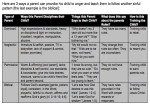
Training children is like giving them spiritual nourishment that will help them grow spiritually strong so that when they are on their own Satan will not have an influence on them. The greatest device the devil uses to cause division in the home is prolonged anger of the children towards their parents. Parents can feed this anger by not following Christ [cf. Colossians 3:20-21].
Training in Truth focuses on the gospel: the child’s need of a Savior [Romans 6:23] because they are accountable to God [Dt.4:9; 6:6-7]. This child must be taught about their sinful heart [Rom.5:12; Prov. 22:15]. Following salvation, parents have an enormous task of teaching their children to follow God’s Word [Ps.1:1-3; 2 Timothy 3:15-17], repent, restore and mature in Christlikeness [Ephesians 4:22-32]. This is how the child comes face-to-face with the gospel.
If you desire to have a happy house, with children who are successful, financial fiscal, skillful, educated and active above God’s agenda for your home you might be raising children who worship these agendas because they have a distorted understanding of the gospel. Unless the gospel is central in the child all other agendas can become idols. God’s desire for parents is to raise their children in such a way that they will lovingly, joyfully, passionately, and freely follow Jesus Christ. This is the greatest agenda for parents. And God’s desire for children is to obey their God-given authority and make Jesus Christ the passion of their life. The gospel means God is always at the center of the family, not the child or parent.
Great Resources for Parents:
Shepherding a Child’s Heart [Tedd Tripp]
Gospel-Powered Parenting [William P. Farley]
Age of Opportunity: A Biblical Guide to Parenting Teens [Paul David Tripp]
Angry Children—Understanding and Helping Your Child Regain Control [Mike Emlet]
Addressing the Problems of Rebellious Children [Mary Somerville]
[1] Fathers responsibility: Psalm 103:13; Matthew 7:9-11; Proverbs 3:11-12; Psalm 72:2-8; Deuteronomy 6:6-7; Hebrews 12:7-11



God brought into the world our first child, Justus Joanna Hutts. She came at 4:28AM Monday weighing 7.4lbs and measuring 20in. Mama had a great delivery and is resting well. Justus is a hungry little hippo. I think she already has a Hutts nose!?
Where did we get her name?
Justus comes from a character in the Bible who is described as a worshiper of God [Acts 18:7]. We hope this will not only be her name, but the shape of her soul. Justice is also one of our most favorite characteristics of God. It is a profound word that carries weight and honor, which we hope to instill within our child.
Joanna is a mixture of two amazing women in our lives. Joanne, Sarah’s mother and Joan, grandmother of Justin.


This chart sure is helpful. I am glad that I found it now, rather than after having our baby.
Taken from: thelopezblog.com



What is at the center of your of your life? Your center is what is your main thing, your top priority, and the thing you most passionate about. It is what defines you. Your center is clearly seen in what do you talk about or what is on your mind the most. Commonly it is a relationship, passion, career or cause. Have you seen your center change over the years?
What is the one thing God says must be our center? In 1 Corinthians 15:3 Paul says that our first importance is the cross of Christ—the gospel. The cross is like a hub with spokes to a wheel. It affects everything you do—your passions, career, causes and relationships. It wasn’t until I came to know Christ and begin a relationship with the God of the universe that I realized my relationships with my parents, friends, and authorities could be different.
For those who do not know God the cross is silly and stupid. “The cross is foolishness to those who are perishing, but to those who are being saved it is the power of God.” [1 Corinthians 1:18] People hate the work of Christ because it runs so contradictory to the way people think and live. The cross is foolish because people do not make the connection from what Christ did on the cross to how it impacts their life. The cross is crucial to all our relationships. If you say you have a relationship with God, the proof of it is how you view your relationships. How does the cross impact my relationships: with my parents, friends, authorities, or dating partners?
1. The cross is the means to change my motives within relationships [2 Corinthians 5:14-15]. Jesus went to the cross not because he thought it was going to be fun or a vacation to the beach. It was hard, painful, and torturous. He could have backed down, but He didn’t. He was motivated by love and joyful obedience, even when people mocked Him and beat Him and bullied Him.
First, my relationships must be motivated by Christ’s love. This is often difficult because we are motivated by getting things from people. We are consumers. We view our relationships as people owing us attention, love, and respect [note Pharisees: John 12:43; Luke 7:47]. We say to our parents, “You owe me a nice room with privacy. You owe me new clothes for school and respect for my possessions.” We think our authorities and friends should treat us fairly and respectably. If you think people owe you it will frustrate you because you often do not get what you want.
My esteem does not come from self or others, but comes from Christ. I have Christ-esteem [v.15]. The question is not what do people owe me, but what do I owe them? “Owe no one anything, except love each other.” [Romans 13:3] “Walk in love as Christ loved you.” [Ephesians 5:2] “The love of Christ controls us.” [v.14] I owe others love because God commands me to love one another [Colossians 3:12-17]. If I am a genuine follower of Christ I am able to love others because He has loved me [1 John 3:7-21]. The cross is proof of His love [1 John 3:16]. The cross shows just how horrendous my sin is, but how immense is God’s love. The cross puts me on equal terms with everyone else. I am no better, and no worse.
Second, my relationships must be motivated by joyful obedience. I am willing to submit to others authority in my life because I see it has benefitted me to submit to God’s authority. God protects and provides. No longer do I need to live in the frustration of being a man pleaser, but in the joyfulness of becoming a God pleaser. My motivation as a follower of Christ is not what other people think about me, but is God pleased with me [2 Corinthians 5:9].
2. The cross is the means of dealing with conflict in relationships [2 Corinthians 5:16-19]. The cross challenges my attitude towards those I have something against [v.17; cf. Titus 3:1-11; Colossians 3:8-15]. Often when I have something against another person I want to control the situation by letting them feel my pain or know my hurt. However, God says that vengeance is not yours and when we take wrath into our hands we make a mess of the situation [Romans 12:19]. Only God can be God. So how does God desire us to deal with conflicts?
What if I have sinned against someone? What if I have blow it and messed up a relationship? As a new creation in Christ I seek reconciliation and forgiveness for your sin. What if they do not accept my forgiveness? You cannot control their response. You have done your part. Trust God to minister to them [v.18-19]. What if it is physically impossible to ask for their forgiveness because of death or distance? If death take your unforgiveness to God, but if not write a letter or call the person you have something against.
What if someone sinned against me? If someone has wronged you and you are struggling with thoughts of bitterness or rage seek their forgiveness for your sinful attitude. You can, “Forgive as Christ forgave you.” [Ephesians 4:32] because “Love covers a multitude of sins.” [1 Peter 4:8] Love is powerful.
What about those who don’t seem to deserve my love? Have you heard it said, “Hurt me once shame on you, hurt me twice shame on me”? The Bible says, “See that no one repays another with evil for evil, but always seek after that which is good for one another and for all men.” [1 Thessalonians 5:15] What does it say about you if God can forgive sins eternally, but you cannot forgive someone? The proper response is to confront in love pointing them to the cross. In the cross, there is no one undeserving of God’s love.
Some people are fire starter while others are fire extinguisher. Who are you? An attitude of humility, gentleness, and understanding can diffuse many arguments, tensions and disagreements. “If any man is caught in any sin, you who are spiritual, restore such a one in a spirit of gentleness; each one looking to yourself, lest you too be tempted.” [Galatians 6:1ff] “Let all be harmonious, sympathetic, brotherly, kindhearted, and humble in spirit; not returning evil for evil, or insult for insult, but giving a blessing instead; for you were called for the very purpose that you might inherit a blessing.” [1 Peter 3:8-9]
3. The cross is the means to restore broken relationships [2 Corinthians 5:20-21]. The cross makes our relationship right with God and gives us the ability to reconcile our earthly relationships because we are ambassadors of reconciliation [v.20]. The cross attacks the issues that hurt relationships. The cross attacks and defeats sin. The cross does not tear down a relationship with God it builds up. Teenagers are champs at knocking others down with their teasing and tearing words. This has no place in the life of a Christian, “Let us pursue the things which make for peace and the building up of one another.” [Romans 14:19]
How has the cross impacted your relationships with God and others? The proof of your relationship with Heavenly Father is seen and heard in your earthly relationships.
Quick Q&A on Cross-Centered Communication in my Relationships:
Q: What does a cross-centered relationship look like at home with my parents? What if my parents are on my case? What if we do not get along What if they have does something to you that scarred you really deep? Begin with the road towards reconciliation and obey joyfully as to the Lord [Ephesians 6:1-3]. As you honor your parents you are really honoring God.
Q: What does a cross-centered relationship look like at school with my teachers or at work with my boss? Trust God who appoints all your authorities [Ephesians 6:1-9; Titus 3:1ff] Even if some are unfair or unreasonable God has placed them into their positions of authority. Remember your boss is ultimately God. The way you work can be a shining light for God’s glory.
Q: What does a cross-centered relationship look like with my friends? If you see your friends sinning be willing to confront their sin [cf. Matthew 18:15-17]. This is what good friends do—they hold one another accountable. A loving friend does not sympathize with sin; rather they help their friends overcome sin. Also, humbly accept confrontation for your sin too.
Q: What does a cross-centered relationship look like in my future marriage or dating relationships? [More on this the next few weeks] Check out: 1 Peter 3:1-7, Ephesians 5:22ff, and 1 Corinthians 7.


 spreading the fame