Barnabas: gospel encourager

brother_Fotor

”…and they sent Barnabas to Antioch. When he came and saw the grace of God, he was glad, and he exhorted them all to remain faithful to the Lord with steadfast purpose, for he was a good man, full of the Holy Spirit and of faith. And a great many people were added to the Lord” (Acts 11:22b-24)

Before we unpack those verses, let’s backup and gather what Acts says about Barnabas and in turn what we will gather is an blue print of a gospel encourager. Interestingly, in Acts 4:36, Barnabas didn’t enter the world with that name. His Levite parents gave him the name Joseph. It was later the apostles nicknamed him “Barnabas” or literally “son of encouragement,” which was a name he earned and owned. So what makes Barnabas or anyone a gospel encourager?

gospel encouragers are generous givers (Acts 4:32-37)

Luke’s first reference to Barnabas is an illustration of his generosity. He is so transformed by the gospel that he take action to spread it to others. He, among others, sell property and give the money to the church. Now in his day, property was ones greatest asset and retirement plan. For Barnabas, selling his property was not wasting his future, but investing in the gospel so that others might have a future with Christ. He lived in a way that showed he was free from money or things. Why? God trumped stuff. Barnabas was generous because his God was generous.

Are you someone who is free from money or things? Are you characterized as being generous? You probably know someone like Barnabas, a “son or daughter of encouragement”. Like you, Sarah and I have seen God provide for our family via Barnabases who have “sold their land” so we could go to the nations. We are so blessed to have many generous partners in the gospel (cf. Philippians 1:5).

gospel encouragers gravitate towards outsiders (Acts 9:26-30)

In Acts 9, Saul, becomes one of the most unlikely Jesus follower. After his conversion, he travels to Jerusalem to meet other followers. However, the whole church freaks out. It is Barnabas who helps the former terrorist of the church take his first steps into the church. Barnabas is the kind of guy you want in your church greeters ministry because he proactively encourages and engages with outsiders.

Don’t forget that your journey began as an outsider and “enemy” too (Romans 5:10). It is only through the gospel that you became an insider and friend with God. And it is by the gospel that you can find the greatest encouragement in life, both now and for all eternity. And top it off God uses people to be vehicles of His encouragement.

Who was your Barnabas? Who brought your inside the church? Mine were Mike Huseby and John Miller. They were the first men who encouraged me as a young Jesus follower. They showered me with love and Christ-like affection. They discipled me in the Word and encouraged me by creating opportunities to serve with them in the local church. I am eternally grateful they befriend me as a broken and messed up middle schooler!

Jesus was a great example of one who made friends with people on the fringe. He was a magnet to broken and needy outsiders. He lovingly gravitated towards outsiders. And you and I become more like Him when we see people as He sees them. Don’t underestimate the power of the gospel to transform outsiders. Who knows who the He might want you to befriend? Who knows who the Lord might use to build His church?

gospel encouragers see no boundaries to the gospel (Acts 11:19-23)

For the first time, in Acts 11, the gospel reaches the big city (vs.19-20). Antioch was the third largest city in the Roman Empire. Think of it like Chicago compared to NYC and LA. It was nearly 10 to 20 times the size of Jerusalem and also more urban, pluralistic, and multicultural. A perfect place for the gospel to flourish.

History and perspective shows us that this was a wonderful thing, as you and I are the byproducts of the gospel spreading beyond the boundaries of Jerusalem and Judaism. Acts says that the church at Antioch was experiencing exponential growth. In fact, it saw the greatest expansion to the church since Pentecost. Therefore, the mother church in Jerusalem, decided to send a representative to Antioch. Not to see if their reports were embellished, not to see if their theology was orthodox, not to gain new church growth strategies, but to encourage the church, like a mother encourages her children.

Who does the church call? Who else, but Barnabas, the one-man-encouragement-committee (vs.21-22). Barnabas was an excellent choice to bridge the Greek and Hebrew members of the church. Having come from Cyprus, he was not a typical “Jerusalemite” Jew, and he already established a solid reputation for generosity and encouragement and, after all, what do new converts need more than encouragement?

When you need a word of encouragement who in the church do you call? Who is your Barnabas? Moreover to whom are you a Barnabas?  Ben has been my friend and Barnabas since middle school youth group days. What I still love about Ben is that he encourages me not in a way that strokes my ego, but in a way that challenges me, sharpens me, and points me to Jesus.

God created you for one another-ness and to encourage one another. Yet some Christians think that since they don’t have the “gift of encouragement” it gives them an excuse from being encouraging (Romans 12:8). Some Christians think a “critical spirit” is another gift of the Spirit, but the Christian army has a dreadful history of shooting down it’s own.

Are you someone who tends to be critical of the church? Do you crave the encouragement that another Christian is getting? Do you regard the ministry of others with envy or jealousy? Do you struggle with skepticism towards testimonies of God’s work around the world? Let it be known, almost all so-called constructive criticism towards the church is destructive criticism. There is such a thing as constructive criticism, but it is always saturated in a spirit of encouragement. That is what is to love about Barnabas. He arrives in Antioch, he sees the grace of God, rejoices, and cheers them on towards faithfulness (v. 23).

gospel encouragers mimic Jesus, the True Barnabas (Acts 11:24ff)

Luke’s living eulogy of Barnabas in verse 24 is moving and theologically pregnant. It should not be a surprise that the marks of a son of encouragement mimic the Son of God, the True Barnabas.

First, a son of encouragement is praiseworthy (“he was a good man”). Luke used this phrase only of Joseph of Arimathea (Luke 23:50). It’s not a phrase stroking Barnabas’ ego, as in saying, “Good job, Barnabas. He da man!.” Not that those compliments are wrong, but this phrase speaks to a greater goodness. Paul later writes that goodness is a fruit of Spirit (Galatians 5:22). And Jesus said that you can tell the type of tree by looking at its fruit (Matthew 7:16). What is hanging from Barnabas’ branches are good fruit produced by the work of the Holy Spirit.

Second, a son of encouragement is powered by the Holy Spirit and proven faith (“full of the Holy Spirit and faith”).6 The fullness of the Holy Spirit and faith is the root of Barnabas’ goodness. You don’t get the Holy Spirit because you are good, rather when the Holy Spirit takes over your life He infuses you with His goodness. Galatians 3:2 asks: “Did you receive the Spirit by works of the law, or by hearing with faith?” The assumed answer is “faith”. Then Paul asks, “does He who supplies the Spirit to you and works miracles among you do so by works of the law, or by hearing with faith?” (3:5) And again the assumed answer is “faith”. Barnabas’ faith is from and through the Holy Spirit.

Third, a son of encouragement is productive in bringing people to Jesus Christ (“and a great many people were added to the Lord.”). Gospel encouragers full of the Spirit and faith usher people to Jesus.

Why was Barnabas so encouraging? He knew the “Father of mercies and the God of all encouragement” (2 Corinthians 1:3). He knew the All-Sufficient Encourager and it was His Spirit that changed Barnabas into a “son of encouragement”. Like Father, like son. Let us aim to be sons and daughters of encouragement too.

It was at that point that Barnabas likely thought to himself, “These people need to grow deep and wide. I know just the guy. I’ll go get him.” Thus, “Then Barnabas departed for Tarsus to seek Saul” (v. 25). The verb “to seek” used here indicates that Barnabas was going on a difficult hunt; nobody had a GPS read on Saul’s exact whereabouts. The last Barnabas had heard about Saul was that he was somewhere in and around Tarsus. So Barnabas went to seek Saul, and when he had found him, he brought him to Antioch.

The church and mission field need people who can take the ministry forward, but it also needs humble people who can spot the very people that God is calling. That isn’t always easy. Barnabas does a selfless thing. He didn’t decide to feather his nest. He didn’t desire to build an empire or church bearing his name. He didn’t become a celebrity disciple, pastor, or missionary. What he did was to give Saul a job.

“So it was that for a whole year they assembled with the church and taught a great many people. And the disciples were first called Christians in Antioch” (v. 26). Up until this point in church history, Jesus followers had been called “people of the Way”. They were not known as Christians because the term was derogatory and mockery, but those in Antioch welcomed it as their identity. For the gospel has the power to bring together diverse people and erase biases or boundaries.

Being Barnabases is not about encouraging with warm and fuzzies. Gospel encouragement brings hope to the suffering and hurting (vs.27-30). Barnabases actively live out the gospel by helping people see how their situation fits into the bigger picture that God is painting.

It is your joyful commission to be a gospel encourager. How? By being a generous giver, giving abundantly, cheerfully, and sacrificially for the sake of the gospel. Second, gravitate towards outsiders, hospitable to the broken and needy. Third, see no boundary to the gospel because the gospel transcends culture or ethnicity. Fourth, mimic Jesus: good, full of the Holy Spirit and faith, and bringing people to the Lord. Being a messenger of hope, never doing ministry alone, and humbly equipping others to serve the local church. How will you be a gospel encourager to someone this week?

How does gospel encouragement and communion mesh? One of the ways we encourage each other as Christians is gathering together. Like two burning hot coals, together they are encouraged, but separated they burn out quickly. In other words, to stay apart or to not relate with fellow Christians has the opposite affect to encouragement. It leads to discouragement.

”And let us consider how we may spur one another on toward love and good deeds. Let us not give up meeting together, as some are in the habit of doing, but let us encourage one another—and all the more as you see the Day approaching.” (Hebrews 10:24-25)

Communion as its name signifies is a community meal for mutual encouragement until Jesus returns (cf. 1 Corinthians 11:17-34). No matter if you are rich or poor, new to the faith or established clergy, we are all equals.  Communion is not about me and Jesus it’s about “we” and Jesus. That’s gospel encouragement.

pouring Miracle-Gro on sin

A friend reminded me the other day,

“Moving to another culture is like pouring Miracle-Gro on sin.”

Our family just moved to Quebec and in 8-months we will move again to North Africa. Transition has been our middle name for the past year. Transitions or changes in life can be like pouring Miracle-Gro on sin; sin grows more intense and gives a way to old weeds–you thought were dead–to come back with rabid enticement.

For the last 8-years I’ve lived in the same place, had a stable job, but this month we moved to a new country filled with cultural differences and language barriers. This has caused Sarah and I to uncover dirt about ourselves–until now–-we had been ignoring successfully. Sins like pride, self-reliance, and fear of failure keep popping up like dandelions on what we thought was well manicured Astro Turf.

Normally my sins are like Post-It notes stuck to my back. everyone else can see them but me. In this present season I am seeing my sin and my limitations more clearly. It is here the gospel message shines most brilliantly. Christ gets on eye level, embraces me as His brother, and reminds me that He has taken my punishment (or Post-It notes) upon His back.

How do you handle change?

Change happens. It can be a promotion at work, lay-off, move to a new house, crisis, trauma, stepping into an abnormal situation, or a host of other scenarios. Your response to said situations can determine your vulnerability to sin. The key to handling change is rooting yourself in the character of God.

Do you prepare your heart for times of transition?

Sarah and I have been through enough of these seasons in the past year to understand that we have to be prepare seriously for the next season. We have found that if unprepared our marriage and parenting can quickly become full of gnarly weeds. Small attitudes quickly become ugly, temptations become more tempting, and the Light increasingly is choked out.

Here are some ways Sarah and I have been able to deal with changes and transitions (especially new moves or new cultures) while in the process of pulling out the weeds:

1.    Review the gospel daily.
2.    Write down promises of God that give you hope.
3.    Resolve to obey Christ through the season of change or transition.
4.    Cultivate godly friendships and allow them to ask you the hard questions unexpectedly.
5.    Prepare for the changes and transitions with a band of prayer partners.
6.    Keep communication channels open and confess sin quickly.
7.    Ground yourself in the Word and resting in its Truth.

The LORD is my portion;
I promise to keep your words.
I entreat your favor with all my heart;
be gracious to me according to your promise.
When I think on my ways,
I turn my feet to your testimonies;
I hasten and do not delay
to keep your commandments.
Though the cords of the wicked ensnare me,
I do not forget your law.
At midnight I rise to praise you,
because of your righteous rules.
I am a companion of all who fear you,
of those who keep your precepts.
The earth, O LORD, is full of your steadfast love;
teach me your statutes!
(Psalm 119:57-64 ESV)

How God uses Suffering

The cross and the resurrection are the ultimate answer to suffering. And we really can trust the good purposes of God in suffering to make us more like Jesus.

1. God uses suffering to teach us His Word.

Suffering makes us more receptive to God’s transforming Word. “Though the word and the Spirit do the main work, yet suffering so unbolts the door of the heart, that the word hath an easier entrance.” (Richard Baxter) Thomas Watson called afflictions our “preacher and tutor,” and “A sickbed often teaches more than a sermon.” (Ps.119:67, 71, 75, note: Matin Luther said Psalm 119 follows the pattern of prayer > meditation > trial)

2. God uses suffering to wean us from idols.

“Sinful desires can lurk in our hearts unnoticed because those desires are neither threatened nor thwarted. But suffering stirs the calm waters of latent sinful desires. It reveals the true state of our hearts. It’s God diagnostic tool, preparing the way of the medicine of gospel truth.” (Tim Chester, Ps.119:50, 92, 107, 153; Ecc. 7:13-14)

3. God uses suffering to discipline us.

Suffering through discipline is a badge of sonship. There is a distinction between God’s father discipline and punishment for guilt (Ps.103:10-13). Suffering is part of our training (Heb. 12:5-11). “God’s rod is a pencil to draw Christ’s image more lively on us.” (Thomas Watson)

4. God uses suffering to test and purify our faith.

Endurance is essential, not optional (Mt. 10:20; Rom. 5:3-5). Rejoicing in trials reveals the genuineness of our faith (Js. 1:2-4; 1 Pt. 1:3-7) Suffering refines our faith (Ps.12:6; Prov.27:21; Job 1:13-19; 2:7-8; 23:1-10). Like a Damascus blade, a believer is strengthen only by sleeping in the flames. The refiners fire is hot–but it burns away the dross and tempers the metal of our faith, making it stronger.

5. God uses suffering to increase our usefulness.

“Let a Christian be but two or three years without an affliction and he is almost good for nothing.” (John Flavel) God uses suffering to work on our character to become dependent on Christ and useful to others (Jn.15:1-2). Sometimes, God positions us in difficult circumstances that paradoxically make us more effective (i.e. Paul, Philippians 1:12-14; 2  Cor. 1:3-7; 4:7-12). The gospel achieves victory through our apparent defeat.

6. God uses suffering to prepare us for glory.

Present afflictions actually work for our future glory (Rom.8:18; 2  Cor. 4:16-18). “They say of some temporal suffering, ‘No future bliss can make up for it,’ not knowing that Heaven, once attained, will work backwards and turn even that agony into a glory.” (C.S. Lewis) View your trials as seeds of eternal glory planted in the soil of your present lives. God is using our trials to make us better, more beautiful creatures than we could ever otherwise become. Demolishing our old cottage is painful, but God is building a palace is you allow Him.

Suffering is not good in itself. It is the result of sin and brokenness in our world. Yet God promises to weave dark threads of affliction and trial into the tapestry of His ultimate saving plan. He is a sovereign God, but His ways involve suffering. With wisdom, love, and goodness, He designs our difficulties and assigns our afflictions to conform us to the character of Christ (233).

My greatest comfort comes from knowing that, because of the suffering, death, and resurrection of Jesus; the suffering will someday cease once and for all, and that God’s ultimate purpose to glorify Himself in bringing many some and daughters to glory will be fulfilled (234).

Adapted from Brian G. Hedges, Christ Formed in You: The Power of the Gospel for Personal Change. Shepherds Press, Wapwallopen, PA. 2010. p.222-234

thumb licks [3.14.12]

Fight sin is tiring.

The gospel of art.

8 ways to protect your children from sexual abuse.

5 reasons God said “NO.”

Why daylight savings time is pointless.

Harold Camping admits sin and doomsday predictions.

Be careful what you say to your pastor.

Why imposters love church.

3 Little Pigs. If it were told today in today’s world.

Kony 2012. I hope this movement does not make this man famous, but that justice would be taken. I appreciate this letter from a fellow brother in Africa to a lady who has questions about Kony.

thumb licks [1.27.11]

5 Ways Wives Can Encourage Their Husbands.

An Open Letter to Christian Wives with Unbelieving Husbands.

20 Things a Husband Could Say to Defuse an Argument with His Wife.

Don’t Know How To Act When Someone Corrects You? Your Worries Are Over!

How to Honor your wife. Treating your woman like a queen.

Parenting Wisdom 101. Straight from Proverbs.

What Does God Want From Me? Some Important Thoughts For Children.

Why pray? Learning from the lips of Jesus.

Tom Hanks and Toddlers & Tiara’s:

what is man?

I am sure the untimely and inconvenient news was a shock to the two unwed teenagers the summer of 1979. The news, “You’re pregnant!” Abortion might have been an option, but both their Catholic parents discouraged it and encouraged the baby to be born. I am grateful my two parents decided on the side of life.

Before my sister Samantha was born, my mother and step-dad were already aware she would be born with Spina Bifida. The doctors recommended an abortion thinking it would be laborious to bring a physically disabled child into the world. It is true, my family would have to adjust and Sam would not have the use of her legs, but no one would know the blessing of my beautiful, intelligent, and warm sister, now an incredible young woman.

Today is Sanctity of Human Life Sunday. I hate this day. I don’t hate it because I think it is unbiblical. I hate it because I have to say things in church that shouldn’t have to be said. Mothers shouldn’t kill their children. Fathers shouldn’t abandon their babies. No human life is worthless, regardless of skin color, age, disability, or economic status. The very fact that these things must be said is a reminder of the horrors of this present darkness.

I hate Sanctity of Human Life Sunday because I’m reminded that as preach there are babies warmly nestled in wombs that won’t be there tomorrow. I’m reminded that there are children—maybe even blocks from this church—who will be slapped, punched, and burned with cigarettes butts before this message is over. I’m reminded that there are elderly men and women whose lives are pronounced a waste and euthanasia is considered a viable option.

But I also love Sanctity of Human Life Sunday when I think about the fact that I am in a church with ex-orphans, adopted into loving families. I am in a church that supports local pregnancy centers for women in crisis. Like Proverbs 31:8-9 you, “Speak up for those who have no voice, for the justice of all who are dispossessed. Speak up, judge righteously, and defend the cause of the oppressed and the needy.” May the church continue to be a haven for men and women—who have aborted babies—find their sins forgiven and consciences cleansed by Christ.

Believe it or not the Bible is silent on the topic of abortion [as it is on the humanity of whites, blacks, Hispanics, etc]. Jesus never said, “thou shalt not abort,” even though it was practiced during His day too. Although the Bible does not condemn abortion does not mean it condones it. Likewise, just because culture or government condones it as legal doesn’t it mean it’s God-honoring. The Bible is clear: you are not to take innocent human life without justification.

Therefore, if a positive case can be made for the humanity of the unborn apart from the Bible you can logically conclude that Biblical commands against the unjust taking of human life apply to the unborn as they do other human beings whether they are red, yellow, black or white, young, old, skinny or fat, healthy or not. And to this point, science confirms theology. In other words, science gives the facts you need to arrive at a theologically sound conclusion. What the science of embryology makes clear is that from the earliest stages of development, human embryos and fetuses are human beings but just less developed than the adults they will soon become.

The question I pose this morning: at what point does the embryo begin to be made in the image of God? The answer to this question comes down to your view of God and human life in connection with God. The answer to this important theological question is packed into a little song that David wrote in Psalm 8.

1. GOD IS MAJESTIC IN ALL THE EARTH [Psalm 8:1, 9]

The psalm begins and ends with its main point: “O LORD, our Lord, how majestic is Your name in all the earth!” [8:1, 9]

The two words for lord (O LORD, our Lord) are not the same in Hebrew. The first LORD, with all caps, is a translation of the name YHWH. It’s His personal name. The name He gives Himself. It is built on the statement in Exodus 3:14, “I am who I am.” It’s a name to remind us that He absolute exists. He simply is. He did not come into being, and does not go out of being. He never changes in His being, because He is absolutely exists in His being.

His name is majestic in all the earth. There is no place in all the earth where God is not YHWH—where He is not the absolute One. Everything everywhere depends absolutely on Him. He depends on nothing, but everything depends on Him. He has no viable competitors anywhere. He has no challengers to His throne. He is above all things everywhere. He sustains all things everywhere. He is the aim and goal of all things everywhere. He is greater and wiser and more beautiful and wonderful than everything everywhere. “O YHWH, our Lord, how majestic is Your name in all the earth.” That’s the main point of the psalm.

In response you and I are to stand in awe of His majesty and worship. The majesty of God is awe-inspiring. Those who have seen His majesty have never been the same. John fell on His face in the presence of God. Isaiah cried, “I’m unworthy,” when in the thundering presence of God. Do you have a majestic view of God? If you have a majestic view of God you will have a majestic view of life. If you have a low view of God you will have low view of life.

2. GOD’S MAJESTY IS SEEN IN HIS SUPREME CREATION [Psalm 8:3-8]

We are going to skip over verse 2 for a moment. I promise we will come back to it. In verses 3-4 David responds to His majestic Creator, “When I look at your heavens, the work of your fingers, the moon and the stars, which you have set in place, what is man that you are mindful of him, and the son of man that you care for him?” The point of these two verses is to see God’s bigness and my smallness. God is infinitely great, and man, by comparison, is nothing. God creates stars with His fingers and I am so small compared to Earth, the sun, and the billions of suns that form up our galaxy, and the millions of galaxies that are laid out in our universe.

Have you ever stood underneath the night sky and thought, “Wow, I am small and insignificant?” That’s the point. God created all that bigness so you’d have a sense of smallness. Some consider it a lot of wasted space, but space God’s natural billboard proclaiming His praise. Worship is not found in feeling big, but rather in feeling small.

An honest question arises in verse 4, “Why do You consider man when You are so majestic?” The answer comes in verses 5-8: “You [O God] have crowned him with glory and honor…You have given him dominion over the works of your hands; you have put all things under his feet…” Now that is absolutely astonishing! John Calvin summarized it by saying, “Whoever, therefore is not astonished and deeply affected at this miracle—God being mindful of man—is more than ungrateful and stupid.” Although man is nothing compared to God, He makes man His supreme creation.

God’s majesty is seen as He creates man in His image [Genesis 1:26-27]. One might ask when does the image of God begin in man? According to God, it begins even before one cell splits and multiplies in the womb. In the human embryo are found the marks of your Maker. No other creature in God’s creation is crowned with glory and honor like mankind.

God’s majesty is seen as He makes man dominioneers over all His creation [Genesis 1:28-31]. God gives you a job—care and protect life. However, when we read the Genesis account of Adam and Eve, their children, and observe history thereafter man does not do a good job caring for and protecting life. We don’t like our job. We want a new job. We’d rather redefine the job. Therefore we join a union and march with picket signs that say, “God, I have a rights!”

Do I have rights? Sure. In our society a woman has her rights. She can murder a child and get away with it. I am an advocate for civil and judicial rights, but not rights-gone-wild. The freedom and liberty to use our rights is not always right. Especially when it comes to shedding innocent blood. A human that demands, “I have rights!” Is saying what a sinner says when it rejects God’s moral rules. God determines what is right and wrong. He says we are to care for and protect life. Every man has the right to life.

You cannot starve an elderly human to death and worship the majesty of God. You cannot dismember an unborn human and worship the majesty of God. You cannot gas a Jewish human and worship the majesty of God. You cannot lynch a black human and worship the majesty of God. You cannot gossip, harbor bitterness, or curse a man to his face and worship the majesty of God. Jesus says to hate another human is commit abortion in your heart. You cannot worship the majesty of God while treating His supreme creation with dishonor.

3. GOD VALUES THE LIFE OF CHILDREN [Psalm 8:2]

You might be wondering what does this have to do with the sanctity of life or abortion? Let’s go back to verse 2. There is an incredible contrast between verse 1 and 2. Verse 1 says, “You have set your glory above the heavens.” And Verse 2: “Out of the mouth of babies and infants, you have established strength because of your foes, to still the enemy and the avenger.” The contrast is strange. God is highest of all beings. None could be stronger, wiser, or greater. But babies are weak; they seem to have no wisdom or knowledge. They are utterly dependent on others. They are insignificant in the world’s eyes.

So why does the psalm mention babies? Why are they here? What are they doing? The verse says what they are doing: They are defeating the enemies of God. They are opening their mouths and saying or crying something. And whatever they are saying or crying is powerful enough “to still the enemy and the avenger.”

God has enemies. His foes are those who rebel against His majesty [8:1,9]. They do not see Him as majestic, nor do they want to worship Him. They get far more pleasure out of getting praise for themselves than giving praise to God. Our world has been ruined because of these enemies. And in order for the world to return to its proper purpose, these enemies will have to be dealt with. And what verse 2 tells us is that God, in His majesty and greatness makes babies the means of His triumph over His enemies. Let the strangeness of this sink in. God conquers his foes through the weaknesses of the weak—the worshipful coo’s of baby’s lips.

To understand verse 2 in it’s fullness you have to realize God comes to earth in the form of a cooing and crying baby. Jesus, the God-man, came into the world in childlike lowliness and human weakness. God takes on skin. He’s born of a virgin in a barn. He grows into a man, lives a sinless life, but certain men convict Him of a crime He did not commit. He dies on a cross and 3-day later He rises crushing His enemies under His feet [cf. 1 Corinthians 15:27].

During His earth ministry He welcomed children when others wanted to shoo them away [Mark 10:13-16]. Jesus loves all the little children.  Moreover, He said the measure of our love for Him would be measured by our love for children [Mark 9:36-37]. He took the children in His arms as if to say, “Honor these little ones, and you honor Me. Send them away because they are weak, socially insignificant, and bothersome, and you’ve demonstrated you don’t understand the values of the kingdom.”

In Matthew 21, Jesus draws near to Jerusalem. It is Palm Sunday. He enters the city riding on a donkey. The crowds see what this means and they cry out in verse 9, “Hosanna to the Son of David! Blessed is he who comes in the name of the Lord! Hosanna in the highest!” Hosanna means “salvation.” They are shouting that God’s salvation is coming. They see Him as a prophet or perhaps the Messiah himself—The king of Israel who would defeat the enemies of God.

Now there are children in the crowd. They see what’s happening. They hear their parents shouting. So they take up the chant in verse 15, “Hosanna to the Son of David!” These children are calling Him the king of Israel. The chief priests and the scribes cannot endure the ruckus any longer. They think it’s outrageous for Jesus to hear this kind of praise and not stop or correct them. So they say to Jesus in verse 16, “Do you hear what these are saying?” What they meant was, “We know you can hear what these are saying, but we cannot imagine why you don’t stop them, since you are most certainly not the Messiah.”

Jesus’ answer is as clear as crystal, and its connection to Psalm 8 is frightening. He simply says, “Yes, I hear.” With those few words He says, “Yes. I didn’t miss a word. They are not mistaken. They are not blaspheming. They are not foolish. They just seem foolish. I approve what they are saying” Jesus receives worship from children. And Jesus goes on to say to the chief priests and scribes: “Have you never read, ‘Out of the mouth of infants and nursing babies you have prepared praise’?” It’s a direct quote of Psalm 8:2.

Two things happen when Jesus quotes this Psalm. First, it comes true. His enemy is silenced. The chief priests and scribes are speechless. The praise of the children’s lips won the day. God is defeating His enemies through the weakness of children and man. Second, the meaning of psalm 8 is amplified. When these children cry out, “Hosanna to the Son of David !” Their praise was directed to Jesus. Jesus knew it. The chief priests and scribes knew it. And Jesus accepts their worship being God—the absolute One–Himself. On that day, the majesty of God had a face of flesh and a name. His name is Jesus.

In closing I want to share with you a story about my best friend, Ben. In high school our friendship grew through helping each other live for Christ. When I went to college I had less contact with Ben. While I went to Bible College, Ben was going to parties and sleeping with girls. His life became a mess. He got a girl pregnant. To cover it up she aborted. Although Ben had abandoned God, God did not abandon Him. He was relentlessly pursuing Ben.

I remember coming home on college break and visited Ben’s apartment. It looked like a disaster, smelled like beer, and felt dark. I asked Ben, “So what’s God been doing in your life?” I am sure he wanted to kill me for asking a question with an obvious answer. What Ben needed I could not give. He needed his enemies of pride and guilt and thinking “I have rights” to be defeated. In Christ they already were. I kept in contact with Ben. He left for Florida where he thought he’d be anonymous. The majesty of God prevailed, He would not leave him alone, pursuing his heart, and Ben repented of his sin.

“For as high as the heavens are above the earth, so great is His steadfast love toward those who fear Him; as far as the east is from the west, so far does He remove our transgressions from us. As a father shows compassion to his children, so the Lord shows compassion to those who fear Him.” [Psalm 103:11-13]

Jesus forgives sinners who come to Him with child-like faith. God redeemed Ben’s life. God has given him a godly wife and blessed him with two (so to be three) beautiful children. Today Ben is serving God in the ministry. Ben is an advocate for life.

Jesus can forgive you too. No matter how bad your sin or how dirty your past. He will not only forgive you but welcome you as His child in His compassionate arms. Come. He awaits you with an embrace.

Why do I need psalm 8? It inflames my heart with wonder, awe, and love for God. Seeing the majesty of God is the first step towards looking at myself and other humans rightly. In His majesty we see the sanctity of life.

LISTEN TO THE PODCAST OF THIS MESSAGE.

the sanctity of life

January 22nd is the anniversary of Roe vs. Wade. As a result, today in the US, 1 unborn child is killed every 23 seconds.

When you stop to realize that the US only accounts for 3% of abortions worldwide, you realize that there is a relentless global slaughter underway. May God exercise both his mercy and judgment, and may Christ return quickly.

Here are some articles I would encourage you to read or watch to equip you and your church for the sanctity of life:

How sacred is human life?

One gospel, unabortable. Who are children?

Is there a connection between birth control and abortion?

What is the task of a pro-life pastor in the 21st Century?

Woman meets child born out of rape given up for adoption 77 year ago.

Does rape justify abortion?

What should I do after abortion?

Does the Bible’s silence justify abortion?

How can I defend life in a new generation?

5 bad ways to argue about abortion.

Jesus loves the little children.

10 reasons I am optimistically pro-life.

Exposing the Dark Work of Abortion. Free book.

RESOURCES FOR THE CHURCH:

Abort 73
Case for Life
Prolife Training

life hurts. God heals.

When I was in the fourth grade I came down with a strange case of osteomyelitis—a bone marrow disease that can kill if not treated quickly. I ended up in the hospital with a 106-degree fever. I missed about 3-weeks of summer vacation, which for a 9-year old is pure-torture. Not to mention, I missed a B-52’s concert. Yeah, I know. But Love Shack was the hit song in 1989! I still remember the pain from surgeries I had on my knee and chest. I have the scars to prove it.

Every 9 seconds in the US a woman is assaulted or beaten. Around the world, at least 1 in 3 women have been beaten, coerced into sex or otherwise abused within her lifetime. Most often, the abuser is a member of her own family. 1 in 4 girls and 1 in 6 boys are sexually abused before the age of 18. 55-95% of those abused do not speak up or get help. Do you know people that are hurting from an abusive relationship, a violent marriage, or rebellious child? They are in your church, office, and family. Life hurts, but God heals.

I have seen firsthand how pains inflicted by those you love leave deep scars.  Maybe you have experienced a hurtful conversation with a friend, an abusive relationship, or a violent episode. The healing of these deep wounds can take you down a rocky road of bitterness, hatred, sorrow, depression, or brokenness. Such wounds do not go away easily with time. Sometimes signs of a painful past linger for a lifetime.

Hurts can make you better rather than bitter (a summary of Joseph’s past; Genesis 37-41)

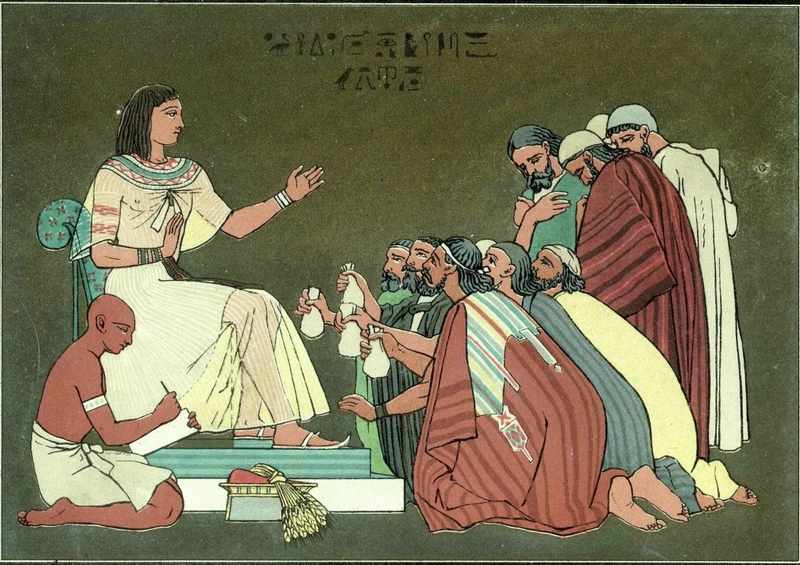
Joseph’s the guy who got thrown under the bus by his brothers. They are ticked because he is the favored son and rubs it in wearing his colorful coat and gloats about dreams of his entire family bowing down to him. Their anger leads them devise a plan to sell him as slave in Egypt. Joseph is bought by Potiphar, the captain of the Pharaoh’s guard, and soon is put in charge of his entire household. The only thing he could not control is Potiphar’s wife. She continuous lures him sexually, but he remained pure. She gets tick, so she sets him up with false assault charges and he’s thrown into prison. In the can, God uses him to interpret two of his cellmate’s dreams, which eventually gets him into King Pharaoh’s palace to interpret his dream.

Joseph faced an intense season of suffering [totaling 20-years], which all snowballed from his brother’s sinful plan. God was with him. Even though all the pain and hurt. And Joseph responds with meekness not bitterness.

Give yourself reminders of God’s character (Genesis 41:50-52)

I like to think I have a good memory, but I still forget. I have memory aids like a small UPS truck to remind me to pray for my dad or 2-dollar bill in my wallet that frequently reminds me of my great grandfather Roman. I also keep important dates like my wife’s birthday and our wedding anniversary on my computer. If it ever crashed I would be doomed!

Joseph was blessed with a wife and two sons. It’s the only family he’s got, since his brothers ditch him for some dough. In honor of his God, Joseph gives beautiful and worshipful names to his two new sons. Every time he sees them he is reminded of God’s character despite a horrendous past,

“Before the year of famine came, two sons were born to Joseph. Asenath, the daughter of Potiphera priest of On, bore them to him. Joseph called the name of the firstborn Manasseh. “For,” he said, “God has made me forget all my hardship and all my father’s house.” The name of the second he called Ephraim, “For God has made me fruitful in the land of my affliction.” [41:50-52]

When my daughter was born, Sarah and I named her, Justus. It was inspired from a character from Acts 18:7, but her name is also tribute to God’s justice. Since we are moving our family to serve people who have not seen or heard our God of generous justice, it is our prayer that her name would reminds us of God’s character. Reminders are important, especially when you’re hurting. Do not forget the character of your God. How will you remember Him?

Forgetting the past is difficult when it unexpected comes back  (Genesis 42:1-9a)

In a dramatic plot twist, Joseph is now 2nd in command of Egypt and in charge of the food reserves in a severe famine. Joseph’s brothers come bow and ask for food. Is it déjà-vu? Or is this just like Joseph’s dream years before? Joseph’s brothers do not recognize him because of his new Egyptian hairdo, but Joseph did not forget. When he saw his brothers he knew exactly who they were. Their faces were imprinted in his head as they sold him into slavery.

Cleverly, Joseph spoke to his brothers through an interpreter though he could speak both Egyptian and Hebrew. Not thinking that the Egyptians could understand them the brothers publicly spoke in Hebrew about the past. Joseph was overwhelmed with emotion. He’s in a position where he could lynch them or enslave them. Instead, he desired to see them again. So he devises a plan to keep one brother, Simeon, in custody until they returned with their youngest brother, Benjamin, who was Joseph’s only full-blooded brother born by both Jacob and Rachel.

Upon returning home, the brothers informed their father of the situation, “We got some food. Oh, by the way, your son is held captive in Egypt. He won’t be let go until we bring Ben. Another thing, not sure how it happened, but we still have the food money in our sacks.” This troubled Jacob. He remembered what happened to Joseph, thus he held Benjamin back. Judah stepped forward and took responsibility for his brother Benjamin. Here Judah begins to own his faith and show why he is a key character in the line that paves the way to the Messiah.

Jacob did a hard thing as a dad. He prayed for God’s protection, and sent all his sons to Egypt not knowing their fate. They needed food to live and the risk was worth it. Through it all, God is at work. When the brothers returned to Egypt Joseph invited them into his home, and they came to the conclusion they were going to become slaves. It’s interesting how the brothers jump to the worst-case scenario. Instead, Joseph wanted to feed them dinner.

During table talk, Joseph learns his father is still alive. He immediately steps into another room and weeps with joy. At this point, Joseph’s has not revealed himself to his brothers, has not sought to see his father, and has not indicated whether he intends to punish or forgive his brothers. The tensions are high.[1] And we now wait to see if Joseph will show his brothers his true identity and if he intends to forgive them or seek revenge for what happened in the past.

The past is not everything, nor is the past is nothing. Your past can affect your present and future [Galatians 6:7]. How should I handle the past, especially as a follower of Christ? I have heard many respond to the past by saying, “I know ____ will do it again. I’ve been down this road many times before. As soon as I see _____ [BAM!] the old ugly emotions are back.” Dealing with the past is usually not a one-time event, but a process. Here are some truths about your past that you’re good to remember:

Your past doesn’t change, but you might need to change. The change could be changing the way you look at the past. Some say, “I would be much better off without my past. How could God allow this to happen?” God gets blamed for the bad and ugly, but God uses hardships for good. Think of characters in the Bible who went through hardship at the hands of others [i.e. Job, Jeremiah, Joseph, Jesus]. How did they handle painful situation? How did God’s glory shine through their situation? Joseph is the Romans 8:28 of the Old Testament.

Your past reminds you of present grace and future hope. Hardship often precedes glory. Just look at the cross. Pain and hurts of this world remind you that you are not yet home. God promises you a place where hardships will be no more. Dealing with the past is a process.

Forgiveness is the process of healing to get past your past (Genesis 45:1-11)

After Joseph learns that his father is still alive. He sends his brothers back home to get him. He demands Benjamin to stay and his brothers to go back and get their father, but Judah knows his father would be crushed if Benjamin did not return with them, so he offers himself as a substitute. He willingly sacrifices himself for his brother. It is a scene that moves Joseph to tears.

The time has come. Joseph cannot keep his identity hidden any longer.  In a matter of a moment he is transformed from some powerful Egyptian to their long forgotten Hebrew brother. It is a beautiful moment of reconciliation and restoration. I am sure it is a moment filled with amazement, surprise, sorrow, and many other emotions.

Joseph tenderly helps his brothers understand he is not mad at them (nor should they be mad at each other) for selling him into slavery, “God has sent me hear to preserve life.” [5,7-8]. God planned for the brothers to sell Joseph as a slave in Egypt to ultimately send him ahead of his family to preserve a remnant of his people from the famine.[2]

Healing begins with radical biblical forgiveness. What is radical biblical forgiveness? It’s choosing to treat someone as if the hurt that happened never happened.” It is like taking a chalkboard of offenses and wiping the slate clean, or throwing out the trash bag full of transgressions never to retrieve them again. Forgiveness is a willful decision to release a person from the hurt, injury or abuse.

It’s radical because it’s not customarily practiced. You can willful choose not to forgive. It is your choice, but it’s a choice that will certainly cause more hurt over a long period of time and eventual invade other areas of your life. Unforgiveness is contagious. It is like a virus that moves through your system infecting your entire body. Unforgiveness is torturous. It is also foolish. Have you heard of some of the irrational reasons for not forgiving?

“The hurt is just too big. You should have seen what they did/said to me. I can’t possibly forgive something that big.” That is foolish. You’d think that the bigger the hurt is the more you’d want to get rid of it.

“I cannot forgive until I forget.” Can you forget? Sometimes no. But you will not forget until you forgive. Forgiveness is the process of forgetting. Forgiveness says, “I’m forgiving that, I’m going to release that person. And when I remember, I will forgive it again!” Joe Coffey in his book Red Like Blood says, “Forgiveness is like garbage day in that no matter what I bring to God it is completely taken away. No matter how much or how nasty, forgiveness is absolutely complete. The cans turned upside down. Garbage day makes me feel clean.”[3]

“I’m going to let time heal the hurt.” This is a lie. Time does not heal it only prolongs the hurt. Over time the hurt just gets bigger and worse. If you had a cancerous tumor that is curable but if not removed it the tumor will grow and grow until it consumes you to death. You can bury hurt or ignore it, but when you dig it up it’s still as ugly as it ever was before. The larger you see you past, the smaller you see your future. The smaller you see you past, the larger you see your future. Let go of yesterday – hold loosely today – embrace tomorrow.

Do you see the fruits of forgiveness in Joseph’s story? His anger disappears, he accepts his brothers, he blesses them, and he welcomes them back into his life. He could have responded by saying, “You owe me! I’m going to make you pay by hating you, by slandering you, by returning the hurt, by recruiting other people to my bitterness. I’m holding this over you!” Instead it’s as if he chose the process of healing through the way of forgiveness.

God’s forgiveness demands your forgiveness. When I forgive I am most like God. Joseph’s life is a picture of Christ.  If you want to get a glimpse of God’s forgiveness look at the life of His Son Jesus. Was He despised, rejected, beaten, mocked, slandered, spit upon, abused, hated? How did He treat His enemies? He has a radical response: forgiveness.

How are you like Joe’s bro’s?  Like his 10 brothers, you have severed off your relationship with your Brother-Savior choosing sin instead of Him. If the 10 brothers were in the crowd—and you—we would have yelled, “Crucify Him!” But Jesus, like Joseph, will save you from spiritual famine. In John 8, Jesus forgives a woman who is condemned by everyone. The law required stoning for her sin, but Jesus forgives her and in essence decides to take upon Himself her stoning. Jesus’ desire is to give and forgive. He will save you not just from famine, but also from hell [Matthew 12:41-42]. He offers you a land where you will hunger no more [Revelation 7:14-17].

Second, Judah’s life is a picture of Jesus too. Judah is the first person in the Bible to willingly offer his life for another. Although he never gave his life or freedom, his self-sacrificing love for his brother for the sake of his father is picture of the atonement of Christ.[4] Jesus is the reason a remnant would remain. Through his lineage the Messiah would come as the Good Shepherd and lay down His life for the sheep [John 10:11].

Finally, like Joseph, Jesus is servant king. Sooner or later all will know He is greater. Just like Joseph’s dream and its fulfillment, so it will be with Jesus, at His name every knee will bow [Philippians 2:10]. Better to do it sooner than later.

I have seen how pain of the past has handicapped and numbed people, ravaged relationships, crumbled friendships, wrecked families, split marriages, even divided churches. Life hurts. But God heals. I have also seen how the Great Physician has healed marriages scarred by sexual abuse, and relationships reconciled from verbal and physical abuse. Its radical, biblical, and beautiful. The key to get past the past is forgiveness by the way of the cross. The past does not have to define you. Be free. Chose forgiveness rather than the path of bitterness.

“Therefore, since we are surrounded by so great a cloud of witnesses, let us also lay aside every weight, and sin which clings so closely, and let us run with endurance the race that is set before us, looking to Jesus, the founder and perfecter of our faith, who for the joy that was set before him endured the cross, despising the shame, and is seated at the right hand of the throne of God. Consider him who endured from sinners such hostility against himself, so that you may not grow weary or fainthearted. In your struggle against sin you have not yet resisted to the point of shedding your blood. (Hebrews 12:1-4)


[1] The story of Joseph and his brothers and father culminates in a way similar to the account of Joseph’s father Jacob. Jacob was likewise separated from his father Isaac for many years and upon moving toward the moment of reconciliation there was a great tension as it was uncertain whether Esau would forgive his brother Jacob or seek revenge against him.

[2]  Here the theme of a remnant resurges. It’s a theme that is promised to Israel forever [cf. 12:2,10; Jeremiah 23:3-4].

[3] Red Like Blood. Joe Coffey and Bob Bevington. Shepherds Press, Wapwallopen, PA. 2011. 132.

[4] Sidney Greidanus, Preaching Christ from Genesis. William B. Eerdmans Publishing, Grand Rapids, MI. 2007. 418-419.

busyness is laziness

How does busyness affect our spiritual lives?

Busyness is the enemy of spirituality. It is essentially laziness. It is doing the easy thing instead of the hard thing. It is filling our time with our own actions instead of paying attention to God’s actions. It is taking charge.

Busyness has to do with activity, and spirituality is not the absence of activity. You either enter into what God is doing or you don’t. A busy person is a lazy person because they are not doing what they are supposed to do.

Eugene Peterson, Subversive Spirituality. William B. Eerdmans Publishing, Co. Grand Rapids, MI. 1997. p.237

how to use the Bible in personal ministry

Connecting the Stories: How to Use Scripture in Personal Ministry

1. Some passages speak more clearly to certain issues that others, but all passages provide a lens through which to view any issue.

2. In ministry to others, we move from life to text or text to life.

3. Some passages are more easily used in ministry situations than others.

4. Major on connections that arise from the passage as a whole, not so much on isolated phrases.

5. Remember that all passages are linked some way to Jesus Christ and His redemptive work.

Adapted from the book, CrossTalk: Where Life & Scripture Meet, Michael R. Emlet. New Growth Press, Greensboro, NC. 2009. 83-88.

Read the Introduction and Chapter 1 (PDF)

the gospel is for grandma’s, too!

From a missionary to central Asia:

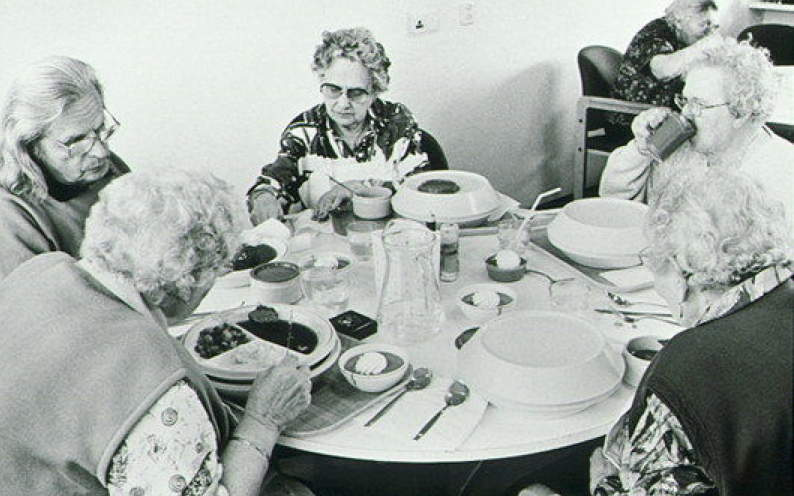
For the past few months, God has been burdening my heart heavily with the fact that so many of the old people around us are dying without knowing Christ. Usually it is more difficult to bring old people into the Kingdom as they are so set in their ways of Islam to even want to listen. Nevertheless, I started to pray for my aged neighbors. One of them is Diana’s mother-in-law, I will call “Grandma Margaret.” (Diana is our neighbor who had come to faith a few months ago. I am discipling her.) Margaret has heard my testimonies and sharing of His Word with open heart before but since she started going to the old ladies’ Koran reading group, she seemed to have become more distant.

I was so burdened for her soul that I asked God for one more opportunity to share the Truth with her. Several weeks ago, God gave me that opportunity to share but as soon as I mentioned Jesus, she started quoting the usual defensive lines about Islam. It seemed like what I was sharing was falling on deaf ears. With my heart aching for her soul, I shared with her that it is because God loves her so much that He has put her on my heart to pray for and to share with her like this. I shared with her that we don’t know how much longer we will live on this earth but that I would like to and that God would like to see her by His side in Heaven. Somehow, the reality of God loving her seemed to melt that closed heart some to enable her to finally listen. Though she said that she cannot accept Him right now, I am praying that God will be merciful to Grandma Margaret and open wide her heart to receive God’s precious gift of Jesus. Pray that she and her whole household with get to know Jesus as their Savior and Lord.

A few days later, God gave another opportunity for my husband and I to share God’s love with a 75-year-old woman we will call “Grandma Sherry.” A few months before, she didn’t agree with the Good News and even was teaching us about Mohammed. We left her the movie about Jesus called Magdalena. Even though she didn’t seem interested, she decided to watch the movie. Then when we visited a few weeks ago, with childlike faith and tears rolling down her cheeks, she said that she believed in Jesus being the Savior and the way to God! During the visit, she also mentioned that her back really hurt. So we laid hands on her and claimed Jesus’ healing over Grandma Sherry’s back, and moments later she said it was feeling better that she stood up with no pain to see us off. Praise God!

Please join us in asking God for Grandma Sherry to understand and experience the abundant life that she has received in Christ. And may her whole household and the generations come to put their trust in Jesus and surrender their lives to Him.

Thank you for your continued prayers for this city!


The 65/95 Window? Because the Gospel is for seniors too. Much is said about the 4/14 Window (religious decisions are mostly made by youth). But in a world that is aging, how do we reach out to seniors?” Read missions commentator Justin Long’s thoughts on the 65/95 Window.

Other recommended resources: Joe Thorn writes about how “the gospel is for Senior’s.”  John Piper’s talk “Getting Old for the Glory of God” and Dr. John Dunlop’s Finishing Well to the Glory of God: Strategies from a Christian Physician (Crossway, 2011). Read an excerpt of Finishing Well. Read Tabletalk’s interviewwith Joni Eareckson Tada, on the secret of her joy and contentment in the midst of relentless pain. The entire Tabletalk issue [October 2011] is devoted to death and disease from a biblical perspective.

thumb licks [9.18.11]

10 Questions Leaders Should Be Asking. Great for leaders and anybody for that matter.

Without the Gospel, It’s Not Missions.

Why Doesn’t Anybody Talk About Sin? A good question with good insight.

Who is Responsible for a Child’s Education? Is it the parent or the school?

Lonely Me: A Pastoral Perspective

Is Patience Dangerous?

boiling point: anger

Just like water comes to a boiling point and steams, so does a mans emotions. Anger is a God-given emotion intended to help one solve problems. There are many examples where people use anger to solve their problems in a godly way (Galatians 2:11; 2 Samuel 12; John 2:13-18). The Bible describes anger as a passion (orge, Ephesians 4:26; James 1:20; Mark 3:5) and an agitation boiling within with an outward result (thumos, Luke 4:28; Acts 19:28; Ephesians 4:31).

According to the Bible, anger is not a sin: God becomes angry (Psalm 7:11; Mark 3:5; John 3:36), and believers are commanded to be angry and not to sin (Ephesians 4:26). Anger is good, since it is manifested righteously by God. However, anger is an emotion that mankind can selfishly abuse, therefore, anger becomes a sinful response to problems in our lives.

There are many ways in which people deal with anger sinfully. Some do not admit that there is a problem and they clam up (Ephesians 4:26-27). Some lash out in rage and they blow up (Proverbs 6:34; 14:17). Some stir up anger and strife in others (Proverbs 15:1, 18). Some become destructive and destroy anything that gets in their way (Proverbs 22:24-25; Proverbs 27:4). Some retaliate by getting even (Romans 12:17-21). Anger becomes sinful when it is motivated by selfish desires, when God’s goal becomes distorted (1 Cor.10:31; Rom.8:28-29), when the emotion lingers (Eph.4:26-27), and when it attacks a person rather than the problem (Eph.4:15, 29). These are all ways that one can deal with anger in a way that is not God’s way.

What is God way of dealing with anger?

  1. Admit that you are not handling anger biblically and confess it to God and others involved (Proverbs 28:13).
  2. See God in the problem (Genesis 50:20; Romans 8:28-29; James 1:2-4).
  3. Make room for God’s wrath, and do not play God (Genesis 50:19; Romans 12:19).
  4. Communicate to solve your problems (Romans 12:18; Ephesians 4:15, 25-32; Proverbs 15:1).
  5. Act to solve your part of the problem (Romans 12:18).

By dealing with your anger in God’s way you become God’s kind of person.

thumb licks [8.16.11]

Can We Be Good without God?

Yes, of course.  But can you explain what morality is and where it comes from without God? That’s the key problem for an atheist worldview.  Craig Hazen explains in this Biola Magazine article.  Here’s the conclusion…

How the Gospel Makes Us Generous and Content with Our Money

I’m afraid the framing of this discussion leads us to ask the wrong questions. Like the junior high boy who wonders how “far is too far” with his girlfriend, we are quickly caught up in questions about how rich is too rich, how poor is too poor, and the like. Where is the line?

Letter to an Incomplete, Insecure Teenager

Four years ago a teenager church wrote pastor Piper for advice about life in general, and identity in particular. Here is what he wrote, with a big dose of autobiography for illustration…

Marriage: The Happy, Holy, Beautiful Mess

Ever hear the old adage: “Marriage isn’t primarily intended for your happiness, but for your holiness?” Well, it’s true and it’s a glorious thing.The growing in holiness part doesn’t always seem blissful. But it means that God isn’t finished with you yet, either. The purpose and hope in marriage isn’t defined by you or your spouse, but by God.

Paul’s Downward Trajectory

Paul refers to himself numerous times as worth “imitating” when it comes to spiritual growth and maturity (1 Cor. 4:16, 11:1; Phil. 3:17, 4:19; 1 Thess. 1:6; and 2 Thess. 3:7, 9). What do we see when we look to Paul as an example? He makes three significant statements about himself throughout his years in ministry that are helpful insights into his view of spiritual growth.

Spiritual Depression [D. Martyn Lloyd Jones]

guilt [and false guilt]

The gavel slams and the judge declares, “Guilty as charge!” Someone you did not expect over hears your gossip and confronts you. You are caught with your hand in the cookie jar just moments after mom told you no more cookies. Guilt. What is it? What if you got it?

God is offended by sin. Sin is personal opposition to God and makes us legally guilty before God. Guilt is culpable for sin. It is not the greatness of the law that makes sin worthy of punishment, but the greatness of the Lawgiver.  “No sins are small when committed against a great and generous God.”[1] Paul affirms, “the judgment followed one sin and brought condemnation (Roman 5:16, cf. James 2:10-11).”

God desires us to change from our sin, the guilt of our sin, and back in his glorious grace. There is a great sadness that comes from not being saddened by knowing our sin. As observed in the first narrative in the Bible (Gen.3:1-13), Adam and Eve desire the fruit of the forbidden tree and disobey God to have it. Their disobedience leads to guilt and a cover-up. Rather than disobedience and covering up sin the Bible is clear on how one should deal with the guilt of sin.

Guilt is a close companion for a Christian because it points us to our need for Christ. Guilt is a real reminder that I must not sin anymore, and that I need to follow Christ (Gal.3:24; Rom.5:8). Like stated above: guilt is good.

How does one deal with guilt biblically? First, acknowledge your specific sin (Prov.28:13; Ps.51:4; 1 John 1:7-9). Second, confess to God that you have sinned. Confession is simply agreeing with God. Calling your sin, sin.  Third, if the person is unsaved they must confess Christ as their Savior and forgiver of their sins (Rom.10:3-10). Finally, if the person is saved they must confess to God their sinfulness and continual need for God’s grace. Now there is so-called false guilt, which is disobeying what one thought was God’s Word and continuing on in their same sinful patterns. This is a misuse of what God’s Word says about guilt, and this one needs to confess their sin.

What about false guilt? Guilt is guilt. True guilt or false guilt it is culpable for sin. False guilt has nothing to do with what’s true and accurate, nor is it related to true repentance, but is still must be dealt with as a sinful response to what is false. For example, a girl could have been molested as a child and respond in guilt over a situation in which she committed no identifiable sin. Even though she committed no sin, her guilt is a sinful response to the situation. The Scriptures say that “Whatever is not of faith is sin” (Rom. 14:23). This girl may have been blamed or punished for things that she didn’t do, or been told she was worthless. A person with extreme guilt over something that was not a sinful act needs to work on viewing their behavior with the truth as revealed in Scripture so that they can live in peace and experience freedom in Christ.

Guilt caused by sin requires an understanding of confession and forgiveness. The Holy Spirit working in the conscience triggers this kind of guilt. The individual should desire to do something about the sinful behavior. By resting in the grace of God and seeking His forgiveness and restoration I can experience freedom from guilt. Guilt must be dealt with, otherwise it begins to distort other problems in our lives (Gen.4:11; Prov.28:1; Eph.4:26-27). I do not deal with guilt by dealing with the feelings of guilt, though I do not discard the feelings guilt may bring (Ps.32:1-5; Prov.14:30; Ps.38:1-8). The feelings are rooted in the problem that made one guilty; therefore the problem is what needs to be dealt with. When we deal with guilt biblically God promises us restoration (Lk.15:11-32; Mt.5:23-38). We also are seeking to be God’s kind of people by changing our thinking and behavior (Rom.6:11; 1 Cor.6:9-11; Eph.4:22-24).


[1] J.I. Packer, Christianity Today (January 2005), p. 65.


thumb lick thursday [5.12.11]

You Might Be an Idolater if…

How do we know if we love something too much? Where is the line between a healthy enjoyment and an idol? Idolatry is often subtle. It can creep up on us in the form of good desires, like getting married or excelling in the work place. You may have created idols for yourself if… [The Greener Grass Conspiracy]

Parenting 001

Does it seem like parenting has gotten more complicated? I mean, as far as I can tell, back in the day parents basically tried to feed their kids, clothe them, and keep them away from explosives. Now our kids have to sleep on their backs (no wait, their tummies; no never mind, their backs), while listening to Baby Mozart surrounded by scenes of Starry, Starry Night. They have to be in piano lessons before they are five and can’t leave the car seat until they’re about five foot six.

Eating with a Mission

How we eat and who we eat with can communicate quite a bit about what we believe. Something as simple as eating not only creates natural opportunities to be intentional, loving, and missional—but meals can also be a reflection of our theology.

45 Stunning Examples Of Bird’s Eye View Photography That Captured The Beauty Of Earth

Here is an awe-inspiring collection of Bird’s Eye View photography that is a special technique of capturing photographs from an elevated location. This gives the bird’s eye view of the object being photographed. In Bird’s Eye View Photography, the camera is usually not supported by land based structure rather it is hand held or mounted and photographs are taken through triggering the camera either remotely or automatically.

What Love Wins Tells Us About Christians

Everyone knew in advance that Rob Bell’s next book, Love Wins, would surely raise eyebrows and create some debate. But no one, including the author and his agent, expected what did happen. Scot McKnight give “10 [interesting & insightful] things we can learn from one of Christianity’s biggest controversies.”

uMove