
WHAT YOU CAN/CAN’T CHANGE IN YOU/OTHERS
Many laborers go to the field longing to effect change among the unreached, yet discover that the deeper work is in how God changes the laborer themselves. The main thesis here is: true spiritual change is an inside-out process, not merely changing others, but being changed by God to become more like Jesus. Recognizing how long our own growth takes helps us embrace that change in others is equally gradual and rooted in God’s work.
Omar, a new disciple in a closed country, often struggled with overwhelming bitterness stemming from years of injustice against his family. His missionary mentor, Mattias, had faithfully discipled him, but Omar’s heart remained crusty, like sun-baked earth. During a local village meeting, Omar exploded in anger when a village leader falsely accused him. That evening, Mattias found Omar filled with shame, ready to abandon the faith. Instead of condemning him, Mattias sat with Omar, openly sharing his own struggle with sinful anger and impatience on the field, confessing his recent failure to his wife, and pointing Omar to Jesus’ interactions with Peter. This honest humility showed Omar that transformation wasn’t instant perfection, but finding daily forgiveness and power in Christ. This mutual brokenness forged a bond and marked a turning point in Omar’s journey toward genuine, grace-driven living and transformation.
BIBLICAL REFLECTION ON CHANGE
Biblical transformation is a profound, supernatural change of one’s inner being—their heart, mind, and will—that then manifests in outward behavior and action. It is not mere behavior modification or self-improvement, but a fundamental re-creation and renewal, a process of becoming increasingly conformed to the image of Jesus Christ. (Romans 12:2; 2 Corinthians 3:18; Ephesians 4:22-24)
The Agent of Transformation is the Holy Spirit. This is a critical truth for mission workers: no one can change themselves or others apart from Christ (the gospel) and the power of the Holy Spirit. The Holy Spirit is the agent of transformation, empowering believers to live out their new identity in Christ. Human effort, education, social programs, or moral persuasion, while potentially beneficial, cannot achieve genuine or lasting spiritual transformation. Only God, through His redemptive work in Jesus, has the power to radically alter the human inside out. (2 Corinthians 5:17; Titus 3:5; Romans 1:16; John 3:5-8; Galatians 5:16)
Change begins with becoming a New Creation. Salvation is nothing less than being fundamentally remade by God, a radical, inside-out overhaul. When a person believes, they don’t just get a new set of rules; they receive a new identity and a new nature that hungers to become like Jesus. (2 Corinthians 5:17, Ephesians 2:10)
We Cannot Change Ourselves or Others Alone. We are often the greatest obstacle to our own transformation, constantly trying to earn what has already been freely given. We cannot change ourselves or others alone. We can’t change by simply ‘trying harder.’ Apart from a relationship with Christ, both the pioneer and the new believer are utterly powerless to produce genuine, lasting change. We do not strive for change to be accepted; we are changed because we are already accepted. True change flows from applying the gospel indicative (what Christ has done for you) to the imperative (how you should live). (Jeremiah 13:23, John 15:5; 2 Corinthians 3:18; Romans 12:2)
Transformation is Directly Connected with the Gospel. Gospel transformation refers to the process by which a person’s life is supernaturally changed by the message of the gospel, leading to a new identity and a desire to live in obedience to God’s Word and will. It’s more than just a behavior change; it’s a heart transformation where a person’s affections, desires, and motivations are redirected towards Christ. This transformation is an ongoing process, empowered by the Holy Spirit, that impacts all aspects of a disciple’s life, including their relationships, community, and worldview.
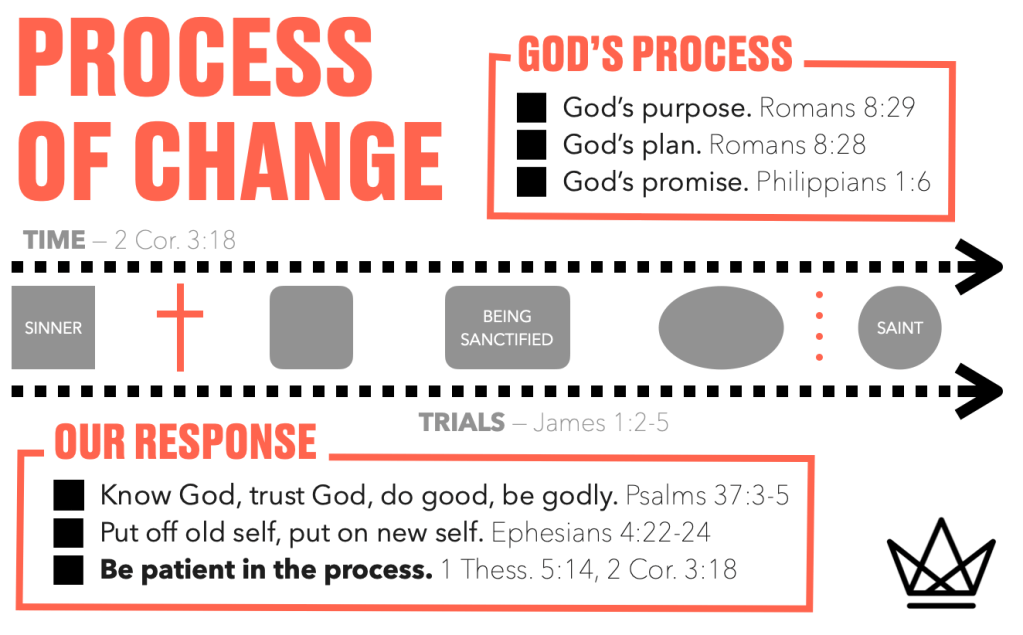
Gospel transformation is not merely one outcome of ministry; it is the starting point and the essential engine for all true, lasting, and holistic change—whether in individuals, families, communities, or even nations. Without this inner spiritual renewal, external changes are often superficial, temporary, or driven by unsustainable motives.
Transformation Bears Lasting Fruit. Like a tree, we can identify people’s growth and change through the fruit they produce. One can staple fruit to the tree or fake fruit for a time, but sooner or later, they will be found out. The purpose of this spiritual change is to bear fruit that is visible, demonstrating the reality of the Spirit’s work both in character and in action. (Galatians 5:22-23, Matthew 7:20)
Fruit of Transformation:
- Addresses the Root Problem: Sin is the core issue separating mankind from God and causing brokenness. Transformation through the gospel addresses this spiritual root, leading to genuine repentance and reconciliation. (Acts 26:18; Colossians 1:13-14) The gospel offers forgiveness of sins and reconciliation with God, moving a person from spiritual death to spiritual life. Gospel transformation goes beyond outward actions to address the root of sin in the heart, leading to a genuine desire to please God.
- Produces Lasting Fruit: Changes that stem from a transformed heart are sustainable and produce the “fruit of the Spirit,” impacting all areas of life. (Galatians 5:22-23) It’s not a one-time event but a lifelong journey of growth and change, where disciples cooperate with the Holy Spirit to become more like Jesus.
- Validates the Gospel’s Power: When lives are genuinely transformed, it provides undeniable evidence of the gospel’s truth and power to a watching world. When we understand and live out the gospel’s truth, we are not just accumulating knowledge; we are becoming living testimonies to God’s saving power and progressively being changed into the beautiful likeness of Jesus. (John 8:32, 36)
Transformation is Relational and Messy. Transformation is not instantaneous or solitary; it is a messy, ongoing process nurtured within the context of relationship—first with God, and then with His people. Discipleship, the primary vehicle for growth, happens within a maturing community. We are built up and grow into Christ-likeness as we interact with and serve one another. (Ephesians 4:15-16; Romans 12:15)
Transformation is the essence of the Gospel’s power, moving a person from spiritual death to new life and continual growth in Christ’s likeness. For pioneer mission workers laboring among the unreached, understanding this divine process is critical, as it removes the immense pressure of changing people and anchors ministry solely in the Holy Spirit’s power.
“And we all, with unveiled face, beholding the glory of the Lord, are being transformed into the same image from one degree of glory to another. For this comes from the Lord who is the Spirit.” — 2 Corinthians 3:18
THE IMPORTANCE OF ONGOING TRANSFORMATION
The importance of ongoing transformation (sanctification) for followers of Jesus is absolute; it is the essential measure of spiritual vitality and the non-negotiable proof that the gospel is genuinely at work in one’s life.
Creates a Connection with our Change Agent. Salvation is not just a destination (justification) but a process of becoming like Christ (sanctification). Ongoing transformation is the evidence that the Holy Spirit has taken residence and is the definitive aim of God’s work in us.
Expect to be Changed. God does use pioneers as change agents, yet he will often change the pioneer first. The greatest change is what cannot be seen; it is a change that will be from the inside out.
Be Transformed Now and Forever. The transformation that Christ does is both immediate and lifelong. In other words, we can start changing now, and the process of changing will happen over one’s lifetime. Too often, we think about who we were rather than who we are and what we have in Christ. While I may still have a gravitational pull toward sin, I am no longer defined by my sin but by Christ. Through repentance and righteousness in Christ, as I submit to His Spirit in me, I am being made more like Him every day.
How to Transform and the Place of Practice, Skills, Tools, and Methods. While skills, tools, and methods can tend towards being manmade, they can be motivated from the heart to glorify God and activate change. Discipleship tools, ministry methods, and emotional skills are simply means by which the Holy Spirit works. They are a map, but the Spirit is the engine. They allow the pioneer to patiently cooperate with God, providing the necessary structure for the Spirit to renew the mind and cultivate the heart, though they possess no inherent power to change a heart.
Types of transformational practices, skills, tools, and methods that can be helpful to pioneers on the mission field:
reflective listening,
peacemaking,
church planting strategy,
oral storying,
language acquisition,
cultural toolbox,
adaptability,
interpersonal development,
biblical interpretation,
relational evangelism,
sharing the gospel,
apologetics,
team meetings structure,
empathy,
productivity,
listening prayer,
quiet time,
time management,
leader development,
teaching,
preaching,
sharing feedback,
trust building,
partnership development,
resilience,
logistical support,
fundraising,
personal growth planning,
lectio divina,
Community Health Evangelism,
_____________
Ongoing transformation isn’t just a desired outcome; it’s the heartbeat of the Christian life. To stop growing is to stop functioning in the very core purpose for which we were redeemed. We must never forget that the greatest change we will ever witness on the mission field is the one God is continually working in us.
WAYS WE WITNESS TRANSFORMATION ON THE MISSION FIELD
Transformation on the mission field is often a slow, messy, yet miraculous process, evident in various ways:
Conversion and New Life: A former animist burning their amulets and publicly confessing Christ, or a person known for dishonesty becoming remarkably truthful and generous. Sometimes we expect the change to be immediate and complete. While that can happen, it is often slow and steady.
Worldview Shifts: A community moving from fear of spirits and religious leaders to trusting in a loving, sovereign God; or abandoning harmful traditional practices (e.g., female genital mutilation, child marriage) due to new biblical values.
From Spiritual Bondage to Freedom: Individuals who were once demon-possessed or deeply involved in the occult are finding complete freedom and peace in Christ.
Behavioral and Moral Change: Individuals previously involved in violence, addiction, or sexual immorality are experiencing genuine repentance and living lives marked by peace, self-control, and purity.
Reconciliation and Forgiveness: Enemies reconciling and living in harmony within a new Christian community, demonstrating the power of Christ to break down barriers.
Community Impact: A new church becoming a center for justice, compassion, and holistic development (e.g., literacy, hygiene, economic initiatives) because transformed disciples are motivated to live out their faith in action.
For pioneer mission workers, holding fast to the theology of transformation means entrusting the radical change of hearts to God, faithfully proclaiming the gospel, and patiently discipling new believers, knowing that only Christ can truly make all things new within the context of a healthy and maturing community.
PRAYER ACTION
Consider the Scriptures you cling to above. Consider the transformation process. Write a prayer for the kind of person you want to be transformed into.
REFLECTIONS ON BUILDING A PRACTICAL MINI-THEOLOGY OF TRANSFORMATION
Take some time to prayerfully draft your practical mini-theology of “transformation” by responding to these questions:
- What is transformation? Where does true transformation come from? What is its source and sustainability? Where are you currently trying to achieve sanctification or maturity through effort and performance (“works”), rather than through dependence on the Holy Spirit and application of the gospel (“grace”)?
example: God is… We are the kind of people who… It is most like us/me to… We/I will… We/I hold to…
- What can you change about yourself? What can’t you change about yourself?
- What can you change about others? (co-laborers, locals, unbelievers, weak believers) What can’t you change about others?
- Once you finish, share your responses with your mentor. Ask for feedback. Adjust your draft as needed.
- Complete a one-page practical mini-theology.
RESOURCES FOR GOING DEEPER:
- How People Change, by Timothy Lane
- Lord Change Me, by James MacDonald
- Changed into His Likeness, by J. Gary Millar
- Failure Redefined and Redeemed, by Elliot Stephens
- The Pace of Gospel Transformation, by Anand Mahadevan
- May the Mind of Christ, My Savior, by Kate Wilkinson


