5 Ways to Support the Church When you Can’t Support the Pastor.
Dear Parents with Young Children in Church.
Removing the Ball out of Children’s Soccer Leagues.
7 Ways for Busy Mom’s to Get in the Word.


“What set you on this course?” This was a question an aunt of mine recently asked. Since she was curious, others might be too. Therefore, I thought I’d share some of what I said to her along with insights from a little known prophet named Habakkuk.
It is an encouragement to get emails from those interested in following our new course direction (or calling). I know there are a few who think we are a little nuts to take our munchkins to a place like Africa, but coming from a family that has traveled as much as ours it shouldn’t be a surprise that the next generations have caught the travel bug too. I have to admit, the slideshows my grandparents would show with unabridged commentary from their trips to Africa, and visits from the Park family, gave me a contagious desire to go to Africa.
So what set us on the course? If you were to ask me 10-15 years ago, I would have never thought this is where I would end up. I wanted to be an artist like my dad, but when I heard you don’t make much money in that type of work I then wanted to be a writer or journalist. That was until, in high school, my church harnessed my gifting. My youth pastor would say, “You can’t take a U-Haul with you to your grave.” He encouraged me to continue my future in college studying Scripture and shepherding (it’s was there I also met Sarah). And immediately after college I took my first voyage to Africa on 9-month apprenticeship to South Africa. It was my first trip to the continent and it wouldn’t be my last.
When I returned to the US, I was called as the assistant pastor of a church in Indiana. For 8-years, the church cultivated my passion for Africa and the local church. It takes a selfless church to consider losing a pastor to the field when calling him.
About 6-years ago, I got an email out of the blue from a former prof at college who went on to be a pastor in inner-city Philly. He hired Sarah to be their children’s ministry director. You might remember, she grew up in the Congo until she was a teen. Africa was in her blood (quite literally). The prof asked, “You remember Sarah? Well, you like Africa and she does too. You love Jesus, and she does too.” Then he gave me her digits and the rest is history. That same prof married us in 2009. Thereafter the itch to go back to Africa was one we wanted to scratch. Our first thought was to go to the Congo near the area Sarah lived and we did training for pastors and youth leaders. It was amazing work with people eager to learn. However, as we left we were moved to go to places more forgotten.
Little known Habakkuk records some very scorching words from God’s, “Behold, is it not from the Lord of hosts that peoples labor merely for fire.” (2:13a) In other words, “God says, all the things men work for (i.e. newer house, bigger car, longer boat, larger flat-screen, fatter paycheck) will one day burn or outdate.” It’s not that they are bad things to have or own, they just aren’t lasting investments.
Then God continues by saying, “nations weary themselves for nothing” (2:13b) We see this, right now, in the political situation in Egypt and Syria or in the economical situation of many places in Africa. The strength, safety, and history of nations can crumble in a moment. In Habakkuk’s day, it was Babylon that was making headline news. They were bringing terror upon God’s people, but God declared they would only be a blimp in history and would soon fade into oblivion.
That didn’t quite calm Habakkuk’s nerves at that moment, however, in the midst of some serious woe’s, God is answering Habakkuk’s question, “Will the sin that I see go unnoticed?” A good question. Especially, when you hear the news about the latest child abuser or murderer near home or the unjust rampage on the other side of the globe. To which each human has a God-given beacon that blares out, “Somebody do something about this!”
God will do something. It might not be immediate, but He will. He makes an “I will statement” in the next verse, “For the earth will be filled with the knowledge of the glory of the Lord as the waters cover the sea.” (2:14) Do you want to invest in something that will return its yield and that will return on its investment? Trust in, and buy into, the promise that He will fill every nook, cranny, and crevasse of this earth with His glory. If He says it He will do it. History proves it. That is God’s best bit of investment advice.
Most people understand that money doesn’t fix everything and the newest or neediest thing doesn’t satisfy but for a fleeting moment. What people are searching for is a golden ticket, a system that works, a way to peace, or a thing that will fill the empty hole inside them that wonders, “Is what I am doing or living for mattering?” Most things fall short, but God promises that like water He will fills every possible hole with His glory. This can be a hard promise to believe when the glory that man can make for himself is so tangible. Man can build for kingdoms and castles and rule in them proudly. He can build portfolios and resumes that gleam with self-made glory. And God warns against this imitation glory,
“What profit is an idol
when its maker has shaped it,
a metal image, a teacher of lies?
For its maker trusts in his own creation
when he makes speechless idols!
Woe to him who says to a wooden thing, Awake;
to a silent stone, Arise!
Can this teach?
Behold, it is overlaid with gold and silver,
and there is no breath at all in it” (2:18-19)
As God closes on his answer to Habakkuk’s question, He declares that a divine role reversal of Creator vs. creation must take place in every humans heart, “The Lord is in His holy temple; let all the earth keep silence before Him.” (2:20) It’s as if God says to Habakkuk, “Shh. Rest. Lay your life here at My feet. I am in control. Trust Me. I will bring justice. I will restore what is broken. I will right what is wrong. I will judge the living and the dead. I will wipe every tear. I will fill this earth with my glory.”
In fact, God has given us a glimpse of His glory. He sent His beloved Son to walk this planet, who lived a sinless life, received the most unfair trial, suffered under the weight of the worlds sin and the wrath of God upon Himself in His death, murdered like a criminal, but three-days later, rose the grave, defeated death, and made your way to eternal glory possible.
You might wonder what Habakkuk has to do with our course direction. It has everything to do with it. It is the promise that God gives to Habakkuk that gives us reason to go to Africa with our munchkins. It is for fame and glory. Not our own. May He cover this dry land with the knowledge of His glory as the waters cover the sea.



Some people back home ask, “How long do you plan on being in Africa?” I know many of those faces we will not see for years. I don’t know how to answer that question, but my usual response is to answer, “As long as it takes.” We desire to see a mighty movement of God. That could take a while.
On Sunday, Sarah and I were listening to a sermon on the book of Habakkuk during our family worship time. In Habakkuk 1:2, he asks “How long?” for a different reason. He sees all the violence and injustice around him and asks God, “Why aren’t you doing anything about it?” (my paraphrase, 1:2-4). It is easy to regard our circumstances and think that God is passive, however, God is more proactive than you can imagine. For in the next verse, God answers Habakkuk’s question, “Look among the nations, and see; wonder and be astounded. For I am doing a work in your days that you would not believe if told.” (1:5)
Like Habakkuk, I may doubt God promises. I may question His character. I may not see immediate results from my work. I may throw in the towel too early. Yet God says, “Wait a minute. Check this out. Look and see. Be amazed. Be still and know that I am God over history and your circumstances.” He’s been working among the Z people long before we arrived. He will be at work among them long after we’re gone (whenever that may be). Right now, He is at work within me reminded me of His faithfulness, His truth, His presence, and His sovereignty. If God were to share with me all that He is doing at this moment, I would not understand or comprehend.


For a few months, I have been studying the Gospel of Luke with some friends. It has been a joy to study the life of Jesus. Below is a Family Worship Guide that I created from our discussions. Just click on the image below. You will find questions with and without helps. I hope this is a blessing to you and your family.

Let me know if you would like to make changes or additions. This is certainly a work in progress.

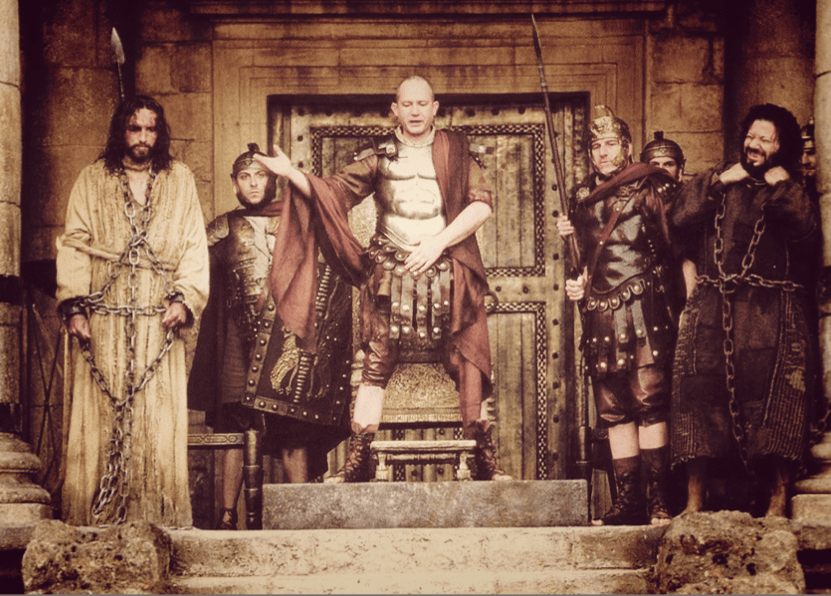

Can you name a movie or story where the main character is innocent, but is framed, tried and punished for a crime they didn’t commit? There are many. My favorites include: The Shawshank Redemption, The Green Mile, Double Jeopardy, The Fugitive, North By Northwest, The Wrong Man, The 39 Steps, An Innocent Man, and Hang ‘Em High.
In high school Minorities class, I heard the story, Cry Freedom. It is a real-life story of Steve Biko, a black South African and activist during the apartheid, and his white journalist friend Donald Woods. Woods learns about the discrimination, political corruption, and the repercussions of violence. After seeing the injustices, he risks his life to expose those stories to the world.
How do these movies or kinds of stories make you feel? We want justice! We cheer for the victims. We fear how we’d respond in a similar situation. It is natural to recoil at the punishment of the innocent. So it is with passages like Luke 23:1-25, we want to stand up for injustices against Jesus, but would we?
What makes something unjust (or ironic)? It’s when something unfair or plain wrong happens to someone. In other words, what should happen to Jesus is not (i.e. a fair trial or set free). In fact, the opposite takes place. The trial of Jesus is brimming with injustice and irony. Can you spot it? (I spot at least 6 instances).
First, the religious rulers accuse Jesus of misleading the nation by telling people not to give tribute to Caesar (v.2), when a few days earlier Jesus taught the exact opposite (cf. 20:19-25).
Second, the religious rulers try to ruffle the feathers of the political leaders by saying Jesus claims to be king of the Jews (v.3). Jesus has not directly said so, though He is, but not as they think. He has claimed to be the Son of God who will sit at God’s right hand (cf. 22:68-70); the seat of supreme authority.
Third, the religious rulers accuse Jesus of stirring the people through His teachings (v.5). He did stir crowds with the “truth” and the people were astonished by His teachings (cf. 4:32; 9:43).
Fourth, neither Pilate nor Herod find Jesus guilty of any crime that would deem punishable by death (vs.14-15). He is, in fact, innocent and without sin.1 Ironically, Herod dresses Jesus in gaudy royal robes making a mockery of His and the claim.
Fifth, the religious rulers will trade Jesus’ life for Barabbas, the murderer (v.18). I’ll say more on this later.
Sixth, Pilate volleys for Jesus without success. In a moment, Pilate throws Roman law out the window and give Jesus over to crowd. Unbeknown to him or the crowd, Jesus is being delivered over by the divine will of God. Pilate and the crowd are simply pawns in the hands of God bringing about redemptive history.
Surprisingly, this passage says nothing about Jesus’ friends or family. There aren’t Human Rights activists or picketers holding signs for Jesus release. The only one who stands up for Jesus is Pilate. He’s the highest man in Jerusalem, but he has little power over the cankerous crowd and the hand of God.
The events of Jesus’ trial expose the equal danger of denial and indifference towards Jesus. The religious people are in denial of who Jesus says He is. They say they worship God, but they have placed God incarnate, the Creator of the universe on trial. Pilate is indifferent towards Him. Neither the crowd nor Pilate fear God. The crowd fears the influence of Jesus and Pilate fears Tiberius charge to keep Pax Romana, which is being threatened by the rabble-rousing crowd. In their hearts, they both fear man, and the denial and indifference towards Jesus led to His unjust treatment.
This begs me question my heart too. Have I treated Jesus fairly or justly? Do I see any fault in Him? Do I resemble this sort of denial and indifference towards Jesus? If so, I am just as guilty as the crowd. If I were honest, there are times each day when denial and indifference creep in and kill the authority and power of Jesus that desires to reign in my life. If I were in the crowd that day, I probably wouldn’t cry freedom. I would be joining the crowd chanting, “Crucify, crucify Him!”
While reading this passage, I mustn’t feel guilt, rather I must reveal in the grace of God. No amount of torture, pain, loneliness, mockery, suffering, or injustice stops Jesus from following through with His divine call. Jesus bears God’s wrath, pays for my punishment, so that I will have eternal life, forever freedom, forgiveness, and redemption. Jesus’ injustice bought my shalom.
Why doesn’t Jesus cry freedom? Why doesn’t Jesus save Himself? Surely, He can. Even during the onslaught of scorn from religious rulers, soldiers, and a criminal hanging next to Jesus, He willingly remains fixed on the cross (cf. 22:35-39). Oddly, all throughout Jesus’ trial and crucifixion He doesn’t say many words. He’s remains silent and confident. He doesn’t save Himself. He willingly goes along with His own death sentence. He could call for swift justice and will, but not yet. An injustice must happen to Jesus for justice to prevail.
Jesus’ response should give us courage to fear God rather than man. In difficult situations or under pressure to speak, sometimes no response is needed, only trust and obedience in God’s providence. Often Christians are the worlds justice police. We see an injustice and we fight for right. We want to see the innocent freed and the criminal hanged. We’ve established organizations like World Vision or International Justice Mission, which do great things throughout the world to give a voice to abused, neglected, enslaved, and imprisoned. Yet it was one of the worlds greatest injustices has ever seen has set us free.
One of the wildest ironies within Jesus’ trial is the exchange for Barabbas. How crazy and idiotic is the crowd to free a convicted murderer? This shows the irrational trajectory of fearing man. They would rather live with a murderer on the loose than have Jesus in teaching and healing in their streets.
I’ve always detested for Barabbas. I picture him as a scar faced, chip-toothed, scraggly-eyed villain. The kind of guy mom would want you hanging around. However, as I read through this text again a question lingered on my mind. How is the exchange for Barabbas a perfect picture of the exchange of my life for Jesus? It dawned on me for the first time. My sin is just as detestable and punishable by death as Barabbas’, but instead of the crowd it was the Righteous Judge, Jesus, who set me free to live another day. I, like Barabbas, have been released in exchange for the blood of an innocent man.
This passage really hits home. We live among a people in Africa who are all too familiar with injustices and unfairness. Some have seen family members and friends beaten, raped, and/or killed. They are crying for freedom. Only Jesus will minister hope to their fear and despair. He too faced injustices and yet responded with confidence and trust in His Father. And God had mercy on us all through the death of His only Son. Therefore, let us boldly proclaim the Hope of Nations as ones who have experienced and benefit from the beautiful exchange.2
Questions for Application & Reflection: How is the exchange for Barabbas the perfect picture of the great exchange of our life for Jesus? How has Jesus set you free? What gives you the strength to resist fear of man and pressures in your life? How can Jesus be displayed in injustices you face in your ministry? In what ways do you relate to the crowd calling for the death of Jesus?


Let’s say that the end of your life was in front of you. You knew it wasn’t years or months or weeks or even days, but it was hours, and your life would be over. You knew you were going to die, and you were right on the threshold of death, and it was going to be a painful, brutal, difficult, tortuous, public, shameful death. What would you be thinking about? What would you be talking about?
In Luke 22, Jesus is hours away from of His own murder. It is the dark season of His life (cf. v.53). He’s going to die soon. He knows it. And what does He talk about? What is He thinking about? The Scriptures. What gives Him confidence, what gives Him courage, what gives Him clarity? It’s the Scriptures.
One of the statements coined from the Protestant Reformation was tota sola Scriptura. It’s a Latin phrase that means all of Scripture is alone our highest authority. God’s Book is better in every way than every other book. His Book is a perfect Book. Even the best books that men write don’t compare to the book that God wrote. Scriptures are the standard to measure other books.
Now, what Jesus is going to do in Luke 22 is give a test in tota sola Scriptura. And He actually begins in Luke 22 by referring back to Luke 10. Remember, the person of peace passage, where Jesus told his disciples not to take anything, but rely upon God for provisions as they journeyed from town to town? Now Jesus will say something interesting almost seemingly contradictory,
“35 And he said to them, When I sent you out with no moneybag or knapsack or sandals, did you lack anything? They said, Nothing. 36 He said to them, But now let the one who has a moneybag take it, and likewise a knapsack. And let the one who has no sword sell his cloak and buy one. 37 For I tell you that this Scripture must be fulfilled in me: And he was numbered with the transgressors. For what is written about me has its fulfillment. 38 And they said, Look, Lord, here are two swords. And he said to them, It is enough.”
Well, which is it, Jesus? Pack supplies or don’t pack supplies? Be ready or don’t be ready? Wear shoes or don’t wear shoes? Pack weapons or don’t pack weapons? Which is it? It all depends on the mission. Jesus says, “On this mission, take nothing; on this mission, take everything.”
On a side note, as I read this I thought, “What does ‘sword’ mean?” Well I looked it up in my super nerdy Bible dictionary and “sword” means sword. Certainly, Jesus didn’t say pack a weapon. Oh, but he did. Fourteen verses later, Peter is going to grab a sword and will cut a guy’s ear off (v.50). Ironic?
Commercial over. The truth is, sometimes you should raise money. Sometimes you shouldn’t. Sometimes you should pack supplies. Sometimes you shouldn’t. Sometimes you should defend yourself. Sometimes you shouldn’t. Sometimes you should rely solely on God your provider. Sometimes you should have a plan and be prepared. It all depends on the mission. So, consider what God is calling you to in that moment.
Jesus is going deeper than talking about material you need for you mission, but the mindset you have while on mission. In Luke 10, Jesus encourages His disciples to be like a lamb and let God be your shepherd who provides everything you need. But in Luke 22, Jesus encourages the disciples to be tough. Not just Ford tough, but ninja fighter tough. Get your supplies, money secured, boots polished, sword in sheath, off to conflict, kind of tough. Tough like a lion.
There is no contradiction between Luke 10 and 22. Jesus is both lamb or lion. When you read through all of Luke you see that Jesus is lamb and lion or both at the same time. Check it out:
Luke 4: Jesus is tested by Satan and uses the Scripture to His defense. He’s LION.
Luke 5: Jesus heals a paralytic and leper. He’s LAMB.
Luke 6: Jesus heals man with withered hand despite the religious critics. He’s LAMB and LION.
Luke 7: Jesus heals servant girl and widow. He’s LAMB.
Luke 8: Jesus casts out legion. He’s LION and LAMB.
Luke 9: Jesus feeds 5000. He’s LAMB.
Luke 11: Jesus preaches the woes. He’s LION.
Luke 13: Jesus heals disabled woman. He’s LAMB.
Luke 14: Jesus heals man on the Sabbath despite religious critics. He’s LAMB and LION.
Luke 18: Jesus lets the children come to Him. He’s LAMB.
Luke 19: Jesus confronts money changers in the temple. He’s LION.
Do you see a pattern here? Jesus is tough and tender. He is servant and sovereign. He is lamb and lion.
Back to the Reformers tota sola Scriptura. The Scripture is about totally about Jesus. All the people, stories, and principles are part of the subplot connecting to the main storyline of Jesus’, the Savior of the world. The Book doesn’t make any sense unless it’s all connects to Jesus.
On Sunday, I was had lunch with Mark and his family. They’ve lived in Africa for over two decades. There youngest son was born there and is now a young man. Mark shared how his first few years in Africa were tough, but as he saw the Word of God transform lives he has become more tender to God’s calling him there. He’s seen many Muslims respond in faith to the Book that points to Jesus from beginning to end.
In Luke 22:37, Jesus says. “For I tell you that this Scripture must be fulfilled in me: ‘And he was numbered with the transgressors.’” He quotes Isaiah 53:12. Jesus says the the whole book is now being fulfilled in His life. He came fulfilling everything that is written in the book that God wrote. Even on the brink of torture and death Jesus understands He is to fulfill what God has said. He came as the lamb of God slain for the sins of the world. And He has promised to come back as the Lion of Judah to restore the world. The Book says so. Tota sola Scriptura.
Questions for Reflection: How has Jesus made provision for you in your life? How does the fulfillment of the cross make provision for your sin? In what ways do you lack nothing and have everything? How does your worldly perspective affect your view of provision? In what ways have you submitted to the truth and power of Scripture in your life? What does it look like for the Scripture to be your tota sola Scriptura?


My daughter Justus is only two and a half years old. She is old enough to know when she wants something she is not suppose to have to weigh the consequences of what will happen if she were to have it. Today, she weighed the consequences right before my eyes. I told her not to drink my coffee. She thought about it for a nanosecond, grab the cup of coffee and took a swig. Not only did she gulp down her first bit of coffee in disgust, she looked at me and began to cry out in sorrow. She didn’t have to say, “I’m sorry daddy.” I knew she was sorry. She knew she disobeyed and she immediately had sorrow over it.
To many people Justus’ disobedience might seems like something small and insignificant or her response was overly sensitive. Yet God taught me a lesson in her response. I want to be sorry like that. I want to have immediate sorrow over my disobedience. Like my daughter, I too commit sin openly and shamefully despite the consequences, but in my pride I am not immediately sorrowful.
Too often, I am on the other end of the disobedience spectrum. I hide my sin and enjoy it in secret without thinking about the consequences of being caught. When caught, I want to respond like David,
Psalm 51:1 “Have mercy on me, O God,
according to your steadfast love;
according to your abundant mercy
blot out my transgressions.
2 Wash me thoroughly from my iniquity,
and cleanse me from my sin!3 For I know my transgressions,
and my sin is ever before me.
4 Against you, you only, have I sinned
and done what is evil in your sight,
so that you may be justified in your words
and blameless in your judgment.
5 Behold, I was brought forth in iniquity,
and in sin did my mother conceive me.
6 Behold, you delight in truth in the inward being,
and you teach me wisdom in the secret heart.”
Sin is serious. It offends a holy God. Since it offends God He has to do something about it. Sin has consequences that are immediate and/or delayed. I want a heart that sees sin as God sees it and is soft enough to respond immediately rather than delay my confession.
When we confess our sin, God covers us with His mercy. Proverbs 28:13-14 says, “Whoever conceals his transgressions will not prosper, but he who confesses and forsakes them will obtain mercy. 14 Blessed is the one who fears the Lord always, but whoever hardens his heart will fall into calamity.” In other words, what I cover up He uncovers, but what I uncover He covers with His mercy. Isn’t that a bold, yet beautiful picture of God.
After Justus downed my dark brew and bust out into tears, I couldn’t help but comfort her. I learned this from God. He shows mercy to the brokenhearted (cf. Psalm 51:17). His mercy restores. I want to be like that too.
* Coffee picture taken by friend Anne Rock.




Gospel and missions, which go together like macaroni and cheese. The gospel is simultaneously at work in us and through us. Inwardly, our desires and motives are being changed as we repent and believe the gospel. As we are moved by Christ’s love in this way, we are compelled to outwardly engage those around us with the same kind of redemptive love. The gospel is active, it’s on a mission, in us and through us.
In Romans 1:8-17, we see Paul’s motivation for gospel ministry. Missionary ministry. Paul is fired up about the global scope of the gospel because God’s fired up about it. This is what I talk about when I speak of missions: “Missions is the activity of God’s people partnering with God’s mission.” Let’s see how this is made practical in Romans 1.
“First, I thank my God through Jesus Christ for all of you, because your faith is proclaimed in all the world.” (v.8)
Who’s the “you” Paul refers to when he says, “I thank my God for all of you”? He’s referring to the Christians in Rome. Although this letter was first to the Christians in Rome, it is also a letter for you. This letter is a gift from God to the church of every generation.
Why is Paul thankful for them? They are spreading their faith to all the world. They are not just expanding their facilities (or home churches); they were expanding the fame of Jesus’ name to the nations.
1.1 THE GOSPEL MISSION THROUGH THE CHURCH IS BIRTHED THROUGH PRAYER (9-11)
“For God is my witness, whom I serve with my spirit in the gospel of His Son, that without ceasing I mention you always in my prayers, asking that somehow by God’s will I may now at last succeed in coming to you.”
Like most letters, including Romans, Paul begins by sharing how he is praying for that church. I love reading Paul’s prayers. He loves the church. He constantly prays for them. He pleads with God to be with them. What Paul understands is that mighty movements of God are birthed through prayer. It’s not about Paul or His mission. It’s about His God and His mission.
Prayer serves to showcase whatever is on your heart; it reflects your passions. If you do not pray consistently and fervently for the nations, pray for workers for the harvest, pray for the reach of the gospel, pray for Christ’s glory to be made known in all the earth, you do not have any reason to believe that those things will happen through you or the church.
When God burdens people to pray for missions, He lights a fire that is not easily extinguished. Churches and their people begin to pray, then to give, and then to go. The first missions endeavor on record emerged from a period of worship, prayer and fasting among the members of the church in Antioch (cf. Acts 13). Christ Himself established prayer as a precedent for missions. “Then He said to His disciples, ‘The harvest is abundant, but the workers are few. Therefore, pray to the Lord of the harvest to send out workers into His harvest'” (Matt. 9:37–38). Whenever the church joins together to pray for God to send workers, He does.
Prevailing prayer stirs the heart and opens our eyes to see what God sees, to love what He loves and to long for what He longs for. Spending time in the presence of One who loves and pursues the nations cannot help but be contagious.
1.2 THE GOSPEL MISSION THROUGH THE CHURCH IS A COMMUNITY CALLING (11-13)
“For I long to see you, that I may impart to you some spiritual gift to strengthen you—that is, that we may be mutually encouraged by each other’s faith, both yours and mine. I do not want you to be unaware, brothers, that I have often intended to come to you (but thus far have been prevented), in order that I may reap some harvest among you as well as among the rest of the Gentiles.”
The church is beautiful. It’s beautiful because Jesus is the Groom and we are His Bride. We are incomplete and insufficient without one another. If I am not pouring into the church or allowing the church pour into me, I am forsaking God’s means for my spiritual growth and together we are forsaking our calling (cf. Hebrews 10:24-25). Paul longs to pour into the church, but he also longs for it to pour into him. He wants to be mutually encouraged by their faith. Paul wasn’t a super saint. He wasn’t a one-man-show that could function solo.
Serving the nations can be discouraging, lonely and difficult. What Sarah and I miss most about our home church is their fellowship and spiritual nourishment. We miss our small group where we were confronting sin in love. We miss sitting under the pastor’s preaching. We realize how much we need the church, we need their prayers, we need their encouragement, we need their fellowship, we need their nourishment, we need them to ask us the hard questions, and we need them to come with us.
Mission is a community calling. Paul desired a harvest among the Romans. As we go to the nations, you are going to your community. The harvest is not in the pew, it’s beyond your parking lot. Go to it. Missions begins with you, the church, your prayers and your common calling.
“I am under obligation both to Greeks and to barbarians, both to the wise and to the foolish. So I am eager to preach the gospel to you also who are in Rome.”
An obligation is an action we are bound to by commitment. It’s a word that reminds us of a burden or duty or chore, yet why is Paul eager (joyful as a monkey in a fruit market) to preach the gospel to all people? Remember, Acts 9? Remember how he was changed by the gospel on the road to Damascus? People transformed by the gospel have a joyful obligation to propagate the good news. Paul is under obligation by Christ to preach the gospel to all peoples, not just his people. The gospel mandate to “make disciples of all nations” is our joy. Romans 10:15 says, “How beautiful are the feet of those who preach the gospel of peace, who bring glad tidings of good things!”
If the gospel is not your joyful obligation refresh yourself with the gospel again. Notice, who is Paul eager to preach the gospel to? Romans. Why Romans? In other words, why is he eager to preach the gospel to Christians? To Paul, the gospel is not just initial saving faith; it’s a call to continue to walk in faith each day. The gospel is not the ABC’s of your faith, it’s the A-Z’s of your faith walk. Everything you do from your spiritual birth to death is rooted in the gospel. That’s why it is your joy it is to preach the gospel to all people, including yourselves again and again each day.
The gospel calls us to action. The gospel cannot be contained within the four walls of the church, but it will not rest until it has reached the four corners of the earth. “My aim is to evangelize where Christ has not been named, so that I will not build on someone else’s foundation” (Romans 15:20). This verse stands as the slogan for many missionaries and church planters. To act on the gospel is to obey it and proclaim it until all have heard. It is not enough to cut checks each month to families who are serving around the globe and call it missions. It’s when all the church is going to all the world. That is missions.
Certain countries build barriers and make it hard for Christians to cross borders, but God is there. God is at work. Look at China and read the story of Brother Yun, The Heavenly Man. Or look at the Iron Curtain and read the story of Brother Andrew, The God Smuggler. These are just a few of the stories showing how God busts through man-made barriers. Walls of fear between your neighbor build brick by brick, but those barriers are invisible to God. The gospel sees no barrier or border (i.e. race, status), therefore, you must see no border to the gospel either. The gospel without borders is missions.
The scope of the gospel is global and local. It starts with the border closest to you. The person who butts up to your property. The grumpy guy who is particular about his yard and yells when your dog runs through it. Silent Sally who you barely hear a peep from the apartment across from you. It’s your mission to bring the gospel to your neighbors. It’s your joyful obligation.
Our family parked in Philly for 3-months. It was there we had our daughter Sophia. We lived in a parsonage and we had neighbors that we really wanted to share the gospel. It was a family with teenage children. I knew I should reach out and befriend them. But my sense of “should” had no motivating power. It was law, not gospel. My love was conditional—if we had more in common, if we were here longer, it would be easier. Two-months passed and we made very little contact with our neighbors. Until one day, Sarah was backing out of our driveway and our neighbor was backing out of their driveway too. Our cars collided in the middle of the street. The opportunity to connect with our neighbors appeared suddenly. The majority fault for the accident was our neighbors and they we’re quite ashamed. In the days that followed we were able to have conversations with our neighbors. Sarah especially showed love, kindness, and grace. She even took time one evening before we were about to leave for Quebec to share with them the gospel. It was her joyful obligation with a little help from an accident.
“For I am not ashamed of the gospel, for it is the power of God for salvation to everyone who believes, to the Jew first and also to the Greek.”
Have you noticed that Paul talks about the gospel constantly? You do not have to guess Paul’s hobbyhorse. If you’re in a conversation with him for one-minute you can bank your bets on him directing the conversation to the gospel. Paul boasts boldly and bountifully in the gospel. It’s his passion. It’s his mission. He has no shame because the gospel has erased all and any shame he had before or after Christ. The gospel has set him free from shame. The gospel might bring shame upon Christians from a sinful world, but it’s message will remove the shame that stains the world.
According to Paul, the gospel is not just something that saves; it is the only thing that saves. It is the power of God for salvation to everyone who believes. So without the gospel there is no missions, and missions is not missions without the gospel. They go together like peanut butter and jelly.
Mission is a label put on many things. We can do a lot of good things that we ought to do (i.e. care for widows, orphans, build homes for habitat, feed starving children, cure aids, etc.) all motivated by a passion for God and compassion for needy people, but is this missions? Let it be known, healthy in hell isn’t our mission. Ministry without the gospel it is not missions. “Missions is the activity of God’s people partnering with God’s mission.” And God’s mission, from before the foundation of the world, has been to redeem a lost and broken world. Paul alludes to this earlier in Romans 1,
”Paul, a servant of Christ Jesus, called to be an apostle, set apart for the gospel of God, which He promised beforehand through His prophets in the holy Scriptures, concerning His Son, who was descended from David according to the flesh and was declared to be the Son of God in power according to the Spirit of holiness by His resurrection from the dead, Jesus Christ our Lord, through whom we have received grace and apostleship to bring about the obedience of faith for the sake of His name among all the nations, including you who are called to belong to Jesus Christ,” (Romans 1:1-6)
If reaching the nations with the gospel is God’s passion, I want it to be my passion too. May our prayer mimic Amy Carmichael who wrote, “Give me the love that leads the way, The faith that nothing can dismay, The hope no disappointments tire, The passion that will burn like fire, Let me not sink to be a clod: Make me Thy fuel, Flame of God.”
For in it the righteousness of God is revealed from faith for faith, as it is written, “The righteous shall live by faith.”
People desperately need hope, they need God’s love and goodness, they need His righteousness; a righteousness that originated in God, was prepared by God before time, is revealed in the gospel of Christ, and is offered to all. Missions is about God giving faith to people who previously had miscued faith and no faith in Christ. The gospel is God’s means to open blind eyes to the beauty of Christ’s righteousness,
“But whatever gain I had, I counted as loss for the sake of Christ. Indeed, I count everything as loss because of the surpassing worth of knowing Christ Jesus my Lord. For His sake I have suffered the loss of all things and count them as rubbish, in order that I may gain Christ and be found in Him, not having a righteousness of my own that comes from the law, but that which comes through faith in Christ, the righteousness from God that depends on faith—that I may know Him and the power of His resurrection, and may share His sufferings, becoming like Him in His death, that by any means possible I may attain the resurrection from the dead.” (Philippians 3:7-11; cf. Romans 3:21-26)
To recap, missions begins with you, the church, through your prevailing prayers and your community calling. Missions is your joyful obligation. Missions is fueled by a passion for the gospel. And missions is rooted in the righteousness of God. How are you actively partnering locally and globally with God’s mission?


Make time for Jesus. This is the first priority. Sarah is my second.
My wife likes the little things. She does a dynamite job caring for our home, even though at this moment our home is in transition. Managing a home is a lot of work filled with many little tasks and no pay. By doing the dishes, changing the laundry, or vacuuming for Sarah can be a huge help to Sarah.
Ask the hard questions. I can read Sarah. She wears her feelings freely on her face. As her husband, I want to go deeper than asking, “How are you doing?” or “What’s up?” That usually goes nowhere. She likes when I asks her questions. She wants to answer.
Listen well. Asking questions is good, but like most dudes I have a natural tendency to listen in order to fix, but often Sarah isn’t looking for a quick fix. She wants me to listen. That in itself is helpful.
We are more alike than we are different. Sarah is not from Venus and I am not from Mars. We are earthlings, moreover, we are children of God made in His image. In God’s eyes, Sarah is a princess and her value is priceless.
We are distinctly different thinkers. Sarah is a verbal processor, while I am a ponderer. The beauty of marriage is discovering how these compliment rather than conflict.
Encourage friendships. Sarah has great friends. When Sarah comes back from a cup of coffee or prayer gathering with the ladies she is re-juiced. It is worth carving out the time to kick Sarah out of the house so she can spend time with her companions.
Snuggle. Sarah likes it when I sit next to her. I mean butted up next to her. Touch is a big thing to her. As a couple, it is good to be intimate often. Touch her heart before you touch her body.
Expect to be sanctified. My sin is so obvious to Sarah. Living with another person, especially a spouse exposes how self-centered I am. God uses Sarah to chisel at my core and I am becoming more selfless. It hurts, but it’s good.
Pray for wisdom. I cannot be the man Sarah needs me to be alone. I need God.
See entries from years past:
1st anniversary
2nd anniversary
3rd anniversary

The Danger in Talking About Why We Should be Involved in a Church.
Nebula’s in 3-D. The Creator’s art.
7 Ways to support your pastor.
Where are the honest atheists?
Bigger than we think. The doctrine of Creation.
Debunking 3 common myths about the resurrection.
How to interpret Christianese.



“No one after lighting a lamp puts it in a cellar or under a basket, but on a stand, so that those who enter may see the light. Your eye is the lamp of your body. When your eye is healthy, your whole body is full of light, but when it is bad, your body is full of darkness. Therefore be careful lest the light in you be darkness. If then your whole body is full of light, having no part dark, it will be wholly bright, as when a lamp with its rays gives you light.” (Luke 11:33-36)
Religious people close their eyes to Jesus (the Light of the world). In Luke 11, the Pharisees and lawyers had such eyes. They eyes were darkened. On the outside they appeared holy and righteous, but the opposite was true about their insides. Their insides were without light, full of pride and unbelief (vs.37-41). Therefore Jesus gives some serious warnings to religious people. In fact, he gives six warnings:
1) Do not brag about what you give to God (v.42, i.e. tithes & services). Religious people don’t care for people or God, the care about how holy people think they are.
2) Do not love the good seats in God’s house (v.43). The Pharisees paid good money for the good seats—the seat where everyone had a good view of them.
3) Do not love titles. The Pharisees were more concerned about their name than the name of God (v.44). Their fame will die with them in the grave, but God’s fame lasts forever.
Jesus trumps the Pharisees. Jesus is title is: Son of God, King of Kings, and Savior of the world. He is seated: at the right hand of the Father, the seat of supreme authority. His fame will stand the test of time and one day all will bow at His feet.
4) Do not burden (intimidate/bully) people with rules stacked upon rules (v.46). The lawyers made their living studying the law and enforcing them upon others. They don’t love Jesus or people, they only love being in control of rules and making sure others are keeping them.
5) Do not kill the prophet who calls you to repent (vs.47-51). In the Old Testament, Israel killed the prophets they did not like. The religious people will kill Jesus too.
6) Do not make the Scripture to fit your agenda (v.52). Instead, search the Scriptures to understand God’s plan. The only way to God is not religion, it’s Jesus. Religion gets in the way of redemption. Not only do religious people not understand they prevent others from understanding too.
Jesus trumps the lawyers. He is the author and perfecter of the law. He willingly dies a sinless servant so that the unrighteous could have His righteousness. Jesus is the key to Scripture. He is the Door (cf.11:9-10). Knock and you have eternal life.
In conclusion, each of these warnings has something in common: They show the condition of man’s heart, which is full of pride and idols. Now, it’s easy to point fingers at religious people, but if you were honest, you and I can be just like Pharisee or lawyer? Where has religious thinking distorted your heart? What sins of religious belief or action do you need to repent of? What does repentance look like in those areas of your life? Will you let Jesus’ light shine inside out?



“Jesus was praying.” That’s how Luke 11:1 begins. Honestly I’ve read that many times, but this time it floored me, “The Creator and Rescuer of the world is on His knees praying to God, His Father.” Isn’t that amazing? Notice, Luke doesn’t say how Jesus prayed, how long, where, or what He was praying, it simply says, “Jesus was praying in a certain place.”
Prayer is a discipline that most Christians feel they fall short, me included. You and I are not naturally born prayers. It’s a learned skill. So if I had a question for Jesus, it would be similar to the one His disciple asks, “Lord, can You teach us how to pray?” How does Jesus respond? Does He say, “That’s a silly question. You’ve been with me this long and you don’t know?” No. Does He organize a weekend prayer seminar? No. Jesus’ School of Prayer is ‘show and tell’.
Jesus’ prayer here is known as the Lord’s Prayer. It’s quite common. I memorized it during my catechism classes growing up in the Catholic Church. However, you will notice, Luke’s prayer is a lot shorter than Matthew’s prayer. I suppose since Luke wrote his gospel after Matthew, he thought his friend did a fantastic job and just summarizes some of main points of Jesus‘ prayer.
I am not going to spend a lot of time looking at Jesus’ prayer, but I want you to see how He elevates God. Also, I want you to see how He teaches His disciples how to pray. Jesus answers His disciple, “When you pray, say…” (v.2a)
If you learn to pray like Jesus, your prayers will be intensively Father-focused. Does this align with your perspective on prayer? What aspects of Jesus’ example prayer do you most utilize or neglect?
To illustrate how to pray, Jesus shares two parables and two principles. His first parable fits the eastern context where honor and shame are still very present aspects of culture (vs.5-8). In Jesus day, people would travel, usually on foot, sometimes on the back of an animal. After a long journey, there wasn’t a Motel 6 to keep a light on. There wasn’t texting or telephones to give your friend a heads-up. There wasn’t even a Denny’s to buy a ‘Moon’s Over My Hammy’ at 2:00am. Yet there was an obligation to honor guests hospitality and help neighbors in a pinch. If not, it could bring shame upon you and your house.
I am challenged by this parable, especially since I am on the brink of entering this kind of culture. I am not very neighborly. I can put on a good face, but I’m frustrated by spontaneous interruptions without appointments. I like to hit the hay early, so if someone came to my door at midnight asking for a loaf of bread I would be pretty perturbed. My response might be, “You need some bread? Ok.” (Thinking: “Dude, you just woke up my girls. Couldn’t you have gone to Seven-Eleven?”) “Here you go, enjoy.” (Thinking: “This 4th of July, I am going to buy lots of bottle rockets.”) I suppose this shows my heart. Agh, I am that guy! That ugly neighbor. I am so unlike God, but I want to be! That’s why this challenges me.
What would you do? How would you respond? Of course, you would open the door because you want to know why this guy is so persistent. Isn’t that Jesus’ point? His point is about the shameless neighbor who’s thinking, “Yeah, it’s late, but I’m going to stand here and knock on the door until I get myself a few loaves of bread.” He’s persistent because he knows eventually his request will be answered. Why? Because ultimately you do care—even though he’s frustrating—you will meet his need. Likewise, Jesus is saying, even if you’re not the most pleasant child of God, even if we’re not having the best intentions or motives, God is loving, gracious, and kind. You can come to Him, day or night, 24/7, because He’s never asleep and He’s never tired and He’s never weary. He’s not unable or incapable or inconvenienced as a normal neighbor would be. You can talk to God anytime about anything and God hears and answers your prayer.
If you pray like the shameless neighbor, your prayers will be persistent and your persistence will prevail (vs.9-10). Jesus says that prayer is about three things: asking, seeking, and knocking. In the Greek, each of those three words are in the present tense, which carries the idea of “keep on” asking, seeking, and knocking. Keep on communicating with God. That’s prayer.
Asking means coming to God in faith and saying, “Dad, I really want…, I need…, please teach me…” Now, some of you are planners, who say, “I don’t need God. I need a plan.” Others of you panic. You don’t make a plan or talk to God, you just freak out. Don’t just make a plan, don’t just panic. Go to the Father and ask. What are you asking God, right now? What haven’t you asked Him?
Seeking means doing something about asking. It’s not enough to say, “Well, I prayed about it, now I’m going to sit here and do nothing.” Often, you pray about things you should be doing anyways. You got to get up and go do something. You got to seek, you got to serve, you got to pursue answers to your request. And if that doesn’t work and it still hasn’t been answered, you just keep banging on the door. You keep knocking. God’s answer will always be: yes, no, or hold on just a moment.
Friday, I heard my daughter Justus asking for me, “Hey, Dad? Dad? Dad? Mom, where’s dad? Where’s dad? What’s dad doing?” She was asking for me. She couldn’t find me. So she started seeking me. I heard her voice. I heard the pitter-patter of her feet on the floor. She looked in every room. She was very persistent, very committed to finding me. “Hey, dad? Where are you?” She came to the very last room in the house that she hadn’t checked, the bathroom. And she came, asking, seeking, knocking. “Dad, are you in there?” She found me. My answer, “I be with you in a moment, baby girl.”
This is the idea Jesus is trying to convey to His disciples. God’s your dad! Ask for Him. Seek Him. Knock on the door. Keep on doing it. Tell Him what you want or need. Bring it all to Him. Bring your Dad your needs, not your greeds. He adores you. He’s not gonna treat you like a stranger. So if you want to understand prayer, look at dads and children.
Jesus’ second story is quite interesting (vs.11-12). It’s about a son who comes up to his dad, “Hey, Dad, can we have fish for dinner?” “Sorry, son all out of fish. How about a snake?” That’s weird! “Okay, dad, how about eggs?” “Nope. Have a scorpion.” I don’t know about you, but this dad really weirds me out. He must be off his meds or smoking something strange!
The story is ridiculous and humorous for a reason. Jesus says, “If you then, who are evil, know how to give good gifts to your children…” (v.13a) If you go to your dad, even if he’s a bad dad, and ask for a good thing, he won’t give you a bad thing. Children, do not use this verse as leverage against your dads, we already know we are evil and sinful. We are not perfect, yet we know the Father who is. In fact, this week, I enjoyed one of the sweetest times of prayer with three dad’s. Each of them were praying for their children and pleading with God that the way they father would resemble the way God fathers them. God is a Father. Even if you are not 100% convinced He is good, when you ask God for something do not fear what He will give. Trust that God is a good Father. He isn’t evil. He is not the father of lies (cf. John 8:44). God our Father is good and He give good gifts.
In Luke 11:1, a disciple asks Jesus, “Can you teach us how to pray?” Jesus gives the clincher in Luke 11:13, “If you then, who are evil, know how to give good gifts to your children, how much more will the heavenly Father give the Holy Spirit to those who ask him!” You see, everything that Jesus has done, His sinless life, His righteousness, His substitutionary death, His resurrection, all of that is given to you, brought to you, applied to you by whom? The Holy Spirit. So apart from the Holy Spirit, all the gifts that the Father has to give are received by the Holy Spirit. This is something Jesus’ disciples would get later (cf. Acts 2).
If you pray like a child who trusts his daddy, God’s goodness gets glory and you get the greatest gift. Jesus says the greatest gift of all is the Holy Spirit. That’s huge! This is the big idea of Luke 11:1–13 on how to pray: Jesus says, you pray by asking, seeking, and knocking. Trusting that your Father is a good, holy, generous, forgiving, King. And if you do this, your prayers will be Father-focused, persistent and prevailing, in the power of the Holy Spirit. So what are you waiting for? Let’s pray!
Father God, you are a good Father. Lord Jesus, you’re a good Savior. Holy Spirit, you’re the greatest gift. Please fill me. Please teach me to worship You forever. In Jesus’ name, Amen.



Thomas Watson, a Puritan pastor from over 350 years ago, asked in his book, Body of Divinity (pp. 399–400), “Why does God delay an answer to prayer?” In other words, why would God ever keep us asking and seeking and knocking when he could respond sooner? (cf. Luke 11:9-10) He gives four answers :



“Like a good neighbor, State Farm is there.” It’s a catchy little jingle, eh? Did you know that Barry Manilow wrote that for State Farm back in 1971? What this slogan implies is that people can have certain qualities that make them a good neighbor. What qualities make a person a good neighbor? Jesus gave meaning for the word, but probably broader than you might think. Consider the significance between the meanings of the word neighbor as a noun and as a verb.
The Good Samaritan is probably one of the most widely recognized Bible stories. When we hear it used in newscasts, the stories surrounding it usually give us a warm and fuzzy feeling. But what was Jesus really trying to teach when He told that story? Was He encouraging us to do random acts of kindness or was He implying something more?
In Luke 10:25–28, we meet a lawyer. The title lawyer indicates that he was an expert in the law. In particular, this lawyer was a student of the Mosaic Law. We don’t know his name, but what we know is that he comes to Jesus with a question to test Jesus’ understanding of the law, “Teacher, what shall I do to inherit eternal life?” (v.25; cf. Deuteronomy 6:16).
Jesus does not give an answer; instead He deflects the lawyer back to the Scriptures. Jesus knew the lawyer knew the answer, since the man spent his entire life searching the law for answers. Jesus simply wanted to hear from his own lips what his understanding of the law said about eternal life.
After the lawyer answers correctly, with a clip on his shoulder he asks Jesus another question. This time his question reveals the condition of his heart, “And who is my neighbor?” (v.25). It’s already clear the lawyer is trying to test Jesus (cf. 7:30), not learn from Him. Also, he is trying to justify himself before men by asking smart questions to appear “wise and understanding” to those listening (cf. 10:21).
The lawyer does what is wise even though he doesn’t acknowledge it. By coming to Jesus, he is coming to the One who authored the law. Jesus understands the law in its purest form. Jesus not only affirmed the law (v.26), He brings a clearer understanding and application to it. Jesus desired the lawyer to see the purpose of the law pointed to his need of Jesus.
Where do you run when you need answers? Do you search on Google or Wikipedia? Do you reference the newest self-help book or horoscope? Do you seek the advice of a friend or family member? Do you come to God in prayer? There are many places people run for answers. If Jesus went to the Scriptures, how much more should you?
What’s the lawyer really asking? He’s trying to exclude responsibility for others by making some people “non-neighbors.” It’s like he’s saying, “Who deserves to receive my kindness?” His religious and social status has clouded his understanding of his own kindness. Though smart, he’s super insensitive. A more appropriate question would’ve been, “Jesus, how can I be a loving neighbor?”
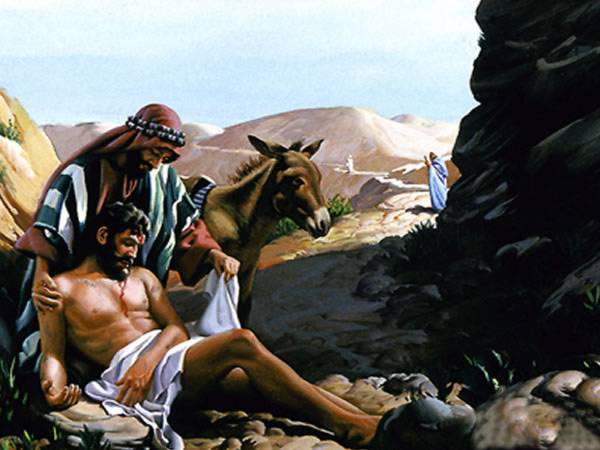 Since the lawyer does not understand, Jesus will help him understand by telling a story of a man robbed, beaten and left to die. As the story goes three men walk down the same road where the man is laying, a priest and a Levite “pass by” the man, but a Samaritan stops and has compassion on the man. Like a good neighbor, the Samaritan is there.
This story would have seriously challenged the worldview of the lawyer. Jesus’ use of a Samaritan as the hero would be quite a shock to His listeners because of the longstanding hatred between Jews and Samaritans. Culturally, it would have been unthinkable for a Samaritan to help a Jew (cf. John 4:4, 9; 8:48). Not only does the Samaritan help, he shows compassion to a neighboring enemy. Thus Jesus makes the point that to love one’s neighbor involves showing care and compassion even to those with whom one would not normally have any relationship (cf. 6:27, 35).
Boundaries exist between the Jews and Samaritans (vs.30–33). And Jesus intentionally expands “neighbor” to mean more than people like us who live near to us. He says they are people who we consider enemies who live on the other side of the tracks. It’s not so much who our neighbor is, but how we are demonstrating concern for neighbors (vs.34–35). Jesus eliminates any excuse not to take care of a neighbor.
With the story told, Jesus asks the lawyer ,”Which of the three men was the neighborliest (v.36)?” The answer of course was obvious.
Jesus’ story forced the lawyer to reconsider the condition of his heart. It forced him to compare the actions he considered righteous with those he considered unrighteous. The story reveal how far his interpretation of the law had moved from the law’s true meaning. God gave the law to encourage His people to love Him and others,
“You shall love the Lord your God with all your heart and with all your soul and with all your might. And these words that I command you today shall be on your heart. You shall teach them diligently to your children, and shall talk of them when you sit in your house, and when you walk by the way, and when you lie down, and when you rise. You shall bind them as a sign on your hand, and they shall be as frontlets between your eyes. You shall write them on the doorposts of your house and on your gates.” (Deuteronomy 6:5-9; cf. Isaiah 49:6)
The command to love others is a continuation of loving God. Jesus is concerned that we are to be merciful neighbors to those across the street and across the globe because He desires all to see His love and mercy through us.
Jesus’ last statement is the most challenging, “Go and do likewise,” (v.37; cf. 1 John 3:16-18), but the promise He gives earlier is most encouraging, “Do this and you will live [eternally].” (v.28) The way we love one another reflects the way we love God. Who is the neighbor you have difficulty showing mercy and love? Is he a Muslim, a criminal, a beggar, or a homosexual? How will you act neighborly, showing the compassion of Christ? Like a good neighbor, will you be there?



There are two Fridays that people reference frequently: Black Friday and Good Friday.
How did Black Friday get its name? “Black Friday” had an early meaning of referring to the day that normally retailers “sell in the black” or make a profit from their sales for the year. Religiously, the day after Thanksgiving, we make a mad rush to stores long before they open to get bargains before Christmas.

More important is “Good Friday.” It was the first Black Friday. Good Friday is ironically named. It’s good because something horrific happen, a death. How can a death be called good? It’s who died and why He died. Jesus died. And when he died, on Friday, He carry the weight of our sin on the cross, bore the wrath of God, and paid the price for our sins!
Isn’t it ironic we call it “Good” when Jesus suffered incomprehensibly for us? As horrific as it is, it’s Good News! Jesus took our place! Without Good Friday we have no eternal profit, rather we are bankrupt. We would be in the red.

Who has believed what he has heard from us?
And to whom has the arm of the Lord been revealed?
For he grew up before him like a young plant,
and like a root out of dry ground;
he had no form or majesty that we should look at him,
and no beauty that we should desire him.
He was despised and rejected by men;
a man of sorrows, and acquainted with grief;
and as one from whom men hide their faces
he was despised, and we esteemed him not.
Surely he has borne our griefs
and carried our sorrows;
yet we esteemed him stricken,
smitten by God, and afflicted.
But he was pierced for our transgressions;
he was crushed for our iniquities;
upon him was the chastisement that brought us peace,
and with his wounds we are healed.
All we like sheep have gone astray;
we have turned—every one—to his own way;
and the Lord has laid on him
the iniquity of us all.
He was oppressed, and he was afflicted,
yet he opened not his mouth;
like a lamb that is led to the slaughter,
and like a sheep that before its shearers is silent,
so he opened not his mouth.
By oppression and judgment he was taken away;
and as for his generation, who considered
that he was cut off out of the land of the living,
stricken for the transgression of my people?
And they made his grave with the wicked
and with a rich man in his death,
although he had done no violence,
and there was no deceit in his mouth.
Yet it was the will of the Lord to crush him;
he has put him to grief;
when his soul makes an offering for guilt,
he shall see his offspring; he shall prolong his days;
the will of the Lord shall prosper in his hand.
Out of the anguish of his soul he shall see and be satisfied;
by his knowledge shall the righteous one, my servant,
make many to be accounted righteous,
and he shall bear their iniquities.
Therefore I will divide him a portion with the many,
and he shall divide the spoil with the strong,
because he poured out his soul to death
and was numbered with the transgressors;
yet he bore the sin of many,
and makes intercession for the transgressors.
– Isaiah 53


 spreading the fame