the mystery of God revealed

Have you ever been a part of a really good mystery or very important secret? People love mysteries and secrets. We watch shows like CSI, NCIS, NYPD Blue, Unsolved Mysteries, Fringe and X-files on the edge of our seats. My wife can figure it out in a matter of minutes, while I am still scratching my head for hours afterwards. Today is a mysteriously unique day. It is the 10th day of the 10th month of the 10th year of the millennium. Never will this day happen again. Some think today could be the end of the world, as we know it. Spooky, isn’t it?

In Ephesians 3, Paul takes part in the greatest mystery unveiling known to mankind. In fact, you have a part to play in the global scale mystery too. God has been waiting to reveal His divine plan and this passage shows us the main point of God’s purposes in history, which has already been revealed.

The Mystery Hidden for Ages has been Revealed to You [Ephesians 3:1-6]

Like a lid opening on a treasure chest hidden for centuries, Paul shares the secret news of God that has been hidden for many generations [Romans 16:25; Colossians 1:24-28]. Paul came to know this mystery through the revelation of God [v.3-5; cf. 1:8-10], and it had to do with Jesus [v.4].

The mystery hidden for ages in a nutshell [v.6], “is that the Gentiles are fellow heirs, members of the same body, and partakers of the promise in Christ Jesus through the gospel.” The mystery hidden in God is that the gospel is for the Gentiles too. This news is huge. According to the Ephesians 2:11-12, Gentiles were once outside the redemptive purposes of God. The gospel was first promised to the Jews only, but in God’s plan for history it included all nations [Romans 1:16; 2:29; 4:16; 8:17]. Prior to the cross, Gentiles were welcomed into God’s plan only by becoming a circumcised Jews, but in Christ, Gentiles can inherit the same promises given to Abraham [Galatians 3:29; Genesis 12:2-3], become members of the same body [cf. 2:13-16], and be partakers of the promise [1:13; 2:12].

The Mystery is Spreads Globally through His People [Ephesians 3:7-12]

If we are to mimic Paul in spreading the good news it is important to observe how he was motivated to his core by the gospel. First, he refers to himself as “a prisoner for Christ on behalf of the Gentiles.” [v.1; cf. Philippians 1:12-17] We are certain Paul is in Rome, which would mean he was a prisoner of Nero and the Empire, but he only acknowledges being a prisoner of Christ. The reason for his imprisonment is preaching about Christ. You would think the gospel would be on pause while Paul was in prison rather it was spreading rapidly.

Second, he realizes he is a steward of the gospel [v.2]. Paul is entrusted with the mystery as an apostle [1 Corinthians 4:1; 9:17];[1] and is committed completely to the cause of the gospel of Christ.Third, he is humbled by the gospel, “I am the very least of all the saints.” [v.8]. Paul regarded the stewardship of the gospel to the Gentiles as the highest honor. He was humbled that God would use sinful people to display His glorious message. Throughout his life and ministry the gospel never became an old-hat, but it was a vital part of his message and relationship with God.

Paul had a hard time keeping the gospel a secret. Paul says, “Of this gospel I was made a minister.” [v.7] There are two ways that Paul spreads the gospel message: First, Paul spread the gospel by preaching the unsearchable riches of Christ [v.8-9; cf. 2:7]. Paul is passionate up about telling everyone [Gentiles] the gospel.[2] Can you hear him? “You are included in the promises of God. Come to Christ. Turn from your sin and embrace Him.” It is as if he is Publishers Clearing House telling everyone they have won the richest prize known to man and they don’t have to gamble their lives away anymore on silly rubbish.

Second, Paul spread the gospel by making known the manifold wisdom of God through the church [v.10]. Manifold [πολυποίκιλος] means “many colorful layers” and it specifically is used to describe God’s wisdom [cf. Romans 11:33]. In other words, God’s wisdom is not like a color-by-number painting, but a priceless masterpiece of magnificent detail, texture, colors, and layers. It is a portrait that has been worked on for eternity and through the church it continues to display more and more of the wisdom of God.

People are not the only ones who take note of the gospel message. Angels and spiritual powers also marvel at the church and see the wisdom of God [v.11]. You are a participant in God’s divine drama displaying His rich glory to a celestial audience. Angels learn about grace, redemption, the character and purposes of God through men. Therefore a promise is given: you can boldly share the gospel without being hindered by evil spiritual powers [v.12; cf. 6:19-20]. This is quite encouraging since a normal response to the gospel is rejection and ridicule.

For the Sake of Christ, it is worth being spent for Mystery to be Spread [Ephesians 3:13]

The ridicule and rejection that is a response to the gospel is the reason why Paul writes in chains, “So I ask you not to lose heart over what I am suffering for you, which is your glory.” [v.13] Suffering is a normal part of being a committed follower of Christ. Does that surprise you? Paul was forewarned of his suffering even before coming a follower [cf. Acts 9:16]. The New Testament is full of promises that suffering comes when you share the gospel,[3] and Paul also shares specifically how he has suffered for the sake of the gospel,

I’ve worked much harder, been jailed more often, beaten up more times than I can count, and at death’s door time after time. I’ve been flogged five times with the Jews’ thirty-nine lashes, beaten by Roman rods three times, pummeled with rocks once. I’ve been shipwrecked three times, and immersed in the open sea for a night and a day. In hard traveling year in and year out, I’ve had to ford rivers, fend off robbers, struggle with friends, struggle with foes. I’ve been at risk in the city, at risk in the country, endangered by desert sun and sea storm, and betrayed by those I thought were my brothers. I’ve known drudgery and hard labor, many a long and lonely night without sleep, many a missed meal, blasted by the cold, naked to the weather. And that’s not the half of it, when you throw in the daily pressures and anxieties of all the churches. When someone gets to the end of his rope, I feel the desperation in my bones. When someone is duped into sin, an angry fire burns in my gut.[4]

Paul certainly had been through the ringer for following Christ. For the gospel, Paul says, “I will gladly spend and be spent,” [2 Corinthians 12:15] be “poured out as a drink offering” [2 Timothy 4:6], and “Whether I live or die it is gain for the sake of Christ,” [Philippians 1:21] Paul was committed in life or death for the cause of Christ and making the gospel known. The questions stands: are you?


[1] Thomas Schreiner. Paul: Apostle of God’s Glory in Christ. IVP Books. Downers Grove, IL. 2001. 57-60.

[2] 1 Corinthians 15:1; 2 Corinthians 11:7; Galatians 1:11, 23; Romans 10:15; 2 Timothy 1:10

[3] Matthew 13:21; 24:9; John 16:33; Acts 14:22; Romans 8:17-18; 2 Corinthians 1:4; Philippians 1:29; 3:8; 1 Thessalonians 3:4; 2 Timothy 2:10; 3:12; Hebrews 10:32-33; 1 Peter 2:19-21

[4] Eugene H. Peterson, The Message : The Bible in Contemporary Language (Colorado Springs, Colo.: NavPress, 2002), 2 Corinthians 11:23–29.

reconciliation by the way of the cross

Hostilities and tensions between people are a serious part of this world. From the Middle East to mid-town America there are people who cannot get along even amidst peace talks. Will peace ever come? Can real peace be a part of our world? How can I be at peace with my overbearing family member, bullish co-worker, “frenemies,” or nagging church member who is consistently unfair or unreasonable?

Dealing with these deep-rooted tensions are not easy. God is well aware that we need to be at peace with one another. Peace usually does not happen through 1000-page peace talk agreements, becoming the next Dr. Phil family, grueling divorce settlements, or court ordered conflict resolution seminars. Permanent peace can only happen through the reconciling work of the cross of Christ.

Real Tensions & Religious Hostility [Ephesians 2:11-12]

When Paul writes to the Ephesians he is aware of the tensions between new Christians coming from Gentile and Jewish backgrounds. It was not easy for the new community of Christ to worship with one another. Jews and Gentiles came from radically different backgrounds, but through the cross they are can come together as one.

The tensions between Israel and the world have been happening ever since God chose them to be a His holy nation from among all the pagan and idolatrous nations of the world [Deuteronomy 14:2; Isaiah 43:1]. The Bible describes the special covenant relationship God has with the Hebrews, as His people [Genesis 17:7; Exodus 6:7; Romans 9:4-5] for His glory [Isaiah 49:3; Jeremiah 13:11]. Their circumcision marked physically their covenant relationship with God [cf. Genesis 17]. The Jews were given special access to God through their priesthood and possession of the Temple, which is where God dwelt [Exodus 29:42-43]. God designated the Hebrews as a divine picture displaying His glory to the world.

According to the Jews, the Gentiles were uncircumcised pagans who lived like wild, scavenging dogs.  Therefore, the Jews segregated themselves from Gentiles. Over time the Jews had a deep hatred towards the Gentiles for their irreligious practices and debase lifestyles. To the Jew, there was no debate, salvation was of the Jews.

On the flipside, the Gentiles viewed the Jews as weird because of their legal forms of clothing, behavior, and biased religious practices. They viewed the Jewish circumcision as mutilation of baby boys. They thought the Jews were unsociable because they refused any contact with Gentiles. Imagine what it would been like if you were a [spiritually] unclean Gentile having a Jew take a religious bath after touching or meeting with you, or calling you an “uncircumcised dog.” Not a way to win friends and influence people.

Now Paul, the author of Ephesians was a Jew, which is quite common of other characters in the New Testament. He lived by the Law and loved being a Hebrew [Philippians 3:5]. Before coming to Christ he was a Christian killer because it was offensive to think that another group of people would claim to be the people of God [Galatians 5:11]. It wasn’t until Paul met Jesus on the Road to Damascus that his eyes were opened to the reconciling work of Christ. He realized that without Christ—as a Jew or non-Christian—meant no eternal hope. Jesus, the Messiah, was a radical paradigm shift in the Jews understanding of God’s divine plan for humanity. All the promises that were given to Israel were now open to the rest of the world through Christ.

Your Spiritual Emancipation Proclamation [Ephesians 2:13-18]

“And by virtue of the power, and for the purpose aforesaid, I do order and declare that all persons held as slaves within said designated States, and parts of States, are, and henceforward shall be free; and that the Executive government of the United States, including the military and naval authorities thereof, will recognize and maintain the freedom of said persons. And I hereby enjoin upon the people so declared to be free to abstain from all violence, unless in necessary self-defence; and I recommend to them that, in all cases when allowed, they labor faithfully for reasonable wages…And upon this act, sincerely believed to be an act of justice, warranted by the Constitution, upon military necessity, I invoke the considerate judgment of mankind, and the gracious favor of Almighty God.”[1]

On January 1, 1863, President Abraham Lincoln signed the Emancipation Proclamation, which ordered all slaves to be freed. This began the long road to restoring peace and equality between all Americans. It took about 100 years before racial reconciliation took effect through the leadership of Martin Luther King in the early 1960’s. To this day these tensions are still real in our world.

In Ephesians 2:13-19, Paul writes about our Spiritual Emancipation Proclamation. Through these words, “But now in Christ,” [cf. 2:4] we are given seven distinct benefits of Christ’s peace: we are “brought near by the blood of Christ” [v.13], He “has made us one” [vs.14], He has “broken down in His flesh the dividing wall of hostility” [v.14], He “created one new man in the place of two” [v.15], He “reconciles us to God in one body through the cross, thereby killing the hostility [between Jews and Gentiles]” [v.16], He “came and preached peace” [v.17], and through Him “we have access in One Spirit to the Father” [v.18]. Herein is documented our freedom, which was bought and paid for by the blood of Jesus Christ on the cross.

Peace appears 4 times in this passage. The world’s idea of peace is often living in prosperity and happiness without the interference of harm or imposition of rights. However, the biblical idea of peace means to put together two things that have been broken. What is broken? Man’s relationship with God is broken. How is it made right? The cross of Christ reconciles mans relationship with God [vertically] and mans relationship with one another [horizontally]. To reconcile means to set up or restore a relationship of peace not existing before. It is the thought of a ravaged wife desiring to be reconciled to her husband who has left her; a worried mother longing to be reconciled to their prodigal; or a lost sinner needing to be reconciled to God. How huge it is to reconcile a sinner to a peaceful relationship with God.

In Christ, we have freedom and the gateway to become reconciled with God and man. Jesus unveils to all men—Jew and Gentile—on one eternal plan: in Christ, we have one Savior, one cross, one body, one new man, one Spirit and one Father [4:4-6; Galatians 3:18; Colossians 3:11]. Christ reconciled the gap between the Jews and the Gentiles, making it possible for any man to become right with God because “He is our peace.”

Israel was once the display of God’s glory, but now in Christ the church would be the display of His glory. Today it is common to believe there are two covenants—one for Jews and another for Christians—however, biblically there is only one New Covenant given to man in Christ. There are not two ways to God; rather there is only one way to God [cf. John 14:6]. As John Piper argues this may appear intolerant, disrespectful, undemocratic, unpluralistic, offensive or anti-Semitic,[2] rather it is biblical and Christ-centric. Jesus, the Messiah, has become the focal point of redemptive history, and both Jews and non-Christians need Jesus because He is their only peacemaker.

Together we are Building the New Temple of God—The Church [Ephesians 2:19-22]

Being one in Christ for both a Jew and Gentile Christian would have been a cultural and spiritual adjustment. Think about what it would have been like to be a Jew and hear that Christ abolished the Law of Moses or to be a Gentile and know that the Temple of God was no longer a physical structure. A Jew would ask, “Why did Jesus abolish the law?” The simple answer, is that there was no longer a need for the Law because Jesus has fulfilled the Law. The Law of Moses still has its uses, primarily in showing people their sinfulness and ultimately in providing the basis for the condemnation of Jews who do not believe in Christ [Luke 18:18-27; Romans 2:14-16].

The Jewish temple in Paul’s day was an enormous building. In fact, Herod the Great modified the Temple in Jerusalem to be an eye-catching structure. In Ephesus, there was another temple, the Temple of Diana, which was a magnificent structure that some say rivaled the Parthenon. For both the Jews and the Gentiles worship in a Temple was a vital and central part of their lives. However, those in Christ—the holy temple—within the church are now the gathering of people worshiping God. It important to realize YOU are the place God dwells? You reflect Christ.

It would have been a huge and humbling pill for a Jew to swallow to acknowledge a Gentile as being a part of God’s redemptive plan for mankind, let alone “citizen” of the same divine kingdom. Through Christ, Gentiles have been invited into God’s divine plan and believing Jews have been invited into the church of Christ.

The church at large is a beautiful picture of God’s reconciling work through the cross of Christ. The Church is the living organism, which displays the Glory of God. Jesus Christ is the Head and High Priest of the church interceding on behalf of its members. We all function as priest having access to God anytime and anyplace. We are the living stones of His Temple [1 Peter 2:5], being built up in Christ, who have Him as our chief cornerstone. Without Him the whole thing crumbles. Without Christ there is no foundation to build upon, no stones can fit together, nor can the building grow [vs.20-21].

Like was said in the beginning, dealing with these deep-rooted tensions and hostilities are not easy. God is well aware that we need to be at peace with one another. Permanent peace can only happen through the reconciling work of the cross of Christ. If God can reconcile Jews and Gentiles in Christ, what other relationships can God reconcile? Your overbearing family member, bullish co-worker, “frenemies,” or nagging church member who is consistently unfair or unreasonable.


[1] An excerpt from the Emancipation Proclamation written by Abraham Lincoln on January 1, 1863.

[2] John Piper, Israel and Us Reconciled in One Body. September 27, 1992. http://www.desiringgod.org/resource-library/sermons/israel-and-us-reconciled-in-one-body

[3] Robert L. Saucy, The Church in God’s Program. Moody Press, Chicago. 1972. 34.

rags to riches reality

Steve Jobs was born to a teenage mother and later adopted by a working-class couple in California. He dropped out of Reed College when he couldn’t afford tuition, but continued auditing classes. In 1976, he started Macintosh in his friend Steve Wozniack’s garage with just 50 computers. He was fired from the company because of a power struggle. He then started Pixar and sold it to Walt Disney. He returned to Apple in 1996, leading the company to a massive expansion in music and media through devices and software including iPod, iTunes and the new iPad. Some love him in a cultish way, whiles others love to hate him for being a rock star CEO. Most remember the scene in Forest Gump when Gump says, “I investment in this fruit company [Apple]. I don’t have to worry about money anymore.” No one can deny Jobs is a true to life rags to riches success now worth over 5.5 billion dollars.

We love to hear stories about people who rose out of poverty into the path of success, like those seen in the Pursuit of Happiness and Cinderella Man. We are inspired by the work ethic and luck of people who climbed out of the hole. The Bible tells us the greatest rags to riches story of all time—you—a follower of Christ.

The Bible describes people without Christ like filthy rags [cf. Isaiah 64:6]. You might look like you have it together on the outside, having acquired the “good life” by the worlds standard, or believing you don’t need any help to make something of ourselves, but we are still viewed as wicked inside out if we do not have Christ. Without Christ you are a dead men walking.

Dying Penniless in your Filthy Rotten Rags [Ephesians 2:1-3]

Sin literally a deadly poison. Sin will take you farther than you want to go, keep you longer than you want to stay, and cost you more than you want to pay. Sin might be cute in a baby, but the older you get the more ugly your sin appears. Before Christ my biblical rap sheet does not look hopeful. I was a gutter dweller, saturated with a thirst for sin. We are reminded that this is what, “You were…”

…dead in the trespasses and sins 2 in which you once walked, following the course of this world, following the prince of the power of the air, the spirit that is now at work in the sons of disobedience— 3 among whom we all once lived in the passions of our flesh, carrying out the desires of the body and the mind, and were by nature children of wrath, like the rest of mankind. [Ephesians 2:1-3]

It is hard to believe the Bible characterizes us like this. I certainly did not think of myself as that bad. Now my mother would probably disagree, since I was no angel. But was I as bad as the verses above describe me to be? These verses seem to be describing a vile murder or rapist, not an innocent young boy who grew up in the suburbs of Milwaukee. Is anyone innocent of sin? It is clear from these verses we are born into a world that is sinful, by nature we are inclined towards sin, and there are supernatural powers influencing us to sin. The odds are triple stacked against me—I am a sinner [vs.2-3], living in a sinful world [v.2], powered by sinful opponents [v.2]. Is there any hope?

The truth is we need to be reminded of how sinful we are in order to be grateful to savor the sweetness of God’s grace in Jesus Christ. Remember all the ways God has blessed us in Christ? [cf. Ephesians 1:3-14] Without Christ I am a pile of filthy rags that are good for absolutely nothing.

Becoming Rich without Deserving a Dime [Ephesians 2:4-7]

There are two words that bring us hope in a sinful world, “but God…” These two words contrast all that we are before Christ [vs.1-3], but who we can be in Christ [vs.4-7]. Even though I am sinful and sold out to sin, God comes through with His mercy when I ultimately deserve His wrath. “But God,” are two wonderful mysterious words of salvation.

Why is God so merciful to His followers? Paul shows that the origins of Gods saving initiative are found in His mercy [v.4; cf. Ex.34:6; Ps.103:8], His great love [v.4; cf. Rom.5:5-8; 8:39], His rich grace [vs. 5, 7-8] and his kindness to us in Christ Jesus [v.7]. Our salvation is totally undeserved, but again that is the character of God.

The benefits of Gods mercy are both present and future. In Christ, I am saved for eternity, but now have power over sin through my present day relationship with Christ. We see three present future realities of God’s mercy for His followers in verses 5-6. First, I am “made alive with Christ.” Without Christ I was dead in my sin [v.1], but through Christ I am made alive. I am alive because my sins have been forgiven in Christ forever [cf. Colossians 2:13].

Second, I am “raised up with Him.” There is a clear connection here between Christ’s resurrection and mine [cf. Colossians 2:12; 3:1]. Without Christ rising from the grave I would not have hope of raising either. My salvation secures my resurrection. Third, I am “seated with Him in the heavenly places.”  In others, I no longer have to live under the authority of the ruler of the kingdom of the air [v.2]. In Christ, I have been transferred from the old kingdom to the new reign of Christ.

Followers are given these realities so that “in the coming ages He might show the immeasurable riches of His grace in kindness towards us in Christ Jesus.” [v.7] Grace is basis of the whole work of salvation [cf. 1:6; Rom.3:21-25; 5:15]. God’s grace is like a physician bringing back-to-life a person whose heart has been flat-lined in a coma for years, raising Him from the artificial life-support, and setting him loose into the world to live freely. God has taken us from below the spiritual poverty level, raised us to new life, and given us an eternal inheritance.

We think we deserve God’s grace. I hear people say often, “God is love and would not send anyone to hell. I am certainly good enough to get into heaven.” Grace would not be grace if we deserved it. We don’t deserve it. Instead we impose upon God that we do deserve it. Grace is not cheap. It came at the cost of Christ’s death upon the cross. Grace is priceless.

Becoming Rich without Doing any Work [Ephesians 2:8-10]

When God pours out His grace He does not hold back, “For by grace you have been saved.” [v.8] This is the heart of the gospel message [vs.8-10]. I am not good enough, smart enough, strong enough, or rich enough to get salvation by my own merit. God has to come through with His grace.

There are comments on either extreme of grace, “I am too bad for God to forgive me,” or “I don’t need grace, I’m okay.” To this David Powlison writes, “Left to ourselves, we think we are either too good to need grace or too bad to receive it. Are you too good to need a major redemption?”[1] This is echoed in the Bible,

For by grace you have been saved through faith. And this is not your own doing; it is the gift of God, 9 not a result of works, so that no one may boast. 10 For we are his workmanship, created in Christ Jesus for good works, which God prepared beforehand, that we should walk in them. [Ephesians 2:8-10]

Salvation is humbling. It is humbling because I cannot do anything to get it on my own. Salvation is the work of grace is supremely and solely through the work of Christ. Any good work that I do produce is a gift from God and picture of His grace. Even faith in God’s is a gift from God. As one commentator states, “If Gods grace is the ground of salvation, then faith is the means by which it is appropriated. And faith itself cannot be a meritorious work; it is the response which receives what has already been done for us in Christ.”[2]

I was once a poor man living in the squanders of sin, now I have been given the riches of the kingdom in Christ. God’s grace has picked up my horrific tab and canceled my spiritual indebtedness. Salvation through Christ is the world’s greatest rags to riches reality. When I think about the grace of God I sing with Paul, “to the praise of His glorious grace, which He has blessed us in the Beloved [Christ].” [1:6] God’s grace is not only a source of comfort, but counsel to work out my salvation as I “walk in” His grace in a manner that is worthy of His glory [v.10].


[1] David Powlison. Seeing with New Eyes, Phillipsburg, NJ. P&R Publishing, 2003. 49]

2 Peter Thomas O’Brien, The Letter to the Ephesians, The Pillar New Testament commentary (Grand Rapids, Mich.: W.B. Eerdmans Publishing Co., 1999), 174.

it takes a village [to build up a follower]

When I think about Old Europe I am drawn to the massive cathedrals. These marvelous monuments to Christendom took hundreds of years, thousands of man-hours, and millions of dollars to build. Dedicated craftsmen have embossed cathedrals with ornate artwork, colorful stain-glass, meaningful sculptures, and rich relics, which all add to the message of Scriptural themes. To this day these cathedrals are engineering marvels.

The church is often misunderstood and misapplied. As beautiful as these cathedrals and churches may be they are not the church. The church is not a building—it is people. The church is built up by followers of Christ displaying the glory of God and discipling one another to godliness.

The purpose of the church is quite important as it relates to the growth of the people within the church. Discipleship is often described as a one-on-one personal if not private endeavor. As we disciple someone in Christ the first things we teach them is about private growth: practicing devotions, private prayer life, and personal obedience. This is good and true, however, the personal growth in Christ also happens biblically through community within the Body of Christ [1 Corinthians 12:7; Ephesians 4:12]. Seldom is discipleship viewed as a community project.

EPHESIANS 4:11 And He gave the apostles, the prophets, the evangelists, the shepherds and teachers, 12 to equip the saints for the work of ministry, for building up the body of Christ, 13 until we all attain to the unity of the faith and of the knowledge of the Son of God, to mature manhood, to the measure of the stature of the fullness of Christ, 14 so that we may no longer be children, tossed to and fro by the waves and carried about by every wind of doctrine, by human cunning, by craftiness in deceitful schemes. 15 Rather, speaking the truth in love, we are to grow up in every way into him who is the head, into Christ, 16 from whom the whole body, joined and held together by every joint with which it is equipped, when each part is working properly, makes the body grow so that it builds itself up in love.

Ephesians 4:11-16, teaches us about the corporate aspect of discipleship. Once a follower commits to Christ they can immediately contribute to the Body of Christ [cf. Romans 12:6-8; 1 Corinthians 12:1-10; 1 Peter 4:11]. Without contribution to the Body of Christ we fail to mature in our faith or have accountability to continue in our faith. Christian growth does not happen in isolation, rather growth happens in community. According to verse 13 there are three aspects of discipleship that cannot happen in isolation: unity, mature in knowledge, maintaining a measure of fullness of Christ.

Unity of the faith is the first and most obvious aspect of community discipleship. Communities have common goals for the benefit of one another. God’s people are moving towards the goal of one faith. Faith is not just personal, but it is a public way to stir one another to faith and good works [cf. Hebrews 10:22-25; Philippians 1:27]. This means followers are using their God-given gifts for His glory and the growth of the community. New believers need to see the unified community of faith [cf. Colossians 2:7].

The second aspect of community discipleship is maturing in the knowledge of the Son of God. Knowledge is not only a personal entity, but refers to the community of followers [cf. v.12]. The knowledge of Christ is the core of the church. Together we encourage one another know Christ and make Him known. This maturity of knowledge is illustrated by infants of who are immature and unstable, like a storm-tossed boat blown in all directions by the winds of false teaching [v.14]. Mature followers are able to discern more clearly what is true and false, but new followers need to grow in their knowledge of Christ. Knowledge of Christ is not an end in itself, rather being transformed by Christ is the goal of this knowledge [cf. 1 John 2:3-4].

The third aspect of community discipleship is maintaining a measure of fullness of Christ. This is the end result of community discipleship—being like Christ.[1] Now the church is already the fullness of Christ [1:23; cf. 4:10], but the future element is still present in our need to be like Christ. The maturity of this growth is measured by nothing less than Christlikeness.

Community discipleship is critical to the growth of the individual followers. Rechargeable batteries do not power up by themselves. They need to be plugged into a power source in order to be recharged. So it is with Christian maturity—followers cannot grow apart from being plugged into the church.

Christ is both the Builder and the Foundation of the church [2:20; cf. 1 Timothy 3:15]. Without a connection to the community of Christ—the local church—we cannot grow, as we ought. If we do not encourage new believers or immature believers to be connected to the Body of Christ they will remain immature, if not disillusioned by true Christian growth. A believer can growth through Bible Study, prayer and personal obedience, but more complete growth happens in the context of the church community. When this is happening the members of the body are being built up and growing the way God intended.

It takes a village to disciple a follower. The church is that village, and together we can encourage one another to unity, mature knowledge, and fullness of Christ. As John Stott says, “Maturity in unity which comes from knowing, trusting, and growing up in Christ.”[2]


[1] John Koessler, True Discipleship. Chicago, IL. Moody Publishers, 2003. 180.

[2] John R.W. Stott, God’s New Society. Downers Grove, InterVarsity, 1979, 169.

prayer and the power of God

“God I know I have not studied like I should for this test, but by some miracle help me to pass.”

“Father, I want to ring my sisters neck. If she says that one more time I will explode. Make her stop.”

“Father it would be really nice if you could come through with giving me this before I die.”

We are all guilty of making prayer a cosmic shopping list or a desperate 911 call to God to come to the rescue in our crisis. God is not Santa Claus, the Easter Bunny, Magic Genie, EMT or an Easy Button. Every wish is not granted or guaranteed. Would you march into your boss’s office or call on your parents for the things you ask of God?

Prayer is an amazing privilege. We can treat prayer like a broken gadget that hasn’t work for years, which we pawned off for chump change. Instead of praying, it has been substituted by worried wishes or momentary freak out. Seldom do people pray.

Prompted to Pray [Ephesians 1:15-16]

What prompts Paul to pray? What two things did He hear about the believers within Ephesus? Paul observes how the Ephesian believers are living out their faith in Christ with one another. There is nothing more excited than hearing about people they know love God and others. Nothing fires your parents, friends, or pastor up like living your faith out loud for all to hear. What do others hear about you?

Your upward relationship [“faith in Christ”] with God is also seen in your outward relationship [“love towards all believers”] with other believers.

This is How to Pray for Each Other [Ephesians 1:17-19]

Paul prays that God would give believers “a spirit of wisdom and of revelation in the knowledge of Him.” Even though believers inherit all the spiritual blessings upon salvation, it is not assumed that they cease needing to grow in wisdom and understanding of God. If Warren Buffet or Bill Gates gave you everything they own would that mean you would cease to learn about life? God does not give believer’s omnipotence or omniscience, nor will He ever. Throughout eternity we will be learning and growing in our understanding of God. Paul prays that we would keep praising and thanking God for all His spiritual blessings. As one commentator says,

God has already been praised for having lavished his grace upon us with all wisdom and understanding by making known to us the mystery of his will [vs.8-9]. Now the apostle takes up this language and asks that his readers may be given the Spirit of wisdom and revelation, so that you may know Him [i.e. God] better. [1]

I find it interesting that Paul does not pray that they would have more spiritual blessings or fresh ones. He understands that they already have all the spiritual blessings in Christ. People today are obsessed with the notion of receiving additional blessings. Some pray to God, “Father bless me.” It is as if we say to God, “These spiritual blessings in Christ aren’t enough. Gimme, gimme, gimme, I need, I need, I need.” We have equated blessing with an excess of material possessions, emotional happiness, health and wealth, and lack of suffering. That is spoiled rotten Christianity. You should not crave or pray for more spiritual blessings, you have all you need and more in Christ. Be thankful.

Many believers have heard the message of the gospel various times in various ways. The gospel has become common, and what becomes can become callus or cocky. We can become like a collegiate math major who has forgotten the joy of elementary building blocks like 1 + 1. To which the student replies, “Yeah, give me something I don’t know.” What does Paul pray as a cure for the common spiritual callousness? He desires them to know “the hope to which God has called them,” “the rich inheritance,” which He possesses in them, and “the immeasurable greatness of His power” by which He energizes them. Each is an aspect of the mighty salvation, which has been championed for you in Christ. Paul is overwhelmed by the glory of salvation and He wants you to be too, therefore that is his prayer for you.

Plugged into the Power of God [Ephesians 1:20-23]

Paul prays that the believers in Ephesus would know the immeasurable greatness of God’s power. How is God’s power immeasurably great? Paul’s prayer exalts the supremacy of God’s power, which is shown particularly in Christ’s resurrection and current position of authority [“seated at God’s right hand”] over all things. Since God has superior power there is no longer any reason for the readers to fear.

One cannot calculate or measure the power of God in kilowatts, amps, volts, or energy waves. It does matter how many pounds He could lift on the bench press or putdowns He would have in an arm wrestling competition. God’s power is immeasurable. In other words, He is omnipotent. By the word of His power He created all things and holds them together, and by His power He raised Jesus and gave authority over all things then, now and forevermore [cf. Colossians 1:15-20]. God has given Christ as head over all things for the church. God’s power in Christ is available for those who believe [v.19], and Christ’s rule over the universe is for their benefit [v.22].

The power of God that we are plugged into brings an immense amount of comfort. I do not have to struggle in my sin anymore; in Christ, I am free. I do not have to worry or fear the future. I don’t have to fear the bully at school. I don’t have to worry about whether or not I will lose my job or home. I don’t have to lose sleep about the safety of my children. God is powerful. Christ is seated high on the throne. He is in control.

Prayer is a mighty vehicle for the believer to praise God and encourage the saints. When considering our salvation we cannot help but pray that others would hear how great is our God. Probably some of the people God has burden you to pray for are members of your family or close friends. Why not share together what you have been praying with them?


Peter Thomas O’Brien, The Letter to the Ephesians, The Pillar New Testament commentary (Grand Rapids, Mich.: W.B. Eerdmans Publishing Co., 1999), 131.

blessed

Your Blessed Life Now

  • “We are a blessed.”
  • “We live in a blessed nation.”
  • “Count your blessings.”
  • “God bless you.”

These are a few of the praises we hear as anthems in our personal arenas. I am so blessed that I don’t even know what being blessed means anymore. Blessed has become as shallow as the word love. As we enter the book of Ephesians we see blessing defined.

EPH 1:3 Blessed be the God and Father of our Lord Jesus Christ, who has blessed us in Christ with every spiritual blessing in the heavenly places,

Paul begins his letter by blessing God for pouring down on His people every spiritual blessing in Christ. The word blessed [Εὐλογητὸς, eulogy] simply means praise. “Blessed” in the NT always refers to God as Creator and Father [Rom. 1:25; 2 Cor. 1:3; 11:31]. Ephesians 1:3–14 is one long sentence, but in one breath Paul empties rich praises from the caverns of his soul praise for God’s grace. It should be noted that there are no commands in this passage telling us how to live only a praise song showing us how to lift up Christ.

Eulogy to Praise a Living God

This sentence is a eulogy for what God has done and giving Him the glory He is due. Normally a eulogy is for someone who is dead, but God is not dead. This eulogy is an enormous and extremely humbling list of all “spiritual blessings” God has blessed His followers “in Christ” [x11 in 1:3-14]. I am the beneficiary of a blessed inheritance now and later that is literally: out of this world.

One can also observe how the Trinity works together in our salvation, as seen in this chart:

Who gives the spiritual blesses? What is the spiritual blessing? How is this a spiritual blessing?
FATHER [vs.3-6] chose us in Him before the foundation of the world” [v.4] Before we were created God chose us to be His children. Blessed are those who respond to His grace.
“predestined us for adoption” [v.5] God invites us to become His sons and daughters. We become children of the King with all the benefits of the kingdom. God lovingly rules and reigns as our Abba Father. He willed it.
What is to be our response? “to the praise of His glorious grace” [v.6]
SON [vs.7-12] redemption through His blood, the forgiveness of our trespasses” [v.7] Christ purchased our salvation through His blood—the perfect sacrifice for sin [cf. 1 Cor.6:20; Gal.3:13; 4:5].  My sin had a debt I could not pay and Christ paid the ransom with His life.
makes known to us the mystery of His will” [vs.8-9] Through Christ we have the capacity to understand and know the will of God. Jesus made God’s plan visible to the entire world.
“we have obtained an inheritance” [vs.10-11] Through Christ I am an heir of all that God owns. What does God own? Everything. You cannot put a price on everlasting life—it’s priceless.
What is to be our response? “to the praise of His glory” [v.12]
HOLY SPIRIT [vs.13-14] sealed” [v.13] At salvation the Holy Spirit declares that we are beneficiaries of all the above, right now. We do not have to wait for it. He has given us His stamp of approval as a guarantee.
inheritance” [v.14] There are some things we cannot have just yet, but the Holy Spirit let us know we can bank on Him [cf. 1 Peter 2:9].
What is to be our response? “to the praise of His glory” [v.14]

Think about the lengthy list of blessings we have in Christ. It is infinitely better than Bill Gates and Warren Buffet dumping their wills in my lap. How do you respond to God’s grace? Are you amazed?Are you caught up in a chorus of praise with Paul? Does the Almighty God who has masterminded your salvation move you? This melodic eulogy that sounds a mountainous symphony of my salvation stuns me. God is blessed for revealing His gracious redemptive plan. Syntactically and structurally, the mystery God is revealed and summed up “in Christ.” Jesus gives meaning to the mystery because He is the mystery [cf. Colossians 1:20-22]. Therefore, the crescendo of this eulogy trumpets glory to God because He is:

EPH 1:9 making known to us the mystery of His will, according to His purpose, which He set forth in Christ 10 as a plan for the fullness of time, to unite all things in Him, things in heaven and things on earth.

Blessed Predestination

Paul reaches back before creation, before time began, and into eternity-past when only God Himself existed. Election is described with different facets of God’s gracious, saving purposes: “will” [1:5, 9, 11], “mystery” [1:9], “purpose” [1:9, 11], “appointment” [1:11], and “plan” [1:11].

What does it really mean that God has predestined and elected man? Does this mean man has no responsibility before God? What did He choose us to be? He chose “us” [i.e. saints, believers] to “be holy and blameless before Him,” [1:4] “predestined us for adoption as sons,” [1:5] and “be to the praise of His glory.”

Predestination is to a relationship with God the Father through his Son Christ. Election is always and only in Christ. God chose “us” in connection with Christ and our response to His work of redemption. God chose the believer for His glory and redemption is only accomplished though Christ. Being adopted into God’s family as sons [and daughters] is an incredible privilege, since we were at once “sons of disobedience” and “children of wrath” [cf. 2:2, 3].

Think of election and predestination like being given a special assignment at school or work. What does it feel like to be chosen for a special assignment? Election and predestination do not take away man’s responsibility in fact they enhance man’s responsibility. Election does bring privilege, but it also carries with it weighty responsibility. The divine purpose in our election was not simply to repair the damage done by sin but also to fulfill God’s original intention for humankind—to be conformed to the likeness of Christ [Rom. 8:29–30]. Therefore, I am responsible to respond to God’s gracious redemptive plan and praise Him for His glorious grace [1:13].

Marvelous Mystery Revealed

Think about the list of blessings we have in Christ. How do you respond? Are you amazed? Are you caught up in a chorus of praise with Paul? Does the Almighty God who has masterminded your salvation move you? This melodic eulogy that sounds a mountainous symphony of my salvation stuns me. God is blessed for revealing His gracious redemptive plan. Syntactically and structurally, the mystery God has revealed in Christ is the crescendo:

EPH 1:9 making known to us the mystery of His will, according to His purpose, which He set forth in Christ 10 as a plan for the fullness of time, to unite all things in Him, things in heaven and things on earth.

The mystery of life, everything and the meaning of our existence are solved in Christ. Through Christ I can be a child of the King, live eternally with Him, and have the hope to live holy and blameless before Him. This plan of God revealed in Christ put into poetry makes me what to shout with Paul, “To the praise of God’s glorious grace. To the praise of God’s glorious grace. To the praise of God’s glorious grace.” [1:6, 12, 14]

entering Ephesus

What is an Epistle?

The Title to Ephesians commonly says, “An Epistle of Paul the Apostle to the Ephesians.” What exactly is an epistle? Well we know that Ephesians is not a term paper, newspaper article, fictional short story, or inspirational allegory. It is an epistle, in other words a letter. This is important to understand because 21 of 27 NT books are letters. Like most letters, even ones that people write today, the letter to the Ephesians has a opening greeting [1:1-2], personal words [6:21-22] and closing benediction [6:23-24]. Letters are like sandwiches—the opening and closing is like bread, while the message is like meat. The meat of Ephesians has two main parts: instruction in doctrine [1:3-3:21] and application on how living it out [4:1-6:20].

EPH 1:1 Paul, an apostle of Christ Jesus by the will of God, To the saints who are in Ephesus, and are faithful in Christ Jesus: 2 Grace to you and peace from God our Father and the Lord Jesus Christ.

Who wrote the letter to Ephesus?

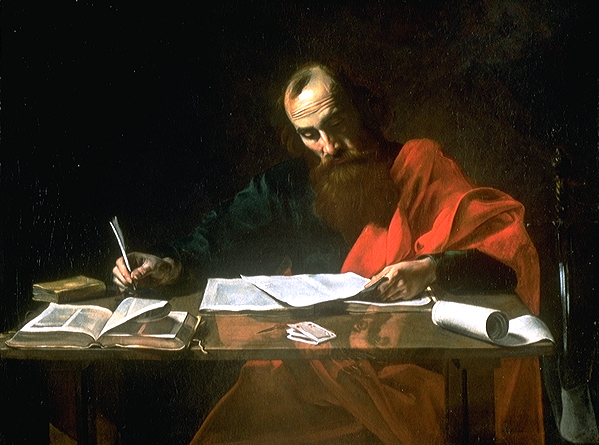
The author of the letter to Ephesus is clear from the very first word. The apostle Paul penned this letter [apostle = messenger of Jesus Christ]. Paul knew the people at Ephesus like family. The Bible records Paul visiting the Ephesians on a few occasions [Acts 18:18-21; 19:1-41; 20:17-38; 1 Timothy 1:3-11].

When did Paul write the letter to Ephesus?

Paul wrote this letter while in prison [3:1; 4:1; 6:20], probably in Rome about 60AD. He did not slack off while he was in prison. He deeply cared for these believers, therefore, while in chains he poured out his heart to these churches encouraging them to endure for the cause of Christ.

Who did Paul write the letter to in Ephesus?

According to verse 1, Paul wrote to the “saints in the churches around Ephesus” [cf. Acts 19]. The word “saint” brings different things to mind to different people. Some people define a saint as a particularly good or holy person [lit. ἁγίοις = holy one]. Others use the term to describe someone who is exceptionally kind and patient in dealing with difficult people or situations.

I grew up in a Catholic church and a saint was a dead person who did extraordinary things for God and His people [miracles, teachings, humble, etc.], but did not become a saint until long after their death. My Grandfather’s patron saint was Francis of Assisi. Francis was a man who loved nature and animals—commonly pictured with a bird in his hands. My great grandmother also had a medallion of Christopher in her car who is the patron saint of travelers. The Catholics have catalogued 1,400-10,000 saints.

Paul calls his readers as “saints” [cf. 1:1, 15, 18; 2:19; 3:8, 18; 4:12; 5:3; 6:18]. These saints were alive, not dead. The word saint is simply one of the many terms used in the New Testament to describe a person who has a living relationship with Jesus Christ. They are a saint not because of what they do, but whom they faithfully serve [God].

Why did Paul write the letter to Ephesus?

Paul purposes in his letter to demonstrate to the Ephesians the scope of God’s eternal plan for all humanity. There does not seem to be any one issue that Paul is addressing, however, the theme of walking in the grace of God in Christ’s glorious work seems to be a golden thread throughout the entire letter.

There is a distinct flavor between the first and second half of the letter. Chapters 1-3 focus on what Christians should believe, unfolding the glorious riches of God’s grace in Christ. Chapters 4-6 explain the implications of walking in God’s grace for the church, for believers, and for specific relationships. Therefore, this study on Ephesians will be called: Watch The Way You Walk. Not to be mistaken with the title of the popular song by RUN DMC summarizes the theme of Ephesians: Walk This Way.

what does the Trinity teach us about relationships?

Within the Trinity there is both unity and diversity: unity without uniformity, and diversity without division. This unity and diversity is at the core of the great mystery of the Trinity. Unity without uniformity is baffling to our finite minds, but there are demonstrations of this truth all around us; like a symphony, the human body, ecosystems, the church, the human race, a delicious meal, or a sporting event. Unity and diversity are woven into the fabric of the world by multiple images of the One who made it with unity and diversity.

Our human relationships uniquely and divinely reminisce the relationship between the Persons of the Trinity. This is no mistake, since man’s Maker stamped each man in His image. Most people never consider where this similarity has originated, but God has innately marked His creation with creative features that mimic Him—including our relationships. Today we will look at three distinct relationships that the Bible demonstrated both the unity and diversity of the Trinity:

Marriage is a relationship that demonstrates the Trinity’s unity and diversity [Ephesians 5:22-33]

Marriage is a wonderful picture that God uses to demonstrate His character as an unconditional, faithful, and sacrificial Lover. From the beginning of Creation God made man equal in His image [Genesis 1:26-27]. Though man and woman are quite diverse in appearance and God-given roles [Genesis 2; 1 Peter 3:1-7], they are both equally made in the image of God. If only man and woman within marriage would consider one another images of God, much of the conflict and chauvinism would dissipate.

The unifying love that Jesus has for His church is a beautiful demonstration of marriage [Ephesians 5:22ff]. Marriage is pictured in Christ sacrificing Himself for His church and the church submitted to Christ, which is paralleled by the husbands love his wife, the wife submitted to her husband, and both out of reverence towards Christ.

Church Body is a relationship that demonstrates the Trinity’s unity and diversity [Ephesians 4:1-16]

There is a glorious union between the Father, Son and Holy Spirit. Biblical Christianity stands or falls with the doctrine of the Trinity. Within the doctrine of the Trinity there are practical Implications. First, the Trinity makes God known in Christ [John 1:18; Exodus 33:20; 1 Timothy 6:16]. Second, the Trinity makes the salvation possible [Hebrew 9:14]. Third, the Trinity is fully dependent upon Himself [Acts 17:25]. Fourth, The Trinity provides the ultimate model for relationships within the body of Christ [1 Corinthians 11:3; 12:4–6; Ephesians 4:4–7].

When believers enter into a saving relationship with Jesus Christ they are adopted into God’s family—the church. The church body is made up of members who are all equal in the eyes of God. God in His divine purposes designed the church to function locally as a means for each member to grow spiritually through mutual relations and gift-oriented ministry with one another. Within His Body, God has given all a diverse role in order for the church to be unified in its display of God’s glory. God gave to the church offices: elders and deacons from the membership who are equal, but the elders are supposed to lead, the deacon’s serve, and the membership minister. When each one is doing their part the Body is a beautiful reflection of God’s unity and diversity.

Leadership (i.e. parenting & governing authority) is a relationship that demonstrates the Trinity’s unity and diversity [Ephesians 6:1-9]

The Trinity—God the Father, God the Son, God the Spirit—one God, three persons, all equal but submissive. God the Son submits to God the Father and recognizes Him as the leader. There is leadership within the Trinity. This is called relational subordination.

Jesus, though He is equal with God, willfully submits Himself to the Father. He submits to the Father out of love [John 4:34; 14:31; 15:9-10], reverence for His divine authority [1 Corinthians 11:3; 15:25-28; John 3:16-17; 10:36; 6:38], and reliance upon the Holy Spirit for power and direction [Luke 4:1-2, 16-21]. Likewise, it is marvelous how the Father shines His spotlight on the Son as He purposes all things to be subject to Jesus [Psalm 2:7-9; Ephesians 1:9-10; 5:21; 1 Corinthians 15:27-28; Revelation 5:1-5, 8-9]. Likewise, the Holy Spirit pours forth the message of Jesus in the Word of God [2 Timothy 3:16-17, 2 Peter 1:20-21, Luke 24:24-27, 44, 1 Corinthians 1:18, 23, 2:2, Galatians 6:14].

Submission to leadership practically plays itself out in two ways: through parenting and governing authorities. In the government of a home: mom, dad, and the children are equal made in God’s image, but dad’s are supposed to lovingly, humbly, and sacrificially lead [Ephesians 6:1-4]. Also, God appoints government leaders and bosses, and our response is to joyfully submit as if we are laboring for God [Ephesians 6:5-9; Romans 13:1-7]. This can be difficult especially in a world that is filled with crooked politicians, unreasonable employers, and passive fathers, but we have an awesome example to follow in God the Father, Son, and Holy Spirit.

In conclusion, the Trinity gives us a multifaceted look at relationships. Whether, in a marriage, church, home, business or nation God has demonstrated to us unity within diversity. Imagine if in each arena of your life you were to embrace the diversity rather than run from it, what unity could there be?