
We all love free books. Happy fathers day, dudes! Enjoy these free books compliments of some great ministries. Just click on the pictures to download your free books:





We all love free books. Happy fathers day, dudes! Enjoy these free books compliments of some great ministries. Just click on the pictures to download your free books:


30 Ways to Awaken Your Congregation for the Cause of Global Engagement
In their 2010 year-end report, the Barna Group identified six major patterns emerging among Christians in America: 1) The Christian Church is becoming less theologically literate. 2) Christians are becoming more ingrown and less outreach-oriented. 3) Growing numbers of people are less interested in spiritual principles and more desirous of learning pragmatic solutions for life. 4) Among Christians, interest in participating in community action is escalating. 5) The postmodern insistence on tolerance is winning over the Christian Church. 6) The influence of Christianity on culture and individual lives is largely invisible. Much could be said (and done!) about each of these. In response to the drift away from outreach and missions, as mentioned in the second point (and echoed by Jerry Rankin), we put together this list of 30 practical steps church leaders can take to see that their congregations stay alive and true to the global mission of God.
Near the end of his extraordinary life, William Carey was becoming a household name in England. Biographies were being turned out to an eager public. Even mementos of Carey’s life were prized as almost sacred objects. One day a friend of Carey’s was going on and on about the fame of the “Father of Modern Missions.” Carey interrupted him sharply saying, “When I am gone, speak no more of Mr. Carey. Speak of Mr. Carey’s Saviour.” Carey wasn’t the last missionary to become a celebrity, and his rejection of such misplaced attention, his “He must increase; I must decrease” attitude is refreshing. But the whole story underscores a dangerous tendency in ministry.
Bronnie Ware, a palliative care expert, has compiled a list of the five most common regrets expressed by dying people. 1. I wish I’d had the courage to live a life true to myself, not the life others expected of me. 2. I wish I didn’t work so hard (expressed by every male patient) 3. I wish I’d had the courage to express my feelings. 4. I wish I had stayed in touch with my friends. 5. I wish that I had let myself be happier.
7 Theses on “Celebrity Pastors”
I hear many statements from good-loving Christians like, “I follow so and so,” “I listen to so and so everyday,” “My favorite pastor is ____,” “I wish our pastor was more like ___,” “Have you heard of ____?” Celebrity pastors are normal pastors who have been elevated to a status level either because they have a big church, wrote some books, or are on TV. It is good that the Word is getting out, but really how much Word is getting out about the Bible compared to the word getting out about some super pastor? So, in no particular order, here are seven theses to keep in mind…
The Whole Sweep of Scripture
True & Better


BRIEF HISTORY OF THE HUTTS: Before coming to BGBC, I spent a year in South Africa doing a church planting apprenticeship. There I gained a vision for the church, church planting, global mission, and a heart for Africa. Coming to BGBC I sought a church that loved church planting and global missions. It has been a joy the last 8 years to watch this church with a long history of missions-mindedness send out missionaries to the foreign field. Sarah and I will be the next ones sent out from this church.
BRIEF HISTORY OF SENT ONES IN THE NT: We see 4 examples of churches in the New Testament that sent people out for Christ’s mission. First, Jerusalem was hub of the first church where gospel preaching, fellowship, and suffering together led to remarkable growth and expansion of the church. Second, Antioch a hub of missions to the north and west because the church was well-mixed ethnically and well-led spiritually. Third, Philippi was a church that financially supported and encouraged Paul. His letter to them is more of a thank you letter for their support. Paul brings up an important principle in the mission of the church: the mission is a partnership in the gospel. Finally, we see a community [near Ephesus] tucked away at the end of the Bible in 3 John.
BRIEF HISTORY OF JOHN AND THE SENT ONES: The church to which the apostle John wrote seems to have problems and divisions [what church doesn’t?]. John sent messengers of the gospel to the church and they were met with a mixed reception. Gaius welcomed and supported them [vs.1-5], while Diotrephes [a self-appointed leader; false teacher] thwarted and evicted them [vs.9-11]. 3 John could be a case between two types of missionaries. I will place most of my emphasis on Gaius. What John says to Gaius is informative and is a biblical model for what [TO ME] is the mission of sending out.
The church is the hub of Jesus’ missions. Missions and sent ones must be doing ministry through the church, for the church, by the church, in the church, because of the church, for the sake of Christ’s glory who is the Head of the church. If sent ones are doing anything other than planting the church, they are parachurch [i.e. alongside the church; orphanage, bookstores, seminaries, etc]. Sent ones are faithful to the mission of the church.
3 WAYS FAITHFUL FOLLOWERS ARE SENT OUT:
By the Holy Spirit. According to Acts 13:1-3, the Holy Spirit of God sends out qualified servant-leaders from local churches to plant new churches in new lands. God’s Spirit gives witness of this calling both to the sent one and the sending church. In recognizing how God wants to use the sent one, the church then “releases” them.
Through the call of Christ. In John 20:21, Jesus says to all his disciples, “As the Father has sent me, so I am sending you.” Jesus was sent into the world to become the Savior. You are sent into the world to proclaim what Christ has done and call people to faith in Him. Therefore, every Christian should evangelize locally and, if possible, support the work of bringing the gospel globally.
Through local churches. The local church, again, is the vehicle God uses to send out people to preach the gospel with the goal of establishing new local churches wherever they go [Acts 13:4-5; Acts 14:21-23]. This means that local churches are responsible to raise up, send out, and support missionaries whose goal is not merely to see individuals come to Christ, but to see local churches established in regions where there are none.
The church “does well to sends them on their journey in a manner worthy of God.” What does that mean? It could mean cutting them checks, it could mean having a beautiful commissioning service, or waving good-bye at the airport. However, I would hold that it means more than that! To send one in a manner worthy of God is to support them in such a way that God would approve: Arrange all hospitality with lodging and meals while home [Romans 15:24; 1 Corinthians 16:6-11; 2 Corinthians 1:16], offer transportation and accompaniment [Acts 20:38; 21:5], and freely give resources and encouragement [Titus 3:13; Acts 15:3]. Servants of Christ should be treated like we were sending Jesus on His journey. When a missionary calls your church asking for support do you hear their story, encourage them, and pray with them even if you know you cannot support them financially? You do well to send them on their journey in a manner worthy of God.
Most missionaries tend to be Type-A kind of people. When sending out people from your church aim to cultivate character over mere skills. The person you are considering might be gung-ho, super-skilled, have a sweet resume, look like leadership-material, wears Christian T-shirts and is quite evangelistic, but he or she could be corrupt in their core. Spend time with them in the testing fields, before you unleash them to the mission field. Sent ones spent a long time with their sending church serving [Acts 18:22-28].
ESSENTIAL EXPECTATIONS [AS ONE BEING SENT] CONCERNING HOW MY CHURCH PREPARES ME:
Surrendered. Look for one overwhelmed by their own salvation, committed to Christ, consumed by the message of His gospel, and championing the One Name [Philippians 2:9; Romans 1:5; Acts 5:40-41]. Period. [Galatians 2:20; 6:14; Colossians 1:24-27]. The power, authority, and glory for the mission is in the name of our Lord Jesus Christ!
Servanthood. Do they choose the towel over the robe? Giving one a robe is a special honor [Luke 15:22]. When one was given an important task or office they received a robe. The disciples often aspired for the robe, but Jesus sought the towel [Matthew 20:20-28]. The greatest missionary is a one who takes the position of the least [Luke 22:24; Matthew 20:26]. Sent ones are servants of Christ first and foremost.
Humility. This is the posture of a servant. They “accept nothing from the Gentiles.” This was not arrogant humility or false humility; rather they only accepted support from Christians and churches that understand the mission. Humble servants understand the results in ministry come from God, not from the human instrument. “I planted, Apollos watered, but God gave the growth. So neither he who plants nor he who waters is anything, but only God who gives the growth” [1 Corinthians 3:6-7].
Full of Integrity. God expresses far more interest in what we are than in what we do or where we go. Here are some good questions to pry into the life of new or old missionary: Are they financially responsible? Are they pure of heart and mind? Do they have a pattern of good relationships? Do they deal with conflict biblically? Are they faithful to their family? Ministry should not destroy the family and the family should not destroy ministry. Integrity is important at home, work and the ministry. Since, distance makes it easier to hide, as one sent, I am responsible to be proactively communicating with my sending church with openness and honesty.
Faithfully Bearing Fruit. [vs. 3-4, faithful to the church & others] If someone wants to evangelize in China, are they already evangelizing Chinese people? If someone wants to be a Bible translator, are they already studying the biblical languages? Sending someone out to minister on behalf of a church is a serious matter. “So then, men ought to regard us as servants of Christ and as those entrusted with the secret things of God. Now it is required that those who have been given a trust must prove faithful” [1 Corinthians 4:1-2]. In Acts 13:1-3, the church sends out only those who have proven themselves in godly character and ministry effectiveness, who are sound doctrinally and equipped for ministry, who show the fruit of the Spirit, and who have remained steadfast under trial. Consequently true success in missions is measured by faithfulness to the task, not by immediate, visible results.
Biblically Minded. A missionary will face all kinds of new challenges and unorthodox beliefs/worldviews. He or she will need to be able to confront these unexpected challenges biblically. Sometimes they return from the field tired, discouraged and depressed, and a biblical framework would be helpful. Also, on the field, exegetical skills are important for training church leaders, counseling, planning, team working, evangelizing, discipling, spiritual warfare, and so much more.
Love for the church. According to the Scripture there is no such this as a rogue missionary, Lone Ranger Servants, Christians Tourists or Commercial Travelers/Charlatan. The missionary represents the church and its mission. A sent one should willingly submit to the elders of the local church that sends him [1 Peter 5:1-5; Hebrews 13:17], and more importantly they submit to Christ who is over the church [Ephesians 5:21; 1 Corinthians 11:3]. Remember, missionaries are sinners too. They need accountability and counsel. It is important the missionary be a member of the church. Not just a member, but also an active member, a fruitful member, and a theologically and methodologically minded member. Your sent one is part of the mission of your church, planting like-minded churches through your church.
“We ought” is rather weak. It would be better translated, “we are obligated to support people like this.” The church and the ones they send are partners [i.e. fellow workers] in the gospel of Jesus Christ [i.e. truth]. Therefore, together we must do all we can to support one another in the growth of the church and the continuance of the gospel message. It is not about what the church does for the missionary, but what it does through the missionary. Likewise, It is not about what the missionary does for the church, but what he does through the church.
In conclusion, as one who is being sent from the church I recognize first of all that it is the church that sends me out. Second, I must go out for the sake of the name and no other. My character as an ambassador of Christ and representative of His church seriously matters. Third, I must encourage the support [receive] and be willing to support [give] the church sending me out. Together, the sent one and the senders lift high Christ and His church.
This is how we do missions as a church. John helped start all these churches, and then, he sends people and money to go to those churches to get more people and more money to go start yet more churches. When they are up at that church, who greets them? Gaius, Gaius is the guy that John will send a letter ahead and say, “I’ve got Missionary Mike and I’ve got Servant Sally and I’m sending them down, and they’re going out from Fellowship Bible Church, and they’re going go plant New Bible Church, and here they come, and Gaius, you know they’re coming.”
So then, Gaius waits, and here comes Mike and his wife, and they show up, and Gaius says, “Hey, good to have you. Come stay at my house. Have some soup. You guys need money? Let me get my checkbook. How can we be praying for you? My Bible study gets together every week, and if you could let us know what to pray for, we’ll pray for it.” That’s Gaius. Gaius gets behind their work, and is really happy to be involved, and John says why, “So that we may work together for the truth.”
Don’t be a Diotrephes.
Let’s go Gaius!


The Seven Dwarfs vs. The Office
Millions of viewers enjoy watching the popular television show The Office. Could it be the show is much like a real life office? How does Dunder Mifflin make any money when so many people are not doing any work? The Office is full of characters that do not take their work Monday through Friday seriously. Sadly, TGIF is the norm for many workers who are gravely dissatisfied with work. With hopes of summer vacations, relaxing weekends, 401K’s, and early retirement.
Then there is the American workaholic who thinks their hard work will some how bring them happiness, identity, or merit with God. Like one of the Seven Dwarfs [except Grumpy] whistling joyfully while working, “Hi, ho, hi, ho it’s off to work we go.” The average American works 40 hours a week, which means they will work over 100,000 hours in their lifetime. Work is not a savior, status symbol, or a means to gain acceptance with God. If you stand before God one day He will not let you in because you were on Forbes 500 list, nor will He keep you out of heaven because you lived below the poverty line.
God does care about your work, primarily the way you work and who you work for. In Ephesians 6:5-9, Paul gives our workplace an extreme makeover. He challenges both the employee and the employer [i.e. student and teacher] with a new motivation for our work. God cares about your work and rewards your faithful service. Here is how Jesus can transform the way you work:
Jesus gives your work a greater purpose [Ephesians 6:5-6]
What do these verses have to do with work? A current application of the slave and master relationship is the work environment of worker and boss [or student and teacher]. It is interesting the Bible never denounces slavery, but it does give a new look at the slave and master relationship. According to many estimates over half of the people in the Roman Empire in Jesus’ day was a slave. Slavery then was not about cracking whips, trading ships, and inhumane treatment; rather slavery was a means of work to pay off debt and it did not last longer than 7-years. There was a level of respect and care within the relationship of a slave and his master.
How does Christ give you are greater purpose for your work? First, obeying your earthly authorities reflects of upon your obedience of God’s authority. Jesus obeyed His Father because He had a holy sense of awe and respect for His authority. He had fear, not out of potential punishment, but God’s provision. In this passage is a deliberate word plan between master and Lord [Grk: kurios]. Biblically, every man and woman born into the world is a slave [cf. Romans 6]. In Christ, you are a slave to righteousness and a steward of your God-give life.
Second, Jesus helps you to work with wholehearted sincerity, integrity, purity, humility, and loyalty. To be wholehearted means you work well even when your authority is not looking. That is what is meant when Paul goes on to say, “obey your bosses not only to win their favor when their eye is upon you.” What is eye service? It is to fear the opinion of man rather than God. Fearing God is always more important because His authority trumps any man’s authority.
Be careful how you walk around and talk about your boss [or teachers]. I often counsel with parents who have children that do not respect their parent’s authority. I often ask the parents how they talk about their boss, parents, President, and authorities from the dinner table. Often disrespectful parents breed disrespectful children by the way they communicate about their authorities behind their backs.
Third, Jesus encourages you when you are tempted to view your work as futile and meaningless. He gives you the courage to keep on and persevere. Many would rather quit, drop out, or give up. Some think of work as a curse [Genesis 3] and vanity [Ecclesiastes], which is true to some extent, but Christ gives you a greater purposes for your work. Do not get your theology of work from the Fall, rather get it from Creation.
Fourth, Jesus encourages when you are tempted to view work as self-center quest for success rather than a sacrifice or service towards others and God. God gets the glory for any gracious success you happen to accumulate. Treasures of earth are miniscule compared to those of heaven. Seek first the kingdom of God, rather than building your own kingdom or corporate castle.
Jesus gives your work a greater purpose. This is the will of God for your work. You please your boss and God by doing your work and doing it well. A great question to ask when you work is: how would Jesus do your same job?
Commit to work for God as your first boss [Ephesians 6:7]
Work is an act of worship. It is not just a job. The way you work reflects on the one you worship. As you serve your boss you also serve God. How is work an act of worship? If you work with humility and integrity you are reflecting the character of Christ and therefore shining the gospel through the way you serve. Your work is an opportunity to shine the gospel.
How you know if you love your work more than God? Is your work an idol? Do you treasure the Lord more than your money, power or success? Have you lost your passion for work or ministry because you think it is work? People say, “Pastor, it is easy for you to love your work and honor your boss because you work for God. You don’t know my boss. He is not God!” It is as if they think there is a distinction between secular and sacred work. However, there is no separation between secular and sacred work—all work is sacred. All work is for God.
Working for God has great rewards [Ephesians 6:8]
The reward in work is not earning a sweet home with fancy car, summer vacations to the beach, golfing on the weekends, socializing with the big-shots, building a huge pension to retire on, patting the portfolio, living it up with a life of leisure or luxury. If this is the reward you desire for your work you will be sorely dissatisfied.
What is your reward for working with God as your primary authority? The reward has now and later benefits. In the future, your reward is related to your inheritance in Christ according to your faithfulness to Him [cf.5:5-6].[1] Today, your reward is Christlikeness, which blesses those working around you.[2] Both slave and free will face the same strict judgment.[3]
I am certainly grateful that people work to serve others. Think of all the farmers, bakers, deliverer, and retailers that help get your food to your table. Think of all the nurses, doctors, surgeons, and pharmacists who help keep you healthy. Think of all the servicemen, policemen, firemen, judges, attorneys, and government officials who help protect your rights and freedoms. Every person plays a role in serving one another. Your work is a blessing to another person. Work is a fulfillment of Christ command to love your neighbor and love your God with all your heart, soul and mind. Work is a gift from God, and it keeps on giving as you faithful follow Him.
For Bosses: reflect God in the way you care for your workers [Ephesians 6:9]
God is impartial [Romans 2:11; Galatians 3:25], therefore bosses must not be impartial with their employees [James 2:1-13]. What “same things” should masters do for their servants? [All the above] Employees are to be treated with respect and honor because they are servants of God. Bosses are to serve those who serve them for this can influence those they serve them for good—modeling Christlikeness.
In summary, work is a great place to work out your salvation with fear and trembling. Jesus wants to redeem your work. Remember your work is an act of worship that shines the glory of God and His gospel through the way you work. Jesus can transform the way you work by giving you a greater purpose. Make God your first boss for the rewards of working for God are great. The way you work reflects upon God. Therefore, don’t waste your work. Instead of feeling guilty that you are not “doing more for God” view all your work, studies, and ministry as a means to do more for God.
For more resources on the gospel and your work:
1. Check out Bill Streger’s blog who gives additional insight from Colossians 3:22-25: The Gospel and your work. Jesus gives our work new expectancy, new passion, and new character.
2. Answer: What two reasons does Proverbs 10:4-5 give for working hard at your job? What does 1 Thessalonians 4:11-12 say are the effects of a good work ethic? What does 2 Thessalonians 3:6-15 say about doing your work with diligence? What does 1 Timothy 6:1-2 say imply about the relationship between a believing employee and believing employer? What does James 5:1-6 say about the dangers of success?
[1] Cf. 2 Corinthians 5:10; Romans 2:6; Colossians 3:24-25
[2] Cf. Matthew 10:41-42, 16:27; Colossians 3:24; Revelation 22:12
[3] Cf. Galatians 3:28; Colossians 3:11; 1 Corinthians 12:13



As a kid, I was reminded often “sharing is caring.” I was a selfish kid who did not share my stuff with other kids.
When it comes to the church sharing is caring too. In the church, it is more than a childish jingle—it is a unity that leads to maturity in Christ. In Ephesians 4:1-6, we learned the church is called to walk as one in Christ with humility, gentleness, patience and love, but this can come with its challenges. We quickly discover that diversity and immaturity within the church can cause conflicts between one another.
What is the cause of disunity in the church? There are many causes, but the primary challenge to unity we will look at today is when you use your God-given gifts for your own agenda. God did not give you spiritual gifts to make you happy, to have others in the church stare at your sweet spiritual skills in awesome wonder, nor did He give them for the praise of your glory. If this is how you view spiritual gifts it is a challenge to the unity of the church and your own spiritual maturity.
When it comes to spiritual gifts there are many gifts, as we will see, but only one Giver. For Ephesians 4:7 declares, “But grace was given to each one of us according to the measure of Christ’s gift.” What is grace referring to in this verse? Grace refers to the ministry of spiritual gifts that come from Christ. Grace is expressed through the gifts of the Spirit, which He has shared with the church to resemble the ministry of Christ. Who are the recipients of Christ’s grace-gifts? According to the verse, “each one of us.” In other words: all followers of Christ share grace-gifts [cf. 1 Corinthians 12:7, 11]. No one in the church misses out on these spiritual Christmas gifts.
How are these grace-gifts made possible? In Christ, the Conqueror of sin and death. Who by His grace died, buried, resurrected and ascended victorious. Christ is like the conquering king who showers His subject with spiritual gifts. Note the interesting quotation from Psalm 68:18, “When He ascended on high He led a host of captives and He gave gifts to men,” which was a praise song that explains how kings brought gifts to the people of Israel. The reason for these gifts was to praise God. Paul links the idea of triumph and applies it to the Son of David—Jesus Christ—whose ascent to the Father declares victory over sin and death [vs.8-10; cf. 1:19-22].
Christ is supreme ruler over all things and shares with His people diverse gifts for His praise. Diversity would seem to at odds with unity, but this is not the case within the church. That is the beauty of the church and the grace-gifts of Christ. The diversity of gifts is given for the purpose of the church’s unity and Christ’s glory.
What is the diversity of gifts God gives to His people? In this text there are only four gifts [who are persons] presented, “apostles, prophets, evangelists, and pastor-teacher.” [v.11] Are there more than these given? Yes,[1] but these four are mentioned specifically in context in relation to building Christ’s church. Within these gifts you will see how unity is brought together through diversity, maturity and ministry.
First, the diversity of gifts is for ministry [vs.11-12]. Christ gifts people within the church, “to equip the saints for the work of ministry and building up the body of Christ.” Each gift has an important role, as described in Ephesians, in declaring the mystery of Christ to all people [cf. 2:20; 3:5].
| GIFT | GOD’S PURPOSE FOR THE GIFT |
| Apostle | Directly chosen by Christ for a foundational role in unveiling the mystery of Christ [1 Cor. 12:28]. |
| Prophet | Directly called by God for a foundational role in proclaiming the mystery of Christ [2 Peter 1:19]. |
| Evangelist | Directly called to share with message of the Gospel [2 Timothy 4:5; Acts 21:8] |
| Pastor-Teacher | Directly called to [shepherd] care for the followers of Christ [Acts 20:28; Colossians 1:7-8; 4:12-13] |
Many look at this verse and think, “Is ministry just for professionals? Or people in leadership?” It might look that way, but as you read on gifted leaders are not to do the ministry for you they equip you to do ministry, so that the body of Christ might be built up. If not, then the church will be ill equipped to continue to spread the message of Christ. Think of a school whose teachers did not train students, a business whose employees did not build a product, or a parent that did not feed their child. So the church is gifted with leaders to equip, train and feed their members. Now the church is different than a school, business or family in the stability, longevity, and authority. Christ will build His church and schemes of man or Satan will not stop what Christ has started.
Second, ministry is for unity and maturity [v.13]. The goal of ministry is that the church would be built up in unity and maturity. As we minister for Christ and to one another the result with be continued growth of the church. Some churches look more like ratty childlike tree house made from scrap lumber and metal sheeting that need constant attention because no one is doing any work of ministry to maintain unity. Other churches are like colossal monuments of stone built with strong engineering and careful precision to stand the test of time with little to no maintenance because they understand the unifying and maturing work of ministry. In either the case, the load is not entirely on the leaders, for the entire church is in the cause together becoming more like the fullness of Christ.
Third, maturity is for spiritual security [vs.14-16]. Spiritual security is important for the church. How does spiritual maturity keep the church secure? The church will be secure from false teaching [14]. No church is ever at a point when it is mature enough to be not be deceived by false teaching. Like naïve children we need to be aware of the deceptive lies that are stirring that seek to sweep away the unity of the church. Therefore, the church must be secure in love being able to share with one another how to grow in Christ [15]. Mature followers are not ashamed to share hard things to help one another, and mature followers are willing to accept biblical counsel in order to be more like Christ.
Also, the church will be secure in working together to keep each other strengthened [16]. Every part of our body is important from the head [Christ] down to the toes. Anyone who has ever had a sprain knows how important our joints are to strength. Mark it down; you will not mature as a follower of Christ unless you are involved in ministry. If you go to church just to fill your mind with knowledge, but do not do anything with what you know you will not grow. Your growth will be stunted and you will become spiritually stagnant.
Our pastor often uses use the illustration of the Dead Sea to describe spiritual growth. Why is the Dead Sea called dead? The Jordan River goes into the sea, but no river goes out. The Dead Sea is all input, but no output. It just gets saltier and more stagnant. Nothing can live or grow in it. Likewise, followers of Christ who do not use their spiritual gifts will become just like the Dead Sea if they just input knowledge and do not output service.
How can you prevent yourself from being stagnant and dead in your walk with Christ and your involvement at church? It begins by using your diverse gifts for the unity and the maturity of the church and your relationship with Christ. Diversity of gifts does bring unity to the church and glory to Christ. A church that walks in unity shares their gifts, which have been graciously given to them for the care of one another and the glory of church. Sharing is caring when it comes to the unity of the church.
What is your spiritual gift[s]? The best way to discover your gift is through prayer to God, counsel with your leaders, and implementation. How are your gifts being used? Are they being used for your glory, or for the glory of your church and Christ? If ministry is a chore rather than something you cherish, then you have a pretty good idea you are serving for the wrong reasons and you are a challenge to the churches unity. How would the work of ministry be different if you looked it as “get to” rather than “have to”?
[1] Cf. I Peter 4:11; Romans 12; 1 Corinthians 12


Within the Trinity there is both unity and diversity: unity without uniformity, and diversity without division. This unity and diversity is at the core of the great mystery of the Trinity. Unity without uniformity is baffling to our finite minds, but there are demonstrations of this truth all around us; like a symphony, the human body, ecosystems, the church, the human race, a delicious meal, or a sporting event. Unity and diversity are woven into the fabric of the world by multiple images of the One who made it with unity and diversity.
Our human relationships uniquely and divinely reminisce the relationship between the Persons of the Trinity. This is no mistake, since man’s Maker stamped each man in His image. Most people never consider where this similarity has originated, but God has innately marked His creation with creative features that mimic Him—including our relationships. Today we will look at three distinct relationships that the Bible demonstrated both the unity and diversity of the Trinity:
 Marriage is a wonderful picture that God uses to demonstrate His character as an unconditional, faithful, and sacrificial Lover. From the beginning of Creation God made man equal in His image [Genesis 1:26-27]. Though man and woman are quite diverse in appearance and God-given roles [Genesis 2; 1 Peter 3:1-7], they are both equally made in the image of God. If only man and woman within marriage would consider one another images of God, much of the conflict and chauvinism would dissipate.
The unifying love that Jesus has for His church is a beautiful demonstration of marriage [Ephesians 5:22ff]. Marriage is pictured in Christ sacrificing Himself for His church and the church submitted to Christ, which is paralleled by the husbands love his wife, the wife submitted to her husband, and both out of reverence towards Christ.
There is a glorious union between the Father, Son and Holy Spirit. Biblical Christianity stands or falls with the doctrine of the Trinity. Within the doctrine of the Trinity there are practical Implications. First, the Trinity makes God known in Christ [John 1:18; Exodus 33:20; 1 Timothy 6:16]. Second, the Trinity makes the salvation possible [Hebrew 9:14]. Third, the Trinity is fully dependent upon Himself [Acts 17:25]. Fourth, The Trinity provides the ultimate model for relationships within the body of Christ [1 Corinthians 11:3; 12:4–6; Ephesians 4:4–7].
 When believers enter into a saving relationship with Jesus Christ they are adopted into God’s family—the church. The church body is made up of members who are all equal in the eyes of God. God in His divine purposes designed the church to function locally as a means for each member to grow spiritually through mutual relations and gift-oriented ministry with one another. Within His Body, God has given all a diverse role in order for the church to be unified in its display of God’s glory. God gave to the church offices: elders and deacons from the membership who are equal, but the elders are supposed to lead, the deacon’s serve, and the membership minister. When each one is doing their part the Body is a beautiful reflection of God’s unity and diversity.
The Trinity—God the Father, God the Son, God the Spirit—one God, three persons, all equal but submissive. God the Son submits to God the Father and recognizes Him as the leader. There is leadership within the Trinity. This is called relational subordination.
Jesus, though He is equal with God, willfully submits Himself to the Father. He submits to the Father out of love [John 4:34; 14:31; 15:9-10], reverence for His divine authority [1 Corinthians 11:3; 15:25-28; John 3:16-17; 10:36; 6:38], and reliance upon the Holy Spirit for power and direction [Luke 4:1-2, 16-21]. Likewise, it is marvelous how the Father shines His spotlight on the Son as He purposes all things to be subject to Jesus [Psalm 2:7-9; Ephesians 1:9-10; 5:21; 1 Corinthians 15:27-28; Revelation 5:1-5, 8-9]. Likewise, the Holy Spirit pours forth the message of Jesus in the Word of God [2 Timothy 3:16-17, 2 Peter 1:20-21, Luke 24:24-27, 44, 1 Corinthians 1:18, 23, 2:2, Galatians 6:14].
 Submission to leadership practically plays itself out in two ways: through parenting and governing authorities. In the government of a home: mom, dad, and the children are equal made in God’s image, but dad’s are supposed to lovingly, humbly, and sacrificially lead [Ephesians 6:1-4]. Also, God appoints government leaders and bosses, and our response is to joyfully submit as if we are laboring for God [Ephesians 6:5-9; Romans 13:1-7]. This can be difficult especially in a world that is filled with crooked politicians, unreasonable employers, and passive fathers, but we have an awesome example to follow in God the Father, Son, and Holy Spirit.
In conclusion, the Trinity gives us a multifaceted look at relationships. Whether, in a marriage, church, home, business or nation God has demonstrated to us unity within diversity. Imagine if in each arena of your life you were to embrace the diversity rather than run from it, what unity could there be?


“Our Lord’s first obedience was to the will of His Father, not to the needs of men. His obedience brought the outcome of the saving of men. If I am devoted to the cause of humanity only, I will soon be exhausted and come to the place where my love will falter. But if I love Jesus Christ personally and passionately, I can serve humanity though men treat me as a doormat.” – Oswald Chambers
True followership begins with a passion for Jesus Christ. Jesus is passionate about building His church. This passion is as contagious as a runny nose in mid-Winter because it flows into our compassion for others. Those who discipled me from middle school until now have modeled a real passionate faith. So passionate that I want to be like Christ because they looked so much like Christ.
Whether we are discipling to Christ or in Christ all Christ’s. I cringe at the idea of calling someone “my disciple”. This is a term we find in the New Testament only coming from the mouth of Jesus. As believers in Christ we are His disciples. I am not a disciple of any man but Christ. Paul talked about “my son” Timothy, “my brother” Ephaphroditus, and co-laborers as “my fellow servants”. New Testament authors never called a fellow believer “my disciple” or “my follower.” in fact, Paul freaks out when he hears that some are calling themselves followers of Paul or Apollos. “ Is Christ divided? he wrote, with evident frustration. “Was Paul crucified for you? Were you baptized into the name of Paul?” [1 Corinthians 1:13] Paul had his eyes on Jesus, so He must be our focus and passion as followers too.
Christ appointed twelve followers and “designating them apostles, that they might be with Him and that He might send them out to preach.” [Mark 3:14] Christ is the initiator in challenging and 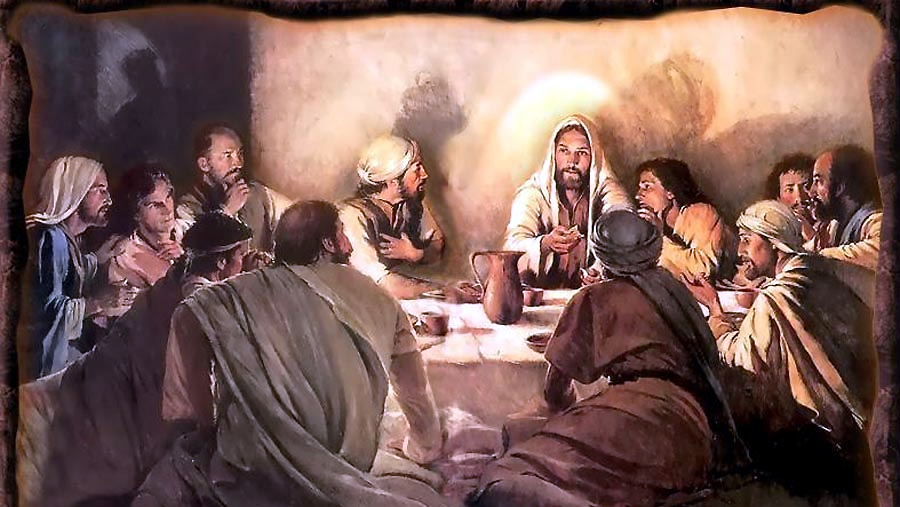 calling men. His vision is clear: before they were unleashed to the world they were invited to “be with Him”.
As a follower of Christ His presence is with us always [cf. Matthew 28:20; Hebrews 13:5]. The original twelve followers were “with Him”, and Jesus “with them.” We find Jesus in their homes, having dinner with their friends, and engaging lovingly with their enemies. True followership begins by inviting others to be with you.
“We proclaim Christ, admonishing and teaching everyone with all wisdom, so that we may present everyone perfect in Christ. To this end I labor, struggling with all His might, which so powerfully works in me.” [Colossians 1:28-29] Our goal for every f ollower is to reach maturity in Christ, that their life begin to look like His.
An artist was asked what he would paint on the white canvas. “You see a blank canvas,” he said. “But I see a mountain, lake and beautiful sunrise. As I gaze at the canvas I smell the mountain air, feel the brisk morning air coming of the lake, and then simply brush the strokes of color onto the canvas.” As followers of Christ His portrait should always be before us, and the canvas of our lives is being transformed into the beautiful image of Christ.
In Matthew 28:19-20, we often miss the an important point of the Great Commission. I would call it the Great Omission because Jesus says to His followers, “teach everyone everything you have heard and seen in me.”
As a follower of Christ I am doing the ministry of multiplication. No one is becoming mature in Christ until they begin to reproduce Christ in others. Jesus sent His followers out to serve without Him. He warned them they would need at some point to carry the message on their own. A follower of Christ was prepared from the beginning to make other follower, who in turn made other follower, who made still more follower. And so the gospel of Christ reached you and me.
What if doormat discipleship characterized each of our ministries? What if people were truly shaped into the image of Christ through discipling relationships? What if followership began to take on a life all its own, bigger than any program in our church? What if people left our ministries and continued to make followers of Christ for the rest of their lives? This is the path Jesus destined for His followers to walk after His death [Matthew 28:19-20].

 spreading the fame