consider adoption

Religion that is pure and undefiled before God and the Father is this: to visit orphans and widows in their affliction, and to keep oneself unstained from the world.—James 1:27

Considering adoption? [great sites to start your search]

Adoption 101: God’s heart and our call

A biblical view of adoption

Q&A on Adoption: Countries and More. Where should I adopt?

Love Basket

America World Adoption

All God’s Children

Adoption Advocates

Lifesong for Orphans

The LYDIA Fund

ABBA Fund. On funding adoptions.

Unveiled Face

Five Reflections on Evangelicalism and Adoption

Friends of adoption

Whipple Words

Mandy Joy. Echoes of Mercy.

Mag News

One thankful Mom

what is man?

I am sure the untimely and inconvenient news was a shock to the two unwed teenagers the summer of 1979. The news, “You’re pregnant!” Abortion might have been an option, but both their Catholic parents discouraged it and encouraged the baby to be born. I am grateful my two parents decided on the side of life.

Before my sister Samantha was born, my mother and step-dad were already aware she would be born with Spina Bifida. The doctors recommended an abortion thinking it would be laborious to bring a physically disabled child into the world. It is true, my family would have to adjust and Sam would not have the use of her legs, but no one would know the blessing of my beautiful, intelligent, and warm sister, now an incredible young woman.

Today is Sanctity of Human Life Sunday. I hate this day. I don’t hate it because I think it is unbiblical. I hate it because I have to say things in church that shouldn’t have to be said. Mothers shouldn’t kill their children. Fathers shouldn’t abandon their babies. No human life is worthless, regardless of skin color, age, disability, or economic status. The very fact that these things must be said is a reminder of the horrors of this present darkness.

I hate Sanctity of Human Life Sunday because I’m reminded that as preach there are babies warmly nestled in wombs that won’t be there tomorrow. I’m reminded that there are children—maybe even blocks from this church—who will be slapped, punched, and burned with cigarettes butts before this message is over. I’m reminded that there are elderly men and women whose lives are pronounced a waste and euthanasia is considered a viable option.

But I also love Sanctity of Human Life Sunday when I think about the fact that I am in a church with ex-orphans, adopted into loving families. I am in a church that supports local pregnancy centers for women in crisis. Like Proverbs 31:8-9 you, “Speak up for those who have no voice, for the justice of all who are dispossessed. Speak up, judge righteously, and defend the cause of the oppressed and the needy.” May the church continue to be a haven for men and women—who have aborted babies—find their sins forgiven and consciences cleansed by Christ.

Believe it or not the Bible is silent on the topic of abortion [as it is on the humanity of whites, blacks, Hispanics, etc]. Jesus never said, “thou shalt not abort,” even though it was practiced during His day too. Although the Bible does not condemn abortion does not mean it condones it. Likewise, just because culture or government condones it as legal doesn’t it mean it’s God-honoring. The Bible is clear: you are not to take innocent human life without justification.

Therefore, if a positive case can be made for the humanity of the unborn apart from the Bible you can logically conclude that Biblical commands against the unjust taking of human life apply to the unborn as they do other human beings whether they are red, yellow, black or white, young, old, skinny or fat, healthy or not. And to this point, science confirms theology. In other words, science gives the facts you need to arrive at a theologically sound conclusion. What the science of embryology makes clear is that from the earliest stages of development, human embryos and fetuses are human beings but just less developed than the adults they will soon become.

The question I pose this morning: at what point does the embryo begin to be made in the image of God? The answer to this question comes down to your view of God and human life in connection with God. The answer to this important theological question is packed into a little song that David wrote in Psalm 8.

1. GOD IS MAJESTIC IN ALL THE EARTH [Psalm 8:1, 9]

The psalm begins and ends with its main point: “O LORD, our Lord, how majestic is Your name in all the earth!” [8:1, 9]

The two words for lord (O LORD, our Lord) are not the same in Hebrew. The first LORD, with all caps, is a translation of the name YHWH. It’s His personal name. The name He gives Himself. It is built on the statement in Exodus 3:14, “I am who I am.” It’s a name to remind us that He absolute exists. He simply is. He did not come into being, and does not go out of being. He never changes in His being, because He is absolutely exists in His being.

His name is majestic in all the earth. There is no place in all the earth where God is not YHWH—where He is not the absolute One. Everything everywhere depends absolutely on Him. He depends on nothing, but everything depends on Him. He has no viable competitors anywhere. He has no challengers to His throne. He is above all things everywhere. He sustains all things everywhere. He is the aim and goal of all things everywhere. He is greater and wiser and more beautiful and wonderful than everything everywhere. “O YHWH, our Lord, how majestic is Your name in all the earth.” That’s the main point of the psalm.

In response you and I are to stand in awe of His majesty and worship. The majesty of God is awe-inspiring. Those who have seen His majesty have never been the same. John fell on His face in the presence of God. Isaiah cried, “I’m unworthy,” when in the thundering presence of God. Do you have a majestic view of God? If you have a majestic view of God you will have a majestic view of life. If you have a low view of God you will have low view of life.

2. GOD’S MAJESTY IS SEEN IN HIS SUPREME CREATION [Psalm 8:3-8]

We are going to skip over verse 2 for a moment. I promise we will come back to it. In verses 3-4 David responds to His majestic Creator, “When I look at your heavens, the work of your fingers, the moon and the stars, which you have set in place, what is man that you are mindful of him, and the son of man that you care for him?” The point of these two verses is to see God’s bigness and my smallness. God is infinitely great, and man, by comparison, is nothing. God creates stars with His fingers and I am so small compared to Earth, the sun, and the billions of suns that form up our galaxy, and the millions of galaxies that are laid out in our universe.

Have you ever stood underneath the night sky and thought, “Wow, I am small and insignificant?” That’s the point. God created all that bigness so you’d have a sense of smallness. Some consider it a lot of wasted space, but space God’s natural billboard proclaiming His praise. Worship is not found in feeling big, but rather in feeling small.

An honest question arises in verse 4, “Why do You consider man when You are so majestic?” The answer comes in verses 5-8: “You [O God] have crowned him with glory and honor…You have given him dominion over the works of your hands; you have put all things under his feet…” Now that is absolutely astonishing! John Calvin summarized it by saying, “Whoever, therefore is not astonished and deeply affected at this miracle—God being mindful of man—is more than ungrateful and stupid.” Although man is nothing compared to God, He makes man His supreme creation.

God’s majesty is seen as He creates man in His image [Genesis 1:26-27]. One might ask when does the image of God begin in man? According to God, it begins even before one cell splits and multiplies in the womb. In the human embryo are found the marks of your Maker. No other creature in God’s creation is crowned with glory and honor like mankind.

God’s majesty is seen as He makes man dominioneers over all His creation [Genesis 1:28-31]. God gives you a job—care and protect life. However, when we read the Genesis account of Adam and Eve, their children, and observe history thereafter man does not do a good job caring for and protecting life. We don’t like our job. We want a new job. We’d rather redefine the job. Therefore we join a union and march with picket signs that say, “God, I have a rights!”

Do I have rights? Sure. In our society a woman has her rights. She can murder a child and get away with it. I am an advocate for civil and judicial rights, but not rights-gone-wild. The freedom and liberty to use our rights is not always right. Especially when it comes to shedding innocent blood. A human that demands, “I have rights!” Is saying what a sinner says when it rejects God’s moral rules. God determines what is right and wrong. He says we are to care for and protect life. Every man has the right to life.

You cannot starve an elderly human to death and worship the majesty of God. You cannot dismember an unborn human and worship the majesty of God. You cannot gas a Jewish human and worship the majesty of God. You cannot lynch a black human and worship the majesty of God. You cannot gossip, harbor bitterness, or curse a man to his face and worship the majesty of God. Jesus says to hate another human is commit abortion in your heart. You cannot worship the majesty of God while treating His supreme creation with dishonor.

3. GOD VALUES THE LIFE OF CHILDREN [Psalm 8:2]

You might be wondering what does this have to do with the sanctity of life or abortion? Let’s go back to verse 2. There is an incredible contrast between verse 1 and 2. Verse 1 says, “You have set your glory above the heavens.” And Verse 2: “Out of the mouth of babies and infants, you have established strength because of your foes, to still the enemy and the avenger.” The contrast is strange. God is highest of all beings. None could be stronger, wiser, or greater. But babies are weak; they seem to have no wisdom or knowledge. They are utterly dependent on others. They are insignificant in the world’s eyes.

So why does the psalm mention babies? Why are they here? What are they doing? The verse says what they are doing: They are defeating the enemies of God. They are opening their mouths and saying or crying something. And whatever they are saying or crying is powerful enough “to still the enemy and the avenger.”

God has enemies. His foes are those who rebel against His majesty [8:1,9]. They do not see Him as majestic, nor do they want to worship Him. They get far more pleasure out of getting praise for themselves than giving praise to God. Our world has been ruined because of these enemies. And in order for the world to return to its proper purpose, these enemies will have to be dealt with. And what verse 2 tells us is that God, in His majesty and greatness makes babies the means of His triumph over His enemies. Let the strangeness of this sink in. God conquers his foes through the weaknesses of the weak—the worshipful coo’s of baby’s lips.

To understand verse 2 in it’s fullness you have to realize God comes to earth in the form of a cooing and crying baby. Jesus, the God-man, came into the world in childlike lowliness and human weakness. God takes on skin. He’s born of a virgin in a barn. He grows into a man, lives a sinless life, but certain men convict Him of a crime He did not commit. He dies on a cross and 3-day later He rises crushing His enemies under His feet [cf. 1 Corinthians 15:27].

During His earth ministry He welcomed children when others wanted to shoo them away [Mark 10:13-16]. Jesus loves all the little children.  Moreover, He said the measure of our love for Him would be measured by our love for children [Mark 9:36-37]. He took the children in His arms as if to say, “Honor these little ones, and you honor Me. Send them away because they are weak, socially insignificant, and bothersome, and you’ve demonstrated you don’t understand the values of the kingdom.”

In Matthew 21, Jesus draws near to Jerusalem. It is Palm Sunday. He enters the city riding on a donkey. The crowds see what this means and they cry out in verse 9, “Hosanna to the Son of David! Blessed is he who comes in the name of the Lord! Hosanna in the highest!” Hosanna means “salvation.” They are shouting that God’s salvation is coming. They see Him as a prophet or perhaps the Messiah himself—The king of Israel who would defeat the enemies of God.

Now there are children in the crowd. They see what’s happening. They hear their parents shouting. So they take up the chant in verse 15, “Hosanna to the Son of David!” These children are calling Him the king of Israel. The chief priests and the scribes cannot endure the ruckus any longer. They think it’s outrageous for Jesus to hear this kind of praise and not stop or correct them. So they say to Jesus in verse 16, “Do you hear what these are saying?” What they meant was, “We know you can hear what these are saying, but we cannot imagine why you don’t stop them, since you are most certainly not the Messiah.”

Jesus’ answer is as clear as crystal, and its connection to Psalm 8 is frightening. He simply says, “Yes, I hear.” With those few words He says, “Yes. I didn’t miss a word. They are not mistaken. They are not blaspheming. They are not foolish. They just seem foolish. I approve what they are saying” Jesus receives worship from children. And Jesus goes on to say to the chief priests and scribes: “Have you never read, ‘Out of the mouth of infants and nursing babies you have prepared praise’?” It’s a direct quote of Psalm 8:2.

Two things happen when Jesus quotes this Psalm. First, it comes true. His enemy is silenced. The chief priests and scribes are speechless. The praise of the children’s lips won the day. God is defeating His enemies through the weakness of children and man. Second, the meaning of psalm 8 is amplified. When these children cry out, “Hosanna to the Son of David !” Their praise was directed to Jesus. Jesus knew it. The chief priests and scribes knew it. And Jesus accepts their worship being God—the absolute One–Himself. On that day, the majesty of God had a face of flesh and a name. His name is Jesus.

In closing I want to share with you a story about my best friend, Ben. In high school our friendship grew through helping each other live for Christ. When I went to college I had less contact with Ben. While I went to Bible College, Ben was going to parties and sleeping with girls. His life became a mess. He got a girl pregnant. To cover it up she aborted. Although Ben had abandoned God, God did not abandon Him. He was relentlessly pursuing Ben.

I remember coming home on college break and visited Ben’s apartment. It looked like a disaster, smelled like beer, and felt dark. I asked Ben, “So what’s God been doing in your life?” I am sure he wanted to kill me for asking a question with an obvious answer. What Ben needed I could not give. He needed his enemies of pride and guilt and thinking “I have rights” to be defeated. In Christ they already were. I kept in contact with Ben. He left for Florida where he thought he’d be anonymous. The majesty of God prevailed, He would not leave him alone, pursuing his heart, and Ben repented of his sin.

“For as high as the heavens are above the earth, so great is His steadfast love toward those who fear Him; as far as the east is from the west, so far does He remove our transgressions from us. As a father shows compassion to his children, so the Lord shows compassion to those who fear Him.” [Psalm 103:11-13]

Jesus forgives sinners who come to Him with child-like faith. God redeemed Ben’s life. God has given him a godly wife and blessed him with two (so to be three) beautiful children. Today Ben is serving God in the ministry. Ben is an advocate for life.

Jesus can forgive you too. No matter how bad your sin or how dirty your past. He will not only forgive you but welcome you as His child in His compassionate arms. Come. He awaits you with an embrace.

Why do I need psalm 8? It inflames my heart with wonder, awe, and love for God. Seeing the majesty of God is the first step towards looking at myself and other humans rightly. In His majesty we see the sanctity of life.

LISTEN TO THE PODCAST OF THIS MESSAGE.

the sanctity of life

January 22nd is the anniversary of Roe vs. Wade. As a result, today in the US, 1 unborn child is killed every 23 seconds.

When you stop to realize that the US only accounts for 3% of abortions worldwide, you realize that there is a relentless global slaughter underway. May God exercise both his mercy and judgment, and may Christ return quickly.

Here are some articles I would encourage you to read or watch to equip you and your church for the sanctity of life:

How sacred is human life?

One gospel, unabortable. Who are children?

Is there a connection between birth control and abortion?

What is the task of a pro-life pastor in the 21st Century?

Woman meets child born out of rape given up for adoption 77 year ago.

Does rape justify abortion?

What should I do after abortion?

Does the Bible’s silence justify abortion?

How can I defend life in a new generation?

5 bad ways to argue about abortion.

Jesus loves the little children.

10 reasons I am optimistically pro-life.

Exposing the Dark Work of Abortion. Free book.

RESOURCES FOR THE CHURCH:

Abort 73
Case for Life
Prolife Training

multiply: Chad

I want to encourage you to take 5-minutes and watch this short video. It is a short project that Pioneers issued to mobilize servants to consider North Africa. The couple in the video are new friends we have made during our vision trip early last year. They will only live a few hours from where Sarah and I will soon live. Their people group is a neighboring people group to the one we will go share the good news. It will give you a perspective of life in a forgotten land. Pray with us for a Mighty movement of God among these forgotten people.

paying the price of pride

What makes Christianity different that all other religions? It’s grace. A single word captures the difference between Christianity and all other religions. Grace.

Every other religion allows me to pay at least something for the tow. And if I pay anything at all then pride will wolf it down and the vines will begin to grow with a terrible ferocity. All my pride needs is credit for a single good thing. If I take credit for seeking God then my pride lives. But Christianity allows nothing of the sort. It is the shepherd who seeks the sheep. It is the sheep who is lost and hopeless and helpless. So it is the cross or it is nothing at all. That is why the cross is death before it it life. Even with Jesus it was the cross and only then the resurrection. Grace makes it the same for us.

It is true that pride is inflation of the soul then the only time we are the size of our true self is when we are devoid of pride.

Grace is the kryptonite to pride.

Taken from Red Like Blood by Joe Coffey and Bob Bevington. Shepherds Press, Wapwallopen, PA. 2011. 80-81.

how much does Jesus love the church?

hands

Enough to pay an unimaginable price to bring her into complete alignment with himself. His hands tell the story. They are wonderful hands. Hands that fashion the Universe. “All things were created through him and for him.” Hands that took on flesh and became tiny baby hands. Hands that became tough as he practiced a carpenter’s trade. Hands that healed lepers and gave sight to the blind. Hands that popped open the ears of the deaf and blessed little children. Perfect hands whose movements were always innocent and sinless. Hands that were nailed to a cross with nine-inch iron spikes. Bloody hands that ceased moving so that ours could move forever. That’s how much he loves the church. His hands bear the scars at this very moment as he sits at the right hand of the Majesty on High, pleading our case and praying for us and waiting eagerly for the big day. The day he takes our hand in his and makes us his Bride forever.

air

In the beginning through Jesus, God spoke air into existence. Then he formed man out of the dust of the dust and breathed into his nostrils the breath of life. But Jesus did not count his equality with God a thing to be grasped; he emptied himself and took on flesh and lungs and need for air to stay alive. The breathed out so many wonderful words. Words that thousands of years later still bring hope and meanings. One day he arched his back and breathed his last, screaming at the top of his lungs, “It is finished.” He suffocated to death so that we could live and breath forever. That’s how much he loves his Bride. When the awestruck centurion saw the way Jesus took his last breath he whispered, “Truly this man was the Son of God!” He was right. On the morning of the third day Jesus came out of the tomb, breathing. And later that night he breathed on his fallen-star, blockhead disciples and they received the Holy Spirit. The world has never been the same, because at that moment the church was born.

So when you walk out of your church feeling indignant, and justified at being disappointed or critical, remember–you, too, are a fallen star and a blockhead, just like every other person in that place. When you feel like keeping Jesus but quitting the church, remember who she is–the precious Bride of Christ. Can you really love him without loving her? Isn’t being a member of her the world’s highest privilege? Don’t miss out on the privilege just because she’s still imperfect.

Red Like Blood. Joe Coffey and Bob Bevington. Shepherds Press, Wapwallopen, PA. 2011. 189-190.

homeless

The Hutts are homeless. Two weeks ago we official closed on our home. The little plot of land on Battleview Dr in central Indiana that we owned (well that the bank owned) is no longer ours to claim as home.

It was a joyful yet sorrowful day for us. Sarah and I have really been missing home. We loved that house. Selling it encourages me to yearn all the more to my eternal home.

It will be a day I will not have to live out of a suitcase anymore! For the past 5-months, we have lived out of suitcases and our Honda Element [aka: the toaster]. I am reminded that it’s only the beginning of our travels, but in the span of eternity it’s only a blade of grass in prairie. Home is truly an organic idea. It is an idea that is continually growing and changing in my mind:

Home is where your heart is

As Sarah and I now have our sights less on our earthly plot and more on our eternal kingdom the idea of having an earthly castle lacks luster. As Jesus says, “Where your treasure is, there your heart will be also.” [Matthew 6:21]

Although we have sold our home we still have over 12 large tubs of keepsakes in storage. The tubs are filled with items we have grown to love and hold dear. As important as it is to us we cannot take it with us. And as my youth pastor said growing up, “You don’t see hearses pulling U-Haul’s behind them.” My stuff will stay behind. I learned this lesson the hard way last month when my external hard drive was dropped and I lost all our family photos and videos. In a moment all those memories vanished. I suppose it would have happened later through disaster or death. Stuff stinks, but it does give clues to where your heart is. Or where you are at home.

Home is now and later

Paul considered himself a citizen of Rome [Acts 16:37, 22:25-29; cf. Romans 13:1-7] and Heaven [Philippians 3:20; Ephesians 2:19]. Although being a citizen of Rome had meaning, being a citizen of heaven was of more importance. You could say he was a patriot of Rome, but the banner he waved was of the kingdom of Christ. Jesus also honored His earthly authority [Matthew 22:15-22; 26:50-68], but ultimately submitted Himself to His Father in Heaven. It is not wrong to embrace home here on earth as long as it doesn’t compare to the embrace heaven has on you.

Home here doesn’t compare to your eternal home there

Jesus was homeless. He didn’t know where He would lay His head on a give night [Luke 9:58]. A few years ago, I read the book, Heaven, by Randy Alcorn. Throughout the book I was amazed that Heaven is not so much a place where I will see old loved ones, see breathtaking streets, see no pain, death, or sin, but it’s a place where I will behold my Savior Jesus Christ in all His glorious splendor. I see glimpses of him here and now in creation, in people, in His mighty works, and in His Word, but it will not compare to the day when all will be zeroed on Him as the centerpiece of Zion.

Home is promised is a place of comfort and security

What I miss about my home most is having a refuge from the from the world. Inside I feel cozy and safe. When you think about it heaven, it’s all that but in its fullness. Home is a place I long to be. There is a sense of comfort and security about being home. The danger is that I will begin to see my temporary home as comfortable or secure and not see my Heaven as incomparable and glorious. This world is not my home. God in heaven is my home. He has a better country. He is preparing a place that makes our home seem like a squared camp. To desire God is to desire a better country, that is a heavenly home.

Home without Christ is no home at all

You are truly homeless if you do not have a relationship with Christ,

“Let not your hearts be troubled. Believe in God; believe also in me. In my Father’s house are many rooms. If it were not so, would I have told you that I go to prepare a place for you? And if I go and prepare a place for you, I will come again and will take you to myself, that where I am you may be also. And you know the way to where I am going.” [John 14:1-4]

It is a little weird not having a house anymore. Sarah and I miss our little pad with a garden and maple saplings that we planted with our own hands. It was our first home as a family.

I am thankful for what this season of the year celebrates: the Son of God left His home above, entered our homes, and paid our huge mortgage debt (of sin) so that you and I could have the promise of entering His home one glorious day. I look forward to the day He will welcome me home [Matthew 25:21ff].

busyness is laziness

How does busyness affect our spiritual lives?

Busyness is the enemy of spirituality. It is essentially laziness. It is doing the easy thing instead of the hard thing. It is filling our time with our own actions instead of paying attention to God’s actions. It is taking charge.

Busyness has to do with activity, and spirituality is not the absence of activity. You either enter into what God is doing or you don’t. A busy person is a lazy person because they are not doing what they are supposed to do.

Eugene Peterson, Subversive Spirituality. William B. Eerdmans Publishing, Co. Grand Rapids, MI. 1997. p.237

are you too comfortable with the Bible?

Why do you suppose we have become so comfortable with the Scripture?

I think it’s partly our sin. One of the devil’s finest pieces of work is getting people to spend three nights a week in Bible studies.

The Bible is all there to be lived. It was given to us so we could live it. Most Christians know far more of the Bible than they’re living. They should be studying less, not more. You just need enough to pay attention to God.

Eugene Peterson, Subversive Spirituality. William B. Eerdmans Publishing, Co. Grand Rapids, MI. 1997. p.206-207

consider it joy?

Count it all joy, my brothers, when you meet trials of various kinds [James 1:2]

Pray to Strengthen Persecuted Christians. Christians worldwide are being persecuted for their faith. That’s a fact. They need your help, but perhaps not the kind you would expect. They are suffering, yet they continually ask for prayer to strengthen their resolve – NOT for relief from persecution. Think about that for a minute. Suffering for righteousness’ sake.

Prayers of Adoration – taking time to praise for who God is.

Our God is a mighty God!
He has created the world and all who live in it – praise the Lord!
God holds every nation, government and citizen in the palm of His hand – praise God!
God sent His one and only Son to pay for our sins – Hallelujah!

Prayers of Confession – repentance; asking God to empower you to live a life that honours Him.

  • Our God is a merciful God!
  • We have fallen short.
  • Ask forgiveness for not proclaiming His Word boldly.
  • Giving control of our lives to God is difficult.
  • Have we expressed joy in all circumstances?
  • Pray for a forgiving heart.
  • Pray for “enemies”: those who have wronged or hurt you. Pray for their release, and yours.
  • Pray for a thankful heart.

Prayers of Thanksgiving – thanking God for all He has given you.

  • Our God is a gracious God!
  • Thank God for the spread of the gospel in the face of persecution.
  • Thank God for His Son Jesus Christ and the great gift of the peace that passes all understanding.
  • Thank God for His promises and the joy we can know in the assurance of our salvation!
  • Thank God for the working of the Holy Spirit in your life.
  • Thank God for your circumstances, whatever they are.
  • Thank God for the victory and triumph we can claim because of Jesus Christ!
  • Thank God for your church building, your Bible, your freedom.

Prayers of Supplication – praying for needs

  • Our God is a generous God!
  • Pray for strength for those who face persecution.
  • Pray for strength to face your trials.
  • Pray for contentment, whatever your circumstances.
  • Pray for those who do not know Jesus, for whom contentment will always be just out of reach.
  • Pray for joy first, and your circumstances second.
  • Pray that you will keep your eyes fixed on Jesus, and not be distracted by all the world offers.
  • Pray for persecutors, that God will open their eyes and let them see Jesus.
  • Pray for the courage to boast about what the Lord has done!
  • Pray for those who go out to preach the gospel message with boldness, despite opposition.
  • Pray that you have the courage to be bold in your community.
  • Pray for hearts that are hardened by their circumstances, pray that God will soften their hearts.
  • Pray that God will use your circumstances for His purposes.

Give God all the Glory – AMEN!

Download these books to continue a study on the persecuted church:

Click Picture to Download

IMMANUEL: Jesus be incarnate in me

This week I swept my wife away for a romantic getaway in the woods of Milton, Ontario. We left our daughter in the delightful care of her grandparents. We ate dinner at a beautiful bistro, talked until twilight, and slept in a cozy B&B. My most favorite memory of out time together was snuggling close and enjoying one another’s presence. There is safety, comfort and love in the presence of the one you love.

So it is with God—our Heavenly Maker. There is comfort and security in His presence. Throughout Scripture the theme of God’s presence with His people is a thread that weaves through the pages of Scripture [138 X’s, through people and promises].

Now all this took place to fulfill what was spoken by the Lord through the prophet: “See, the virgin will become pregnant and give birth to a son, and they will name Him Immanuel, which is translated ‘God is with us.’” Matthew 1:22–23 [Read Matthew 1:18-25]

Does anything fill you with awe or wonder in those verses? The Incarnation is the noblest idea of any world religion. God did not watch human despair from the safety of heaven. He clothed Himself in humanity. He ceased watching the human war and became a soldier. Oh, the things that God experienced in becoming a man:

  • the blistering summer sun,
  • the shivering rains of winter,
  • the hunger and thirst when He fasted after His baptism,
  • the rejection of those who walked away in unbelief,
  • the sorrow when His earthly father died,
  • the pain of Peter denials,
  • the betrayal by His friend Judas,
  • the disappearance of all friends at His arrest in Gethsemane,
  • the horror of naked judgment with no one to speak on His behalf,
  • the empathy of a mother’s tears when she stood at the cross,
  • the torture of crucifixion although innocent and guiltless,
  • the agony of death,
  • the loneliness of being forsaken by everyone.

All these things—when compiled together-spell Immanuel. These things are what the God of all mercy took upon Himself.

But why did He do it? It’s because these sorts of things form the fabric of all of our living. We cannot live without scrapes and pains, without heartache and sadness, without mosquito bites and cancer. Immanuel was God saying, “You shall not bear such pain alone.” God became flesh to redeem. Jesus stepped onto His created soil stained with sin and became the living sacrifice taking upon Himself the scorching wrath of God to save you and me.

Let Jesus be incarnate in your life, and then maybe when you have stooped to serve the desperate and dying, you will hear them say the word Immanuel. When Christ becomes incarnate in your life, you will hear those you serve saying to you, “I cannot help but believe in Christ. I have seen Him in your life.”

And I, when I came to you, brothers, did not come proclaiming to you the testimony of God with lofty speech or wisdom. For I decided to know nothing among you except Jesus Christ and him crucified. And I was with you in weakness and in fear and much trembling, and my speech and my message were not in plausible words of wisdom, but in demonstration of the Spirit and of power, so that your faith might not rest in the wisdom of men but in the power of God. [1 Corinthians 2:1—5]

How does Immanuel give comfort/security when you receive bad news? Have a hard workweek? Deal with daily stress? In what ways can you counsel friends or family around you with the promise of Immanuel?

Lord, be incarnate in me. Make me an instrument of Your incarnation. Live in me until my life is so submerged in Yours that I am invisible. Wherever I go, whatever I do, may I hear those around me breathe the word Immanuel, suggesting that I am nothing and You are everything.

thumb licks [christmas edition]

Does X-mas really take Christ out of Christmas?

Jesus ripped up Santa’s list. Naughty or nice He can rip up yours too.

Christmas in a Nutshell.

10 Ways to bring the gospel home this Christmas.

Having trouble finding parking while Christmas Shopping? The science of parking.

The first Christmas: myths and realities.

Who were the magi? Maybe not what you think.

Will the real Saint Nick please stand up.

The Story. What the real Christmas is all about.

The Advent: resurrection, restoration & creation

The Incarnation [Odd Thomas]

Ditto. A classic Christmas lights photo that I’ve often thought about duplicating.

Christmas: It’s “Supernatural!”

There’s no way I can think of Christmas and not also think of the term “supernatural.”  Its definition certainly lends weight to this conclusion. “Relating to or attributed to phenomena that cannot be explained by natural laws,” (The Encarta Dictionary).

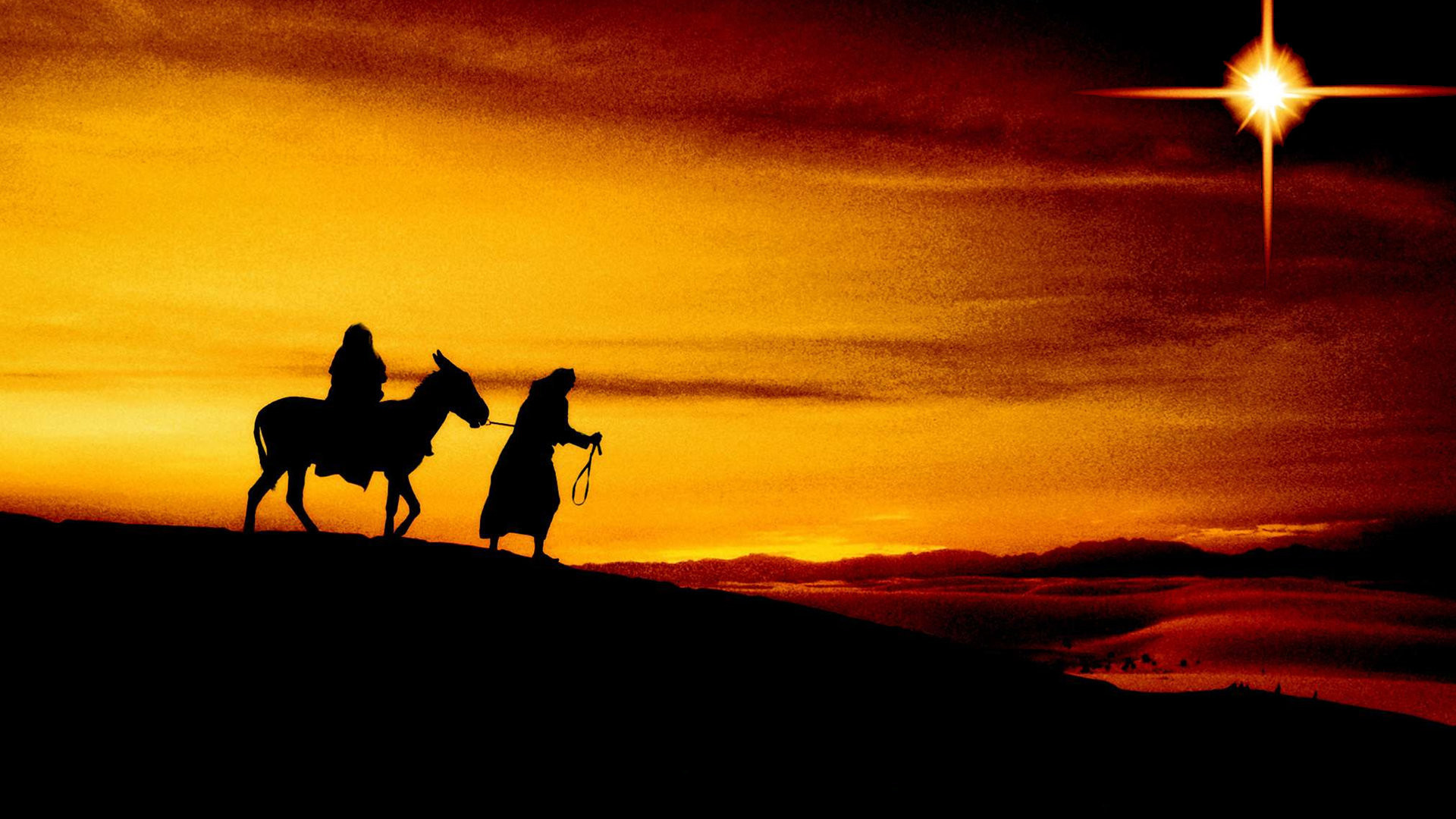
So what events in the original Christmas story were supernatural by nature?  First, there was the supernatural appearance of the angel to Joseph, as is recorded in Matthew chapter two.  The angel communicated to Joseph some troubling news concerning Mary.  He most certainly would have found out she was pregnant with the passing of time.

The question that begs an answer is: would he have carried through with staying with Mary without this supernatural experience?  Probably not!  If he would have broken their relationship, then they would not have made the journey to Bethlehem and Christ would not have been born in that town according to Micah 5:2.  Thus, the necessity of supernatural intervention!

A second example would be the supernatural appearance of the angel to Mary in Luke 1, announcing to her how she would supernaturally conceive a child.  This, of course, was unbelievable to her ears.  How could such a thing be?

However, without this supernatural intervention and Jesus’ virgin birth, He would have been just any other ordinary man and therefore, could not have died on Calvary as the sinless God-man for our sins.  A supernatural angelic visit proclaiming a supernatural miracle!  Both inherent realities within the Christmas story!

Next, we turn our attention to the supernatural appearance of the angelic host to the shepherds on the night of Christ’s birth.  They announced a Saviour was born in the city of David.  However, take note!  What they proclaimed would never have occurred except for supernatural intervention.  Think of it!  There were so many things that could have easily gone wrong.

Mary could have had a miscarriage but she did not.  Mary survived the long, arduous journey to Bethlehem at the height of pregnancy.  Mary could have given birth to a still-born child but she did not.

The fact that the Christ-child was born of a virgin, born alive, born healthy, and born in Bethlehem itself were all amazing realities that were worthy of a supernatural proclamation.   This is why the angel said to the shepherds, “Behold, I bring you good tidings of great joy” (Luke 2:10)

Yes, the answer to humanity’s greatest need was born!  This little baby would be the one Who would ultimately open heaven’s gates to repentant sinners.

What is the application to you and me?  We need to experience the supernatural in our lives.  How, you may ask?  We must be born again.  Each of us must become spiritually alive and that can only occur as God Himself enters into our lives.  John 3:16 tells us how.  “For God so loved the world that He gave His only begotten Son, that whosoever believes in Him should not perish but have everlasting life.”

We must believe Christ went to the cross and He died for our sins.  We must repent of our sinfulness and commit ourselves to living entirely for Him.  We must believe that He rose again from the grave and is a living Saviour.

Have you experienced the supernatural saving power of God in your life?  It’s what Christmas time is all about.

Devotional shared by Pastor Kelvin Kennedy at Meadowvale Bible Baptist Church in Mississauga, Ontario

Mary & me

Who are the top-5 most popular teenagers in the world? According Google search engine the top-5 are: Justin Bieber, Miley Cyrus, Selena Gomez, Demi Lovato, and Emma Watson. Are you a Bieliber? Biebergasted? Have the Bieber fever? Or OJBD? [Obsessive Justin Bieber Disorder] Are you a cult follower of Bieberism? [i.e. screaming crowd of 10-year olds]

Fame and fortune are fleeting. We have seen how the fame and fortune have gone to the heads of many teens, such as Lindsay Lohan, Brittany Spears, and countless others. Next year there will be a new set of teens that will top the billboard charts and gets their moment to shine in the spotlight.

Who are some teenagers God highlights for their relentless passion for Him?

  • Joshua was a young servant of Moses who became a godly leader that took the people of Israel across the Jordan River into the Promised Land [Numbers 11:28].
  • God called Samuel at a young age and he obeyed the voice of God [1 Samuel 3:1-21].
  • David loved to sing to God on the sheep farm, but as a young man he also stood up for his God before the giant Goliath with a few stones and a sling [1 Samuel 16-17].
  • Daniel as a young man is faithful to his God and is willing to stand up and be thrown into the fiery furnace than bow down to any other God than his own.
  • Josiah ruled the kingdom of Judah at the age of 8-years. At the age of 16, he sought God and began to reform the nation back to Him [2 Chronicles 34:3-7].
  • God called Jeremiah a prophet at a very young age. God also encouraged Jeremiah not to be afraid, because He was with him [Jeremiah 1:4-8].
  • Timothy was a timid young man, but Paul, his father in the faith, encouraged him say, saying, “Let no one look down on your youthfulness, but rather in speech, conduct, love, faith and purity, show yourself an example of those who believe.” [1 Timothy 4:12]
  • And Jesus who was still living with his parents was in the temple rubbing shoulders with the rabbis from an early age [Luke 2:41-52].

God uses teenagers throughout the Bible and history. God loves young hearts that and not polluted by the world and are willing to relentlessly and tenaciously give themselves to God. Are you willing to be used by God? Are you available to obey Him no matter the task or cost?

God is using young people to be characters in His story [Luke 1:26-34]

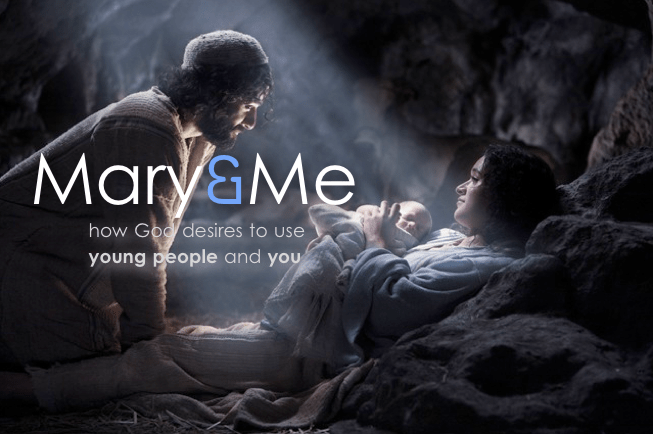
You know Mary. She is the one you see knelt next to the dirty manger with the Son of God swaddled inside with animals huddled together for warmth. A star is shining brightly above.  It is a beautiful scene in Bethlehem. But let’s go back 9-months before the baby is born. Let’s look at Mary. Why did God choose Mary? What’s so special about her that God gives her the task of bearing in her womb the second person of the Trinity? You might be in for a surprise.

On an unordinary day, an angel appears to Mary with a message from God Himself. Days like this did not happen everyday with people in Bible times. She is somewhat scared yet curious about what she’s seeing and hearing She probably heard stories from her Sunday School teacher about how God came to people through messengers in the past. Little did she realize she’d become one of the characters you and I would read about centuries later.

Why does God choose to work through people, including you? It is not because you are worthy, popular, rich, good looking, smart, or have some special skills that make you are more favorable than another. It is just the opposite. God is worthy, good, rich in mercy, generous, and wise. He enjoys using ordinary people to carry out His extraordinary redemptive plan.

God has shown favor to Mary by His grace. Mary is young. She is only a teenager. She was probably no more than 13-15 years old. She is pregnant and not married. This would have been socially scandalous. She could have been label loose or a whore. Imagine the conversations among the girls in the hallway at Mary’s school. “Did you hear? Mary’s pregnant! I didn’t think she was that kind of girl. Who’s the baby’s daddy? Could it be her boyfriend Joseph?”

Mary is the student at your school who isn’t well known. She isn’t great athlete, not a scholar, not the coolest kid on the block, she isn’t drop-dead gorgeous, she isn’t a gossip girl; she isn’t obsessed with fashion or boys. She’s a simple girl. She’s from a rural hick town. She’s from an average family that’s has an average salary. She’s got a modest amount of Facebook friends. She’s the kind of girl you probably would not notice walking through the hall. But God noticed her. He has a plan to use her. Overnight Mary becomes a key character in His story.

God is seeking young people who respond with humility and availability [Luke 1:35-56]

If you were Mary what would you be thinking if God asked you to do something really important? “This is crazy! This cannot be happening to me! What about Jennifer or Kevin, they much better looking and smarter than me? God, you want me to have a baby?” It might be hard to believe—if not miraculous—that a virgin can conceive a baby. That is exactly what God’s going to do. He gives Mary a sign by raising to life the dead womb of Elizabeth, her elder cousin.

Wow, what an incredibly wonderful day this is for these two ordinary women. Mary cannot contain herself any more. She bursts out in a song of praise [Luke 1:46-56; cf.1 Samuel 2, Hannah]. Look at how she worships. She lets begins by listing over 17 attributes about God. She is humble and available to trust God [1:48]. She is both innocent and obedient. She believes “what is impossible with man is possible with God.” [1:37; cf.18:27]. She has all she needs to know it is God who was at work in her. She does not care what others thought about her situation. She doesn’t fear man. She fears God. She desires to bring Him—and Him alone—joy. And this is what you were made to do—worship God, which brings Him joy.

It is clear from Mary’s words (and from the whole Bible) that God is not biased to the rich, the powerful, or the proud. How could God be partial to the things, which in our world are—more often than not—substitutes for God rather than pointers to God? Vast numbers of people have perished because they were enamored by pride, power, and wealth.

Today’s Teen Magazines and websites are filled with messages about finding favor with others:  “Get a smaller waist in 2-weeks,” “Hot summer looks,” “5 ways to get her to notice you,” ”Pick up lines she likes to hear.” What are people trying to figure out when you read this? Do any of them deliver the promises you were seeking? Sure. Why do we want others to notice or be impressed with us? It makes me feel important and secure. If the Bible were a magazine article or web advertisement what would it say? Find out how Jesus can satisfy your needs forever.

Notice how others around the incarnation of Christ responded to His coming: Elizabeth gives glory to God [Luke 1:39-56], prophets eagerly anticipate the Messiah [1:67ff], shepherds lift up praises [2:8-21], angels worship [2:14-15], even magi’s seek Him [Matthew 2:1-12]. How would you respond? How do you respond to God’s presence in your life? How have you been blessed by Jesus? How have you been overwhelmed to praise by the presence of Jesus?

God sent His Son into the world. God took on skin and a human body. He humbled Himself by become a human for humans. This little baby boy born in a barn and feed trough would grow into the most important man in human history. As Gabriel said, “He will be great…He will reign…He will be called holy—the Son of God.” [1:32-33, 35] The next 33 years would forever change the course of history. This child’s purpose was to live to die, to die for the sins of humanity, to take upon Himself the wrath of God in place of sinful man, to become the perfect sacrifice for your sin. The feeble infant would conquer sin, death, and Satan.

Mary had within her womb the Messiah, and if you know Christ, you too, have the Holy Spirit within you—Immanuel—“God with us,” is also with you. Wherever you go He is with you. Mary carried inside her the Savior of the world. You also carry the message of the Savior. A message that will resurrect dead souls to new life.

God used young Mary to accomplish His redemptive plan. And He still uses young and old who are humble and available to be characters in His great redemptive story.

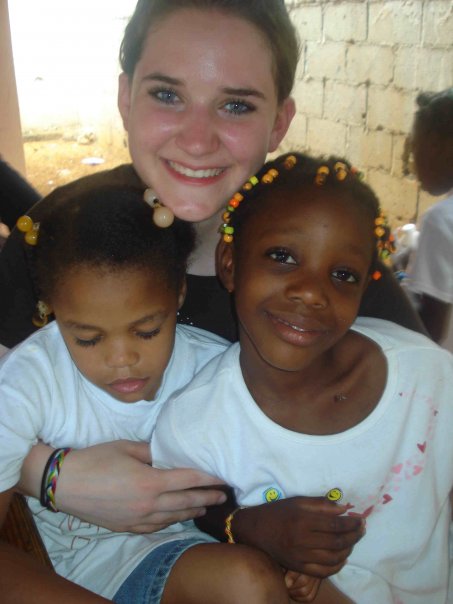
Let me tell you about a teen named, Hannah. You probably don’t know her. She’s not on any teen top-5 lists. Hannah goes to church, she’s from an average family, loves soccer and Spanish. As a teen, she signed up for a few short-term mission trips with our church to Spanish speaking countries like Dominican Republic, Haiti, and Costa Rica. She was able to share the love of Christ with people in a language she learned at school. Now Hannah desires to translate the Scripture in unique languages so more people can hear about her Savior. Whether God uses her that way or not in the future is up to Him. But Hannah is humble and available and God loves using characters like that in His story.

Questions to consider whether you are young and old from the life of Mary and the birth of Christ

Are you available to do whatever God wants you to do? How do you know if it is from God? It won’t contradict the Bible or what God has done historically. Do you fear God more than man?

Are you humble enough to be a character in God’s story rather than having Him be a character in your story?

Will you write a poem or song that expresses your heart toward Jesus?