Dwell

WHERE GOD IS AND WHERE YOU WANT TO BE

One day I was invited to visit the family village of a good friend, I drove a few kilometers outside the city on what was nothing more than a bumpy dirt path for donkeys. In the middle of nowhere, we came upon a cluster of small African huts. The dwellings were made of mud bricks and thatched roofs.

As I approached one of the huts, I could hear the hum of a small diesel generator. When I stepped inside the abode there was a group of men who were all watching WWE. I never expected to be in one of the remotest places on earth and see that. It was surreal. One of the young men proceeded to turn to me and ask, “How do these wrestlers not get hurt?” It wasn’t the place to explain (spoiler alert!) that those wrestlers were part of an act and it was not real.

There is something even more amazing that sometimes feels unreal: God dwells among us and abides in us! Where God is, is where we want to be. We often wrestle with this reality.

BIBLICAL REFLECTION ON DWELLING

The story of the Bible reveals a progressive unfolding of God’s desire to dwell with His people. This theme culminates in the New Testament reality that believers themselves, individually and corporately, are His dwelling place. However, let’s back up the story a bit.

God dwelled in the Garden. God has always been. When He created the world and breathed life in Adam and Eve, He walked among them. He was present and actively connecting with them. When they sinned it severed their connection with God and mankind who have been longing for intimacy with God like Eden ever since. (Genesis 2:8-15; Isaiah 51:3, Ezekiel 36:35)

God dwelled in a pillar and tent. In the Old Testament, God chose to dwell among His people in the Tabernacle and later the Temple. The sign of his presence was a pillar of cloud by day and fire by night. These physical structures symbolized God’s presence, holiness, and accessibility (albeit with limitations). This established the foundational truth that God desired to be with His people. (Exodus 13: 21-22; 25:8-9; 29:45-46; Numbers 9:15-23; 1 Kings 8:27)

God dwells among us. Jesus Himself is the ultimate “tabernacling” of God among humanity. In Him, the fullness of God dwelt bodily, making God intimately knowable and accessible. (John 1:1-5; 1:14; Isaiah 7:14; Matthew 1:18-25)

God dwells in us. Through the indwelling Holy Spirit, individual believers become temples of the Holy Spirit, and the collective body of believers—the church—becomes a spiritual house and God’s dwelling place on earth. This means that wherever pioneer workers go, and as they gather believers, they are carrying and establishing God’s presence.(John 14:15-17; 1 Corinthians 3:16-17; 6:19-20; Ephesians 2:19-22)

God dwells in His city. The future dwelling place of God with humanity is depicted in Revelation 21, where the new heaven and new earth are seen as the temple, and God will fully dwell with His redeemed people. This provides enduring hope for the pioneer, reminding them of the glorious end goal of their work. (Revelation 21:1-3; Colossians 3:1-2)

God calls us to spread His dwelling around the world. As new believers are gathered and discipled, forming new communities in Christ, they are literally building God’s dwelling place in new lands. This transforms a remote outpost into a spiritual epicenter.

What other Scriptures or biblical aspects come to mind when you consider an abiding in Christ and God’s dwelling place? Take a few moments to look up 1-2 of these verses and journal what the Lord highlights for you.

“And I heard a loud voice from the throne saying, “Look! God’s dwelling place is now among the people, and he will dwell with them. They will be his people, and God himself will be with them and be their God.” — Revelation 21:3-4

THE IMPORTANCE OF ABIDING

When you have confidence and comfort that God is with you and that you are near to Him, then you have indescribable joy. Connection with God is an utter delight. Pioneer mission work can be lonely, demanding, and often discouraging. In environments where spiritual support is scarce and visible fruit is slow to appear, the temptation to rely on one’s own strength or strategies is great. There are two foundational truths for each pioneer: the need to abide with Christ and the reality of God’s dwelling place. These truths are lifelines that sustain, empower, and bear fruit in the most challenging mission fields.

Abiding Defined: The word “abide” (Greek: meno) signifies remaining, dwelling, staying, or continuing in a close, intimate, and dependent relationship. Jesus Himself uses the powerful metaphor of the vine and branches to illustrate this vital connection. (John 15:1-11)

Necessity for Life and Connection: Just as a branch cannot produce fruit apart from the vine, a mission worker cannot truly live or be fruitful apart from Christ. This isn’t merely about occasional connection, but a continuous, moment-by-moment reliance. Pioneer contexts often strip away human comforts and resources, making the need for divine life even more stark. (1 John 2:24-28; Galatians 2:20)

Source of Nourishment and Direction: Abiding in Christ means drawing all our spiritual nourishment, strength, wisdom, and direction directly from Him. It frees us from the burden of self-sufficiency and the exhaustion that comes from trying to accomplish God’s work in our own strength. (Colossians 2:6-7)

Lasting Fruitfulness: True, lasting fruit in mission— gospel seed scattering, discipleship, church planting, transformation—flows from Christ’s life through us, not from our own efforts. Abiding ensures that our work is Spirit-led and God-honoring. This is crucial for pioneers who may see little “visible” fruit and need to trust God for the deeper, unseen work.

Peace Amid Chaos: A deep, abiding relationship with Christ provides an unshakable inner peace, even when external circumstances are chaotic, dangerous, or discouraging. This peace is a powerful witness in its own right.

Accepting the invitation to abide: In isolated and challenging fields, the pioneer is never truly alone. The God who dwells in them is present, providing comfort, guidance, and power. More than any strategy or skill, simply abiding with Christ is non-negotiable.

Expanding Mission: The central storyline of the entire Bible revolves around God’s purpose to dwell with his people, and this dwelling place is meant to expand to fill the entire earth. God’s presence with us is a comforting and empowering as we pioneer the gospel among the nations and unreached. As we go, even if it be the most challenging location, He goes with us. (Matthew 28:18-20)

PRAYER ACTION

Consider the Scriptures you cling to above. Consider the dwelling place of God. Write a prayer for the kind of person you want to be who abides with Christ and spreads His dwelling place among the unreached and unengaged.

BUILDING A PRACTICAL MINI-THEOLOGY OF DWELLING

Take some time to prayerfully draft your practical mini-theology of “God’s dwelling” by responding to these questions:

Where is God’s dwelling place? Why does this matter for me and the mission?

example: God is… We are the kind of people who… It is most like us/me to… We/I will… We/I hold to…

What does it mean to abide with Christ? What can it look like to abide with the Lord anywhere, even in isolated locations?

Once you finish share your responses with your mentor. Ask for feedback. Adjust your draft as needed.

Additional Resources for Going Deeper:
God Dwells Among Us, G.K. Beale
The Presence of God, Ryan Lister
InDwell — 7 Day Devotional

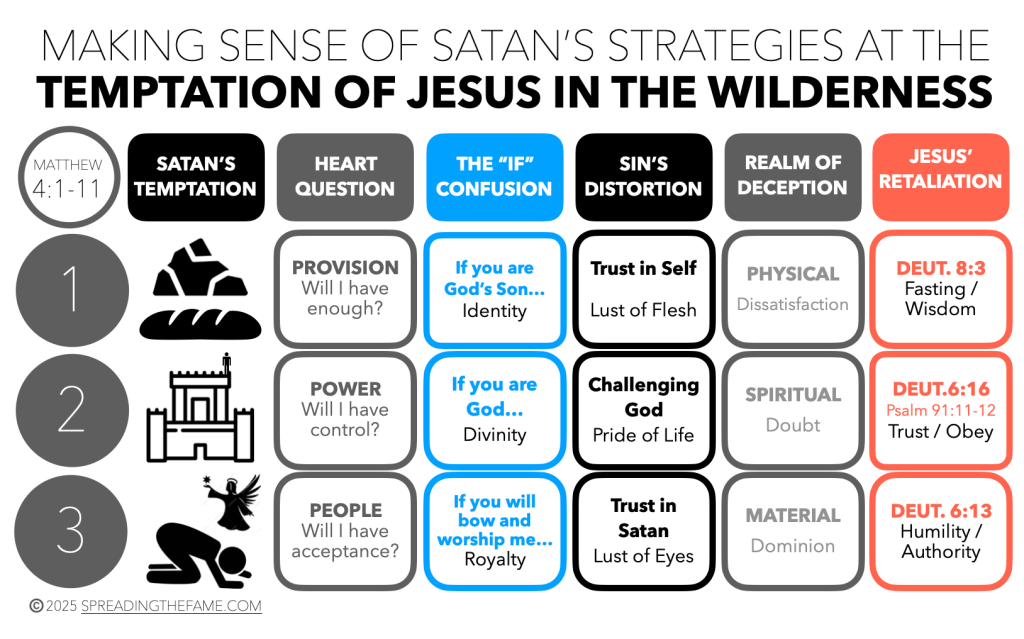
Making Sense of Temptation

Temptation is common to all people. We can make sense of most temptation by looking at home Satan tempted Adam and Eve in the Garden and Jesus in the wilderness.

Then Jesus was led by the Spirit into the wilderness to be tempted by the devil. After fasting forty days and forty nights, he was hungry. The tempter came to him and said, “If you are the Son of God, tell these stones to become bread.”

Jesus answered, “It is written: ‘Man shall not live on bread alone, but on every word that comes from the mouth of God.’”

Then the devil took him to the holy city and had him stand on the highest point of the temple. “If you are the Son of God,” he said, “throw yourself down. For it is written:

“‘He will command his angels concerning you,
and they will lift you up in their hands,
so that you will not strike your foot against a stone.’”

Jesus answered him, “It is also written: ‘Do not put the Lord your God to the test.’”

Again, the devil took him to a very high mountain and showed him all the kingdoms of the world and their splendor. “All this I will give you,” he said, “if you will bow down and worship me.”

Jesus said to him, “Away from me, Satan! For it is written: ‘Worship the Lord your God, and serve him only.’”

Then the devil left him, and angels came and attended him.

Go Toward the Mess

When we returned to North Africa a few years ago, we returned to a mess. We weren’t unknowing—we were very much knowing the mess. We learned a few weeks prior that a main believer we discipled had fallen into sin and disappeared. In the wake of his fall, the groups of disciples and house churches imploded or disbanded—disappointed and disillusioned. It was tempting to cancel our flight and stay home, but we pressed on to reunite with our team on the ground.

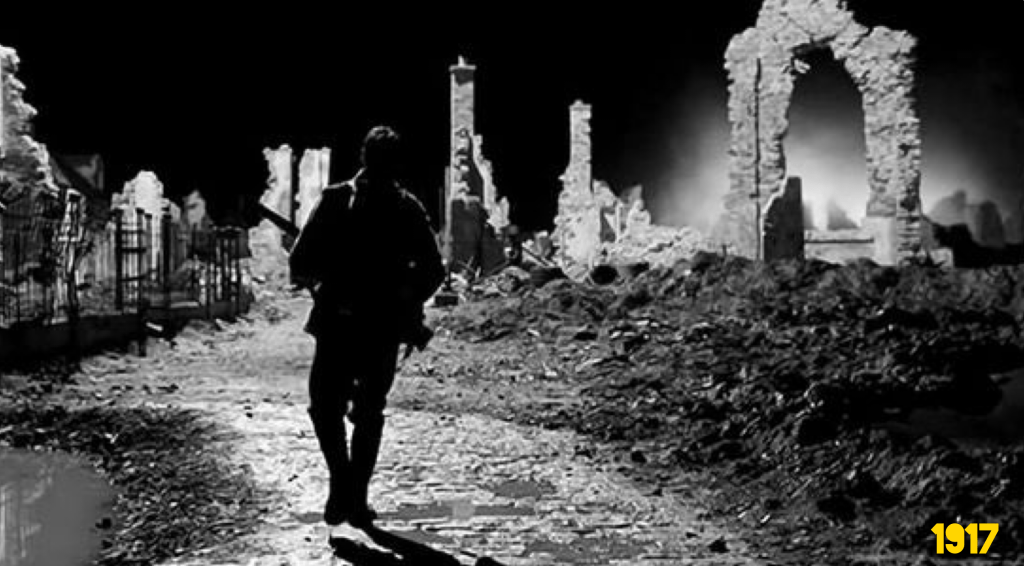
On that flight back, I watched the film 1917. I might not recommend it if you want something lighthearted. At the least, it was adapted for the airline. It was a grueling film about WWI. The film followed the true story of a British soldier named Sgt. Reid who was preparing his battalion for battle and how he dealt with day-to-day difficulties of life in the trenches, triaging terrible injuries, and enduring exhaustion from limited resources. At one point, the film became too much that I paused it. The still frame was of a bombed-out church building. Although the church was in ruins it was still recognizable. It was a power image for me.

Our team was looking to us for leadership in the aftermath on the spiritual battlefield. We came back to a church in rubble and ashes. Our first team meeting back was a puddle of tears. We grieved—what seemed like—3 years of ministry gone in a moment. We wrestled with the anger of an MBB who walked away from the Lord and inflicted damage to a fledgling flock. We questioned whether we had it in us to endure more of the same. It felt like an insurmountable mess. (And you came to be encouraged, eh!?)

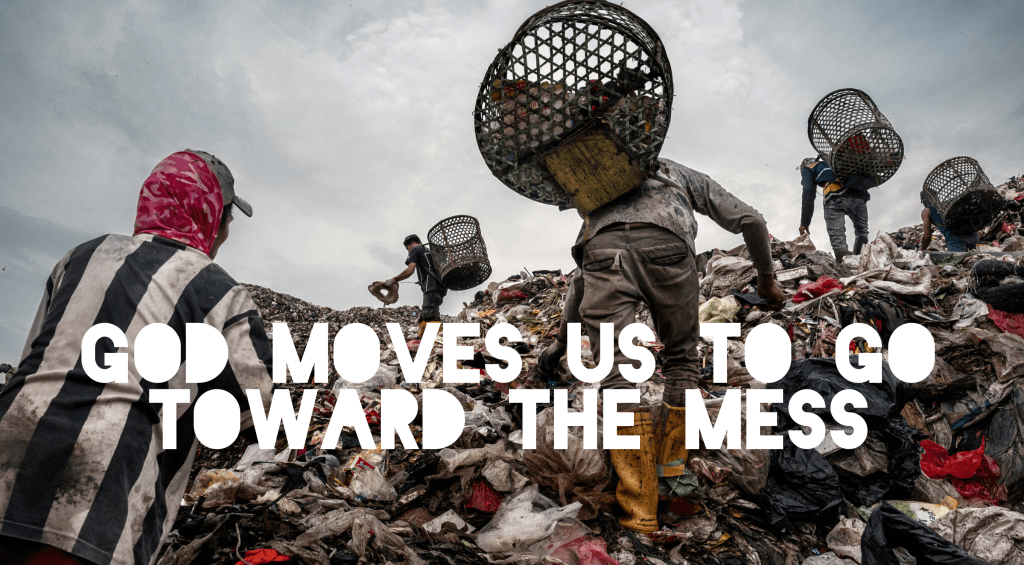
Our mission is to move/go towards the mess embodying God’s grace, proclaiming the mysterious gospel, and building up the Body.

We are in a World of a Mess. All arenas of life and every aspect of society are messy. Work. Politics. Marriage. Parenting. Life. Everything humans touch becomes messy.

Even the church is touched by human messes. You shouldn’t be surprised. Some people see the church and observe what you are like and say, “I don’t want any part of that.” Those who say this need to adjust their thinking to the real world that we live in. The church is made up of sinners—saved by grace, yes—but still sinners. How can one ever think you can have a church and not have a mess? That is ridiculous, unrealistic, and a destructive expectation. The church has messes. If your church isn’t messy then you’re probably new to the church or not well connected. The church is a mess hall—a place to gather, get fed, and get ready for battle.

This leads me to Paul’s letter to the Ephesians. To give a little history, Ephesus was a church planted by the missionary and famous preacher Apollos (Acts 18:24). Later Paul stopped through Turkey on his second missionary journey to visit this fledgling church plant of about 12 people. He stayed on for 3 months. In that 3-month visit he saw a dramatic encounter with the seven sons of Sceva and a mob scene (Acts 19:8ff). He extended his stay to 3 years. So 3 years Paul was in Ephesus, forming and fortifying the church. At one point, Luke described the church in Ephesus as a place where, “the word of the Lord grew and prevailed mightily” (Acts 19:20). That sums up the church’s beginning. Ephesus was a poster church..for a little while.

George Verwer the long-time director of Operation Mobilization said,

“Where two or three are are gathered in Jesus name. Sooner or later there will be a mess.”(Messiology)

And there was a mess in Ephesus. So much so that Timothy was sent to Ephesus—not to a cushy pastoral position, rather to do clean-up duty. We don’t know the exact nature of what went wrong in Ephesus as nothing is spelled out exactly. Paul’s two letters to Timothy give us glimpses of what happened. The church was on the brink of a breakdown. Timothy was called upon to deal with certain persons and behaviors that invaded the church.

Pause for a second. Any messes in your life right now? If you’re at all like me, this probably doesn’t require a lot of mulling over.

We Know How to Make a Mess (Ephesians 2:1-3)

Kids do not need to be taught how to make a mess. That comes naturally. Humans do not need to be taught how to make a mess. Look at what Ephesians says about the mess we were in (2:1-3): v.1) We were dead and disobedient. Living in sin like the rest of the world, v.2) We were fathered by the enemy and his spirit directed our hearts, and v.3) Our desires were unhinged. This describes a hopeless condition (sick/dead). We were stuck (in a snare) in our mess and there was nothing we would do about it. Now don’t equate the word sin with simply a mess, mistake, or oops, but it is cosmic treason (spiritual bankruptcy). 2:12-13, 17 “you were at that time separated from Christ, alienated … and strangers to the covenants of promise, having no hope and without God in the world,”

What we have seen when evangelizing Muslims in North Africa that they can see that they are sinners, but they don’t see that their sin is that big of a deal. They believe humans are born innocent and pure, their prophets are perfect and sinless, and can’t see how their sin affects others or get passed on. They minimize sin and rank it (i.e. piety, lying, arguing, domestic violence). It isn’t that different in other places with other people around the world—and it may sound like our modern world. We can’t expect unbelievers to believe any differently.

Now when we have seen Muslims come to faith in Christ they bring a lot of baggage into their new faith. They have a lot of spiritual hangovers from their old faith of trying to live holy (i.e. prayer/fasting forms, renouncing vows, relating to wife/kids, redeeming shame). The discipleship journey is messy and takes time, patience, and persistence to help them walk the right path. We can wrongly expect a new follower in Jesus to get overnight what has taken us years to know and grow into. And for some of us, we are still growing into years later.

Thankfully the story doesn’t end with verse 3. There is an amazing turn of events. ”But God…” All the best parts of the Bible come after BUT GOD. What John Stott calls the greatest two syllables ever spoken in the English language. BUT GOD. God comes to the rescue. God delivers. God gives us what we need to get unstuck. What God has given us: life (2:4-9). This new life give to us is—1) a God-initiated life (vs. 4-5), 2) a God-resurrected life (vs. 6-7), and 3) a God-gifted life (vs.8-9). It was a life undeserved. The word that is repeated over and over again in these verses that helps us to understand is grace.

We Must Grasp onto Grace that is Greater than Our Sin (2:4-9)

Grace isn’t an exclusively Christian concept. At the time Paul was writing his letter to the followers of Jesus who lived in the city of Ephesus, the idea of χάρις (grace) was well established. All the way back to folks like Aristotle and Plato, you see the term grace used to describe something that is given, absolutely freely, with no expectation of return. Everyone understood grace to be about a generous gift, something you received for no reason, and something you couldn’t pay back—even if you wanted to. So that was the scroll on which Paul sketched the Christian concept of grace.

You were dead in sin, but God gave you life because you couldn’t. That’s grace. You didn’t earn it, you can’t return it, and you can’t undo it. That’s grace. In Christ, God has seated you in His system of grace. The remedy for your mess is grace.

When you read the Gospels we see Jesus stepping into your mess (our world). He was grace on display. From his birth to his death on the cross he oozed grace to bring you peace. When you consider this you cannot help but sing: Marvelous, infinite, matchless grace. Freely bestowed on all who believe! All who are longing to see His face, Will you this moment His grace receive? Grace that will pardon and cleanse within; Grace that is greater than all our sin!

God is at work in the mess. God in his patience, grace, and passion brings men and women to himself often doing great things amid a mess. Yet in the mess is not where one is to remain …

God Moves us to Go toward the Mess (2:10)

Grace is transforming. It changes you. It’s contagious. It moves your church. It has to be shared and spread. God has designed grace to be walked out (2:10). 1) You are a display of God’s workmanship. 2) God has prepared in advance. 3) God moves you to go towards the mess by embodying grace, proclaiming the gospel, and building up the Body.

Workmanship comes from the Greek word poema, which we get our word poem (handiwork, masterpiece, artistry, creativity, performed). Grace is an extension of God’s beauty and his beautiful plan. Grace in you is God’s artistry that he has designed from eternity past that you walk in it today. Walk is the action of going. God’s grace leads to action. Movement. Toward.

3 ways we extend (walk out) grace to others.

How can I show God’s grace to my family, friends, co-workers, or even strangers? 1) Extend forgiveness. First, we can forgive because we have been forgiven. “In [Christ] we have redemption through his blood, the forgiveness of sins, in accordance with the riches of God’s grace that he lavished on us.” (Ephesians 1:7) God is not a furrowed browed Father who says, “What’s wrong with you? Why can’t you get it right?” God is a tender Father who says, “I love you. You are forgiven. Get up and go at it again. I will help you!” Every day we experience God’s grace because every day we make messes. No mess is too much for God. And only God can forgive me, cleanse me, and redeem me from my mess.

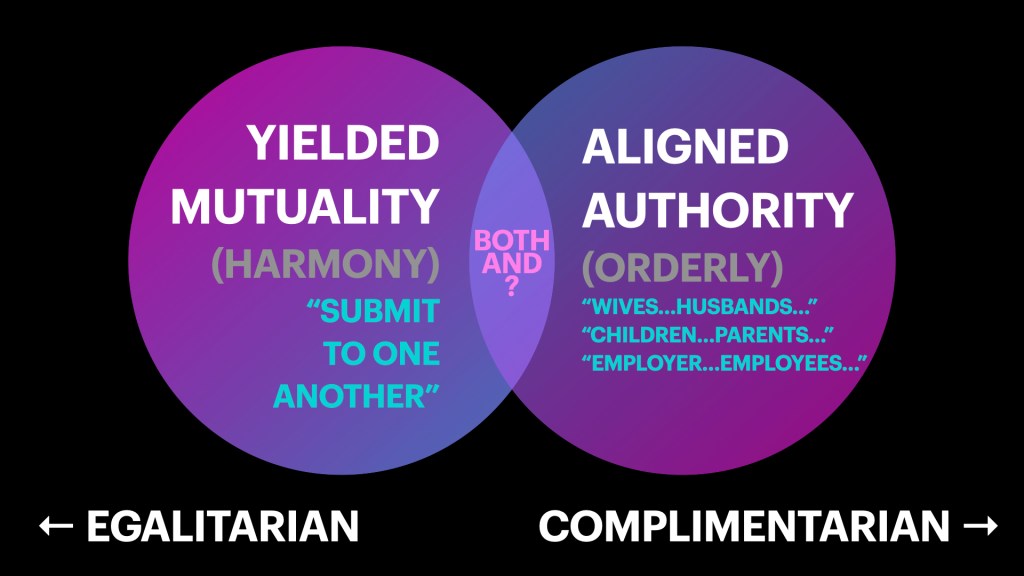
Second, I can extend that forgiveness to others, “Be kind and compassionate to one another, forgiving each other, just as in Christ God forgave you.” (4:32) Messes must not separate us, but bring us together. Grace takes away judgment and leads to compassion. Grace creates a bond over our brokenness and the beauty that God makes of us.

2) Extend encouragement. Grace is constructive not destructive. “Do not let any unwholesome talk come out of your mouths, but only what is helpful for building others up according to their needs, that it may benefit those who listen.” (Ephesians 4:29) And this is echoes other one another’s in the letter, “bearing with one another in love” (Ephesians 4:2) “Be kind to one another, tenderhearted, forgiving one another, as God in Christ forgave you.” (Ephesians 4:32) “addressing one another in psalms and hymns and spiritual songs, singing and making melody to the Lord with your heart,” (Ephesians 5:19) “Submitting to one another out of reverence for Christ” (Ephesians 5:21) Waiting to encourage others until their life is cleaned up and less messy is like waiting to go to the ER when they’ve stop bleeding. God doesn’t love some future version of others. He loves in the mess.

Grace gets dirty. Sarah moved Sarah to step towards a boy chained up next door, suffering, and needing deliverance. For years he had been hurting himself and tormented by demons. Sarah asked to pray over him in Jesus’ name. With permission from the head of the household, she prayed over the boy and witnessed his healing and freedom.

3) Extend the hope of the gospel. Paul described his role as a “stewardship of God’s grace… that was given to me for you,” (3:2) which means you and I carry a responsibility (moreover privilege) to give out grace as freely as we have been given grace. In the Bible, stewards were the trusted managers of a household, palace, or large estate. Royal stewards were second only to the king and often had control over the king’s treasury, his palace, and some military assets. They were also representatives of the king, carrying out his work on his behalf until he returned. That’s you! Paul continues, “To me, though I am the very least of all the saints, this grace was given, to preach to the Gentiles the unsearchable riches of Christ, and to bring to light for everyone what is the plan of the mystery hidden for ages in God, who created all things.” (3:8-9) Whether you speak, love, or serve, you are to extend hope of nothing less than greatest news in the world. You are the King’s messenger.

Sarah was able to see a breakthrough in our crusty neighborhood. She began by reading Bible stories to a group of children at a Quranic School who couldn’t afford a teacher. She met with women and children to study and memorize the Scripture. She was able to pray over a young boy who was demonized. She was able to nurture orphan children from a mother who came to faith but died. We were able to see the formation and influence of a media project ministry that touched souls around the city and country with the good news. We were able to see the launch of two new teams in Chad among the unreached. We were able to experience a new dependence upon the Lord that we would not have but through the messes, we stepped back into.

Read any mission biography and you will see men and women going towards messes. David Brainerd served a few years among the native Americans and died of TB at 29, BUT GOD used Brainerd’s diary to stir a new wave of missionaries to the unreached. William Carey lost his life’s work of Bible translations in a tragic fire, BUT GOD caused the Bengali church to grow and spread. David Svea led one boy to Christ in the Congo before he lost his pregnant wife to malaria. He left his newborn daughter and the mission field never to return. He became a drunk, BUT GOD used that one boy to lead 600 others to Christ in his village and spread the gospel to hundreds of thousands of others. We have seen carnage in Chad due to marriage conflict, team implosions, unforeseen illnesses, and more. Our own family was on the cusp of being a statistic due to burnout, depression, and identity battles. BUT GOD is building His church in Chad! What is your BUT GOD story?

Three questions to ask yourself:

1) Am I going toward the messes within me? Are you allowing God’s grace to touch all areas of your soul and life? Has the gospel taken root in you?

2) Am I going toward the messes close to me? Are you seeing the messes in your community (or church) and stepping toward them rather than away from them? Are you bringing the gospel to those around you?

3) Am I going towards the messes into new places/nations? Am I asking the question, “Where next, God?” Or even, “Who next, God?”

Go towards the mess in you, others, and the world. Watch God’s grace shine!

The Future’s Work in Faith

When you consider your future it will have an impact on how you live now. In other words, eyes that are fixed on a future hope will inevitable impact where the feet tread today. When it comes to faith it is no different. Hope of the future has its work in faith.

God is sovereign and powerful. He shook creation and history with his presence. The image of Exodus 19-20 was not a small pyrotechnics show at Mount Sinai. God appeared in blazing fire, ear-piercing noise, and trembling earth. God said that if anyone but Moses touched the mountain they would be scorched on the spot. The people of Israel freaked out, Moses himself was afraid, and the people begged Moses not to experience God like this again (Hebrews 12:18-21). Who would blame them?

“For you have not come to what may be touched, a blazing fire and darkness and gloom and a tempest and the sound of a trumpet and a voice whose words made the hearers beg that no further messages be spoken to them. For they could not endure the order that was given, “If even a beast touches the mountain, it shall be stoned.” Indeed, so terrifying was the sight that Moses said, “I tremble with fear.” But you have come to Mount Zion and to the city of the living God, the heavenly Jerusalem, and to innumerable angels in festal gathering, and to the assembly of the firstborn who are enrolled in heaven, and to God, the judge of all, and to the spirits of the righteous made perfect, and to Jesus, the mediator of a new covenant, and to the sprinkled blood that speaks a better word than the blood of Abel.” – Hebrews 12:18-24, ESV

You are invited to another mountain—Zion. The image of Zion is greater and more epic than Sinai. Countless angels will be there. Throngs of heaven will be there. Saints from all ages will be there. God as Judge will be there. Jesus as the Mediator of the New Covenant will be there. The city of God is a holy and awe-filled sight (vs.22-24).

No one will be able to run, hide or ignore the fact that God exists. On that day in the near and not so distant future you will appear before him who is utterly inescapable. He who shook the earth will shake the heavens. When he shakes it this time it will be a sifting. Above all the kingdom of God will stand and for this God will be praised because is worthy of all worship, reverence, fear, and awe. He is God and holy is his name—a consuming fire (vs. 25-29).

“See that you do not refuse him who is speaking. For if they did not escape when they refused him who warned them on earth, much less will we escape if we reject him who warns from heaven. At that time his voice shook the earth, but now he has promised, “Yet once more I will shake not only the earth but also the heavens.” This phrase, “Yet once more,” indicates the removal of things that are shaken—that is, things that have been made—in order that the things that cannot be shaken may remain. Therefore let us be grateful for receiving a kingdom that cannot be shaken, and thus let us offer to God acceptable worship, with reverence and awe, for our God is a consuming fire.” – Hebrews 12:25-29, ESV

The future image of Zion is wowing. Even now, it’s quite the stimulus package for the imagination. That you are given a sneak peak at what is to come is meant to inflict you with great excitement and trepidation. Zion is meant to shake your faith and affection towards the God who is unshakeable.


Questions for Reflection:

  • Read Exodus 19-20. What do you learn about God? What do you learn about the people of Israel? How would you respond if you were present that day? How is God a consuming fire?
  • Now read Revelation 20-21. What do you learn about God, Jesus and heaven? What awes you about these verses? What assurance do you have that these verses are true? How must these verses about the future impact your now?
  • How can we ensure that we are frequently remembering our eternal inheritance in heaven? What difference should the knowledge of this glorious future make to the way we live our lives now?

Jesus is the Great Object of Our Faith

Steve and I would ride our bikes for miles. We’d push each other faster and longer. After the ride we would wobble onto the road and run. Steve was more than 20 years older than me, but he could lap me on the run. That is embarrassing for a young guy, but exhilarating for an old guy. He knew running was my weakest event training for a Tri and he would remind me, “Justin, this is your cross to bear. Fix your eyes on the cross and run.” It did help to endure the middle of the run when I was tempted to walk or even quit.

I was a sprinter on my middle school track team. I ran the 100m and 400m. Running long distances was not my thing. Likewise, in life I would much rather endure a sprint than a marathon. However, this life resembles an Iron Man more than a quick jaunt.

We have just walked through the Hall of Fame. Hebrews 11 is a gallery of examples that help you to know what faith looks like and what God can do through a human vessel. Each name is an example for your benefit. That you too would exercise faith, endure through the trials and resist temptations in this life (Hebrews 12:1a).

“Therefore, since we are surrounded by so great a cloud of witnesses, let us also lay aside every weight, and sin which clings so closely, and let us run with endurance the race that is set before us, looking to Jesus, the founder and perfecter of our faith, who for the joy that was set before him endured the cross, despising the shame, and is seated at the right hand of the throne of God.” – Hebrews 12:1-2, ESV

Now it is time to run (v.1b). The author of Hebrews describes life like a race. The course is not flat or oval like a track. It has high mountains and low valleys. There is pain and heartache. There are injuries and insecurities. In this life there are innumerable “weights” that taunt, trap, or trip us up.

Often our eyes are fixed on the weights and we worry what will come next or what will come of us. Yet those who have gone before us have given some valuable advice: keep your eyes fixed on Jesus (v.2).

That might sound nebulous. How do I fix my eyes on Jesus when I can’t see him? Or what exactly am I to fix my eyes on? The key is keeping your eyes fixed on how Jesus endured the cross and shame. Do you remember Jesus final days? Do you remember the trial, the rejection, the flogging, the walk through the streets of Jerusalem, the blood, the tears, the prayers, the cries? Do you see how he endured? Remember this.

Fixing our eyes on Jesus is hard but helpful.  Ultimately, Jesus is our example. He shows us what faith looks like. He is the founder and perfecter of our faith. He shows us what endurance looks like. He endured with joy and obedience. He shows us we are not alone. He is seated at the right hand of God as our intercessor.

Like my friend Steve, we need running buddies. One who will encourage you from time to time and say, “This is your cross to bear. Fix your eyes on the cross and run.”


Questions for Reflection:

  • Why do you think the author focuses on endurance after exploring the role of faith?
  • Read Philippians 3: 12– 14. How does this passage compare to the message in Hebrews 12? How is the example of a race so helpful?
  • Read 1 Corinthians 9:24–27. To what does Paul liken the Christian faith? How does he say we should live this life of faith? What does this mean practically for us as individuals and churches?
  • What are the weights Christians should remove so they can run the race? What are some of the things that believers cling to that hinder a their faith?
  • How is faith at times a grueling race? What sorts of “hardship” will believers endure as they grow their faith?
  • How can one have joy and endure at the same time? What can you learn from Jesus about melding of joy and endurance?
  • What are ways today’s church looks backward instead of forward? How can you follow the example of the heroes of faith and look ahead to the joy that awaits you? What role does faith play in the ability to look ahead?

What the Reward for Faith Looks Like

When I was in elementary school I was in a community swim league. Other than the Speedo and practices, I liked swimming. I was super strong in the backstroke.  All those tedious practices paid off with my first blue ribbon. After all these years, I still have it.

At the end of a race there is a trophy or ribbon. At the completion of a test there is a grade or a diploma. At the close of a performance there is an applause or a pat on the back. Yet what is the reward for faith?

You don’t often see the authors of the Scripture making public apologies about their writings. However, the author of Hebrews gives an apology for listing the final heroes of faith in rapid order (Hebrews 11:32). He said there were simply too many names to list and too little time to talk about them. Thankfully their stories are recorded in canon of Scripture (vs.33-34). This is your reminder to go an read about them.

“And what more shall I say? For time would fail me to tell of Gideon, Barak, Samson, Jephthah, of David and Samuel and the prophets— who through faith conquered kingdoms, enforced justice, obtained promises, stopped the mouths of lions, quenched the power of fire, escaped the edge of the sword, were made strong out of weakness, became mighty in war, put foreign armies to flight. Women received back their dead by resurrection. Some were tortured, refusing to accept release, so that they might rise again to a better life. Others suffered mocking and flogging, and even chains and imprisonment. They were stoned, they were sawn in two, they were killed with the sword. They went about in skins of sheep and goats, destitute, afflicted, mistreated— of whom the world was not worthy—wandering about in deserts and mountains, and in dens and caves of the earth.” – Hebrews 11:32-37, ESV

Although each person listed had their failures, the common thread between each judge, king and prophet was faith being their victory over death (v. 35). A hero or heroine often does not get to see the reward of his work in his lifetime (v. 39). Sometimes he dies in battle before the victory. Sometimes he is marginalized or even martyred (vs.36-38). The images of persecution and imprisonment pile up to convince us along with the first readers of this letter that the experiences of these men and women are no different than ours (cf. 10:32–34). Their names are here to encourage you to persevere in faith for the reward of faith is greater than what one can achieve in this lifetime (v. 40).

“And all these, though commended through their faith, did not receive what was promised, since God had provided something better for us, that apart from us they should not be made perfect.” – Hebrews 11:39-40, ESV

It was said “the world was not worthy of” these people of great faith (v. 38), but they had the assurance that they were moving toward a greater goal. Again we enter the realm of “something greater,” and with that to rejoice in, to live for and fight for. The reward for faith is God. What better reward is there?

Hebrews 11 is here for you on look backward on the faith of yesterday in order to press forward in faith today. Press on! The greatest reward is yet to come!


Questions for Reflection:

  • What might the writer of Hebrews have said about these men if there had been more time?
  • Why do you think God chose to work through these people (e.g. Gideon, Samson, David) despite their faults and failures? What does this tell you about God?
  • How does faith enable you to seek only God’s approval rather than the world’s approval? How could God be more glorified by not delivering you from suffering than from delivering you from it? Does this give you more or less confidence in God?
  • What do Christians have to look forward to? How can you take the knowledge of your inheritance to come and use it to help you to be courageous and faithful in times of trial?
  • If you knew that you wouldn’t receive any earthly rewards for your faith, how would that affect the way you live? Knowing that you will ultimately receive a promised blessing, does that make faith easier or more difficult when challenges arise?
  • In what ways does the list of the faithful in Hebrews 11 encourage you? Challenge you? Intimidate you? If you were to add your own name to this list based on the way in which you’ve shown great faith, how would that entry read?

What Faith in Action Looks Like

Faith is a crucial piece of our relationship with God. We don’t always understand God or what he is doing. Sometimes we may feel like we are up against a wall or we feel like we are being run down by a fierce army and God is nowhere to be seen.

Moses’ story is amazing from start to finish. As an act of faith his parents sent him down the Nile River in a basket (v.23). Moses was found by Pharaoh’s daughter and grew up in Pharaoh’s home (v.24). By faith he gave up the luxuries of Egypt to help let his people go free (vs.25-26). By faith Moses listened to God and obeyed his commands (vs.27-28). What God prepared Moses for was an amazing journey of faith marked by miracle after miracle.

“By faith Moses, when he was grown up, refused to be called the son of Pharaoh’s daughter, choosing rather to be mistreated with the people of God than to enjoy the fleeting pleasures of sin. He considered the reproach of Christ greater wealth than the treasures of Egypt, for he was looking to the reward. By faith he left Egypt, not being afraid of the anger of the king, for he endured as seeing him who is invisible.” – Hebrews 11:24-27, ESV

Faith acts. With Pharaoh and his army charging after the slaves they just let go the people had a choice: freak out or have faith. By faith the Hebrews crossed the Red Sea on dry ground (v.29). No doubt Moses’ faith and leadership inspired their faith. Their faith preserved their lives from the bitter Egyptian army who drowned after the last Hebrew reached the other side of the Red Sea.

The city of Jericho was a towering menace and it was a barrier between the Hebrews and the land God promised. God’s plan seemed a little wacky: March around the city seven time and blow trumps and the walls would come down. No weapons. Only instruments and obedience. By faith the Israelites did as God said and God did as he said (v.30). And the people of Israel did the impossible were able to walk into the Promised Land.

Rahab the prostitute was saved when Jericho was destroyed because of her faith and kindness in helping the Hebrews spies escape (v.31; cf. Joshua 2:10-21; 6:25). Not only that Rahab became a part of the nation of Israel. She married Salmon and gave birth to Boaz who was an ancestor of King David (Matthew 1: 4–6).

When faith acts God honors it. Faith shows we trust God at his word. The moment we act in faith is never easy. That is why it is called faith.


Questions for Reflection:

  • How does faith need great courage for difficult decisions?
  • How do you see faith in action in the life of Moses?
  • What does it mean that Moses “considered the reproach of Christ greater wealth than the treasures of Egypt, for he was looking to the reward”? What might Moses have known about Christ? In what sense can we say that Moses suffered for the sake of Christ or how did Moses give an image of Christ? (see 1 Corinthians 10:4)
  • How is Jesus never far away from any Scripture, even Old Testament Scriptures? How do all examples of faith ultimately lead to Jesus? What are the promises offered by the world which seek to pull us away from following Christ?
  • How can you encourage others around you to be bold in faith and to persevere, rather than yielding to the temptations of the world?
  • For all that Moses did for the Hebrews, he still didn’t get to enter the Promised Land. What does this teach us about God’s rewards for the faithful? What are some other examples of rewarded faith that seem unexpected or maybe even unsatisfying at least according to the world’s understanding of “reward”?
  • What is so unique about having Rahab listed as a heroine of faith? What does she show you about the unique plan of God and the kind of people God uses? What do Rahab’s actions teach us about the relationship between obedience and faith?
  • How might God use you to act in faith to further his kingdom purposes?

What Enduring Faith Looks Like and Looks Forward Towards

Life isn’t a calm breeze. Sometimes the winds gust and the storms batter from within and without. Life can be a grueling journey of endurance and faith is necessary.

We need examples. We need people we can look to and say, “If they did it, so can I.” When it comes to big time examples of faith, Abraham is a name that often comes to mind. Abraham was called by God to go to an unknown place. He journeyed even though he didn’t know exactly where God was taking him or what the journey would look like (vs.8-9). It was a true journey and test of faith (Gen. 15:6).

“By faith Abraham, when called to go to a place he would later receive as his inheritance, obeyed and went, even though he did not know where he was going. By faith he made his home in the promised land like a stranger in a foreign country; he lived in tents” – Hebrews 11:8-9a, ESV

Faith acts by moving forward. Abraham and Sarah never fully reached the Promised Land during their lifetime, but it was realized through the purchase of a small burial plot where Abraham would bury Sarah. The duration of their lives was lived as strangers in a strange land, yet they looked forward to a better country, a heavenly one that God was preparing for them (v.10; cf. 13:14). Their faith looked forward beyond the grave (vs.13-16).

“All these people were still living by faith when they died. They did not receive the things promised; they only saw them and welcomed them from a distance, admitting that they were foreigners and strangers on earth. People who say such things show that they are looking for a country of their own. If they had been thinking of the country they had left, they would have had opportunity to return. Instead, they were longing for a better country—a heavenly one. Therefore God is not ashamed to be called their God, for he has prepared a city for them.” – Hebrews 11:13-16, ESV

Faith acts on what seems impossible. A at 90 years old, God said he would open the womb of Abraham’s wife making it possible for her to bear a son (vs.11-12). Although, at first she laughed (ha!), God made the impossible possible (ah!). It was God’s starting point for fulfilling a promise to Abraham making his descendants as numerous as the stars.

“And by faith even Sarah, who was past childbearing age, was enabled to bear children because she considered him faithful who had made the promise. And so from this one man, and he as good as dead, came descendants as numerous as the stars in the sky and as countless as the sand on the seashore” – Hebrews 11:11-12, ESV

Faith acts on what it knows about God. Abraham’s biggest test of faith was when God would ask him to sacrifice that son—his one and only promised heir (vs.17-19). Abraham acted in faith. He had faith that God would raise his son from the dead.

“By faith Abraham, when God tested him, offered Isaac as a sacrifice. He who had embraced the promises was about to sacrifice his one and only son, even though God had said to him, “It is through Isaac that your offspring will be reckoned.” Abraham reasoned that God could even raise the dead, and so in a manner of speaking he did receive Isaac back from death.” – Hebrews 11:17-19, ESV

Faith acts on what God has already done. Abraham’s descendants Isaac, Jacob and Joseph continued on, but not without their own enduring challenges and faith struggles (vs.20-21). Joseph, was sold as a slave to Egypt by his brothers. His brothers would later come to Egypt bowing before Joseph demanding food amidst a famine. This fulfilled Joseph’s dream and he responded by embracing and providing for his brothers. Interestingly, after his death his bones were brought back to the Promised Land (v.22).

God’s plans aren’t always immediate. Sometimes they span generations. God has an enduring love for his people and the working out of his plans. God will do as he says even amidst the wind and storms of life. We too must have enduring faith in what God is doing and will do because of what he has already done.


Questions for Reflection:

  • What is endurance? How is endurance linked to faith? Why is endurance often difficult?
  • What do you learn about endurance from the life of Abraham, Abraham’s children, and Abraham’s children’s children (e.g. Isaac, Jacob and Joseph)? How does their faith speak to you?
  • What do you learn about enduring faith through the life and death of Jesus? What was the reward he was looking forward to and the city he is preparing for us? (cf. Hebrews 13:12-14) How does the dramatic story in Genesis 22 anticipate the central work of Christ?
  • How do you hand down these stories to the next generation? Are there new stories of faith you can hand down? What are they?
  • In what areas of your faith and life is God calling you to endure?

what faith looks like

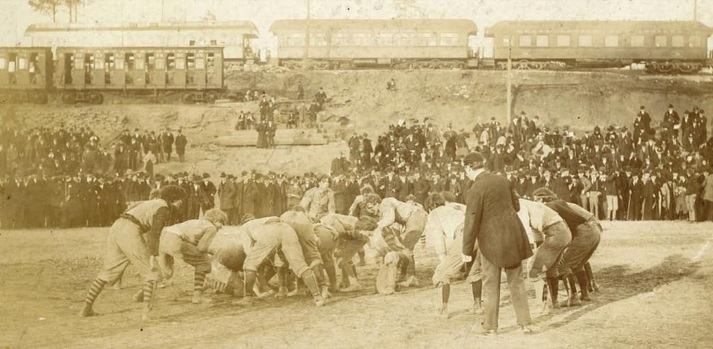
A few years ago, I went to the Green Bay Packers Hall of Fame. It is an interesting and educational shrine to one of footballs most storied sports teams (I may be a bit biased). The most fascinating aspects of the Hall was learning about the teams early days and what the sport first looked like. A hundred years ago the sport was raw and tough. The founders and initial inductees to the Hall didn’t have much to look back on. They were creating the records that would be broken. They were paving the way for future players by creating the benchmarks and examples to follow.

1895_Auburn_-_Georgia_football_game_at_Piedmont_Park_in_Atlanta_Georgia

The first three examples in the Faith Hall of Fame are the founding fathers of faith after the creation the world: Abel, Enoch and Noah. There isn’t a lot we know about these men between Chapters 4-9 of Genesis. These three men show us that human history is a history of living “by faith” and the kind of life God expects (vs.4,5,7).

By faith Abel brought God a better offering than Cain did. By faith he was commended as righteous, when God spoke well of his offerings. And by faith Abel still speaks, even though he is dead. – Hebrews 11:4, ESV

Abel’s faith was not in the substance of his sacrifice, but in the heart behind his sacrifice. To Abel to give his first and best fruits was an act of faith and worship (Genesis 4). Abel was later martyred by his own brother, but Abel’s faith still speaks to us today.

By faith Enoch was taken from this life, so that he did not experience death: “He could not be found, because God had taken him away.” For before he was taken, he was commended as one who pleased God. And without faith it is impossible to please God, because anyone who comes to him must believe that he exists and that he rewards those who earnestly seek him. – Hebrews 11:5-6, ESV

Enoch’s faith takes hold of what God offers. In Genesis 5:24, there is a genealogy filled with men who live to be more than 900 years old, yet following each name reads the cold words, “and then he died.” Except for Enoch. Enoch walked with God and he was no more because God took him away. Death had no hold on Enoch.

By faith Noah, when warned about things not yet seen, in holy fear built an ark to save his family. By his faith he condemned the world and became heir of the righteousness that is in keeping with faith. – Hebrews 11:7, ESV

Noah’s faith obeyed. Obedience to God amidst of an unclear future and chaotic circumstances is key to faith. Noah built a boat despite never seeing rain, hundreds of years or ridicule, and limited information. Noah takes God at his word and gets to work. His actions show his faith as he stands obedient among a wicked generation (Genesis 6:9).

The common thread between these three ancients was their faith. They believed God existed, they feared him, and they believed God rewards those who seek him.


Questions for Reflection:

  • How do these ancient examples of faith still speak to us today?
  • How does faith involve aspects of sacrifice (Abel), hope (Enoch), and obedience (Noah)? Which person can you relate with the most and why? Which aspect of faith do you struggle with the most and why?
  • What are the different things people mean when they talk about ‘faith’? How does real, biblical faith differ from the popular idea of ‘faith’?
  • Have you experienced times when your faith in God has been tested? What have you learned from such experiences? How have these lessons helped you in times of difficulty?
  • Why is it impossible to please God without faith? On the contrary, how does faith please God?
  • What is the reward of faith? (cf. 1 Chr. 28:9; Jer. 29:12-14; John 4:24)

what is faith?

Would you rather see the future or see what is invisible? There is a measure of faith that comes with both because we can see neither. One often think that seeing is believing or if one sees he will have greater faith. However, Jesus says, greater is one’s faith who believes and doesn’t have to see (John 20:29). That’s where faith is born.

“Now faith is confidence in what we hope for and assurance about what we do not see. This is what the ancients were commended for. By faith we understand that the universe was formed at God’s command, so that what is seen was not made out of what was visible.” – Hebrews 11:1-3, ESV

Faith is defined as confidence in what we hope for and assurance about what we do not see. In other word, faith confidently trusts and obeys God no matter the circumstances or consequences. We don’t live or define our life by the circumstances or consequences but by confident trust and obedience to what God has already said about himself and his plans.

Faith gives you the ability to see the future as the present because you know God is the same yesterday, today and forever. Also faith gives you the ability to see the invisible as seen because you can see what God has said and done in Scripture and that gives you proof enough that he is trustworthy and worth following.

The example in verse three is that by faith we understand that God created the universe by the spoken word. We weren’t there, but we read about it in Genesis chapter one. We cannot see God, but we can see what God has made and this proves that God exists. We can have faith in God because we can see the evidences of what he said by what he has done.


Questions for Reflection:

  • How does the author of Hebrews define faith? How would you define faith in your own words?
  • How do the words “assurance,” “conviction,” and “commendation” help you to understand the meaning of faith?
  • What are things that you hope for? What are the invisible things you’d like to see?
  • What is something invisible that is easy for you to have faith in? What is something invisible that is difficult for you to have faith in?
  • Without looking ahead (even if you may know), who were ancient men and who in Scripture who were commended for their faith? What makes their faith so great?
  • What do others say about your faith? Would they commend it?
  • Other than creation, what other evidence of God do we have that God exists or keeps his promises? How do we see God at work even though we cannot see God Himself?
  • How do you see God in Jesus (e.g. Hebrews 1-10)? How does he encourage your faith?

Jesus Calls you to a Greater Faith

An arrogant Christian is an oxymoron. A Christian has no room to boast in himself. Rather that is reserved for Jesus.

There is little difference between arrogance and confidence. The difference is the attitude. An arrogant person boasts in his ability while a confident person simply acts.

A Christian can be confident because of Christ. The root of our confidence as a Christian is that we have unlimited and unhindered access to the Most Holy Place where Jesus reigns as a Great High Priest (vs.19-21). This should encourage us to look both upward and outward as we approach God. Upward with a sincere heart and full of faith and hold unswervingly to the hope we profess. Outward considering how best to stir one another towards love and good deeds (vs.22-25).

“Therefore, brothers and sisters, since we have confidence to enter the Most Holy Place by the blood of Jesus, by a new and living way opened for us through the curtain, that is, his body, and since we have a great priest over the house of God, let us draw near to God with a sincere heart and with the full assurance that faith brings, having our hearts sprinkled to cleanse us from a guilty conscience and having our bodies washed with pure water. Let us hold unswervingly to the hope we profess, for he who promised is faithful. And let us consider how we may spur one another on toward love and good deeds, not giving up meeting together, as some are in the habit of doing, but encouraging one another —and all the more as you see the Day approaching.” – Hebrews 10:19-25

We have power to forgive others because God has forgiven us of so much sin. If we go on sinning, we continue rebelling against God, stomping on the sacrifice of Christ, and insulting the Spirit of grace. Ultimately, if we go that route we reject the sole means for salvation through Jesus and what remains is fear of judgement without hope (vs.26-31).

The writer of Hebrews takes note of his readers confident faith in God even in their present difficulties. They knew that Jesus made it possible for them to inherit greater and lasting possessions and this gave them hope through their present circumstances (vs.32-38).

This hope multiplies our hope too. Through Jesus we have the means to keep on persevering, even in the face of temptations and persecutions. By enduring through public insults, humiliation and suffering, with others, we grow a full faith (v.39).


Questions for Reflection:

  • What is the difference between arrogance and confidence? How do verses 19-25 define confidence we have in Jesus?
  • What are some arrogant attitudes Christians can have towards God? What arrogant attitudes do you often exhibit?
  • Which of the three “let us” commands do you have a struggle walking in? (vs. 22-24)
  • How does one drift from their faith, waver in hope, or neglect loving others? What is the remedy for this according to the text?
  • What access do you have to God through the Most Holy Place and the Great High Priest? What is the benefit of this unlimited and unhindered access? Why are we prone to timidness rather than boldness?
  • How does faith go hand in hand with meeting together with other believers?
  • Why are you grateful we don’t have to endure this life and faith alone? Who do you have around you that you are meeting with that stir you to love and good works? Why is it difficult to stir others from a distance? Who are you stirring?
  • How do hard times draw us together and comfort often draws us apart? How do you see in verses 32-39 the power of remembering past hardships to bolster present faith? Do you have a similar remembrance?

Jacob: coming home [part 1]

Have you ever been away from home for more than a few months? Or long enough that you miss home sweet home? I have. I remember going to college in West Virginia and being a long way from my family in Wisconsin. I did not get home other than Christmas or summer breaks. After final exams, I would hop into my car and sometimes drive through the night to get home. The last hour always seemed the longest. I was so close, but not there yet.

Jacob must have felt the same way. He had just met his brother on his way home. He reconciled their relationship, which was mangled by lies and deceit. Now after 20 years away from home he can almost see it. He can taste in his mind his mothers home cooked meals. He can smell the farm. He can hear the breeze that carries his father’s voice. Jacob was so close, but not home yet. He decided to settle in Schechem. However, his decision to stay there was as devastating as Lots decision to stay in Sodom rather than traveling on to Bethel [cf. Genesis 13-14].

Jacob’s journey of faith has not ended. The last hours before coming home are still yielding lessons of faith. It is a reminder to all that God is not done with you until He is done with you.

Jacob’s faith has dramatically changed [cf. Genesis 32–33], but his son’s faith would remain nonexistent [Genesis 34]. They were deceitful [34:8–24], murderous [34:25–26], greedy [34:27–29], and proud [34:31]. There were probably characteristics passed down from their parents. However, despite Jacob’s new faith, new name, and found distress over his son’s bad behavior [34:30], Israel could not change his boys. God would have to bring them to a crisis of their own, as we will see later.

Jacob had eleven sons and only one daughter named Dinah. One day Dinah went out to visit other women in the region her parents lived. While out and about the son of the man who ruled that area saw her. He wanted her, but could not have her legitimately. Therefore he raped or seduced her. His act defiled and took her virginity dishonorably. To make matters more complicated he was pagan and he desired to marry her. Intermarriage between believers and unbelievers is condemned throughout Scripture.[1]

Jacob kept the situation a secret until Dinah’s brothers came home. Like protective brothers, they were grieved, disgusted, and furious over the vile action done by an idolatrous man. Dinah’s brothers devised a plan to seek revenge by creatively using the covenant of circumcision [cf. Genesis 17]. Like father like sons these boys learned to be tricksters. They told the men of Schechem a strategic lie, “You can happily intermarry our women and share our great wealth, but you will need to be circumcised.” The men were determined to get beautiful foreign women as brides that after three days all were circumcised.

Two of Dinah’s brothers, Simeon and Levi, were perturbed by men’s swift response. They were certain they would not buy into their plan. So out or rage and intensified revenge they strapped their swords to their sides and entered Schechem to slaughter every man and deliver their sister home safely all the while they looted the entire city, taking all the women and animals. Seeing what his sons had done, Jacob rebuked them for putting his family in danger of attack from the surrounding Schechemite allies. However, the brothers replied praising their heroics and took sides with their sister saying, “Should he have treated our sister like a prostitute?”

Why didn’t Jacob do anything? Is he a passive father? First, it is clear that Jacob hated his wife Leah, and Dinah was the daughter of Leah [30:19-21]. Jacob’s silence and indifference during her defilement indicates that he was not much of a loving father. Second, Jacob’s leadership was filled by the devious plans of his sons. Third, Jacob’s response to his son’s question has a selfish overtone that states on only “me” and he makes no mention of his poor daughter. Like his forefathers we see his imperfection after transformation—we see yet another mini-fall not unlike Adam, Noah, and Abraham. However, in God’s gracious sovereignty He uses Jacob’s sin for His purposes and preserves the line of the covenant family from intermarriage with the Schechemites through the murderous actions of Simeon and Levi.

Faith is not inherited paternally, but only through a decision personally.

Also, this is a reminder that faith—unlike the temporary blessings that passed from Abraham to Isaac to Jacob, and then to Jacob’s sons—is not passed down genetically. You cannot be born a Christian. Even though you may have godly parents, be part of a great church, and have good Christian friends you still have to encounter Jesus yourself. God encounters people individually, and people must place their faith in Him individually. Like their father, Jacob’s sons committed their own sins and like Jacob they would have to make God their own God. You cannot inherit faith; you must get it from God. There is no other way.

This journey home for Jacob is a rough road that paves the way for a future of faith in God’s promises. He is not there yet. Likewise God is not finish with you either. The pressures of life and family struggles are opportunities for you to trust in the promises of God. Next week we will see more about how God keeps His word and journey with Jacob to his home sweet home.


[1] Abraham was worried that Isaac would marry outside of the covenant as Ishmael had (Genesis 21:21, 24:3-4), and Esau’s intermarriage with the unbelieving Hittites which was a source of great trouble (Genesis 26:34-35, 27:46, 28:8).

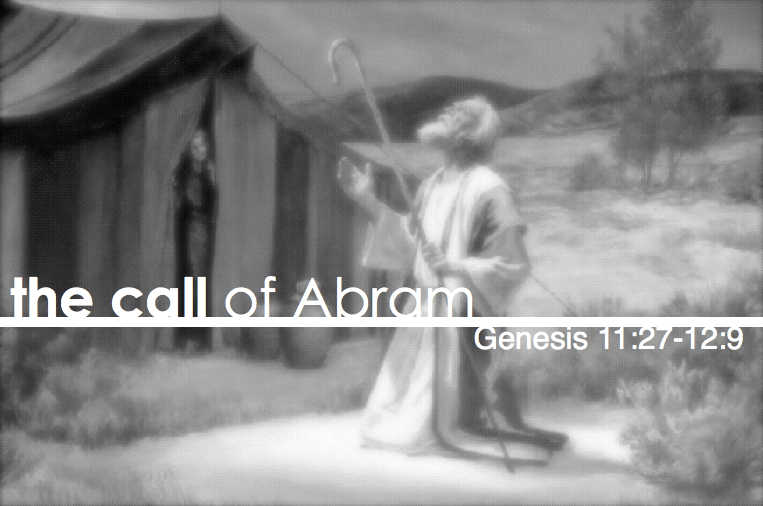
the call of Abram

A few years ago Sarah and I began to grow a garden. Gardens do not just grow over night by mere happenstance. You have to till the ground, plant seeds, water, and harvest. It takes work and a lot of initiative. In Genesis 12, God takes the imitative to nurture the seed of humanity; He readies the land and blesses the growth. He does it all through an ordinary man named Abram.

An Unexpected Call: God intersects with man [Genesis 12:1-3]

Can you image the day, Abram is out in the field tending to his herds and he hears a strange voice calling to him. Remember, God had not spoken verbally His covenant with Noah. It is God, again, who initiates a covenant relationship. Like Noah, Abram was a sinner living with sinners, but found favor [grace] in the eyes of God from among all the scatter people on the earth.

What was God calling Abram to do? First, Abram was called to leave the land that he was used to traveling around. Second, he was to leave his family and specifically his father’s house. Third, he was to go to a strange land that is not specifically named. God simply calls Abram to leave his homeland to journey to a new land that God would show him. Do you sense the radical measure of this call and the details left out? Put yourself in Abram’s sandals. How would you respond to such a radical call?

Why was Abram called to do something so radical? God promised to bless Abram’s faith and obedience beyond just him and his tribe. Abram was called by God to become the father of a new nation, become an example of living faith, and become one of the Bibles most mention patriarchs of Gods promise [i.e. over 300 times in the OT & NT].

Here in this short, three verse—text message sized—call, God rehearses some of the major themes of Genesis. First, God promises land [12:1b]. Second, God promises seed [12:2a; cf. 4:25-26; 6:5; 9:20ff; 11:4]. God says later his seed will be like the dust of the earth [13:16; 28:14]. In a real sense God promised Abram he would be a father and through his son a great nation blessed by God would be a blessing to all nations.[1] Third, God promises blessing [12:2b; cf. 22:17; 26:3; 28:3] of His presence, protection and covenant. Fourth, another theme arises that has not been mentioned until now, nation [12:3; 18:18; 22:18; 26:4; 28:14]. God promises to make Abram’s name great,[2] which ironically is the same thing the Babylonians failed to achieve for they pursued it apart from God.

Abram Answers the Call: a faith that grows on [Genesis 12:4-9]

You don’t see a long deliberation in between the call of God and the answer of Abram. You do not see him lying in his bed at night thinking about his conversation with God, or talking with his wife over dinner, or asking God some clarifying questions like, “Where did you say I was going?” The amazing fact is: Abraham believes God and goes [12:4]. No questions. No hesitations. He goes, in spite of leaving everything he knew behind and not knowing specifically how God was going to do all that He promised. It is as if he says to God, “Alright, God, I’ve got nothing else to lose.” At 75 ears old, a guy who at his age should be enjoying retirement and grandchildren takes his wife, their household, and his Nephew Lot to an unknown land.

This is the first step of faith in Abram’s life. It is a step that will affect not only him but also all of mankind. God will use Abram’s mustard seed sized faith. Have you ever been where Abram is in your life?  You decide to trust God, doing things His way, even in the face of the impossible. Abram starts off his journey with faith. No excuses, like “I forgot to lock the front door honey?” No turning back to feed the goats and camels, he takes them all with them.

As Abram goes, he comes to a land where people are living; a brick wall for a nomad. What does Abram do? Does he decide to go back home deciding this must be a dead end and not a part of God’s plan? No. Abram reacts by trusting God. He owns his faith and praises God on this blind journey of faith. His faith in the One True God is coming alive. For the first time Abram is offering praise to a God who speaks and is loyal to those trust in Him. He dedicates the land to God [cf. Leviticus 20:22-24; Psalm 72:8, 17-19]. By worshiping Abram is saying, “There is no other god, but You!”[3]

From this point forward, the lens of Genesis focuses in on the descendants of Abram as God’s covenant people raised up to be blessed nation and a be blessing to all other nations and people who follow. If you contrast Abram with Babylon, both the story, which preceded his call and the city that was the location he was called from [Genesis 11]. The Babylonians sought to be a great nation, blessed people, and great in name, but they pursued this apart from faith and apart from God. So, God called one of them, Abram, out from the land and into covenant with Himself and promised to give to Abram all that the Babylonians had strived for by His gracious provision. Therefore, God is demonstrating that our hope is not in the efforts of sinners who save and bless themselves, but only in entering into covenant relationship with God by faith.

What lessons about faith do we learn from Abram? How does his faith point us to Jesus?

First, your obedience to God is always connected to your faith in God. If you trust God you will obey God. The more you obey God the greater your faith will grow. Though Abram’s faith is incredible it is not complete. Only Jesus’ faith and obedience were complete.

Second, any time you obey God expect opposition through seeming dead ends, speed bumps, or foggy roads ahead. Faith helps you press on when the road ahead is hard or uncertain. The disciple’s obedience led to persecution [Matthew 5:3, 5, 10]. Jesus obedience led to a suffering cross.

Third, God calls ordinary people to carry out His extraordinary plans. Abram was a sinner, but God’s grace was upon him. The covenant promises carried out by Abram’s faith point to the New Covenant in Christ.

Finally, the seed of Abram that will bless all nations points to Jesus, the promised seed, who will redeem the sinfulness of mankind [Matthew 1:1; 24:14; Romans 4:13]. Those who obey and have faith in Him will live with him in the Promised Land in the Eternal Kingdom [Hebrews 11:10; Revelation 22:1-4].


[1] This promised seed is singular, which points to Jesus [cf. Genesis 3:15; Matthew 1:1, 1:17; Galatians 3:16].

[2] Abram was also told he would that his descendants would receive the Promised Land if he in faith go from the land God called him to. Reaching the Promised Land was not fulfilled in Genesis because Genesis ends with Joseph requesting his bones to be taken from Egypt to the Promised Land in the day that God’s people finally entered that place. Also, Exodus ends with the expectation that one day the Promised Land will be entered [Exodus 40:34-38], which is not realized until after the death of Moses [cf. Joshua 1-4].

[3] Abram responds by worshiping God in faith by building an altar other times in Genesis [12:7, 8, 13:18, 22:9].

leaving Ephesus (marks of a servant)

When you write a letter how do you usually end it? What is your customary salutation? I suppose it depends on the kind of letter you are writing. If you are writing a love letter you’ll probably end with something mushy like, “As the sunrises or sunsets you are forever my love.” If you are writing to a friend separated by a long distance you might express how much you miss them. If you are writing an apology you might conclude with one last, “I’m sorry.” How does the Apostle Paul conclude such magnificent epistle following exhortations about the work of Christ and walking in Him?

At the conclusion of Paul’s letter to the Ephesians, he mentions a man named Tychicus who is also referred to elsewhere in the New Testament.[1] Tychicus is not a name that would come to mind when people are asked to identify key people of the Bible. His name sounds like a guy who had a stuttering problem. His name is not a significant name of the Bible, but he has a significant purpose in the gospel. Sometimes I feel quite small spiritually next to the spiritual giants of the Scripture. I don’t feel like I quite measure up with Paul, John, Joseph, Moses, Abraham or David.

Likewise, you may feel as if they are “little” in relation to the “big” people of the Bible, “I just play video games, listen to my iPod, and eat Cheetos for breakfast.” However, Paul clearly states in Ephesians and throughout his letters that the work of the gospel is contingent upon a lot of people who are faithful to God and are equally “big”. For the sake of the gospel, you have something to offer. What do you have to offer? Being a servant of the gospel. How do you do that, you ask? Let’s look at Tychicus:

Key Marks of a Servant of the Gospel [Ephesians 6:21-22]

The first mark of a servant of the gospel is SELFLESSNESS [v.21] Tychicus is given the intimate title of a “beloved brother” He is as close as a brother to Paul because they have labored together for Christ, which has bonded them together like superglue. Selfless people care more for the concerns of other than their own.

The second mark of a servant of the gospel is STEADFASTNESS [v.21] Tychicus was a “faithful minister.” He did what he was told. Paul gave him a simple task, ‘take this note and walk it to Ephesus’. Don’t you think as he walked he was thinking, “I wish I could do bigger things for God? Do I have to be a lousy mailman my entire life? I suppose I only matter to the dogs.” All the while he is carrying the Word of God in his hands. You can still reading his mail to this day and be transformed by it through the power of God.

The third mark of a servant of the gospel is SERIOUSNESS [v.22]. The gospel is serious enough that it needs to be sent out. Paul’s sends out Tychicus with the scroll filled with encouragements for the followers of Christ in Ephesus. Tychicus ministry was walking. He could walk. He walked seriously. His name made the Bible as a professional walker. You might think that your ministry is small and insignificant, but God can use you as a mighty deliveryman of the gospel.

The fourth mark of a servant of the gospel is SENSITIVENESS [v.22]. You know Tychicus is an encouraging servant because he is commissioned to “comfort your hearts.” This Paul’s reason for sending him to Ephesus: he serves others with sensitivity. He is the kind of guy who sits with one sitting alone and talks to him in a way that shows he cares. He does not manipulate, unrelated, or castrate to get a convert. He genuinely cares and believes the gospel changes lives.

In Romans 16, there is a casting call of dozens of ordinary servants [men, women, young, old, rich, poor, married, single, etc.] who are doing big things for God: Phoebe helps people. If your car is broken down and need a ride, call Phoebe. Need a baby sitter? Call Phoebe. Priscilla & Aquila, a husband and wife team, are both great Bible teachers. They used their house as a center for gospel ministry. ­­­­Rufus’ mom is the kind of mom who gives out kisses and cookies. This reminds me of my adopted mothers who I have blessed by since being a pastor. I love these prayer warrior women. They are often forgotten servants. And the list of little-big servants of the gospel goes on and on.[2]

Someday, I will meet Tychicus. I look forward to shaking his hand and hugging his neck, and thanking his service for the gospel of Christ. If I approach him in this manner I should not come empty handed with shallow words, but readily share of my own opportunities of delivering the message of the gospel through my words and walk.

Key Words of a Walk in the Gospel [Ephesians 6:23-24]

Why should servanthood be my middle name? May these gospel-centered words of Paul in the closing statements be motivation for you to serve humbly and boldly: peace, love, faith and grace.

PEACE. If you are not a follower of God you do not know peace because you are an enemy of God and rebel against His cause. Unbelievers are lazy, lack listening ears, and lift their middle finger to God. They would rather be god than let God be God. You are not a good god. When you sin you are fighting and warring against God. This will cause your life to be chaos rather than peace. Only friends of God know peace.

God pursues peace in His people. Paul calls you to armor yourself with shoes with readiness to engage the wicked enemies in the world with the gospel of peace [6:15]. The gospel is the only means of real and permanent peace. The Middle East peace process, African tribalism, or your family’s conflict will never be resolved completely unless the gospel of peace rules your heart.

LOVE. God does not love you because you are good looking, talented, or loveable. You are not cute and loveable. Your sin is disgusting and gross. You are like a dirty chalice pouring out dirty water. No matter how much you polish and shine your chalice is still a cesspool of sickness and sin. The only way to change the chalice is to tap into the Living Water. He will overflow your cup with new life. You are really bad, but Jesus is really good!

He loves you because He made you. He even loves His enemies. He loves those who killed Him. If you were in the crowd you too would have cried out, “Crucify Him!” Yet Jesus responded lovingly, “Father, forgive them for they do not know what they are saying.” His love is unparalleled. He is the only being able to love the entire world. You cannot love anything but yourself and a few things immediately around you. He loves you passionately, sacrificially, unconditionally and actively. He demonstrates His love for you practically through His Son. He stood, suffered and died in your shoes.

FAITH. There is an inherent desire in every man to gain merit with God by good deeds, karma, or morality. 7 billion people walking this planet have faith in the 3 pound piece of meat in their melon: a scientist has faith in his theories, a philosophers has faith in his mind, a religious church-goer has faith in his systems. You feel guilty because you want God to smile upon you but don’t think you quite make the cut. Many around Jesus did not believe because they could not see, hear or touch Him. They trusted in their hands, eyes and ears, rather than trusting God. The problem is you are the problem. You need God. All you need is to trust God. He smiles upon His Son. True believers have faith not in their work, but in the finished work of Christ on the cross. That is the essence of the gospel.

GRACE. This is the most marvelous word. Paul saves the best word for last. You do not deserve God. In fact, you deserve the sewer soaking in the stink of your sin. Peace, love, and faith are all gifts of God’s grace. God is a giver. He is not passively sitting in a castle ruling from a distance, He got off His throne and pursues His people with peacemaking, love-sharing, and faith-building grace. By Grace, He has showered you with riches in His Son. Don’t reject the gift of God. The ultimate folly of man is to not receive the free gift God openly extends to you. Walk in the gospel of peace and love through faith by His grace.

35 Years Later [Revelation 2:1-7]

Paul wrote the letter to the church at Ephesus approximately 60 A.D. A generation later, approximately 95 A.D, the apostle John wrote Jesus’ words to this church. They were doing some things exceptionally well. They are enduring patiently under trials and hardships for the sake of the gospel. However, Christ had one contention with them. Do you see it? “They have abandoned the love they had at first.” What does He mean by this? They were not walking as servants of Christ like they were a generation before. In response, Christ charges them to turn back to Him and walk as conquistadors for the King until they reach Paradise.

How quickly it is to forget the gospel and walk in it daily. Let our leaving of Ephesus be a reminder to you and me to rehearse the gospel daily and commit to know, speak and live the gospel everyday. Leaving your mark on this planet for eternity is by a willingness to serve of the Most High King and be His messenger, keeper, and ambassador of the Gospel. The gospel transforms.


[1] Cf. Acts 20:4; Colossians 4:7; 2 Timothy 4:12; Titus 3:12

[2] Cf. 1 Corinthians 16:5-22, Philippians 3:19-30

what is your response to Jesus?

If you were to ask any person on the street, in the office cubicle next to you, or lunch buddy across the table if they know who Jesus is they would probably give you a satisfactory answer. However, if you were to probe around a little deeper and see if they really know Jesus, you might find out that there are many opinions on why Jesus came and how he deals with sin.

Pretenders, Posers, Rationalizers or Overcomer

There are many ways people respond to sin. Sin is deceptive. Sin lies to us, but it never quite follows through with what it promises to give. Therefore, the world is full of pretenders, posers and rationalizers who are still attached to their sin like an impenetrable umbilical cord feeding off its lies. How can I detect if I have been deceived by sin? Have you ever thought recently? “One sin is not going to hurt,” “I can hide my sin and know one will know,” “It is okay since everybody is doing it,” “It’s not my fault,” “It can’t be sin if it feels so right,” or “I’ll just sin, and ask God to forgive me later.”[1]

These are common lies that pretenders, posers and rationalizers sing as their rock-anthems, but they are lies from the pit of hell and they will keep them in hell. How do we stop believing these lives and begin living in truth? What is the right response to sin and the gospel of Jesus Christ? How do I finally get on the road to overcoming nagging addictions, sin/confess cycles, and secret-closet sinfulness?

The 2-Pronged Response: Repent & Believe

Jesus began His ministry by preaching, “The time is fulfilled, and the kingdom of God is at hand; repent and believe in the gospel.” [Mark 1:15] In other words, Jesus is saying, “I am the way. I am from God. I have fulfilled all the ancient prophecies. I am your promised Messiah who has come to forgive your sins. Trust me and turn from your sins.”

Throughout the OT, God and His prophets called people to believe in Him and repent of their sin. In the NT, the apostles called people to turn from their way and follow the way of the cross. Like Paul, “I have declared to both Jews and Greeks that they must turn to God in repentance and have faith in our Lord Jesus” [Acts 20:21] Repentance and Belief go together like green on grass. They are both distinctive of true followers of Christ.

You Gotta Have Faith, Faith, Faith

Faith is more than a cool 80’s song. Faith is not something you can simply muster up in your inner self through a mystical experience. You cannot buy it from the convenience store or put it on your North Pole wish list. Faith [and repentance] is a gift of God.

Faith is an active dependence upon the promises of God [Romans 4:18-5:1; Hebrews 11:1ff]. Faith is a belief in what you know to be true. People do not normal give themselves to something that they think is untrue. I believe the gospel is true and Jesus is the only Savior for man; therefore, I am all-in and no-holds-bard to following His way. I believe that if Jesus does not save me, I will die. I believe that I have no other hope but in Him. Salvation begins by believing Jesus is who He says He is and did what He said He did, “For what does the Bible say? Abraham believed God, and it was counted to him as righteousness.” [Romans 4:3ff]

U-Turn or Burn

Repentance is a turning—from sin to the way of the Savior [Acts 11:18]. Repentance is not, “I will try harder or do better.” Repentance is not feeling really sorry or shedding a few tears over your sin; however, grief and guilt can lead to repentance [2 Corinthians 7:8-13]. Peter preached in his first sermon, “Repent and turn to God so your sins may be wiped out.” [Acts 3:19; cf. 26:20]. Repentance is changing your mind from living your way back to living God’s way. Repentance is a spiritual U-Turn.

What happens if I do not repent? “… Unless you repent you will perish.” [Luke 13:3] Jesus is saying, “Unless you turn from your sin you will go to hell.” [Romans 6:23] The alternative to not turning from sin to God is hell fire and brimstone. The Bible says we are like branches and Jesus is the Vine, “Every branch in Me [Jesus] that does not bear fruit He [the Father] takes away” [John 15:2] and, “If anyone does not abide in Me, he is cast out as a branch and is withered; and they gather them and throw them into the fire, and they are burned.” [John 15:6]

God is serious as a heart attack about sin. Sin is like the fat that clogs up your arteries, and repentance is the surgery that lets the blood flow again. This is how serious God is about sin, “And if your right hand causes you to sin, cut it off and cast it from you; for it is more profitable for you that one of your members perish, than for your whole body to be cast into hell.” [Matthew 5.30] Sin is very serious and must be amputated radically before it kills you [James 1:12-15].

In summary, Repentance and faith go together like white on rice. You cannot have one without the other, or at least for the truly authentic follower of Christ. If you are really sorry about your sin you will do whatever it takes to make it right. The biblical way to make it right is by believing Jesus is the only forgiver and repentance is the means to forgiveness. The Bible is clear that Jesus came not only to save you, but also to change me from the inside you. Repentance is not as an excuse to live as you want, but as you were designed.

Quick Q&A on Repentance:

What should I repent of? [Colossians 3:5-9; Ephesians 4:17-31; Romans 1:28-32] One must repent of sin: pride [position, prestige, power], overindulging pleasures [immoral sex, substance abuse, stuff], and ungodly priorities [others, God, yourself].

How do I know if I have truly repented? According to 2 Corinthians 7, I grieve over sin [9], I am disgusted by sin [11], I am reconciled toward other people [11], I am having revival toward God [11], and I am looking forward not backward [8-9]. Also, I will perform the works in keeping with repentance [Acts 26:20; Luke 6:44; 3:8]. These fruits do not cause our salvation, but can give confirmation to it.

Why isn’t repentance easy? There are many reasons: It is humbling to submit to another authority. We love our sin too much. We do not have faith that God fulfills His promises. We do not like to experience grief [2 Corinthians 7:8-13].

What if I have already repented and I still struggle with sin? Repentance does not necessarily mean an immediate stop to sinning. It means I am taking sides with God not my sin. You chose to do war against sin rather than letting it rule you [1 Corinthians 10:13]. Temptations are still a part of this life, but in Christ we can have power to overcome.

What is your response to Jesus? Repent and Believe or remain dead in your sin [Mark 1:15].


[1] Adapted from the booklet How to Get Right With God. James MacDonald, Walk in the Word. Arlington Heights, IL. 2000, 4.