Practical Mini-Theologies for Pioneers Before Going to the Mission Field

Before going to the field, I had 8 years of Bible College and Seminary training. I also served as an assistant pastor in a church that would become our sending church. With all this experience and knowledge, there were still somethings that I wish I had knew or learned more deeply before going to the mission field.

We come to the mission field with our thoughts and beliefs. Often times, as events happen on the field, we are wrestling with those thoughts and beliefs in real time.

This book explores some of the key theologies that make more sense to cultivate before living on the mission field. It’s not that you have to have it all figured out and be one-hundred percent certain before going to the field, but that you’re on the path and have put some thought into it.

The book came together as a conversation with other laborers on the field. We discussed what we wished we had given more thought to before arriving. The actual development of the book was more of a devotional exercise.

Each chapter has four or five main focuses:

Biblical Reflection. Scan the Bible from cover to cover on a particular topic. This is not meant to be an exhaustive study, but it will be sufficient to get one digging.

Importance. Explore ”Why” this topic needs the focus or attention for a pioneer missionary on the field.

Prayer Action. Take the topic to the Lord in prayer. Every thread of Scripture is meant to draw us to the Lord and make us more like Him.

Building a Practical Mini-Theology. Take what you have learned and personalize it for the kind of pioneer you want to be on the field. This is important work for practical theologians and ambassadors of God’s kingdom.

Ways… it looks on the field. See some of the common ways this topic of theology is exercised on the field.

At the end of each study there will be a short list of resources to dig even deeper into the topic of theology.

My hope is that this book will first spark intentional and deeper thinking about some core beliefs and theology before going to the mission field. These topics have been worker vetted and tested.

Second, I hope it stirs fruitful conversations between co-laborers, mentors, and team members. Theology cultivated in isolation will miss helpful pollination that happens when done with others.

Third, I hope the outcome of these studies will anchor mission laborers to the powerful Word of God and a joyful connection with their Father. Especially, in the crucible that is the mission field.

Coming back to these topics from time to time even while on the field has been so rich for my soul. It has also cultivated hearty conversations with other laborers and local believers in the field.

DOWNLOAD HERE…

What it’s not.

We live in a day of minis—mini-pizzas, mini-skirts, mini-golf, mini-fridges, mini-buses. We want what is bite-sized, itsy-bitsy, and cutesy. Humans have an innate attraction to tiny things.

“Mini” theologies are not making small the things of God. There is nothing mini about theology or the study of God. There is nothing small about the mission task. Our task, which is often referred to as the Great Commission, is a global task that can’t be tackled in human strength.

What it is.

A mini-theology takes a smaller thread or theme of Scripture and seeks to make sense of it. It is theology made practical, memorable, and livable. This isn’t meant to be exhaustive systematic theology, but a guide to dig deeper into topics of biblical theology that are practical for laborers who are heading to or already living on the mission field.

The various mini-theologies are topics that many laborers wish they had learned and chewed on more before going to the field. No one will be 100% ready, however a lack of attention to these areas of theology have caused pain and pushed many off of the field prematurely.

When is the best timing?

The order of studies is just a suggestion. They can be done in any order or stand-alone. The first half is suggested to be completed before going to the field. The second half is suggested to be completed within the laborer’s first term on the field.

Some might even find value in revisiting these theological topics periodically throughout their life on the field. Your views may morph with time, experience, and maturity. While your theological framework will likely remain the same some practical aspects of that theology will shift and get shaped by life on the field. That’s why it’s important to work through these mini-theologies more than once.

With someone else.

These mini-theological studies are not meant to be done in isolation but with someone other than just yourself. We learn best within a community. Remember, these are practical mini-theologies. To get practical, one must practice among a community or team.

It is suggested that before being on the field you walk through the first half of the guide with a pastor, team leader, mentor, or pre-field coach. It is then suggested that after arriving on the field with a co-laborer, team leader, or mission mentor.

What to expect.

Expect to be connected with God. Theology is ultimately the study of God. Expect to get to know God better. Expect to be intimacy with him. As you prepare to go to the nation; go with God and a greater understanding how to go and stay well.

Each study will be simple, short, and hopefully memorable. Each study will include a short story from the field, biblical reflection, the Why, prayer action, interactive questions to build a mini-theology, and recommended resources for digging deeper. Now get going!Who is a Pioneer Missionary?

How did you hear the gospel? Likely someone brought the gospel to you, where you lived. Since the first century, the church has sent out missionaries to various places on the globe. These were ordinary humans who obeyed the command to “go” to the ends of the earth and preach the gospel. Many of those missionaries were pioneers.

While the hope of the gospel has been spreading for thousands of years, billions of people have not yet had an opportunity to hear it. These are the unreached, members of ethnic groups without a self-sustaining witness to the gospel in their own culture.

Who is a pioneer missionary? Pioneer missionaries are those who go to regions of the world where no other previous Christians had gone before. They use innovative and creative means to bring the gospel to the world’s unreached people groups. Pioneers go to some of the hardest and darkest places on earth to bring the good news of Jesus Christ to those who had never heard.

The apostle Paul was a pioneer missionary. He said, “I make it my ambition to preach the gospel, not where Christ has already been named, lest I build on someone else’s foundation” (Romans 15:20).

Many other pioneer missionaries have inspired us through the centuries (e.g. Brainerd, Carey, Judson, Paton, Taylor, Slessor, Elliot, Bruchko, Andrew). These people were by no means perfect, fully prepared, or fully equipped for the life they would live. Their faith was tested and tried countless times through endurance and suffering, and many were on the verge of giving up. Yet because of their obedience to God, their stories continue to motivate us to go today.

READ HERE…

1. Awe. Why fan into flame a passion for God

2. Dwell. Where God is and where you want to be

3. Call. Who above where and what

4. Sabbath. When we are limited and God is not

5. Feast. When we hunger and thirst

6. Dependence. Who makes things happen

7. Battle. When the unseen realm is fierce

8. Excellence. When it’s all for God’s glory

9. Self. Who am I, and why should I care

10. Others. Why we are better together

11. Gospel. What is our central message

12. Success. What God asks of us and makes of us

Awe

WHY FAN INTO FLAME A PASSION FOR GOD

When I walked into the sultan’s courtyard it was my first time visiting someone who would be considered a king. We were welcomed by his assistant who led us to a waiting area where we’d get to meet his excellence. Before we stepped up towards the veranda of the sultan’s palace, we removed our shoes. As we entered the room where the sultan sat, we bowed our heads and continually faced his direction. Even though we were in rural and dusty Chad, Africa there was a regality and reverence to the occasion that I will never forget.

It is way too easy to forget that I am consistently in the presence of royalty. God is King. The King’s Spirit resides in His people. My body is more than a sultan’s palace, it is a holy temple. Wherever I go, He goes too. When I think about what drew me to the nations, it was a sense of wanting to spread the fame of God’s name to places and people where He was not yet named or worshiped.

Human’s are hardwired for awe. We can awe people, money, power, and stuff. You can have it all and miss awe. We can become awe forgetful, awe discouraged, awe empty, awe seduced, awe kidnapped, awe numb, and awe weary. 

God is truly the most awesome. To awe is to have a passion for God. A passion for God is not merely a fleeting emotion; it’s a deep-seated, all-consuming devotion that permeates every aspect of a believer’s life. It’s an active, vibrant love for God that expresses itself in various ways. It is a Soli Deo lifestyle that seeks to live unto God alone.

In essence, a passion for God is the heartbeat of a living faith. It’s a spiritual fire that needs tending and spreading, and the benefits of doing so are immeasurable, for your own good, for the good of others, and most importantly, for the glory of God.

Fanning a passion for God into flame is not about striving to earn His love or perform for Him. It’s about experiencing the fullness of life He offers and being an instrument in His hands who passes that awe down to the generation that follows.

BIBLICAL REFLECTION OF AWE

Pioneer mission work is inherently challenging, often characterized by isolation, resistance, and a constant need for resilience. In such demanding contexts, a deep-seated awe of God is not merely a pleasant sentiment but a foundational necessity. It provides perspective, fuels endurance, and empowers effective ministry. This brief theology explores the biblical concept of awe and its practical implications for those pioneering God’s kingdom.

Awe defined: Biblical awe (aka: “fear of the Lord”) isn’t a cowering dread, but a profound reverence, wonder, and respect for God’s infinite majesty, power, holiness, and love. It’s a recognition of God’s utter transcendence and immanence, His absolute otherness, and His intimate presence. This awe transforms the way we understand of ourselves, the world, and the mission. (Psalm 33:8; 66:5; 89:7; Hebrews 12:28)

God’s Transcendence: Awe grasps the vastness of God’s being, His uncreated nature, His eternality, and His sovereign control over all things. This understanding humbles us, reminding us that our plans and efforts are ultimately dependent on Him. For the pioneer, this means trusting God’s overarching plan even when immediate results are unseen or obstacles seem insurmountable. (Psalm 33:8-9; Isaiah 40:12-17; Job 37:22-24; Revelation 15:3-4)

God’s Immanence: While transcendent, God is also intimately involved in His creation and the lives of His people. Awe acknowledges His presence, His unwavering faithfulness, and His active working in and through us. This encourages the pioneer, assuring them that they are never truly alone and that God is at work even in the most barren of lands. (Isaiah 57:15; Acts 17:27-28; Matthew 1:23)

God’s Holiness and Righteousness: Awe recognizes God’s absolute purity and perfection. This prompts repentance, confession, and a desire to live lives that honor Him. For the pioneer, this means a commitment to personal integrity and ethical conduct, understanding that their lives are a testimony. (Leviticus 10:3; 1 Samuel 2:2; Psalm 99:3-5)

God’s Love and Mercy: Perhaps the most profound aspect of biblical awe is the wonder at God’s boundless love and mercy, especially as revealed in the cross of Christ. This love, extended to undeserving humanity, evokes deep gratitude and motivates compassionate service. For the pioneer, this fuels a self-giving love for the unreached, mirroring God’s own heart. (Psalm 103:8-14; John 3:16; Romans 5:8)

Cultivating a deep, abiding awe of God is not an optional extra. It aligns our hearts with God’s, empowers us to overcome adversity, and transforms us into vibrant witnesses of His awesome reality to the unreached peoples of the nations.

What other Scriptures or biblical aspects come to mind when you consider an awe for God? Take a few moments to look up 1-2 of these verses and journal what the Lord highlights for you.

“Awe means that you will look at everything in your life through the lens of God’s Existence and Glory, and you will surrender all your life to His purpose.” — Paul Tripp, Awe

THE IMPORTANCE OF AWE

Nothing but awe of God will sustain someone on the field. If it is not awe of God, then the heart will gravitate towards substitute awes. When awe of self or something else supplants awe of God, God ceases to be King and He is reduced to being your servant. When the mission doesn’t produce vertical awe of God, something is amiss. When an awe of God fuels the pioneer in the mission field several outcomes emerge:

Humility and Dependence: Awe reminds me of my smallness and God’s greatness, fostering a spirit of complete dependence on Him for wisdom, strength, and guidance. This counters self-reliance and burnout.

Courage and Boldness: When God is seen in His awesomeness, fear of humans diminishes. The pioneer, filled with awe for God, can face persecution, opposition, and daunting challenges with supernatural courage. They will even pray for boldness (Acts 4:23-31).

Resilience and Endurance: Awe provides a deep well of motivation that sustains through hardship and discouragement. Knowing the awesome God is with them, pioneers can persevere even when the fruit is slow in coming.

Worship and Joy: Awe naturally leads to worship, even in difficult circumstances. This worship fuels joy, which is a source of strength and a vital witness to others (Matthew 9:8).

Effective Witness: A life lived in awe of God is a contagious and compelling testimony. One’s awe and connections with God can be more effective than words alone.

Spiritual Discernment: Awe cultivates a sensitivity to God’s presence and leading, enabling pioneers to discern His will and walk in obedience amid complex cultural and spiritual landscapes.

PRAYER ACTION

Consider the Scriptures you cling to above. Consider your awe of God. Write a prayer for the kind of person you want to be who fans into flame a passion of God in yourself and others.

BUILDING A PRACTICAL MINI-THEOLOGY OF AWE

Take some time to prayerfully draft your practical mini-theology of “awe” by responding to these questions:

What is awe and/or a passion for God? Why is this needed to go to hard places?

example: God is… We are the kind of people who… It is most like us/me to… We/I will… We/I hold to…

What does it look like to live a Soli Deo lifestyle? How does this kind of lifestyle relate to surrender?

Why not just fan your flame for God, but start mini fires wherever you go? What does it look like to fan into flame a passion for God?

Once you finish share your responses with your mentor. Ask for feedback. Adjust your draft as needed.

Additional Resources for Going Deeper:
Awe, Paul David Tripp
The Pursuit of God, A.W. Tozer
The Heart of Pioneers, Steve Richardson

Biblical Theology of Standing Firm

We are in a war and it is real. The enemy is relentless. The battle does not get easier with time and it can be exhausting. Yet in the Bible we learn that the battle is not uncertain, the turf is not individual, the enemy’s schemes are not unknown, nor is our strategy a mystery.

It is natural when under attack to fight or flee, yet what we discover is that we cannot hide from the attack and we are often too weak to fight on our own. There is another option—a better option. God’s primary battle strategy for trials, suffering, doubt, discouragement, and spiritual warfare is to “stand firm.” There are more than a dozen situations in Scripture where God or his messengers told those in difficult circumstances to stand firm. Within each of these real life stories we learn about the multifaceted battle and God’s strategy of standing firm.

Moses and the Red Sea

After the tenth and final plague, Pharaoh had lost his firstborn son. Egypt was swimming in a sea of sorrow. Moses didn’t have to beg Pharaoh to leave; Pharaoh asked Moses and the Israelites to leave in a hurry (Exodus 12:29-33).

When the Israelites arrived at the shore of the Red Sea they were stuck. Pharaoh knew this and he had a change of heart. He recruited a revenge army and chased after the Israelites.

In their rearview mirror, the Israelites saw the dust clouds from chariots and the glistening swords from Pharaoh’s army barreling towards them. They feared greatly and they cried out to the Lord. Moses responded,

“Fear not, stand firm and see the salvation of the Lord, which he will work for you today. For the Egyptians whom you see today, you shall never see again. The Lord will fight for you, and you have only to be silent.” (Exodus 14:13)

It sounds like odd advice. The Israelites had no weapons. They were slaves. They had no place to run. They were pinned between the army and the sea. However, God had a plan. God asked Moses to put his staff into the sea, the sea split and the Israelites passed through on dry ground. When Pharaoh and his chariots tried to pass, the sea closed and drown them. That day the Egyptians saw who was the Lord and the Israelites learned to trust the Lord. The Lord won the day.

Jehoshaphat’s Prayer and Interruption

In a similar situation to Moses and Pharaoh’s army, king Jehoshaphat was being hotly pursued by a vicious horde. He was afraid. He knew his army was powerless. So he sought the Lord and proclaimed a fast throughout all Judah to seek help from the Lord.

Jehoshaphat stood before the men, women and children, not knowing what to do other than call upon the Lord. He said,

“O Lord, God of our fathers, are you not God in heaven? You rule over all the kingdoms of the nations. In your hand are power and might, so that none is able to withstand you.” (2 Chronicles 20:6)

The king knew who God was. He heard stories told by his father’s how God fought for his people. He recalled from Abraham to the present day how God had driven out their enemies and they built altars to praise God. With a fierce army at their doorstep, he said no matter what they would stand before the house of God and before God (v.9).

As Jehoshaphat was speaking, the Spirit of the Lord came upon a man in the assembly named Jahaziel. He interrupted the king by saying,

“Listen everyone, including you King Jehoshaphat, Thus says the Lord, “Do not be afraid and do not be dismayed at this great horde, for the battle is not yours but God’s…You will not need to fight in this battle. Stand firm, hold your position, and see the salvation of the Lord on your behalf.” (vs. 15-17)

After Jehoshaphat heard this he bowed to worship God knowing only God could save them. The next day the king went out before the people and charged them to believe that they heard. They sang a song to the Lord before the army, “Give thanks to the Lord for his steadfast love endures forever.” (v.21) At that exact time God set an ambush upon the enemy armies. Again, God won the battle that day.

Job’s Friend Gives Good Bad Advice

Job lost everything: his family, his home, his herds, and his health. Job’s friends came to him to offer their advice and were quick to point to his sin as the result for his calamity. In other words, you must have done something bad to have all this bad happen to you. They didn’t have great theology nor did they know God was allowing Satan to sift Job. Even though Job’s friends didn’t understand and missed the diagnosis they did give some good advice,

“Yet if you devote your heart to [God]
and stretch out your hands to him,
if you put away the sin that is in your hand
and allow no evil to dwell in your tent,
then, free of fault, you will lift up your face;
you will stand firm and without fear.
You will surely forget your trouble,
recalling it only as waters gone by.” (Job 11:13-16)

In the right place with the right proof, it would have been good advice. Job may have lost everything, but truly he had everything. He stood firm in what he knew about God,

“Then Job answered the Lord and said:
“I know that You can do all things,
and that no purpose of Yours can be thwarted.
Who is this that hides counsel without knowledge?’
Therefore I have uttered what I did not understand,
things too wonderful for me, which I did not know.”” (Job 42:1-3)

Indeed, God was with Job, even in the middle of such great loss and evil. His story is written for our example, “Behold, we consider those blessed who remained steadfast. You have heard of the steadfastness of Job, and you have seen the purpose of the Lord, how the Lord is compassionate and merciful.” (James 5:11)

Ethan the Ezrahite’s Song

In Psalm 89, there is a beautiful song about the steadfast love of God. The song was written by a wiseman named Ethan who lived sometime after King David. There isn’t a lot we know about Ethan, but his song captures God’s forever faithfulness from creation through to the generations of David. A time when God crushed many enemies for his people. Speaking for God and his promises to his people, Ethan writes,

“My steadfast love I will keep for him forever,
and my covenant will stand firm for him.” (v.28)

Here God is the One who stands firm (cf. Psalm 33:11; 93:5). He is a covenant keeping God who always keeps his end of the deal. He is unchanging, immoveable, and steadfast. He is compared to as a Rock, a fortress, and a strong tower.

David also wrote a song similar to Ethan,

“I waited patiently for the Lord;
he turned to me and heard my cry.
He lifted me out of the slimy pit,
out of the mud and mire;
he set my feet on a rock
and gave me a firm place to stand.
He put a new song in my mouth,
a hymn of praise to our God.
Many will see and fear the Lord
and put their trust in him.” (Psalm 40:1-3)

David who was in many sticky situations surround by armies and headhunters knew the steadfastness and faithfulness of God. He saw firsthand how God fought for him and kept his promises. Like David, Ethan believed God was a covenant keeping God even in catastrophic circumstance. He trusted that a Promised One would rule and reign from David’s lineage.

Solomon’s Wisdom

Solomon picked up where his father David left off. When God offered Solomon anything he wanted (cf. 1 Kings 3) all he wanted was wisdom. This pleased God and God made Solomon the wisest man ever to live. In his book of wisdom, Solomon says, “When the storm has swept by, the wicked are gone, but the righteous stand firm forever.” (Proverbs 10:25)

In other words, tempests of trials will come. The wind will gust, the rain will pour, the lightning will crack, and the floods will rage. The wicked will be swept away because they have unsure and untested footing, but those who are firm in God will endure forever.

Notice the proverb doesn’t shirk from the reality that life has storms or the consequences of not standing firm God. This small proverb offers hope and assurance as an anchor for the soul during the storms life brings.

Isaiah and the Sign of Immanuel

In the reign of king Ahaz, when he was marching to fight against Jerusalem to no avail, the Sovereign Lord gave a promise, “If you do not stand firm in your faith, you will not stand at all.” (Isaiah 7:9) So the Lord gave a sign to Ahaz whether he asked for it of not.

By his messenger, Isaiah, God spoke and he said, “Therefore the Lord himself will give you a sign: The virgin will conceive and give birth to a son, and will call him Immanuel.” (v.14) What might have sounded like brief word then, was chalked full of meaning. Isaiah foretold a time when a Messianic hope would come and make all that’s wrong in the world right.

For king Ahaz and Israel the call was to stand firm in the faith that God who would deliver his people. Whether that was to happen immediate or not in their lifetime was unsure, but what was sure was God’s promise.

Isaiah and the Idols of Babylon

What Isaiah saw was horrific. He saw Israel ransacked and taken into captivity. Although he prophesied and warned Israel to turn back to the Lord, they ignored him and sadly what said came to pass. The people of Israel were shackled as slaves and ushered to Babylon. God was using a wicked nation to punish the apple of his eye. Yet in the midst of the chaos and confusion, God bring a clarifying promise,

“Remember this and stand firm,
recall it to mind, you transgressors,
remember the former things of old;
for I am God, and there is no other;
I am God, and there is none like Me,
declaring the end from the beginning
and from ancient times things not yet done,
saying, My counsel shall stand,
and I will accomplish all My purpose” (Isaiah 46:8-10)

God promised to accomplish his purpose, which was to purify his people. A remnant would remain that would not bow to foreign gods, but would trust in the Most High God as in the days of old. As the people were walking from the rubble and destruction of Jerusalem to an unknown land Isaiah was calling the people to remember God, his unchanging character, his wise counsel, and stand firm because,

“I bring near my righteousness; it is not far off,
and my salvation will not delay;
I will put salvation in Zion,
for Israel my glory.” (v.13)

Ezekiel’s Warning

Ezekiel the prophet had just as difficult a job trying to convince the people of Israel to listen to God. He was alone standing against the flow of humanity. The other prophets of God had scattered and become scavengers in the land. They, like the people, turned from trusting in the Spirit of God. Worse yet, they led the people astray and into captivity. The Lord didn’t have good words for them,

“This is what the Sovereign Lord says: Woe to the foolish prophets who follow their own spirit and have seen nothing! Your prophets, Israel, are like jackals among ruins. You have not gone up to the breaches in the wall to repair it for the people of Israel so that it will stand firm in the battle on the day of the Lord.” (Ezekiel 13:3-5)

When the prophets should have unified to help the people fortify their faith and prepared the people to stand firm they acting as the enemy. In reality, they were playing into the hand of the enemy. It was a hard lesson for the people of God. In the end, God would win the day, “I will save my people from your hands. And then you will know that I am the Lord.” (v.23)

Jesus Prepares His Disciples for Persecution

Jesus ministry on earth was short. He came as the Messiah, but not to fulfill that role completely. He came to prepare his followers by saying the last days will be difficult. Nations will be at each others throats. Wars will be commonplace. Creation will be in upheaval. Persecution will be escalated. Families will be torn apart. Believers and followers of Jesus will be hated as they hated Jesus. It will not be a pretty picture.

Yet in the midst of the doom and gloom Jesus promises that not one hair will be missing from the heads of his followers. He says, “Stand firm, and you will win life.” (Luke 21:19; cf. Matthew 10:17-22; 24; Mark 13) And continues, “Be always on the watch, and pray that you may be able to escape all that is about to happen, and that you may be able to stand before the Son of Man.” (v.36)

Paul Encourages the Young Churches

Paul knew that following Jesus was difficult. He experienced firsthand the physical, emotional, and spiritual battle from the front lines. He also knew the joy of walking with Jesus in the most wretched of circumstances.

Paul was pastoral and cared deeply for the young church. Paul would encourage these first generation Christians was by writing letters as he traveled. The letters were sent throughout the Roman Empire from modern-day Turkey to Greece to Rome. The beauty is that we still have these letters today and can be encouraged by them generations later.

Writing as one who had been-there-and-done-that, Paul frequently encouraged the church to stand firm. As Pastor Paul shepherds struggling souls of the young church allow him to shepherd your soul.

On the resurrection:

“The sting of death is sin, and the power of sin is the law. But thanks be to God! He gives us the victory through our Lord Jesus Christ. Therefore, my dear brothers and sisters, stand firm. Let nothing move you. Always give yourselves fully to the work of the Lord, because you know that your labor in the Lord is not in vain.” (1 Corinthians 15:56-58)

On rapid-fire commands and last words:

“Be watchful, stand firm in the faith, act like men, be strong. Let all that you do be done in love.” (1 Corinthians 16:13)

On a change of plans:

“Now it is God who makes both us and you stand firm in Christ. He anointed us, set his seal of ownership on us, and put his Spirit in our hearts as a deposit, guaranteeing what is to come… Not that we lord it over your faith, but we work with you for your joy, because it is by faith you stand firm.” (2 Corinthians 1:21-24)

On the freedom we have in Christ:

“For freedom Christ has set us free; stand firm therefore, and do not submit again to a yoke of slavery.” (Galatians 5:1)

On the armor of God:

“Finally, be strong in the Lord and in the strength of his might. Put on the whole armor of God, that you may be able to stand against the schemes of the devil. For we do not wrestle against flesh and blood, but against the rulers, against the authorities, against the cosmic powers over this present darkness, against the spiritual forces of evil in the heavenly places. Therefore take up the whole armor of God, that you may be able to withstand in the evil day, and having done all, to stand firm. Stand therefore, having fastened on the belt of truth, and having put on the breastplate of righteousness, and, as shoes for your feet, having put on the readiness given by the gospel of peace. In all circumstances take up the shield of faith, with which you can extinguish all the flaming darts of the evil one; and take the helmet of salvation, and the sword of the Spirit, which is the word of God, praying at all times in the Spirit, with all prayer and supplication. To that end, keep alert with all perseverance, making supplication for all the saints,” (Ephesians 6:10-18)

On a life worthy of the gospel:

“Whatever happens, conduct yourselves in a manner worthy of the gospel of Christ. Then, whether I come and see you or only hear about you in my absence, I will know that you stand firm in the one Spirit, striving together as one for the faith of the gospel without being frightened in any way by those who oppose you. This is a sign to them that they will be destroyed, but that you will be saved—and that by God. For it has been granted to you on behalf of Christ not only to believe in him, but also to suffer for him,” (Philippians 1:27-29)

On straining towards the goal:

“But our citizenship is in heaven, and from it we await a Savior, the Lord Jesus Christ, who will transform our lowly body to be like his glorious body, by the power that enables him even to subject all things to himself. Therefore, my brothers, whom I love and long for, my joy and crown, stand firm thus in the Lord, my beloved.” (Philippians 3:20-4:1)

On one’s identity in Christ:

“Once you were alienated from God and were enemies in your minds because of your evil behavior. But now he has reconciled you by Christ’s physical body through death to present you holy in his sight, without blemish and free from accusation — if you continue in your faith, established and firm, and do not move from the hope held out in the gospel.” (Colossians 1:21-23)

On encouraging gospel partners:

“Epaphras, who is one of you and a servant of Christ Jesus, sends greetings. He is always wrestling in prayer for you, that you may stand firm in all the will of God, mature and fully assured.” (Colossians 4:12)

On the responsibility of the community of faith:

“But we ought always to thank God for you, brothers and sisters loved by the Lord, because God chose you as firstfruits to be saved through the sanctifying work of the Spirit and through belief in the truth. He called you to this through our gospel, that you might share in the glory of our Lord Jesus Christ. So then, brothers and sisters, stand firm and hold fast to the teachings we passed on to you, whether by word of mouth or by letter. May our Lord Jesus Christ himself and God our Father, who loved us and by his grace gave us eternal encouragement and good hope, encourage your hearts and strengthen you in every good deed and word.” (2 Thessalonians 2:13-17)

After reading through these snit bits from Paul’s letters, we find our faith being bolstered too. If Paul encourages the early church this way, how much more should we be encouraging one another to stand firm?

Peter Encourages the Persecuted Church

Peter’s early life was a rollercoaster. He was impulsive, his mouth and temper often got him into messes and he blew it bad. As difficult as it is to read Peter’s life we can easily relate.

It is beautiful to watch Peter’s relationship with Jesus. Through it all, Jesus never give up on Peter. He loved Peter. He worked with Peter where he was at.

Later in the book of Acts, we see a new Peter. A Peter who has repented, redeemed from past shame and is restored with God. Peter grows bold in his faith, shares it unashamedly, and becomes a conduit of grace. Peter went on to write two letters still in the Bible. It is clear from his words he became a counselor and pastor who deeply loved people (aka: sheep). From a pastoral heart he writes,

“Humble yourselves, therefore, under the mighty hand of God so that at the proper time he may exalt you, casting all your anxieties on him, because he cares for you. Be sober-minded; be watchful. Your adversary the devil prowls around like a roaring lion, seeking someone to devour. Resist him, firm in your faith, knowing that the same kinds of suffering are being experienced by your brotherhood throughout the world. And after you have suffered a little while, the God of all grace, who has called you to his eternal glory in Christ, will himself restore, confirm, strengthen, and establish you. To him be the dominion forever and ever. Amen.” (1 Pt. 5:6-11)

The audience to whom Peter wrote were experiencing persecution from outside the church, inside the church and within their very souls. Peter doesn’t encourage the hard-pressed to fight or flee, but to simply crawl under the mighty hand of God who promises to crush their foe at the proper time. God is the safest haven in times of suffering.

James Eyes the Lord’s Coming

James was the younger half-brother of Jesus. According to James, growing up next to Jesus was a little over-the-top, but as he grew older he realized that Jesus was who he claimed to be. His brother, Jesus, became his Savior too. Just read how he writes about him,

“Be patient, then, brothers and sisters, until the Lord’s coming. See how the farmer waits for the land to yield its valuable crop, patiently waiting for the autumn and spring rains. You too, be patient and stand firm, because the Lord’s coming is near. Don’t grumble against one another, brothers and sisters, or you will be judged. The Judge is standing at the door! Brothers and sisters, as an example of patience in the face of suffering, take the prophets who spoke in the name of the Lord. As you know, we count as blessed those who have persevered. You have heard of Job’s perseverance and have seen what the Lord finally brought about. The Lord is full of compassion and mercy.” (James 5:7-11)

James’ tells his brothers and sisters in the faith to stand firm. If Jesus said he will return surely he will keep is word. Jesus has kept all his words and promises and hasn’t gone back on any of them. Just as he waited for the right time to reveal God’s plan, he endured the cross despising the shame and the result was the salvation of our souls. Perseverance through pain, trials and suffering promises great results.

It is waiting that is often the hardest, especially if in the waiting one faces hardships. One can question, “When will it end? When are you coming?” Or like the Psalmist, “How long, oh Lord?”

Application: How to Stand Firm

Surely you can find yourself somewhere in the stories above where God’s people are encouraged to stand firm in difficult situations. The scenarios and the enemy is universal. These stories are a goldmine for the soul. They are bricks for fortifying the faith. Yet applying the charge to stand firm can be easier said than done. How do you stand firm?

Standing firm is active.

Standing firm is an act of readiness. Think of a soldier who has a shield and sword in hand, even when asleep his weapons are at his side. When awake his feet are firmly planted in the soil. The weapons of warfare in Ephesians 6, all but one (the sword), are weapons of readiness. The weapons ultimately focus on Christ and what you have in him, not what you have within yourself.

Standing firm is an act of endurance. Standing firm is not the same thing as standing still. To stand firm means you embrace faith while you wait out the storm of trials and suffering or while you await the coming of the Lord. In your relationship with God, he is the strongman. He does the fighting for you. He gives and grows the faith. When you stand firm you get a front row seat to see how God acts on your behalf.

Standing firm is directly attached to belief in the character and promises of God.

Standing firm is founded on what you know about God and his Word. God’s character is sure. His promises are kept. The two are not to be separated. For example, if we believe in the promise that God will deliver we must also believe that God is good, merciful, and loving while we wait to be delivered.

Standing firm is the opposite of fearing. When we are not standing firm we are freaking out. We have the same response as Israel when they saw Pharaoh’s army or Jehoshaphat in hot pursuit. When the odds seem stacked against us and defeat seems inevitable we are tempted to fear by fighting or fleeing. Both responses show our eyes are on what we can do and not on God with us.

Standing firm is never done alone.

Standing firm is only possible by the power of Christ. On our own we are weak, but with the Spirit of Christ we have the power to stand. Jesus knows the full weight of temptation, suffering and hardships. He endured through the power given to him by his Father. That same power is available to us who are in Christ. If we stand alone we will will falter, but with Christ we will have victory.

Standing firm is best done with other believers. An army of one does not mean one soldier, but an army of one is a massive global community of soldiers standing firm together under the banner of Christ. The life of Christ is meant to be lived in community with other followers of Christ. Standing together is better than standing alone. It is so encouraging to know that there are others who are enduring with you. Timothy calls this life the “good fight” (1 Timothy 1:18; 6:12) One day the enemy will face his certain demise, but until then standing firm against the enemy is necessary.

Standing firm adamantly resists the wiles of the world.

The enemy is cunning, crafty, and relentless. Yet God is sovereign, powerful, and wise. God has Satan on a leash. God has his purposes for Satan in the world. This does not mean Satan is not powerful and good at what he does. He is, therefore we must be adamant about resisting the enemy (1 Peter 5:9; James 4:7), refusing to give him an opportunity (Ephesians 4:27), and standing firm against his schemes (Ephesians 6:11).

“Resist the devil, and he will flee from you!” (James 4:7). It is interesting that as we stand firm by resisting it is the devil who flees not us. Again, the power to resist is not our willpower, but the power is in the blood. Look at Revelation 12:11, “They have conquered him by the blood of the Lamb and by the word of their testimony, for they loved not their lives even unto death.” Victory is possible in Christ by his blood. The blood of Jesus conquered the grave and wiles of Satan. It is by the blood of Jesus that we have power to resist too.

As this world keeps on spinning and Satan keeps raging, Jesus calls us to wartime prayer, “Watch at all times, praying that you may have strength to escape all these things that will take place, and to stand before the Son of Man” (Luke 21:36). Also, Peter encourages a similar end-time prayer, “The end of all things is at hand; therefore be self-controlled and sober-minded for the sake of your prayers” (1 Peter 4:7).

Jesus himself battled against the devil on our behalf with the weapon of prayer. He said to his friend Peter in Luke 22:31–32, “Satan has asked to have you that he might sift you like wheat, but I have prayed for you that your faith may not fail.” Isn’t it powerful to know that Jesus intercedes this prayer on our behalf?

Summary

The call to “stand firm” appears throughout the entire Bible from cover to cover, especially in critical moments of battle, temptation, persecution, or societal decay. It is a powerful and encouraging little phrase.

We are in a war and the war is real. The question is not whether you want to be in the war. You are in it. Everyone is in it. Either you are living defeated fighting in your own strength and fleeing in fear or you are standing firm.

Standing firm in faith has good results. Paul, a man who knew a lot about suffering for the sake of Christ, encouraged his younger colleague, “Share in suffering as a good soldier of Christ Jesus” (2 Timothy 2:3), and “wage the good warfare” (1 Timothy 1:18). Did you notice he called the warfare ‘good’? Why would he use that adjective? You might think of a million others words other than ‘good’. Yet Paul is on to something true. As Paul looks back, he sees how God used all the hardship, discouragement, endurance, suffering for good, particularly the good of his faith.

Jesus was the champion of Paul’s faith. He is also the champion of our faith. Jesus is no less a warrior today than in the days of Paul, Moses, Peter, Job or Jehoshaphat. So I call you as God and his messengers did: Stand firm in your faith as willing soldiers fixing your eyes on Jesus the Prince of Peace and the King of kings.

a biblical theology of the book of Revelation

The book of Revelation has been studied by all generations of Christians with various interpretations of the book.  Often the studies have focused solely upon its Apocalyptic nature, seeking to interpret the prophetic messages of the book.  Yet Revelation has a vast theological message that has been largely ignored.

Within a three part series and two guest bloggers we will attempt to trace the theological themes of the book of Revelation through the lenses of

1) the glory of God,

2) suffering and victory, and

3) redemption.

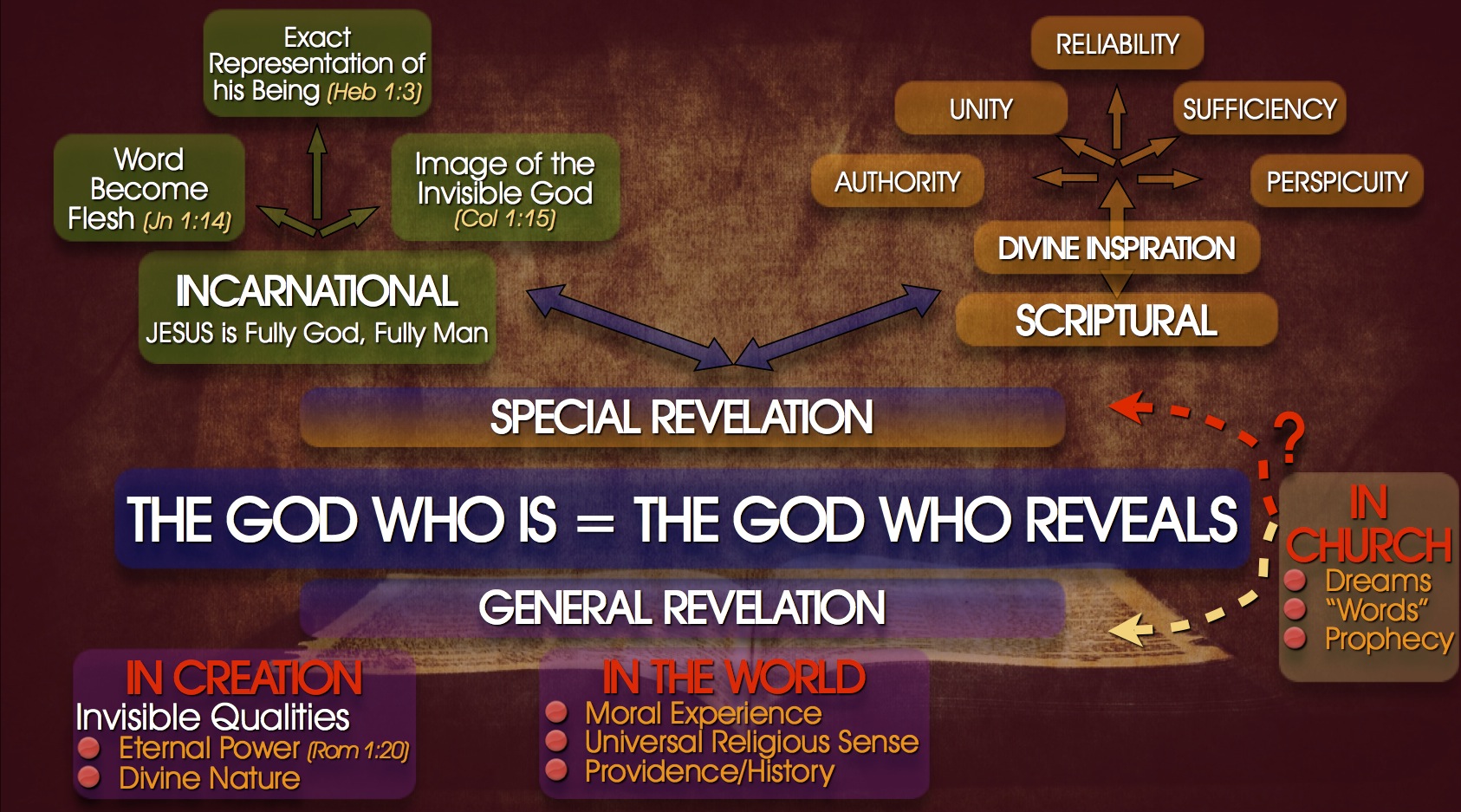
the God who reveals (general & special revelation)

I am fan of games. My wife and I enjoy playing strategy games together and with friends. I suppose my love for games was bred into me from a young age. I got my first Nintendo when I was about 12 years old. But I think my love for games even goes back earlier to tag on the elementary school “playground” or peek-a-boo with my parents as a toe-headed toddler. Peek-a-boo is a fun game. My 19-month old daughter loves to play by covering her little eyes with her little hands.

Peek-a-boo is the first step towards playing Hide-and-seek. It is interesting that Hide-and-seek is a game that we love to play with our children, but God never plays with us. He is always with us and He has revealed Himself plainly to mankind. You can summarize the ways God reveals Himself to man in two ways: general revelation and special revelation. General revelation refers to the general truths that can be known about God through nature. Special revelation refers to the more specific truths that can be known about God through the supernatural.

The God who reveals Himself through nature (general revelation)

First, God is seen in creation. God’s existence and power can be seen throughout the vastness of the universe, in the order of the animal kingdom, in the rules of gravity or thermal dynamics, and in the details or structures of plants and cells. The wonder of creation declares it must be made and just did not happen by mere chance, “The heavens declare the glory of God; the skies proclaim the work of His hands. Day after day they pour forth speech; night after night they display knowledge. There is no speech or language where their voice is not heard. Their voice goes out into all the earth, their words to the ends of the world.” (Psalm 19:1-4)

Romans 1:20 says, “For since the creation of the world God’s invisible qualities—His eternal power and divine nature—have been clearly seen, being understood from what has been made, so that men are without excuse.” God’s eternal power and divine nature are “clearly seen” and “understood” from what He has made, and there is no excuse for denying these facts. This is was I wrote about a few weeks ago, when I was on a hike with my family through the Muir Woods just north of San Francisco.

Second, God is seen in humanity. He is not only seen in your biological makeup, but also your psychological[1] makeup too. God has placed within every man a moral compass that that points us True North, a radar system that warns us of evil and harm, and a homing beacon that deep down gravitates us towards God (Jeremiah 31:33). How is it that sinful men still have a bearing of what is right and wrong? Did that just didn’t happen? No, it is imbedded within your DNA as a gift from God. It is divine proof that your Maker has marked you with His image (Genesis 1:28).

God reveals Himself through nature. He has put redemptive themes all throughout the universe, planet earth, and humanity, which point the creation back to its Creator. You do not have to look far or wide to find it, but most people choose to ignore it or redefine it.

The God who reveals Himself through supernatural (special revelation)

God doesn’t just reveal Himself through nature, but also through supernatural means. Special revelation is when God reveals Himself miraculously. He revealed Himself through physical appearances (Genesis 3:8, 18:1; Exodus 3:1-4, 34:5-7), dreams (Genesis 28:12, 37:5; 1 Kings 3:5; Daniel 2) , visions (Genesis 15:1; Ezekiel 8:3-4; Daniel 7; 2 Corinthians 12:1-7), the written Word of God, and most importantly—Jesus Christ.

One of the primary means God reveals Himself supernaturally to man is through the writing of His Word—the Bible. Think about it, God wrote a book. He did have to, but God decided to reveal everything that you need to know about Him, what He expects from you, and what He has done for you in the Bible. He spoke in a way that is clearly understood. He miraculously guided the original authors of Scripture to accurately record His redemptive message to mankind, but He still used their own styles and personalities. The Word of God is inspired, profitable, and sufficient (2 Timothy 3:16-17). The Word of God is living and active (Hebrews 4:12).

Where special revelation is seen in its ultimate form is in the Person of Jesus Christ. God became a human being (John 1:1, 14). He came as the Word within human skin, “In the past God spoke to our forefathers through the prophets at many times and in various ways, but in these last days he has spoken to us by his Son … The Son is the radiance of God’s glory and the exact representation of his being.” (Hebrews 1:1-3) God became a human being, in the Person of Jesus Christ, to become the atoning sacrifice for your sin on the cross (Philippians 2:6-8). Human sin needed a perfect human substitute for His sin, which is Jesus. He is the ultimate “special revelation” from God.

Why is general and special revelation so important?

First, God makes Himself known so that you can know Him. God wants to be known. He is not silent. He has given you a glimpse of His character, His purposes and plans, and has given you many avenues to know Him. Simply read the Bible and look to Jesus and you will get to know an amazing God.

Second, not only does God reveal Himself to you, but He also reveals who you are too. He makes Himself known because He knows that you need Him. He is Creator and you are His creation. He is perfect and you are imperfect due to sin (Romans 1-9). He is Savior and you need redeemed. He takes the initiative to reveal Himself to you so that you would respond and join in a relationship with Him.

God does not play peek-a-boo. He does not want you to be left in the dark as to who He is and His purposes for humanity. Instead He has revealed Himself to all people, at all times, and in all places that proves that God exists and that He is intelligent, powerful, and transcendent. You can know Him and have a relationship with Him today.


[1] And I mean the true sense of the word psychological, which means the study of the soul.

Concise Theology of General Revelation as seen in Muir Woods

Recently I visited Muir Woods just north of San Francisco. My wife and I were celebrating our third anniversary walking among God’s creation. Walking together is one of our greatest joys. And walking in Muir Woods is quite majestic. It smells of ancient forest. It sounds of pleasant birds and gentle water brook. We even saw a tame young fawn drinking from the water brook that carved through the huge ravine.

We were not alone in the woods. People drive from all over the country and the world to see these mammoth trees. Muir Woods is filled with giant Redwood trees that are bigger than your car in circumference and taller than a 20-story building. Your neck strains seeking to look at the top branches swaying in the ocean breeze.

As amazed as I was by the Redwoods, I was equally amazed by all the people taking pictures of the trees. If you think about it, doesn’t it seem weird that people are flocking to take pictures of big trees? You cannot help but take your camera out of your pocket and snap a few shots. However the photos never really do justice to their reality. It’s like taking a picture of a mountain; you cannot grasp its massiveness and grandeur. But we do not care because we must take a picture to remember what glory we’ve beheld.

It is natural to want to capture nature. We are enamored by nature. John Muir said, “In every walk with nature, one receives far more than [one] seeks.” Creation wow’s and fascinates us to our core. That’s why people were photographing Muir Woods beauty or spend a moment in silence within the particular grove of trees named, “The Sanctuary.”

Creation is just one of many ways He has revealed Himself to man. It is hard not to look at the Grand Canyon, Mount Everest, or Muir Woods and think, “Wow, God made this.” Any other response is utter rejection of the obvious reality. This is called General Revelation.

Here is a concise theology of General Revelation as seen in Muir Woods:

God make Himself known through His creation.

“For what can be known about God is plain to them, because God has shown it to them. For his invisible attributes, namely, his eternal power and divine nature, have been clearly perceived, ever since the creation of the world,in the things that have been made. So they are without excuse.” [Romans 1:19-20; Cf. Psalm 19:1-6]

Creation shouts the glory of God!

“For you shall go out in joy and be led forth in peace; the mountains and the hills before you shall break forth into singing, and all the trees of the field shall clap their hands.” [Isaiah 55:12, Cf. 44:23]

“Let the heavens be glad, and let the earth rejoice,
and let them say among the nations, “The Lord reigns!”
Let the sea roar, and all that fills it;
let the field exult, and everything in it!
Then shall the trees of the forest sing for joy
before the Lord, for he comes to judge the earth.
Oh give thanks to the Lord, for he is good;
for his steadfast love endures forever!” [1 Chronicles 16:31-34, Cf. Psalm 96:11-13]

Creation makes known the glory of His Savior Son.

“As He [Jesus] rode along, people kept spreading their cloaks on the road. As he was now approaching the path down from the Mount of Olives, the whole multitude of the disciples began to praise God joyfully with a loud voice for all the deeds of power that they had seen, saying,
“Blessed is the king
who comes in the name of the Lord!
Peace in heaven,
and glory in the highest heaven!”
Some of the Pharisees in the crowd said to him, “Teacher, order your disciples to stop.” He answered, “I tell you, if these were silent, the stones would shout out.” [Luke 19:36-40′ Cf. Acts 14:11-18]

Creation along with humanity groans to gain back its lost glory after the fall, but is promised a restoration far better than its former glory.

“For I consider that the sufferings of this present time are not worth comparing with the glory that is to be revealed to us. For the creation waits with eager longing for the revealing of the sons of God. For the creation was subjected to futility, not willingly, but because of him who subjected it, in hope that the creation itself will be set free from its bondage to corruption and obtain the freedom of the glory of the children of God. For we know that the whole creation has been groaning together in the pains of childbirth until now.” [Romans 8:18-22]

thumb licks [4.26.12]

Is the internet ruining your brain?

How to deal with the loss of a spouse.

That’s not fair.

Sweet gadgets for the one percent who can afford them.

Do pets go to heaven?

10 of the most difficult theological issues Christians must face today.

How to lead a child to Christ?

The secret life of plankton. So small but so great.

More than just Christmas.

Is the book of Acts descriptive or prescriptive?

Acts tells the story of how His church began and how the message Christ spread. Christians who read the book of Acts are inspired by the explosive expansion of the early church. Thousands of people were coming to Christ, people were being miraculously healed, supernatural gifts like speaking in tongues were heard, and believers preached the gospel with boldness. Honestly, many desire this kind of outpouring of the Holy Spirit for the church today.

It is certain that Luke, a disciple of Christ, wrote the book of Acts. He writes the book as history in action,[1] particularly related to redemptive history and the spread of the message of salvation to the world.[2] Luke adds further details and personality sketches that help us understand what happened in the first century church.[3] He tells us the outcome of the story of Jesus contained in the Gospels and introduces the apostolic writings and their historical context, especially those of Paul.[4] He tells us what is happening during the early church days, but he rarely indicates what should happen today.

A Descriptive and Prescriptive View of Acts

Is the Books of Acts descriptive or prescriptive? In other words, are the facts in Acts for the church today? In Acts 6:1-6, Luke describes seven men who were chosen to wait on tables these men became the leaders of their churches. Then there are some amazing events like the extraordinary miracles God did through Paul (19:11-12), striking claims that caused people to perish (5:9-10), speaking in tongues after the filling of the Spirit (2:2-3), and so much more. Are we supposed to follow these orders within the church today? How are suppose to know if we are to follow them or not?

Much of the material in the New Testament falls into two categories: descriptive or prescriptive. Descriptive is a narration of what took place (i.e. Acts 10:45,46). Prescriptive are commands about how to live the Christian life through direct teaching on spiritual truths (i.e. 2 Timothy. 4:2; Colossians 2:9). Readers must be cautious to identify the type of passage they are reading, especially in the book of Acts. John Stott gives some great wisdom on how to deal with such texts:

What is described in Scripture as having happened to others is not necessarily intended for us, whereas what is promised to us we should appropriate, and what is commanded us we are to obey . . . What is descriptive is valuable (in determining what God intends for all Christians) only in so far as it is interpreted by what is didactic . . . We must derive our standards of belief and behavior from the teaching of the New Testament . . . rather than from the practices and experiences which it portrays.”[5]

A good principle is to interpret the descriptive in light of the prescriptive. We are not commanded to copycat what the Bible describes unless it is prescribed in direct teaching of timeless spiritual truth. In other words, we must interpret descriptions in the book of Acts in light of what the Gospels and Epistles prescribe and teach as timeless truths.[6] For example, Christians today cannot be witnesses in the same foundational sense that the apostles were (8:4; 11:19-21), but we can share in the task of testifying and witnessing Jesus’ redemptive message (1 Corinthians 15:15; 1 Thessalonians 2:10; 1 Peter 5:1; 1 John 1:2; 4:14).

The books of the Bible were written occasionally, which means they were written to particular people in particular places at particular times. Acts must be read as a history of God’s redemptive work in the early church, and only follow theological and doctrinal “patterns” that are clearly repeated and/or commanded within the text also appearing in the Gospels and Epistles. There is no one sentence of the Bible addressed to me today telling me what to do. However, this doesn’t mean they don’t apply to me today. This means that we must do theology with every book of the Bible, regardless of its descriptive or prescriptive character.

Since Acts is a narrative it is primarily descriptive telling us what the apostles did, and not necessarily prescriptive telling us what we should do.[7] There are numerous sermons in Acts, many of which record the basic message of the early church. Many of these sermons teach spiritual truth that transcends time. Just as Acts 1:8 gives a rough geographical preview of the book of Acts, so Luke gives us a preview of the theological message (Luke 24:46-49). Several sermons in Acts contain a portrayal of the gospel. These particular sermons argue that Jesus is the Messiah, that He fulfilled Old Testament prophecies, that God raised Him from the dead, and that He is the answer to Jewish and Gentile hope. These sermons are timeless truths placed within history.

Read the book of Acts Purposely

The purpose of Acts is not to serve as a model in every area of practice or experience for what individual believers or the church should do now. Acts is descriptive, not prescriptive—it is history, not law. However, there is much to learn from the experience and history of the early church. As Gordon Fee sates,

“We must not lose sight of the fact that Acts purports to narrate historical events such as: the founding and growth of the church, the career of Paul, and without Acts we would knowing nothing of the pouring out of the Spirit at Pentecost, Stephens martyrdom, the early Jerusalem church and how the gospel first came to the Gentiles.”[8]

What we read in Acts does serve as a model for us in areas that are mandated in the rest of the New Testament when it comes to such dogma as evangelism, missions, prayer, sacrificial giving, church leadership, ministry and more. Acts overarching purpose that the church today can take home is that we must be risk takers for the sake of Christ redemptive message.


[1] Graeme Goldworthy shares that “Acts is a highly selective history and the presentation is carefully controlled by the author’s summary statements and transitional notes. The New Dictionary of Biblical Theology. Intervarsity Press. Downers Grove, IL. 2000. 286.

[2] Frank Theilman. Theology of the New Testament. Zondervan Publishers, Grand Rapids, MI.  2005. 114.

[3] “Luke is probably writing in the manner of the Greek historians Xenophon and Plutarch. What this means is that a selection of the hero’s acts…, historical vignettes which set forth the hero’s character, are his major concern. The Book of Acts, then, is not a mere chronicle of events, but a portrayal of the kinds of people and kinds of things that were taking place in the early church” William H. Baker, Acts: Evangelical Commentary of the Bible, edited by Walter Elwell, page 884).

[4] Goldworthy, 290.

[5] John R. W. Stott, Baptism and Fullness. Downers Grove: InterVarsity Press, 1975, pp. 15-17.

[6] Examples of interpreting the descriptive in light of the prescriptive:

Narrative: Acts 2:42 // Prescriptive:

Apostles’ teaching // Col. 3:16; 1 Pet. 2:2

Fellowship // Heb. 10:24,25

Breaking of bread // 1 Cor. 11:23-34

Prayer // Eph. 6:18; 1 Thess. 5:17

Narrative: Acts 2:43 Wonders and signs were taking place through the apostles (2 Cor. 12:12).

Prescriptive Scripture: The phrase “signs and wonders” is used in connection with the apostles and their close associates to validate the truth of their message.

Narrative: Acts 2:44,45 Those who believed were together and had all things in common. They began selling their property and possessions and were sharing them with all, as anyone might have need.

Prescriptive Scripture: The New Testament never prescribes communal living. Rather it affirms the legitimacy of private property (1 Thess. 4:11,12; 2 Thess. 3:11,12) and teaches us to be generous (1 John 3:16,17).

[7] Gordon Fee. How to Interpret the Bible for All It’s Worth.

[8] D.A Carson. An Introduction to the New Testament. Zondervan Publishers, Grand Rapids, MI.  2005. 316-317.

what is man?

I am sure the untimely and inconvenient news was a shock to the two unwed teenagers the summer of 1979. The news, “You’re pregnant!” Abortion might have been an option, but both their Catholic parents discouraged it and encouraged the baby to be born. I am grateful my two parents decided on the side of life.

Before my sister Samantha was born, my mother and step-dad were already aware she would be born with Spina Bifida. The doctors recommended an abortion thinking it would be laborious to bring a physically disabled child into the world. It is true, my family would have to adjust and Sam would not have the use of her legs, but no one would know the blessing of my beautiful, intelligent, and warm sister, now an incredible young woman.

Today is Sanctity of Human Life Sunday. I hate this day. I don’t hate it because I think it is unbiblical. I hate it because I have to say things in church that shouldn’t have to be said. Mothers shouldn’t kill their children. Fathers shouldn’t abandon their babies. No human life is worthless, regardless of skin color, age, disability, or economic status. The very fact that these things must be said is a reminder of the horrors of this present darkness.

I hate Sanctity of Human Life Sunday because I’m reminded that as preach there are babies warmly nestled in wombs that won’t be there tomorrow. I’m reminded that there are children—maybe even blocks from this church—who will be slapped, punched, and burned with cigarettes butts before this message is over. I’m reminded that there are elderly men and women whose lives are pronounced a waste and euthanasia is considered a viable option.

But I also love Sanctity of Human Life Sunday when I think about the fact that I am in a church with ex-orphans, adopted into loving families. I am in a church that supports local pregnancy centers for women in crisis. Like Proverbs 31:8-9 you, “Speak up for those who have no voice, for the justice of all who are dispossessed. Speak up, judge righteously, and defend the cause of the oppressed and the needy.” May the church continue to be a haven for men and women—who have aborted babies—find their sins forgiven and consciences cleansed by Christ.

Believe it or not the Bible is silent on the topic of abortion [as it is on the humanity of whites, blacks, Hispanics, etc]. Jesus never said, “thou shalt not abort,” even though it was practiced during His day too. Although the Bible does not condemn abortion does not mean it condones it. Likewise, just because culture or government condones it as legal doesn’t it mean it’s God-honoring. The Bible is clear: you are not to take innocent human life without justification.

Therefore, if a positive case can be made for the humanity of the unborn apart from the Bible you can logically conclude that Biblical commands against the unjust taking of human life apply to the unborn as they do other human beings whether they are red, yellow, black or white, young, old, skinny or fat, healthy or not. And to this point, science confirms theology. In other words, science gives the facts you need to arrive at a theologically sound conclusion. What the science of embryology makes clear is that from the earliest stages of development, human embryos and fetuses are human beings but just less developed than the adults they will soon become.

The question I pose this morning: at what point does the embryo begin to be made in the image of God? The answer to this question comes down to your view of God and human life in connection with God. The answer to this important theological question is packed into a little song that David wrote in Psalm 8.

1. GOD IS MAJESTIC IN ALL THE EARTH [Psalm 8:1, 9]

The psalm begins and ends with its main point: “O LORD, our Lord, how majestic is Your name in all the earth!” [8:1, 9]

The two words for lord (O LORD, our Lord) are not the same in Hebrew. The first LORD, with all caps, is a translation of the name YHWH. It’s His personal name. The name He gives Himself. It is built on the statement in Exodus 3:14, “I am who I am.” It’s a name to remind us that He absolute exists. He simply is. He did not come into being, and does not go out of being. He never changes in His being, because He is absolutely exists in His being.

His name is majestic in all the earth. There is no place in all the earth where God is not YHWH—where He is not the absolute One. Everything everywhere depends absolutely on Him. He depends on nothing, but everything depends on Him. He has no viable competitors anywhere. He has no challengers to His throne. He is above all things everywhere. He sustains all things everywhere. He is the aim and goal of all things everywhere. He is greater and wiser and more beautiful and wonderful than everything everywhere. “O YHWH, our Lord, how majestic is Your name in all the earth.” That’s the main point of the psalm.

In response you and I are to stand in awe of His majesty and worship. The majesty of God is awe-inspiring. Those who have seen His majesty have never been the same. John fell on His face in the presence of God. Isaiah cried, “I’m unworthy,” when in the thundering presence of God. Do you have a majestic view of God? If you have a majestic view of God you will have a majestic view of life. If you have a low view of God you will have low view of life.

2. GOD’S MAJESTY IS SEEN IN HIS SUPREME CREATION [Psalm 8:3-8]

We are going to skip over verse 2 for a moment. I promise we will come back to it. In verses 3-4 David responds to His majestic Creator, “When I look at your heavens, the work of your fingers, the moon and the stars, which you have set in place, what is man that you are mindful of him, and the son of man that you care for him?” The point of these two verses is to see God’s bigness and my smallness. God is infinitely great, and man, by comparison, is nothing. God creates stars with His fingers and I am so small compared to Earth, the sun, and the billions of suns that form up our galaxy, and the millions of galaxies that are laid out in our universe.

Have you ever stood underneath the night sky and thought, “Wow, I am small and insignificant?” That’s the point. God created all that bigness so you’d have a sense of smallness. Some consider it a lot of wasted space, but space God’s natural billboard proclaiming His praise. Worship is not found in feeling big, but rather in feeling small.

An honest question arises in verse 4, “Why do You consider man when You are so majestic?” The answer comes in verses 5-8: “You [O God] have crowned him with glory and honor…You have given him dominion over the works of your hands; you have put all things under his feet…” Now that is absolutely astonishing! John Calvin summarized it by saying, “Whoever, therefore is not astonished and deeply affected at this miracle—God being mindful of man—is more than ungrateful and stupid.” Although man is nothing compared to God, He makes man His supreme creation.

God’s majesty is seen as He creates man in His image [Genesis 1:26-27]. One might ask when does the image of God begin in man? According to God, it begins even before one cell splits and multiplies in the womb. In the human embryo are found the marks of your Maker. No other creature in God’s creation is crowned with glory and honor like mankind.

God’s majesty is seen as He makes man dominioneers over all His creation [Genesis 1:28-31]. God gives you a job—care and protect life. However, when we read the Genesis account of Adam and Eve, their children, and observe history thereafter man does not do a good job caring for and protecting life. We don’t like our job. We want a new job. We’d rather redefine the job. Therefore we join a union and march with picket signs that say, “God, I have a rights!”

Do I have rights? Sure. In our society a woman has her rights. She can murder a child and get away with it. I am an advocate for civil and judicial rights, but not rights-gone-wild. The freedom and liberty to use our rights is not always right. Especially when it comes to shedding innocent blood. A human that demands, “I have rights!” Is saying what a sinner says when it rejects God’s moral rules. God determines what is right and wrong. He says we are to care for and protect life. Every man has the right to life.

You cannot starve an elderly human to death and worship the majesty of God. You cannot dismember an unborn human and worship the majesty of God. You cannot gas a Jewish human and worship the majesty of God. You cannot lynch a black human and worship the majesty of God. You cannot gossip, harbor bitterness, or curse a man to his face and worship the majesty of God. Jesus says to hate another human is commit abortion in your heart. You cannot worship the majesty of God while treating His supreme creation with dishonor.

3. GOD VALUES THE LIFE OF CHILDREN [Psalm 8:2]

You might be wondering what does this have to do with the sanctity of life or abortion? Let’s go back to verse 2. There is an incredible contrast between verse 1 and 2. Verse 1 says, “You have set your glory above the heavens.” And Verse 2: “Out of the mouth of babies and infants, you have established strength because of your foes, to still the enemy and the avenger.” The contrast is strange. God is highest of all beings. None could be stronger, wiser, or greater. But babies are weak; they seem to have no wisdom or knowledge. They are utterly dependent on others. They are insignificant in the world’s eyes.

So why does the psalm mention babies? Why are they here? What are they doing? The verse says what they are doing: They are defeating the enemies of God. They are opening their mouths and saying or crying something. And whatever they are saying or crying is powerful enough “to still the enemy and the avenger.”

God has enemies. His foes are those who rebel against His majesty [8:1,9]. They do not see Him as majestic, nor do they want to worship Him. They get far more pleasure out of getting praise for themselves than giving praise to God. Our world has been ruined because of these enemies. And in order for the world to return to its proper purpose, these enemies will have to be dealt with. And what verse 2 tells us is that God, in His majesty and greatness makes babies the means of His triumph over His enemies. Let the strangeness of this sink in. God conquers his foes through the weaknesses of the weak—the worshipful coo’s of baby’s lips.

To understand verse 2 in it’s fullness you have to realize God comes to earth in the form of a cooing and crying baby. Jesus, the God-man, came into the world in childlike lowliness and human weakness. God takes on skin. He’s born of a virgin in a barn. He grows into a man, lives a sinless life, but certain men convict Him of a crime He did not commit. He dies on a cross and 3-day later He rises crushing His enemies under His feet [cf. 1 Corinthians 15:27].

During His earth ministry He welcomed children when others wanted to shoo them away [Mark 10:13-16]. Jesus loves all the little children.  Moreover, He said the measure of our love for Him would be measured by our love for children [Mark 9:36-37]. He took the children in His arms as if to say, “Honor these little ones, and you honor Me. Send them away because they are weak, socially insignificant, and bothersome, and you’ve demonstrated you don’t understand the values of the kingdom.”

In Matthew 21, Jesus draws near to Jerusalem. It is Palm Sunday. He enters the city riding on a donkey. The crowds see what this means and they cry out in verse 9, “Hosanna to the Son of David! Blessed is he who comes in the name of the Lord! Hosanna in the highest!” Hosanna means “salvation.” They are shouting that God’s salvation is coming. They see Him as a prophet or perhaps the Messiah himself—The king of Israel who would defeat the enemies of God.

Now there are children in the crowd. They see what’s happening. They hear their parents shouting. So they take up the chant in verse 15, “Hosanna to the Son of David!” These children are calling Him the king of Israel. The chief priests and the scribes cannot endure the ruckus any longer. They think it’s outrageous for Jesus to hear this kind of praise and not stop or correct them. So they say to Jesus in verse 16, “Do you hear what these are saying?” What they meant was, “We know you can hear what these are saying, but we cannot imagine why you don’t stop them, since you are most certainly not the Messiah.”

Jesus’ answer is as clear as crystal, and its connection to Psalm 8 is frightening. He simply says, “Yes, I hear.” With those few words He says, “Yes. I didn’t miss a word. They are not mistaken. They are not blaspheming. They are not foolish. They just seem foolish. I approve what they are saying” Jesus receives worship from children. And Jesus goes on to say to the chief priests and scribes: “Have you never read, ‘Out of the mouth of infants and nursing babies you have prepared praise’?” It’s a direct quote of Psalm 8:2.

Two things happen when Jesus quotes this Psalm. First, it comes true. His enemy is silenced. The chief priests and scribes are speechless. The praise of the children’s lips won the day. God is defeating His enemies through the weakness of children and man. Second, the meaning of psalm 8 is amplified. When these children cry out, “Hosanna to the Son of David !” Their praise was directed to Jesus. Jesus knew it. The chief priests and scribes knew it. And Jesus accepts their worship being God—the absolute One–Himself. On that day, the majesty of God had a face of flesh and a name. His name is Jesus.

In closing I want to share with you a story about my best friend, Ben. In high school our friendship grew through helping each other live for Christ. When I went to college I had less contact with Ben. While I went to Bible College, Ben was going to parties and sleeping with girls. His life became a mess. He got a girl pregnant. To cover it up she aborted. Although Ben had abandoned God, God did not abandon Him. He was relentlessly pursuing Ben.

I remember coming home on college break and visited Ben’s apartment. It looked like a disaster, smelled like beer, and felt dark. I asked Ben, “So what’s God been doing in your life?” I am sure he wanted to kill me for asking a question with an obvious answer. What Ben needed I could not give. He needed his enemies of pride and guilt and thinking “I have rights” to be defeated. In Christ they already were. I kept in contact with Ben. He left for Florida where he thought he’d be anonymous. The majesty of God prevailed, He would not leave him alone, pursuing his heart, and Ben repented of his sin.

“For as high as the heavens are above the earth, so great is His steadfast love toward those who fear Him; as far as the east is from the west, so far does He remove our transgressions from us. As a father shows compassion to his children, so the Lord shows compassion to those who fear Him.” [Psalm 103:11-13]

Jesus forgives sinners who come to Him with child-like faith. God redeemed Ben’s life. God has given him a godly wife and blessed him with two (so to be three) beautiful children. Today Ben is serving God in the ministry. Ben is an advocate for life.

Jesus can forgive you too. No matter how bad your sin or how dirty your past. He will not only forgive you but welcome you as His child in His compassionate arms. Come. He awaits you with an embrace.

Why do I need psalm 8? It inflames my heart with wonder, awe, and love for God. Seeing the majesty of God is the first step towards looking at myself and other humans rightly. In His majesty we see the sanctity of life.

LISTEN TO THE PODCAST OF THIS MESSAGE.

a case for penal substitution

The cross work of Christ is not just a payment for the wages of sin, but it is man’s means for cleansing from and victory over sin and death. In essence, that is the doctrine of penal substitution. The doctrine of penal substitution is one of the glorious truth’s of the Bible.

First, the doctrine of penal substitution is biblical.

From beginning to end penal substitution is central to the message of the Bible [cf. Genesis 9:6; Exodus 21:24; Leviticus 1:4; 17:11; Isaiah 53:5-6; Hebrews 9:22]. The truth that Jesus Christ satisfied the justice of God and took upon Himself the wrath due sin.

Second, penal substitution is necessary for real forgiveness.

God cannot waive the wrath due sin. It is out of line with His character to do so. He cannot sweep sin under the rug. Justice demands a consequence. Sin robs the bank of God’s justice [Psalm 97:2; Proverbs 17:15]. The only remedy is to seek forgiveness, but forgiveness always has a cost. Injustice must be made right. For my sin the cost was the death of Jesus Christ. My cost is that without Christ I cannot escape death. He made up what I owed. I sinned, but Jesus suffered for it so I would not have to suffer the hellish consequences of my sin.

Third, the fame of God’s name is at stake.

An injustice against God unpunished with would make the nature untrue. If it were not true He would be a liar. His name would be tarnished. In my place condemned Jesus hung pun the cross to demonstrate the justice of God. Therefore my response is to put faith in my Merciful Justifier Jesus Christ [Romans 3:25-26].

Fourth, God cannot be untrue to His Word.

God has said that the the soul that sins must die [Genesis 2:17; Ezekiel 18:20]. Since He declared it, it is decreed. Therefore, from the beginning of man’s sin God has provided a sacrifice. For Adam God sacrificed an animal to cloth his shame. For Cain and Abe;, God honored the righteous sacrifice. For Abraham God provided a substitute sacrifice in the place of his son [Genesis 22]. For the sins of Israel God atoned through the blood of animals. For my sin and yours God sent the Lamb of God, Jesus Christ, to the cross as my sins sacrifice.

Glory to God for the gift of penal substitution. May it humble us to the core and motivate us to serve Him for life.

what authority does the church have?

“Today there rages an ongoing debate among Bible-believing Christians about the nature and necessity of the local church…One side has a tendency to emphasize the spiritual or universal church to the minimizing of the local church. The local church is something people can be committed to if they like, but they need not be. When those who hold this view commit to a local church, they often choose a church composed of people with like experiences and interests, affinity clusters based on common culture, age, and so on. Membership is already settled because every Christians is a member of the body of Christ. There are few if any further formal requirements, which are often seen as holdovers from a bygone era or borrowed from civic and social groups like Rotary and country clubs. Local church membership might even be viewed as divisive, contrary to a needed and good catholicity…On the other side are Christians who emphasize the visible, local nature of the church while minimizing the universal or spiritual church. Membership in the universal church is assumed, but must be demonstrated in the local church. Some add that New Testament Christianity makes little sense apart from an active practice of local church membership.” – Don’t Call It A Comeback, 201-202

How do we define church?

Some people think the church means building with a steeple, denomination with a super-structure, or gather of people who sing to God, give their money, and listen to a message from the Bible. Although these might be common definitions for church, this is not how the Bible describes the term church. The Bible says the church [Gk. ekklesia] means “gathering”. It is a gather of followers of Christ universally (Eph.1:22-33) and locally (Gal.1:2). The universal and local church are not incompatible enemies, but a glorious visions of Christ’s glory.

Do I really need to be a member of a local church?

The Bible clearly commands every believer to be intimately involved in the lives of other believers.  Heb. 10:24-25 says, “And let us consider how to stir up one another to love and good works, not neglecting to meet together, as is the habit of some, but encouraging one another, and all the more as you see the Day drawing near.” God says that we are not to neglect to “meet together,” but He means far more than simply attending church services regularly.  The meaning of Heb. 10:24-25 is much fuller than that, as the other commands in the passage indicate.  If a believer is not carefully considering how he might stimulate others to love and good works, and encouraging others more and more all the time, then he or she is disobeying the Lord.  The church is intended to glorify Christ and to help believers be what God wants them to be. Christians are meant to live in community [1 Cor. 12; Rom. 12], not Lone Ranger individuality.

The local church is not one of many options for the Christian.  “The church is the primary instrument through which God accomplishes His plan in the world.  The church is God’s only ordained instrument for calling the lost to Himself and the means by which He sanctifies those who are born into His family (1 Pt.2:9-10).  Therefore, God expects (and even demands) commitment to a local church from every believer who claims to know Him.” (Wayne Mack and Dave Swavely, Life In the Father’s House, 6)

What’s in it for me?

In short, the church is not about me, it is all about Christ and the community, however the church bring nutrients to all its connected members. First, God designed the church to care for one other (1 Cor. 12:24-27). He uses local churches to look after His flock. Second, God designed the church to encourage maturity in one another (Eph. 4:11-16). Without the church followers of Christ would remain in spiritual infancy because they would have not structure for personal growth in Christ. As John Stott said, an “unchurched Christians” is a “grotesque anomaly.” The Bible describes a church as a Body with Christ as it’s head. A head without a body is a corpse. Dead and decaying. A church needs a head and a body to be a church. A Christian not connected to the body is not growing or gaining lasting nourishment. What’s in the church for me? Life and growth in Christ together with others committed to Him too.

By whose authority does the church have authority?

That which is given to it by Jesus Christ. He leads the church with humility and grace, but also in power and authority. Maybe you have seen the church abuse it’s authority. Maybe you’ve experienced neglect from church-goers. Maybe you’ve a pastor has not shepherded you with the attitude of Christ. Maybe you have lost respect for the church because of a bad experience? As messy as the church may be, it is still the beautiful bride of Jesus Christ. The church is not always amazing, but it is loved by Jesus. So much so that He died for it.

The Bible reveals the centrality of the church in the life of a believer. Jesus Christ proclaimed that He Himself would build His church (Matt. 16:18) and that not even the gates of death would prevail against it.  He invested it with the authority of His Father (Matt. 18:17-20).  He revealed that in His plan the world would be filled with churches (Matt. 28:18-20).  Furthermore, Jesus Christ died for the church (Acts 20:28; Eph. 5:25) and lives for the church.  He walks amid the churches (Rev. 1:13) and promises to keep the church from the future wrath of God (Rev. 3:10).  No other institution on earth can claim any of those things about itself. Christ is the authority of the church. Christ is the Creator (Ephesians 2:15), Cornerstone (Ephesians 2:20, 21), Bridegroom (Ephesians 5:23-32), Head (Colossians 1:18a), Owner (Titus 2:14), High Priest (1 Peter 2:9), and the Shepherd (1 Peter 5:2-4) of the church.

why did Jesus die?

Jesus lived to die. Jesus was a man on a mission. I believe Jesus Christ is the Son of God, the second person of the Trinity, who took on flesh so that He would become the complete and perfect God-man. His death is incredibly important.

Without the death of Christ man cannot live (Galatians 2:20-21; 1 Corinthians 15:16-17) Christ died to save lost and sinful me. Christ died to save sinful man from their hopeless state (Romans 3:21-26). In other words, Christ died in my place to satisfy the wrath of God on me in order to declare me innocent even through I was guilty (justification), He died to buy me off the slave market of sin (redemption), He died to make me friend even when I was an enemy (reconciliation), and He died so the Father would see me through the righteousness of Christ. Christ paid the penalty that He did not owe so that I might be freed from a penalty that I owed but could not pay.

Without the death of Christ He would not have glorified His Father (Luke 22:41-42; John 6:38; 17:1-5). Jesus was obedient to His father and did what He was commanded to do—be the sacrifice for mankind’s sin. Jesus fulfilled the Old Testament sacrificial promises and became our suffering servant (Isaiah 53). The death on the cross is what God wanted and the cross was the means by which Jesus glorified His father. Jesus Christ glorified God the Father in both His life and in His death.

Jesus lived to die. Without His death I could not live, forever. Without His death i could not glorify the Father. But Jesus did die, therefore I have eternal hope of glory. Thanks be to God.

For more, check out this video by Thabiti Anyabwile:

a concise theology of art

Art moves. Art has the innate ability to captivate your thoughts and stir your emotions. Art encompasses all of your life and the world in which you live. You cannot step outside your home or inside your home without taking in some kind of artistic expression. What is art? What is good art? What is the origin of art?

creativity and beauty is in the eye of the Beholder

Have you ever thought about art being a biblical concept? Have you thought about art origins being God—the first artist? And His Creation and created beings reflect His creativeness? God is an artistic God. He has created a wonder of colorful marvel. From the tiny microbe to the massive mountain ranges to the myriads of stars that glitter the night sky, God is a masterfully skilled artisan. Creativity and beauty reflects your Creator. Art in the Bible can be any creative medium to express God’s character: music, songs, poetry, prose, dance, fashion, sculpting, architecture, interior design, graphic design, drawing, carpentry, even teaching and preaching.

I would define art simple as creating beauty for God’s glory. Man has the ability to create and be creative because he mimics his Creator. The Creator has given His creation the ability to create. Creating for the glory of God is art at its chief and highest purpose.

Francis Schaeffer, the apologist and cultural critic, says art is a reflection of God. He believed that Christian art had a minor theme–the abnormality of the revolting world—and a major theme—the meaningfulness and purposefulness of life. By this definition an artist doesn’t necessarily have to be a Christian in order to produce “Christian art.”

twisted creativity and beauty

“GOD was pleased to make man, and GOD made man with creative capacities. Apart from GOD, man would not be, nor would man have any artistic, creative ability. Therefore, to engage in any artistic expression of man as being apart from GOD, is to both dishonor GOD, the Author of man and artistic expression, and to deny ourselves the full pleasures that GOD has intended for our enjoyment in art; culminating in our enjoyment in Him, through JESUS CHRIST.” – Artist’s Creed

God defines artistic beauty and creativity, but man has perverted and distorted art through sinful intentions and expressions. Any art that does not adhere to biblical guidelines is not for the glory of God. Here are four examples of sinful art.

First, graffiti without permission is lawless. Law considers defacing public property with graffiti vandalism. Now I have seen a lot of graffiti that makes an ugly wall beautiful, but without adhering to the law it is still sinful. Get permission before you paint graffiti.

Second, pornography is not biblical art. There are numerous rationalizations for nakedness being a genuine art form. Yes, man once walked naked in the Garden of Eden, but since the fall of mankind nakedness was synonymous with shamefulness. God, as the first fashion designer, made man clothing to cover their nakedness and shame. What is beautiful about nakedness according to the Bible is sexual intimacy in the context of committed marriage. For more on this check out a great article called, “Art, Nakedness and Redemption”.

Third, blaspheming God in art is more than irreverent it’s unregenerate. Can artists go too far? Absolutely, creating blasphemous or ironic religious imagery crosses biblical standards. In the Law of God given to Moses it says, “You shall not make for yourself a carved image, or any likeness of anything that is in heaven above, or that is in the earth beneath, or that is in the water under the earth. You shall not bow down to them or serve them.” [Exodus 20:4-5] Then Leviticus 26:1, goes on to say, ”You shall not make idols for yourselves or erect an image or pillar, and you shall not set up a figured stone in your land to bow down to it, for I am the Lord your God.” What is being forbidden is not the creation of all representational art, but what is forbidden is the worship and praise of graven images. When God commanding Moses to create the tabernacle and decorate it with imagery it included representations of “anything that is in heaven” [i.e. cherubim] and of that which is “in the earth beneath” [i.e. flowers and pomegranates). If God were prohibiting the creation of all representational art He would order Moses to disobey his command.

Fourth, artists do not create the rules. The underlying assumption in modern art is that artists are allowed to “create their own rules.” It is a common standard in Western culture that the artist, as an individual creative genius, stands apart from or outside of culture. In other words, the artist has taken the role once reserved for the prophet. However, according to the Scripture we are not autonomous individuals, but persons bound in community. God’s Word is not a private message given to us as individuals to interpret as we choose. It is a guiding text that is given to the church in order that we may live, work, and breathe as the beautiful Bride of Christ. The artist is in the same position as teachers and preachers, who are held to a higher standard because they are entrusted with communicating the truth.

Sin has a tendency of distorting really good things that God intends for His glory. All art must have a biblical standard and framework. This does not mean all art must have be pictures of Jesus or clouds with rainbows, but art must reflect the redemptive purpose of Christ and the creative glory of God [Romans 11:36]. All people should be encouraged to create art that is creative, beautiful, displaying truth. Just as all truth is God’s truth, all beauty is God’s beauty.

“The artist is called and gifted by God—who loves all kinds of art; who maintains high aesthetic standards for goodness, truth, and beauty; and whose glory is art’s highest goal. We accept these principles because they are biblical, and also because they are true to God’s character. What we believe about art is based on what we believe about God. Art is what it is because God is who He is.” – Philip Ryken

creating beauty for the glory of God

Since, a child I have loved art. I learned a lot about art from watching my dad paint and carve wood. My favorite classes in school were art, not because it was an easy A. Even now, I enjoy drawing in my idea book, make a hobby out of writing, dabble in graphic design, and marvel at architecture and nature when I travel. I love to dance, and am moved when I hear my wife sing or play the guitar. Art moves me.

For all eternity, we will be awed by the creative genius’ God has displayed in His creation. I still think the best is yet to come. God will reveal to us the beauty and creativity of the heavens, which captivates our imaginations. God has wired us to enjoy creativity and beauty.

BOOKS ON ART FOR GOD’S GLORY:

ARTICLES ON ART FOR GOD’S GLORY:

SERMONS ON ART FOR GOD’S GLORY

concise biblical theology of work

Happy, Monday! Welcome back to work! With the long work week ahead, I felt it necessary to encourage all your labors. God loves work. Did you know God has set in His Word a theology for work?

  1. Working is a good and basic part of being human in God’s world. Ever since the Garden of Eden, mankind has worked [Genesis 1:28-31].
  2. Since, Genesis 3, work is cursed and frustrating, but it still is good, worthwhile and necessary.
  3. Followers of Christ have a strong motivation to work, not only because of the place of work in creation, but also because work [like any field of life] is a theatre for our service of Christ [Colossians 3:17].
  4. At a deep level, when we work at any job, we work for Christ [Colossians 3:23-24].
  5. As Christians, we do not work in order to gain self-fulfillment or fame or personal kudos. We work not for ourselves but for others, to serve them, not to be a burden to them, and to have something to share [Ephesians 4:28; 1 Timothy 5:8].
  6. Secular work is thus very valuable, worthwhile and important. But like any good thing, it can become an idol. We can start to look at our work for significance and value.
  7. We must remember that only Christ’s work redeems humanity. As useful and helpful as secular work is in our world, it will not save us or build Christ’s kingdom. That only happens through Spirit-backed gospel-centered proclamation.
  8. All work, inside or outside the church is sacred. There are not two classes of Christian workers—those who are really working for God and the rest who minister when they can off their 8-5 job.

Expect for point 8, all other points are adapted from The Trellis and the Vine, Colin Marshall and Tony Payne. Matthias Media, Kingsford, Australia. 2009.137-138.

For more study on redeeming your work check out:

Trinity File

Over the past month I have been studying the Trinity. Here are all the resources in one place touching upon the theology and practicality of the Trinity:

what does the Trinity teach us about relationships?

Within the Trinity there is both unity and diversity: unity without uniformity, and diversity without division. This unity and diversity is at the core of the great mystery of the Trinity. Unity without uniformity is baffling to our finite minds, but there are demonstrations of this truth all around us; like a symphony, the human body, ecosystems, the church, the human race, a delicious meal, or a sporting event. Unity and diversity are woven into the fabric of the world by multiple images of the One who made it with unity and diversity.

Our human relationships uniquely and divinely reminisce the relationship between the Persons of the Trinity. This is no mistake, since man’s Maker stamped each man in His image. Most people never consider where this similarity has originated, but God has innately marked His creation with creative features that mimic Him—including our relationships. Today we will look at three distinct relationships that the Bible demonstrated both the unity and diversity of the Trinity:

Marriage is a relationship that demonstrates the Trinity’s unity and diversity [Ephesians 5:22-33]

Marriage is a wonderful picture that God uses to demonstrate His character as an unconditional, faithful, and sacrificial Lover. From the beginning of Creation God made man equal in His image [Genesis 1:26-27]. Though man and woman are quite diverse in appearance and God-given roles [Genesis 2; 1 Peter 3:1-7], they are both equally made in the image of God. If only man and woman within marriage would consider one another images of God, much of the conflict and chauvinism would dissipate.

The unifying love that Jesus has for His church is a beautiful demonstration of marriage [Ephesians 5:22ff]. Marriage is pictured in Christ sacrificing Himself for His church and the church submitted to Christ, which is paralleled by the husbands love his wife, the wife submitted to her husband, and both out of reverence towards Christ.

Church Body is a relationship that demonstrates the Trinity’s unity and diversity [Ephesians 4:1-16]

There is a glorious union between the Father, Son and Holy Spirit. Biblical Christianity stands or falls with the doctrine of the Trinity. Within the doctrine of the Trinity there are practical Implications. First, the Trinity makes God known in Christ [John 1:18; Exodus 33:20; 1 Timothy 6:16]. Second, the Trinity makes the salvation possible [Hebrew 9:14]. Third, the Trinity is fully dependent upon Himself [Acts 17:25]. Fourth, The Trinity provides the ultimate model for relationships within the body of Christ [1 Corinthians 11:3; 12:4–6; Ephesians 4:4–7].

When believers enter into a saving relationship with Jesus Christ they are adopted into God’s family—the church. The church body is made up of members who are all equal in the eyes of God. God in His divine purposes designed the church to function locally as a means for each member to grow spiritually through mutual relations and gift-oriented ministry with one another. Within His Body, God has given all a diverse role in order for the church to be unified in its display of God’s glory. God gave to the church offices: elders and deacons from the membership who are equal, but the elders are supposed to lead, the deacon’s serve, and the membership minister. When each one is doing their part the Body is a beautiful reflection of God’s unity and diversity.

Leadership (i.e. parenting & governing authority) is a relationship that demonstrates the Trinity’s unity and diversity [Ephesians 6:1-9]

The Trinity—God the Father, God the Son, God the Spirit—one God, three persons, all equal but submissive. God the Son submits to God the Father and recognizes Him as the leader. There is leadership within the Trinity. This is called relational subordination.

Jesus, though He is equal with God, willfully submits Himself to the Father. He submits to the Father out of love [John 4:34; 14:31; 15:9-10], reverence for His divine authority [1 Corinthians 11:3; 15:25-28; John 3:16-17; 10:36; 6:38], and reliance upon the Holy Spirit for power and direction [Luke 4:1-2, 16-21]. Likewise, it is marvelous how the Father shines His spotlight on the Son as He purposes all things to be subject to Jesus [Psalm 2:7-9; Ephesians 1:9-10; 5:21; 1 Corinthians 15:27-28; Revelation 5:1-5, 8-9]. Likewise, the Holy Spirit pours forth the message of Jesus in the Word of God [2 Timothy 3:16-17, 2 Peter 1:20-21, Luke 24:24-27, 44, 1 Corinthians 1:18, 23, 2:2, Galatians 6:14].

Submission to leadership practically plays itself out in two ways: through parenting and governing authorities. In the government of a home: mom, dad, and the children are equal made in God’s image, but dad’s are supposed to lovingly, humbly, and sacrificially lead [Ephesians 6:1-4]. Also, God appoints government leaders and bosses, and our response is to joyfully submit as if we are laboring for God [Ephesians 6:5-9; Romans 13:1-7]. This can be difficult especially in a world that is filled with crooked politicians, unreasonable employers, and passive fathers, but we have an awesome example to follow in God the Father, Son, and Holy Spirit.

In conclusion, the Trinity gives us a multifaceted look at relationships. Whether, in a marriage, church, home, business or nation God has demonstrated to us unity within diversity. Imagine if in each arena of your life you were to embrace the diversity rather than run from it, what unity could there be?