the consequences of sin

Have you ever fallen so hard that you hurt yourself and needed help? I remember a few years ago, Hannah, a gal in our church fell so hard that she fractured her scull on the concrete sidewalk. She did not remember her fall after the initial impact, other than what other people tell her. Supposedly she was able to get up from the sidewalk and say, “My head hurts, really bad,” but doesn’t remember anything. When visiting her in the hospital she was noticeably dazed and confused. The fall left her with some immediate pain and sickness and long-lasting consequences such as memory troubles, headaches, and cautious attention to future activities. The consequences of the Fall of Mankind in the Garden of Eden were not at all different.

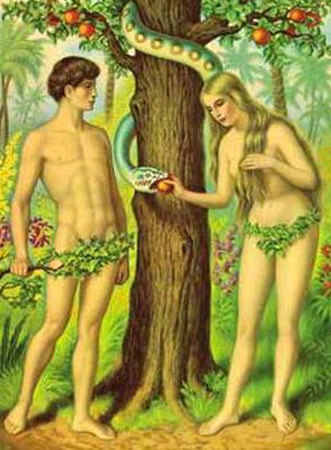
First, there are immediate consequences to the fall of man [3:7-13]. The major immediate consequence of the fall was death [Romans 3:23]. No longer was man innocent. They now knew right and wrong and their innocence could not be undone. This was not the only immediate consequence for sin.

Immediately sin brought guilt [3:7]. Satan promised Adam and Eve freedom, instead they received guilt. They thought sin would bring freedom, but all it brought was bondage. Their guilt caused them to be ashamed. They once were naked and unashamed, now they were naked, humiliated, and ashamed. They noticed their nakedness. Now, no one told them they were bare-naked, they simply felt open and vulnerable because God uncovered their hearts.

Immediately sin brought alienation from God [3:8-13]. Man was fooled into thinking they would be like God, instead they found themselves hiding from God. Like little kids hiding from their parent they tried to duck and cover from God but that is impossible [i.e. talking to bf or gf, porno under bed, drinking, immodest outfit, homework, etc.]. How silly is it to hide from an all-knowing, ever-present God? Sin makes you stupid. Have you ever watched COPS? Sin makes you do silly things. Sin alienates mankind from God, which breaks their relationship with Him.

Do you notice God has a lot of questions of Adam and Eve? Why so many questions? Through a few direct questions God quickly uncovers man’s heart. What you cover, God uncovers. However, what you uncover God covers. What Adam and Eve should have done is confessed to God immediately. When God asks, “Where are you?” They should have responded, “Here I am, I have sinned against you, God.”

You cannot run from God, for long. He is a pursuer. Man does not seek God; God seeks man. He is on a mission to “seek and save the lost [and hiders].” No matter how far or fast you run God, He is right there. You cannot shake Him. He is a pursuer because He is a lover. Will you stop running? Are you willing to come out of hiding and uncover your shame?

Second, with the fall of man came specific curses and consequences for specific characters [3:14-19]:

Character Curse Consequence
Serpent [14-15]


Note: he has already Fallen.

Cursed above all animals

Eat the ground [Cf. Is.65:25]

Made enemy of Seed

Death and promised judgment [3:15]
Woman [16] Pain in childbearing, childrearing, childbirth, & parenting [cf.Gen.1:28] Desire to rule over husband [i.e. control, dominate, manipulate, boss, cf. 4:7]
Man [17-19]


Note: Man was with Eve when she sinned. God holds him responsible for family.

Ground is cursed [17]

Struggle against the ground [18-19]

Go back to the ground [19]

Banished from the Garden [23]

Ground treat man like man treats God.

Weeds will mock man. Work will mock man.

Alienation from the land and Paradise. Relationship with ground and God affected.

Third, there are long-term consequences because of the fall of man [Genesis 3:20-24]. Shame caused the two-sinners to sew fig-leaf-undies to cover their nakedness. Like soldiers arming themselves with protection and defense they cloth themselves with weak and useless greens.[1] Notice God does not shame them even more because of their new Fruit of the Looms; rather God replaces their man-made coverings with a sacrificial garment [v.21]. God does for man what they cannot do for themselves. God sheds animal blood to give them a garment to wear, which begins the biblical theme of sacrifice, which weaves its way through Scripture.

The consequences for sin are serious, but God in His grace sends a sacrifice. Adam and Eve’s garment is the first sacrifice of many bloody sacrifices to come that stretch all the way to Jesus Christ on the cross [cf. John 1:29]. He is the Sacrificer for mankind’s sin, and therefore the self-declared Savior for mankind.


[1] Cf. Deuteronomy 28:48; Job 1:21; Isaiah 58:7.

7 important truths about temptation

1. God is not subjected to temptation and is not the source of temptation [James 1:13].

2. Temptation comes from lusts [James 1:14], covetousness [Proverbs 28:20; 1 Timothy 6:9,10], the devil—the author of temptation [1 Chronicles 21:1; Matthew 4:1; John 13:2; 1 Thessalonians 3:5], and evil associates—the instruments of temptation [Proverbs 1:10; 7:6; 16:29].

3. Often temptations come from poverty [Proverbs 30:9; Matthew 4:2,3], prosperity [Proverbs 30:9; Matthew 4:8], seeking worldly glory [Numbers 22:17; Daniel 4:30; 5:2; Matthew 4:8], distrusting God’s providence [Matthew 4:3], presumptions [Matthew 4:6], worshiping the god of this world [Matthew 4:9] and often strengthened by the perversion of God’s word [Matthew 4:6].

4. God permits temptation as a trial of faith [1 Peter 1:7; James 1:2,3], disinterestedness [Job 1:9-12] continual conformity to the nature of man [1 Corinthians 10:13], and often ends in sin [1Timothy 6:9; James 1:15].

5. Christ endured temptation from the devil [Mark 1:13], endured temptation from the wicked [Matthew 16:1; 22:18; Luke 10:25], resisted temptation by the Word of God [Matthew 4:4, 7,10], overcame temptation [Matthew 4:11], sympathizes with those under temptation [Hebrews 4:15], is able to help those under temptation [Hebrews 2:18], and intercedes for his people under temptation [Luke 22:31,32; John 17:15]. Christ keeps faithful believers from the hour of temptation [Revelation 3:10].

6. God will not subject believers to temptation beyond what their powers can bear and will make a way for believers to escape out of temptation [1 Corinthians 10:13]. God enables the believers to bear temptation. God knows how to deliver believers out of temptation [2 Peter 2:9].

7. Believers should resist temptation in faith [Ephesians 6:16; 1 Peter 5:9], keep watch against temptation [Matthew 26:41; 1 Peter 5:8], pray to be kept from temptation [Matthew 6:13; 26:41], not to tempt others [Romans 14:13], restore those overcome by temptation [Galatians 6:1], avoid the way of temptation all together [Proverbs 4:14,15], have strength through the weakness of the flesh [Matthew 26:41], may be in heaviness through temptation [1 Peter 1:6], and are rewarded for overcome temptation [James 1:2-4,12]. Professors of Christ fall away in time of temptation because they never really possessed Christ [Luke 8:13].

Biblical examples temptation: Eve [Genesis 3-5], Joseph [Genesis 39], Balaam [Numbers 22:17], Achan [Joshua 7:21], David [2 Samuel 11], Jeroboam [1 Kings 15:30], Peter [Mark 14:67-71], and Paul [2 Corinthians 12:1-10; Galatians 4:14].

lead me not into temptation

Computer viruses are almost like human viruses. Computer viruses have memories, can be caught anytime or anywhere, they can even be lethal to your computers health by sabotaging your files, programs, security system, and causing your hard drive to crash. Computer viruses have cause a lot of damage, cost lot’s money, and caused a lot of frustration from lost information [Solution = Buy a Mac. I just had to throw that in there!].

Temptations are a lot like computer viruses. As followers of Christ, you have incredible foolproof anti-virus software. 1 Corinthians 10:13 says, ”No temptation has overtaken you that is not common to man. God is faithful, and He will not let you be tempted beyond your ability, but with the temptation He will also provide the way of escape, that you may be able to endure it.” Before we look at how to handle temptations, let’s look at the sources of our temptations.

What is the Source of My Temptation?

The Tempter. Satan in the Scripture is called, the tempter [Matthew 4:3; 1 Thessalonians 3:5]. He is sneaky and sly little serpent. He is like a computer hacker that seeks to cause havoc in your life. He knows when your security system is the weakest. He doesn’t know your wiring quite like God because he is not omniscient. However, he has been around humans for a long time. Therefore, he knows your heart tendencies.[1]

People tend to give into Satan’s lucrative temptations. It is too easy to blame your sin on the serpent. Therefore, when people sin, you will often hear the excuse, “The devil made me do it.” Does the devil really make you do it? Does that devil really cause you to sin? No, you decide to sin. You do not have to choose to sin no matter how enticing it is. “Resist the devil and he will flee from you.” [James 4:7]

The Heart. The Bible describes the heart as your inner man—the real you—where your beliefs affect your behavior. Your heart is your control center. The Bible says there is something seriously wrong with your heart. Your control center has a glitch in its main frame, “The heart is deceitful above all things, and desperately wicked: who can know it?” [Jeremiah 17:9] Your heart is sick and contaminated with a spiritual virus inherited from birth by your first parents in the Garden of Eden.

The World. Your world is warped by sin and temptation. Love for the world begins in the heart. The Bible warns, “Do not love the world or the things in the world. If anyone loves the world, the love of the Father is not in Him.” [1 John 2:15] Worldliness is exalting yourself and excluding God, for the next verse says, “For all that is in the world—the lust of his flesh, the lust of his eyes, and the pride of life—is not of the Father but is of the world.” [1 John 2:16].

The world knows you crave love and affection, fame and fortune, comfort and peace. The world makes it so appetizing you got to have it. And the devil is the world’s best promoter and commercial advertiser because he is the “god of this world.” [2 Corinthians 4:4]. He has corrupted the system by placing a lie in your mind that you are the center of the universe and God is subservient to all your wants and wishes. James 4:4 says contrary, “Whoever therefore wants to be a friend of the world makes himself and enemy of God.”

Do you believe Common Lies Concerning your Sin and Temptations?

It is common to believe lies about the temptations you face. 1 Corinthians 10:13, clears up many lies you will have about daily temptations you come across.

LIE #1: “No one else is going through what I’m going through.” Whatever temptation you face is not unique to you. Someone in human history has faced it too. Your temptation is not a “special case.” Satan would love to convince you that it is special so that you do not seek help because no one will understand. Although, a member of your church might not have walked in the shoes of your temptations more than likely they have walked through similar temptations since “no temptation has overtaken you that is not common to man.” Seek accountability through temptation for a single string by itself is weak, but strings woven together into a cord are strong [1 Corinthians 12].

LIE #2: “God must not care about me, since He caused this temptation.” God is never the cause of temptation [James 1:13-14]. God does not tempt because He is not evil. He allows temptation [Job 1-2] within certain parameters. The Bible is clear; you are tempted by your own desires [James 1]. On the flip side, “God is faithful.” He will help you through temptations, giving you the strength to overcome, and restoring those who fall seeking Him for repentance. Sinners are never beyond God’s ability to restore.

LIE #3: “My temptations are too strong for me to resist.” Temptations do become stronger the more you give in. However, you will never have a temptation too strong you can’t get out because God “will not let you be tempted beyond your ability.” This is a precious promise from God.

Often we interpret this verse to have reference to temptations that test our limits to the extreme. We make the verse say something that is not really there. We use it to create an illustration that the war against Satan and temptation is no problem at all. God, will not cause us to go up against something that we are not eminently qualified to face. And when life throws things at us that are overwhelming, we wonder why our experience doesn’t match our understanding of this verse. It is easy to lose heart. Our struggle is not against flesh and blood, but against powers and forces of darkness [Ephesians 6:12]. He allows us to go up against these enemies, and gives us the resources to engage them and endure through the struggle [Ephesians 6:14-18].

LIE #4: “There is no way out, therefore, I must give in.” God always gives you an escape hatch, “with the temptation He will also provide the way of escape, that you may be able to endure it.” If you do not know a way out, pray. As Jesus taught you to pray, “Lead us not into temptation, but deliver us from evil.” [Matthew 6:13; cf. John 14:14; James 4:2] Often our only escape is to endure through it [cf. James 1:12; 1 Corinthians 6:7]. As A.B. Simpson wrote,

“Temptation exercises our faith and teaches us to pray. It is like a military drill and a taste of battle for a young soldier. It puts us under fire and compels us to exercise our weapons and prove their potency. It shows us the recourse of Christ and preciousness of the promises of God. Every victory gives us new confidence in our victorious leader and new courage for the next onslaught of the foe.”[2]

How Can I Overcome Sin, Temptation, and a Wicked Heart?

First, read, know, and rehearse the Word of God. When Jesus was in the wilderness being tempted by Satan, the devil undermined God’s Word, twisting it, and mixing enough truth to make it sound so tasty [Matthew 4:1-11]. Satan is crafty and cleaver with his use of Scripture. Be ready for the devil by reading the Word of God regularly and daily. Don’t just read it, know it, and memorize it. Filling your memory with God’s Word can help you detect tempting viruses. This is why David wrote, “Your Word I have hidden in my heart that I might not sin against You.” [Psalm 119:11] The Word of God is the sword of the Spirit [Ephesians 6:17]. It is a defensive weapon against the wiles of the devil. Wield it. Train to use it well [1 John 2:5]. Be ready to whip it out for action.

Second, run from sin, Satan, and temptation. There is no sense in sticking around to see if you are strong enough to fight sin on your own. You will lose. Guaranteed. Therefore, run like hell or else hell will have a handle on you. If you hop in a canoe and begin paddling down the Niagara River you will soon find the current moving faster and faster. It is easier to pull out far upstream than just before the falls. There comes a point of no return when you will not have strength in yourself to turn back and fight the current. It is best to not even get into the boat or go near the river. Run.[3]

Third, love your Lord Jesus Christ. When you love Jesus, things of this world and desires of your heart seem shallow compared to the depths of Christ’s riches. Think about the cross of Christ and His love for sinners [1 John 3:16]. James 1:12 says, “Blessed is the man who endures temptation; for he has been proved, he will receive the crown of life which the Lord has promised to those who love Him.”

In conclusion, temptation is something every human faces. Temptation in and of itself is not sin, but it is the first stage towards sinning. Temptation comes at you like blazing arrows at from Satan, the world, and your wicked heart. Your only vaccination to combat the constant nagging attacks of temptation is using the Word of God and loving Jesus Christ. Jesus was tempted, but did not sin [Hebrews 4:15-16]. Therefore, He knows the full weight of temptation because He did not give into it.

Is there hope for me if I have given into temptation and sinned? Yes. Restoration through Christ is possible. You never can go to far from God not to be made right through Christ. Repent of your sin and restore your need of Christ for the strength to endure through temptation. Live victorious because Christ is your sin conquering King. He has crushed your foes upon the cross.

For further reading check out John Owen’s work, Overcoming Sin and Temptation.


[1] 10 Temptation Truths: 1. Satan is a real Enemy; 2. Satan will H.I.T. you (Hungry, Isolated, or Tired); 3. Jesus is your victorious Warrior-King; 4. The Holy Spirit is your power; 5. Biblical truth is your counterpunch; 6. Christ is your identity; 7. Escape is always possible; 8. Satan eventually taps out; 9. Repent whenever you tap out and fight another round; and 10. Life is a battle with many rounds.

[2] A.B. Simpson, Christ and the Bible: The Epistle of James. Christian Publications, Harrisburg, PA. 1886. 9.

thumb lick thursday [3.10.11]

What is Spiritual Warfare?

Spiritual warfare is not about naming territorial spirits, claiming the ground or binding demons. It is all about the gospel. It is to live a gospel life, to preserve gospel unity and to proclaim gospel truth. It is to do this in the face of a hostile world, a deceptive enemy and our own sinful natures. And it is to pray to a sovereign God for gospel opportunities. Advance comes through godliness, unity, proclamation and prayer. – Timothy Chester, The Message of Prayer. IVP, Downers Grove, IL. 2003. 231.

Westminster Confession Revisited

Have you ever read the Westminster Shorter Catechism? Really read it, closely? Matt Kirkland just started, and man – it’s beautiful. This project is both a study aid, as well as a small way for an creative artist to interact with the text.

The Prodigal God

In Timothy Keller’s sermon on the Prodigal God, he share from Luke 15 how both the rebellious younger brother and religious older brother are both lost, and the father’s character is exceptional abnormal,

“The hearts of the two brothers were the same. Both sons resented their father’s authority and sought ways of getting out from under it. They each wanted to get into a position in which they could tell the father what to do. Each one, in other words, rebelled–but one did so by being very bad and the other by being extremely good. Both were alienated from the father’s heart; both were lost sons. Do you realize, then, what Jesus is teaching? Neither sons loved the father for himself.” – Timothy Keller, The Prodigal God. Dutton, New York, NY. 2008. 36

Religion operates on the principle of “I obey–therefore I am accepted by God.” The basic operating principle of the gospel is “I am accepted by God through the work of Jesus Christ–therefore I obey.” [114]

Volkswagen Commercial: The Force
The spot features a pint-sized Darth Vader who uses the Force when he discovers the all-new 2012 Passat in the driveway. It leverages humor and the unforgettable Star Wars™ score to create an emotional commercial.

the colossal compromise

A city family bought a ranch out West where they intended to raise cattle. Friends visited and asked if the ranch had a name.  “Well,” said the would-be cattleman, “I wanted to name it the Bar-J. My wife favored Suzy-Q, one son liked the Flying-W, and the other wanted the Lazy-Y. So we’re calling it the J-Q-W-Y Lazy Suzy Flying Bar Ranch.” Their friends asked, “But where are all your cattle?” In disbelief they responded, “None survived the branding.”

Compromise is a part of life. Everyday you are faced with decisions where you have to give up something good for another good. Do I study or do I play soccer? Do I visit this family member or do I visit this old friend? Do I go out to eat for pizza or a hamburger? Do we go on vacation to the beach or the mountains? Compromise is simply changing the question to fit the answer.[1] Sometimes you cannot have both and you must compromise. Sometimes compromising is not this simple. Sometimes compromises can have a great affect on you and others depending on which option you choose. Sometimes people compromise deep-rooted beliefs or sacrifice morals to get what they want.

Why do people compromise their faith? Why do people fall away from their faith? The answer: people give into the colossal compromise. What is the colossal compromise? It is choosing to worship creation or the created thing rather than the Creator [cf. Romans 1:19-23]. Or it’s choosing to worship a man-made god or made-over god in the place of the real God.

Giving God a Makeover [Isaiah 44:6-20]

How do you give God a makeover? As the French philosopher Voltaire said, “God made man in Hus image, and man returned the favor.” In other words, giving God a makeover is to create a god in your image—a god that looks a lot like you. Creating a user-friendly god is not something that is new, since the beginning of creation man has been trying to recreate God to look more like man. Since, God is infinite, man tries to make Him more finite. Man desires a designer deity custom-made to suit out individual needs.

Have you created a god that fits your liking? People tend to cut-and-paste Scripture piecing together a nice and comfy-cozy god that puts up with their messes [by passively overlooking offenses], minds his own business [unlike a pesky parent], approves of their choices [of premarital sex, rebellious friends, and additive tendencies], and gives into their desires [like a genie in a bottle]. Thomas Jefferson made up a god like this with his Bible. He could not believe that Jesus could do supernatural miracles, so he cut out those passages in the Bible and made a version of god to his own liking that fit his own belief. Now known as the Jefferson Bible.

The Bible warns about a time when good religious Christians will compromise their faith to teachers who will tickle their ears and tell them what they want to hear, rather than speaking the truth [1 Timothy 4:1-6]. These false teachers are master sculptures at creating false caricatures of God that morphs from crowd to crowd pleasing particular peoples fancies. Like a chameleon they adapt to your ever-changing desires, helping you give God a makeover. People will go to great length to get the god of their liking [i.e. Isaiah 44:12-17]. Instead of listening to compromisers or sinful-sympathizers, challenge teachers words with the truth of God’s Word in its context—look for yourself and see if it is true.

What is the problem with giving God a makeover? You are not God. Remember, God made you. You cannot make God. Making over God is making an idol of your own god. God does not need a makeover, you do. God is a jealous God and desires no rival god, in fact, He puts your gods up for an old Western-style dual, “I am the first and the last; besides Me there is no god. Who is like Me? Let him proclaim it. Let him declare and set it before Me…Is there a God besides Me? There is no Rock; I know not any.” [Isaiah 4:6-8]

The problem with making over your own god to fit your own image is that your god is nothing [Isaiah 44:9-11]. You become deaf, dumb and blind just like the gods you worship [44:18-20].[2] You become what you worship for ruin or restoration.[3] You always lose out when you try to compromise with sin. It will consume you in the end. Let’s observe this consuming compromise from an illustration within the Bible.

What is your golden calf of compromise? [Exodus 32:1-24]

Remember when the children of Israel were wandering in the desert and they created for themselves an idol of gold in the shape of cow? This was a colossal compromise. God commanded His people though Moses in Deuteronomy 5:7, “You shall have no other gods before me.” [cf. Exodus 20:3-4] Once Moses was out of range the people caved into to their created idols. Their idol was big and noticeable. Not all idols are so easy to spot. Here are some golden calves that might go undetected to the human eye:

Idol of people. People can become idols. Moses was idolized by the Israelites. When Moses went up to the mountain their man was gone, and Israel freaked [vs.1-20]. They looked for a loophole, “Moses is a good guy and all, but he’s gone, who knows if he’s coming back? We just can’t live up to his godly standard. He’s so spiritual. Let’s lower the bar a bit. Aaron’s a softy, surely he will cave in.” Thus people look for others who will sympathize with their sinfulness and help them to compromise. Like playing Jenga, stacking more bricks on an already unstable structure doesn’t offer a solution. Sooner or later the tower will crumble, and Christians look no different than their worldly counterparts. If your relationship with God depends upon another person, friend, or pastors that is not a good sign. People are great for growing spiritually, but your key relationship must be Jesus.

Idol of possession. Do you see stuff as an idol? Instead of owning your possessions, your possessions own you. This began in the Garden of Eden, when your first parents wanted to possess God’s wisdom. Believing a lie they had to eat the fruit to be like God. According to your world, possessing money is power. The world’s motto and mantra is, “gotta have it.”  1 Timothy 6:10 says, “For the love of money is the root of all evil.” Like the rich young ruler, money and material possessions can lead to an improper love and a distorted image of God [Mark 10:21; Matthew 6:24].

Idol of provision. Whether it is food, sex or additive tendencies mans desire for peace, comfort, and ease are all provisions that man idolizes [Philippians 3:18; Ecclesiastes 2:10-11]. Advertisers make millions off of products you are led to believe will make you feel better, run faster, climb higher, accomplish quicker, or make your life easier. What you find out moments after getting the thing doesn’t quite meet the hype, and its off to the next thing. Men and women are pleasure junkies, but we seek pleasure in lesser pleasures [1 Timothy 5:6; Galatians 6:7-8].

Idol of pride. Pride prizes you as the idol. In fact, all idolatry comes down to you. Idolatry of pride is Insidious—little by little, over a long period of time you become pompous and self-serving. Pride takes many shapes and comes in many sizes, most of which our culture promotes, “Love yourself. Believe in yourself. Be proud of yourself.” All balloon our heads to the size and shape of planets that we sit enthroned upon as the most-high-galactic-ruler.

Idol of piety. Being religious can be a ginormous idol. Even those who go to church regularly, read the Bible and pray everyday, and know the religious lingo to make great idolaters. Their religious habits become idols colored by stain glass windows. They say to God and others, “Look at me. Look how committed I am.” They are great actors that play the part of the second coming of the messiah. All the while under their mask they are rotten to the core riddled with pride and self-centered piety [cf. Isaiah 29:13].

God does not let idolatry go on unnoticed. He hates idols. What did God call these cattle-loving idol worshipers? [v.9] He said they were a stiff-necked people. Why would God call them stiff-necked? They had become like cow they worshiped. Have you ever noticed how stiff a cow’s neck is? Cows look like people who have seriously thrown their backs out. Worse yet, they were like stupid cows [vs.21-24; cf. Psalm 106:19-21]. They stray away from the herd like ornery calves too cool for corral. Moses asked Aaron, “What did this people do?” And Aaron responded, “You know these people, they are set on evil…I took their gold, threw into the fire, and out came this calf!” Doesn’t sin make us moooo-cho grande morons?

Can a god-compromiser be salvaged? [44:21-28]

A god-compromiser can be salvaged because God is a Redeemer,

“Remember these things, O Jacob, and Israel, for you are My servant; I formed you; you are my servant; O Israel, you will not be forgotten by Me. I have blotted out your transgressions like a cloud and your sins like a mist; return to Me, for I have redeemed you…Thus says the Lord, your Redeemer, who formed you from the womb: ‘I am the Lord, who made all things, who alone stretched out the heavens, who spread out the earth by Myself, who frustrates the signs of liars and makes fools of diviners, who turns wise men back and makes their knowledge foolish.” [Isaiah 44:21-28]

God uncovers our colossal flaws, but covers them up with His redemptive plan. Like a potter can fix a leaky or cracked pot, so can God reshape us into His image [cf. Isaiah 64:8]. He reverses us from reflecting our idols to reflecting His image. It begins with repentance and restoration. Flee idolatry. Idolatry is a matter of the heart. Compromise reveals the commitment of your heart. The antidote is Jesus. Jesus is an idol crusher or killer. If you love Jesus solely you will flee from idolatry [1 Corinthians 14:14-22].

Jesus does not settle for cheap imitations or substitutes of God, He wants you to imitate God whose image you created in [Genesis 1:26-28]. Why settle for a substitute, when you can have a relationship with the real God?


[1] Merrit Malloy, Things I Meant to Say to You When We Were Old

[2] cf. Isaiah 6:9-14, 29:9-16; 32:1-4.

[3] Note: G.K. Beale, We Become What We Worship. IVP, Downers Grove, IL. 2008.

how sin infects

With the entrance of sin into the garden a devastating chain of events happened within relationships and creation. In the Fall of Mankind into sin you learn what went wrong with the world in which you live. Sin is like a contagious infection that spread like a rapid plague through this world infecting the heart of man and the creation God made.

First, sin infects man’s relationship with God. The first man and women were created to know God and fellowship with Him in the Garden of Eden. The garden was a temple where they could, walk, talk and worship God.

Rather than responding to God in dependence their sinfulness craved independence. Like a teenager desiring independence from their parents, such is the state of man ever since the Fall—in a battle to become god in ourselves or create our own gods that were lift up higher than the One True God [Romans 1:21-25]. All gods we create are cheap imitations and lead man into confusion and frustration because they never quite satisfy like a relationship with God.

Second, sin infects affects man’s relationship with one another. Sin has devastated and disintegrated human relationships. I have seen in my short lifetime the devastating effects of sin within relationships. I have seen how bitterness and anger rip apart friendships, how temptations and immorality explode a marriage, how rape and abuse tailspin a women’s trust in a man, how a woman’s words emasculates a man, how fathers neglect their homes, how mothers forsake their babies, how siblings splinter over self-centered rivalries and jealousy, how tyrant bosses inflict their fearful subjects with slavish tactics, how governments sponsor genocide upon people groups. Sin has infected every relationship at every level. Man’s inhumanity to man has been the story of human history.

Third, sin infects all of creation [Genesis 3:17-19; Romans 8:20-22]. Humans are not the only ones affected by the Fall. The material world now resists man and makes life hard for him. Creation groans under the affects of the Fall. Sickness, crime, poverty, injustice, suffering, famine, death—this in not the world God created it to be. The sin of mankind is the source. So what must be done? What did God do? What can man do?

The infection of mankind sin has been passed down from generation to generation. It has permeated every living soul. As discussed, sin infects man’s relationship with God, man’s relationship with fellow man, and all of creation bears the scars of sinfulness. God, like a Great Physician is able to remove the cancerous tumor at a cost with consequences [more on this next week].

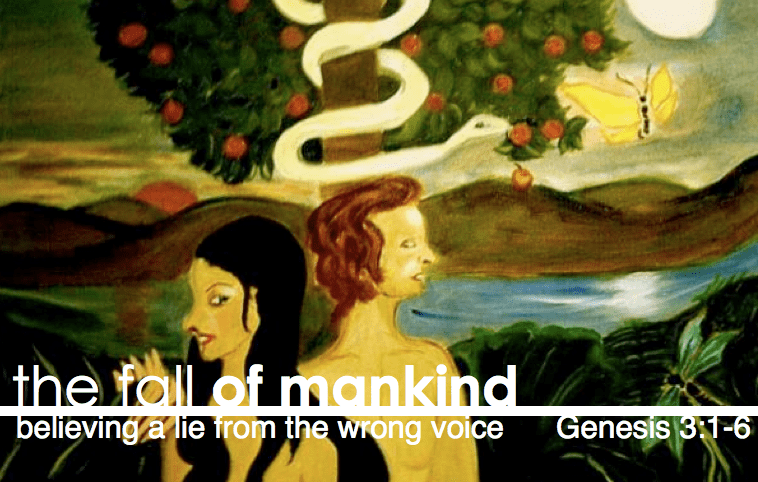
believing a lie from the wrong voice

The Garden of Eden was a place of beauty; a place untainted by sin and its crippling, polluting, heartbreaking effects; a place where they could hear and communicate with the voice of God; a place of intimacy with man and of intimacy with almighty God. Everything God created He says is “good.” Adam and Eve’s world was a paradise.

One rule. All Adam and Eve had in the Garden was one rule, “You must not eat from the tree of the knowledge of good and evil, for when you eat of it you will certainly die.” [Genesis 2:17] Like a kid left alone with a cookie jar, our first parents started the first rebel-ution against their Heavenly Father.

If Genesis 1–2 was paradise, then Genesis 3 is paradise lost. Through one foolish and rebellious rule breaking act—eating the fruit God had forbidden—Adam and Eve lost their innocence, dignity, home, and relationship with God, “through one man sin entered into the world, and death through sin, and so death spread to all men, because all sinned.” [Romans 5:12] How did the Fall of Mankind happen?

The voice of God is the only voice Adam and Eve have know, however, a strange voice enters the Garden. The voice comes from a serpent. The serpent is defined later in Scripture as the “one of old who is called the devil and Satan, who deceives the whole world” [Revelation 12:9]. He is a voice filled with lies. Jesus calls him the “the father of lies” [John 8:44]. Satan is sneaky and his first recorded words are deceitful and crafty [3:1]. Satan is no less crafty and deceitful today. How does he deceive with craftiness?

Satan seeks to confuse. His question for Eve was, “Did God actually say?” [3:1]. In other words, “Are you sure that’s what God said?” Eve heard God’s command loud and clear, but the serpent planted doubts in her head. He tries to confuse you too, “Maybe that verse doesn’t really mean what it looks it means. Maybe God doesn’t mean for you to take that literally. Maybe…Maybe…Maybe…” Satan’s strategy is to make you doubt the clear teachings of the Bible.

Satan twists God’s words. Satan puts words in God’s mouth, “Did God actually say, ‘You shall not eat from any tree of the garden’?” Nope. God did not say that! God told Adam and Eve they could eat from any tree of the garden—except the one [2:16–17]. Satan makes God look like a bully. Satan will says things like, “God won’t care if you take just one look. It won’t hurt anyone.” Or, “If it’s fun, why would it be bad?” Remember, God is good and Satan twists.

Satan comforts your conscience despite the consequences. He tries to ease the idea of actual consequences, “You will not surely die!” [3:4]. It is as if Satan is saying, “God’s not going to kill you over a small bite. Eating that apple is not a big deal. Go ahead. You know he will forgive and forget.” He is essentially saying God is a liar, but Jesus says that Satan is the liar [John 8:44]. This is where man needs to make a choice—believe God or not? God speaks the truth, “the wages of sin is death” [Rom. 6:23].

Satan speaks enough truth to make sin sound tasty. There is enough truth in Satan’s statement, “God knows that in the day you eat from it your eyes will be opened, and you will be like God, knowing good and evil.” [3:5]. Satan is making sin sound so freeing. Satan promised Adam and Eve freedom, instead they received guilt [3:7]. Sin’s promises are like a mirage that never appears. They were fooled into thinking they would be like God, instead they found themselves hiding from God [3:8–10]. Satan fell to pride and he knows mankind is just as foolish. Today, we view pride as a virtue and submission to authority as a weakness. The world says, “Do want you want. Do what makes you feel good. Go for it. Live you best life now. Be proud of yourself. Have more self-esteem.” All the while Satan has you heart bait-and-switched on yourself.

It is important to note that God created the smart-mouthed serpent, Satan. What you do not hear in Genesis, but is explained later in the Scripture is that Satan and 1/3 of all the angels of heaven who sided their allegiance with Satan’s ego-trip rebellion against God were cast out of heaven. Satan is not co-equal with God, over God, or in some cosmic battle of good and evil with God. God has no match; He has no equal, nor is there anyone like Him. God has Satan on a tight leash and Satan knows it. Satan, like mankind is a created being and is dependent upon God like all for God’s creation, however he has been around a while and knows the sinful ways of man, which makes him very smart and more experienced in the ways of sin than you. Be careful what voice you listen to. Make sure the voice matches the character of God.

the goodness of God

The Goodness of God

A book review of The Goodness of God by Randy Alcorn

Why is there pain and suffering in the world? Why would a good God allow such evil to transpire on His watch? These are difficult questions that have drawn people to God or repelled them from Him. These difficult questions have even sifted out Christians from among the ranks, “Evil and suffering have a way of exposing our inadequate theology. When affliction comes, a weak nominal Christian often discovers that his faith doesn’t account for it or prepare him for it.” [5]

In his book, The Goodness of God, Randy Alcorn practically, personally and biblically addresses common misunderstandings about why a good and sovereign would allow or permit suffering and evil to affect His creation. He points out the flawed thinking of many world views [i.e. relativism, buddhism, pantheism, atheism, dualism, open theism, gnosticism, etc.] that seek to diminish and deactivate God’s goodness in the face of pain and suffering in the world. Here are some of the questions covered in the book that aim to give you assurance in the midst of suffering.

If God is really good why is their evil?

Evil cannot exist without the good it opposes. It’s not so much the removal of good as it is the corruption of good. As metal does not need rust, but rust needs metal, so good doesn’t need evil, but evil needs good [10]. From the beginning God intended the permission of evil, but to turn it on its head and show His highest good in the midst of it. The ugliness of evil demonstrates the beauty of God’s goodness.

If God is good why all the suffering and pain?

Evil is the source of suffering. Suffering would not exist if there were no evil. With the Fall of man came suffering and pain as a righteous consequence man’s sinful disobedience. God allows and permits suffering and pain as part of His divine plan. Though God is not the causer of evil, but he is the author of the story that includes it [15].

If God is good why doesn’t he deal with evil?

He will. No evil will ever go unpunished [61]. Where is the justice? Sometimes God’s delay in our finite mind and time frame seems unjust, but “God delays justice not to make our lives miserable, but to make our lives possible.” [62] God’s delay is actually good, it allows for His grace to give us time to turn back to Him.

“Grace isn’t about God lowering His standards. It’s about God fulfilling those standards through the substitutionary suffering of Jesus Christ. Grace never ignores or violates truth. Grace gave what truth demanded: the ultimate sacrifice for our wickedness.” [24]

The problem is, “we want selective justice, not true justice. We cry out for justice when we really want vindication and special treatment–relief from injustice done against us, without being judged for injustices done by us. Since God is just, he cannot always give us the justice we want without also giving us the justice we deserve.” [62-62]

Our problem is further amplified because “we are utterly unqualified to assess how often we sin and how bad our sins are. Sin mean nothing to those who are riddled with it.” [85]

If God is good what is the purpose of evil?

Evil is never good, yet God can use any evil to accomplish good and sovereign purposes [34]. We would much rather have suffering and pain disappear and go away. However, is for our good and God’s working in us. What glorifies God is good for us [103],

“Suffering exposes idols in our lives. It uncovers our trust in God-substitutes and declare our need to transfer our trust to the only One who can bear its weight. We imagine God as our genie who comes to do our bidding. Suffering wakes us up to the fact that we serve Him, not He us.” [100]

In conclusion, there are more biblically satisfying answers to the questions above, which I did not mention along with encouraging and challenging stories of many who have walked through the fires of suffering and pain, but came through refined.

My only beef with the book is that it is too short. There is a practical solution. Get the bigger book. The Goodness of God is a snapshot of the panoramic taken from Randy Alcorn’s bigger treatise on the goodness of God in, If God is Good: Faith in the Midst of Suffering and Evil (2009, Eternal Perspective Ministries). The appetizer is a tasty teaser that makes you hunger for the main course.

God, you really didn’t mean to say that?

“Do not love the world or anything in the world.” [1 John 2:15] Why do people—even Christians—not like this verse? Why would I rather cut it out of our Bibles than paste it into my lives? This is not a verse you underline as a favorite, claim as your life verse, or even care to like. In fact, most would say, “You can’t be serious? This verse sounds so Puritan. This verse is awfully intrusive. Shouldn’t it say, ‘Don’t love some things, rather than anything?’ Surely this verse is for people in Jesus’ day, not us?” No. It is for you. There is no way around it. And God is serious. He does not want to be equal or lesser loved than anything in this world.

What does it really mean not to love the world? What does it mean for me? Does it mean I have to give up listening to unchristian music, R-rated movies, MTV, video games, making lots of money, gossip magazines, or my short shorts? If you were really honest you don’t want the answers, especially from a 2000-year-old book that may seem out of touch with today’s culture and trends.

There is a great danger to treating this verse—and for that matter, God’s Word—as trivial. God intended His Word to be heard. Every word He wrote is intended for created man to be listened and adhered to. Do not subtract from the simplicity of this verse because it makes you uncomfortable nor add complexity to it with legalistic rules impossible to follow. Do not empty its authority, nor add your own authority to it. If you ignore this verse or others like it you are being seduced by the very world that God asks you not to love.

Love for the World forsakes Love for God

What does it mean to not love the world? Is it that I am supposed to recycle and keep this world a greener place for the next generation? That is true, but that is not what world means in 1 John 2:15 [kosmos = order]. God created the people in this world with order and said it was very good.[1] However, those God created would rather worship the creation than the Creator. Therefore sin—an enemy of God—entered the world and creation fell into chaos away from God. To love the world is to love the fallen world, which Satan dominates and manipulates [John 12:31; 1 John 5:19]. Worldliness has a way of desensitizing [making you soft] towards sin making you think you are in control of the chaos.

To love the world is to worship self and stuff above the God-King who created the world. Does that describe you? Do you love the world more than God who created the world? Are you driven more by money, success, skills, and security than following the purposes of God? Are you ruled and dominated by the world? Are you waging war with God?

Don’t Disregard, but Learn from the Downfall of Demas

Demas is an example of one who was “in love with this present world” and drifted from God [2 Timothy 4:10]. The drift did not happen over night, it happened subtly, quietly and gradually. Demas was like a spiritual meteorite. One day he was burning bright, but the next faded into nothing. I have seen many Demas’ that have shot through the spiritual skies for .04 of a second. Only to fade and drift just as fast from the fellowship of the church, from reading the Word of God, from listening and applying the Word, from sharing their faith, from singing the songs and meaning it, from faithfully attending church, and from fighting against sin.

You too can become gradually weakened by the world nagging for your attention, subtly poisoned by the world’s promises, and eventually become conformed and accustomed to the world.  Are you drifting? Was there a time when you were passionate about God and doing things for God? Were you once devoted and committed to following Christ but seemingly lost that spark? Demas was like that too. Demas’ downfall from following Christ came from a lack of love for Christ; instead he cultivated his love for the world, which spoiled his spiritual taste buds.

Worldliness is Matter of the Heart and the Heart of the Matter is what you Worship

Love for the world begins in the heart. Your heart is your control center, which is where you entertain and energize your desires and passions [i.e. root produces fruit]. If your are rooted in loving the world according to 1 John 2:16 the fruit you will bear is, “the cravings of sinful man, the lust of his eyes and the boasting of what he has and does.” Craving, lusts and boasts are all rooted in the heart and their fruit is sinful chaos.

It is all about what you love and worship. This is why not only John but also Paul and James hold out the promises of life only to those who love God: “All things work together for good for those who love God and are called according to his purpose.” [Romans 8:28] “What no eye has seen, nor ear heard, nor the heart of man conceived…God has prepared for those who love him.” [1 Corinthians 2:9] “If any one has no love for the Lord, let him be accursed!” [1 Corinthians 16:22] “Has not God chosen those who are poor in the world to be rich in faith and heirs of the kingdom which he has promised to those who love him?” [James 2:5, cf. 2 Timothy 4:8; James 1:12]

The world demands and commands you to be preoccupied, captivated and obsessed with whatever is newest, greatest, and best. The world begs you to never be satisfied that you have enough. It makes you believe that you need the big title, the most attractive mate, the classy car, the fit figure, the fad clothing, and the thick wallet. Nothing of this world lasts. Clothes go out of style. Music fades. Movies go from the theater to DVD to the bargain bin at Wal-Mart. Famous people die and become forgotten. The glitter and glamour of this world lasts for its 15 minutes. Yet the Word of God and the gospel of Jesus Christ last forever. It is His fame that will stand the test of time. Sooner or later everyone will know that He is greater. Do you know Him? Does your heart faint for Him?

The Reward for Walking Away from Worldliness is out of this World

“The world and its desires pass away, but the man who does the will of God lives forever.” [1 John 2:17] If you choose worldliness you choose today. However, if you choose Christ you choose eternity. Worldliness is always about the now, not the later. Worldliness is about immediate gratification, not eternal satisfaction. If you do the will of God you will live forever. The choice is yours. What will you choose?

God will finally and ultimately deal with the prince and power of this world and create a new world where His Son will rule with righteousness and holiness, and I willingly subject myself to Him humbly, lovingly and joyfully. Look at Jesus. He lived in the world and walked your same sod. He could have demanded the riches, become king of the world, and wielded His power, but He chose the route of a humble servant. The power of the cross is able to help you defeat the strangle hold of the world upon your heart. As John Owen said, “When someone sets his affections upon the cross and the love of Christ, he crucifies the world as dead and undesirable thing. The baits of sin lose their attraction and disappear. Fill your affections with the cross of Christ and you will find no room for sin.”[2]

In summary, does God really mean to keep 1 John 2:15 in the Bible? Yes, He is serious as a heart attack about you avoiding affection for the world. Affection for your Heavenly Father chooses an Everlasting Kingdom. Either the kingdom of this world or the kingdom of Christ rules you. If you love the world, you don’t love God. If you love the world, you will perish with the world. And if you love God instead of the world, you will live with God forever.

You might be saying to yourself, “I don’t feel very much love for God right now.” There are two possible reasons for that. First, you are not part of the kingdom of Christ, or secondly, your love for God has been forsaken for love of the world. Love for God and the world cannot co-exist peacefully. This world is a battlefield, not a playground [cf. Ephesians 6:10-20]. Do not let your guard down, armor up. Victory is sure, but resistance is required. While being in this world, do not be like this world, “Do not be conformed to this world but be transformed by the renewing of your mind.” [Romans 12:1-2] “If you have been raised with Christ, seek the things that are above where Christ is, seated at the right hand of God. Set your heart on things above not on things that are on earth” [Colossians 3:1-2]. With the psalmist say, “Whom have I in heaven but You, and on earth there is nothing that I desire besides You.”


[1] Cf. Genesis 1:31; Psalm 24:1; John 3:16; 4:42; 6:51; 1 John 2:2; 4:14

[2] John Owen, Sin and Temptation, Vancouver, Regent, 1995, 62

key to understanding your heart

Have you ever had a set of keys that you just did not know what they unlocked? I use to have a small box of mysterious keys I no longer knew what they unlocked. I still keep many of them around just incase I have a door or padlock that I cannot open. Hopefully you are not missing a key to something important that I’ve borrowed and forgot to give back to you? It is frustrating not having a key to unlock something valuable to you [i.e. home, car, safe, etc.]. Sometimes it might feel like your heart is locked and you do not have the right key to understand.

In review, last week was a discovery of what is the matter with your heart. Luke 6:43-46 describes your heart like roots. Whatever you root yourself in that is the fruit you will grow. If you are rooted in evil you will bear evil fruit. If you are rooted in Christ you will bear Christlikeness. The only way you can change your heart is to understand what rules it. According to Ezekiel 14:1-5, your heart is infected by idols. The Bible is like a locksmith that opens the door to your heart and remedies its perilous condition. Today, let’s allow the Bible to be like a locksmith.

An examination of the condition of your heart shows a serious inner conflict [James 4:1-10]

James 4:1-10 is an expansion of the fruit and root illustration. James begins with the fruits and makes his way down the tree trunk to the roots. James reveals the fruit that hangs from everyone’s life is: conflict. Humans have a huge amount of conflict in their lives. You might not realize the amount because you are so used to it. Conflict might be as casual as who gets to use the bathroom first, who gets the last donut in the box, or what pizza toppings you want. Or the conflict might be as colossal as an abusive spouse, disgruntled boss, or rebellious children.

James calls you to do something radically different with your angry responses to human conflict. Rather than looking outside yourself to explain your anger, look inside your heart. James says your fights and quarrels “are at war within you.” You are angry and fight because that is what you desire and what you allow to rule your heart [i.e. idolatry]. Desires come from your heart. Desires of the heart are not all wrong nor are the fights always evil. The ability to desire was designed by God for good. However, human desires have become distorted through sin because you exchange worship of Creator for creation, which is spiritual adultery [4:4]. You give away your love for God to something else.

The heart is your control center. Your heart thinks, remembers, feels, desires, craves, experiences, makes choices, and acts. In other words, your heart is the base of operation for your cognition, affection, and volition. What your heart believes will affect your attitude, behavior and actions. Relationships, society, and culture might all influence your heart, but they are not the cause of your hearts control. You are in control of your internal responses to what is happening externally. What should your response be to sinful external influences? “With confidence draw near to the throne of grace, that you may receive mercy and find grace to help in the time of need.” [Hebrews 4:14-16]

There are a few common influencers on your heart that if not examined carefully can cause damage swiftly: anger, foolishness, despair and fear. Anger is like a like a hot flame that can inflict pain in its path and forgets about forgiveness and service. Foolishness does not think about the consequences of immediate satisfaction and forsakes seeking wisdom. Despair is like a wandering vagabond that gives up too soon on the path to paradise and foregoes trusting Gods promises. Fear has a firm grip on the opinions of man and an eye on the trial, rather than being unleashed by the love of God. How do desires take control of your heart? Let’s discover a deeper look at how our desires can be influenced towards sinful responses. Here is the digression how desires take the escalator downward:[1]

Changing your desires does not begin with controlling your temper, watching your tongue, or 4-step conflict resolution. Change is initiated when you “submit to God.” [4:7] You have to give up bowing your heart to foe-gods. Smash those idols and restore your allegiance to the One True God. Wash your hands clean and purify your hearts. When you radically destroy your idols and humbly restore with your Creator by drawing near to Him, He draws near to you [4:8].

Your heart problem can only be remedied by the power of Christ [Galatians 5:13-26]

God is like a master physician who knows your greatest need, gives your heart a true diagnosis, and provides you ultimate healing through the gospel. Do not be swayed by the allure of an alternate gospel, cheap grace or self-help. These will wreak havoc on your heart filling you with bondage, darkness and desperation. It is only the power of Christ that will remedy the sinful condition of your heart and give you the motivation for future healthy heart change. Christ does not desire you to be conformed to the image of this world, but to be transformed in the renewing of your mind. How does this transformation take place?

First, serve one another in love [5:13-14]. It is much easier to stir up a conflict that to serve another in love. “I want that donut,” is a natural response fighting for the right to eat the lonely donut in the empty box. It shouldn’t sound so Sesame Street to share that donut because you desire to serve someone else. To serve is the reason Jesus came. He did not come to be served. That makes Jesus strange. What King would stoop so low as to be a servant? Jesus did.

Second, understand the conflict is between your flesh and the Spirit [5:15-23]. Your flesh still desires to be rooted in the old dirt of your former sinful life [vs.19-21, 26], but your new life desires to be rooted in Christ [vs.22-25]. The fight is over the sacred territory of your heart. Who will you allow to be king, captain and champion of your heart—you or God?

Third, if you serve only yourself you will destroy all your relationships [5:14, 26]. Living in the flesh will crush others faith, break others hearts, crush their spirits, and grieve the Holy Spirit. The way you respond to conflict can either devastate or rejuvenate your relationships. Use your conflicts as an opportunity to influence others towards restoration.

Fourth, saying “no” to sinful desires is possible through the cross of Christ [v.24]. As a follower of Christ you have been united with Christ through His crucifixion. In other words, you died with Christ. When Christ rose you were raised to new life. In Christ, you have been given a Samurai Spirit, which in whom your have the daily help and power to resist the control of your sinful desires.

It is wise to ask yourself tough heart questions as if you are getting a thorough examination from the heart doctor.[2] You would not want to be careless because your condition could be as serious as an impending heart attack. When you ask questions of the heart do not rebuttal. Willingly accept the facts as they are and use them to motivate you towards change. Heart change sometimes seems like you are rowing upstream, but don’t stop midstream because you will swiftly drift backwards [cf. 1 Peter 3:18].

In conclusion, the gospel, particularly the cross, is the only remedy for your sinful heart condition. If you have never opened up the door to your heart to God today is the day. He holds the keys to your kingdom. He is the door to new life. Only He can give you a new heart that is fully satisfied in Him. Make Christ the passion of your heart today.

For further reading on the heart check out:

Idols of the Heart and “Vanity Fair” [David Powlison]

Understanding Influences on the Human Heart[Mike Emlet]

4 Common Heart Themes [Garrett Higbee]


[1] Chart is adapted from How People Change, Paul David Tripp, P.??

[2] 5 Heart Revealing Questions to Ask Yourself: 1) How important is ____ to you? 2) What do you like about ____? 3) How does ____ help you deal with life? 4) How is ____ helping you with God? 5) How can God and other help you with ___?

the heart of the matter

Why do I do the things I do? Why am I so angry? Why is my friend so depressed? Why was my family awesome one day, but now it seems like guerilla warfare? Why do I get angry in traffic? Why is she so critical and controlling? Why is he so ungrateful? Why is she so afraid? Why won’t he talk? Why am I the way I am? The simple answer is: the heart.

What is the heart? The heart is not just a muscle that pumps blood, the shape of a card you receive on Valentines Day, nor where romantic feelings come from. It is said that you cannot understand a human until you understand the heart. The Bible describes the heart as your inner man [spirit, soul, mind, emotions, passions, will, etc.]. The heart is the real you, where your beliefs affect your behavior. It is the control center of a your life.

There is something seriously wrong with your heart. Your control center has a glitch in the main frame. What is the matter with the heart? It is stained with sin. Sin is like the fat that clogs your heart from functioning properly. Sin is like eating a constant diet of junk that will eventually kill you if you do not do something about it. Sadly, there is nothing you can do about it. However, God has done something about it. He has given you Christ whom if allowed will do surgery on your heart opening up the clogged arteries and capillaries so His life-giving power can clean you from the consequences of sinful living.

The Bible Uses a Tree to Illustrate Heart Change: Fruits & Roots [Luke 6:43-46]

When the Bible speaks about fruit, it is usually referring to the responses to your behavior [what you do and think based on what you believe]. The fruit is what speaks in Luke 6:43-46. Jesus says something very powerful about words [i.e. fruit]: they flow from the heart [cf. Matthew 5:21-30].

Now it is important to understand that people and situations do not cause you say what you say or do what you do. Why can’t people cause you to sin? This may fly in the face of modern psychology and self-esteem talk, but you alone are responsible for the way you respond to people and situation. People and situations might influence you to sin because you are being blamed, threatened, manipulated, piled on with guilt, or spoken to unjustly, but you are the root causer of your responses to these influencers. Your words and responses are revealed in the fruits of your heart.

You can recognize a tree by the fruit it bears. If you plant apples what do you expect to take root? What if you plant giant pumpkin seeds? How about an acorn? The type of seed you plant is the plant that will grow. It is unnatural to plant a pumpkin seed and discover a few years later an oak tree. When you are dealing with plants you recognize there is an organic connection between the roots and fruit. The same is true with people—the roots of your belief bear the fruits that resemble

When the Bible speaks about roots, it is usually referring to your heart [where beliefs are born, incubated and grow]. You have the kind of fruit you bear because of your roots. You will speak and act the way you do because of what is in your hearts. The heart is how you function. Your sin problem is a result of our heart [cf. Matthew 23:25-26; clean cup]. You cannot change your behavior until you change your heart.

How can you change your heart? It begins by a change of belief [roots], which will affect your behavior [fruit]. When I was growing up my gramps had an apple tree. The apple tree didn’t produce many apples. It began to produce dry, wrinkled, brown and mushy apples. Knowing my gramps he would try to remedy this problem. Let’s say gramps went out to the tree with trimmers, a staple gun, stepladder and a box of Washington apples he bought from the grocery store. He decides to cut off the bad apples and puts on the new store bought ones. Did he fix the tree? Stapling apples will not help because the new apples will rot too. Change that doesn’t reach the heart [roots] does not last. Cosmetic changes never satisfy. Are you stapling? What kind of fruits are you trying to staple in place of actually changing?

To Change Your Heart You Need to Understand What Rules Your Heart [Ezekiel 14:1-5]

In Ezekiel, the spiritual leaders of Israel come to the prophet because they have questions they want to ask of God. As they come to the prophet he sees something is wrong with them. What is wrong with them? [Idolatry] What kind of idols? [In their hearts] These idols run deeper than cultural or religious idols they are idols inside the heart of man.

What is God’s response? Idols in the heart are a ”stumbling block before the face” Ezekiel 14:3 If you put your hands in front of face and walk about the room you will not make it far without stumbling. That is exactly God’s point about idols of your heart; eventually, they will cause you to sin.

An idol is anything that rules me other than God. Sin is fundamentally idolatry [cf. Romans 1:21-25 & Matthew 6:19-24]. Idolatry is the great exchange: creation for the Creator. Here is a great truth from this passage: Whatever rules your heart will exercise inescapable influence over your life and behavior. You live for some kind of treasure. Whatever you treasure will control your heart, “where your treasure is your heart will be also.” [Matthew 6:21] Whatever controls your heart will control your behavior, “no one can serve two masters.” [Matthew 6:24]

Isn’t it impossible to know the heart of another man? Yes, you can only see the outside of a man [behavior]. However, Hebrews 4:12-13 tells you that the Bible is like a scalpel. It cuts through layers of flesh and exposes the condition of your heart. Although you do not have x-ray vision to any mans heart, God and His Word do. The Bible is a heart-revealer. The Word of God has the power to change your heart. That is the Bible compares itself to a surgical tool that can cut to the innermost part of your soul—the heart. For without heart change, there is no real change. Here are some great x-ray questions to ask to see the condition of your heart, preparing you for potential heart change:

What do you love? Hate? What or who do you trust? Who do you seek to please? Whose opinion matters most? Who are your role models? Who do you want to be like? What makes you tick? If this were your last day on earth what would you do? How would others describe you on your deathbed? What is your definition of success? What would make you feel rich? What brings you greatest joy? What do you desire, crave, lust, and wish for? What desires do you serve and obey? What is your life aim? Goal? Purpose? Where do you bank your hopes? What do you fear or worry about? Where do you find refuge, safety, comfort, escape or security? What do you pray for? How do you live with yourself? Where do you find your identity? How do you define what you are?[1]

Next week we will talk more about understanding your heart and in the weeks that follow how to guard your heart from influencers in our world seeking to distract you from giving all your heart toward God.


[1] Taken from an article by David Powlison, X-ray Questions: Drawing Out the Whys and Wherefores of Human Behavior, The Journal of Biblical Counseling, Volume 18, Number 1, Fall 1999. Pgs. 2-9

walking in the light

There are innumerable benefits of light. The sun causes the earth to grow and keeps our body healthy. Flashes of lightning in a storm or glittering stars in the night sky bring delight to our awestruck eyes. A flashlight or nightlight in a dark place brings comfort to your fears and insecurities. Light is good.

Have you ever tried to walk around in a strange new place in the dark trying to find a light source? It can be difficult dodging objects trying to avoid knocking things over or stubbing your toes. Walking in the light is not only safe, but it is a theme for your spiritual life too.[1]

walking in the light avoids darkness [Ephesians 5:6-8a]

In the Bible, the theme of light and dark appears a lot.[2] Light usually refers to living in a way that pleases God, while darkness refers to living recklessly and selfishly. Throughout Ephesians it is clear that Paul is communicating with Christ followers. And followers of Christ are expected to walk in the light and avoid darkness [vs.6-8a].

The things that Paul was referring to are the “empty words” of physical and verbal immorality [cf. vs.3-5].[3] They are empty because they lack eternal substance and do not help a follower to walk in the light. It is uncertain who these people were. However, we do know they were trying to justify doing “these things.”

Immorality must be avoided because the wrath of God is upon sin. Since God is holy, He has righteous anger against sin. Disobedience deserves just consequence. A person characterized as a “son of disobedience” walks in a way that is characterized by habitual disobedience [cf. 2:2]. Only a fool would walk into a dark cave without a map and light. With each step you put yourself into further danger and your next step just might kill you. So it is if you do not submit to God’s authority. Removing yourself from His protection opens you up to the adversary’s attacks and ultimately divine destruction [cf. v.5; Romans 1:18-32].

Since, the consequence for an immoral life is so serious you are urged to not even partner with the practices of those who do not follow Christ. So am I supposed to be a monk that hides in a monastery away from the world my entire life? Of course not! It is impossible to step out of the world and avoid unbelievers completely, thus you are encouraged to be a light that shines Christ to the world. Walking in this manner is worthy of your calling and pleasing to God [cf. 4:1; 2 Corinthians 5:9; Romans 12:2; 14:18].

walking in the light is fruitful [Ephesians 5:8b-10]

The symbolic contrast between darkness and light is likened to that of death and life, poor and rich, old and new. Light and dark are polar opposites. Before Christ, unbelievers made their home in darkness [cf. Colossians 1:13], but Paul is speaking to believers saved by the Light of the World. Since they have the light they need to behave like they have the light.

When you shine the light of Christ the response is fruitful. What is the fruit of walking in the light? Christlikeness—goodness, righteousness, and truthfulness. God gets the glory for shining and fruit bearing. It is rare to see a person who is radiates selflessness, righteousness and truthfulness through and through. If you walk in the light you stick out in the crowd as if you are glowing in the dark because the light of Christ is shining supernaturally through you [cf. 4:24; Galatians 5;22; Philippians 1:11].

walking in the light is exposes secret sin [Ephesians 5:11-14]

Light and darkness are incompatible with one another. You cannot have both co-existing. Have you ever been in a dark room with a small candle? Or have you stood outside on a clear night with the stars above and a sliver of a moon? It is amazing the amount can be put out by a flickering flame or starry sky. A little light can pierce darkness.

It is no mistake that mischief happens during the dark for most burglaries and kidnappings happen in the middle of the night. Why? It is easier to hide and keep secret. Sin loves to hide secret crevasses and closets where there is no light. Sin can quickly slip into the shadows undisturbed for years. Sin is a nocturnal beast that thrives on living in darkness.

So shameful is secret immorality that it must not even be spoken [v.12; cf. 5:3]. Not that it is taboo, but evil must not be promoted or tolerated. Work that happens in darkness is not fruitful; rather it is destructive, unproductive, and does not please God.[4] Believers are to have nothing to do with darkness for a child of the light must look and live like the light.

Light has many benefits, but one of the greatest benefits is that light exposes darkness [cf. John 3:20]. If you walk in the light you are like a lighthouse to the world in distress seeking to find some sort of safe refuge from the storm. You will be a beacon that points people to Christ—the Rock and Strong Tower.

How should we go about exposing darkness? Exposing darkness is hard for most Christ followers because it makes them vulnerable. Therefore, walking in the light must be done humbly and helpfully as to restore a sinner to God through the life-transforming gospel of Christ. I saw this in a powerful way this week as one of our young people in FUEL Student Ministries posted some encouraging, but straightforward words on another young person Facebook wall who was sharing things that were vulgar and inappropriate. This young person was shining the light of Christ in darkness exposing sin and pointing the sinner to Christ.

Sometimes words shine, but moreover what shines the most is a consistent, genuine, everyday walk with God. I have hope that this young person will change because the light of Christ has the power to expose darkness and transform you in the light [cf. 2 Corinthians 4:6; John 3:19-21]. God can awaken anyone towards the light because living in darkness is frightening and miserable. As J.B. Phillip’s said, “It is even possible [after all, it happened to you!] for light to turn the thing it shines upon into light also”[5]


[1] Ephesians has a theme describing the negative and positive ways you are to “walk”: 2:2, 10; 4:17; 5:8; 5:2, 15

[2] Cf. Genesis 1:2-18; John 8:12; 1 Peter 2:9; 1 John 1:5-7; 2:9.

[3] Justifying immorality is not a new thing; 1 Corinthians 6:13; Galatians 1:6

[4] Cf. Matthew 13:22; Mark 4:19; Titus 3:14; 2 Peter 1:8; Jude 12.

[5] Peter Thomas O’Brien, The Letter to the Ephesians, The Pillar New Testament commentary (Grand Rapids, Mich.: W.B. Eerdmans Publishing Co., 1999), 373.

walking in true love

Have you ever seen a blueprint? In college, I worked in the corporate office of a West Virginia coal mine. Part of my job was delivering blueprints from the engineers to the contractors. A skilled engineer draws a blueprint or builds a prototype, which shows in great detail what the design is to look like. In order for the building to look like it is intended the builders must follow the pattern laid out in the blueprint.

The prototype of walking in love is Jesus Christ [Ephesians 5:1-2]

When it comes to walking with God, Jesus is the blueprint and prototype for how you are to walk. Ephesians 5:1-2 says, “be imitators of God, as beloved children. And walk in love, as Christ loved us and gave Himself up for us, a fragrant offering and sacrifice to God.” A faithful follower of Christ will imitate Christ, like a carbon copy of the original blueprint.[1]

The illustration given for imitating God is a child. Paul commands followers to “be imitators of God, as beloved children.” What can we learn from children about imitating? Children are natural imitators. Children mimic their parent’s words [what they hear] and actions [what they see]. God knows you are wired to imitate from the womb. Therefore, as a child adopted into the family of God imitate your Father [cf. 1:5; Romans 5:5].

The goal of imitating God is Christlike love, “walk in love as Christ loved us and gave Himself up for us.” What is your definition of God’s love? What do you learn about love from the example of Christ? Christ’s love—true love—is built on sacrifice.[2] He loves sinful people because He has a perfect, sacrificial, and unconditional love [cf. 4:32]. He became the substitute sacrifice for your sins, which is the ultimate demonstration of love. He did not do this because you deserved it; rather sin deserves is death. He loves sacrificially and freely because that is who He is.

It is impossible to imitate God in everything, but you can imitate God by walking in Christlike love. Continual conformity to Christ is the journey of a Christ follower and love is your chief mark of Christlikeness. Christlike love motivates you to live holy, which means your thinking, attitude and behavior is characterized by Christlikeness [cf. Galatians 2:20].[3]

Paul will now contrast walking in the love of Christ with walking in the way of the world [vs.3-4]. We live in a world so willing to share their love with things that do not satisfy. What do people love other than God?

The antitype of walking in love is sexual immorality [Ephesians 5:3-4]

How is walking sexual sin the opposite of walking in Christlike love? Sexual sin loves secret self-indulgence, while Christlike love is openly self-sacrificing. Sexual sin seeks to share the altar with God, but in most cases it dethrones Him from His high place. In the Ephesians 5:3-4, Paul shares how love of sexual sin takes many forms.

3 forms of physical immorality [v.3] Biblical Definition Biblical Replacement
Fornication, 

Sexual Immorality

Any kind of sexually related sin [pornea]—pornography, masturbation, adultery, etc. [1 Corinthians 6:18; Jude 7; 1 Thessalonians 4:3]. Wait for sex until marriage [1 Corinthians 6:12-20; 7:2]; run from any sexual immorality [1 Corinthians 6:18]
Uncleanness, Impurity Moral impurity; sexual thinking; lust [Leviticus 11-12; Matthew 23:25-26; Hebrews 1:3; James 1:27; 4:8]. Purity of Heart; holiness [1 Thessalonians 4:3-8]
Covetousness Greed; inward desire to acquire what you cannot have [Luke 12:15; Matthew 6:24; 2 Peter 2:3; Colossians 3:5] Contentment [Philippians 4:12-13]; do not covet another man’s wife [Exodus 20]

All forms of physical immorality are a serious cancer to your soul. So serious they “must not even be named” among God’s people [cf. 5:12].[4] It is not that you should not talk about these sins, but you must be careful to not create an atmosphere that tolerates these sins. You cannot avoid living in a world where these sorts of sins are become less shameful and less secretive. Although they are common that does not give you an excuse to indulge. Sexual immorality is not only in a physical form, but it also can be in a verbal form:

3 forms of verbal immorality [v.4] Biblical Definition Biblical Replacement
Filthy language, obscenity Sexually degrading; obscene talk; shameless; disgraceful; dirty talk Build up and encourage one another to follow Christ [4:29; Colossians 3:5-17]. Put on thankfulness. “What comes out of your mouth or what you laugh at reveals your heart” [Matthew 15:18].
Foolish talk Stupid words; silliness; childish; moronic
Crude joking, 

course joking

Verbal immorality; vulgar; perverse; buffoonery; sexual innuendo

Verbal immorality is not just for dirty old men. Turn on your TV or listening to the Billboard Top 25 songs and you will see that dirty sexy talk sells. Dirty language is common and cheap, but it must not be the talk of followers of Christ. Sure Jesus hung out with dirty rotten sins, but He never stooped to their potty mouth language or laughed at their dirty jokes.

The remedy for immorality is thanksgiving.  How can thankfulness help remedy immorality? While immorality is self-centeredness [cf. Romans 1:21], thanksgiving is Christ-centeredness. Thanksgiving is rooted in a radically different heart, which understands it is does not deserve God’s grace. Thanksgiving—being content in Christlikeness—is the antidote for all immorality. What happens if a person continues to walk in sexual immorality?

The consequence of walking in sexual immorality is hell [Ephesians 5:5]

A person who walks in sexual immorality often describes it as living hell. Sexual sin is like working under the whip of a ruthless slave master. Walking in immorality not only feels like hell, but also it will pave your road to hell, “Everyone who is sexually immoral or impure, or who is covetous has no inheritance in the kingdom of Christ and God.” [v.5]

Drinking from the well of sexual sin never satisfies. The hurt and hopelessness left in the wake of sexual sin can be horrendous and handicapping. Sexual sin is like poison ivy with an all-consuming itch. The more you scratch the infected area the more you itch and the more it spreads. Sexual sin will poison you to death.

The consequences of continuing a life of immorality are serious and sobering, now [in this life] and later [in eternity]. First, those who are steeped in these sins are habitually involved as a pattern of life [cf. Hebrews 12:14]. A follower of Christ cannot walk this way for long without the Holy Spirit bringing about conviction sin and change of life. Second, immorality, impurity and greed are summed up as “Idolatry”.

How is immorality the same as worshipping a false god? Idolatry is when you love something more than God. An idol is more than a carved image; it is a God-substitute. Are you grasping onto an immoral idol? The Bible is clear—idols must be demolished.

Follower of Christ, you are called to be alive to Christ and actively loving Him. Know everyday is a battle for the mind. Your battle is between active love for the world and passive love God will come to a head—choose whom you will love. If you love the world more than Christ you have allowed the world to rob, rape and exploit your love. Think of loving the world like sleeping with the enemy. Immorality is always risky; therefore, pursue purity because it is always safe. A.W. Tozer said,

“Men think of the world not as a battleground but as a playground. We are not here to fight, we are here to frolic. We are not in a foreign land, we are at home. We are not getting ready to live, we are already living, and the best we can do is rid ourselves of our inhibitions and our frustrations and live this life to the full.”

How can I fight the temptations of sexual immorality? First, draw a line in the sand. Commit to God, “I will never put myself in situation where I will be tempted to fall into sin.” Second, put off old sinful ways and put on walking in Christlikeness. Make this your biblical battle plan. Third, maintain accountability. Keep clear guardrails and safety nets that together help you avoid your temptations. Fourth, consider the cost of your commitment to Christ. Reputation takes a lifetime to build, but a moment to destroy.


[1] Imitation is a theme in Paul’s letters: 1 Corinthians 4:16; 10:31-11:1; Philippians 3:17; 1 Thessalonians 1:6; 2 Thessalonians 3:7-9.

[2] cf. Leviticus 1:17; Isaiah 53:10; 2 Corinthians 2:15-16; Philippians 4:18.

[3] A thread about living a life of love appears a lot in Ephesians: 4:2; 15-16; 5:2. 25, 28, 33; 6:24

[4] Saints = believers, holy ones.

what is your response to Jesus?

If you were to ask any person on the street, in the office cubicle next to you, or lunch buddy across the table if they know who Jesus is they would probably give you a satisfactory answer. However, if you were to probe around a little deeper and see if they really know Jesus, you might find out that there are many opinions on why Jesus came and how he deals with sin.

Pretenders, Posers, Rationalizers or Overcomer

There are many ways people respond to sin. Sin is deceptive. Sin lies to us, but it never quite follows through with what it promises to give. Therefore, the world is full of pretenders, posers and rationalizers who are still attached to their sin like an impenetrable umbilical cord feeding off its lies. How can I detect if I have been deceived by sin? Have you ever thought recently? “One sin is not going to hurt,” “I can hide my sin and know one will know,” “It is okay since everybody is doing it,” “It’s not my fault,” “It can’t be sin if it feels so right,” or “I’ll just sin, and ask God to forgive me later.”[1]

These are common lies that pretenders, posers and rationalizers sing as their rock-anthems, but they are lies from the pit of hell and they will keep them in hell. How do we stop believing these lives and begin living in truth? What is the right response to sin and the gospel of Jesus Christ? How do I finally get on the road to overcoming nagging addictions, sin/confess cycles, and secret-closet sinfulness?

The 2-Pronged Response: Repent & Believe

Jesus began His ministry by preaching, “The time is fulfilled, and the kingdom of God is at hand; repent and believe in the gospel.” [Mark 1:15] In other words, Jesus is saying, “I am the way. I am from God. I have fulfilled all the ancient prophecies. I am your promised Messiah who has come to forgive your sins. Trust me and turn from your sins.”

Throughout the OT, God and His prophets called people to believe in Him and repent of their sin. In the NT, the apostles called people to turn from their way and follow the way of the cross. Like Paul, “I have declared to both Jews and Greeks that they must turn to God in repentance and have faith in our Lord Jesus” [Acts 20:21] Repentance and Belief go together like green on grass. They are both distinctive of true followers of Christ.

You Gotta Have Faith, Faith, Faith

Faith is more than a cool 80’s song. Faith is not something you can simply muster up in your inner self through a mystical experience. You cannot buy it from the convenience store or put it on your North Pole wish list. Faith [and repentance] is a gift of God.

Faith is an active dependence upon the promises of God [Romans 4:18-5:1; Hebrews 11:1ff]. Faith is a belief in what you know to be true. People do not normal give themselves to something that they think is untrue. I believe the gospel is true and Jesus is the only Savior for man; therefore, I am all-in and no-holds-bard to following His way. I believe that if Jesus does not save me, I will die. I believe that I have no other hope but in Him. Salvation begins by believing Jesus is who He says He is and did what He said He did, “For what does the Bible say? Abraham believed God, and it was counted to him as righteousness.” [Romans 4:3ff]

U-Turn or Burn

Repentance is a turning—from sin to the way of the Savior [Acts 11:18]. Repentance is not, “I will try harder or do better.” Repentance is not feeling really sorry or shedding a few tears over your sin; however, grief and guilt can lead to repentance [2 Corinthians 7:8-13]. Peter preached in his first sermon, “Repent and turn to God so your sins may be wiped out.” [Acts 3:19; cf. 26:20]. Repentance is changing your mind from living your way back to living God’s way. Repentance is a spiritual U-Turn.

What happens if I do not repent? “… Unless you repent you will perish.” [Luke 13:3] Jesus is saying, “Unless you turn from your sin you will go to hell.” [Romans 6:23] The alternative to not turning from sin to God is hell fire and brimstone. The Bible says we are like branches and Jesus is the Vine, “Every branch in Me [Jesus] that does not bear fruit He [the Father] takes away” [John 15:2] and, “If anyone does not abide in Me, he is cast out as a branch and is withered; and they gather them and throw them into the fire, and they are burned.” [John 15:6]

God is serious as a heart attack about sin. Sin is like the fat that clogs up your arteries, and repentance is the surgery that lets the blood flow again. This is how serious God is about sin, “And if your right hand causes you to sin, cut it off and cast it from you; for it is more profitable for you that one of your members perish, than for your whole body to be cast into hell.” [Matthew 5.30] Sin is very serious and must be amputated radically before it kills you [James 1:12-15].

In summary, Repentance and faith go together like white on rice. You cannot have one without the other, or at least for the truly authentic follower of Christ. If you are really sorry about your sin you will do whatever it takes to make it right. The biblical way to make it right is by believing Jesus is the only forgiver and repentance is the means to forgiveness. The Bible is clear that Jesus came not only to save you, but also to change me from the inside you. Repentance is not as an excuse to live as you want, but as you were designed.

Quick Q&A on Repentance:

What should I repent of? [Colossians 3:5-9; Ephesians 4:17-31; Romans 1:28-32] One must repent of sin: pride [position, prestige, power], overindulging pleasures [immoral sex, substance abuse, stuff], and ungodly priorities [others, God, yourself].

How do I know if I have truly repented? According to 2 Corinthians 7, I grieve over sin [9], I am disgusted by sin [11], I am reconciled toward other people [11], I am having revival toward God [11], and I am looking forward not backward [8-9]. Also, I will perform the works in keeping with repentance [Acts 26:20; Luke 6:44; 3:8]. These fruits do not cause our salvation, but can give confirmation to it.

Why isn’t repentance easy? There are many reasons: It is humbling to submit to another authority. We love our sin too much. We do not have faith that God fulfills His promises. We do not like to experience grief [2 Corinthians 7:8-13].

What if I have already repented and I still struggle with sin? Repentance does not necessarily mean an immediate stop to sinning. It means I am taking sides with God not my sin. You chose to do war against sin rather than letting it rule you [1 Corinthians 10:13]. Temptations are still a part of this life, but in Christ we can have power to overcome.

What is your response to Jesus? Repent and Believe or remain dead in your sin [Mark 1:15].


[1] Adapted from the booklet How to Get Right With God. James MacDonald, Walk in the Word. Arlington Heights, IL. 2000, 4.

man rebels against God

I have been known to drive fast. I am no race car driver, but there are certainly times when I have pretended to be. You would think I’d learn my lesson after a speeding ticket or two. While speeding I usually do not think about violating a well-posted law. I tell myself, “I am in a hurry. I need to get there quickly. I have a lead foot. My car drives better faster. I am not being dangerous.” Pretty soon I am thinking stop signs and slow people are a nuisance.

Last year, I rolled through a stop sign in my neighborhood [only a block away from our church] and got pulled over by a police officer in the church parking lot before a Sunday service. At first, I was annoyed that he had to be in the area, “Now, I am going to be really late! How embarrassing. Everyone is looking at Pastor Justin in the church parking lot.” So I give the police officer a list of excuses to hopefully get off easily and quickly. I pay the fine and don’t feel all that bad about it, just angry with the cop for his insensitivity to my standard of what I think the laws and limits should be.

This is a true story and I share it to illustrate an important point: not honoring the limits or standards given to us is—sin. Like the cop, we do this to God, “God, why do you asked me to obey these impossible standards? You’ve got to be kidding me? I don’t think it’s that bad to stretch the rule just this once.” Then when we get caught we get angry with God like I was towards the police officer, “God you are unfair and unreasonable.” In reality, I have disobeyed a law that was meant to protect me and help me live in a way that pleases God, and He was being good and just.

What is Sin?

Sin by definition is when God says “No,” and I say, “Yes, I will,” or when He says, “Yes,” and I say, “No, I won’t.” Sin is living in unrighteous and deliberate disobedience towards God. When I sin I am rebelling against the authority of God, living like there is no law.

Sin starts in Genesis. Satan, who thought he was better than God got kicked out of heaven, but put on a leash. He roams the earth making it his aim to tempt created man into disobeying God too. He is crafty, sly and very successful. Satan knows how to tempt you through lies that make you think you are smarter than God [cf. Genesis 2-3]. It did not take long for man listen to the other voices and disobey God’s Voice. It was not Satan’s fault man fell into sin, since Adam and Eve were ultimately responsible; they listened and ate the forbidden fruit.

If we back up in Genesis we see that God created man to be His image bearer living under His righteous rule [Genesis 1:26-28]. He created man perfect and “very good.” [Genesis 1:31] In the beginning there was no sin, which means there was no need for police officers, security guards, door locks, burglary alarms, mace, sex offender registries, or judges. It is when man walked out from under the protection of God that the chaos caused by sin entered the world.

We often have a weenie view of sin. We think of sin as a no-no, oopsy-daisy, or boo-boo. The Bible gives us a cringing catalog of synonyms for sin: unrighteousness, godlessness, lawlessness, selfishness, blindness, deafness, rebellion, fallen, treason, transgression, perversion, missing the mark, vomit licking dog, idolatry, spiritual adultery [whore/prostitute], stiff necked, darkened, wicked, unreasonable, hard hearted, prideful, dead, and more.[1] We discover in the Bible that man is totally depraved, in other words, sin has corrupted every part of man. Could this really be me?

Are you a sinful rebel?

Clearly, yes, all have sinned [Romans 3:10-23]. Through Adam’s sin all are born with a bent towards sin [Romans 5:12-21]. Adam and Eve are not to blame for all sin problems because you and I are just as cowardly. Without God you do nothing but sin. You do not take responsibility for your sin, “All we like sheep, have gone astray, each one has turned to his own way.” [Isaiah 53:6] You openly offend God and enjoy rebellion. You are a deplorable rebel to the core and live despicably.

If you can answer “yes” to any of these questions then you have the heart of a sinful rebel [cf. 2 Timothy 3:1-5]: Do you only obey in part not in whole? Do you a blame shifter or excuse maker? Are you a man-pleasers more than a God pleaser? Do you think you are good compared to others? Do you enjoy playing god? Are other rebels attracted to you? Are you jealous of others? Do you crave control? Do you major on minors? Do you kill people with words? Do you ignore the need for permission and do it anyway? Are you not willing to confess you are wrong? Are you suicidal?

Compared to our neighbors, co-workers, friends, or local criminals you might not appear as evil, but when you compare yourselves with God you see that you are quite sinful. Don’t compare yourself with others; compare yourself with God. When you follow the footstep of Jesus in the gospels you see you are a sinner. He is the standard by which you will be judged. You will not be able to stand before heavens gates and say, “Ernie, was worse than me. Come on, let me in.”

Do you have a sinful view of sin?

Comparing yourself with others is a sinful view of sin. There are many sinful views of sin. Sin is by its nature is deceitful [1 John 1:8]. Here are the top 10 sinful views of sin: [adapted from: Sinful Responses to Sin, Mark Driscoll]

  1. “I’m Sorry! I promise to do better next time. God will understand.” A broken relationship can’t be mended by a simple apology. “I’m Sorry” is cheap; forgiveness is a willingness to change.
  2. “It doesn’t matter how I live because I am forgiven.” Do you presume upon God’s grace? “Do I sin that grace may abound?” Certainly not!” [Romans 6:1-2] Did Jesus die that you should keep sinning? Sin means you hate Jesus. When a person keeps on sinning habitually we can ask, “Are they truly forgiven?”
  3. “Nobody’s perfect!” Minimizing sin doesn’t make it go away. Sometimes we cover up our responsibility in dealing with sin by pulling out the divine trump card, “I am just a human. Everybody sins.” This is lame.
  4. “If I don’t confess every one of my sins I am not forgiven.” We know from the Bible that Jesus died for all of your sins past, present, future [1 Peter 3:18; Colossians 2:13; 1 John 1:9]. We don’t have to sit around and wonder, “Is there any sin I forgot to mention to God?”
  5. “God knows my heart.” Yes, He does. He says, “The heart is deceitful” [Jeremiah 17:9] and “out the heart comes evil.” [Matthew 15:18-20]
  6. “Can’t I have a little fun?” Sin is not fun—for long. It is not fun because when I sin if I have the Spirit I am convicted and feel guilty. [“By Faith Moses refused…fleeting pleasure of sin” Hebrews 11:25] Sin gives a promise that is not true nor will completely satisfy. Sin is hallow—you try more, newer, harder, riskier things to fill the hollowness, but it never fills.
  7. “It is not a sin unless someone gets hurt.” It always hurts. It hurts you and others around you. Pornography and lust hurts your mind and intimate relationships. Gossip and bullying hurt your reputation and other around you. Sin hurts you and everyone involved.
  8. “It is not sin unless you get caught.” God knows [cf. Psalm 139].
  9. “If our culture says it’s okay then it’s not a sin.” Culture or history does not determine what is right or wrong. Only God determines what is sinful. Do not measure your goodness by the way of society, but by the Word of God. God did not give the Israelites an excuse to sin amidst the wicked nations that surrounded them [1 Pt. 2:9].
  10. “Christians say everything is a sin.” Never go to movies, listen to bad music, drink or chew or go with girls that do. The Bible calls this spiritual maturity. The Bible does say that what we put into our mind does affect our heart. If I play with pigs I will get dirty. “Not everything is sin, but not everything is permissible” [1 Corinthians 6:12; 10:23]. We need to discover if it is a matter of conviction, personality, preference, or affecting a younger believer to compromise his faithfulness.

How does God respond to sin?

First, God judges sin. When we sin God does not slap us on the hand and say, “Please, stop that.” Sin has serious consequences—life and death consequences. If He did not He would not be good or just. In God, are combined the perfect legislator, the perfect prosecutor, and the perfect crime victim, which means that God’s wrath and indignation will always be utterly just, because they will be in perfect proportion to the heinousness of sin.[2]

I remember the words of the police officer that pulled me over in the church parking lot. “Rolling through the stop sign might have been harmless today, but let it be a reminder to you that the next time it could be more harmful. It is better to pay a fine now than having to deal with the guilt of killing someone from lack of responsibility.” If the police officer did not pull me over that day he would not be a good or just cop.

Second, God gives grace [James 4:4-10; Ephesians 2:8-10]. He like a loving father in that when He disciples us He shows us his loving grace. Third, in His grace God sends Jesus. God’s grace is seen in Him sending Jesus to save and change sinners. When He came He lived sinlessly even when tempted [Hebrews 4:15]. Therefore, Jesus became the righteous sacrifice to appease the wrath of God upon sin. And finally, in His grace Christ is coming back [John 14:3, 28]. God is sovereign over evil. Jesus is coming back to deal with sin once and for all and restore righteousness in His kingdom.

How must I respond to sin?

I must respond by repenting of my sin and begin living righteously for God’s glory. Let us be like David, “I have sinned against the Lord,” [2 Samuel 12:13] or Isaiah, “I am a man of unclean lips.” [Isaiah 6:5] By repenting, I own up to my sin and inability to do what is right without God’s help. Repentance is a gift and love of God through Christ, “Jesus came into Galilee, proclaiming the gospel of God, and saying, “The time is fulfilled, and the kingdom of God is at hand; repent and believe in the gospel.” [Mark 1:14-15]

Sin is serious. It is living in unrighteous and deliberate disobedience towards God. Sinful rebellion has serious consequences. God is not messing around when it comes to sin. God is good and just as a judge, therefore, trust and obey. Let us bow our knees to the King and decide to follow Him wholly and completely today. For as Dr. Martin Lloyd-Jones said,

“There is in us, in man, this terrible, mighty power called ‘sin’ which alienates us from God and leads us to hate Him, and at the same time debases us and leads us to conduct which can only be described as disgusting. How idle it is to think of these matters and to discuss them theoretically. How criminal to look at life through rose-coloured spectacles. It is only as we face the facts, and realize the true nature of the problem, that we shall come to see that the one power alone is sufficient and adequate to deal with it—the power of God.”[3]


[1]Here is a sampling of the many verses on sin: 1 John 3:4; 5:17; James 4:17; Romans 1:18; 6:23; Galatians 5:19-21; Ephesians 4:18-19; Colossians 3:5-9; 2 Corinthians 4:4; Isaiah 6; 2 Peter 2:2; 1 Samuel 15:23; Psalm 106:39; Acts 17:51

[2] David Clotfelter, Sinners in the Hands of a Good God. Moody Publishers, Chicago. 2004.45-46.

[3] Martin Lloyd-Jones, The Plight of Man and the Power of God. Christians Focus Publishing, Great Britain. 2010. 71-72.
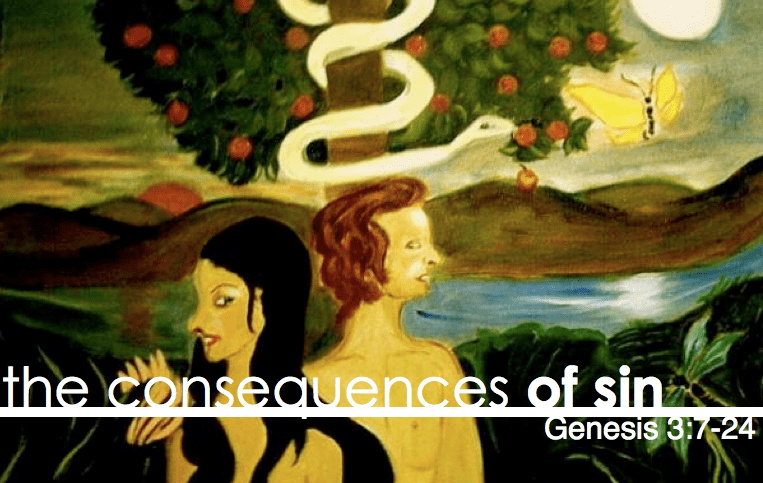
breaking news

Have you ever received any breaking news? The kind of news that startles you for a moment and your life is never the same. Maybe you received news that your lover has just broken off the relationship, your father passed away suddenly, you failed the test, you are pregnant, you lost your job, or you watch a tragedy unfold on the breaking news today.

This is not the kind of news we want to hear, but inevitably we will all here some bad breaking news. How do you normal respond to bad news? Brace yourself; I have some more bad news for you. Ready? You are going to die. 100% of people who are born into this world will one day die. Do you know where will you go when you die? The answer to this question might be even worse news to you. The thought of death and the perplexity of an afterlife cause many to be fearful or anxious.

Not all breaking news is bad news. I have some wonderful breaking news for you: the gospel. What is the gospel, you ask? The gospel is good news. It is earth shattering, life-altering breaking news. When I am confronted with the gospel I see myself for who I really am and the way I respond to the gospel can have eternal ramifications.

The Gospel is the center of Christianity. Without a right understanding and application of the gospel you do not have a true picture of Christianity. The gospel is what makes Christianity distinct and exclusive from other faith-based systems. The gospel to Christianity is like a wrench to a mechanic or a flower to a florist. The mechanic does not sit around and ponder, “What is this wrench used for?” Nor does a florist wonder, “What is a bouquet of roses?” Without the gospel one does not understand the core of Christianity.

How good a grip do you have on the gospel? What is the good news that Christians blaa-blaa-blaa about? What is so good about good news anyway? We do know what the gospel is not, or at least what the gospel is not alone.

  • The gospel is not Jesus alone.
  • The gospel is not Jesus death, burial and resurrection alone.
  • The gospel is not a belief in Jesus alone.
  • The gospel is not being forgiven of my sins alone.
  • The gospel is not God loves you alone.
  • The gospel is not God has a special plan for you alone.
  • The gospel is not changing my life to be a better [loving] person alone.

The gospel is a belief that the Bible is absolutely true: God is a loving creator, and man has sinfully disobeyed God, therefore Jesus graciously and sacrificially died for man that they might respond to Christ’s forgiven and have a means to become right before God. The gospel is not only something I believe in for a moment that will change my life eternally, but its also the means for me to live righteously all throughout my life.

How do I know this is the gospel? How do I know this gospel is true? How do I know this gospel is for me? Could it be as simple as Bible tells me so? YES. It comes down to whether I believe God wrote a book and that this book is Truth.

How can I know that the Bible is absolute truth and authoritative? Is the Bible reliable? Other than the Bible we have three sources of so-called reliable truth. The first source of truth we have is tradition. Tradition tells us what has be true passed down from generation to generation. Some say tradition is not reliable because traditions change or generations might distort the truth to another generation. A second source of truth is reason. Reason uses mans thinking to proven or make understandable what is true. Does everybody agree on what is true? Reason often leads to skepticism and more questions rather than understanding truth. A third source of truth is experience. Some measure truth by what I can seems or feels right. What we know from experience is the experience is not a good measurement for truth. Tradition, reason, and experiences fail us more often then not. What is your standard of authority? Is it reliable? Are you sure?

So where can we find truth? I believe that God authored His Word and spoke these words to called men who recorded them in what we know as the Bible. I also believe since God is perfect and holy, the Bible is infallible and authoritative [2 Timothy 3:16; Psalm 18:30]. Therefore, the overall plan of salvation for sinful men that God lays out through His Word is absolutely true.

In the letter to the Romans the apostle Paul writes about the Gospel. He gives a concise and clear explanation of God’s purposes in Christ. He writes this letter to people who would consider themselves Christians, but Paul wants to make sure they really do understand the Gospel of Jesus Christ, “For I am not ashamed of the gospel, for it is the power of God for salvation to everyone who believes.” [Romans 1:16]

If Paul were alive today he would share the gospel with his mailman, garbage man, X-Box buddies, bowling league, and bullies at work or school. We know this because he was unashamed of the gospel in his time when Christians were killed for their faith. He was beaten, bullied and put into jail, but this did not stop him from sharing the gospel with the prison guards. The gospel was life to Paul.

What is the Gospel according to the Bible?

First, I am responsible to God. I am responsible to God because He is my Creator and Sustainer. Without God I would not be breathing. Since He is Creator He has say so over His creation. He did not just create you and leave you alone. He created you for fellowship with Him. You cannot have fellowship with a God who is far off playing Parcheesi in another planetary system. The God of the Bible says He is with us and He has made His presence know quite plainly.

ROMANS 1:18 For the wrath of God is revealed from heaven against all ungodliness and unrighteousness of men, who by their unrighteousness suppress the truth. 19 For what can be known about God is plain to them, because God has shown it to them. 20 For his invisible attributes, namely, his eternal power and divine nature, have been clearly perceived, ever since the creation of the world, in the things that have been made. So they are without excuse.

God is visible through His creation. When I look at Mount Everest, the Grand Canyon, the vastness of the Pacific Ocean, and the myriads of stars in the summer sky I am left to ponder: Could not have been created by mere chance? Could there be a greater power behind this? God says we are without excuse. It is as if He has written in the clouds, “Look around you, I am with you.” Since God is your Creator, He owns you. On that basis alone you are obligated to obey Him. Yet that is not always what happens, which brings us to the next point.

Second, I have rebelled against God. Rather than obeying our Creator and thanking Him we spit in His face and in a sense tell Him by our words and actions we do not think He is doing a good job running this world. Therefore we sin against God.

ROMANS 1:21 For although they knew God, they did not honor him as God or give thanks to him, but they became futile in their thinking, and their foolish hearts were darkened.  22 Claiming to be wise, they became fools, 23 and exchanged the glory of the immortal God for images resembling mortal man and birds and animals and creeping things. 24 Therefore God gave them up in the lusts of their hearts to impurity, to the dishonoring of their bodies among themselves, 25 because they exchanged the truth about God for a lie and worshiped and served the creature rather than the Creator, who is blessed forever! Amen.

Have you ever blamed you messes on someone else? That is exactly what we do to God. We say to God, “If you really loved me and if you were really good, my life would not be like this!” Thus we pretend to be God and create our own truth system that makes us feel good. When we replace God we think we are wise, but God says this is foolish. You cannot play pretend god for long because God is jealous and wants to be our King and True Vine. Those who do not praise God will be rejected from His kingdom and cut off as dead branches.

Since, God is Creator, He has the right to judge His creation [cf. Romans 2:1-5]. My sin condemns me to death and eternal separation from my God. This is bad news. Do you see how bad your sin really is? Sin is life altering. Yet in the shadow of this bad news there is breaking news that shines as a beacon of light to our rescue.

Third, I can be redeemed by the blood of God’s Son who died and resurrected for the sins of humanity. What is God’s solution to our sin problem? God took action. Since God is a good and loving Creator He made a way for His creation to be forgiven—by faith in the work of Jesus Christ.

ROMANS 3:21 But now the righteousness of God has been manifested apart from the law, although the Law and the Prophets bear witness to it— 22 the righteousness of God through faith in Jesus Christ for all who believe. For there is no distinction: 23 for all have sinned and fall short of the glory of God, 24 and are justified by his grace as a gift, through the redemption that is in Christ Jesus, 25 whom God put forward as a propitiation by his blood, to be received by faith.

God sends Christ to earth as visible a message: “My creation, you are not okay. You are not as good as you think you are. In fact, you are wicked. You need Me. You need My help. I have come to the rescue. Repent of your sin and follow Christ.” Now this is good news!

Fourth, I must respond to the gospel. My response is to turn from my sin and believe Christ. It’s an all-in-Jesus-is-my-King choice. There is no turning back. When we give our life over to God we are saying to God I no longer want to be enslaved to sin, but now I want to be a slave of righteousness [cf .Romans 6-8]. God draws me to the message of the gospel in His grace and I must respond in faith. Salvation is not based on how good I am, can be, or wish to be, but solely on the work of Christ. “Now to the one who works, his wages are not counted as a gift but as his due. And to the one who does not work but believes in him who justifies the ungodly, his faith is counted as righteousness [Romans 4:4-5].

You now have come face to face with the breaking news of the gospel. The gospel is indeed life-altering and earth shaking. Your response to the gospel is a matter of life and death eternally. In review the gospel is: God is a loving creator, and man has sinfully disobeyed God, therefore Jesus graciously and sacrificially died for man that they might respond to Christ’s forgiven and have a means to become right before God.