parents

5star

The key to having a good relationship with others people (parents), is to have your foundation built on God. God is about to transition the commandments from a vertical (God) focus to a horizontal (man) focus. The relationship that God focuses on is the parent-child relationship. This foundation relationship affects most if not all your other relationships.

The Fifth Commandment: “Honor your parents.” (Exodus 20:12). In other words we are to respect them with out words and ways. We are to we honor them with our attitudes and actions. We are to behave in a way that would reflect on our love for God.

To understand this command we have to know what honor means. Honor means to take them seriously even though they are not perfect. To hold them up as the God-given authorities in your life.

To be honest, I had a difficult time honoring my parents as a child. I didn’t get too many golden stars or badges of honor for the way I acted or talked with them. I have since sought to reconcile this by putting on the 5 Badges for Honoring your Parents: (*****)

1. Love. Love is more than words, “I love you.” Love is active, I love you there for I will show you. Love is motivated to do something lovely. Imagine if Jesus saw our condition and just said, “I love you,” but didn’t do anything about it. Rather His love for you motivated Him to act as a Savior for your sins. Your relationship with your parents is just the same, you need to be actively loving. You cannot wait for them to take the first step, you are to initiate it (love is not conditional: I do love if you love me first).

2. Forgiveness. This is a tough one. Everyone has different issues at home, and even though I don’t know what you go through at home or what your parents are like (abused, abandoned, alcohol, anger, etc). The odds are against you to be a forgiver if your parents are not good or godly.

Truthfully, those who have godly parents have an easier time keeping this 5th Command. I didn’t have perfect godly Christians parents and I know how hard it is to honor parents when words fly, tempers flair, and the circumstances seem unreasonable or abnormal. Yet Jesus knows what we are going through. He has been there. His closest friends bailed on Him when He needed them the most. People beat Him, spit on Him, mocked Him, cursed Him, abused and tortured Him. Since He has been there too you can take your problems and pains to Him (God knows your parents and your situation very well, and they will get their just punishment; Lk.17:1-2).

If you harbor unforgiveness towards your parents you are giving a foothold to the devil (Eph.4:27). He is a little a skilled rock-climber. You give him one toehold, he’s hanging on and you cant shake him off. Does Satan own real-estate in your life because of unforgiveness you have towards your parents? If yes, then it’s time to apologize to your parents and not expect anything in return. Forgiveness releases the bonds of bitterness and frees you to love your parents.

3. Unity. God has a chain of command in our lives. Respect your authorities and live in peace with them. God put imperfect parents (employers, pastors, coaches, teachers) into your life for His purpose, to help you grow into the image of God. Unity begins with your heart (love and forgiveness). Unity doesn’t mean you allow authorities to walk all over you, but that you honor them as your authority.

There is a lack of respect for authority in our culture today. Negative dinner table talks about bad bosses, parents and political leaders teaches a child that it is okay to ‘dis’ authority. Help your parents to honor authorities in their lives too.

4. Value. You were born dependent upon your parents. You needed them to grow. They feed you, clothed you, changed all your dirty-stinky diapers, cleaned your messed and more. As we grow we become more independent. Yet as your parents grow them become more dependent upon you to care for them. We are to value them at every stage of our lives and theirs. To honor them is to value their place in their lives. Be careful of speaking negatively about them to others, joking about them or rejecting them. Value their insights on live and their experiences of ‘been there and done that.’

5. Encourage. Show and share with your parents you love, admiration and appreciation. Even though they may not be perfect or polluted with sin God has placed them in your life. Encourage them to love and follow after God. Appreciate them all the days of your life.

A day might come when you will get that dreaded call, “It’s your dad, he…” or “I’m sorry but your mom…” In this moment you have a choice: to hang your head in shame because you didn’t honor your parents or hold your head high with joy because you honored them.

Honoring your imperfect parents is just as honorable as honoring your perfect God. Wear your badges proudly to love, forgive, unify, value and appreciate your parents. These are the rock-solid foundations for godly relationships.

marry me

dscn21541It was a cold snow covered day, but the sun was shining brightly through the trees. We took a walk like we do every Friday. Everything about the day was normal. I wanted it to be very normal. As we walked through the snowy pathways of the park we talked about our day and spoke sweet nothing to each other.

As we made our way to the green railed bridge over the shallow creek my heart was throbbing and throat lumpy. She didn’t sense that I had been planning this normal day for months. We talked a little while and I held her in my arms. I quoted her a list of things that I cannot wait to do as our relationship grows. The sun was settling behind the trees and the cold was setting in, and she decided it was time to leave. I let her go a few steps and said, “Wait.” She turned. I caught her eyes and said, “There is one more thing I cannot wait to do. I cannot wait to ask you just one question.” I lowered to my knees, pulled a ring out of my pocket and gazed my choking eyes into hers. (A very normal day was about to change into infamous memory as) I mouthed the words, “Will you marry me?”

dscn2152_21With a leap, Sarah, was screaming, crying and crushing my knee! “So what is your answer?” I exclaimed. “Absolutely” she joyfully answered.

We enjoyed the moment together, hearts warmed on the cold snow covered day. To think I’ve been praying for this women even before I knew her…

Find out more information at www.biscuitandjuice.wordpress.com

sabbath

sarah-on-the-sabbath

It is interesting that God loves to remind us about important things. He knows our memories can be weak at times.  To remember is to take what we know and apply it to our lives. Fourth Commandment is to “Remember the Sabbath to keep it holy.” (Exodus 20:8-11)

In other words, we are to stop working and start worshiping. We are to stop pursuing our passions for one day and make God our passion. We are commanded to worship God with our time. We are not to do our own thing, but His thing on His day.

Does this command mean that I am given a mandate by God to be lazy at least one-day week? God did not give us this command so that we would sit around and do nothing. God is concerned about us. For at least one day a week God wants us to stop what we are pursuing and pursue Him. God gave us this command for several reasons:

1. It is for your good. God knows that we need a day of rest and refocus. Sometimes we think we might miss out on something in life if we do not cram-pack ever minute of every day with something. Yet we can miss out on life itself if we do not obey this command. Jesus confront the religious leaders of His day about this very thing (Mark 2:27 “The Sabbath was made for man, not man for the Sabbath.”). They were so OCD about not working on the Sabbath that they wrote a book of rules to protect themselves from disobeying the law, all the while they were missing the real purpose of the day: to worship God.

2. It grows your faith. We need more worship in our lives, period. We are over worked and under-worshiped. We make time to relax and spend time with friends, but infrequently do we carve out time for our Creator and life-Sustainer. When we trust God and put Him first, He wont let us down because worshiping God enriches our faith.

So how do we apply this Sabbath command to our lives?

1. Remember God (Get Deep). Over the past few weeks we have talked about who God is. He is not some chump, He is Creator-God. If we think about God in this way (i.e. love, grace, holy, etc.) our natural response will be to worship Him.

All over the Bible people worshipped in groups. In the OT they worshipped God in the temple or synagogue. In the NT they worshipped God in homes, on hillsides or wherever they could find a place. Within these worship “meetings” God gave His people life-changing principles and transforming relationships. God loves the church because it is there that we get deep with God and He gets deep with us. Worshipping with other people inspires our personal worship. (Heb.10:25 “Let us not give up on meeting together.”)

The Sabbath day is not a day to putts around, but a day to praise God (Is. 58:13-14). I have been blessed through my church involvement. Through spiritual growth, accountability, confront sin, encouragement when I am struggling spiritually, friendships and significant relationships, and much more. Worshiping God is not a one day a week thing (Sunday or Wednesday night), it is our daily joy.

2. Refocus Your Life (Go Deep). Gods day is a day to do spiritual inventory on your life. Sometimes we need to take the time to restock the selves of our lives spiritually. It is easy to empty out throughout the week.

It took God six days to create the universe and all that is in it. On the seventh day he rested. He looked back on all that He had done and said, “It is good.” After a long week of working we need to step back and ask, “Was it good? Am I thinking godly pure thoughts? Am I saying or doing things that do not honor God? Am I putting Him first? Am I ready to worship this day?”

i swear

no-swearing

Do you remember when you first learned a swear word? I must have been 6 or 7 years old, and I was left alone watching the TV. I recollect there being a Steven Seagal fight’em, shoot’em flick on the tube. There were lots of fist and words flying. I was glued. Dad came into the room and I asked him, “What does, !@#4%&* mean?” I quickly found out that it meant something bad as I got a good dose of fist to my hindquarters.

I am ashamed at how many derogatory words I know. I made a list of all those I know that just begin with the letter D. I came up with: dork, do-do, dufus, dingleberry, dumbo, dinkledorf, dwarf, dirtbag, dweeb, deadhead, dunce, doosh, and the list goes on (and these are the semi-tame ones).

Why is our society is so profane? Does my mouth really matter? Yes, enough so that God includes it in His list of commands. The Third Commandment: “You shall not take the Lord’s name in vain.” (Exodus 20:7) In other words, we are not to use Gods name as a swear word. We are to protect the integrity of His name. We are not to misuse His name. We are not to “dis” God with weak-sauce language. We are not devalue or make His name irrelevant (empty). Gods name is different than any other name. God is God and we are not. He tells us over and over in the Bible to hold up His name.

Last night I asked out student ministry how many of you hear cussing daily at school? Over 75% of them raised their hands. Cussing among teens seems like a second language or at the least second-hand language. I read that the average teen uses 80-90 swear words a day []

I am not proud to say but in middle school I had a bleepin’ little-sailor potty-mouth. And yes, I did kiss my mom with that mouth? I found myself to be in one of these 4 Groups of swearer’s, maybe you find yourself in one of these too:

picture-11. The Blond-Moment Swearer—This person is clueless they are even swearing. He swears so much that it is a habit. He doesn’t even know he uses Gods name as a swear word. God is just a fill word: “God, I’m tired”, “What the hell,” “Jeeze, it’s been a long day.” This person is not calling on God, they are unaware of God.

picture-22. The Stuck-in-Traffic Swearer—This person knows swearing is wrong, but when in the right situation they “can’t help but swear.” You know you are stuck-in-traffic swearer when you respond cussing in these scenarios: a hammer hits your finger instead of a nail, the foul isn’t called, someone cuts you off, your favorite sports team makes a mistake, you lost your homework, or your friend tells you off.

picture-33. I-can-say-what-I-want-to-when-I-want–to Swearer—This person knows what they say is wrong, but couldn’t care less. Like a pirate. These people are either angry at God or shake their word-fist in God’s face. They swear to God with outright rebellion.

picture-54. The Walk-Your-Talk Swear—This person doesn’t ‘dis’ God with his words, but his walk. Even though you may not swear, you may have an empty walk. This person says they are a Christian, but their lifestyle doesn’t match their words. If you wear Christ’s name you better show it. “Walk your talk!” As followers of Christ you are a walking billboard to the world of Him to everyone who sees you. God has pasted His label on you, what do you represent?

The Bible says that the name of Jesus is above every other name, and one day we will all bow our knees to the name of Jesus (Phil.2:9-11). In fact, Jews had such respect for God that they would not use His real name (Yahweh). Never would they speak His real name. They would use “Adonai” instead. They recognized His name as holy. When Jesus prayed, He taught His disciples by saying “Father, hallowed (holy) be your name.” (Luke 11:2)

We must careful what you say. When you say, “God” followed by the word “damn” you are putting two words together that do not fit. God doesn’t damn anybody by our demand; people damn themselves to hell by their sinfulness without repentance and forgiveness. We cannot tell God what to do. We make Him so small, when He is really BIG. You are the creation; God is the Creator. Do not take what you say too lightly.

Matt.15:18 says, that the things that come out of your mouth, come out of your heart. In other words, dirty words = dirty heart. So how can I tame my tongue? First, talk it up. If you are a swearer get help, sometimes it takes a buddy system to help you to stop it! The Christians life wasn’t meant to be lived alone; there is no such thing as a Lone Ranger Christian. Second, critique your talk—evaluate the words you use. Do you honor the name of God? Third, talk about God—when you know Him you wont empty His name out.

we’re getting married

Sarah and Justin would like to inform you about their upcoming wedding. This site will give you most the information you need to know about their special day. Please, return frequently to check for updates or announcements.

The Date is set: May the Second, Two-Thousand and Nine

The time is set: One Thirty O’clock in the Afternoon

The Location is set: Battle Ground Bible Church in West Lafayette, IN. (www.bgbc.org)

Now are you set on being there?

image is everything

god-of-hand

In our world today, image is everything. What seems to matter is what you represent and what image you portray. People spend lots of money on creating an image for themselves. A picture of a mountain doesnt compare to the beauty of beholding in reality. Images or representations cannot be compared to the real thing.

We often do this with God. We try to make Him into something we can see, touch, feel or experience, and it never compares to who He really is.

The 2nd commandment seems harmless at first, but God views them differently: “You shall have no other image of God.” (Exodus 20:3-6)

The Second Commandment seems like a repeat of the First. This commandment addresses something that hits the core of humans: our concept of God. We all have different concepts of God, and our concept of God shapes who we are. Anything we use to mirror the majesty of our Maker will fall miserably short of Him and will minimize Him. Man’s finiteness cannot create something infinite.

Now is it wrong to have a cross or a masterpiece of art that portrays God? Of course not, but when that image replaces God or becomes your sole representation of God that is when it bucks the 2nd commandment. In your mental picture album, what is your image of God?

How people often imagine God:

picture-11. Grandpa God: this God is popular, forgiving, and giving. Whenever we do something wrong they smile and say, “It’s okay, I understand, don’t worry, I love you.” No offense, I love my grandparents!

picture-32. Santa Claus God: this God is like a Cosmic Easter Bunny or Mr. Rogers. He is deeply involved in our daily lives and world events. He is positive and reluctant to punish. He likes to give lots of gifts; blessings. All we have to do is ask, and He will give us whatever we desire, like a genie in a bottle. The old we get the more faint He becomes.

picture-43. Buddy God: this God is distant, but our buddy. He does not interact with the us. We can call on Him when we need Him. He will look out for us, but doesn’t interfere with our lives.

picture-24. Texas Justice God: this God is like an evil mother-in-law, deeply involved in our daily lives and world events. He is angry at sin and punishes the unfaithful. He wears a long flowing robe and carries a gavel waiting to inflict punishment on sinners. Feeling guilty?

picture-55. Emo God: this God loves to be emotional. We haven’t met God until we have tears on our faces, lumps in our throats, a chill down our spine, and butterflies in our stomachs. Probably, just ate too many Mexican beans. We think we have to be in touch with our emotions before we can be with God.

Is God some of these? Yes, in fact He is all and more, but if we characterize Him only these ways we are missing out on who He really is. God is loving, forgiving, giving, blessing, a friend when we need one, He is just and angry at sin, and God desires us to come before Him with truthful emotions. God is very different, different compared to you and different than our concept of Him.

Why shouldn’t we have any other image of God? He is jealous (Exodus 20:5; 34:14; Deuteronomy 32:16; Psalm 78:58; 1 Corinthians 10:22). He doesn’t want to share the top spot with anyone or anything. For God to step down and acknowledge something greater than Him, would be to step down as God. The fact is, we do not need to create images of God because He has create us in His image (Genesis 1:26-28 ) and we are to represent Jesus Christ who is the exact representation and perfect image of God (Hebrews 1:3; Colossians 1:15ff).

a lesson on authority: my president

Tomorrow is the inauguration of our new president Barak Obama. It is an exciting time with a lot of anticipation, especially in tight economic uncertainty. There are mixed reviews about the outgoing president and moving in of the new. I have a lot of respect for our new president. I may not agree with his policies or all that his party stands for, but he is my president. I might be tempted to speak out in disagreement and debate of his choices or character, yet he is my president. I am going to honor, respect and pray for him.

photo-19Many cringe and snicker at the thought of authority in their life possibly because those authority figures were abusive or didn’t live up to expectations. It is difficult to watch the news stations because they become so critical of those in authority. They tear down all that these leaders are trying to build up. President Bush has the lowest approval rating in recorded history. He has been the brunt of late night comic relief (of which my favorite were David Letterman’s “Presidential Speeches”). Sure his decisions and demeanor have added to this dismal ratings, but it gives us no right to down him as man.

Parents come to me often and ask, “Why doesn’t my child listen to or respect my authority?” I will ask them questions in return that usually reveals their answer, “What do you say about your boss around the dinner table? What do you communicate about your president to your children? Do you speak negatively about any other authorities in your life?” Children watch closely how their parents honor authority in their lives and will reflect that character in their own lives. More than likely if a parent bashes authority, their children will bash theirs. Let’s stop bashing authorities in our lives for the sake of our future generations.

See Romans 13:1-6; 1 Peter 2:13,14; Hebrews 13:17.

no other

God didn’t just casually hand over a posted note of “10 Thoughts” one day and suggest His people read them when they have time, then pick and choose which ones they like. God set the stage, and they never forgot that day…God meant business with these tablets (Exodus 19:16-19; 20:1-21).

The First Commandment: “You shall have no other gods before me.”

no-other

We are to let God be God. We are to make Him #1. We are to affirm His power. We are to acknowledge His presence in our lives. We are to obey His rules. We are to honor and worship Him alone. The parking space for worship in our lives is to be reserved for God alone. We are not to waste our lives worshipping anything else but Him.

Ancient worshipers were not monotheistic (believed in one God), they were polytheistic (believed in many gods). The more gods the better, they had gods for everything (sun, moon, war, weather, food, parties, etc). Today, this is not necessarily the case; we are more likely to find people who don’t believe in a god. Yet we are worshipers. We all worship something. Worship is giving your heart, desires, and adoration to someone or something. We follow after other gods, but they often operate under different disguises:

4 disguises for other gods:

1. Self-ismwe become our own idol. We follow after the selfish trinity: me, myself and I. We ask ourselves, “What’s in it for me? What makes me look good? What makes me feel good?” It is hard to avoid this god when our cultures mantra is, “You have to do what is good for you. Follow your heart.” This self-centered god always leaves us empty and needy.

2. Sense-ismwe seek the rush, high, experience that will give us pleasure or relief. For some it is spending, shopping, traveling, sex, pornography, drugs, cutting, binge-drinking, etc. Now God loves pleasure, but we abuse it. We can overdose ourselves on pleasure, but we settle for the weak-sauce-pleasure compared to the riches of knowing and obey our God.

3. Stuff-ismwe dream and scheme for ways to collect more things. We professionals at stalking stuff. We fill our closets with fashion, pimp out our cars, Gig-ify our computers, multiply our media libraries, lavish our homes to be like mini-castles, and more. The key word for stuff is: more. Just a little bit more. Our desire to acquire has gone all haywire. Possessions are fine when they do not possess us. God loves to give good gifts, but when we just get to get, we got it all wrong.

4. Smart-ismwe download facts to fill our fat heads. We have more informaiton at our finger tips than possibly all generations before us combined and we are not satisfied with our factoids. Next time you are in the game isle at the store check out how many trivia games there are. Knowledge says, “I want to know more than you because knowledge is power.”

All these -ISM gods and goddesses waste our worship and will not come through when we need them the most. When we feel cruddy they offer nothing, but temporary satisfaction. When our world is crumbling, they crumble too. Only God is much bigger than we are, only He can fill the void left by these other gods, and only He is worthy of worship (Psalm 115:1-13).

The first commandment of having no other gods is the foundation for all other commandments that follow. If we put God in the top slot of your life and worship Him as God, then we will know the greatest thrill and have the greatest possession.

10 rules to live by

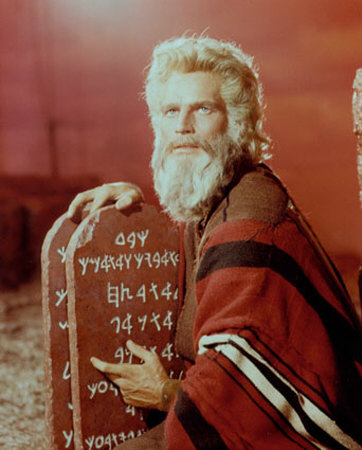
heston-ten-commandmentsWhy are there so many rules? Everywhere we are there are rules that govern us. At home, school, work, church, sports and every other area of life there are rules upon rules. It is easy to gripe about rules in our lives. Rules can seem like a dirty 5-letter word.

I just started a series with our teenagers on the 10 Commandments. I like to think of them as the 10 rules to live your life by. In the weeks ahead I will explain more about how these old covenant laws are really applicable to us today. In preparation for this study I made a list of 10 Rules I am grateful for. I compiled this list from rules I heard from family and friends down the years:

1. Look both ways before you cross the street [mom]
2. Don’t eat yellow snow [Elf]
3. Don’t settle for less than best [Jr high trombone teacher]
4. Do turn off the lights before you leave the room [thanks dad]
5. Going to church doesn’t make you a Christian anymore than standing in a garage makes you a car [Mr. Huseby]
6. Men are from earth. Women are from earth. Deal with it.
7. If you don’t use it in 6 months, it’s junk.
8. Speak well of authority.
9. Do not check the sharpness of a knife by running your figure over the blade [Mike]
10. Do what’s right even when you don’t feel like doing it.

get deep

rr08-t1This weekend we had our ReFUEL Retreat [RR08]. Each year our teens gather together at Camp Lutherhaven for a winter break weekend.

This year our retreat was all about ‘getting deeper with God’. The image of a deeply rooted tree is something that appears often in Scripture and relates to our relationship with God. How do you know if you are growing spiritually? Here is a great article that asks 10 questions to ask to make sure you are growing spiritually.

a mosaic christmas

mosaicThis was a homemade Christmas, pieced together in love.

Sarah and I crafted mosaics candles to give as gifts to family and friends. It was a challenge to figure out how to piece them together, but it was a lot of fun in the process. They are all so different and uniquely beautiful.

While making the mosaics I began to think about what this time of the year is all about: the Light. Jesus said of Himself, “I am the Light of the world.” (John 8:12; 9:5) Whoever follows Him will not stumble in darkness. This is such a comfort when we will live in a world that is tainted by evil.

The Scripture tells us that Jesus is not only our Savior, but our Creator. The Bible says that He pieced us together in our mothers womb and molds us like clay pots (Col.2:2, 19; Ps.139:13; Jer.18:4-6). As followers of Christ we are a community committed to live by faith, to be known by love, and to be a voice of hope to this world. We are this way because we have the mark of our Master craftsman upon our lives. We come from a broken and fragmented past, worked into a beautifully artful future by the hands of God.

Mosaics are a wonder image of how all the pieces  fit together to create something that is whole. May the love of Christ and the purpose of His birth fill your home with joy and peace. Merry Christmas!!

real question: miracle?

question-door1Ned Anzers: I would certainly believe God is real if He would show me a sign. Why doesn’t God just give me a miracle?


We all love magic tricks. We know that they are just illusions, but they still fascinate us into believing they are real. Jesus was no magician. No doubt He was the real deal. The miracles He did were seen and experienced by many. Some of His miracles include: Calming a storm, feeding 5,000 people with 5 pieces of bread and 2 fish, walking on water, turning water into wine, healing the sick, paralyzed and blind, and raising a person from the dead.

Why did Jesus do miracles? Certainly it wasn’t to show how cool He was, but to help others believe He was God. Miracles did catch the attention of those watching. So why doesn’t God do similar miracles today as He did through Jesus? If He did certainly everyone would believe in God, right?

To answer this question I will to zero in on one of Jesus miracles. It was the last, but the greatest miracle of Jesus’ public ministry. Lazarus was a friend of Jesus and sister to Mary (the prostitute). There is nothing fishy about this miracle. Jesus simply says in three words, “Lazarus, come out!” and a man wrapped in grave clothes comes out of his tomb, not as a mummy but back from the dead. Jesus doesn’t do this I secret, but a crowd of people saw the miracle (John 11:1-44).

There are some general principles to be wrought from this miracle of Jesus.

First, Jesus purposed for Lazarus to die.

He delayed in coming (v.6). He could have prevented Lazarus’ death as Mary and Martha believed (vs.21, 32), but He chose to let Lazarus die. God purposes things to happen in your life to see how much you trust Him.

Second, Jesus Loved Lazarus (vs.3, 5).

He loved them because He knew them very well. Throughout the text Jesus was outwardly affectionate toward his friend, “deeply moved in the spirit”, “troubled”, “wept” (vs.33-38). Jesus knew He was going to raise Lazarus from the dead, he felt sorrow for Lazarus’ loved ones and those who still did not believe. God loves you too because He knows you very well.

Third, Jesus delay and the death of Lazarus was for the Glory of God (v.4).

God is glorified by the demonstration of His power (v.25-26 “I AM the Resurrection and the Life. He who believes in Me will live, even though he dies; and whoever lives and believes in me will never die.”) And God is glorified by the demonstration of your faith (vs.14-15 “Lazarus is dead, and for your sake I am glad I was not there, so that you may believe.” / v.40 “Did I not tell you that if you believed, you would see the glory of God?” / v.45 “therefore many…put their faith in Him.”). Jesus purposes things to happen in your life to show His glory.

So why doesn’t God do a similar miracle today so that people would believe in Him? Well look are verse 12:37, “Jesus did all these miracles in their presence they still would not believe in Him.” It is true, after Jesus many recorded miracles people still didn’t believe that He was God.

Jesus miracles were not done to amaze us, but to show how amazing God is. The miracle is not so much what Jesus did, but who He is. Miracles illustrate a deeper truth about Jesus. After Jesus feed the 5,000 people with a little boys lunch He says, “I Am the Bread of life.” To this the disciples replied, “This is a hard teaching. Who can accept it?” It is not that they did not get what Jesus was saying or doing, since they could still taste the miracle on their very tongues, rather they did not like the implications of His miracles on their lives.

Some might say, ‘Sure Jesus did miracles, but I don’t have to believe He is God.’ You’re right. However, the greatest miracle He wants to do in you is one that He did in me, rescue you from death and bring you into new-life.  Will you trust that Jesus is the “Resurrection and the Life”? (John 11:25-26)

have you ever dropped the ball?

big-red-ballSometimes it really hurts to drop the ball, especially when you have been holding on it so well for so long.

Dropping the ball can be devastating and even handicapping to one’s life. Some never recover from dropping the ball. Some drop the ball so much that they just make a habit out of ball dropping. Others may think that they are superior to dropping a single ball. Whatever the case we drop balls. All that matters is how we respond after it has been dropped.

As you have probably noticed this is a parable. The ball can represent anything: a career, a relationship, a goal, or a sinful decision in your walk with God. Dropping the ball mean you have failed to live up to certain expectations that are associated with that ball.

There are many responses to dropping the ball. Some of the most common responses are:

The Blame Game Response. This person responds by saying, “Dumb ball! Who made this cheap ball? It’s too slippery!” It is the ball’s fault. It is always somebody or something that made them drop the ball. The devil gets an awful lot of blame. It seems like nobody is ever at fault for his or her own actions.

The Lone Ranger Response. This person will commonly respond, “Where were they? I cannot believe they were not here when I drop the ball! What kind of person are they? If they really loved me…” This person feels as if no one cares and they are left alone when there is no immediate comfort for their actions. I like to call this the Eeyore Response. Remember the donkey from Winnie the Pooh who is dismally gloomy for almost eternity and expects little from his friends.

The Analytical Response. This person seeks to logically understand why they dropped the ball. There might be many reasons for dropping the ball psychologically, physiologically, socially, mentally, emotionally, spiritually, hypothetically and so on. All the while they are bypassing the point of why they dropped the ball.

The Genetic Response. This person will say, “I drop the ball because my dad dropped the ball. All I know is what I was taught. I cannot help it, It is just the way I am. I drop balls, it is in my genes.” Since, there is a pattern of ball dropping in a family or down through history it is assumed that it is in our genetic make up.

The Cop-Out Response (or the Woe-is-Me Response). This person will label himself or herself by saying, “I am such a loser! I always drop the ball. Other people don’t drop the ball like I do. What’s wrong with me?” This person might realize that dropping the ball is their fault, but they don’t do anything about it.

The Fatalistic Response. This person pessimistically says, “Who Cares. I dropped the ball. So what? I will drop it again. I am only human” This person believes they are never going to carry the ball so they give up trying.

The Right Response. “It’s my fault. I dropped the ball. I’m going to pick it up and keep going.” Take ownership of your dropped balls. Pick it up and hold it tight. Share the load with others if you are in a relationship of dropped balls. Don’t look like the weenie kid on the play ground who cries to mommy because they dropped their ball and are too lazy or stubborn to get it back themselves.

God says in His Word that we must turn from your sins and embrace Christ. Acts 3:19 “Repent, then, and turn to God, so that your sins may be wiped out,” And then in Acts 5:29, Peter and the other apostles said, “We must obey God rather than men! 30 The God of our fathers raised Jesus from the dead—whom you had killed by hanging Him on a tree. 31 God exalted Him to His own right hand as Prince and Savior that He might give repentance and forgiveness of sins.” There are great promises of restoration and forgiveness to those pick up their dropped balls.

thankfulness

dsc02957I have a lot to be thankful for. Yet sometimes it is difficult to have an attitude of gratitude. Thankfulness is the attitude that displaces my sinful tendency to complain and thereby release joy and blessing into my life.

The Bible has much to say about the attitude of thankfulness: “Oh, that men would give thanks…” (Psalm 107:8)

In 2003, I had the opportunity to visit the Ukraine in the middle of a cold winter. While I was there I had the opportunity to meet the Sekret Family. Pastor Sekret is a minister that pastors a few small churches outside of Kiev. He had to work a job outside the church to support his family. During my visit they made me feel so welcome. Little did I know until I left that they feed me the best they had day for dinner. It wasnt much, a loaf of bread, spicy mustard, and a ring of sausage. Their kitchen table was partially a bed that overflowed into their kitchen. What I remember the most was the prayer Mr. Sekret gave before we ate. The family stood, and gathered behind their chairs and held hands with one another. The prayer was simple, but heart felt: “Slava Bog, doosha smachna,” which means ‘praise God for this great food.’ These were truly thankful people.

Why are we not thankful people? We are told that the great danger lies precisely in our constant contact with “stuff”. To many our things may seem too common, and become customary. B.B. Warfield once said to his students, “As the average man breathes the air and basks in the sunshine without ever a thought that it is God in His goodness who makes the sun to rise on him…It is your great danger. But it is your great danger, only because it is your great privilege. Think of what privilege it is when your greatest danger is that the great things of religion may become common to you!” Emerson said, “If the stars would come out only once a year, everyone would stay up all night to behold them (we see the stars so often we don’t bother looking at them anymore).”

Thankfulness is a decision no matter how common or crazy the circumstances are around you. A thankful person decides that there is no better option than to be thankful. Thankfulness comes ONLY when we decide to have faith in God as our PROVIDER. The PROVIDER is always at work in our lives and for this be thankful!

Think about how crazy it would be to be stuck on an island alone your entire life. As hard as it may be there are many things to be thankful for. In Daniel Defoe’s depiction of Robinson Crusoe he shares these examples. “I have been on this deserted island for 27 years, but it is beautiful! I am sick of these coconuts, but it is food! I am all alone, but at least I don’t have to worry about others in my business.”

I might not be on a deserted island, but daily I have a decision to have the attitude of thankfulness. I certainly have a lot to be thankful for: I have a home, a loving family, enough food, clothes for my back, a pluthera of possession, and I have a God who is utterly amazing.

real questions: suffering?

suffering

Ned Anzers: It doesn’t seem fair that a loving God would allow bad things to happen. Why does God allow so much suffering?

This is an honest question.

I have often wondered the answer to this question myself. Years ago as a young boy, I would visit the nursing home to see my great grandmother Loretta. I remember these visits to this day. I was enamored by my great grandfather Roman’s care for his wife. They had been married for over half a century, but for many years she had been degenerating from the disease of Alzheimer’s. It was incredibly painful to see such a wonderful, witty woman who was so alive, not recognize who you were. As a young boy and even now as an adult it is still hard to understand why God allows this to happen, especially to one so undeserving. I will talk more about this in my conclusion.

I hear the stories my girlfriend Sarah, who tells me about where she grew up in the Democratic Republic of the Congo. How the authorities have raped and pillaged a beautiful land. I see and feel the emotion she bears from the scars of her home land.

Jesus tells a story in the Bible about a real life catastrophe. It was about landmark tower took years to build, and seconds to fall. It stood as a powerful symbol of strength, security and prosperity, but in only moments became cloud of dust that blanketed the neighboring streets. As the dust and debris settled and the death toll rang out to the shaken city (18 people), the skyline was now empty and mournful. People were trying to make sense of the calamity. When Jesus talked about this tragedy at Siloam He knew it wouldn’t be the last (Luke 13:5).

We want explanation for the disaster, injustice, abuse, sickness, poverty, pain and suffering. So did people of the Bible (Jer.12:1, Hab.1:2-3, Ps.6:3). Where are you now God? Have you forgotten? Don’t you care?

Sometimes people think that the presence of suffering means the absence of God. Does suffering mean there is no God?

Certainly not. I would certainly be more fearful of the consequence of believing there is no God.  Jesus says there is significance to the human life (Luke 12:6-7, 24). Those who die are not forgotten by God. If we reject God because of suffering then we have to face a world that is much worse: meaningless suffering. Without God there would be no justice (Ecc.3:16ff; Acts 17:31; Mal.4:5), and no future (Ecc.3:20; John 11:25-26). Death would be the end of life. No after life. Without God there would be no significance to life (Ecc.3:18). We would be just animals with clothes on. Killing becomes like that of a lion killing a antelope. The killings of Cambodia, Columbine, Congo, Auschwitz, Manhattan, Virginia Tech and others would be without pity or horror. That is a scary world to me. A world without hope or meaning.

What is the meaning of suffering?

Going back to the story of Jesus and the collapsed tower we learn some very practical principles about suffering (Luke 12:54-13:5). First, we see the reality of sin. Suffering is not always caused because of man’s sinfulness or lack of acknowledgment that there is a God. God is not a bully trying to pressure His creation into submission. Second, through suffering we see the fragility of life. Life is short and we must trust God with our eternal destiny’s. Third, we see that God is with us through the suffering. Fourth, we see that suffering cause us to depend upon God.

We have a God that knows all about suffering. He is a God that has experienced suffering Himself. Jesus experienced abuse, betrayal of friends, gossip, hunger, alienation from family, torture, thirst, homelessness, religious persecution, bullied, death of close friends, unfair trial, excruciation prolonged execution. He wept and saw suffering like we do and gave up his own life to do something about it. The cross represents forgiveness for all those who cause suffering or experience suffering. On the cross we see a suffering God, suffering for His own people because He loves them and wants to free them from all suffering in eternity (John 3:16). God’s suffering was for our greater good and a proof of His love.

What does this love in suffering look like in real life?

Going back to the story of my great grandmother Loretta Rothe: I the mist of her suffering I saw an amazing picture of love that I would only wish to aspire for one day. My great grandfather would care for her when most in his shoes would bail. He would comb her hair, feed her dinner, read to her and prove that his love for his wife was “in sickness and health, until death do us part.” Suffering shows our true colors. I would only hope to have a similar perseverance in the midst of pain.

real questions: faith?

question-mark1Ned Anzers: Isn’t faith a psychological crutch?

To answer this question we must answer a series of questions:

What is faith?

Faith is the believing in the unknown. Heb.11:1 says, “Now faith is the assurance of things hoped for, the conviction of things not seen.” We all show faith each day in things that are unknowable. You have put faith in your car that it will get you from point A to B. You have faith that George Washington was really the first President of the USA. You put faith in the fact that the very chair you are sitting in will hold you up.

What is our basis of faith?

The Bible was written that we might have faith. John 20:30-31 says, “Now Jesus did many other signs in the presence of the disciples, which are not written in this book; but these are written so that you may believe that Jesus is the Christ, the Son of God, and that by believing you may have life in his name.”

Faith has a source, which is His Word: the Bible. The Bible never encourages us to have faith in someone or something we can know nothing about. Rather it does the opposite, it asks us to have faith in One we can know. The Bible helps us know and examine the life and teachings of Jesus Christ.

crutch-crossWhy do I need faith?

Faith fills what is lacking in my life. Jesus says inMatt. 9:12, “But when he heard it, he said, “Those who are well have no need of a physician, but those who are sick.” I am spiritually sick and faith is for the weak. When you look at the world can you honestly say everything is alright. A person that believes that is more blind that a person who has faith in God.

Since I am sick I need spiritual help. In Matt. 11:28-29 Jesus meets this need by saying, “Come to me, all who labor and are heavy laden, and I will give you rest. Take my yoke upon you, and learn from me, for I am gentle and lowly in heart, and you will find rest for your souls.”

So isn’t faith for the weak?

Faith calls you to die to yourself. Now Jesus gives a unique challenge in Luke 9:23-24: “And he said to all, “If anyone would come after me, let him deny himself and take up his cross daily and follow me. For whoever would save his life will lose it, but whoever loses his life for my sake will save it.” God calls a person of faith to a radical life. He doesn’t promise that faith in Him is an easy-cheesy life, rather it will be difficult. Imagine what the image of the cross brought to mind of a person in Jesus day. It would be like a noose or electric chair to us today. Yikes. [Note: The example of Paul (2 Cor.11:24-27), no he is not insane (Acts 26:24-29).]

Faith in Christianity is not blind faith at all. In fact, it is faith in the knowable and personable Jesus Christ that was a real historical figure, really written about and really is who He says He is. Faith is not a psychological crutch. Faith is for the weak and the doubter, the skeptics and the atheist.