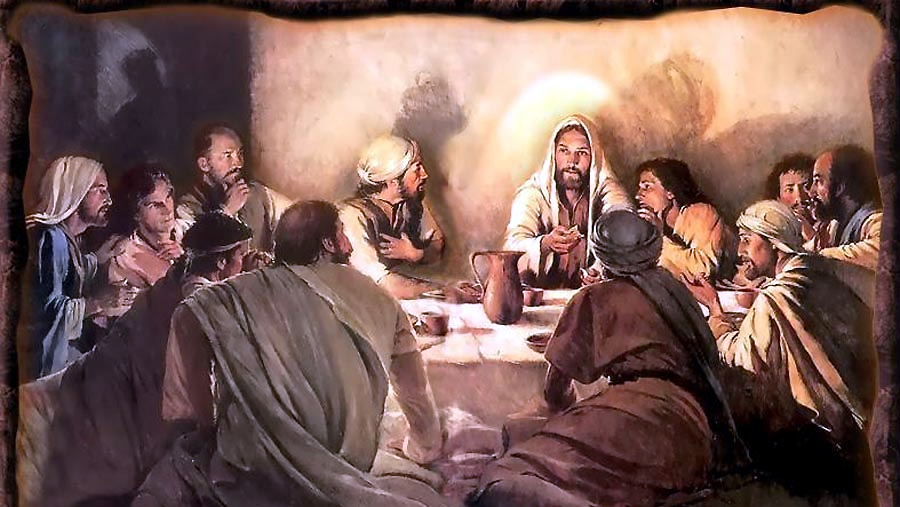
God is pursuing willing worshipers

Part 2 of 3 Why Worship Matters

Are you willing? Are you willing to do hard things? Are you willing to admit and acknowledge who God is and who you are? Being a willing worshiper is like knowing—what to do when you are on fire: Stop, Drop and Roll. When Isaiah gets a glimpse of God He not only sees God for who He is, but sees Isaiah for who He is. Isaiah responds to God. Isn’t that true when you see the God of the Bible He wows you?

Those who have seen God are never the same. The children of Israel asked to see the Lord of Moses, but when they saw the Lord they were afraid and ask Moses never to allow them to see God like that again. In Revelation 1:9-18, John saw the awesomeness of Christ and fell as a dead man. People who see God are left with an awesome and unforgettable impression. A willing worship will:

STOP and take a long look at who you are and who God is [Isaiah 6:5]

Isaiah is deeply impacted by God as he watches this unfold before him. He feels unworthy to be in the presence of the GOD who IS. He says, “Woe is me.” In other words he is saying, “I’m dead, I’m done for, I am silenced.” It is as if you got to peak under the curtain of the holy of holiest and you were found out. I’m caught. I’ve offended the King. I’m ashamed. Now I’m toast.

In a sense Isaiah asks, “How can I speak on behalf of God? I am unclean and I live with people who are unclean.” Don’t ever think that you are some holy Joe or Jane! Sure compared to the person in the pew next to you maybe, but not compared to God. May God forgive us our pride and arrogance, and give us a holy sense of who we are and who He is.

DROP to your knees and receive God’s forgiveness [vs.6-7]

The natural response to gazing upon the greatness of God is to drop to our knees for forgiveness. There is something interesting at work here. In Isaiah’s day their was a pagan practice called the “washing of the mouth” ritual that took an inanimate idol and made it inhabited by a god. The image would be purified and cleansed to be ready for a god to dwell in it. The cleansing ceremony Isaiah experiences is quite similar, but irony as the True God chooses Isaiah to cleanse and become His spokesmen to the pagan idolaters.

Have you felt the forgiveness of God? Guilt should not handicap you; rather motivate you not to go there anymore and rest in God’s forgiveness. I am so glad the passage does not end in verse 5. In God’s holiness we see our sinfulness. Yet God calls and commissions us to holiness too [1 Peter 1:14-19]. From guilt to grace, Isaiah is cleansed from His sinfulness and experiences God’s forgiveness. God’s holiness is unattainable, but His forgiveness is not. In the midst of chaos there is always Cosmos. God is a Restorer. God’s pursues forgiveness in Isaiah and you too. He pursues you through the work of Christ on the cross that shed His blood as your substitute so that you might be forgiven and free.

ROLL up your sleeves and get to work [v.8]

Forgiveness is never passive, it is active. After the cleansing God calls Isaiah to a difficult task: see to it that My people know I am forgiving too. After forgiveness I am called to share the good news and warning to others. Can you hear God call you to serve Him? Will you respond? Commissioning follows cleansing. In God’s economy worship = serving. Worship = life.

Worship matters because GOD IS and His character demand my worship. GOD IS PURSUING WILLING WORSHIPERS and my presence is expected.

God Is

Part 1 of 3 Why Worship Matters

We live in a culture [as others before us] willing to worship anyone and anything. We will pack arena’s to sing our favorite songs from our favorite band. We will be first in line at the movie theatre to see the next biggest summer blockbuster. We will pack sports stadiums and worship teams and players with loud cheers and waving our banners. Last December Sarah and I went to our first fridged Packer game at Lambeau Field. There was some worship going on that day! Later we thought, as great as the game was, “Heaven is going to be awesome!”

We are about all worship. It is not easy to define real worship in a culture that readily worships anyone or anything. Worship is about what we live for [who we are]. Every day, all day, everywhere you go, you worship. It’s what you do. It’s who you are. You can’t stop it or live without it. Worship is a way of life. It is a whole-life response to God’s greatness and glory. You are a worshipper before you are a father, mother, sister, brother, boss, employee or student. Worship is simply about value. Worship is our response to what we value most.

Why does worship matter? Why must worship matter to me? Why is it so important? Worship matters because GOD IS and His character demands my worship [Isaiah 6:1-3].

God is alive.

Isaiah says, “I saw the Lord.” Uzziah is dead, but God still lives. “From everlasting to everlasting, You are God” [Psalm 90:2]. God has no beginning or end. He does not depend anything or anyone to exist. God was alive when this universe banged into existence. He was alive when the Buddha and Muhammad walked the earth. He was alive when JFK was shot. He was alive when a tsunami sweep away Indonesia, and earthquakes rocked Haiti and Chile. He will be alive ten trillion ages from now when all the puny people in power are long forgotten. But not God, He always has been and always will be alive.

God is authoritative.

“I saw the Lord sitting upon a throne.” He is the Supreme Court, the Legislature, and the Chief Executive. Heaven is not coming apart at the seams. He holds it together. He sits on a throne. He rules with peace and control. He has authority over our lives even though we may never acknowledge Him.

God is omnipotent.

“I saw the Lord sitting upon a throne high and lifted up.” God’s throne is higher than every other throne signifies God’s superior power to exercise His authority. No opposing authority can nullify the decrees of God. What He purposes, He accomplishes. “My counsel shall stand, and I will accomplish all my purpose” [Isaiah 46:10].

God is majestic.

“I saw the Lord sitting upon a throne high and lifted up, and the train his robe filled the temple.” You have seen pictures of brides whose dresses are gathered around them covering the steps and the platform. What would the meaning be if the train filled the aisles and covered the seats and the stage, woven all of one piece? That God’s robe fills the entire heavenly temple means that he is a God of incomparable splendor and honor. His creative fullness spills over in excessive beauty. God loves to wow us.

God is revered.

“Above him stood the seraphim; each had six wings: with two he covered his face, and with two he covered his feet, and with two he flew.” No one knows what these strange six-winged creatures are [not some chubby winged angel babies], and they never appear again in the Bible. When one of them speaks, the foundations of the temple shake [v.4]. These are magnificent creature that most of us would be wowed by, but God wows them.

God is holy.

“And one called to another, ‘Holy, holy, holy is the Lord of hosts!” God is in a class by Himself. When asked for His name in Exodus 3:14, He said, “I am who I am.” What is God’s holiness? [Hebrew Qadesh, Greek Hagios, separate/different] 1 Samuel 2:2, “There is none holy like the Lord, there is none besides You.” Isaiah 40:25, “To whom then will you compare me, that I should be like him? says the Holy One.” Hosea 11:9, “I am God and not man, the Holy One in your midst.” And repeated throughout the Scripture is the theme: “YHWH alone is God” [Ex.22:20; 34:14; 20:5].

God is incomparable, unfathomable. It determines all that He is and does and His ways are not determined by anyone. His holiness is what He is as God, which no one else is or ever will be. Getting a glimpse of God’s holiness will rock your world to the core. There is no way to scale mountain and heights of God’s holiness [not even in this message or our lifetime]. “The Lord is in his holy temple; let all the earth keep silence before him” [Habakkuk 2:20].

God is glorious.

“Holy, holy, holy is the Lord of hosts, the whole earth is full of his glory.” The glory of God is the seen of God’s holiness. God’s holiness has gone public in His glory. When God shows himself to be holy, what we see is glory. In Leviticus 10:3 God says, “I will show Myself holy among those who are near Me, and before all the people I will be glorified.”

Worship matters because GOD IS. His character demands my worship.

risky move


The Discipleship Experiment.

This year our student ministry leadership set a goal: be disciples discipling others to be disciples. We decided to do ministry biblically, thus the discipleship experiment took life. It was a risky move, but a bold biblical endeavor.

We had some speed bumps, U-turns, and engines overheat along the journey, but overall I am ecstatic to see our adult leaders become more actively involved in the spiritual growth of our students. Though many would admit, “I feel like I’ve failed.” I would say their input into the lives of the students was exceed by the spiritual output. In other words, high risk [discipleship] equals high reward [disciples].

What is biblical student ministry?

Student ministry biblically is a ministry of the church coming alongside families equipping them to become faithful followers of Christ. Student ministry is intensive discipleship geared towards students and their families. Intensive discipleship is both encouraging one another to follow Christ [evangelism] and equipping follower in Christ [followership].

Discipleship is difficult. It’s difficult because of the cost involved. The cost may involve time, studying the Word to help student see their lives mirrored in the Word, willingness to get messy as students fall into sin, and desire to pour your life into another by living in a way that models a disciple of Christ. Discipleship takes a willingness to be selfless for the sake of another to see and savor Jesus Christ.

Discipleship is all for Christ and all about Christlikeness.

It is easy to disciple for all the wrong reasons. Some disciple to feel needed, important, or appreciated. Others disciple to impress, lord-over, or act as mini-Messiah’s. This is not discipleship. We don’t disciple as matter of self-defense or self-promotion. You don’t pour your life into others to fill yourself up. How selfish. Discipleship is selfless because it is promoting Christlikness.

When you gaze at the cross and get a glimpse of the gospel you see that you are unworthy, but God in Christ is worthy. Discipleship must always be rooted and nourished by the living message of the gospel. Jesus died, He was buried and resurrected that you and I might have abundant life [Galatians 2:20; Philippians 1:20-21]. Without the gospel discipleship is dead.

This year I watch Brent pour his heart into middle school boys. Middle schools are not the easiest flock to shepherd. He would take them out to Taco Bell before FUEL or have them work on construction projects at the church. These middle schoolers know that Brent cares. Brent made a risky move–doesn’t feel like he did enough–but was willing to pour Christ into middle school boys. To Brent discipleship was more of a risk than being a stunt man. He was willing to get get messy and be spent of the sake of Christ.

Successful disciples are servants first [Matthew 20:25-28].

Christ became the servant of all. It is crazy to think that a King and Creator of the universe became a servant to His creation. Jesus gives us a genuine model for leadership and discipleship: humility [Matthew 11:29; Luke 14:7-11; Philippians 2:3-4], trust [Mark 10:32-41], shepherding [Mark 10:45; John 10:11], gift oriented teamwork [1 Corinthians 12; Romans 12; Luke 9:1-2], responsibility [John 13:15; Ephesians 4:11-13]; and risk [Hebrews 11:1].

Discipleship is a risky move, but it has great rewards.

jealousy

Jealousy is as old as Cain and Abel (cf. Genesis 4). Man has often displayed jealous behavior to get what he wants, when he wants it; usually in spite of a person or situation. Jealousy is a strong response that can be used for extreme harm or extraordinary good. The letter of James (4:5) touch’s on the topic of jealousy with reference to a certain Old Testament quotation. What is jealousy? Is jealousy godly? Is the jealousy of God in the OT the same or different as that seen of God when mentioned in the New Testament?

James 4:5 says, “Or do you suppose it is to no purpose that the Scripture says, “He yearns jealously over the spirit that He has made to dwell in us”?” James 4:5 specifically states he is quoting Scripture, but when scanning the OT, one observes there is no passage that it directly quotes. However, there are many OT texts that it could be alluding or echoing.

The God of the Bible is a jealous God. Theologically speaking, the theme of God’s jealous love for His people is tied to the exclusiveness of his claims like the exclusiveness of a spouse’s claims in marriage. This claim is ratcheted up because God is not only the metaphorical husband of His people but also their God. He alone is God. Since He is personal, God is jealous when His followers commit adultery because of the betrayal of idolatry. God longs for His follower’s faithfulness with a jealous longing.

Teaching God’s Jealous Character from Exodus 20:5 & 34:14.

From the decalogue and the Law we see teachings of a jealous God (Exodus 20). God is jealous within a concrete context of covenant infidelity (Exodus 34). James describes a jealous God who has not changed in His demand of absolute devotion to Himself by obedience to His commandments. The Hebrew word for jealous [קַנָּא] is used only of God with the focus on punishing those who hate Him (Ex 20:5; 34:14; Dt. 4:24; 5:9; 6:15) and demanding exclusive service (Ex 34:14).

The second Commandment expands and explains the first commandment. It deals with the heart, rather than the object of worship. This commandment becomes the gauge that measures the spiritual vitality of God’s people. God desires worship above all else. Commands against idols and pagan gods appear throughout the OT. Although James is so practical in structure, the doctrine of God is vital to the teaching of the letter. Throughout James’ letter there is an emphasis on a monotheistic God who is One (cf. 2:19). Within the doctrine of God is the doctrine of His character. James emphasizes His jealousy. God is jealous because He desires His people to adhere to the law and likewise abstain from being worldly. God’s jealousy is seen in the Law and through James’ command to His people to obey Him exclusively through their faithfulness and denial of worldly pleasures.

Analogy of Worldly Friendship from Deuteronomy 6:14-15.

The character of a jealous God who desires faithfulness in His people continues throughout the OT Torah. God is jealous for His people and desires them to worship Him exclusively. In the Septuagint [LXX] the word for jealousy is ζηλωτής–where we get our English word ‘zealous,’ or better translated ‘envy’. Within James 4:4-5, a discussion exists of worldly attitudes rooted in fights and quarrels among believers. These attitudes were from envy and selfish ambition in the pursuit of worldly pleasures (cf. James 4:2a, ζηλοῦτε). These selfish motives led to worldly lifestyles (cf. James 3:14-16). Selfish living is the antithesis of a faithful relationship with God. Selfish ambition is considered rebellion and adultery against God (Deut. 6:14-15).

The call to reject pagan idolatry in the OT was primarily against the cultic worship and gods of other nations like Babylon and Assyria. However, the idolatry in the NT brings friendship with the world to the level of being an enemy of God. Worldly living is against that which God teaches and expects of His people. One either loves God or loves the world. Loving the world to James means not only that you don’t love God, it means you are His enemy

The idea of friendship in OT and NT culture was not the shallow depiction that we see in today’s culture. God intended friendship to encourage spiritual unity and accountability against idolatry and worldliness. With a deeper understanding of friendship it becomes clear that—as James says—love for God and love for the world are mutually exclusive (cf. Luke 16:13; 1 John 2:15-16; Matthew 6:24). To be friends with the world is to be God’s enemy. Love for the world or other gods is treason toward God. God is a jealous God and does not tolerate compromising relationships, especially with the gods and idols of this world.

Analogy of Adultery from Ezekiel 16:38, 42.

Ezekiel continues the theme of the Law by echoing that God is jealous for His own honor. Ezekiel compares the rebellion of his day to that of the Exile during Moses’ day (cf. 20:1-26). Ezekiel pleads for God’s grace and restoration in the light of His jealous dealings throughout time (20:42-44). Ezekiel also touches on the adultery of his people and the jealousy of a God who desires their faithfulness (16:38, 42). God keeps His covenantal wedding vows and expects His bride—the nation of Israel—to uphold them too.

Ezekiel continues in the vein of James by relating God’s jealousy to that of an adulterous relationship. It is very likely James is thinking of the OT view that God—the jealous lover—is married to His people and His bride is adulterous and unfaithful. The reference to women in Ezekiel adheres to God’s people being His bride. James’ readers are the church, which is the Bride of Christ. Jesus also used this marriage analogy to call His followers to faithfulness.

In a godly marriage, there is a healthy form of jealousy which a husband should have for his wife. If he found out that she was having affections for another man he would rightly be jealous of her love. If he did not, one would question the husband’s love for his bride. James and the OT reinforce this analogy. God loves His people though they have committed spiritual adultery. God is gracious to restore them if they repent and turn back to Him.

James 4:5 demonstrates in the NT that God desires total allegiance as He did in the OT. God is a righteously jealous Husband who tolerates no rivals. We cannot be friends with the world without provoking the jealousy of God. We cannot claim to be the bride of Christ and then run to the worldly “man next door” for comfort. James supports the OT texts that command His people to turn from all spiritual adultery and be exclusively devoted to God. Living for self and seeking pleasure apart from God is to commit spiritual adultery. To James, active faith is tested by the world and God expects His followers to be faithful to Him alone.

To view a more technical paper with sources see JEALOUSLY intertextuality paper [James 4.5]

nearly perfect forgiveness

On the last out of the last play of a perfect game Umpire Jim Joyce emphatically signaled safe setting off a roar of groans echoing through the stadium. Everyone who saw the play could see that Jason Donald of the Cleveland Indians was out at first base.

The call could not be reversed. It was final. No instant replay. Just a bad call leaving a bad taste in the mouths of Detroit Tigers fans who have never seen a pitcher in their pinstripes pitch perfect game in the entire teams existence.

Joyce later admitted that it was a bad call. It is rare for an umpire to acknowledge a mistake. It really shows genuine humility and character. The veteran umpire personally apologized and hugged the prospective perfect pitcher Armando Galarraga after the game. In the locker room following Joyce said, “It was the biggest call of my career, and I kicked the [stuff] out of it. I just cost that kid a perfect game.”

Today at the game the team awarded Galarraga with a brand new Corvette. Joyce and Galarraga met at home plate and the pitcher presented the umpire with the Tigers’ lineup card. Joyce shook hands with Galarraga and patted him on the shoulder. Joyce wiped away tears and and went to work. The MLB gave Joyce the option to not work today’s game, but Joyce chose to stick with his job behind the plate.

Joyce later said to reporters, “I wish my family was out of this. I wish they would direct it all to me. It’s a big problem. My wife is a rock. My kids are very strong. They don’t deserve this.”

This is a wonderful lesson of forgiveness and restoration. Joyce’s willingness to admit fault was courageous, but Galarraga smile despite being ripped a perfect game was priceless.

Ephesians 4:32 says, “Be kind to one another, tenderhearted, forgiving one another, as God in Christ forgave you. Therefore, be imitators of God, as beloved children. And walk in love, as Christ loved us and gave Himself up for us, a fragrant offering and sacrifice to God”

sacrifice, balance beam, cross, and urgency

sacrifice

“Where are the young men and women of this generation who will hold their lives cheap and be faithful even unto death? Where are those who will lose their lives for Christ’s sake — flinging them away for love of him? Where are those who will live dangerously and be reckless in his service? Where are his lovers — those who love him and the souls of men more than their own reputations or comfort or very life?

Where are the men who say ‘no’ to self, who take up Christ’s cross to bear it after him, who are willing to be nailed to it in college or office, home or mission field, who are willing, if need be, to bleed, to suffer and to die on it?

Where are the adventurers, the explorers, the buccaneers for God, who count one human soul of far greater value than the rise or fall of an empire? Where are the men who are willing to pay the price of vision? Where are the men of prayer? Where are God’s men in this day of God’s power?” – Howard Guinness, Sacrifice [59-60]

the cross exposes

“The cross exposes the holy sovereign Lord whose authority we have defied and whose glory we have deflected to unworthy rivals was willing to endure judgment that his own impeccable justice pronounced upon us. The cross declares that we are loved with an intensity that defies our capacity to comprehend, not because we are intrinsically lovable but because God is intrinsically love.” Elyse Fitzpatrick, Counsel from the Cross [12]

Urgent Missiology

“Amid the many facets of the American dream that contradict the core of the gospel, one ideal Americans have embraced coincides subtly with the words of Christ. As James Adams was coining the phrase “American Dream,” Franklin Roosevelt was emphasizing how Americans will postpone immediate gradificatio and even endure hard sacrifices if they are convinced their future will be better than their past. Americans are willing to take great risks, he said, if they believe it will accomplish great reward.

In similar words Jesus said to His followers, “Whoever finds his life will lose it, and whoever loses his life for my sake will find it.” Jesus clearly acknowledged that following Him leads to a radical reward that this following Him involves risking the safety, security, and satisfaction we have found in this world. But in the end, Jesus said, following Him leads to a radical reward that this world can never offer. This begs a question from each of us: do we believe the reward found in Jesus is worth the risk of following Him?” – David Platt, Radical [161-162]

Are you needing a call to live radically for Christ? Check out An Unadjusted Gospel in an Unreached World: Connecting Gospel Theology with Urgent Missiology

balance beam

Francis Chan is one for stories and illustrations that pack a punch. I particularly appreciate this one passed along by a good friend, Sur John. Stop holding on and walk with Christ!

are you sick?

Do you need a spiritual check up? As ministers of the gospel I find that we invest spiritual nourishment and resources into so many people and we often neglect our own spiritual health. If we are not careful we can leave ourselves depleted and drained spiritually. How do I know if I need a spiritual check up?

Meditate upon these questions and know they are not meant to drive you to despair, rather they are meant to direct you to God. God has wired me to be dependent upon Him. We will never arrive at some sacred status where we are not in need of dependence upon God. We will always need God and we will always be growing in the grace of God and His gospel. Here are Ten Questions to Diagnose Your Spiritual Health [adapted from Donald Whitney’s book]:

1. Do you thirst for God? [Psalm 42:1-2]
 What do you run to instead of God to fill your longings?
How can you grow in hunger and thirst for God? [Psalm 34:8]

2. Are you governed increasingly by God’s Word? Do you love God’s Word? Do you long to obey what God says? [Psalm 119]
 How can you foster love for God’s Word in your life? [Hebrews 4:12; 2 Timothy 3:16-17]

3. Are you more loving? [John 15:12, 17; Romans 12:10; Hebrews 10:24; 13:1]
 Have you grown in love in the past years of your Christian life?
 How would you like to grow in love in the next year?

4. Are you more sensitive to God’s presence? [Psalm 139:5-12; Jeremiah 23:24; Matthew 1:23; John 14:16-17]
 Describe how you listen for God’s gentle voice through His Word or in your spirit. [Genesis 28:16; Proverbs 15:3]
 How have you grown in sensitivity to God’s presence and work in your life?

5. Do you have a growing concern for the spiritual and temporal needs of others? Who (besides your family) is in your life right now that you are taking care of spiritually or physically? [Acts 4:33-34; Galatians 2:10; Mark 6:34-44]

6. Do you delight in the Bride of Christ? [Ephesians 5:25-27]
 Are you bitter or angry at Jesus’ church?
How are you growing in love and delight for Jesus’ church? [1 Corinthians 3:16; 6:19; 2 Corinthians 6:16; Ephesians 2:22]

7. Are the spiritual disciplines increasingly important to you? How important do you see the spiritual disciplines as being in your life right now? [1 Timothy 4:7]

8. Do you still grieve over sin? [Matthew 5:4; Psalm 51]
 When is the last time that you were broken over your own sinfulness?

9. Are you quicker to forgive? Are you still quick to hold grudges? [Mark 11:25-26; Matthew 18:21-35]
 How do you need to grow in forgiveness? [Jeremiah 31:34]

10. Do you long for heaven and to be with Jesus? How often do you meditate on heaven and the promises that will be reality to us when we pass from this life to the next? 
Do you get excited about heaven? [2 Corinthians 5:2; Romans 8:22-23]
 What about heaven do you long for?
 How do you long to grow in what Paul is talking about in these verses?

1:19 for I know that through your prayers and the help given by the Spirit of Jesus Christ, what has happened to me will turn out for my deliverance. 20 I eagerly expect and hope that I will in no way be ashamed, but will have sufficient courage so that now as always Christ will be exalted in my body, whether by life or by death. 21 For to me, to live is Christ and to die is gain. 22 If I am to go on living in the body, this will mean fruitful labor for me. Yet what shall I choose? I do not know! 23 I am torn between the two: I desire to depart and be with Christ, which is better by far; 24 but it is more necessary for you that I remain in the body. 25 Convinced of this, I know that I will remain, and I will continue with all of you for your progress and joy in the faith, 26 so that through my being with you again your joy in Christ Jesus will overflow on account of me. – Philippians 1:19-26

I’m taking a vacation from my problems

For everything there is a season, and a time for every matter under heaven (Ecclesiastes 3:1)

And the youthful choirs are soon going to be singing, “School’s Out for Summer!” Solomon understood the profound truth that our lives have seasons: periods of growth and maturity. Summer brings a season of vacations, outdoor activities, travel, and loads of rest and relaxation. Summer can be a time when we can put life on pause because we have been barreling full steam ahead for the past 9-months. However, summers can slyly be a season of stagnation or stalemated faith. Thus some of the greatest moments of defeated and careless compromise have happen during the off months of summer.

Have you ever seen the movie, What About Bob? Sarah and I were just watching this classic last week. It is one of my favorites. Bob Wiley, the chronically psychotic, but very lovable character played by Bill Murray, proclaims “I’m taking a vacation from my problems!” When thinking about our summer vacation, isn’t that basically what we want to do; take a vacation from our problems? Not do anything? Regress into nothingness?

I would encourage you to use the season of summer to grow in your faith! Here are some things you could do to protect yourself from the trap of the stagnant slide of a slothful summer:

  • Attend worship regularly [Hebrews 10:19-25].
  • Spend time in prayer each day [i.e. pray for our mission teams, special summer programs at the church, for your church leaders, and for those who are sick or confined to home; Colossians 1:3-14].
  • Spend more time reading God’s Word each day since we will have more time [James 1:22-25; Psalm 119]. Consider reading through the Book of Acts, John or Romans .
  • Serve others by volunteering here at church or in one of our community organizations [1 Peter 4:8-11].
  • Protect one another by confronting sinfulness and slothfulness [Hebrews 3:12-13].

Don’t take a vacation from God this summer! Use this summer as a season of grow in your faith.

anything, 5 stones, and whiners

Lick it, flip it, clip it, quote it. A thumb lick is a term used to describe the action taken when turning the page of a book. Have you ever know someone who licks their thumb to grip the pages of a new book? While reading I often find great one-liners, statements and paragraphs that are golden nuggets of biblical wisdom. These thumb licks are quotes that must be shared:

anything

“Anything God has ever done, He can do now. Anything God has ever done anywhere, He can do here. Anything God has ever done for anyone, He can do for you.”- A.W. Tozer, What do you want God to do for you today?

5 stones

“There are five stones that will bring down any giant. They are: God is, God has, God can, God will, God does.” – Charles Fox

a nation of victims and whiners

“We are a nation of victims and whiners and pouters to a large degree. That is, if someone says something negative about us—no matter how constructive they may try to be—we either slump into a fit of self-justifying woundedness, or we file a harassment suit. We are a very thin-skinned people in America these days. Easily offended and easily provoked.

This is not good. And followers of Jesus Christ should be different. We don’t need to be thin-skinned and vulnerable. We are chosen by God, loved by God, forgiven by God, accepted by God, indwelt by God, guided by God, protected by God, strengthened by God—and God is more important than anyone else in the universe. We do not have to feel vulnerable or insecure. We do not have to be self-justifying or self-defensive or self-pitying. We can be quick to listen, slow to speak, slow to anger, as James says [James 1:19]. We can be like Paul who said, ‘When we are reviled, we bless; when we are persecuted, we endure; when we are slandered, we try to conciliate’ [1 Corinthians 4:12-13].” – John Piper

book review: radical

I have been reading the book Radical by David Platt it is an excellent book that answers the question, why following Christ means being so radical?

This is one book I wish I had written myself, but that you need to dig into yourself.

Followership is radical. We are not talking about Christian jihad or political-far-right, but being a follower in a passive and putrid American society is risky. Jesus calls us to a lifestyle that is active and living, and revolving around Himself. The cost of committing to Christ is radical and means I must abandon all my American dreams for him. Jesus asked me to leave behind security, money, a life of ease and even those that I love the most to be His follower. That sounds radical. That is exactly what this book is about.

Followership is more than believing in Jesus, it is also obeying Him. Jesus wants to change me and culture from the inside out, not from the outside in. I am ready to take The Radical Experiment. To find out more about this one-year journey to authentic followership you will have to just read the book.

“Are you willing to obey the orders of Christ? Are you willing to be like Him? Are you willing to risk your life to go to great need and to great danger–whether it’s in the inner cities around you, the difficult neighbor across the street, the disease-ridden communities in Africa, or the hostile regions in the Middle East? Are we willing to fundamentally alter our understanding of Christianity from a luxury-liner approach that seeks more comforts in the world to a troop-carrier approach that forsakes comforts in the world to accomplish an eternally significant task and achieve an eternally satisfying reward?” [p.171]

David Platt, Radical, Waterbrook Multnomah, Colorado Springs, CO. 2010.

I heard the heartbeat of our baby

For the first moment in the past 10 weeks I realized, “I am going to be a father.” It was utterly amazing. The sound of our little miracles heartbeat sounded like the galloping of horses hooves. Sounding so strong!

Sarah has been such a trooper. The days are tiring. Mashed potatoes and avocados are desiring. The mini belly is already forming. I cannot wait to see this woman become the mother of our children.

Did you get it, Justin? You are going to be a dad! Around November 14, Sarah will bring our Thanksgiving basket home filled with the blessing God has been growing. Wow, the weight of this responsibility is still sinking in wonderfully.

lessons learned from my first year of marriage

1. Marriage is sanctifying. God has used Sarah in many wonderful ways to chisel away at my insensitive parts and sinful flaws. Marriage has been molding me a like a clay model muddied and re-imaged by the Masters hands into the image of Christ [1 Peter 3:1-7].

2. Deal with conflict ASAP. By dealing with anger and communicating clearly as soon as possible resolution and restoration come quickly.

3. Create healthy and happenin’ habits:

  • Every week have a date night. Turn the phones off. Guard with care.
  • Have weekly sabbath rest.
  • Pray together daily.
  • Keep in contact with good friends.

4. Shoot for a forever honeymoon. Before marriage we got good advice, “If you live in obedience to Christ you will have a forever honeymoon.”

5. Remember your first love. Sarah and I love God first. There are times when we are jealous [in a good way] of our love for God. Only God is truly faithful [Psalm 145:7].

6. Laugh at yourself and each other. We make a habit of watching America’s Funniest Videos each morning before heading out the door. Laughing together helps you stick together.

7. Build something together.
This year we have grown a garden and done some fun art projects together. The illustration of building fits the picture of a growing marriage.

8. Do something you don’t like. I hate doing the dishes, but they got to get done. I find the most loving thing I can do is do the dishes with my delightful wife.

9. Talk-walks. We take weekly walks in the parks, through the neighborhood or downtown. Not only is it fresh air and fitness, but great times to talk together.

10. Pray, pray, and pray some more. I have a hard time talking to God if I am having a hard time talking to Sarah. Prayer is our most intimate moments within marriage [thanks to the words of wisdom in Bob & Elva Jean Lilly].

soldier, robbed, and fuel

Lick it, flip it, clip it, quote it. A thumb lick is a term used to describe the action taken when turning the page of a book. Have you ever know someone who licks their thumb to grip the pages of a new book? While reading I often find great one-liners, statements and paragraphs that are golden nuggets of biblical wisdom. These thumb licks are quotes that must be shared. So Thumb Lick Thursday is a way to pass along great tidbits of truth.

followership is not for the faint of heart

“Am I a soldier of the cross, a follower of the Lamb,
And shall I fear to own His cause, or blush to speak His Name?
Must I be carried to the skies on flowery beds of ease,
While others fought to win the prize, and sailed through bloody seas?”
– Isaac Watts, I Am a Soldier of the Cross

robbed or robber

“I thank Thee first I was never robbed before; second, because although they took my purse they did not take my life; third, although they took my all, it was not much; and fourth, because it was I who was robbed, and not I who robbed.” – Matthew Henry

make me Thy fuel

“Give me the love that leads the way,
the faith that nothing can dismay,
the hope no disappointments tire,
the passion that will burn like fire,
let me not sink to be a clod;
make me Thy fuel, Flame of God.”
– Amy Carmichael

following in His steps

“Our Lord’s first obedience was to the will of His Father, not to the needs of men. His obedience brought the outcome of the saving of men. If I am devoted to the cause of humanity only, I will soon be exhausted and come to the place where my love will falter. But if I love Jesus Christ personally and passionately, I can serve humanity though men treat me as a doormat.” – Oswald Chambers

followership begins with a passion for God and compassion for people.

True followership begins with a passion for Jesus Christ. Jesus is passionate about building His church. This passion is as contagious as a runny nose in mid-Winter because it flows into our compassion for others. Those who discipled me from middle school until now have modeled a real passionate faith. So passionate that I want to be like Christ because they looked so much like Christ.

Whether we are discipling to Christ or in Christ all Christ’s. I cringe at the idea of calling someone “my disciple”. This is a term we find in the New Testament only coming from the mouth of Jesus. As believers in Christ we are His disciples. I am not a disciple of any man but Christ. Paul talked about “my son” Timothy, “my brother” Ephaphroditus, and co-laborers as “my fellow servants”. New Testament authors never called a fellow believer “my disciple” or “my follower.” in fact, Paul freaks out when he hears that some are calling themselves followers of Paul or Apollos. “ Is Christ divided? he wrote, with evident frustration. “Was Paul crucified for you? Were you baptized into the name of Paul?” [1 Corinthians 1:13] Paul had his eyes on Jesus, so He must be our focus and passion as followers too.

followership invites others to “be with” you.

Christ appointed twelve followers and “designating them apostles, that they might be with Him and that He might send them out to preach.” [Mark 3:14] Christ is the initiator in challenging and calling men. His vision is clear: before they were unleashed to the world they were invited to “be with Him”.

As a follower of Christ His presence is with us always [cf. Matthew 28:20; Hebrews 13:5]. The original twelve followers were “with Him”, and Jesus “with them.” We find Jesus in their homes, having dinner with their friends, and engaging lovingly with their enemies. True followership begins by inviting others to be with you.

followership is being shaped into the image of God together.

“We proclaim Christ, admonishing and teaching everyone with all wisdom, so that we may present everyone perfect in Christ. To this end I labor, struggling with all His might, which so powerfully works in me.” [Colossians 1:28-29] Our goal for every follower is to reach maturity in Christ, that their life begin to look like His.

An artist was asked what he would paint on the white canvas. “You see a blank canvas,” he said. “But I see a mountain, lake and beautiful sunrise. As I gaze at the canvas I smell the mountain air, feel the brisk morning air coming of the lake, and then simply brush the strokes of color onto the canvas.” As followers of Christ His portrait should always be before us, and the canvas of our lives is being transformed into the beautiful image of Christ.

followership is not complete until the follower becomes a teacher.

In Matthew 28:19-20, we often miss the an important point of the Great Commission. I would call it the Great Omission because Jesus says to His followers, “teach everyone everything you have heard and seen in me.”

As a follower of Christ I am doing the ministry of multiplication. No one is becoming mature in Christ until they begin to reproduce Christ in others. Jesus sent His followers out to serve without Him. He warned them they would need at some point to carry the message on their own.  A follower of Christ was prepared from the beginning to make other follower, who in turn made other follower, who made still more follower. And so the gospel of Christ reached you and me.

What if doormat discipleship characterized each of our ministries? What if people were truly shaped into the image of Christ through discipling relationships? What if followership began to take on a life all its own, bigger than any program in our church? What if people left our ministries and continued to make followers of Christ for the rest of their lives? This is the path Jesus destined for His followers to walk after His death [Matthew 28:19-20].

run like crazy

I would like to thank my friend Kyle for passing along this clip. It reminds me of the truth found in Genesis 39:1-15 when Joseph ran like crazy from severe temptation because of his conviction to glorify his God.

changing tracks

Changing Tracks

Having no emotion,
What notion?
Being stagnant as a rusted locomotion!
Stationed

Don’t know why?
As I try,
That desert tear ducts lack cry
Electrified

A build up,
Trained playing pup.
The water to the brim of a cup.
Dumped

My hair falls out,
Then I pout.
Attitude, behavior, character drought.
Clouted

Want to sleep,
No past to keep.
Still can’t get into the deep.
Weeped

In whisper voice,
Uplifted praise.
Honest prayer to Lord Jesus raised.
Rejoiced

Unrepentant sin,
World crashing in.
No matter what, Satan can’t win.
Grinned

Calling above,
Hearts shove.
Curvy, hilly highway–minds drove.
Loved

Now is emotion,
Great notion!
Moving swift as a shiny locomotion.
Restationed