build it and they will come

Build it and they will come: Changing the way we do gospel ministry

Changing the way we do ministry towards a gospel-centered focus is not easy. It is a paradigm shift from the cry of our culture. Or cultural proverb says, “Build it and they will come.” There is some truth to this Field of Dreams proverb. However, it depends what you build on that could affect whether it will last.

We are not about building the greatest ministry that makes the cover of Christianity Today. We are not about growing huge numbers, having the coolest coffee-shop-like atmosphere, blasting the craziest and latest worship tunes, or any other low-level purpose. We have a higher purpose: we build on the foundation of Christ [1 Corinthians 3:9-17]. All other foundations mentioned above–if not grounded in the bedrock of Christ–will blow over in the gale force storms of culture or sink into the quicksand of lustful lures and low-level goals. Christ is our goal and the gospel is absolutely central to a surviving and thriving ministry.

Our number one job and joy as ministry leaders is gospel centered discipleship [Acts 28:31]. Between Acts 1 and 28 the church of Christ grew not by a Christian circus rolling through town, but by constant and relentless followers proclaiming the core gospel truths about Christ. Our student leadership has been growing in their understanding of this truth this year as we have implemented changes to meet this goal. We have seen first hand how difficult it is to cultivate a Christ-centered culture of followership. The past few months, I have observed some amazing blessings through the diligence and sacrifices of our student leaders:

Followership is contagious reformation to Christ.

Our students are recognizing and excited that their leaders really care about their walk with God and want to help them apply God’s Truth [Philippians 2:12-13]. Followership is fulfilling your role as a priest under the Priesthood of Christ [1 Peter 2:4-5, 9-10]. Every believer is a priest of Christ who is leading others to Christ worshiping and sacrificing for the sake of the glory of Christ. Like Luther, we are reformers who desire to point people to the person and work of Christ.

Followership is active participation in the Gospel.

Our student leaders are less passive and more active in their faith knowing that they are expected to dig deeper into the lives of one another. By its very nature the gospel is the saving sacrifice of Jesus’ person and work. The gospel impacts every aspect of our life. The gospel never sleeps and is actively involved in the process of conforming us to the image of Christ [Philippians 1:5-11]. Followers are participates of Christ’s gospel to the world and specifically to those they are ministering.

Followership is the incarnational.

Our student leaders are coming along side our students encouraging them to follow Christ. By doing this they are resembling the incarnated Christ to those they are discipling. They struggle along side the students striving to live for Christ even though they see themselves as chief sinners [Philippians 2:4-5] spreading the grace of Christ with compassion.

In conclusion, our number one job and joy as ministry leaders is gospel centered discipleship [Acts 28:31]. Changing the culture of our youth ministry to model this goal is a process that will not happen over night, in a semester or even in a school year, it will be an ever-changing process. Followership is a life-long process followers encouraging others to follow Christ too. Building a ministry that will last is built on the gospel of Christ. He has built it, all we need to do is come to Him.

together 4 the gospel

Random thoughts on what it means to stand together for the gospel:

The church is the proof of the gospel. The Church reflects and defines the gospel. What Kind of gospel is our church making visible? To follow Jesus is to see others follow Him too. [Mark Dever]

This is how the gospel becomes mine: I am an alien of righteousness and any righteousness I have is given to me by Christ. The gospel is who Jesus is and what He does. The person and work of Christ on the cross is the nonnegotiable data about the gospel. You cannot improve upon the gospel. You cannot prove the gospel. The gospel is our only hope in life and death. [RC Sproul]

To love Christ is to contend for the gospel. The cross is beautiful, not pretty. The gospel is credible, Jesus makes it so. [Al Mohler]

Do not sow synthetic seed reaping mutations of another gospel. [John MacArthur]

Hallelujah! All I have is Christ. Hallelujah! Jesus is my life. [John Piper]

Will you stand together for the gospel with me?

Note: These quotations are personal highlights from the T4G 2010 Conference The [Unadjusted] Gospel in Louisville, Kentucky.

I am not

“I am not what I ought to be. Ah! How imperfect and deficient! I am not what I wish to be. I abhor what is evil, and I would cleave to what is good. I am not what I hope to be. Soon, soon, I shall put off mortality, and with mortality all sin and imperfection. Yet, though I am not what I ought to be, nor what I wish to be, nor what I hope to be, I can truly say, I am not what I once was—a slave to sin and Satan. And I can heartily join with the apostle, and acknowledge, ‘By the grace of God, I am what I am.’”

–Quoted in John Whitecross, The Shorter Catechism Illustrated (Edinburgh: Banner of Truth, 1968), question 35.

a nun, a Chinaman, and a Jedi Grand Master

A follower. What a unique word. Not many people aspire to be a follower. When we play the game follow the leader most want to be the leader and have all the followers mimicking behind them. Do you know that you are called to be a follower?

Being a follower is not like being a nun or monk hidden away in a mountain monastery. God doesn’t call us to be quiet, secluded, and sheltered about our faith. Quite the country. He calls us to be actively following Christ and seeking other followers to mentor. He does not call us to a monastic list of rules, but to a monastic view of our sacred vow to Jesus Christ. He doesn’t call you to put on the drab nun garb, rather you are called to be peculiar people because of the change Christ has done in your soul as His follower.

Have you heard of the spread of Christianity in China? It is amazing. I have never been there to see it ground level, but I have heard first hand stories from Chinese followers. There is a movement in China of Christ’s church that is rising up underground taking His message to that nation and others with relentless passion. We can learn from the Chinese followers about true followership in action. Their monastic followership resembles that of Jesus and His followers. It is like an apprenticeship: followership is incorporated with all of life, followers are considered learners, learning is viewed as a lifelong process, and maturity comes through holistic imitation of the Master.

I am not a big Star Wars fan [unlike some of my friends], but another take on followership that follows this apprentice learner mold is the way of the Jedi. Christ follower are like young padawans following their Grand Master. There is no dichotomy between secular and sacred for the progressing Jedi. There is no rush to fix everything today: patience, persistence, and practice over a lifetime will yield results [note: progression from follower to faithful follower; John 1:25ff; John 18:1ff; John 21:1ff; Acts 2:14ff; Acts 4:11-12]. Seeking to emulate the one you follow. At times the process begins when the apprentice is quite young [8 years old], but the process is lifelong no matter when the training begins.

A call to followership is not tucked away in a monastery, but visible in everyday living. Unlike China, the American church has largely lost this sense of apprenticeship. We follow our Master, Jesus Christ the Grand Master, after whose pattern we are recreated as image bearers. Followership is a lifelong process without immediacies, but you must be driven to invest in yourselves in others because that is what followers do.

a fruitful look at forgiveness

We have defined forgiveness as a decision to treat an offender as if the offense never happened at all. Forgiveness is a choice. Forgiveness is an event, not a process [i.e. Jesus on the cross]. Forgiveness is not forgetting, rather it is not dwelling. Forgiveness is like taking a trash bag full of pain and hurt and throwing it away. However, many people like to go to the dump and dig through their old dirt, but that gets you more messy and stinky.

The Bible paints a picture of forgiveness as a tree with deep roots and healthy fruits. The Bible uses this illustration to say that what comes out of a man’s mouth shows you what is in his heart [cf. Luke 6:43-46]. The root of the matter is the heart. The fruit is our behavior. Ephesians 4 gives a practical principle of how to test the quality of fruit by getting at the root issue. God has not called us to be fruit inspectors; rather we are to be root investors.

When I hold onto unforgiveness I will produce destructive fruit [Eph 4:31].

We often ignore or fail to realize the cost of unforgiveness. The cost of unforgiveness is loss of intimacy with God, loss of relationship with others, and stunted spiritual growth [i.e. put off—bitterness, rage, anger, etc.]. If I do not deal with my ungodly anger quickly it will soon be snowball that ends in a deadly avalanche.

I want you to get a real look at forgiveness [Is.55:8-9 “For my thoughts are not your thoughts, neither are your ways my ways, declares the Lord. For as the heavens are higher than the earth, so are my ways higher than your ways and my thoughts than your thoughts.”]. This is not just a passage about the bigness or smartness of God, in the context it is about His forgiveness. You see we measure our forgiveness with a yardstick: Are they worthy of my forgiveness? And how much am I suppose to forgiven them? God’s forgiveness cannot be measured or compared to our view of forgiveness. Our forgiveness is so little compared to God’s. We cannot conceive the boundaries on God’s forgiveness.

When I unleash forgiveness I produce delightful fruits [4:32a]

“Be kind to one another, tenderhearted, forgiving one another.” When I put off the fruits of the old man and begin to live as the new man Christ created me to be I begin to bear fruit that is in His likeness [cf. Gal.5:16ff]. His image has rub off on me. You cannot fake this kind of fruit for long. It is the result of an intimate relationship with the maker and sustainer of the universe.

Growing up my grandpa Dale had a few apple trees. The apple tree didn’t produce much. It just produced dry, wrinkled, brown and mushy apples. Let’s say gramps decided to fix the tree one year. He went out to the tree with trimmers, a staple gun, stepladder and a box of apples he bought from the store. He cuts off the bad apples and puts on the new store bought ones. Did he fix the tree? Stapling apples will not help because they will just rot too. Forgiveness that doesn’t reach the heart [roots] does not last. Cosmetic changes never satisfy. Are you stapling fruit? You can know if you are forgiving person if you have the freedom to give your best, most, and greatest to God and others without reservation.

Why do I need to be forgiving? What is my motivation? [4:32b-5:2]

“As God in Christ forgave you…” When I forgive I am most like God [cf. Matthew 6:12]. I want to be forgiving because I realize how much I have been forgiven. Stop for a moment. Think about all God has forgiven you. Are you amazed? How can you not be impacted by that truth? Think about those you are having a difficult time forgiving. How can God’s forgiveness motivate you to forgive today?

I am certainly no trekkie, but in conclusion we are going to take forgiveness through to the fourth dimension. Here is how we must deal with unforgiveness: First, defer to God. All forgiveness is from God—He is the final frontier [John 20:22-23]. Second, decide to take the initiative. God gives the grace, and you must you decide to enter the race [cf. Lk.15:20; Rom.12:18]. Third, disengage from your emotions. Even if you don’t feel like forgiving that is not an option [Gal.5 “fruit of the Spirit”; Is.43:25]. Fourth, the final dimension is to deliver your enemies to God through much prayer [cf. Luke 6:27-28].

Why is Easter so significant?

So what? Why is Easter so significant? The simple answer is: God conquers sin and gives you a means to eternal life.

We tend to get lost in the bigness of life and we question what one person can do. We hear about the billions of people who roam this planet and it boggles our minds. There are nearly 7,000,000,000 people on this earth. That is a lot of zeros. How could anything significant or generationally impacting can from one man’s work? Oh, but without that One Man there would be no billions of people.

One man plunged mankind into sin.
One Man brought salvation to humanity.
By one man death come upon all.
Through One Man came grace to eternal life.

The resurrection of Jesus from the grave is eternally significant. It is the central theme and climax of the gospel [Matthew 28:1-10]. Without Jesus’ resurrection I have no hope of resurrection to life either. In order for Jesus to rise He had to die [1 Corinthians 15:1-4]. This is the message and truth of the gospel.

If there is no resurrection all that I am telling you is a lie [1 Cor. 15:14]
If there is no resurrection your faith is a farse [1 Cor.15:14]
If there is no resurrection your life is pointless [1 Cor.15:15]
If there is no resurrection you are not forgiven [1 Cor.15:17]
If there is no resurrection when you are dead you remain dead [1 Cor.15:18]
If there is no resurrection there is no hope of life [1 Cor.15:19]
If there is no resurrection future victory is uncertain [1 Cor.15:26]
If there is no resurrection you have no hope of lasting and permanent change [1 Cor.15:14]

I would therefore conclude that the resurrection of Jesus Christ, which we celebrate each Easter is eternally significant. Do you know Him?

What is so good about Good Friday?

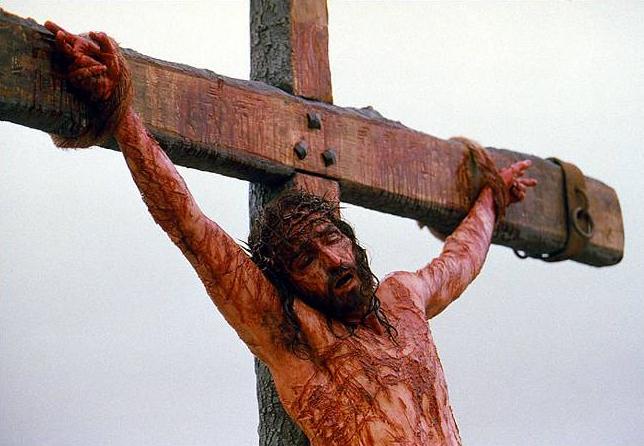
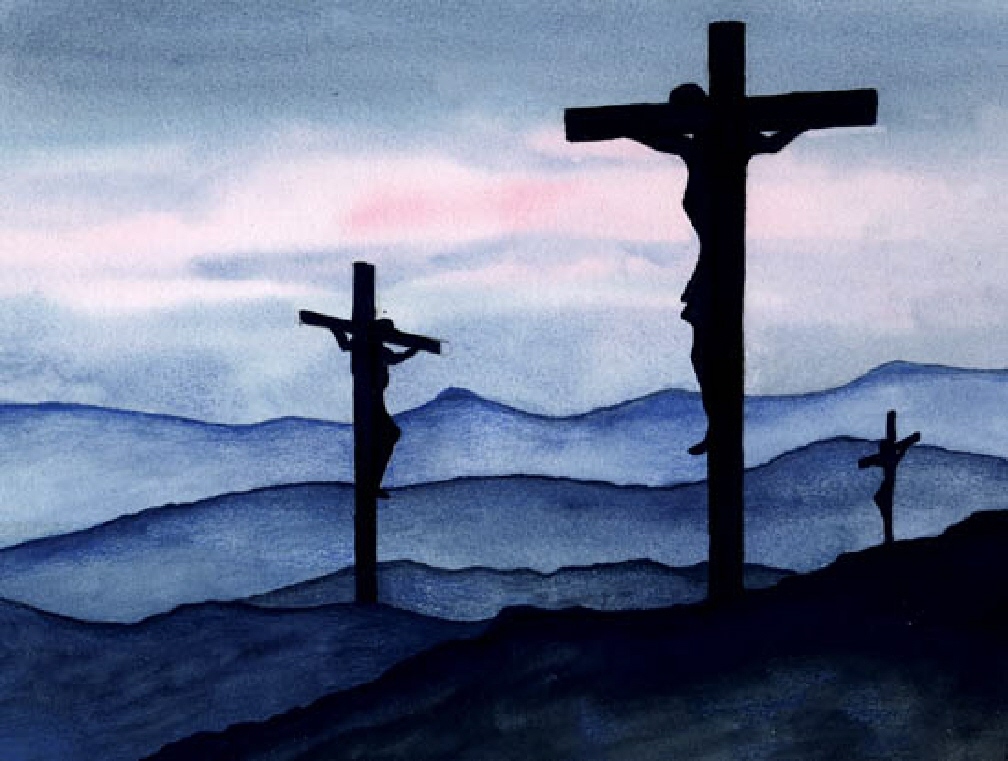
“What is so good about Good Friday?” asked a girl with a quizzical look. When we scan the surface of the events surrounding Good Friday they do not seem so good, in fact, they appear grotesque. How could the horrific death of the Jesus be so good, when a bloody and baffling execution appears so bad? This question begs another:

What if Jesus never came?
Or instead, accepted immediate fame?
What if He never walked this earth?
And purposed to die from birth?

What if Jesus never willfully died?
And lived a ludicrous lie?
What if He never became the sinless sacrifice?
And tumbled in temptations vices?

What if Jesus never bore God’s wrath?
And became righteousness on my behalf?
What if He complained and moaned?
And left my sin unatoned?

What if Jesus copped out of the crucifixion?
And put a pause on propitiation?
What if to Him redemption did not matter?
Or withheld glory from His Father?

What if Jesus decided not to save?
Or remained hidden in the grave?
What if He failed to rise again?
Or reconcile mankind from within?

I thank God that He did die that day,
Demonstrating and redefining a Good Friday.
Amidst sorrow and melancholy mood,
I can confidently say, “We got IT good.”

speak forgiveness

Have you ever said anything that you regretted? This week, instead of saying the word song or tong, I said the word thong both in very awkward church related settings. When I refer to regretful words I am not speaking of embarrassing moments but to purposeful things you say that are hurtful and harmful to others.

In 5th Grade I was riding home from school on the bus. Behind me there was a classmate who was making fun of me by saying things that were rude and crude. I had enough and there was a decision to be made: turn the other cheek or wipe the smirk off his cheek. I chose the later. I charged back there and started wailing on him. The bus driver slammed on the breaks. I flew forward. The bus driver rushed to the back of the bus and grabbed us both by our shirts and ushered us up to the front of the bus. We didn’t make it to our homes that day; instead, we waited for our parents at the bus barn. My mother was not a happy camper.

When someone offends us we want to hold onto the hurt and anger. Or we want to pursue payback, seek revenge and retribution. Unforgiveness is controlling. When we choose to not forgive we put the perpetrator in the drivers seat and say in a sense, “You are in control, you call the shots.” Unforgiveness is like a dog leash and its master is the one who has offended you.

God knows that we struggle with forgiving and being forgiven. That is why He has given us His Bible. He communicates with us and gives us an example of how to communicate with others. He knows it is our mouths that get us into the most trouble. He builds a bridge and gives us the means to get over it. Let’s look at four fascinating truths God gives on how to be forgivers and godly communicators. If we seek to live by these it will save us from a lot of conflict.

1. Speak the Truth [4:25]. Unforgiving people love to latch onto lies. People who do not put off falsehoods will tend to say things like, “You always ____. You never _____. Every time I ____, you _____.” Rather than speaking in absolutes; gather the facts, never assume anything always ask for what is true [cf. 1 Cor.2:11; Phil 2:1-3]. Speak the truth in love to build up, not to break down [cf. 1 Cor.13:1-3; Eph.4:15]. Do not burn your bridges, rather seek to build them back.

2. Solve Today’s Situations Today [4:26-28]. Don’t let the sun go down on your anger because you more than likely will not deal with it. Not dealing with it is not dealing with it. We tend to hold off on dealing with confrontation or forgiveness until a better day when it feels right or the timing is right. But digging up the past should be left to archeologists and projecting on the future is for prophets. Adding time to anger multiplies the problem. Unresolved unforgiveness or anger leads to bitterness. Deal with your situations today by keeping current.

Here are some good questions to ask before you speak:

  • Do I have my facts right? Proverbs 18:13
  • Should love hide this? [i.e. Is it “sinful” or preferential?] 1 Peter 4:8,
  • Is my timing right?  Proverbs 15:23
  • Is my attitude right?  Ephesians 4:15
  • Are my words loving?  Ephesians 4:15
  • Have I prayed for help?  Proverbs 3:5

3. Slay the Problem not the Person [4:29-30]. Words pierce people to their core. Words can bring life or kill [Proverbs 18:21, cf. Mt.5:21-26]. Corrupting talk is when you your words, statements and tone to disintegrate others. We can be champions at putting other people down. Like Goliath we have a big mouth that gets us into trouble. David let God do the fighting for him.

Hurtful, harmful and hateful words do not only grieve the offended, but also God. Do you know why? Each and every person was made in the likeness and image of God. When we break apart peoples character it tarnishes the very God who created them. Corrupting talk does not help the situation, however, edifying words search for a solution [cf. Eph.4:15; Col.4:5-6].

4. Step ahead, don’t step back [4:31-32]. Be proactive in your speech rather than reactive. In other words, act—don’t react. We have a tendency to justify our primary sin with a secondary sin [i.e. Gen.3:8-13]. When someone offends us and we fire back in anger, wrath, bitterness, and slander we are letting them get the upper hand. God says as followers of Christ we are to step it up by putting on the character and communication of Christ.

When Jesus was ushered to His death sentence as an innocent man He never defended Himself. It is not the He was a weenie or wimp, or that He was too cowardly to stand up to His accusers. In fact, He was more courageous because He did not retaliate. He let God do the fighting for Him. In the midst of unfair and unforgettable circumstances He remained kind, compassionate and forgiving [i.e. Is.53:4-12].

Years later after the school bus brawl I had a similar situation occur. Somebody was accusing me a things that were false, slandering my character, spreading lies and gossip. Instead of heading over to their house and letting them have it, I quietly confronted them in love and grace. In time, God did the fighting for me and I did not have to do anything to prove myself. I extended forgiveness to the offender and treated them as it never happened. Do you know what happened? The kindness of the God had taught me, and the forgiveness that God had given to me was used as an instrument of brokenness in this person’s life. Forgiveness is a mighty weapon of restoration in the hands of God [Romans 12:21].

The way you communicate and extend forgiveness to others reveals your relationship with God [Luke 6:45].

unleashing forgiveness

I had just turned 16. My parents were away for 4th of July weekend and I had my step-dads truck all to myself. He had the coolest looking Mitsubishi Montero. Looking back, the man who gave oversaw my drivers test earlier that March was more into the 4×4 gadgets inside than how I was driving outside. I passed. I do not recall having permission to take out Mike’s truck that weekend, but it was the 4th of July, and my friends were banking on me taking them to the fireworks on the Rib Mountain in the Montero. So with the moon-roof down, music cranked and the 4-wheel on we head up the mountain in the Montero.  All was good and we had a great night.

The next day I had to work. Since we got in late the night before and I had to work so early I decided I would take the Montero [I usually took the bus or road my bike]. No harm, right? As I was pulling into the mall-parking ramp my foot got stuck on the accelerator and the car rammed into the concrete ramp. Cars were lining up and honking behind me. I put a $5000.00 dent into the truck. My sin had just found me out. My parents called that night and ask how I was doing? I did not mention a thing. When my parents got home a few days later my step-dad opened the garage viewed him damaged Montero and was furious. That 4th of July I had to learn a valuable lesson about forgiveness.

Forgiveness is unnatural. We want to hold onto the hurt and anger, payback, seek revenge and retribution. Have you ever been there? Have you been on the offended end of hurt, blame, finger pointing, or collateral damage? Do you really want to live like this? Who are you having a difficult time forgiving?

what is forgiveness?

It is a decision to treat an offender as if the offense never happened at all.

why should I forgive?

Peter asks this very question to Jesus and you sense he is struggling with unforgiveness [Matthew 18:21], since earlier Jesus had taught about what to do if a person offends you [18:15-20]. In Jesus’ day Jewish rabbi’s taught that if you forgave someone three times you were really forgiven, but super spiritual Peter trumps that number to seven. Jesus is going to answer the haughty question using a simple story [18:22-35].

Unforgiveness is foolish [Matthew 18:22-27]. God is like the king who forgives the servants $10 million dollars debt. In those days filing bankruptcy was not an option. If you could not pay, off to the slave market you went. What a forgiving king. God says there are endless reasons to forgive. However, we have endless excuses for not forgiving someone who has offended us. Sin is always irrational, full of excuses and deceitful. I have heard people say, “The hurt is too big.” We believe that there is no possible way to forgive ____ for doing ____ because the wound is deep, fresh and still bleeding. I have heard others say, “Time will heal it,“ “They are bound to do it again.” “I cannot forgive until I forget.” We humans have a hard time forgetting. The problem is forgiveness is the process God uses to help us forget.

Unforgiveness is like a cancerous tumor. The longer it is left unchecked the harder it is to remove, and the messier and more complicated it becomes. Unforgiveness is controlling. It is like a dog leash and its master is the one who has offended you. Unforgiveness will continue to become a weight that becomes heavier and heavier until you deal with it. When we harbor unforgiveness we are saying, “Okay, you control my life. I’m the puppet. You have the strings.” I have lived that way before, for years I was leashed to unforgiveness to my divorced parents who I blamed for my anger and sin issues.

Unforgiveness is dangerous [vs.28-30]. If we decide not to forgive it can destroy people. Think about it: the forgiving servant was forgiven $10 million dollars, but he was bent out of shape over someone who owed him $11 dollars. Ridiculous!? The same is true for one who is a child of God. If Christ has forgiven you of all your sins and you cannot forgive another for one sin, ridiculous. Unforgiveness will destroy you and others.

Unforgiveness is Godless [v.31-33]. Question: How much has God forgiven you? What does it say about God’s forgiveness if we cannot forgive an offender? It slaps God in the face. It says His forgiveness does not cut it. Unforgiveness is anti-God.

Unforgiveness is torturous [v.34-35]. If we do not deal with forgiveness it will deal with me. Ultimately it will destroy me and separate me from the Forgiver.

how do I know if I am forgiving?

Going back to Peters original question do you notice Jesus’ response? [v.22] “I tell you, not seven times, but seventy-seven times.” Jesus is not saying you should forgive 77 times, but forgiveness is over and over again. Forgiveness is to be a habit. Now I am not going to minimize how bad someone has hurt you, but do you realize what forgiveness God has given you? Forgiveness starts and ends with God. I learn forgiveness from Him, and I give forgiveness in Him. How do I know if I am a forgiving person?

First, I am not deceived by my pride. You are quick to admit what you did was wrong and seek forgiveness, or you are quick to offer forgiveness by not harboring unforgiveness. Unforgiveness is not your mother’s fault, your friend’s fault, rather own up to it yourself. Second, I am not defensive or protective. You do not have to pay back, pick that fight, or rebel to prove you are right. Instead you leave that up to God [Romans 12:19]. Third, I am motivated by Christ’s forgiveness, so I forgive. It is freeing to allow God to fight the battles for you and to rely upon His forgiveness to forgive others.

Forgiveness is unnatural, but necessary. As followers of Christ forgiveness should come more naturally. Unleash unforgiveness before you are lynched by it.

you are a worshiper

What is worship? What is a worshiper? Worship is about God, to God and for God. Worship is about what you love. You love something or someone. What you love you give time, talents and treasures to without thinking. Worship comes natural to us because that is how God wired us. We are wired to worship.

The Bible is chalked full of men and women who followed God with an unquenchable thirst. Followers of Christ are worshipers. Followership is another word for worship. One such follower is Habakkuk. Even in bleak circumstances battered by extreme doubts he praises God [3:17-18]. Then there is the Paul who is imprisoned for his faith [Acts 16], but still finds a way to share the good news.

Over a hundred years ago there was a songwriter by the name of Fanny Crosby. As a baby she experience a traumatic life-altering situation. This is how she describes it,

“When I was six weeks old I was taken sick and my eyes grew very weak and those who had charge of me poulticed my eyes. Their lack of knowledge and skill destroyed my sight forever. As I grew older they told me I should never see the faces of my friends, the flowers of the field, the blue of the skies, or the golden beauty of the stars…Soon I learned what other children possessed, but I made up my mind to store away a little jewel in my heart which I called content.”[1]

When she was only 8 years old she penned this song:

O what a happy soul am I! Although I cannot see,

I am resolved that in this world contented I will be.

How many blessings I enjoy, that other people don’t.

To weep and sigh because I’m blind, I cannot, and I wont.[2]

I wonder what my response would be like if I were in the same situation as these saints who have gone before? Would I have complained or become calloused? Or would I be content, compassionate and worshiping God? Though blind, Fanny could not wait to see Jesus’ face. She has an eye for worship. She didn’t see an end in blindness, but viewed endless opportunities to praise God.

Once you get a glimpse of God you are never the same, even in a world that does not acknowledge His presence or purposes [Isaiah 6:1-13; 29:13]. What we learn from Isaiah in the divine throne room is that God is full of wonder, awe and mystery. He is Qadesh [Holy]. His name is Holy One. There is nothing or anyone like Him ever. He is set apart, therefore, He is worthy of our fear, reverence and life. Once you have seen God you become a worshipful follower. On this side of heaven we have only get to see a drop of His glory in the ocean of His splendor.

Here is both a comforting and convicting fact of the Bible: You become like what you worship. What you follow you worship. Who you follow is who you worship. You will become like the object of your worship either for your ruin or restoration.[3] You will either be blind, deaf and lifeless like idols or full of life like God. Worship must be about God, to God and for God. Worship is about what you love. You love something or someone. What you love you give time, talents and treasures to without thinking. Worship comes natural to us because that is how God wired us. We are wired to worship.


[1] Fanny Crosby, quoted in S. Trevena Jackson, This is my story, This is my Song, Emerald House, n.p.

[2] Ibid.

[3] G.K Beale, We become what we Worship, IVP, 2008.

transformodification

Does God want to change my sinful behavior into behavior that glorifies God? You bet. However, you must be careful that you do not make behavior modification the goal of discipleship. God desires transformation in His followers.

“When morphing [transformation] happens, I don’t just do the things Jesus would have done; I find myself wanting to do them. They appeal to me. They make sense. I don’t go around just trying to do the right things; I become the right sort of person.”[1]

People will come to your church to know more about God [in fact, this was the number one survey reason why teens come to FUEL]. People are curious how God fits into their life. They take the bits and pieces they like or pick and choose the ideas they are convinced will change their situation. However, viewing God like this is no different that believing He is a psychologist, medical antidote, or genie-in-a-bottle.

Changing the outside of a man doesn’t mean his insides are changed [cf. Matthew 23:25-26]. In other words, asking an unbeliever to be like Christ is similar to asking an alcoholic to quit drinking cold turkey. The alcoholic may go to AA, find community, and successfully quit his/her drinking addiction, but often trade addictions [i.e. begin smoking] because they are not encouraged to deal with the root issue of their addiction. Encouraging a non-follower to change attitudes and actions without the heart motivation doesn’t lead to lasting or permanent change. They will eventually fail because they do not have a relationship with Christ or true connection to the community of Christ [His church].

If we teach change before teach about Christ we are setting our disciplees up for disaster. Changing behavior to be like Christ without having a relationship with Christ can feed pride, give false assurance, and create an I-am-all-right-with-this-now attitude. Behavior on the outside might appear Christ-like, but on the inside they have a twisted and wicked heart. Whatever rules the heart will exercise inescapable influence over the person’s life and behavior.[2] I am reminded often that God is solely after obedient hearts.

“These people come near to Me with their mouth and honor Me with their lips, but their hearts are far from Me. Their worship of Me is made up only of rules taught by men.”[3]

Don’t piecemeal God into your life; He wants to break you so that you give Him everything. I want to encourage those I am discipling to or in Christ to stop fitting God into their plans and start fitting their life into God’s plan. I want to help them count the cost of commitment to Christ. Help facilitate change of the heart first and foremost to see God bring about transformodification [and yes, I did make the word up].


[1] John Ortberg, The Life You’ve Always Wanted, Grand Rapids, MI. Zondervan, 1997. 23.

[2] Paul Tripp, Instruments In the Redeemer’s Hands, P&R Publishing, Phillipsburg, NJ, 2002, 68.

[3] Isaiah 29:13

the Word

Why has God placed His authority over us? God’s authority is like an umbrella that protects us. What is the umbrella? It is God’s Word, the Bible. The Word of God is His wisdom for us. Sometimes we just wish God would chisel His plans for us in stone, paint what He is up to in our life in the sky, or speak to us for real in a loud voice. What we often fail to realize is that He does, in God’s Word.

The Bible describes itself as God’s Word [over 4,000 times from Genesis to Revelation]. It is obviously God’s Word to you and me. Yet people have many views about the Bible. Here are a few false beliefs about the Bible:

First, some deny that God wrote a book. However, it is what it is. You cannot deny gravity as being true. It is what it is, and the Bible is what it is, the Word’s of God to us. Second, some distort the Bible to fit their personal opinions, false religions or make it mean something other than what God intended. Third, others dissect the Bible like a lab rat testing its validity against science, psychology, history and archeology. As history shows the Bible affirms science. Fourth, the most common view of the Bible is to disregard its authority in their life right now [i.e. obey your parents and employers, Eph.6:1ff; anger and adultery, Mt.5ff]. You cannot just pick and choose the verse you like and throw out hard passages you do not like. It is like tearing pages out of the Bible, you cannot do that without consequences. An incomplete Bible equals an incomplete life. So what is the right way to view the Bible?

The Bible is a Love Letter. It is what it is [Jer.31:3]. I remember when I was dating Sarah we would write letters to each other weekly and sometimes more. I craved getting letters from her. I would check the mail each week with enthusiasm waiting to read what her hand penned. When I would get a letter from her I would read them over and over, almost memorizing them. I could never get enough of Sarah’s love letters. Most of the time she would draw a picture and I would put them all over my bedroom. Once she includes a glamour shot that I would carry with me everywhere. Sarah did not have to write it in the sky or sound the air siren that she loved me. It was obvious. She told me. You know God has done the same for us. The Bible is God’s love letter to us. Like a good love story is has a villain [Satan], hero [Christ] and clear message [Jesus saves]. The Bible shows God’s tender love and tough love at the same time. The Bible is tough because it reveals your true condition [sin/hell]. Sometimes we view the Bible like a pile of bills that cost us big bucks and if you don’t pay the creditor is hunting your head. Not true, it is a love letter.

The Bible is a Light. It is light a flashlight that helps us see the path before us [Ps.119:105; Prov.6:23]. Sin darkens our understanding, but God shows us the Light who is Christ [1 John 1:5-10]. The Word is like a lighthouse protecting you from the dangerous rocks that will ripped your life apart and send you sinking to the bottom. The authority of God’s Word protects us from a world of hurt.

The Bible is a Lunch. We must feed ourselves to a fill on the Word of God [Jer.15:16]. Eat this Book! The Bible is like a carbo-load that gives you energy to do as He says. How many meals do you eat a day? What if you did not eat? Not good. So it is when we neglect to dine on the Word of God.

The Bible is alive. This book is able to change a life and get to the deepest part of a person [Heb.4:12; 2 Tim.3:16-17]. Like a defibrillator the Bible is able to awaken your dead in sin soul and able to make you alive in Christ through faith in Him. By submitting to the authority of the Word of God we see that we have a great need that cannot be reached by my goodness, rather I have a great Savior.

How does the Bible come alive? Study it through. As you read it, it reads you. You see that you are a great sinner, but Jesus is a great Savior. If you are unsure where to start, begin with reading John or Romans. Pray it in. Ask God to help you understand, to be and do what you see and hear. Live it out. The Bible is not information, but it was written for your transformation.  We live it out, by obeying it. Pass it on. Show others that you are walking in the light as He is in the light. You might be the only Bible someone reads.

prayer for Chile

This is a prayer for all the people of Chile follow the aftermath of an earthquake that rocked their country:

My great I AM,

Fill my mind with elevation and grandeur at the thought of a Being

with whom one day is as a thousand years,

and a thousand years as one day,

A mighty God, who, amidst the lapse of worlds,

And the fall of empires,

Feels no variableness,

But is glorious in destruction.

May I rejoice that, while men die, the Lord lives;

That, while all creatures are broken reeds,

Empty cisterns,

Fading flowers,

Withering grass,

He is the Rock of Ages, the Fountain of living waters.

Turn my heart from vanity,

From distractions,

From uncertainties of the present state,

To an eternal interest in Christ.

Let me remember that life is short and unforeseen,

And is only an opportunity for unsefulness;

Give me a holy avarice to redeem the time,

To awake at every call to charity and piety,

So that I may feed the hungry,

Clothe the naked,

Instruct the ignorant,

Reclaim the vicious,

Forgive the offender,

Diffuse the gospel,

Show neighborly love to all.

Let me live a life of self-distrust,

Dependence on myself,

Mortification,

Crucifixion,

Prayer.

A Puritan Prayer taken from The Valley of Vision [104]

followership unmasked


Are disciples looking for perfect leaders or authentic leaders? As Christian leaders, it is tempting to want to put on a mask that hides the fact that at times you struggle with sin and fail in your faith too. Now I must never give glory to my sin, but glory in the grace I have in overcoming sin. Here are some biblical ways we can build trust and increase deeper counsel with those you are discipling:

Transparent prayer. Our prayers can be vague and lifeless. Learn to pray honestly and humbly. Pray expresses our neediness of God and that He is the only One able to meet our needs. Psalm 32 and 52 are great examples of transparent prayers that express need for God.

Share your life story. I am sure you have been through some valleys and climbed some mountains. Like the apostle Paul we have a story dotted with dark spots [cf. Acts 22:1-21], but those times make God really big. Sharing how you have been transformed by the power of God and continue to battle against sin take be a tremendous encouragement to those you are ministering.

Ask for Help. You are never self-sufficient or independent of your need for accountability and ministry from others. It is helpful to get others believers to pray for you and hold you accountable. You have not arrived yet, nor are you invincible. I need your help in the partnership of the gospel [cf. Philippians 1:3-18].

Admit you don’t know it all. What do I do if someone asks me a difficult theological or practical questions I do not know how to answer. I say, “That is a good question, I do not know, but I will find it out for you. I believe the Bible has the answers. Can I get back to you on that question?” [cf. 2 Tim. 3:16; Isaiah 55:9]

Be real. Do not hide your pain, sorrow, joy, heartache or frustration [cf. Romans 12:9-21]. God gave you emotions to use for His good [cf. Jeremiah and Lamentation]. Real men cry.

Point to the promises of God. Putting on the mask of sinlessness fails to help others to see the God’s faithfulness [Deuteronomy 7:9; 1 Corinthians 1:9]. Whatever good I have in my life was put their by God. I am not holy, but He that is holy has helped me to become Holy by the Power of His Spirit [cf. 1 Peter 1:13-25]. People need to see and hear that from you. Pull off the mask and let people see how God is at work in and through you.

True followers are seeking other genuine followers who are following hard after God.

rebel without a cause

This week I have been watching the Olympics on TV. It is interesting to watch the Olympians take the podium with their bouquet and medal. What does copper, silver or gold look like before it becomes an Olympic medal? It is an ugly rock covered with mud. Before it becomes a beautiful medal you wear around your neck it must first become chiseled and purified. This is often how God uses authorities in your life. He puts parents, teachers, bosses, pastors, and authorities in your life to chisel and shape you into precious metals. You have to be willing to get under authorities in order for God to you them in our lives.

The Fall of Saul and Us All [1 Samuel 13:11-12] Saul was a bold, brunette and a beautiful man [i.e. the Brawny Man]. On the outside he was the man for the job. He was a tall, intimidating [6’6’’ to be exact], muscular warrior king of Israel. He was anointed by God to be the political, economic and spiritual leader of God’s chosen people. Though Saul was king he still had authorities to get under: God and Samuel [God’s spokesmen]. Every time the people were to go into battle Saul had to wait for Samuel to make a sacrifice to God.

One day Saul was camped at a place called Michmash. The Philistine enemies were pressing in and Saul was freaking out with fear. Saul sent for Samuel and was asked to wait seven days. After the seventh day Saul had a conniption and couldn’t wait any longer so he took matters into his own hands. He made the sacrifice himself. [Side note: going through the motions of worship never pay off spiritually] It wasn’t long after the smoke from the sacrifice cleared that Samuel showed up and asked Saul, “What have you done?”

“When I saw that the men were scattering, and that you did not come at the set time, and that the Philistines were assembling at Michmash, 12 I thought, ‘Now the Philistines will come down against me at Gilgal, and I have not sought the Lord’s favor.’ So I felt compelled to offer the burnt offering.” [1 Samuel 13:11b-12].

Does this sound familiar? When I rebel against authority I usually rationalize by saying “I saw…I thought…I felt…” We are kings and queens of excuses: I saw someone else do it, I thought it wasn’t that bad of an idea, or I felt compelled even though it was not right. Despite Saul’s disobedience God gives him a second chance.

Can We Try this Again? [cf. 1 Samuel 15:1-19, 20-22] How do you think Saul responded? Did he learn his lesson? Saul was given one command: destroy everything. Samuel showed up after the battle and not everything was leveled. Saul gives an academy award winning response, but truly lame excuse [1 Sam.15:20-21]. Saul blames the soldiers, and then says he is going to give all the remaining stuff to God as an offering. Sounds admirable, eh? God is not impressed [1 Sam.15:22].

What are the Consequences of Rebellion? [1 Samuel 15:23] We take ourselves out from under the protection of God. The prophet of God Samuel says to Saul, “Rebellion is the sin of witchcraft.” [1 Samuel 15:23] What is witchcraft? It is the same as saying you putting yourself under the authority of Satan. Rebellion is having the spirit as the devil that allows him to rule our lives.

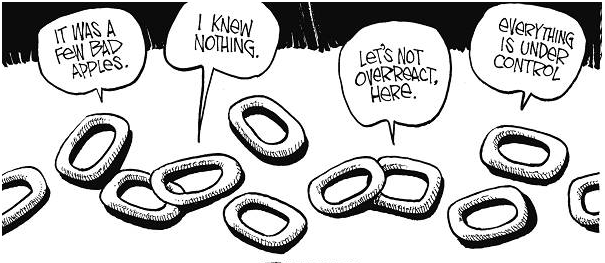
God works through authority. You are a link in God’s chain of command. God always works through authority. You have to find where you fit and place myself within that chain. If we take ourselves out of that chain we will never discover the greatness God has for us. Saul missed out on God using him personally and professionally.

What if my authorities are or ask me to do things that are illegal, immoral or unbiblical? This is a good question. What if some in authority over me are doing drugs, promoting sexual or verbal abuse, stealing money, lying to cover up, and more? I know what it is like to live daily under an authority that treats you unfair and is against you for no reason at all. In school, I had this teacher that hated me. She would send me to the principle just for smiling or raising my hand. This really tested my view of authority. Here is how God says to deal with authority:

1) Pray believing God can change hearts. You are accountable and responsible to obey God first and foremost [1 Peter 2:16-23]. 2) Confront in love and humility: Be like Samuel and call sin what it is [Matthew 18:15-20]. Humble and joyful submission to authority is a root to intimacy with God. Submission sounds like a dirty word, but when we submit to God it is the most delightful thing we can do. Submission to God is not easy, nor does it promise an easy life. Sometimes getting under authorities and obedience to God might require sacrifice, require you to surrender, and/or require you to suffer. The question is: will you allow God to use the authorities [even the bad one] in your life to chisel, mold and purify you as gold? [cf. Job 23:10]

you can’t tell me what to do

What do you think of when you hear the word, “rebellion”? I think of Darth Vadar. He is doctor of rebellion. How would you feel if he were your father?

Whose authority do you struggle to submit to? Could it be an unfair teacher that everybody agrees has unrealistic expectations, an abusive parent, a coach who will not play you, a boss who doesn’t listen and shows favoritism to others, or a friend who is trying to help you? How do you react to their authority in your life? We live a day when it is cool to be rebellious. You hear people say, “I am the boss. I call the shots. I will do what I want to do, when I want to do it. This is my life. I make my own choices. I…I…I… me…me…me…You can’t tell me what to do.” You’d think people were trying out for the selfish opera.

Why do we think like this? Why are some people so rebelliousness? There are many reasons why people are prone to rebellion: jealous for control, delusional from a false view of authority, ungrateful for the place God has put them, stubborn, disappointed by their situation, or simply untrusting of anyone. In that last few generations we have seen an enormous upswing in rebellion against authority. Rebellion didn’t start in the “rebelutionary” 1960’s. It began in the beginning [Genesis]. Rebllion is the oldest sin in the Book.

The story of Satan is rebellion against God: also known as the me, myself & I monster. Satan was the worship leader of heaven. He didn’t like his gig. He wanted to be the top dog and run the show. He wanted to usurp God’s authority or so he tried [cf. Isaiah 14:13-14, “I will ascend to heaven, above the stars of God I will set my throne on high…I will make myself like the Most High.”]. This story sounds like a lot of people I know, myself included. When I rebel I try to take the place of God in my life.

Throughout the Bible we read story after story of rebellious people. In 1 Samuel, we read the story of Saul, King of Israel, who is the poster child for having authority issues. The prophet of God Samuel says to Saul who repeatedly disobeys God commands says, “Rebellion is the sin of witchcraft.” [1 Samuel 15:23] What is witchcraft? It is saying you are on the same team with Satan. Rebellion is having the spirit as the devil that allows him to rule our lives. Let’s see how God deals with this in the Bible:

Summary of Rebellion in the Bible:
Genesis 1—God sets up His authority over mankind and makes man in His image
Genesis 2-3—man rebels and listens to the serpent [Adam & Eve]
Genesis 4—man rebels again with an unworthy sacrifice [Cain & Abel]
Genesis 6—man rebels with worldwide wickeness [Noah]
Genesis 10—man rebels trying to aspire to God [Tower of Babel]
Exodus-Deuteronomy—man rebels by complaining in the wilderness [Moses]
Rest of the OT—man rebels against the prophets message [i.e. Jonah]

So are you wondering where authority issues lead? It should be somewhat clear from our summary of Scripture. Satan is cast out of heaven, Adam and Eve are cast out of the Garden, the children of Israel are cast out of Promised Land, Jonah is cast out of the boat, and we will be cast out of the presence of God for rebellion. There is a common theme of rebellion in the heart of man and common response by God: cast out.

If you look in the word authority the word “author” is in its beginning. God is the author of authority. What does good authority look like? Sovereignty: His rule in our lives. God has established His authority in our life from the beginning. He shows us and teaches us what good and godly authority looks like.

Jesus is the author and finisher of our faith [cf. Hebrews 12:1-4]. He is submitted Himself to the Father even to the point of death. Jesus submitted to God’s authority and the authority of man [Mt.22:21 “Give to Caesar the things that are Caesars and God the things that are His.”]. Lack of submission to authority is cowardly. The world thinks just the opposite. However, the manliest man in the entire world submitted Himself to sinful authorities that forced Him to carry the cross to His death. He did this for your example and your salvation.

Paul thought he was the authority of his own life. He was brilliantly smart, fanatically religious, came from a strong family, and was respected by his compadres, which fueled his pride and rebellion against God [cf. Philippians 3:4-8]. One day on the Road to Damascus he came under the submission of Christ. He finally realized what true authority was all about [cf. Romans 13:1-2]. God has appointed authorities in our life for our good. So what are we to do?

We need to get under the things God has put over us, so we can get over the things God has put under us.

Why does God put authority over us? First, to protect you. God want us to live under authority for our protection. He is like an umbrella that protects us from harsh elements. If I take myself out from under His authority I am vulnerable to all sorts of pain, temptation and mess. Second, God desires to mature you. As I look back in my life God has used some authorities in my life to help me grow up in my faith. Even those some were unfair, ungodly or abusive; they were placed there by God to mold me like clay into the person He wanted me to be. Third, God desires your worship. I am made in the image of God [cf. Gen. 1:26-28, You are a dominioneer]. Everything I do is about worship. 24/7 I am worshiping someone or something, and God desires that it be He alone.

Again, whose authority do you struggle to submit to? Is it a parent, spouse, mature friend, teacher, coach, boss or God? Do you believe God’s authority can transform the way you submit to the authorities or Darth Vadar’s in your life?