thumb lick thursday [4.28.11]

Shifting Religious Identities

A new study shows American’s shifting spiritual choices, including rising numbers of people with no religion, within a generation.

The Discipline of Preaching to Yourself

Preaching to ourselves is the personal act of applying the law and the gospel to our own lives with the aim of experiencing the transforming grace of God leading to ongoing faith, repentance, and greater godliness. A good teacher or evangelist is first a good preacher to himself. [24] – Joe Thorn, Note to Self, Crossway, Wheaton, IL. 2011.

Preaching to yourself demands asking a lot of questions, both of God’s Word and especially of yourself. To preach to yourself is to challenge yourself, push yourself, and point yourself to the truth. It is not so much uncovering new truth as much as it is reminding yourself of the truth you tend to forget. [32] – Joe Thorn, Note to Self, Crossway, Wheaton, IL. 2011.

Simply Herald Christ

Paul, in his own estimation, was not a philosopher, not a moralist, not one of the world’s wise men, but simply Christ’s herald. His royal Master had given him message to proclaim; his whole business, therefore was to deliver that message with exact and studious faithfulness, adding nothing, altering nothing, and omitting nothing. And he was to deliver it, not as another of man’s bright ideas, needing to be beautified with the cosmetics and high heels of fashionable learning in order to make people look at it, but as a word from God, spoken in Christ’s name, carrying Christ’s authority, and to be authenticated in the hearers by the convicting power of Christ’s Spirit. – J.I. Packer, Evangelism and the Sovereignty of God. IVP, Wheaton, IL. 2008. 52.

Preach Christ [and conviction of sin]

It is not conviction of sin just to feel miserable about yourself and your failures and your inadequacy to meet life’s demands. Nor would it be saving faith it a man in that condition called on the Lord Jesus Christ just to soothe him, cheer him up and make him feel confident again. Nor should we be preaching the gospel (though we might imagine we were) if all that we did was to present Christ in terms of human’s felt wants. (“Are you happy? Are you satisfied? Do you want peace of mind? Do you feel that you have failed? Are you fed up with yourself? Do you want a friend? Then come to Christ; he will meet your every need”–as if the Lord Jesus Christ were to be thought of as a fairy godmother, or super-psychiatrist.) No; we have to go deeper than this. To preach sin means not to make capital out of people’s felt frailties (the brainwasher’s trick), but to measure their lives by the holy law of God. To be convicted of sin means not just to feel that one in an all-around flop, but to realize that one has offended God, flouted his authority, defied him, gone against him and put oneself in the wrong with him. To preach Christ means to set him forth as the One who, through the cross, sets men right with God again. to put faith in Christ means relying on him, and him alone, to restore us to God’s fellowship and favor. – J.I. Packer, Evangelism and the Sovereignty of God. IVP, Wheaton, IL. 2008. 69-70.

The Story of Jesus is True

Dr. Keller began his talk with listing three statements that he was going to prove. 1) Why it’s important that the story of Jesus is true. 2) Why it’s important the story of Jesus is about Jesus. 3) Why it’s important that the Gospel is not a set of bullet points, but rather a story. He spent the remainder of his message giving eight arguments that answered the above questions. After the talk, Keller stayed for a book signing. The event was sponsored by Lemuria Books, Reformed University Fellowship and Belhaven University.

Matters of the Heart: what God says about the core of man

The Bible is says followers of Jesus Christ are to live in a way that reflects Him. A Christian is a “little Christ.” This can be a difficult role to fulfill especially when other people, even Christians are not acting, speaking or living for Christ. How do I live in a dirty rotten world? How Can I shine the light in a dark world? What is God’s view of self, success, & stuff? Does it matter what I do with my free time? So how do I live in the world, but not become like the world? What is the matter with my heart?

the heart of the matter

What is the heart? The heart is not just a muscle that pumps blood, the shape of a card you receive on Valentines Day, nor where romantic feelings come from. It is said that you cannot understand a human until you understand the heart. The Bible describes the heart as your inner man [spirit, soul, mind, emotions, passions, will, etc.]. The heart is the real you, where your beliefs affect your behavior. It is the control center of a your life. [Read More]

key to understanding your heart

Have you ever had a set of keys that you just did not know what they unlocked? I use to have a small box of mysterious keys I no longer knew what they unlocked. I still keep many of them around just in case I have a door or padlock that I cannot open. Hopefully you are not missing a key to something important that I’ve borrowed and forgot to give back to you? It is frustrating not having a key to unlock something valuable to you [i.e. home, car, safe, etc.]. Sometimes it might feel like your heart is locked and you do not have the right key to understand. [Read More]

Heart Distracters & Hardeners

God, you really didn’t mean to say that?

What does it really mean not to love the world? What does it mean for me? Does it mean I have to give up listening to unchristian music, R-rated movies, MTV, video games, making lots of money, gossip magazines, or my short shorts? If you were really honest you don’t want the answers, especially from a 2000-year-old book that may seem out of touch with today’s culture and trends. [Read More]

i love the world

John says, “Do not love the world or the things in the world.” [1 John 2:15] But then in another place John says, “For God so loved the world…” [John 3:16] and Jesus says, “As [God] sent Me into the world, so I have sent [believers] into the world.” [John 17:18] So on one hand, I am not supposed to love the world, but God loves the world. And on the other hand, I am not supposed to love things in the world, but Jesus sends His followers to live in the world. Okay, let’s decipher and answer: What is the world? Should or shouldn’t I love the world? How can I love the world? [Read More]

the colossal compromise

Compromise is a part of life. Everyday you are faced with decisions where you have to give up something good for another good. Do I study or do I play soccer? Do I visit this family member or do I visit this old friend? Do I go out to eat for pizza or a hamburger? Do we go on vacation to the beach or the mountains? Compromise is simply changing the question to fit the answer. Sometimes you cannot have both and you must compromise. Sometimes compromising is not this simple. Sometimes compromises can have a great affect on you and others depending on which option you choose. Sometimes people compromise deep-rooted beliefs or sacrifice morals to get what they want. [Read More]

lead me not into temptation

Temptation is something every human faces. Temptation in and of itself is not sin, but it is the first stage towards sinning. Temptation comes at you like blazing arrows at from Satan, the world, and your wicked heart. Your only vaccination to combat the constant nagging attacks of temptation is using the Word of God and loving Jesus Christ. Jesus was tempted, but did not sin [Hebrews 4:15-16]. Therefore, He knows the full weight of temptation because He did not give into it. [Read More]

hypocrisy

In the early days of acting a hypocrite was considered a good term. It described an actor who could put on many different faces or masks. Actors in the Greek theatre wore masks depicting an emotion. The masks were large, often twice the size of an actor’s face, so they could be easily seen. The Jews used the word hypocrite to describe a liar, deceiver, two-faced, or one who hid his true nature behind a mask. [Read More]

the spiritual war and your enemy

From the beginning to the end of Jesus’ ministry he warned, overturned, taught, and fought against spiritual foes. Much of Jesus’ ministry portrayed power encounters, exorcisms, and exposes a real supernatural warfare in this world. Since, spiritual warfare is real, how do we deal with it? [Read More]

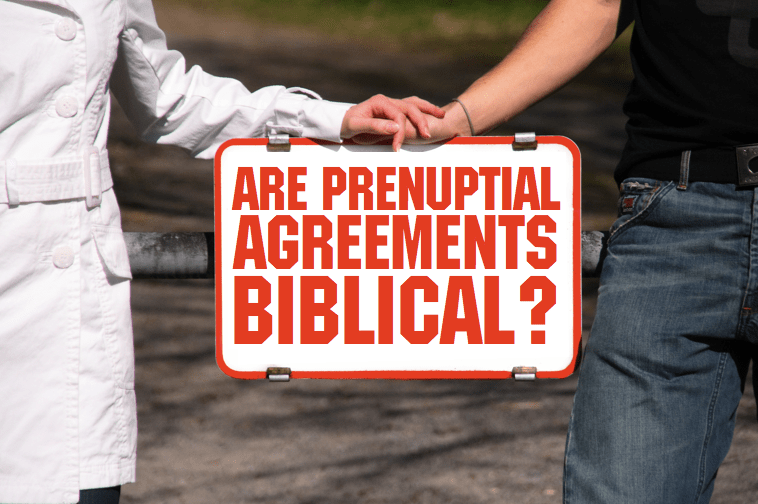
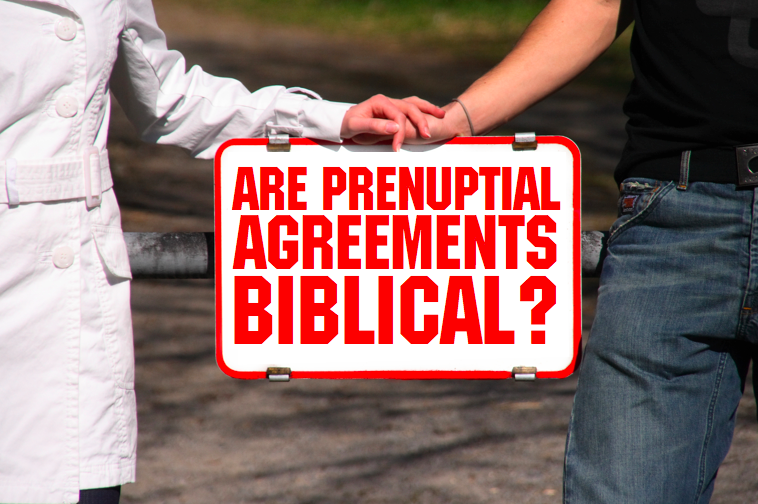
are prenuptial agreements biblical?

Today it is common for couples entering marriage to craft contracts with an attorney dividing the assets between what is ‘mine, yours and ours’. These contracts are helpful if the couple were to divorce or die. Yet an important question lingers: Are prenuptial agreements biblical?

The Bible never deals with the subject of marriage contracts or prenuptial agreements with built-in clauses negotiating the division of assets and/or custody of children in the event of divorce. However, the Bible does speak of agreements and marriage.

GOD AGREES WITH MARRIAGE AGREEMENTS

First, the Bible describes marriage as a permanent lifelong covenant that is both unconditional [never to be broken] and universal [for all people of all times]. When a couple stands in a marriage ceremony before God and their witness sharing an “until death takes us apart” vow of commitment, it is more than an agreement or handshake between two parties. God calls it a spiritual covenant. The covenant is between two humans who vow to forever love each other by becoming one-flesh. God sees marriage as an everlasting agreement.

At wedding ceremonies you often hear 1 Corinthians 13:4-7 read. This passage teaches unconditional love, “Love is patient and kind. Love is not jealous or boastful or proud or rude. Love does not demand its own way. Love is not irritable, and it keeps no record of when it has been wronged. It is never glad about injustice but rejoices whenever the truth wins out. Love never gives up, never loses faith, is always hopeful, and endures through every circumstance.” As committed followers of Christ enter the marriage covenant, this love is possible through Christ. Ephesians 4:2 says, “Be humble and gentle. Be patient with each other, making allowance for each other’s faults because of your love.” It is wise for couples to participate in pre-marital counseling and post-marital counseling from their local church to receive biblical wisdom on how to cultivate this kind of unconditional love.

When God created Eve from Adam’s rib, He was signifying the purpose of a husband-and-wife relationship. The woman is the man’s helper, the man is the woman’s protector and leader, and both are submissive to Christ. Ephesians 5:21-33 teaches about the roles of a husband and wife in marriage. Both spouses should submit to each other out of reverence for Christ [v. 21]. The husband has the final authority as Christ does for His church. When the husband is lovingly submitting to the will of Jesus, the wife will in turn lovingly submit to her husband. Husbands are called to love their wives with the same love that Christ showed the church [v. 25]. Christ loved the church enough to sacrifice His life for it.

Even if you marry someone who is not a committed follower of Christ or who falls away from God, you are not to leave him or her. At the least you are to be a Christlike example, and the unbelieving spouse may be won to Christ by your example [1 Corinthians 7:10-16; 1 Peter 3:1-7).

Second, the biblical grounds for divorce and remarriage are very narrow when those married are both committed followers of Jesus Christ [i.e. adultery; Matthew 19:9]. So Jesus warned, “What God has joined together, let no man separate” [Matthew 19:6]. Marriage is a sacred covenant.

Divorces are always messy and emotional. It is like trying to rip apart plywood. With or without a prenuptial agreement onefleshness is an important factor to consider. How can man separate what God miraculously unifies, “Therefore a man shall leave his father and mother and be joined to his wife, and they shall become one flesh.” [Genesis 2:24]  The one flesh of the marriage union is an emotional, physical and spiritual bond. God despises divorce (Malachi 2:16). The only reason divorce was ever allowed was because of sin and peoples refusal to obey God’s Word. “Jesus replied, ‘Moses permitted divorce as a concession to your hard-hearted wickedness, but it was not what God had originally intended’” [Matthew 19:8].

There are no reasons two committed followers of Christ who are faithful to God and one another should ever need a divorce. Yes, the two people will sin, but God calls you to forgive one other just as He has forgiven you. Unforgiveness could be a sign you are not truly His grateful children [Matthew 6:9-15].

AGREE TO DISAGREE WITH PRENUPTIAL AGREEMENTS

God intended marriage to be permanent and lifelong covenant. The marriage ceremony is not a contract, but a symbol of covenant. When two committed followers of Christ enter marriage it should be with the intention that divorce is not possible. To have a prenuptial agreement allows—if not assumes—for the possibility of divorce.

Couldn’t a conditionalized prenuptial agreement be a built-in way for a couple to “cross their fingers” when saying, “I do”?  Our world today, says prenuptial agreements are necessary, and anyone who does not enter into one is a fool and will ultimately get financially burned. Therefore, couples make provision for the decision of one or both partners to violate their vows. What the Bible teaches about marriage does not fit into the notion of a “just in case we get divorced you can’t take my stuff” agreement. This could demonstrate a lack of commitment to one another in such a fundamentally important and biblically intimate relationship.

Couldn’t a conditionalized prenuptial agreement be an issue of materialism? It could be argued that prenuptial agreements increase marital trust by taking the issue of money “off the table”. However, it is said that money issues are the #1 reason why marriages end in divorce. Committed followers of Christ are encouraged to respond joyfully when their assets are lost or plundered [Hebrew 10:32-34]. God says money is not inherently sinful, but the love of it is. Money can take the place of God. You cannot take your hearse or a a trailer packed with your money and possessions. Heaping up treasures on earth do not compare with the treasures of Heaven [Matthew 6:19-33]. It is worth serious consideration before a couple marries—if either man or woman is wealthy—to ask: “Are we really willing to let go of it if we had to?”

A prenuptial agreement might not be the wisest idea, though the Bible does not directly speak against it. There is not anything intrinsically evil or sinful about prenuptial agreements, but they might not convey the most biblical approach to marriage. It could raise questions of mistrust, which can have a harmful effect on the marriage relationship. It is understandable why non-Christians would contract prenuptials because of the unbiblical view of marriage, but for a Christian who understands covenant marriage, it is a different story.

Commitment is the cornerstone of marriage. Without commitment to Christ and one another, marriage fails. Christ is the glue that keeps a committed marriage together. Marriage itself is a beautiful picture of the Gospel concerning Christ’s commitment to His church. After a sinner commits to Christ within a redemptive relationship God never divorces Himself from His children. There are certainly no “if’s” or “maybe’s” about the Gospel. May your marriage put Christ and His church on display through your lifelong commitment to faithfully follow Christ and serve your spouse!

Questions to ask before getting a prenuptial agreement:

Q: What is the purpose of a prenuptial agreement? How is that purpose different for committed Christians and non-Christians?

Q: Do the prenuptials contradict our marital vows to one another?

Q: What about the implications for Christ’s marriage to His bride, the Church?

Q: How does the gospel help you understand everyday human marriage?

Biblical Resources on Marriage and Pre-Marriage:

Biblical Resources on Money in Marriage:

Biblical Resources on Divorce:

heresy

“What exactly is heresy? In the ancient church, that is the church up until the sixth century, the term “heresy” became a technical term to describe aberrant teaching that undermined the fundamental truth of the Christian faith. It was deemed so serious that those who were described as heretics were considered to be beyond the bounds of salvation.

Our English word “heresy” comes from a Greek word hairesis, which, in classical Greek meant “choice.” This use of this term does not occur in the New Testament. Six out of nine occurrences of the word in the New Testament are best translated by the words “sect” or “party.” Thus, for instance, in Acts 26:5, the apostle Paul claimed that “according to the strictest party [hairesin] of our religion I lived as a Pharisee.” And in Acts 24:5, Paul is described by the Roman lawyer Tertullus as a “ringleader of the sect [haireses] of the Nazarenes.” Hairesis, though, can also have a decidedly negative meaning. Paul lists it as one of the works of the flesh in Galatians 5:20, where he has in mind factionalism, not heretical teaching.

In only one New Testament verse, however, does the word carry the full meaning of our word “heresy.” That occurs in 2 Peter 2:1 where Peter says that false teachers will “secretly bring in destructive heresies [haireseis], even denying the Master who bought them.” But even a cursory reading of the New Testament letters will reveal that although the term “heresy” is not used, this is indeed what a number of the letters are seeking to protect God’s people against. Paul, for example, had to stand against those who denied the resurrection of the body in 1 Corinthians 15 and repudiate those in Galatia who would compromise the cardinal truth of justification by faith alone. And Jude, referred to earlier, is clearly dealing with aberrant theology that we could call “heresy.”

– Michael A. G. Haykin, Defence of the Truth: Contending for the Faith Yesterday and Today (Darlington: Evangelical Press, 2004), 10.

A couple of helpful resources on the issue of heresy are, of course, G. K. Chesterton’s Heretics, Harold O. J. Brown’s Heresies which are now both considered to be classic treatments of the subject. More recently, Alister McGrath has written Heresy: A History of Defending the Truth (San Francisco: HarperOne, 2010).

[HT]

your faiths firm foundation

What do these names have in common? Marilyn Monroe, Frank Sinatra, John F. Kennedy, Abraham Lincoln, Babe Ruth, J.R.R. Tolkien, Beethoven, Mozart, Elizabeth Taylor, and Michael Jackson. The only thing in common among all the names is that they are all dead. Now if I were to add the name “Jesus” to this list would it change your answer? Jesus died, but He didn’t just die—He conquered death. He conquered death through His resurrection.

There are many modern attacks on the truthfulness of Christ’s resurrection. Have you watch documentaries on the Discovery Channel or History Channel that dispute the facts of the resurrection? There are also many books like The God Delusion [Richard Dawkins], God is Not Great [Christopher Hitchens], or the popular book The Da Vinci Code [Dan Brown] that do not buy the idea of the resurrection of Jesus. Some people think Jesus disappeared to Hawaii where Elvis, Hitler and JFK are all hiding out in a bunker playing poker. Others seem to think that Jesus was swooned or asleep; He couldn’t have been dead and then resurrected.

How would you address theses attacks? What difference does it make if Christ had a bodily resurrection? Without a bodily resurrection all of Jesus’ claims would be false and followers of Christ would have no hope of eternal salvation. His resurrection is the foundation of the gospel and your faith. Without the resurrection of Jesus Christ, Christianity and its core truth claims would not hold any weight nor would your faith. Paul faced a similar situation with the church that he planted at Corinth.

You can have complete confidence in the reality of Jesus & His message [1 Corinthians 15:1]

Gospel. What comes to mind when you see that word? Gospel literally means “good news” or “breaking new.” Before discussing the good news, let’s discuss the bad: You deserve death; there’s nothing that you can do to earn salvation because sin condemns you to eternal death and separation from God. But the Good News is the gospel!

What is the gospel? The good news is that God loves His creation so much that He came down from heaven for you [Philippians 2:5–11], lived for you [John 14:19], died for you, and rose from the dead for you [Romans 4:25]. And if you respond through repentance of sin and have faith in Christ, He blesses you with eternal life [John 3:16]. Paul says that you must “take your stand” on the gospel. What does he mean? You must base your life on its truth [cf. 15:58]. By taking a stand for the gospel you are demonstrating confidence in both the Messenger and His message.

You can know the reality of the gospel because you can experience it now [15:2]

When Paul said, “by this gospel you are being saved,” he wasn’t speaking about something just in the past but something present too. The idea that one is “being saved”—while salvation is instantaneous—means you can still experience the power of the gospel on a daily basis. How is your life different since you became a Christian? Today you can experience the gospel in your decisions, your relationships, your school activities, your work, and your life—right now. The gospel not only changes your future destiny, but your present realities.

What do you think Paul meant when he said, “Otherwise, you have believed in vain”? He was emphasizing that true faith endures over time. In Hebrews 3:14 it says, “For we share in Christ, if indeed we hold our original confidence firm to the end.” An enduring commitment to the gospel shows genuine faith in Christ. Real followers of Christ do not give up when life gets hard, or doubts come like a flood, or you just don’t feel like following today.

Your faith has significant evidence for the case of the resurrection [15:3–8]

The detective shows on TV [i.e. NCIS, Monk, Psyche, etc.] solve cases by following evidence and eyewitnesses, and that’s what Paul did too—he followed evidence of the dead and of the living. When Paul referred to the witness of the dead; he read the prophets from long ago who foretold what Jesus would accomplish. Can anyone say with confidence who will be the president of the United States in 20 years? Who will be the hit band or movie star in the year 2145? Prophets foretold in detail Jesus’ birth, life, death, and resurrection hundreds of years beforehand.

Fulfillment of Old Testament prophecies: Genesis 3:15 (the seed of the woman will crush the serpent), Genesis 12:3 (the seed of Abraham will bless all nations), Psalm 2 (the supremacy of God’s Son), Psalm 22 (the description of His death), Isaiah 7:14 (the virgin birth), Isaiah 9:6 (the deity of the Messiah), Isaiah 52:13–53:12 (the specifics of His death, including taking on our sins), Isaiah 53:11 (His resurrection), Micah 5:2 (the place of His birth), and Zechariah 9:9 (His entering Jerusalem on a donkey). These prophecies show us that Jesus is God and Savior.

Paul adds another line of evidence—the evidence of the living. What effect do eyewitness testimonies have on a court case? It usually serves to prove or disprove an event. In 1 Corinthians 15:5–8, we see other eyewitnesses to Jesus resurrection: Peter, the Twelve, more than 500 others, James, the apostles, Paul himself. Why do you think that Paul emphasized the testimony of these eyewitnesses? Eyewitness testimony is always more powerful than secondhand information, and some of these were still alive and could tell their stories [one eyewitness could be duped, but over 500?]. Both the living and the dead come together to build a case for the resurrection of Christ.

You can have the hope of being raised from the dead, just as Jesus was [15:20–24]

Let’s say I had a mystery bag full of food. Without knowing what it was would you be willing to try it? No body wants to be the first one to try it. This is like what Christ did. He tasted death, so you would have to be afraid. His death and resurrection give you hope.

Paul calls Christ the firstfruits. This phrase has its roots in the Old Testament, usually refers to the Jewish practice of offering the first of a crop to the Lord in recognition that the entire harvest belongs to Him [cf. Leviticus 23:9–14; 1 Thessalonians 4:14–17].  During the Feast of Unleavened Bread, the priest waved the firstfruits of the harvest before the Lord, and a perfect lamb was sacrificed [Mark 14:12]. Jesus’ death and resurrection occurred during the Feast of Unleavened Bread. Jesus Christ was the perfect Lamb of God who was sacrificed to pay the price for your sins. His resurrection was a sign of the future resurrection of all believers.

Christ’s resurrection marked the beginning of a heavenly harvest of the kingdom of God. When Christ comes again, all who belong to God’s kingdom will be resurrected. How does that truth offer hope? Christ was raised, so you will be too. Death is not final for believers. Jesus said, “I am the resurrection and the life. Whoever believes in me, though he die, yet shall he live, and everyone who lives and believes in me shall never die. Do you believe this?” [John 11:25-26]

“Without the belief in the resurrection the Christian faith could not have come into being. The disciples would have remained crushed and defeated men. Even had they continued to remember Jesus as their beloved teacher, His crucifixion would have forever silenced any hope of His being the Messiah. The cross would have remained the sad and shameful end of His career.” William Lane Craig

Jesus’ bodily resurrection is the heart of the gospel. Because God raised Jesus from the dead, the hope that you have in Him is certain. The evidence for Christ’s resurrection is clear. You can be confident in your faith. Make know the reality of His resurrection as you live out the gospel.

Many times in His earthly ministry, Jesus brought hope to hopelessness. Every day, you see people who feel hopeless and need the gospel. Paul wrote a letter to the Corinthian church to remind them of the gospel. Write a letter to someone who needs to hear about the resurrection. Instead of writing what they need to do, tell them what you know about Jesus—and how the gospel has impacted you. Take ownership of what you know; write to encourage others in the gospel.

Granny Dee

I want to honor and celebrate the life of a daughter of God. Dee Marion was a loving sister, an exceptional mom, an endearing grandmother, a “great” grandmother, and a godly gal who will be missed by our church. I had privilege of being labeled one of Dee’s adopted grandchildren. She made me feel like part of the family. If I felt loved and pampered, can you imagine how her true grandchildren felt?

I suppose there was a time when Dee could have in actuality been my grandmother. On one occasion, my grandfather came to visit from Milwaukee. After meeting him at church on Sunday, Dee ask, “Justin, is your grandfather single?” I about choked on my tongue. I looked at her with a grimace and said, “Granny Dee! That’s just weird!” We laughed. Every now and then she would bring it up again. And we would laugh.

Dee adopted me at the age of 23, and that would have made her 68. I would pick her up in my small green Saturn station-wagon and we would eat breakfast at Bob Evans or have vegetable soup and cold cuts at her apartment [I think that was the only thing she knew how to cook!]. I would dub our visits, ‘a date with Dee.’ I am not sure who enjoyed it more? An older woman with a younger man? Or a young man getting his fill on a good meal?

On our dates we would mostly talk about her family, look at pictures, and fellowship about her True Love, her Savior. Before leaving we would pray, sometimes for a long while. I will miss hearing her pray. She would mostly pray for her family; that they would love Jesus Christ. After my dates with Dee, I would walk away so encouraged. Like the way you feel after leaving grandma’s house. You see, Dee was for me, more of a spiritual grandma than my own grandmothers. Here’s how I want to remember Dee:

I will remember her true strength. It may be difficult to remember, since the last 3 years of Dee’s life she walked with a walker and her health was a nagging reminder that age had caught up with her body, but Dee was a woman of incredible strength. She would flexes her muscles playing backyard football with the boys.

Her greatest strength was that smile. One of my favorite pictures of Dee is of her rocking out to Guitar Hero; wielding an axe in hands and determination in her spirit. Her strength could sometimes be mistaken for her stubborn and/or strong will. Dee had her opinions. If you did not know what she was thinking, just wait a few moments and you will know. Don’t be mistaken; Dee’s true strength came from her faith in Christ.

Proverbs 31:17-31 “She dresses herself with strength and makes her arms strong. She perceives that her merchandise is profitable. Her lamp does not go out at night. She puts her hands to the distaff, and her hands hold the spindle. She opens her hand to the poor and reaches out her hands to the needy…Strength and dignity are her clothing, and she laughs at the time to come. She opens her mouth with wisdom, and the teaching of kindness is on her tongue…Her children rise up and call her blessed…charm is deceitful, and beauty is vain, but a woman who fears the Lord is to be praised.”

I will remember her strength in weakness. Dee was not afraid to talk about her past. As a young man it was good to listen her stories and weep with her over the weary road, and learn how she came through scarred yet stronger. Earthly relationships sought to beat, bruise and break her externally and internally, but she fought through the pain, bitterness and brokenness only to come forth as a faithful follower of Christ. I suppose she could relate to her Savior who also walked a path of pain, bruising, and brokenness at the hands of others. Her weakness was her Saviors strength.

The last 36 months were the hardest for Dee. In God’s sovereignty, He allowed her body to face the battles of cancer, age, painful infections, and weakness. This world could not weather or worry her spirit. Her smile and eternal perspective on life pierced through the pain like a bright beam of hope.

I will remember her suffering and dying well. Did she complain? Yes. Did she mention her pain? Yes. Did she want to go Home? Yes. But through it all, her eyes were fixed on her Savior. She would temporarily miss the immediate affection of her family, but the attraction of being with her Heavenly Father was the greatest affection of her heart.

I will remember her love for her family. Her children [Butch, Mike, Denise, Dee Anna, and Scott] were the apples of her eyes. Her grandchildren and great grandchildren were what kept her fighting the good faith. Dee had a picture of her entire family. It was one of the few pictures with everyone together. She cherished that photo. When you get a chance, read her journals and you will hear her prayers, her worries, her fears, her heart, her tears, and her anxieties. She desired her family to know and to love her Savior too.

I will remember her contagious love for Jesus Christ. Spend a moment with Dee and you will hear about her love for Jesus and His church. She loved the Word, studying with her friends, and talking about its truth with all who would listen. You can only imagine, Dee sitting at her Saviors feet, worshiping the one she loved.

It would be easy to make your faith Dee’s faith. Don’t bank your eternal destiny on Dee’s faith. She owned her faith in Christ and prayed that you would too. Dee is not here anymore to remind you about going to church or remind you about the promises of Christ. Remember Dee’s Jesus. He is your only hope of salvation as was hers.

thumb lick thursday [4.21.11]

Parenting Daughter’s
I am only 5 months into parenting a new born daughter. Already I am thinking about that day when I will give her away to a future husband. In preparation for that day Dave Bruskas shares some practical insights about leading his daughter well in the dating season of life.

One thing a parent should never say
Is there a method of parenting that is so effective that it will erase the sin nature in our children? Short answer? “No.” And if you don’t get this, it’s very possible that you’ll expect more from parenting than it can deliver. But here’s the tricky part: parenting matters! It’s possible to be a good parent or to be a terrible parent. Parenting makes a difference! But how much is parenting meant to provide? How much can we actually do for our children?

Why So Many Words in Worship?
Perhaps you’ve wondered why Christian worship is so heavy on words? Perhaps you or your church has been criticized for being too propositional, too auditory, too…wordy. Well, here are twenty-five reasons why verbal proclamation–through the reading, preaching, singing, and praying of the Bible and biblical truth–should have the preeminent place in corporate worship

Why We Sing in Church
Christians sing together during corporate worship gatherings. Colossians 3:16-17 helps us understand why. Paul tells us that worshiping God together in song is meant to deepen the relationships we enjoy through the gospel. This happens in three ways (or three R’s): remember, respond, and reflect.

Matrix Music
I’ve always dreamed about being a DJ. You can spend hours creating mixes on this beat blasting application. Who knows, you might be the next Moby!?

A Beautiful Mind
It is amazing what the human mind can do. In this video a man with a gifted mind is able to draw entire cityscapes from memory by flying over that city for an hour in a helicopter. The drawings are precise, almost perfect.

Noah (Part 3): The Covenant

Doesn’t it feel great to finish a big test? Or come to the end of a long school year? Or arrive at the weekend from a drudging week on the job? Or come to the close of a long hard trial in the family or with friends? You get home sit down with a sign and say, “It’s finally over.” I am sure Noah felt some relief as he saw the waters begin to reside and land began to appear. After all the darkness and drowning of God’s wrath in Genesis 6-8, chapter 9 is a breath of fresh flood-free air.

Noah Worships God [Genesis 8:20-22]

After the flood subsides and God dries the ground, God called Noah and his family to step out of the Ark. What does Noah do after getting off the boat? Does he stretch? Take a shower? Take a nap? Go to MacDonald’s for a burger and shake? No. The first thing he does shows his hearts highest priority. The first thing the father of new humanity does is gathered dirt, sticks and some clean animals to sacrifice [cf. 7:1-3]. He builds an altar to the Lord. The first thing Noah does is worship God.

Genesis 8:20 reads, “Then Noah built an altar to the LORD and, taking some of all the clean animals and clean birds, he sacrificed burnt offerings on it.” After living through the devastation that God wrought upon the earth Noah is convicted of his own sin knowing that he too should have been killed like everyone else in the flood. Therefore, he offers a burnt offering for the atonement of his sin [cf. Leviticus 1:4; Job 1:5; and ultimately foreshadowed in the death of Jesus for sin]. God was so pleased with the odor of Noah’s repentant worship [cf. Leviticus 1:9,13,17] that He responded by promising to never flood the earth again.

God blesses Noah’s obedience and worship [Genesis 9:1-7]

God blesses Noah’s obedience building and boarding the big boat, and blesses his God-centered worship and confession of sin. “Bless” appears over 80 times in Genesis. If a word appears that much it must be a major theme. When God blesses marriages, families, lives are restored. God is good. He is a giver of good gifts [James 1:17-18].

How does God specifically bless Noah? He gives Noah children that will fill the earth [cf. 9:1,7; cf. 1:28]. Biblically, children are a symbol of God’s blessing. God celebrates new life. God gracious sends His people out into the earth to fill it again. However, the new world is now different.

The peaceful harmony between creatures is broken because animals eat humans. God must make provision and man is able to eat meat of animals. Up to this point in human history everyone was a vegetarian, now you have the privilege of killing and grilling beef, bacon, birds, and fish on your BBQ. As a steward and dominioneer of God’s green earth, man is not to abuse his right to kill beast. Also, man is called to continue to respect the sanctity of human life because man bears God’s image [cf. 1:26-27].

God Keeps His Promise and Gives Noah a Covenant [Genesis 9:8-17]

What is a covenant? Once you turn 18 you are a legal adult. You don’t need your parents to sign a consent form anymore. A covenant is not a consent form or a contract. It is a treaty of guaranteed promise [i.e. marriage, oneness]. It is a binding agreement that brings relationships together. The covenant given to Noah is originated and crafted by God for Noah and all his descendants, which includes you and me.

There are some important truths to understand about God’s covenant to Noah. First, this covenant is universal, meaning they cover all people for all time. Some covenants, like the New Covenant, are limited. The New Covenant is only for regenerate followers of Christ. Second, this covenant is unconditional, meaning that God will uphold it no matter what man does [9:15; cf. 8:1, remember]. He will promise to keep His covenant no matter what. Some covenants are conditional and dependant upon the obedience of the other party involved in the covenant [cf. 2 Chronicles 7:14, Promise Land]. Be careful not to make all God’s covenants unconditional and universal because they are not.

Third, this covenant came with a signature. God promised that He would never again send a cataclysmic flood and that the seasons would continue by His provision. What sign did God give of His covenant? The sign of the covenant was the rainbow to remind God’s people of His promise [i.e. Abraham’s circumcision, Lord’s Supper, Baptism, rings in a marriage, etc.]. God gives meaning to the rainbow: God kills sinners, but not yet nor through a flood [cf. Isaiah 54:9-10]. Through the covenant God restores His intentions to bless people—even sinful people—because God is good.

Life After the Flood [Genesis 9:18-29]

Man is still tainted by evil [cf. 8:21b]. Noah responded to God’s kindness by growing grapes, getting drunk and passing out naked in his tent, and as pastor Mark Driscoll says, “like a Redneck on vacation. You don’t see this kind of stuff in your kid’s church coloring book. You don’t sing, ‘in the arky-ark, no drunky-drunky.’”

Ham, Noah’s son, walks into tent searching for his dad in the nude and tattles to his brothers. The other two brothers come into the tent backwards out of respect and cover their father’s shame. Whatever happened, no one knows, but one thing is for sure: it is not a good thing when a son walks in on his dad drunk and naked. This is a really bad day recorded about Noah.

What is the point of this sinful situation including Noah? Is sleeping naked sinful? No. Is it that drinking alcohol is sinful? No. Drinking alcohol is not sinful, but drunkenness is. The point of this sinful inclusion is simply that sin remains the human predicament even after the flood.

After Noah’s hangover, he wakes up. He realizes that his sons have dishonored him [cf. Exodus 21:15-17; Deuteronomy 21:18-21; Mark 7:10]. We all have sinful fathers, but they still need to be honored. In Genesis 9:25-27, Noah’s declares cursing and blessing directed toward his sons. Ham’s son, Canaan, is cursed to serve the line of God’s people that would come from Shem. Canaanites are forever labeled unclean perverts. It was also promised that Japheth would prosper for God would dwell in their tents. In Genesis 9:28-29, the genealogy resumes [cf. 5:32] as Noah dies and the human race again begins to grow and still sin.

In conclusion, what do we learn about God from the narrative of Noah? First, God is holy. His love and justice demands that sin be punished [6:5, 11-12]. Second, God is personal. He is sorrowful that He made man [6:6]. Third, God values life, especially human life [9:1-6]. Fourth, God keeps His promises [9:8-17] and remembers His people [8:1]. Fifth, God is Father. Even when you earthly dad is sinful and not a good example, you have a great on in your Heavenly Father. Honor both.

Is Jesus seen in the story of Noah, the ark, the flood, and the covenant? You bet! First, Jesus is a better Noah. Like Noah, Jesus was chosen by God, He was favored by God, He faithfully preached though many rejected and mocked, He was obedience to God, He offered sacrifice to God. Second, Jesus is the ark of salvation to escape the impending flood of God’s wrath by fire [2 Peter 2:5,9]. The ark was the only hope of salvation for Noah and his family. Jesus is the only hope of salvation for you and your family, even Canaanites [cf. Joshua 2:14; 6:17, 22-25; Matthew 1:5; Hebrews 11:31].

Third, Jesus is the author of the New Covenant fulfilled in His death, sealed by His blood, and confirmed by His resurrection. Those who repent and respond to Jesus in faith will be saved. Fourth, Jesus is the perfect sacrifice for man’s sin once and for all. You do not need to sacrifice an animal on the altar. Jesus did that for you with Himself on the cross. Repent of your sin and believe in Him, as your Savior, and you will be saved [2 Corinthians 5:21]. Jesus is the hope promised through Noah.

5 Affirmations of a Redemptive Friendship

A real redemptive friendship produces righteousness in one another. In a sermon given by my pastor this Sunday our church peered into the friendship of David and Jonathan. There friendship was the epitome of a healthy, godly and redemptive relationship.

Affirmation #1 – I will be there for you during times of hardship [1 Samuel 23:15-16], Hardship always reveals true friendship. If you are not there for a friend in a hard time you are not a redemptive friend. When Jonathan went to David he was taking a big risk [cf.20:31-33; Proverbs 17:17].

Affirmation #2 – I will help you to depend upon God and not me [23:16-17]. Jonathan strengthened Davids hand in God. He did not minimize the problem. He did not present himself as the answer to Davids problems. He simply points David to the promises of God. Are my friendships strong in Christ because of your friendship with them?

Affirmation #3 – I will seek to be a source of emotional stability for you. Redemptive friends are objective–they measure your words with and against the Scriptures. Redemptive friends do not reed sinful emotions through sympathy, but they help them to see and understand the truth.

Affirmation #4 – I will seek to be your loyal friend even when I lose. Jonathan knew the kingdom was not his. In a day and age when kings killed their competitors. Jonathan affirms his friend David by saying, “you shall be king and I will be next to you.” Jonathan says in essence, “David I will be your biggest supporter when you become the next king!” Jonathan loses the kingdom, but gains a redemptive friend and advocate. He is not really losing anything by obeying God.

Affirmation #5 – I will verbalize my commitment to you [23:18]. David and Jonathan seal their friendship with a ceremony. Like a marriage the ceremony is an important reminder before God as their witness.

Redemptive relationships are critical for spiritual growth in Christ. Do you have a redemptive friendship like this? Are you a redemptive friend like this? Is your church cultivating redemptive friendships like this?

Noah (Part 2): God is faithful through the flood

Without God’s grace on Noah and his family, you and I would not be here today. Remember, the reason God chose to save Noah is given in Genesis 6:8, “But Noah found favor [grace] in the eyes of the LORD.” Noah did not begin his life a blameless [6:9], righteous man [7:1], “walking with God,” but he began a sinner. The only difference between Noah and the other sinners who drowned in the flood was that God was gracious to Noah. God choose undeserving Noah to be an object of His grace. This is the first time in the grace appears in word form in the Bible.[1] God is so faithful to mankind despite their flagrant sin.

The time has come [Genesis 7:1-5]

God calls Noah to enter the ark. Final preparations from God arrive about the ark and the future flood. There are two very interesting items to note. First, God asks Noah to gather seven pairs of clean animals, and a pair of unclean animals. In God’s wisdom, the mixed genders of the animals give the ability for the animals to procreate after the flood, but what is the deal with the clean and unclean animals? At this point, there was no law [cf. Leviticus 11; Deuteronomy 14:3-12], nor any recorded conversation with Noah concerning the difference between pure and impure animals. In the context of the first chapters of Genesis, I tend to lean towards the belief that the distinction of clean and unclean animals was for the purpose of sacrifice. Sacrifice and worship were already a big part of God’s created order [cf. 3:21; 4:3-5; 9:20ff].

Second, God’s patience for man’s sin extended for 1600 years [Genesis 5], He allowed 120 years for people to repent [6:3], but no one did. The time has come and Noah has only one week to gather two of every kind of animal.[2] This is totally an impossible task for one family to accomplish on their own, unless they have divine help [cf. 7:16; 2:19]. And again, Noah obeys all that God commands Him to do [cf. 6:22]. God’s sovereign rule and His expectation for man’s obedience run parallel to each other. God requires Noah to build the ark—taking 120 years—possibly showing the diligence of Noah’s obedience.

Put your feet in Noah’s Nike’s [Genesis 7:6-24]

Noah builds a big boat in a desert, for 120 preaches with no one listening only mocking, and God gives him 7 days to gather all the animals of the field and air before the flood walls burst [note: water came from above and below]. The decree of God comes to pass just as He promised. His sovereignty is displayed in His wrath against sin.[3] This is one of the most sobering passages in all the Bible. The destruction was all encompassing and annihilating to every living thing on earth [7:19-23], except for what was in the ark of His grace. Doesn’t that sound like a great way to celebrate your 600th birthday? I am sure Noah was flooded with emotion.

What would you be thinking? Could you image what Noah and his family was thinking as the storm clouds move in, as he notices neighbors and friends working the field, as he hears the voices of children and mothers in their homes, as they stand in the ark during the flood? “What about the other people who do not get into the boat? Is it fair that they are out there and we are in here? Has God left us alone? Will this boat stand the strength of this storm? Will we ever be able to get out of this boat? Will we have enough food?” We do not know what they were thinking, maybe fear, doubt, or loneliness.

I remember as a child, I would hide from my mother in the clothing racks while shopping. She did not like that very much. One time we were in JC Penny’s and I thought it would be fun to hide extra hard and extra long. So I hid in the center of a tall rack of jean. I could hear my mother saying, “Justin, where are you? Come out this minute!” I waited until I couldn’t hear her anymore. I peaked out from the clothes and she was gone. I was alone. For a split second, I was excited because I lost her, but then I was filled with fear because I didn’t want to live in JC Penny’s the rest of my life. I loved my mom and didn’t want to lose her. I searched throughout the store yelling her name, but could not find her. Until I heard a voice from above say, “This is the costumer service counter. Would Justin Hutts please report to the service counter immediately.” The voice said it again. I ran to the front of the store. There was my mother with a look anger mixed with an embrace of grace.

God has already shown Himself faithful. He is in the storm. His sovereignty is displayed as He fills the ark, He shuts the door on time, and He unleashes the flood re-creating of all He created. Holding the boat afloat and by His grace filled it with 8 people and enough animals to replenish the earth. God’s progress of redemption again takes chaos and shows His absolute control. The same language in Genesis 7 is used in the initial act of creation [Genesis 1; Note: Creation and Re-creation Comparison chart].

God Remembers Noah [Genesis 8:1-19]

Even in the floods of judgment, when God seems most distant to our eyes, He is faithful to remember His own [8:1]. Noah is not forgotten. God gives Noah a glimmer of hope amidst the stormy seas. The word “remembrance” is found twice in this passage and only two other times in Genesis in relation to God and man.[4] This word is used primarily to speak of a covenant God makes with His people, thus recalling a promise made by God to sustain man.  In Exodus, this word used again, as God recalls the covenant relationship between Abraham and His children as they are living in Egypt [Exodus 2:24; 6:5]. This is the kind of remembrance that God has for Noah and his family in the ark. God is faithful in carrying out His plan and executing His promises to Noah [cf. 6:18].

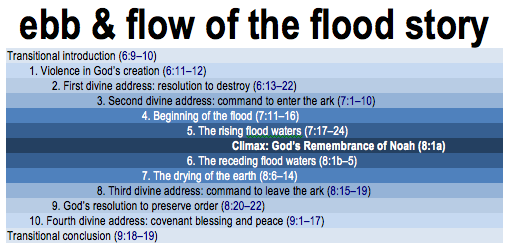
It only took forty days for the waters to rise and destroy the earth, but it took about 5 months for the waters reside.  What is Noah doing during this time? He patiently waits [8:10, 12]. How many of you would be willing to wait on God like Noah? How many of you when bad things happen with impatience plead with God for immediate relief? Noah simply waits. He waits for a word from God before leaving the ark [8:15, 18]. God speaks; Noah obeys. Noah knew God was at work. The rain stopped and the waters began to reside. Do you see the sovereignty and faithfulness of God at work? Do you see the rhythmic ebb and flow of the flood story?

In conclusion, the flood flexes the character of God as sovereign dealing with sin [death, Romans 3:23; 6:23], and faithful to His own through the flood. We are also confronted with the patience of God and how He is offended by sin. We are encouraged by Noah’s faithful obedience. Noah was particular, not partial, in following God’s instruction. ‘Cutting corners’ would mean the destruction of his family too. God expects lifelong obedience. Noah is an example to all of us not just of obedience but also the faithfulness of God in the midst of the fierce flood.

Questions for Reflections and Application: In light of Genesis 6:5-7 and 2 Peter 2:4-9 why did God send the flood? What does the flood reveal about the fate of those who continue in sin without repentance? According to Romans 3:21-28,  how is the Old Testament act of atonement ultimately applied to Jesus Christ? According to I John 4:7-21, how is Jesus’ atonement related to Gods love and ours?


[1] Later, Paul the apostle carries this word in his New Testament teaching on salvation ”by grace through faith alone”. Noah was a favored because God saved him by grace and he had faith in God alone.

[2] Is God just to send the flood? Yes. Why didn’t He give them more time? He gave them 1600 years, plus 120 years of warning, and 7 final days to turn. Why didn’t he send a preacher? He did. Noah preached for 120 years, but no one repented. He was the Billy Graham of his day. Why didn’t God let them sin? You would curse God for His injustice. Why didn’t God save them? He did. He had Noah build a boat. No matter all that God does to people still choose not to heed God.

[3] The flood was a day of judgment, which would be echoed in God’s prophets as they foretold the Day of the Lord,  “The prophets also appealed to the imagery of creation’s reversal to depict the day of the Lord’s judgment [i.e. Isaiah 24:18b; Jeremiah 4:23-26; Amos 7:4].” (cf. Bruce Waltke, Genesis: A Commentary. Zondervan, Grand Rapids, MI. 2001. 139.) This type of imagery is not seen until the end of time, which is prophesied in the Book of Revelation.

[4] Cf. 9:14-15; 19:29; 30:22; Exodus 2:24; 6:5; 32:13; 1 Samuel 1:19; Judges 16:28; Job 14:13; Psalm 8:4; 9:12; 74:1-3; 98:3; 105:8; 106:45; 111:5; Jeremiah 15:15.

thumb lick thursday [4.7.11]

5 Ways to Make Your Kids Hate Church

If you are a parent you have huge influence on whether or not your kids fall in love with Christ’s Church. Thomas Weaver give 5 very real ways parents can cultivate a hateful attitude in their children’s heart towards the church.

My Christian Commitment

“I’m part of the fellowship of the unashamed. The die has been cast. I have stepped over the line. The decision has been made. I’m a disciple of His and I won’t look back, let up, slow down, back away, or be still…I will not flinch in the face of sacrifice or hesitate in the presence of the adversary. I will not negotiate at the table of the enemy, ponder at the pool of popularity, or meander in the maze of mediocrity. I won’t give up, shut up, or let up until I have stayed up, stored up, prayed up, paid up, and preached up for the cause of Christ. I am a disciple of Jesus. I must give until I drop, preach until all know, and work until He comes. And when He does come for His won, He’ll have no problems recognizing me. My colors will be clear!” – Written by a young African pastor. Found among his papers in Zimbabwe after he was martyred

6 Keys to Poor Preaching

Everyone has an opinion on what the pastor should preach. Most of the time people’s opinions lead to poor preaching. Pastors also have the problem of ticking their hearers ears rather than preaching good sermons their hearers need to hear. What makes poor preaching?

The Cross and Criticism

Most of us would agree that criticism is difficult to take. Who of us doesn’t know someone with whom we need to be especially careful in our remarks lest they blow up in response to our suggested corrections? I do not fear man’s criticism for I have already agreed with God’s criticism. And I do not look ultimately for man’s approval for I have gained by grace God’s approval.

Which baseball team should I cheer for this year?

With the 2011 MLB season on its way America’s pastime is in need of serious fans. Maybe you have cheered for the same team you entire life. Maybe you do not know which team to cheer for. Maybe you need to consider the Baseball Flow Chart. [HT]

the spiritual war and your enemy

The past few weeks we have been discussing matters of the heart. Your heart is the control center of your being. Your heart defines who you are and what you do. We have already discussed two specific factors that can distract your heart from what God desires to define you heart. First, the world, an external factor that seeks to distract your heart. Second, worldliness [i.e. flesh], an internal factor that seeks to distract your heart. Today, we will look at final factor, supernatural forces of evil [Devil & demons] a spiritual factor that seeks to distract your heart from following after Christ wholeheartedly.

Spiritual warfare is the real deal [Ephesians 6:10-20]

From the beginning to the end of Jesus’ ministry he warned, overturned, taught, and fought against spiritual foes. Much of Jesus’ ministry portrayed power encounters, exorcisms, and exposes a real supernatural warfare in this world.[1] Since, spiritual warfare is real, how do we deal with it?

Paul wraps up his letter to Ephesians with a battle cry similar to that Joshua, “be strong in the Lord and the power of His might.” Right out of the box, preparation for this battle against spiritual warfare is exclaimed, “put on the whole armor of God.” There is an air of readiness for believers to put on the whole armor of God because spiritual warfare is eminent. Here are 5 truths about spiritual warfare from Ephesians 6:10-20:

#1 You are at war [6:10-11]. Believe it or not, and most do not realize it or try to ignore it, you are at war. From the moment you are born to the moment you die you are in the midst of a heated battle. It is the clash of the kingdom’s—the kingdom of light versus the kingdom of darkness. This world is not a playground; it’s a battlefield. This world and your heart is the battle zone. Are you ready for this spiritual warfare?

#2 You are at war with evil supernatural powers [6:11-12]. “For we are not contending against flesh and blood, but against the principalities, against the powers, against the world rulers of this present darkness, against the spiritual hosts of wickedness in the heavenly places.” Paul would agree that your flesh and blood is evil, but we see in this text that the conflict is also fought against supernatural, demonic forces.

#3 You are charged to stand [6:11-14]. Three times in this passage Paul tells believers to stand so you do not fall [vs.11, 13-14]. These powerful forces cannot be faced in the power of your own might. If you stand alone, you will fail.

#4 You are able to stand by the provisions made by God [6:14-17]. “be strong in the Lord and in the strength of His might.” It is nothing about what strength you have, but everything about the strength of your God [cf. victory in Christ, 1:20-23]. The provision of God is the armor. The armor must be “put on,” for the spiritual armor is an external counterpart to Paul’s emphasis on inward growth and the edification of the church [cf. 4:12, 16].

#5 You are charged to be prayerful and watchful [6:18-20]. Prayer is not a weapon of warfare, but a sounding horn to God for continual preparation in the battle and communion with Him through the battle.

This text is clear, spiritual warfare is real and ferocious. Paul gives a clarifying call to believers in the church to stand firm against the supernatural powers seeking to destroy their unity and reputation in Christ as ambassadors of the gospel of Christ. Spiritual warfare is the real deal, but what about the enemy?

Know your enemy

Throughout history, military strategists have noted the effectiveness in winning battles is to know your enemy. As Victor Hugo said, “A good general must penetrate the brain of his enemy.” As followers of Christ, you have an enemy that is well document. You have dirt on how you can win the war against him. He is not invisible and impenetrable.

First, Satan is limited. He cannot do anything he wants anytime he wants. God limits Satan because he created Satan [Genesis 3:1]. God has Satan on a short leash [Revelation 12:12]. He cannot do anything without God permitting him. Satan knows humans are limited too. God limited Satan’s ability to touch Job when tempting him [1:12]. His limitation is a tactic he uses to deceive your hearts too. He knows your limited, “You can’t win. You can’t fight. Give up!” That is a lie from the pit of hell.

Second, Satan is not like God. Satan cannot know your thoughts. He does not have the power to force you to do anything. He cannot even be everywhere at once. He gets far more credit that he deserves. He has lots of help from his fallen minions, the fallen world, and your wickedly deceived heart. He is not capable in power, wisdom and presence like God. He can’t do what God can do. Only God can do what God can do. No one is like God.

Third, Satan is the defeated enemy. Have you read the end of the Book—the Bible? God will deal with Satan [Revelation 20]. God will throw him into the lake of fire for all eternity. Satan does not win. He ultimately loses. The cross of Christ crushed Satan’s hope for victory [Colossians 2:15]. Jesus defeats the devil through His death and resurrection. Although he is defeated he is not going out quietly. He is on a rampage to inflict as much chaos and catastrophe in the world and your life as possible before his end.

Your enemy’s strategy is to destroy you

During America’s Civil war General Ulysses S. Grant’s men were impressed—even scared of—southern commander, General Robert E. Lee’s brilliant war strategies. One northern sergeant said, “You never quite know how he is going to move. Wish we had ‘im on our side.” Now Robert E. Lee is not the devil [you can still get shot is some places for making a statement like that], but my point is, the strategies of the enemy often inflict fear in those on the defense.

Don’t underestimate Satan’s power [1 Corinthians 10:12]. He is strong, sly, and stealthy. He has ruined many lives. In Jesus’ words, he tries “to steal, and to kill, and to destroy.” [John 10:10; cf. 1 Peter 5:8] Satan’s sole purpose is to bring you down, to take you out, and inflict you with so much fear that you have no other hope than to escape this life.

Have you ever known someone paralyzed by fear? They tell you how powerful and cleaver the devil is [Ephesians 2:2], and how scared to death they are of his strategies. They give up to his tactics in defeat. They give glory to his strength, rather than giving it to God who is infinitely mightier and more powerful.

What your enemy doesn’t want you to know [1 John 4:1-6]

Do not be intimidated by the devil. Do not give him any ground [Ephesians 4:27]. Keep short accounts with sin. You have resources in Christ to effectively counter his attacks. Believe it or not, Satan believes Jesus [Matthew 4:3]. He fears Jesus [James 2:19] because he knows Jesus will judge him. The devil does not want you to know he is out matched by the power of Christ. He does not want you to know he has been conquered and constrained through the death and resurrection of Christ [1 John 3:8]. In Christ, you have victory, authority, protection, power, and position.

Any voice, word, or idea that violates Scripture or is constantly demeaning to you [i.e. you’re fat, you’re stupid, you can’t change, God can’t help you, you should take you life, etc.], it is not of the Holy Spirit and must be ignored. Test the spirits with the Word of God [1 John 4:1]. Call on the power of God with offensive prayer. Let God fight for you. He will protect because He is the Savior and Sovereign King. He sends His heavenly angels to guard His people [Psalm 34:7; Hebrews 1:13-14]. He gives strength in Christ to stand against and resist the devil [Ephesians 6:10; James 4:7-10; 1 Peter 5:6-9]. You are safe with Christ. Stay close to Him, “The Lord is faithful. He will strengthen and protect you from the evil one.”

Recommended Resources on Spiritual Warfare:


[1] Matthew 4:1-12, 22-23; Luke 8:26-29; 10:17-20; 13:10-17; Acts 5:1-5; 19:13-20; Romans 8:31-39; 2 Corinthians 10:3-5, 11:1-4, 13-15; Ephesians 2:6; 6:10-17; James 4:7-10; 1 Peter 5:6-9; Jude 8-9; Revelation 12:10-11

why Sunday Sermons are necessary but not sufficient

The statement is not: why the Word of God is necessary but not sufficient nor why Jesus Christ is necessary but not sufficient? That would be heretical and not in-line with the biblical text.  The Bible is clear; Jesus and the Bible are sufficient in themselves. Jesus is the sufficient Savior.[1] And the Bible is the sufficient revelation for knowledge of God’s saving plan for humanity and spiritual truth for living.[2]

The statement is: why Sunday sermons are necessary but not sufficient. This still might sound heretical or hazardously mischievous to some. It is not that Sunday sermons are not valuable or important. The preaching of the Word of God is extremely important. Jesus preached,[3] His followers preached,[4] and you are called to preach the gospel too.[5] God places a priority on preaching in His church. However, Sunday sermons standing alone are not sufficient for spiritual growth in the church.

Why are Sunday sermons necessary?

First, God commands the Word to be preached. How will anyone hear the Word of God unless it is preached? [Romans 10:14-16] Second, the faith of God’s people comes in conjunction with the preaching of His Word. [Romans 10:17] Third, hearing the Word encourages doing the Word [James 1:19-25]. An hour-long Sunday sermon that does not affect the other 167 hours in your week is wasted stewardship of the Word.

Why are Sunday sermons are not sufficient?

First, hearing the Word does not mean there is an application or reproduction of the Word [cf. Matthew 23:3]. Second, preaching the Word must be followed up with intensive and active discipleship. Third, the role of the sermon giver is also trainer and discipler, which involve more than preaching, but exemplifying the message and mentoring the hearers to live the message too. A pastor who simply preaches or teacher who just teaches is missing a key component with their message: multiplication of messengers and ultimately Christ worshipers [note: 3 types of pastors and churches].[6]

Pastor as Clergyman Pastor as CEO Pastor as Trainer
Pastor is… Preacher and service-provider Preacher and manager Preacher and trainer
Sunday is… Service of worship Attractional meeting Gathering of worshiping disciples with their Lord
Outside of Sunday… Occasional services Range of events and programs Disciples reaching out to make disciples
Pastoral care through… Counseling and visitation Small groups People ministering to people
Church is like… A small corner store with one employee A department store with numerous staff A team with an active captain-coach
Tends to result in… Consumers in maintenance mode Consumers in growth mode Disciples in mission mode

How can you maximize the Sunday sermons Monday through Saturday?

First, seek to apply the big idea of the sermon to your marriage, parenting, work, school or daily living. Prayerfully, practically and purposely apply the sermon. Second, gather together with your churches small group to discuss the sermon and minister to one another by applying the Sunday sermon [cf. Acts 2:42-47].  Stir up and serve one another through the preached Word.[7] Third, share what you learn from the sermon with someone who does not go to your church. When it comes to Sunday sermons: Listen up. Soak it up. Live it up. Step it up. Love the Word. Speak the Word. Live the Word. Spread the Word.


[1] Cf. Hebrews 1-10; Colossians 1:15-22; Acts 4:12; Romans 10:9-13; Philippians 2:6-11; 2 Timothy 1:8-10

[2] The New Testament writers constantly appealed to the scriptures as their base of authority in declaring what was and was not true biblical teaching:  Matthew 21:42; John 2:22; 1 Corinthians 15:3-4; 2 Timothy 3:16-17; 1 Peter 1:10-12; 2:2; 2 Peter 1:17-19, cf. Acts 17:11, Matthew 4 where Jesus uses the Scripture to defend the temptations from the devil.

[3] Cf. Matthew 4:17, 11:5; Mark 2:2; Ephesians 2:17

[4] Cf. Acts 5:42, 14:7; Romans 1:15, 15:20; 1 Corinthians 1:23, 9:16-17, 15:11-14; 2 Corinthians 10:16; Galatians 1:11-17; Ephesians 3:7-13; Philippians 1:15-18; Titus 1:3

[5] Cf. Romans 10:14-15; 1 Timothy 5:17; 2 Timothy 1:11-14,  4:2

[6] Chart is adapted from The Trellis and the Vine, by Colin Marshall and Tony Payne, Mathias Media, Kingsford, Australia, 2009. pg.101.

[7] Cf. Hebrews 10:23-25; Romans 12; 1 Corinthians 12

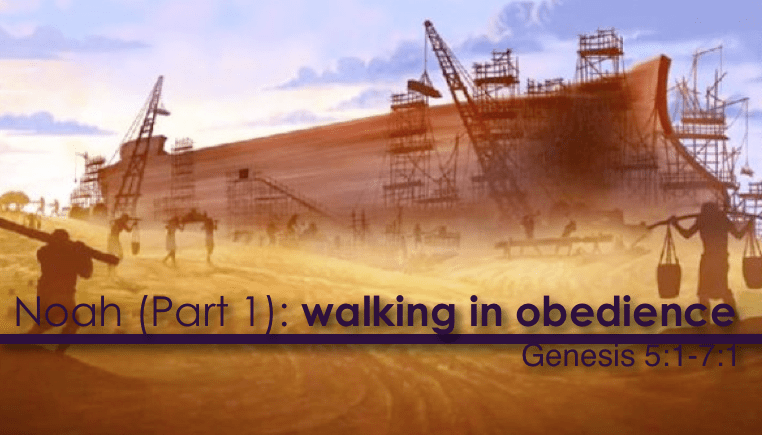
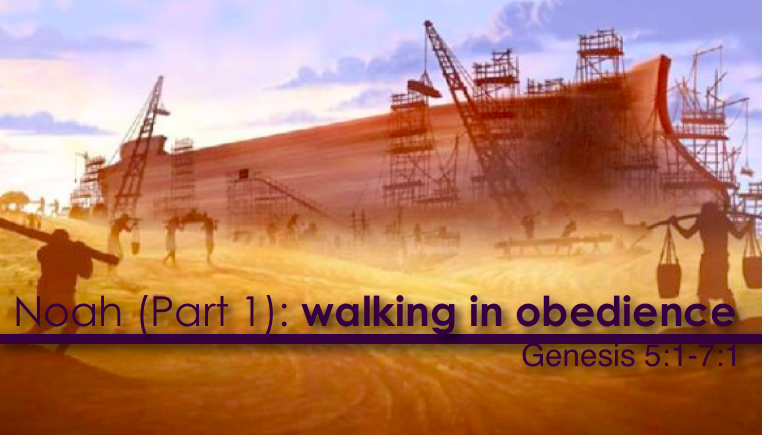
Noah (Part 1): walking in obedience

If you grew up in Sunday School as a child [unlike me] you learned silly Bible songs about characters like Noah. Maybe you sang this song, “God told Noah to build him an arky, arky. God told Noah to build him an arky, arky. Build it out of gopher barky, barky. Children of the Lord.” Now there is nothing wrong with this fun song, but it is silly for kiddies. Today we are going to take a big boy and girl approach to God’s call to Noah to build the ark.

Obedience is the very best way to show that you believe

Before jumping into the life of Noah, let’s look at Genesis 5. This is an interesting chapter in the Bible that leads up to Noah. It’s a genealogy of men from Adam to Noah. If you like tracing your family tree you will love this chapter. The chapter covers a time span of 1600 years, which is almost the same amount of time covered in the remainder of the Old Testament. The primary theological purpose of this genealogy is to show that every generation and person descended from Adam were sinners who lived and died [cf. Romans 6:23]. Notice how the phrase “and then he died” lingers and looms like a dreadful chorus through the genealogy [cf. 5:5,8,11,14,20,27,31].

This genealogy includes two curious characters. First, Methuselah, who lived to be 969 years old [5:27], which is possibly the Guinness Book world record for the oldest man to ever live. Second, Enoch, who is supposedly the only godly man w129ho lived during these generations [5:22-24]. Enoch “walked with God,” which means that he had a lifestyle of wholehearted worship and obedience to God. Enoch is the Bible’s first prophet who predicted the coming flood [cf. Hebrews 11:5-6; Jude 14-16]. Enoch is also the only man in the genealogy that did not die, but was spared from death [cf. Elijah, the only other man in the Bible that did not die]. The only way to avoid death and have eternal life is to “walk with God,” like Enoch. No better place to be than with God!

Now, we arrive to Genesis 6:1-9, which is one of the most controversial passages in the entire Bible. Here therein are posed four difficult questions: Who are the sons of God who marry the daughters of men? What is the meaning of 120 years? Who are the Nephilim? And why did God choose Noah to build the Ark?

Who are the sons of God that married the daughters of men? [Genesis 6:1-2]

Biblical scholars and theologians have argued two major opinions: First, angels had sex with women [cf. Job 1:6; Numbers 13, Ezekiel 28:11-17]. This theory collapses because the judgment for sin by the flood was upon people, not angels. Also, Jesus taught that angels do not marry or breed [cf. Matthew 22:30], and in the days of Noah people were simply marrying each other [cf. Matthew 24:37-39]. Jesus’ teaching follows the flow of context in Genesis 5 genealogy. The second opinion [that I embrace] is that the godly line of Seth had sex with attractive ungodly women. In other words, the sons of God—the line of the covenant people mentioned in Genesis 5—intermarried the daughters of men who were from ungodly families.

What is the meaning of 120 years? [Genesis 6:3]

In response to the sons of God intermarrying with the daughters of men [6:1-2], God limits their life to 120 years. There are two possible explanations for the meaning of this verse: First, God no longer allows people to live as long as they had previously [i.e. 300-900 years old] and determines that no human being would live longer than 120 years. An interesting factoid that supports this is Moses died at 120 [cf. Deuteronomy 34:7] and today the longest living people die around 120.

Second, God promised judgment by flood, but waited 120 years to give people an opportunity to repent. 1 Peter 3:20 says, “God waited patiently in the days of Noah while the ark was being built. In it only a few people, eight in all, were saved through water.” God is gracious because He gives mankind 1600 years, gives examples of people who walked with God, and gives Noah who preaches for 120 years [2 Peter 2:5]. No one repents or responds to God’s patience. 120 years gives Noah enough time to obey and build the ark, and after the 120 years the rains of judgment fell upon the earth.

Who are these huge Nephilim? [Genesis 6:4]

In short, we are do not know. In Numbers 13:33 the word Nephilim is used and also refers to an oversized race of people. This has caused scholars to speculate that the Nephilim in Genesis 6:4 are the same people mentioned in Numbers. Genesis does not say they were gigantic in size, but it does say they were gigantic in status, “They were the heroes of old, men of renown.” Therefore, the Nephilim could be a group of ungodly men in that day that reach celebrity status like the gigantic reputations given to athletes, rock stars, and media moguls in our day.

Why did God choose Noah to build the Ark? [Genesis 6:5-9]

Let’s be clear, God did not chose Noah to build the ark because he was sinless or better than the guy next to him. Sometimes teachers paint Noah to be this overly sanctified character living in an excessively wicked world. God does not just like good people and annihilate bad people. This teaching is contrary to the Bible’s story of redemption. What this introduction to Noah teaches is that every man is totally depraved. Other than Romans 1:18-27, the description of man given in Genesis 6:5-7 is one of the most sin-saturated images of man in all of Scripture. God gazes upon man’s pervasive evil and grieves that He had made man, which would include Noah and his family.

The reason God chooses to save Noah is given in Genesis 6:8, “But Noah found favor [grace] in the eyes of the LORD.” Noah did not begin his life a blameless and righteous man, “walking with God,” but he began as a sinner. The only difference between Noah and the other sinners who drowned in the flood of judgment was that God was gracious to Noah. God choose undeserving Noah to be an object of His grace. The word favor [6:9] in Hebrew means grace. This is the first time in the grace appears in word form in the Bible. Paul the apostle carries this word in his New Testament teaching on salvation by grace through faith alone. Noah was a favored because God saved him by grace and he had faith in God alone.

The joy of obedience [Genesis 6:10-7:1]

Noah believes God; therefore, God shares with Noah His plan to judge sin through a catastrophic global flood. In His grace, God will preserve Noah, his family of six, and two of each animal on earth. To house this floating zoo, Noah is commissioned to build a huge wooden boat. It is the largest wooden ocean cargo carrier recorded in history. It has space for more than 500 containers. Compare that with the modern day Maersk Triple E that carries over 2500 containers.

Noah obeyed God’s commands and built the ark [6:22], probably with only the help of his three boys. In the hall of faith, Hebrews 11:7 says that Noah did so in holy fear as a man of faith who believed God would bring the flood even while others continued in sin without repentance. After completing the construction of the ark, Noah, his family, and the animals board the boat and wait for God to fulfill His promised judgment. God’s patience towards man’s sin runs out, but His grace runs strong through Noah’s Ark.

In conclusion, through the Noah narrative we learn many practical lessons concerning obedience. First, you are called to obey God in tough times [Genesis 6:1–9]. Despite rampant sin all hope was not lost. God’s grace is still available. Second, walking closely with God develops faith for an unsure future [11–13]. Noah believed God, walked with God, and lived contrary to the evil world around him. God makes the difference in Noah’s story. Third, obeying God will often require sacrifice and hard work [14–22]. Noah obeyed by building a big boat with mocking neighbors. Scripture gives no indication that Noah doubts God or wavers in his faith, no matter how long it took or how hard it was to obey. Obedience is to walk with God through wholehearted worship.

Rain is coming. Instead of raining water, it will rain fire. A final judgment day is coming [Revelation 20:7-15], when God will ultimately deal with the total depravity of man. God did not ask you to build an ark like Noah, but He does ask you to obey in faith and bring people to the ark He provides—through His Son—Jesus Christ.

thumb lick thursday [3.31.11]

Lick it, flip it, clip it, quote it. A thumb lick is a term used to describe the action taken when turning the page of a book. While reading I often find great one-liners, statements and paragraphs that are golden nuggets of biblical wisdom. So Thumb Lick Thursday is a way to pass along great tidbits of truth.

Is Mandated Bible Reading Healthy for Kids?

This is probably one of the most common questions  I hear from parents wanting to establish Christian disciplines in their kids. Every Christian parent deals with this at some point. They struggle with what they should mandate vs just encourage their kids to do. And with this, how much? At what point will we defeat our purpose and discourage them?

Hope for hurting marriages

There are far too many marriages in our Churches and communities that are hanging together by very thin threads. When marriages are like this, patterns of neglect are almost always part of the reason. It takes commitment and work for a marriage to be the mutually satisfying relationship it was intended to be (Note: 5 key commitments for a good marriage).

Worth-ship

Worship is “worth-ship”, an acknowledgement of the worth of Almighty God…It is therefore impossible for me to worship God and yet not care two cents whether anybody else worships Him too…Worship does not beget witness is hypocrisy. We cannot acclaim worth of God if we have no desire to proclaim it. – John Stott, Our Guilty Silence. 27-28

Suffering & Death

The Greatest single secret of evangelistic or missionary effectiveness is the willingness to suffer and die. It may be a death to popularity (by fatefully preaching the unpopular biblical gospel), or to pride (by the use of modest methods in reliance on the Holy Spirit), or to radical and national prejudice (by identification with another culture), or to material comfort (by adopting a simpler lifestyle). But the servant must suffer if he is to bring light to the nations, and the seed must die if it is to multiply. – John Stott, The Cross of Christ, Leicester: IVP, and Downers Grove, IL. 1986. 322.

What are you Sinking about?

It is easy for communication to be lost in translation. This commercial by the German Coast Guard and their new recruit emphasize this point.