Temptation is common to all people. We can make sense of most temptation by looking at home Satan tempted Adam and Eve in the Garden and Jesus in the wilderness.
Then Jesus was led by the Spirit into the wilderness to be tempted by the devil. After fasting forty days and forty nights, he was hungry. The tempter came to him and said, “If you are the Son of God, tell these stones to become bread.”
Jesus answered, “It is written: ‘Man shall not live on bread alone, but on every word that comes from the mouth of God.’”
Then the devil took him to the holy city and had him stand on the highest point of the temple. “If you are the Son of God,” he said, “throw yourself down. For it is written:
“‘He will command his angels concerning you, and they will lift you up in their hands, so that you will not strike your foot against a stone.’”
Jesus answered him, “It is also written: ‘Do not put the Lord your God to the test.’”
Again, the devil took him to a very high mountain and showed him all the kingdoms of the world and their splendor. “All this I will give you,” he said, “if you will bow down and worship me.”
Jesus said to him, “Away from me, Satan! For it is written: ‘Worship the Lord your God, and serve him only.’”
Then the devil left him, and angels came and attended him.
Each of the “one another” is challenging, even controversial. Consider how you respond when someone is encouraging, loving, bearing, forgiving, serving, or greeting someone else that you don’t like. None is more challenging and controversial than the one we will look at today.
Last month, I listened to the London Symphony at St. Paul’s Cathedral playing Handel’s Messiah. It was on YouTube, but wow, still. Just listen to the Overture. What instruments did you hear? Can you pick out any one instrument? With 106 musicians it isn’t easy. The beauty of a symphony is that each musician doesn’t showboat their individual talents; instead, they showcase their collective talent. Like today’s text, they are submitting to one another.
Submit to one another out of reverence for Christ. (Ephesians 5:21) I don’t need to take a poll to know that this is NOT your life verse, even one of your favorites, probably not in your Top 100. It’s certainly not a coffee cup verse.
Let’s talk about the elephant in the room. This word—submit—gets people riled up. It has been the brunt of church controversy and filled biblical commentary. The word can carry negative baggage. How many of you right now have a tinge of discomfort? Like when someone says the word Mufasa? At the least, you likely wonder where I will take this text today.
The word submit combines two Greek words hupotasso, which literally means to put under. It’s used around 40 times in the Bible and carries a metaphor of a battalion voluntarily serving under a commanding officer. The heart of submission aims to make someone else’s thing a way bigger thing than my thing. In other words, to submit is the spiritual discipline of letting go of my addiction to have my own way, knowing if I continue to act that way, then it’ll kill me and destroy my connection with others near me. It’s the practice of putting death to self and living out the prayer “not my will but Yours.” To submit, I am willing to give up my seat (of comfort, power, prestige) for someone else without expecting more.
Let’s be honest, it’s a struggle to submit to anyone, let alone, one another. It doesn’t come naturally, especially coming from individualistic cultures. I submit to no one. I am born with a Wild West mentality. At the root of it, I buck against submission because I think I know those around me…and I know me. I see someone who is flawed and selfish. Who wants to submit to that?
It’s important to consider how the phrase “submit to one another” sits within its context. It is preceded by and connected to a list of qualities of one who is ”filled with the Spirit” (Eph. 5:18b-21). Notice the worship-filled language? Then it flows into three examples that show what Spirit-filled submission to one another looks like in real life:
Marriage (5:22-33): Wives submit to husband. Husbands submit to Christ. Spouses try to outdo one another in a submission competition—“No, you first!” even when it’s inconvenient and my partner wants me close. Pointer: Jesus is the Groom and we are His Bride.
Family (6:1-4): Children submit to parents. Parents submit to the needs of their kids even if it’s the middle of the night and it’s the fifth time my child needs me. Pointer: God is our Father and we are all His kids.
Workplace (6:5-9): Employees speak well of their leader. Leaders care for those they lead. Pointer: God is our boss and He sits atop the org chart of the cosmos.
Submission in marriage tends to take the spotlight, v.21 gets glanced over, and the emphasis becomes out of balance. What happens is an overemphasis on v.21 and under-emphasis on v.22, or the opposite, an under-emphasis on v.21 and overemphasis on v.22. Now, before you throw stones, I am simply presenting the issue and will leave you to wrestle with it. What I find peculiar, is that the issue is usually presented as an either/or interpretation. Either we submit under an yielded mutuality or we submit under an aligned authority. It is easy to see how those who emphasize harmony push for egalitarianism and those who emphasize order push for complimentarianism. Oh, boy, there’s so much to say there! I will give my three brief observations.
First, I will propose that the interpretation might not be either/or but both/and. Could mutuality and authority co-exist together and not be a cop-out interpretation? When one takes the Meaning of “submit” + Meaning of “one another” + Examples in the Text = Yes, it appears to be both/and!
Second, I have observed how fear pushes both interpretations. Fear pushes egalitarians to defend injustice, demand freedoms, and protect abuses, while fear pushes complimentarians to retain authority, demand rights, and guard weaknesses. These are noble acts when balanced with the character of Christ, but undoubtedly they get pushed to extremes. When submission becomes destructive or fear-based, then it violates the royal law of love.
Third, the Pattern of Paul in Ephesians 5 encourages each member of the church to say No to self-indulgence, self-service, self-centeredness, and self-aggrandizement and to say Yes to self-sacrifice (like Jesus). In other words, we have a growing 🩶-centered commitment to submit to one another. Rather than saying “I’ve got it all together,” I’m becoming more prone to saying “We are better together”. Let’s turn back to our text for today.
Submit to one another = We humbly yield & align to the interests of those around us.
The heart of submission is humility. This is seen all over the Scripture (cf. Micah 6:8; 1 Cor. 4:7, Gal. 5:13-14, Phil. 2:3-5, 1 Peter 5:5b). In 1 Peter 5:5 both submission and humility are contrasted with pride, which is a theme also seen in James 4:6, “God resists (antitassō, to put away or against) the proud but gives grace to the humble.”
Relationships flourish when clothed with humility rather than hierarchy. Submission is ultimately a posture of the heart. When I cease to submit, when I wait for others to serve me first, and when I feel superior to others, it says more about my heart. My heart is misaligned to the heart of God towards others.
Truth is, your church (team) is likely full of people that you wouldn’t go on vacation with, but you find a way to make it work—putting up with one another, putting yourself under one another—for the greater good. If you took this matter of humbling yourself towards one another seriously, what might it look like in your marriage, family, workplace, team, and church?
What we see throughout the Bible is that humility is not for the other person first, but it is for you. So important is humility that Jesus modeled it. Let’s see how Jesus submitted (humbly yielded and aligned)
his Father: he surrendered his plans and words, for greater glory.
his parents: he was dependent from birth through adolescence.
his disciples: he leaned on them and many of them weren’t even believers yet!
his creation: he took on a human body and he felt hunger, thirst, tiredness, and pain.
his govt authorities (law of the land): he rendered to Caesar what was Caesars.
his religious leaders: who didn’t “do justice, love kindness, and walk humbly with their God.”
your need, he took your cup of wrath (sin), he humbled (lowered) himself to death.
We expect humility from Jesus, but what about me? As I gave ‘mutual submission’ some thought, what came to mind was my relationship with Blue. I am Blue’s appointed leader. I also lead a media project, and with that, I am under Blue’s authority as he serves as leader of the team with the media project. It’s not complicated. We just have to determine who is wearing what hat. On top of that, Blue and I are brothers in Christ. Almost every Wednesday, I meet with Blue and a band of warriors to pray and submit to one another through accountability. In that space, these men have the authority to speak into my life.
Another example of mutual humility was when Bob Shankly retired from Liverpool Football Club in 1974 with a showcase of 10 trophies. He handed the reigns of the team to a reluctant Bob Paisley. Shankly wrote a letter to Paisley and left it on his desk. It read, “Bob Shankly says Bob Paisley is the best manager in the game.” Paisley took the letter, added two commas, and sent it back to Shankly. It read, “Bob Shankly, says Bob Paisley, is the best manager in the game.” Paisley built on Shankly’s success and added 20 trophies (x2 Shankly). In his biography, The Quiet Genius, it was said that Paisley was a shy and thankful fellow who gave others confidence. His genius was being an ordinary man who fostered an extraordinary team.
Out of reverence for Christ = We rally together around the Greatness of Jesus.
Greatness is not achieved through power or prestige. Greatness is not won by force of arms or superior intellect. Greatness is not showing that I got it all together. Greatness comes through humble reverence. It comes when we rally together around the Greatness of Jesus.
Jesus turns upside-down the way the world measures greatness. Remember the mom who begged Jesus to give her two boys the best seats in heaven? When other disciples caught wind of it they were miffed, but they also wanted their shot at the special seats too. So Jesus got them together to settle things down. He said, “You’ve observed how godless rulers throw their weight around, and how quickly a little power goes to their heads. It’s not going to be that way with you. Whoever wants to be great must become a servant…That is what I have done. I came to serve, not be served. I came to give my life as a ransom for many.” (Mt. 20 cf. Phil. 2:7-11; Col. 1:15-18)
Herein is my power and motive to submit—I revere Christ (phobos, awe-inspired love). When I submit to Jesus first, from that flows a heart willing to submit to others. Submission to others is not based on worth—whether they earned it or deserved it, but solely on seeing Jesus is worthy and everyone that he created is made in His image. How does a reverence for Christ make a difference in your relationships? Your family? Your workplace? In your community? Among members of your church? What might it look like for you to submit? To one another? To a Chadian brother or sister? To the Chadian govt? I’m just putting it out there.
One of the most irony-filled stories in Scripture about submission is in the garden of Gethsemane (John 18). There we see Judas submitted to the will of the enemy. He turned Jesus over to the authorities. When the authorities arrived (who themselves submitted to religious leaders), they asked Jesus to identify himself. Jesus stepped forward and said, “I AM He.” At that moment, the guards fell on their faces in fear and submission. Peter decided submitting was for him, so instead he got out his sword and cut off the guard’s ear. In the end, Jesus silently yielded himself both to local authority and divine authority (“not my will but Yours be done.”) Thank God, for our sake, Jesus submitted to Father!
How often have you regretted yielding to your own way? My guess is a lot. How often have you regretted submitting to the Lord? Maybe never. What do you need to yield to the Lord today?
The distinguishing feature of a Spirit-filled follower is their growing reverence for Jesus’ greatness AND humbleness towards others around them. The temptation of power is greatest when intimacy is feared. When I bow my knee to Jesus, I can also bend to the interests of others. This isn’t self-deprecation. Rather, like Jesus, it’s self-sacrifice.
Imagine you’re a violinist and a conductor approaches you and says, “I want you to play in the first chair.” It would be self-deprecating to respond by saying, “No way! I don’t play. I’m no good at all,” when everyone knows that you’re an able and gifted musician. On the other hand, it would be self-sacrificing to respond by saying, “Absolutely, I can play! And I will play my best. I will make this orchestra and everyone around me better.”
I remember hearing Handel’s Messiah being played in an open city square by a university orchestra. I didn’t know about it beforehand, but the concert was free of charge. It was the harmony and authority of the music that drew me to want to stop and listen.
So it is with us. Think about it. You and I are members of a world-renowned orchestra. Each of you has a part to play. You didn’t come to the stage with your own gifts but supernaturally given to you. Being Spirit-filled, it is like you to humbly yield and align to the interests of those around you. With Jesus as your conductor, you rally together around His Greatness to make him shine. When you do it testifies to the mysterious way He brings such a motley crew together.
Lord, You are Great. There is not like You. Help us to rally around Your greatness. We need Your help. Please help us put off our pride and rebellion and put on humility. Teach us to live in submission—by putting ourselves under You and seeking to put the interest of others above our own. Make us servant-leaders like You. In the name of Jesus, amen.
Lament has been used by God’s people for generations to give language to their hearts in the middle of suffering and loss. Lament be elongated or brief, imaginative or simple. The following pattern gives common elements found in Scripture. It creates a pathway to lament. Lament is meant to be both expressed in honesty and humility. Honesty, because lament permits us to speak openly to God about the troubles we are facing. And humility, because the goal of lament is to lead us to place our trust in God. May this pathway become like a staircase that lifts you from the pit of despair to the sanctuary of the God of all comfort.
“To the strongest,” these were Alexander the Great’s last words spoken on June 11, 323 BC, when asked to whom his vast empire should belong after his death
Famous last words. They get a lot of attention as the one saying them has something important to say usually before they die. Like last words, first words are often important too. Think about the first words of a child to their parent, a coach to his players before the season starts, a teacher to his students on the first day of school, a manager to his new team, or a president’s speech on inauguration day. First words can carry as much weight as last words.
The first words that Jesus read publicly were from the prophet Isaiah (Luke 4:18-19),
“The Spirit of the Lord is upon me, because he has anointed me to proclaim good news to the poor. He has sent me to proclaim liberty to the captives and recovering of sight to the blind, to set at liberty those who are oppressed, to proclaim the year of the Lord’s favor.” — Isaiah 61:1-2
Let’s travel back to when Isaiah spoke those words, which were around 700 years before Jesus stepped into the world. Isaiah spoke those words to a people and nation who had walked away from the Lord. While warning them he infused hope that God promised to send a Deliverer—a Messiah.
Isaiah is like a fifth Gospel. No other book in the Old Testament paints so many pictures and promises tied to Jesus. Almost every chapter highlights the One who would come to save and suffer for his people and the nations.
Why did Jesus choose this Scripture? It might seem like he randomly opened the scroll and just read. It wasn’t random, but chosen. Jesus had just begun his speaking ministry throughout Galilee. Everyone praised him for his wisdom and divine insight (Luke 4:14-22). Then he came to his hometown of Nazareth and at first even they were wowed that this was the carpenter’s son and boy who used to play in their streets.
When Jesus spoke from Isaiah it would have drawn hope. The people listening would have considered themselves the poor who were captive to foreigners and pagans. They were tired of waiting and longing for freedom. They saw themselves as superior, moral, good, religious people who God should owe something. So what Jesus said next brought their hope to the next level,
“Today this scripture is fulfilled in your hearing.” — Luke 4:21
Notice what He didn’t say. He didn’t say, “Someday this Scripture will be fulfilled” nor “This Scripture has already be fulfilled.” No, he said, “Today, renight here, it is being fulfilled.” In so many words, he said loud and clear, “What Isaiah said about that Someone—I am that Someone. I am your promised Messiah.” This caused a stir and they liked what they heard. They were ready to go and get their freedom with their Messiah.
Jesus didn’t play it safe and stop there. He saw they didn’t get who he was and who he came for. So he tells a story about a poor foreign widow and a rich man who was sick. As examples, they starred both moral and religious outsiders, yet God showed mercy to them, even when God’s people would have nothing to do with them. It would be his prophets who took action and they suffered for it. So Jesus made the connection that his hearers were just like God’s people of old—thinking they were alright and hoarded mercy for themselves.
The people whiplashed in their reaction from amazed fans to a crazed mob. They were so ticked that they tried to drag Jesus out of town and throw Him off a cliff. Tough crowd, right?
So what did Luke 4 mean for its original hearers and us today? Jesus meant for his hearers and home-towners to know who he was and who he came for. He knew they would reject him, even though what he was saying was true. The hearers weren’t cut to the heart. They didn’t see themselves as poor or blind. They thought that God owed them because of who they were and what they did.
Unlike Alexander the Great, Jesus didn’t come for the strongest (noblest, toughest, most upright, best put together), but for the weakest, poor, and needy. Jesus was sent to proclaim the good news, to release the captives, to open the eyes of the blind, and to set free the oppressed. Why? So, the people would be called oaks of righteousness, the planting of the Lord (Isaiah 61:3b), priests of the Lord, and ministers of God (Isaiah 61:6) by turning to the Lord. All of this was to happen for the purpose—that an everlasting covenant would be made with them (Isaiah 61:8), that they would rejoice in the Lord, delight in him (Isaiah 61:10), that he may be glorified (Isaiah 61:3b), and so that they would be clothed with salvation (Isaiah 61:10) and praise would spring up before all the nations (Isaiah 61:11). Yes, all that!
Heaven’s Son gave up his wealth and emptied himself by becoming poor to reach the poor. As Joseph’s son, he was born dirt poor. Follow his steps and you will see that he deeply cared for the poor, inferior, marginalized, and unclean. He lived as a vagabond to bring good news to those who were ripe to receive it.
Good news is only for those who are spiritually needy.
Jesus wasn’t attracted by physical poverty but by spiritual struggles, stuck in strongholds, and those who didn’t fit into religious norms. It’s important to let go of spiritual laziness, self-righteousness, and the illusion that we can control God, and instead recognize our flaws and need for God’s help. Only those who see that they can do nothing to save themselves and overcome their sin can find hope and healing in the good news. Do you see yourself as spiritually poor and brokenhearted? Have you seen yourself as once a blind prisoner captive to sin? Do you know others like this? These are the kinds of people that Jesus came to serve and save.
Good news is especially for those who are physically needy.
The good news is felt by those on the edges of society, like women, racial outsiders, outcasts, downcast, and the powerless. In Chad, it can be the blacksmiths, beggar boys, and weaker clans. The more needy usually understand their need for God’s grace. The message of God’s help is best understood when we admit our spiritual need, which was seen in Jesus’ own surrender of power and dependence on his Father.
Good news is received deeply by those who are both spiritually and physically humble.
Accepting the good news is the most humble of things one can do. It is laying down everything and admitting that we can do nothing because God does everything. The good news changes then how we see wealth, status, and righteousness, freeing us from letting it define our value and security, and in turn, motivating us to share generously with those in need.
If you read Isaiah 61 you will notice that Jesus stopped mid-sentence. This was intentional. The first time Jesus came, he fulfilled the actions and he received the judgment. When he comes again, he will give judgment rather than receive it. The next time that Jesus comes he will finish the sentence.
As you proclaim the good news, the hearers will likely reject your message. They might even get angry and try to drive you out. Jesus’ message isn’t received well by a hostile and hell-bent world who think they are holier-than-thou. As Jesus’ followers—like those first disciples, who associated themselves with the radical Rabbi—we must be prepared to speak “uncomfortable” truth. To be alive in the adventure of Jesus is to hear his challenging first sermon, as for today, and to receive that risky invitation to follow him, and to take the first intrepid step on the road as a disciple into his harvest fields making more disciples.
As people of Jesus, we are reminding ourselves to “one another.” There are 59 one another verses in the Bible. Today, we look at “greet one another with a holy kiss.” (Romans 16:16) It might surprise you that Paul echoed this command at the end of five of his letters. We will uncovering what it means and looks like today.
Greetings—both hellos and goodbyes—look different around the world. For example, Southern Europeans give three kisses. Americans hug, high-5, or fist bump. Kunik in Greenland rub noses. Tibetans stick out tongues. Japanese bow. A tribe in Zimbabwe clap their hands. Many in the nation of Chad hold hands over their heart. In Sarah Lanier’s book, Foreign to Familiar, a guide to understanding hot and cold climate cultures, she makes an interesting correlation between warm-climates and warm-greetings and cold-climates and cold-greetings.
Romans 16 is the final chapter in Paul’s magnum opus on a theology of salvation. It is fascinating that Paul wraps up his letter so relationally (notice the familial language). Some might chalk it up to Paul simply closing out a letter, but there is the sense that there is more to it than that. He shows us that deep theology without deep relational application is meaningless and fruitless.
We are commanded to be relational and familial.
A hello may seem like just a hello, but greetings are deeply relational and intimate, especially in a family setting. The word greeting in the original Greek is philemati (lit. love thing). You might recognize the word phileo embedded into the word. Think Philadelphia, the city of brotherly love. The word means to show familial—sibling—love. It’s a means of showing affection and appreciation often expressed as a kiss (but not romantic; eros).
We see this kind of kiss when Joseph, after having been torn away from his father and not being able to see him for years, “fell on his father’s face and wept over him and kissed him” (Genesis 50:1). In the parable of the prodigal son, when the son finally repents, we are told that “he arose and came to his father. But while he was still a long way off, his father saw him and felt compassion, and ran and embraced him and kissed him” (Luke 15:20). And in Acts 20, as Paul is leaving Miletus likely never to return, the people wept and kissed him.
Romans 16 gives us the longest greeting list in the Bible. Paul mentions 35 people by name. He had many relationships and he valued each of them. This was Paul’s “thank you card” list of people who partnered with him and risked their lives for the sake of the Gospel! I am certain if you took the time you would have a list like this for people in this city too.
Greeting one another is not optional or trivial. We greet because we are family—a new kind of family (still with some heartaches and disfunction). If my Father is God and your Father is God, then that makes you and I brothers and sisters. We are spiritually siblings. The first-generation Christian family (and us) are being taught how to relate with one another.
We are expected to grow in holy affection for one another
That the greeting is referred as a “holy” affection says something important about the kind of relationship we are to have with one another. Holy means set apart or consecrated. The grounds of our growing mutual affection are not just a shared history together, a similar social status, or shared personal interest—it is our bond together in the saving blood of Jesus. We interact with one another increasingly in a way that displays our extraordinary, supernatural connectedness in Christ.
In Tolkien’s, Lord of the Rings, we read about a unique fellowship of men, hobbits, elves, and dwarves who were tasked to help Frodo destroy the One Ring. They couldn’t be more different from one another. As they meet together for the first time, Lord Elrond shares this truth, “You will unite or you will fall.”
More often we can feel like Bilbo, “I don’t know half of you half as well as I should like, and I like less than half of you half as well you deserve.”
Yet I find that we want as Frodo says to Samwise, “I am glad that you are here with me, Here at the end of all things.” We see that holy affection grows when we go through fire together.
It is hard to greet with holy affection when you’re not at peace. Have you ever come to a meeting place (like church) and you see someone you don’t like or with whom you’re not at peace? Your heart races. Your throat tightens. You get a pit in your stomach. You may try to avoid eye contact. You are tempted to flee out the backdoor. It feels awkward. At the least, you might muster the courage to exchange a quick hello or pleasantry.
We mustn’t ignore this happening in our kind of Christian community and among kingdom-minded colleagues. Greeting takes courage to go towards, especially if growth in holy affection is needed. The command isn’t “like one another and play nice,” rather imbedded within the command is “lovingly greet one another because of what you share in common in Christ.”
Sometimes the status of a relationship can be discovered through non-verbal signs. Reticence to affection between spouses may signal unresolved issues in a marriage. So too, in our Christian relationships, reticence to greet one another may signal a problem that we may need to “go and be reconciled” (Matthew 5:23–24). Just as it’s hard to sincerely pray for someone while angry at them, it is likewise hard to give someone a “holy kiss” while harboring bitterness. Here are two helps when this is the case…
First, focus on the common joy you share in Christ. in Christ, we are on common ground. At its core, a greeting is the simplest and clearest way to say, “I see you,” “I acknowledge you,” “I care to see that you’re okay,” and “I want to connect with you”.
Remember the woman who burst into the Pharisees’ home and anointed Jesus’ feet with tears and kisses? She didn’t care what others thought. She was overjoyed to be with Jesus because of her newfound freedom and forgiveness (Luke 7:36-50). The Pharisees looked at her in disgust. They could only see her sin. They were unable to take a heart posture like Jesus that said or showed, “I am GLAD to BE with YOU.”
Second, guard your heart from enemy mode. Enemy mode is when your heart posture shifts, you stop listening and caring about others (instead you live from the sark; flesh)—you raise your voice, blame, justify, defend, unfriend, stew, view other as against you, fall out of love, exploit weakness, or despise. Paul touches on this in Romans 16:17-20. Sometimes church as family is messy (and we weaponize doctrine; truth vs/and love). Do you recognize when you/others are in enemy mode and not living from the heart Jesus gave you/them?
We can be as guilt as Judas who in enemy mode betrayed Jesus with a kiss of death. He greeted Jesus, but his affection was cloaked in flattery, insincerity, and deceptiveness. It’s like the older brother, when his prodigal younger brother returned, he had resisted to go out and greet him. He heard the music and hated it. He refuses to participate and celebrate. He was stuck in enemy mode. I am guilt of this sometimes, especially with those closest to me like my kids and wife. When this happens, it is like me to pause and breath, consider an appreciation about the other person, and asks Godsight—how God see them. Then I am acting as a gentle protector not a ghoulish predator.
You and I have enough to handle in this fight together against spiritual enemies to add to it by fighting together as enemies of one another. We are people who love our enemies. What posture toward your brother or sister might the Lord want you to take today? Will you strive for peace even when it costs you?
As we greet one another we display the good news
You cannot “one another” yourself! The way we live, act, and treat one another is evidence that we belong to Jesus. Living out the “one another’s” is living out the gospel before a watching world. A holy greeting is a genuine, heartfelt, appropriate, visible expression of love. It is a way to extend peace (shalom). It can introduce and invite people to Jesus.
The good news is this: Jesus created mankind and welcomed us into the world with the kiss of life. Like Judas, we have all sinned and betrayed the Son of God with the kiss of death. Yet despite the betrayal, rejection, wounds, pain, and sting of death, Jesus loved the world and died so that you might have eternal life. That our God would have such an intimate and affectionate love for you like that—He is worthy of a holy kiss! And like the woman at the Pharisee’s house, one day you will fall at the feet of Jesus and “kiss the Son!” (Psalm 2:12)
What about Holy Kisses Today?
Brothers and sisters, we might not greet each other with kisses today. But whether with a hug, handshake, or heartfelt word, we must share holy affection.
The holy-kiss command is a rebuke to any who would claim Christ and yet nurse a critical heart toward their spiritual sibling. It exposes the folly of Christians who would claim to love but find their brother or sister merely annoying or maddening, or to be flattered or exploited.
To greet one another is a way to slow down, see each other as God sees, examine your soul, extend sibling affection, and show the world we are a new kind of family. Before you leave today and also at future times when we gather, greet one another with holy affection.
Benediction from 2 Corinthians 13:11-14:
brothers and sisters, rejoice! Strive for full restoration, encourage one another, be of one mind, live in peace. And the God of love and peace will be with you. Greet one another with a holy kiss. May the grace of the Lord Jesus Christ, and the love of God, and the fellowship of the Holy Spirit be with you all.
Some of the early church fathers regarded Isaiah as ‘the great prophet’. Some even saw the book as ‘A Fifth Gospel’. It’s easy to see why. The prophet Isaiah played an important role in God’s plan; He foretold the Messiah’s coming and brought hope to His people during a challenging time. This promise of hope is not only for the nation of Israel, but also for all of us.
A book of stark contrasts, Isaiah juxtaposes terrifying warnings of judgment and destruction with uplifting promises of hope. We see how God works for the good of his children and is sovereign in the worst of circumstances. We see the hope of the Messiah—Jesus Christ—in every chapter. Though we are sinful and deserve to be punished, God has provided salvation for us through the Messiah, who suffered and freed us from our sins.
The Book of Isaiah show us who God is. The ever-strong and never-weary One who loves to help weak and weary people like us. In him, hope soars today and forever.
Hope in God is a meant to be a mini reflection through each chapter of the Book of Isaiah. Each chapter comes with a verse to memorize, questions to reflection upon, and a song for meditation. The images throughout are from beautiful Chad, Africa.
We often have music on in the background within our home. We have quite the eclectic taste in music from The Beatles to Coldplay to Nickel Creek.
Often times we are playing worship music too. We live in a day with a plethora of really great worship music available. We have created a few playlists that we enjoy listening to often: Altar songs, peaceful songs, Christmas and Easter, and more.
When we returned to North Africa a few years ago, we returned to a mess. We weren’t unknowing—we were very much knowing the mess. We learned a few weeks prior that a main believer we discipled had fallen into sin and disappeared. In the wake of his fall, the groups of disciples and house churches imploded or disbanded—disappointed and disillusioned. It was tempting to cancel our flight and stay home, but we pressed on to reunite with our team on the ground.
On that flight back, I watched the film 1917. I might not recommend it if you want something lighthearted. At the least, it was adapted for the airline. It was a grueling film about WWI. The film followed the true story of a British soldier named Sgt. Reid who was preparing his battalion for battle and how he dealt with day-to-day difficulties of life in the trenches, triaging terrible injuries, and enduring exhaustion from limited resources. At one point, the film became too much that I paused it. The still frame was of a bombed-out church building. Although the church was in ruins it was still recognizable. It was a power image for me.
Our team was looking to us for leadership in the aftermath on the spiritual battlefield. We came back to a church in rubble and ashes. Our first team meeting back was a puddle of tears. We grieved—what seemed like—3 years of ministry gone in a moment. We wrestled with the anger of an MBB who walked away from the Lord and inflicted damage to a fledgling flock. We questioned whether we had it in us to endure more of the same. It felt like an insurmountable mess. (And you came to be encouraged, eh!?)
Our mission is to move/go towards the mess embodying God’s grace, proclaiming the mysterious gospel, and building up the Body.
We are in a World of a Mess. All arenas of life and every aspect of society are messy. Work. Politics. Marriage. Parenting. Life. Everything humans touch becomes messy.
Even the church is touched by human messes. You shouldn’t be surprised. Some people see the church and observe what you are like and say, “I don’t want any part of that.” Those who say this need to adjust their thinking to the real world that we live in. The church is made up of sinners—saved by grace, yes—but still sinners. How can one ever think you can have a church and not have a mess? That is ridiculous, unrealistic, and a destructive expectation. The church has messes. If your church isn’t messy then you’re probably new to the church or not well connected. The church is a mess hall—a place to gather, get fed, and get ready for battle.
This leads me to Paul’s letter to the Ephesians. To give a little history, Ephesus was a church planted by the missionary and famous preacher Apollos (Acts 18:24). Later Paul stopped through Turkey on his second missionary journey to visit this fledgling church plant of about 12 people. He stayed on for 3 months. In that 3-month visit he saw a dramatic encounter with the seven sons of Sceva and a mob scene (Acts 19:8ff). He extended his stay to 3 years. So 3 years Paul was in Ephesus, forming and fortifying the church. At one point, Luke described the church in Ephesus as a place where, “the word of the Lord grew and prevailed mightily” (Acts 19:20). That sums up the church’s beginning. Ephesus was a poster church..for a little while.
George Verwer the long-time director of Operation Mobilization said,
“Where two or three are are gathered in Jesus name. Sooner or later there will be a mess.”(Messiology)
And there was a mess in Ephesus. So much so that Timothy was sent to Ephesus—not to a cushy pastoral position, rather to do clean-up duty. We don’t know the exact nature of what went wrong in Ephesus as nothing is spelled out exactly. Paul’s two letters to Timothy give us glimpses of what happened. The church was on the brink of a breakdown. Timothy was called upon to deal with certain persons and behaviors that invaded the church.
Pause for a second. Any messes in your life right now? If you’re at all like me, this probably doesn’t require a lot of mulling over.
We Know How to Make a Mess (Ephesians 2:1-3)
Kids do not need to be taught how to make a mess. That comes naturally. Humans do not need to be taught how to make a mess. Look at what Ephesians says about the mess we were in (2:1-3): v.1) We were dead and disobedient. Living in sin like the rest of the world, v.2) We were fathered by the enemy and his spirit directed our hearts, and v.3) Our desires were unhinged. This describes a hopeless condition (sick/dead). We were stuck (in a snare) in our mess and there was nothing we would do about it. Now don’t equate the word sin with simply a mess, mistake, or oops, but it is cosmic treason (spiritual bankruptcy). 2:12-13, 17 “you were at that time separated from Christ, alienated … and strangers to the covenants of promise, having no hope and without God in the world,”
What we have seen when evangelizing Muslims in North Africa that they can see that they are sinners, but they don’t see that their sin is that big of a deal. They believe humans are born innocent and pure, their prophets are perfect and sinless, and can’t see how their sin affects others or get passed on. They minimize sin and rank it (i.e. piety, lying, arguing, domestic violence). It isn’t that different in other places with other people around the world—and it may sound like our modern world. We can’t expect unbelievers to believe any differently.
Now when we have seen Muslims come to faith in Christ they bring a lot of baggage into their new faith. They have a lot of spiritual hangovers from their old faith of trying to live holy (i.e. prayer/fasting forms, renouncing vows, relating to wife/kids, redeeming shame). The discipleship journey is messy and takes time, patience, and persistence to help them walk the right path. We can wrongly expect a new follower in Jesus to get overnight what has taken us years to know and grow into. And for some of us, we are still growing into years later.
Thankfully the story doesn’t end with verse 3. There is an amazing turn of events. ”But God…” All the best parts of the Bible come after BUT GOD. What John Stott calls the greatest two syllables ever spoken in the English language. BUT GOD. God comes to the rescue. God delivers. God gives us what we need to get unstuck. What God has given us: life (2:4-9). This new life give to us is—1) a God-initiated life (vs. 4-5), 2) a God-resurrected life (vs. 6-7), and 3) a God-gifted life (vs.8-9). It was a life undeserved. The word that is repeated over and over again in these verses that helps us to understand is grace.
We Must Grasp onto Grace that is Greater than Our Sin (2:4-9)
Grace isn’t an exclusively Christian concept. At the time Paul was writing his letter to the followers of Jesus who lived in the city of Ephesus, the idea of χάρις (grace) was well established. All the way back to folks like Aristotle and Plato, you see the term grace used to describe something that is given, absolutely freely, with no expectation of return. Everyone understood grace to be about a generous gift, something you received for no reason, and something you couldn’t pay back—even if you wanted to. So that was the scroll on which Paul sketched the Christian concept of grace.
You were dead in sin, but God gave you life because you couldn’t. That’s grace. You didn’t earn it, you can’t return it, and you can’t undo it. That’s grace. In Christ, God has seated you in His system of grace. The remedy for your mess is grace.
When you read the Gospels we see Jesus stepping into your mess (our world). He was grace on display. From his birth to his death on the cross he oozed grace to bring you peace. When you consider this you cannot help but sing: Marvelous, infinite, matchless grace. Freely bestowed on all who believe! All who are longing to see His face, Will you this moment His grace receive? Grace that will pardon and cleanse within; Grace that is greater than all our sin!
God is at work in the mess. God in his patience, grace, and passion brings men and women to himself often doing great things amid a mess. Yet in the mess is not where one is to remain …
God Moves us to Go toward the Mess (2:10)
Grace is transforming. It changes you. It’s contagious. It moves your church. It has to be shared and spread. God has designed grace to be walked out (2:10). 1) You are a display of God’s workmanship. 2) God has prepared in advance. 3) God moves you to go towards the mess by embodying grace, proclaiming the gospel, and building up the Body.
Workmanship comes from the Greek word poema, which we get our word poem (handiwork, masterpiece, artistry, creativity, performed). Grace is an extension of God’s beauty and his beautiful plan. Grace in you is God’s artistry that he has designed from eternity past that you walk in it today. Walk is the action of going. God’s grace leads to action. Movement. Toward.
3 ways we extend (walk out) grace to others.
How can I show God’s grace to my family, friends, co-workers, or even strangers? 1) Extend forgiveness. First, we can forgive because we have been forgiven. “In [Christ] we have redemption through his blood, the forgiveness of sins, in accordance with the riches of God’s grace that he lavished on us.” (Ephesians 1:7) God is not a furrowed browed Father who says, “What’s wrong with you? Why can’t you get it right?” God is a tender Father who says, “I love you. You are forgiven. Get up and go at it again. I will help you!” Every day we experience God’s grace because every day we make messes. No mess is too much for God. And only God can forgive me, cleanse me, and redeem me from my mess.
Second, I can extend that forgiveness to others, “Be kind and compassionate to one another, forgiving each other, just as in Christ God forgave you.” (4:32) Messes must not separate us, but bring us together. Grace takes away judgment and leads to compassion. Grace creates a bond over our brokenness and the beauty that God makes of us.
2) Extend encouragement. Grace is constructive not destructive. “Do not let any unwholesome talk come out of your mouths, but only what is helpful for building others up according to their needs, that it may benefit those who listen.” (Ephesians 4:29) And this is echoes other one another’s in the letter, “bearing with one another in love” (Ephesians 4:2) “Be kind to one another, tenderhearted, forgiving one another, as God in Christ forgave you.” (Ephesians 4:32) “addressing one another in psalms and hymns and spiritual songs, singing and making melody to the Lord with your heart,” (Ephesians 5:19) “Submitting to one another out of reverence for Christ” (Ephesians 5:21) Waiting to encourage others until their life is cleaned up and less messy is like waiting to go to the ER when they’ve stop bleeding. God doesn’t love some future version of others. He loves in the mess.
Grace gets dirty. Sarah moved Sarah to step towards a boy chained up next door, suffering, and needing deliverance. For years he had been hurting himself and tormented by demons. Sarah asked to pray over him in Jesus’ name. With permission from the head of the household, she prayed over the boy and witnessed his healing and freedom.
3) Extend the hope of the gospel. Paul described his role as a “stewardship of God’s grace… that was given to me for you,” (3:2) which means you and I carry a responsibility (moreover privilege) to give out grace as freely as we have been given grace. In the Bible, stewards were the trusted managers of a household, palace, or large estate. Royal stewards were second only to the king and often had control over the king’s treasury, his palace, and some military assets. They were also representatives of the king, carrying out his work on his behalf until he returned. That’s you! Paul continues, “To me, though I am the very least of all the saints, this grace was given, to preach to the Gentiles the unsearchable riches of Christ, and to bring to light for everyone what is the plan of the mystery hidden for ages in God, who created all things.” (3:8-9) Whether you speak, love, or serve, you are to extend hope of nothing less than greatest news in the world. You are the King’s messenger.
Sarah was able to see a breakthrough in our crusty neighborhood. She began by reading Bible stories to a group of children at a Quranic School who couldn’t afford a teacher. She met with women and children to study and memorize the Scripture. She was able to pray over a young boy who was demonized. She was able to nurture orphan children from a mother who came to faith but died. We were able to see the formation and influence of a media project ministry that touched souls around the city and country with the good news. We were able to see the launch of two new teams in Chad among the unreached. We were able to experience a new dependence upon the Lord that we would not have but through the messes, we stepped back into.
Read any mission biography and you will see men and women going towards messes. David Brainerd served a few years among the native Americans and died of TB at 29, BUT GOD used Brainerd’s diary to stir a new wave of missionaries to the unreached. William Carey lost his life’s work of Bible translations in a tragic fire, BUT GOD caused the Bengali church to grow and spread. David Svea led one boy to Christ in the Congo before he lost his pregnant wife to malaria. He left his newborn daughter and the mission field never to return. He became a drunk, BUT GOD used that one boy to lead 600 others to Christ in his village and spread the gospel to hundreds of thousands of others. We have seen carnage in Chad due to marriage conflict, team implosions, unforeseen illnesses, and more. Our own family was on the cusp of being a statistic due to burnout, depression, and identity battles. BUT GOD is building His church in Chad! What is your BUT GOD story?
Three questions to ask yourself:
1) Am I going toward the messes within me? Are you allowing God’s grace to touch all areas of your soul and life? Has the gospel taken root in you?
2) Am I going toward the messes close to me? Are you seeing the messes in your community (or church) and stepping toward them rather than away from them? Are you bringing the gospel to those around you?
3) Am I going towards the messes into new places/nations? Am I asking the question, “Where next, God?” Or even, “Who next, God?”
Go towards the mess in you, others, and the world. Watch God’s grace shine!
There is a war. It is ever-going and never-ceasing. You are in the middle of it. Often your mind and heart are at the epicenter. And the war is about the Truth.
My family and I live in North Africa. We have lived there for 12 years. Our first 7 years we lived off-grid in a village bringing the good news to the least reached. For the last 5 years, we have been in an urban setting leading teams among the unreached and discipling believers in Jesus from a Muslim background. We have learned a lot about loving people in their messes. We have learned to embrace that discipleship and community are mostly walking with one another in the mess—mainly the messes we make ourselves and/or together. Believers who come out of a Muslim background have a lot of spiritual (lies, false prophet), relational (transactional, social pressures), cultural, and emotional (shame/honor) baggage.
Let me tell you a story about Bishara. I met Bishara after he was miraculously freed from the hands of his father and brothers who tried to kill him for following Jesus. He was traumatized and reeling from persecution. Bishara showed a deep love for Jesus, a hunger for God’s Word, and a passion to share his new life with others. It was exciting to see. It was a joy to disciple him through the Old Testament along with a group of men all from different unreached tribes. Outside the room, many of these men might be enemies and rivals, but because of Jesus, there was a bond. Bishara struggled to love his brothers. He had a competitive spirit and he often tried to one-up others. We didn’t catch this at first. He also had a hidden life of lies that took a while to uncover. It came out that Bishara used funds for charity for personal gain, he was womanizing and got a girl pregnant, when confronted he denied and didn’t take responsibility, and when disciplined rather than being repentant he threw some of his brothers under the bus. He ended up leading some astray because of his dual lifestyle. It was so messy and heartbreaking.
In this context of 1 John 4, John writes to the church which was experiencing some messes too. At the time, the church had grown and expanded around the known world. Some teachers had claimed to have the corner on truth. John cautioned the church encouraging them to discern truth from lies. This is so helpful for all of us because no matter where in the world we live we need to discern what is truth from within us (in our minds; in our church) and outside of us (in our world/culture/society). We are bombarded with thousands of messages each day.
“Beloved, do not believe every spirit, but test the spirits to see whether they are from God, for many false prophets have gone out into the world. By this you know the Spirit of God: every spirit that confesses that Jesus Christ has come in the flesh is from God, and every spirit that does not confess Jesus is not from God. This is the spirit of the antichrist, which you heard was coming and now is in the world already. Little children, you are from God and have overcome them, for he who is in you is greater than he who is in the world. They are from the world; therefore they speak from the world, and the world listens to them. We are from God. Whoever knows God listens to us; whoever is not from God does not listen to us. By this we know the Spirit of truth and the spirit of error.” —1 John 4:1-6
First things:
We are commanded to test the spirits (beings) and test what we are taught/hear.
Not every “truth claim” comes from God. There are false spiritual sources (teacher/demon).
John gives litmus tests to discern truth and lies.
Three Litmus Tests to Discern the Truth (Jesus>Spirit>Word)
There are two uses of the term ‘litmus test’. The first is scientific and it is used to determine if a liquid is acidic or alkaline. The second is used linguistically to prove or indicate truth. I will use it in the later.
Jesus Test
v.2 confesses that Jesus Christ has come in the flesh.
In John’s day, some teachers said that Jesus didn’t show up in the flesh. They said that he was God but that he didn’t put on human skin. Sounds super-spiritual. Today people flip the narrative. They believe that Jesus came in the flesh, but that he wasn’t God. They will say that was just a good teacher, one of the prophets, or a moral man. Muslims say that Jesus didn’t die but was taken. So people take either extreme—they over-humanize him or over-deify him.
We believe in the doctrine of the hypostatic union, which is the truth that Jesus was both 100% man and 100% God at the same time (hypostasis—same—inseparable natures). He is perfectly and fully human and divine. There is no mixture or dilution of either nature. In other words, we believe that Jesus was God (always was God; John 8:58) before he became man, and when he became man he became fully human (John 1:14), — False teachers disguise themselves (2 Cor.11:13-15) and their message is a false gospel that is powerless to save.
Questions to consider: What has been added/removed about/to Jesus? What impact does Jesus have on our life/walk? What does their life produce? In what ways do our lives mirror Jesus in word/action?
Spirit Test
v.4, he who is in you is greater than he who is in the world.
In the world, there are many voices. Each voice claims to be true, but not all can be true. Not all truth claims have the same source. In the Garden of Eden, there was One voice. That voice walked among men and related to men. Then came another voice that questioned the One voice—to distract, deceive, disillusion, distort, cloud out, and twist the Truth. Consider the many voices you hear each day (i.e. podcasts, blogs, YouTube, TikTok). Each day you will see 100 text messages, hear 1,000 audio messages, and filter 10,000 advertisements. What are the chances that some of those messages will not be true?
You have an enemy (“he who is in the world”) and he has many helpers. He goes by the name deceiver and accuser, tempter, and father of lies. These are his names and descriptors. He is against (anti-)Christ and his spirit is already in the world. Demons don’t get enough press in the church. Instead, we hide them in a box in the attic because we don’t know what to do with it, and we are at risk of ignoring the excluded middle.
In C.S. Lewis’ famous Screwtape Letters which depicts a conversation between two demons named Tempter and Wormwood there is a statement on one of the ways they try to deceive, “There are two equal and opposite errors into which our race can fall about the devils. One is to disbelieve in their existence. The other is to believe, and to feel an excessive and unhealthy interest in them.”
Remember that “He who is in you is greater.” You who have the Holy Spirit are indwelled. He is known as the Helper, Comforter, Guide, and Truth. Your heart is the garden. You can hear the One voice each day, everywhere you go, he goes with you. Yet you and I face the temptation with so many voices (outward and inward) to draw you away from the Truth and snooker your attention to anything other than Jesus.
Questions to consider: Who’s voice is feeding this wisdom? What does the Spirit within me say? What is the substance of the wisdom?
Word Test
v.6 Whoever knows God listens to us.
Who is “us” in this verse? It is John and he references the other eyewitnesses to Jesus. John challenges us to measure all words against their words—the words written in the Word of God. You will know counterfeits by studying the truth. Any banker will tell you that to spot a fake you must first know the genuine article.
Questions to consider: How does it weigh against the Word? What is the source of the claim? Do my/others’ words mimic the words of the Prophets, eyewitnesses, and Jesus? Who do the teachers submit their lives to?
Approach and Posture to Testing
There are a few ways we can respond when testing the messages we hear. We can attack, be active, or avoid. We can attack as heretic hunters and consider ourselves the sole guardians of truth. This approach might seem appropriate, but it might not be from a posture of love for your brothers. We can be passive followers of the Person of Jesus and avoid interacting with false messages. This approach might be the easy way out, but it also might not be from a posture of love for your brothers. What are the common ways you see others around you approach and respond? What way do you want to approach and respond?
“Truth matters. It matters not just in our relationships, in what we say to others, but inside each of us. We lie to ourselves every day, multiple times a day, when we tell ourselves things that are inaccurate, distorted, untrue, irrational, mistaken, and most important, unbiblical. The lies we tell ourselves cost us dearly. They cost us good relationships with others, a sense of meaning and purpose, emotional health, well-lived lives, confidence that we have worth, and an intimate relationship with the God of the universe, who created us in His image.” — The Lies We Believe, Chris Thurman
Three Arenas the enemy uses to deceive and accuse: And a sampling of sayings.
1) Ourselves (identity/performance) — I am useless/worthless. I am what I do. I am who I am. (or the opposite) — I am enough (I have what it takes). I can do it all. I am in control. I am awesome.
2) Our World (life/culture/society/media) —People are good. Life should be easy and fair. You can have it all. You deserve the best. —Everything is awesome! We can take on the philosophy of the Lego Movie, “You are the most important, most talented, most interesting, and most extraordinary person in the universe—you are “The Special”
3) Our Relationships (God/others) —Trust no one. Do it yourself, if you want it done right. Stay yourself (never change). You will fail me. No one cares. I need no one. I am not lovable/forgivable. —God isn’t…good/kind (or anything that calls question to His character).
Which of these arenas do you feel the heat of the enemy?
Consider Jesus—the True One—who also faced accusations and attacks. —He loved God, people hated him. (the same will happen to those who teach the truth) —He sought to please God, but people were not pleased with him. —He said hard words and truths, but people rejected him and made it hard for him
What I learned from Bishara’s story? I was able to look into the mirror—it could be me (it caused me to guard my heart). It was sad and that was okay because so was the Holy Spirit. I will focus future discipleship on the fruit (maturity) and seek heart-level change. Discipleship is messy.
Remember you are at war. Your mind and heart are the battlefield. The war is about Truth. Test the Truth by the life of Jesus, His Spirit, and the Word of God. Approach the way you respond from a posture of love. Look to Jesus as a way to guard yourself from the accusations and deceptions of the enemy. We are stronger together!
Who created His dominion and made it good. Whose image is stamped on us through and through. Who walked among His creation. Who gives life to all. Who is sovereign over all. Who feeds and sustains all life. Who gives to both the just and unjust. Who watches over (sees) His creation.
Who protects and fights for His own. Who leads angel armies. Who is the lion of Judah. Who wrote the law and put it in our hearts. Who made a royal lineage from David to Jesus and a royal priesthood from Melchizedek to Jesus.
Who is the light to the nations and shines His glory for all to see. Who incarnated Himself among us. Who walks with us. Who is present among His people. Who serves us, loves us, and give to us without return payment. Who died for us. Who took the ridicule, crown or thorns, regal robe to redeem, reconcile, and restore us.
Who comes to us, steps toward us, and humbles Himself before us. Who invited us to the banquet with Him. Who lavishes us in the riches of His grace. Who gives authority to His own to go into all the world and make followers among the nations. Who is the One we represent as ambassadors—the King’s servants.
Who sings over His children (King’s kids). Who is the wise King who gives freely to all who ask. Who judges with the scepter of justice. Who holds the scroll and opens them. Who tears the veil. Who built Zion for His own—the eternal kingdom.
Who is coming back for us to rule and reign with him as his princes and princesses. Who has sealed us for the day of redemption. Who keeps us in His hand forever. Who wields the sword and will crush the head of the enemy. Who sits on his throne forever and ever. Who will receive honor and glory.
Col 1:16 1 Timothy 6:13-6 Phil. 2:8-11 Rev 17:14; 19:11 Eph. 1:19-23 Ps. 93:1; 149:2-5
I don’t know what’s occupying your mind right now. Maybe you’re replaying a chat in the car with your spouse or child. Maybe a situation back home or on your team. Maybe something ahead of you this week. Or maybe an anxious thought. I have the task to enter that space with the lyrics of Psalm 2. If you give me a few minutes, I promise this psalm won’t disappoint.
Psalm 2 is a song that David penned as a coronation anthem for the future kings of Israel. It was a reminder to earthly kings that there exists a heavenly king. It was a prophetic vision of God as the King of kings who rules His kingdom and therein is a hope that God would set his True King in Zion. The context and themes might seem foreign, abstract, or outdated—from another culture or time. Yet may you get a refreshed vision of who God is through this psalm.
Psalm 2 was used throughout church history to soothe God’s anxious people when it seems like the world was out of control. Do you ever feet that things in this world are shaky? Like the world is on the edge of chaos? Like the future of our well-being and our children’s is in the hands of very unstable or untrustworthy leaders? Have you felt like this? If not, that may mean you haven’t scanned the news lately. I can summarize the global headlines for you by saying that things are going particularly well. Why is there never peace? Why are people so angry? When will the war in Gaza and Israel end? These questions are not unique to us today (though you and I certainly feel it)—they are questions felt across history and every generation.
Psalm 2 begins with poignant questions, “Why do the nations rage?” and “Why do kings and rulers counsel against the Lord and His Anointed?” Nations rage because nations seek peace through war. Kings and rulers plot because by playing god they seek peace their way. Psalm 2 sums up all of history to the present day It’s a summary of the entire Bible in a gospel song. Here are my 3 points—We don’t want a King, We are given a King, and We need this King.
1) We don’t want a King (vs.1-3)
It is in our human nature refuse a king. It is in our genetic code, since Eden to push back against authority and resist the kingship of God. At our core, we are repelled by being ruled. Within every heart there is a war—we want a king and we don’t want a king. When presented with a king we aren’t happy about it because of what it means for us. We want a king we can submit to when he fits or supports our agenda, our vision, or our wants.
Consider the American mindset. As an American, I represent a people who rebelled and rejected the rule of a king (and there were good reasons for that). What my forefathers did was divorce themselves and declare independence from a king that they called “unfit to be the ruler of a free people.” One could make the case that most Americans resist most kinds of authority (like king, president, boss, parent). I’m not anti-American. I love my country. Yet as much as we Americans abhor royalty or ruler, we have an incurable curiosity for the crown…at least from a distance. How many of you watched the coronation of King Charles? 10 million Americans watched the coronation of King Charles while only twice as many Britons tuned in. As Americans, we are fascinated by royalty—it’s wealth, fashion, spectacle, and soap operas.
I could make a case that within all humans is a memory trace to a true, good, and wise king. From birth, we’re raised with heroic legends and folklore like Richard the Lionheart or Arthur and his Knights of the Round Table. We flock to cinema to see the romanticized stories of Disney princesses like Cinderella and Elsa [I have three girls who all played dress up]. We dream of fantastical kingdoms like Middle Earth and Narnia or the real kingdom conquests of the Roman Empire or the British Empire on which the sun never set.
The world’s history of monarchs (even in the Bible) has been overall terrible. We are familiar with the truism coined by Lord Acton, “absolute power corrupts absolutely.” Today in our modern world, since the Enlightenment, most monarchies have toppled and become democracies (or voices of the people). Royalty seems to be a thing of the past. Yet one could argue that today there is a new kind of royalty that goes by other names—celebrities, sports stars, billionaires, politicians, and influencers (rulers of public opinion). We adore them, we give them riches, we treat them as kings, and we secretly fantasize about their fame.
As the story goes, nobody wants a king, therefore, everybody wants to be king. Not much has changed about us. It has been this way since the Garden. After God created the world, he said to mankind, “Be fruitful and multiply and fill the earth and subdue it, and have dominion over the earth.” (Genesis 1:28) God created us to be dominioneers, but the thought that God still has his hand in things doesn’t sit well with us. Like the kings and rulers of Psalm 2:3, we think of God’s rule as a “chain” or “restraint”. We see God as a chain-maker, not a chain breaker. He feels like an unnecessary weight or choking burden.
I can think to myself, “I don’t want God’s cords wrapped around my life. Get it off me!” I feel owned and used. I feel like God is meddling and toying with me. I am repulsed by the notion that I am someone’s possession, certainly not God’s (v.8). In my being, I buck against this. And God can sometimes give me exactly what I want, like Westley from the Princess Bride who always said to Princess Buttercup, “As you wish,” but what he meant by that was “I love you.”
In rebelling against God, we believe we are creating freedom and peace for ourselves. Yet when we remove ourselves out from under God’s power, protection, and peace, the opposite is actually true. It becomes a hell. George MacDonald, a mentor of C.S. Lewis, had said, “The central conviction of hell is, I AM MY OWN. This will create a living hell for you.” This mindset dominates most humans’ worldviews. And we wonder why the nations rage and peoples plot.
There is war within me. I know my mutinous heart and the misery it brings me. Deep down, I don’t like being told what to do and I rebel. And there, I do the same thing as the people who plot against the Lord’s anointed. I want all the blessings and benefits of the kingdom, but I don’t want to listen to the instruction of the King. When Jesus says love your neighbor as yourself it can feel to me like a chain. Whose my neighbor, I ask? Jesus says your worst one—your enemy. That seems a bit over the top Jesus! Then Jesus says I’m to live pure and holy. And that feels so restrictive. Or Jesus says to be generous and give to everyone who asks of you. Come on? Really? I can’t do that. Maybe when I have a little extra or they pay me back. But then Jesus says forgive as you’ve been forgiven. What!? That surely doesn’t apply to me. The bitterness I have is the only power I can hold onto. I don’t think that God has in mind the level of hurt that I have endured. Except, yes. He does. He wants my freedom and yours.
I still rage against God like this every time I sin. I am in my mid-40’s and have walked with Jesus for 3 decades. And I am alarmed that I still sin so frequently. Every time I do I am making a trade. I say to God, my way looks more free—more joyful. I am a better manager of my human flourishing than you. My path looks more promising and productive. What I don’t realize, in that moment, is that I am raging and plotting against the Anointed.
Charles Spurgeon said, “To a graceless neck, the yoke of Christ is intolerable, but to the saved sinner, it is easy and light. We may judge ourselves by this—Do we love that yoke or do we wish to cast it from us?” To be honest, I often want to cast off the lightest of yokes in exchange for something that looks lighter, but more often then not ends up being a bigger burden too heavy for me to carry. Listen, I have never once regretted obeying God…and yet I still rage.
You and I are called to fight back against the rage and plots by submitting ourselves to the Good King who says, “Come to me, all who labor and are heavy laden, and I will give you rest. Take my yoke upon you, and learn from me, for I am gentle and lowly in heart, and you will find rest for your souls. For my yoke is easy, and my burden is light.” (Matthew 1:28-30)
2) We are given a King (vs.4-6)
How does God respond to the rebel heart? “He who sits in the heavens laughs” (v.4). That’s an interesting image. What does it mean that God laughs? Like an adult chuckling at the feeble effort of a kid. Who scrunch their faces, fold their arms, stomp around in angst, and say boldly, “No!” Sometimes as a parent, it’s hard not to laugh. We laugh and say, “Aw. How cute. Jimmy is pretending to be a totalitarian dictator. Sorry son, but resistance is useless.”
According to Psychology Today, laughter is “one of the distinguishing features of human beings” and maybe “the most contagious of all emotional experiences”—yet “little is known about the mechanisms behind it.” Laughter is social. It’s an effort to communicate to others.
We get laughter from God. And when he laughs, he does so for our sake, to communicate to us. He laughs to give off signals—that are horrible to his enemies and wonderful to his friends. As God laughs his enemies are terrified and cower in fear. But his friends, rise in comfort and he quiets their fears. God’s laughter warns those who commit cosmic treason of their impending doom. But to his friends, his laughter reminds them that the best is yet to come.
God laughs because his plan was already coronated as He says, “I have set my King on Zion, my holy hill.” (v.6) There is no need to crown him as he has already been crowned before the world was created. Whether you acknowledge it or not, you have been given a king. You’ve always had a King. His name is Jesus (Matthew 3:17). He is a good, gracious, gentle, humble, and kind King. When the time was right, God sent his Son to earth—to live among us. He had no beauty or earthly majesty (Isaiah 53:2). He was accepted and then rejected as king. He was plotted against by the kings and rulers of the day. He was mocked. He was clothed in weakness and shame—dressed in a royal robe and twisted a crown of thorns on his head. He was despised and the people pulled a mutiny and sought to unseat Jesus. They marched him to a hill outside the city and hung him on a criminal’s cross. They slapped a little sign above his head that read, “Here hangs the king of the Jews.” (Mark 15:17) They laughed. And Psalm 2 was being fulfilled. But God would have the last laugh. As the Son of God breathed his last breath the earth shook. Nothing would defeat the Son of Man who came to seek and save the lost. Three days later, Jesus rose from the dead as a conquering king, and sits to this day at the righthand of the throne of God readying the day when he will come back and establish his eternal kingdom and call us home.
As Spurgeon put it so poetically, “God’s anointed is appointed and shall not be disappointed!” When you are distressed by the chaos of the world. Look to the holy hill. When you feel defeated by the rebellion in your own heart. Look to the holy hill. When you are tired and things seem outside of your control. Look to the holy hill. When you are weary of your own ability to do the things you know you ought not to do and fail to do the things you ought to do. Look! On the hill is Jesus who loves you. Who defeated, even your rebellion (and love you still). Who is currently standing on your behalf. And will never ever be moved.
3) We need this King (vs.7-9)
You need this King to conquer your enemies. The King is not the enemy (as is common for me to think); he is the enemy crusher. When kings of old were crowned, they were given a scepter (authority) and orb (wisdom). Then the names of the enemies of the kingdom were written on shards of pottery and placed at the king’s feet. The king in symbolism would crush the shards to dust and the people would cheer.
This is what happens to the enemies of God’s people. Jesus is not intimidated by your enemies. They are already defeated. Compared to Christ, your enemies are fragile and impermanent like a shard of pottery. What an image of our Lord! And if that’s your King, what are you so afraid of? This picture speaks to the certainty of what Christ has done, who Christ is, and what he is doing in the world. Don’t declaw the lion of Judah. With the great multitude we can say, “Hallelujah! For the Lord our God the Almighty reigns…On his robe and on his thigh he has a name written, King of kings and Lord of lords.” (Rev. 19:6,16) When I hear Jesus like this, it right-sized my image of him, his power, and his authority. It also right-sizes my enemies and my rebel heart. “To be intimated by the world is as spiritually fatal as being overly attracted to it.” Tim Keller
You need this King for true peace and joy. His yoke is your freedom. Jesus came to save you from you. Rather than you owning you, God considers you his treasured possession. I bring good news of great joy… for all people…the Savior of the world, from the royal line of David, the promised Messiah, the prince of peace, wonderful counselor, and Mighty God—has come for you! I don’t know what the next year holds for you, your family, your ministry, or your work in Chad. It will likely be difficult. I promise Jesus has the nations of the earth as his possession. Do not fear!
In the final stanza of Psalm 2, King David gives us a powerful application (vs.10-12). That is comes from David himself is significant. Remember, he is the king, yet he understands who is the True King. He acknowledges that God is his +1. He decrees these final words to all the kings and rulers of the earth—all peoples—you and me. He begins by saying, “O”. That’s a hard word to translate because it’s from the gut (it comes out of the mouth, down the vocal cords, into the diaphragm, and deep from the gut). Say it. Feel it? David begs for a response…
3 Responses: 1) “Serve the LORD with fear,” Give yourself to the One—Most High King—who rules over all. 2) “and celebrate his rule with trembling,” Laugh out loud with comfort and peace…because in Christ, you’re the freest of all people. 3) “Kiss his son…” This is an ancient sign of reverence…bowing low…bending the knee…of tender and intimate obedience.
1 Result: “Blessed are those who take refuge in him.” To think this King is also … a mighty fortress…a strong tower…a hiding place…and a safe refuge.
Listen, brothers and sisters, there is no refuge from the King. There is refuge in the King.
In the early church, the world was raging against Jesus’ servants. Kings and rulers were counseling together against the Lord’s anointed. His people felt threatened. Their faith was being challenged. Yet let’s take comfort and strength in how they took refuge in the God-King,
“When [Peter and John] were released, they went to their friends and reported what the chief priests and the elders had said to them. And when they heard it, they lifted their voices together to God and said,
“Sovereign Lord, who made the heaven and the earth and the sea and everything in them, who through the mouth of our father David, your servant, said by the Holy Spirit,
“‘Why do the nations rage, and the peoples plot in vain? The kings of the earth set themselves, and the rulers were gathered together, against the Lord and against his Anointed’—
for truly in this city there were gathered together against your holy servant Jesus, whom you anointed, both Herod and Pontius Pilate, along with the Gentiles and the peoples of Israel, to do whatever your hand and your plan had predestined to take place. And now, Lord, look upon their threats and grant to your servants to continue to speak your word with all boldness, while you stretch out your hand to heal, and signs and wonders are performed through the name of your holy servant Jesus.”
And when they had prayed, the place in which they were gathered together was shaken, and they were all filled with the Holy Spirit and continued to speak the word of God with boldness.”
Acts 4:23-31
As come to the Lord and take refuge in Him, may he vanquish your anxious thoughts and give you courage and boldness.
Sing: O Come let us adore him (x3), Christ the Lord. / For He alone is worthy (x3), Christ the Lord. / We give him all the glory (x3), Christ the Lord.
Have you ever seen a mosaic? Like the kind, you see on the floor of an ancient ruin in Turkey or Rome or upon the wall of a church or mosque. When I was in secondary school, my art class was part of a legacy project that designed and created a mosaic for our school. It was a huge project that took more than six months. So a mosaic takes fragments of colorful glass and pieced them together and makes something beautiful. Up close the image can appear unclear until you take a step back.
The Bible is like a mosaic. There are hundreds of stories like colorful pieces of glass. Each is incredible alone, but collectively they create a beautiful story of God. Over the past few months, we have looked at unique aspects of God the Spirit, God the Son, and God the Father. We have chosen just a sampling with the hope that you’d get a taste and thirst to explore who God is deeper on your own. As we continue this series on “The God Who Is” we will ask: What does God want you to know about himself? How do you know he wants you to know this? And so what does this mean for you right now?
What does God want you to know about himself?
Each name of God tells you something unique and important about himself. You can think of the names of God as a nickname. Do you have a nickname? Maybe you had one growing up that you didn’t like so much. With a name like Hutts, you can imagine all the nicknames that would come with that. Maybe you had a nickname that made you melt. Sometimes nicknames carry with them a sense of affection or term of endearment.
In the final verse of Ezekiel (48:35), there is an underutilized name for God. It only appears once in the Bible. His name is Jehovah Shammah. Jehovah is the speakable name for the unspeakable name of God. Shammah isn’t profound but simply meaning there. Not there as in way over there, but there as in here there. Lives there. At home there. His address is there. Put it together and you got God is there. Now that is profound. Think about it. What does God want you to know about himself? Say it. HE IS THERE.
My hope today is that you will come and encounter this precious and hopeful name of God. The idea that God is omnipresent isn’t just a theological construct it is an application to the realities of your life. God isn’t okay with you just knowing more about him, but that you would really know him. God wants to be known.
How do you know that God wants you to know this about himself?
To understand this name of God more fully you need to step back and see the mosaic of Scripture. We need to step way back. Back to the beginning. Before the world was created. When there was only God. In the first verse of the Bible it says, “In the beginning, God created the heavens and the earth. The earth was without form and void, and darkness was over the face of the deep. And the Spirit of God was hovering over the face of the waters.” No matter your view of creation, you and I can agree that Jehovah Shammah was there. God always was there. From the smallest molecule to the vastest galaxy God is there. God never has to go anywhere because he is already there.
In Genesis 2 and 3, after God created the earth and filled it. He planted a garden called Eden. It had everything anyone would have ever wanted. It had a flowing river, lush greenery, and delicious and abundant fruit ripe for the picking. It was beyond beautiful. It was the picture of peace. It isn’t too much to say that it was perfect. And God was there.
God placed within the garden, Adam and Eve. God was there with them. “God himself walked in the garden in the cool of the day…” (Genesis 3:8) God was no stranger. God and man were freely and wholly together. God walked with them. They knew his voice and they spoke with God as a friend and as a Father. There was nothing between them. Until man listened to another voice in the garden and disobeyed. As a consequence, God expelled man from the garden, which had a grave effect on man’s relationship with God. One could be tempted to believe that God stayed in the garden and that he kicked the first couple to the curb, but that’s not true. Though Adam and Eve were forced out of the Garden, God would never leave them. He doesn’t play hide-n-seek. Yet ever since mankind has longed to find Eden again.
Years later way outside the Garden—outside of Egypt, God gave a visual reminder to his people that he was there with them. So he designed like an architect and artist a tent. No ordinary tent, but a tabernacle. Leviticus shares specific details about the size, dimension, materials, and craftsmanship of this tent. Why would God go into such detail over the design? It was not what it represented, but who was within it. God was there. God was there in the wilderness as God led his people to the Promised Land. God’s presence was so precious that Moses pleaded with God, “If your Presence does not go with us, do not send us up from here.” (Exodus 33:15) Moses would have rather been in the desert with God than in the Promised Land without God. And God assured him with a pillar of cloud in the daytime and fire at nighttime to show that he was personally and powerfully present with His people at all times. When the pillar moved the people would pick up the tent and move. When the pillar rested the people would pitch the tent and have a forced pitstop. Wouldn’t that be nice today? Some of you would surely like to have a personal pillar showing you where to go next. I know I would.
Even when God brought his people into the Promised Land they would utilize the tabernacle for hundreds of years. Until king David came along and pleaded with God for a dwelling less mobile and more mortar or monumental. David’s son Solomon would build a temple that again God designed. It was an engineering and artistic marvel unmatched in its day and unmatched to this day. In today’s money, the materials and manpower to build the temple would have cost 500B Euros. To put that into comparison, the reconstruction of the cathedral of Notre Dame cost 1B Euros and the reconstruction of 850M Euros. Why such extravagance for the temple? Well, consider not what it represented, but who was there. Even Solomon while dedicating the temple pondered, “Will God really dwell on earth? The heavens, even the highest heaven, cannot contain you. How much less the temple I have built!” (2 Chronicles 6:18) And the Lord responded with a yes and a yes. He inhabits the heavens and he would indwell the temple.
So that brings us to the obscure verse in Ezekiel. Ezekiel was a prophet. Prophets were called by God to bring a message from God to God’s people so that his people would turn back to God because his people were listening to so many voices but his. Now Ezekiel was a strange guy. He is kind of my favorite. I suppose it takes a strange one to know one. I like to think of Ezekiel as the performing arts prophet. God often used him illustratively to live out strange public displays. God had him shave his beard and throw it to the wind. God had him sit on top of a pole. God had him sit on his side and then on his other side for a really long time. God had him eat food cooked over a fire of human feces. Really strange stuff, but Ezekiel does all of it.
To understand Ezekiel 48:35, you got to understand what was happening in Ezekiel’s day. The people of Israel had gone so far off the path—their ears so deaf to God’s voice. They couldn’t even recognize his voice even if they heard it. The people were living as though God was not even there. God’s patience ran out. Not unexpected. They had ample warning. Jerusalem was ransacked. The temple was demolished. The fact was, the people had already evicted God from the temple long before. The people were scattered and taken captive in Babylon. All in an attempt to turn his people back to himself. Yet can you imagine the confusion, the shock, the pain, the anger, and the deep sorrow? Their world had fallen apart. It was one of their darkest hours. The marker of God’s presence—the temple—was decimated. God wasn’t there, or so they thought.
So Ezekiel shares a prophecy packaged with a promise. God seeks to lift up the heads of his people since they could only see the dust and ashes and chains. Ezekiel sees a Person and he sees a city. Again there is an uncanny attention to details about dimensions, “The perimeter of the city will be six miles, and the name of the city from that day on will be: God is There.” (Ezekiel 48:35) Again it is not about what, but who is there. It was all in the name. Ezekiel never realized or saw the city in his day. For God’s people, this would be the greatest travel advertisement in history like those ads on the internet that try to get you interested in going to Dubai or Thailand. It was God saying, “Check this out! Someday you will go there! No cost to you!” God is building a city that will never be destroyed. Even in the middle of the current chaos and catastrophe is a city where God is present. God is there. Always there.
From Ezekiel’s day on there would be no new names for God until a few hundred years later when the people of Israel would make their way back to their land, but it wouldn’t be their own. It would be occupied by the Romans. Herod the Great built a new temple. And at this moment in history, God would ordain as his moment. The omnipotent made himself fragile. The Spirit became pierceable. He who was larger than the universe became an embryo. Holiness slept in a womb. God was given eyebrows, elbows, a nose, and toes. He was a baby born in a manger and was given a name, Emmanuel, meaning ‘God with us’. God came near to dwell among us. Jesus was Jehovah Shammah. This wasn’t irony. For 33 years, Jesus himself would tabernacle the presence of God showing the world the way to God. This would be God’s greatest display of his presence—himself within human skin.
Remember the story about Jesus cleaning out the temple? He was asked why and he responded, “Destroy this temple, and in three days I will raise it up” (John 2:19) It was this statement that would nail him to a Roman cross. We can see that he wasn’t talking about bricks and mortar, rather he was referring to himself. As Jesus died on that cross the curtain of the Temple in town tore in half. Again, it wasn’t ironic, rather it was a physical, spiritual, and symbolic gesture from God that there was no barrier between him and man. God’s presence was thrown wide open. It was an invitation and a promise. Come all. Come anytime. Come enjoy my presence.
You would have thought by now that his people would get it. God was there to stay. But what did Jesus’ followers do after his death? They scattered. They went back to fishing. They sulked. Yet God didn’t leave them sulking. Three days after Jesus died, he would resurrect from the grave. He gathered his followers. He scolded them for their unbelief, but comforted them with these words, “I am with you always, even to the end.” (Matthew 28:20) And we see in Acts 1 and 2 that God sent the Helper—the Spirit of God to indwell his followers. If you too follow Jesus, then God very God indwells you. You are his temple. God is there. He is at home. Wherever you go he goes. You tabernacle the presence of God. If you do not believe in Jesus nor have you repented of your sins then the promise of his presence isn’t guaranteed.
Now this story isn’t over just yet. But is the mosaic becoming clearer? At the end of the Bible, there is a picture of what is to come. God is again building and designing. There is a city. It is called the New Jerusalem or Zion or Eden Restored. John says of this city, “God is with men, and He will dwell with them, and they shall be His people. God Himself will be with them, and be their God” (Revelation 21:3). What does this city remind you of? How do you know that God wants you to know this about himself? FROM GENESIS TO REVELATION—FROM SALVATION TO GLORY—GOD IS THERE.
So what does this mean for you and me right now?
Have you ever had something really valuable taken from you? A few months ago, I lost my phone. I immediately freaked out. I tried calling it. Nothing. I retraced my steps. Nothing. I tore apart the pantry, bedroom, and car. Nothing. Now, I finally found my phone. Do you know where it was? In my pocket. Doh. It was with me all the time.
Have you ever felt like you’ve lost God’s presence or felt that he wasn’t there? You can feel this way, even in Chad. Even in the midst of doing ministry. You can feel alone. I know that I have felt this at times (even recently). I have often thought that my faith can mimic Chad. Dry, distant and isolated. It happens. It’s not delightful. It’s often scary and painful. As you and I reflect on Jehovah Shammah, here are four immediate takeaways (2 perspectives; 2 practices):
1) Press into the great lengths that God used to show he is there and will always be here. For some of you, just the review that God is there is enough. But for others, you may still be unsatisfied. You know that God is there. But it’s possible that you are living in chaos and captivity. God doesn’t seem or feel there. You feel like an exile. God feels more like a stranger. Maybe other voices other have created some distance between you and God. You might be feeling this today or have felt this recently. Like a mosaic, you feel that your relationship with God is more shattered than pieced together into something beautiful. Remember who God is.
2) Presume God’s character more than your current circumstances. God’s presence doesn’t guarantee that your circumstance will change, but trust in God’s character will change your perspective of the circumstance. Peace is God’s presence amidst the pain. It takes a radical trust in God to stay focused when circumstances can create a fog. Another pregnancy test. Another round of chemo. Another fight with your spouse. Another day being single. Another smart comment from your child. Another prayer. Another rejection. Another temptation. Test today and tomorrow’s circumstances against what you know about God. Step back and seeing at the mosaic. When step back what do you see? Not what, but who do you see?
You see Jesus on the cross. Did Jesus know what loneliness and isolation felt like? Absolutely. Jehovah Shammah himself knows. He is there.
When you are lonely God is your companion. When you’re worried God is you confidence. When you’re tempted God is your Counselor. When you are discouraged God is your Comforter. God is there even when it may feel like he has left. That’s not a coffee cup promises. I have the Scripture to stand on. It’s in his name. Jehovah Shammah. Don’t lose the wonder of God’s presence. Don’t ignore the presence of God like a stranger in the room. Don’t substitute knowledge about God for knowing God. Or to say it another way: “While I’m living in Sunday, God is already in Tuesday. Working out what I faced last Saturday.”
Be honest with God. Like Job when he said, “I don’t know where you are.” Like the psalmist, “Why, O LORD, do you stand far off? Why do you hide yourself in times of trouble?” (Psalm 10:1) God can handle big and honest questions. You have permission. [Circumstances of 2018] As you presume upon God’s presence within your circumstances may he turn your honest questions into a victory song (see Psalm 46). If you can’t be still and wait on God, your soul will stifle in the circumstance. Wait and presume that God is working. Wait and presume that he is walking with you. Wait and presume that God is there.
3) Protect God’s presence together. Did you know that you are presence protectors? Life together with other Jesus’ followers helps you remember that you are not alone. If you are isolated from other followers, then you will quickly feel isolated from God. Invite someone into God’s presence with you. Maybe today. As one song asks, “But if we are the body, why aren’t His arms reaching? Why aren’t his hands healing? Why aren’t His words teaching? And if we are the body, why aren’t his feet going? Why is His love not showing them there is a way?” Knowing Jehovah Shammah means that others can say of you, “I see Jesus in you.”
4) Practice the presence of God in everyday moments. Living as though God is there takes practice. Begin your day by saying, “Jesus you are there.” Say that even now. Say that the moment you wake up before your feet hit the floor. When you freshen up. When you get dressed. When you eat breakfast. On your way to work. While homeschooling. While visiting your neighbor. While learning French/Arabic. While in your team meeting. While in the market. While sitting on the mat. While talking with the beggar or street children. While eating with your hands. And before laying your head down to sleep.
I will close by making statements that I’d like for you to respond to by saying, “God is there.” When you feel alone…
When you get bad news from the doctor…
When your child makes bad decisions…
When you wonder why you hurt so bad…
When you feel like hurting yourself or others…
When you fail…
When you’re tempted to sin…
When you’re afraid of the future…
Thoughts for Reflection:
Take a moment in God’s presence and tell him your big honest question.
Cherish the great lengths by which he has shown his presence with you.
Consider a way you will protect his presence with others today.
Consider one way you will practice his presence this week.
Have you noticed how many songs on your Christmas playlist mention angels? Like Hark the Herald Angels Sing. That was no sentimental Christmas carol. It’s chocked-full of theology. It’s soaked with Scripture. And it beautifully captures the how and why Jesus came into the world.
Hark! The Herald Angels Sing was written by Charles Wesley in 1739. It was one of 6,500 hymns that he wrote! He wrote this carol only 1-year after he became a Christian. If you were like me, i still trying to find and spell Habakkuk. Charles had spiritual roots. As a student at Cambridge, he formed an extracurricular group called the Holy Club. Charles, his brother John and George Whitfield (who put this hymn to music) were all dubbed the Bible Moths. It was after Charles heard the gospel from Moravian missionaries and read Romans 1-9 that he gave his life to Christ. And Hark, the Herald Angels Sing was his first Christmas anthem.
Have you ever been in a situation when you were both in awe and terrified at the same time?
A few months ago, my family enjoyed some rest in Tanzania. I wanted to go fishing in the ocean and take my older girls out for an experience, so we arranged to go on a traditional wooden dhow. The next day before dawn we showed up to what was a beaten down fishing boat. I was a little sad that it wasn’t what we expected, but deep sea fishing still sounded fun. We got into the boat. I didn’t noticed any life-jackets. It was pitch black. We motored more than a two kilometers from shore. The lights from the beach became distant. We gripped tightly to the edge of the boat as it skipped on the sizable waves. Honestly, it wasn’t my best dad moment. If only Sarah knew what we were doing!? When the dawning light peaked above the horizon of the Indian ocean we could see how far we were from land. We were filled with both awe and fear. We did catch dinner. We also spotted a family of humpback whales and we were greeted by a large pod of dolphins, which was a win-win-win.
The Bible captures a moment of awe and terror: (Read & Reflect)
And there were shepherds living out in the fields nearby, keeping watch over their flocks at night. An angel of the Lord appeared to them, and the glory of the Lord shone around them, and they were terrified. But the angel said to them, “Do not be afraid. I bring you good news that will cause great joy for all the people. Today in the town of David a Savior has been born to you; he is the Messiah, the Lord. This will be a sign to you: You will find a baby wrapped in cloths and lying in a manger.”
Suddenly a great company of the heavenly host appeared with the angel, praising God and saying, “Glory to God in the highest heaven, and on earth peace to those on whom his favor rests.”
When the angels had left them and gone into heaven, the shepherds said to one another, “Let’s go to Bethlehem and see this thing that has happened, which the Lord has told us about.”
Luke 2:8-15
This was a powerful and unforgettable scene. Can you imagine it? Can you feel it? Can you sense the awe and fright? … Why is it significant that angels worshiped Jesus? What does the Bible say about Jesus and angels? Let’s get a brief look at angels and Jesus in the Bible:
Jesus is superior to angels. (Hebrews 1:1-4) —They were messengers; He the Message.
Jesus made the angels. (Colossians 1:15-16) —They were created; He the Creator.
Jesus was made to be lower than the angels. (Heb 2:9) — heavenly hosts, Heaven’s Son.
Jesus is praised by the angels. (Phil. 2:9-11a) —They glorified God; He God’s Glory.
What does this tell you about Jesus? He isn’t an ordinary baby!
Now let’s go back to the text in Luke 2. The town is dark. People have turned into bed for the night. Shepherds were outside of town guarding their herds from predators. What happened that night wasn’t something these shepherds planned for or learned in Shepherd Defense School.
A blinding light appeared. Now, the shepherds probably saw a lot of strange things in their lives. They probably heard stories from shepherds of old around the bonfire, but on this night they would have their own story to tell. The shear presence of something supernatural, would have shook them in their sandals. These shepherds were terrified. No staff was able to protect them from the warrior of light.
An angel appeared. This angel was a messenger—he had some really good news. It was earthshaking, world breaking news. You almost get the sense that this angel had to tell the news, “The promised Savior has come!” Can you think of news more important? Every single word the angel said had past, present, and future significance. The Savior was promised from long ago. This Savior had now come. And this Savior will be good news for all people everywhere—including Sinners. Screwups. Shepherds. Centurions. Sultans, And some insignificant’s like me and you. That’s good news!
There is such an anomaly happening in this text. Angels. And shepherds. Angels came to shepherds. Angels were heavenly beings. Worshipers. Shepherds were culturally low class citizens. God has his way of turning upside-down to right-side up the economy of the world.
One angel become a multitude right before the shepherd’s eyes. What’s a multitude? 🤷🏻♂️ Countless. Think of how many stars are in the night sky. That is how many angels there were filling the skies. What were they doing? Were they singing? I tend to think they were singing because there are some messages that just can’t be spoken, they have to be sung. All we have are the lyrics to their angelic cantata.
There are only three times in the Scripture when we see the heavenly host bursting onto the scene. This was their second performance. The first was at the creation of the world when the praised the Creator (Job 38:4,7). The next time will be around the heavenly throne room (Revelation 19:5-7). Do you see that at each of these cosmic moments Jesus is front and center? He is the focus of the angels—of their song. He was the One at creation, He was the One in the manger, and He will be the One they call the Lamb of God, the Prince of Peace, the King of Heaven. And here in Luke 2 the angel choirs sing, “Glory to God in the highest heaven, and on earth peace to those on whom His favor rests.”
The angels vanished and the shepherds were there alone. Can you imagine the fear and awe on their faces? What’s to say? What’s to do? They got their smartphones out, Instagrammed it (but is was too way early in the morning to get any, “likes!”) No! They latched their sandals, they got their staffs, they ditched their herds, and said, “Let’s go … and see this Savior!”
This Christmas what do we take from Luke 2?
▪️If the multitude of angels worshiped Jesus, then we must also worship Jesus. Give glory to the the Newborn King! Christ, the everlasting Lord. Hail the incarnate Diety! Hail the Son of Righteousness. Hail the heaven-born Prince of Peace.
▪️If peace is what the angels promised to those who believe in Jesus, then we can enjoy the peace of Jesus today. The peace that comes from “God and sinners reconciled.” If you only had 8 words to explain the Gospel, you can’t do much better than “God and sinners reconciled through Jesus, our Emmanuel”
▪️If the angel had to tell the shepherds about Jesus, then we also must tell the world about Jesus. Let’s “Join the triumph of the skies” by sharing the good news of great joy. Echoing what Jesus said to his followers, “Go and make disciples of all nations, baptizing them in the name of the Father and of the Son and of the Holy Spirit, and teaching them to obey everything [he] have commanded you. And surely [Emmanuel] with you always, to the very end of the age.”
Ok. Let’s try something. I’m going to say a word and you say the first thing that comes to mind. Ready? Missionary. Be honest! Big black Bible? African village? Eating bugs? Fedora hat? Socks with sandals? The word missionary has many connotations. I prefer global partner. Some people refer to our family as either. Just for the record, I do own a big Bible, I have lived in an African village, I have eaten bugs, and I where sandals 99% of the time, but without socks. That’s weird.
What is the church? That is the question. If we were on Family Feud and we surveyed 100 people we may get 100 different answers. Often people think of the church as a building (with a steeple). Or a group of spiritual people. Or a place where we gather to sing songs about Jesus, listen to an inspiring talk or any number of things. We tend to think of the church like a gas station (be filled up), movie theatre (sit/stare) or drug store (help for pains). It’s so much more.
Why do we do church? What is the purpose of the church? And where are we going as the church? What is the church’s mission? These are questions we will interact with today as we look in the Bible.
Romans 15 is where we will be. Romans was a letter written by Paul. That’s right, it was a letter—a long one. Paul wrote it with a pen on paper while on a mission trip in Greece. Paul was a missionary. During his lifetime he made at least three different mission trip to dozens of towns sharing the gospel and planting new churches among unreached people in what is today Turkey, Greece and Italy. After these trips, he would write letters to followup with the churches. We can read seven of these letters in our NT. The big difference with his letter to Rome is that he had never visited Rome. He only heard about them and he wrote to encourage them. His letter would become his magnum opus—teaching the story of our salvation. When you read it today it still can causes the newest Jesus follower to the eldest scholar to tremble and be filled with awe of our Great Salvation. Paul sums up the letter,
“The Gospel . . . is the power of God for salvation to everyone who has faith, to the Jew first and also to the Greek. For in it the righteousness of God is revealed through faith for faith.”
Romans 1:16-17
In chapter 15, Paul wraps up his lengthy letter and will tackle the question, What is the Purpose and Mission of the Church? I will summarize Paul’s words with 3-Be’s: The purpose and mission of the church is to be a people who belong to God, believe the gospel, and are bringing the gospel to the entire world. So the purpose and mission of the church is not so much about what we do, but about who we are (and are becoming). Let’s explore that more.
THE CHURCH IS A PEOPLE WHO BELONG TO GOD
Accept one another, then, just as Christ accepted you, in order to bring praise to God. For I tell you that Christ has become a servant of the Jews on behalf of God’s truth, so that the promises made to the patriarchs might be confirmed and, moreover, that the Gentiles might glorify God for his mercy. As it is written:
“Therefore I will praise you among the Gentiles; I will sing the praises of your name.”
Again, it says, “Rejoice, you Gentiles, with his people.”
And again, “Praise the Lord, all you Gentiles; let all the peoples extol him.”
And again, Isaiah says, “The Root of Jesse will spring up, one who will arise to rule over the nations; in him the Gentiles will hope.”
May the God of hope fill you with all joy and peace as you trust in him, so that you may overflow with hope by the power of the Holy Spirit.
Romans15:7-13
An invitation (v.7): Paul beings with a welcome. It’s as if he says, “You all are invited. Come. Join in.” If you have a living relationship with Jesus and you consider this your church, then listen up. If you look around, you are so different from one another. Appearances. Skin. Age. Income. Degrees. Roles. Freedoms. Maturity. Strengths. Weaknesses. Struggles. Hopes. Yet you part of something—Someone. The local church is an unlikely collection of people. With earthly eyes it may be hard to see that you belong together. With spiritual ones, however, it is clear. In the church, you belong together. You might say, “Anyone who belongs to Jesus belongs to me.” This spirit of belonging brings glory and praise to God.
I first got connected to a church when I was a teenager. Before then, I’d go to church on the holidays, but I didn’t really belong; I attended. Rather my group was my friends. They were a rebellious bunch and I created problems for my teachers and parents. I was a flat-topped punk. That was my identity even though it left me empty and filled with shame. I was a broken, angry, lonely, and confused teenager. Until, my mom and step-dad moved from Milwaukee to the sticks of central-Wisconsin. We began to attend a small church. The first week, I remember everyone had a Bible, which was weird. The pastor even asked people to open their Bible. I didn’t know what I was doing. The next week, my mom went to Sam’s Club and bought us all Bibles. We kept going. The people welcomed us in. They came alongside us. They loved us. They showed us the Spirit of Jesus. The church became a new place to belong. It was safe place where my life with Jesus was encouraged and my spiritual gifts were developed. It was place that cultivated my passion for God and compassion for others. It was a place that sent me out into community to be a light. This church wasn’t perfect, but they showed grace, they cared for me, and reminded me that I/we were part of something bigger than me/us.
First, we belong to the historical redemptive story (v.8-9a): Paul becomes a historian for a moment to reintroduce us to Jesus. This Jesus who was promised so long ago. This Jesus who came from his people (for all peoples of the world). This Jesus that met him on the Damascus Road and completely altered his life. This Jesus that called him to go and tell others no matter the cost.
To understand the purpose and mission of the church you got to look back into history. The Old Testament, which is the history of God unfolding his purposes through His people Israel. Many people don’t care for history, but God is a fascinating storyteller—the author and orchestrator of an incredible global story with an eternal hope.
If you’ve ever been to an old cathedral you’ve likely seen stained glass windows. They are big, beautiful and bold with color as the sun pierces through. These windows were functional for light and storytelling. The largest window in the world was recently built in Kansas. It has been dubbed the Sistine Chapel of Kansas and the Super Bowl of stained glass. The window weighs 16,000 pounds and is the size of a basketball court and cost $3.5 million. It tells the story of the Bible surrounding Jesus.
That window is impressive. But it’s not as impressive as the work of art called the Bible, which was written by 40 diverse men over 1500 years with one golden thread.
Let’s take a moment to see this. Paul creates a window into God’s purpose in all of history:
“Therefore I will praise you among the [Gentiles], and sing to your name.” (Ps 18:49; David’s death)
“Rejoice, O [Gentiles], with his people.” (Deut 32:43; Moses death)
“Praise the Lord, all you [Gentiles], and let all the peoples extol him.” (Ps 117:1)
“The root of Jesse will come, even He who arises to rule the [Gentiles]; in Him will the Gentiles hope.” (Is 11:10)
God called out a people from Abraham’s family tree to be his treasured possession, his purpose was never for them alone. It was meant to spill over to others. God’s purpose from the very beginning was to receive praise from all the peoples and nations of the world. This purpose and mission got lost and clouded over time because the people of Israel wanted to hoard God for themselves, they became a closed group, and they hated other nations. To make his point, Paul quotes four different Old Testament passages (vs. 9b–12):
Notice the movement or flow of the story that unfolds in these verses. Paul moves from speaking about Jews praising God among the [Gentiles] nations, to Jews praising God with the nations, to Jews calling on the nations to praise God, and then to all the peoples praising God through the Messiah—Jesus. Everything God has done throughout history has been to form a people from among all peoples for the praise of his name in all places (Rom. 11:36). This is why Jesus came and died to fulfill that purpose. This is why Jesus builds the church to fulfill that mission. What would it look like to substitute [Gentiles] with your street, your neighborhood, your town?
Second, we belong to a people who worship and enjoy God. This is our anthem. Don’t you see how worship is woven into those verses? John Piper in his book Let the Nations Be Glad said, “We exist to worship…Missions exists because worship of Jesus doesn’t.” Jesus came for praise from every tribe, language, people and nation (cf. Revelation 5:9; Psalm 67). He came for the praise of people in California, China, Chad, Berlin, Bangkok and Brentwood. He came for the Omega and the nearly 6,741 UPGs in the world. Did you know that in Chad there are 141 different people groups who speak their own language? That would be like going to the towns around you and each person speaks their own language. In Chad, more than 80 people groups do not have a verse of the Bible in their mother language, nor do they have enough believers or gospel messengers among themselves to reach themselves.
Let us not become a church that resembles the nation of Israel. The church is not about hoarding people like us, nor a closed group towards people not like us, nor a group of people that despise outsiders. It is our worship that attracts people to God. Who are the “outsiders” you are sent to worship amongst, with and call to lift up the name of Jesus? The mission of the church is not to fill a building with souls, but to fill souls with God.
We have seen God work like never before in Chad the past 2-years despite Covid-19 and govt coup d’etat. It’s been miraculous and humbling. It’s been the result of decades of (tireless and unthanked) prayer and sowing seeds of the gospel. We shouldn’t be surprised! The past year, I’ve had the joy of discipling a group of believers who are natural leaders and evangelists. It’s a group of men who wouldn’t normally talk to one another nor be in the same room together. But because of their mutual love for Christ, their language, tribe and people group has faded away, instead a belonging and love for one another has grown. Today there are believers from a dozen UPGs gathering throughout the city.
Third, we belong to the living hope (v.13; cf. Mt. 12:21; 1 Pt. 1:3). The result of this belonging brings joy and peace. We as the church have a common belonging to something/Someone bigger/greater than us. We part of this redemptive story; a worship anthem and eternal hope.
So, you may wonder, what is God doing in the world right now? He is doing what he has been doing from the beginning of history, from the dawn of creation (from Abraham, Moses, David). It’s the same thing he sent Jesus to do 2000-years ago. God is saving a people from among all the peoples of the earth for the praise of His name. A half-reading the Bible with one eye closed will still lead you to the inescapable conclusion. As Chris Wright said, “It is not so much the case that God has a mission for his church in the world, as that God has a church for his mission in the world. Mission was not made for the church; the church was made for mission–-God’s mission.” And you and I are in this “family business” with God. (In His story, an anthem of worship that offers a living hope.)
We are people who long want to belong. God created us to be relational groupies. Think of all the groups where you belong—work groups, student groups, social groups, community groups, sports teams, or 4-H, music groupies, Harley group, Jeep club, etc. These groups can give a sense of belonging or common purpose, but they can only be so much. Which of those groups can give you a sense of belonging when your marriage turns sour, when you’re struggling with an addiction, or when you’re needing direction or hope with life?
THE CHURCH IS A PEOPLE WHO BELIEVE THE GOSPEL
I myself am convinced, my brothers and sisters, that you yourselves are full of goodness, filled with knowledge and competent to instruct one another. Yet I have written you quite boldly on some points to remind you of them again, because of the grace God gave me to be a minister of Christ Jesus to the Gentiles. He gave me the priestly duty of proclaiming the gospel of God, so that the Gentiles might become an offering acceptable to God, sanctified by the Holy Spirit.
Romans 15:14-16
Paul moves from this redemptive story we (the church) are part of to a life-transforming belief in that story. He takes a personal moment to share his own purpose and mission (although unique) and also he directs his words to the Church to encourage their belief. Belief in what? (vs. 14-16)
First, we are people who believe the gospel. Paul is talking to people who know it, believe it, teach it, and share it. One of the dangers with a word like “gospel” is that we all love it so much (rightly), and want to share it passionately (rightly again), that we don’t take time to explore its full biblical depth. When Paul speaks about the gospel, he refers to good news breaking into history [God>man>sin>Jesus>response—repent/believe—Mk.1:14]. The true church are people who believe this. The church is proof of the gospel. The gospel makes the church relevant. We are broken people from the bottom—enemies and orphans.
Second, we are moreover people who believe the gospel’s transformational effect. We are good news people. We believe the good news matters. Believing is the gospel is just a part, living the gospel is the full part. If we preach a gospel of transformation, we need to show some evidence of what transformation looks like, even if it’s messy. The good news is not good news unless it moves us to take action. We act on things we cannot see.
Paul describes this action like a priest (notice all the Temple/worship terms: offering, sanctified, priestly service), “to be a minister of Christ Jesus to the Gentiles in the priestly service of the gospel of God…” A Jewish priest served the people in a few ways, 1) they spoke the words of God to the people to stir them to worship and 2) they offered their life as a service to God. This image was familiar to Jews, but now Paul’s connects this to every believer in the church,
“But you are a chosen race, a royal priesthood, a holy nation, a people for his own possession, that you may proclaim the excellencies of him who called you out of darkness into his marvelous light.”
1 Peter 2:9
The gospel message isn’t just good news, it is news that has an effect. It effects change or a need for change. Just as salt gives flavor and light helps you see, the gospel has that effect on a human soul. Matthew 5:13-16 says, “You are the salt of the earth…You are the light of the world. A town built on a hill cannot be hidden. Neither do people light a lamp and put it under a bowl. Instead they put it on its stand, and it gives light to everyone in the house. In the same way, let your light shine before others, that they may see your good deeds and glorify your Father in heaven.”
Confession of a reluctant global partner: Most people think that I wake up in the morning and sprinkle the gospel on my cornflakes. Some days I think I would be a better missionary if I weren’t one. I take out the stinky trash and burn the rice on the stovetop and wrestle with poverty and try to make space for a devotional life, and question what I am doing and how I am helping anybody, every single day. I try to give my kids my attention and discipleship. I make a trillion mistakes and sometimes, truth be told, hide from people. I hide because I feel inadequate in language and culture and want to live normally. I grieve, I seek Christ, I run away from Christ. Sometimes I feel more like a Jonah than a Paul or more like a Thomas than a John. I do many of the same things I did in my home country except there’s more dust and bugs. The biggest effect that the gospel has is on you and the relationships around you. As the gospel transforms you, your marriage, your home, it is like beautiful lamp lighting the world around you. Often it shines best through your broken cracks, pains, and mistakes. (And that’s why we need to believe the gospel everyday, every moment.)
THE CHURCH IS A PEOPLE WHO BRING THE GOSPEL TO THE ENTIRE WORLD
Paul wraps up his thoughts with a roadmap to where he is heading,
Therefore I glory in Christ Jesus in my service to God. I will not venture to speak of anything except what Christ has accomplished through me in leading the Gentiles to obey God by what I have said and done— by the power of signs and wonders, through the power of the Spirit of God. So from Jerusalem all the way around to Illyricum, I have fully proclaimed the gospel of Christ. It has always been my ambition to preach the gospel where Christ was not known, so that I would not be building on someone else’s foundation. Rather, as it is written:
“Those who were not told about him will see, and those who have not heard will understand.”
Romans 15:17-21
This is also the mission and end game of the church. Paul is going where people have never heard. Paul coined the phrase long before Captain Kirk “boldly going where no man has gone before.”
This begs a question: Go where? Why not stay here? Jesus’ final words add some clarity and weight when he said, “Go therefore and (as you go) make disciples of all nations, baptizing them in the name of the Father and of the Son and of the Holy Spirit, teaching them to observe all that I have commanded you. And behold, I am with you always (belonging), to the end of the age.” (Matt, 28:19-20) You don’t go to church. You are the church. And as the church…you go into your community and you go to the nations because you are the church. You become the church in its fullness when you obey the words of Jesus and go.
Imagine that an [earthquake] hits your city, and the head of rescue operations puts you in charge. As you and the rescue teams set out to help save lives, you find that the first neighborhood you enter is in dire need. People everywhere are dying, and they need to be rescued from the rubble. It is far more work than your teams can handle. However, you know that there are other neighborhoods—close by and far away—that also need rescued. But you are overloaded right where you are. If you send some to other neighborhoods, then they will lose valuable time when they could be saving people where you are. Add to that the reality that some of the other neighborhoods are difficult to reach, even resist help. What would you do?
Contemporary wisdom, and even compassion, might lead us to stay where we are and help as many people as possible. This would seem to be the best use of our resources. It will take far more time, far more resources, and much greater risk to try to get to those other places. Unless the rescue commander said to you, “I don’t want you to just rescue as many people as possible. Instead, I want you to rescue people from every single one of those communities.” If that was the command, and it was clear, then you would use the resources at your disposal to make sure that people from every community were rescued.
This is the command given to the church, and it is clear the whole world is in rubble. God wants people from every single people group to be rescued and ransomed by Christ. God’s heart beats for the nations. Therefore, commitment to the Great Commission in your lives and in this church involves you and your resources to get the gospel to people groups that still have not yet heard.
The purpose and the mission of the church is to be a people who belong to God, believe the gospel, and are bringing the gospel to the entire world. Is this the kind of follower you want to be? Is this the kind of church you want to be? Now how do we do this? Consider three ways this should be working out in your life.
1) We all pray for the spread of God’s praise among all the peoples of the world. Every day you and I have the opportunity to be a part of what God is doing around the world from our knees. Prayer for global mission is not for a select few but for all of us. Ask God for global eyes. Ask God to move. All movements of God that open eyes and ears to the gospel begin with prayer. (Pray the news.)
2) We all send/give for the spread of God’s praise among all the peoples of the world. In Romans 15, Paul talks about collection to help him take the gospel to Spain where people have never heard. Paul hopes the church at Rome will help him on his journey (v. 24). The book of Romans is a long missionary support letter that says, in essence, “Here is the glory of God in the gospel—now please help me get this gospel to people who have never heard it before.”
At the same time, as important as it was to get the gospel to Spain where people had not heard, Paul also tells them of his plan to go to Jerusalem to give a gift to the church there (v. 25). The church in Jerusalem had experienced a famine and was physically struggling, so Paul had rallied churches all across Turkey, including poor churches, to contribute. He gives attention to both urgent spiritual needs (the gospel) and urgent physical needs (famine).
In Romans 16:1–16, Paul mentions 26 different people with different backgrounds and different gifts who were playing different roles and doing different tasks in the mission of the church. The entire church is represented: men and women, single and married, moms and dads, young and old, rich and poor. These are ordinary people doing their part to spread the extraordinary fame of the name of Jesus. Who are some Romans 16 kind of people that you know?
3) We all go for the spread of God’s praise among all the peoples of the world. Let’s not be a church focused on getting people to come but to leave. Every follower of Jesus should go and make disciples right where he or she lives and wherever God leads. This involves making disciples where you work, where you play, and where you live/worship. Every Sunday, you are sent out of the worship gathering on this mission. You mission field is everywhere including your own street and hood. It is not a vocation. It is a way of life. As you go.
William dreamed about India. In fact, he had maps of India on his walls, and for years was just praying and longing and waiting for the opportunity to go there with the gospel. When the time came to go he went with his wife, and four children under nine years old. It took seven years before the first person believed. He served 40 years without a break. He never returned home. After 20-years on the field a fire broke out at his home and burned years of irreplaceable work. Included in that were ten versions of the Bible that had been going through press. This was before there was a Cloud. There were no copies; it was just gone. He persevered. That was nearly 200 years ago. William Carey like Paul was followed by hundreds of goers who would follow him to India and to other parts of the world.
That God would use ordinary, broken human beings like me and you in this grand narrative he is writing is frankly incredible, don’t you think? Everyday, in every place, to everyone you give the world a front row seat to God’s grace. He’s overjoyed how his grace is beating through your imperfect-but-redeemed life and through your church “so that through the church the manifold wisdom of God might now be made known” (Eph. 3:10)
Let’s make make Romans 15:10 our prayer, “Rejoice, O [nations], with his people.”
Our lives would be so much easier if we were leading a team of robots. Right? Robots are obedient. They are use to being directed. They rarely make mistakes. They are predictable and safe. They work hard and efficiently. They don’t have emotional responses. Instead, we lead highly complex, highly diverse and highly emotional beings.
What is EQ or Emotional Intelligence?
“Emotional Intelligence is the ability to identify, assess and control one’s own emotions, the emotions of others, and that of groups.”
— Daniel Goleman
Without an awareness and management of your own emotions, you will fail to see, hear, influence, and lead others around you well. Good news, EQ can be learned!
The Building Blocks of Emotional Intelligence:
Self-Awareness — What I see about myself. (This progresses to…) Self-Management— Who I am and what I do. Social-Awareness (Others Awareness) — What I see about others. (This progresses to…) Relational-Management (Others Management) — Who I am and what I do for others.
What is an emotionally unhealthy leader?
A person with low EQ will likely
have difficulty listening to others.
use stonewalling, or refuse to see other’s points of view.
quickly they becoming argumentative or blame others.
believe that others are overly sensitive, especially one who has EQ.
have a difficulty maintaining friendships and relationships with others.
Just watch the TV Series The Office to see humorous but unhealthy EQ. Likely you’ve been around someone like this. Maybe you’ve exhibited some of these characteristics yourself.
Think of building a skyscraper. First you got to dig down deep in the earth and build a foundation before you can build up. Without a proper foundation cracks will appear and the building will eventually crumble. Emotions (inner life) affect leadership (outer life).
What do we learn about EQ from Jesus?
Jesus helps us see clearly what God’s emotions look like with skin on. The gospel writers paint a portrait of Jesus using a kaleidoscope of brilliant “emotional” colors. Jesus felt compassion; he was angry and indignant; he was troubled, greatly distressed, very sorrowful, deeply moved, and grieved; he sighed; he wept; he groaned; he was in agony; he was surprised and amazed; he rejoiced very greatly and was full of joy; he greatly desired, and he loved.
Jesus redeems emotions. Sin may have stained emotions and you may become enslaved to them, but the death and resurrection of Jesus redeem emotions. Jesus has the power to put to death the harmful effects of hiding our emotions and raise them to a new and different life.
Jesus gives you power to mature your emotions. Emotions are a gift from God. They are a part of who you are. You are made in the image of God and that includes emotions just like Jesus. Through the Spirit of Jesus within you can mature emotionally.
Jesus leads by example. See how Jesus sees someone need. Hear how Jesus hears others. See Jesus compassion for the woman with decade long ailment. Listen to his interaction with the Centurion. Read the Gospel of John and it will show you a really emotional side to Jesus.
How can I nurture EQ right now?
Without an awareness and management of your own emotions, you will fail to see, hear, influence, and lead others around you well. So what can you do right now to nurture your EQ?
Pause. Have you noticed how much God calls his people to rest, to wait, to sabbath, or to be still? We exhibit hurriedness out of “doing” instead of “being”. Pausing is a rhythm of a healthy emotional leader. I have found that taking a pause to be the single most helpful tool in nurturing EQ.
First, pause to consider your need for the Lord. Reflect on the gospel. See how Jesus saw the Father. Pull away. Take a break from the crowd. Get into your garden. Listen to the Lord. This pause is the root of life for yourself (and others). This is the Great Commandment, “to love God (with your whole being)…and love others as you love yourself.”
Second, pause to consider your own emotions. Take periodic pauses during the day to assess your emotions and how your body feels. God designed your body as a good indicator of your emotions. Explore where that is coming from. A few weeks ago, I woke up in the middle of the night in a panic after a series of days of crisis within Chad. I could hear shortness of my breath, I could feel tightness in my chest. I paused. I breathed. I named my fear. I prayed to the Lord. And I was able to return to a place of peace and joy. I am growing in awareness and working through my emotions. Unlike robots you and I need pauses. (Establishing these rhythms can take 6-12 months).
“Patience is better than power, and controlling one’s emotions, than capturing a city.”
— Proverbs 16:32
Third, pause to consider the emotions of others. As you sit in a team meeting or in a one-on-one with a team member notice their emotional responses. Give them space to express their emotions. Make it safe and okay to be vulnerable. Listen reflectively and explore why they feel this way. Ask if there is more. Learn what it is they need or what they need from you.
I had a dog as a boy. It was my job to take that dog for a walk. Actually, truth be told, the dog took me for walks. We lived near a large open space by a river, but I needed to keep the dog on a leash until we got to the space. Once we arrive, I would unleash the dog would bolt. It loved being free. Free to run unleashed and unhindered. The only trouble was trying to get my dog to go home. Have this story in mind as we come to today’s text.
The Book of Acts is amazing. Luke, the doctor, got and gathered all that we read. He lived and experienced much of it. Over the past year, we have learned about the early church, the spread of the gospel of Christ, and the power of the Holy Spirit. Each being unstoppable.
Today we arrive at Acts 20, which could be partnered with chapter 19 because of Paul’s travels to Ephesus. It begins with a really strange story where Paul preaches until midnight (possibly the longest sermon on record) and a young man named Eutychus gets super tired and falls out a window and dies. Do you know why his name was Eutychus? Because you Eutychus-sed too if you fell out a window. I know, right? I blame that joke on my wife. She’s hilarious.
Have you ever wondered why this story is in the Bible? Seriously. I’d like to think that Luke is pointing out one of Paul’s flaws or he’s being passive aggressive hinting at his long-windedness. Luke does seem to jab Paul for boring someone to death. Yet I don’t think the moral of this story is that if you fall asleep in church that God will strike you dead (I’m still here) nor is it a case for shorter sermons. Now don’t worry, I won’t preach until midnight. I might put myself to sleep. It’s what Paul does next that shows us the purpose of this story (v.10). Paul throws himself on the boy, hugs him, then tells the crowd, “It’s alright. There’s still life in him.” This strange story shows the power of God unleashed by raising a boy from death to life.
This should hit us today as it did them then. We live in a world where billions of people are uninterested in the truth. They are bored and spiritually fatigued. And we can become discouraged that no one wants to listen. Have there been times in your journey of faith when you felt that you lifeless? You felt bored? You were tired? Maybe you can relate to Eutychus. You’ve heard all this? You’ve been here? You’ve sat there? I don’t know if this was Eutychus, but it might be you. Like Paul in this story, has someone come alongside you? Taken you in their arms? Believed that there was life in you? If there was someone like that for you, would you take a moment to remember and thank the Lord for that person? [Take a moment] … Maybe you can think of someone that you need wrap your arms around and speak life into.
From here, Paul returns to Ephesus. What we see is a continuation of the Eutychus’ story. However, instead of one man, Paul will put his arms around an entire church and speak life into them. This will be his last visit to Ephesus. He will never see them again. These will be his final words to them in person. He wants to say the main thing that he wants them to remember it for the rest of their lives (Read vs.32-38).
In a sense, Paul with words throws himself on them. There is one word that he repeats over and over. Did you catch it? What was it? It was grace. Now grace is a stunning word. What is grace? It’s a word we love, but no matte our church background it is a word we just can’t quite wrap our minds around.This will be the focus of my message today…
Unleashed Grace of God
“And now I commend you to God and to the word of His grace”
Acts 20:32 (cf.v.24)
Paul wanted the church more than anything to remember the unleashed grace of God. It’s as if he says. “I want you to remember the gospel.” And I want to you to think about it too. Its bigness. Be wowed by it. Live in it. Breath it in. Relish in the inheritance you have in it. Remember that you were sinners saved by grace. That you were chained and unfree. That you were asleep and dead. Remember all that Jesus has done for you. That grace cost him his life. And Jesus threw himself on your body, he took you in his arms and said, “There is life in you!” And by his resurrection power, Jesus has raised you from dead to life.
As a parent, I’ve learn a little about grace. Mostly how little I give it. When my daughter’s disobey they have a consequence. I don’t like giving them consequences. Often I will give them an extra job like sweeping the porch or taking out the trash. Now if I were to step in during the consequence and say to my daughters, “Enough, let me take out the rest of the trash.” That would be mercy. Now if I were to step in and say, “Enough, let’s go get some ice cream.” That would be grace. It is undeserved. It’s unexpected. I admit that’s a weak example of grace. If God’s grace were ice cream you’d be swimming in an ocean of it and it’d be all your favorite flavors. Grace is more than ice cream as good as that sounds.
Paul echoes Acts 20:32 when he wrote the Ephesians years later. He said, “As for you, you were dead in your transgressions and sins…gratifying the cravings of our flesh and following its desires and thoughts. …we were by nature deserving of wrath. But because of his great love for us, God, who is rich in mercy, made us alive with Christ…even when we were dead in transgressions—it is by grace you have been saved” (Ephesians 2:1-5) Think about God’s grace. God unleashed to you an undeserved grace. It is good to remember it and commend it to others! [Reflect with someone: How have you see God’s grace unleashed this week?]
Unleashed Grace through Generosity in You
What Paul says next is actually a bit surprising. He says, “I have not coveted anyone’s silver or gold or clothing. You yourselves know that these hands of mine have supplied my own needs and the needs of my companions. In everything I did, I showed you that by this kind of hard work we must help the weak, remembering the words the Lord Jesus himself said: ‘It is more blessed to give than to receive.’”
Acts 2:33-35
Again, these are Paul’s last words to this church. He pours out his heart and says, “I have showed you my unleashed generosity.” Now this isn’t an isolated thought. This second thought is heavily connected to the first. If you know the gospel, that God unleashed his grace on you in Christ, then grace will be unleashed through generosity in you to others.
To help us understand this, Paul gives us two real-world application: First, we are all inclined to the hidden power of greed. Paul said, “I have not coveted anyone’s silver or gold.” (v.33) It’s interesting that the last thing Paul says is a personal reflection and a warning to the church to watch out for greed. Would that be the last thing on your lips? It must mean that there are few subjects more important than or there are few problems bigger than greed.
No one thinks that greed is their problem. We can spot it in others, but not ourselves. Now Jesus addressed greed this way, “Where your treasure is there your heart will be also.” (Mt. 6:21) So, your money, your time, your talents, your treasures all reveal what’s really going on inside you. If you’re honest with yourself, you will find it is effortless and easy to spend on things that you think will save you or bring you significance or give you a sense of security.
Maybe it will help if I were honest with you. It is easy for me to spend money on books and glasses. I like books because I am hungry to be relevant, knowledgeable, or at least sound like it. I like glasses to look smart and fresh. My identity is somewhat wrapped up in this. Sadly and truthfully, my identity isn’t always wrapped up in what Jesus thinks of me or how I look to him. I can be greedy for approval, affirmation or acknowledgement. I have so much hidden greed. Can you relate? I can be like my dog on the leash choking instead of running in freedom.
What unleashes this freedom and causes us to run freely? Grace! If it weren’t for the Word of grace—the gospel—then God and his followers would be considered greedy or grouchy. Isn’t this what people sometimes think of God? Or Christians? That they are greedy and grouchy? Grace is the antidote to greed and grouchiness. If these are temptations for you, then consider fully God’s grace and generosity towards you. It’s a guaranteed remedy.
This leads us to the second real-world application that because of Christ’s grace we are conduits of the healing power of giving. Paul helps us to see this with the red-letter words of Jesus, who said, “It is more BLESSED to give than to receive.” (v.35) Do you believe what Jesus said? It isn’t clear where Jesus said this, but most scholars would say it is a paraphrase of Matthew 10:6-8, when Jesus said to his followers, “As you go, proclaim this message: ‘The kingdom of heaven has come near.’ Heal the sick, raise the dead, cleanse those who have leprosy, drive out demons. Freely you have received; freely give.”
Jesus not only said this, but he live it. He showed it. He himself was the greatest Giver. Jesus gave himself, so that you might receive life—eternal life. Jesus was rich, so that through his poverty you might become rich. He defined for us grace with skin on. It was through radical giving that He healed the world. He healed the sick and raised the dead to life to reverse the curse brought on us by sin. And every time you share the gospel or live out the gospel you become a conduit of Jesus’ blessing to the world.
Today, let God unleash his grace for you, in you, and through you. I commend you to the word of grace: If you know the gospel, that God unleashed his grace on you in Christ, then grace will be unleashed through generosity in you to others. [Reflect: Can you think of someone that you need wrap your arms around and speak life into?]

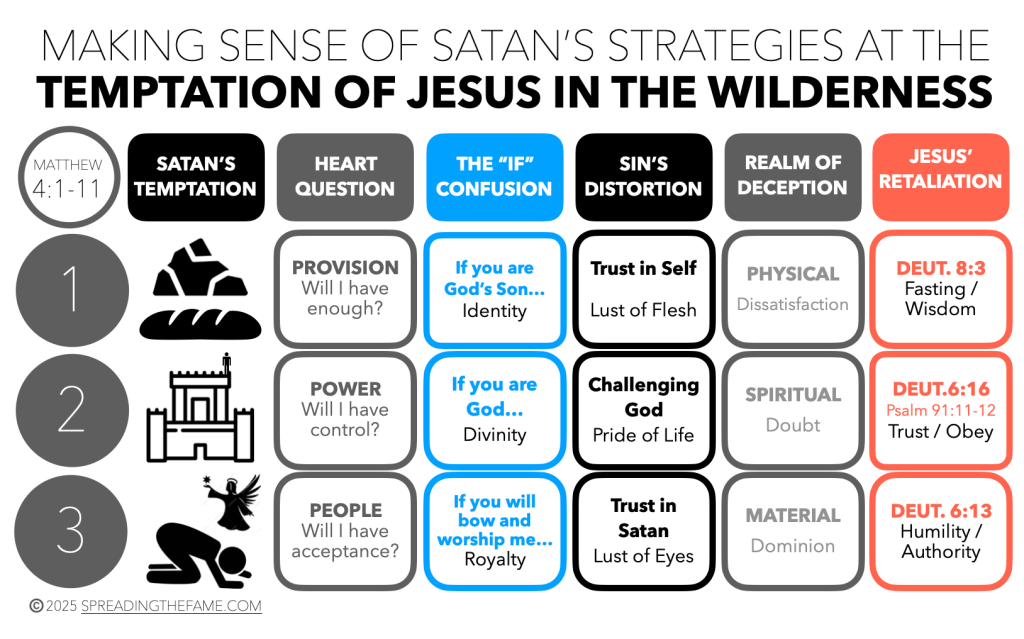




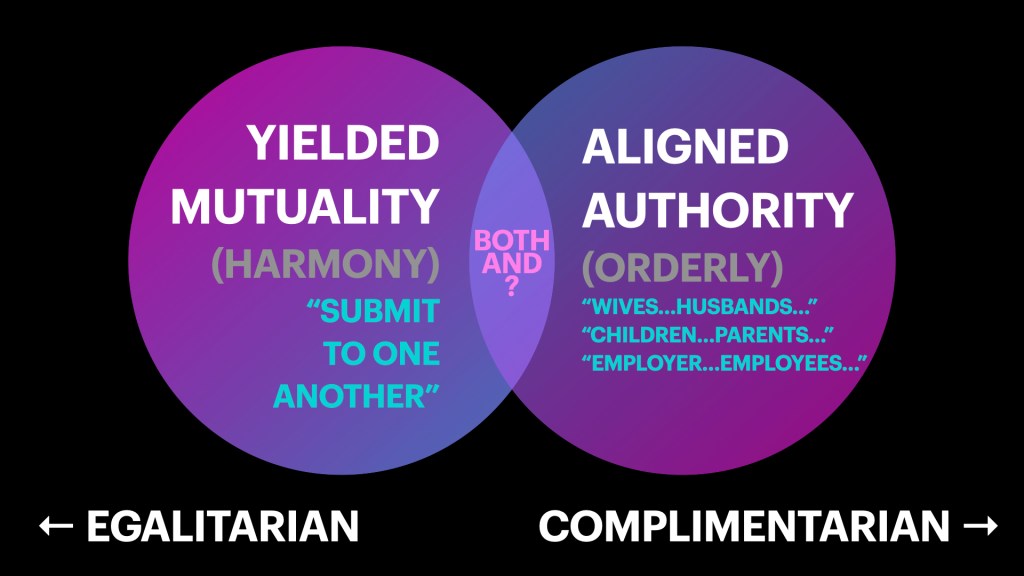


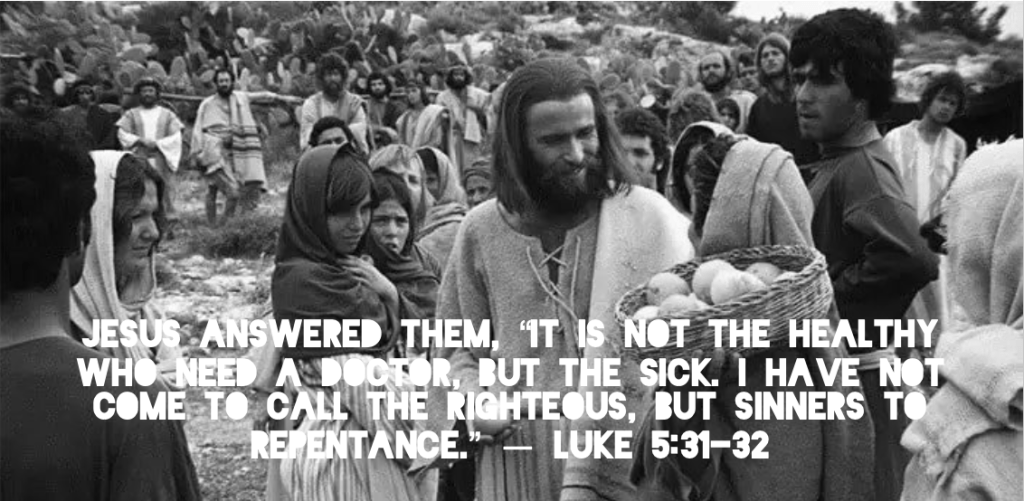



































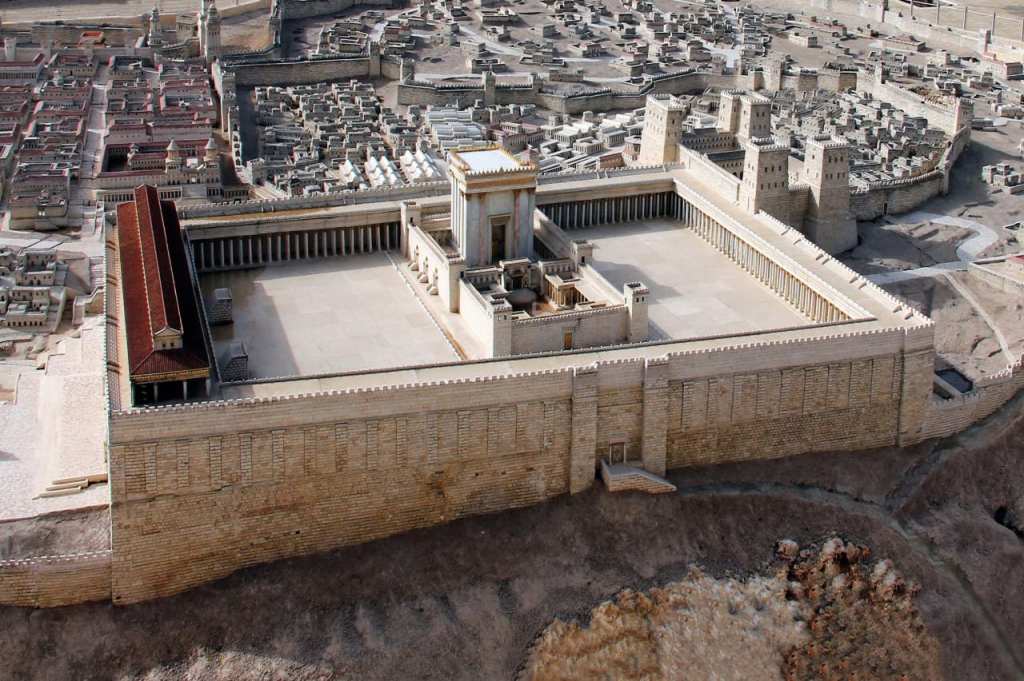













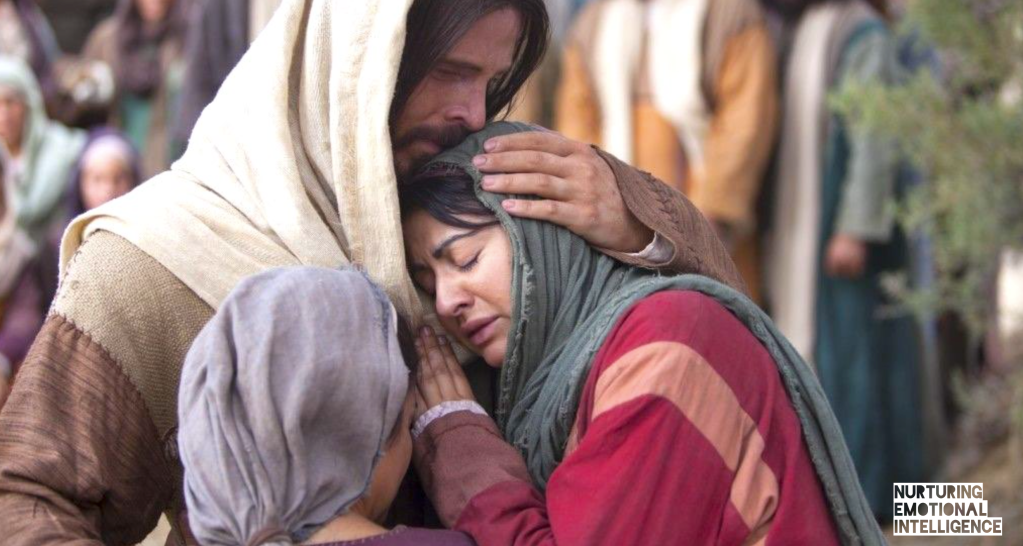




 spreading the fame