
WHEN WORDS ARE FEW FOR WHAT WE FEEL
In the raw, intense landscape of the mission field, there are moments when words simply fall short of capturing the depth of our feelings. It’s in these profound instances, when joy, sorrow, awe, or anguish overwhelm our vocabulary, that the simple, guttural “oh” often emerges—a primal sound reflecting the heart’s deepest stirrings. Emotions are God-given, vital for authentic connection and working out our faith when words are few.
Lucas, serving with a community development project, had patiently navigated bureaucratic hurdles for months to secure funds for a new clean water system. He had followed every procedure, paid every legitimate fee. Then, a local official, known for corruption, demanded a substantial personal “gift” to release the final permits, effectively stealing from the community. Lucas felt a surge of righteous anger, a hot, visceral emotion that threatened to boil over. “Oh, this isn’t right!” he muttered, clenching his fists. Instead of lashing out, he retreated to pray, pouring out his frustration to God. He asked God for wisdom, for justice, and for self-control. His “oh” became a prayer, a passionate plea for God to intervene, channeling his anger into intercession and discerning a new, strategic way to expose the corruption without compromising the project.
BIBLICAL REFLECTION ON EMOTIONS
The raw, unfiltered expressions of “oh”—whether in lament, praise, or deep feeling—are not signs of weakness but windows into the soul. In the intense, often overwhelming, context of cross-cultural ministry, understanding and honoring emotions biblically is crucial for authentic connection, resilient spiritual health, and a compelling witness. This theology examines how emotions originate from God and are integral to our human experience.
Emotions are Rooted in God’s Design. Emotions are an intrinsic part of being human, designed by God Himself. They are not inherently sinful, but part of the “very good” creation, intended to help us connect with God, others, and our world. The Fall distorted our emotional landscape, but God’s redemption seeks to restore it.
- Emotions are part of being made in the image of a relational God who Himself experiences emotions. (Genesis 1:27)
- God grieves over sin (Genesis 6:5–6). God hates and is jealous (Deuteronomy 6:14-15; Hebrews 10:27). God delights in his Son (Isa. 42:1), and God takes joy in his people (Zephaniah 3:17).
- Our emotional complexity is part of God’s marvelous design. (Psalm 139:13-14)
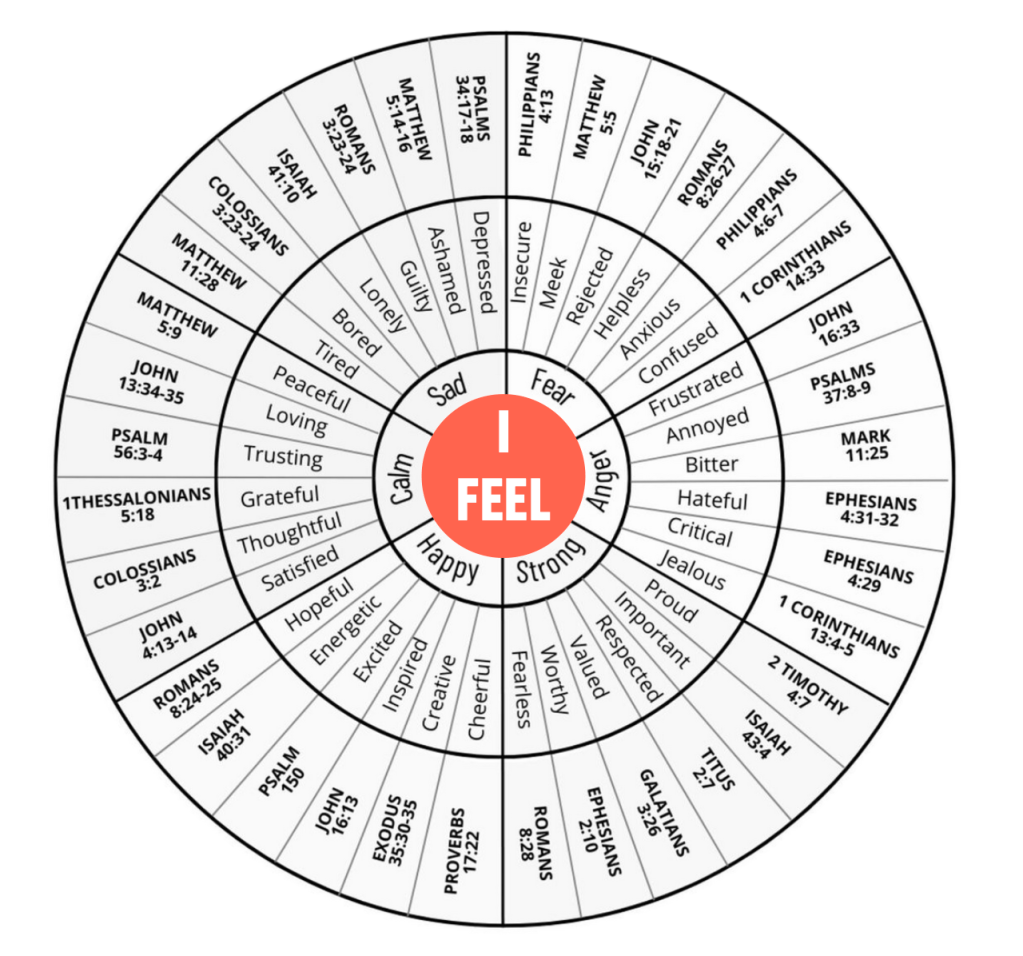
Emotions were modeled by Jesus. Jesus, fully God and fully human, perfectly modeled the full spectrum of human emotions. He experienced joy, sorrow, anger, compassion, grief, and even distress, demonstrating that emotions, when rightly expressed and managed, are not incompatible with holiness.
- Jesus felt deep grief and sorrow. (John 11:35)
- Jesus felt empathy and compassion. (Matthew 9:36)
- Jesus felt righteous anger and distress at sin. (Mark 3:5)
- Jesus felt joy. (Luke 10:21)
- Jesus felt distress in Gethsemane. (Matthew 26:38)
Psalms give us a vocabulary for our souls. The Psalms, in particular, provide a rich vocabulary for expressing every human emotion to God—from exuberant praise to agonizing lament, from deep trust to profound doubt. Scripture consistently invites us to bring our whole selves, including our raw emotions, into God’s presence. (Psalm 55:22; 62:8)
- The Psalms directly address emotions and redirect them to God. (Psalm 42:11)
- The Psalms show us how to lament, expressing deep sorrow or a sense of abandonment. (Psalm 13:1-2)
- The Psalms command exuberant fear and joy in worship. (Psalm 2:11; 100:1-2)
- The Psalms show that God is near to us in our emotional pain. (Psalm 34:18)
Emotions are powerful signals, indicators of what’s happening within us and around us. Emotions are not inherently “good” or “bad” in themselves, but their expression and how we respond to them can have positive or negative effects. They are more like gauges than guides. They can motivate us to action, warn us of danger, or, if unmanaged, lead to destructive behaviors. (Proverbs 17:22; Ephesians 4:26-27; Galatians 5:19-23)
“Oh” in the Bible is a word for how we feel when there are no words. The interjection “Oh” often reflects a moment of profound emotional intensity or passion. “O” in itself isn’t really a word, but it’s the sound that comes from deep within our gut. It can be an expression of:
- 😰Lament and Distress: Used to cry out in suffering, longing, or disappointment, as in Isaiah 64:1, where the prophet expresses a desperate plea for divine intervention. “Oh, that my head were a spring of water and my eyes a fountain of tears!” (Jeremiah 9:1)
- 😲Praise and Awe: Exclaims awe and wonder at God’s incomprehensible character, like a doxology, ”Oh, the depth of the riches of the wisdom and knowledge of God!” (Romans 11:33)
- 😩Longing and Desire: Shows a sense of yearning and desperation, highlighting one’s reliance on God for deliverance. “Oh, that you would rend the heavens and come down!” (Isaiah 64:1)
- 🫨Warning and Exhortation: Emphasizes the seriousness and intensity of a message, particularly in prophetic declarations. “Oh, you of little faith!” (Matthew 6:30)
”Oh” is often a signal that the heart is deeply engaged, whether in sorrow or in joy, in pain or in wonder. You can study “oh” by looking at its use by figures like David in the Psalms, as an expression of heartfelt prayer, or in passages like Psalm 119:97 and Deuteronomy 5:28-29, revealing the passionate relationship between God and people. It can be understood as a direct, emotionally charged form of communication with the divine.
Ὦ is a small word with great weight. Whether lamenting unbelief, praising God’s wisdom, challenging sinners, or urging saints, it embodies the earnest heartbeat of Scripture’s authors. A Study of the Use of “Oh” can be helpful for our own “Ohs”:
- Identify the Speaker: Notice who is saying “Oh” – is it a psalmist, a prophet, or God himself? The speaker’s context shapes the meaning.
- Consider the Context: Read the verses before and after “Oh” to understand the situation and the specific emotion being conveyed.
- Dissect the Emotion: Determine if the exclamation expresses joy, sorrow, reverence, or a desperate plea for help.
- Look for “O” as Vocative: Recognize when “O” (not “Oh”) is used as a direct address to God, such as in “O LORD,” which conveys a solemn reverence and intensity. The letter “O” is also used before a name or title, similar to how one might use “Hey” or “Listen” to address a person or a group. It often has pastoral implications. (Matthew 15:28; 1 Timothy 6:20; Romans 9:20; Galatians 3:1)
Negative emotions are not always bad or wrong. It’s not always bad to feel bad. Sometimes feeling sad and angry is good and right. In the Psalms, the genre of lament is most common. The Bible has no book of Joys, but there is a book of Lamentations. God has created us as emotional people. There is a time to weep and laugh, to mourn and dance, to hate and love (Ecclesiastes 3:1–8).
Biblical lament is a passionate, honest cry of pain, sorrow, or protest directed to God. It is a form of prayer that expresses deep distress, confusion, or anger, often questioning God’s apparent absence or inaction, yet always ending in a renewed expression of trust in His character and promises. It’s a structured way to bring our brokenness into God’s presence.
- Lament towards God can be direct, filled with questions, and even demanding. (Psalm 44:23-24)
- Lament must always move from deep pain to a renewed hope in God’s character. (Lamentations 3:19-21)
- Lament has a repeated and common pattern through the Bible: Call to God, cry/complain about the circumstance, keep confidence in God, cry for help, and celebrate God. (Psalm 13, 22, 31, 88)
The Bible is rich with examples of individuals and communities engaging in lament:
- Job: His entire book is a profound exploration of lament in the face of inexplicable suffering, questioning God while ultimately maintaining trust. (Job 3:1)
- Jeremiah (and the book of Lamentations): Known as the “weeping prophet,” Jeremiah poured out his grief and anguish over the destruction of Jerusalem and the suffering of his people. (Jeremiah 9:1)
- David (in many Psalms): David frequently expresses deep sorrow, fear, and a sense of abandonment, yet consistently ends by reaffirming his hope in God. (Psalm 22:1-2)
- Jesus: Even Jesus, in His humanity, experienced deep emotional distress and lament. (Matthew 27:46; Luke 19:41; John 11:33-35) Jesus experienced emotions in every way that we do, and yet He never sinned. (Hebrews 4:15)
Emotions are broken by sin. In the Fall, even our emotions became broken and rebelled against God (Genesis 3:1-6). Eve felt a sense of delight. It was a delight based on deception; it was a poison pill. Desires that are not in line with God’s will will be destroyed.
God will wipe every tear. God made us at least in part to experience profound joy and to experience this forever (Psalm 16:11) We are being restored to the true image, which is like Jesus (Romans 8:29; Ephesians 4:22-24; Colossians 3:10). God will ultimately redeem our emotions by purifying them, perfecting them, and integrating them fully into our glorified being in the new heavens and new earth, where they will perfectly reflect His character and respond rightly to His presence, free from the distortions of sin and suffering. (Revelation 21:4)
“Oh” underscores the importance of heartfelt communication with God. It invites us to approach God with honesty and vulnerability, expressing our deepest desires, fears, woes, and praises. Through this simple yet profound exclamation, the Bible encourages a dynamic and intimate relationship with God with genuine emotion and spiritual fervor.
“O LORD, God of my salvation, I cry out day and night before you. Let my prayer come before you; incline your ear to my cry!” — Psalm 88:1-2
THE IMPORTANCE OF LAMENT
Lament is a powerful spiritual discipline that is necessary for pioneer mission workers and their work. In essence, emotions and lament are not weaknesses to be overcome but God-given capacities to be stewarded. Emotions are indispensable for connecting deeply with the lost, guiding new disciples through their spiritual journeys, and powerfully demonstrating the heart of Christ.
Within the pioneer’s souls:
Crescendos with Praise and Awe: Lament is an act of worship. Daily, we sing the doxology as we experience God’s work in us and through us from the joy and challenges of the frontlines.
Honest Engagement with Reality: The mission field is full of suffering, injustice, and disappointment. Lament provides a biblical framework for pioneers to honestly acknowledge and process this pain rather than suppressing it, which can lead to bitterness, cynicism, or burnout.
Deepens Faith and Dependence: By bringing pain and questions directly to God, missionaries are forced to wrestle with His character and sovereignty. This wrestling, rather than destroying faith, often deepens it, leading to a more robust and resilient trust in God. (Psalm 13:5-6)
Combats Isolation: Lament, especially when shared within a spiritual community, breaks down the isolation that often plagues laborers. It creates space for mutual burden-bearing and empathetic support. (Galatians 6:2)
Fuels Intercession and Righteous Action: Honest lament can fuel fervent prayer and motivate pure action, participating in God’s work of bringing hope, healing, and justice. (Isaiah 1:17)
In sharing the gospel:
Authentic Connection and Empathy: Unreached people often live in contexts of profound suffering, injustice, and hopelessness. A pioneer who can genuinely express and process emotions, including sorrow and lament, demonstrates empathy and authenticity. This allows them to connect deeply with the pain of the lost, building trust far more effectively than a stoic or overly cheerful demeanor. When a missionary weeps with those who weep (Romans 12:15), it shows they truly understand and care.
Relatable Gospel Presentation: The gospel is about a Savior who suffered, wept, and experienced the full range of human emotions. A missionary’s emotional honesty makes this Savior relatable. When they share their own laments and how God meets them in their pain, it breaks down barriers and communicates that Christ is big enough for the lost person’s deepest sorrows and questions, not just their “sins.”
Demonstrating God’s Character: God Himself laments over sin and suffering (Genesis 6:6, Isaiah 63:9). A missionary’s lament reflects God’s own heart for a broken world, showing that God is not a distant, unfeeling deity but one who enters into human pain. This can be a powerful attraction to those who have never known a compassionate God.
In discipling:
Modeling Healthy Spiritual Formation: Discipleship is a messy
process of growth, repentance, and wrestling with sin and suffering. A missionary who models healthy emotional processing, including lament, teaches new believers how to bring their whole selves—their doubts, fears, and frustrations—to God. This prevents new disciples from suppressing emotions, which can shift to spiritual stagnation or hypocrisy.
Building Resilient Faith: New believers in unreached contexts often face intense persecution and disappointment. Learning to lament biblically equips them with a vital tool for enduring hardship. It teaches them to express their pain to God, question Him honestly, and ultimately return to trust in His character, thereby strengthening their faith rather than abandoning it.
Fostering Authentic Community: When missionaries and new disciples can openly share their emotions and laments within the community, it fosters genuine intimacy, mutual support, and a space for growth. This “one anothering” in vulnerability is a powerful witness to the transforming power of the gospel in relationships (Galatians 6:2).
PRAYER ACTION
Consider the Scriptures you cling to above. Consider lament and other emotions. Write a prayer for the kind of person you want to be.
REFLECTIONS ON BUILDING A PRACTICAL MINI-THEOLOGY OF OH
Take some time to prayerfully draft your practical mini-theology of “oh” by responding to these questions:
- How does knowing that emotions are rooted in God’s design, and exemplified in Jesus, impact your view of your own emotional life? How do the Psalms encourage you to bring your full range of emotions, including lament, into God’s presence?
example: God is… We are the kind of people who… It is most like us/me to… We/I will… We/I hold to…
- What emotions do you experience most frequently or intensely on the mission field? (e.g., joy, frustration, sadness, anger, fear, compassion, loneliness, hope). How do you typically express your emotions? Are there cultural norms in your host country that influence how you express or suppress feelings?
- How can emotions be “signals” that God is using to reveal something about your heart, your circumstances, or a spiritual battle? How can I intentionally use moments of strong emotion (both positive and negative) as opportunities to connect more deeply with God through prayer, worship, or honest lament?
- Once you finish, share your responses with your mentor. Ask for feedback. Adjust your draft as needed.
- Complete a one-page practical mini-theology.
RESOURCES FOR GOING DEEPER:
- Brought to You by the Letter “O”
- Engaging Our Emotions, Engaging with God, by Alasdair Groves
- Walk the Pathway of Lament, by J.T. Hutts
- Theology of Emotions, by Liz Edrington
- God is Emotional, by Riley Taylor
- Dark Clouds, Deep Mercy, by Mark Vroegop
- Does God Care About All Our Emotions? By N.T. Wright