thumb lick thursday [3.31.11]

Lick it, flip it, clip it, quote it. A thumb lick is a term used to describe the action taken when turning the page of a book. While reading I often find great one-liners, statements and paragraphs that are golden nuggets of biblical wisdom. So Thumb Lick Thursday is a way to pass along great tidbits of truth.

Is Mandated Bible Reading Healthy for Kids?

This is probably one of the most common questions  I hear from parents wanting to establish Christian disciplines in their kids. Every Christian parent deals with this at some point. They struggle with what they should mandate vs just encourage their kids to do. And with this, how much? At what point will we defeat our purpose and discourage them?

Hope for hurting marriages

There are far too many marriages in our Churches and communities that are hanging together by very thin threads. When marriages are like this, patterns of neglect are almost always part of the reason. It takes commitment and work for a marriage to be the mutually satisfying relationship it was intended to be (Note: 5 key commitments for a good marriage).

Worth-ship

Worship is “worth-ship”, an acknowledgement of the worth of Almighty God…It is therefore impossible for me to worship God and yet not care two cents whether anybody else worships Him too…Worship does not beget witness is hypocrisy. We cannot acclaim worth of God if we have no desire to proclaim it. – John Stott, Our Guilty Silence. 27-28

Suffering & Death

The Greatest single secret of evangelistic or missionary effectiveness is the willingness to suffer and die. It may be a death to popularity (by fatefully preaching the unpopular biblical gospel), or to pride (by the use of modest methods in reliance on the Holy Spirit), or to radical and national prejudice (by identification with another culture), or to material comfort (by adopting a simpler lifestyle). But the servant must suffer if he is to bring light to the nations, and the seed must die if it is to multiply. – John Stott, The Cross of Christ, Leicester: IVP, and Downers Grove, IL. 1986. 322.

What are you Sinking about?

It is easy for communication to be lost in translation. This commercial by the German Coast Guard and their new recruit emphasize this point.

spreading His fame

All praise to the name of the savior who reigns.
He’s taken our blame, embraced all our shame,
He’s raised from the grave so his fame we proclaim.
Salvation by grace through faith in his name.
Jesus, the beautiful and blessed Son,
Immutable, majestic one
Who was resurrected from the grave
for the depraved.
He paved the path for some
Place faith in His passion, son
Be saved from the wrath to come.
He’s fabulous, His status is immaculate
I’m lacking the vernacular to adequately capture His glory.
Incomparable, unconquerable, all powerful, unstoppable
Absolutely phenomenal.
No obstacle He can’t navigate.
He’s God and so He fascinates.
With Him it’s impossible to exaggerate.
Lord of all continents,
Source of all consciousness,
His compliments are the consequence of His accomplishments
Every sphere of life, He’s the Lord of it
And every other power is either fraudulent or subordinate.
At first we snubbed Him,
Now His vessels of mercy love Him.
Your highest thought is infinitely unworthy of Him.
Beyond vocabulary His actions vary,
His wrath is scary
All His adversaries are imaginary.
He has no competitors.
Ask Nebuchadnezzar, bro
He’ll mess you up, have you eating grass,
You can bet He’s amazing.
He takes in blatant, flagrant vagrants, breaks them, remakes them, and shapes them
to hate sin.
Jesus!
There’s no better name!
That’ll never change and He’ll forever reign while we spread His fame.
All praise to the name of the Savior who reigns
He’s taken our blame
Embraced all our shame
He’s raised from the grave so His fame we proclaim
Salvation by grace through faith in His name!

By Shai Linn

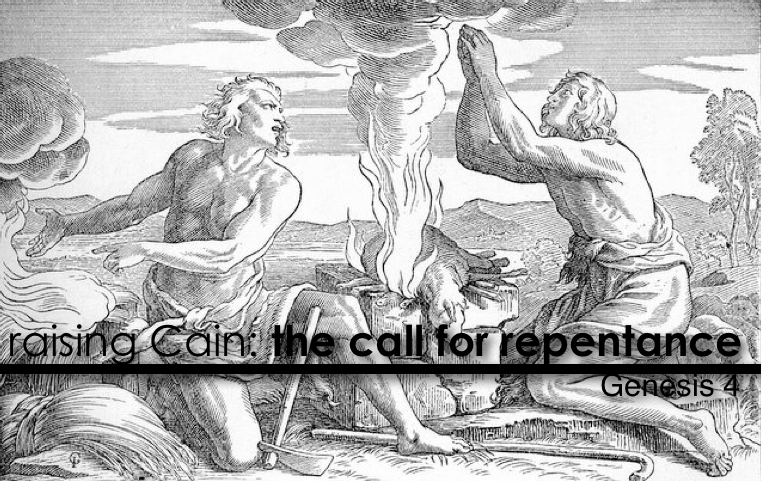
raising Cain: the call for repentance

Raising Cain is an expression given to someone who causes havoc. We get the phrase from the Genesis 4, where we get a glimpse into the first family and the children they raised. The children of Adam and Eve were far from perfect. This is a tale of two brothers. Woven into this story are incredible lessons for parents, children, and everyday followers of God.

What’s in a name? [Genesis 4:1-2]

Biblical names have meanings. The biblical meanings of names are significant and often shape the life of the one who bears the names. Let’s meet our two brothers: The first brother is Cain. His name means ‘acquire, get, possess’. The second brother is Abel. His name means ‘vapor or breath’.  As we will see in the story their names have a predetermining affect on their futures.

What is the purpose of your work? [4:3-5]

In Genesis 1-2, during the days of created God set an example for man to live by—6-days a week man works the land God creates and the seventh day man worships the God who created the land which they work [1:26-28]. Both the brothers are hard workers. Cain works the land and Abel ranches the animals. They are generous workers. From an early age both brothers learn the value of giving God a portion of their labors for praise and worship. Work is a means of worship because work involves sacrifice. This is a great lesson for all laborers.

Your mission while working is to give God your best in time, effort, aspirations, career, and money. Come to God with something in your hands to worship God from rewards of your reaping. Both brothers recognize their work and rewards of their work come from God. Both brothers bring gifts of their labors to God. Cain brings the first fruits of his land and Abel brings the firstborn of his flock. Both brothers come with something in their hand, but also something in their heart.

God questions what you bring for worship [4:6-7a]

In Genesis 3:9-13, God questions Cain’s parents over their actions in the Garden; He does the same here with Cain. God loves to ask questions. Man seeks to avoid questions. Man’s motto is, “Don’t ask; don’t tell.” God asks, “Why are you angry? It’s all over your face. I see your heart. Will you do what is right and repent?”

Cain comes to God with full hands but a jealous heart of unbelief [cf. 1 John 3:12; Hebrew 11:4]. He looks at his bowl of Cheerios and then at his brother’s box of Omaha Steaks and thinks, “Wow, my offering is pretty lame,” and jealous grew in his heart over Abel. Was it that Abel’s offering was better? No. The mass of the offering in your hands does not matter a bit, but the manner of your heart before God does matter.

Do you compare your worship with others? When in church are you looking around at what others bring? Are you jealous because someone else has your is growing in their relationship with God more than you, better life [job, girl or guy] than you, appears more success than you? Are you obsessed with other people around you, rather than the only One whose opinion matters? Abel comes to God with a love for God in his heart. His offering is regarded because his heart is to please God. Cain’s offering looked religious, but his heart is not dependent upon God. Some Christians are a lot like Cain, even worse because they come to God with nothing in their hands. He at least comes with something in his hand, even though what he had in his heart was wicked and twisted.

What are the consequences of keeping a jealous heart? [4:7b-9]

If Cain does not get a handle on his jealousy it will handle him. God warns Cain, “Your sin will drive you insane.” Sin is powerful enough to drive one to insanity and death. Cain must have learned the desire for power and prestige from his mommy [cf. desire; Genesis 3:16b]. Do you notice the pride in Eve’s statement, “I have made a man” [4:1]? She didn’t make man, God did. Eve is trying to rule over her roost and her redemption, but Cain is not the promised Redeemer Seed [cf. 3:15].

The consequences of keeping jealousy in your heart will cause it to grow and spiral out of control. First, if you internalize jealousy you will be depressed. Second, if you externalize jealousy you will get violent [i.e. Cain]. Third, if you deal with jealousy through repent you will rule over it with self-control. If you are convicted of a jealous heart, repent, before it gets worse. And worse it did get for Cain. Cain invites his brother to the farm, kills him in broad daylight, and buries his bloody body under the ground. This is a premeditated murder. Jealousy led to insanity. Insanity led to Abel’s mortality.

God as Counselor and Judge [4:9-12]

Echoing God’s question in the Garden [3:9], God asks Cain, “Where is your brother, Abel?” [v.9]. And like his parents, He covers with a lie, “I don’t know! Am I Abel’s babysitter?” This should have been an opportunity for immediate repentance and restoration. Instead, God has to step in as the law enforcer, CSI agent, prosecutor, and Judge. Therefore, since Cain alienates himself from God, God alienates him from good farmland. Cain dishonors the dirt, and the dirt dishonors Cain [cf. 3:17].

What happens when you repent? [4:13-26]

I believe, Cain responds to God’s curse with a repentant heart, “My sin is greater than I can bear” [v.13]. The curse cracks the hard shell of Cain’s heart. He realizes and wakes up to the consequences of his sin. He knows he will have to move away [East of Nod = “wandering” alienation from God], be a fugitive, believes someone will track him down and kill him too.

It is not a popular opinion, but I believe Cain repents because God blesses him through protection [15-16, tattoo], gives him a family [17a], gives him a refuge city [17b], gives him another brother [25a], promises a Redeemer Seed [25b-26a], and brings a revival [26]. God is a good God—a gracious God. God gives Cain good gifts despite his sin.

In Genesis 4, you see Cain’s worst day. Lame Lamech gives you a look into where Cain’s sin could lead without repentance [vs.19-24]. I am glad that the Bible is an honest book describing the gruesome details of people’s lives. I could not image God putting my worst days in the Bible as an example for others to read and remember. God gives these examples to learn about His grace, so that in your worst day you can also have your best because God’s restoration follows repentance.

The story of Cain and Abel does not make sense until you put yourself into the shoes of Cain. You are Cain. You have killed your brother, Jesus. You come to God with empty worship and an unrepentant jealous heart. Jesus’ death offers you life and hope. Jesus’ death and blood cries out so that you would believe in your brother and Savior, the Lord Jesus Christ [Hebrews 12:24].

Questions for Reflections and Application:

What are some of the lessons in this story for parents? Children? Or everyday followers of God?

What is the overall effect of sin’s mastery as this story is played out?

What do you think Genesis 4 is meant to instill in you? How does it impact you?

understanding your calling FAQ

I have heard many Christians say, “My work is not fulfilling,” “I feel lost in the meaningless of the mundane,” “I feel like I’ve have failed God because I’m not doing enough for Him,” “I feel called to _____, but I feel like I’ve have missed my calling.” If this is you, you may be suffering from confusion and over-complication of the Christian calling. What does the Bible say about your calling? Let’s look at Jesus’ idea of calling as seen in His closest companion John.

WHAT IS A CALLING? [John 1:35-51]

In order for there to be a calling there must be a Caller. If there is no Caller, there are no callings—only work. When Jesus commands His disciples to follow Him, He is the Caller calling followers to a lifetime of worship and service. He is calling them to be a worshiper of One [primary call], and be a servant of all [secondary call] spreading the fame of Christ. Your calling is to follow Christ so decisively that everything you are, everything you do, and everywhere you go, and with everything you have worship God and serve His church spreading the name of Christ. Calling is the foundation of Christian existence itself. Calling in the Bible is a metaphor for living as a follower, worshiper, and server.

Whether you are a teacher with the TSC, a plumber in Pittsburgh, a mother on Monroe Street, a businessman, secretary, missionary, or pastor; your call is the same—worship God and serve the name of Christ through His church. Calling is not just for those in full-time Christian service, and everyone else is part-time or not even clocked in yet. The clergy-laity distinction was created by Roman Catholic Church, and a bad hangover for the modern evangelical church.

Martin Luther said, “God and the angels smile when a man changes a diaper.” William Tyndale wrote, “if your desire is to please God, pouring water, washing dishes, cobbling shoes, and preaching the Word is all one.” Bishop Thomas Becon wrote, “Our Saviour Christ was a carpenter. His apostles fishermen. St. Paul was a tentmaker.” Everyday ordinary work without a calling is simply work. Everyday ordinary work with a deep and devoted sense of calling is an extraordinary opportunity to live as a worshiper God and servant of the cause of Christ!

Christ gives your work meaning, not that you are working for Him [secondary], but that you are satisfied in Him [primary]. You are not called because God needs your help [Acts 17:24-25], or you need to payback God [2 Corinthians 9:8], or you need to do something for God [John 12:25-26]. You are not primarily called to something or to go somewhere, but are called to Someone.

WHO IS CALLED? [John 3:16-36; 5:19-35]

Every genuine follower of God has been called from Adam and Eve to Moses to David to John the Baptist to Paul the Apostle to Fred the follower living in a flat in Philadelphia. To Noah God said, “make yourself an ark of cypress wood…” (Genesis 6-7, and he had not even seen rain before). To Abraham, “Leave your country, your people and your father’s household and go to the land I will show you.” (Genesis 12, and he had no clue where God was calling him to go). To Esther (via Mordecai), “For if you remain silent at this time, relief and deliverance for the Jews will arise from another place, but you and your father’s family will perish. And who knows but that you have come to royal position for such a time as this?” (Esther 4). To Jonah, “Go to the great city of Nineveh and preach against it, because its wickedness has come up before me.” (Jonah 1, and he was on a short-term mission).

The list could go on and on of people who were called by God. The New Testaments most frequent one-word description of a Christian is that he is called [2 Thessalonians 2:13-17]. These folks in the Bible are people just like you and me—ordinary people, wanting to trust the extraordinary God of the Universe, but not always under the most comfortable and clear circumstance. However, a common thread runs through each calling: proclaim the salvation of God through worship and service to the ends of the earth.

HOW DO I KNOW THIS IS MY CALLING? [John 13:1-17]

Jesus said so, and Jesus did so. Jesus’ calling was to worship God and service His name [i.e. wash feet]. He lived as the example towards that calling, even to the enemy who would eventually betray Him [i.e. Judas].

IS MY CALL SPECIFIC? [John 21:15-19]

The biblical call is specifically general: be a follower of Christ devoted to worship God and serve the name of Christ. It’s easy to swallow the fact that God has a macro-specific call, but you can quickly complicate and confuse the call by forcing a micro-specific call. God’s macro-specific and micro-specific plan for your life is to stay close to Jesus, worship Him [“if you love Me”], and serve Him [“if you love Me, feed His sheep”].

What about God’s calling Paul to go specifically to Macedonia [Acts 16:8]? Notice this “course correction” was given in the context of Paul’s active service in God’s mission. Then Holy Spirit tells the church at Antioch to set apart Barnabas and Saul for a church planting mission [Acts 13:1-3], but both men were already active in preaching and serving.

HOW DO I DECIPHER MY DECISIONS & WORK WITHIN MY CALLING? [Acts 13:1-5]

1) Seek wisdom in God’s Word. [Psalm 1:1-3; 119:105; Luke 24:32] You first learn how to hear from God by following His written word. If you can’t follow what He’s written in His word, chances are, you are ignoring the Holy Spirit.

2) Seek wisdom through prayer. Matthew 9:38 says, “pray earnestly to the Lord of the harvest to throw out laborers into His harvest.” The point is to pray. “If anyone of you lacks wisdom, let him ask God who gives generously without reproach, and it will be given him.” [James 1:5]

3) Seek wisdom in your church (4-fold ministry). Ephesians 4:11-12 says, “And He Himself gave some to be apostles, some prophets, some evangelists, and some pastors/teachers, for the equipping of the saints for the work of ministry, for the edifying of the body of Christ.” When you sit in a service like this, you’re hearing wisdom from God. He speaks through your pastors and spiritual leaders. Seeking wisdom and guidance from spiritual authorities is wise.

4) Live out loud the gospel. Most people find their world is a small zip code on this grand planet where a particular people group live who needs the gospel. Surrender all you are and have to the gospel of Christ [Luke 14:26-27, 33]. Don Alban Sr. [my ol’ missions prof],says, “Every follower of Christ is an immediate missionary for Christ.”

5) Use your spiritual gifts in conjunction with your church [1 Corinthians 12; Romans 12; 1 Peter 4:11-12]. Work through the organism that God uses in this world today. Worship and service is funneled through Christ’s church. If you are worshiping and serving God through your church you can reproduce the same anywhere.

WHAT ABOUT THE HUTTS CALL TO GO TO UNREACHED OF NORTH AFRICA?

Sarah and I have believe we would be honoring Christ either by remaining on staff at BGBC just as much as we would spreading Christ’s fame among the unreached peoples of Arab North Africa [or any other nation]. We also believe we can be an extension of the ministry of our church in a land where there is no gospel influence. There are literally hundreds of unreached people groups around the world.

So why would we be burdened for a small region in North Africa among a small unnamed and unreached people group? Simply, God has called us to worship Him and spread His fame among those who are not. Our calling is about lifting Christ high, being Christ-like, and through His church serving the name of Christ to the ends of the earth.

hypocrisy


In the early days of acting a hypocrite was considered a good term. It described an actor who could put on many different faces or masks. Actors in the Greek theatre wore masks depicting an emotion. The masks were large, often twice the size of an actor’s face, so they could be easily seen. The Jews used the word hypocrite to describe a liar, deceiver, two-faced, or one who hid his true nature behind a mask.

How would you define the word hypocrite? To be a hypocrite is to believe one thing and behave contrary to your beliefs. If someone called you a hypocrite, how would that make you feel? Christians often get labeled as hypocrites. Christians are hypocrites, but so are non-Christians. Non-Christians believe people should behave a certain way based on various values, and Christians believe you should behave in a way that mimics Christ.

In the Gospels, Jesus accuses the Pharisees of hypocrisy because they used brassy actions that attracted attention, but covered their true heart intentions. They would pretend to do what was really important to God, but Jesus since He was God had x-ray vision into they hearts.

The religious are often the most hypocritical. The Pharisees were outwardly very religious people. The Pharisees controlled the synagogues, its teachings, and were regarded as the chief interpreters of Jewish legalism. They not only believed the Law, they expanded it to include 400-plus rules, and insisted everyone else follow too. Jesus used hypocrite to describe the Pharisees and pronounced seven woes on them for their hypocrisy.

What are the various faces of a hypocrite? And do you wear masks that fit?

First, hypocrites add to the message of the gospel [Matthew 23:13]. The message of the gospel is a simple message: you are rebellious sinner separated from God, but Jesus came to redeem sinful man through the cross, and only those who respond through faith and repentance will be redeemed forever. Though it is a simple message it is not easy. To make the application of the gospel message more than “repent and believe” by adding church attendance, tithing, baptism or any other work as prerequisites for salvation is duplicitous to the work of Christ.

Second, hypocrites use God to manipulate other people [14-15]. Hypocrites commonly devour people for selfish reasons. Hypocrites will injure people with their words and cover with a pious action. Some in the name of God have used and abused their listeners. That is blasphemous. Hypocrites are good at winning debates and proselytizing people to their own opinions. Jesus says the missionary efforts of hypocrites pave the way to hell. Instead of converting people to Christ, hypocrite’s covert people to their system that do not leave room for a Messiah.

Third, hypocrites seek to squeeze out of commitments [16-22]. Hypocrites are skilled liars. They know the loopholes or lingo to get out of commitments. They will make religious oaths with religious loopholes. Jesus says that all oaths are related to God and therefore binding [cf. Matthew 5:33-37]. Evasive oaths are not oath, but lies.

Some Christians say that they are committed to God because they read their Bibles everyday, pray before their meals, go to church faithfully, and give to good causes, but one glance at their life and you would see a huge disconnect. You can commit to all good things making yourself look godly [i.e. reading the Word, prayer, and serving the church], but if your commitments are not rooted in Christ they are self-centered facades.

Fourth, hypocrites are masters at making little things big and big things little [23-24]. Jesus condemns the Pharisees for not understanding God’s Law. The Law required that everything produced should be tithed to the Temple. The silly act that Jesus describes of counting every kernel of spice to make sure that it amounted to exactly 10 percent, no more and no less. Jesus was not criticizing tithing, but was pointing out that true righteousness results in godly behavior—not just an appearance of godliness.

How is it easier to focus on doing the little things—those less personal—than the big ones? Doing small duties are easy, but delving your heart, soul and mind into following Christ takes discipline, time and sacrifice. What did Jesus emphasize in His example of straining at gnats but swallowing a camel? There is great danger in focusing on the things that don’t matter, while ignoring the things that do. For example, some come to church on Sundays to worship God, but Monday through Saturday you are living separate from God. Sunday for them is a show, rather than serious occasion to worship God with His people that transform the rest of their workweek.

Fifth, hypocrites are concerned more about the outside than the inside [23:25-32]. Jesus casts two disturbing pictures of the Pharisees emphasize the outer man over the inner man. The first example is of keeping the outside of a vessel clean without taking the time to clean the inside [25-26]. Would you eat off a plate that was not fully clean, but caked with yesterday’s casserole? Or would you drink from a cup with three-day old milk marks inside? Of course not, that is just gross. That is exactly Jesus’ point. You are clean on the outside, but inside you are unclean.

The second example is decorating the outside of tombs. You can spend all your time on beautifying things that really don’t matter. People spend big bucks on making our faces look better, teeth whiter, clothes brighter, hair shinier, and body thinner. This might make you look good for a time, but in light of eternity it does not matter A beautiful tombstone does not change the condition of the decaying body within. Neither does a mask of Christian righteousness make a person who is dead to Christ inside into a true Christian [cf. Matthew 6:1-3; 15:1-11; 22:18-22]. What you do if you knew no one would see reveals who you really are and whom you really live for!

How do hypocrites stop playing with masks and start being authentic in Christ?

First, realize hell has hypocrites [33]. Hypocrisy reveals your hearts intents. The difficult truth is, the more hypocrisy you have in your heart the harder it is to change. Followers of Christ hate hypocrisy in their hearts and are committed to change in Christ. If a hypocrite continues in hypocrisy there is a good chance he is not a follower of Christ. If there is no change hell is on your horizon.

Second, repent and open yourself to God [34-36]. The response of the Pharisee should have been, “You are the Messiah, forgive us our sins.” However, they would not respond and repent, rather they recoiled to their hardheartedness. Jesus, the Messenger of the gospel, prophesies about other messengers He will send [i.e. apostles, disciples and followers] who will confront the religious system with their wholehearted commitment to their Lord Christ Jesus. Yet just as they rejected and killed Jesus, they will reject and kill His messengers. 1 Peter 2:22-25 says,

“He committed no sin, neither was deceit found in his mouth. When he was reviled, he did not revile in return; when he suffered, he did not threaten, but continued entrusting himself to him who judges justly. He himself bore our sins in his body on the tree, that we might die to sin and live to righteousness. By his wounds you have been healed. For you were straying like sheep, but have now returned to the Shepherd and Overseer of your souls.”

Third, restore intimacy with your Savior [37-39]. God is a restorer of His people. This is a great promise. When repentance is authentic, restoration of intimacy with God follows. As 1 Peter 2:1-3 says,

“So put away all malice and all deceit and hypocrisy and envy and all slander. Like newborn infants, long for the pure spiritual milk, that by it you may grow up into salvation— if indeed you have tasted that the Lord is good.”

Fourth, remember servanthood is your calling [23:11-12]. Not serving yourself, but serving your Master, Christ. To preface Jesus’ woeful concerns towards hypocrisy He says, “The greatest among you shall be your servant. Whoever exalts himself will be humbled, and whoever humbles himself will be exalted.”

In conclusion, do not criticize the Pharisee for his hypocrisy for Jesus shares this message not only to them, but also to you. You could be a Pharisee too. Remove your masks. Repent; allow God to restore, and remember your position under God is a humble servant. Pharisees have infected the Christian community. Subtly. But Jesus thinks the heart condition of hypocrites is a serious matter to consider.

hell, wrath of God, and eternal judgment

When Jesus mentions hell it is not a joke, myth, or suggestion about what life is like on earth. When He speaks about hell His words are not vicious  or bloodthirsty, but chocked with tears. He loves and cares for people too much therefore He takes a lot of time in His teaching to warn us to avoid it.

When Jesus teaches about hell it is often graphic and vivid. He relates to hell as a place of eternal punishment, eternal fire, the fiery furnace, the darkness where there is weeping and gnashing of teeth, a place reserved for those who rebel against God. Jesus shares with a story about two men who have very different ends to their lives. From this story there is a lot of insights about hell:

1.  Hell is real (Luke 16:19-23a).

Hell is not a land-of-make-believe for those who are more evil than Mr. Rogers. “Hades” is a real place. So real is hell that Jesus talks about it a lot. Sometimes more than heaven. If God the Son talks about hell, it’s real.

2.  Hell is really not fun (16:23b-24).

I enjoy Billy Joel’s music, but it is ignorant to say that “I would rather party with the sinners than cry with the saints.” Hell is not a party or place that anyone should desire. The rich man in Jesus’ story says “in torment”, “I am in agony in this fire.”

3.  Hell is real eternal separation from God (16:25-26).

It is a wonderful comfort to know that at any moment, place and time God is with us. He is our Immanuel. I could not imagine being in a place without God, but that is how hell is described, “between us and you a great chasm has been fixed…none may cross from there to us.”

4.  Hell is for rejects (16:27-31).

Hell is for those who reject God and His redemptive plans in Christ. It does not matter if you were a good person, paid your taxes on time, live by the Golden Rule or follow most of the10 Commandments. Just one breech of the law is rejection of all of it. There is no rescue for rejects postmortem. You must chose to follow Christ today, in your one lifetime. In the story Jesus shares about the rich man, the man pleads for his family who are still alive that someone would warn them. Yet he does not remember and chose to forget that many had warned him. If he or his family does not listen to the warnings from God’s teachers [i.e.  Moses and the Prophets] they will not listen to a dead man.

A parent’s have concern over their children’s safety therefore they say, “Look both ways before you cross the street,” “Don’t stick your figure in a light socket,” “Do not drink Drain-O.” This is what Jesus is saying when He speaks about hell. Jesus is pointing out the signs of clear and present danger if you continue to ignore God’s plan. He doesn’t use the scare-tactic, but speaks plainly as a parent who care often do when warning their children of matters of life or death.

Love is what motivates Jesus to talk about hell.

Jesus wants you to listen to Him and avoid it. The cross is where His motive of love led, and there He bore the wrath of God for your sin. Gods love is often misunderstood. “God is love,” (1 John 4), but just because God is love doesn’t mean He loves everything or that His love is His chief attribute. He is also holy, gracious, merciful, just and righteous. God does not love sin (Ps.5:4-6), in fact, He hates it.

God would not be loving if He left sin unpunished.

Imagine living in a world where sin, injustice, and lawlessness reigned. Imagine if police officers let thieves and rapists roam the streets free. Imagine if judges and juries let murders and molesters be dismissed without charge from the courtroom. You would not say those law enforcers were just or right. If God did not deal with sin, He would not be a just Judge or good authority.

Hell is a loving necessity.

It is a place where evil is to be locked up. God created hell to deal with evil. He made it to be a final, inescapable prison where all evil, rebellion against God will be confined never to poison men again. Given all the evil in the world today it is a great assurance to know that God notices it and has a plan to do something about it. God does not overlook evil.

Hell seems unloving when you do not have a good understanding of what sin is against God.

God is holy and without sin. Sin cannot go unpunished from a perfect God. God’s holiness and our sin are infinitely great, therefore, the greater the crime, the greater the punishment. Sin is an eternal offense against God therefore it deserves an eternal punishment. Sin against God is treason. If you were to disobey a king in the Middle Ages you were receive the death penalty. Thus it is so with the King of the Universe who seeks to care for His creation (Romans 3:23; 6:23).

Hell is real. It is no joke or laughing matter. Since Jesus was serious about its future realities, you must be serious about it today too. Rather than asking God, why He would send anyone to hell, you must ask: How can it be that you have been so merciful to a sinner like me?

Hell, Rob Bell, and reviews of the book Love Wins

There has been much stir over Rob Bell’s new book Love Wins: A Book about Heaven, Hell, and the Fate of Every Person Who Ever Lived. Bell will tell you he does not want to be labeled a universalist [check out Bell’s interview’s with MSNBC and Relevant], however his book seriously and dangerously advances the cause of universalism from a popular and influential level.

Yesterday, I perused Love Wins at a local bookstore because I was unsure I wanted to buy it. To say it simply, Bell promotes an unbiblical picture of a God without wrath and a skewed portray of His love and justice. He gives unclear indication that man needs salvation from God’s wrath now, nor faith in Jesus Christ in this life to have salvation in eternal life. Bell states his beliefs in heaven, hell, judgment, the cross, and salvation, but takes a quasi-philosophical approach rather than biblical approach to Jesus’ teaching on the subjects.

Bell historically likes to ask questions and create discussions, but again leaves you unsatisfied with answers and in this book leaves you with more questions about God, salvation, and His understanding of the authority of God’s Word. I am not one to bash people particularly other pastors, however, as a pastor it is my obligation to protect Christ’s church from potential false teaching that could distract His sheep. Rather than writing another review, I thought I’d pass along some great reviews already circling around from faithful followers of Christ and intricate exegetes of God’s Word.

Great Reviews of Rob Bell’s, Love Wins:

Great article on Hell:

Great Books on Hell:

creations need for reconciliation with its Creator

I am the product of the normal dysfunctional American home, which means my parents divorced before I was able to speak, I was in and out of special education classes in school, needed specialized counseling, and struggled with parental authority until after college. I am grateful today for my family situation and how God used it all as a means to mature me into the man I am today. However, when I was younger, I was not so grateful. In fact, I was bitter, jealous, self-centered, and had ungodly expectations of my parents, especially my mother.

It was until the summer after college, I came under conviction for my sinful expectations and need for reconciliation with my mother. After years of church, 4-years of Bible College training for the ministry, and life of ministry awaiting ahead God convicted me through His Word and His Spirit, “Justin, if you are going to be a vehicle of reconciliation into the lives you are ministering and have not reconciled with your own mother, you are living a lie. I have reconciled your relationship with Me. How dare you are slapping Me in the face.” By the end of that summer I sat down with my Father seeking forgiveness, and my mother seeking reconciliation for my hidden expectations. And God reconciled.

First, God promises to conquer sin and remove it from His creation [Genesis 3:15]. In the beginning of the fall of mankind, God gives a glimmer of hope. This verse is known as the protevangelium, or the first proclamation of the gospel. In the seriousness of the situation, Adam’s sin, gives a sobering mention of a seed of salvation. Although centuries of conflict will follow this fall, a day would come when the seed of the women triumphed over sin. Eve’s daughter, Mary, gives birth to the promised seed. “He”, namely Jesus, the promised seed [Galatians 4:4], will one day crush the head of Satan [Galatians 3:16-19]. In a sense, as followers of Christ live under the gospel and become reconciled to God they are destroying the devil and his work [Romans 16:20].

Second, God works throughout history to reveal Himself and reconcile His creation to Himself. From Genesis 3 to Revelation 22, God progressively works out His redemptive plan. In Genesis, we will see His plan worked out through Noah, Abraham, Joseph, and later with Moses, David and the prophets. God is relentless and passionate about His redemptive purposes for the people of this planet. God remedies creations need through the Redeeming Seed. He is the climax of history and the saving activity of God. He conquered sin, death, and Satan.

Third, God uses sacrifice as the means for reconciliation. It is a sacrifice that clothed Adam and Eve [3:21]; a sacrifice where blood was spilt because of sin. God provided this sacrifice. God initiated reconciliation and provided its means. What the Lord Jesus Christ is called in 1 Corinthians 15:45 is the second Adam. That the first Adam failed, and that the second Adam, the Lord Jesus Christ succeeded.[1]

Interesting connection, in the Garden before Jesus’ death, remember who comes to the second Adam? The serpent. The serpent tempts Jesus as He did Adam with food. He also tempts Jesus with pride. He takes Him and shows Him all the kingdoms of the earth, and says, “You can rule and reign over all. You don’t need to go to the cross and suffer. All you need to do is bow down and worship me.”

The first Adam allowed the serpent to speak. Jesus steps in and speaks. The first Adam allowed the Word of God to be misquoted. Satan again, in his temptation of Jesus as Adam, misquotes Scripture and changes its meaning. But Hebrews 4:15 says that every moment that the serpent came to tempt Him, He was tempted in every way as you are, yet without sin. At every moment that the serpent came to Jesus, He emerged sinless, triumphant, and victorious.

And so the serpent devised one final plan. As he had caused the first Adam to kill himself via sin that led to his death, he knew that he could not get Jesus, the second Adam, to kill Himself, so he decided that he would simply kill Him. In Luke 22:3, we are told that Satan entered into Judas Iscariot, one of Jesus’ own 12 disciples. He possessed Judas Iscariot, fulfilling the prophecy of Zachariah in which a friend through a kiss for 30 pieces of silver would betray Jesus. Indeed, Jesus was betrayed. Jesus was handed over. And Jesus was ultimately murdered unjustly.

Colossians 2:13-15 says that though this appears as a victory for Satan and his minions, it was the greatest victory in the history of the world for the Lord Jesus Christ. On the cross, Jesus did something extraordinary. He took sin upon Himself.[2] And Romans 5 says, “We’re either in the first Adam – dead, or in the second Adam – alive.“ Are you dead or alive? Which Adam do you follow? The Second Adam is your only hope of salvation and a forever. Follow Him.


[1] Cf. Daniel 7:13-14; Romans 5:12-19; 1 Corinthians 15:45-49; Hebrews 2:14; Revelation 12.

[2] Struggle, affliction and suffering won the battle over the serpent. Cf. Isaiah 53:12; Luke 24:26, 46-47; Romans 16:20; 2 Corinthians 1:5-7; Colossians 1:24; 1 Peter 1:11.

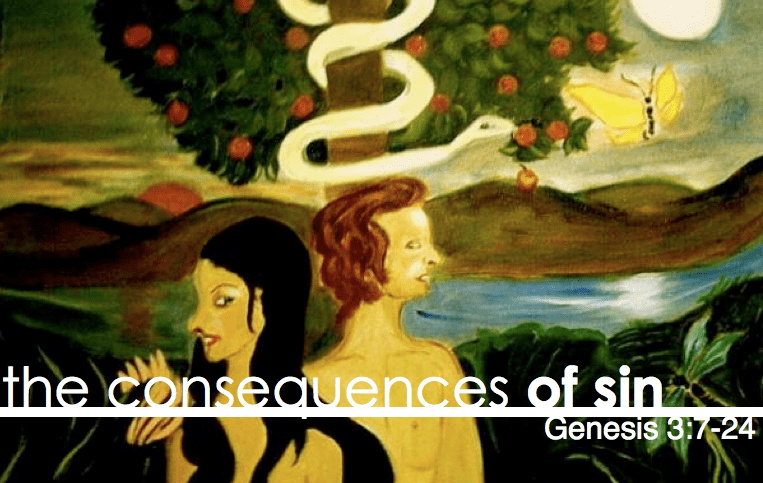
the consequences of sin

Have you ever fallen so hard that you hurt yourself and needed help? I remember a few years ago, Hannah, a gal in our church fell so hard that she fractured her scull on the concrete sidewalk. She did not remember her fall after the initial impact, other than what other people tell her. Supposedly she was able to get up from the sidewalk and say, “My head hurts, really bad,” but doesn’t remember anything. When visiting her in the hospital she was noticeably dazed and confused. The fall left her with some immediate pain and sickness and long-lasting consequences such as memory troubles, headaches, and cautious attention to future activities. The consequences of the Fall of Mankind in the Garden of Eden were not at all different.

First, there are immediate consequences to the fall of man [3:7-13]. The major immediate consequence of the fall was death [Romans 3:23]. No longer was man innocent. They now knew right and wrong and their innocence could not be undone. This was not the only immediate consequence for sin.

Immediately sin brought guilt [3:7]. Satan promised Adam and Eve freedom, instead they received guilt. They thought sin would bring freedom, but all it brought was bondage. Their guilt caused them to be ashamed. They once were naked and unashamed, now they were naked, humiliated, and ashamed. They noticed their nakedness. Now, no one told them they were bare-naked, they simply felt open and vulnerable because God uncovered their hearts.

Immediately sin brought alienation from God [3:8-13]. Man was fooled into thinking they would be like God, instead they found themselves hiding from God. Like little kids hiding from their parent they tried to duck and cover from God but that is impossible [i.e. talking to bf or gf, porno under bed, drinking, immodest outfit, homework, etc.]. How silly is it to hide from an all-knowing, ever-present God? Sin makes you stupid. Have you ever watched COPS? Sin makes you do silly things. Sin alienates mankind from God, which breaks their relationship with Him.

Do you notice God has a lot of questions of Adam and Eve? Why so many questions? Through a few direct questions God quickly uncovers man’s heart. What you cover, God uncovers. However, what you uncover God covers. What Adam and Eve should have done is confessed to God immediately. When God asks, “Where are you?” They should have responded, “Here I am, I have sinned against you, God.”

You cannot run from God, for long. He is a pursuer. Man does not seek God; God seeks man. He is on a mission to “seek and save the lost [and hiders].” No matter how far or fast you run God, He is right there. You cannot shake Him. He is a pursuer because He is a lover. Will you stop running? Are you willing to come out of hiding and uncover your shame?

Second, with the fall of man came specific curses and consequences for specific characters [3:14-19]:

Character Curse Consequence
Serpent [14-15]


Note: he has already Fallen.

Cursed above all animals

Eat the ground [Cf. Is.65:25]

Made enemy of Seed

Death and promised judgment [3:15]
Woman [16] Pain in childbearing, childrearing, childbirth, & parenting [cf.Gen.1:28] Desire to rule over husband [i.e. control, dominate, manipulate, boss, cf. 4:7]
Man [17-19]


Note: Man was with Eve when she sinned. God holds him responsible for family.

Ground is cursed [17]

Struggle against the ground [18-19]

Go back to the ground [19]

Banished from the Garden [23]

Ground treat man like man treats God.

Weeds will mock man. Work will mock man.

Alienation from the land and Paradise. Relationship with ground and God affected.

Third, there are long-term consequences because of the fall of man [Genesis 3:20-24]. Shame caused the two-sinners to sew fig-leaf-undies to cover their nakedness. Like soldiers arming themselves with protection and defense they cloth themselves with weak and useless greens.[1] Notice God does not shame them even more because of their new Fruit of the Looms; rather God replaces their man-made coverings with a sacrificial garment [v.21]. God does for man what they cannot do for themselves. God sheds animal blood to give them a garment to wear, which begins the biblical theme of sacrifice, which weaves its way through Scripture.

The consequences for sin are serious, but God in His grace sends a sacrifice. Adam and Eve’s garment is the first sacrifice of many bloody sacrifices to come that stretch all the way to Jesus Christ on the cross [cf. John 1:29]. He is the Sacrificer for mankind’s sin, and therefore the self-declared Savior for mankind.


[1] Cf. Deuteronomy 28:48; Job 1:21; Isaiah 58:7.

7 important truths about temptation

1. God is not subjected to temptation and is not the source of temptation [James 1:13].

2. Temptation comes from lusts [James 1:14], covetousness [Proverbs 28:20; 1 Timothy 6:9,10], the devil—the author of temptation [1 Chronicles 21:1; Matthew 4:1; John 13:2; 1 Thessalonians 3:5], and evil associates—the instruments of temptation [Proverbs 1:10; 7:6; 16:29].

3. Often temptations come from poverty [Proverbs 30:9; Matthew 4:2,3], prosperity [Proverbs 30:9; Matthew 4:8], seeking worldly glory [Numbers 22:17; Daniel 4:30; 5:2; Matthew 4:8], distrusting God’s providence [Matthew 4:3], presumptions [Matthew 4:6], worshiping the god of this world [Matthew 4:9] and often strengthened by the perversion of God’s word [Matthew 4:6].

4. God permits temptation as a trial of faith [1 Peter 1:7; James 1:2,3], disinterestedness [Job 1:9-12] continual conformity to the nature of man [1 Corinthians 10:13], and often ends in sin [1Timothy 6:9; James 1:15].

5. Christ endured temptation from the devil [Mark 1:13], endured temptation from the wicked [Matthew 16:1; 22:18; Luke 10:25], resisted temptation by the Word of God [Matthew 4:4, 7,10], overcame temptation [Matthew 4:11], sympathizes with those under temptation [Hebrews 4:15], is able to help those under temptation [Hebrews 2:18], and intercedes for his people under temptation [Luke 22:31,32; John 17:15]. Christ keeps faithful believers from the hour of temptation [Revelation 3:10].

6. God will not subject believers to temptation beyond what their powers can bear and will make a way for believers to escape out of temptation [1 Corinthians 10:13]. God enables the believers to bear temptation. God knows how to deliver believers out of temptation [2 Peter 2:9].

7. Believers should resist temptation in faith [Ephesians 6:16; 1 Peter 5:9], keep watch against temptation [Matthew 26:41; 1 Peter 5:8], pray to be kept from temptation [Matthew 6:13; 26:41], not to tempt others [Romans 14:13], restore those overcome by temptation [Galatians 6:1], avoid the way of temptation all together [Proverbs 4:14,15], have strength through the weakness of the flesh [Matthew 26:41], may be in heaviness through temptation [1 Peter 1:6], and are rewarded for overcome temptation [James 1:2-4,12]. Professors of Christ fall away in time of temptation because they never really possessed Christ [Luke 8:13].

Biblical examples temptation: Eve [Genesis 3-5], Joseph [Genesis 39], Balaam [Numbers 22:17], Achan [Joshua 7:21], David [2 Samuel 11], Jeroboam [1 Kings 15:30], Peter [Mark 14:67-71], and Paul [2 Corinthians 12:1-10; Galatians 4:14].

thumb lick thursday [3.17.11]

Lick it, flip it, clip it, quote it. A thumb lick is a term used to describe the action taken when turning the page of a book. Have you ever know someone who licks their thumb to grip the pages of a new book? While reading I often find great one-liners, statements and paragraphs that are golden nuggets of biblical wisdom. These thumb licks are quotes that must be shared. So Thumb Lick Thursday is a way to pass along great tidbits of truth.

5 Things I’m Surprised I Can’t Find in the Bible [R.C. Sproul]
God is all and only wisdom, the very font of all truth. The Bible is His Word, and is true in all that it teaches, as well as sufficient to guide us into every good work. His Word is perspicuous, that is clear, and understandable.  Not all of the Bible, however, is as clear as all the rest. These ground rules inform us, broadly speaking, that the Bible tells us everything we need to know, but that it might not all be right out there in the open.  He has not only not left us orphans, He has not left us blind. That said, here are five things that are less clear in the Bible than I might, in the abstract, expect them to be.

8 Tips for Talking to Kids about the Sermon
They sit there next to you and their feet don’t even hit the floor.  You’re thinking, “What, if anything of this guy’s sermon is sinking into my kid’s head?”  And with that little thought you’ve already decided not to engage your child about the sermon.  But it doesn’t have to be that way.

Let me introduce you to the most important rule when talking to your kids about the sermon: They retain more than you think they do.  The second most important rule is like it: They understand more than you think they do.

What if I only give 99%
What you’d get if 99% were good enough: No phone service for 15 minutes each day, over 2 million pieces of first class mail lost each day, unsafe drinking water three days a year, three misspelled words on the average page of type, and 2 million people would die from food poisoning each year. What if your physician only gave 99%?

It’s Not Easy being Green [Kermit the Frog]

For St. Patrick’s Day, I thought I would add some green fun from Kermit. As Kermit would say, “Time is fun when you are having flies.”

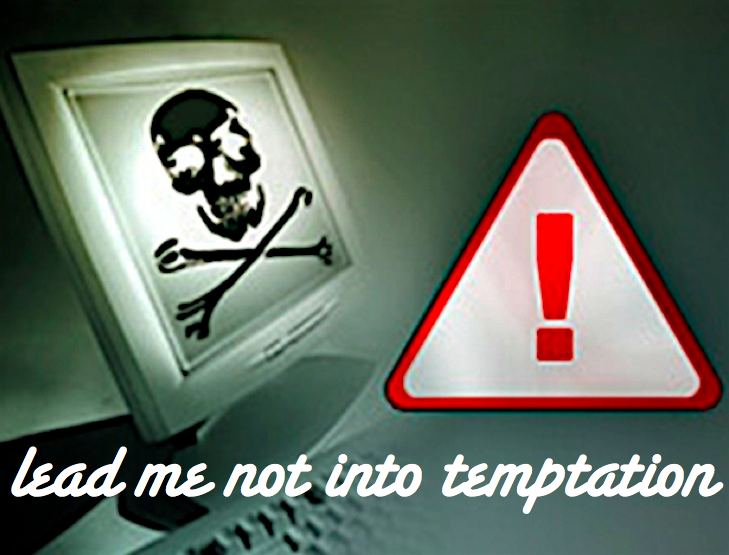
lead me not into temptation

Computer viruses are almost like human viruses. Computer viruses have memories, can be caught anytime or anywhere, they can even be lethal to your computers health by sabotaging your files, programs, security system, and causing your hard drive to crash. Computer viruses have cause a lot of damage, cost lot’s money, and caused a lot of frustration from lost information [Solution = Buy a Mac. I just had to throw that in there!].

Temptations are a lot like computer viruses. As followers of Christ, you have incredible foolproof anti-virus software. 1 Corinthians 10:13 says, ”No temptation has overtaken you that is not common to man. God is faithful, and He will not let you be tempted beyond your ability, but with the temptation He will also provide the way of escape, that you may be able to endure it.” Before we look at how to handle temptations, let’s look at the sources of our temptations.

What is the Source of My Temptation?

The Tempter. Satan in the Scripture is called, the tempter [Matthew 4:3; 1 Thessalonians 3:5]. He is sneaky and sly little serpent. He is like a computer hacker that seeks to cause havoc in your life. He knows when your security system is the weakest. He doesn’t know your wiring quite like God because he is not omniscient. However, he has been around humans for a long time. Therefore, he knows your heart tendencies.[1]

People tend to give into Satan’s lucrative temptations. It is too easy to blame your sin on the serpent. Therefore, when people sin, you will often hear the excuse, “The devil made me do it.” Does the devil really make you do it? Does that devil really cause you to sin? No, you decide to sin. You do not have to choose to sin no matter how enticing it is. “Resist the devil and he will flee from you.” [James 4:7]

The Heart. The Bible describes the heart as your inner man—the real you—where your beliefs affect your behavior. Your heart is your control center. The Bible says there is something seriously wrong with your heart. Your control center has a glitch in its main frame, “The heart is deceitful above all things, and desperately wicked: who can know it?” [Jeremiah 17:9] Your heart is sick and contaminated with a spiritual virus inherited from birth by your first parents in the Garden of Eden.

The World. Your world is warped by sin and temptation. Love for the world begins in the heart. The Bible warns, “Do not love the world or the things in the world. If anyone loves the world, the love of the Father is not in Him.” [1 John 2:15] Worldliness is exalting yourself and excluding God, for the next verse says, “For all that is in the world—the lust of his flesh, the lust of his eyes, and the pride of life—is not of the Father but is of the world.” [1 John 2:16].

The world knows you crave love and affection, fame and fortune, comfort and peace. The world makes it so appetizing you got to have it. And the devil is the world’s best promoter and commercial advertiser because he is the “god of this world.” [2 Corinthians 4:4]. He has corrupted the system by placing a lie in your mind that you are the center of the universe and God is subservient to all your wants and wishes. James 4:4 says contrary, “Whoever therefore wants to be a friend of the world makes himself and enemy of God.”

Do you believe Common Lies Concerning your Sin and Temptations?

It is common to believe lies about the temptations you face. 1 Corinthians 10:13, clears up many lies you will have about daily temptations you come across.

LIE #1: “No one else is going through what I’m going through.” Whatever temptation you face is not unique to you. Someone in human history has faced it too. Your temptation is not a “special case.” Satan would love to convince you that it is special so that you do not seek help because no one will understand. Although, a member of your church might not have walked in the shoes of your temptations more than likely they have walked through similar temptations since “no temptation has overtaken you that is not common to man.” Seek accountability through temptation for a single string by itself is weak, but strings woven together into a cord are strong [1 Corinthians 12].

LIE #2: “God must not care about me, since He caused this temptation.” God is never the cause of temptation [James 1:13-14]. God does not tempt because He is not evil. He allows temptation [Job 1-2] within certain parameters. The Bible is clear; you are tempted by your own desires [James 1]. On the flip side, “God is faithful.” He will help you through temptations, giving you the strength to overcome, and restoring those who fall seeking Him for repentance. Sinners are never beyond God’s ability to restore.

LIE #3: “My temptations are too strong for me to resist.” Temptations do become stronger the more you give in. However, you will never have a temptation too strong you can’t get out because God “will not let you be tempted beyond your ability.” This is a precious promise from God.

Often we interpret this verse to have reference to temptations that test our limits to the extreme. We make the verse say something that is not really there. We use it to create an illustration that the war against Satan and temptation is no problem at all. God, will not cause us to go up against something that we are not eminently qualified to face. And when life throws things at us that are overwhelming, we wonder why our experience doesn’t match our understanding of this verse. It is easy to lose heart. Our struggle is not against flesh and blood, but against powers and forces of darkness [Ephesians 6:12]. He allows us to go up against these enemies, and gives us the resources to engage them and endure through the struggle [Ephesians 6:14-18].

LIE #4: “There is no way out, therefore, I must give in.” God always gives you an escape hatch, “with the temptation He will also provide the way of escape, that you may be able to endure it.” If you do not know a way out, pray. As Jesus taught you to pray, “Lead us not into temptation, but deliver us from evil.” [Matthew 6:13; cf. John 14:14; James 4:2] Often our only escape is to endure through it [cf. James 1:12; 1 Corinthians 6:7]. As A.B. Simpson wrote,

“Temptation exercises our faith and teaches us to pray. It is like a military drill and a taste of battle for a young soldier. It puts us under fire and compels us to exercise our weapons and prove their potency. It shows us the recourse of Christ and preciousness of the promises of God. Every victory gives us new confidence in our victorious leader and new courage for the next onslaught of the foe.”[2]

How Can I Overcome Sin, Temptation, and a Wicked Heart?

First, read, know, and rehearse the Word of God. When Jesus was in the wilderness being tempted by Satan, the devil undermined God’s Word, twisting it, and mixing enough truth to make it sound so tasty [Matthew 4:1-11]. Satan is crafty and cleaver with his use of Scripture. Be ready for the devil by reading the Word of God regularly and daily. Don’t just read it, know it, and memorize it. Filling your memory with God’s Word can help you detect tempting viruses. This is why David wrote, “Your Word I have hidden in my heart that I might not sin against You.” [Psalm 119:11] The Word of God is the sword of the Spirit [Ephesians 6:17]. It is a defensive weapon against the wiles of the devil. Wield it. Train to use it well [1 John 2:5]. Be ready to whip it out for action.

Second, run from sin, Satan, and temptation. There is no sense in sticking around to see if you are strong enough to fight sin on your own. You will lose. Guaranteed. Therefore, run like hell or else hell will have a handle on you. If you hop in a canoe and begin paddling down the Niagara River you will soon find the current moving faster and faster. It is easier to pull out far upstream than just before the falls. There comes a point of no return when you will not have strength in yourself to turn back and fight the current. It is best to not even get into the boat or go near the river. Run.[3]

Third, love your Lord Jesus Christ. When you love Jesus, things of this world and desires of your heart seem shallow compared to the depths of Christ’s riches. Think about the cross of Christ and His love for sinners [1 John 3:16]. James 1:12 says, “Blessed is the man who endures temptation; for he has been proved, he will receive the crown of life which the Lord has promised to those who love Him.”

In conclusion, temptation is something every human faces. Temptation in and of itself is not sin, but it is the first stage towards sinning. Temptation comes at you like blazing arrows at from Satan, the world, and your wicked heart. Your only vaccination to combat the constant nagging attacks of temptation is using the Word of God and loving Jesus Christ. Jesus was tempted, but did not sin [Hebrews 4:15-16]. Therefore, He knows the full weight of temptation because He did not give into it.

Is there hope for me if I have given into temptation and sinned? Yes. Restoration through Christ is possible. You never can go to far from God not to be made right through Christ. Repent of your sin and restore your need of Christ for the strength to endure through temptation. Live victorious because Christ is your sin conquering King. He has crushed your foes upon the cross.

For further reading check out John Owen’s work, Overcoming Sin and Temptation.


[1] 10 Temptation Truths: 1. Satan is a real Enemy; 2. Satan will H.I.T. you (Hungry, Isolated, or Tired); 3. Jesus is your victorious Warrior-King; 4. The Holy Spirit is your power; 5. Biblical truth is your counterpunch; 6. Christ is your identity; 7. Escape is always possible; 8. Satan eventually taps out; 9. Repent whenever you tap out and fight another round; and 10. Life is a battle with many rounds.

[2] A.B. Simpson, Christ and the Bible: The Epistle of James. Christian Publications, Harrisburg, PA. 1886. 9.

your prayers prove you believe God is sovereign

People pray recognizing God’s sovereignty when they pray. When on your knees you know that you are not in control of the results of your prayers. Even if you deny God’s sovereignty and only embrace human responsibility, you still believe God is sovereign when you pray.

Here are three specific prayers followers of Christ pray that prove you believe God is sovereign:

1. You simply pray. Why do you pray? You pray because you either want something that you cannot have in your own strength or want to show your appreciation to God for what you have been given.

2. You give thanks to God for your salvation. You realize deep down that God is entirely responsible for the faith that drew you to your Savior.

3. You pray for the salvation of others. When you pray for the unsaved, you assume that it is God who brings them to faith.

Prayer, therefore proves that you believe God is sovereign. Indeed, God is in control and you pray because you know you are not.

If you want to know more about your prayers, the sovereignty of God, and evangelism read, J.I Packer, Evangelism and the Sovereignty of God. IVP Books, Downers Grove, IL. 1961.

concise biblical theology of work

Happy, Monday! Welcome back to work! With the long work week ahead, I felt it necessary to encourage all your labors. God loves work. Did you know God has set in His Word a theology for work?

  1. Working is a good and basic part of being human in God’s world. Ever since the Garden of Eden, mankind has worked [Genesis 1:28-31].
  2. Since, Genesis 3, work is cursed and frustrating, but it still is good, worthwhile and necessary.
  3. Followers of Christ have a strong motivation to work, not only because of the place of work in creation, but also because work [like any field of life] is a theatre for our service of Christ [Colossians 3:17].
  4. At a deep level, when we work at any job, we work for Christ [Colossians 3:23-24].
  5. As Christians, we do not work in order to gain self-fulfillment or fame or personal kudos. We work not for ourselves but for others, to serve them, not to be a burden to them, and to have something to share [Ephesians 4:28; 1 Timothy 5:8].
  6. Secular work is thus very valuable, worthwhile and important. But like any good thing, it can become an idol. We can start to look at our work for significance and value.
  7. We must remember that only Christ’s work redeems humanity. As useful and helpful as secular work is in our world, it will not save us or build Christ’s kingdom. That only happens through Spirit-backed gospel-centered proclamation.
  8. All work, inside or outside the church is sacred. There are not two classes of Christian workers—those who are really working for God and the rest who minister when they can off their 8-5 job.

Expect for point 8, all other points are adapted from The Trellis and the Vine, Colin Marshall and Tony Payne. Matthias Media, Kingsford, Australia. 2009.137-138.

For more study on redeeming your work check out:

pray for the people of Japan

This morning a massive earthquake 8.9 in magnitude rocked the country Japan. There are still feeling the tremors, beginning to pick through the rubble, and evacuating to higher ground from a giant tsunami that followed the earthquake. A natural disaster of this size will take months and years to recover. Today, homes, families, and real peoples lives were severely changed.

Let’s us lift up prayers to God for the people of Japan. Pray for comfort for the suffering. Pray the glory of God would reign over this island. Pray the gospel would go forth. Pray that the churches, pastors, and Christians in Japan and around the world would rise up to encourage Japan.

More pictures here.

thumb lick thursday [3.10.11]

What is Spiritual Warfare?

Spiritual warfare is not about naming territorial spirits, claiming the ground or binding demons. It is all about the gospel. It is to live a gospel life, to preserve gospel unity and to proclaim gospel truth. It is to do this in the face of a hostile world, a deceptive enemy and our own sinful natures. And it is to pray to a sovereign God for gospel opportunities. Advance comes through godliness, unity, proclamation and prayer. – Timothy Chester, The Message of Prayer. IVP, Downers Grove, IL. 2003. 231.

Westminster Confession Revisited

Have you ever read the Westminster Shorter Catechism? Really read it, closely? Matt Kirkland just started, and man – it’s beautiful. This project is both a study aid, as well as a small way for an creative artist to interact with the text.

The Prodigal God

In Timothy Keller’s sermon on the Prodigal God, he share from Luke 15 how both the rebellious younger brother and religious older brother are both lost, and the father’s character is exceptional abnormal,

“The hearts of the two brothers were the same. Both sons resented their father’s authority and sought ways of getting out from under it. They each wanted to get into a position in which they could tell the father what to do. Each one, in other words, rebelled–but one did so by being very bad and the other by being extremely good. Both were alienated from the father’s heart; both were lost sons. Do you realize, then, what Jesus is teaching? Neither sons loved the father for himself.” – Timothy Keller, The Prodigal God. Dutton, New York, NY. 2008. 36

Religion operates on the principle of “I obey–therefore I am accepted by God.” The basic operating principle of the gospel is “I am accepted by God through the work of Jesus Christ–therefore I obey.” [114]

Volkswagen Commercial: The Force
The spot features a pint-sized Darth Vader who uses the Force when he discovers the all-new 2012 Passat in the driveway. It leverages humor and the unforgettable Star Wars™ score to create an emotional commercial.