
the colossal compromise

A city family bought a ranch out West where they intended to raise cattle. Friends visited and asked if the ranch had a name.  “Well,” said the would-be cattleman, “I wanted to name it the Bar-J. My wife favored Suzy-Q, one son liked the Flying-W, and the other wanted the Lazy-Y. So we’re calling it the J-Q-W-Y Lazy Suzy Flying Bar Ranch.” Their friends asked, “But where are all your cattle?” In disbelief they responded, “None survived the branding.”

Compromise is a part of life. Everyday you are faced with decisions where you have to give up something good for another good. Do I study or do I play soccer? Do I visit this family member or do I visit this old friend? Do I go out to eat for pizza or a hamburger? Do we go on vacation to the beach or the mountains? Compromise is simply changing the question to fit the answer.[1] Sometimes you cannot have both and you must compromise. Sometimes compromising is not this simple. Sometimes compromises can have a great affect on you and others depending on which option you choose. Sometimes people compromise deep-rooted beliefs or sacrifice morals to get what they want.

Why do people compromise their faith? Why do people fall away from their faith? The answer: people give into the colossal compromise. What is the colossal compromise? It is choosing to worship creation or the created thing rather than the Creator [cf. Romans 1:19-23]. Or it’s choosing to worship a man-made god or made-over god in the place of the real God.

Giving God a Makeover [Isaiah 44:6-20]

How do you give God a makeover? As the French philosopher Voltaire said, “God made man in Hus image, and man returned the favor.” In other words, giving God a makeover is to create a god in your image—a god that looks a lot like you. Creating a user-friendly god is not something that is new, since the beginning of creation man has been trying to recreate God to look more like man. Since, God is infinite, man tries to make Him more finite. Man desires a designer deity custom-made to suit out individual needs.

Have you created a god that fits your liking? People tend to cut-and-paste Scripture piecing together a nice and comfy-cozy god that puts up with their messes [by passively overlooking offenses], minds his own business [unlike a pesky parent], approves of their choices [of premarital sex, rebellious friends, and additive tendencies], and gives into their desires [like a genie in a bottle]. Thomas Jefferson made up a god like this with his Bible. He could not believe that Jesus could do supernatural miracles, so he cut out those passages in the Bible and made a version of god to his own liking that fit his own belief. Now known as the Jefferson Bible.

The Bible warns about a time when good religious Christians will compromise their faith to teachers who will tickle their ears and tell them what they want to hear, rather than speaking the truth [1 Timothy 4:1-6]. These false teachers are master sculptures at creating false caricatures of God that morphs from crowd to crowd pleasing particular peoples fancies. Like a chameleon they adapt to your ever-changing desires, helping you give God a makeover. People will go to great length to get the god of their liking [i.e. Isaiah 44:12-17]. Instead of listening to compromisers or sinful-sympathizers, challenge teachers words with the truth of God’s Word in its context—look for yourself and see if it is true.

What is the problem with giving God a makeover? You are not God. Remember, God made you. You cannot make God. Making over God is making an idol of your own god. God does not need a makeover, you do. God is a jealous God and desires no rival god, in fact, He puts your gods up for an old Western-style dual, “I am the first and the last; besides Me there is no god. Who is like Me? Let him proclaim it. Let him declare and set it before Me…Is there a God besides Me? There is no Rock; I know not any.” [Isaiah 4:6-8]

The problem with making over your own god to fit your own image is that your god is nothing [Isaiah 44:9-11]. You become deaf, dumb and blind just like the gods you worship [44:18-20].[2] You become what you worship for ruin or restoration.[3] You always lose out when you try to compromise with sin. It will consume you in the end. Let’s observe this consuming compromise from an illustration within the Bible.

What is your golden calf of compromise? [Exodus 32:1-24]
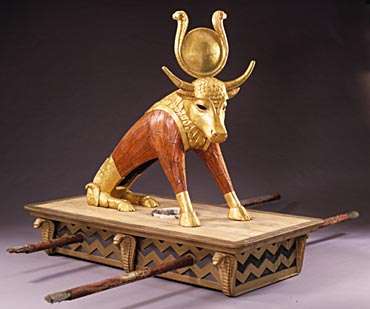
Remember when the children of Israel were wandering in the desert and they created for themselves an idol of gold in the shape of cow? This was a colossal compromise. God commanded His people though Moses in Deuteronomy 5:7, “You shall have no other gods before me.” [cf. Exodus 20:3-4] Once Moses was out of range the people caved into to their created idols. Their idol was big and noticeable. Not all idols are so easy to spot. Here are some golden calves that might go undetected to the human eye:

Idol of people. People can become idols. Moses was idolized by the Israelites. When Moses went up to the mountain their man was gone, and Israel freaked [vs.1-20]. They looked for a loophole, “Moses is a good guy and all, but he’s gone, who knows if he’s coming back? We just can’t live up to his godly standard. He’s so spiritual. Let’s lower the bar a bit. Aaron’s a softy, surely he will cave in.” Thus people look for others who will sympathize with their sinfulness and help them to compromise. Like playing Jenga, stacking more bricks on an already unstable structure doesn’t offer a solution. Sooner or later the tower will crumble, and Christians look no different than their worldly counterparts. If your relationship with God depends upon another person, friend, or pastors that is not a good sign. People are great for growing spiritually, but your key relationship must be Jesus.

Idol of possession. Do you see stuff as an idol? Instead of owning your possessions, your possessions own you. This began in the Garden of Eden, when your first parents wanted to possess God’s wisdom. Believing a lie they had to eat the fruit to be like God. According to your world, possessing money is power. The world’s motto and mantra is, “gotta have it.”  1 Timothy 6:10 says, “For the love of money is the root of all evil.” Like the rich young ruler, money and material possessions can lead to an improper love and a distorted image of God [Mark 10:21; Matthew 6:24].

Idol of provision. Whether it is food, sex or additive tendencies mans desire for peace, comfort, and ease are all provisions that man idolizes [Philippians 3:18; Ecclesiastes 2:10-11]. Advertisers make millions off of products you are led to believe will make you feel better, run faster, climb higher, accomplish quicker, or make your life easier. What you find out moments after getting the thing doesn’t quite meet the hype, and its off to the next thing. Men and women are pleasure junkies, but we seek pleasure in lesser pleasures [1 Timothy 5:6; Galatians 6:7-8].

Idol of pride. Pride prizes you as the idol. In fact, all idolatry comes down to you. Idolatry of pride is Insidious—little by little, over a long period of time you become pompous and self-serving. Pride takes many shapes and comes in many sizes, most of which our culture promotes, “Love yourself. Believe in yourself. Be proud of yourself.” All balloon our heads to the size and shape of planets that we sit enthroned upon as the most-high-galactic-ruler.

Idol of piety. Being religious can be a ginormous idol. Even those who go to church regularly, read the Bible and pray everyday, and know the religious lingo to make great idolaters. Their religious habits become idols colored by stain glass windows. They say to God and others, “Look at me. Look how committed I am.” They are great actors that play the part of the second coming of the messiah. All the while under their mask they are rotten to the core riddled with pride and self-centered piety [cf. Isaiah 29:13].

God does not let idolatry go on unnoticed. He hates idols. What did God call these cattle-loving idol worshipers? [v.9] He said they were a stiff-necked people. Why would God call them stiff-necked? They had become like cow they worshiped. Have you ever noticed how stiff a cow’s neck is? Cows look like people who have seriously thrown their backs out. Worse yet, they were like stupid cows [vs.21-24; cf. Psalm 106:19-21]. They stray away from the herd like ornery calves too cool for corral. Moses asked Aaron, “What did this people do?” And Aaron responded, “You know these people, they are set on evil…I took their gold, threw into the fire, and out came this calf!” Doesn’t sin make us moooo-cho grande morons?

Can a god-compromiser be salvaged? [44:21-28]

A god-compromiser can be salvaged because God is a Redeemer,

“Remember these things, O Jacob, and Israel, for you are My servant; I formed you; you are my servant; O Israel, you will not be forgotten by Me. I have blotted out your transgressions like a cloud and your sins like a mist; return to Me, for I have redeemed you…Thus says the Lord, your Redeemer, who formed you from the womb: ‘I am the Lord, who made all things, who alone stretched out the heavens, who spread out the earth by Myself, who frustrates the signs of liars and makes fools of diviners, who turns wise men back and makes their knowledge foolish.” [Isaiah 44:21-28]

God uncovers our colossal flaws, but covers them up with His redemptive plan. Like a potter can fix a leaky or cracked pot, so can God reshape us into His image [cf. Isaiah 64:8]. He reverses us from reflecting our idols to reflecting His image. It begins with repentance and restoration. Flee idolatry. Idolatry is a matter of the heart. Compromise reveals the commitment of your heart. The antidote is Jesus. Jesus is an idol crusher or killer. If you love Jesus solely you will flee from idolatry [1 Corinthians 14:14-22].

Jesus does not settle for cheap imitations or substitutes of God, He wants you to imitate God whose image you created in [Genesis 1:26-28]. Why settle for a substitute, when you can have a relationship with the real God?


[1] Merrit Malloy, Things I Meant to Say to You When We Were Old

[2] cf. Isaiah 6:9-14, 29:9-16; 32:1-4.

[3] Note: G.K. Beale, We Become What We Worship. IVP, Downers Grove, IL. 2008.

how sin infects

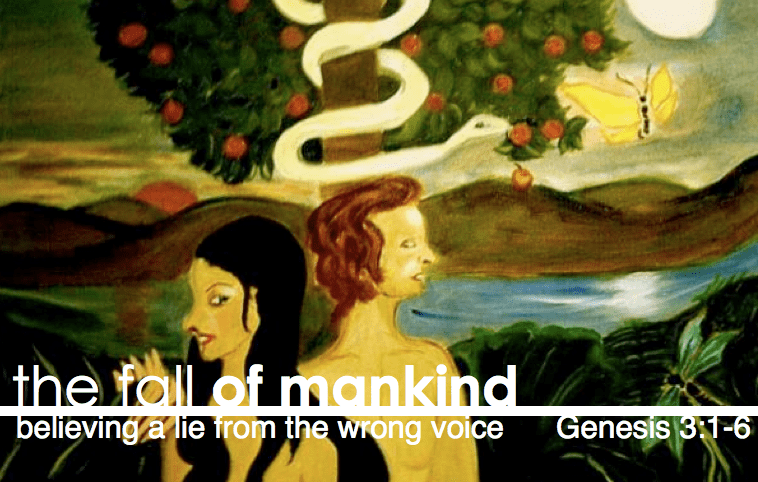
With the entrance of sin into the garden a devastating chain of events happened within relationships and creation. In the Fall of Mankind into sin you learn what went wrong with the world in which you live. Sin is like a contagious infection that spread like a rapid plague through this world infecting the heart of man and the creation God made.

First, sin infects man’s relationship with God. The first man and women were created to know God and fellowship with Him in the Garden of Eden. The garden was a temple where they could, walk, talk and worship God.

Rather than responding to God in dependence their sinfulness craved independence. Like a teenager desiring independence from their parents, such is the state of man ever since the Fall—in a battle to become god in ourselves or create our own gods that were lift up higher than the One True God [Romans 1:21-25]. All gods we create are cheap imitations and lead man into confusion and frustration because they never quite satisfy like a relationship with God.

Second, sin infects affects man’s relationship with one another. Sin has devastated and disintegrated human relationships. I have seen in my short lifetime the devastating effects of sin within relationships. I have seen how bitterness and anger rip apart friendships, how temptations and immorality explode a marriage, how rape and abuse tailspin a women’s trust in a man, how a woman’s words emasculates a man, how fathers neglect their homes, how mothers forsake their babies, how siblings splinter over self-centered rivalries and jealousy, how tyrant bosses inflict their fearful subjects with slavish tactics, how governments sponsor genocide upon people groups. Sin has infected every relationship at every level. Man’s inhumanity to man has been the story of human history.

Third, sin infects all of creation [Genesis 3:17-19; Romans 8:20-22]. Humans are not the only ones affected by the Fall. The material world now resists man and makes life hard for him. Creation groans under the affects of the Fall. Sickness, crime, poverty, injustice, suffering, famine, death—this in not the world God created it to be. The sin of mankind is the source. So what must be done? What did God do? What can man do?

The infection of mankind sin has been passed down from generation to generation. It has permeated every living soul. As discussed, sin infects man’s relationship with God, man’s relationship with fellow man, and all of creation bears the scars of sinfulness. God, like a Great Physician is able to remove the cancerous tumor at a cost with consequences [more on this next week].

believing a lie from the wrong voice

The Garden of Eden was a place of beauty; a place untainted by sin and its crippling, polluting, heartbreaking effects; a place where they could hear and communicate with the voice of God; a place of intimacy with man and of intimacy with almighty God. Everything God created He says is “good.” Adam and Eve’s world was a paradise.

One rule. All Adam and Eve had in the Garden was one rule, “You must not eat from the tree of the knowledge of good and evil, for when you eat of it you will certainly die.” [Genesis 2:17] Like a kid left alone with a cookie jar, our first parents started the first rebel-ution against their Heavenly Father.

If Genesis 1–2 was paradise, then Genesis 3 is paradise lost. Through one foolish and rebellious rule breaking act—eating the fruit God had forbidden—Adam and Eve lost their innocence, dignity, home, and relationship with God, “through one man sin entered into the world, and death through sin, and so death spread to all men, because all sinned.” [Romans 5:12] How did the Fall of Mankind happen?

The voice of God is the only voice Adam and Eve have know, however, a strange voice enters the Garden. The voice comes from a serpent. The serpent is defined later in Scripture as the “one of old who is called the devil and Satan, who deceives the whole world” [Revelation 12:9]. He is a voice filled with lies. Jesus calls him the “the father of lies” [John 8:44]. Satan is sneaky and his first recorded words are deceitful and crafty [3:1]. Satan is no less crafty and deceitful today. How does he deceive with craftiness?

Satan seeks to confuse. His question for Eve was, “Did God actually say?” [3:1]. In other words, “Are you sure that’s what God said?” Eve heard God’s command loud and clear, but the serpent planted doubts in her head. He tries to confuse you too, “Maybe that verse doesn’t really mean what it looks it means. Maybe God doesn’t mean for you to take that literally. Maybe…Maybe…Maybe…” Satan’s strategy is to make you doubt the clear teachings of the Bible.

Satan twists God’s words. Satan puts words in God’s mouth, “Did God actually say, ‘You shall not eat from any tree of the garden’?” Nope. God did not say that! God told Adam and Eve they could eat from any tree of the garden—except the one [2:16–17]. Satan makes God look like a bully. Satan will says things like, “God won’t care if you take just one look. It won’t hurt anyone.” Or, “If it’s fun, why would it be bad?” Remember, God is good and Satan twists.

Satan comforts your conscience despite the consequences. He tries to ease the idea of actual consequences, “You will not surely die!” [3:4]. It is as if Satan is saying, “God’s not going to kill you over a small bite. Eating that apple is not a big deal. Go ahead. You know he will forgive and forget.” He is essentially saying God is a liar, but Jesus says that Satan is the liar [John 8:44]. This is where man needs to make a choice—believe God or not? God speaks the truth, “the wages of sin is death” [Rom. 6:23].

Satan speaks enough truth to make sin sound tasty. There is enough truth in Satan’s statement, “God knows that in the day you eat from it your eyes will be opened, and you will be like God, knowing good and evil.” [3:5]. Satan is making sin sound so freeing. Satan promised Adam and Eve freedom, instead they received guilt [3:7]. Sin’s promises are like a mirage that never appears. They were fooled into thinking they would be like God, instead they found themselves hiding from God [3:8–10]. Satan fell to pride and he knows mankind is just as foolish. Today, we view pride as a virtue and submission to authority as a weakness. The world says, “Do want you want. Do what makes you feel good. Go for it. Live you best life now. Be proud of yourself. Have more self-esteem.” All the while Satan has you heart bait-and-switched on yourself.

It is important to note that God created the smart-mouthed serpent, Satan. What you do not hear in Genesis, but is explained later in the Scripture is that Satan and 1/3 of all the angels of heaven who sided their allegiance with Satan’s ego-trip rebellion against God were cast out of heaven. Satan is not co-equal with God, over God, or in some cosmic battle of good and evil with God. God has no match; He has no equal, nor is there anyone like Him. God has Satan on a tight leash and Satan knows it. Satan, like mankind is a created being and is dependent upon God like all for God’s creation, however he has been around a while and knows the sinful ways of man, which makes him very smart and more experienced in the ways of sin than you. Be careful what voice you listen to. Make sure the voice matches the character of God.

thumb lick thursday [3.2.11]


Jesus’ obedience is mine
Why should I obey God? Jesus did. How can I obey when life is difficult? Follow the example of Jesus. Check out this thoroughly biblical theology of obedience in the life of Jesus from the Gospel of Mark. You will look at obedience differently.

The Pastor as Theologian
Every pastor is called to be a theologian. This may come as a surprise to some pastors, who see theology as an academic discipline taken during seminary rather than as an ongoing and central part of the pastoral calling. Nevertheless, the health of the church depends upon its pastors functioning as faithful theologians — teaching, preaching, defending and applying the great doctrines of the faith.

Are We Afraid of Single Pastors?
Prejudice is like a cockroach: it is able to get into the smallest of places, and it never seems to die. What’s worse is that everyone carries the cockroach of prejudice somewhere inside of them. Prejudice is a pre-conceived notion, an irrational assumption, a judgment against another without any evidence. We believers are called to rise above showing “personal favoritism” (James 2:1), because there is “no partiality with God” (Romans 2:11). Even so, prejudice against single pastors abounds.

dis-Grace

It is, sadly, possible to be un-amazed by the grace of God, to take it for granted, as though it were ours by right or, worse, by merit. Thus, we dis-grace the grace of God. In the process, the melody line of the Christian life is lost. – Sinclair B. Ferguson, By Grace Alone, 101

i love the world

I love lots of things. I love Taco Bell, IKEA, Swedish Fish, Wisconsin, VW’s, my wife, and traveling around the world. I understand that is a random list of things. How can a list of things that are so good be so bad?  Everyday things that are good can be twisted towards evil, in turn, ruling my heart and distracting me from wholehearted worship towards God.

John says, “Do not love the world or the things in the world.” [1 John 2:15] But then in another place John says, “For God so loved the world…” [John 3:16] and Jesus says, “As [God] sent Me into the world, so I have sent [believers] into the world.” [John 17:18] So on one hand, I am not supposed to love the world, but God loves the world. And on the other hand, I am not supposed to love things in the world, but Jesus sends His followers to live in the world. Okay, let’s decipher and answer: What is the world? Should or shouldn’t I love the world? How can I love the world?

What is the world?

I am going to begin with biblical worldview of the world. The gospel message sums up the biblical worldview of the world. The gospel is a belief that the Bible is absolutely true in that God is a loving Creator, and man has sinfully disobeyed God, therefore Jesus graciously and sacrificially died for man that they might respond to Christ’s forgiven and have a means to become right before God. In other words, since God is my Creator I am responsible to Him, but I have rebelled against His authority, therefore I need a Redeemer to restore me to a right relationship with God, so I must respond the gospel of Jesus Christ with wholehearted commitment.

According to the gospel, God created the world and the world God created He created “good”. The “good news” does not begin with Jesus, it begins with the good world created by Jesus. The Bible says that God’s creation worships Him and honors Him as the Creator. However, the sinful fall of man has tainted the world. The Bible says that creation and humanity groan for the day when they will be recreated. The world I am called to love is the world God created, not the sinfully rebellious, self-centered, God-forsaken; independent-spirited that marks worldliness.

How can I love the world without loving the world?

First, love the world by enjoying the world God created. All of creation enjoys and worships God, so must I [Psalm 19:1-4]. God created the world for His glory. The created world does not just sit still in its place, it shouts out constant worship to its Creator. Creation worships a real and tangible Creator whose fingerprint is on that creation [Romans 1:19-20]. Not all created beings acknowledge God as Creator, rather they ignores Him [Romans 1:18] and worship the creature over the Creator [Romans 1:21-25].

God created the world good for you [Genesis 1-2; 1 Timothy 4:4-5; 6:17]. Eden, which means “pleasure” or “delight”, was meant to be that for the humans He created to indwell the garden. The garden was a sanctuary of God’s goodness. How can I practically enjoy the world God created? Take a walk outside and breath in the fresh air. Worship God’s worldwide beauty in how He formed the planet, scattered the stars in the sky, carved the mountains, plains, deserts. Worship God in how He made the human body works from the smallest electron to the beat of the heart to the mysterious brain. Worship the simple ways God cares for you,

“The earth feed us. And clothes us. And shelters us. Think of grass for a moment—possibly the most abundant form of vegetation on the planet, in its myriad varieties in all climates. We eat grass, one it has become meat from grazing animals whose only diet is daily grass. We drink grass, in the form of milk and curds. We wear grass, in clothing made from wool or shoes made from leather. Millions of humans still use grass for effective thatched shelter from sun and rain. Grasses are woven in ropes baskets, and floor coverings. Grass alone provides humans with incalculable benefits and supplies so much of our needs, even before we go on to talk about cultivated grasses that produce the vast variety of nourishing grains we shake into our cereal bowls in the morning.”[1]

God created the world as your home, a temporary home. The world is your temporary residence, not your eternal dwelling place. You are a temporary steward of the home God has given you. The Bible says in this present world you are strangers and aliens to this world [Hebrews 11:13]. You are homeless and God is calling you home. Your time here on earth is worship practice for what is to come afterwards. To a home that He will recreate [Revelation 21:14] not filled with worldliness.

Second, love the world by serving of the world. In Genesis 1:28, God give you a creation mandate: care for creation as a royal steward [cf. Genesis 2:15]. As a dominioneer, you are charged to take care of everything God has created on earth, spread yourselves out in population, and spread the popularity of God’s fame through your obedience. You were made in the image of God to bear His name, to work, to rule, and to serve as God’s steward [Genesis 9:1].

Remember at the end of the Lord of the Rings: The Two Towers, when Sam was giving a speech to Frodo to continue on the journey of carrying the ring of burden?

Frodo: I can’t do this, Sam.

Sam: I know. It’s all wrong. By rights we shouldn’t even be here. But we are. It’s like in the great stories, Mr. Frodo; the ones that really mattered. Full of darkness and danger, they were. And sometimes you didn’t want to know the end… because how could the end be happy? How could the world go back to the way it was, when so much bad had happened? But in the end, it’s only a passing thing, this shadow. Even darkness must pass. A new day will come. And when the sun shines, it will shine out the clearer. Those were the stories that stayed with you, that meant something, even if you were too small to understand why. But I think, Mr. Frodo, I do understand. I know now. Folk in those stories had lots of chances of turning back, only they didn’t. They kept going… because they were holding on to something.

Frodo: What are we holding on to, Sam?

Sam: That there’s some good in this world, Mr. Frodo. And it’s worth fighting for.

What is good in this world? What in this world is worth fighting for? God. God is what this world is about. Your life now matters. Your work, family, sleep, and daily routine all matter. Every square inch of the earth you trod matters. Every second of life is significant. God rules it all. He owns it all. As Abraham Kuyper said, “There is not a square inch in the whole domain of our human existence over which Christ, who is Sovereign over all, does not cry: Mine!”[2] God is supreme over every sphere you enter and roam.

Third, love the world by shining the light to the darkened world. People tend to fight for the spotlight. We want the spot to shine on us. However, the gospel reminds us that we are not the central actors in this divine drama. It is not about me. My fame will fade. The story that matters, which all history focuses upon is: Jesus Christ. He is the Light of the world [John 8:12]. He is the primary light. We are just secondary reflectors of His light, like the sun and the moon.

The best way you can love the world is to be an ambassador of the gospel to a darkened world. Shining His light into it through your words and deeds. The way you live, the way you work, and the way you talk all reflect on the God you love. Your first mandate was to subdue the earth [Genesis 1:28] and your final mandate is to make disciples of all peoples [Matthew 28:19-20]. Both mandates spread the fame of God’s name along the way putting the gospel on display.

In conclusion, Should or shouldn’t I love the world? Yes and no. No, I should not love the things in the world that steal my affection for God and rob me of wholehearted worship. Yes, I should love the world God created. How can I love the world? I can love the world by enjoying God’s creation, ruling over His creation as a servant, and shine His light to the darkened world.


[1] The Mission of God’s People, Christopher J.H. Wright, Zonderzan, Grand Rapids, MI. 2010. Pg. 54

[2] Abraham Kuyper, Sphere Sovereignty. Eerdmans, Grand Rapids, MI. 1988. 488.