O Come, Let Us Adore Him

I don’t know what’s occupying your mind right now. Maybe you’re replaying a chat in the car with your spouse or child. Maybe a situation back home or on your team. Maybe something ahead of you this week. Or maybe an anxious thought. I have the task to enter that space with the lyrics of Psalm 2. If you give me a few minutes, I promise this psalm won’t disappoint.

Psalm 2 is a song that David penned as a coronation anthem for the future kings of Israel. It was a reminder to earthly kings that there exists a heavenly king. It was a prophetic vision of God as the King of kings who rules His kingdom and therein is a hope that God would set his True King in Zion. The context and themes might seem foreign, abstract, or outdated—from another culture or time. Yet may you get a refreshed vision of who God is through this psalm.

Psalm 2 was used throughout church history to soothe God’s anxious people when it seems like the world was out of control. Do you ever feet that things in this world are shaky? Like the world is on the edge of chaos? Like the future of our well-being and our children’s is in the hands of very unstable or untrustworthy leaders? Have you felt like this? If not, that may mean you haven’t scanned the news lately. I can summarize the global headlines for you by saying that things are going particularly well. Why is there never peace? Why are people so angry? When will the war in Gaza and Israel end? These questions are not unique to us today (though you and I certainly feel it)—they are questions felt across history and every generation.

Psalm 2 begins with poignant questions, “Why do the nations rage?” and “Why do kings and rulers counsel against the Lord and His Anointed?” Nations rage because nations seek peace through war. Kings and rulers plot because by playing god they seek peace their way. Psalm 2 sums up all of history to the present day It’s a summary of the entire Bible in a gospel song. Here are my 3 points—We don’t want a King, We are given a King, and We need this King.

1) We don’t want a King (vs.1-3)

It is in our human nature refuse a king. It is in our genetic code, since Eden to push back against authority and resist the kingship of God. At our core, we are repelled by being ruled.
Within every heart there is a war—we want a king and we don’t want a king. When presented with a king we aren’t happy about it because of what it means for us. We want a king we can submit to when he fits or supports our agenda, our vision, or our wants.

Consider the American mindset. As an American, I represent a people who rebelled and rejected the rule of a king (and there were good reasons for that). What my forefathers did was divorce themselves and declare independence from a king that they called “unfit to be the ruler of a free people.” One could make the case that most Americans resist most kinds of authority (like king, president, boss, parent). I’m not anti-American. I love my country. Yet as much as we Americans abhor royalty or ruler, we have an incurable curiosity for the crown…at least from a distance. How many of you watched the coronation of King Charles? 10 million Americans watched the coronation of King Charles while only twice as many Britons tuned in. As Americans, we are fascinated by royalty—it’s wealth, fashion, spectacle, and soap operas.

I could make a case that within all humans is a memory trace to a true, good, and wise king. From birth, we’re raised with heroic legends and folklore like Richard the Lionheart or Arthur and his Knights of the Round Table. We flock to cinema to see the romanticized stories of Disney princesses like Cinderella and Elsa [I have three girls who all played dress up]. We dream of fantastical kingdoms like Middle Earth and Narnia or the real kingdom conquests of the Roman Empire or the British Empire on which the sun never set.

The world’s history of monarchs (even in the Bible) has been overall terrible. We are familiar with the truism coined by Lord Acton, “absolute power corrupts absolutely.” Today in our modern world, since the Enlightenment, most monarchies have toppled and become democracies (or voices of the people). Royalty seems to be a thing of the past. Yet one could argue that today there is a new kind of royalty that goes by other names—celebrities, sports stars, billionaires, politicians, and influencers (rulers of public opinion). We adore them, we give them riches, we treat them as kings, and we secretly fantasize about their fame.

As the story goes, nobody wants a king, therefore, everybody wants to be king. Not much has changed about us. It has been this way since the Garden. After God created the world, he said to mankind, “Be fruitful and multiply and fill the earth and subdue it, and have dominion over the earth.” (Genesis 1:28) God created us to be dominioneers, but the thought that God still has his hand in things doesn’t sit well with us. Like the kings and rulers of Psalm 2:3, we think of God’s rule as a “chain” or “restraint”. We see God as a chain-maker, not a chain breaker. He feels like an unnecessary weight or choking burden.

I can think to myself, “I don’t want God’s cords wrapped around my life. Get it off me!” I feel owned and used. I feel like God is meddling and toying with me. I am repulsed by the notion that I am someone’s possession, certainly not God’s (v.8). In my being, I buck against this. And God can sometimes give me exactly what I want, like Westley from the Princess Bride who always said to Princess Buttercup, “As you wish,” but what he meant by that was “I love you.”

In rebelling against God, we believe we are creating freedom and peace for ourselves. Yet when we remove ourselves out from under God’s power, protection, and peace, the opposite is actually true. It becomes a hell. George MacDonald, a mentor of C.S. Lewis, had said, “The central conviction of hell is, I AM MY OWN. This will create a living hell for you.” This mindset dominates most humans’ worldviews. And we wonder why the nations rage and peoples plot.

There is war within me. I know my mutinous heart and the misery it brings me. Deep down, I don’t like being told what to do and I rebel. And there, I do the same thing as the people who plot against the Lord’s anointed. I want all the blessings and benefits of the kingdom, but I don’t want to listen to the instruction of the King. When Jesus says love your neighbor as yourself it can feel to me like a chain. Whose my neighbor, I ask? Jesus says your worst one—your enemy. That seems a bit over the top Jesus! Then Jesus says I’m to live pure and holy. And that feels so restrictive. Or Jesus says to be generous and give to everyone who asks of you. Come on? Really? I can’t do that. Maybe when I have a little extra or they pay me back. But then Jesus says forgive as you’ve been forgiven. What!? That surely doesn’t apply to me. The bitterness I have is the only power I can hold onto. I don’t think that God has in mind the level of hurt that I have endured. Except, yes. He does. He wants my freedom and yours.

I still rage against God like this every time I sin. I am in my mid-40’s and have walked with Jesus for 3 decades. And I am alarmed that I still sin so frequently. Every time I do I am making a trade. I say to God, my way looks more free—more joyful. I am a better manager of my human flourishing than you. My path looks more promising and productive. What I don’t realize, in that moment, is that I am raging and plotting against the Anointed.

Charles Spurgeon said, “To a graceless neck, the yoke of Christ is intolerable, but to the saved sinner, it is easy and light. We may judge ourselves by this—Do we love that yoke or do we wish to cast it from us?” To be honest, I often want to cast off the lightest of yokes in exchange for something that looks lighter, but more often then not ends up being a bigger burden too heavy for me to carry. Listen, I have never once regretted obeying God…and yet I still rage.

You and I are called to fight back against the rage and plots by submitting ourselves to the Good King who says, “Come to me, all who labor and are heavy laden, and I will give you rest. Take my yoke upon you, and learn from me, for I am gentle and lowly in heart, and you will find rest for your souls. For my yoke is easy, and my burden is light.” (Matthew 1:28-30)

2) We are given a King (vs.4-6)

How does God respond to the rebel heart? “He who sits in the heavens laughs” (v.4). That’s an interesting image. What does it mean that God laughs? Like an adult chuckling at the feeble effort of a kid. Who scrunch their faces, fold their arms, stomp around in angst, and say boldly, “No!” Sometimes as a parent, it’s hard not to laugh. We laugh and say, “Aw. How cute. Jimmy is pretending to be a totalitarian dictator. Sorry son, but resistance is useless.”

According to Psychology Today, laughter is “one of the distinguishing features of human beings” and maybe “the most contagious of all emotional experiences”—yet “little is known about the mechanisms behind it.” Laughter is social. It’s an effort to communicate to others.

We get laughter from God. And when he laughs, he does so for our sake, to communicate to us. He laughs to give off signals—that are horrible to his enemies and wonderful to his friends. As God laughs his enemies are terrified and cower in fear. But his friends, rise in comfort and he quiets their fears. God’s laughter warns those who commit cosmic treason of their impending doom. But to his friends, his laughter reminds them that the best is yet to come.

God laughs because his plan was already coronated as He says, “I have set my King on Zion, my holy hill.” (v.6) There is no need to crown him as he has already been crowned before the world was created. Whether you acknowledge it or not, you have been given a king. You’ve always had a King. His name is Jesus (Matthew 3:17). He is a good, gracious, gentle, humble, and kind King. When the time was right, God sent his Son to earth—to live among us. He had no beauty or earthly majesty (Isaiah 53:2). He was accepted and then rejected as king. He was plotted against by the kings and rulers of the day. He was mocked. He was clothed in weakness and shame—dressed in a royal robe and twisted a crown of thorns on his head. He was despised and the people pulled a mutiny and sought to unseat Jesus. They marched him to a hill outside the city and hung him on a criminal’s cross. They slapped a little sign above his head that read, “Here hangs the king of the Jews.” (Mark 15:17) They laughed. And Psalm 2 was being fulfilled. But God would have the last laugh. As the Son of God breathed his last breath the earth shook. Nothing would defeat the Son of Man who came to seek and save the lost. Three days later, Jesus rose from the dead as a conquering king, and sits to this day at the righthand of the throne of God readying the day when he will come back and establish his eternal kingdom and call us home.

As Spurgeon put it so poetically, “God’s anointed is appointed and shall not be disappointed!” When you are distressed by the chaos of the world. Look to the holy hill. When you feel defeated by the rebellion in your own heart. Look to the holy hill. When you are tired and things seem outside of your control. Look to the holy hill. When you are weary of your own ability to do the things you know you ought not to do and fail to do the things you ought to do. Look! On the hill is Jesus who loves you. Who defeated, even your rebellion (and love you still). Who is currently standing on your behalf. And will never ever be moved.

3) We need this King (vs.7-9)

You need this King to conquer your enemies. The King is not the enemy (as is common for me to think); he is the enemy crusher. When kings of old were crowned, they were given a scepter (authority) and orb (wisdom). Then the names of the enemies of the kingdom were written on shards of pottery and placed at the king’s feet. The king in symbolism would crush the shards to dust and the people would cheer.

This is what happens to the enemies of God’s people. Jesus is not intimidated by your enemies. They are already defeated. Compared to Christ, your enemies are fragile and impermanent like a shard of pottery. What an image of our Lord! And if that’s your King, what are you so afraid of? This picture speaks to the certainty of what Christ has done, who Christ is, and what he is doing in the world. Don’t declaw the lion of Judah. With the great multitude we can say, “Hallelujah! For the Lord our God the Almighty reigns…On his robe and on his thigh he has a name written, King of kings and Lord of lords.” (Rev. 19:6,16) When I hear Jesus like this, it right-sized my image of him, his power, and his authority. It also right-sizes my enemies and my rebel heart. “To be intimated by the world is as spiritually fatal as being overly attracted to it.” Tim Keller

You need this King for true peace and joy. His yoke is your freedom. Jesus came to save you from you. Rather than you owning you, God considers you his treasured possession. I bring good news of great joy… for all people…the Savior of the world, from the royal line of David, the promised Messiah, the prince of peace, wonderful counselor, and Mighty God—has come for you! I don’t know what the next year holds for you, your family, your ministry, or your work in Chad. It will likely be difficult. I promise Jesus has the nations of the earth as his possession. Do not fear!

In the final stanza of Psalm 2, King David gives us a powerful application (vs.10-12). That is comes from David himself is significant. Remember, he is the king, yet he understands who is the True King. He acknowledges that God is his +1. He decrees these final words to all the kings and rulers of the earth—all peoples—you and me. He begins by saying, “O”. That’s a hard word to translate because it’s from the gut (it comes out of the mouth, down the vocal cords, into the diaphragm, and deep from the gut). Say it. Feel it? David begs for a response…

3 Responses:
1) “Serve the LORD with fear,” Give yourself to the One—Most High King—who rules over all.
2) “and celebrate his rule with trembling,” Laugh out loud with comfort and peace…because in Christ, you’re the freest of all people.
3) “Kiss his son…” This is an ancient sign of reverence…bowing low…bending the knee…of tender and intimate obedience.

1 Result: “Blessed are those who take refuge in him.” To think this King is also … a mighty fortress…a strong tower…a hiding place…and a safe refuge.

Listen, brothers and sisters, there is no refuge from the King. There is refuge in the King.

In the early church, the world was raging against Jesus’ servants. Kings and rulers were counseling together against the Lord’s anointed. His people felt threatened. Their faith was being challenged. Yet let’s take comfort and strength in how they took refuge in the God-King,

“When [Peter and John] were released, they went to their friends and reported what the chief priests and the elders had said to them. And when they heard it, they lifted their voices together to God and said,

“Sovereign Lord, who made the heaven and the earth and the sea and everything in them, who through the mouth of our father David, your servant, said by the Holy Spirit,

“‘Why do the nations rage,
and the peoples plot in vain?
The kings of the earth set themselves,
and the rulers were gathered together,
against the Lord and against his Anointed’—

for truly in this city there were gathered together against your holy servant Jesus, whom you anointed, both Herod and Pontius Pilate, along with the Gentiles and the peoples of Israel, to do whatever your hand and your plan had predestined to take place. And now, Lord, look upon their threats and grant to your servants to continue to speak your word with all boldness, while you stretch out your hand to heal, and signs and wonders are performed through the name of your holy servant Jesus.”

And when they had prayed, the place in which they were gathered together was shaken, and they were all filled with the Holy Spirit and continued to speak the word of God with boldness.”

Acts 4:23-31

As come to the Lord and take refuge in Him, may he vanquish your anxious thoughts and give you courage and boldness.

Sing: O Come let us adore him (x3), Christ the Lord. / For He alone is worthy (x3), Christ the Lord. / We give him all the glory (x3), Christ the Lord.

I don’t feel relevant

I was in a conversation with a middle-aged lay youth leader last week. He has been serving in his church with his wife for years. He has teenagers himself. He really cares for the teenagers and goes out of his way to love them and connect them with Christ, but he still appeared a bit discouraged that he himself was not connecting with them. Moments later he said, “I am too old to be a youth leader. I do not feel relevant.”

What is relevant?

Relevant is a word that is often overused and hard to define. It’s a buzz word. It is a word that gets tossed in the air but quickly evaporates into cultural jargon. Relevant supposedly has connotations towards how one generation relates to another, but is seemingly out of style or touch.

I like Webster’s definition of the word relevant, “closely connected or appropriate to the matter at hand.” Could older Christians be more relevant according to this definition than they get credit? I want to encourage all the older people serving in churches among teens, children’s Sunday school classes, young adults, and the man I met this week struggling to be relevant to today’s generation.

Am I relevant?

You might be old, but your faith is still refreshingly youthful. I think it is great when parents of teens serve their own teens in their church. My favorite servants as a youth leader were the old ladies in the church that would pray for and write cards to the teenagers. They loved it and the teens loved getting real mail. Faith does not have a sell-by-date expiration. Nothing stirs the faith of a church more than multi-generational ministry.

Youth are the same today as they were when you were a youth. I would also add, youth are the same today as when Jesus was a youth. Teens are sinners. When you were a teen you were a sinner too. Each generation of young people have the same temptations just disguised in new clothing: pride, lust, and issues with authority. Even though a decade or generation may have passed since you were a teen, as a sinner you have something in common, and together you can help each other look to Christ to fight your temptations.

The struggle to be relevant is one of the great lie of our ministry-age. To think about the amount of ministry that has been missed or messed up because elder believers did not feel relevant enough to minister to younger believers. This is a tragedy. Satan’s strategy is to deceive and the church has bit into the fruit of the tree of relevance. Young and old need to stop believing the lie that they are not relevant enough.

The gospel message is always relevant. It has been for 2000 years and it will be for 2000 more. It never goes out of date. Sinners need a Savior. Stick to this truth. Stop trying to be so relevant. Teach about Jesus and seek to live like Jesus. What could be more appropriate or connected to the matter at hand than the good news of Jesus?

Now I might sound like an old codger myself, but I’m an advocate of being relevant and change for the sake of change. However, while being relevant I do not want to forsake the gospel or compromise biblical truth. I am encouraged that for more than two millennia Jesus and His message has been relevant enough to transform lives and communities. It will for two millennia more! In my opinion, working in youth ministry the past 8-years, being relevant has less to do with you and more to do with your message. I’ll stick with Jesus.

build it and they will come

Build it and they will come: Changing the way we do gospel ministry

Changing the way we do ministry towards a gospel-centered focus is not easy. It is a paradigm shift from the cry of our culture. Or cultural proverb says, “Build it and they will come.” There is some truth to this Field of Dreams proverb. However, it depends what you build on that could affect whether it will last.

We are not about building the greatest ministry that makes the cover of Christianity Today. We are not about growing huge numbers, having the coolest coffee-shop-like atmosphere, blasting the craziest and latest worship tunes, or any other low-level purpose. We have a higher purpose: we build on the foundation of Christ [1 Corinthians 3:9-17]. All other foundations mentioned above–if not grounded in the bedrock of Christ–will blow over in the gale force storms of culture or sink into the quicksand of lustful lures and low-level goals. Christ is our goal and the gospel is absolutely central to a surviving and thriving ministry.

Our number one job and joy as ministry leaders is gospel centered discipleship [Acts 28:31]. Between Acts 1 and 28 the church of Christ grew not by a Christian circus rolling through town, but by constant and relentless followers proclaiming the core gospel truths about Christ. Our student leadership has been growing in their understanding of this truth this year as we have implemented changes to meet this goal. We have seen first hand how difficult it is to cultivate a Christ-centered culture of followership. The past few months, I have observed some amazing blessings through the diligence and sacrifices of our student leaders:

Followership is contagious reformation to Christ.

Our students are recognizing and excited that their leaders really care about their walk with God and want to help them apply God’s Truth [Philippians 2:12-13]. Followership is fulfilling your role as a priest under the Priesthood of Christ [1 Peter 2:4-5, 9-10]. Every believer is a priest of Christ who is leading others to Christ worshiping and sacrificing for the sake of the glory of Christ. Like Luther, we are reformers who desire to point people to the person and work of Christ.

Followership is active participation in the Gospel.

Our student leaders are less passive and more active in their faith knowing that they are expected to dig deeper into the lives of one another. By its very nature the gospel is the saving sacrifice of Jesus’ person and work. The gospel impacts every aspect of our life. The gospel never sleeps and is actively involved in the process of conforming us to the image of Christ [Philippians 1:5-11]. Followers are participates of Christ’s gospel to the world and specifically to those they are ministering.

Followership is the incarnational.

Our student leaders are coming along side our students encouraging them to follow Christ. By doing this they are resembling the incarnated Christ to those they are discipling. They struggle along side the students striving to live for Christ even though they see themselves as chief sinners [Philippians 2:4-5] spreading the grace of Christ with compassion.

In conclusion, our number one job and joy as ministry leaders is gospel centered discipleship [Acts 28:31]. Changing the culture of our youth ministry to model this goal is a process that will not happen over night, in a semester or even in a school year, it will be an ever-changing process. Followership is a life-long process followers encouraging others to follow Christ too. Building a ministry that will last is built on the gospel of Christ. He has built it, all we need to do is come to Him.

discipleship defined

What is discipleship? And what does it look like? This is a good question. There are about as many favors of definitions for discipleship as there are suckers at the candy store. To be verbosely pithy my response to what discipleship is NOT is that discipleship is followership. As Paul in his simple yet divinely given wisdom stated, “Follow me as I follow Christ.” [1 Corinthians 11:1]

To illustrate the point that there are many great views of discipleship I have attached an essay that shows the views of volunteer leaders in our student ministry [Discipleship Defined]. Each of them slugged a homerun: discipleship is following Christ and helping others follow Christ too. Those we seek to disciple have different needs, with different situations and different means to become discipled. This causes discipleship to be hard work, but the rewards are literally out of this world. Discipleship is active, alive, and fluid, but supremely rooted in the work of Christ.

Youth Training in Congo & the Globe

DSC02260

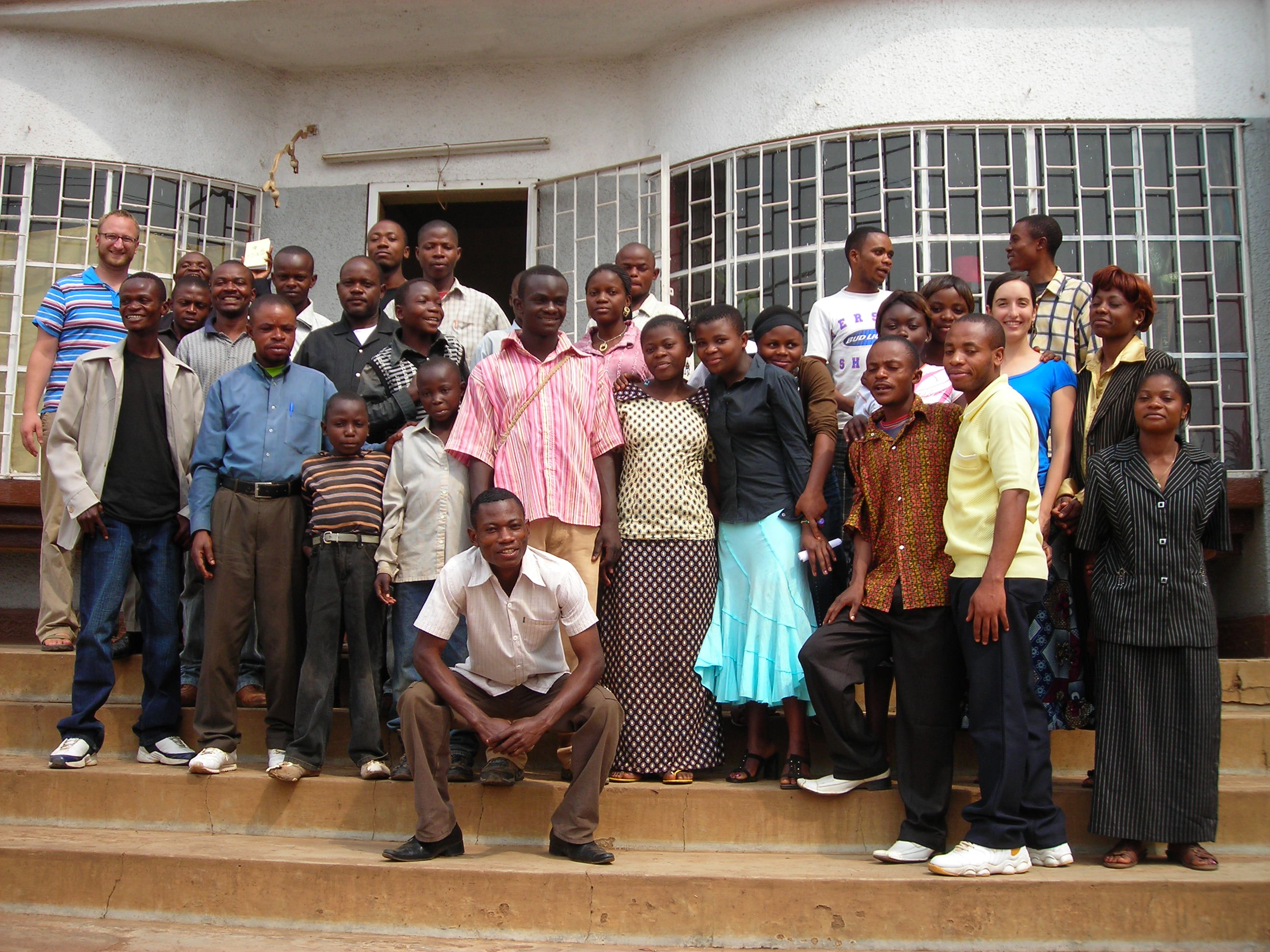
Sarah and I traveled to the Congo this summer where we were involved in running youth training seminars and connecting with church and youth leaders to try and get them thinking about youth issues, Christian camping and developing youth ministry training. This is my first visit to the Congo (my wife grew up there) and we are trying to work out ways in which we can encourage training for youth leaders in a country where it doesn’t really exist.

The Congo is not unusual—in many countries in Africa the idea of a formalized or structured youth leaders training doesn’t exist. Most youth leaders just do what they have seen done by others and they follow the patterns and styles of what they know. What this means is that youth ministry in many countries is stuck and young people are drifting away from the church because youth ministry is irrelevant to them.

Some of the issues youth leaders are facing in the majority world (like Congo) are:

  • People are not seen as important until they reach age 30
  • Young people are not recognized as a separate culture
  • Churches and Bible colleges do not have the material or people to teach and equip youth leaders and pastors
  • Lack of material, equipment and resources for youth ministries
  • Lack of support and recognition of the importance of youth ministry by pastors and church leaders
  • Youth culture is functioning in the year 2000 while most churches are still functioning in a 1960’s model
  • Youth leaders know that youth ministry in churches is not cutting it but they often lack the training, skills and freedom from church leaders to change the situation
  • Youth leaders do not have people to mentor and train them in doing youth ministry and so they can easily get lost and discouraged in what they are trying to do.

Sarah and I are passionate about helping churches in Africa uncover the realities of youth ministry and to be able to connect into the spiritual and practical needs of young people so that the church of Jesus Christ may become so real and meaningful in their lives. I believe that this loss of meaningful youth ministry in churches in the majority world is starting to cause churches in these countries to lose their place and effectiveness in society.

There was such a large desire by many in the Congo who want to reach out to young people and to provide relevant youth ministry to young people inside and outside the church community. The thing that they lack is good training on understanding youth culture and leading youth ministry.

In the Congo there is no denomination or organization that provides consistent youth leadership training. Occasionally a group might run a seminar but there is nothing consistent where youth leaders can start to really grasp the basics of leading a youth ministry. The Congo is not alone in Africa—I am not aware of many countries in Africa where there is structured training in youth ministry. Many of the youth leaders we came in contact with around Congo are looking for ways in which they can even learn the basics of youth ministry. They can see the possibility of what could be, but for many of them this reality is far away because they do not have a way to learn and grow in developing and running effective youth ministry.

I came away from Congo even more committed to work out ways in which structured youth ministry training can be provided in countries where it doesn’t exist, countries from the majority world, countries where they do not have the same access to resources, countries where you do not have a place in society until you are thirty years old. I am also more fired up to continue leading our youth here in the USA to become better disciples of Jesus Christ.

a congo camp

August 14-15 A Congo Camp. For two days we are holding a half-day retreat for youth. We have about 20 youth and 20 adult leaders that are attending. This gives the leaders attending our seminars a practical application to what they are learning. Each of the adult leaders has a responsibility: teaching, leading worship, prayer, administrating, cooking, serving, scheduling, leading activities and more. The leaders did an amazing job and took ownership of their responsibilities. On a side note they all love the game HUWA. It is all they want to play!!

We met with a group of the leaders from the seminar that now have a vision to start a camp that travels across the country to churches that could use a camp/retreat as a means to reaching out or growing their youth. It is great to see their passion for God and youth. We walked through the process of beginning such an organization (theological structure, government legalization, and more). My experiences with the ReFUEL Retreats, Shakamak Bible Camp and Checkpoint Bible Camp have proved to be valuable.

seminars

August 11-13 The seminars begin. And we are off… So we had about 49 people the first day. Many more than we expected. We had a wonderful discussion about the biblical basis of youth ministry and the ground level instructions on how to structure a camp/retreat for youth. It was so wonderful to see such faithful servants passionate about the youth of their country and desiring to learn more about the Truth. Their faith inspires me, their heart of prayer convicts their desire and me for God moves me.

On Wednesday we started our morning with some discouraging news. One of the leaders was given word on the way to the seminar that the soldiers down country killed his brother. He and a few others went to help him prepare shelter for his family coming in from out of town. We prayed for him at the seminar. This is painfully common in the Congo. It set a somber mood for our seminar this day. After each session in the workshop we allow time for questions. They have many good questions. I don’t always have the answers. So I am studying the Bible answer give them adequate answers.

Thursday was our final day of the seminar and we prepared for our retreat for tomorrow and Saturday. Sarah and I are confident that they are going to do a great job. Each of the leaders have a specific role and ownership of the retreat. My translator Rafael has been excellent!! Praise the Lord for all your prayers!

dust


August 10 Dust. There is dust everywhere here in Bukavu. Since it is dry season the the vehicles and people walking about stirs up clouds of red clay dust. Sarah and I walked through the city markets and streets of Bukavu. We are full of dust. People were selling anything from bait fish to sandals, avacados to palm nuts, leaks to cell phones.

We visited a hospital and visited with Dr. George. He walks with a limp and specializes in pediatics. For the Congo the hospital seemed large and organized because it used to be a private Catholic hospital. We also met Dr. Gila, a Messianic Jew, who works with Moriah Africa an organization that networks churches and hospitals with helpful resources. For lunch I tried some local sombe (rice, greens, palm oil and a side of sardines) and a bottle of Coke. It was satisfying and filling.

We set up a few meetings today with youth leaders from the area. Many of them are headed to our seminars this week. The meetings are times we can discuss the week in the seminars in advance and answer any questions they might have. We were expecting about 15-20 leaders, but it now looks like we will have over 40. This will prove to be logistically challenging, but God has show His faithful. At one meeting we met a pastor by the name of Leonard and his son. Just months ago his village just 3 hours away was burned to the ground, except for their church because it was made of brick. The soldiers told him to leave so he has moved to Bukavu to look for work. He has 6 children and a wife who is expecting. He asked if we would take in some of his children. How would you respond to this proposition. We prayed together that he would trust God to supply His needs for our God is faithful.

a prayer of thanks for the DR

Early Sunday morning we got back into town. We are tired.

I didn’t want to leave the ministry in the Dominican Republic. Personally, I wanted to adopt at least 5 kids from the villages or orphanages we visited. I am so proud of our team for the spiritual initiative and giftedness they pour out on this mission. The fruit was immediate in their lives and ours. God is glorified. May we repeat more of the same here on our home turf.

Father,

thank You for the opportunity to  glorify Your name in the Dominican Republic.

thank You protect us and keep us safe as we flew, during Kiko’s bus driving, and walking around the various villages.

thank You for the strength empowered within us as we did new things in a strange place.

thank You for opening up the floodgates for you glory to shine through us.

thank You for using us as lights of your Sons grace.

thank You for Your love and allowing us to show Your love to the unlovable.

thank You for bring our team together as One.

thank You for using our hands to touch minister to Your orphans, and allowing Your love flow through us.

thank You for spiritual nourishment and immediate fruit the people we feed, clothed and played with in the sugar cane villages.

thank You for the spiritual healing those we sought to nurse in the medical clinic.

thank You for the numerous souls redeemed through our drama “Tired” and Your gospel message.

thank You for being the center of our worship.

thank You for humbling my prideful heart from the joyful poverty of the people we met.

thank You for my new friend Kiko [thank You for rescuing him and giving him a passionate heart]

thank You for creating a beautiful island with beautiful people.

Amen.