Success

WHAT GOD ASKS OF US AND MAKES OF US

There came an insidious temptation—a striving for success. Mark found himself subtly crafting his prayer letters to highlight the few, dramatic breakthroughs, downplaying the years of quiet, unseen labor. He shared photos of large gatherings, even if only a handful were genuinely interested in the gospel. He found himself subtly comparing his “fruit” to other missionaries, feeling a pang of pride when he had a “good story” and a sense of guilt when he didn’t. He wanted his supporters and colleagues to be impressed, to see him as “successful,” the one who was truly “making a difference.” And for a time, it worked. The numbers looked good on paper, the photos told a convincing story. But the focus subtly shifted from God being glorified through his faithfulness to Mark being praised through his results. He started to believe that if he could just show enough “success,” the gnawing pressure would finally ease, and he could finally feel approved, productive… and perhaps, even at peace. But that peace never came.

There can be a temptation to prove our work, embellish the stories, highlight “wins” or numbers, and show more than we are doing. We can minimize the often long, slow, and seemingly unproductive periods – the unglamorous, messy realities where true growth often happens. This can lead to zeroing in on exciting stories rather than the grinding, unglamorous path of faithfulness and obedience that God asks of us, which, paradoxically, leads to His kind of fruitfulness within the mess.

BIBLICAL REFLECTION ON SUCCESS

“Success” can be a profound source of motivation or, if misunderstood, deep disillusionment. The world’s metrics often clash with God’s. A biblical theology of success can help pioneers maintain joy, perseverance, and a healthy perspective amid the demands of cross-cultural ministry.

God defines and empowers success. From a biblical perspective, success is ultimately tied to God’s faithfulness and promises, not solely human effort. (Deuteronomy 7:9; Psalm 36:5; 1 Corinthians 1:9) When God gives a command and a mission, His definition of success involves faithfulness and obedience to the task according to His will and by His enablement. (Isaiah 55:11; Philippians 1:6; John 15:5)

God asks of us faithfulness and obedience. While God accomplishes the outcome, our role is clear: to be faithful and obedient. Our “success” in God’s eyes is primarily measured by our diligent, obedient response to His commands and our faithful stewardship of the gifts and opportunities He provides, regardless of the visible “results.” (Matthew 25:21; 1 Corinthians 4:2; Luke 16:10)

God has a different metric for success. Often the world measures by visible results, numbers (disciples, churches), financial gain, power, recognition, influence, comfort, or rapid growth. Failure is seen as the absence of these. The pioneer views success primarily by faithfulness to God’s call, obedience to His commands, and conformity to Christ’s character, irrespective of immediate or visible outcomes. God’s metric is internal (heart), not external (appearance or worldly status). How often do we forget this in our own lives, caught in the world’s endless tallying? Biblical “success” can even involve apparent “failure” or death, leading to greater long-term fruit. (1 Samuel 16:7; Galatians 1:10; John 12:24)

God makes us fruitful. God gives the capacity for fruitfulness by creating the potential for life, growth, and productivity within creation and by empowering people to fulfill His purposes. This includes the physical world, where God designed land to produce plants, animals to multiply, and humanity to be fruitful. Furthermore, God’s provision extends to spiritual fruitfulness, enabling believers to live out their faith and make an impact on the world and His kingdom. (Genesis 1:28; 2:15-20; Deuteronomy 28:1-4; John 15:5, 16; Galatians 5:22-23; Psalm 1:1-3)

Abiding is the source of fruitfulness: Jesus explicitly states, “I am the vine; you are the branches. If you remain in me and I in you, you will bear much fruit; apart from me you can do nothing” (John 15:5). True fruitfulness is not something we conjure up through our own effort or genius, but it is the overflow of Christ’s life flowing through us as we remain intimately connected to Him.

Producing fruit of character: The first and most fundamental kind of fruit is the transformation of our inner character to be more like Christ. Galatians 5:22-23 lists the “fruit of the Spirit”: love, joy, peace, patience, kindness, goodness, faithfulness, gentleness, and self-control. This character fruit is evidence of God’s work in us.
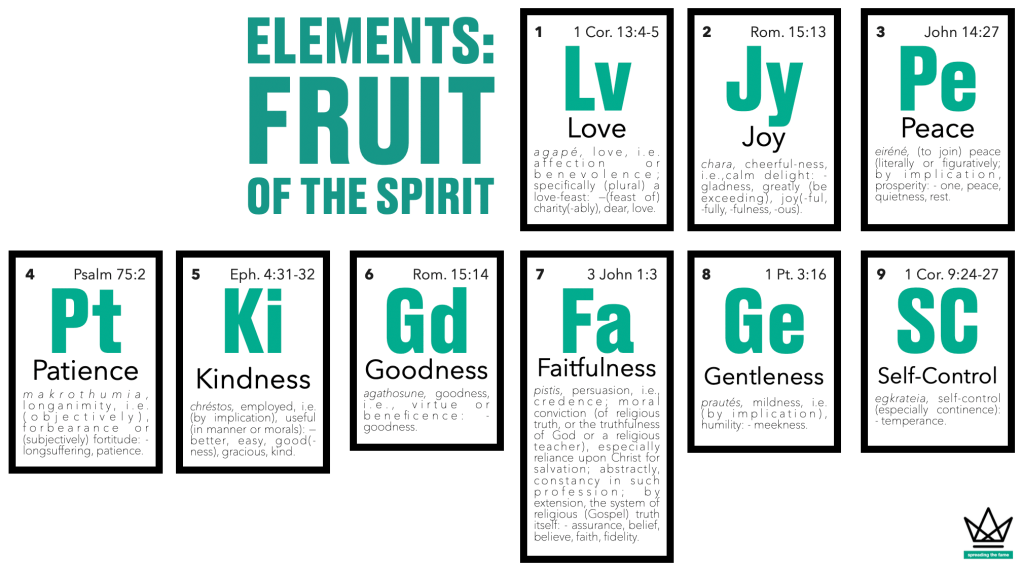
Growing in the fruit of righteousness: As our character is transformed, it naturally expresses itself in actions that honor God and bless others. These are “good works” that God has prepared in advance for us to do (Ephesians 2:10). This includes acts of service, compassion, and justice.

Fruit of the harvest: As we abide in Christ and live out His character, the Holy Spirit works through us to draw others to Him, leading to disciples and the formation of new communities of faith (John 4:35-36, Romans 1:13). This is the harvest fruit that pioneers long to see. Ultimately, all fruitfulness redounds to the glory of God. Jesus said, “This is to my Father’s glory, that you bear much fruit, showing yourselves to be my disciples” (John 15:8). Our fruitfulness points to His power and goodness, not our own.

God redeems failure. God’s view of “failure” is profoundly redemptive and gracious, not condemning. When we stumble, when our plans crumble, God doesn’t abandon us. Instead, He steps into that very space, saying ‘But God…’ He doesn’t see setbacks as final defeats but as opportunities for growth, learning, and verifying His power. God’s response to our shortcomings and sins is always grace and forgiveness when we repent. He doesn’t hold our failures against us when we are in Christ. (Romans 8:1; 1 John 1:9) Failures that aren’t sinful often serve as powerful teachers, revealing our weaknesses, increasing our dependence on God, and refining our character. (Romans 8:28; 2 Corinthians 12:9-10; John 21)

What other Scriptures or biblical aspects come to mind when you consider “success”? Take a few moments to look up 1-2 of these verses and journal what the Lord highlights for you.

“You did not choose me, but I chose you and appointed you so that you might go and bear fruit—fruit that will last.” — John 15:16

THE IMPORTANCE OF BEING FAITHFUL, BEING OBEDIENT, AND BEARING FRUIT

While many will define success by visible results, performance, and numbers, God defines success by inward faithfulness, obedience, and fruitfulness, which cannot be seen as clearly as numbers of disciples, churches planted, or movements launched. Yet what may be invisible to human eyes pleases the Lord, and that’s what matters most. To be successful, then, we must be faithful to Him, be obedient to Him, and bear His fruit.

Faithfulness as a Foundation:

Commitment to God’s Word: Faithfulness begins with a deep commitment to God’s Word and His revealed will. Pioneer missionaries must be grounded in Scripture, seek to understand God’s commands, and intently live out the truth. 

Character of Dependability and Trustworthiness: Faithfulness is rooted in the unchanging faithfulness of God Himself. He is utterly reliable, true to His promises, and consistent in His character. Faithfulness implies being dependable and trustworthy in all aspects of life and ministry. This includes fulfilling commitments, maintaining integrity, and being honest in interactions with others. 

Growing Perseverance: Faithfulness enables pioneers to walk through challenges, setbacks, and discouragements, remaining steadfast to the mission. Focusing on external results (which are mainly beyond our control) in difficult fields leads to exhaustion and departing the field prematurely. Faithfulness, however, is always attainable by God’s grace. This enables missionaries to endure seasons of apparent “failure” or slow growth, knowing their labor is not in vain in the Lord (1 Corinthians 15:58).

Obedience as a Pathway:

Don’t do nothing. Sometimes there is just so much to be done that we don’t know where to start obeying. It can be tough to do anything. Some will freeze by the fear of failing and think their job is so big they’d rather do nothing than do something wrong. Don’t forget, missions is not about missionaries, it is about God. He can do everything Himself. He chooses to use missionaries. Submit to God, just do something, don’t fear failing, learn, improve, and glorify God.

Don’t do everything. One of the fastest paths to burnout and short-lived mission experiences is the pioneer who can’t say no to those they serve, supporting churches, or fellow missionaries. They try to “earn” the favor of their financial partners by working long days without rest. Every missionary wants to be a good investment, but working themself sick or crazy is bad for everyone. To stop thinking God can’t do it without them obeying takes humility.

Risk-Taking: Obedience may involve taking risks and stepping outside of comfort zones, trusting that God will guide and provide for them. 

Fruitfulness as a Result:

Glorifies God: Fruitfulness is ultimately God demonstrating His power and grace through the lives of missionaries. Faithfulness and obedience attribute all true fruit and transformation to God, joyfully giving Him the glory He deserves. God is the fruit giver. We are the fruit bearers.

Joy and Reward: God always blesses obedience. While fruitfulness is not the primary motivation, it brings joy and a sense of reward as we see the impact of our work in us or around us. Fruitfulness is the result of connecting and abiding with Jesus.  (John 15:4–5)

Produces Tangible Results: Fruitfulness is the natural outcome of faithfulness and obedience. It manifests in the sanctification of the pioneer, the transformation of believers, and the establishment of healthy churches. Jesus used the analogy that “you will know them by their fruit.” (Matthew 7:16-20) Inward transformation leads to outward results. In other words, a pioneer or disciple’s true character and faith will be revealed and identified by their actions, behaviors, and the consistent outcomes of their life.

Interconnectedness unto Success:

Faithfulness as a Means to Fruitfulness: Faithfulness how missionaries pursue fruitfulness. By remaining faithful to God’s Word and His leading, they create an environment where fruitfulness can flourish. 

Obedience as the Foundation for Faithfulness: Obedience is the foundation upon which faithfulness is built. Without obedience, faithfulness becomes inconsistent and unreliable. 

Fruitfulness as a Validation of Faithfulness and Obedience: Fruitfulness provides a tangible confirmation that the missionary is on the right path and is effectively fulfilling God’s purposes. 

A right view of success, rooted in God’s faithfulness and the pioneer’s obedience, liberates the missionary to serve with joy, seeing that God alone gives the increase and fruit.

PRAYER ACTION

Consider the Scriptures you cling to above. Consider success. Write a prayer for the kind of person you want to be.

BUILDING A PRACTICAL MINI-THEOLOGY OF SUCCESS

Take some time to prayerfully draft your practical mini-theology of “success” by responding to these questions:

What is success in God’s eyes? How is that different than the world’s view of success?

example: God is… We are the kind of people who… It is most like us/me to… We/I will… We/I hold to…

How does God measure success? What does faithfulness and obedience look like? How does God use failure?

How does God provide fruitfulness? What does fruit look like?

Once you finish, share your responses with your mentor. Ask for feedback. Adjust your draft as needed.

Additional Resources for Going Deeper:
Livingstone’s Failure and Christ’s Success, by 1517
The Insufficient Missionary, by MTW
No Shortcuts to Success, by Matt Rhodes
The Need for a New Paradigm, by Sarita Hartz
A Biblical Interrogation of Success and Failure, by Seedbed
Focus on Fruit, Encounter Training
On Golden Shore, by Courtney Anderson
Escaping the Missionary Productivity Trap, Amy Young

WAYS SUCCESS IS SEEN ON THE FIELD

For a pioneer missionary, faithfulness, obedience, and fruitfulness are not separate entities but rather interconnected aspects of a holistic approach to ministry. Faithfulness and obedience are essential for a fruitful life and effective ministry, and they are how missionaries bring glory to God. 

Christ-likeness (Fruit of the Spirit): A pioneer’s patience, love, joy, and peace in difficult circumstances (isolation, cultural stress, persecution) are a powerful testimony. Their character becomes a living testament to Christ.

Steady Witness: A missionary who is genuinely faithful and obedient, even amidst hardship, is more credible than one who only boasts of numbers. When “success” is measured by God’s faithfulness, it prevents pride in visible achievements and fosters humility.

Honesty and Transparency: Exaggerating numbers or fabricating stories in reports to maintain support or impress others is a form of lying and dishonesty. A faithful pioneer will genuinely be okay with seasons of fruitlessness, even failure, seeing that God is the One who brings breakthrough.

Faithful Seed Sowing: Sharing the Gospel, discipling individuals (even if only one or two), translating Scripture, building relationships, and praying for breakthroughs, even if immediate “fruit” is not evident.

Deeper-Level Discipleship: Pressure to produce numbers can lead to “conversions” without genuine repentance or discipleship. Local disciples may adopt a similar false view of success, leading to legalism, comparison, and a lack of grace-driven living.

Healthy Church Growth: Churches built on human-driven metrics rather than Spirit-led faithfulness may lack true spiritual vitality and long-term sustainability. Servant-based approaches garner greater and deeper growth.


walking in obedience

What emotions stir up within you when you hear the words obedience, submission, and leadership? For many these words conger up anger, skepticism, disappointment, even rebellion. We live in a culture that bucks against authority, challenges leadership, and grumbles against submission.

Yet can you imagine a world without leadership? Homes without parents leading their children. Businesses without managers overseeing production. Nations without government protecting people. Churches without pastors caring for their flock. It may be delightful for a moment, but in the end it would be chaos.

On the flip-side, leadership can be a lonely responsibility because you have to do hard things, deal with difficult people, and lead by example. A leader has a great responsibility. Leadership is not a position with special perks and privileges. In the words of Scripture, a leader “watches over your soul.” (v.17a)

“Obey your leaders and submit to them, for they are keeping watch over your souls, as those who will have to give an account. Let them do this with joy and not with groaning, for that would be of no advantage to you.

Pray for us, for we are sure that we have a clear conscience, desiring to act honorably in all things. I urge you the more earnestly to do this in order that I may be restored to you the sooner.” – Hebrews 13:17-19, ESV

The shepherd terminology in this text is crucial to understanding leadership. The Bible often calls Christians sheep. Sheep are prone to wander. Jesus was known as the Great Shepherd knows all his sheep by name and brings them to himself (John 10:1-18). Jesus even cares to bring the one lost sheep home (Luke 15:1-7).

Pastors and leaders are essentially under-shepherds of the Great Shepherd. They, like Jesus, have the job of watching and protecting their flocks from harm. It is a job they will give an account to God (v.17b). So leaders submit to Jesus as Jesus submits to his Father. By obeying our leaders and submitting to them we are helping them to do their job with joy (v.17c). For a joyful follower makes a joyful leader.

The author of Hebrews gets personal. As a leader himself he asks prayer for a clear mind and honorable life (v.18). He feels the weight of his responsibility. He knows his weaknesses. He is is okay being vulnerable. He wishes he could be on the other end of the letter with the recipients, which shows his shepherd-heartedness (v.19).

It is wonderful when leaders seek the prayer of people they lead. Prayer is a huge ministry to leaders—entrusting them to God. This is the first step of walking in obedience.


Questions for Reflection:

  • Why are leaders often under a lot of scrutiny and criticism? Why is our culture so anti-authority or submission? What is your response to leadership?
  • Why are leaders necessary for the church? How can you encourage the spiritual leaders in your life? How can you pray for your leaders?
  • How is the term shepherd a fitting term for a leader? How is the term flock a fitting term for the church? How do shepherds watch over your soul?

Lessons for parents from Jesus’ parents

Screen Shot 2013-02-09 at 3.52.06 PM

We don’t often think of Jesus being a child, teenager, or even a tween, but He was one. I suppose the reason is that there isn’t a lot of material written about Jesus’ childhood between His birth and late-twenties. What was it like to parent a young Jesus? Perfect right? No tension, no discipline, no disappointment. Well, not exactly. Jesus had a moment of tension, but the tension was only there from the perspective of His parents.

The situation occurred following a family trip to Jerusalem (Luke 2:41ff). Jesus’ family annually observed the Feast of the Passover. It is here that we see some valuable lessons for parents from Jesus’ parents.

1. Godly parents’ obey God first (Luke 2:41-42).

In celebrating Passover, Jesus’ parents were not just taking a fun trip to see local attractions, they were showing their appreciate for the Law and their love for God. Mary and Joseph were living their faith openly before Jesus. This is not the first time we see this young couple loving God and obeying Him (cf. 2:22-24, 39).

Parents who obey God first will often have children who follow closely behind. Children learn by what they see, not just what they hear. Parents who allow their children or society dictate their mode of parenting will be frustrated and disillusioned as will be their children. Put God first before your children. Even when you blow it, let your children see you bend your knees back to Him.

“You shall love the LORD your God with all your heart and with all your soul and with all your might. And these words that I command you today shall be on your heart. You shall teach them diligently to your children, and shall talk of them when you sit in your house, and when you walk by the way, and when you lie down, and when you rise. You shall bind them as a sign on your hand, and they shall be as frontlets between your eyes. You shall write them on the doorposts of your house and on your gates.” (Deuteronomy 6:5-9)

Note Jesus’ timing in Jerusalem. He is 12 years old, the age that marked the final year of preparation for a son before he entered full participation in the religious life of the synagogue. Up until this point his parents, especially his father, would teach him the commandments of the law, which were completed with a ceremony where he formally became a “son of the commandment” (bar mitzvah). It was this moment Jesus chose to stay behind in the temple. Perhaps, He wants to demonstrate that He is more than an ordinary Jewish bar mitzvah.

2. Godly parents entrust their children to God early in their childhood preparing them for adulthood (Luke 2:43–50).

Jesus’ family likely traveled in a large group with other relatives, friends, and neighbors. “And when the feast was ended, as they were returning, the boy Jesus stayed behind in Jerusalem. His parents did not know it, but supposing him to be in the company they went a day’s journey.” (vs.43-44) Now the journey from Jerusalem to Nazareth was 153 kilometers (95 miles), and traveling by foot was probably more than a day trip.

Then it happened—a Home Alone moment. In the commotion of leaving the celebration Mary and Joseph didn’t account for their most precious cargo: their son, Jesus. Think about that moment as a parent. Immediately they check every person for details, “When did you see him last?” No quick flights. No cellphones. No 911 or Amber Alert. Quickly they traced their steps back Jerusalem probably checked every town and wayside along the road back.

Do you feel Joseph and Mary were neglectful to leave Jesus behind? There are two interesting things happening here that seem inconsistent. First, Jesus’ seems to disrespect his parents’ time and feelings. Second, there seems to be an implicit faith Mary and Joseph have in their young son. He was not an irresponsible boy nor was He rebellious. They trusted Him and knew He had wisdom. This suggests that Jesus’ motive in staying behind was not carelessness or disrespectful, rather it was purposeful.

After 3-days in Jerusalem, Mary and Joseph finally find Jesus. Where was He? He’s in the temple of all places talking, listening, and asking question of the teachers. He was not like other 12-year old boys who’d probably be at the pool or arcade! Joseph and Mary were beside themselves, frustrated at the circumstances separating them from Jesus. They responded as most parents would, “Why would you do this to us? We’ve been worried sick!”

Jesus’ response is astounding. No doubt this is the point to Luke’s inclusion of this story in his gospel, “Why were you looking for me? Did you not know that I must be in my Father’s house (or doing my Father’s business)?” And they did not understand the saying that he spoke to them.” (Luke 2:49-50) Mary and Joseph’s human emotions clouded their understanding that Jesus is God and Savior. They saw themselves as parents and Jesus as their son. And the lack of understanding Jesus’ word showed that there was more going here than meets the eye (cf. Luke 18:34).

Jesus chose this crucial stage in his life, on the brink of manhood, to tell his parents in an unforgettable fashion that He now knows whom His real Father is and what His mission is. In a real sense Simeon prophecy to Mary and Joseph in Luke 2:33-35 was already coming to pass, “a sword will pierce through your own soul also.” The time will come when Jesus will be killed in Jerusalem, 3-days rise from the dead, and that will be a great pain to Mary. And the past 3-day for Mary and Joseph foreshadow that pain.

Joseph and Mary probably saw their parenting role in transition that day. Sometimes the biggest pain in parenting is the pain of having to cut the strings of ownership over the lives of your children. Yet that is the goal of parenting. From the very moment your child enters the world, you are preparing them to live outside your roost and walk in loving obedience to God’s commands. As painful as it is to cut the ties it is even more hurtful to keep them tied. Godly parents entrust their children to God in childhood preparing them for adulthood.

3. Godly parents help their children learn to be obedient to God and to them (Luke 2:51–52).

Following this tense situation Jesus “went down with them and came to Nazareth and was submissive to them. And his mother treasured up all these things in her heart. And Jesus increased in wisdom and in stature and in favor with God and man.” (Luke 2:51-52) Jesus understands who He is in God (the Son of God), and man (submissive to His parents). Jesus continued to be under the authority of His parents, but He also recognizes His unique sonship to God and that His mission will require of him a devotion to God’s purposes even if it brought pain and misunderstanding from those closest to Him. In the end, Mary rejoices and treasures this situation in her heart.

Luke now sets the stage for Jesus’ adult ministry as the Son of God. 18 years later, when perhaps some of these very same teachers who marveled at Jesus’ understanding would mock and murder Him. He came to do His Father’s business even if it cost Him His life.

Parents, when teaching your children obedience it must first be modeled by your obedience to God and other authorities over you. I’ve counseled many parents with rebellious teens. Rather than dealing with their children right away I usually have a few questions for the parents, “How do you talk about your boss at the dinner table? How do you talk about the President while watch the news? Or what do you say about the pastor after the service in the car on the way home?” It’s then that the light bulbs turn on for the parents.

Obedience to authority is a milestone of maturity first modeled in parents then followed by their children. When disciplining your children to obey authority it is important to discipline rebellion against it rather than immaturity in it. This teaches children that maturity is a process, but rebellion is direct disobedience that not only has consequences in childhood that if not dealt with will have even severer consequences in adulthood.

thumb licks [6.2.11]

Why not Go?

And Jesus came and said to them, “All authority in heaven and on earth has been given to me. Go therefore, and make disciples of all the nations.” There is a single word in this command of Jesus which continually haunts me: the word “go.” It never seems to leave me alone. It forces itself into my brain at the most inopportune times, and it weighs upon my soul with tremendous gravity. It grabs my attention when I am occupied with other thoughts, and it refuses to release its grip on my conscience no matter how I try to ignore it. I find it singularly upsetting and exceedingly uncomfortable. It is a nuisance. “Go.”

The Art of Apologizing

“I’m sorry.”  We hear that so often. Do we even stop to think: “What does it mean?” or “Where did that phrase come from?” Even if you have not spent any length of time dealing with those questions, at the very least you have formed an opinion about what a good apology should look like. All too often do you hear a celebrity or politician on camera apologizing for something they did wrong (or at least got caught doing).  But, rarely do we believe them. Why is that? What makes an apology a sincere one? How should we respond to an insincere one? How can we avoid giving an insincere apology?

Alzheimer’s and Gospel Transformation

I currently work in the activities department of an Alzheimer’s special care unit.  This translates into the fact that I spend eight hours per day in a room with 20-30 people who are experiencing moderate to severe dementia from Alzheimer’s disease or another cause.  Revealing this usually opens up interesting avenues of conversation.  One sentiment that I hear often from people who talk to me about my job is this one: “I’d rather be dead than go through that.” People have a variety of ways of expressing this feeling, and most often I just nod and say something like, “It is a difficult situation for people and their families.”  There are very few ways to accurately communicate anything about Alzheimer’s without becoming too intense for a “Hi! I just met you” conversation…

Obedience is Possible

I believe with all my heart that we can do nothing to merit eternal life. We are justified by grace alone through faith alone in Christ alone. God accepts and declares us righteous not because of our good deeds, but because of the life, death, and resurrection of Jesus Christ. We cannot earn God’s favor. We depend entirely on his gospel grace. We can also be obedient.

Your kid’s an All Star? Wow! Someday he’ll be average like the rest of us

The church in America is puzzled. Young adults are leaving in droves. Magazines, books and blogs are wagging the finger of blame to point out who is responsible. Some say it is a failure of youth ministry, some point to church budgets and some nail the blame on outdated, unhip worship services. We parents are shocked that our kids just really aren’t all that into Jesus.

The 50 Best/Worst Childhood Fads

They were the best of fads, they were the worst of fads—all at the same time. The faddish objects of our childhood were sometimes loved and sometimes hated but they were hard to ignore. Here are a list of the 50 best/worst from the 1960s to today…

‪Shallow Small Group Bible Study‬

the call of Abram

A few years ago Sarah and I began to grow a garden. Gardens do not just grow over night by mere happenstance. You have to till the ground, plant seeds, water, and harvest. It takes work and a lot of initiative. In Genesis 12, God takes the imitative to nurture the seed of humanity; He readies the land and blesses the growth. He does it all through an ordinary man named Abram.

An Unexpected Call: God intersects with man [Genesis 12:1-3]

Can you image the day, Abram is out in the field tending to his herds and he hears a strange voice calling to him. Remember, God had not spoken verbally His covenant with Noah. It is God, again, who initiates a covenant relationship. Like Noah, Abram was a sinner living with sinners, but found favor [grace] in the eyes of God from among all the scatter people on the earth.

What was God calling Abram to do? First, Abram was called to leave the land that he was used to traveling around. Second, he was to leave his family and specifically his father’s house. Third, he was to go to a strange land that is not specifically named. God simply calls Abram to leave his homeland to journey to a new land that God would show him. Do you sense the radical measure of this call and the details left out? Put yourself in Abram’s sandals. How would you respond to such a radical call?

Why was Abram called to do something so radical? God promised to bless Abram’s faith and obedience beyond just him and his tribe. Abram was called by God to become the father of a new nation, become an example of living faith, and become one of the Bibles most mention patriarchs of Gods promise [i.e. over 300 times in the OT & NT].

Here in this short, three verse—text message sized—call, God rehearses some of the major themes of Genesis. First, God promises land [12:1b]. Second, God promises seed [12:2a; cf. 4:25-26; 6:5; 9:20ff; 11:4]. God says later his seed will be like the dust of the earth [13:16; 28:14]. In a real sense God promised Abram he would be a father and through his son a great nation blessed by God would be a blessing to all nations.[1] Third, God promises blessing [12:2b; cf. 22:17; 26:3; 28:3] of His presence, protection and covenant. Fourth, another theme arises that has not been mentioned until now, nation [12:3; 18:18; 22:18; 26:4; 28:14]. God promises to make Abram’s name great,[2] which ironically is the same thing the Babylonians failed to achieve for they pursued it apart from God.

Abram Answers the Call: a faith that grows on [Genesis 12:4-9]

You don’t see a long deliberation in between the call of God and the answer of Abram. You do not see him lying in his bed at night thinking about his conversation with God, or talking with his wife over dinner, or asking God some clarifying questions like, “Where did you say I was going?” The amazing fact is: Abraham believes God and goes [12:4]. No questions. No hesitations. He goes, in spite of leaving everything he knew behind and not knowing specifically how God was going to do all that He promised. It is as if he says to God, “Alright, God, I’ve got nothing else to lose.” At 75 ears old, a guy who at his age should be enjoying retirement and grandchildren takes his wife, their household, and his Nephew Lot to an unknown land.

This is the first step of faith in Abram’s life. It is a step that will affect not only him but also all of mankind. God will use Abram’s mustard seed sized faith. Have you ever been where Abram is in your life?  You decide to trust God, doing things His way, even in the face of the impossible. Abram starts off his journey with faith. No excuses, like “I forgot to lock the front door honey?” No turning back to feed the goats and camels, he takes them all with them.

As Abram goes, he comes to a land where people are living; a brick wall for a nomad. What does Abram do? Does he decide to go back home deciding this must be a dead end and not a part of God’s plan? No. Abram reacts by trusting God. He owns his faith and praises God on this blind journey of faith. His faith in the One True God is coming alive. For the first time Abram is offering praise to a God who speaks and is loyal to those trust in Him. He dedicates the land to God [cf. Leviticus 20:22-24; Psalm 72:8, 17-19]. By worshiping Abram is saying, “There is no other god, but You!”[3]

From this point forward, the lens of Genesis focuses in on the descendants of Abram as God’s covenant people raised up to be blessed nation and a be blessing to all other nations and people who follow. If you contrast Abram with Babylon, both the story, which preceded his call and the city that was the location he was called from [Genesis 11]. The Babylonians sought to be a great nation, blessed people, and great in name, but they pursued this apart from faith and apart from God. So, God called one of them, Abram, out from the land and into covenant with Himself and promised to give to Abram all that the Babylonians had strived for by His gracious provision. Therefore, God is demonstrating that our hope is not in the efforts of sinners who save and bless themselves, but only in entering into covenant relationship with God by faith.

What lessons about faith do we learn from Abram? How does his faith point us to Jesus?

First, your obedience to God is always connected to your faith in God. If you trust God you will obey God. The more you obey God the greater your faith will grow. Though Abram’s faith is incredible it is not complete. Only Jesus’ faith and obedience were complete.

Second, any time you obey God expect opposition through seeming dead ends, speed bumps, or foggy roads ahead. Faith helps you press on when the road ahead is hard or uncertain. The disciple’s obedience led to persecution [Matthew 5:3, 5, 10]. Jesus obedience led to a suffering cross.

Third, God calls ordinary people to carry out His extraordinary plans. Abram was a sinner, but God’s grace was upon him. The covenant promises carried out by Abram’s faith point to the New Covenant in Christ.

Finally, the seed of Abram that will bless all nations points to Jesus, the promised seed, who will redeem the sinfulness of mankind [Matthew 1:1; 24:14; Romans 4:13]. Those who obey and have faith in Him will live with him in the Promised Land in the Eternal Kingdom [Hebrews 11:10; Revelation 22:1-4].


[1] This promised seed is singular, which points to Jesus [cf. Genesis 3:15; Matthew 1:1, 1:17; Galatians 3:16].

[2] Abram was also told he would that his descendants would receive the Promised Land if he in faith go from the land God called him to. Reaching the Promised Land was not fulfilled in Genesis because Genesis ends with Joseph requesting his bones to be taken from Egypt to the Promised Land in the day that God’s people finally entered that place. Also, Exodus ends with the expectation that one day the Promised Land will be entered [Exodus 40:34-38], which is not realized until after the death of Moses [cf. Joshua 1-4].

[3] Abram responds by worshiping God in faith by building an altar other times in Genesis [12:7, 8, 13:18, 22:9].

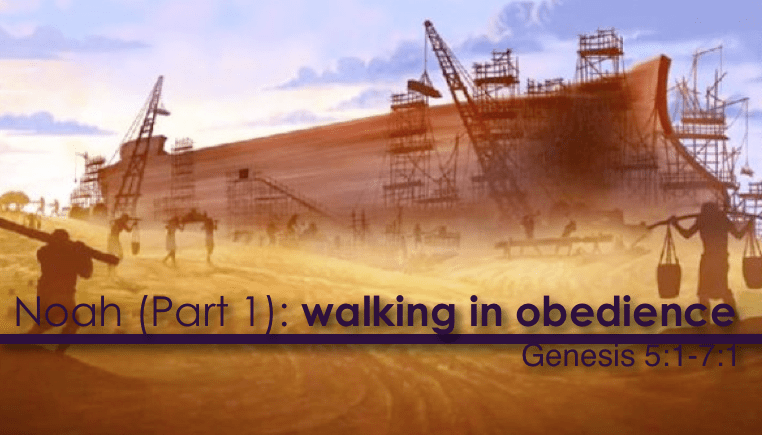
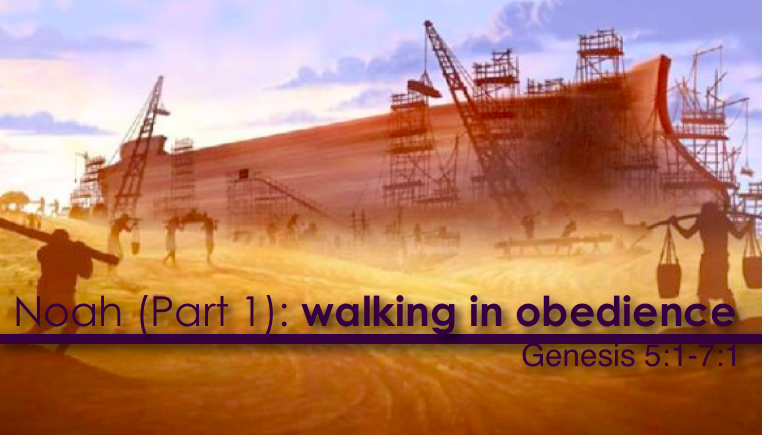
Noah (Part 1): walking in obedience

If you grew up in Sunday School as a child [unlike me] you learned silly Bible songs about characters like Noah. Maybe you sang this song, “God told Noah to build him an arky, arky. God told Noah to build him an arky, arky. Build it out of gopher barky, barky. Children of the Lord.” Now there is nothing wrong with this fun song, but it is silly for kiddies. Today we are going to take a big boy and girl approach to God’s call to Noah to build the ark.

Obedience is the very best way to show that you believe

Before jumping into the life of Noah, let’s look at Genesis 5. This is an interesting chapter in the Bible that leads up to Noah. It’s a genealogy of men from Adam to Noah. If you like tracing your family tree you will love this chapter. The chapter covers a time span of 1600 years, which is almost the same amount of time covered in the remainder of the Old Testament. The primary theological purpose of this genealogy is to show that every generation and person descended from Adam were sinners who lived and died [cf. Romans 6:23]. Notice how the phrase “and then he died” lingers and looms like a dreadful chorus through the genealogy [cf. 5:5,8,11,14,20,27,31].

This genealogy includes two curious characters. First, Methuselah, who lived to be 969 years old [5:27], which is possibly the Guinness Book world record for the oldest man to ever live. Second, Enoch, who is supposedly the only godly man w129ho lived during these generations [5:22-24]. Enoch “walked with God,” which means that he had a lifestyle of wholehearted worship and obedience to God. Enoch is the Bible’s first prophet who predicted the coming flood [cf. Hebrews 11:5-6; Jude 14-16]. Enoch is also the only man in the genealogy that did not die, but was spared from death [cf. Elijah, the only other man in the Bible that did not die]. The only way to avoid death and have eternal life is to “walk with God,” like Enoch. No better place to be than with God!

Now, we arrive to Genesis 6:1-9, which is one of the most controversial passages in the entire Bible. Here therein are posed four difficult questions: Who are the sons of God who marry the daughters of men? What is the meaning of 120 years? Who are the Nephilim? And why did God choose Noah to build the Ark?

Who are the sons of God that married the daughters of men? [Genesis 6:1-2]

Biblical scholars and theologians have argued two major opinions: First, angels had sex with women [cf. Job 1:6; Numbers 13, Ezekiel 28:11-17]. This theory collapses because the judgment for sin by the flood was upon people, not angels. Also, Jesus taught that angels do not marry or breed [cf. Matthew 22:30], and in the days of Noah people were simply marrying each other [cf. Matthew 24:37-39]. Jesus’ teaching follows the flow of context in Genesis 5 genealogy. The second opinion [that I embrace] is that the godly line of Seth had sex with attractive ungodly women. In other words, the sons of God—the line of the covenant people mentioned in Genesis 5—intermarried the daughters of men who were from ungodly families.

What is the meaning of 120 years? [Genesis 6:3]

In response to the sons of God intermarrying with the daughters of men [6:1-2], God limits their life to 120 years. There are two possible explanations for the meaning of this verse: First, God no longer allows people to live as long as they had previously [i.e. 300-900 years old] and determines that no human being would live longer than 120 years. An interesting factoid that supports this is Moses died at 120 [cf. Deuteronomy 34:7] and today the longest living people die around 120.

Second, God promised judgment by flood, but waited 120 years to give people an opportunity to repent. 1 Peter 3:20 says, “God waited patiently in the days of Noah while the ark was being built. In it only a few people, eight in all, were saved through water.” God is gracious because He gives mankind 1600 years, gives examples of people who walked with God, and gives Noah who preaches for 120 years [2 Peter 2:5]. No one repents or responds to God’s patience. 120 years gives Noah enough time to obey and build the ark, and after the 120 years the rains of judgment fell upon the earth.

Who are these huge Nephilim? [Genesis 6:4]

In short, we are do not know. In Numbers 13:33 the word Nephilim is used and also refers to an oversized race of people. This has caused scholars to speculate that the Nephilim in Genesis 6:4 are the same people mentioned in Numbers. Genesis does not say they were gigantic in size, but it does say they were gigantic in status, “They were the heroes of old, men of renown.” Therefore, the Nephilim could be a group of ungodly men in that day that reach celebrity status like the gigantic reputations given to athletes, rock stars, and media moguls in our day.

Why did God choose Noah to build the Ark? [Genesis 6:5-9]

Let’s be clear, God did not chose Noah to build the ark because he was sinless or better than the guy next to him. Sometimes teachers paint Noah to be this overly sanctified character living in an excessively wicked world. God does not just like good people and annihilate bad people. This teaching is contrary to the Bible’s story of redemption. What this introduction to Noah teaches is that every man is totally depraved. Other than Romans 1:18-27, the description of man given in Genesis 6:5-7 is one of the most sin-saturated images of man in all of Scripture. God gazes upon man’s pervasive evil and grieves that He had made man, which would include Noah and his family.

The reason God chooses to save Noah is given in Genesis 6:8, “But Noah found favor [grace] in the eyes of the LORD.” Noah did not begin his life a blameless and righteous man, “walking with God,” but he began as a sinner. The only difference between Noah and the other sinners who drowned in the flood of judgment was that God was gracious to Noah. God choose undeserving Noah to be an object of His grace. The word favor [6:9] in Hebrew means grace. This is the first time in the grace appears in word form in the Bible. Paul the apostle carries this word in his New Testament teaching on salvation by grace through faith alone. Noah was a favored because God saved him by grace and he had faith in God alone.

The joy of obedience [Genesis 6:10-7:1]

Noah believes God; therefore, God shares with Noah His plan to judge sin through a catastrophic global flood. In His grace, God will preserve Noah, his family of six, and two of each animal on earth. To house this floating zoo, Noah is commissioned to build a huge wooden boat. It is the largest wooden ocean cargo carrier recorded in history. It has space for more than 500 containers. Compare that with the modern day Maersk Triple E that carries over 2500 containers.

Noah obeyed God’s commands and built the ark [6:22], probably with only the help of his three boys. In the hall of faith, Hebrews 11:7 says that Noah did so in holy fear as a man of faith who believed God would bring the flood even while others continued in sin without repentance. After completing the construction of the ark, Noah, his family, and the animals board the boat and wait for God to fulfill His promised judgment. God’s patience towards man’s sin runs out, but His grace runs strong through Noah’s Ark.

In conclusion, through the Noah narrative we learn many practical lessons concerning obedience. First, you are called to obey God in tough times [Genesis 6:1–9]. Despite rampant sin all hope was not lost. God’s grace is still available. Second, walking closely with God develops faith for an unsure future [11–13]. Noah believed God, walked with God, and lived contrary to the evil world around him. God makes the difference in Noah’s story. Third, obeying God will often require sacrifice and hard work [14–22]. Noah obeyed by building a big boat with mocking neighbors. Scripture gives no indication that Noah doubts God or wavers in his faith, no matter how long it took or how hard it was to obey. Obedience is to walk with God through wholehearted worship.

Rain is coming. Instead of raining water, it will rain fire. A final judgment day is coming [Revelation 20:7-15], when God will ultimately deal with the total depravity of man. God did not ask you to build an ark like Noah, but He does ask you to obey in faith and bring people to the ark He provides—through His Son—Jesus Christ.

thumb lick thursday [3.2.11]


Jesus’ obedience is mine
Why should I obey God? Jesus did. How can I obey when life is difficult? Follow the example of Jesus. Check out this thoroughly biblical theology of obedience in the life of Jesus from the Gospel of Mark. You will look at obedience differently.

The Pastor as Theologian
Every pastor is called to be a theologian. This may come as a surprise to some pastors, who see theology as an academic discipline taken during seminary rather than as an ongoing and central part of the pastoral calling. Nevertheless, the health of the church depends upon its pastors functioning as faithful theologians — teaching, preaching, defending and applying the great doctrines of the faith.

Are We Afraid of Single Pastors?
Prejudice is like a cockroach: it is able to get into the smallest of places, and it never seems to die. What’s worse is that everyone carries the cockroach of prejudice somewhere inside of them. Prejudice is a pre-conceived notion, an irrational assumption, a judgment against another without any evidence. We believers are called to rise above showing “personal favoritism” (James 2:1), because there is “no partiality with God” (Romans 2:11). Even so, prejudice against single pastors abounds.

dis-Grace

It is, sadly, possible to be un-amazed by the grace of God, to take it for granted, as though it were ours by right or, worse, by merit. Thus, we dis-grace the grace of God. In the process, the melody line of the Christian life is lost. – Sinclair B. Ferguson, By Grace Alone, 101

extreme makeover: home edition

Most parents agree that they desire to have a happy house with children who are successful, financially responsible, skillful, educated, athletic and active. These are not wrong desires, but they could also distract you from God’s agenda for your home. What is God’s agenda for the home? God desires for parents to raise their children in such a way that they will lovingly, joyfully, passionately, and freely follow Jesus Christ. This is the greatest agenda for parents. God’s agenda for children is also similar: to obey their God-given authority and make Jesus Christ the passion of their life.

In Ephesians 6:1-4, God sets a clear agenda for the home, which is a wonderful picture of His gospel. Let’s look at the basis, goal and technique for living as God’s kind of home.

The Basis of a Godly Home is Obedience [Ephesians 6:1]

I did not grow up singing the famous children’s Sunday School songs, but one I do know is, “Obedience is the very best way to show that you believe: Doing exactly what the Lord commands, doing it happily. Action is the key–do it immediately, the joy you will receive! Obedience is the very best way to show that you believe. O-B-E-D-I-E-N-C-E (Yes, sir!) Obedience is the very best way to show that you believe.” I am sure that was a fun song to sing as a kid and there is a lot of truth to this song, but as a child grows older that some might mean something entirely different. Obedience is a willingness to submit to ones authority without challenge, excuse or delay.

How should I discipline children of different ages?

For many children, following God’s agenda is difficult because they want what they want, when they want it, in the way they want it. Therefore, children test boundaries, push limits, and stress the consistency of their parents. Is this really the agenda of cute innocent children? Surely I just have a pessimistic view of children? No. I just believe what the Bible says, everyone child is born a sinner into a sinful world and sinning comes natural.

Why is it important for children to obey their parents? Obedience teaches children how to live under authority, especially God’s authority [5:21]. Authority is like an umbrella of protection for our good and God’s glory. In ancient days, the father could maintain authority in the home until death. When do you cease being a child? You never cease being a child to your parents. “Child” does not denote age, but relationship. Even as an adult you are still your parents children. However, as you grow older your relationship with your parents may morph [cf. 2:24] because biblically parenting is a temporary stewardship preparing you for your own permanent relationship of marriage.

The Goal of a Godly Home is Honor [Ephesians 6:2-3]

What does it mean to honor? Honor means you have an attitude of godly fear towards your parents because you know they have been give to you by a higher authority—God [cf. Leviticus 19:3, 14; Deuteronomy 4:10]. When you obey your parents it is a way of honoring them. Can you obey without honoring? Yes, this is called legalism. Follow rules, but not following lovingly and joyfully isn’t honor. This might run in tandem with our culture that says that ‘honor is earned’; rather God says honor no matter what because God particularly places your parents as your authority.

Paul begins this verse by quoting the 5th Commandment. [Exodus 21:12] He also notes that this is the first commandment with a promise in relation to other humans. What is the promise? The promise is that if you honor your parents you are also honoring God; therefore, God will bless you with an enjoyable life.

Exodus 20:12 Deuteronomy 5:16 Ephesians 6:1-3 Colossians 3:20
“Honor your father and your mother, that your days may be long upon the land which the Lord your God is giving you. ‘Honor your father and your mother, as the Lord your God has commanded you, that your days may be long, and that it may be well with you in the land which the Lord your God is giving you. 1Children, obey your parents in the Lord, for this is right.2“Honor your father and mother,” which is the first commandment with promise: 3“that it may be well with you and you may live long on the earth.” 20Children, obey your parents in all things, for this is well pleasing to the Lord.

Should you honor your parents if they are not believers or spiritually mature? Even if your parents do not have a biblical perspective of life you are still called to honor and obey them. Now if your parents specifically ask you to do something sinful you are called obey God who is your higher authority. If your parents abuse their authority it is proper to remove yourself from their authority until they makeover their home to match God kind of parent.

What are there benefits or drawbacks to obeying your parents? There are times when obedience might prevent you from doing something you really would like to do. This is not always a bad thing. I remember asking my parents if I could spend the night at a friend’s house from school. They denied the request because they knew that this friend was not a good influence on me. I was upset, but after the fact I was appreciative my parents were protecting me. In the future, my honor for my parents grew and it was easier to obey.

Here are some practical ways you can honor your parents: Do not talk back to your parents privately or publicly. Do not complain about your parents to others. Protect the integrity of your family. Listen to their wise counsel. Seek their wise counsel for decisions. Do not repeat their sinful habits. If you disagree do not argue in defense.

The Technique for have a Godly Home is Training in Truth [Ephesians 6:4]

In verse 4, fathers are singled out. Why are father’s singles out? As children obey, fathers are not to neglect their responsibility of point their children to Christ. Every father is accountable to God for the spiritual climate of his home [1 Timothy 3:4-5].[1] This climate can be controlled as the father teaches and consistently models Christlikeness to his children.

How does a parent provoke his children to wrath?

Training children is like giving them spiritual nourishment that will help them grow spiritually strong so that when they are on their own Satan will not have an influence on them. The greatest device the devil uses to cause division in the home is prolonged anger of the children towards their parents. Parents can feed this anger by not following Christ [cf. Colossians 3:20-21].

Training in Truth focuses on the gospel: the child’s need of a Savior [Romans 6:23] because they are accountable to God [Dt.4:9; 6:6-7]. This child must be taught about their sinful heart [Rom.5:12; Prov. 22:15]. Following salvation, parents have an enormous task of teaching their children to follow God’s Word [Ps.1:1-3; 2 Timothy 3:15-17], repent, restore and mature in Christlikeness [Ephesians 4:22-32]. This is how the child comes face-to-face with the gospel.

If you desire to have a happy house, with children who are successful, financial fiscal, skillful, educated and active above God’s agenda for your home you might be raising children who worship these agendas because they have a  distorted understanding of the gospel. Unless the gospel is central in the child all other agendas can become idols. God’s desire for parents is to raise their children in such a way that they will lovingly, joyfully, passionately, and freely follow Jesus Christ. This is the greatest agenda for parents. And God’s desire for children is to obey their God-given authority and make Jesus Christ the passion of their life. The gospel means God is always at the center of the family, not the child or parent.

Great Resources for Parents:

Shepherding a Child’s Heart [Tedd Tripp]

Gospel-Powered Parenting [William P. Farley]

Age of Opportunity: A Biblical Guide to Parenting Teens [Paul David Tripp]

Angry Children—Understanding and Helping Your Child Regain Control [Mike Emlet]

Addressing the Problems of Rebellious Children [Mary Somerville]


[1] Fathers responsibility: Psalm 103:13; Matthew 7:9-11; Proverbs 3:11-12; Psalm 72:2-8; Deuteronomy 6:6-7; Hebrews 12:7-11