What the Reward for Faith Looks Like

When I was in elementary school I was in a community swim league. Other than the Speedo and practices, I liked swimming. I was super strong in the backstroke.  All those tedious practices paid off with my first blue ribbon. After all these years, I still have it.

At the end of a race there is a trophy or ribbon. At the completion of a test there is a grade or a diploma. At the close of a performance there is an applause or a pat on the back. Yet what is the reward for faith?

You don’t often see the authors of the Scripture making public apologies about their writings. However, the author of Hebrews gives an apology for listing the final heroes of faith in rapid order (Hebrews 11:32). He said there were simply too many names to list and too little time to talk about them. Thankfully their stories are recorded in canon of Scripture (vs.33-34). This is your reminder to go an read about them.

“And what more shall I say? For time would fail me to tell of Gideon, Barak, Samson, Jephthah, of David and Samuel and the prophets— who through faith conquered kingdoms, enforced justice, obtained promises, stopped the mouths of lions, quenched the power of fire, escaped the edge of the sword, were made strong out of weakness, became mighty in war, put foreign armies to flight. Women received back their dead by resurrection. Some were tortured, refusing to accept release, so that they might rise again to a better life. Others suffered mocking and flogging, and even chains and imprisonment. They were stoned, they were sawn in two, they were killed with the sword. They went about in skins of sheep and goats, destitute, afflicted, mistreated— of whom the world was not worthy—wandering about in deserts and mountains, and in dens and caves of the earth.” – Hebrews 11:32-37, ESV

Although each person listed had their failures, the common thread between each judge, king and prophet was faith being their victory over death (v. 35). A hero or heroine often does not get to see the reward of his work in his lifetime (v. 39). Sometimes he dies in battle before the victory. Sometimes he is marginalized or even martyred (vs.36-38). The images of persecution and imprisonment pile up to convince us along with the first readers of this letter that the experiences of these men and women are no different than ours (cf. 10:32–34). Their names are here to encourage you to persevere in faith for the reward of faith is greater than what one can achieve in this lifetime (v. 40).

“And all these, though commended through their faith, did not receive what was promised, since God had provided something better for us, that apart from us they should not be made perfect.” – Hebrews 11:39-40, ESV

It was said “the world was not worthy of” these people of great faith (v. 38), but they had the assurance that they were moving toward a greater goal. Again we enter the realm of “something greater,” and with that to rejoice in, to live for and fight for. The reward for faith is God. What better reward is there?

Hebrews 11 is here for you on look backward on the faith of yesterday in order to press forward in faith today. Press on! The greatest reward is yet to come!


Questions for Reflection:

  • What might the writer of Hebrews have said about these men if there had been more time?
  • Why do you think God chose to work through these people (e.g. Gideon, Samson, David) despite their faults and failures? What does this tell you about God?
  • How does faith enable you to seek only God’s approval rather than the world’s approval? How could God be more glorified by not delivering you from suffering than from delivering you from it? Does this give you more or less confidence in God?
  • What do Christians have to look forward to? How can you take the knowledge of your inheritance to come and use it to help you to be courageous and faithful in times of trial?
  • If you knew that you wouldn’t receive any earthly rewards for your faith, how would that affect the way you live? Knowing that you will ultimately receive a promised blessing, does that make faith easier or more difficult when challenges arise?
  • In what ways does the list of the faithful in Hebrews 11 encourage you? Challenge you? Intimidate you? If you were to add your own name to this list based on the way in which you’ve shown great faith, how would that entry read?

Before you open your mouth

If you could ask God for anything right now, what would you ask? If you had one prayer to pray, what would you pray? Here is a request for prayer that hit me hard this week,

“Pray for me, that words may be given to me in opening my mouth boldly to proclaim the mystery of the gospel, for which I am an ambassador in chains, that I may declare it boldly, as I ought to speak.” – Ephesians 6:19-20

These are not my words. These words are from the apostle Paul’s letter to the church in Ephesus (6:19-20). He said them following his teaching on spiritual warfare. The apostle gave more time and space to talk about prayer than any other weapon. He gives us three powerful truths to think about before opening your mouth.

Pray for opportunities to proclaim the gospel (Ephesians 6:19a).

Everyday you proclaim many things. You talk about the news or weather, the football match from the night before, how your work or health is going, how you are having trouble with your neighbors, or how the preacher went really long on Sunday at church.

On average women say 20,000 words a day and men 7,000 words a day. That’s a lot of words! No, this is not a message encouraging women to speak less and men to speak more. Rather it is to encourage you to consider the opportunities you have each day to speak. Isn’t it important to pause and pray. Pray that God would give you a good word.

What should we pray? Paul says pray for opportunities to proclaim the good news. In other letters he says to pray for open doors for the good news. Pray for readiness and a response for the hope that is in you.

I’d like to say that before I visit my neighbors house I pray. Or before I chat with a group of men at the market I pray. Or before work with others I pray. Sometimes I neglect to pray.

There is a story in Acts 4:24-31 when Peter and John healed a blind the beggar in Jesus name. It caused a lot of attention and they were invited to speak before the the leaders. After they were released they gathered with believers and told them what happened. They asked them pray. Here is what they prayed,

“Sovereign Lord, who made the heaven and the earth and the sea and everything in them, who through the mouth of our father David, your servant, said by the Holy Spirit, “‘Why did the Gentiles rage, and the peoples plot in vain? The kings of the earth set themselves, and the rulers were gathered together, against the Lord and against his Anointed’—for truly in this city there were gathered together against your holy servant Jesus, whom you anointed, both Herod and Pontius Pilate, along with the Gentiles and the peoples of Israel, to do whatever your hand and your plan had predestined to take place. And now, Lord, look upon their threats and grant to your servants to continue to speak your word with all boldness, while you stretch out your hand to heal, and signs and wonders are performed through the name of your holy servant Jesus.” And when they had prayed, the place in which they were gathered together was shaken, and they were all filled with the Holy Spirit and continued to speak the word of God with boldness.” – Acts 4:24-31

It is interesting how the believers start that prayer by appealing to the sovereignty of the Lord. They quote David speaking about how the nations gather together against the Lord, and how Herod and Pontius Pilot conspired against the Lord, but at the end of the day God is in control. When there is resistance to the name of Christ, a recognition of the sovereignty of God and His plan is of utmost importance.

Prayer isn’t passive, it’s active. Prayer is really doing something. Prayer isn’t the least you can do, it’s the most. Prayer is never secondary, it’s always primary. It’s not the last thing you do when there is no other option; it’s the first and best thing to do. If there is no prayer, there is no power. Prayer is trusting God that He can accomplish more when you are on your knees than you can accomplish on your feet.

Prayer warriors with no real grasp of what the gospel is all about, may be spirited, but they are no more useful on the field than a soldier without weapons. That leads us to the second truth before opening your mouth.

Proclaim the Gospel (6:19b).

What is the gospel?  The gospel is good news. There are many things that are good. A house that doesn’t leak when it rains is good. Fried chicken is good. A faithful friend is good. Marriage is good. Healthy children are good.

What is the good news? Before we zero in on what the good news is let’s begin by talking about what the good news is not.

The good news is not about having a good character. Some people think a Christian is someone who don’t drink, smoke or chew or go with girls that do. Yes, it is true Christians are different. Christians aren’t to be like the world. They are to be more like Christ. On the other hand, some Christians only talk about the good they do. They brag about how much they pray, go to church, or even fast. Being good is good, but it is not the good news.

The good news is not talking good about God or religious things. Maybe when talking with friend or stranger you bless them in God’s name. They think you are religious because you have religious talk. That is good, but it ’s not the good news.

The good news is not doing good things for God or people. I work with an organization that does good things everyday to help poor and needy people. Other like-minded organizations fight hard for social issues and justice. Christians all over the world have done good—building hospitals, building wells, and freeing slaves. These are good things, but this is not the gospel.

These are all good things. We should be good people, who say good things and do good things, but that is not the good news. There are a lot of people who do and say good things, but ‘good’ people go to hell too.

The Scripture talks a lot about good news. What is the good news and why is it so good? In order for there to be good news there has to be bad news. Do you want to hear the good news or bad news first? Good. Let’s hear the good news first.

The good news first starts with God. God is good. He is more than good. He is great. He is holy. He is wise. He is unlike no other. He is powerful. He created the world by his word. He created it good. He created man from the dust and breathed life into his. He created man very good. He cares for his creation. That is really good news. Could you imagine what this life would be like if God wasn’t like God. Not good.

That leads us to the bad news. Yes, there is bad news. When God created man he gave them one rule. One. What was that rule? Do not eat from the tree of knowledge of good and evil. Did man listen? No. What happened? Man did not listen. When God came to the garden. Man hid. Why did he hide? He was ashamed. Can anyone hide from God? No. Who did God call first? Adam. Why Adam? God created Adam first. Adam was made responsible. When asked if he ate the fruit how did Adam respond? He said, “The woman made ma eat it.” Is that true? Yes and No. Yes, Adam ate, BUT he was there when she ate too and he did nothing. Not good. When God asked Eve if she ate the fruit what did she say? She said the serpent made her eat it. Both Adam and Eve took no responsibility for their disobedience. Therefore, they were cursed. They were created eternal beings, but they would now die. All their children and children’s children would inherit their desire to sin. Not good. The bad news is that no one is born good.

Thankfully there is even better news. God did not start over. He didn’t leave his plan or forget man. He did not utterly wipe humans from the face of the earth. Before creation he had a plan to send a redeemer—a Savior. He himself came to earth. Jesus was his name. God with skin on. We celebrated this on Christmas. Jesus lived the only sinless life. He became the only sacrifice for mankind sin.  The really good news is that Jesus saves people born bad.

Why is the gospel so important and good? Without it bad news remains. You remain dead in sin. Yet there is no hope for you. The good news. Do you believe it? Only the gospel has power to make something dead become alive. Those that repent of their sin and believe on Jesus will inherit eternal life.  That is good news! It is the greatest news on earth! Do you believe it? Then will you proclaim it? That brings me to the third and final truth before opening your mouth.

Proclaim the gospel boldly without excuse (6:19-20).

Why did Paul ask for prayer for assurance or courage? Did he fear man. Yes. He was human. Fear is a real thing for everyone. Even apostles.

Did you know there are some Muslims who are coming to faith in Christ? It is truth. It is exciting. Right now there are a small group of men who are reading the Bible from Genesis to Jesus. God is giving them faith to believe. One of those men recently came to faith in Christ two months ago. His name is Mark. He grew up the firstborn son in a strict Muslim family. His teacher at secondary school was a Christian from southern Chad. After class that teacher would read his Bible under a tree. Mark was interested and would ask his teacher what he was reading. His teacher would explain that he was reading the Bible and share many stories. Mark wanted to read more of the Bible so the teacher gave him a copy, but his dad took it and burned it.

A few years later, another believer from a Muslim background was passing through his town. They met by a miracle of God and this believer invited Mark to come learn about the Bible at a workshop. He went. There he began hearing the stories of Adam, Abraham, Moses, David, and more. He asked for his own Bible and was eating it up. When he went back to his village his uncle found his Bible and ripped it up. That didn’t stop his interest.

A few months ago, while talking to my colleague and a member of this church he said, “I believe who Jesus says he is.” He repented of his sin and committed to following Jesus. Immediately, he had some fear. He knew if he were to tell his father he would likely be beaten, imprisoned, or disowned. He hid. Yet the Bible and the Spirit of God kept reminding him that the good news is not something to hide. After much prayer he decided to call his father and tell him he had become a Christian. His father did not take it well. He threatened to catch him and put him on house arrest. He threatened to disown his mother and siblings. He treated to cut off his inheritance. Mark risked a lot. Yet his faith is growing. Pray for Mark to be bold. May his example encourage us to be bold.

Paul says, “I am an ambassador in chains.” Why is he in prison? He proclaimed the good news. People don’t like the good news. Yet in prison, Paul has an opportunity. He has a captive audience. He asks for prayer to be bold to share where he is, even in prison.

You are an ambassador of the King of kings, the Commander of the armies of heaven. Speak as His representative with boldness. Do not be ashamed. Remember the cross of Christ is foolishness to those who do not know the gospel. The good news offends people, especially good people who say good things and do good things.

If everyone likes you and likes your message likely you aren’t sharing the good news. Jesus said to his followers. If you follow me you will be persecuted. Expect persecution. It is the way of a Jesus follower.

Have you heard of the Back to Jerusalem Movement? There are Christians in Chinese. Some 100,000,000 Christians. These Christians are praying to send 100,000 Chinese missionaries from China back to Jerusalem. Along the way they are praying to break the walls of Buddhism, Islam and Judaism. Wow! Let’s pray for the Chinese believers. That is bold! May the church be that bold. May I be that bold.

What is your excuse for not being bold? What are you afraid of? What prevents you from sharing the good news? It is good news to you? Do you believe it? Will you begin by praying for an opportunity to share it? Will you pray for your boldness?

Will you pause for a moment, right now, and consider these questions and ask the Spirit of God how you should pray. Then pray. And act.

What Faith in Action Looks Like

Faith is a crucial piece of our relationship with God. We don’t always understand God or what he is doing. Sometimes we may feel like we are up against a wall or we feel like we are being run down by a fierce army and God is nowhere to be seen.

Moses’ story is amazing from start to finish. As an act of faith his parents sent him down the Nile River in a basket (v.23). Moses was found by Pharaoh’s daughter and grew up in Pharaoh’s home (v.24). By faith he gave up the luxuries of Egypt to help let his people go free (vs.25-26). By faith Moses listened to God and obeyed his commands (vs.27-28). What God prepared Moses for was an amazing journey of faith marked by miracle after miracle.

“By faith Moses, when he was grown up, refused to be called the son of Pharaoh’s daughter, choosing rather to be mistreated with the people of God than to enjoy the fleeting pleasures of sin. He considered the reproach of Christ greater wealth than the treasures of Egypt, for he was looking to the reward. By faith he left Egypt, not being afraid of the anger of the king, for he endured as seeing him who is invisible.” – Hebrews 11:24-27, ESV

Faith acts. With Pharaoh and his army charging after the slaves they just let go the people had a choice: freak out or have faith. By faith the Hebrews crossed the Red Sea on dry ground (v.29). No doubt Moses’ faith and leadership inspired their faith. Their faith preserved their lives from the bitter Egyptian army who drowned after the last Hebrew reached the other side of the Red Sea.

The city of Jericho was a towering menace and it was a barrier between the Hebrews and the land God promised. God’s plan seemed a little wacky: March around the city seven time and blow trumps and the walls would come down. No weapons. Only instruments and obedience. By faith the Israelites did as God said and God did as he said (v.30). And the people of Israel did the impossible were able to walk into the Promised Land.

Rahab the prostitute was saved when Jericho was destroyed because of her faith and kindness in helping the Hebrews spies escape (v.31; cf. Joshua 2:10-21; 6:25). Not only that Rahab became a part of the nation of Israel. She married Salmon and gave birth to Boaz who was an ancestor of King David (Matthew 1: 4–6).

When faith acts God honors it. Faith shows we trust God at his word. The moment we act in faith is never easy. That is why it is called faith.


Questions for Reflection:

  • How does faith need great courage for difficult decisions?
  • How do you see faith in action in the life of Moses?
  • What does it mean that Moses “considered the reproach of Christ greater wealth than the treasures of Egypt, for he was looking to the reward”? What might Moses have known about Christ? In what sense can we say that Moses suffered for the sake of Christ or how did Moses give an image of Christ? (see 1 Corinthians 10:4)
  • How is Jesus never far away from any Scripture, even Old Testament Scriptures? How do all examples of faith ultimately lead to Jesus? What are the promises offered by the world which seek to pull us away from following Christ?
  • How can you encourage others around you to be bold in faith and to persevere, rather than yielding to the temptations of the world?
  • For all that Moses did for the Hebrews, he still didn’t get to enter the Promised Land. What does this teach us about God’s rewards for the faithful? What are some other examples of rewarded faith that seem unexpected or maybe even unsatisfying at least according to the world’s understanding of “reward”?
  • What is so unique about having Rahab listed as a heroine of faith? What does she show you about the unique plan of God and the kind of people God uses? What do Rahab’s actions teach us about the relationship between obedience and faith?
  • How might God use you to act in faith to further his kingdom purposes?

What Enduring Faith Looks Like and Looks Forward Towards

Life isn’t a calm breeze. Sometimes the winds gust and the storms batter from within and without. Life can be a grueling journey of endurance and faith is necessary.

We need examples. We need people we can look to and say, “If they did it, so can I.” When it comes to big time examples of faith, Abraham is a name that often comes to mind. Abraham was called by God to go to an unknown place. He journeyed even though he didn’t know exactly where God was taking him or what the journey would look like (vs.8-9). It was a true journey and test of faith (Gen. 15:6).

“By faith Abraham, when called to go to a place he would later receive as his inheritance, obeyed and went, even though he did not know where he was going. By faith he made his home in the promised land like a stranger in a foreign country; he lived in tents” – Hebrews 11:8-9a, ESV

Faith acts by moving forward. Abraham and Sarah never fully reached the Promised Land during their lifetime, but it was realized through the purchase of a small burial plot where Abraham would bury Sarah. The duration of their lives was lived as strangers in a strange land, yet they looked forward to a better country, a heavenly one that God was preparing for them (v.10; cf. 13:14). Their faith looked forward beyond the grave (vs.13-16).

“All these people were still living by faith when they died. They did not receive the things promised; they only saw them and welcomed them from a distance, admitting that they were foreigners and strangers on earth. People who say such things show that they are looking for a country of their own. If they had been thinking of the country they had left, they would have had opportunity to return. Instead, they were longing for a better country—a heavenly one. Therefore God is not ashamed to be called their God, for he has prepared a city for them.” – Hebrews 11:13-16, ESV

Faith acts on what seems impossible. A at 90 years old, God said he would open the womb of Abraham’s wife making it possible for her to bear a son (vs.11-12). Although, at first she laughed (ha!), God made the impossible possible (ah!). It was God’s starting point for fulfilling a promise to Abraham making his descendants as numerous as the stars.

“And by faith even Sarah, who was past childbearing age, was enabled to bear children because she considered him faithful who had made the promise. And so from this one man, and he as good as dead, came descendants as numerous as the stars in the sky and as countless as the sand on the seashore” – Hebrews 11:11-12, ESV

Faith acts on what it knows about God. Abraham’s biggest test of faith was when God would ask him to sacrifice that son—his one and only promised heir (vs.17-19). Abraham acted in faith. He had faith that God would raise his son from the dead.

“By faith Abraham, when God tested him, offered Isaac as a sacrifice. He who had embraced the promises was about to sacrifice his one and only son, even though God had said to him, “It is through Isaac that your offspring will be reckoned.” Abraham reasoned that God could even raise the dead, and so in a manner of speaking he did receive Isaac back from death.” – Hebrews 11:17-19, ESV

Faith acts on what God has already done. Abraham’s descendants Isaac, Jacob and Joseph continued on, but not without their own enduring challenges and faith struggles (vs.20-21). Joseph, was sold as a slave to Egypt by his brothers. His brothers would later come to Egypt bowing before Joseph demanding food amidst a famine. This fulfilled Joseph’s dream and he responded by embracing and providing for his brothers. Interestingly, after his death his bones were brought back to the Promised Land (v.22).

God’s plans aren’t always immediate. Sometimes they span generations. God has an enduring love for his people and the working out of his plans. God will do as he says even amidst the wind and storms of life. We too must have enduring faith in what God is doing and will do because of what he has already done.


Questions for Reflection:

  • What is endurance? How is endurance linked to faith? Why is endurance often difficult?
  • What do you learn about endurance from the life of Abraham, Abraham’s children, and Abraham’s children’s children (e.g. Isaac, Jacob and Joseph)? How does their faith speak to you?
  • What do you learn about enduring faith through the life and death of Jesus? What was the reward he was looking forward to and the city he is preparing for us? (cf. Hebrews 13:12-14) How does the dramatic story in Genesis 22 anticipate the central work of Christ?
  • How do you hand down these stories to the next generation? Are there new stories of faith you can hand down? What are they?
  • In what areas of your faith and life is God calling you to endure?

what faith looks like

A few years ago, I went to the Green Bay Packers Hall of Fame. It is an interesting and educational shrine to one of footballs most storied sports teams (I may be a bit biased). The most fascinating aspects of the Hall was learning about the teams early days and what the sport first looked like. A hundred years ago the sport was raw and tough. The founders and initial inductees to the Hall didn’t have much to look back on. They were creating the records that would be broken. They were paving the way for future players by creating the benchmarks and examples to follow.

1895_Auburn_-_Georgia_football_game_at_Piedmont_Park_in_Atlanta_Georgia

The first three examples in the Faith Hall of Fame are the founding fathers of faith after the creation the world: Abel, Enoch and Noah. There isn’t a lot we know about these men between Chapters 4-9 of Genesis. These three men show us that human history is a history of living “by faith” and the kind of life God expects (vs.4,5,7).

By faith Abel brought God a better offering than Cain did. By faith he was commended as righteous, when God spoke well of his offerings. And by faith Abel still speaks, even though he is dead. – Hebrews 11:4, ESV

Abel’s faith was not in the substance of his sacrifice, but in the heart behind his sacrifice. To Abel to give his first and best fruits was an act of faith and worship (Genesis 4). Abel was later martyred by his own brother, but Abel’s faith still speaks to us today.

By faith Enoch was taken from this life, so that he did not experience death: “He could not be found, because God had taken him away.” For before he was taken, he was commended as one who pleased God. And without faith it is impossible to please God, because anyone who comes to him must believe that he exists and that he rewards those who earnestly seek him. – Hebrews 11:5-6, ESV

Enoch’s faith takes hold of what God offers. In Genesis 5:24, there is a genealogy filled with men who live to be more than 900 years old, yet following each name reads the cold words, “and then he died.” Except for Enoch. Enoch walked with God and he was no more because God took him away. Death had no hold on Enoch.

By faith Noah, when warned about things not yet seen, in holy fear built an ark to save his family. By his faith he condemned the world and became heir of the righteousness that is in keeping with faith. – Hebrews 11:7, ESV

Noah’s faith obeyed. Obedience to God amidst of an unclear future and chaotic circumstances is key to faith. Noah built a boat despite never seeing rain, hundreds of years or ridicule, and limited information. Noah takes God at his word and gets to work. His actions show his faith as he stands obedient among a wicked generation (Genesis 6:9).

The common thread between these three ancients was their faith. They believed God existed, they feared him, and they believed God rewards those who seek him.


Questions for Reflection:

  • How do these ancient examples of faith still speak to us today?
  • How does faith involve aspects of sacrifice (Abel), hope (Enoch), and obedience (Noah)? Which person can you relate with the most and why? Which aspect of faith do you struggle with the most and why?
  • What are the different things people mean when they talk about ‘faith’? How does real, biblical faith differ from the popular idea of ‘faith’?
  • Have you experienced times when your faith in God has been tested? What have you learned from such experiences? How have these lessons helped you in times of difficulty?
  • Why is it impossible to please God without faith? On the contrary, how does faith please God?
  • What is the reward of faith? (cf. 1 Chr. 28:9; Jer. 29:12-14; John 4:24)

The Christmas Story as Drawn by our Children

This is an epic time of the year.  It’s what happened 2,000 years ago that makes it so important.  God took on flesh to save the world.  This is the Christmas Story.  This year our children made pictures of the main scenes of the story.  Enjoy.

12345678910

Unfamiliar or Misunderstood Words of Christmas

Christmas is a special time of the year. We often make time to visit family, give gifts, decorate, and celebrate. As the years go by and history passes there are certain traditions or meanings associated with Christmas that can become lost. Maybe you’ve read the Christmas story or sang carols and wondered what was meant by a certain word or phrase.

Here is a short list of some of the most unfamiliar or misunderstood words of Christmas:


Advent is a Latin word that means ‘coming’ or ‘arrival’. Christians have used the word to celebrate the coming of Jesus, the Savior of the world. The advent season usually begins four weeks before Christmas.

Bethlehem is a small village in Israel where Jesus was born. Jesus actually grew up in Nazareth, but his parents traveled to Bethlehem while Mary was still pregnant by order of the Roman Emperor who demanded a census (Luke 2:1-7). This fulfilled the prophecy of Micah (cf. 5:2-5). Bethlehem was also the birth place of King David.

Christ the Lord was a title that is given to Jesus by the angel, “For unto you is born this day in the city of David a Savior, who is Christ the Lord.” (Luke 2:11) The title means ‘anointed’ or ‘savior’ (see Messiah).

Emmanuel (or Immanuel). The word itself means “God with us” in the Hebrew language. It was first prophesied by Isaiah about 700 years before Jesus was born (cf. 7:14). In the prophesy it was said there would be a savior who would come who’s name was Emmanuel. An angel later told Joseph, the step-father of Jesus, that his son would be called, Emmanuel (Matthew 1:22-23).

Frankincense an aromatic resin that comes from a special tree (see Exodus 30:34-38). The magi brought frankincense to Jesus’ birth as a present fit for a king (Matthew 2:11). It was a costly gift and a sweet smelling incense.

Gabriel was an angel and special character in the Christmas story. His role was to announce the birth of Jesus. He visited Zechariah, the Father of John the Baptist, to let him know that his wife Elizabeth would miraculously give birth to a son (Luke 1:11-20). They were to name the baby John, and he would lead the way to the Messiah. Later, Gabriel appeared to the virgin Mary (Luke 1:26-38).

Glory was what the angels said observing the of Jesus’ birth, “Glory to God in the Highest.” (Luke 2:14) Glory means to give praise, honor and worship. the angels thought that the birth of Jesus was magnificent and their natural response was to praise God.

Hallelujah is a Hebrew word that is translated into many languages meaning ‘Praise the Lord’.

Heavenly Host is another way to say a bunch of angels. After Jesus was born the heavens opened up with a multitude of angels praise God (Luke 2:14). These angels were visible, audible, and countless in number.

Incarnation is a person who embodies in flesh and blood a deity. Christians acknowledge Jesus is God with skin on. God became a man to save man from their sin (Acts 20:28; Romans 8:32; 1 Corinthians 2:8; Hebrews 2:11 -14; 1 Timothy 3:16; Galatians 4:4). Jesus was 100% God and 100% man.

Jesus is the Greek name for the Hebrew name Joshua. It was the name given by the angel of the Lord in a dream to Jospeh in which he was told he would have a son through his virgin wife, Mary (Matthew 1:20-23).

Magi. The Bible tells us little about the magi. They are often referred to as wisemen, but they were likely astrologers as they were watching the night sky and followed a unique star to Bethlehem (Matthew 2:1-12).

Messiah. The Jewish people had long been promised an ‘annointed one’ or ‘deliverer’ who would come to free them from sin and slavery (Genesis 3:15). Although the Jews rejected Jesus, the title of Messiah is given to Jesus by Christians who recognize him as the fulfillment of all the prophecies of the Old Testament (Matthew 26:54; Mark 9:12; Luke 18:31; John 5:39; 26:22-23; Acts 2).

Myrrh was an expensive spice used in ancient times for making perfume, incense, medicine, and for anointing the dead. It appears three times in the life of Jesus Christ—his birth crucifixion, and burial (Matthew 2:11; Mark 15:23; John 19:39). At his birth, it was one of the costly gifts presented to Jesus by the wise men.

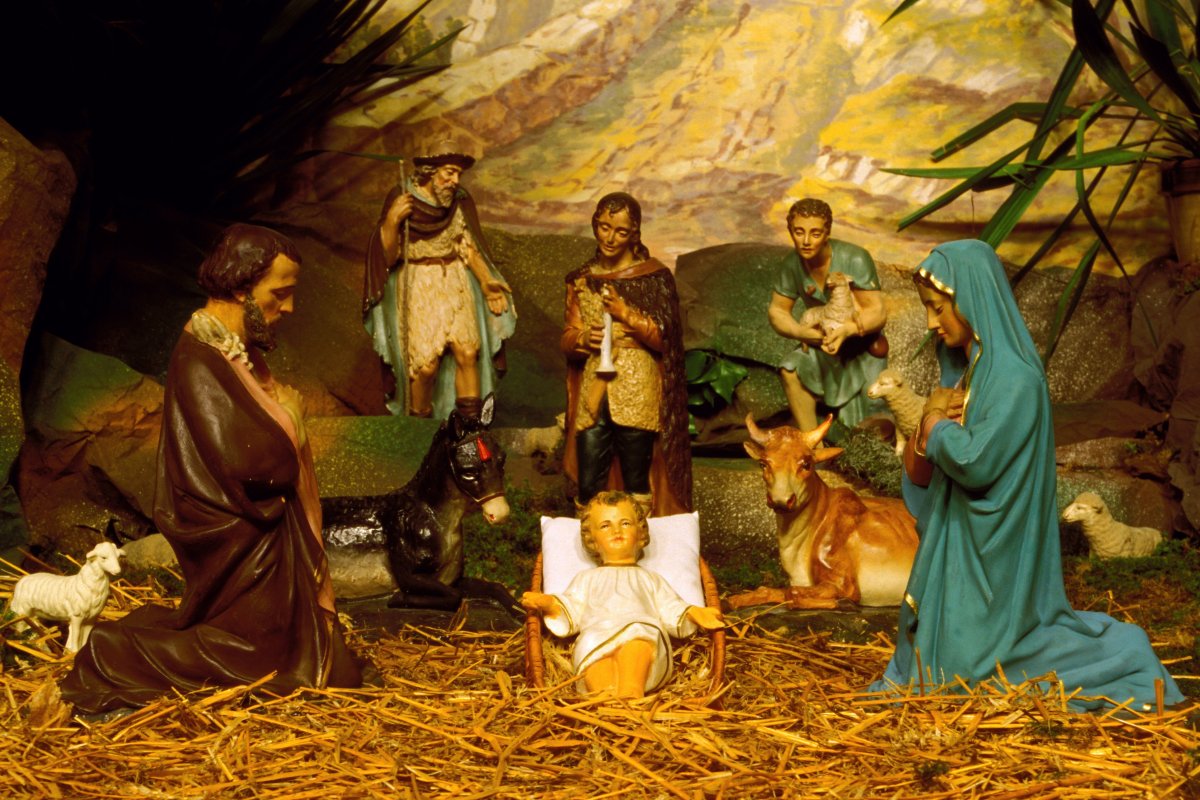
Nativity. We often think of it as a small display of figurines from the Christmas story like baby Jesus, Mary, Joseph, wisemen, manger and animals. In it’s Latin origin, the word nativity means ‘birth’, particularly the birth of Jesus Christ.

Nicholas is not a character from the Bible, yet he is often associated with Christmas. Nicholas was a bishop in the fourth century. According to Catholic history he is the patron saint of children and sailors.

Noël is the French way of saying ‘Christmas’.

Peace on Earth was what the host of angels said after the birth of Jesus. It is often a saying people say to one another during Christmas (Luke 2:14), yet Jesus came to bring peace to the earth. He is the Prince of Peace (Isaiah 9:6; cf. 52:7; 53:5; Micah 5:5; Luke 1:79; John 14:27; Romans 5:1; Ephesians 2:14,17).

Salvation is what Jesus came to offer to the people of the earth. He was the Savior who came to save mankind from impending judgment due to their sin. Mary sang about it (Luke 1:46-47). Joseph was told about it (Matthew 1:21). The shepherds outside Bethlehem were told about it (Luke 2:11).

Tidings. This is an old English word for ‘news’ or ‘information’. When Jesus came there was an announcement and bearer of glad tidings or good news (Luke 1:19; 2:10). Indeed, it was the greatest news on earth and still is.


This list was birthed out of a desire to help my children understand unfamiliar words within the Christmas story. Feel free to use or add to the definitions.

what is faith?

Would you rather see the future or see what is invisible? There is a measure of faith that comes with both because we can see neither. One often think that seeing is believing or if one sees he will have greater faith. However, Jesus says, greater is one’s faith who believes and doesn’t have to see (John 20:29). That’s where faith is born.

“Now faith is confidence in what we hope for and assurance about what we do not see. This is what the ancients were commended for. By faith we understand that the universe was formed at God’s command, so that what is seen was not made out of what was visible.” – Hebrews 11:1-3, ESV

Faith is defined as confidence in what we hope for and assurance about what we do not see. In other word, faith confidently trusts and obeys God no matter the circumstances or consequences. We don’t live or define our life by the circumstances or consequences but by confident trust and obedience to what God has already said about himself and his plans.

Faith gives you the ability to see the future as the present because you know God is the same yesterday, today and forever. Also faith gives you the ability to see the invisible as seen because you can see what God has said and done in Scripture and that gives you proof enough that he is trustworthy and worth following.

The example in verse three is that by faith we understand that God created the universe by the spoken word. We weren’t there, but we read about it in Genesis chapter one. We cannot see God, but we can see what God has made and this proves that God exists. We can have faith in God because we can see the evidences of what he said by what he has done.


Questions for Reflection:

  • How does the author of Hebrews define faith? How would you define faith in your own words?
  • How do the words “assurance,” “conviction,” and “commendation” help you to understand the meaning of faith?
  • What are things that you hope for? What are the invisible things you’d like to see?
  • What is something invisible that is easy for you to have faith in? What is something invisible that is difficult for you to have faith in?
  • Without looking ahead (even if you may know), who were ancient men and who in Scripture who were commended for their faith? What makes their faith so great?
  • What do others say about your faith? Would they commend it?
  • Other than creation, what other evidence of God do we have that God exists or keeps his promises? How do we see God at work even though we cannot see God Himself?
  • How do you see God in Jesus (e.g. Hebrews 1-10)? How does he encourage your faith?

Jesus Calls you to a Greater Faith

An arrogant Christian is an oxymoron. A Christian has no room to boast in himself. Rather that is reserved for Jesus.

There is little difference between arrogance and confidence. The difference is the attitude. An arrogant person boasts in his ability while a confident person simply acts.

A Christian can be confident because of Christ. The root of our confidence as a Christian is that we have unlimited and unhindered access to the Most Holy Place where Jesus reigns as a Great High Priest (vs.19-21). This should encourage us to look both upward and outward as we approach God. Upward with a sincere heart and full of faith and hold unswervingly to the hope we profess. Outward considering how best to stir one another towards love and good deeds (vs.22-25).

“Therefore, brothers and sisters, since we have confidence to enter the Most Holy Place by the blood of Jesus, by a new and living way opened for us through the curtain, that is, his body, and since we have a great priest over the house of God, let us draw near to God with a sincere heart and with the full assurance that faith brings, having our hearts sprinkled to cleanse us from a guilty conscience and having our bodies washed with pure water. Let us hold unswervingly to the hope we profess, for he who promised is faithful. And let us consider how we may spur one another on toward love and good deeds, not giving up meeting together, as some are in the habit of doing, but encouraging one another —and all the more as you see the Day approaching.” – Hebrews 10:19-25

We have power to forgive others because God has forgiven us of so much sin. If we go on sinning, we continue rebelling against God, stomping on the sacrifice of Christ, and insulting the Spirit of grace. Ultimately, if we go that route we reject the sole means for salvation through Jesus and what remains is fear of judgement without hope (vs.26-31).

The writer of Hebrews takes note of his readers confident faith in God even in their present difficulties. They knew that Jesus made it possible for them to inherit greater and lasting possessions and this gave them hope through their present circumstances (vs.32-38).

This hope multiplies our hope too. Through Jesus we have the means to keep on persevering, even in the face of temptations and persecutions. By enduring through public insults, humiliation and suffering, with others, we grow a full faith (v.39).


Questions for Reflection:

  • What is the difference between arrogance and confidence? How do verses 19-25 define confidence we have in Jesus?
  • What are some arrogant attitudes Christians can have towards God? What arrogant attitudes do you often exhibit?
  • Which of the three “let us” commands do you have a struggle walking in? (vs. 22-24)
  • How does one drift from their faith, waver in hope, or neglect loving others? What is the remedy for this according to the text?
  • What access do you have to God through the Most Holy Place and the Great High Priest? What is the benefit of this unlimited and unhindered access? Why are we prone to timidness rather than boldness?
  • How does faith go hand in hand with meeting together with other believers?
  • Why are you grateful we don’t have to endure this life and faith alone? Who do you have around you that you are meeting with that stir you to love and good works? Why is it difficult to stir others from a distance? Who are you stirring?
  • How do hard times draw us together and comfort often draws us apart? How do you see in verses 32-39 the power of remembering past hardships to bolster present faith? Do you have a similar remembrance?

12 Reasons Why Jesus is Greater

Here are 12 reasons why Jesus is greater from the book of Hebrews:

1. Jesus is the Greater Messenger than angels (1:2-14)

2. Jesus has the Greater Message than angels (2:1-4)

3. Jesus is Greater Prophet than Moses (3:1-6)

4. Jesus is Greater High Priest than Aaron (4:14-5:5)

5. Jesus is Greater priesthood than Melchizedek (5:6-10)

6. Jesus has the Greater ministry than the Levites (7:9-28)

7. Jesus is the Greater Servant (8:1-6; 9:1-5)

8. Jesus is the Greater Mediator (8:7-13; 9:6-10)

9. Jesus is the Greater Blood Sacrifice (9:11-28)

10. Jesus is the Greater Bodily Sacrifice (10:1-18)

11. Jesus is Greater Example of Faith (11:1-12:3)

12. Jesus has the Greater Origin (12:18-24)

Jesus is the Greater Eternal Sacrifice

Have you ever made shadow puppets on the wall? The shadows on the wall takes the shape of your hands. My children like to do this by making shapes of a bird, camel, turtle or rabbit. They can do it for hours.

In a similar fashion the law of God that was given to Moses was but a shadow (v.1). It represented something greater, particularly something that was to come.

“The law is only a shadow of the good things that are coming—not the realities themselves. For this reason it can never, by the same sacrifices repeated endlessly year after year, make perfect those who draw near to worship. Otherwise, would they not have stopped being offered? For the worshipers would have been cleansed once for all, and would no longer have felt guilty for their sins. But those sacrifices are an annual reminder of sins. It is impossible for the blood of bulls and goats to take away sins.” – Hebrews 10:1-4, ESV

Today there is no longer a need for animal sacrifices. Animal sacrifices were never met to be a permanent solution for man’s sin problem (v.11). The people knew that an animal sacrifice couldn’t be an equal substitute for another persons sin (vs.2-4) Thus Jesus came to earth, lived a sinless life and became the adequate substitute and sacrifice for sin. His sacrifice does away with once and for all the sacrificial system of the law (vs.5-10, 12-14). He is the eternal sacrifice.

“Day after day every priest stands and performs his religious duties; again and again he offers the same sacrifices, which can never take away sins. But when this priest had offered for all time one sacrifice for sins, he sat down at the right hand of God, and since that time he waits for his enemies to be made his footstool. For by one sacrifice he has made perfect forever those who are being made holy.” – Hebrews 10:11-14, ESV

The mind-blowing truth is that Jesus forgives sins completely (v.12), perfectly (v.14), and eternally (v.18). Jesus’ sacrifice on the cross is the reason there is no longer a need for daily or yearly sacrifices made by human priests. Jesus makes true and lasting forgiveness possible. And he writes the law on the hearts and minds of men (vs. 15-16).


Questions for Reflection:

  • What kind of sacrifices were offered under the law?
  • Why was a greater sacrifice needed than was provided under the law?
  • How can we discern when old ways are superior and when they are inferior? What are some good criteria for evaluating new versus old?
  • The Jews saw human sacrifice as a pagan abomination. How might this attitude have affected their response to the idea of Jesus as the sacrifice for their sins?
  • In our culture animal sacrifice is abhorrent, and human sacrifice even worse. How do you think that affects a modern person who reads Hebrews to understand what Jesus did?
  • How does Jesus’ complete sacrifice on the cross affect the way you live your life daily?
  • How might your life be different if the old covenant and the old way of sacrifice were still in effect today?
  • How does the phrase “I will remember their sin no more” give you encouragement to walk in freedom from sin today?

Jesus is Greater than Melchizedek

In God’s providence he chose the nation of Israel carry out his purposes and plans. Part of that plan was to give Israel the law and to help them it carry out the law God chose the tribe of Levi to be the priests. The Levite priests taught the people the law and they were responsible to offer sacrifices on behalf of the entire nation. Even though the Levite priests would offer sacrifices for the sins of the people, not one of the priests was without sin himself (v.11).

“If perfection could have been attained through the Levitical priesthood—and indeed the law given to the people established that priesthood—why was there still need for another priest to come, one in the order of Melchizedek, not in the order of Aaron? For when the priesthood is changed, the law must be changed also. He of whom these things are said belonged to a different tribe, and no one from that tribe has ever served at the altar. For it is clear that our Lord descended from Judah, and in regard to that tribe Moses said nothing about priests. And what we have said is even more clear if another priest like Melchizedek appears, one who has become a priest not on the basis of a regulation as to his ancestry but on the basis of the power of an indestructible life. For it is declared: “You are a priest forever, in the order of Melchizedek.”

The former regulation is set aside because it was weak and useless (for the law made nothing perfect), and a better hope is introduced, by which we draw near to God.

And it was not without an oath! Others became priests without any oath, but he became a priest with an oath when God said to him: “The Lord has sworn and will not change his mind: ‘You are a priest forever.’”

Because of this oath, Jesus has become the guarantor of a better covenant.

Now there have been many of those priests, since death prevented them from continuing in office; but because Jesus lives forever, he has a permanent priesthood. Therefore he is able to save completely those who come to God through him, because he always lives to intercede for them.

Such a high priest truly meets our need—one who is holy, blameless, pure, set apart from sinners, exalted above the heavens. Unlike the other high priests, he does not need to offer sacrifices day after day, first for his own sins, and then for the sins of the people. He sacrificed for their sins once for all when he offered himself. For the law appoints as high priests men in all their weakness; but the oath, which came after the law, appointed the Son, who has been made perfect forever.” – Hebrews 7:11-28, ESV

Melchizedek and Jesus show that there was the possibility of another priesthood.  Jesus changes things.  He was from a different priest than the former Levite priest of Israel.

Screen Shot 2017-11-25 at 8.02.00 AM

Jesus is unique and his priesthood is forever.  There is no need for another priest to offer sacrifices.  He stepped into the office of the priesthood though another way. When law was weak and made nothing perfect not even its priests, Jesus offers a better way of drawing near to God. Jesus is the greater hope. Jesus fulfills both the perfect priesthood and perfect sacrifice for sin. Jesus saves us forever, intercedes for us always, and offers complete salvation. This makes Jesus the Greater High Priest.


Questions for Reflection:

  • What was the job description of a Levite priest?
  • How was Jesus a priest? How is he a greater priest?
  • What is a covenant? How does Jesus fulfill all previous covenants?
  • How was Jesus a different priest than the Levite priest?
  • Why is it important that Jesus is a priest forever? What does that mean for you today?
  • Why do you need a high priest? How does Jesus minister to you as priest?

Jesus is a Priest in order of Melchizedek

Have you ever met someone you’ve never met before, but you swear you know them from somewhere? There is a mystery to them. There is an example of this in the Bible when Abraham met the king priest named Melchizedek (Gen.14:17ff). They had never met, but they did have in common a fear of God.

Melchizedek has been a mystery man throughout the centuries. Even Bible scholars are stumped because there isn’t a lot said about him. Some scholars say he was either an angel-man, Christophany, or simply a human.

“This Melchizedek was king of Salem and priest of God Most High. He met Abraham returning from the defeat of the kings and blessed him, and Abraham gave him a tenth of everything. First, the name Melchizedek means “king of righteousness”; then also, “king of Salem” means “king of peace.” Without father or mother, without genealogy, without beginning of days or end of life, resembling the Son of God, he remains a priest forever.

Just think how great he was: Even the patriarch Abraham gave him a tenth of the plunder! Now the law requires the descendants of Levi who become priests to collect a tenth from the people —that is, from their fellow Israelites—even though they also are descended from Abraham. This man, however, did not trace his descent from Levi, yet he collected a tenth from Abraham and blessed him who had the promises. And without doubt the lesser is blessed by the greater. In the one case, the tenth is collected by people who die; but in the other case, by him who is declared to be living. One might even say that Levi, who collects the tenth, paid the tenth through Abraham, because when Melchizedek met Abraham, Levi was still in the body of his ancestor.” – Hebrews 7:1-10

While no one is really sure who Melchizedek was we can conclude that he was a type. A type is an Old Testament person (or practice) that had a counterpart in the New Testament in Jesus Christ. Often times a type showed what the their counterpart would be like. Melchizedek is the OT example of what the NT Jesus would look like and he does “resemble the Son of God.” (v.3)

What is clear from Hebrews 7 is that while Jesus comes from the order of the priest-king Melchizedek, he is far superior. Below are a few ways Jesus is superior (vs.1-3):

Jesus and Melchizedek Comparison

It is interesting that the author of Hebrews doesn’t interpret the story of Melchizedek, but simply shows how Jesus is a priest in his order and that he is a far superior priest to any before him or after him. Through Melchizedek and the OT there is a shadow cast that Jesus brings light to. The entire OT points to Jesus.


Questions for Reflection:

  • Who was Melchizedek?
  • How are Jesus and Melchizedek similar? How are they different?
  • How is Jesus superior to Melchizedek?
  • Why is Melchizedek an important Bible character? Why is he important to understanding Jesus?
  • What do you learn about Jesus’ uniqueness and his unique role from this biblical text?

Jesus is the Greater Promise

When someone makes a promise they will often swear to keep that promised based on something like “my good name” or  “on my mother’s grave” (v.16). If they do not keep the promise then their name is on the line with the threat of their name being tarnished or trust in them diminished.

“For when God made a promise to Abraham, since he had no one greater by whom to swear, he swore by himself, saying, “Surely I will bless you and multiply you.” And thus Abraham, having patiently waited, obtained the promise. For people swear by something greater than themselves, and in all their disputes an oath is final for confirmation. So when God desired to show more convincingly to the heirs of the promise the unchangeable character of his purpose, he guaranteed it with an oath, so that by two unchangeable things, in which it is impossible for God to lie, we who have fled for refuge might have strong encouragement to hold fast to the hope set before us. We have this as a sure and steadfast anchor of the soul, a hope that enters into the inner place behind the curtain, where Jesus has gone as a forerunner on our behalf, having become a high priest forever after the order of Melchizedek.” – Hebrews 6:13-20

God is a promise keeper. When God makes a promise he swears by his own name because he himself is trustworthy and reliable (v.13, 17). He is the only one qualified to make an oath by himself because there is nothing greater to swear by than himself. He has never failed to keep a promise because he never lies or fails (v.18).

One of his most well known promises in Scripture was to given Abraham. God promised to bless Abraham’s lineage and multiply it (v.14). Abraham trusted God’s promise by doing what God asked even though the information Abraham had on hand was limited (v.15).

The promise given to Abraham finds its ultimate fulfillment in Jesus who was a high priest in the order of Melchizedek—a priest during Abraham’s day. Jesus is the sure and steadfast anchor for the soul (v.19). We can hope in Jesus because God has promised him to be our high priest. He has gone before us and sits at the right hand of God on high (v.20).

May you anchor your soul into the Rock called Jesus. Even in the stormy seas that batter you with doubts and despair, his promises are sure to the end. Remember, how he has been with you and has been faithful. As G. Campbell Morgan said, “I believe the promises of God enough to venture an eternity on them.”


Questions for Reflection:

  • What makes a promise valuable?
  • What promises did God make to Abraham? (see Genesis 12)
  • What are some promises from God that we have that Abraham didn’t?
  • What makes God and his promises so “sure and steadfast”?
  • How does the author of Hebrews describe the certainty of God’s promise— the anchor?
  • What are some of the anchors other than Jesus that people chain themselves to?
  • How can you encourage one another “to hold fast to the hope set before us”?

Jesus is the Greater Hope

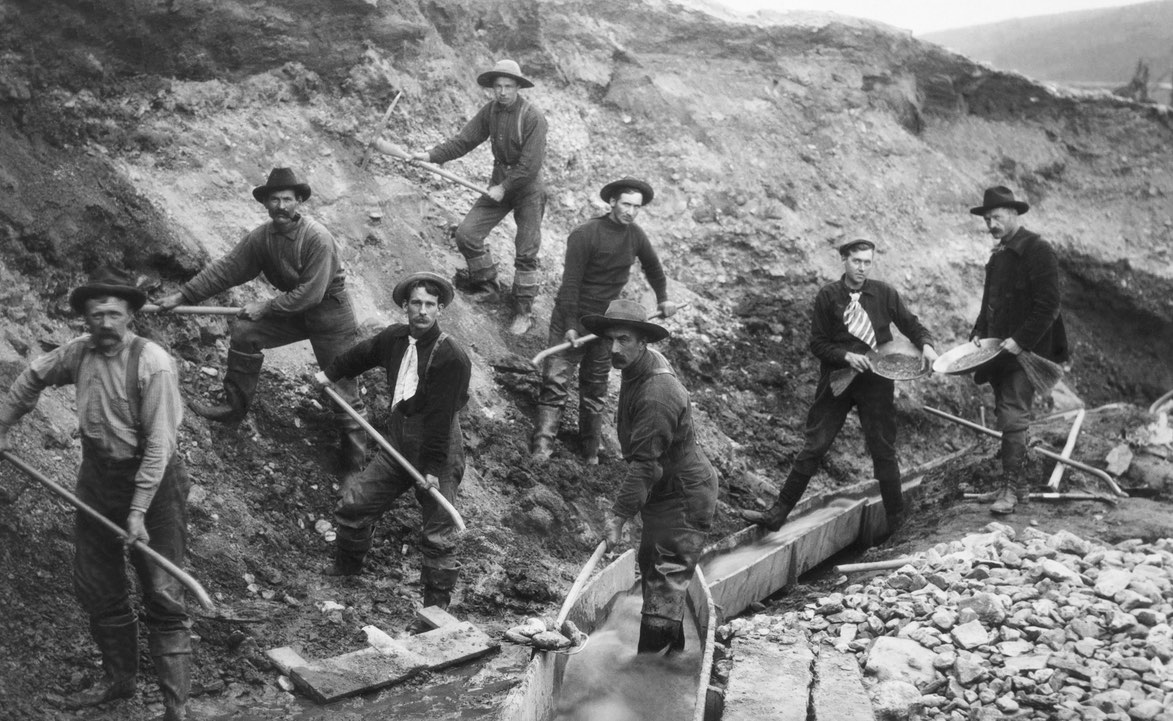
Before 1849 California was declared a waste land and said to have the least resources of any place on the North American continent. That was until the gold rush. Thousands of people left family and home in the hope of striking it rich. Some did, but most didn’t. The gold rush left many more impoverished and hopeless than before. For many California was indeed a waste.

Everyone is in search of hope. Yet we live in a world of pain, disappointment, doubt, and hardship. God may even seem distant and uninvolved. Hope in this world seems fleeting and lost. Where is lasting hope to be found?

Everyone places hope in people. We put our hope in parents, spouses, children, friends, teachers and leaders. We are in constant search for vibrant life-giving teaching that will wow our socks off and stir our affections. While that teaching can be found, its content must never compromise the truth (5:11-12a).

“About this we have much to say, and it is hard to explain, since you have become dull of hearing. For though by this time you ought to be teachers, you need someone to teach you again the basic principles of the oracles of God. You need milk, not solid food, for everyone who lives on milk is unskilled in the word of righteousness, since he is a child. But solid food is for the mature, for those who have their powers of discernment trained by constant practice to distinguish good from evil.

Therefore let us leave the elementary doctrine of Christ and go on to maturity, not laying again a foundation of repentance from dead works and of faith toward God, and of instruction about washings, the laying on of hands, the resurrection of the dead, and eternal judgment. And this we will do if God permits. For it is impossible, in the case of those who have once been enlightened, who have tasted the heavenly gift, and have shared in the Holy Spirit, and have tasted the goodness of the word of God and the powers of the age to come, and then have fallen away, to restore them again to repentance, since they are crucifying once again the Son of God to their own harm and holding him up to contempt. For land that has drunk the rain that often falls on it, and produces a crop useful to those for whose sake it is cultivated, receives a blessing from God. But if it bears thorns and thistles, it is worthless and near to being cursed, and its end is to be burned.” – Hebrews 5:11-6:8

In this, the third warning in the book of Hebrews, we warned to beware of false and flashy teaching that sweeps in and takes the place of true teaching. Our ears often are drawn to the newest self-help fad or smooth-talker. The author of Hebrews calls dull ears to listen and become wowed again by the basic teaching of God, discern what is true, then move on from those teachings to other doctrines (6:1-8).

When one starts primary school he will learn the ABC’s so that he might read words, sentences, books— in fact, anything in literature. The challenge is to renew a passion for basics of faith, which are the building blocks to a deeper hunger to know the wonders of God and be wowed again by him (vs.12b-14).

The greatest and lasting hope in this world is indeed found in a person—The Word who became flesh (John 1:14). Hope is found in Jesus. His teachings are richer than gold for the soul. Dig into his words and the deeper you go the more hope you will find.


Questions for Reflection:

  • What are the basics of faith?
  • How are the basics important to understanding the more complex issues of faith?
  • Where does our culture turn for help to grow wiser, stronger, and more mature?
  • What is the danger of becoming too familiar with the basic principles of God?
  • What is the opposite of dull hearing? How can you cultivate vibrant hearing? What illustrations in the passage help you understand the difference?
  • What wows you about God? What do you want to know more about him?
  • How can you stir others towards a greater hope in Jesus?

Jesus is the Greater Priest

Each of us carry a weigh of responsibility. Whether we are spouse, parent, student, or employee we have people around us or under us that can demand our care.

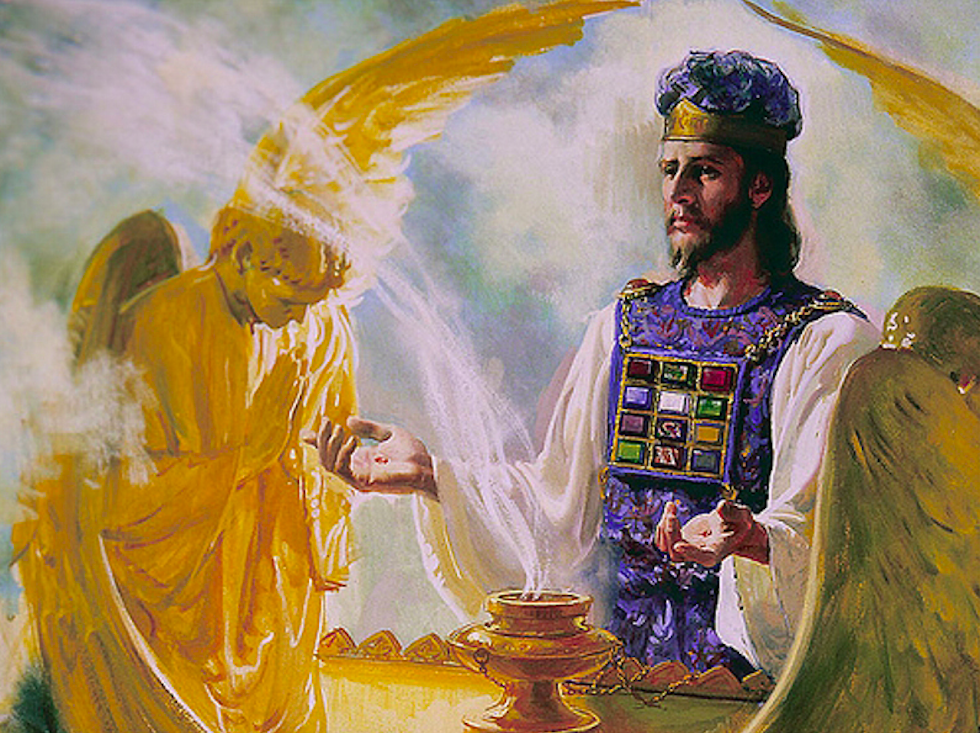
Up until 70 AD Israel had high priest who would bear the weight of responsibility of the entire nation of Israel and plead to God on their behalf for the forgiveness of their sins. What an enormous responsibility and yet he was just a mere man chosen among men to act on behalf of men (v.1).

“For every high priest chosen from among men is appointed to act on behalf of men in relation to God, to offer gifts and sacrifices for sins. He can deal gently with the ignorant and wayward, since he himself is beset with weakness. Because of this he is obligated to offer sacrifice for his own sins just as he does for those of the people. And no one takes this honor for himself, but only when called by God, just as Aaron was.

So also Christ did not exalt himself to be made a high priest, but was appointed by him who said to him, “You are my Son, today I have begotten you”; as he says also in another place, “You are a priest forever, after the order of Melchizedek.”

In the days of his flesh, Jesus offered up prayers and supplications, with loud cries and tears, to him who was able to save him from death, and he was heard because of his reverence. Although he was a son, he learned obedience through what he suffered. And being made perfect, he became the source of eternal salvation to all who obey him, being designated by God a high priest after the order of Melchizedek.” – Hebrews 5:1-10

Interestingly, every high priest was weak and inadequate for the job and needed to seek forgiveness for his sins before he could ask for the forgiveness of the sins of the nation (vs.2-3). No priest was perfect or chosen for the job because he was somehow super spiritual. The honor of the high priest, including Aaron (the first Levitical priest), was not earned, but given by God (v.4).

Jesus was also given the title of high priest (v.5). Unlike other priests, He obeyed God in all things and was sent to earth to be the sacrifice for sin (vs.5, 7-8). A sacrifice that was once and for all. Jesus is unique among high priests in that he did not need to atone for his own sins because he is sinless (v.9). This makes Jesus the greater high priest; your great high priest.


Questions for Reflection:

  • What was the job of the priest? How was this a compassionate job?
  • How did the priest prepare for his job? Why did he need to deal with his own weakness?
  • How is Jesus more compassionate and prepared for the job?
  • How does Jesus’ suffering and sympathy help you to have confidence in God?
  • How does Jesus’ example encourage you to show compassion to another sinner?
  • Dig Deeper: Who was Melchizedek? (Gen. 14:17-20; Ps. 110:4) What does it mean that Jesus is in the order of Melchizedek? What does the relationship between Jesus and Melchizedek tell you about God’s orchestration of history?


Side Notes: Scholars don’t know much about Melchizedek. He is a symbolic picture of Jesus Christ. Long before Moses, Melchizedek was a Canaanite priest-king in a city that centuries later became Jerusalem and he was the head of an order of Jerusalem priests older than Moses’ brother Aaron.