Emily’s Journey

194_27410340370_6968_n_fotor

She had a spark the first time I met her.

Emily Ristau was a young seventh grade girl when we first met. Our first encounter was in the church lobby. It was memorable mostly because I opened my mouth and out flew a Freudian Slip (and no, I won’t go into those details). So, I was introduced to Emily alongside her two older brothers and parents. Her family soon became a favorite. I heard somewhere that you’re not supposed to have favorites in the ministry. “Shh! Don’t tell.”

Emily’s dad would frequently say, “My girl is a walking miracle.” Indeed she was. Emily was born with half a heart, also known as HLHS. When I found out for the first time I thought of little Laura from Little House on the Prairie and modified it to fit Emily. From then, on I dubbed her “Half Tank.” She didn’t seem to mind.

If you did not know Emily, you would not know there was anything wrong with her inward parts for outwardly she appear to be a ordinary teenage girl with an extraordinary faith in God. Though she often struggled with her image and what others thought of her, she would wander back to the truth that she was crafted in God’s image.
dscn2049_fotor
What impressed me most about Emily was her spunky and everyone’s-a-friend-attitude. It was a huge asset to our youth ministry at BGBC. I wish I could have cloned a few Emily’s, although the awkwardness factor would have certainly multiplied exponentially. Just thinking about Emily now makes me laugh. I can hear her say, “Sup?” with that cheeky grin and that faint bob of her head.

When Sarah and I began our courtship, Sarah stayed with Emily’s family. Following Sarah’s first visit, I sought Emily’s approval of Sarah. She said, “She’s a keeper, Justin.” That was enough. A few weeks later Emily help me to assemble a sock monkey for Sarah named Patch. He’s still held together by the Emily’s threads and needlework.

The spark she had was ignited by the Spirit of God.

Emily, left a mark on me. Though I wasn’t her youth pastor for a very long time,  she was used by God to shepherd my life by her example. Emily preached a sermon with her life. Emily may have had half a heart, but she really had more heart than most because her real heart was possessed with the One who gave her life and ordained her days.

Emily went to be with Jesus on May 14, 2014. She was 21.

Emily’s Journey is not over, it’s just begun. Emily is a hero in the faith and now with the champion of her faith! Lucky!

“God as you used Emily in this life to be a ginormous blessing to many, may you use her testimony and ‘new life’ as a continual testimony of Your fame. Until we meet again. In Jesus name.”

“So we do not lose heart. Though our outer self is wasting away, our inner self is being renewed day by day. For this light momentary affliction is preparing for us an eternal weight of glory beyond all comparison, as we look not to the things that are seen but to the things that are unseen. For the things that are seen are transient, but the things that are unseen are eternal” 2 Corinthians 4:16-18

the long silence

sea of people

John Stott’s, The Cross of Christ is a rather filling and satisfying read, if you are looking for a book to bring you back to Jesus again. I recently turned the last page wanting more. Near the end of the book he includes a playlet by unknown author John McNeil entitled, The Long Silence. After a quick Google search I could not find it’s roots, but using my inner-Sherlock I noticed the choice of wording seems to be dated. It is well worth reading and reflecting.

At the end of time, billions of people were scattered on a great plain before God’s throne. Most shrank back from the brilliant light before them. But some groups near the front talked heatedly – not with cringing shame, but with belligerence.

“Can God judge us? How can he know about suffering?” snapped a pert brunette. She ripped open a sleeve to reveal a tattooed number from a Nazi concentration camp. “We endured terror…beatings…torture..death!”

In another group a Negro lowered his collar. “What about this?” he demanded, showing an ugly rope burn. “Lynched..for no crime but being black!”

In another crowd, a pregnant schoolgirl with sullen eyes. “Why should I suffer?”, she murmured, “It wasn’t my fault.”

Far out across the plain there were hundreds of such groups. Each had a complaint against God for the evil and suffering he permitted in his world. How lucky God was to live in heaven where all was sweetness and light, where there was no weeping or fear, no hunger or hatred. What did God know of all that man had been forced to endure in this world? For God leads a pretty sheltered life, they said.

So each of these groups sent forth their leader, chosen because he had suffered most. A Jew, a Negro, a person form Hiroshima, a horribly deformed arthritic, a thalidomide child. In the centre of the plain they consulted with each other. At last they were ready to present their case. It was rather clever.

Before God could be qualified to be their judge, he must endure what they had endured. Their decision was that God should be sentenced to live one earth – as a man!

“Let him be born a Jew. Let the legitimacy of his birth be doubted. Give him a work so difficult that even his family will think him out of his mind when he tries to do it. Let him be betrayed by his closest friends. Let him face false charges, be tried by a prejudiced jury and convicted by a cowardly judge. Let him be tortured.

“At the last, let him see what it means to be terribly alone. Then let him die. Let him die so that there can be no doubt that he died. Let there be a great host of witnesses to verify it.

“As each leader announced his portion of the sentence, loud murmurs of approval went up from the throng of people assembled.

“And when the last had finished pronouncing sentence, there was a long silence. No one uttered another word. No-one moved. For suddenly all knew that God had already served his sentence.”

Theology of suffering and victory from the book of Revelation

This article was written by my friend Scott Tiede. Scott attended Purdue University where he studied mechanical engineering. He worked as an engineer for about 10 years while serving and growing at Bethel Bible Church in Winomac, Indiana. He was called into a staff position at Bethel Bible Church in 2005, and he attended seminary at Faith Bible Seminary in Lafeyette, Indiana, earning his Masters of Divinity in 2010. Pastor Scott joined the staff at Delaware Bible Church in the summer of 2012. Pastor Scott married his wife, Tracy, in 1995 and has four children: Caleb, Keziah, Jacobi, and Elizabeth.

When it comes to the book of Revelation, there are various themes woven throughout the letter.  Of the many themes, two that are very apparent are suffering and victory.  The thesis of suffering and victory is nowhere better represented than by Christ Himself, who suffered death on the cross and now is triumphant (5:5-6).  These themes of suffering and victory present themselves in various ways throughout the book.

Suffering is used to encourage sanctification

This idea is on full display in the letter to the churches in chapters 2 and 3.  Each of the seven churches were contending with some type of trial (2:4, 10, 14-15, 20; 3:1, 10, 15).  Jesus Himself reveals that He will pour out some brand of suffering on each of the churches with the goal of repentance and restoration.  God is not one who does not fulfill His promises, but is continuously active in bringing the necessary countermeasure to sin in the lives of the faithful that will produce righteousness.  In the case of the seven churches of Revelation 2-3, those countermeasures include suffering (2:5, 16, 21-25; 3:2-3, 11, 16-18).  Bennetch states it this way, “Varied as were the trials and experiences that the saints passed through, he[1] was always in their midst, proceeding to fulfill his aim of perfecting the good work begun in each soul.”[2]  Revelation 3:19 makes it clear that the Lord rebukes and disciplines those He loves.  Suffering is used in Revelation to produce sanctification.

God pours out suffering in such a way as to demonstrate His mercy

Clearly the Creator of the universe has the power to wipe His creation away instantaneously.  In the book of Revelation, however, this is not the case.  Instead, there are three sets of plagues rolled out (seal, trumpet, and bowl), and each set of plagues ratchets up the amount of the severity of the suffering while also shortening the time span between judgments.  What is the reason for this?  Could it be that God is a merciful God and that these judgments are rolled out in such a way as to bring the greatest possible number of souls to Himself?  Thielman states it this way, “Prior to the end of all things, the steadily increasing level of suffering does not lie outside God’s control – it is both a punishment on the wicked for their evil, particularly for their persecution of God’s people, and a merciful pedagogical effort designed to extend to them every possible opportunity to repent prior to the final outpouring of God’s wrath on them.”[3]  In fact, the Greek word for repent (μετανοέω) is used 12 times in the book of Revelation, which constitutes over one-third of the total uses in the entire New Testament (34).  Indeed some of the wicked will repent during this time of suffering and will give glory to God (11:13).  The way that God releases His judgment upon the earth puts His great mercy on display.

God pours out suffering in such a way as to demonstrate His justice

If God’s mercy is on one end of the spectrum, then on the other end of the spectrum is God’s Justice.  After mercifully pouring out judgment and suffering on the earth so that all who might come to Him would repent, God’s justice is on full display in the vision of the glorious Rider on the white horse of 19:11-18 who comes to stand against the Beast, the kings of the earth, and their armies (19:19).  This mysterious Rider is none other than Christ Himself (19:11, 13 [cf. John 1:1, 14], 16).  As He comes, the evil forces who gather to make war against Him (19:19) instead find themselves captured or killed before any fighting can begin (19:20-21).  The fact that Christ can defeat His enemies without lifting a finger in battle shows His great power.  God’s justice is powerfully revealed in the fall of Babylon (chapter 18), the destruction of those who refuse to repent (20:15), the destruction of the Beast and the False Prophet (19:20), the destruction of death and Hades (20:14), and in the final destruction of Satan himself (20:10).  Strauss writes regarding the appearance of the Rider on the white horse, “These verses (19:11-21) introduce that great event anticipated for centuries and about which the Old Testament prophets wrote.  It is the golden age on earth when all creation shall be subject to its Creator and Redeemer.  But before He reigns He must subdue every enemy and opposing force.”[4]  The suffering in the book of Revelation points to God’s justice.

Suffering produces a division among people

The awful judgments poured out in the book of Revelation separate people into two different groups; those who align themselves with evil, and those who respond to God in faith.  This theme is present from the beginning when John writes, Blessed is the one who reads the words of this prophecy, and blessed are those who hear it and take to heart what is written in it, because the time is near (1:3).  Lenski states, “Revelation is a book of promise and of judgment.  The promise is intended for those who are sealed; the judgment is intended for Satan and for all who are allied with him.”[5]  The price of being on God’s side is not cheap.  Some of those allied with God had suffered death because they had maintained their testimonies (6:9).  On the other hand, those on the side of evil will experience enormous fear to the point of wishing that they could be hidden from the face of Christ (6:16).  The wicked will also experience great pain (9:4-5) to the point that they will seek death, but not find it (9:6).  Some of the wicked will die during the judgments (9:15).  Those on God’s side are to be sealed on their foreheads (7:3), while those who associate with evil receive the mark of the Beast (13:16-17).  Also, there is a contrast to the activity of each group.  While the godly are singing praises to Him (7:10, for example) and serving Him (7:15), the wicked refuse to stop worshiping idols (9:20), refuse to repent of their evil deeds (9:21), are gloating over the death of the witnesses of God (11:10), and are aligning themselves to make war against Him (19:19).  The wicked are burdened with sin, but the righteous have had their sins washed away by the blood of the Lamb (7:14).  Even in the intensity of the bowl judgments, the wicked curse the name of God and refuse to repent (16:9, 11, 21).  The end of the wicked is eternal torment (20:14), but the end of God’s people is an existence where there is no hunger, thirst, tears, scorching heat (7:16-17), or sin curse (22:3); instead there is eternal life (22:14).

Another key theological thread running through the book is that of victory.  In the end, God will be victorious over Satan and his minions.  This is apparent in at least three ways in the Revelation.

Victory is on display through Christ’s cross work

John speaks in Revelation about the fact that Jesus has achieved victory already through His death on the cross and resurrection.  John refers to Christ as the “firstborn from the dead” as well as “the One who has freed us from our sins by His blood” (1:5).  Revelation 1:18 refers to Christ as the one who has had victory over death forever.  When John is confronted by the fact that there is no one worthy to open the seals of the scroll (5:4), one of the elders tells him not to weep because Jesus is able to open the scroll (5:5).  Why is He able to do this?  The elder says that Christ can do this because he has overcome (5:5).  Before any of the judgments are manifested, Christ has already achieved the victory by His death on the cross and resurrection.  Revelation 7:14 makes it clear that people are being saved through Christ’s cross work when it says, “they have washed their robes and made them white in the blood of the Lamb.”  It is not the judgments being doled out in the end that will provide salvation for the faithful, but only the work Christ did on the cross.  Revelation 19:11-16 presents a scene wherein Christ makes a magnificent entrance into the world as a great and victorious Warrior King.  Standing in contrast to His entrance into Jerusalem on the back of a lowly donkey to eventually be crucified is the fact that Christ now sits upon a white steed dressed in splendor, and crowned with many crowns.[6]

Victory is on display in the Church

Endurance and perseverance are the keys to victory in the book of Revelations.  As Christ suffered horribly and died, but persevered, so believers are to remain strong in the face of suffering.  Beale states it this way, “The Lamb’s followers are to recapitulate the model of his ironic victory in their own lives; by means of enduring through the tribulation they reign in the invisible kingdom of the Messiah (see 1:6, 9).”[7]  In the letters to the seven churches in chapters 2 and 3, promises are made to each church if that church will overcome (Gk. νικάω).  These promises include being able to eat from the tree of life (2:7), authority over the nations (2:26), and the right to sit with Christ on His throne (3:21).  The key to these and the other promises mentioned in Revelation 2-3 is perseverance.  Flora states it this way, “Revelation says that one overcomes by endurance and by faithfulness — not just a quick fix saying, “Lord, I believe,” but the faith which walks that out in faithfulness every day of one’s life.”[8]  In the end, the faithful will, by the power of the Holy Spirit, overcome and will inhabit the New Jerusalem (21:24-27).

Victory is already complete, but will be fully realized when Satan is defeated

As mentioned above, Christ has already achieved the victory through His death on the cross and resurrection.  However, the effects of sin and Satan on the world remain until Satan is ultimately defeated for good.  In effect, the world is still under the curse of sin.  However, John reveals that after Satan, death, and Hades are thrown into the Lake of Fire (20:10, 14) the sin curse will be lifted (22:3).  This will open the door for Christ to renew all things, and a new heaven and a new earth will be the result (21:1).  John describes this as a magnificent place that is constructed and decorated with what appears to be precious metals and stones (21:11, 18-21), a place where no outside illumination is necessary because light is sufficiently provided by the glory of God (21:23).  John reveals that this future estate will be the fully-realized victory of God over Satan and evil.

To conclude this section on suffering and victory, John Walvoord summarizes well the anticipation of man since the fall, and the joyous eternal state that is described in the end of Revelation:

With the close of the prophetic narrative, the Biblical revelation of Jesus Christ also comes to its conclusion. In the beginning of eternity, all that was anticipated in the first and second comings of Christ is fulfilled, and Christ is honored as King of kings and Lord of lords. The eternity which stretches beyond the horizon of Scriptural revelation is one of unspeakable bliss for the saints and unending joy in the presence of God. In the center of the service and worship of the saints will be Jesus Christ, “the same yesterday, today, and forever.” To this eternal destiny every believing heart turns in anticipation and joyous expectation.[9]


[1]He refers here to Christ.

[2]John H. Bennetch, “The Grace of the Lord Jesus Christ for the Seven Churches of the Apocalypse,” Bibliotheca Sacra 96 (July 1939): 364.

[3]Frank Thielman, Theology of the New Testament: A Canonical and Synthetic Approach (Grand Rapids: Zondervan, 2005), 626.

[4] Lehman Strauss, The Book of the Revelation (Neptune, NJ: Loizeaux Brothers, 1964), 322.

[5]R. C. H. Lenski, The Interpretation of St. John’s Revelation (Minneapolis: Augsburg Publishing House, 1943), 21.

[6]David J. MacLeod, “The First “Last Things”: The Second Coming of Christ (Rev 19:11-16),” Bibliotheca Sacra 156 (April 1999): 209.

[7] G.K. Beale, “Revelation (Book)” in New Dictionary of Biblical Theology, ed. by T. Desmond Alexander, Brian S. Rosner, D.A. Carson, and Graeme Goldsworthy (Downers Grove, IL: Inter-Varsity Press, 2000), 356.

[8]Jerry Flora, “New Testament Perspectives on Evil,” Ashland Theological Journal 24 (1992): 20.

[9]John F. Walvoord, “The Future Work of Christ Part IV: The Millennial Kingdom and the Eternal State,” Bibliotheca Sacra 123 (October 1966):299-300.

thumb licks [9.3.12]

Is Proverbs 22:6 a guarantee?

How the 50 States got their names.

Ministry: it’s not about you.

Sin wants to be your friend.

If snack labels told the truth.

Somethings we can learn from suffering.

10 happiest jobs. I knew it!

What is a Sikh?

Why is love so stupid?

Warsaw remembering the Holocaust:

How God uses Suffering

The cross and the resurrection are the ultimate answer to suffering. And we really can trust the good purposes of God in suffering to make us more like Jesus.

1. God uses suffering to teach us His Word.

Suffering makes us more receptive to God’s transforming Word. “Though the word and the Spirit do the main work, yet suffering so unbolts the door of the heart, that the word hath an easier entrance.” (Richard Baxter) Thomas Watson called afflictions our “preacher and tutor,” and “A sickbed often teaches more than a sermon.” (Ps.119:67, 71, 75, note: Matin Luther said Psalm 119 follows the pattern of prayer > meditation > trial)

2. God uses suffering to wean us from idols.

“Sinful desires can lurk in our hearts unnoticed because those desires are neither threatened nor thwarted. But suffering stirs the calm waters of latent sinful desires. It reveals the true state of our hearts. It’s God diagnostic tool, preparing the way of the medicine of gospel truth.” (Tim Chester, Ps.119:50, 92, 107, 153; Ecc. 7:13-14)

3. God uses suffering to discipline us.

Suffering through discipline is a badge of sonship. There is a distinction between God’s father discipline and punishment for guilt (Ps.103:10-13). Suffering is part of our training (Heb. 12:5-11). “God’s rod is a pencil to draw Christ’s image more lively on us.” (Thomas Watson)

4. God uses suffering to test and purify our faith.

Endurance is essential, not optional (Mt. 10:20; Rom. 5:3-5). Rejoicing in trials reveals the genuineness of our faith (Js. 1:2-4; 1 Pt. 1:3-7) Suffering refines our faith (Ps.12:6; Prov.27:21; Job 1:13-19; 2:7-8; 23:1-10). Like a Damascus blade, a believer is strengthen only by sleeping in the flames. The refiners fire is hot–but it burns away the dross and tempers the metal of our faith, making it stronger.

5. God uses suffering to increase our usefulness.

“Let a Christian be but two or three years without an affliction and he is almost good for nothing.” (John Flavel) God uses suffering to work on our character to become dependent on Christ and useful to others (Jn.15:1-2). Sometimes, God positions us in difficult circumstances that paradoxically make us more effective (i.e. Paul, Philippians 1:12-14; 2  Cor. 1:3-7; 4:7-12). The gospel achieves victory through our apparent defeat.

6. God uses suffering to prepare us for glory.

Present afflictions actually work for our future glory (Rom.8:18; 2  Cor. 4:16-18). “They say of some temporal suffering, ‘No future bliss can make up for it,’ not knowing that Heaven, once attained, will work backwards and turn even that agony into a glory.” (C.S. Lewis) View your trials as seeds of eternal glory planted in the soil of your present lives. God is using our trials to make us better, more beautiful creatures than we could ever otherwise become. Demolishing our old cottage is painful, but God is building a palace is you allow Him.

Suffering is not good in itself. It is the result of sin and brokenness in our world. Yet God promises to weave dark threads of affliction and trial into the tapestry of His ultimate saving plan. He is a sovereign God, but His ways involve suffering. With wisdom, love, and goodness, He designs our difficulties and assigns our afflictions to conform us to the character of Christ (233).

My greatest comfort comes from knowing that, because of the suffering, death, and resurrection of Jesus; the suffering will someday cease once and for all, and that God’s ultimate purpose to glorify Himself in bringing many some and daughters to glory will be fulfilled (234).

Adapted from Brian G. Hedges, Christ Formed in You: The Power of the Gospel for Personal Change. Shepherds Press, Wapwallopen, PA. 2010. p.222-234

hanged on a tree (for me)

Part of the curse Jesus would bear for us on Golgotha was the taunting and testing by God’s enemies. As he drowned in his own blood, the spectators yelled words quite similar to those of Satan in the desert: “Let the Christ, the King of Israel, come down now from the cross that we may see and believe” (Mark 15:32). But he didn’t jump down. He didn’t ascend to the skies. He just writhed there. And, after it all, the bloated corpse of Jesus hit the ground as he was pulled off the stake, spattering warm blood and water on the faces of the crowd.

That night the religious leaders probably read Deuteronomy 21 to their families, warning them about the curse of God on those who are “hanged on a tree.” Fathers probably told their sons, “Watch out that you don’t ever wind up like him.” Those Roman soldiers probably went home and washed the blood of Jesus from under their fingernails and played with their children in front of the fire before dozing off. This was just one more insurrectionist they had pulled off a cross, one in a line of them dotting the roadside. And this one (what was his name? Joshua?) was just decaying meat now, no threat to the empire at all.

That corpse of Jesus just lay there in the silences of that cave. By all appearances it had been tested and tried, and found wanting. If you’d been there to pull open his bruised eyelids, matted together with mottled blood, you would have looked into blank holes. If you’d lifted his arm, you would have felt no resistance. You would have heard only the thud as it hit the table when you let it go. You might have walked away from that morbid scene muttering to yourself, “The wages of sin is death.”

But sometime before dawn on a Sunday morning, a spike-torn hand twitched. A blood-crusted eyelid opened. The breath of God came blowing into that cave, and a new creation flashed into reality….

The following is my favorite excerpt from: Tempted and Tried: Temptation and the Triumph of Christ by Russell Moore, Crossway, 2011. pages 124-125.

life hurts. God heals.

When I was in the fourth grade I came down with a strange case of osteomyelitis—a bone marrow disease that can kill if not treated quickly. I ended up in the hospital with a 106-degree fever. I missed about 3-weeks of summer vacation, which for a 9-year old is pure-torture. Not to mention, I missed a B-52’s concert. Yeah, I know. But Love Shack was the hit song in 1989! I still remember the pain from surgeries I had on my knee and chest. I have the scars to prove it.

Every 9 seconds in the US a woman is assaulted or beaten. Around the world, at least 1 in 3 women have been beaten, coerced into sex or otherwise abused within her lifetime. Most often, the abuser is a member of her own family. 1 in 4 girls and 1 in 6 boys are sexually abused before the age of 18. 55-95% of those abused do not speak up or get help. Do you know people that are hurting from an abusive relationship, a violent marriage, or rebellious child? They are in your church, office, and family. Life hurts, but God heals.

I have seen firsthand how pains inflicted by those you love leave deep scars.  Maybe you have experienced a hurtful conversation with a friend, an abusive relationship, or a violent episode. The healing of these deep wounds can take you down a rocky road of bitterness, hatred, sorrow, depression, or brokenness. Such wounds do not go away easily with time. Sometimes signs of a painful past linger for a lifetime.

Hurts can make you better rather than bitter (a summary of Joseph’s past; Genesis 37-41)

Joseph’s the guy who got thrown under the bus by his brothers. They are ticked because he is the favored son and rubs it in wearing his colorful coat and gloats about dreams of his entire family bowing down to him. Their anger leads them devise a plan to sell him as slave in Egypt. Joseph is bought by Potiphar, the captain of the Pharaoh’s guard, and soon is put in charge of his entire household. The only thing he could not control is Potiphar’s wife. She continuous lures him sexually, but he remained pure. She gets tick, so she sets him up with false assault charges and he’s thrown into prison. In the can, God uses him to interpret two of his cellmate’s dreams, which eventually gets him into King Pharaoh’s palace to interpret his dream.

Joseph faced an intense season of suffering [totaling 20-years], which all snowballed from his brother’s sinful plan. God was with him. Even though all the pain and hurt. And Joseph responds with meekness not bitterness.

Give yourself reminders of God’s character (Genesis 41:50-52)

I like to think I have a good memory, but I still forget. I have memory aids like a small UPS truck to remind me to pray for my dad or 2-dollar bill in my wallet that frequently reminds me of my great grandfather Roman. I also keep important dates like my wife’s birthday and our wedding anniversary on my computer. If it ever crashed I would be doomed!

Joseph was blessed with a wife and two sons. It’s the only family he’s got, since his brothers ditch him for some dough. In honor of his God, Joseph gives beautiful and worshipful names to his two new sons. Every time he sees them he is reminded of God’s character despite a horrendous past,

“Before the year of famine came, two sons were born to Joseph. Asenath, the daughter of Potiphera priest of On, bore them to him. Joseph called the name of the firstborn Manasseh. “For,” he said, “God has made me forget all my hardship and all my father’s house.” The name of the second he called Ephraim, “For God has made me fruitful in the land of my affliction.” [41:50-52]

When my daughter was born, Sarah and I named her, Justus. It was inspired from a character from Acts 18:7, but her name is also tribute to God’s justice. Since we are moving our family to serve people who have not seen or heard our God of generous justice, it is our prayer that her name would reminds us of God’s character. Reminders are important, especially when you’re hurting. Do not forget the character of your God. How will you remember Him?

Forgetting the past is difficult when it unexpected comes back  (Genesis 42:1-9a)

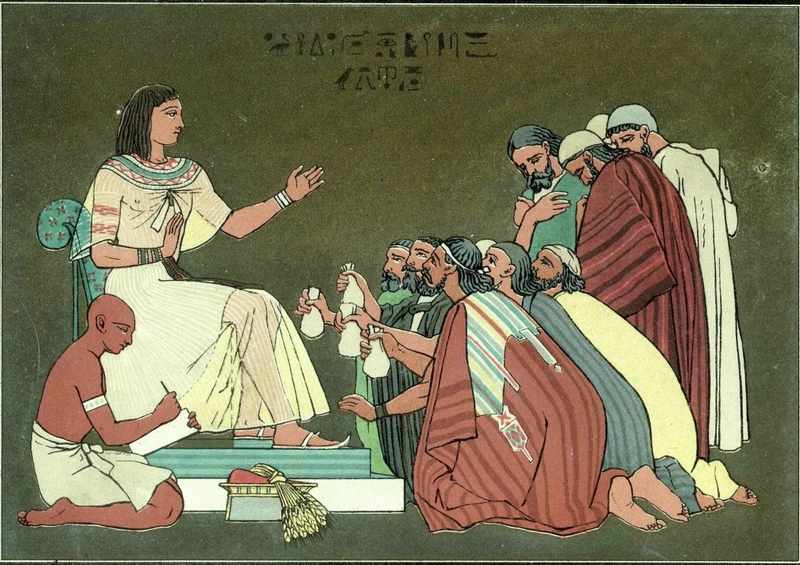
In a dramatic plot twist, Joseph is now 2nd in command of Egypt and in charge of the food reserves in a severe famine. Joseph’s brothers come bow and ask for food. Is it déjà-vu? Or is this just like Joseph’s dream years before? Joseph’s brothers do not recognize him because of his new Egyptian hairdo, but Joseph did not forget. When he saw his brothers he knew exactly who they were. Their faces were imprinted in his head as they sold him into slavery.

Cleverly, Joseph spoke to his brothers through an interpreter though he could speak both Egyptian and Hebrew. Not thinking that the Egyptians could understand them the brothers publicly spoke in Hebrew about the past. Joseph was overwhelmed with emotion. He’s in a position where he could lynch them or enslave them. Instead, he desired to see them again. So he devises a plan to keep one brother, Simeon, in custody until they returned with their youngest brother, Benjamin, who was Joseph’s only full-blooded brother born by both Jacob and Rachel.

Upon returning home, the brothers informed their father of the situation, “We got some food. Oh, by the way, your son is held captive in Egypt. He won’t be let go until we bring Ben. Another thing, not sure how it happened, but we still have the food money in our sacks.” This troubled Jacob. He remembered what happened to Joseph, thus he held Benjamin back. Judah stepped forward and took responsibility for his brother Benjamin. Here Judah begins to own his faith and show why he is a key character in the line that paves the way to the Messiah.

Jacob did a hard thing as a dad. He prayed for God’s protection, and sent all his sons to Egypt not knowing their fate. They needed food to live and the risk was worth it. Through it all, God is at work. When the brothers returned to Egypt Joseph invited them into his home, and they came to the conclusion they were going to become slaves. It’s interesting how the brothers jump to the worst-case scenario. Instead, Joseph wanted to feed them dinner.

During table talk, Joseph learns his father is still alive. He immediately steps into another room and weeps with joy. At this point, Joseph’s has not revealed himself to his brothers, has not sought to see his father, and has not indicated whether he intends to punish or forgive his brothers. The tensions are high.[1] And we now wait to see if Joseph will show his brothers his true identity and if he intends to forgive them or seek revenge for what happened in the past.

The past is not everything, nor is the past is nothing. Your past can affect your present and future [Galatians 6:7]. How should I handle the past, especially as a follower of Christ? I have heard many respond to the past by saying, “I know ____ will do it again. I’ve been down this road many times before. As soon as I see _____ [BAM!] the old ugly emotions are back.” Dealing with the past is usually not a one-time event, but a process. Here are some truths about your past that you’re good to remember:

Your past doesn’t change, but you might need to change. The change could be changing the way you look at the past. Some say, “I would be much better off without my past. How could God allow this to happen?” God gets blamed for the bad and ugly, but God uses hardships for good. Think of characters in the Bible who went through hardship at the hands of others [i.e. Job, Jeremiah, Joseph, Jesus]. How did they handle painful situation? How did God’s glory shine through their situation? Joseph is the Romans 8:28 of the Old Testament.

Your past reminds you of present grace and future hope. Hardship often precedes glory. Just look at the cross. Pain and hurts of this world remind you that you are not yet home. God promises you a place where hardships will be no more. Dealing with the past is a process.

Forgiveness is the process of healing to get past your past (Genesis 45:1-11)

After Joseph learns that his father is still alive. He sends his brothers back home to get him. He demands Benjamin to stay and his brothers to go back and get their father, but Judah knows his father would be crushed if Benjamin did not return with them, so he offers himself as a substitute. He willingly sacrifices himself for his brother. It is a scene that moves Joseph to tears.

The time has come. Joseph cannot keep his identity hidden any longer.  In a matter of a moment he is transformed from some powerful Egyptian to their long forgotten Hebrew brother. It is a beautiful moment of reconciliation and restoration. I am sure it is a moment filled with amazement, surprise, sorrow, and many other emotions.

Joseph tenderly helps his brothers understand he is not mad at them (nor should they be mad at each other) for selling him into slavery, “God has sent me hear to preserve life.” [5,7-8]. God planned for the brothers to sell Joseph as a slave in Egypt to ultimately send him ahead of his family to preserve a remnant of his people from the famine.[2]

Healing begins with radical biblical forgiveness. What is radical biblical forgiveness? It’s choosing to treat someone as if the hurt that happened never happened.” It is like taking a chalkboard of offenses and wiping the slate clean, or throwing out the trash bag full of transgressions never to retrieve them again. Forgiveness is a willful decision to release a person from the hurt, injury or abuse.

It’s radical because it’s not customarily practiced. You can willful choose not to forgive. It is your choice, but it’s a choice that will certainly cause more hurt over a long period of time and eventual invade other areas of your life. Unforgiveness is contagious. It is like a virus that moves through your system infecting your entire body. Unforgiveness is torturous. It is also foolish. Have you heard of some of the irrational reasons for not forgiving?

“The hurt is just too big. You should have seen what they did/said to me. I can’t possibly forgive something that big.” That is foolish. You’d think that the bigger the hurt is the more you’d want to get rid of it.

“I cannot forgive until I forget.” Can you forget? Sometimes no. But you will not forget until you forgive. Forgiveness is the process of forgetting. Forgiveness says, “I’m forgiving that, I’m going to release that person. And when I remember, I will forgive it again!” Joe Coffey in his book Red Like Blood says, “Forgiveness is like garbage day in that no matter what I bring to God it is completely taken away. No matter how much or how nasty, forgiveness is absolutely complete. The cans turned upside down. Garbage day makes me feel clean.”[3]

“I’m going to let time heal the hurt.” This is a lie. Time does not heal it only prolongs the hurt. Over time the hurt just gets bigger and worse. If you had a cancerous tumor that is curable but if not removed it the tumor will grow and grow until it consumes you to death. You can bury hurt or ignore it, but when you dig it up it’s still as ugly as it ever was before. The larger you see you past, the smaller you see your future. The smaller you see you past, the larger you see your future. Let go of yesterday – hold loosely today – embrace tomorrow.

Do you see the fruits of forgiveness in Joseph’s story? His anger disappears, he accepts his brothers, he blesses them, and he welcomes them back into his life. He could have responded by saying, “You owe me! I’m going to make you pay by hating you, by slandering you, by returning the hurt, by recruiting other people to my bitterness. I’m holding this over you!” Instead it’s as if he chose the process of healing through the way of forgiveness.

God’s forgiveness demands your forgiveness. When I forgive I am most like God. Joseph’s life is a picture of Christ.  If you want to get a glimpse of God’s forgiveness look at the life of His Son Jesus. Was He despised, rejected, beaten, mocked, slandered, spit upon, abused, hated? How did He treat His enemies? He has a radical response: forgiveness.

How are you like Joe’s bro’s?  Like his 10 brothers, you have severed off your relationship with your Brother-Savior choosing sin instead of Him. If the 10 brothers were in the crowd—and you—we would have yelled, “Crucify Him!” But Jesus, like Joseph, will save you from spiritual famine. In John 8, Jesus forgives a woman who is condemned by everyone. The law required stoning for her sin, but Jesus forgives her and in essence decides to take upon Himself her stoning. Jesus’ desire is to give and forgive. He will save you not just from famine, but also from hell [Matthew 12:41-42]. He offers you a land where you will hunger no more [Revelation 7:14-17].

Second, Judah’s life is a picture of Jesus too. Judah is the first person in the Bible to willingly offer his life for another. Although he never gave his life or freedom, his self-sacrificing love for his brother for the sake of his father is picture of the atonement of Christ.[4] Jesus is the reason a remnant would remain. Through his lineage the Messiah would come as the Good Shepherd and lay down His life for the sheep [John 10:11].

Finally, like Joseph, Jesus is servant king. Sooner or later all will know He is greater. Just like Joseph’s dream and its fulfillment, so it will be with Jesus, at His name every knee will bow [Philippians 2:10]. Better to do it sooner than later.

I have seen how pain of the past has handicapped and numbed people, ravaged relationships, crumbled friendships, wrecked families, split marriages, even divided churches. Life hurts. But God heals. I have also seen how the Great Physician has healed marriages scarred by sexual abuse, and relationships reconciled from verbal and physical abuse. Its radical, biblical, and beautiful. The key to get past the past is forgiveness by the way of the cross. The past does not have to define you. Be free. Chose forgiveness rather than the path of bitterness.

“Therefore, since we are surrounded by so great a cloud of witnesses, let us also lay aside every weight, and sin which clings so closely, and let us run with endurance the race that is set before us, looking to Jesus, the founder and perfecter of our faith, who for the joy that was set before him endured the cross, despising the shame, and is seated at the right hand of the throne of God. Consider him who endured from sinners such hostility against himself, so that you may not grow weary or fainthearted. In your struggle against sin you have not yet resisted to the point of shedding your blood. (Hebrews 12:1-4)


[1] The story of Joseph and his brothers and father culminates in a way similar to the account of Joseph’s father Jacob. Jacob was likewise separated from his father Isaac for many years and upon moving toward the moment of reconciliation there was a great tension as it was uncertain whether Esau would forgive his brother Jacob or seek revenge against him.

[2]  Here the theme of a remnant resurges. It’s a theme that is promised to Israel forever [cf. 12:2,10; Jeremiah 23:3-4].

[3] Red Like Blood. Joe Coffey and Bob Bevington. Shepherds Press, Wapwallopen, PA. 2011. 132.

[4] Sidney Greidanus, Preaching Christ from Genesis. William B. Eerdmans Publishing, Grand Rapids, MI. 2007. 418-419.


consider it joy?

Count it all joy, my brothers, when you meet trials of various kinds [James 1:2]

Pray to Strengthen Persecuted Christians. Christians worldwide are being persecuted for their faith. That’s a fact. They need your help, but perhaps not the kind you would expect. They are suffering, yet they continually ask for prayer to strengthen their resolve – NOT for relief from persecution. Think about that for a minute. Suffering for righteousness’ sake.

Prayers of Adoration – taking time to praise for who God is.

Our God is a mighty God!
He has created the world and all who live in it – praise the Lord!
God holds every nation, government and citizen in the palm of His hand – praise God!
God sent His one and only Son to pay for our sins – Hallelujah!

Prayers of Confession – repentance; asking God to empower you to live a life that honours Him.

  • Our God is a merciful God!
  • We have fallen short.
  • Ask forgiveness for not proclaiming His Word boldly.
  • Giving control of our lives to God is difficult.
  • Have we expressed joy in all circumstances?
  • Pray for a forgiving heart.
  • Pray for “enemies”: those who have wronged or hurt you. Pray for their release, and yours.
  • Pray for a thankful heart.

Prayers of Thanksgiving – thanking God for all He has given you.

  • Our God is a gracious God!
  • Thank God for the spread of the gospel in the face of persecution.
  • Thank God for His Son Jesus Christ and the great gift of the peace that passes all understanding.
  • Thank God for His promises and the joy we can know in the assurance of our salvation!
  • Thank God for the working of the Holy Spirit in your life.
  • Thank God for your circumstances, whatever they are.
  • Thank God for the victory and triumph we can claim because of Jesus Christ!
  • Thank God for your church building, your Bible, your freedom.

Prayers of Supplication – praying for needs

  • Our God is a generous God!
  • Pray for strength for those who face persecution.
  • Pray for strength to face your trials.
  • Pray for contentment, whatever your circumstances.
  • Pray for those who do not know Jesus, for whom contentment will always be just out of reach.
  • Pray for joy first, and your circumstances second.
  • Pray that you will keep your eyes fixed on Jesus, and not be distracted by all the world offers.
  • Pray for persecutors, that God will open their eyes and let them see Jesus.
  • Pray for the courage to boast about what the Lord has done!
  • Pray for those who go out to preach the gospel message with boldness, despite opposition.
  • Pray that you have the courage to be bold in your community.
  • Pray for hearts that are hardened by their circumstances, pray that God will soften their hearts.
  • Pray that God will use your circumstances for His purposes.

Give God all the Glory – AMEN!

Download these books to continue a study on the persecuted church:

Click Picture to Download

from fanatic to follower

Fanatics aren’t hard to find. Each weekend around the country fanatics pack stadiums proudly displaying the colors and logos of their favorite team and passionately cheer and shout for hits, sacks and complete annihilations. Football fanatics have been known to wear pirate eye patches, pig snouts, and large wedges of cheese. Honestly, I do not see anything wrong with the cheesehead!

Political systems have also produced more than one fanatic. Have you heard of Usama Bin Laden, Idi Amin, Gaddafi, Mugabe, and Kim Jong Il? These are household names. Historically you have certainly learned about Adolf Hilter, Joseph Stalin, Pol Pot, Leopold II, and Nero who burned Christians as lighting for his courtyards.

Religious fanatics aren’t hard to find either. Thousands of Muslims pilgrimage yearly to Mecca, Hindu’s worship a pantheon of more than 300 million deities, Buddhist bow to an icon of bald man with a big belly, some religious radicals commit suicide in car bombings to gain merit in the afterlife, and on TV you seen “Christian” evangelists sporting big hair and big bank accounts.

Another religious fanatic that you may be aware of lived shortly after the death and resurrection of Jesus Christ. He was a member of an elite religious group that wielded considerable political power in his region. His name was Saul of Tarsus.[1] His studied in Jerusalem under the Jewish scholar Gamaliel. He slavishly devoted himself to the Old Testament laws along with hundreds of other laws the Pharisees concocted [Galatians 1:13-14]. He assumed he was pleasing God as a religious fanatic.

STORY OF AN ENEMY OF CHRIST [Acts 9:1-2]

The one thing that Saul saw as a threat to his rigorous religious system of Judaism was this newfound faith called followers of the Way. Jews were converting in droves becoming followers of the Way of Christ. These followers realized “there is no other name under heaven given among men by which men must be saved” [Acts 4:12], but the name of Jesus. In zealous response Saul attacked Jesus-followers seeking to be a one-man roadblock to the Way.

After he just stood by and watch the stoning of Stephen[2] it is said that Saul “was ravaging the church, and entering house after house, he dragged off men and women and committed them to prison.” [Acts 8:3] Then in Acts 9:1–2, Paul was not just bullying Christians, he was “breathing threats.” It is as though persecution was the air he breathed. Paul was breathing threats and murder against Christians, and took his persecution 150 miles north of Jerusalem to Damascus and planned to bring Christians back for punishment.

While Saul travel down the road to Damascus, God is taking Saul down the road towards transformation. The conversion of Saul is the conversion of a stanch opponent of Christianity. Today I will look at the story of Paul’s conversion to Christ. I want you to see God’s purpose in converting Paul was to give you hope for yourself and for the people you want to see converted.

SUDDEN AND UNEXPECTED CONVERSION [Acts 9:3-9]

Saul is the last person on earth you would expect to convert to Christ. He was not open to considerations or interested in learning about the Way. He was closed and convinced Christ’s claims were blasphemous. His heart was hard and dead in his trespasses and sins. He is the kind of guy you wish would go away or that God would somehow smite. Do you know some Saul’s? How often do you pray for their salvation rather than their destruction?

“Now as he journeyed he approached Damascus, and suddenly a light from heaven flashed about him.” [Acts 9:3] The whole event came out of the blue, like a surprise party or hidden camera show. Paul’s first encounter with Christ was unexpected. Paul never links his conversion to any long process of God convicting him of sin or of frustrating him or of stories scaring him with death and hell. All those things may have happened in an instant as he fell to the ground. But there was no long process preparing the soil of his heart. The conversion was sudden and utterly unexpected.

When I consider Saul’s conversion it gives me courage that my prayers and efforts to see my friends and family saved might not happen immediately, but it might happen suddenly. It reminds me of my gramps conversion. I had been sharing my faith openly with him since I came to Christ as a teenager. I had many talks with him about my faith in Christ. He would listen, but normally respond by saying, “No thanks Justin, that is good for you, but I am happy being Catholic.”

I never gave up praying or sharing. Sometimes I would be frustrated when I would not see any progress or signs God was preparing his soul. Until about 3-years ago, just after he found out that he had a malignant form of cancer. I received a call at the church and he said, “Justin. Counselor. I have two questions for you: First, what do you think about my girlfriend and I living together? Second, how do I know Christ is Savior?” His questions caught me by surprise. I answer his first question, letting him know I would rather see them marry but encouraged him of my love. Then we spent the majority of time talking about his second question. He did not make a decision that day.

A week later I received another call at the church from gramps. He started off by say, “Justin. Pastor. I have two things to share with you. First, I have asked my girlfriend to marry me. Second, I have given my life to Jesus Christ.” A few months later on his deathbed he looked me in the eyes—with tears in his—and said confidently, “I look forward to seeing my Savior.” Gramps conversion was sudden and unexpected, like Saul’s. Keep praying and sharing the love of Christ because He is Truth and the Truth will set free.

SOVEREIGN GRACE ON DISPLAY [Acts 9:10-20]

Saul’s conversion was a miraculous display of God’s sovereign grace. Jesus as commander-in-chief of the universe took over that day on the Damascus road. There is no doubt that only Christ could change a soul like Saul’s. How is grace of God on display in Saul’s salvation?

First, God causes a light to flash from heaven with blinding brightness. Saul is left blind for three days—until Ananias prayed and laid hands on him [v.17]. God blinded him and God gave him sight again. This was a powerful sign to Saul of his actual spiritual darkness. Jesus said, “I am the Light of the world. Whoever followers Me will not walk in darkness, but will have the light of life.” [John 8:12] The Pharisees doubted and questioned His bold statement of authority, but just a few moments later He gave them a divine object lesson healing a man born blind [cf. John 9:1-41].

Second, Jesus is seen as totally authoritative when He speaks to Saul and gives him an unquestionable command. “I am Jesus, whom you are persecuting; but rise and enter the city, and you will be told what you are to do.” [vs.5b–6] Jesus does not bargain, debate or give Saul a choice in the matter. Jesus means to have Saul in His service and there is no question that He will succeed.

Third, Jesus chose Paul long before Paul chose Jesus. “Before I was born God set me apart and called me by His grace to preach the gospel to the Gentiles” [cf. Galatians 1:15]. Jesus speaks to Ananias as if He knows Saul will go along with what he says. Naturally Ananias is afraid to go pray for Paul, but Jesus says to him in a vision, “Go, for he is a chosen instrument of mine to carry my name before the Gentiles and kings and the sons of Israel;[3] I will show him how much he must suffer for the sake of my name.” [vs.15-16] Ironically, Saul the persecutor will face persecution in his future ministry. Christ is calling Saul to salvation and a ministry filled with suffering.

Fourth, He uses reluctant Ananias as His ambassador. God gives him a vision to share the gospel with someone he really is not comfortable. He’s heard of Saul’s bad reputation, and knows he could be walking into a prison sentence. I can hear Ananias asking, “What about that sweat old lady across the street who always makes my favorite cookies? Or the kid next-door who is really lost but faithfully comes to our weekly AWANA outreach?” Jesus used Ananias, but the glory for his salvation goes to Jesus.

I can relate to Ananias. I can be timid at times, I’ve been known to ignore God’s tug to tell others about Him. One of the simplest, but effective ways I’ve been able to remedy this in my life to pray for/with the often ignored people around me [i.e. sales clerk, bank teller, mailman, waiter]. Surprisingly they all respond favorably and God’s grace is on display.

SAUL’S CONVERSION IS FOR YOUR SAKE [1 Timothy 1:12-17]

God had you in view when He chose Saul and saved him by His sovereign grace. Later Paul reflects with his young pastoral student Timothy, “I thank Him who has given me strength, Christ Jesus our Lord, because He judged me faithful, appointing me to His service, though formerly I was a blasphemer, persecutor, and insolent opponent. But I received mercy because I had acted ignorantly in unbelief, and the grace of our Lord overflowed for me with the faith and love that are in Christ Jesus. The saying is trustworthy and deserving of full acceptance, that Christ Jesus came into the world to save sinners, of whom I am the foremost [chief, first place]. But I received mercy for this reason, that in me, as the foremost, Jesus Christ might display His perfect patience as an example to those who were to believe in Him for eternal life. To the King of ages, immortal, invisible, the only God, be honor and glory forever and ever. Amen.” [1 Timothy 1:12-17]

If you believed on Jesus for eternal life—or if you may yet believe on Him for eternal life—Paul’s conversion is for your sake. How does his conversion attest to this?

First, even a religious fanatic can be an enemy of God. Before Christ you were an enemy of God [Romans 5:10]. Paul’s life as a fanatical Pharisee was a long, long trial to Jesus. Jesus asked, “Why do you persecute me?” In other words, “Your life of unbelief and rebellion is a persecution of Me!” Paul had been set apart for God since before he was born. Therefore all his life was one long abuse of God, and one long rejection and mockery of Jesus who loved him. That is why Paul says his conversion is a grand demonstration of Jesus’ longsuffering.

Second, no one is too severe a sinner to be withheld forgiveness of his or her sin. You might have lied, cheated, murdered someone with your words, or blasphemed God to His face. You can be forgiven! Saul’s salvation was for your sake to show you the patience of Christ. Lest you lose heart and think He could not really save you. Lest you think He is quick to anger. Lest you think you have gone too far away. Lest you think your dearest one cannot be converted—suddenly, unexpectedly, by the sovereign grace of Jesus.

Third, God uses the blood of his believers to build his church. The stoning of Stephen was no mistake. It led Saul down the Damascus road, down the road towards transformation, paved the way through severe suffering so the seed of the church and the saving message of Christ could reach you and me. A few months ago, I met a gathering of MBB believers in North Africa who suffered immense persecution, public humiliation, loss of jobs, and separation from family all for the sake of coming to Christ. Their perseverance has led to the birth of a vibrant church among an unreached people group.

It is okay to be a fanatic as long as you are a faithful follower of Jesus Christ. By definition a fanatic is a person filled with obsessive enthusiasm and single-minded zeal. This kind of passion is necessary as a follower of Christ since the Way is not easy. Jesus does promise forgiveness, but He also promises a rocky road filled with temptation and suffering. Are you ready to walk down the road of Golgotha bearing your cross, dying to self and living for Christ?


[1] Saul is the Hebrew name for Paul.

[2] Stephen was the first recorded martyr of Christianity [Acts 7:54-8:3].

[3] Paul did get to carry Christ’s name to King Aggripa [Acts 25:13ff] and Caesar [25:1-12]

thumb licks [10.21.11]

What’s a good question? How to evoke curiosity the right way.

The gospel or Justice, which? Balancing the mission of the church.

In defense of Disney princesses. The benefits are more than just their beauty.

Three rules for polemics. Tim Keller weighs in on a debated issue.

The world is built on discipline.  An open letter to college freshmen.

10 reasons Christians should care about science. Can faith and science reconcile?

Little big world. See what an unordinary Nikon camera can do looking at God’s micro creation.

Victor-y. Overcoming cancer as a kid. Be inspired.

thumb lick thursday [5.19.11]

hospitality and small children

I’ve been thinking about the joys and challenges of being hospitable with small children at home. Having toddlers afoot amid home and meal preparations, while expecting a large or small gathering of people, can be a challenge. So much so that many people just don’t do it much at all. But it can also be a great joy and delight.

Transforming Neighborhoods by Transforming Public Schools

Despite our history of antagonism toward public schools, especially as a cultural darkness seems to have settled on them, it’s intriguing to wonder: what if Christians flooded public schools with practical help? What if Christians became more willing to enroll their children in public schools? And what if the lines between public and private educations began to blur?

Where the Twelve Apostles Died

Geographic Travels has put together a map of locations identifying where, according to tradition, the 12 Apostles of Christ died. Blue markers represent commonly accepted death locations while yellow markers represent disputed locations.

On Being Better Bereans

So how can we be better Bereans? Most Christians are eager to receive the word, especially when we get new insights and background information, but how many go the extra step and examine the Scripture to see if the new nugget is actually true (Acts 17:11)? Here are a few things to keep in mind when we hear an exciting new teaching or connection…

Warfare Causes Suffering

“Warfare causes suffering, spiritual warfare being no exception. Those who take up the mission of God’s people by simply living, working and witnessing in the public square so dominated by the gods of this world, who choose to live by the distrinctive ethical standards that flow from their biblical worldview, who confess Jesus as Lord, and not Caesar or Mammon – such people will suffer in one way or another” – Christopher Wright in The Mission of God’s People

Spring Rains

“This song that I wrote is a reflection of what happened in the Garden of Eden. It is an expression of longing and aching for what was lost and looking for what is to come. In his book, Dr. Kapic talks about the moment that Adam and Eve “first began to doubt God’s generosity.” I was overwhelmed with this idea that Dr. Kapic presents in his book, that God, in response to our sin, gives more to us and pours out himself for us. God delights in giving to me and that is just one way in which he shows his love.”  – Esther Ellis

thumb lick thursday [3.31.11]

Lick it, flip it, clip it, quote it. A thumb lick is a term used to describe the action taken when turning the page of a book. While reading I often find great one-liners, statements and paragraphs that are golden nuggets of biblical wisdom. So Thumb Lick Thursday is a way to pass along great tidbits of truth.

Is Mandated Bible Reading Healthy for Kids?

This is probably one of the most common questions  I hear from parents wanting to establish Christian disciplines in their kids. Every Christian parent deals with this at some point. They struggle with what they should mandate vs just encourage their kids to do. And with this, how much? At what point will we defeat our purpose and discourage them?

Hope for hurting marriages

There are far too many marriages in our Churches and communities that are hanging together by very thin threads. When marriages are like this, patterns of neglect are almost always part of the reason. It takes commitment and work for a marriage to be the mutually satisfying relationship it was intended to be (Note: 5 key commitments for a good marriage).

Worth-ship

Worship is “worth-ship”, an acknowledgement of the worth of Almighty God…It is therefore impossible for me to worship God and yet not care two cents whether anybody else worships Him too…Worship does not beget witness is hypocrisy. We cannot acclaim worth of God if we have no desire to proclaim it. – John Stott, Our Guilty Silence. 27-28

Suffering & Death

The Greatest single secret of evangelistic or missionary effectiveness is the willingness to suffer and die. It may be a death to popularity (by fatefully preaching the unpopular biblical gospel), or to pride (by the use of modest methods in reliance on the Holy Spirit), or to radical and national prejudice (by identification with another culture), or to material comfort (by adopting a simpler lifestyle). But the servant must suffer if he is to bring light to the nations, and the seed must die if it is to multiply. – John Stott, The Cross of Christ, Leicester: IVP, and Downers Grove, IL. 1986. 322.

What are you Sinking about?

It is easy for communication to be lost in translation. This commercial by the German Coast Guard and their new recruit emphasize this point.

pray for the people of Japan

This morning a massive earthquake 8.9 in magnitude rocked the country Japan. There are still feeling the tremors, beginning to pick through the rubble, and evacuating to higher ground from a giant tsunami that followed the earthquake. A natural disaster of this size will take months and years to recover. Today, homes, families, and real peoples lives were severely changed.

Let’s us lift up prayers to God for the people of Japan. Pray for comfort for the suffering. Pray the glory of God would reign over this island. Pray the gospel would go forth. Pray that the churches, pastors, and Christians in Japan and around the world would rise up to encourage Japan.

More pictures here.

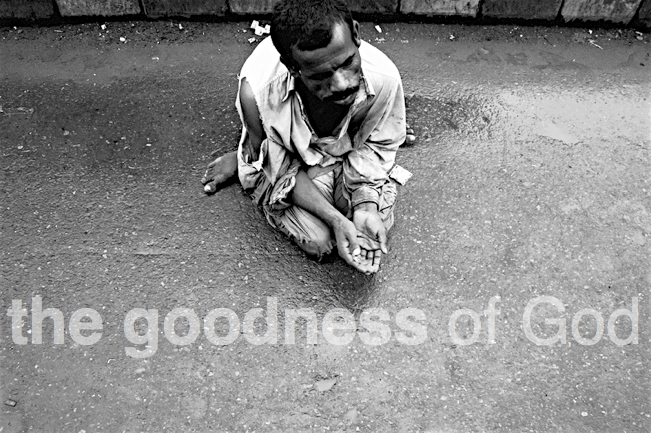
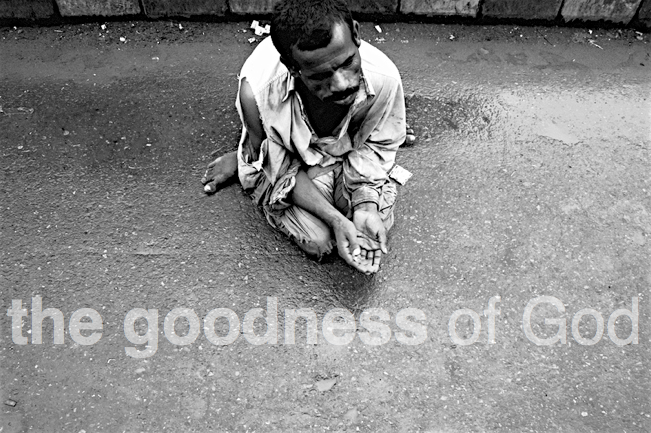
the goodness of God

The Goodness of God

A book review of The Goodness of God by Randy Alcorn

Why is there pain and suffering in the world? Why would a good God allow such evil to transpire on His watch? These are difficult questions that have drawn people to God or repelled them from Him. These difficult questions have even sifted out Christians from among the ranks, “Evil and suffering have a way of exposing our inadequate theology. When affliction comes, a weak nominal Christian often discovers that his faith doesn’t account for it or prepare him for it.” [5]

In his book, The Goodness of God, Randy Alcorn practically, personally and biblically addresses common misunderstandings about why a good and sovereign would allow or permit suffering and evil to affect His creation. He points out the flawed thinking of many world views [i.e. relativism, buddhism, pantheism, atheism, dualism, open theism, gnosticism, etc.] that seek to diminish and deactivate God’s goodness in the face of pain and suffering in the world. Here are some of the questions covered in the book that aim to give you assurance in the midst of suffering.

If God is really good why is their evil?

Evil cannot exist without the good it opposes. It’s not so much the removal of good as it is the corruption of good. As metal does not need rust, but rust needs metal, so good doesn’t need evil, but evil needs good [10]. From the beginning God intended the permission of evil, but to turn it on its head and show His highest good in the midst of it. The ugliness of evil demonstrates the beauty of God’s goodness.

If God is good why all the suffering and pain?

Evil is the source of suffering. Suffering would not exist if there were no evil. With the Fall of man came suffering and pain as a righteous consequence man’s sinful disobedience. God allows and permits suffering and pain as part of His divine plan. Though God is not the causer of evil, but he is the author of the story that includes it [15].

If God is good why doesn’t he deal with evil?

He will. No evil will ever go unpunished [61]. Where is the justice? Sometimes God’s delay in our finite mind and time frame seems unjust, but “God delays justice not to make our lives miserable, but to make our lives possible.” [62] God’s delay is actually good, it allows for His grace to give us time to turn back to Him.

“Grace isn’t about God lowering His standards. It’s about God fulfilling those standards through the substitutionary suffering of Jesus Christ. Grace never ignores or violates truth. Grace gave what truth demanded: the ultimate sacrifice for our wickedness.” [24]

The problem is, “we want selective justice, not true justice. We cry out for justice when we really want vindication and special treatment–relief from injustice done against us, without being judged for injustices done by us. Since God is just, he cannot always give us the justice we want without also giving us the justice we deserve.” [62-62]

Our problem is further amplified because “we are utterly unqualified to assess how often we sin and how bad our sins are. Sin mean nothing to those who are riddled with it.” [85]

If God is good what is the purpose of evil?

Evil is never good, yet God can use any evil to accomplish good and sovereign purposes [34]. We would much rather have suffering and pain disappear and go away. However, is for our good and God’s working in us. What glorifies God is good for us [103],

“Suffering exposes idols in our lives. It uncovers our trust in God-substitutes and declare our need to transfer our trust to the only One who can bear its weight. We imagine God as our genie who comes to do our bidding. Suffering wakes us up to the fact that we serve Him, not He us.” [100]

In conclusion, there are more biblically satisfying answers to the questions above, which I did not mention along with encouraging and challenging stories of many who have walked through the fires of suffering and pain, but came through refined.

My only beef with the book is that it is too short. There is a practical solution. Get the bigger book. The Goodness of God is a snapshot of the panoramic taken from Randy Alcorn’s bigger treatise on the goodness of God in, If God is Good: Faith in the Midst of Suffering and Evil (2009, Eternal Perspective Ministries). The appetizer is a tasty teaser that makes you hunger for the main course.

Temple Grandin and God’s view of disabilities

Sarah and I watched Temple Grandin. I would highly recommend you seeing it too. The movie is based on the life of Temple Grandin a child born in an era when people with mental or physical disabilities were institutionalized. The story traces the hard work of raising Temple to use her “different, but not lesser” brain that sees in pictures for extraordinary things. Her autism did not stop her from learning, overcoming challenges, and excelling in education. She has become an innovator in the farming industry and a spokeswoman from autism.

It is amazing how God hardwired our brains and bodies! However, this begs a good question: Is God in control of mental and physical disabilities? In short, yes He is. He tells us: “Who has made man’s mouth? Who makes him mute, or deaf, or seeing, or blind? Is it not I, the Lord?” [Exodus 4:11] In Jesus’ ministry to a blind man He says to His followers, “It was not that this man sinned, or his parents, but that the works of God might be displayed in him.” [John 9:1-3] God intends our disabilities both for His glory and for our good.

My sister Samm was born with Spina-Bifida. I remember as a young teen visiting the Children’s Hospital of Milwaukee and spending long weekends at the Ronald MacDonald House wondering what the fate of my little sister would be. I am certainly glad that my mom and step-dad said “no” to the recommendation of abortion. Instead they sacrificed much to raise a wonderful and beautiful woman who has championed through her disability. If you would talk to my sister, you would not hear one who is weakened because she is in wheels, but one who strengthens all around her through her determination to use her disability as a platform for good. We are incredibly proud of the woman she is becoming.

I came across this rendering of Psalm 139:13-16 that adds description of what it really means to believe that God is sovereign over disability:

For you formed my inward parts with Down syndrome;
you knitted me together in my mother’s womb without eyes.
I praise you, for I am fearfully and wonderfully made with cognitive challenges.
Wonderful are your works in creating me without limbs;
my soul knows it very well though my ears will never hear a sound.
My frame was not hidden from you as you made me with Apert syndrome,
when I was being made in secret with autism,
intricately woven in the depths of the earth without Hexosaminidase A.
Your eyes saw my unformed substance with spina bifida;
in your book were written, every one of them,
the days that were formed for me with cerebral palsy,
when as yet there was none of them.

If you would like to learn more biblical and visual truth about God’s sovereignty and good in disability, check out Krista Horning’s new book Just the Way I Am, and watch this inspirational message by Joni Erickson Tada: