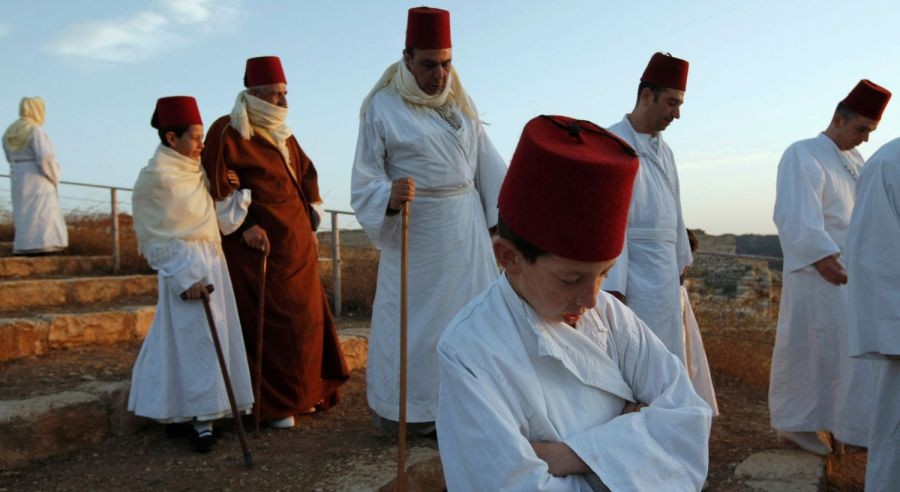
What is it like to go from being on staff at a local church to being on preparation for the foreign mission field?

First, my goal for this answer is to educate the church on the life of it’s mission. It is not so the church will “feel sorry for the missionary”, but give a window to peer through helping the church pray more effectively and engage more purposefully. It is also to help the church understand the seriousness of the call of God, in the same manner as the Apostle Paul let us in on his difficulties. Second, my goal for this answer is to help the church catch a vision to where God has called them.

I think the transition from pastor to Jesus’ mission is a natural transition. Both the pastorate and mission field have the same goal in mind. To see the church of Christ and His fame grow among the nations. As a pastor (or church member your task is to do so locally, and as a missionary your task is to do so globally.

Being a pastor and member of the local church has given me a love for Jesus’ church. The church I grew up in and the church I’ve been an assistant pastor at for the last 8-years have both encouraged and cultivated my love for Jesus and His mission through the church. As a teenager, I was discipled purposefully by two mission-minded deacons and a team of youth leaders. They got me involved in serving Christ as a teenager. It is important to look at the young people in your church not as the future of the church, but as the church now.

Before becoming the assistant pastor of Battle Ground Bible Church, I was on a yearlong church planting apprenticeship in South Africa. It was a turning point in my life. For the first time I could honestly see myself sharing the gospel on the foreign field. Also, I being in Africa I got a bug for Africa [maybe more than one bug!]. I wanted to go back. So when I interviewed for the position at BGBC, they were aware they might release me in the future to go to the mission field. They cultivated that desire by giving me opportunities to lead short trips overseas to help our missionaries, to spear-head their own vision to plant churches locally, and explore opportunities to serve in Africa. When Sarah and I married, they funded a trip we took to the Congo to equip youth leaders and pastors. Then a year later when we desired to take a vision trip to Chad, they were excited to support us. BGBC gave us a lot of freedom to follow Christ call and prepare us for that call.

In August, we were commissioned from BGBC to begin raising prayer and financial partners. That last Sunday on staff was incredibly emotional. We shed a lot of tears. It was an Acts 13 moment I will remember the rest of my life. We left a lot of friends, spiritual family, and our small group which was our major source of spiritual accountability. When we drove away there was a huge void of constant fellowship.

To be honest, the first few weeks I was in a spiritual funk. I did not take a course on how to succeed transitions. While on staff I was use to a great schedule–a routine I understood–and an office where I could have some quiet study time. That changed while we were on the road. I guess, I can understand what it is like when a retired couple is around each other after working their entire lives, only we were 3 years into our marriage. It’s been a good adjustment being around Sarah and our daughter 24-hours a day, 7-days a week. I realized I am pretty blessed to have this opportunity. It’s had it’s challenges and learning curves. You really get to know someone on a long road trip. Although for our family the road trip has been 6-months long.

An emotional day came when we sold our home in December. We were ecstatic that we were able to find a buyer so soon and not lose a load of money, which is surprising in our current housing market. Although excited we were a bit sad. It was the first time we’ve felt homeless. We could no longer go back to the comfortable living room we created, play in our grassy backyard, or pick veggies from our summer garden. Our home is now a Honda Element. We’ve enjoyed the generous hospitality of friends, family and churches while being on the road, but it can be exhausting. We’ve really been living our life on display for all to see. That’s difficult when you’re not feeling good, tired, or having a difficult day with your spouse or teething child.

It took me about a month to pull out of that funk. We’ve found a crazy schedule that’s worked for us on the road. More importantly we’ve found times to be in the Word and pray together. And we’ve discovered creative ways to keep accountable to our church while being so far away.

Sarah and I have been surprised by God’s grace. We would have never dreamed we would be at the place we are 6-months into our preparation for the mission field:
•    We have reached 85% of our required support goals. On our way to 100% by June.
•    We have acquired over 250 prayer partners.
•    We have added 3 families to our team [including 13 children, but soon to be 14].
•    We have sold our home without going into debt.
•    We have signed up for language school beginning in August.

Not that we seek confirmation from God for the steps we take, but God has been expediting the  road that leads to Chad. We take it that He really want the gospel starved “Z” to hear the good news and see the church of Jesus rise where it is not.

from wonder to witness

I’ve had a few Turning Points in my life, as I’m sure you’ve had too. My first turning point came when I was 12. I grew up in a normal American dysfunctional home. My parents divorced before I could understand and we were nominal churchgoers. I was a troubled and angry kid. I rode the short bus and was labeled a special kid. I was so embarrassed. After my mom remarried, our family moved for work reasons to a small town in the middle of Wisconsin. We began attending a Bible Church. They used Bibles. So the next week mom went to Sam’s Club and bought Bibles. We grew like weeds. Within months, both my mom and I came to Christ. A few years later we got baptized together.

My second turning point came when I was 18. Since my salvation leaders in my church took me under their wing and helped me to grow in God’s Word and the gifts of the Spirit. I was encouraged to consider fulltime Christian service. That led me to Bible College, then a yearlong church planting apprenticeship in South Africa, then ministry for the past 8-years as an assistant pastor in Indiana, and then marriage to [Congolese] Sarah who I had met years before in Bible College.

My third turning point came on a vision trip Sarah, Justus, and I took to Chad last year this time. I clearly remember walking the dry dusty roads of northeast Chad, the hot sun beating on my face, and a sense of thirst on my tongue. While walking through the abstract streets I could hear the calls from the local mosque, donkeys laughing, and the Spirit of God convicting me. I though to myself, “You got Someone these people do not. 100% of the people in this town do not know your Jesus. Who will help bring the church to unreached Chad?”

The book of Acts is full of turning points.  Today I want to draw your attention to a turning point in Acts 1. Here the disciples are getting some last words from the resurrected Jesus. He had spent many hours, days, and years teaching these men who they were. He called them God’s servants, friends, beloved children, and brothers. Sometimes they seemed to understand who they were, but at other times they seemed clueless. And just before Jesus is about to leave them and ascend to heaven, He says, “You are my witnesses.” [Acts 1:8]

What is a witness? A good Christianese word. When the word witness appears in the book of Acts it most often refers to the role the 11-apostles had as legal eye-witnesses of Jesus’ death and resurrection.[1] At the end of the book, Paul uses the word of himself because he also had heard and seen the resurrected Jesus. But in Acts 1:8, when Jesus uses the word witness, He alludes to Isaiah 43. There the word witness applies broadly to all of God’s people:

Isaiah 43:10You are my witnesses,” says the LORD, “and My servant whom I have chosen, so that you may know and believe Me and understand that I am He. Before Me no god was formed, nor shall there be any after Me. 11 I, I am the LORD, and besides Me there is no savior. 12 I declared and saved and proclaimed, when there was no strange god among you; and you are My witnesses,” says the LORD.

How does Isaiah give meaning to witness in the book of Acts? First, being a witness is not something any of these people chose. It is something God chose for them. Israel was God’s chosen people; likewise, Jesus chose His disciples. We often talk about witnessing as if it is something you choose or don’t choose, but it is not. You are witnesses by God’s choice. And you cannot help but be witnesses when you are identified with Jesus. Either you’re a witness or you’re not. It’s like my wife saying she’s kind of pregnant. Either she is or she is not.

Second, what made them witnesses was not something they did, practiced or earned; it was something they were. It was a relationship with God that made the apostles witnesses. You are a mom/dad because you have children; you are a son/daughter because you have parents; you are a man/women because that’s how you were born; or you are a student because you are in school. You are a witness because you are a follower of Christ.

A witness is not a passive role you fulfill. Rather the biblical idea of witness is quite active. Jesus says you can bear witness or you can even bear false witness. There were specific things Israel did and did not do which affected their testimony as witnesses. So it is with a witness of Christ. What does your witness say about Jesus?

As a witness of Christ, I openly and publicly demonstrate what I have learned and seen while with Jesus. But my witness is much more than words; it is a whole way of life. The Greek word for witness is μαρτος, where you get the word martyr. As the early Christian gave up their lives for what they had seen, the word martyr began to mean “one who choose to suffer or die for his or her beliefs.” [i.e. Stephen, cf. Acts 7:58] To be a witness, means giving my whole life, even giving up my life for what I have seen and heard from Christ. To be a witness is not a fatalist. But as a witness I am unwilling to bow to the god of comfort and safety or muzzle my mouth because the gospel will offend someone. Jesus says the cross is foolishness to unbelievers. Recently, I’ve been challenged by the story of Mark, a brother serving in North Africa,

Mark was part of a team of two families serving Muslim. Late in August, the team received death threats. The families were evacuated, but Mark stayed for one last meeting with believers before joining them. The night after the meeting while at home preparing his dinner, Mark was shot. He was discovered the next morning in his home, but he had lost too much blood to survive. At his passing, Mark left a young wife and two infant twin daughters. Mark’s agency feared the possibility of legal action from Mark’s father, who was not a believer and who vocally opposed his son’s service among Muslims. But at Mark’s funeral, Mark’s father was among fifteen people who gave their lives to Christ. His wife plans to minister in the same region where her husband was killed.

Third, being a witness is first “so that” you may know God and then “so that” others may know your God. Being a witness is about knowing God, seeing His steadfast love, observing His work in creation, hearing His voice. Being a witness is not something directed only toward others—though it has implications for those around you. Being a witness begins by being grounded in your relationship with God.

“Witness-ship” is a mark borne by getting near God. There is something so powerful about God’s character that it is impossible to get near what He is doing without being marked. The closer you get the more profound the mark.

Not only can you see God at work in historic acts, but also if you keep your eyes open you keep seeing him at work today. You see God at work in your life, in your friend’s lives and in the world around you. You still see God doing things that you long for but can’t make happen on your own. You see God’s forgiveness and love. You see how God transforms messed up lives and redeems them through His Son.

You—His witnesses—play a huge role in God’s plan.[2] You are the evidence of God’s work. The Bible tells the story of ordinary people so you can learn about an extraordinary God. How do you know God’s love is steadfast? By looking at the story of God’s people. How do you know God keeps His promises? By looking at His people. How does the world hear about God’s salvation? By hearing and seeing the witness of God’s people, like you and me. God has made His people messengers of His love, ambassadors of His kingdom, lights on a hill, salt in society. God has called you to be His witnesses.

The disciples stood on the mount starring with wonder into the sky, like a crowd at Cape Canaveral watching the shuttle launch or Superman making his classic exit, only this was no space shuttle or superhero it was the coronation of Jesus Christ. And with the rest of our time today, I want to uncover what Jesus expects from you, His witnesses.

1. You are commanded to live in the power of the Holy Spirit [Acts 1:4–5, 8a]

The book of Acts is often referred to as the Gospel (or autobiography) of the Holy Spirit. If you want to learn about the person and work of the Holy Spirit read Acts. In Acts 1:2-8 Jesus gives a concise theology of the Holy Spirits work. And amazingly Jesus receives the instruction from the Holy Spirit on the Holy Spirit.

First, His followers are guaranteed baptism by the Holy Spirit, which fulfills the promise Christ gave of the Helper who would come after He ascended [vs.4-5, cf. Luke 24:44-49].[3] For the first time, God would not dwell in a temple, but His temple would now continually dwell in His people. Jesus cautioned the disciples not to leave Jerusalem without the Holy Spirit. Why? If they did not waited they would be powerless.

Second, His followers are guaranteed power from the Holy Spirit to do miraculous works among the people [v.8a].[4] Jesus has completed His earthly ministry and now inaugurates the apostle’s earthly ministry.[5] These men witnessed Jesus’ teachings and miracles, and now they would continue on His ministry after Him. Although you might not exercise signs and wonders quite like the apostles, His ministry through you is still powerful and miraculously changing lives.

In Martin Lloyd-Jones’ book Joy Unspeakable he uses an illustration to describe the difference between common Christian living and what happens when the Holy Spirit comes upon a person with this unusual and unmatched power.

It is like a child walking along holding his father’s hand. All is well. The child is happy. He feels secure. His father loves him. He believes that his father loves him but there is no unusual urge to talk about this or sing about it. It is true and it is pleasant.

Then suddenly the father startles the child by reaching down and sweeping him up into his arms and hugging him tightly and kissing him on the neck and whispering, “I love you so much!” And then holding the stunned child back so that he can look into his face and saying with all his heart, “I am so glad you are mine.” Then hugging him once more with unspeakable warmth and affection. Then he puts the child down and they continue their walk.

This is what happens when a person is baptized with the Holy Spirit. A pleasant and happy walk with God is swept up into an unspeakable new level of joy and love and assurance and reality that leaves the Christian so utterly certain of the immediate reality of Jesus that he is overflowing in praise and more free and bold in witness than he ever imagined he could be.

The child is simply stunned. He doesn’t know whether to cry or shout or fall down or run, he is so happy. The fuses of love are so overloaded they almost blow out. The subconscious doubts—that he wasn’t thinking about at the time, but that pop up every now and then—are gone! And in their place is utter and indestructible assurance, so that you know that you know that you know that God is real and that Jesus lives and that you are loved, and that to be saved is the greatest thing in the world. And as you walk on down the street you can scarcely contain yourself, and you want to cry out, “My father loves me! My father loves me! O, what a great father I have! What a father! What a father!” [cf. Acts 2:11]”

The Holy Spirit’s all-consuming passion is to exalt Christ to the end of the earth. And the reason He has a white-hot passion is to empower you to witness to the ends of the earth:

  • “All the earth shall be filled with the glory of the Lord.” [Numbers 14:21; Habakkuk 2:14]
  • God brought His people into Canaan “so that all the peoples of the earth may know that the hand of the Lord is mighty” [Joshua 4:24, cf. 1 Samuel 17:46].
  • David commands, “Sing to the Lord all the earth…Declare His glory among the nations, His marvelous works among all the peoples!” [Psalm 96:1–3]
  • “I will give you as a light to the nations, that my salvation may reach to the end of the earth.” [Isaiah 49:6]
  • Jesus himself said, “Go make disciples of all nations” [Matthew 28:19].
  • “This gospel must be proclaimed to all the nations” [Mark 13:10].
  • “You are worthy to take the scroll and to open its seals, for You were slain and by Your blood did ransom men for God from every tribe and tongue and people and nation.” [Revelation 5:9–10]

The Holy Spirit wants the world for Christ. So He equips you as His witness with power to do it. He gives you absolute confidence that as you go out making disciples in His authority  nothing will thwart His name from reaching the nations.

2. You are called to share the gospel with people near and far, and similar or different than you [Acts 1:6–8]

Imagine you had the opportunity to ask Jesus any question. What would you ask? The disciples have an honest question for Jesus. Since Jesus and the OT prophecies talked a lot about this coming kingdom, and many anticipated a Messiah who would reign and release His people from the oppressive Roman Empire they ask, “Will you now restore your kingdom?” Jesus does not belittle their question, but reminds them that the timing is not for them to know. Instead, He refocuses them on being ready for the great task of sharing the good news with the known world.

The geography boundaries mentioned becomes an outline for the remainder of Acts as the apostles take the gospel from Jerusalem [1-7], to Judea and Samaria [8-12], and to the edges of the globe [13-28]. Jesus calls them to share the gospel with people like them in Jerusalem, the hub of the Jews. But He also calls them to share the gospel with people on the other side of the tracks in Judea and Samaria. These were people the Jews did not like. But God loved. For centuries the Jews had a sour spot for the “half-breed” Samaritans. But God intended Israel to be a light to the Gentiles. Since, Israel failed in this mission, Jesus is calling the apostles to carry His torch to their lost neighbors and be a bright light to the world. This is also the reason for your church and you: be a light locally and globally.

As witness we are team players. We are no longer just bystanders on the bleachers. We’ve been trained by the Master to carry the ball (gospel) up and down the field. I think of the five men who lost their lives in Ecuador to reach the Auca Indians. One wife and sister returned to the village and the wife raised their daughter among the tribe that killed their husband. Many in the tribe converted. Months ago, I met a man from North Africa whose church had been bombed a dozen times by Muslims. These are people on the front lines of Jesus’ mission shining the light in darkness. Near, far, similar, or different there are not boundaries to the gospel.

Who are your Samaritans? Is it your annoying co-worker or boss? Is it a relative? Is it a sassy celebrity like Lady GaGa or Katy Perry? Is it the Hispanic or black down the street? Is it the poor person you see on the corner always seeking a hand out? Is it your fellow Democrat? If you’re from Ohio, could it be people from Michigan? You know your Samaritan. It’s the one who makes your skin crawl and you avoid them like the plague. Jesus died for them too and He is calling you to be a witness to them.

3. You are urged to be diligent, even as you long for Christ’s return [Acts 1:9–11]

The purpose of God and the passion of the Spirit are not yet completed. We might question why, but Jesus’ answer will always be, “It is not for you to know the times and seasons which the Father has fixed by His own authority.” The great danger we face in the American church is the illusion that the purpose of God is complete, that the world has been evangelized. But there are over 2.7 billion (that’s billion!) people in the world who have not heard the gospel; they have no missionary, no church, and not enough Christians in their own people group to reach themselves.

That boggles me, as I am sure the apostles were boggled that day they starred into the sky wondering when Jesus would return. I love what happens next. Two messengers dressed in white came to the apostles. What message did say to the apostles? Why do you wonder? Witness! Jesus will come back. Not yet. So get to it”

Proof of the disciples diligence is in the remaining 28 chapters of Acts. They confidently expected Jesus’ return, but didn’t twiddle their thumbs in the meantime. With their own ears they heard their calling from the lips of Jesus: you are witnesses not stargazers. Owning the Spirits passion they spread the name of Jesus to the ends of the known world.

Turn to Acts chapter 29. Ah, this chapter does not exist! This is your chapter or appendix. The apostles are gone, but the work is unfinished. There are still billions of lost people lined up to hell all around you. 99% of Yemen, Libya, and Pakistan are unbelieving, unchurched, and lining up to the gates of hell. The picture of the young boy looking to the sky is a reminder of a need for a Savior. Who will tell him? As you wait in line for Heaven or Jesus’ return, people next to you need a turning point. Be a witness. Speak up for Jesus. Remember how He was the greatest turning point in your life?

Jesus died on the cross for the people of your church. He is returning for you soon. Jesus is worthy of your absolute surrender. God opened your eyes so you could believe in Him. When God saved you He gave you His Spirit. He has clothed each of your with His power. You live among a world of sin, darkness, and great need. God has charged you to take the gospel to these people and ends of the earth. The stakes are high. But Jesus says, “You are my witnesses.” To whom will you share?


[1] Cf. 1:21-22; 2:21-33; 3:14-16; 5:31-32; 6:13-14; 7:58; 10:37-41; 13:30; 22:13-15, 20-21; 26:15-16

[2] You and I are an indispensable link in the chain of redemption. See how the Spirit deploys people in Acts 8:29, 39; 9:17, 31; 10:19–20; 11:12; 13:4; 16:6–9; 19:21.

[3] Cf. Luke 3:16; cf. Mark 1:8; Matt 3:11; John 1:33; Acts 2:3

[4] Power, δυναμις, is used almost exclusively in Acts to describe the supernatural, miraculous power of God through them to confirm they are from God, representing Christ, and their work is from the Holy Spirit. Note: Acts 2:22; 3:12; 4:7-9, 33; 6:8; 8:10, 13; 10:38; 19:11; cf. Hebrew 2:4.

[5] During Jesus’ ministry, there is no reference to the Holy Spirit being upon anyone except Jesus. The Spirit descended upon him at his baptism (Luke 3:22), filled him as he returned from the Jordan (Luke 4:1), led him both in and out of the wilderness (Luke 4:1, 14), and rested upon him in his sermon at Nazareth (Luke 4:18).

from beggar to worshiper

While visiting the market in North Africa, especially in bigger towns, it does not take long before children come to you begging for money. It is hard to withhold helping them when they are so dirty, skinny and needy. However, to give them money is to give the mosque money. These boy and girl beggars are employees of the Imam. Therefore, we give them bananas or a drink of clean water. And what they really need money cannot buy; they need the riches of Jesus Christ.

As we arrive in Acts 3, we arrive to a church that is newborn. Peter has just preached his heart out, the Holy Spirit is at work, and thousands were added to the church. The infant church was booming with excitement. The day after Pentecost, Peter and John head to the temple for mid-afternoon prayer. On their way they pass by the local beggar. He’s in need of a turning point.

1. Everyday expect there to be unexpected opportunities to freely give out the gospel by introducing beggars to Jesus [Acts 3:1-10]

Doctor Luke gives careful details that this beggars been crippled since birth. He’s never walked. He probably slept near the gate and carried him up lots of stairs to his post at the gate each day where he hoped for a handout. He’s been doing this for 40 years. Isn’t it ironic that the beggar is by the beautiful gate? Can you see the contrast? The gate was a modern marvel and a symbol of wealth. It was an ordinary dirty bronze gate, but it was overlaid with silver and gold. In the light it glistened. And beggar sitting next to it as a stinky, dirty, and pitiful eyesore.

The two apostles make eye contact with the beggar. Have you ever made eye contact with a beggar? There is an unspoken vagabond code that says: ignore the beggar and he won’t bother you, but if you make eye contact expect to dish out. I have been around beggars. I am guilty of taking the long way around or looking the other way pretending to be fixed on something important. It is like being in class and your teacher asks a question that you do not know the answer therefore you dare not make eye contact lest you be chosen. Strangely Peter and John call the beggar to look at them.

Peter and John have literally sold everything they owned to serve Christ [2:44-47]. They do not have what the beggar wants, but they do have what he needs, “I have no silver and gold, but what I do have I give to you. In the name of Jesus Christ of Nazareth, rise up and walk!” [3:6] I am sure the man was disappointed or felt shortchanged at first, but Peter took his hand and helped him to his feet. The man not only began walking but also began jumping [Isaiah 35:6]. It’s something he’s never done before, even as a child. And like a child he’s not shy to show his joy in what God has done. He has just become a living, breathing, walking, and talking commercial of Jesus’ power and provision. I am sure he was an undignified spectacle within the temple.

I love the excitement of the beggar. He worships God and cares less what the crowd thinks. All the while the religious around him are thinking, “Settle down rookie. Your zeal will fade in time.” The religious are usually the most cantankerous. God detests the religious and their man-made rules and regulations. Long gone are the days their passion for God and joy in the transforming power of the gospel.

A similar event occurs in Luke 5:17-26. A crowd had gathered to see Jesus. A paralyzed man was lower through the roof of the packed house. Jesus healed the man. He got up from his mat, and walked home glorifying God. Imagine the reaction from his mother when he walked through the door that day! Not only was he healed, but also he forgiven by the Son of Man. The religious grumbled, but the crowd was amazed at what they saw and said; “We have seen extraordinary things today.”[1]

This story gives illustration to some biblical truths common to all. First, we are all beggars before we become Jesus worshipers. We are born beggars. We beg God to accept our good, which really is dirt and dung. “All of us have become like one who is unclean, and all our righteous acts are like filthy rags” [Isaiah 64:6] There is no good bone or blood in us. But those who humble themselves to Christ whose bones were crushed and blood was spilt for their sin will be healed. Jesus said, “Blessed are the poor in spirit, for theirs is the kingdom of heaven.” [Matthew 5:3]

Second, the way to Jesus is through a narrow gate, but the most beautiful gate. I used to have a poster that depicted this scene. “Enter by the narrow gate. For the gate is wide and the way is easy that leads to destruction, and those who enter by it are many. For the gate is narrow and the way is hard that leads to life, and those who find it are few.” [Matthew 7:13-14; cf. Luke 13:24; John 14:6]

Third, the riches of Christ are infinitely greater than the wealth of this world.[2] Salvation in Christ is the greatest rags to riches story of the universe. How amazing it is that God can rescue a soul signed to an unending lease within hell and pay his sin debt and freely offer him an opulent room and inheritance within His kingdom.[3]

When theologian Thomas Aquinas visited Rome he met with Pope Innocent II. Aquinas was amazed by the opulence of the Vatican in that day. And this was prior to the building of St. Peter’s, but even then it was a glorious headquarters for the Catholic church, filled with riches, and the pope was somewhat proud of the riches, and he said to Aquinas, “No longer do we say, ‘Silver and gold have we none.’” Thomas looked at the pope and said, “Maybe that is why we can no longer say, ‘Rise up and walk.’” Now the church’s riches were not why the church lost its power to heal people. The reason is that the power evidenced in the early days of the church was given by Christ to His Apostles to establish the church. Aquinas knew that, but I guess he did not want to miss the opportunity to jab the pope.[4]

Today the church has great wealth. Little of that wealth goes to global gospel ministry. In fact, 95% of the churches money, people, and resources go to Christians. All the while unreached worldwide remain heavily unreached.

Fourth, everyday you are surrounded by beggars who are unaware of their real need of Christ. As a Christ follower you have all they really need. Stop taking the long way around and quit looking the other way pretending to do something more important. Invite them to look into your eyes and say, “I have no silver and gold, but what I do have I give to you. In the name of Jesus Christ of Nazareth, rise up and walk!” [3:6]

I was confronted by this truth just this week. I attended a pastor’s conference with nearly 2000 pastors and missionaries. At the conference I met, Tyrone, an employee at the conference center. I watched as he opened doors for servants of God, but not one person acknowledged he existed. He was a beggar in our midst. You have beggars in your midst too.

2. Don’t neglect to share the transforming power of the gospel is faith in the name of Jesus and no other [Acts 3:11-16; 4:1-12]

Miracles make news travel fast. Soon a crowd gathers to see the healed man. He’s clinging to the apostles like a shadow. And the people are staring at Peter and John awaiting their next trick as if they were Penn and Teller. Since Peter’s got a crowd, why not preach? Peter is quick to deflect the attention, “Don’t look at me, look at Jesus!”

“The God of Abraham, Isaac and Jacob, The God of our Fathers who has glorified His servant Jesus” [3:13]. Just in case there was any doubt that Jesus is the focus of Peter’s message, the name of Jesus is named 9 times in chapters 3-4.[5] Peter lists five absolute exaltations of Jesus—that’s the essence of this sermon—to magnify Jesus. He is:

  1. the long-awaited servant of the Lord; [cf. Isaiah 52:13, suffering servant]
  2. glorified by God; [as He sits at the right hand of His Father]
  3. the Holy and Righteous One; [He’s not a criminal or blasphemer]
  4. the Author of Life; and [co-creator and Savior]
  5. raised by God from the dead. [the apostles saw Him with their own eyes]

The sermon was also a scorching indictment of all who gathered. It’s as if Peter points a finger in their faces saying (with three pointed back at him), “You are the very people who betrayed Christ, who delivered Him, screamed for His blood, and are guilty of His murder. By the power of that same Jesus, this man was made whole. It wasn’t me, but Jesus.”  Peter also a former denier acknowledges their ignorance [3:17], but they are no longer, so the only solution is to repent and turn to Jesus. Jesus on the cross, cried out, “Forgive them, for they do not know what they do” [Luke 23:34].

Doing ministry in name of Jesus is what got the apostles into trouble. Jesus and His growing group of followers were a sore subject for the Jews [4:2, 17; cf. Luke 20:27-40]. They thought Jesus was a joke, a fake, a blasphemer, and the same went for His followers. Earlier crowds convicted Jesus of a crime, which led to His death. Now the religious leaders threw the apostles in jail hoping they might think a bit. But the next day, they were brought out before the religious big wigs they did not back down from making Jesus known.

Jesus is the focus of the apostle’s ministry. So should yours. It’s not about the numbers in the crowd [cf. 4:4], coolness of the program, effectiveness of the event, or pat on the back for your faithful years of service. It’s about lifting high the majestic name of Jesus. This might not make you the most popular person, but it gives credit where credit is due. Peters words cut to the core of the issue: “Salvation is found in no one else, for there is no other name under heaven given to men by which we must be saved.” [4:12] These are not politically correct, tolerant, or sensitive words, but true words nonetheless. Christianity is exclusive: Jesus is the only way to God. But it is also inclusive: for all who would believe on Him.

There is even more here that you need to see. Sometimes people will say, “Yes, Jesus is the only source of salvation, but you don’t have to know Him in order to benefit from the salvation He offers.” In other words, “If you are a faithful Muslim or Hindu or Jew or animist, Jesus will save you. There is salvation in no one else, but you don’t have to believe on Him in order to be saved by Him.” That is modern day universalism. It’s heresy!

Is that what Peter said or meant? Peter focused on the name of Jesus, “There is no other name under heaven by which we must be saved.” He did not say there are some other names by which you can be saved and Jesus is one of them. “There is no other name,” and Jesus’ name is your only entrance into fellowship with God. Peter says in Acts 10:43, “Every one who believes in Him receives forgiveness of sins through His name.” The name of Jesus is the focus of faith and repentance. In order to believe on Jesus for the forgiveness of sins, you must believe on His name. That is, you must have heard of Him, know of His saving work on the cross, and understand He rose from the dead.

Paul echoes in Romans 10:13–15: “Everyone who calls on the name of the Lord will be saved. But how are men to call upon him in whom they have not believed and how are they to believe in Him of whom they have never heard? And how are they to hear without a preacher? And how are they to preach unless they are sent?” There is salvation in no one else—and that means there must be missionaries, who make Him known by name so that people can believe and call on His name for salvation. “Jesus is the way, the truth, and the life, apart from Him no one comes to the Father” [John 14:6].

Jesus is absolutely unique. He is absolutely supreme among all the gods and lords of the world religions. Knowing Him and believing on His name is absolutely necessary for salvation. Peter’s sermon is calling us to Christ.

It calls you to clarity.  It calls you to understand your faith. If all sincere roads lead to an afterlife, then understanding the road you are on to make sure it is the right one is not very important. If there are not many ways to God, but only one way, then the highest priority in life is to understand Jesus and follow Him. The supremacy of Christ as the only way to God calls for clarity. This is important in a world of universalism. Make the message of Jesus clear!

It calls for courage. There is no point in dying for your faith if another way will lead you to God. What gets you killed is to believe Jesus is the only way. Around the world Christians are being martyred, I met some former Muslims who became Christian in North Africa. In the early days they were beaten, threatened, kick out of their families, fired from their jobs, and ostracized from their communities. Living for the name of Christ is difficult. It takes courage. It takes courage to speak to the beggars. Are you courageous?

It calls for humility. Humble yourself to the name of Christ. What is the use of making your name great when in a few generations it will be forgotten? The name that will last forever is the name of Jesus. Fan the flame of His fame. Humble yourself and give the credit for the good in your ministry to Jesus. You cannot pack your credentials in your coffin when you die. Work hard to deflect attention off you onto Christ.

It calls for joy. Let us stand to our feet and leap for joy at the transforming work of Jesus Christ. Peter could have said to the people, “Why aren’t you in the temple jumping, leaping, and praising God like the healed beggar? It is your God, the God of your fathers, the God of your heritage, who is glorifying His Son.”

This is the response of a beggar turned worshiper. Today can be your turning point!


[1] Cf. Luke 4:36; 5:9, 26; 7:16

[2] 2 Corinthians 8:9; Ephesians 2:7; 3:8; Philippians 4:19; Colossians 1:27; Titus 3:6;  2 Peter 1:11

[3] Romans 8:17; Galatians 4:7; Ephesians 1:18; 3:6; Titus 3:7; James 2:5; 1 Peter 1:4;

[4] Sproul, R. C. (2010-11-03). Acts: St. Andrew’s Expositional Commentary (pp. 76-78). Good News Publishers/Crossway Books. Kindle Edition.

[5] Cf. 3:6, 16, 4:7, 8, 12, 17, 18, 30

multiply: Chad

I want to encourage you to take 5-minutes and watch this short video. It is a short project that Pioneers issued to mobilize servants to consider North Africa. The couple in the video are new friends we have made during our vision trip early last year. They will only live a few hours from where Sarah and I will soon live. Their people group is a neighboring people group to the one we will go share the good news. It will give you a perspective of life in a forgotten land. Pray with us for a Mighty movement of God among these forgotten people.

consider it joy?

Count it all joy, my brothers, when you meet trials of various kinds [James 1:2]

Pray to Strengthen Persecuted Christians. Christians worldwide are being persecuted for their faith. That’s a fact. They need your help, but perhaps not the kind you would expect. They are suffering, yet they continually ask for prayer to strengthen their resolve – NOT for relief from persecution. Think about that for a minute. Suffering for righteousness’ sake.

Prayers of Adoration – taking time to praise for who God is.

Our God is a mighty God!
He has created the world and all who live in it – praise the Lord!
God holds every nation, government and citizen in the palm of His hand – praise God!
God sent His one and only Son to pay for our sins – Hallelujah!

Prayers of Confession – repentance; asking God to empower you to live a life that honours Him.

  • Our God is a merciful God!
  • We have fallen short.
  • Ask forgiveness for not proclaiming His Word boldly.
  • Giving control of our lives to God is difficult.
  • Have we expressed joy in all circumstances?
  • Pray for a forgiving heart.
  • Pray for “enemies”: those who have wronged or hurt you. Pray for their release, and yours.
  • Pray for a thankful heart.

Prayers of Thanksgiving – thanking God for all He has given you.

  • Our God is a gracious God!
  • Thank God for the spread of the gospel in the face of persecution.
  • Thank God for His Son Jesus Christ and the great gift of the peace that passes all understanding.
  • Thank God for His promises and the joy we can know in the assurance of our salvation!
  • Thank God for the working of the Holy Spirit in your life.
  • Thank God for your circumstances, whatever they are.
  • Thank God for the victory and triumph we can claim because of Jesus Christ!
  • Thank God for your church building, your Bible, your freedom.

Prayers of Supplication – praying for needs

  • Our God is a generous God!
  • Pray for strength for those who face persecution.
  • Pray for strength to face your trials.
  • Pray for contentment, whatever your circumstances.
  • Pray for those who do not know Jesus, for whom contentment will always be just out of reach.
  • Pray for joy first, and your circumstances second.
  • Pray that you will keep your eyes fixed on Jesus, and not be distracted by all the world offers.
  • Pray for persecutors, that God will open their eyes and let them see Jesus.
  • Pray for the courage to boast about what the Lord has done!
  • Pray for those who go out to preach the gospel message with boldness, despite opposition.
  • Pray that you have the courage to be bold in your community.
  • Pray for hearts that are hardened by their circumstances, pray that God will soften their hearts.
  • Pray that God will use your circumstances for His purposes.

Give God all the Glory – AMEN!

Download these books to continue a study on the persecuted church:

Click Picture to Download

a prayer for missions

God of truth and love; Father Son and Holy Spirit,

Hear our prayer for those who do not know You.

We ask that they may come to a saving knowledge of the truth

and that Your Name may be praised among all peoples of the world.

Sustain, inspire and enlighten Your servants who bring them the Gospel.

Bring fresh vigor to wavering faith; sustain our faith when it is still fragile.

Continually renew missionary zeal in ourselves and in the Church;

raise up new missionaries who will follow You to the ends of the world

Make us witnesses to Your goodness; full of love, strength and faith –

for Your glory and the salvation of the entire world.

[HT]

thumb licks [thanksgiving edition]

Building relationships before sharing Christ? Impossible!

Making most of turkey day: thanksgiving on missions.

Family Tensions and the holidays.

World population grows to 7-billion. Our world has changed since the pilgrims landed on the rock.

Samaritan’s Purse Gift Catalog. This Thanksgiving commit to give outside your family.

A PLAN for giving generously.

Big News: God reconciling the world to Himself.

Are you moderately or extravagantly grateful?

37 ways to love one another.

Tears of the Saints.

the gospel is for grandma’s, too!

From a missionary to central Asia:

For the past few months, God has been burdening my heart heavily with the fact that so many of the old people around us are dying without knowing Christ. Usually it is more difficult to bring old people into the Kingdom as they are so set in their ways of Islam to even want to listen. Nevertheless, I started to pray for my aged neighbors. One of them is Diana’s mother-in-law, I will call “Grandma Margaret.” (Diana is our neighbor who had come to faith a few months ago. I am discipling her.) Margaret has heard my testimonies and sharing of His Word with open heart before but since she started going to the old ladies’ Koran reading group, she seemed to have become more distant.

I was so burdened for her soul that I asked God for one more opportunity to share the Truth with her. Several weeks ago, God gave me that opportunity to share but as soon as I mentioned Jesus, she started quoting the usual defensive lines about Islam. It seemed like what I was sharing was falling on deaf ears. With my heart aching for her soul, I shared with her that it is because God loves her so much that He has put her on my heart to pray for and to share with her like this. I shared with her that we don’t know how much longer we will live on this earth but that I would like to and that God would like to see her by His side in Heaven. Somehow, the reality of God loving her seemed to melt that closed heart some to enable her to finally listen. Though she said that she cannot accept Him right now, I am praying that God will be merciful to Grandma Margaret and open wide her heart to receive God’s precious gift of Jesus. Pray that she and her whole household with get to know Jesus as their Savior and Lord.

A few days later, God gave another opportunity for my husband and I to share God’s love with a 75-year-old woman we will call “Grandma Sherry.” A few months before, she didn’t agree with the Good News and even was teaching us about Mohammed. We left her the movie about Jesus called Magdalena. Even though she didn’t seem interested, she decided to watch the movie. Then when we visited a few weeks ago, with childlike faith and tears rolling down her cheeks, she said that she believed in Jesus being the Savior and the way to God! During the visit, she also mentioned that her back really hurt. So we laid hands on her and claimed Jesus’ healing over Grandma Sherry’s back, and moments later she said it was feeling better that she stood up with no pain to see us off. Praise God!

Please join us in asking God for Grandma Sherry to understand and experience the abundant life that she has received in Christ. And may her whole household and the generations come to put their trust in Jesus and surrender their lives to Him.

Thank you for your continued prayers for this city!


The 65/95 Window? Because the Gospel is for seniors too. Much is said about the 4/14 Window (religious decisions are mostly made by youth). But in a world that is aging, how do we reach out to seniors?” Read missions commentator Justin Long’s thoughts on the 65/95 Window.

Other recommended resources: Joe Thorn writes about how “the gospel is for Senior’s.”  John Piper’s talk “Getting Old for the Glory of God” and Dr. John Dunlop’s Finishing Well to the Glory of God: Strategies from a Christian Physician (Crossway, 2011). Read an excerpt of Finishing Well. Read Tabletalk’s interviewwith Joni Eareckson Tada, on the secret of her joy and contentment in the midst of relentless pain. The entire Tabletalk issue [October 2011] is devoted to death and disease from a biblical perspective.

from sofa to service

I love being a spectator. Some might consider me a professional spectator. In the fall there is nothing better than being a spectator in a football stadium cheering on your favorite team. Do you spectate? Maybe you’re a spectator of a good movie or concert, playing video games or surfing the Internet. Whether it is a bleacher or sofa, spectators are good sitters. Spectators feed off others doing the work and paying good money to have a seat with the best view.

Sad, but true, the Christian life can be a spectator sport. Instead of sofas or stadiums, the church pew can be your seat of choice. It is far too easy to sit comfortably cheering or booing on the 11-people serving on Sunday. All the while never engaging yourselves in the ministry or doing your part to serve the church. Where are you at today? Are you sitting in the grandstands cheering from a distance? Are you standing on the sideline benched and bored? Are you retired from the game because you are no longer motivated to workout your salvation with fear and trembling? Or are you on the field running the race, fighting the good fight, eager for encouragement to keep pressing on?

In Acts 9, Paul miraculous comes to Christ on the road to Damascus. After he gets his sight back he immediately enrolls to serve for the sake of Christ [cf. Acts 9:18-20]. According to Paul, serving Christ was the greatest thing since sliced kosher beef. He worked his entire life to gain merit badges from God, but Christ gave him an entirely different motivation to work. As a recipient of God’s grace, he made it his mission to be a conduit of God’s grace. You might call him a missionary—a man on a mission. I think Paul always kept his car packed ready to go to the next place eager to share the good news that radically broke into his life.  In fact, if you are believer you are an immediate missionary for Jesus Christ. Here are 3 truths that will move you from the sofa into His service or from the mundane to your mission:

1. NEVER DO MINISTRY ALONE [Acts 15:36-16:5]

On Paul’s first journey, he and Barnabus were sent out from Antioch [Acts 13]. Many Gentiles bowed their knee to Christ through their ministry. On the brink of the second missionary journey, Paul had a good plan, “Let us return and visit the brethren in every city in which we proclaimed the word of the Lord, and see how they are.” [Acts 15:36ff] Barnabus was cool with the plan, but he wanted to bring along John Mark too. Paul did not like the idea, since Mark bailed on them midway through their first journey [13:13]. Barnabus—the encourager—wanted to give his friend a second shot. It started a conflict so sharp the friends to parted ways.

So who was right? Most side with Paul since he’s the apostle, however, the Bible is silent not taking sides. It is interesting that you never hear about Barnabus again. On the other hand, later Paul would ask that Mark be brought to him because he was “useful to him for ministry” [2 Timothy 4:11]. And this Mark is the same Mark that eventually wrote the gospel of Mark. Bottom line is—we don’t know—who was right, but God did use their conflict for His purposes. They are both right and both wrong. I find it encouraging that even though Paul and Barnabus had their issues they were still willing to serve. They didn’t hang up their shoes—giving up. This shows you the attractiveness of message over the messengers. The church might be messy, but it is still the beautiful Bride of Christ.

If you serve in the church you are wise to remind yourself, first, work hard to fight for unity whenever possible. Paul says in a letter to a church, “I urge you to walk in a manner worthy of the calling with which you have been called, with all humility and gentleness, with patience, bearing with one another in love, eager to maintain the unity of the Spirit in the bond of peace.” [Ephesians 4:1-3, cf. Colossians 3:12-17] Do you think your pastors, deacons, sound techs, worship leader, nursery workers, AWANA helpers, and Sunday School teachers are aware of this need for unity? People problems can come up frequently when serving the Lord together, but whenever possible strive for unity.

The number one reason why people leave a church or the mission field is because of conflict with a person or personality. As Sarah and I go to North Africa, pray for our team. Pray for an ethos of grace that seeks to resolve conflict biblically and quickly. I could not imagine doing ministry alone. That was my favorite part of ministry at BGBC, serving along side deacons, youth leaders, and teams of people who sought unity in community.

Second, serving together is far better than serving solo. Do you notice that Paul usually serves on a team? Rarely do you see him going solo, even in prison. I have heard many of reasons why people do not like to minister with others, like, “Our personalities just don’t jive,” “I’ve had too many bail and leave me with the bag,” or “I really work better by myself.” It is exceedingly selfish to serve God alone. What might be more selfish is not even engaging in ministry. Doing ministry with others might cause friction or factions, but that is no reason not to do ministry with one another. You might think you are more effective by yourself, but the Christians faith was not meant for Lone Rangers it is to be lived in community. My church has a core value that states, “We are devoted to making every member a minister.”  It takes a church to raise a Christian.

Third, serving with others closely mimics Jesus’ model of discipleship. Jesus’ idea of discipleship trains people on the job. Most people learn best by doing, which runs contrary to our culture that says you learn best by hearing. Serving with others makes ministry transitions easier. Who will take over after Sunday School or small group when you leave? Are you grooming your replacement in the food pantry or youth group? Have you asked God to give you a Timothy [or Tabitha, 9:36-43] to train [2 Timothy 2:2]? Doing ministry alone can be dangerous. It can leave a vacuum after you’re gone. It is also dangerous because it is easy to cheat and lie about your service because no eyes are watching you. Serving with others keeps you honest. Follow the model of Jesus and His disciples: never serve alone.

Need an example? Look at how Paul picks out young Timothy [vs.1-5]. Paul needs help so he grabs Tim and gets him ready to serve.[1] Paul grows to love Timothy so much that he often refers to him as his, “true child in the faith.” [1 Timothy 1:2] and, “I have no one else of kindred spirit who will genuinely be concerned for your welfare. For they all seek after their own interests, not those of Christ Jesus. But you know of his proven worth, that he served with me in the furtherance of the gospel like a child serving his father. Therefore I hope to send him immediately, as soon as I see how things go with me.” [Philippians 2:19-23] These are the kinds of relationships that make doing ministry together worth it.

2. NEVER ARE YOU CALLED BY GOD TO DO WHAT YOU ARE NOT ALREADY DOING [Acts 16:6-10]

The time has now arrived for Paul’s second ministry road trip. With the car packed and ready to go Paul and Timothy ventured out towards Asia [Turkey], but the Holy Spirit did not permit them to go. In fact, God says “NO!” to four cities in Asia, but He does say, “YES!” giving them permission to go to Troas [Troy], which ultimately leads them to Philippi [Macedonia; Europe]. Paul’s plan was to go where he had already preached before [15:36], but God had plans to send him to preach to the unreached people West of Jerusalem.

While in Troas, God gives Paul a vision. In the vision, a man urges him to come to Macedonia to preach the good news of Jesus Christ. This is the passage of Scripture we dub, ‘The Macedonian Call.’ It is a well-known passage that missionaries often use to validate the country they believe God has called them to evangelize. You must be very careful to label a calling to a place or a project. You will hear people say, “I’m called to the poor. I’m call to Pakistan. I’m not called to kids! I am certainly not called to be an evangelist.” Nobody would dare to argue with the calling of God on your life. But there are two problems with this. First, it ignores the fact that missions is the primary purpose of the church; and if you’re called to be a part of the church, then you’re also called to missions. You can’t be an employee of Taco Bell without selling tacos, and you can’t be a part of the church without doing missions. It’s that simple.

Second, it often misunderstands the idea of God’s calling upon one’s life. The Bible describes vocational calling to ministry as a function of the local church, not as the autonomous decision of the individual. If you are serving a place or project before you are serving a Person you got to ask yourself, who’s mission are you on? Paul is sent out from his local church to preach the gospel of Christ as an ambassador of His church. Paul’s call is fairly general. Paul’s calling to go to Macedonia never interferes with his original and overarching calling, which was Paul was to serve Christ and suffer for His namesake [cf. Acts 9:15-16]. Paul is not so much called to a place as he is called to preach the gospel in that place. Macedonia is a really big place. So the first place they decide to go is the strategic port city, Philippi.

Paul isn’t called to something new, He is called to do what he’s been doing all along—preach the gospel. Now God is simply directing his servant to do just that in a new place. Like Paul, your primary calling is to serve Christ, which will also be followed by suffering. Suffering always precedes glory. And suffering paves the way for Christ and His church.[2]

There are thousands of unreached people groups around the world and there are thousands of spiritually profitable projects needing willing servants. If you are unsure what to do or where to go: Research an unreached people group [JoshuaProject.net]. Adopt one [globalroar.org]. Give or go. Pray for people of peace around you [Matthew 10; Luke 10]. If there are none, continue on to the next place. Some soils are not ready to receive the Word of God. The point is: the kingdom of God is near, so get off your sofa callused rear!

3. NEVER UNDERESTIMATE THE RADICAL REWARDS OF SACRIFICIAL SERVICE [Acts 16:11-15]

Again, Paul and Timothy [and Luke] hop into the station wagon and head over to Philippi. It must have been a long trip—too much pork rinds and licorice. Once they reached their destination they decide to rest a few days. I imagine they scoped the place out before going gangbusters on the good news. They could not find a local synagogue [usually the first place to meet God-fearers], which means there were less than 10 Jewish men [minimum needed to start a synagogue].  In non-Jewish places Jews would gather in obscure places because Macedonians saw them as a cult. So they went outside the gate to find worshipers. They found a women’s prayer gathering on the Sabbath Day down by the river. There they met Lydia.

Lydia, owned an upper-class clothing shop in an upper-class kind of town. Like Martha Stewart or Oprah, Lydia’s an ancient independent and businesswoman women. She sold of purple fabric, which is the color most royals would wear. Lydia reminds me of a woman I met while in South Africa. Gerda, a middle-aged single woman, sold tie-dyed fabric. I met her while buying a gift for my mother. She knew I was from out of town and asked, “Where are you from?” I said, “The United States.” With curiosity she asked, “What are you doing here?” “I am hear to share Christ with your community, see His church grow and find people interested in knowing more about Him and His Word.” To my surprise she opened her home and the next week I started a small group Bible study that later became the seed to a new church.

Lydia becomes the first European convert and opens her home the church for the first church in Philippi. She is an immediate missionary. And she is a single gal with a clothing shop. God uses single females [i.e. Mary Slessor, Amy Carmichael, Lottie Moon, Elizabeth Elliott, Rachel Saint]. Today 20-25% of the missionaries are single women, and this does not count the 40% that are mom’s or wives. Women married to Jesus and His mission are so needed. You never know when you might meet the next Lydia. You might be the next Lydia!

In the church, we value male spiritual leadership because the Bible empowers men to this position. This does not mean women do not have a purpose in the church and global ministry. The church and Bible have a favorable view of women.[3] In fact, true Christianity has the most favorable view of women among all the religions of the world [cf. Proverbs 31]. God clearly gives distinct roles to men and women, but they are equal in value because both men and women are created in His image [Genesis 1:27; Galatians 3:28]. Both sexes are marked by their Makers image.

What God is interested in most is what kind of woman you are—a woman of Christlike character. Young or old, God is looking for godly gals. Some of the greatest servants I know are older women who barely venture from their home, but pray earnestly and encourage rigorously the church.

Let’s look for a moment at her turning point. First, she comes to Christ because someone told her the gospel. Faith comes by hearing. Someone must speak the gospel. The point of speaking the gospel is to give something to see. Paul was not some irresistible orator, but his God is a relentless heart pursuer. Second, the Lord is the key actor in the story, not us. You have a significant role in speaking the gospel, but it is the Lord who does the decisive work. He “opens the heart” of Lydia. This is a beautiful picture of God’s salvation. This means He takes out the hard heart of stone, and puts in the heart of flesh [Ezekiel 36:26]; He says with sovereign authority, “Let there be light,” and “shines in our hearts to give the light of the knowledge of the glory of God in the face of Jesus Christ” [2 Corinthians 4:6]. Third, she pays attention to the truth. The effect of the Lord’s opening her heart is a true hearing of the gospel. She was “granted repentance” [2 Timothy 2:25] and faith [Philippians 1:29].

Without question or complaint Paul and Timothy follow Christ’s course direction to Philippi. God leads them to a businesswoman praying to God and He opens her heart. They continue to minister and meet another girl, but she’s quiet messed up. She’s a demonized slave girl who was being exploited for her fortune-telling skills [16:16-24]. Jesus shines light into her darkness. And now there was no hiding the fact that God is at work in Philippi. Her owners get ticked because their hope of making money left with her evil spirit. So they had Paul and Timothy beaten and thrown in jail. They took a dull or dreary situation chained up in the damp dark cell and had a worship service [25-33]. What follows next is as Jerry Lee Lewis sang, there was a “whole lotta shaking going on!” God orchestrates an earthquake and all the prisoners are set free. The jailor, now out of a job, comes to Christ amidst the rubble. Ironically, the jailor is freed from the bondage of his sin.

All this, in Acts 16, is here to show you that God rewards those who sacrificially serve for His namesake. The reward is the salvation of lost souls and the planting of the first church in Europe. In its inaugural membership: a businesswoman and her household; a messed up slave-girl; and a suicidal city employee—a jailer and his household. That’s the church in Philippi that God built. And He is still building churches today and the gates of hell cannot prevail against it. In Christ, you are the beautiful Bride of Christ!

With that I encourage you to never do ministry alone, know you are never called by God to do what you are not already doing, and never underestimate the rewards of sacrificial service. Know that your ministry matters in eternity. Those kids in AWANA or Sunday School, the men and women in your Bible Study or small group, those neighbors in your neighborhood, those students in your class or bus, and those you work with at the office are looking to you to show them through your words and deeds the Son of God, Jesus Christ. He is the reward of sacrificial service. The motivation of Paul’s service was not guilt, but the grace of God he was given on the Damascus road [cf. 1 Timothy 1:12ff]. The only lasting motivation you will have to get off the sofa and into the service of Christ is meditating on the glorious grace in Jesus Christ.

Not that I have already obtained this or am already perfect, but I press on to make it my own, because Christ Jesus has made me his own. Brothers, I do not consider that I have made it my own. But one thing I do: forgetting what lies behind and straining forward to what lies ahead, I press on toward the goal for the prize of the upward call of God in Christ Jesus. [Philippians 3:12-14]


[1] He encourages Timothy to get circumcised, not because he would be a more fit to serve. The Jerusalem Council settles this debate [cf. Acts 15:1-35].Timothy’s mother was Jewish and he would be ministering to Jews. He was giving up his rights to reach the Jews [1 Corinthians 9:19-23].

[2] Cf. Romans 12:1-13; 2 Corinthians 4; Philippians 3:7-11; Hebrews 12:1-13

[3] Luke shares the stories of many women in the Book of Acts. Women like Lydia were particularly prominent in Paul’s missionary efforts in this portion of Acts—the women of Thessalonica (17:4) and of Berea (17:12), Damaris in Athens (17:34), and Priscilla in Corinth (18:2). Priscilla and Lydia took an active role in the ministry of their churches. For an excellent treatment of Lydia, see R. Ryan, “Lydia, a Dealer in Purple Goods,” TBT 22 (1984): 285–89.

what does Jesus say about your mission?

Now that we’ve discussed some of the common myths about missions, let’s hear from the Word of Truth Himself. Jesus has some words for us about your mission.

Missions is about JESUS and His POWER to save

“all authority in heaven and earth has been given to Me.” Do you remember your mother saying, “Hon, can you clean your room.” And you’d ask, “Why mom?” With a strong tone she’d respond, “Because I am your mom and I said so.” Jesus pulls the authority card, but He doesn’t lord it over He loves it over. He is the card club carrier to all the cosmic power of the universe. He has been delegated authority from the Father. Now that Jesus has your full attention, He takes no questions because He has the right and power to do as He pleases.[1] Today He rules over the earth. He has authority over politics and government, armies and military might, the stock market and your retirement, science and education, TV and Internet, natural disasters and natural phenomenon’s, He even has authority over your life.

Missions is about YOU

“Go and make disciples.” What is the command in Jesus’ word? Many often say it is “go”, but go is the action of the command. In other words it is as if Jesus says, “as you go” or “wherever you go” The command is to “make disciples.” A disciple is a follower or worshiper of Christ.  The instinct of a Jesus follower is reproducing followers of Jesus through the power and message of Jesus. To make Jesus followers is just a thing you do![2] As Jesus says, “Go into all the world and preach the gospel” [Mark 16:15] And as Paul echoes, “How beautiful are the feet of them that preach the gospel of peace” [Romans 10:15]. Missions is not missions without you making disciples as you go, as you live. Coming to Christ makes you a Christian. Obeying Christ makes you a missionary. As my missions professor in college use to say, “Every believer is an immediate missionary for Christ.”

Missions is about PEOPLE EVERYWHERE

“all the nations.” The mission is to make disciples of “all nations.” The word nation here is where you get the word ethnicity [ethnos, cf. Revelation 5:9]. You see, God loves all the people of the world.[3] He loves all ethnicities, nations, and races of people in the world. He does not see color, status or class. Since we are not God it is hard for me to love as broadly as God. I love the Green Bay Packers and mountain biking. I also love bratwursts and cheese. I really love my wife and family. As an “ambassador” of Jesus Christ [2 Corinthians 5:20] I am representative of a foreign land, a home I long for but have not arrived and whose ruler is my Savior. There is no culture or religion beyond the scope of the Great Commission, and Jesus wants to be exalted above every people, nation, and religion.

Missions is about CHANGED LIVES through the power of the gospel

“baptizing them in the name of the Father and the Son and the Holy Spirit, teaching them to observe everything I have commanded you.” Often these words of Jesus are known as the great omission of the great commission. The forgotten and forsaken part of the mission is to help people live in the power of the gospel. First, a changed life is willing to publically identify with Christ [and His death and resurrection] by walking through the waters of baptism. Second, a changed life loves to teach other about the words of Christ [Romans 1:16]. A changed life is one who is dying to self, bears his own cross [Luke 14:27], and is becoming alive to Christ. The road to Golgotha is tough, but people of the gospel count the cost and are willing to pay the price. But it is not a road we have to walk alone.

Missions is about living confidently within GOD’S MISSION

“And behold, I am with you always, to the end of the age.” Jesus begins His short sentence with a great claim and a great command, but He finishes with a great comfort. Who promises to be with you? Jesus—the One with all authority. He promises His presence [cf. Jeremiah 31:33; 32:40]. There is power in God’s presence. There is confidence and courage in His presence. How long does He promise His presence with you? Always, which can literally be rendered, “all the days,” or “until the end of time.” He will be with you without breaks [Hebrews 13:5]. God will not take a vacation from you or His redeeming purposes. God is on a mission. And Christianity is a missionary faith.

I want to hold out to you four ways that you can respond today:

First, make prayer commitment for the rest of this year for an unreached people group [go to Joshua Project] or a missionary—for your own soul and vocational change.

Second, get a loose change can or jar and let it remind you to pray as you give.

Third, buy a good missions biography or other book on missions. Be warned. It is one of the most wonderfully dangerous things you can do to undermine your addiction to the American dream.

Fourth, make a bold commitment and acknowledge that God has been awakening you in both a willingness to go and a desire to take practical steps to be prepared to go. And tell your pastor.

DON’T BE A MYTH. MAXIMIZE YOUR ROLE IN HIS MISSION.


[1] cf. Philippians 2:5-11; Daniel 7:13-14; Revelation 1:9-20

[2] John 14:15, 23-24, 15:10; 1 John 5:1-3, 2:3-6

[3] John 3:16; Psalm 46:10; Isaiah 52:10, 61:11

common myths about missions

Have you seen the TV show on Discovery Channel Mythbusters? It is an interesting show about two quirky—but quite intelligent—guys who make it their goal to see if common myths are truth or busts like: Can chatting on a cell phone while pumping gas cause the pump to blow up? Just how hard is it to find a needle in a haystack? Many of the myths we think are facts are actually false, but many are absolutely true. Likewise, in the church today there are long held beliefs we think are truth, but when tested and tried they appear to be a man-made myths. When it comes to missions or the mission of the church there a lot of common myths.

Missions is about foreign countries.

It is true that a lot missions takes place in foreign countries, but not all. In fact, most of missions happen where you are. Missions really happens near your home. The Bible is clear that followers of Christ are to think globally, but act locally. Missions is about where you are.

A sincere man asked me, “Why do we need to go way over there where it costs so much to go and the fruit is sometimes so little and we have people here who need to hear?” That is a good question. I fear it is a question that is easy to hide behind. Many people say they aren’t called to foreign missions because God has given them a burden for America. Yet for some reason, the vast majority of the people who say this do nothing for the people around them. They aren’t engaged in fervent evangelism in their neighborhoods. But if the concern is a sincere one, then we will be well served to turn to William Carey for a response:

That there are thousands in our own land as far from God as possible, I readily grant, and that this ought to excite us to ten-fold diligence in our work, and in attempts to spread divine knowledge amongst them is a certain fact; but that it ought to supersede all attempts to spread the gospel in foreign parts seems to want proof. Our own countrymen have the means of grace, and may attend on the word preached if they choose it. They have the means of knowing the truth, and faithful ministers are placed in almost every part of the land, whose spheres of action might be much extended if their congregations were but more healthy and active in the cause; but with them the case is widely different, who have no Bible, no written language (which many of them have not), no ministers, no good civil government, nor any of those advantages which we have. Pity therefore, humanity, and much more Christianity call loudly for every profitable exertion to introduce the gospel amongst them.[1]

Surely your home country can spare a few to go spread the fame of Christ’s name to the other 95% of the world.

Missions is about orphans, feeding the poor, and starting Bible Seminaries.

Many think of missions as relief ministry, advocating justice, feeding the hungry, stopping human trafficking, providing education, or digging water wells. I have heard someone say, “Healthy in hell doesn’t count for much in eternity.” Humanitarian efforts aid the gospel, but they are not an end in themselves.

Certainly you ought to be doing ministries of mercy, as Jesus taught and demonstrated compassion, care for widows and orphans, ministry to the poor, healing the sick, and visiting the prisoners. He even applauded the Pharisees for their diligent giving, but admonished their neglect of more important things. Missions is the activity of God’s people to fulfill God’s mission. And God’s mission from before the foundation of the world has been to redeem a lost world.

Missions is measured by the commitment of money I give.

Missions is not about cutting a check so someone else can go in your place. It is not about a certain percentage of a church budget. With that said, it is a bit starting that the average American church goer gives less than .50 cents a week to the mission. You can be the richest Christian monetarily, but weakest one spiritually. Missions is less about money, and more about your time and life. Jesus doesn’t need your money He wants you!

Missions is for anyone who wants to go.

In order to be called on the mission you need to be involved within the mission. Before you go there are you doing it here? Paul was given the Macedonian call to preach the gospel to the unreached Macedonians because he was faithfully preaching the gospel to the regions around Macedonia. Simply put, “God calls people elsewhere to what they are doing here”

Missionaries are a special class of people.

I use to think missionaries were like MacGyver. Some think of missionaries as dare devils, danger seekers, or linguistic nerds. Others think of missionaries as men and women who could not find a better job. That’s just silly. Missionaries have special skills, but skills can be learned. I can barely change my oil, I struggled as a student in school listening to lectures, and I sometimes tell corny jokes or stick my foot in my mouth. Missionaries are not super spiritual or invisible to struggles, sins, doubts, or spiritual warfare. I have known many missionaries who have stepped off the field because of depression, conflict with teammates, and serious heartache within their families.

Missionaries need special training.

Some of the best missionaries I know have little training in a Bible College or Seminary. They love God and His Word, but they were engineers, carpenters, farmers, schoolteachers, moms, grandparents, and retirees who were passionate about the mission of Christ. Just read about Jesus’ followers in the New Testament. They were ordinary men and women that held ordinary jobs [fishermen, doctor, taxman, Lydia’s clothing shop], but they tenaciously told everybody about their extraordinary God.[2]

Missions is not about me.

This is a favored myth. No matter how strong you are encouraged to consider the possibility of mission work, you can always rest upon this myth, “I’m not called to that!” The beauty of this myth is that nobody would dare to argue with the calling of God on your life. But there are two problems with this. First, it ignores the fact that missions is the primary purpose of the church; and if you’re called to be a part of the church, then you’re also called to missions. You can’t be an employee of Taco Bell without selling tacos, and you can’t be a part of the church without doing missions. It’s that simple.

Second, it often misunderstands the idea of God’s calling upon one’s life. Contrary to popular belief, God does not implant within each of us a nugget of information that we can autonomously refer to as our “calling.” The Scriptures portray vocational calling to ministry as a function of the local church, not as the autonomous decision of the individual.

Now that we’ve discussed some of the common myths about missions, next you will hear from the Word of Truth Himself. Jesus has some words for you about your mission.

[Come back for Part 2 soon]


[2] COMMON EXCUSES THE BIBLE DEBUNKS: I am not smart enough (1 Corinthians 1:20-21, 26-27). I am not strong enough (2 Corinthians 4:7; 12:9-10). I am not a good speaker (1 Corinthians 1:17; Exodus 4:10-12). I am afraid (1 Peter 5:8-10). I wont have an impact (Mark 4:26-29). There is plenty to do here (Romans 15:19-24). I am not married (Proverbs 31:10). I might be taking a risk (Ecclesiastes 11:4)

thumb licks [10.13.11]

A sample prayer plan. For those of you who like to have it really spelled out.

Forgiveness is a ridiculous thing. A smart lessons from The Tale of Despereaux.

Sin is cosmic Treason. Startling truth from R.C. Sproul.

Managing social media before it manages you. Addicted to facebook, twitter, or google+?

Honor your missionaries. I am bit biased towards this post.

Holding translators responsible. Wycliff’s stance on contextualization.

Want to Live forever?

Adoniram Judson’s prayer for you

O God, have mercy on the churches in the United States…continue and perpetuate the heavenly revivals of religion which they have begun to enjoy; and may the time soon come when no church shall dare to sit under the Sabbath and sanctuary privileges without having one of their number to represent them on heathen ground.

Have mercy on the theological seminaries, and hasten the time when one half of all who yearly enter the ministry shall be taken by Thine Holy Spirit, and driven into the wilderness, feeling a sweet necessity laid upon them, and the precious love of Christ and the souls constraining them.

Hear, O Lord, all the prayers which are this day presented in all the monthly concerts throughout the habitable globe, and hasten the millennial glory, for which we are all longing, and praying, and laboring…Come, O our Bridegroom; come, Lord Jesus!

– Adoniram Judson, quoted in J.D. Greear’s Breaking the Islam Code: Understanding the Soul Questions of Every Muslim, page 141

thumb licks [9.18.11]

10 Questions Leaders Should Be Asking. Great for leaders and anybody for that matter.

Without the Gospel, It’s Not Missions.

Why Doesn’t Anybody Talk About Sin? A good question with good insight.

Who is Responsible for a Child’s Education? Is it the parent or the school?

Lonely Me: A Pastoral Perspective

Is Patience Dangerous?

why I love my church

This is the first day I step off the pastoral staff of Battle Ground Bible Church, but it is also the first day I step onto your mission outreach team. Although the role of my family will change within BGBC, we will still be an outreach arm linked to this church in North Africa.

For the last 6-months I have been thinking about this day. I am reminded of Paul the Apostle’s third missionary journey when he gave his farewell message to the elders at Ephesus [Acts 20:17-38]. I can feel what he feels. I can understand his heart for the church. If I could I would make this my farewell address to my church too.

Paul had little time left to talk to the elders of the church in Ephesus [vs.16-17].

                  I only have one hour left with you.

Paul spent 3 years in Ephesus, which is longer than he spent in anyone place [vs.18,31].

I have spent almost 8 year with you [began September 21, 2003].

Paul wears his emotions on his sleeve. He cares for this church as a shepherd who suffers with his sheep [vs.19,31].

                  I wouldn’t consider myself a stiff board.

Paul was bold in his preaching. He did not hold back [vs.20-21].

                  I did not shrink back either.

Paul leaves Ephesus under the conviction of the Holy Spirit [v.22].

                  I take my family to North Africa by the call of God. Our family is gripped by the glory of God.

Paul anticipates the journey ahead to be difficult and full of trials, but worth the risk [vs.22-23].

                  I know it will not be easy in the desert among the unreached peoples.

Paul views himself as nothing and Christ as everything. Even his ministry is of Christ and for Christ [v.24].

                  I am humbled by the ministry of Christ and ministering for His namesake.

Paul encourages the church to preach the gospel with boldness [vs.25-31].

                  I have sought to protect this church and uphold the doctrine on which it stands.

Paul has worked hard, earned his keep, and challenged the church to give to the mission of Christ [vs.32-35].

                  I have labored hard for you because Christ is my boss.

Paul, not knowing if he would see them again, was sorrowful because he loved their faces [vs.36-38].

                  I know I might not see you soon, but we will see each other again if we are eternal friends!

In summary, Paul is saying to the church in Acts 20, FAITHFULNESS IS WAY BETTER THAN LIFE [vs. 24-25]. As missionary Bill Bentley to Mexico said, “I don’t want make a living, I want to make a [faithful] life.” Faithfulness to my call is far more important than whether I live—whether I live at all or live comfortably. Faithfulness is better than life because the rewards are literally out of this world and God is gracious.

I am grateful that I am not leaving BGBC because of disgruntlement, conflict, joylessness, tiredness, or unfaithfulness. I am leaving BGBC with joyful sorrow because I will severely miss the immediateness fellowship, worship and mutual ministry of this Body of Christ. I have not viewed being a pastor at BGBC as being a job, but a joy. I love my church.

Why I love the church?

1. Jesus sacrificially loves it. [Ephesians 5:25] He built it, established it, died for it, and is still the Head over it.

2. God is glorified through it. [1 Timothy 3:15] He is working out His eternal plan through it.

3. I am a member called to it. [Hebrews 10:24-25] It is the most precious reality on earth [and a glimpse of heaven].

When I first arrived at Battle Ground Bible Church I was 23 years old. I was green. I had just graduated from Bible College. I spent the year before serving in South Africa as a church planting apprenticeship and then served at Montrose Bible Conference for a summer leading evangelism workshops. While at Montrose I had a conversation over lunch with a missionary from Bangladesh named Sam Smoker. We were exchanging funny names churches we had attended. In the course of that conversation he mentioned the name Battle Ground Bible Church. That week I found BGBC’s name on a pastoral search placement list and the rest is history.

Why I love my church?

1. I love the way you have stirred my growth in Christ.

I have grown exponentially since coming to BGBC. Not only have I grown facial hair and a little belly, but also more importantly I have grown up in my faith. That didn’t just happen. Growth doesn’t happen in isolation. It happens in a community of likeminded Jesus followers. God designed growth to happen in togetherness. As a church you have stirred me, shaken me, encouraged me, matured me, prepared me, and helped me to want to be more like Jesus Christ.

You have prayed for me. Bore patiently with me. You have prodded me to continue to dig deep into the Word. You have sent me to pastor conferences for spiritual encouragement. You sent me to seminary to continue my education. And now, you are ready to send me oversees as a light for Christ. Thank you for not holding back in stirring my growth. “Let us consider how to stir up one another to love and good works, not neglecting to meet together, as is the habit of some, but encouraging one another, and all the more as you see the Day drawing near.” [Hebrews 10:24-25]

Your pastors need to be stirred. Thank you for stirring this one!

2. I love your fellowship and deep friendships.

God has used many of you to stir me to love and good works. Like Paul, you have helped guard my heart from carelessness [v.31], shallowness [v.32], covetousness [v.33], laziness [v.34], and selfishness [v.35].

I have been spiritually and physically refreshed from bike rides with Steve “Z”. I have enjoyed friend chicken and birthday cakes with Edith. I look forward to Sunday hugs from motherly Karen O’Leary. Every Tuesday I hunger lunchtime talks with Brent Childs. I will miss slugging bats with Rollie and praying with the sweaty men on my softball team. I will miss random calls and quirky questions from Sheila Norton. I will miss having a secretary like Joyce [aka: boss]. I will miss the ministry of music played by the fingers of Greg and Alana.

I have cherished prayerful cards from Linda Wheat, Arnetta Berenda, and the Turpin’s. I am grateful for the roof top talks with Steve Fry while hammering shingles onto my home. I will miss praying with Granny Dee Marion [and watching how she did not waste her illness]. I have learned how to suffer graciously by watching Charlie Haines. I am blessed by the visual expression of the Zinn’s and Miller’s when the Word of God is preached. And I could go on and on listing VIP’s [Very Important Partners] in this church.
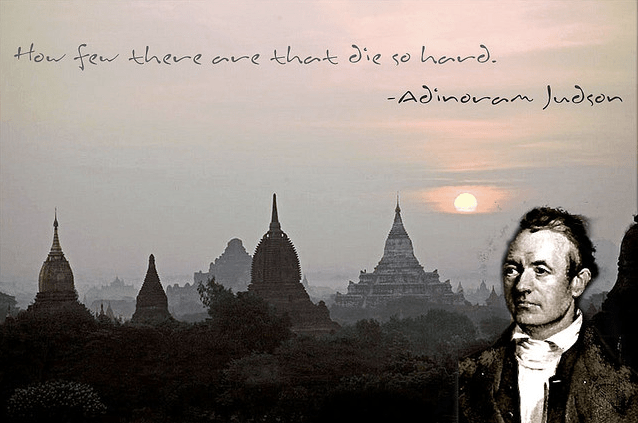
Fellowship is partnership. Partnership is more than just a liking of a sports team, talking about the weather, or ranting about the warts of our church. Fellowship is having a common partnership is what matters the most—the gospel of Jesus Christ. Paul said, “I thank my God in all my remembrance of you, always in every prayer of mine for you all making my prayer with joy because of your partnership in the gospel from the first day until now. And I am sure of this, that He who began a good work in you will bring it to completion at the day of Jesus Christ.” [Philippians 1:3-6]

3. I love the great teaching and godly leadership of Pastor Kenny Loehe.

Those who know Kenny know he proclaims the Word of God with boldness. He is not an ear tickler. He does not hold back out of fear of man or a desire to please people. He faithfully and meticulously exegetes the Word of God, and delivers meat that I am forced to gnaw on. Steak is hard to swallow sometimes, but I’d rather chew on steak than suck blended spiritual food out of a straw of baby bottle.

You have expanded my vocabulary. In my Bible I have a list of words that I still need to go to the dictionary for a definition. I have learned how to use the word flagellation and ghastly without sounding boyish. I suppose I will now need to subscribe to Readers Digest and enrich myself with Word Power.

You have also expanded my love for the church, the Word of God, and living a real faith. I have had the privilege of seeing you work from behind closed doors. I have seen you wrestle through sermon preparation trying to apply the truth to your life, your family, and your church family. I have watched you suffer with your people, weep for them, pray over them, losing sleep because of them, and unconditionally loving them [even the difficult ones].

Kenny, I will miss you. You are my pastor. You have been just the pastor I’ve needed. You have shepherded my heart.

4. I love your gracious generosity.

As a pastor, it is humbling to know that the money I have to buy groceries comes from the generosity of faithful givers. You have given above and beyond.

When I first arrived at BGBC, as a single guy, I had nothing to my name other than a few books, a folding chair, and an extra pair of glasses. The church had a pantry party and afterwards I literally had enough boxes of Mac & Cheese to last me through a famine. A few Christmas’ ago an unknown group of people bought me a new wardrobe, a suit coat, neckties, and really sweet Super Man PJ’s. The gifts were individually wrapped with encouraging verses and letters. Each day in December I was able to open a new gift. When Sarah and went to North Africa earlier this year we got news that Emma Lawson was having a bake sale to support our vision trip. We were so blessed that the kids of our church get ministry and Christ’s mission.

The first Sunday Sarah came to visit our church you lovingly encouraged our blossoming relationship. When I asked for her hand in marriage you came alongside us with generous support. When you learned that we were having our first child you showered us with baby clothing, diapers, wet wipes, and other baby goodies. I think we are still working through all the diapers and we have only bought Justus one original outfit.

Your generosity over the years has been overwhelming, but an incredible blessing. I challenge you to continue to be a blessing to the next assistant pastor and his family. As you have blessed me, I would hope you would also bless him. I have bragged about you to Pastor Jeremy and Jen. I am excited to see how you will come alongside them in the days ahead. A generous church is a Jesus-centered church.

5. I love the young people of this church.

Young people keep you real. You cannot hide or fake your spiritual walk around them. I have enjoyed ministering to and being ministered by the teens of our church. Though sometimes they make me want to pull out my hair I have enjoyed praying with many of them through difficult times, discipling them through a critical life stage, and learning the great privilege of partnering with their parents to serve the whole family. It truly takes a church to raise a child!

The student leaders have been a source a spiritual growth for me. Hannah Starrett, Betsy Goodale, Amy Stratton, Brittany Ristau [Scheiner], Debbie Hill [Fights], Greg O’Leary, Andrew Ristau, Emily Ristau, Levi Starrett, Kyle Miller, and Wonho Rhee are just a handful of student leaders that have challenged me to live more like Jesus, love Jesus, and model servant leadership like Jesus. Many of these youth have been a source of spiritual conviction to many adults because of their love for Christ and willingness to serve Him.

The youth leadership team is a family to me. Many of you have served together with me for years. Some since the day I started [i.e. Starrett’s and Norton’s]. You have struggled and suffered alongside the youth teaching, modeling, and discipling them in the truth of the Bible and reaching out to them the gospel. I am incredibly proud of our young people and I know the students and youth leaders will be a blessing to our new assistant pastor.

I love how the church supports and spiritually invests in the youth. I am grateful for the slew of older ladies who faithfully pray over the youth. We never have a shortage of scholarships for retreats or camps. We never have a shortage of homes will to host events or fellowships. We never have a shortage of volunteers willing to pour themselves into the lives of the young people of this church. We never have a shortage of opportunities for our young people to serve in the church [1 Timothy 4:12]. Thank you for loving the youth who are the younger generation of this church. Keep it up and our church will live long into the future.

6. I love your mission-mindedness.

Missions and gospel outreach is in the DNA of BGBC. You love what God is doing globally and are willing to invest locally. You have encouraged and supported the youth of the church to consider short-term missions, which has spurred some to go out or be sent out. Bethany has gone to Dominican Republic and Costa Rica. Hannah has a heart to do linguistics work where people have no Word of God. And you have fueled my passion for global gospel outreach. Continue to go, sent, pray to the Lord of the harvest!

7. I love my small group.

The people in our small group are so different, but yet we so much the same. We are all a work in progress that is willing to work hard to help each other be more like Christ. Anand David has blessed me through his passion for Christ and longing to live for him. He asks me hard questions that keep me sharp and vulnerable. I have learned a lot about perseverance from him as he has waited for a godly bride.

It has been a joy to see Brad Kerns and Pete and Brittany Ristau own their faith and explode spiritually as young adults. Both Pete and Brad have move from being boys to being men! Austin & Hannah Mattern have become great new friends. Even though I know little about farming and country living their passion for Jesus has brought life to our group.

Janel Haines has been a rock to both Sarah and me. There is not one person in this church that does more behind the scenes in this church than her. She has her hands in almost every ministry it [i.e. youth ministry, children’s ministry, Children’s church, gardening, VBS, writing cards, prayer support, counseling, and more] and she obviously loves it. Her growth in Christ has been nuclear and the radiation from her spiritual walk has leaked into the lives of many in our church including the Hutts!

8. I love our spiritual leaders [deacons].

I remember the first time I met the leaders of Battle Ground Bible Church. I was sitting across the dinner table with them at The Hour Time. Immediately I had a respect for these men who dedicated themselves to the church. These men absolutely love this church, and they sincerely care about one another. These men have been used by God to trim my young, rough, and thorny branches.

These men have held me accountable through some spiritually challenging days. They have held the frontlines with me—a man who sometimes lacks confidence—helping me gain a backbone. I have appreciated it when they have confronted sin, rebuking at times, and challenging my vision to make sure it meshes with the Word of God and the spiritual direction of the church. These men have certainly stirred me to godliness.

I love meeting with Mike Fights over a tasty breakfast. He is my David and I am his Jonathan. His wear-it-on-your-sleeve kind of love for the Word and God is contagious. Cort Starrett is a software engineer for a living, but he has been used of God to do some hardware engineering on my heart. Cort intimidated me for a long time, until realized he is wired as one who likes to get to the point of matters. Now I want to be like him. I enjoy Phil Kerkoff’s generosity and knack for the practical. Dave Criswell is simply a rock and prayer champion. Gary Elliott and Todd Rice are full of wise insights and keep our long meetings sane. Deacons meetings—though long—have never been a drudge but a delight.

Together, us leaders have walked through some difficult minefields casting vision for the church, while upholding the doctrinal and theological integrity of the church. We have made some decisions that have met opposition. Yet these men would rather stand before God and give an account to him than please man.

I will miss praying over and pouring over Christ’s church with them men. I will miss caring for and coaching our church to be more like Christ with these men. I will miss the bond of brotherhood with these men. By the way these men lead this church they have reminded me that FAITHFULNESS IS BETTER THAN LIFE.

“And now, behold, I am going to Jerusalem [North Africa], bound in the Spirit, not knowing what shall befall me there; except that the Holy Spirit testifies to me in every city that imprisonment and afflictions await me. But I do not account my life of any value nor as precious to myself, if only I may accomplish my course and the ministry which I received from the Lord Jesus, to testify to the gospel of the grace of God. And now, behold, I know that all you among whom I have gone preaching the kingdom will see my face no more.” [Acts 20:22-25]