Scripture, Trials, and What is to Come

If you’re a fan of the Star Wars movies you are familiar with the chronology of the story and the films. When the original three films were made the producers started in the middle of the story. Then they made three prequels—how the story began. Now they are making numerous sequels—how the story continues. As the franchise has grown there are parallel stories like Rogue One that follow a unique character all within the original Star Wars plot.

The Bible is similar in that the Old and New Testaments aren’t two different stories, they are groupings stories with the same plot. The Old Testament begins with the world spinning into chaos, but it ends with the prophets foretelling and anticipating a Messiah who would come to save the world. The New Testament picks up with the Messiah coming into the world and ends with a promise that the Messiah will return again to finish off once and for all evil in the universe. We are still awaiting the sequel.

The wait for the next installment of the story is not easy. In fact, the wait is hard. The wait is full of trials because the story continues and we are characters in the story. The world is full of evil, the villain still lurks, and wreaks havoc. Yet the Bible promises that grace and glory will come (vs.10-12).  There will be a day when Jesus will eradicate trials. The Bible was written to remind us that Jesus was promised, came, will come again. Wait for it. The wait will be worth it.

“Concerning this salvation, the prophets who prophesied about the grace that was to be yours searched and inquired carefully, inquiring what person or time the Spirit of Christ in them was indicating when he predicted the sufferings of Christ and the subsequent glories. It was revealed to them that they were serving not themselves but you, in the things that have now been announced to you through those who preached the good news to you by the Holy Spirit sent from heaven, things into which angels long to look.” – 1 Peter 1:10-12

The Bible from cover to cover has been about Jesus. Everything said or prophesied about Jesus so far has come to pass. Therefore, you can believe what is yet to come will come to pass too. Only God knows the future, controls the future, and tells the truth about the future. The truth you need to know about the future is written for you in the Scripture.


Questions for Reflection:

  • How is the Bible one great story? What is the story about? What is its plot?
  • How does our perspective of history, in particular redemptive history, affect our faith?
  • What was a prophet? What were the prophets trying to discern? How do we see clearly now what the prophets could not see?
  • How were the prophets serving us not themselves? How have you been served by the writers of the Bible?
  • What is the good news that has been revealed to you by the Holy Spirit? Why is it such good news?
  • What is the meaning of “grace that was to be ours”? What are the implications that we have been given more grace than the prophets?
  • What is the significance that angels long to look into the things spoken to you?
  • When facing trials, where do you look first for comfort?
  • How does understanding the Scripture give you hope during trials or suffering? How have the Scriptures brought you peace and comfort?

Jesus, Trials, and Joy

There are days when our joy skirmishes into the shadow of trials and hardships. Trials can steal our joy and cause doubts or questions as to the possibility of joy.

Trials come to all of us, even Christians. They don’t come when it is convenient. They can come without warning. They don’t necessarily come one at a time but can come as a barrage. They can repeat over and over again. They can even range in severity and duration from momentary annoyance to lifelong anguish.

Feeling encourage yet?

Peter says joy is possible even in our darkest situations. Joy is possible because Jesus. Peter share at least three ways how Jesus completes our joy under trials.

“Blessed be the God and Father of our Lord Jesus Christ! According to his great mercy, he has caused us to be born again to a living hope through the resurrection of Jesus Christ from the dead, to an inheritance that is imperishable, undefiled, and unfading, kept in heaven for you, who by God’s power are being guarded through faith for a salvation ready to be revealed in the last time. In this you rejoice, though now for a little while, if necessary, you have been grieved by various trials, so that the tested genuineness of your faith—more precious than gold that perishes though it is tested by fire—may be found to result in praise and glory and honor at the revelation of Jesus Christ. Though you have not seen him, you love him. Though you do not now see him, you believe in him and rejoice with joy that is inexpressible and filled with glory, obtaining the outcome of your faith, the salvation of your souls.” – 1 Peter 1:2-9, ESV

Jesus is the source of joy, even under trials.

Jesus endured the greatest trials known to man. He endured the cross for a greater joy—our joy. Jesus is our joy because he alone saves and raised from the grave (v.3). The resurrection of Jesus secures our hope and joy. He has reserved for us joy, guards it, and will complete it (vs.4-5). Despite our circumstances, we can have confidence that Jesus is for our joy.

Jesus is a light that eclipses the temporal trials of life.

A glorious day is dawning when our trials will be no more and we will be free from the pain and brokenness in this world (v.6). This is really good news.

Trials have their good purpose. Under trials we learn about Jesus and grow to be more like him. How we respond to trials shows our closeness to Jesus. If we embrace trials as an opportunity from God, they will sift our faith and the result is the glory of Jesus because faith that shines more stunningly than gold (v.7).

Jesus knows our trials very well.

Jesus walked into our shoes. He lived in this broken world. He knows what it is like to be rejected, falsely accused, abused, abandoned and persecuted. And even though we have not seen him we are drawn to him, we love him, we trust him more and more, and he fills us today with an inexpressible joy and hope of the complete salvation of our soul (vs.8-9).

Jesus is our joy today and forevermore.


Questions for Reflection:

  • How has Jesus been your joy?
  • What is the “living hope”? How does this hope transform the way you live?
  • Why is the resurrection so important? To Christianity? To our own hope? To understanding Jesus as God?
  • Did people know Jesus was going to die and resurrect?
  • How does the Jesus resurrection change people? Compare John 20:19 to Acts 4.
  • What is an inheritance? What is the inheritance that Peter talks about?
  • What is the significance of the words “imperishable,” “undefiled,” and “unfading”?
  • What is unique about Peter’s use of the word “salvation” in this passage? Do you see past, present and future aspects of salvation in this passage?
  • What is the purpose of trials in our life? Do you think about this in the midst of trials?
  • What is the connection between faith, joy, and salvation?
  • How do you express your love for Jesus?
  • What things in your life subdue in expressible joy?

Hebrews: Jesus is Greater

Do you realize what you have in Jesus, right now?

One of the greatest truths you’ll receive in your lifetime is this: There’s nothing in your life that’s greater than Jesus. Nothing.

It is possible to grow familiar with who Jesus is and forget what he has done, is doing, and will do. You can grow discouraged and apathetic and distant from Jesus, your first love. You forgot who Jesus is. And something else becomes greater than Jesus.

This is the message of Hebrews. Jesus is greater. He’s greater than your sin. He’s greater than your enemy. He’s greater than your failure. Jesus is greater and there is no other substitute.

Hebrews is not for the shallow of faith. The author will push you into he deep end of the promises and purposes of God. As you swim in the deep waters of this Hebrew you will appreciate more wholly your Rescuer and Redeemer—Jesus the Great.

Click here to Downloads the Hebrews Study Guide

Click here

brief but big

Climbing up Mount Everest for a fit team can take almost two months from base to summit. Most climbers upon reaching the summit will stay for only 15 minutes before making their way back down. Why such a brief stay on such a big climb? One would say that they had been admiring the beauty of their surroundings during the entire climb from the base to the top. Getting to the top was a great accomplishment, but the climb was greater.

Reading the book of Hebrews could be a lot like climbing Mount Everest. All along the way we behold the beauty of Jesus. With each step we see his greatest. Once at the summit there is not much more to say, but there is a lot to celebrate.

As we reach the end of the climb, the author of the letter of Hebrews wraps up his letter by saying, “I have written to you briefly.” (v.22) Surely he is being sarcastic, right? By today’s standards, if this letter was an email it would take about an hour to read aloud. It’s the kind of email many would skim through or file for another day when there was more time to read it.

Hebrews is a big letter that makes a big difference. It desperately needs to be read and understood by Christians today. It is a letter that teaches and changes lives. So how does the author close such a letter?

“Now may the God of peace who brought again from the dead our Lord Jesus, the great shepherd of the sheep, by the blood of the eternal covenant, equip you with everything good that you may do his will, working in us that which is pleasing in his sight, through Jesus Christ, to whom be glory forever and ever. Amen.

I appeal to you, brothers, bear with my word of exhortation, for I have written to you briefly. You should know that our brother Timothy has been released, with whom I shall see you if he comes soon. Greet all your leaders and all the saints. Those who come from Italy send you greetings. Grace be with all of you.” – Hebrews 13:20-25

First, he closes with a blessing in Jesus name (vs.20-21). It is a fitting conclusion to the letter in which Jesus was the big idea from beginning to end. There is no greater document in the New Testament that explains the correlation of the Old Testament to the work of Christ, than Hebrews. Even the last few verses are jam-packed with Christology and the practical out-working of that theology. In other words, the out-working of Christ’s work has a continual in-working within Christ’s followers.

Second, he closes with a charge and good wishes (vs.22-25). Ink could not tell all he wanted to say, but it will have to do for now. In the same breath, he wishes to visit his readers soon with Timothy who was just released from prison. This in a roundabout way connects the author to Paul’s ministry, possibly in Italy. We may never know who the author was, but he certainly wrote a stellar thesis on the life and ministry of Jesus.

Hebrews may be a difficult letter to digest in one sitting. It is like a dinner of thirteen courses with each chapter being a meal of its own. Each meal filling and satisfying the soul. Each meal giving us a greater and greater taste for Jesus, the undoubted big idea of Hebrews. The author masterfully shows how there is no equal nor rival. Jesus is above all. He is not only great, he is the greatest of all.


Questions for Reflection:

  • What are your overall thoughts, impressions, and takeaways from the letter to the Hebrews?
  • What did you learn about Jesus from this letter? How did you love for Jesus grow? If you were the author of Hebrews what more would you want to say about Jesus?
  • How is Jesus the big idea of the letter? How does the letter show that Jesus is the greatest of all?
  • How does a theology of Jesus impact practice? In other words, how does knowing about Jesus’ life and work affect the way you live?
  • What would you like to go back and discover more about within the letter?
  • Write a short prayer of adoration or appreciation:

Jesus is the Great Object of Our Faith

Steve and I would ride our bikes for miles. We’d push each other faster and longer. After the ride we would wobble onto the road and run. Steve was more than 20 years older than me, but he could lap me on the run. That is embarrassing for a young guy, but exhilarating for an old guy. He knew running was my weakest event training for a Tri and he would remind me, “Justin, this is your cross to bear. Fix your eyes on the cross and run.” It did help to endure the middle of the run when I was tempted to walk or even quit.

I was a sprinter on my middle school track team. I ran the 100m and 400m. Running long distances was not my thing. Likewise, in life I would much rather endure a sprint than a marathon. However, this life resembles an Iron Man more than a quick jaunt.

We have just walked through the Hall of Fame. Hebrews 11 is a gallery of examples that help you to know what faith looks like and what God can do through a human vessel. Each name is an example for your benefit. That you too would exercise faith, endure through the trials and resist temptations in this life (Hebrews 12:1a).

“Therefore, since we are surrounded by so great a cloud of witnesses, let us also lay aside every weight, and sin which clings so closely, and let us run with endurance the race that is set before us, looking to Jesus, the founder and perfecter of our faith, who for the joy that was set before him endured the cross, despising the shame, and is seated at the right hand of the throne of God.” – Hebrews 12:1-2, ESV

Now it is time to run (v.1b). The author of Hebrews describes life like a race. The course is not flat or oval like a track. It has high mountains and low valleys. There is pain and heartache. There are injuries and insecurities. In this life there are innumerable “weights” that taunt, trap, or trip us up.

Often our eyes are fixed on the weights and we worry what will come next or what will come of us. Yet those who have gone before us have given some valuable advice: keep your eyes fixed on Jesus (v.2).

That might sound nebulous. How do I fix my eyes on Jesus when I can’t see him? Or what exactly am I to fix my eyes on? The key is keeping your eyes fixed on how Jesus endured the cross and shame. Do you remember Jesus final days? Do you remember the trial, the rejection, the flogging, the walk through the streets of Jerusalem, the blood, the tears, the prayers, the cries? Do you see how he endured? Remember this.

Fixing our eyes on Jesus is hard but helpful.  Ultimately, Jesus is our example. He shows us what faith looks like. He is the founder and perfecter of our faith. He shows us what endurance looks like. He endured with joy and obedience. He shows us we are not alone. He is seated at the right hand of God as our intercessor.

Like my friend Steve, we need running buddies. One who will encourage you from time to time and say, “This is your cross to bear. Fix your eyes on the cross and run.”


Questions for Reflection:

  • Why do you think the author focuses on endurance after exploring the role of faith?
  • Read Philippians 3: 12– 14. How does this passage compare to the message in Hebrews 12? How is the example of a race so helpful?
  • Read 1 Corinthians 9:24–27. To what does Paul liken the Christian faith? How does he say we should live this life of faith? What does this mean practically for us as individuals and churches?
  • What are the weights Christians should remove so they can run the race? What are some of the things that believers cling to that hinder a their faith?
  • How is faith at times a grueling race? What sorts of “hardship” will believers endure as they grow their faith?
  • How can one have joy and endure at the same time? What can you learn from Jesus about melding of joy and endurance?
  • What are ways today’s church looks backward instead of forward? How can you follow the example of the heroes of faith and look ahead to the joy that awaits you? What role does faith play in the ability to look ahead?

Jesus Calls you to a Greater Faith

An arrogant Christian is an oxymoron. A Christian has no room to boast in himself. Rather that is reserved for Jesus.

There is little difference between arrogance and confidence. The difference is the attitude. An arrogant person boasts in his ability while a confident person simply acts.

A Christian can be confident because of Christ. The root of our confidence as a Christian is that we have unlimited and unhindered access to the Most Holy Place where Jesus reigns as a Great High Priest (vs.19-21). This should encourage us to look both upward and outward as we approach God. Upward with a sincere heart and full of faith and hold unswervingly to the hope we profess. Outward considering how best to stir one another towards love and good deeds (vs.22-25).

“Therefore, brothers and sisters, since we have confidence to enter the Most Holy Place by the blood of Jesus, by a new and living way opened for us through the curtain, that is, his body, and since we have a great priest over the house of God, let us draw near to God with a sincere heart and with the full assurance that faith brings, having our hearts sprinkled to cleanse us from a guilty conscience and having our bodies washed with pure water. Let us hold unswervingly to the hope we profess, for he who promised is faithful. And let us consider how we may spur one another on toward love and good deeds, not giving up meeting together, as some are in the habit of doing, but encouraging one another —and all the more as you see the Day approaching.” – Hebrews 10:19-25

We have power to forgive others because God has forgiven us of so much sin. If we go on sinning, we continue rebelling against God, stomping on the sacrifice of Christ, and insulting the Spirit of grace. Ultimately, if we go that route we reject the sole means for salvation through Jesus and what remains is fear of judgement without hope (vs.26-31).

The writer of Hebrews takes note of his readers confident faith in God even in their present difficulties. They knew that Jesus made it possible for them to inherit greater and lasting possessions and this gave them hope through their present circumstances (vs.32-38).

This hope multiplies our hope too. Through Jesus we have the means to keep on persevering, even in the face of temptations and persecutions. By enduring through public insults, humiliation and suffering, with others, we grow a full faith (v.39).


Questions for Reflection:

  • What is the difference between arrogance and confidence? How do verses 19-25 define confidence we have in Jesus?
  • What are some arrogant attitudes Christians can have towards God? What arrogant attitudes do you often exhibit?
  • Which of the three “let us” commands do you have a struggle walking in? (vs. 22-24)
  • How does one drift from their faith, waver in hope, or neglect loving others? What is the remedy for this according to the text?
  • What access do you have to God through the Most Holy Place and the Great High Priest? What is the benefit of this unlimited and unhindered access? Why are we prone to timidness rather than boldness?
  • How does faith go hand in hand with meeting together with other believers?
  • Why are you grateful we don’t have to endure this life and faith alone? Who do you have around you that you are meeting with that stir you to love and good works? Why is it difficult to stir others from a distance? Who are you stirring?
  • How do hard times draw us together and comfort often draws us apart? How do you see in verses 32-39 the power of remembering past hardships to bolster present faith? Do you have a similar remembrance?

12 Reasons Why Jesus is Greater

Here are 12 reasons why Jesus is greater from the book of Hebrews:

1. Jesus is the Greater Messenger than angels (1:2-14)

2. Jesus has the Greater Message than angels (2:1-4)

3. Jesus is Greater Prophet than Moses (3:1-6)

4. Jesus is Greater High Priest than Aaron (4:14-5:5)

5. Jesus is Greater priesthood than Melchizedek (5:6-10)

6. Jesus has the Greater ministry than the Levites (7:9-28)

7. Jesus is the Greater Servant (8:1-6; 9:1-5)

8. Jesus is the Greater Mediator (8:7-13; 9:6-10)

9. Jesus is the Greater Blood Sacrifice (9:11-28)

10. Jesus is the Greater Bodily Sacrifice (10:1-18)

11. Jesus is Greater Example of Faith (11:1-12:3)

12. Jesus has the Greater Origin (12:18-24)

Jesus is the Greater Eternal Sacrifice

Have you ever made shadow puppets on the wall? The shadows on the wall takes the shape of your hands. My children like to do this by making shapes of a bird, camel, turtle or rabbit. They can do it for hours.

In a similar fashion the law of God that was given to Moses was but a shadow (v.1). It represented something greater, particularly something that was to come.

“The law is only a shadow of the good things that are coming—not the realities themselves. For this reason it can never, by the same sacrifices repeated endlessly year after year, make perfect those who draw near to worship. Otherwise, would they not have stopped being offered? For the worshipers would have been cleansed once for all, and would no longer have felt guilty for their sins. But those sacrifices are an annual reminder of sins. It is impossible for the blood of bulls and goats to take away sins.” – Hebrews 10:1-4, ESV

Today there is no longer a need for animal sacrifices. Animal sacrifices were never met to be a permanent solution for man’s sin problem (v.11). The people knew that an animal sacrifice couldn’t be an equal substitute for another persons sin (vs.2-4) Thus Jesus came to earth, lived a sinless life and became the adequate substitute and sacrifice for sin. His sacrifice does away with once and for all the sacrificial system of the law (vs.5-10, 12-14). He is the eternal sacrifice.

“Day after day every priest stands and performs his religious duties; again and again he offers the same sacrifices, which can never take away sins. But when this priest had offered for all time one sacrifice for sins, he sat down at the right hand of God, and since that time he waits for his enemies to be made his footstool. For by one sacrifice he has made perfect forever those who are being made holy.” – Hebrews 10:11-14, ESV

The mind-blowing truth is that Jesus forgives sins completely (v.12), perfectly (v.14), and eternally (v.18). Jesus’ sacrifice on the cross is the reason there is no longer a need for daily or yearly sacrifices made by human priests. Jesus makes true and lasting forgiveness possible. And he writes the law on the hearts and minds of men (vs. 15-16).


Questions for Reflection:

  • What kind of sacrifices were offered under the law?
  • Why was a greater sacrifice needed than was provided under the law?
  • How can we discern when old ways are superior and when they are inferior? What are some good criteria for evaluating new versus old?
  • The Jews saw human sacrifice as a pagan abomination. How might this attitude have affected their response to the idea of Jesus as the sacrifice for their sins?
  • In our culture animal sacrifice is abhorrent, and human sacrifice even worse. How do you think that affects a modern person who reads Hebrews to understand what Jesus did?
  • How does Jesus’ complete sacrifice on the cross affect the way you live your life daily?
  • How might your life be different if the old covenant and the old way of sacrifice were still in effect today?
  • How does the phrase “I will remember their sin no more” give you encouragement to walk in freedom from sin today?

Jesus is the Greater Sacrifice

Everywhere you look there are symbols and icons. The symbols point us to something recognizable. For example, when a person hungry and driving through town they will look for their favorite icon that represents fast food. The icon may look like a girl in red pig tails, a bell, or even golden arches. Or when someone is needing medical attention they look for an “H” or red “+” which says a hospital is nearby. A person who wears a ring on their left hand shows they are married.

The tabernacle and sacrificial system that began with Moses (vs.1-8) and the children of Israel were also symbols. They pointed to a greater sacrifice that was to come (v.9a). Israel knew that no human agent or animal sacrifice could really pardon their sins completely (vs.9b-10). It was the system God had originated to give light to something greater yet to come.

When Jesus came to earth he embodied the symbol of the greater thing that was to come. He did what no man could do—live a perfect, sinless life. He sacrificed his life in the place of an animal. He pardoned mans sin once and for all (vs.11-14).

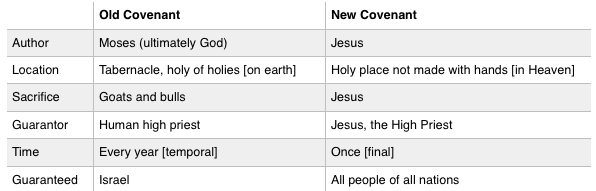
Jesus Himself mediated a new covenant, signed by his blood and sealed by his death (vs.15-23). He was both the mediator and guarantor of the New Covenant. His blood both covered and cleansed man’s sin. Also, his Covenant fulfills and superseded the old covenant Moses carried on tablet down the mount Sinai.

See how Jesus of the new covenant compares to Moses and the old covenant (vs.24-28):

old covenant vs. new covenant

In all aspects, Jesus is greater. Jesus is not a symbol or icon. He is the real deal. The old covenant did its job and pointed to Jesus—the great sacrifice for sin.


Questions for Reflection:

  • How does Exodus 25-26 and Leviticus 16 give definition to Hebrews 9:1-5?
  • How was the old covenant given to Moses ultimately from God?
  • What was the tabernacle, sacrificial system, and atonement meant to symbolize?
  • How do God already have both covenants in mind from before time and creation?
  • Why isn’t the blood of a goat or bull sufficient atonement for the blood of man?
  • Why wasn’t the high priest’s annual atonement sufficient enough for full atonement?
  • How intricate and beautiful is the symbol of Jesus New Covenant?
  • How does Hebrews 9 show two worlds colliding (heaven and earth)?
  • How do we walk in both worlds?
  • What “man-made things” do people often trust in more than God-made things?
  • What sacrifice are you making to try and earn salvation with God or to cover your sins?
  • How will you step boldly and confidently into the sanctuary of God today?

Jesus is the Greater Mediator

When God gives a gift, He gives his best. No one can out do or out give God. He tops the cake. He gives the greatest gift.

What gift could God give that would wow the world? The gift was himself.

The big idea of Hebrews from the beginning until now is that Jesus is the greatest. Above Jesus none is greater! In chapter 8, this idea continues, but focuses moves towards Jesus as the Great High Priest (v.1).

“Now the main point of what we are saying is this: We do have such a high priest, who sat down at the right hand of the throne of the Majesty in heaven, and who serves in the sanctuary, the true tabernacle set up by the Lord, not by a mere human being.

Every high priest is appointed to offer both gifts and sacrifices, and so it was necessary for this one also to have something to offer. If he were on earth, he would not be a priest, for there are already priests who offer the gifts prescribed by the law. They serve at a sanctuary that is a copy and shadow of what is in heaven. This is why Moses was warned when he was about to build the tabernacle: “See to it that you make everything according to the pattern shown you on the mountain.” But in fact the ministry Jesus has received is as superior to theirs as the covenant of which he is mediator is superior to the old one, since the new covenant is established on better promises.

For if there had been nothing wrong with that first covenant, no place would have been sought for another. But God found fault with the people and said:

“The days are coming, declares the Lord,
when I will make a new covenant
with the people of Israel
and with the people of Judah.
It will not be like the covenant
I made with their ancestors
when I took them by the hand
to lead them out of Egypt,
because they did not remain faithful to my covenant,
and I turned away from them,
declares the Lord.

This is the covenant I will establish with the people of Israel
after that time, declares the Lord.
I will put my laws in their minds
and write them on their hearts.
I will be their God,
and they will be my people.
No longer will they teach their neighbor,
or say to one another, ‘Know the Lord,’
because they will all know me,
from the least of them to the greatest.
For I will forgive their wickedness
and will remember their sins no more. ”

By calling this covenant “new,” he has made the first one obsolete; and what is obsolete and outdated will soon disappear.” – Hebrews 8:1-13, ESV

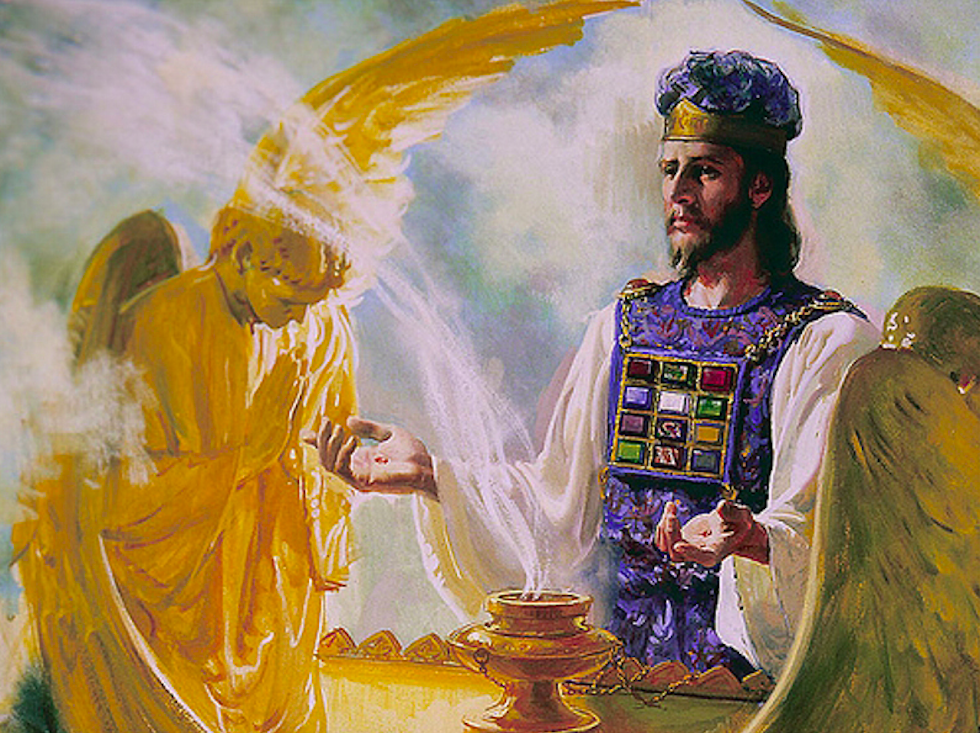
Think about it, at this very moment, Jesus is seated at the right hand of the throne of God. He is ministering in the true Holy of holies that the earthly tabernacle where priests ministered only represented (vs.2-5). Jesus stepped into the role of High Priest and sacrifice. A role only needed once for all.

Jesus ministers a greater covenant on greater promises (vs.6-7). Not only did Jesus minister the covenant, but he was its author, fulfiller, and mediator. The New Covenant that Jeremiah prophesied about was actualized with Jesus’ life and ministry (vs.8-12, cf. Jeremiah 31:31-34). Jesus makes the first covenant obsolete and the second one complete.

Through Jesus there is no need for another priest or covenant ever (v.13). For millennia God’s people had to access God through a middleman like a patriarch, prophet or priest. Jesus became that middleman and now we have forever access to God. What greater gift could God have given us than this?


Questions for Reflection:

  • What are some examples of things you’ve experienced that are “less than the best”?
  • What is a covenant? What covenant have you made? (i.e. family, work, society, etc)
  • What is the Bible’s understanding of a covenant?
  • Why is the first covenant obsolete? What does this mean for Israel?
  • What makes the New Covenant greater?
  • What do you learn about the New Covenant? (vs.8-12) What about the covenant is hard to understand?
  • Where is Jesus now? Why is that so important?
  • What is a mediator? How is Jesus a mediator?
  • Jesus is God’s Great High Priest, but is there anything that can minimize his greatness?
  • What are things you often make greater than Jesus?
  • How is God writing his law on your heart?

Jesus is Greater than Melchizedek

In God’s providence he chose the nation of Israel carry out his purposes and plans. Part of that plan was to give Israel the law and to help them it carry out the law God chose the tribe of Levi to be the priests. The Levite priests taught the people the law and they were responsible to offer sacrifices on behalf of the entire nation. Even though the Levite priests would offer sacrifices for the sins of the people, not one of the priests was without sin himself (v.11).

“If perfection could have been attained through the Levitical priesthood—and indeed the law given to the people established that priesthood—why was there still need for another priest to come, one in the order of Melchizedek, not in the order of Aaron? For when the priesthood is changed, the law must be changed also. He of whom these things are said belonged to a different tribe, and no one from that tribe has ever served at the altar. For it is clear that our Lord descended from Judah, and in regard to that tribe Moses said nothing about priests. And what we have said is even more clear if another priest like Melchizedek appears, one who has become a priest not on the basis of a regulation as to his ancestry but on the basis of the power of an indestructible life. For it is declared: “You are a priest forever, in the order of Melchizedek.”

The former regulation is set aside because it was weak and useless (for the law made nothing perfect), and a better hope is introduced, by which we draw near to God.

And it was not without an oath! Others became priests without any oath, but he became a priest with an oath when God said to him: “The Lord has sworn and will not change his mind: ‘You are a priest forever.’”

Because of this oath, Jesus has become the guarantor of a better covenant.

Now there have been many of those priests, since death prevented them from continuing in office; but because Jesus lives forever, he has a permanent priesthood. Therefore he is able to save completely those who come to God through him, because he always lives to intercede for them.

Such a high priest truly meets our need—one who is holy, blameless, pure, set apart from sinners, exalted above the heavens. Unlike the other high priests, he does not need to offer sacrifices day after day, first for his own sins, and then for the sins of the people. He sacrificed for their sins once for all when he offered himself. For the law appoints as high priests men in all their weakness; but the oath, which came after the law, appointed the Son, who has been made perfect forever.” – Hebrews 7:11-28, ESV

Melchizedek and Jesus show that there was the possibility of another priesthood.  Jesus changes things.  He was from a different priest than the former Levite priest of Israel.

Screen Shot 2017-11-25 at 8.02.00 AM

Jesus is unique and his priesthood is forever.  There is no need for another priest to offer sacrifices.  He stepped into the office of the priesthood though another way. When law was weak and made nothing perfect not even its priests, Jesus offers a better way of drawing near to God. Jesus is the greater hope. Jesus fulfills both the perfect priesthood and perfect sacrifice for sin. Jesus saves us forever, intercedes for us always, and offers complete salvation. This makes Jesus the Greater High Priest.


Questions for Reflection:

  • What was the job description of a Levite priest?
  • How was Jesus a priest? How is he a greater priest?
  • What is a covenant? How does Jesus fulfill all previous covenants?
  • How was Jesus a different priest than the Levite priest?
  • Why is it important that Jesus is a priest forever? What does that mean for you today?
  • Why do you need a high priest? How does Jesus minister to you as priest?

Jesus is a Priest in order of Melchizedek

Have you ever met someone you’ve never met before, but you swear you know them from somewhere? There is a mystery to them. There is an example of this in the Bible when Abraham met the king priest named Melchizedek (Gen.14:17ff). They had never met, but they did have in common a fear of God.

Melchizedek has been a mystery man throughout the centuries. Even Bible scholars are stumped because there isn’t a lot said about him. Some scholars say he was either an angel-man, Christophany, or simply a human.

“This Melchizedek was king of Salem and priest of God Most High. He met Abraham returning from the defeat of the kings and blessed him, and Abraham gave him a tenth of everything. First, the name Melchizedek means “king of righteousness”; then also, “king of Salem” means “king of peace.” Without father or mother, without genealogy, without beginning of days or end of life, resembling the Son of God, he remains a priest forever.

Just think how great he was: Even the patriarch Abraham gave him a tenth of the plunder! Now the law requires the descendants of Levi who become priests to collect a tenth from the people —that is, from their fellow Israelites—even though they also are descended from Abraham. This man, however, did not trace his descent from Levi, yet he collected a tenth from Abraham and blessed him who had the promises. And without doubt the lesser is blessed by the greater. In the one case, the tenth is collected by people who die; but in the other case, by him who is declared to be living. One might even say that Levi, who collects the tenth, paid the tenth through Abraham, because when Melchizedek met Abraham, Levi was still in the body of his ancestor.” – Hebrews 7:1-10

While no one is really sure who Melchizedek was we can conclude that he was a type. A type is an Old Testament person (or practice) that had a counterpart in the New Testament in Jesus Christ. Often times a type showed what the their counterpart would be like. Melchizedek is the OT example of what the NT Jesus would look like and he does “resemble the Son of God.” (v.3)

What is clear from Hebrews 7 is that while Jesus comes from the order of the priest-king Melchizedek, he is far superior. Below are a few ways Jesus is superior (vs.1-3):

Jesus and Melchizedek Comparison

It is interesting that the author of Hebrews doesn’t interpret the story of Melchizedek, but simply shows how Jesus is a priest in his order and that he is a far superior priest to any before him or after him. Through Melchizedek and the OT there is a shadow cast that Jesus brings light to. The entire OT points to Jesus.


Questions for Reflection:

  • Who was Melchizedek?
  • How are Jesus and Melchizedek similar? How are they different?
  • How is Jesus superior to Melchizedek?
  • Why is Melchizedek an important Bible character? Why is he important to understanding Jesus?
  • What do you learn about Jesus’ uniqueness and his unique role from this biblical text?

Jesus is the Greater Promise

When someone makes a promise they will often swear to keep that promised based on something like “my good name” or  “on my mother’s grave” (v.16). If they do not keep the promise then their name is on the line with the threat of their name being tarnished or trust in them diminished.

“For when God made a promise to Abraham, since he had no one greater by whom to swear, he swore by himself, saying, “Surely I will bless you and multiply you.” And thus Abraham, having patiently waited, obtained the promise. For people swear by something greater than themselves, and in all their disputes an oath is final for confirmation. So when God desired to show more convincingly to the heirs of the promise the unchangeable character of his purpose, he guaranteed it with an oath, so that by two unchangeable things, in which it is impossible for God to lie, we who have fled for refuge might have strong encouragement to hold fast to the hope set before us. We have this as a sure and steadfast anchor of the soul, a hope that enters into the inner place behind the curtain, where Jesus has gone as a forerunner on our behalf, having become a high priest forever after the order of Melchizedek.” – Hebrews 6:13-20

God is a promise keeper. When God makes a promise he swears by his own name because he himself is trustworthy and reliable (v.13, 17). He is the only one qualified to make an oath by himself because there is nothing greater to swear by than himself. He has never failed to keep a promise because he never lies or fails (v.18).

One of his most well known promises in Scripture was to given Abraham. God promised to bless Abraham’s lineage and multiply it (v.14). Abraham trusted God’s promise by doing what God asked even though the information Abraham had on hand was limited (v.15).

The promise given to Abraham finds its ultimate fulfillment in Jesus who was a high priest in the order of Melchizedek—a priest during Abraham’s day. Jesus is the sure and steadfast anchor for the soul (v.19). We can hope in Jesus because God has promised him to be our high priest. He has gone before us and sits at the right hand of God on high (v.20).

May you anchor your soul into the Rock called Jesus. Even in the stormy seas that batter you with doubts and despair, his promises are sure to the end. Remember, how he has been with you and has been faithful. As G. Campbell Morgan said, “I believe the promises of God enough to venture an eternity on them.”


Questions for Reflection:

  • What makes a promise valuable?
  • What promises did God make to Abraham? (see Genesis 12)
  • What are some promises from God that we have that Abraham didn’t?
  • What makes God and his promises so “sure and steadfast”?
  • How does the author of Hebrews describe the certainty of God’s promise— the anchor?
  • What are some of the anchors other than Jesus that people chain themselves to?
  • How can you encourage one another “to hold fast to the hope set before us”?

Jesus is the Greater Hope to the End

With the advent of the TV, computers, spectator sports, desk jobs and early retirement, we’re sitting down more than ever before in history. Researchers calculate the average person sits 9.3 hours a day, which is more time than the average person spends sleeping (7.7 hours). So that means 17 hours a day we are on our backs or behinds.

Laziness is one of those undiscussed sins. However, the author of Hebrews unashamedly discusses it. He particularly warns against spiritual laziness. Laziness is a form of pride that says, “I don’t care what others (including God) want me to do I am going to do what I want and sit right here.” Laziness is a regression of faith.

“Though we speak in this way, yet in your case, beloved, we feel sure of better things—things that belong to salvation. For God is not unjust so as to overlook your work and the love that you have shown for his name in serving the saints, as you still do. And we desire each one of you to show the same earnestness to have the full assurance of hope until the end, so that you may not be sluggish, but imitators of those who through faith and patience inherit the promises.” – Hebrews 6:9-12

A church or community of faith becomes lazy when we allow erroneous teaching to infiltrate the church and do nothing about it. While the church may have started strong, it slowly slipped into passiveness and procrastination. Spiritual laziness is not caring about the wonderful promises we have now and later through our salvation and not protecting or promoting it to the next generation.

The best way to progress in your faith and prevent spiritual regression is to serve one another. Help one another to stand, exercise your minds, and fight for truth. That takes effort, but in the long run it will guard you and the community from spiritual lethargy. Serving one another is a sure remedy, but not the sole remedy.

The author of Hebrews has no intention to scare his brothers and sisters into changing, but to assure them of the greater hope that is to come. Better things are to come. Better things for those who wait and hope in God’s promises from now until the end of time.

Jesus is a greater hope than my hope in leisure, ease, or unmet desires. Jesus not only redeems our souls from the pit, he also redeems all aspects of our lives—our time, our attitude, and our work ethic. Look to Christ and invite him to redeem your life and to redeem your time.


Questions for Reflection:

  • What are some ways Christians have become faith-lazy today? What are some examples of spiritual regression you’ve witnessed in the church?
  • What are the marks of spiritual “progression?
  • What can lead one to lack patience or lose assurance of hope until the end?
  • What “better things” or promises we will inherit in the end?
  • Who are some biblical examples worth imitating and that encourage you to have faith and patience to the end?
  • How does serving one another often remedy spiritual laziness?

Jesus is the Greater Hope

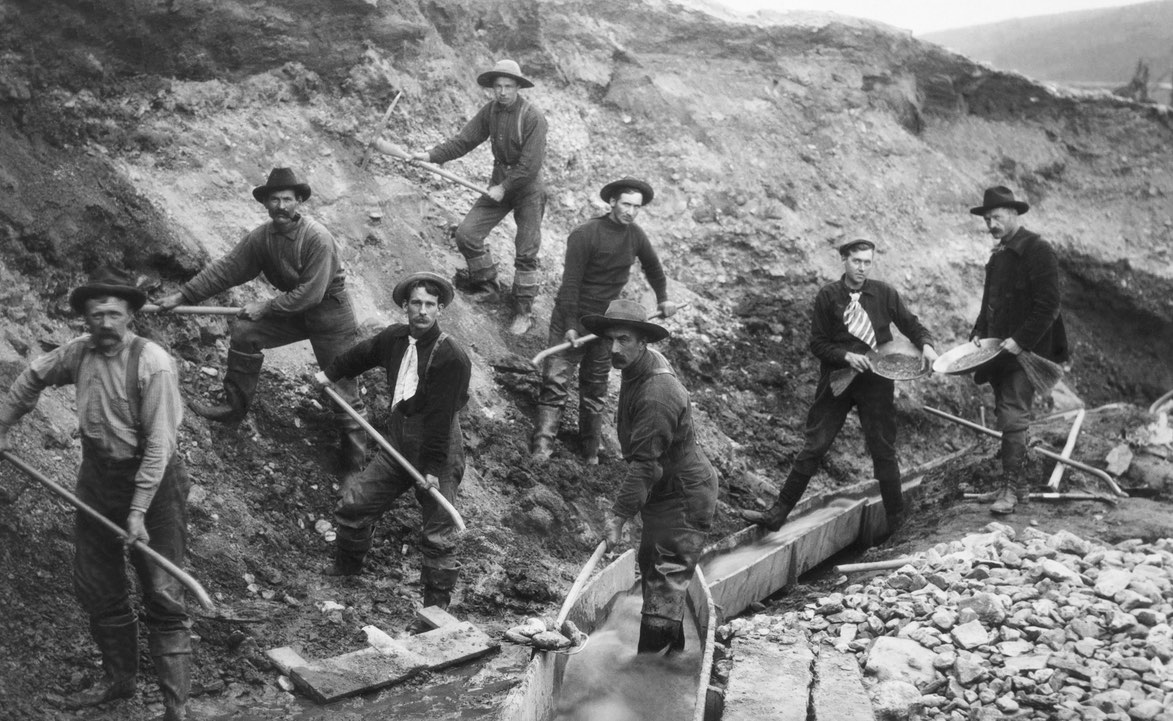
Before 1849 California was declared a waste land and said to have the least resources of any place on the North American continent. That was until the gold rush. Thousands of people left family and home in the hope of striking it rich. Some did, but most didn’t. The gold rush left many more impoverished and hopeless than before. For many California was indeed a waste.

Everyone is in search of hope. Yet we live in a world of pain, disappointment, doubt, and hardship. God may even seem distant and uninvolved. Hope in this world seems fleeting and lost. Where is lasting hope to be found?

Everyone places hope in people. We put our hope in parents, spouses, children, friends, teachers and leaders. We are in constant search for vibrant life-giving teaching that will wow our socks off and stir our affections. While that teaching can be found, its content must never compromise the truth (5:11-12a).

“About this we have much to say, and it is hard to explain, since you have become dull of hearing. For though by this time you ought to be teachers, you need someone to teach you again the basic principles of the oracles of God. You need milk, not solid food, for everyone who lives on milk is unskilled in the word of righteousness, since he is a child. But solid food is for the mature, for those who have their powers of discernment trained by constant practice to distinguish good from evil.

Therefore let us leave the elementary doctrine of Christ and go on to maturity, not laying again a foundation of repentance from dead works and of faith toward God, and of instruction about washings, the laying on of hands, the resurrection of the dead, and eternal judgment. And this we will do if God permits. For it is impossible, in the case of those who have once been enlightened, who have tasted the heavenly gift, and have shared in the Holy Spirit, and have tasted the goodness of the word of God and the powers of the age to come, and then have fallen away, to restore them again to repentance, since they are crucifying once again the Son of God to their own harm and holding him up to contempt. For land that has drunk the rain that often falls on it, and produces a crop useful to those for whose sake it is cultivated, receives a blessing from God. But if it bears thorns and thistles, it is worthless and near to being cursed, and its end is to be burned.” – Hebrews 5:11-6:8

In this, the third warning in the book of Hebrews, we warned to beware of false and flashy teaching that sweeps in and takes the place of true teaching. Our ears often are drawn to the newest self-help fad or smooth-talker. The author of Hebrews calls dull ears to listen and become wowed again by the basic teaching of God, discern what is true, then move on from those teachings to other doctrines (6:1-8).

When one starts primary school he will learn the ABC’s so that he might read words, sentences, books— in fact, anything in literature. The challenge is to renew a passion for basics of faith, which are the building blocks to a deeper hunger to know the wonders of God and be wowed again by him (vs.12b-14).

The greatest and lasting hope in this world is indeed found in a person—The Word who became flesh (John 1:14). Hope is found in Jesus. His teachings are richer than gold for the soul. Dig into his words and the deeper you go the more hope you will find.


Questions for Reflection:

  • What are the basics of faith?
  • How are the basics important to understanding the more complex issues of faith?
  • Where does our culture turn for help to grow wiser, stronger, and more mature?
  • What is the danger of becoming too familiar with the basic principles of God?
  • What is the opposite of dull hearing? How can you cultivate vibrant hearing? What illustrations in the passage help you understand the difference?
  • What wows you about God? What do you want to know more about him?
  • How can you stir others towards a greater hope in Jesus?

Jesus is the Greater Priest

Each of us carry a weigh of responsibility. Whether we are spouse, parent, student, or employee we have people around us or under us that can demand our care.

Up until 70 AD Israel had high priest who would bear the weight of responsibility of the entire nation of Israel and plead to God on their behalf for the forgiveness of their sins. What an enormous responsibility and yet he was just a mere man chosen among men to act on behalf of men (v.1).

“For every high priest chosen from among men is appointed to act on behalf of men in relation to God, to offer gifts and sacrifices for sins. He can deal gently with the ignorant and wayward, since he himself is beset with weakness. Because of this he is obligated to offer sacrifice for his own sins just as he does for those of the people. And no one takes this honor for himself, but only when called by God, just as Aaron was.

So also Christ did not exalt himself to be made a high priest, but was appointed by him who said to him, “You are my Son, today I have begotten you”; as he says also in another place, “You are a priest forever, after the order of Melchizedek.”

In the days of his flesh, Jesus offered up prayers and supplications, with loud cries and tears, to him who was able to save him from death, and he was heard because of his reverence. Although he was a son, he learned obedience through what he suffered. And being made perfect, he became the source of eternal salvation to all who obey him, being designated by God a high priest after the order of Melchizedek.” – Hebrews 5:1-10

Interestingly, every high priest was weak and inadequate for the job and needed to seek forgiveness for his sins before he could ask for the forgiveness of the sins of the nation (vs.2-3). No priest was perfect or chosen for the job because he was somehow super spiritual. The honor of the high priest, including Aaron (the first Levitical priest), was not earned, but given by God (v.4).

Jesus was also given the title of high priest (v.5). Unlike other priests, He obeyed God in all things and was sent to earth to be the sacrifice for sin (vs.5, 7-8). A sacrifice that was once and for all. Jesus is unique among high priests in that he did not need to atone for his own sins because he is sinless (v.9). This makes Jesus the greater high priest; your great high priest.


Questions for Reflection:

  • What was the job of the priest? How was this a compassionate job?
  • How did the priest prepare for his job? Why did he need to deal with his own weakness?
  • How is Jesus more compassionate and prepared for the job?
  • How does Jesus’ suffering and sympathy help you to have confidence in God?
  • How does Jesus’ example encourage you to show compassion to another sinner?
  • Dig Deeper: Who was Melchizedek? (Gen. 14:17-20; Ps. 110:4) What does it mean that Jesus is in the order of Melchizedek? What does the relationship between Jesus and Melchizedek tell you about God’s orchestration of history?


Side Notes: Scholars don’t know much about Melchizedek. He is a symbolic picture of Jesus Christ. Long before Moses, Melchizedek was a Canaanite priest-king in a city that centuries later became Jerusalem and he was the head of an order of Jerusalem priests older than Moses’ brother Aaron.