Christ is King

Who created His dominion and made it good.
Whose image is stamped on us through and through.
Who walked among His creation.
Who gives life to all. Who is sovereign over all.
Who feeds and sustains all life.
Who gives to both the just and unjust.
Who watches over (sees) His creation.

Who protects and fights for His own.
Who leads angel armies.
Who is the lion of Judah.
Who wrote the law and put it in our hearts.
Who made a royal lineage from David to Jesus and a royal priesthood from Melchizedek to Jesus.

Who is the light to the nations and shines His glory for all to see.
Who incarnated Himself among us.
Who walks with us.
Who is present among His people.
Who serves us, loves us, and give to us without return payment.
Who died for us.
Who took the ridicule, crown or thorns, regal robe to redeem, reconcile, and restore us.

Who comes to us, steps toward us, and humbles Himself before us.
Who invited us to the banquet with Him.
Who lavishes us in the riches of His grace.
Who gives authority to His own to go into all the world and make followers among the nations.
Who is the One we represent as ambassadors—the King’s servants.

Who sings over His children (King’s kids).
Who is the wise King who gives freely to all who ask.
Who judges with the scepter of justice.
Who holds the scroll and opens them.
Who tears the veil.
Who built Zion for His own—the eternal kingdom.

Who is coming back for us to rule and reign with him as his princes and princesses.
Who has sealed us for the day of redemption.
Who keeps us in His hand forever.
Who wields the sword and will crush the head of the enemy.
Who sits on his throne forever and ever.
Who will receive honor and glory.

Col 1:16
1 Timothy 6:13-6
Phil. 2:8-11
Rev 17:14; 19:11
Eph. 1:19-23
Ps. 93:1; 149:2-5

O Come, Let Us Adore Him

I don’t know what’s occupying your mind right now. Maybe you’re replaying a chat in the car with your spouse or child. Maybe a situation back home or on your team. Maybe something ahead of you this week. Or maybe an anxious thought. I have the task to enter that space with the lyrics of Psalm 2. If you give me a few minutes, I promise this psalm won’t disappoint.

Psalm 2 is a song that David penned as a coronation anthem for the future kings of Israel. It was a reminder to earthly kings that there exists a heavenly king. It was a prophetic vision of God as the King of kings who rules His kingdom and therein is a hope that God would set his True King in Zion. The context and themes might seem foreign, abstract, or outdated—from another culture or time. Yet may you get a refreshed vision of who God is through this psalm.

Psalm 2 was used throughout church history to soothe God’s anxious people when it seems like the world was out of control. Do you ever feet that things in this world are shaky? Like the world is on the edge of chaos? Like the future of our well-being and our children’s is in the hands of very unstable or untrustworthy leaders? Have you felt like this? If not, that may mean you haven’t scanned the news lately. I can summarize the global headlines for you by saying that things are going particularly well. Why is there never peace? Why are people so angry? When will the war in Gaza and Israel end? These questions are not unique to us today (though you and I certainly feel it)—they are questions felt across history and every generation.

Psalm 2 begins with poignant questions, “Why do the nations rage?” and “Why do kings and rulers counsel against the Lord and His Anointed?” Nations rage because nations seek peace through war. Kings and rulers plot because by playing god they seek peace their way. Psalm 2 sums up all of history to the present day It’s a summary of the entire Bible in a gospel song. Here are my 3 points—We don’t want a King, We are given a King, and We need this King.

1) We don’t want a King (vs.1-3)

It is in our human nature refuse a king. It is in our genetic code, since Eden to push back against authority and resist the kingship of God. At our core, we are repelled by being ruled.
Within every heart there is a war—we want a king and we don’t want a king. When presented with a king we aren’t happy about it because of what it means for us. We want a king we can submit to when he fits or supports our agenda, our vision, or our wants.

Consider the American mindset. As an American, I represent a people who rebelled and rejected the rule of a king (and there were good reasons for that). What my forefathers did was divorce themselves and declare independence from a king that they called “unfit to be the ruler of a free people.” One could make the case that most Americans resist most kinds of authority (like king, president, boss, parent). I’m not anti-American. I love my country. Yet as much as we Americans abhor royalty or ruler, we have an incurable curiosity for the crown…at least from a distance. How many of you watched the coronation of King Charles? 10 million Americans watched the coronation of King Charles while only twice as many Britons tuned in. As Americans, we are fascinated by royalty—it’s wealth, fashion, spectacle, and soap operas.

I could make a case that within all humans is a memory trace to a true, good, and wise king. From birth, we’re raised with heroic legends and folklore like Richard the Lionheart or Arthur and his Knights of the Round Table. We flock to cinema to see the romanticized stories of Disney princesses like Cinderella and Elsa [I have three girls who all played dress up]. We dream of fantastical kingdoms like Middle Earth and Narnia or the real kingdom conquests of the Roman Empire or the British Empire on which the sun never set.

The world’s history of monarchs (even in the Bible) has been overall terrible. We are familiar with the truism coined by Lord Acton, “absolute power corrupts absolutely.” Today in our modern world, since the Enlightenment, most monarchies have toppled and become democracies (or voices of the people). Royalty seems to be a thing of the past. Yet one could argue that today there is a new kind of royalty that goes by other names—celebrities, sports stars, billionaires, politicians, and influencers (rulers of public opinion). We adore them, we give them riches, we treat them as kings, and we secretly fantasize about their fame.

As the story goes, nobody wants a king, therefore, everybody wants to be king. Not much has changed about us. It has been this way since the Garden. After God created the world, he said to mankind, “Be fruitful and multiply and fill the earth and subdue it, and have dominion over the earth.” (Genesis 1:28) God created us to be dominioneers, but the thought that God still has his hand in things doesn’t sit well with us. Like the kings and rulers of Psalm 2:3, we think of God’s rule as a “chain” or “restraint”. We see God as a chain-maker, not a chain breaker. He feels like an unnecessary weight or choking burden.

I can think to myself, “I don’t want God’s cords wrapped around my life. Get it off me!” I feel owned and used. I feel like God is meddling and toying with me. I am repulsed by the notion that I am someone’s possession, certainly not God’s (v.8). In my being, I buck against this. And God can sometimes give me exactly what I want, like Westley from the Princess Bride who always said to Princess Buttercup, “As you wish,” but what he meant by that was “I love you.”

In rebelling against God, we believe we are creating freedom and peace for ourselves. Yet when we remove ourselves out from under God’s power, protection, and peace, the opposite is actually true. It becomes a hell. George MacDonald, a mentor of C.S. Lewis, had said, “The central conviction of hell is, I AM MY OWN. This will create a living hell for you.” This mindset dominates most humans’ worldviews. And we wonder why the nations rage and peoples plot.

There is war within me. I know my mutinous heart and the misery it brings me. Deep down, I don’t like being told what to do and I rebel. And there, I do the same thing as the people who plot against the Lord’s anointed. I want all the blessings and benefits of the kingdom, but I don’t want to listen to the instruction of the King. When Jesus says love your neighbor as yourself it can feel to me like a chain. Whose my neighbor, I ask? Jesus says your worst one—your enemy. That seems a bit over the top Jesus! Then Jesus says I’m to live pure and holy. And that feels so restrictive. Or Jesus says to be generous and give to everyone who asks of you. Come on? Really? I can’t do that. Maybe when I have a little extra or they pay me back. But then Jesus says forgive as you’ve been forgiven. What!? That surely doesn’t apply to me. The bitterness I have is the only power I can hold onto. I don’t think that God has in mind the level of hurt that I have endured. Except, yes. He does. He wants my freedom and yours.

I still rage against God like this every time I sin. I am in my mid-40’s and have walked with Jesus for 3 decades. And I am alarmed that I still sin so frequently. Every time I do I am making a trade. I say to God, my way looks more free—more joyful. I am a better manager of my human flourishing than you. My path looks more promising and productive. What I don’t realize, in that moment, is that I am raging and plotting against the Anointed.

Charles Spurgeon said, “To a graceless neck, the yoke of Christ is intolerable, but to the saved sinner, it is easy and light. We may judge ourselves by this—Do we love that yoke or do we wish to cast it from us?” To be honest, I often want to cast off the lightest of yokes in exchange for something that looks lighter, but more often then not ends up being a bigger burden too heavy for me to carry. Listen, I have never once regretted obeying God…and yet I still rage.

You and I are called to fight back against the rage and plots by submitting ourselves to the Good King who says, “Come to me, all who labor and are heavy laden, and I will give you rest. Take my yoke upon you, and learn from me, for I am gentle and lowly in heart, and you will find rest for your souls. For my yoke is easy, and my burden is light.” (Matthew 1:28-30)

2) We are given a King (vs.4-6)

How does God respond to the rebel heart? “He who sits in the heavens laughs” (v.4). That’s an interesting image. What does it mean that God laughs? Like an adult chuckling at the feeble effort of a kid. Who scrunch their faces, fold their arms, stomp around in angst, and say boldly, “No!” Sometimes as a parent, it’s hard not to laugh. We laugh and say, “Aw. How cute. Jimmy is pretending to be a totalitarian dictator. Sorry son, but resistance is useless.”

According to Psychology Today, laughter is “one of the distinguishing features of human beings” and maybe “the most contagious of all emotional experiences”—yet “little is known about the mechanisms behind it.” Laughter is social. It’s an effort to communicate to others.

We get laughter from God. And when he laughs, he does so for our sake, to communicate to us. He laughs to give off signals—that are horrible to his enemies and wonderful to his friends. As God laughs his enemies are terrified and cower in fear. But his friends, rise in comfort and he quiets their fears. God’s laughter warns those who commit cosmic treason of their impending doom. But to his friends, his laughter reminds them that the best is yet to come.

God laughs because his plan was already coronated as He says, “I have set my King on Zion, my holy hill.” (v.6) There is no need to crown him as he has already been crowned before the world was created. Whether you acknowledge it or not, you have been given a king. You’ve always had a King. His name is Jesus (Matthew 3:17). He is a good, gracious, gentle, humble, and kind King. When the time was right, God sent his Son to earth—to live among us. He had no beauty or earthly majesty (Isaiah 53:2). He was accepted and then rejected as king. He was plotted against by the kings and rulers of the day. He was mocked. He was clothed in weakness and shame—dressed in a royal robe and twisted a crown of thorns on his head. He was despised and the people pulled a mutiny and sought to unseat Jesus. They marched him to a hill outside the city and hung him on a criminal’s cross. They slapped a little sign above his head that read, “Here hangs the king of the Jews.” (Mark 15:17) They laughed. And Psalm 2 was being fulfilled. But God would have the last laugh. As the Son of God breathed his last breath the earth shook. Nothing would defeat the Son of Man who came to seek and save the lost. Three days later, Jesus rose from the dead as a conquering king, and sits to this day at the righthand of the throne of God readying the day when he will come back and establish his eternal kingdom and call us home.

As Spurgeon put it so poetically, “God’s anointed is appointed and shall not be disappointed!” When you are distressed by the chaos of the world. Look to the holy hill. When you feel defeated by the rebellion in your own heart. Look to the holy hill. When you are tired and things seem outside of your control. Look to the holy hill. When you are weary of your own ability to do the things you know you ought not to do and fail to do the things you ought to do. Look! On the hill is Jesus who loves you. Who defeated, even your rebellion (and love you still). Who is currently standing on your behalf. And will never ever be moved.

3) We need this King (vs.7-9)

You need this King to conquer your enemies. The King is not the enemy (as is common for me to think); he is the enemy crusher. When kings of old were crowned, they were given a scepter (authority) and orb (wisdom). Then the names of the enemies of the kingdom were written on shards of pottery and placed at the king’s feet. The king in symbolism would crush the shards to dust and the people would cheer.

This is what happens to the enemies of God’s people. Jesus is not intimidated by your enemies. They are already defeated. Compared to Christ, your enemies are fragile and impermanent like a shard of pottery. What an image of our Lord! And if that’s your King, what are you so afraid of? This picture speaks to the certainty of what Christ has done, who Christ is, and what he is doing in the world. Don’t declaw the lion of Judah. With the great multitude we can say, “Hallelujah! For the Lord our God the Almighty reigns…On his robe and on his thigh he has a name written, King of kings and Lord of lords.” (Rev. 19:6,16) When I hear Jesus like this, it right-sized my image of him, his power, and his authority. It also right-sizes my enemies and my rebel heart. “To be intimated by the world is as spiritually fatal as being overly attracted to it.” Tim Keller

You need this King for true peace and joy. His yoke is your freedom. Jesus came to save you from you. Rather than you owning you, God considers you his treasured possession. I bring good news of great joy… for all people…the Savior of the world, from the royal line of David, the promised Messiah, the prince of peace, wonderful counselor, and Mighty God—has come for you! I don’t know what the next year holds for you, your family, your ministry, or your work in Chad. It will likely be difficult. I promise Jesus has the nations of the earth as his possession. Do not fear!

In the final stanza of Psalm 2, King David gives us a powerful application (vs.10-12). That is comes from David himself is significant. Remember, he is the king, yet he understands who is the True King. He acknowledges that God is his +1. He decrees these final words to all the kings and rulers of the earth—all peoples—you and me. He begins by saying, “O”. That’s a hard word to translate because it’s from the gut (it comes out of the mouth, down the vocal cords, into the diaphragm, and deep from the gut). Say it. Feel it? David begs for a response…

3 Responses:
1) “Serve the LORD with fear,” Give yourself to the One—Most High King—who rules over all.
2) “and celebrate his rule with trembling,” Laugh out loud with comfort and peace…because in Christ, you’re the freest of all people.
3) “Kiss his son…” This is an ancient sign of reverence…bowing low…bending the knee…of tender and intimate obedience.

1 Result: “Blessed are those who take refuge in him.” To think this King is also … a mighty fortress…a strong tower…a hiding place…and a safe refuge.

Listen, brothers and sisters, there is no refuge from the King. There is refuge in the King.

In the early church, the world was raging against Jesus’ servants. Kings and rulers were counseling together against the Lord’s anointed. His people felt threatened. Their faith was being challenged. Yet let’s take comfort and strength in how they took refuge in the God-King,

“When [Peter and John] were released, they went to their friends and reported what the chief priests and the elders had said to them. And when they heard it, they lifted their voices together to God and said,

“Sovereign Lord, who made the heaven and the earth and the sea and everything in them, who through the mouth of our father David, your servant, said by the Holy Spirit,

“‘Why do the nations rage,
and the peoples plot in vain?
The kings of the earth set themselves,
and the rulers were gathered together,
against the Lord and against his Anointed’—

for truly in this city there were gathered together against your holy servant Jesus, whom you anointed, both Herod and Pontius Pilate, along with the Gentiles and the peoples of Israel, to do whatever your hand and your plan had predestined to take place. And now, Lord, look upon their threats and grant to your servants to continue to speak your word with all boldness, while you stretch out your hand to heal, and signs and wonders are performed through the name of your holy servant Jesus.”

And when they had prayed, the place in which they were gathered together was shaken, and they were all filled with the Holy Spirit and continued to speak the word of God with boldness.”

Acts 4:23-31

As come to the Lord and take refuge in Him, may he vanquish your anxious thoughts and give you courage and boldness.

Sing: O Come let us adore him (x3), Christ the Lord. / For He alone is worthy (x3), Christ the Lord. / We give him all the glory (x3), Christ the Lord.

Hark the Herald, Angels Sing

Have you noticed how many songs on your Christmas playlist mention angels? Like Hark the Herald Angels Sing. That was no sentimental Christmas carol. It’s chocked-full of theology. It’s soaked with Scripture. And it beautifully captures the how and why Jesus came into the world.

Hark! The Herald Angels Sing was written by Charles Wesley in 1739. It was one of 6,500 hymns that he wrote! He wrote this carol only 1-year after he became a Christian. If you were like me, i still trying to find and spell Habakkuk. Charles had spiritual roots. As a student at Cambridge, he formed an extracurricular group called the Holy Club. Charles, his brother John and George Whitfield (who put this hymn to music) were all dubbed the Bible Moths. It was after Charles heard the gospel from Moravian missionaries and read Romans 1-9 that he gave his life to Christ. And Hark, the Herald Angels Sing was his first Christmas anthem.

Have you ever been in a situation when you were both in awe and terrified at the same time?

A few months ago, my family enjoyed some rest in Tanzania. I wanted to go fishing in the ocean and take my older girls out for an experience, so we arranged to go on a traditional wooden dhow. The next day before dawn we showed up to what was a beaten down fishing boat. I was a little sad that it wasn’t what we expected, but deep sea fishing still sounded fun. We got into the boat. I didn’t noticed any life-jackets. It was pitch black. We motored more than a two kilometers from shore. The lights from the beach became distant. We gripped tightly to the edge of the boat as it skipped on the sizable waves. Honestly, it wasn’t my best dad moment. If only Sarah knew what we were doing!? When the dawning light peaked above the horizon of the Indian ocean we could see how far we were from land. We were filled with both awe and fear. We did catch dinner. We also spotted a family of humpback whales and we were greeted by a large pod of dolphins, which was a win-win-win.

The Bible captures a moment of awe and terror: (Read & Reflect)

And there were shepherds living out in the fields nearby, keeping watch over their flocks at night. An angel of the Lord appeared to them, and the glory of the Lord shone around them, and they were terrified. But the angel said to them, “Do not be afraid. I bring you good news that will cause great joy for all the people. Today in the town of David a Savior has been born to you; he is the Messiah, the Lord. This will be a sign to you: You will find a baby wrapped in cloths and lying in a manger.”

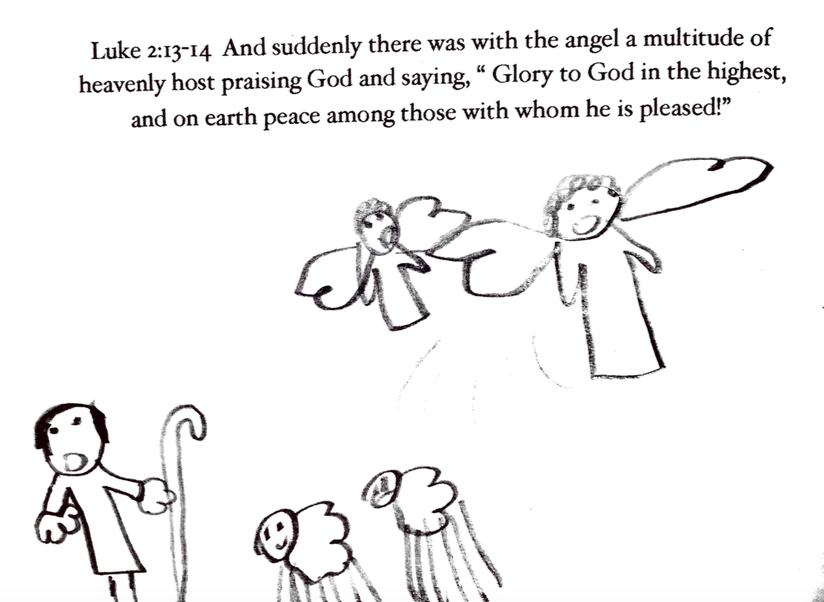
Suddenly a great company of the heavenly host appeared with the angel, praising God and saying, “Glory to God in the highest heaven, and on earth peace to those on whom his favor rests.”

When the angels had left them and gone into heaven, the shepherds said to one another, “Let’s go to Bethlehem and see this thing that has happened, which the Lord has told us about.”

Luke 2:8-15

This was a powerful and unforgettable scene. Can you imagine it? Can you feel it? Can you sense the awe and fright? … Why is it significant that angels worshiped Jesus? What does the Bible say about Jesus and angels? Let’s get a brief look at angels and Jesus in the Bible:

  • Jesus is superior to angels. (Hebrews 1:1-4) —They were messengers; He the Message.
  • Jesus made the angels. (Colossians 1:15-16) —They were created; He the Creator.
  • Jesus was made to be lower than the angels. (Heb 2:9) — heavenly hosts, Heaven’s Son.
  • Jesus is praised by the angels. (Phil. 2:9-11a) —They glorified God; He God’s Glory.

What does this tell you about Jesus? He isn’t an ordinary baby!

Now let’s go back to the text in Luke 2. The town is dark. People have turned into bed for the night. Shepherds were outside of town guarding their herds from predators. What happened that night wasn’t something these shepherds planned for or learned in Shepherd Defense School.

A blinding light appeared. Now, the shepherds probably saw a lot of strange things in their lives. They probably heard stories from shepherds of old around the bonfire, but on this night they would have their own story to tell. The shear presence of something supernatural, would have shook them in their sandals. These shepherds were terrified. No staff was able to protect them from the warrior of light.

An angel appeared. This angel was a messenger—he had some really good news. It was earthshaking, world breaking news. You almost get the sense that this angel had to tell the news, “The promised Savior has come!” Can you think of news more important? Every single word the angel said had past, present, and future significance. The Savior was promised from long ago. This Savior had now come. And this Savior will be good news for all people everywhere—including Sinners. Screwups. Shepherds. Centurions. Sultans, And some insignificant’s like me and you. That’s good news!

There is such an anomaly happening in this text. Angels. And shepherds. Angels came to shepherds. Angels were heavenly beings. Worshipers. Shepherds were culturally low class citizens. God has his way of turning upside-down to right-side up the economy of the world.

One angel become a multitude right before the shepherd’s eyes. What’s a multitude? 🤷🏻‍♂️ Countless. Think of how many stars are in the night sky. That is how many angels there were filling the skies. What were they doing? Were they singing? I tend to think they were singing because there are some messages that just can’t be spoken, they have to be sung. All we have are the lyrics to their angelic cantata.

There are only three times in the Scripture when we see the heavenly host bursting onto the scene. This was their second performance. The first was at the creation of the world when the praised the Creator (Job 38:4,7). The next time will be around the heavenly throne room (Revelation 19:5-7). Do you see that at each of these cosmic moments Jesus is front and center? He is the focus of the angels—of their song. He was the One at creation, He was the One in the manger, and He will be the One they call the Lamb of God, the Prince of Peace, the King of Heaven. And here in Luke 2 the angel choirs sing, “Glory to God in the highest heaven, and on earth peace to those on whom His favor rests.”

The angels vanished and the shepherds were there alone. Can you imagine the fear and awe on their faces? What’s to say? What’s to do? They got their smartphones out, Instagrammed it (but is was too way early in the morning to get any, “likes!”) No! They latched their sandals, they got their staffs, they ditched their herds, and said, “Let’s go … and see this Savior!”

This Christmas what do we take from Luke 2?

▪️If the multitude of angels worshiped Jesus, then we must also worship Jesus. Give glory to the the Newborn King! Christ, the everlasting Lord. Hail the incarnate Diety! Hail the Son of Righteousness. Hail the heaven-born Prince of Peace.

▪️If peace is what the angels promised to those who believe in Jesus, then we can enjoy the peace of Jesus today. The peace that comes from “God and sinners reconciled.” If you only had 8 words to explain the Gospel, you can’t do much better than “God and sinners reconciled through Jesus, our Emmanuel”

▪️If the angel had to tell the shepherds about Jesus, then we also must tell the world about Jesus. Let’s “Join the triumph of the skies” by sharing the good news of great joy. Echoing what Jesus said to his followers, “Go and make disciples of all nations, baptizing them in the name of the Father and of the Son and of the Holy Spirit, and teaching them to obey everything [he] have commanded you. And surely [Emmanuel] with you always, to the very end of the age.”

Small & Seemingly Insignificant

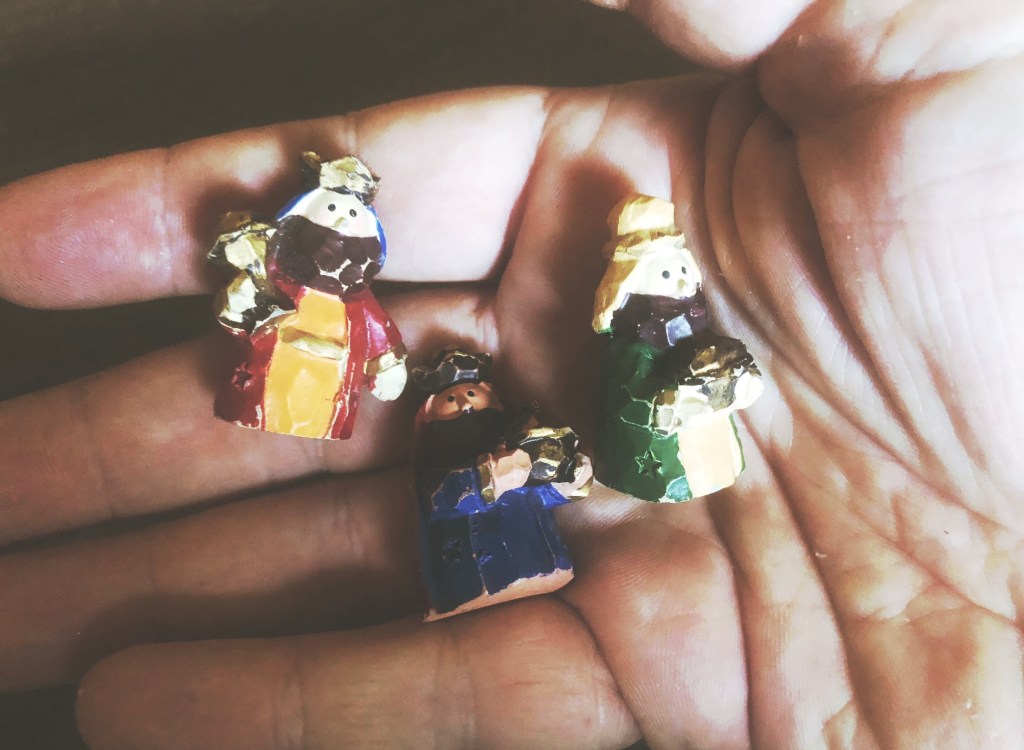
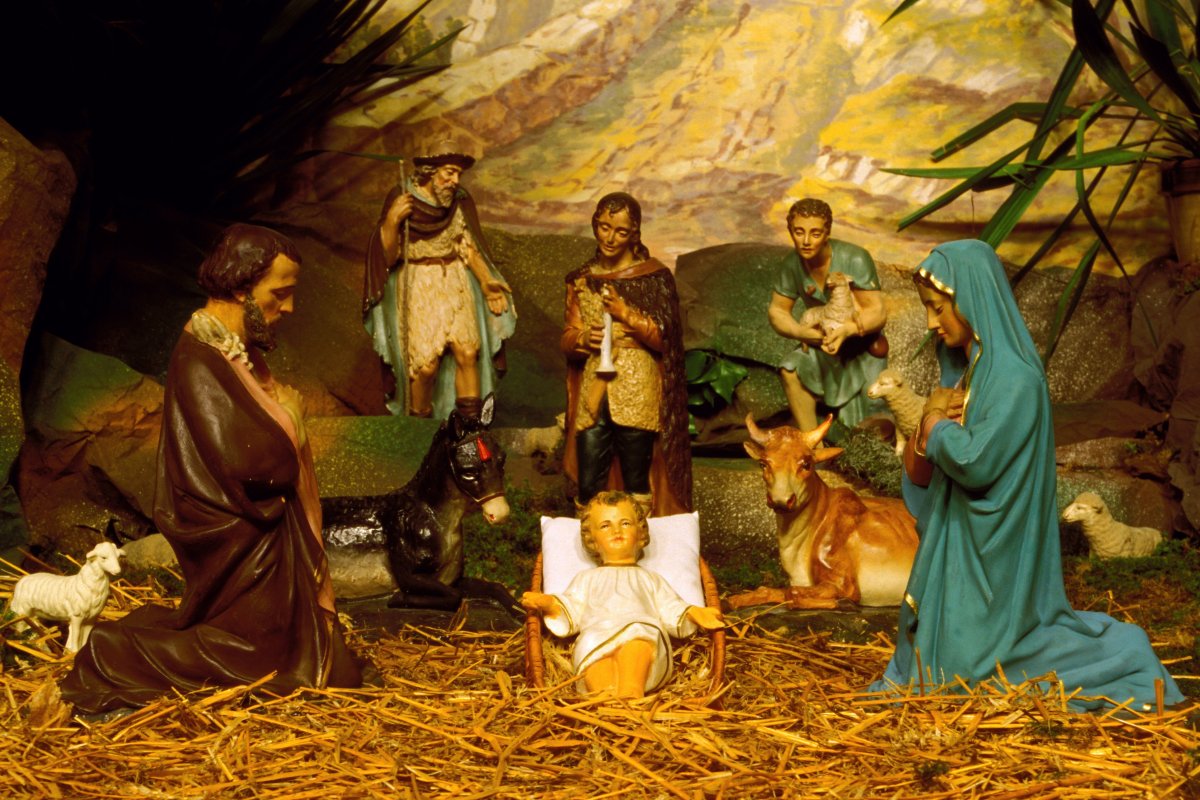
We have a Christmas tradition of hiding around our home tiny figurines of the wise men, Mary and Joseph. The kids wake up each morning scouring the house to find where they snuck off to next. Actually, as a dad I get as much joy hiding the figurines each evening. We pretend that the wise men are traveling from afar and the young couple is making their way to the Bethlehem. On Christmas morning we search no more as they will all converge at the stable along little baby Jesus in a manger. It is so small and seemingly insignificant.

It wasn’t that much different the first Christmas. It wasn’t grand or magnificent, especially, when you consider the magnitude of all miraculous things that God had done beforehand.

God created the world out of absolutely nothing just by saying a word.
God mixed up peoples languages and scattered them around the globe.
God spoke from a blazing bush to Moses.
God split the Red Sea so his people could walk through and be rescued.
God provided manna everyday for 40-years so that his people wouldn’t be hungry.
God caused water to gush from the rock to quench those same thirsty wanderers.
God crumbled the walls of Jericho and he fought single-handed against Israel’s enemies.
God consumed the altar of Elijah with fire in the presence of the prophets of Baal.
God sent a whale to swallow Jonah and after three days redirect him back to Nineveh.
God shut the lions mouths and Daniel’s friends were unscathed from the fiery furnace.

When God promised the Rescuer, the people expected to be wowed. Other than the young couple, the angels, the shepherds, and the wise men, very few knew that this little baby was the:

One who named the stars and created the world laying in a manger.
One who would gather people of every tribe, language, people and nation.
One who would speak the words of God and be the very Word in the flesh.
One who would split the curtain to bring man into a close relationship with God.
One who would be the Light of the world, God’s burning bush with skin on.
One who would free people from spiritual bondage.
One who would be the Bread of Life and the Living Water.
One who would single-handedly defeat the power of darkness and the enemy.
One who would die, be buried, and after three days rise from the grave.
One who would be the Lion of Judah and spare us from the fiery judgement we deserve.

After thousands of years of waiting and foretelling, on an ordinary night, the Rescuer came. The One. Jesus. He seemed so small and insignificant. So fragile and helpless. So humble and unglamorous. Yet it was in actuality the grandest orchestrated moment in human and prophetic history exactly to the finest detail as God planned and promised.

As Peter reflected on the significance of Jesus’ coming with the household of Cornelius, they were wowed. Hear what he says,

“I now realize how true it is that God does not show favoritism but accepts from every nation the one who fears him and does what is right. You know the message God sent to the people of Israel, announcing the good news of peace through Jesus Christ, who is Lord of all. You know what has happened…how God anointed Jesus of Nazareth with the Holy Spirit and power, and how he went around doing good and healing all who were under the power of the devil, because God was with him.…They killed him by hanging him on a cross, but God raised him from the dead on the third day…He commanded us to preach to the people and to testify that he is the one whom God appointed…All the prophets testify about him that everyone who believes in him receives forgiveness of sins through his name.” (Acts 10:34-43)

The coming of Jesus was God’s grandest and most significant miracle. He didn’t come unannounced. He didn’t come as expected. God gifted himself to humanity. He came as a gift of his unstoppable grace to redeem mankind so that as Peter said, “that everyone who believes in him receives forgiveness of sins through his name.”

Here’s what you need to understand today. That truth is utterly significant for you. Everyone of you. The sureness of God’s promises through the prophets and the specific way Jesus fulfilled them is assurance for your forgiveness and your future hope. This means that today, God is still working out the significance of this day, and he will not relent until it is fully realized in every one you. What you are celebrating this day is big and significant. Merry Christmas!

The Christmas Story as Drawn by our Children

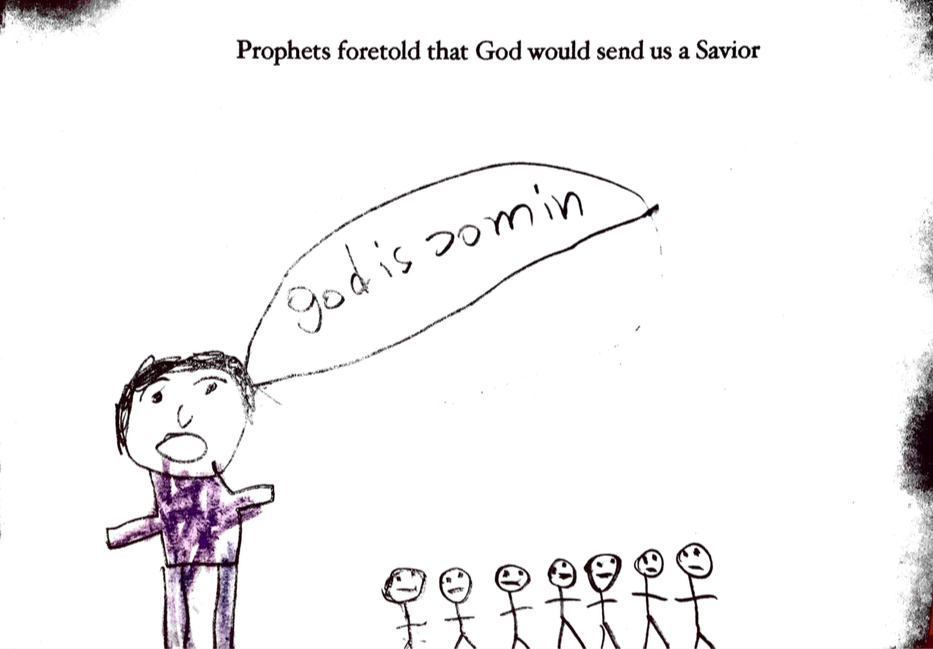
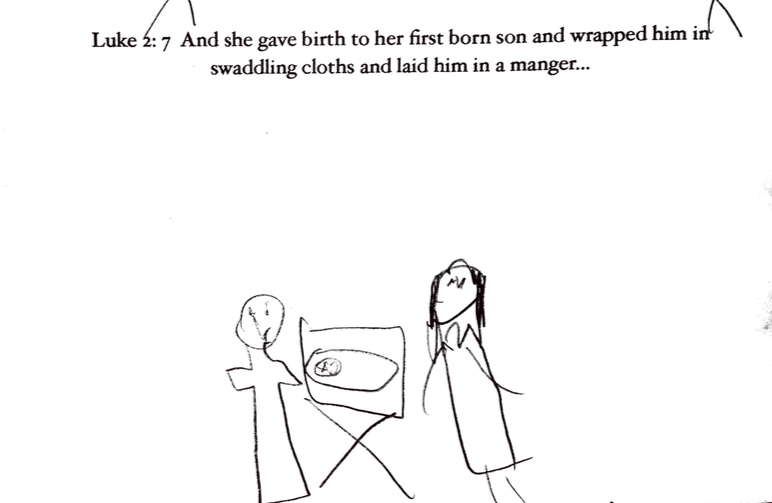
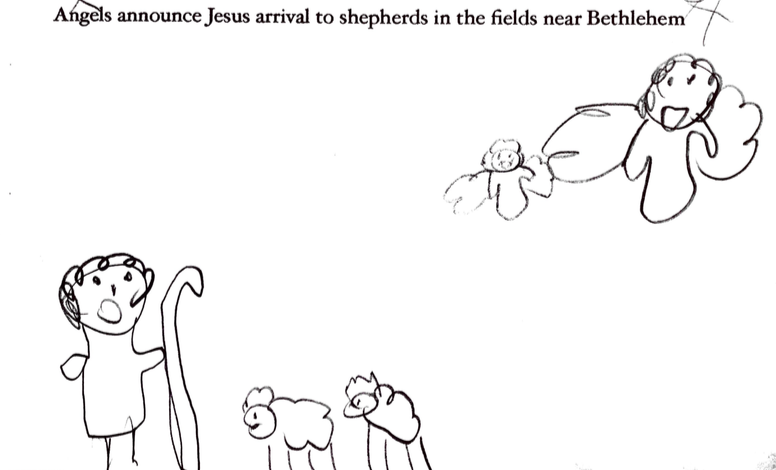
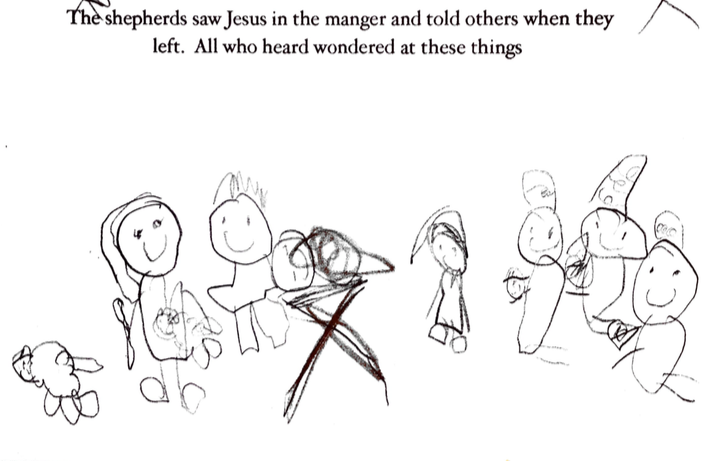
This is an epic time of the year.  It’s what happened 2,000 years ago that makes it so important.  God took on flesh to save the world.  This is the Christmas Story.  This year our children made pictures of the main scenes of the story.  Enjoy.

12345678910

Unfamiliar or Misunderstood Words of Christmas

Christmas is a special time of the year. We often make time to visit family, give gifts, decorate, and celebrate. As the years go by and history passes there are certain traditions or meanings associated with Christmas that can become lost. Maybe you’ve read the Christmas story or sang carols and wondered what was meant by a certain word or phrase.

Here is a short list of some of the most unfamiliar or misunderstood words of Christmas:


Advent is a Latin word that means ‘coming’ or ‘arrival’. Christians have used the word to celebrate the coming of Jesus, the Savior of the world. The advent season usually begins four weeks before Christmas.

Bethlehem is a small village in Israel where Jesus was born. Jesus actually grew up in Nazareth, but his parents traveled to Bethlehem while Mary was still pregnant by order of the Roman Emperor who demanded a census (Luke 2:1-7). This fulfilled the prophecy of Micah (cf. 5:2-5). Bethlehem was also the birth place of King David.

Christ the Lord was a title that is given to Jesus by the angel, “For unto you is born this day in the city of David a Savior, who is Christ the Lord.” (Luke 2:11) The title means ‘anointed’ or ‘savior’ (see Messiah).

Emmanuel (or Immanuel). The word itself means “God with us” in the Hebrew language. It was first prophesied by Isaiah about 700 years before Jesus was born (cf. 7:14). In the prophesy it was said there would be a savior who would come who’s name was Emmanuel. An angel later told Joseph, the step-father of Jesus, that his son would be called, Emmanuel (Matthew 1:22-23).

Frankincense an aromatic resin that comes from a special tree (see Exodus 30:34-38). The magi brought frankincense to Jesus’ birth as a present fit for a king (Matthew 2:11). It was a costly gift and a sweet smelling incense.

Gabriel was an angel and special character in the Christmas story. His role was to announce the birth of Jesus. He visited Zechariah, the Father of John the Baptist, to let him know that his wife Elizabeth would miraculously give birth to a son (Luke 1:11-20). They were to name the baby John, and he would lead the way to the Messiah. Later, Gabriel appeared to the virgin Mary (Luke 1:26-38).

Glory was what the angels said observing the of Jesus’ birth, “Glory to God in the Highest.” (Luke 2:14) Glory means to give praise, honor and worship. the angels thought that the birth of Jesus was magnificent and their natural response was to praise God.

Hallelujah is a Hebrew word that is translated into many languages meaning ‘Praise the Lord’.

Heavenly Host is another way to say a bunch of angels. After Jesus was born the heavens opened up with a multitude of angels praise God (Luke 2:14). These angels were visible, audible, and countless in number.

Incarnation is a person who embodies in flesh and blood a deity. Christians acknowledge Jesus is God with skin on. God became a man to save man from their sin (Acts 20:28; Romans 8:32; 1 Corinthians 2:8; Hebrews 2:11 -14; 1 Timothy 3:16; Galatians 4:4). Jesus was 100% God and 100% man.

Jesus is the Greek name for the Hebrew name Joshua. It was the name given by the angel of the Lord in a dream to Jospeh in which he was told he would have a son through his virgin wife, Mary (Matthew 1:20-23).

Magi. The Bible tells us little about the magi. They are often referred to as wisemen, but they were likely astrologers as they were watching the night sky and followed a unique star to Bethlehem (Matthew 2:1-12).

Messiah. The Jewish people had long been promised an ‘annointed one’ or ‘deliverer’ who would come to free them from sin and slavery (Genesis 3:15). Although the Jews rejected Jesus, the title of Messiah is given to Jesus by Christians who recognize him as the fulfillment of all the prophecies of the Old Testament (Matthew 26:54; Mark 9:12; Luke 18:31; John 5:39; 26:22-23; Acts 2).

Myrrh was an expensive spice used in ancient times for making perfume, incense, medicine, and for anointing the dead. It appears three times in the life of Jesus Christ—his birth crucifixion, and burial (Matthew 2:11; Mark 15:23; John 19:39). At his birth, it was one of the costly gifts presented to Jesus by the wise men.

Nativity. We often think of it as a small display of figurines from the Christmas story like baby Jesus, Mary, Joseph, wisemen, manger and animals. In it’s Latin origin, the word nativity means ‘birth’, particularly the birth of Jesus Christ.

Nicholas is not a character from the Bible, yet he is often associated with Christmas. Nicholas was a bishop in the fourth century. According to Catholic history he is the patron saint of children and sailors.

Noël is the French way of saying ‘Christmas’.

Peace on Earth was what the host of angels said after the birth of Jesus. It is often a saying people say to one another during Christmas (Luke 2:14), yet Jesus came to bring peace to the earth. He is the Prince of Peace (Isaiah 9:6; cf. 52:7; 53:5; Micah 5:5; Luke 1:79; John 14:27; Romans 5:1; Ephesians 2:14,17).

Salvation is what Jesus came to offer to the people of the earth. He was the Savior who came to save mankind from impending judgment due to their sin. Mary sang about it (Luke 1:46-47). Joseph was told about it (Matthew 1:21). The shepherds outside Bethlehem were told about it (Luke 2:11).

Tidings. This is an old English word for ‘news’ or ‘information’. When Jesus came there was an announcement and bearer of glad tidings or good news (Luke 1:19; 2:10). Indeed, it was the greatest news on earth and still is.


This list was birthed out of a desire to help my children understand unfamiliar words within the Christmas story. Feel free to use or add to the definitions.

25 Days of Christmas Advent Catechism Calendar

I was looking for a catechism for my daughters this Christmas that took Old Testament Prophecies about Jesus and compared them to a New Testament fulfillment.  I couldn’t find anything, so Sarah and I whipped up something to help our girls understand and remember the reason for Christmas the 25 days leading up to Christmas.

If you are interested in seeing it or using it, check it out here:

Screen Shot 2015-12-18 at 3.18.27 PM

born to forgive

Sunday at church I heard a great message about forgiveness from a familiar passage (Luke 7:36-50).  However, I fall in the trap of hearing a lot about forgiveness, but practicing it superficially.

Jesus was born to forgive.  His life teaches us three things about about forgiveness: 1)  It takes compassion , 2) It is costly, 3) It involves continuity.

One of the most celebrated encounters Jesus has in the Gospels is when a sinful woman washes His feet with her tears and her hair. Those around Jesus were shocked that He would allow Himself to be so intimate with someone so sinful.

People would expect Jesus to shun the woman who washed his feet at dinner because of her past; the Pharisees were shocked that Jesus would let himself be touched by her, but Jesus accepted what she brought to him with love. Not only did He accept her, he defended her. Jesus forgave her, fully aware of what her sin was, and Jesus honored her sacrifice and the enormity of what she brought to him. She didn’t even need to speak during the entire story – she needed no defense. It was not because of her arguments that Jesus bestowed His forgiveness.

We need to recognize our need for forgiveness before we can accept it. However, it is not because of our effort that we receive it – it is freely given. And when something is that freely given, we cannot keep it to ourselves. We often put ourselves into the position of the Pharisees. Who would the people be today that we would shun? Whose sins would we say cannot be forgiven? How might Jesus be asking us to both extend and receive forgiveness?

the gift that keeps on giving

These are some beautiful reflections by my wife Sarah on Christmas.

I can only imagine that both Mary and Joseph were exhausted. For the last 5-9 months as people learned of her pregnancy, Mary had lost friends.  Even her family frowned.  “Really?  You didn’t do anything wrong but you’re pregnant?  An angel you say?  Ok Mary, well, let’s not talk about it.”

If you’ve never had close friends turn their back on you, then you probably don’t know what Mary felt like. And this wasn’t one friend, this was like maybe ALL but one or two.  Mary and Joseph were alone.  Who was going to cook for her after the baby was born?  Who was going to be there to be excited about how cute he was?

Eight days later, there was one person who would be excited.  He had read the ancient writings and he knew that God had promised to come to earth in Bethlehem.  This was the One. The One who would pay.

In that moment, God began to pay for the wrongs that we do every day.  It wasn’t about being “good.”  Nothing that was simply “good enough” could stand in the presence of God.  He is GLORY itself.  Nothing with even one little spot can be allowed there, because there is ONLY goodness there.  Otherwise, we could still hurt each other in God’s presence.  No, he can’t let it be like that.  It WILL be perfect.  Perfect peace.

In that one moment, a sheltered life inside of the womb was born into a dirty room with animals, into the hands of people who had hurt and stolen and even killed with those hands.  A baby.  A baby who could only cry for milk.  Why would God come like that?  He chose it. He chose to be normal. Except for one thing: He would pay.

But Mary and Joseph believed.  They believed that God had a holy perfect place which was the only thing that made sense in a world filled with disappointment and apathy.  They were not born only to suffer with age and die.  No, they were born to see the perfect face of God, but they could not get there with “good enough” actions.  Someone must remove every last action that was not done out of love and thankfulness to God.  How could you erase the past?  It was too big to pay for.

But, maybe you HAVE had someone turn their back on you.  The first time it is simply excruciating.  The one and only person you love with all your heart.  On that last day of Jesus’ physical life, the first day began to make sense.  On that last day, the Father that had looked down with love on his Son, turned his back on him and the Son’s heart literally broke with blood and water mingling.  Why would the Father do that?

Until that moment, as God in the flesh, Jesus was perfect and without even one action of selfishness.  But, in that moment, His destiny was realized – to take all the sins of the world and their punishment onto Himself.  God then turned his back and poured out His wrath and death into the body and heart of Jesus. Jesus paid for you.  Every action that is not pure, was put on Jesus.  It wasn’t a symbol or a legend.  He died. And he didn’t deserve to.  We deserve it.  And we will face a physical death, but after that . . .

God wants once again to be with us.  Emmanuel.  His life. His gift.

waiting (a story of a boy and Christmas)

615074_10151224829851700_28214084_o

A real-life story of a boy and Christmas from Ben Houchen, a shepherd and my best bud since middle school.

Waiting.

Nikki took Cynnan to the Surgeon today and had the pre-op consultation. Everything went well with that and the Doc said he would have time to do the surgery tomorrow. This got us excited, but as the day wore on and we got no confirmation of a Tuesday surgery we started to have doubts about our excitement. Sure enough, at around 5pm tonight we got the call to confirm the surgery time. Thi
s Thursday at 5pm.

AAAHHHHHHH, I hate all this waiting. I just hate it. And yet, the reality is, this is the season of waiting.

Advent is a season filled with waiting, with anticipation. And because we so closely associate the Advent season with the Birth of Christ and that picture of a baby in a manger, it is tempting for us to think that the spirit of Advent is a purely joyous one. But think for a moment about the people of Israel, at the time of the Birth of Christ.

Times for these people were not good. Israel was held under Roman occupation, and while this was better than the many exiles Israel had experienced prior to this point, it was by no means a good experience. The Romans knew how to subdue a people, and while they allowed Israel to worship her God, they also demanded taxes (an ancient form of worship) be paid to Creaser, and they subjected the people to many humiliating and dehumanizing practices. The people were waiting, but they had no certain hope of what they waited for, or how long they would have to wait to get it. We see evidence of how hopeless and unresponsive the people of Israel had become in the Gospel of Matthew. Just look at who all notices the birth of the messiah, The Maji and King Herod are the first people of any notoriety to even care that this child had been born. No one in the Jewish Community takes any notice of this boy until he is old enough to amaze them during a visit to the Temple. People were losing, or had lost hope. The waiting, it seems, was just too much for many of them to bear.

Advent is a joyous time for us because we are looking backward on a time of anticipation. We know the ending, we see the story, not as it is unfolding, but as it did. The concept, the spirit of advent then, is not one of purely joyous expectation. Advent includes a spirit of anticipation that is laced with negative emotions as well; fear, worry, even hopelessness, these are all part of the spirit of the Advent season. And it is important to realize that, because our understanding of those portions of the Advent season gives us the grace and peace to handle the Advent’s of our own present lives. I once read that Advent is essentially about learning to wait. It is about not needing to know the precise details of what is coming, only that, whatever it is, it is of the essence of sanctification for us. Every piece of it, some hard, some uplifting, signifies the work of God alive in us. We learn in Advent to stay in the present, knowing that only the present, well lived, can possibly lead us to the fullness of life. You see, as humans, we are not complete, we do not arrive, no, we are becoming as we go. Our lives are not meant to be escaped, or avoided. Life is meant to be perused, to be excavated, We are meant to taste and to touch and feel all that there is in life, the good alongside the bad. All of these things are then meant to culminate in our lives in a way that we come to know that the God who created us is with us still. Unto us a child is born, unto us a hope is given, not a hope of ease and indulgence, but of life, life to the fullest!

Would you like to enter into that full life with me? Then please, pull up a chair, wait with me a while.

We will become as we go.

You can read more about Cynnan’s story and how God is using a son to draw his parents nearer to Him.

let there be light

christmas-star

This message is used by permission from my good friend Brian. Brian is a former physicians assistant and shepherd. Now Brian is serving the gospel to the least reached. He is living the Words he wants you to hear. Be a light in darkness this Christmas…

2 Corinthians 4:6 “For God, who said, “Let light shine out of darkness,” has shone in our hearts to give the light of the knowledge of the glory of God in the face of Jesus Christ.”

For the first time in my life I made the connection between this passage and the creation account in Genesis 1.  The opening verses of Genesis are some of the most well known verses in all of scripture, right up there with John 3:16.  And we’ve probably heard or read these words at least 100 times before. But now I was beginning to make the connection between God’s strategy for saving the world and that which He was breathing into a visible and tangible form at creation.

Genesis 1:1-5 “In the beginning, God created the heavens and the earth. The earth was without form and void, and darkness was over the face of the deep. And the Spirit of God was hovering over the face of the waters. And God said, “Let there be light,” and there was light. And God saw that the light was good. And God separated the light from the darkness. God called the light Day, and the darkness he called Night. And there was evening and there was morning, the first day.”

Every time I’ve read this or heard it, I always thought, Wow, God is a powerful God.  He is amazing.  He is a creative and awesome God.  For by the breath of His mouth, the universe and all of creation was called into existence.

But there is something even more amazing being spoken of in this passage.  Something  that I had never seen before.  Something that pulses deeper than even the glory and majesty of creation.  And its something that existed long before Genesis 1 ever did.

And that was God’s plan for redeeming the rebellion of humanity and winning His bride back to Himself.  I want you to see that when God called forth light out of the darkness, it was pointing to Jesus.  But not only was it poetically prophesying the coming of Christ, it was manifesting God’s design and call upon all those who would follow Him.

So I think there are 2 vitally important things we need to learn from this passage that relate directly to our lives as we pursue after God and seek to be imitators of Christ.

Light Shines in the Darkness

The first is that light was created to shine in the darkness.  Genesis 1 paints such a clear picture of this.  It starts out by saying that darkness covered the face the deep.  In other words, it was crazy dark.  You know, the kind where you can’t see your hand when it is right in front of your face.  And it was into this that God says: “Let there be light.”

Now I want to be clear about this because the practical applications of this are costly.  Its fun to talk about and intellectualize, but to change our lives to bring them in alignment with the truth of what this teaches is a whole other story.  So I want to make sure we are all on the same page here.

God did not call forth light to shine in the light.  It wasn’t because “light” covered the face of the deep that God says “Let there be light.”  It was because there was darkness.  God said, “Let light shine out of darkness.” Light has a created purpose and was designed to exist and shine in the darkness.

So now we have to begin to deal with the implications of this for our lives.  Because we are that light.  We are the light that was redeemed to shine in the darkness.

Matthew 5:14-16 says “You are the light of the world. A city set on a hill cannot be hidden. Nor do people light a lamp and put it under a basket, but on a stand, and it gives light to all in the house. In the same way, let your light shine before others, so that they may see your good works and give glory to your Father who is in heaven.”

Now I just want to make one clarification.  We are not the Light capital “L.”  When this passage says that “you (and I) are the light of the world,” it means we are the light of the world like the moon is the light of the night.  The moon is just a big round pile of dirt.  It has zero ability of producing light.  But when you go outside on a dark night and look up into the sky, the moon’s brightness can light up the night.

And we say, look at the moon. Look how bright the moon is shinning.  And in doing so, we ascribe or we attribute the ability to produce light to the moon, when in reality, it is only reflecting the light of the sun.  It can’t make one tiny shred of light itself.  And so it is no different for us.

In this passage and anywhere else in Scripture for that matter, when you see it referring to us as the light, just know that it is not us that is the light.  We only shine when we are reflecting the Son, “S-O-N.”  And just as the moon was created to shine in the darkness by reflecting the sun’s light, so we were made to do the same.

So the first issue we have to deal with is where are we shinning? I have to tell you.  I was so convicted by this, that as a youth leader I had the audacity to be so excited about taking our students on summer mission trips.  And I would get so excited about being this great beacon of light in those dark areas for one glorious week every year, but I did little to nothing to shine in the darkness the rest of the time.

And now Becky and I find ourselves living in the very neighborhoods that we served on our mission trips to those places and all I could think about is moving somewhere else.  It was good enough to do for a week on a mission trip, but to actually live there and start to raise our family in such a place was hard to come to grips with.

God is not calling us to have an experience every now and then when we shine in the darkness.  Its not about having this special little time in our lives once a week every year where we turn the light on for a little while and pretend this is how we live all the time or this is how we would live all the time if we only had the opportunity.  Because we do have the opportunity.  It just takes sacrifices that if we admit it, are probably not willing to make.

Now don’t get me wrong.  I’m not saying we shouldn’t do these things.  Engaging in short term missions is absolutely necessary.  I’ll be the first one in line when given the chance and I’ll be the biggest cheerleader encouraging anyone and everyone to go.  All I’m saying is that what happens in the that week should simply be a reflection of what happens in our lives every single day.

You see, I have come to the humbling place in my life where I began to realize I was doing all this “stuff” for the Kingdom, but it was all being done in the light.  I was involved in this and I was involved in that, and it was all good and worthy stuff, but it wasn’t about shining in the darkness.  I found I was just fooling myself behind this disguise of advancing God’s Kingdom without actually setting foot in the darkness.

His Kingdom is a Kingdom of Light.  No matter how hard we work or what great things we accomplish in the light, His Kingdom is already present there.  And if we are going to be a people who are about advancing His Kingdom, it can only be done in the darkness.

We were called into His marvelous light in order that we might shine in the darkness.   This means that our lives must be lived out in the those places.  Now I’m not saying that everyone needs to move to the inner city, but some of you might.  Some of you may need to go home and start packing boxes.  And don’t be looking round at your neighbor right now, cause I’m talking to you.  And maybe its not about where your home is, but where you work or where you go to school.

What I am saying is that we need to take a good hard look at where we are shining.    And we need to stop making excuses for keeping our distance from the darkness.  Its not comfortable.  Its too hot.  Its not safe.  The school district isn’t good enough.  Its too far.  Its too hard.  Its too costly.  It takes too much time.  It doesn’t align with our goals, or our family or our future.

To be a light in the darkness is costly.  It is not safe.  It is not always comfortable.  It is certainly not the easy way to live.  But why would be dare be content with anything else?  Don’t settle to be a light among lights.  Don’t compromise for the sake of safety or comfort.  We have but one candle to burn, and I’d rather burn it out where people are dying in darkness than in a place that is flooded with lights.

God Separated the Light from the Darkness

The second thing I want us to see is that God separated the light from the darkness.  That is, God set apart the light to be different.  While the light was created to exist and shine in the darkness, it was made to be fundamentally different from it.  When God created the light, there was no question as to which one was which.

God didn’t make a light that most days of the week looks like darkness except on Sundays.  Or one that maybe shines all week except for Friday and Saturday night.  And He didn’t make a light with a motion detector so that when left alone it was identical to the darkness, but as soon as somebody came around, it would turn on as if it had always been on.

Light doesn’t look anything like the darkness.  And there are some pretty hefty ramifications for our lives because of that.  It doesn’t walk the same.  It doesn’t talk to the same.  It doesn’t act the same.  It doesn’t spend its money the same.  It doesn’t have the same goals or values.  It is different from the darkness in every way, but yet was created uniquely to exist in beautiful harmony with it.

And this separation in essence is why we exist.  Because this is what distinguishes light from the darkness.  This is what separates believers from everybody else on the face of the planet.  Because the goal of the darkness is to make much of itself, but the purpose of the light is make much of Christ.

How is it then that the lives of sinful humans can display the glory of our Almighty God to the world?  How is it that we who are so little can make much of One who is so great?  I believe the answer is to echo the cry of John the Baptist found when he said in John 3:30, “He must increase, but I must decrease.”

John Piper said this: “This is why we exist – to display the glory of God… It is our created nature to make much of God.  Not to fulfill this purpose… is to be a mere shadow of the substance we were created to have. Not to display God’s worth by enjoying Him above all things is to be a mere echo of the music we were created to make. It is to be a mere residue of the impact we were created to have.”

The overriding thing that separates the light from the darkness is an unbalanced passion for the glory of God and the Kingdom of heaven.  And I realize that for some of you that may make the hairs on the back of your neck stand up.  Because a lot of times in our culture we associate unbalanced to mean unhealthy.

We talk about the need for balance in our lives all the time, right?  Balance, balance, balance.  We have to have balance.  We don’t want to be too far one way or too far the other.  And at times this is true, but I think sometimes we have watered down Jesus for the sake of balance.

There was a man by the name of Nee To-sheng, otherwise known as Watchman Nee.  He was born in communist China in 1903.  He came to know Christ at the age of 17 and spent the next 30 years traveling throughout China planting churches and shinning the Light of Christ in some of the darkness places on earth.  But in 1952 he was arrested for his faith in Christ and leadership among many of the local churches in China.  He sentenced to 15 years in prison,  although he was never let go and died in his cell 20 years later. Some of his teachings have been complied together into a profoundly powerful book called “The Normal Christian Life.”

Average and normal are not the same.  You see, average just means we look like everyone else.  Normal means we look the way Jesus expected us to look.  It means we shine the way Jesus expected us to shine.

Did Jesus really mean to love Him with ALL our heart, soul, mind, and strength?  Did Jesus really mean to love our neighbor as ourself?  Did Jesus really compare the Kingdom of heaven to finding a treasure in a field and selling everything for that field?  Because that doesn’t sound very balanced.

There is a word for someone who becomes that fixated on someone or something, but it isn’t balanced.  Its obsessed.  It is being driven by an all consuming passion to the point that none of what Jesus taught even sounds remotely crazy.  Quite frankly, it makes perfect sense.

If there is anything in life we need to be obsessed with.  If there is anything in life we need to be consumed by.  If there is anything in our lives that we need to be unbalanced about, it is the Jesus Christ.  It is the glory of God.  It is the Kingdom of heaven.

The more our lives display Christ’s worth above all things, the brighter He will shine in us.  This is why it is so fundamentally important for the light to be separated from the darkness.

Because when we look like we care about the same things they do.  When we look like we hope in the same stuff they do.  When we look like our values are the same as theirs, Christ will never look great in our lives.  Our lives must show that Christ is more precious than life.

To do this, we must make sacrificial life choices knowing that magnifying Christ is more valuable and more satisfying than protecting and preserving our own personal comfort or agenda.  So we may need to start asking ourselves some tough questions.  Questions that we may very well not want to know the answers to.  Because I think all to often we are far more content desiring to justify our actions instead of seeking to magnify Christ with them.

Now this is the part of the message where I would normally tell you some inspiring story about a missionary in Africa or Asia or something who is living this out.  The problem is, most of us really can’t relate very much to that.  So let me give another example that may hit a little closer to home.  Its a story about a guy who asked the right questions.

There is a pastor by the name of Francis Chan, maybe some of you have heard of him.  He has a love and devotion for God that you will rarely find anywhere.  He also happens to be an incredible speaker and when you put those 2 qualities together, it makes for a very dynamic pastor.  Thus the church he started in California grew like mad quickly topping 3000+ people.

They were making plans for building a 50 to 60 million dollar facility when he took a little trip to Uganda that changed his life forever.  He saw poverty first hand like he had never imagined.  And it got real personal for him when he saw little girls the age of his young daughters rummaging through garbage for food.

And all of a sudden it hit him, what does it mean to love my neighbor as myself?  Cause you know, Jesus said that.  In fact, He said it was so important, it was only second to loving God first.  So one of the first things he did upon returning to the states was to move his family of four out of their 2,000-square-foot house into one half that size so they could give more to missions and to the poor. He said: “I couldn’t reconcile how I could live in such a nice house while others were starving.”

The very next church board meeting Chan showed up with a one track mind.  When their church, (Cornerstone) first started and for many years there after, they gave away 4% of their budget.  Chan now walks in in the door and asked them to give 50% away.  His salary was slashed along with all other staff taking pay cuts and serious sacrifices in their programs were made.  But in less than 1/2 hour their budget was flipped on its head.

Instead of building a massive multimillion dollar building, they built an outdoor amphitheater saving countless of millions of dollars.  They have worship outside every Sunday, rain or shine.  And if it happens to rain on a Sunday morning, they get wet, but they know it is for the sake of Christ and His Kingdom.

Now here is a guy, living in the United States with the exact same pressures, the exact same influences, and exact same struggles that we face, but yet consciously and intentionally positioned his life to be separated from the darkness.  While the rest of America chases after it’s illusive dream, he has refused to be seduced by it.  Instead, his heart, mind, his soul and wallet are fixed on heaven.

C.S. Lewis wrote, “If you read history you will find that the Christians who did most for the present world were precisely those who thought most of the next.  It is since Christians have largely ceased to think of the other world that they have become so ineffective in this.”

My prayer is that Christ would be so prized in your lives that you would blaze so brightly it would fry the retinas right out of the eyeballs of those who look upon you.  That your  hearts be so fixed on Christ that everything else would pale in comparison.

My goal isn’t that you be moved by the stories of those people who are living radical lives for Christ, yet do nothing to act yourself.  But instead, that you would earnestly seek the face of God for where and how He would have you to shine.

I don’t claim by any stretch of the imagination to be living this perfectly.  That’s precisely why I had to preach it.  Because this message is for me as much as it is for any of you.  It is time we be the light we were created to be.  Its time we let our light shine in the darkness.  And its time that the only thing people see when they look at us is a life obsessed with Jesus Christ.

thumb licks [12.05.12]

Good News of Great Joy, a FREE e-book for this advent.

Anti-Santy Ranty, comparing Jesus and Santa.

Why we should rejoice when God blesses others.

I once made an origami frog, but these paper animals are amazing.

Why don’t men read books?

How to read the Bible with a non-Christian.

Have you ever wondered about the origins of breakfast, lunch and diner?

7 important event in history that paved the way for the Reformation.

If you were to add up the 12-days of Christmas, this is what it would cost.

The Story of the Innkeeper:

IMMANUEL: Jesus be incarnate in me

This week I swept my wife away for a romantic getaway in the woods of Milton, Ontario. We left our daughter in the delightful care of her grandparents. We ate dinner at a beautiful bistro, talked until twilight, and slept in a cozy B&B. My most favorite memory of out time together was snuggling close and enjoying one another’s presence. There is safety, comfort and love in the presence of the one you love.

So it is with God—our Heavenly Maker. There is comfort and security in His presence. Throughout Scripture the theme of God’s presence with His people is a thread that weaves through the pages of Scripture [138 X’s, through people and promises].

Now all this took place to fulfill what was spoken by the Lord through the prophet: “See, the virgin will become pregnant and give birth to a son, and they will name Him Immanuel, which is translated ‘God is with us.’” Matthew 1:22–23 [Read Matthew 1:18-25]

Does anything fill you with awe or wonder in those verses? The Incarnation is the noblest idea of any world religion. God did not watch human despair from the safety of heaven. He clothed Himself in humanity. He ceased watching the human war and became a soldier. Oh, the things that God experienced in becoming a man:

  • the blistering summer sun,
  • the shivering rains of winter,
  • the hunger and thirst when He fasted after His baptism,
  • the rejection of those who walked away in unbelief,
  • the sorrow when His earthly father died,
  • the pain of Peter denials,
  • the betrayal by His friend Judas,
  • the disappearance of all friends at His arrest in Gethsemane,
  • the horror of naked judgment with no one to speak on His behalf,
  • the empathy of a mother’s tears when she stood at the cross,
  • the torture of crucifixion although innocent and guiltless,
  • the agony of death,
  • the loneliness of being forsaken by everyone.

All these things—when compiled together-spell Immanuel. These things are what the God of all mercy took upon Himself.

But why did He do it? It’s because these sorts of things form the fabric of all of our living. We cannot live without scrapes and pains, without heartache and sadness, without mosquito bites and cancer. Immanuel was God saying, “You shall not bear such pain alone.” God became flesh to redeem. Jesus stepped onto His created soil stained with sin and became the living sacrifice taking upon Himself the scorching wrath of God to save you and me.

Let Jesus be incarnate in your life, and then maybe when you have stooped to serve the desperate and dying, you will hear them say the word Immanuel. When Christ becomes incarnate in your life, you will hear those you serve saying to you, “I cannot help but believe in Christ. I have seen Him in your life.”

And I, when I came to you, brothers, did not come proclaiming to you the testimony of God with lofty speech or wisdom. For I decided to know nothing among you except Jesus Christ and him crucified. And I was with you in weakness and in fear and much trembling, and my speech and my message were not in plausible words of wisdom, but in demonstration of the Spirit and of power, so that your faith might not rest in the wisdom of men but in the power of God. [1 Corinthians 2:1—5]

How does Immanuel give comfort/security when you receive bad news? Have a hard workweek? Deal with daily stress? In what ways can you counsel friends or family around you with the promise of Immanuel?

Lord, be incarnate in me. Make me an instrument of Your incarnation. Live in me until my life is so submerged in Yours that I am invisible. Wherever I go, whatever I do, may I hear those around me breathe the word Immanuel, suggesting that I am nothing and You are everything.

thumb licks [christmas edition]

Does X-mas really take Christ out of Christmas?

Jesus ripped up Santa’s list. Naughty or nice He can rip up yours too.

Christmas in a Nutshell.

10 Ways to bring the gospel home this Christmas.

Having trouble finding parking while Christmas Shopping? The science of parking.

The first Christmas: myths and realities.

Who were the magi? Maybe not what you think.

Will the real Saint Nick please stand up.

The Story. What the real Christmas is all about.

The Advent: resurrection, restoration & creation

The Incarnation [Odd Thomas]

Ditto. A classic Christmas lights photo that I’ve often thought about duplicating.

Christmas: It’s “Supernatural!”

There’s no way I can think of Christmas and not also think of the term “supernatural.”  Its definition certainly lends weight to this conclusion. “Relating to or attributed to phenomena that cannot be explained by natural laws,” (The Encarta Dictionary).

So what events in the original Christmas story were supernatural by nature?  First, there was the supernatural appearance of the angel to Joseph, as is recorded in Matthew chapter two.  The angel communicated to Joseph some troubling news concerning Mary.  He most certainly would have found out she was pregnant with the passing of time.

The question that begs an answer is: would he have carried through with staying with Mary without this supernatural experience?  Probably not!  If he would have broken their relationship, then they would not have made the journey to Bethlehem and Christ would not have been born in that town according to Micah 5:2.  Thus, the necessity of supernatural intervention!

A second example would be the supernatural appearance of the angel to Mary in Luke 1, announcing to her how she would supernaturally conceive a child.  This, of course, was unbelievable to her ears.  How could such a thing be?

However, without this supernatural intervention and Jesus’ virgin birth, He would have been just any other ordinary man and therefore, could not have died on Calvary as the sinless God-man for our sins.  A supernatural angelic visit proclaiming a supernatural miracle!  Both inherent realities within the Christmas story!

Next, we turn our attention to the supernatural appearance of the angelic host to the shepherds on the night of Christ’s birth.  They announced a Saviour was born in the city of David.  However, take note!  What they proclaimed would never have occurred except for supernatural intervention.  Think of it!  There were so many things that could have easily gone wrong.

Mary could have had a miscarriage but she did not.  Mary survived the long, arduous journey to Bethlehem at the height of pregnancy.  Mary could have given birth to a still-born child but she did not.

The fact that the Christ-child was born of a virgin, born alive, born healthy, and born in Bethlehem itself were all amazing realities that were worthy of a supernatural proclamation.   This is why the angel said to the shepherds, “Behold, I bring you good tidings of great joy” (Luke 2:10)

Yes, the answer to humanity’s greatest need was born!  This little baby would be the one Who would ultimately open heaven’s gates to repentant sinners.

What is the application to you and me?  We need to experience the supernatural in our lives.  How, you may ask?  We must be born again.  Each of us must become spiritually alive and that can only occur as God Himself enters into our lives.  John 3:16 tells us how.  “For God so loved the world that He gave His only begotten Son, that whosoever believes in Him should not perish but have everlasting life.”

We must believe Christ went to the cross and He died for our sins.  We must repent of our sinfulness and commit ourselves to living entirely for Him.  We must believe that He rose again from the grave and is a living Saviour.

Have you experienced the supernatural saving power of God in your life?  It’s what Christmas time is all about.

Devotional shared by Pastor Kelvin Kennedy at Meadowvale Bible Baptist Church in Mississauga, Ontario