Small & Seemingly Insignificant

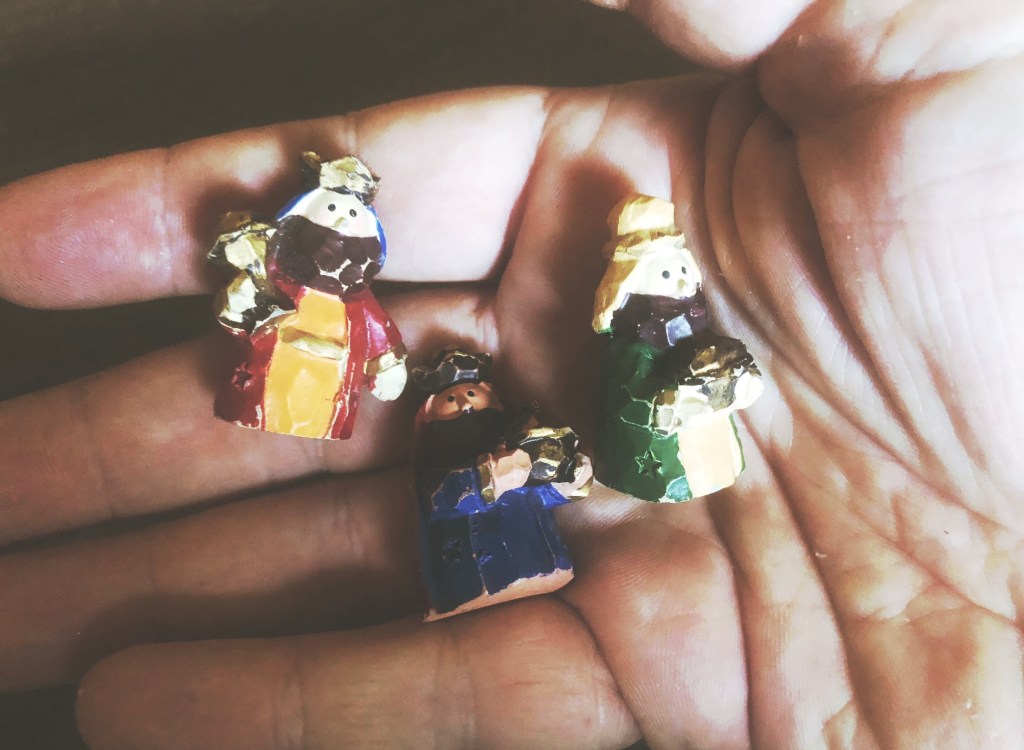
We have a Christmas tradition of hiding around our home tiny figurines of the wise men, Mary and Joseph. The kids wake up each morning scouring the house to find where they snuck off to next. Actually, as a dad I get as much joy hiding the figurines each evening. We pretend that the wise men are traveling from afar and the young couple is making their way to the Bethlehem. On Christmas morning we search no more as they will all converge at the stable along little baby Jesus in a manger. It is so small and seemingly insignificant.

It wasn’t that much different the first Christmas. It wasn’t grand or magnificent, especially, when you consider the magnitude of all miraculous things that God had done beforehand.

God created the world out of absolutely nothing just by saying a word.
God mixed up peoples languages and scattered them around the globe.
God spoke from a blazing bush to Moses.
God split the Red Sea so his people could walk through and be rescued.
God provided manna everyday for 40-years so that his people wouldn’t be hungry.
God caused water to gush from the rock to quench those same thirsty wanderers.
God crumbled the walls of Jericho and he fought single-handed against Israel’s enemies.
God consumed the altar of Elijah with fire in the presence of the prophets of Baal.
God sent a whale to swallow Jonah and after three days redirect him back to Nineveh.
God shut the lions mouths and Daniel’s friends were unscathed from the fiery furnace.

When God promised the Rescuer, the people expected to be wowed. Other than the young couple, the angels, the shepherds, and the wise men, very few knew that this little baby was the:

One who named the stars and created the world laying in a manger.
One who would gather people of every tribe, language, people and nation.
One who would speak the words of God and be the very Word in the flesh.
One who would split the curtain to bring man into a close relationship with God.
One who would be the Light of the world, God’s burning bush with skin on.
One who would free people from spiritual bondage.
One who would be the Bread of Life and the Living Water.
One who would single-handedly defeat the power of darkness and the enemy.
One who would die, be buried, and after three days rise from the grave.
One who would be the Lion of Judah and spare us from the fiery judgement we deserve.

After thousands of years of waiting and foretelling, on an ordinary night, the Rescuer came. The One. Jesus. He seemed so small and insignificant. So fragile and helpless. So humble and unglamorous. Yet it was in actuality the grandest orchestrated moment in human and prophetic history exactly to the finest detail as God planned and promised.

As Peter reflected on the significance of Jesus’ coming with the household of Cornelius, they were wowed. Hear what he says,

“I now realize how true it is that God does not show favoritism but accepts from every nation the one who fears him and does what is right. You know the message God sent to the people of Israel, announcing the good news of peace through Jesus Christ, who is Lord of all. You know what has happened…how God anointed Jesus of Nazareth with the Holy Spirit and power, and how he went around doing good and healing all who were under the power of the devil, because God was with him.…They killed him by hanging him on a cross, but God raised him from the dead on the third day…He commanded us to preach to the people and to testify that he is the one whom God appointed…All the prophets testify about him that everyone who believes in him receives forgiveness of sins through his name.” (Acts 10:34-43)

The coming of Jesus was God’s grandest and most significant miracle. He didn’t come unannounced. He didn’t come as expected. God gifted himself to humanity. He came as a gift of his unstoppable grace to redeem mankind so that as Peter said, “that everyone who believes in him receives forgiveness of sins through his name.”

Here’s what you need to understand today. That truth is utterly significant for you. Everyone of you. The sureness of God’s promises through the prophets and the specific way Jesus fulfilled them is assurance for your forgiveness and your future hope. This means that today, God is still working out the significance of this day, and he will not relent until it is fully realized in every one you. What you are celebrating this day is big and significant. Merry Christmas!

Chronology of the Old Testament

Chronology of the OT

Download the Chronology of the OT in English

Download the Chronology of the OT in French

uncontainable

There are a lot of dangerous jobs in this world. My first job was at 14-years old and I cleaned carpets at elementary schools for the summer. It wasn’t dangerous other than the hot steam coming from the cleaning machine.

Investigative journalism is a dangerous job. The assignment will take a journalist into war zones and hotbeds to expose a crucial story the world needs to hear about. Often times these journalists are threatened, defamed, beaten, even killed for their stories. Like Marie Colvin an American journalist who for 25 years worked for the British newspaper The Sunday Times. She was one of the world’s leading war correspondents. She reported from war zones on 3 continents over the course of her career. Known for her bravery, she was blinded in one eye by an army rocket in Sri Lanka. She wore a trademark black eye-patch for the rest of her life. She was killed covering the siege of Homs during the Syrian Civil War in 2012.

Screen Shot 2020-01-13 at 6.43.38 AM

The Apostle Luke was an investigative journalist of sorts. He followed Jesus for 3-years and wrote about it in the Gospel that bears his name. Then he followed Paul and talked with eyewitness which he reported in the Book of Acts. It was these reports and his connection with Jesus that eventually got him killed.

Acts began with Jesus preparing to ascend to heaven and promising the Holy Spirit. In Acts 2, the Holy Spirit came and empowered the Apostles. In Acts 3-4, Peter powerfully proclaimed the resurrection of Jesus and a beggar was miraculously healed. In Acts 5, the church begins to grow and spread despite obstacles.

Acts 6 concluded with Stephen, a glorified busboy (table waiter), accused of flipping the script on Moses and Temple-shaming (Personally, I think he shared how Jesus was greater than Moses and the Temple; 6:14-15). Stephen’s trial was like looking at Jesus’ trial in the mirror.

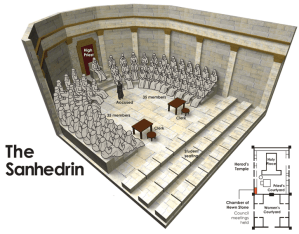
Screen Shot 2020-01-13 at 6.44.03 AMToday, we come to Acts 7. The chapter is Luke’s record of Stephen’s sermon before the Sanhedrin. It would be like preaching a sermon to 71 biblical scholars. No pressure, right? It was such a good sermon that he devoted an entire chapter to retell it. (And I have the task of giving a sermon on a sermon). Stephen’s sermon was simple, his source material was familiar, but the conclusion was sobering. So let’s hear Stephen’s sermon and may the Holy Spirit give us a radically different response than those who heard it the first time. (Read Acts 7:1-53)

Stephen’s sermon can be summed up two phrases: People will try to contain God, but God will not be contained. And if your God is uncontainable, then people will try to contain you. Or it could be summed in one word: UNCONTAINABLE.

1. People will try to contain God.

Screen Shot 2020-01-13 at 6.44.13 AMThere isn’t a person on this planet who hasn’t tried to contain God. You and I seek to contain God to at least three arenas—a place (a location, a land, a nation, a building), a possession (an image, an idol, a memory, an intellect), or a personality (love, goodness, grace, justice, wrath, etc.). all with the hope to explain God in a way that is understandable, definable, attainable, box-able and comfortable.

It doesn’t take long to realize that trying to contain God is like trying to contain the sky. It can’t be done. Although we know this and history tells us this, we still try and retry containing God.

Screen Shot 2020-01-13 at 6.44.42 AM
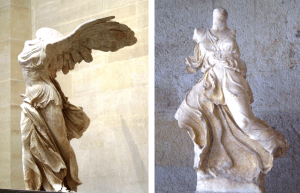
Left: Nike. Right: Nike in Athens

You might know the story of Nike was the goddess of victory. Nike was a goddess before she was a brand. In order to keep Nike, Athens cut her wings to keep her contained and controlled. Israel also had their turn by crafting God into a golden calf.

Stephen’s sermon wasn’t simply a history lesson. It was a lesson on the heart. Stephen got at the heart of every man. As Calvin said, “Our hearts are idol factories.” Stephen said the heart of the Sanhedrin was no different than their fathers (and that you are no different than your fathers). In what ways are you tempted to box up and contain God to a place, a possession or a personality? Think about it. You and I can be very creative.

2. God will not be contained.

Screen Shot 2020-01-13 at 6.44.54 AM

You may try to contain God, but he won’t be contained. God doesn’t fit a mold. He cannot be stuffed into a box. He bucks against boxes. Even the Book that describes him best, shares countless stories about his uncontainability.

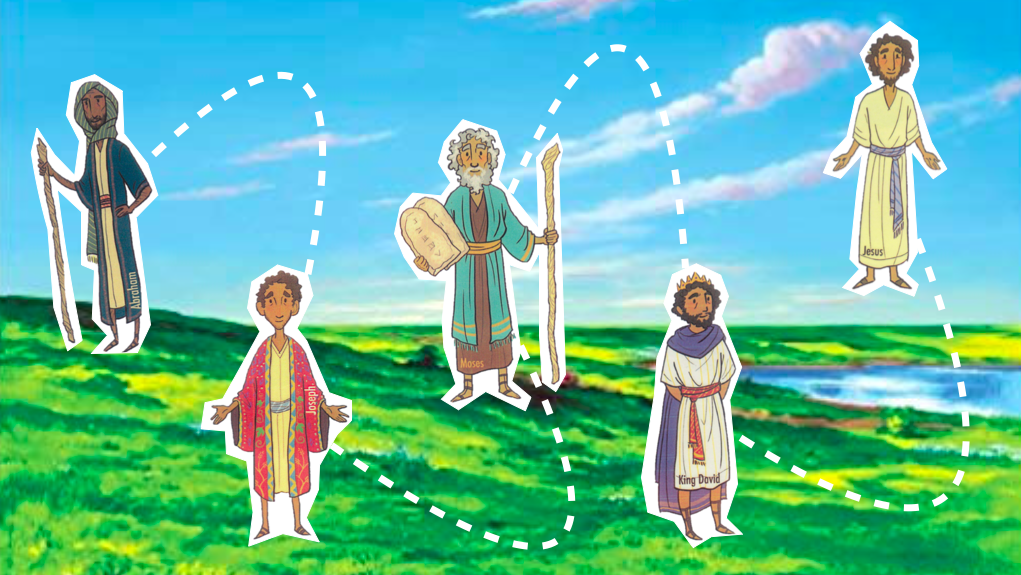
Do you remember flannel graph? I didn’t grow up going to children’s Sunday School. So let me indulge by sharing Stephen’s sermon as a simple flannel graph lesson making up for my missed childhood.

Screen Shot 2020-01-13 at 6.45.15 AM

Stephen’s sermon covered 2,000 years of Jewish history all in the hope to prove that God could not and would not be contained. He used four major stories from the Bible (plus one if you take into account Jesus). It was like going to Sabbath School again for these 71 scholars:

1. Abraham (vs.1-9) — God appeared to Abraham, moved him, and blessed him. This is before there was a temple. Abraham didn’t need a temple to be close to God. God came close to him.

2. Joseph (vs.9-16) — Then God appeared to Joseph in dreams. Although, he was rejected by those closest to him, he became a ‘savior’ for them.

3. Moses (vs.17-43) — God appeared to Moses at the burning bush (again not limited a temple). Moses helped build the tabernacle. He was also rejected as a deliverer. With Moses, Stephen connected the dots for the Jews, “You have rejected Jesus, who was like Moses yet greater than him (and Moses spoke about), and you deny that Jesus has any right to be a ruler and a judge over you.”

4. David & Solomon (vs. 44-50) — God promised David a temple that his son Solomon built. Interestingly, God was the architect and engineer of this Temple. God ordered the supplies and didn’t spar any cost. It would have cost $220B (compared $1B to rebuild Notre Dame). God was worth the Temple, but he was worthy of much more. Solomon knew this and emphasized this in his prayer when dedicating the Temple, “But will God indeed dwell on the earth? Behold, heaven and the highest heaven cannot contain you; how much less this house that I have built!” (1 Kings 8:27)

Stephen’s point was that you can try to contain God’s presence to a tabernacle or temple, but you still reject God and his special messengers. God was present in Jesus and you missed him. God is frisky and wild. He can’t be pinned down. God is unchangeable, unteachable, unlimited, and utterly uncontainable. Let that fill you with wonder and awe.

3. If your God is uncontainable, then people will try to contain you.

Screen Shot 2020-01-13 at 6.45.27 AM

Instead of wonder and awe, the Jews filled with rage. The Jews become like rabid wolves chopping down on Stephen. Rather than being convicted by his sermon, they were carnivorous. They gnashed their teeth and sought to give him hell. What was amazing is that Stephen was allowed to even speak a word or that he was given the time to share all of his sermon. It was certainly a grace of God that allowed him to finish it. But after he finished they contained him quickly (Acts 7:54-60).

It is not a coincidentally that Stephen’s story mirrors Jesus’ story. The Jews tried to contain Jesus and killed him, but the grave would not hold him. He burst out three days later in resurrection power. The Jesus story continued to spread through Stephen in a contagious missionary movement that is still spreading today.

Screen Shot 2020-01-13 at 6.45.36 AM

Acts 7 ends with Stephen stoned to death. That’s it. That’s all we have right now. (Until we read chapter 8.) As we continue to read through Acts, the fullness of the glory of Stephen’s death will be revealed. But what if all we knew was his death?  Can you still feel the weight of glory even without the rest of the story?

What do we learn from Stephen’s speech?

Stephen’s story reminds you to listen. May God give you ears to hear.

Stephen’s story causes you to relish in a God’s uncontainablity. Wonder and awe at him.

Stephen’s story calls attention to the scars you bear for following Jesus. Maybe like Marie Colvin or Stephen you have felt the stones of those trying to contain your God.

Stephen’s story encourages you to turn your gaze from the stones onto Jesus. May you not thrust Jesus aside nor ignore the threat he poses to your arenas of idols. Readily lay down your life for him as he did for you. You may not walk to the martyr’s stake, but you must walk in the Master’s steps.

the name of the rejected

Have you ever felt rejected? Rejection is known by all.

If you follow Jesus, then you know rejection. In the Book of Acts, you see you’re in good company as many of Jesus’ followers were rejected because of their message.

In Acts 21-22, Paul returned to Jerusalem for one last time before he took the gospel to the city of Rome. In Jerusalem, Paul got arrested and almost killed. His trial resembled the trial of Jesus as the people yelled, “Kill him!” Before the crowd of people Paul spoke and shared his life story (22:3-21). If Paul’s story were a mountain, then the top of the mountain would be verse 8 when Jesus introduces himself to Paul. In just a few words Jesus changed Paul’s life.

Do you notice what Jesus called himself in verse 8? He said, “I am Jesus of Nazareth.” It is interesting that Jesus referred himself a Nazarene. Why is his name so important? To understand why this is important you need to go back into history. Do you know that in the Bible there are more than 700 names for Jesus? Each name describes an aspect of his work and character. For example, he is called lamb of God, son of God, king, lord, Prince of Peace, shepherd, and more. It is a good study to study all the names of Jesus. But what does it mean that Jesus Christ was called “a Nazarene”? Why is this important for you and me today?

1. Jesus chose the name.

Jesus chose to greet Paul for the first time by saying “I am Jesus of Nazareth.” He could have chosen many other names, but he used this one. It is a strange one and often misunderstood.

2. Jesus identified with the rejected and despised.

Jesus grew up in the village of Nazareth. it was the home of his earthly father (Matthew 2:22-23). Jesus worked with Joseph as a carpenter until he was 30 years old.

Nazareth had a bad reputation. It was a no good town outside of the boundary of Jerusalem. Many Jews did not live there and they did not like it. They thought people there were rebellious. It was the town on the other side of the tracks (see John 7:52).

After a few years, when Jesus returned to Nazareth he was rejected by the people (Luke 4:16–30). A prophet is without honor in his own country and among his own people (Matthew 13:57).

3. Jesus died with the name of the rejected.

Luke 9:22 says that Jesus must suffer refection (see Luke 17:25). Before Jesus died Pilate wrote a sign for Jesus and put it above Jesus on the cross. It said, “Jesus of Nazareth, the King of the Jews” (John 19:19). Jesus didn’t fight back and say, “I was born in Bethlehem. I am from king David’s city. I am of the family of the king. I am the King of kings.” He was okay with being disposed and rejected. He knew this was his fate.

Isaiah wrote 700 years before Jesus came that Messiah was “despised and rejected by men; a man of sorrows and acquainted with grief” (Isa. 53:3). This was a description of the humiliation and rejection of the Messiah who was Jesus. Jesus would die rejected.

4. Jesus resurrected with the name of the rejected.

When the people came to the tomb of Jesus, an angel said, “You seek Jesus of Nazareth” (Mark 16:6). The angel didn’t change his name or give him a new name. Before and after he resurrected Jesus continued to be called by the name of the rejected.

5. Followers of Jesus are called by the name of the rejected.

The enemies of Jesus called the early Christians “the sect of the Nazarenes” (Acts 24:5). This not a compliment. It was like calling them a curse word.

No matter where you live, no matter how rich or poor you are, no matter how unimportant you may seem in the eyes of other people, Jesus Christ comes to you where you are. He identifies himself with people who have needs—the despised, and the rejected. Jesus lived and met with sinners, lepers and sick people—people who were unwanted, abused, ignored, and rejected. Jesus hasn’t changed. Although he is now exalted on the throne of heaven, he is still “Jesus of Nazareth” and identifies with rejected people.

Isn’t it good to know that Jesus calls himself by the name of the rejected? He died with the name, he rose with the name, he shared the name with his followers because he cares for people who are despised and rejected (see Luke 18:35-43).

unstoppable (part two)

God is unstoppable and what he is doing through the church and his followers is unstoppable. We’ve seen this already in the introduction to the Book of Acts. Now we will discover from the first chapter of Acts three contrasts that describe the unstoppable mission of the early church.

Not the end, but a new beginning.

Screen Shot 2019-08-27 at 11.58.54 AM

Luke ends the Gospel with death and resurrection of Jesus, but that’s not the end of the story. The Book of Acts opens with Jesus alive and with the apostles (v.1-3). Jesus gave “proofs” and Luke wants this to bolster your confidence in Jesus.

If you live in Chad and put your neck on the line working for the embassy, NGO, school or mission, if you want to wade in social awkwardness for the sake of Christ you want to know that everything about Jesus is true. Luke helps us to have doubt.

The eleven apostles are on the cusp of something brand new. Jesus gathered them together over a meal to ask them to—wait (v.4a). Wait? That’s a strange thing to say as he’s about to leave. Do you find it difficult to wait? Most people hate waiting.

Living in Chad has likely taken a bite out of my desire for instant gratification. I’ve probably become a tad more patient and crazy. Daily I wait in lines, wait in traffic, wait for the emails to upload, wait for dinner to be done, wait for the rain to stop, wait for the dust to settle, wait for the sun to come up to charge solar batteries, wait for change at the little shop, wait for the next vacation, wait for our sicknesses to cease, wait for our neighbor or local friend to finally arrive, wait for them to believe, wait for prayers to be answered…

Jesus last earthly words were wait. Yet according to Jesus there was something worth waiting for—a gift (v.4b). The Holy Spirit was to be given. Jesus promised it (cf. John 14-16). It was a promise as old as the Old Testament. God promised to renew his people and give them a new Spirit cf. (Isaiah 32:15; Ezekiel 11). The disciples stood on the cusp of this new beginning, this amazing gift—the Holy Spirit—God who would always dwell with them.

The Holy Spirit is one of the most under-appreciated, under-emphasized, underestimated, and misunderstood persons of the Godhood. When it comes to the Holy Spirit, his work, and his power there are a myriad of opinions (probably 50+ opinions here today). But. No matter your church background. No matter your theological opinion. No matter our difference we can all agree the Holy Spirit is God and he’s powerfully at work within the world, even today. (Amen!) God is not an absent landlord nor are we abandoned tenants.

The Book of Acts could be known as the Gospel of the Holy Spirit or the Acts of the Holy Spirit through the Apostles. Sure Jesus and his resurrection continue to be a main emphasis in the book Acts, but throughout Acts you will see the Holy Spirit do a mighty work in the world, the church, and the people in whom he dwells. Also, this same Holy Spirit that dwelled in the apostles dwells in you today! That reality should wow you!

For a long time my relationship with God was academic and impersonal. I knew the Holy Spirit existed and that he dwelled in me and had moments of his power, but I missed the reality that he wanted a relationship with me. I was impatient with him. I didn’t know how to listen to him. I tried hard to live the Christian life without him and within my own strength. I was exhausted by rowing a boat rather than sailing in the power of the the Spirit. This image changed my identity. Rather than trying to control God, I sought to turn my sails in the direction of his leading.

The Holy Spirit is intensely relational. He dwells in you to be close to you, to help you, to guide you, to comfort you, to counsel, to empower you, to speak to you. Emmanuel—God very God—is in you. Maybe for you, today, a life empowered by the Holy Spirit is a new beginning.

Not about when, but how.

Screen Shot 2019-08-27 at 11.59.03 AM

The apostles still didn’t understand why they had to wait (v.6). They thought now should be time for the Messiah to get busy restoring kingdom. They didn’t know God’s schedule or time table. They simply wanted to know when is all that was wrong in the world was going to be made right. It was a good question, but it wasn’t the right question.

Jesus answered and in the process he changed the when to how (vs.7-8). The how is how the kingdom will grow, how we’re to wait, and how God will use his followers. Jesus said, YOU WILL be witnesses and YOU WILL be empowered. In other words, you will be participants in the advance of the gospel and you won’t be alone. In a matter of days people would flood into Jerusalem (v.5). The gospel would explode from there into the world. Jerusalem would become an epicenter of the earth shaking Holy Spirit and tremors of what happened would be felt to the end of the earth to every generation that has ever live, even 2,000 years after it began.

Jesus invites you into the how. YOU WILL be witnesses and YOU WILL be empowered and YOU WILL never be alone.

Not watchers, but witnesses.

Screen Shot 2019-08-27 at 11.59.12 AM

There is a comical moment that happens on the mountainside as Jesus ascends (vs.9-11). The apostles are gawking at the sky, “I think I can still see Jesus.” Two angels interrupt, “Stop staring. Don’t just stand there. He’s coming back you know.”

We each have different reactions to Jesus assignment. ___ I’m in! Where do we start? ___ I’m interested but unsure of where and how God could use me. ___ I don’t know many people who aren’t believers. ___ I’m still new to following Jesus; Someone else could do a better job. Jesus said, YOU WILL be my witnesses. It’s not optional. It’s not for the pastor, evangelist, or missionary type. Being a witness is not something these men chose to be, God chose it for them. It was hardwired into their new DNA as a follower of Jesus. Witnessing is not something they did, it was who they were. You will be witnesses.

Undoubtedly, the apostles were given special and supernatural power to do miracles like Jesus, but they were also given power to witness about the good news about Jesus. More often the word “power” in the Book of Acts refers to “courage” or “boldness”—risking the awkward conversation to talk about what they saw and heard from Jesus.

You stand in the same line as these apostles. You have seen and heard the same life-changing truth. You are empowered with the same power. In Luke 24, Jesus explains more fully what a “witness” does. A witness proclaims the death and resurrection of Jesus to all nations. But Acts explains to us who a “witness” is. A witness is one empowered by the Holy Spirit with resurrection power.

Acts 1 has a peculiar conclusion. The disciple are gathered at a prayer meeting to replace Judas. It was sobering moment. Here was a disciple who betrayed Jesus. Judas exchanged Jesus for a few silver coins, then filled with shame he spilled his guts. Why is this story here? Why does Luke include the disciples rolling dice to replace Judas? It shows God’s sovereignty and control over evil and unstoppable circumstance to bring about salvation for mankind and it shows that God will continue to call out witnesses to spread this good news globally.

We can be like people starring into the sky at Superman flying away wishing he’d come back to rescue us. Jesus will certainly come. His mission will end. Jesus didn’t leave us alone. You might not have kryptonite, but we have something better, Someone better—the Holy Spirit.

May you follow in the footsteps of those who first followed Jesus. You and I are witnesses to something bigger than you—Jesus. You have a power greater than what you could muster up yourselves—the Holy Spirit. You are part of something unstoppable—the expansion of the kingdom of God through the church.

unstoppable (part 1)

There are forces of nature that cannot be stopped like an avalanche, a tsunami or dust storm. There is nothing you can do to prevent these from happening. Sometimes life brings things that are unstoppable like death or suffering or pain, but not everything that is unstoppable is evil or bad.

Unstoppable is the word that comes to mind when you look at the early days of the church. Conflict and controversy threatened to wipe out the young group of disciples, religious leaders tried to muzzle their message, governments and cultures attempted to contain them, demonic forces and world powers tried to oppress them, shipwrecks and snakes sought to slow them down, persecutors intensely tried to beat, bully, imprison and kill them, but instead of killing the fledgling church it fueled a wildfire that swept across the first-century landscape. Nothing stops God and his mission. He’s unstoppable. We read about this in the book of Acts.

AUTHOR OF ACTSScreen Shot 2019-08-27 at 11.58.17 AM

The Book of Acts was written by Luke, who also wrote one of the four Gospels. Luke was “the beloved doctor” and missionary. Luke didn’t just record history; he lived it. What is obvious from his Gospel is that Luke spent a lot of time with Jesus. He ate with him, walked Israel’s countryside with him, saw him heal, heard him teach, witnessed his death, resurrection and ascension. Luke clearly showed us Jesus in living color.

PURPOSE OF ACTS

Luke’s aim was to write clearly and accurately about Jesus (cf. Luke 1:1-4). Just as Luke spent a lot of time with Jesus, what is obvious from the Book of Acts is that he also spent a lot of time with the Peter and Paul. Luke accompanied Paul on many of his journeys, he had firsthand interviews from the people and events he wrote about (much in the 1st Person). Luke was deeply loved by Paul and was with him in his final days.

Aren’t you grateful Luke’s words are preserved for us today? Aren’t you glad for brilliant and methodical minds like Luke who help us to have history with such accuracy?

AUDIENCE FOR ACTS

Luke writes both the Gospel and the Book of Acts to Theophilus. We don’t know a lot about him other than this name means “one who God loves.” There a variety of opinions that Theophilus was a distinguished friend or that Luke was referring to himself by a pseudo-name or that Luke was referring to followers of Jesus in general. He remains a mystery.

Screen Shot 2019-08-27 at 11.58.36 AM

The Book of Acts is the historical sequel to the Gospel of Luke (like LOTR to The Hobbit). Part One was the Gospel in which Luke describes Jesus’ birth, earthly ministry, teachings, miracles, death and resurrection. Part Two was Acts in which Luke describes the unstoppable expansion of the the gospel message of Jesus throughout the world.

KEY VERSE OF ACTS

Screen Shot 2019-08-27 at 11.58.45 AM


THEMES IN ACTS FROM VERSE EIGHT

First, Jesus continues to be the theme, but now in Acts Jesus will ascend and his Spirit will be at work in the church and Jesus’ followers.

Second, the Gospel—Good News of Jesus—is for all people. The gospel is for every man, woman, and child on the face of this earth. That is great news! This was earth shaking news! Throughout the Book of Acts we see how the Gospel Spreads throughout Jerusalem (Ch.1-7) to Judea and Samaria (Ch.8-12) to the Ends of the Earth (Ch.13-28)

Third, all of Jesus’ followers are his witnesses, empowered and enlivened to bring the message of Jesus throughout the earth. This is a large part of Jesus’ mission. Mission is not just missionaries reaching tribes and unreached peoples, but it is every follower empowered, engaging and advancing the gospel to every corner, cubical, campus, city, country and continent of the planet. It is something we all are a part. We are all invited.

if you are a Christian you are a part of this unstoppable avalanche of the gospel and tsunami of the Holy Spirit. Beginning with the apostles in Acts and continuing with us here and now, today.

Exodus: In Awe of God

God shows up in mighty and miraculous ways throughout history. Exodus shows God in all his wonder.

Israel had been in Egypt for 400 years. They were slaves in a foreign land. They were waiting for the fulfillment of God’s promise to Abraham—waiting for the Promised Land. There was one bring problem. Pharaoh. The god-complex ruler of Egypt made it his mission to stand between Israel and their God. That wouldn’t last long. He was no match for the Creator-God.

God would use Pharaoh’s decree to murder every Israelite son. One Hebrew couple defied this decree. When they could no longer hide their baby boy, the mother placed their son in a basket and into the Nile, trusting God’s will for his life. In God’s plan, Pharaoh’s daughter found the basket, caught in the reeds beside the river. She adopted the baby into her family and named him Moses.

Moses grew up in the palace walls, but he was never really an Egyptian. When he saw the oppression of his people he took action. This led Moses on a wild journey that would lead the people of Israel out of Egypt and into the Promised Land.

Along the way, both Moses and Israel would witness the wonders of God. Moses was first introduced to God through a burning bush. Then God would lead his people out of Egypt following 10 plagues, by a pillar of cloud and fire, through splitting the Red Sea, and by providing manna from heaven and water from a rock. No generation in human history saw God work like this before or since.

The story of Exodus is also our story. Like Israel, we are God’s people. He draws us out of our sin (our Egypt), and draws us into His presence (into relationship with Him). Come let us behold God and be in awe of him together.
filled with awe and wonder,
Justin

Download the Exodus Study Guide

Screen Shot 2019-06-23 at 7.22.18 AM

Genesis: The Beginnings

New beginnings bring an air of excitement and freshness. The book of Genesis is taken from its first words, “In the beginning.” Genesis is the beginning of everything. It is the beginning of creation, human history, life, death, and so much more.

Download the Genesis Study Guide

Screen Shot 2019-06-23 at 7.21.19 AM

Missing Jesus: Cleopas

A few Sunday’s ago after church, our family went to a restaurant that we enjoy. All weekend I was salivating as I thought about having a piece of strawberry rhubarb pie at this restaurant. After church I hurried my kiddos—a little too quickly out the door. As we drove, I got giddier and giddier. When I could see the restaurant, I could almost taste that pie in my mouth. We pulled into the parking lot, but I got a sinking feeling when I noticed there were no cars. I shuffled my feet to the door and read a handwritten sign that said, “Sorry. Due for unforeseen circumstances the restaurant will be closed today.” Argh! Stupid expectations!

My story may seem trivial. I started with something small because starting big may be overwhelming for some. I could tell you of my expectations and the disappointments that made me wonder whether I am cut out for the ministry or mission field. I could tell you of some unmet expectations I’ve had for my marriage that made me wonder if we’d make it another year or another day. Some of you have had great expectations for a relationship, a spouse, a child, a job interview, a career, a vacation, a retirement, a 401k, a dream house or a situation to turn around only to have it unmet. Have you ever had an unmet expectation?

When we dive into the Gospels we get to see and discover the story of Jesus. Like a Where’s Waldo book we find Jesus, ourselves, and others in the story or we can miss Jesus.

When you think of a character that missed Jesus in the story who do you think of? We have looked at Judas and Caiaphas. Today we will look at Cleopas. If we’re honest, there is a little bit of Cleopas in all of us. Like Cleopas we feel the tension of expecting one thing from Jesus and experiencing another thing. When our expectations are unmet doubts creep in, discouragement, disappointments, disillusionment and frustrations can occur. Expectation is the mother of all frustration—the root of all heartache (Shakespeare).

How many times has life, even God disappointed you? It’s tough when you have unmet expectations in connection to a spouse, a child or a friend, but it’s really tough when it’s God. We don’t like to think about God disappointing us. Maybe you thought God was going to do things one way, but he had different plans. God can act or behave in ways that you might not expect. What happens when the character of God doesn’t come through the way you thought? What happens when God’s provision is later than you thought? What happens when you trust God, yet it seems like God fails you or abandons you? What happens to your view of God when life gets chaotic and God seems silent?

Today we are going to take a walk on the Emmaus Road. A road that began with unmet expectations, but led to a marvelous meeting with Jesus. We will step into the shoes of two men who had an expectation of Jesus, but that expectation wasn’t met like they had thought,

“That very day (the day Jesus resurrected) two of them were going to a village named Emmaus, about seven miles from Jerusalem, and they were talking with each other about all these things that had happened.” (Luke 24:13-14) Italics include my thoughts.

emmaus mapLet’s do a short Bible Study and ask who, what, where and why of the text. Who were these men? We will learn one has a name and the other remains nameless. We aren’t sure if they’re related, worked together or were neighbors. Let’s just call them friends. Where were they going? They’re walking to a village named Emmaus. Archeologists don’t know the exact location of the town or the road. Likely, it was west of Jerusalem—in the opposite direction from where the two men were headed. Why were they leaving Jerusalem? The Passover was over. The big feast in the big city had finished and the roads around Jerusalem would have a steady flow of people leaving to go to their homes and villages.

What are they talking about? News! The text tells us what they talked about,

“While they were talking and discussing together, Jesus himself drew near and went with them. (Yes, Jesus teleported!) But their eyes were kept from recognizing him. And he said to them, “What is this conversation that you are holding with each other as you walk?” And they stood still, looking sad. Then one of them, named Cleopas, answered him, “Are you the only visitor to Jerusalem who does not know the things that have happened there in these days?” (Seriously, where you been? Haven’t you check you FB or CNN feed?) And he said to them, “What things?” (like he didn’t know?) And they said to him, “Concerning Jesus of Nazareth, a man who was a prophet mighty in deed and word before God and all the people, and how our chief priests and rulers delivered him up to be condemned to death, and crucified him.” (Luke 24:15-20)

The two friends (now plus one) unpacked the events of the past few days. This years Passover was unlike any other that they’d ever been to. It looked like it was going to be the best party ever, but it ended up being a dud. It looked like the stars had aligned and the Prophet’s words were being unveiled before their very eyes, but the hopeful Messiah goes and dies. This didn’t make sense to them. Many like these men sold everything they had to follow Jesus (some for 3-years). It’s as if they bought into a pyramid scheme and thought they got scammed. They saw Jesus die with their own eyes. They saw his body removed from the cross and carried to the tomb. The chaos of the weekend caused them to question God. Their hopes and expectations were drowned in sadness. They were deeply disappointed, if not devastated.

Have you been in their shoes? Have you felt what they felt? Have you thought that Jesus was one person—you placed your faith in him, you had great expectations of him—but something shattered who you thought he was, how he was to act and behave, what he was to do for you? Surely, you have. Let’s be honest. Following Jesus isn’t glamorous. It isn’t easy. It doesn’t make all your problems or pain go away. Following Jesus takes you down a dusty and rocky road—a risky and dangerous road. A road not well traveled. A lonely road. A road filled with temptation and persecution. A road of suffering and sacrifice.

You lose hope when thing don’t happen as you’d expect. When Jesus doesn’t meet your expectations you can easily become sad, angry, despaired, depressed, and hopeless. You can lose hope in the character of Christ when the journey of following Jesus gets a little chaotic. Isn’t it during times of chaos or difficulty that we tend to question God’s character? When everything is going good there isn’t need to question God. We got it good. Our relationship is good. Our trust is good. Our hope is good. Yet when my marriage is sour or my kids are playing the prodigal or I lose my job or I find out from the doctor bad news, it is then that I question the goodness of God. I question his plans. I question his character (e.g. wisdom, sovereignty, omnipresence, etc.).

Does God work through your frustrations? Doubts? Disappointments? Unmet expectations? You bet! It is often in those chaotic times that you see God work best. Is God there with you, even in the chaos? Certainly! Chaos can cloud your vision. You can miss seeing him walk beside you—with you. You may not recognize God as he does his work. Sometimes you may be kept from recognizing him or what he’s doing (Ex: Job, Abraham, Cleopas, etc.).

Let’s give these two men on the Emmaus Road a little grace. 48-hours earlier Jesus was unrecognizable. He was beaten, bruised and bloody. His beard was plucked. He was naked and scarred. Some of their last images of Jesus were traumatic and grotesque. To think that Jesus survived the ordeal, cleaned himself up and ran to catch up with these men walking to Emmaus just to have a conversation with them would have seemed absurd and unthinkable. Yet Jesus in his resurrected body had a little fun. It’s something you can look forward to when you get yours. He could teleport and walk through walls. That’s so cool!

Seriously, we learn six amazing truths about the character of Jesus on the road to Emmaus. First, Jesus pursues people. He pursued the two men. He initiates provoking question not because he did not know the answers, but that he wanted show how he pursues people.

Like Cleopas and his friend, we can be tempted to grumble and argue about the unmet expectations we experience. To this Jesus asked, “What things?” Jesus knows all those things. He wants you to know he knows those things. He understands those things. In fact, Jesus encountered those things first hand. He experienced those things. What things are you facing (or feeling) that Jesus has too? Likely all those things.

Jesus knows what you feel. He knows pain. He knows hurt. He knows anger. He knows sorrow. He knows despair. He knows because he’s been there. What if you took your complaints to God instead of just your friends? Can God handle it? Jesus could handle these two men and their honesty. He can handle yours too. He isn’t put off by it, in fact, Jesus invited the men to speak and share their sadness. Some of you need to know that today!

The men explained,

“But we had hoped that he was the one to redeem Israel (the one Moses, David and Isaiah talked about). Yes, and besides all this, it is now the third day since these things happened. Moreover, some women of our company amazed us. They were at the tomb early in the morning, and when they did not find his body, they came back saying that they had even seen a vision of angels, who said that he was alive. Some of those who were with us went to the tomb and found it just as the women had said, but him they did not see.” (Luke 24:21-24)

They heard about Jesus’ resurrection, but sadly they didn’t see him themselves.

Jesus is in control, even if life feels chaotic. Remember when Jesus taught, “Don’t worry about tomorrow,” or “Come to Me heavy laden, I will give you rest.” Listen to Jesus’ response on the road,

“And he said to them, “O foolish ones (stupid, sightless, shallow—What? That was a little harsh stranger! We bear our hearts to you and you call us foolish? Who are you to say that?), and slow of heart to believe all that the prophets have spoken! (You don’t see the whole story!) Was it not necessary that the Christ should suffer these things and enter into his glory?” And beginning with Moses and all the Prophets, he interpreted to them in all the Scriptures the things concerning himself.” (Luke 24:25-27)

Jesus models suffering comes before glory. This was important to the story and theology of the Messiah. Cleopas and his friend missed the detail that suffering always precedes glory. It gets harder before it gets better.

During a dark night of the soul hang on! Joy will come in the morning. If you suffer it will pass. Sadness will pass. Despair will pass. Disappointment will pass. Doubt will pass. Frustration will pass. Glory will come. I promise. Jesus promises!

Jesus teaches still. This is the greatest unrecorded sermon in the Bible. What I’d give to get my hands on that Podcast! Jesus unpacked centuries of prophecies from the beginning to the present. He gave these men a tour behind the scenes of the Story of stories. He gave the director’s cut commentary with bonus features. That must have been the best Sunday School lesson ever! The truth is you have this lesson. It’s in the Bible. You can hold it. You can hear it. You can read it. You can know it. You can be taught it by the Spirit of Jesus!

Do you realize that even after this Bible Study of Bible studies that Cleopas and his friend still didn’t recognize Jesus? Yes, it can happen. You can read the Bible from cover to cover, have the explained by the best teacher, preacher or commentator and still miss Jesus!

“So they drew near to the village to which they were going. He acted as if he were going farther, but they urged him strongly, saying, “Stay with us, for it is toward evening and the day is now far spent.” So he went in to stay with them. When [Jesus] was at table with them, he took the bread and blessed and broke it and gave it to them (Reminiscing the Upper Room). And their eyes were opened, and they recognized him. And he vanished from their sight. (Yes, Jesus just teleported again!) They said to each other, “Did not our hearts burn within us while he talked to us on the road, while he opened to us the Scriptures?” And they rose that same hour and returned to Jerusalem. And they found the eleven [disciples] and those who were with them gathered together, saying, “The Lord has risen indeed, and has appeared to Simon!” Then they told what had happened on the road, and how [Jesus] was known to them in the breaking of the bread.” (Luke 24:28-35)

Cleopas and his friend boogied back towards Jerusalem (7 miles)—in the right direction. They told Jesus’ disciples what had happened to them. Not many would walk that journey at night. It was too dangerous. But they had breaking news! Jesus was alive—he appeared to them! They didn’t have to prove it as Jesus would appear among them again (24:36). Cleopas and his friend were eyewitnesses to the powerful testimony of Jesus’ resurrection. They became founding members of the fellowship of burning hearts.

You gain hope when you see Jesus has been with you all along. You may be so caught up in your disappointment or unmet expectations that you fail to recognize God is with you. Like Cleopas and his friend does your heart burn within you. Jesus knows if it’s ice or fire. Jesus sets the Fahrenheit of your heart, even in the midst of chaos and difficulty. May he give you eyes to see his goodness, his grace, his love, his presence, his tender hand leading you along the road. May he ignite a fire in your heart. You too got a story to tell!

The death and resurrection of Jesus are the most powerful events in history to hinge your faith upon (1 Corinthians 15:14-17). When you are tempted to doubt, despair, or drown in unmet expectations, come back to the cross and empty tomb. What will you do with Easter now that Easter Sunday is over? What will you do with Jesus? What will you allow Jesus to do within you as he walks alongside you? Will you see how God redeems chaos as a part of his story? See how he is with you through it?

Missing Jesus: Caiaphas

There is a story of an 11th Century king of England with Viking roots named Cnut. His advisors would often say, “King, you are the greatest man that has ever lived. There can never be another man so mighty as you. There is nothing in the world that dares disobey you.” In order to prove his power Cnut ordered that his throne be carried onto the seashore at low tide. He then sat on his throne and ordered the tide to stop rising. The tide, of course, didn’t listen. It literally dampened the mood, his robe, and his kingly honor.

Screen Shot 2019-05-13 at 11.02.08 AM

The resurrection of Christ is the story of a tide rising. More than the tide it was a tsunami that couldn’t be stopped. The resurrection allows us to dive into the Gospels and discover the story of Jesus. Like a Where’s Waldo book we find Jesus and others in the story. This happens on two levels: First, we find our story—our redemptive story—is in Jesus. Second, we find ourselves in the characters surrounding Jesus. Sadly, like many of them we can miss Jesus in the resurrection story.

When you think of a character that missed Jesus in the story who do you think of? Last week we saw Judas. Today we will look at Caiaphas. If we’re honest, there is a little bit of Caiaphas in all of us. Like Caiaphas we feel the tension to resist God and guard what is important to us no matter the cost. We strive for control, even if it be a little control. We are tempted to resist the God we say we trust and guard what we think is important.

Let’s be honest. Have you resisted God? You know you should stop doing this thing, but this is so fascinating and addicting. You know you should start doing that. You know you shouldn’t go there. You know you shouldn’t spend your money on those things, but you just this once. You know you should forgive, but the hurt seems to big. Everything in you tells you it’s wrong yet it feels so right. You find yourself resisting God when you know you are best-off trusting him.

What do those outside the church call this? They call it hypocrisy. We in the church call it hypocrisy too. Meaning we don’t actually do what we say or believe. In all fairness, it is difficult to surrender to a God we cannot see. Except we can see him. When Jesus stepped into the world he was God with skin on—the invisible God made visible. He certainly looked and acted different than many imagined God looking and acting, particularly to the religious people.

Joseph Caiaphas was the religious poster child. He grew up in a wealthy, political, and aristocratic family who controlled the temple. He was groomed to be a Sadducee (Sad-You-See!). He married the daughter of the high priest Annas. He himself became high priest between 18-36 AD, which was during most of Jesus’ life and all of his ministry. He was the most powerful man in Israel and the most influential man in Jerusalem. He was the go-between Israel and Rome. Other than Roman oppression, things went well for Caiaphas. Until a carpenter turned rabbi from Galilee started gaining notoriety with crowds.

The problem Caiaphas had with Jesus were his crowds. Everywhere Jesus went the crowds went too. Sometimes 1000’s of people came to hear Jesus speak. He spoke with authority. People also came from all over the nation bringing sick to be healed by him. The crowds were a threat to peace for Rome and a threat to the Jewish order. They had reason to worry since Jesus didn’t have a good rapport with the Jewish leaders. He made their questions seem foolish. He called them names,

“You serpents, you brood of vipers, how are you to escape being sentenced to hell?” (Matthew 23:33)

You wouldn’t let your kids talk like that nor kiss their mama with a mouth like that! But that’s Jesus talking. Jesus echoes Jeremiah,

“Woe to the shepherds who are destroying and scattering the sheep of My pasture, declares the Lord.” (Jeremiah 23:1)

Jesus had big issues with the Jewish leaders as they were responsible for leading the people to God. And Caiaphas had big problems with Jesus, his crowds, and his criticism! Ironically, it was Caiaphas who was oppressing the people by funding the temple and scheming against God.

The final straw that broke Caiaphas’ back was not a conversation or confrontation with Jesus, but it was an act of compassion by Jesus (like Judas, both at Bethany). Have you ever been frustrated or jealous when someone was shown compassion? Like Caiaphas, we can miss what God is doing in front of us because we are nearsighted. We are raging when we should be rejoicing. We are grudge-filled when we should be grateful. Our spiritual eyes are blurry and blind to what God is doing. We lose perspective and only see what we want to see. We don’t see the whole story.

Jesus had raised Lazarus from the dead. The crowds swelled in Bethany to see the miracle man and the Miracle Maker. The crowds marveled and believed. Jesus had raised a man from the dead! Wow! That would be enough reason to follow Jesus,

“Many of the Jews therefore, who had come with Mary and had seen what [Jesus] did, believed in him, but some of them went to the Pharisees and told them what Jesus had done. So the chief priests and the Pharisees gathered the council (The Sanhedrin; three groups who couldn’t agree) and said, “What are we to do? For this man performs many signs. If we let him go on like this, everyone will believe in him, and the Romans will come and take away both our place and our nation.” But one of them, Caiaphas, who was high priest that year, said to them, “You know nothing at all. Nor do you understand that it is better for you that one man should die for the people (really?), not that the whole nation should perish.” (John 11:45-50) Italics are my thoughts.

Caiaphas’ strategy of discrediting Jesus publicly had failed. The priest’s questions towards Jesus backfired too many times. Now it was time for a final plan. Caiaphas’ agenda was clear: kill Jesus and the problem will go away. He was sincere and he believed he was acting on behalf of God (John 11:51-53). It was a plan that the Jewish House, Senate, and Supreme Court all agreed upon. Unknown to them, they were actually facilitating the will of God (John 10:17-18). And all Caiaphas could think about was getting Jesus to lose his crowds,

“The crowd that had been with him when he called Lazarus out of the tomb and raised him from the dead continued to bear witness. The reason why the crowd went to meet him was that they heard he had done this sign. So the Pharisees said to one another, “You see that you are gaining nothing. Look, the world has gone after him (1/3 of world Christian; spreading like a wildfire that couldn’t be contained).” (John 12:17-19)

Interestingly, later in Acts, we discover that many of the priests and Jewish leaders became followers of Christ. This is how John got his insider information on Caiaphas. Certainly, many Jewish leaders knew they were resisting what God was doing through Jesus, yet they held tightly to their plan because it would mean letting go of their power, their prestige, their pride, and their piety—everything that was important to them. Trusting Jesus was too costly.

When you decide to follow Jesus it will cost you something. It may cost you relationships, position, respect, money, standard of living, time, beauty, GPA or entertainment. The cost is too high for too many people. And therein lies the tension. It can be a wrestling match between what Jesus values and what you value. Many tap the mat to get out of the ring. You either consider the cost or you don’t. You are either hot or cold. You are all in or you aren’t.

If you’re a parent you’ve likely heard your kids plot out their future. I hear my daughters say, “When I grow up I am going to work at a Thai restaurant that way you can eat Thai food whenever you want.” “When I am an adult I am only going to eat all the candy I want.” “My house is going to be a barn so I can live with horses.” As parents we smile and laugh. We also know those plans will change as they get older. They may change moment to moment. Do you think God has a similar response to our adult plans and the ways we resist his plans? Do you think he shakes his head when we try to make our own plans? Do you think it breaks his heart when we ignore his wisdom being the Creator and Author of life?

Caiaphas couldn’t just get rid of Jesus. He didn’t have the authority to crucify him. He needed the permission of the Roman government. He needed case. He needed a legitimate charge against Jesus to show he was a threat to the empire. He needed to catch Jesus confessing that he was god or king (John 8:37-40; 10:31-39). So Jesus was led to Annas, Caiaphas’ father-in-law (18:12-14). Jesus turned the question back on Annas and he was slapped for it (18:19-24). Then Jesus was sent to Caiaphas where he was interrogated,

“Are you the Christ, the Son of the Blessed?” And Jesus said, “I am (ego emi; John 8:58), and you will see the Son of Man seated at the right hand of Power, and coming with the clouds of heaven.” (Mark 14:61-62)

That’s what Caiaphas needed. He had his case. He had witnesses. Without hesitation Caiaphas took Jesus to Pilate, the Roman governor. Pilate thinking it was a petty issue punted Jesus back to the Jews (18:28-32), but the Jews persisted, twisted and tied Pilate’s political arms. Pilate still wasn’t convinced Jesus’ title “King of the Jesus” was a threat, until he heard the rumble of the crowd. By this time Caiaphas owned the crowd (or mob). Pilate opted for peace and willingly traded Jesus for Barabbas the murder (18:40). The case that Jesus was a self-proclaimed King—a threat to the empire worked (19:7). Pilate brought Jesus before the crowd,

“He said to the Jews, “Behold your King!” They cried out, “Away with him, away with him, crucify him!” Pilate said to them, “Shall I crucify your King?” The chief priests answered, “We have no king but Caesar.” (Really?) So he delivered him over to them to be crucified.” (John 19:14b-16)

Pilate wrote a sign that hung above Jesus that read, “Jesus of Nazareth, the King of the Jews.” (John 19:19b) Can you feel the rejection? Can you hear the mockery? It was irony—a blood bathed resistance.

Jesus would die on a cross in a matter of hours. He would be buried in a borrowed tomb. But 3-days later, on a Sunday morning 2,000 years ago, a squad of the Roman guards would come huffing into Caiaphas’ house, march down the hall to where he was and say, “The tomb where Jesus was buried is empty.” (John 20:1-10) Can you feel the weight of that? Can you see Caiaphas’ face drop and go pale? His worst fear realized. Jesus was raised from the dead as he said. Within days there would be sightings of Jesus all around Israel (1 Corinthians 15). Caiaphas’ plan crumbled with the resurrection of Christ, yet he still resisted. He paid hush money and created a story that the disciples stole Jesus’ body (Matthew 28:11-15).

Following the resurrection we only hear about Caiaphas one-time,

“And as [Peter and John] were speaking to the people, the priests and the captain of the temple and the Sadducee’s came upon them, greatly annoyed because they were teaching the people and proclaiming in Jesus the resurrection from the dead. And they arrested them and put them in custody…But many of those who had heard the word believed, and the number of the men came to about five thousand. On the next day…Annas the high priest and Caiaphas…and all who were of the high-priestly family…inquired,

“By what power or by what name did you do this?” Then Peter, filled with the Holy Spirit, said to them, “Rulers of the people and elders, if we are being examined today concerning a good deed done to a crippled man (an act of compassion), by what means this man has been healed, let it be known to all of you and to all the people of Israel that by the name of Jesus Christ of Nazareth, whom you crucified, whom God raised from the dead—by him this man is standing before you well. This Jesus is the stone that was rejected by you, the builders, which has become the cornerstone. And there is salvation in no one else, for there is no other name under heaven given among men by which we must be saved.” (Acts 4:1-12)

Caiaphas tried to muzzle their mouths, but it was futile. The name, reputation, and resurrection of Jesus was spreading like a tsunami. He couldn’t stop it. From that moment on, we hear no more about Caiaphas, but we hear a lot more about Jesus.

Remember King Cnut? I left out an important detail from his story. Sitting on his throne in the sea he was making a point. He knew he couldn’t stop the tide from rising. He knew he was just a man. He knew he wasn’t more powerful than God. We can be quick to judge the old king in a wet robe, but listen to what he said, “Let all men know how empty and worthless is the power of kings. For there is none worthy of the name but God whom heaven and earth and sea obey. There is only one King who is all-powerful and it is he who rules the sea and hold the ocean in the hallow of his hand. It is he whom you ought to praise and serve above all others.”

Caiaphas stood in the presence of the Savior of the world, but refused to abandon his quest for control. As a Sadducee, Caiaphas acted as a Judge, but his judgment of Jesus was wrong. Jesus is the Judge. He said, “The one who rejects Me and does not receive My words has a judge; the word that I have spoken will judge him on the last day.” (John 12:48) His judgement is sure and final. If only Caiaphas humbled himself and bowed his knee to the King of kings and the Great High Priest whom he represented. Caiaphas should have said sorry, retired from his job, and joined the world changing movement, yet he resisted to give up his hat.

Can you relate to Caiaphas? Are there hats you’re holding onto? Generally, your greatest regrets are connected to attempts to preserve something that isn’t even a part of your life anymore. Pressure to preserve or prop it up will eventually drive you to extremes that harm you or others. And what you try to preserve will always disappoint and eventually disappear.

Caiaphas’ story of resisting Jesus illustrates the futility of resisting God. Resistance is futile (Borg, Vogon). You know well that resisting Jesus is futile. It’s easy to dismiss Caiaphas, but you and I are also prone to resist God by putting something else in his place. And those things quickly diminish in value.

Screen Shot 2019-05-13 at 11.03.04 AM

Accepting Jesus will cost you something, but resisting him will cost you more. It may cost you a relationship, position, respect, standard of living, time, etc. Jesus died and rose for that! Those things won’t be important 100 years (or 1,000 generations) from now, but Jesus will. Don’t miss seeing and believing in Jesus!


Missing Jesus: Judas

A cultural aspect of African life that I didn’t enjoy at first but enjoy now is bargaining. After 8-years I’ve become good at it. So good that some of my local friends are surprised that I can get a deal just about as good as they can. The basics of bargaining is that the seller seeks to make a profit and the buyer seeks to strike a deal with both getting what they want. Both win.

Bargaining in Africa

Have you ever tried to bargain God? That question may offend you, but be honest. Universally, anyone from kids to adults have tried to make deals with God. You may have said or thought, “God, if you do this, then I will (never/always/give)…” Bargaining God tries to get God in on your thing—trying to leverage God for your gain. You may do it with good reason. For example, you or a loved one may have a medical issue, you’re desperate, there’s no hope things will change and you say to God, “I will do anything to see it better or healed.”

We subtly bargain with God. We bargain him with our prayers, our church attendance (I go don’t I?), our giving (I give 10%. See my generosity?), our promises (I’ll stop __ if you…), and our obedience (See what I’ve done?). Everyday we are tempted to use God to get our way. We will do what God wants us to do, so that he will do what we want him to do. In bargaining with God we ask: What do I need to do to get God to do what I want him to do? We think we can maneuver God because we think God owes us, yet none of the deals we make cause God to pay up because that’s not how our relationship with God works. God needs nothing from us, but we need him for everything. Bargaining God isn’t a win-win, rather it’s lose-lose. Bargaining with God only short changes, if not forfeits, your relationship with God.

Dennis Prager, a Jewish talk show host addressed the issue of deal-making with God in his book Think a Second Time:

“I have come to realize that many religious people, of all faiths, believe that they should be able to avoid the calamities that afflict the less pious. They believe, in effect, that they can make a deal with God—‘I’ll do what You want so that You do what I want. The problem is not merely that of reconciling the terrible injustices of this world with a just Creator—a problem that I and many others have. For countless religious people, this issue is compounded by their belief that God has reneged on a deal with them.”

Maybe you’ve tried bargaining with God in the past and it didn’t work out well for you. So you said forget it to God. You became disappointed or frustrated with him. He failed to act or behave like you thought he should. You lost trust in him. (Not the Palm Sunday you expected?)

When we dive into the Gospels and discover Jesus—God in the flesh—we can see how God acts and behaves. Sadly, we can miss Jesus in the story. Like a Where’s Waldo book we find Jesus in the story, we find our story is in Jesus, and we even find ourselves in the characters surrounding Jesus.

When you think of a character that missed Jesus in the story who do you think of? I think of Judas. You might be thinking, how do I to find myself in the character of Judas? That’s a bit harsh, don’t you think? If we’re honest, there is a little bit of Judas in all of us. Like Judas we feel the tension of bargaining with God to get our way.

Judas tried to get Jesus to do what he wanted without any regard for Jesus’ life, ministry, or authority. He was willing to trade his relationship with Jesus for something else. For Judas it was about ‘what’s in it for me’. Jesus was a means to an end. That seems so silly, yet how often do you find yourself thinking the same thing? Let’s not be too critical of Judas. All of Jesus’ disciples struggled with what they wanted Jesus to be for them.

Remember the story of the Rich Young Ruler? He wanted Jesus to be someone different than he was,

“And as [Jesus] was setting out on his journey, a man ran up and knelt before him and asked him, “Good Teacher, what must I do to inherit eternal life?” And Jesus said to him, “…You know the commandments: Do not murder, Do not commit adultery, Do not steal, Do not bear false witness, Do not defraud, Honor your father and mother.’” And he said to him, “Teacher, all these I have kept from my youth.” And Jesus, looking at him, loved him, and said to him, “You lack one thing: go, sell all that you have and give to the poor, and you will have treasure in heaven; and come, follow me.” Disheartened by the saying, he went away sorrowful, for he had great possessions.”(Mark 10:17-22)

Jesus then turned to his disciples and taught them that people with a lot have a lot to lose. Yet people with nothing have everything to gain with Jesus (Mt. 5:3; 2 Cor. 8:9).
Peter responded in a way that many of us might respond,

“See, we have left everything and followed you. What then will we have?” (or “What’s in it for us?”) (Matthew 19:27)

Judas was there. He heard what Jesus said to the rich young ruler. He heard Peter’s question. He’d soon have his turn to ask Jesus, “What’s in it for me?”

Have you ever thought that? Have you ever wondering what’s in it for you?

Let’s get into Judas’ thinking. He had Old Covenant thinking. He thought God would send the Jews a Messiah (Savior). Judas like most Jews thought he would be a military leader, a political power player, someone who would bring Israel back to the good old days of King David and Solomon. He like all Jews hated living under Roman oppression. A Messiah could change that!

When Jesus entered Jerusalem on Palm Sunday he looked a lot like the Messiah (Matthew 21:1-11). Judas was there. He likely put his cloak on Jesus’ donkey. He must have been thrilled. Judas thought this was Jesus’ moment. However, there were just a few things that made Judas question whether Jesus as really the Messiah. First, Jesus didn’t hate the Romans. When the Jewish leaders tried to stir up conflict between Jesus and the Romans, Jesus didn’t take the bait (Matthew 22:21). Second, Jesus wasn’t in good standing with the Jewish leaders. They weren’t ever on Jesus’ side nor was Jesus on theirs. Third, Jesus was too passive and not aggressive enough when it came to a Messiah’s agenda. He gave away too much of their money. It wasn’t enough to create a movement against the Romans. Anytime the money chest got any size, Jesus would shave off a chunk and give it to the poor.

Judas as the team treasurer may have thought that Jesus didn’t have the energy, plan or focus to be a Messiah like he imagined. Judas lost patience and faith in Jesus. The last straw for him was an extraordinary act of generosity on Jesus behalf that he thought was ridiculous.

The Straw that broke Judas’ trust in Jesus happened in Bethany, an eastern suburb of Jerusalem. Jesus was invited to a meal. It is an extravagant moment, a beautiful moment, also a moment of hushed disgust for Jesus’ disciples.

“Now when Jesus was at Bethany in the house of Simon the leper, a woman came up to him with an alabaster flask of very expensive ointment (a years salary), and she poured it on his head as he reclined at table (Can you see it? smell it? feel the tension?). And when the disciples saw it (John 12:4-6 singles out Judas for the stir), they were indignant, saying, “Why this waste? For this could have been sold for a large sum and given to the poor.” (Jesus’ normal practice) But Jesus, aware of this, said to them, “Why do you trouble the woman? (“It’s her perfume/choice.”) For she has done a beautiful thing to Me. For you always have the poor with you, but you will not always have me. In pouring this ointment on my body, she has done it to prepare me for burial.”(Matthew 26:6-12) Italics are my thoughts.

What Jesus said would have been disturbing and emotionally devastating to the disciples. They would have forgot about the perfume and the woman. All ears turned to Jesus’ reference to his burial. If he was to be buried then he’d have to die! They’d have thought, “No, Jesus you can’t die. You’re the Messiah. Messiah’s don’t die! Do you know how long we’ve waited for you? Since our father, Abraham! Do you see how bad this Rome thing is? Do you realize we’ve followed you? We believed you are the One the prophets spoke about! Do you realize we placed all hope in you? What’s this talk about burial and funeral? If you die what about us?”

What Jesus said next was amazing. He took the attention off himself and put it back on the woman,

“Truly, I say to you, wherever this gospel is proclaimed in the whole world, what she has done will also be told in memory of her.” (Matthew 26:13)

Jesus points to the fact that they are part of something big here. Bigger than this moment. They might be in this small place, at a small table, with a small group of people, but what is happening is big. They are making history. This moment will be shared around the world. It will go global in thousands of languages, nations and generations. It’s big! Have you heard this story before? That’s proof, it’s big!

Judas only thought about the perfume—a stench rather than the fragrance of life. He thought it was a waste. He thought it was a little too much about Jesus. He thought Jesus wasn’t doing what he should do. He thought there wasn’t much in Jesus for him. He thought maybe he had wasted time following Jesus. He wanted to be reimbursement for his time with Jesus. He wanted his part of the deal.

We don’t know if Judas was angry, impatient, discouraged, or disappointed with Jesus, but he did excuse him from the table. He walked away from the deal,

“Then one of the twelve, whose name was Judas Iscariot, went (1.5 miles away) to the chief priests and said, “What will you give me if I deliver him over to you?” And they paid him thirty pieces of silver. And from that moment he sought an opportunity to betray him.” (Matthew 26:14-16)

According to Judas and the Jewish leaders it was a win-win deal. Judas got his payment and the priests got Jesus. There was one problem. The crowds, which kept the priests from capturing Jesus. Everywhere Jesus went the crowds went. The crowds loved him. Judas knew where Jesus would be away from the crowd.

Think about this. Judas sailed on a boat with Jesus. He walked Israel’s countryside with Jesus. He ate meals with Jesus. He saw Jesus’ do miracles. He heard Jesus’ speak. He was with God in the flesh, yet he could not get Jesus to do what he wanted him to do. He willingly traded his relationship with Jesus for 30 pieces of silver—the going rate for a slave.

What have you been tempted to sell your relationship with Jesus for? Doesn’t it seem cheap like 30 pieces of silver? But in the moment, it seems like the best option.

The opportunity Judas looked for had arrived. It was Passover. The disciples found a room above a home (Matthew 26:17-29). They gathered together. Jesus sets the tone. He took off his robe. He took a towel and washed the disciples feet. Again, they are indignant thinking ‘Why would a rabbi serve me?’ They missed who Jesus was. They ate bread and drank wine,

“When it was evening, [Jesus] reclined at table with the twelve. And as they were eating, he said, “Truly, I say to you, one of you will betray me.” And they were very sorrowful and began to say to him one after another, “Is it I, Lord?” He answered, “He who has dipped his hand in the dish with me will betray me. The Son of Man goes as it is written of him, but woe to that man by whom the Son of Man is betrayed! It would have been better for that man if he had not been born.” Judas, who would betray him, answered, “Is it I, Rabbi?” (Judas knew that Jesus knew. Jesus always knows, right?) He said to him, “You have said so.” (Matthew 26:20-25)

John adds,

“Then after [Judas] had taken the morsel, Satan entered into him. Jesus said to him, “What you are going to do, do quickly.” (Yes, Jesus knew!) Now no one at the table knew why he said this to him. Some thought that, because Judas had the moneybag, Jesus was telling him, “Buy what we need for the feast,” or that he should give something to the poor. (They assumed the best!) So, after receiving the morsel of bread, he immediately went out. And it was night.” (John 13:27-30)

This is shocking! Jesus gave Judas the out he needed and didn’t stop him. He didn’t resist. It seemed too easy. Or is it planned? It was.

“When [Judas] had gone out, Jesus said, “Now is the Son of Man glorified, and God is glorified in him.” (John 13:31)

In other words, everything was working out exactly as planned! Jesus wasn’t surprised. God’s hand couldn’t be forced. God’s will cannot be thwarted.

After the meal, Jesus leads the disciples to the Garden of Gethsemane. It was late and dark. There was no one around. Jesus wanted to spend time praying. The disciples wanted to spend time sleeping. Jesus prayed three times After the third time (hitting the snooze button), he came to the disciples and said,

““Sleep and take your rest later on. See, the hour is at hand, and the Son of Man is betrayed into the hands of sinners. Rise, let us be going; see, my betrayer is at hand.” While he was still speaking, Judas came, one of the twelve, and with him a great crowd with swords and clubs, from the chief priests and the elders of the people. Now the betrayer had given them a sign, saying, “The one I will kiss is the man; seize him.” And he came up to Jesus at once and said, “Greetings, Rabbi!” And he kissed him. Jesus said to him, “Friend, do what you came to do.” Then they came up and laid hands on Jesus and seized him.” (Matthew 26:45-50)

As Jesus was arrested, all his disciples fled (Matthew 26:56). They ran away. They were like bats in daylight.

Judas likely didn’t think the situation would get out of hand because when he found out that the Jewish leaders went to the Roman government he knew it wasn’t to slap Jesus’ hand but to seek permission for his death sentence,

“Then when Judas, his betrayer, saw that Jesus was condemned, he changed his mind and brought back the thirty pieces of silver to the chief priests and the elders, saying, “I have sinned by betraying innocent blood.” (Feeling shame and disgust) They said, “What is that to us? See to it yourself.” (That’s your responsibility!) And throwing down the pieces of silver into the temple, he departed, and he went and hanged himself.” (Matthew 27:3-5)

What had great value in a moment didn’t have lasting value. What was worth trading in Jesus brought shame and regret. What was worth sacrificing the relationship, indeed forfeited it.

Perhaps this is where some of you are living today. It could have ended differently for Judas. It can be different for you too. There is no mistake that Judas and Peter’s stories are intertwined in Matthew’s gospel. Both Judas and Peter blew it on the same night, but only Peter returned to Jesus repentant and Jesus restored him. It was a new beginning for Peter. It can be a new beginning for you too if you surrender all to Jesus!

Peter & Judas

Bargaining with God

When you bargain with Jesus rather than surrender, you are responsible for the outcome. God won’t get in the way of you having your way. He won’t undermine your freedom even it it means you undermine him. That should put a little holy fear in you.

Bargaining is easier than surrendering. Resisting and arguing God is easier than trusting God. Judas’ greatest regret was trying to force God’s hand. His great bargain only led to a great betrayal. You may think it’s risky to surrender to Jesus, but it is far riskier to bargain with him. Remember, bargaining with God only short changes, if not forfeits, your relationship with God. Beware of bargaining with God. Like Judas, the moment you trade Jesus for whatever, the value of what you get begins to diminish. Like buying a car and driving it off the lot. It’s never as valuable as it was.
Surrendering to Jesus

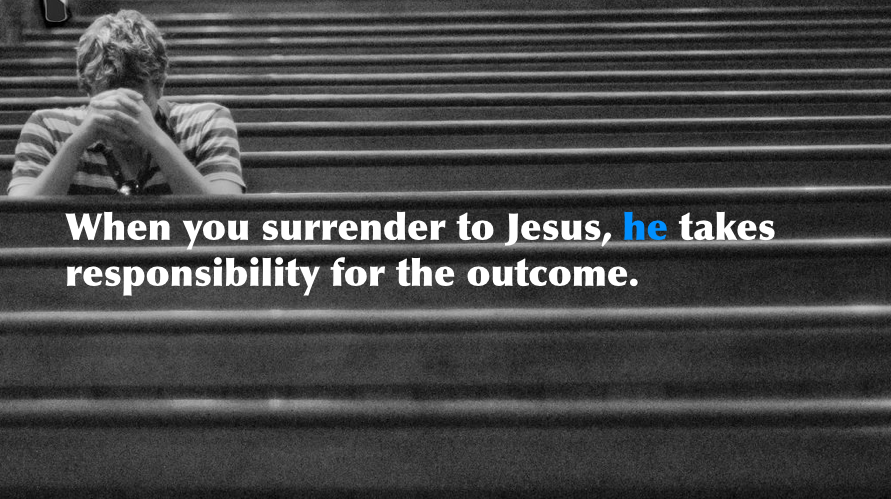
When you surrender to Jesus, he takes responsibility for the outcome. If you can’t bargain with Jesus and succeed that means you must accept his terms. When you surrender all to Jesus he has his best and your best in mind—a win win. When you bargain with God, you espouse a God who keeps score, rather than the God who loves you no matter what. God is not a cosmic scorekeeper who makes tallies and gives rewards, but as a Father who withholds no good gift. He gave you the inexpressible gift of Jesus. To have Jesus you need nothing, you may lose some things, but with him you gain everything (Mark 8:36-37)! Look to Jesus, not as a genie who grants wishes, but as a Savior who has paid the debt of your sin. Trust that Jesus never loses value and keeps his end of the deal. Jesus doesn’t negotiate a contract; he keeps a covenant sealed by his blood.

What have you been bargaining with God that you need to surrender instead? Are you willing to say, “Jesus have your way—your will? I am done trying to bargain (my relationships, my future, my decisions, my hopes, my career, my agenda) with you?” What do you need repent, so Jesus can restore?

Don’t miss Jesus in the story. Discover him, again!

The Legacy of Saint Patrick

The legend of Saint Patrick is almost mythical, but he was actually a real man who lived 1558 years ago. The story of Patrick is fascinating, but the legacy he left behind was also amazing.  His legacy is not parades, shamrocks, and beer. His legacy is bigger than that!

Screen Shot 2019-03-13 at 12.05.54 PM

Patrick’s legacy is Christ! Being “in Christ” and proclaiming Christ was by far his greatest legacy. Christ changed him. Christ saved the Irish. Christ changed a nation. Christ built his church. Patrick opened of his Confession by saying,

“My name is Patrick, I am a sinner, a simple country person, and the least of all believers. I am looked down upon by many.” (Confession, 1)

Like the apostle Paul, Patrick’s humility (Eph. 3:8; 1 Cor. 15:9), was less of him and more of Christ,

“For [Christ] I perform the work of an ambassador, despite my less than noble condition. However, God is not influenced by such personal situations, and he chose me for this task so that I would be one servant of his very least important servants.” (56)

Patrick was a simple and humble slave of Christ. Patrick was no longer a slave to the Irish; he had a new Master. It was because of this grace that he first tasted as a slave in Ireland that he could not be silent,

“God came along and with his power and compassion reached down and pulled me out, raised me up, and placed me on top of a wall. Because of this I must proclaim my good news…I must pay God back in some way for all that he has done for me here on earth and what he will do in eternity.” (13)

Screen Shot 2019-03-13 at 12.06.03 PM

Patrick knew nothing about the Americas, so when he looked across the Atlantic he believed that Jesus’ command to go into all the world had been carried out. He thought Ireland was the “ends of the earth.” (38)

Patrick’s passion was to spread the fame of Jesus’ name (40),

“I can say: Who am I, Lord, or what is my calling, that you have worked with me with such divine presence? This is how I come to praise and magnify your name among the nations all the time, wherever I am, not only in good times but in the difficult times too.” (34)

He was willing to spend his life for the sake of Christ (36-39, 53, 58-59). This was heart and soul of his Confession,

“If I be worthy, I am ready even to give up my life most willingly here and now for his name. It is there that I wish to spend my life until I die, if the Lord should grant it to me.” (37)

William Carey, the English missionary to India, was influenced by Patrick. He said, “Surely it is worthwhile to lay ourselves out with all our might in promoting the cause and kingdom of Christ.”

Screen Shot 2019-03-13 at 12.06.12 PM

History tells us prior to Patrick, the Irish worshiped the sun (and mountains and rivers), which was almost universal in early times. People naturally worship creation rather than the Creator. Patrick tells us the Irish worshiped, “idols and unclean things.” (41)

Irish Druids were known to sacrifice their first born sons to please their gods. They worshiped trees, wells and pillar stones which are so common throughout the country. Later Christian missionaries carved crosses on the pillar stones in order to draw away people from superstition and turn their attention to the Gospel of Christ.

Many of Patrick’s British friends were offended and angered that he would spend priority time with pagans, sinners, and barbarians (46-48). They thought since the Irish were illiterate brutes that they were out of reach of the gospel.

Does this sound familiar? It sounds a lot like the Pharisees who called Jesus a “friend of tax collectors and sinners,” and who said of Himself, “I came not to call the righteous, but sinners” (Mark 2:17). Patrick was just following in his Master’s footsteps! His Confession was a defense of his mission to pagans and resembles Romans 10:12-14,

“For there is no distinction between Jew and Greek; for the same Lord is Lord of all, bestowing his riches on all who call on him. For “everyone who calls on the name of the Lord will be saved.” How then will they call on him in whom they have not believed? And how are they to believe in him of whom they have never heard? And how are they to hear without someone preaching? And how are they to preach unless they are sent? As it is written, “How beautiful are the feet of those who preach the good news!”

Little did Patrick’ murmuring friends know that within a 100 years Ireland would become a reservoir of knowledge and faith, he instilled a sense of literacy and learning that some historians would say “The Irish saved civilization.” The Irish guarded for centuries manuscripts and records on Western civilization that on their island were untouched by the wars and plagues.

Although Patrick loved pagan’s he boldly spoke out against their evil practices. There is a famous saying, “Patrick was a gentleman, who through strategy and stealth. Drove all the snakes from Ireland.” While there is no fossil record of snakes ever existing in Ireland it can be safely said that these snakes weren’t snakes, but pagan teachers.

Screen Shot 2019-03-13 at 12.07.01 PM

After being threatened of an ambush by the Irish King of Tara. It is said that Patrick sang this prayer of protection,

“Christ, be with me, Christ before me, Christ behind me, Christ in me, Christ beneath me, Christ above me, Christ on my right, Christ on my left, Christ where I lie, Christ where I sit, Christ where I arise, Christ in the heart of every man who thinks of me, Christ in the mouth of every man who speaks of me, Christ in every eye that sees me, Christ in every ear that hears me. Salvation is of the Christ.”

The Druids didn’t care much for Patrick (52). He faced from them many threats, assassination attempts and betrayal. His response to these threats was,

“I fear none of these things, because of the promises of heaven. I have cast myself into the hands of almighty God, who is the ruler of all places.” (55)

He appeared like a bare-footed child walking in a minefield on D-day. It reminds me of Nate Saint and his colleagues who died at the hands of the Auca Indians in Ecuador, Nate Saint said, “I would rather die now than to live a life of obvious ease in so sick a world.”

You can see the love that Patrick had for the Irish in what he wrote to King Coroticus, a Welsh man who raided Ireland. In the letter, Patrick encouraged church leaders in Britain to shun the king and his bandits who killed Christians and stole Christian woman. Patrick’s grief over his lost loved ones is still felt 1500 years later,

“My newly baptized converts, still in their white robes, the sweet smell of the anointing oil still on their foreheads—you murdered them, cut them down with your swords! . . . With tears and sorrow I will mourn for you, my beautiful, beloved family and children—from the countless number born into Christ through me . . . Don’t they know that the same God is father of us all? No, they hate you—they hate us—because we are Irish.”

Screen Shot 2019-03-13 at 12.07.15 PM

As you read through Patrick’s Confession you see his love for prayer and hearing from God. To Patrick, God was a friend, Father, mentor, and Master. Prayer was his source of power for ministry and his armor against spiritual attack. Prayer for Patrick was birthed in the soil of difficulty and need. His prayer life launched he he was a teenager and slave,

“After I arrived in Ireland, I tended sheep every day, and I prayed frequently during the day. More and more the love of God increased, and my sense of awe before God. Faith grew, and my spirit was moved, so that in one day I would pray up to one hundred times, and at night perhaps the same. I even remained in the woods and on the mountain, and I would rise to pray before dawn in snow and ice and rain. I never felt the worse for it, and I never felt lazy – as I realise now, the spirit was burning in me at that time.” (16)

May the story and legacy of Patrick inspire you today 1558 years beyond his life. May we mimic his humble life and his Christ!

Screen Shot 2019-03-13 at 12.07.33 PM
Slemish Mountain, supposedly where Patrick was a slave and began to pray.

The Story of Saint Patrick

There are many myths about Saint Patrick. What I gleaned about the real Patrick, I did from his two writings: Confession (which I will quote from a lot) and Letter to the Soldier’s of Coroticus. I also recommend a church history book by Michael Haykin.

Birth

Patrick was born around AD 390. He grew up in a rural coastal village near what is today Wales, England. He lived under Roman rule, but by this time the empire was shrinking and crumbling.

Screen Shot 2019-03-13 at 11.25.29 AM
A 4th Century Irish homestead.

Teen Years

Patrick’s grandfather was a pastor and his father was a deacon. His family members were devote Christians and he learned the Scripture from a young age. However, as Patrick put it, he wasn’t serious about his family’s faith nor their teaching, rather he lived on the wild side (as a stereotypical pastor’s kid). He would be considered a practical atheist living as if God did not exist.

Do you have a pastor or church leader as a close relative? While this is a wonderful blessing a Christian family doesn’t guarantee you will be a Christian yourself. A young person must follow in the footsteps of Jesus and have faith in him alone, not just that of his family.

Slavery and Salvation

Historically, Rome never conquered Ireland. As Roman soldiers began pulling out of England there were more organized attacks by the Irish. On one occasion Patrick’s village was attacked. He said,

“I was about sixteen at the time. At that time, I did not know the true God. I was taken into captivity in Ireland, along with thousands of others. We deserved this, because we had gone away from God, and did not keep his commandments. We would not listen to our priests, who advised us about how we could be saved. The Lord brought his strong anger upon us, and scattered us among many nations even to the ends of the earth. It was among foreigners that it was seen how little I was.” (1)

In fact, Patrick became a Christian during his captivity in Ireland,

“It was there that the Lord opened up my awareness of my lack of faith. Even though it came about late, I recognized my failings. So I turned with all my heart to the Lord my God, and he looked down on my lowliness and had mercy on my youthful ignorance. He guarded me before I knew him, and before I came to wisdom and could distinguish between good and evil. He protected me and consoled me as a father does for his son.” (2)

After six difficult and dangerous years as a slave (35), Patrick, escaped Ireland by walking 200 miles to the coast and found a boat to England (16-22). The journey itself was his intro to missions. Overall, God used his time in Ireland for good. He said,

“That is why I cannot be silent – nor would it be good to do so – about such great blessings and such a gift that the Lord so kindly bestowed in the land of my captivity. This is how we can repay such blessings, when our lives change and we come to know God, to praise and bear witness to his great wonders before every nation under heaven.” (3)

Screen Shot 2019-03-13 at 11.25.39 AM

Calling and Training

After Patrick returned to England and reunited with his family he said,

“Again with my parents in Britain. They welcomed me as a son, and they pleaded with me that, after all the many tribulations I had undergone, I should never leave them again.” (23)

Isn’t that sweet!?

Patrick stayed for a while in England (and possibly in France) to study the Scriptures. This time made a huge impact on him and his love for the Bible. His writings are saturated with quotes from the Bible. He did cite parts of a creed, which may have been used in his home church in Britain. The creed shows the influence of the Nicene Creed from AD 381.

Although, Patrick was a contemporary of Jerome who wrote the Vulgate (Latin Bible) and Augustine, you don’t see them referenced in Patrick’s writings. They lived far from each other and their educations were very different. Patrick by his own admission said he had a meager education (9-13), yet this likely helped him relate to the Irish who looked down on the high-minded Celts and Gauls of Europe. Yet God uses both educated and uneducated in his service!

Ordained as a pastor, Patrick, shepherded in Britain for many years. At the age of 48 (the average life span was 35), when he should be cashing in on his retirement, he instead had a dream. In the dream a group of Irish called him to return and share the good news (23). Echoing Paul’s call to Macedonia (Acts 16:9), he believed the dream was from God. He was appointed bishop to Ireland by his church and was sent out as a missionary. This is when took on a common Irish name Patricius or Patrick.

Screen Shot 2019-03-13 at 11.26.00 AM

Return and Mission

Patrick returned to the place of his pain with the message of joy—place where he was once a slave he now brought good news of true freedom. In those days there were not many Christians in Ireland. It would have been considered unreached and unwanting (34). Palladius, the first known missionary to Ireland failed and went home discouraged after only a few years.

Patrick understood the Irish. He had lived with them before for six years. He already knew their culture and language. And he loved for them. When the people know that you understand them and love them, they infer that maybe God understands and loves them too. Patrick wasn’t about making civilized Roman Christians, he aimed to see a people and a culture transformed by Christ. He traveled all over the island staying mostly in the northern half. He preached boldly against paganism and got arrested many times by the Irish for stirring up the people against their customs.

Once Patrick stepped foot in Ireland he never returned home to England (43). He spent nearly 30 years in Ireland. He planted around 300 churches, established various Bible schools, and baptized “countless number” into the Church (est. 120,000). He led both kings and peasants to faith in Christ. He never cashed in on that retirement. He died in Ireland around March 17, 461 AD.

Screen Shot 2019-03-13 at 11.26.10 AM
A stone marking a spot near Patrick’s burial place.

The Celtic Church that Patrick helped to advance and establish became for 600 years one of the most evangelistic and mission-minded movements in all of Europe before it was absorbed into the Roman Catholic Church in 1100 AD. The churches Patrick planted believed in salvation by faith through grace. Celibacy was not forced or a requirement. Women were a vital part of ministry. The Bible was intensely emphasized, studied and memorized. Missions was a high priority.

Now that’s a legacy!  And I will share more about Patrick’s legacy in my next post.

7 Myths about Saint Patrick

Do you come from Irish descent? If so, you’re not alone.  34 million Americans have Irish in their DNA. That is seven times the population of Ireland itself. Tomorrow is Saint Patrick’s Day. It’s a day known for wearing green, drinking Guinness, and parades in big cities, but there is a man associated with this day—Patrick.

Patrick was a Jesus follower. It is not common for protestant or evangelical churches to pause to talk about a church father or missionary, particularly one that Roman Catholic’s have adopted as their own. Growing up in the Catholic church I didn’t know any different. However, Patrick lived at a time when the established Catholic church was in its infancy and he was far enough removed from its influence. Evangelical churches aren’t about venerating saints for it believe that all genuine followers of Jesus are “saints” in the “holy” sense of the word (e.g., Acts 26:10; Rom. 1:7; 1 Cor. 1:2).

Sometimes it is hard to separate the man from the myth. Over the years many embellished stories were told about Patrick, even by the church. It is good to remember that Patrick was just a man—an ordinary man extraordinarily used by God.

Here are seven common myths about Patrick:

  1. He wasn’t Irish. He was actually born in British.
  2. His real name wasn’t Patrick. He had a Roman name—Maewyn Succat.
  3. He didn’t wear lots of green nor funny bishops hats.
  4. His first trip to Ireland wasn’t as a missionary nor was he Ireland’s first missionary.
  5. He didn’t identify with the Roman Catholic nor was he officially canonized by a pope or the church as a saint.
  6. He didn’t use the shamrock to teach luck, rather he may have used it to teach the Trinity.
  7. He is memorialized on March 17th, but we aren’t sure of the actual date of his death.

Tomorrow, I will peek into the life and mission of the real Patrick.  I will share about his amazing story and legacy.  It is worth knowing about!