WHEN THE UNSEEN REALM IS FIERCE
Our neighbors in a remote village in Northern Africa had paid a local marabou (witchdoctor) to throw a curse on our family and home. We felt an oppressive weight and our kids began experiencing night terrors. We had little teaching or frame of reference for this type of spiritual battle.
Before going to the mission field, I was aware that I had an enemy who would mess with the mission and the workers. However, I naively put those thoughts into a spiritual attic afraid to touch them. So they collected dust until I went to the field, and I was confronted by the battle from the frontlines. It wasn’t too late to learn, but I wished that I had known more about my spiritual armor and the spiritual battle that my family would plunge into.
Most soldiers undergo boot camp before deploying to the field. When we go to the mission field, we can expect the spiritual battle to be fierce and the enemy to use a variety of tactics to inflict fear, distraction, discouragement, or defeat.
BIBLICAL REFLECTION ON THE BATTLE
Pioneer mission workers on the frontlines among the unreached understand that the spiritual battle is not an abstract theological concept, but a reality of daily ministry. They are not merely engaging with people and cultures; they are confronting unseen forces that resist the advance of God’s Kingdom.
God oversees an active unseen realm. The Bible unequivocally teaches that there is an unseen realm populated by spiritual beings, both good and evil. This realm has existed since before the creation of man. While God is sovereign and supreme, He allows a real, active, and fierce foe to operate in this world—Satan and his demonic forces. These entities are not mere metaphors for evil; they are intelligent, malevolent beings dedicated to opposing God and His redemptive purposes.
- Man’s battle is physical and spiritual. (Ephesians 6:12)
- Satan is a cunning and predatory adversary. (1 Peter 5:8)
- Satan’s main strategies are isolation (Genesis 3:1), lies (John 8:44), temptation (2 Thessalonians 3:5), and accusation (Revelation 12:10),
- Spiritual enemies don’t just play around with us, they seek to deceive and destroy us (John 8:44)
- Satan is not the sole problem. Our world and our flesh are also part of the problem. (Ephesians 2:1-3)
- God is more powerful than any enemy. God has all enemies on a tight leash. (Genesis 3:15; Colossians 2:15)
God’s enemy is always actively trying to thwart God’s plan and people. The enemy doesn’t sleep. He is relentless. He is powerful and effective as he has been at his craft for a very long time. This foe actively blinds the minds of unbelievers (2 Corinthians 4:4), sows discord, tempts believers (1 Thessalonians 3:5), and seeks to hinder the Gospel (1 Peter 5:8). In unreached areas, where the Gospel has not yet penetrated, these forces often hold significant sway, manifesting in various forms of spiritual darkness. As evil as these forces are, God uses them ultimately for His purposes.
God gives victory for today and ultimately. Despite the fierceness of the foe, the overwhelming truth of Scripture is that God has already secured victory through Jesus Christ. Our role is not to achieve victory, but to enforce the victory already won.
- Christ’s death and resurrection were the decisive blow against Satan’s scheme. (Colossians 2:15)
- Jesus came specifically to undo the works of the devil. (1 John 3:8)
- Believers participate in Christ’s victory through His atoning work and their faithful witness. (Revelation 12:11; Romans 16:20)
Our confidence amid spiritual warfare comes from Christ’s finished work, not from our own ability to fight. We engage from a position of victory, not striving for it.
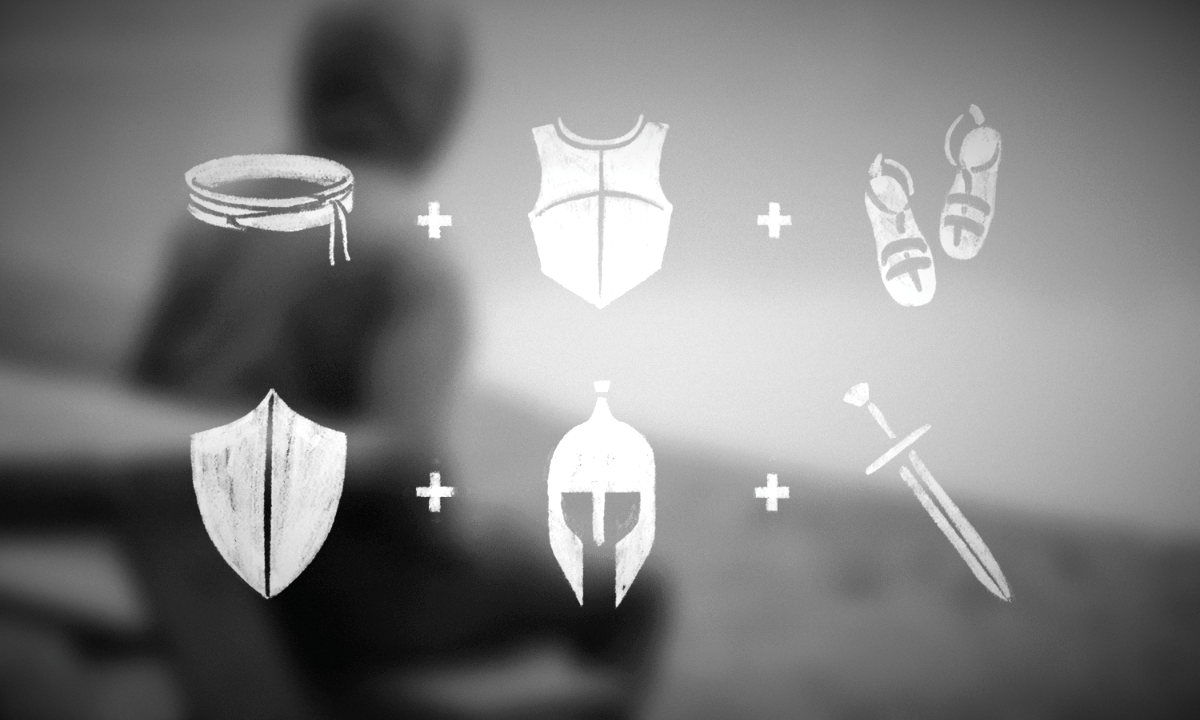
God gives spiritual armor for protection and defense. God gives each believer everything they need to defend and fight well. Since the enemy is relentless, we must put on the armor of God every day. (Ephesians 6:10-18; 2 Corinthians 10:3-5; James 4:7; Luke 10:19) We do not engage in spiritual warfare in our own strength but rely on the authority and power of Christ who lives in us. Our role involves:
Putting on the Full Armor of God: This is not defensive gear to ward off attacks, but offensive equipment for standing firm in Christ’s victory. Each piece represents a spiritual truth and discipline (Ephesians 6:13-18).
Wielding the Sword of the Spirit (God’s Word): The truth of Scripture is powerful and active, capable of discerning thoughts and intentions, and is our primary offensive weapon (Hebrews 4:12, Ephesians 6:17).
Engaging in Strategic Prayer: Prayer is how we access and apply God’s power in the spiritual realm, binding demonic activity and releasing God’s will (Ephesians 6:18, Matthew 18:18).
Standing Firm in Faith: Our faith in Christ’s finished work is our shield against the enemy’s fiery darts (Ephesians 6:16).
Proclaiming the Gospel: The Gospel itself is the ultimate weapon against the kingdom of darkness, bringing light where there is blindness and freedom where there is bondage (Romans 1:16).
Actively Fighting Sin and the Sark. Sometimes we are the biggest problem in the battle. We fight against the remnants of our flesh. We fight against the remnants of our flesh (sark) and old sinful self while seeking to be a new creation in Christ. I need Christ’s power to help me to live like Him. (Galatians 5:17-21; Romans 7:18; Ephesians 4:22-24)
What other Scriptures or biblical aspects come to mind when you consider the “spiritual battle”? Take a few moments to look up 1-2 of these verses and journal what the Lord highlights for you.
“Be alert and of sober mind. Your enemy the devil prowls around like a roaring lion looking for someone to devour. Resist him, standing firm in the faith, because you know that the family of believers throughout the world is undergoing the same kind of sufferings.” — 1 Peter 5:8
THE IMPORTANCE OF READINESS FOR THE SPIRITUAL BATTLE
Awareness of the spiritual battle is not meant to induce fear but to foster vigilance, strategic prayer, standing firm, and reliance on God. It is important for several key reasons:
Proper Diagnosis of Obstacles and Strongholds: Not every challenge is spiritual, but many are. Awareness helps you discern when opposition, apathy, or unusual difficulties are rooted in spiritual resistance, preventing you from misattributing them to purely human factors or personal failings.
Strategic Prayer: Knowing you face a spiritual foe shifts your prayer from general requests to targeted, fervent intercession for breakthroughs, protection, binding of demonic activity, and calling on the powerful name of Christ.
Reliance on God’s Power: It humbles you, reminding you that you cannot fight this battle in your own strength. This awareness drives you to depend entirely on God’s power, which is infinitely greater than any demonic force.
Protection and Vigilance: It encourages you to “put on the full armor of God” (Ephesians 6:11-18) and to remain sober-minded, guarding against the enemy’s schemes.
Understanding the “Why”: It helps make sense of the intense resistance, apathy, or even direct hostility often encountered when proclaiming the Gospel in unreached areas.
PRAYER ACTION
Consider the Scriptures you cling to above. Consider the battle. Write a prayer for the kind of person you want to be in the spiritual battle.
BUILDING A PRACTICAL MINI-THEOLOGY OF THE BATTLE
Take some time to prayerfully draft your practical mini-theology of “dependence” by responding to these questions:
What is the unseen realm? What about the unseen realm to you need to remove from the attic and dust off? Is it true that what you can’t see can hurt you? Why is the battle fierce especially among UPGs?
example: God is… We are the kind of people who… It is most like us/me to… We/I will… We/I hold to…
What is a spiritual stronghold? What spiritual strongholds are present where you are going? What might freedom for them look like?
How do you have victory and freedom in Christ? What will bring you daily freedom in the battle? What does it look like to put on the Armor of God?
Once you finish share your responses with your mentor. Ask for feedback. Adjust your draft as needed.
Additional Resources for Going Deeper:
Unseen Realm, by Michael Heiser
Deeper Walk International, Tools & Training
Freedom in Christ, Neil Anderson
Liberty to the Captives, by Mark Durie
Theology of Standing Firm, by J.T. Hutts
WAYS THE FIELD IS A BATTLEFIELD
Spiritual warfare manifests in various ways, often subtly, but sometimes overtly, in unreached contexts.
Intense Resistance to the Gospel: People may seem utterly uninterested in spiritual truth, even when their lives are clearly broken. People may express unusual apathy, hostility, or irrational fear towards the message, even when it’s presented. This can be a demonic blinding of minds (2 Corinthians 4:4).
Unexplained Opposition and Obstacles: Repeated visa denials, sudden health crises, chronic team conflict, or inexplicable logistical breakdowns that seem to specifically hinder ministry progress.
Dreams and Visions: In some cultures, people report disturbing dreams or visions, or conversely, God uses dreams to draw people to Himself, prompting a spiritual battle for their understanding and faith.
Occult Practices and Idolatry: Direct encounters with witchcraft, animistic practices, ancestor worship, or overt demonic oppression where the spiritual forces are clearly at play.
Exacerbated Personal Sin and Temptation: A heightened struggle with pre-existing sinful patterns (e.g., anger, lust, pride, self-pity) or new, intense temptations, especially when tired, “joy tank” is low, or isolated.
Discouragement and Despair: Missionaries themselves may face intense, irrational waves of discouragement, self-doubt, despair, hopelessness, worthlessness, loneliness, or a desire to give up, designed to make them abandon their calling (1 Peter 5:8).
Relational Discord: Uncharacteristic friction, misunderstandings, bitterness, or unresolved conflict. Small disagreements escalate into major rifts, threatening unity and effectiveness. The enemy has long pitted people against one another. He will try to bring discord between spouses, families, colleagues, neighbors, local disciples, and others. The enemy wants believers to go into enemy mode with one another.
Physical Ailments and Accidents: While not every illness is spiritual, some can be direct attacks designed to incapacitate or distract missionaries from their work.
False Teachings and Syncretism: The enemy seeks to distort the gospel or blend it with existing beliefs, creating a counterfeit that lacks saving power.
The spiritual battle is not always a loud, dramatic event, but often a persistent, multi-faceted assault on the missionary’s spirit, mind, relationships, and ministry effectiveness. Recognizing these patterns is the first step in engaging the battle with God’s victory.


 spreading the fame