
“To the strongest,” these were Alexander the Great’s last words spoken on June 11, 323 BC, when asked to whom his vast empire should belong after his death
Famous last words. They get a lot of attention as the one saying them has something important to say usually before they die. Like last words, first words are often important too. Think about the first words of a child to their parent, a coach to his players before the season starts, a teacher to his students on the first day of school, a manager to his new team, or a president’s speech on inauguration day. First words can carry as much weight as last words.
The first words that Jesus read publicly were from the prophet Isaiah (Luke 4:18-19),
“The Spirit of the Lord is upon me,
because he has anointed me
to proclaim good news to the poor.
He has sent me to proclaim liberty to the captives
and recovering of sight to the blind,
to set at liberty those who are oppressed,
to proclaim the year of the Lord’s favor.” — Isaiah 61:1-2
Let’s travel back to when Isaiah spoke those words, which were around 700 years before Jesus stepped into the world. Isaiah spoke those words to a people and nation who had walked away from the Lord. While warning them he infused hope that God promised to send a Deliverer—a Messiah.
Isaiah is like a fifth Gospel. No other book in the Old Testament paints so many pictures and promises tied to Jesus. Almost every chapter highlights the One who would come to save and suffer for his people and the nations.

Why did Jesus choose this Scripture? It might seem like he randomly opened the scroll and just read. It wasn’t random, but chosen. Jesus had just begun his speaking ministry throughout Galilee. Everyone praised him for his wisdom and divine insight (Luke 4:14-22). Then he came to his hometown of Nazareth and at first even they were wowed that this was the carpenter’s son and boy who used to play in their streets.
When Jesus spoke from Isaiah it would have drawn hope. The people listening would have considered themselves the poor who were captive to foreigners and pagans. They were tired of waiting and longing for freedom. They saw themselves as superior, moral, good, religious people who God should owe something. So what Jesus said next brought their hope to the next level,
“Today this scripture is fulfilled in your hearing.” — Luke 4:21
Notice what He didn’t say. He didn’t say, “Someday this Scripture will be fulfilled” nor “This Scripture has already be fulfilled.” No, he said, “Today, renight here, it is being fulfilled.” In so many words, he said loud and clear, “What Isaiah said about that Someone—I am that Someone. I am your promised Messiah.” This caused a stir and they liked what they heard. They were ready to go and get their freedom with their Messiah.
Jesus didn’t play it safe and stop there. He saw they didn’t get who he was and who he came for. So he tells a story about a poor foreign widow and a rich man who was sick. As examples, they starred both moral and religious outsiders, yet God showed mercy to them, even when God’s people would have nothing to do with them. It would be his prophets who took action and they suffered for it. So Jesus made the connection that his hearers were just like God’s people of old—thinking they were alright and hoarded mercy for themselves.
The people whiplashed in their reaction from amazed fans to a crazed mob. They were so ticked that they tried to drag Jesus out of town and throw Him off a cliff. Tough crowd, right?
So what did Luke 4 mean for its original hearers and us today? Jesus meant for his hearers and home-towners to know who he was and who he came for. He knew they would reject him, even though what he was saying was true. The hearers weren’t cut to the heart. They didn’t see themselves as poor or blind. They thought that God owed them because of who they were and what they did.
Unlike Alexander the Great, Jesus didn’t come for the strongest (noblest, toughest, most upright, best put together), but for the weakest, poor, and needy. Jesus was sent to proclaim the good news, to release the captives, to open the eyes of the blind, and to set free the oppressed. Why? So, the people would be called oaks of righteousness, the planting of the Lord (Isaiah 61:3b), priests of the Lord, and ministers of God (Isaiah 61:6) by turning to the Lord. All of this was to happen for the purpose—that an everlasting covenant would be made with them (Isaiah 61:8), that they would rejoice in the Lord, delight in him (Isaiah 61:10), that he may be glorified (Isaiah 61:3b), and so that they would be clothed with salvation (Isaiah 61:10) and praise would spring up before all the nations (Isaiah 61:11). Yes, all that!
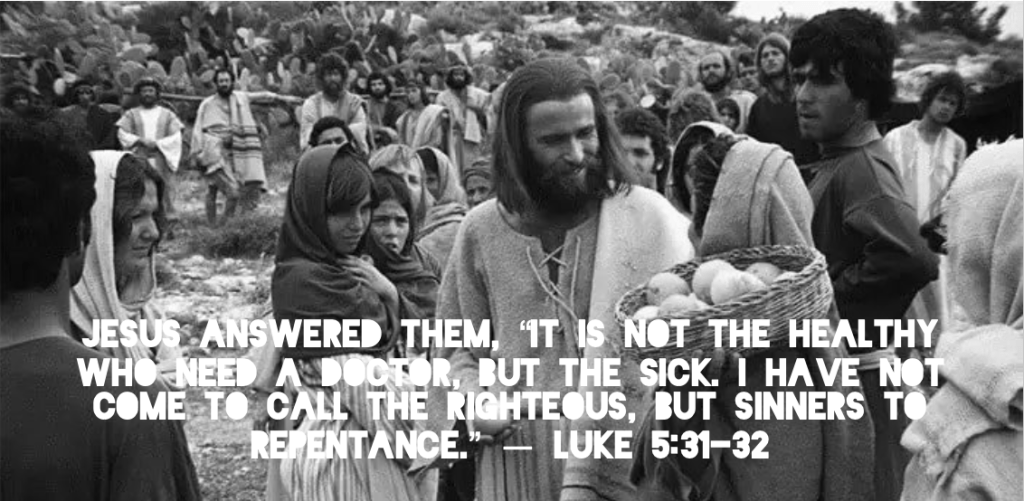
Heaven’s Son gave up his wealth and emptied himself by becoming poor to reach the poor. As Joseph’s son, he was born dirt poor. Follow his steps and you will see that he deeply cared for the poor, inferior, marginalized, and unclean. He lived as a vagabond to bring good news to those who were ripe to receive it.
Good news is only for those who are spiritually needy.
Jesus wasn’t attracted by physical poverty but by spiritual struggles, stuck in strongholds, and those who didn’t fit into religious norms. It’s important to let go of spiritual laziness, self-righteousness, and the illusion that we can control God, and instead recognize our flaws and need for God’s help. Only those who see that they can do nothing to save themselves and overcome their sin can find hope and healing in the good news. Do you see yourself as spiritually poor and brokenhearted? Have you seen yourself as once a blind prisoner captive to sin? Do you know others like this? These are the kinds of people that Jesus came to serve and save.
Good news is especially for those who are physically needy.
The good news is felt by those on the edges of society, like women, racial outsiders, outcasts, downcast, and the powerless. In Chad, it can be the blacksmiths, beggar boys, and weaker clans. The more needy usually understand their need for God’s grace. The message of God’s help is best understood when we admit our spiritual need, which was seen in Jesus’ own surrender of power and dependence on his Father.
Good news is received deeply by those who are both spiritually and physically humble.
Accepting the good news is the most humble of things one can do. It is laying down everything and admitting that we can do nothing because God does everything. The good news changes then how we see wealth, status, and righteousness, freeing us from letting it define our value and security, and in turn, motivating us to share generously with those in need.
If you read Isaiah 61 you will notice that Jesus stopped mid-sentence. This was intentional. The first time Jesus came, he fulfilled the actions and he received the judgment. When he comes again, he will give judgment rather than receive it. The next time that Jesus comes he will finish the sentence.
As you proclaim the good news, the hearers will likely reject your message. They might even get angry and try to drive you out. Jesus’ message isn’t received well by a hostile and hell-bent world who think they are holier-than-thou. As Jesus’ followers—like those first disciples, who associated themselves with the radical Rabbi—we must be prepared to speak “uncomfortable” truth. To be alive in the adventure of Jesus is to hear his challenging first sermon, as for today, and to receive that risky invitation to follow him, and to take the first intrepid step on the road as a disciple into his harvest fields making more disciples.

 spreading the fame