Adoniram Judson’s prayer for you

O God, have mercy on the churches in the United States…continue and perpetuate the heavenly revivals of religion which they have begun to enjoy; and may the time soon come when no church shall dare to sit under the Sabbath and sanctuary privileges without having one of their number to represent them on heathen ground.

Have mercy on the theological seminaries, and hasten the time when one half of all who yearly enter the ministry shall be taken by Thine Holy Spirit, and driven into the wilderness, feeling a sweet necessity laid upon them, and the precious love of Christ and the souls constraining them.

Hear, O Lord, all the prayers which are this day presented in all the monthly concerts throughout the habitable globe, and hasten the millennial glory, for which we are all longing, and praying, and laboring…Come, O our Bridegroom; come, Lord Jesus!

– Adoniram Judson, quoted in J.D. Greear’s Breaking the Islam Code: Understanding the Soul Questions of Every Muslim, page 141

thumb licks [9.6.11]

5 Early Warning Signs Your Shields Should Be Up

From a Beggar to the Nations: The Name of Jesus Spoken With Boldness

Grow Up. Settle Down. Keep Reforming. Advice for the Young, Restless, Reformed from John MacArthur..

How to Talk to God When You are Suffering

The Danger of Defining Yourself by What You Are Against. Are you an angry prophet?

Freshman 15. Great tips for those heading to college.

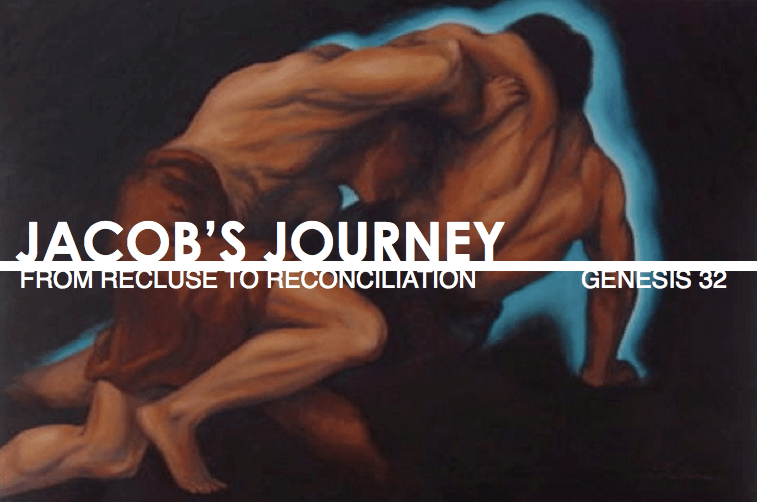
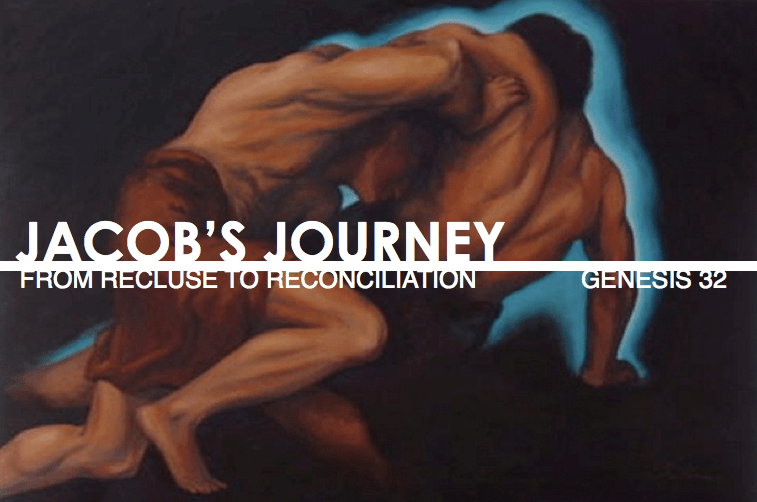
Jacob’s Journey—from recluse to reconciliation [part 2]

Jacob’s journey is a lot like watching WWE [Royal Rumble]. Jacob’s life is a total man soap opera. We have already learned that Jacob—the trickster—gets tricked into working 20 years for his uncle [Laban] and tricked into marrying his two daughters. The elder sister [Lazy-eye Leah] is named cow and looks the part, while the younger sister [Red hot Rachel] is cute as a lamb. Sibling rivalry between the sisters lands Jacob with 12 children. Jacob’s home looks a quite redneck, but in the sin-spiraling drama God sovereignly keeps His promise to Jacob and calls him back to the Promised Land.

Jacob heads home and gives his brother a heads-up [Genesis 32:1-8]

After being away from mommy [Rebekah] and his ticked-off brother [Esau] for two decades Jacob decides it is time to pack up his family and journey home. On his way angels meet him at the border of the Promised Land. They are a sure sign of God’s protection and presence upon Jacob [cf. 28:15].

Jacob then realizes at his homecoming he will have to face his brother Esau whom twenty years early he had ripped of his birthright and father’s deathbed blessing. So Jacob sends messengers to Esau giving him a happy, “Hello, I’m coming home bro!” The message is simple: I am coming soon and I got gifts. Jacob was seeking peace and desired to bless Esau with gifts hoping make up for the blessings he stole from Esau. The messengers did their duty and returned to tell Jacob that Esau was coming with four hundred men who were either an entourage to welcome Jacob or an army to thump him. Thinking the worst, Jacob splits his people and animals into two groups hoping that at least one could flee and survive if attacked.

Jacob comes to God in faith [Genesis 32:9-21]

Jacob faith seems to be growing slowly since he first encountered God in a dream [28:10ff]. In a short prayer we learn a lot about his faith and his view of God.[1] First, he remembers God’s promises to his dad and grandpa. Second, he confesses his sin to God. Third, he thanks God for His faithfulness and steadfast love. Fourth, he acknowledges his fear and admits his utter dependence upon God for deliverance.

Jacob’s prayer teaches us a lot about prayer. If I were Jacob I would be pleading God for mercy with a mountain of requests, “God can’t you see I am about to die? Won’t you do something? You promised! Help!“ However, Jacob doesn’t freak out, rather he comes to God with prayers of worship and thanksgiving. How often do you come to God with praise and “thank you” for what you do have before you ask for what you do not have?

Before Jacob met his brother he packaged a very large gift for Esau, wrapped each with a shiny bow, and had them delivered one by one. It was like a parade minus the clowns and candy. He did all this with the hope of winning over his brother’s affection to wipe the slate of offense clean. There is a sense that the motive of Jacob’s heart is fear of what his brother will say and do. It is no less appropriate to pacify an offended brother than to appease an offended God.[2]

Jacob gets thrown down and in the ring with God [Genesis 32:22-32]

The same night, Jacob and his family cross over the border into the Promised Land. Once they crossed over safely Jacob was left alone without bodyguards or protection. A man comes to Jacob and whacks him. The man initiates a physical struggle, but Jacob’s strength is regarded and he would not give up until the man gave him a blessing.

At dawn [cf. Exodus 33:20; Numbers 12:8], the two men stopped wrestling and the man changed Jacob’s [meaning trickster] name to Israel [meaning wrestles with God and perseveres]. He transitions from a one who tricked to get ahead to a man of faith who trusted God to bless and protect him according to His covenant promises.

For a one hundred year old man it is fitting that the other man would strike Jacob on the hip and throw it out of joint. This wound would mark Jacob for the rest of his life with a limp. Everyone who saw Jacob limping around would know it was God that fought him and blessed him. Jacob’s journey with God climax that night, but he came out a God-worshiper. I would rather limp with my dignity than walk without it. And I would rather limp with a blessing than skip without one.

This could be one of the strangest stories in the Bible because it leaves us puzzled and asking, who is this unnamed man who wrestles with Jacob? The struggle is not elaborate, but it is certainly deliberate. The man’s identity is reveal—He is God [or pre-incarnate Christ, 32:28; cf. 16:7; Hosea 12:2-6]. Through the wrestling match Jacob grows in faith to the level that he becomes a servant of God and is ready to reenter the Promised Land as a new man with a new name. The point of Jacob’s journey is not that he was wrestling with Laban or Esau, but rather he was wrestling with God. A lot like you and me, don’t you think? There is a lot from Jacob’s journey that we can learn about God and how He interacts with you and me.

First, just like Jacob, we wrestle with God [vs. 24-26]. There are a lot of ways we can wrestle with God other than a physical fistfight. Like Jacob you have been warring and striving against God from birth. You might be wrestling with God’s calling upon your life (i.e. which school, what job, who to date/marry), with difficult truths and doctrines (i.e. God’s Sovereignty, human responsibility), with the difficulties or tragedies of life (i.e. death, health, family struggles), with personal struggles with sin (i.e. repentance, confession, freedom), and with your salvation. Jacob’s struggle began when he stepped into the border of the Promised Land. When you push the boundaries with God get ready for a wrestling match.

Second, just like Jacob, when God touches you, you are never the same again [vs. 25, 31]. Third, just like Jacob, God is still in the name changing business [v.28]. In the Old Testament, one’s name and one’s nature were synonymous. Jesus name was given to Him because he saved people from their sins [Matthew 1:21]. Jesus changed Peters name, which changed the course of his life from fish to people [John 1:42]. Jesus promises all who follow Him a new name [Revelation 2:17; 3:12]. You need to have your ‘name changed’ and live out of the right one, “So if anyone is in Christ, there is a new creation; everything old has passed away; see, everything has become new.” [2 Corinthians 5:17] “Clothe yourself with the new self, created according to the likeness of God in true righteousness and holiness.” [Ephesians 4:24] Which name are you living out of today?

Fourth, just like Jacob, God does not let self-serving, self-sufficient, independent people into the Promised Land [v.30]. Only they who depend on God in faith get to go and rest in Him. You can strive to get there by your own goodness or good deeds, but as Jesus says, “Strive to enter through the narrow door; for many, I tell you, will try to enter and will not be able” [Luke 13:24] and “Truly I tell you, it will be hard for a rich person to enter the kingdom of heaven. Again I tell you, it is easier for a camel to go through the eye of a needle than for someone who is rich to enter the kingdom of God.” [Matthew 19:23-24]


[1] This is the first recorded prayer and only extended prayer in Genesis.

[2] The pericope of Proverbs 16:1-15 joins together pacifying God (16:6) and pacifying the king (16:14). Bruce Waltke, Genesis. Zondervan, Grand Rapids, MI. 2001. P. 444.
a bride for Isaac

Genesis 24:67 “Isaac brought her into the tent of his mother Sarah, and he married Rebekah. So she became his wife, and he loved her; and Isaac was comforted after his mother’s death.”

Genesis now begins to focus not just on the God of Abraham, but also the God of Isaac and Jacob as Jesus taught in Matthew 22:32. Genesis 24 tells us that Abraham was old and had been blessed by God in every way as God had promised. And to ensure that his son Isaac would marry a woman who would worship his God by faith Abraham sent his servant back to his home to find a wife for his son. Abraham did this trusting that the God who had blessed him would be faithful to now provide for Isaac by sending an angel ahead to arrange the details.

Abraham’s faithful servant did as he was told and went to the region of Abraham’s brother Nahor. Stopping at a spring the servant prayed for God to provide. Before he had finished his prayer God had already answered it, sending the lovely virgin Rebekah to the spring. Rebekah drew water for Nahor and his animals. When the servant inquired of her family she said her father was Nahor and that he was welcome to stay at their home. The servant was so overjoyed at God’s perfect provision that he bowed down and worshiped the Lord for answering his prayer.

Rebekah agreed to go with Abraham’s servant to be Isaac’s wife. Upon arriving at Abraham’s household Rebekah was brought into the former tent of Isaac’s mother Sarah and married her. Isaac and Rebekah’s marriage ends with the beautiful words that “he loved her” and she was such a fitting bride that he was comforted by her love after the death of his mother.

We learn a great deal about God from the Genesis 24 narrative. God does not speak, but is silent in the narrative. However, God’s unseen hand of providence moves the story along showing Himself to be faithful to Abraham and Isaac. God also answers prayer and can be trusted to provide even when he has not spoken but has been spoken to in prayer.

There are some great applications from the story of Genesis 24 that are truths to take home. I will praise God for his faithfulness and steadfast love [24:12, 27]. I will remember my future is in God’s hands. I will encourage young men to pray and wait for a godly brides and encourage them to listen to their parents wisdom. I will pray to God with sincerity believing He does provide and keep His promises. I will trust God even when life does not make sense. I will serve God and others with expedience and efficiency.

I remember when I was a single man praying for God to provide a godly wife. What a joy it is to wait for His timing and to pursue His will. The wait was long and hard, but it was well worth the wait!

Keys to Genesis 24: bless [1, 27, 31, 35, 48, 60], prosper the way [12, 21, 27, 42, 56]

How should I pray during the church’s search for a new pastor?

1. Pray for your search committee.

  • Pray for patience. Pray that the committee would wait upon God’s timing. Pray that your search committee will have the mind of Christ and agree.
  • Much of the process is subjective. Personal opinions and preferences are involved. Differences can divide. Ask that the search committee would heed Paul’s advice for unity, having the humble attitude of Jesus Christ [Philippians 2:1-12].
  • Pray for wisdom to choose the right man. Pray the search committee will renew their minds in the Bible so that they can have Word-centered wisdom [Romans 12:1-2].
  • Pray for discipline for your search committee and other church leaders. The search process will require a great deal of follow-through on the parts of individuals.

2. Pray for your next pastor.

  • Pray that God would increase his passion for the Word of God.
  • Pray that God would give him a love for you church and the strength to leave his current position.
  • Pray that he would begin new relationships at your church in the right way.
  • Pray that God would prepare him to shepherd your church through the trials and blessings he has faced and currently faces.
  • Pray for his family.

3. Pray for your church.

  • Pray for patience. The search process can go longer than expected. It is hard work for those doing the search process. Pray for trust in the leadership.
  • Pray that your church would learn to place a high priority on the Word of God, the glory of Christ, and a love for His church. It is easy to gravitate towards personality, programs, or an ideal when calling a new pastor. Pray we focus on what matters: a man who loves Christ, His Word, and His church. Pray the new pastor will be a man of Christ-like character.
  • Pray that your church would not react to your previous pastor. You will not get a pastor like your old one, nor should you expect to. Pray he will be loved by your church.

Adapted from When the Word Leads Your Pastoral Search. By Chris Brauns. Moody Publishers, Chicago, IL. 2011. Pgs. 28-31.

your prayers prove you believe God is sovereign

People pray recognizing God’s sovereignty when they pray. When on your knees you know that you are not in control of the results of your prayers. Even if you deny God’s sovereignty and only embrace human responsibility, you still believe God is sovereign when you pray.

Here are three specific prayers followers of Christ pray that prove you believe God is sovereign:

1. You simply pray. Why do you pray? You pray because you either want something that you cannot have in your own strength or want to show your appreciation to God for what you have been given.

2. You give thanks to God for your salvation. You realize deep down that God is entirely responsible for the faith that drew you to your Savior.

3. You pray for the salvation of others. When you pray for the unsaved, you assume that it is God who brings them to faith.

Prayer, therefore proves that you believe God is sovereign. Indeed, God is in control and you pray because you know you are not.

If you want to know more about your prayers, the sovereignty of God, and evangelism read, J.I Packer, Evangelism and the Sovereignty of God. IVP Books, Downers Grove, IL. 1961.

pray for the people of Japan

This morning a massive earthquake 8.9 in magnitude rocked the country Japan. There are still feeling the tremors, beginning to pick through the rubble, and evacuating to higher ground from a giant tsunami that followed the earthquake. A natural disaster of this size will take months and years to recover. Today, homes, families, and real peoples lives were severely changed.

Let’s us lift up prayers to God for the people of Japan. Pray for comfort for the suffering. Pray the glory of God would reign over this island. Pray the gospel would go forth. Pray that the churches, pastors, and Christians in Japan and around the world would rise up to encourage Japan.

More pictures here.

pray for Sudan

This week elections are taking place in a civil war ransacked Sudan. Southern Sudan is seeking to succeed from northern Sudan. Here is what CNN has to say about what is going on right now:

Several million people will decide in the next week or so whether to give birth to the world’s newest nation.

They will cast ballots on whether to declare independence at polling stations sprinkled across the vast, flat plains of Southern Sudan, an East African landscape long riven by chaos.

War and famine have ravaged generations in the south for as long as anyone can remember. Fighting forced more people from their homes than in any other nation on earth. Hope remained elusive.

Yet the vote has given many southerners the rare sense of exhilaration that is borne of new beginnings.

From January 9 to January 15, the black Christians and animists in the autonomous region of Southern Sudan will vote on whether to declare independence from a northern government dominated by Arab Muslims. The two sides fought a war that killed 2 million people from 1983 to 2005, when a peace treaty set the stage for the upcoming vote.

Nearly 4 million have registered to cast ballots. Few doubt the outcome. . .[Read the rest.]

Here are 6 ways to pray for Sudan. African Inland Mission also shares more ways you can pray

Check out this great song for Sudan by Swoope “Actions Speak Louder”

how to pray for your church

As a pastor, I can relate to Pastor Paul as he writes to the Ephesians. I love the church. I love the church God has called me to pastor. I am so encouraged by the people’s faithfulness and hunger for truth. I think about them often in my prayers. How should we pray for our church? In Ephesians 3:14-21, we are given a peek into the heart of Paul’s prayer for the church.

Paul begins his prayer on his knees [v.14]. There are many different ways to pray—you can pray standing up, arms raised high, flat on your face, or on your knees. Praying on your knees is the most common way we often think of praying. What is the significance of praying on your knees? Bowing to our knees is a symbol of humility to God’s authority. It is a sign of reverence [cf. Romans 14:11; Philippians 2:10]. Kneeling is the outward appearance of the inward affection. Paul in essence is bowing before his Father the Creator and name Giver.[1]

When we think about our churches it is easy to complain about what is not happening according to our expectations, but praying wish lists to God for your church are not helpful for you or your church. As Paul prays for the church he mentions three things: He prays that the power of God over that goes beyond what they can think, that the love of God for that goes beyond what they can think, and that they give God glory that He can go beyond what we can think.

1. Supernatural Strength [Ephesians 3:16-17a]

The first request for the church is for the power of God. How great is the power of God? God’s power is unfathomable. It is glorious [cf. Romans 6:4; Colossians 1:11]. Now if God were to pour all of His power into you, do you think you could stand the strain? Those who come face-to-face with the power of God are never the same.

God’s power doesn’t want to co-dwell with anyone or anything in our hearts. He wants Christ only to fit in the temple He has established within His believers. The believer’s life is like a house, through which God goes from room to room. In the library [mind], He catalogs the useless and worthless images and knowledge. In the dining room, He replaces our worldly appetite with spiritual hunger and thirst. In the living room, He challenges our worldly companions and activities. In the garage, He rummages through all the clutter. In the closet, He sheds light on the hidden sins. He desires to dwell in the entire house. Only when He had cleaned every room, closet, and corner of sin can He be at home.[2] Are there rooms you would rather God not see? What room needs the most renovation?

Prayer for the power of God is important so that the church does not waver from its commitment to Christ. If Christ has taken up residence in our hearts He has the authority to establish His rule over all that we are and do.[3] At times He will renovate the dwelling place for the purpose of cleanliness and Christlikeness.

2. Limitless Love [vs.17b-19]

The second request Paul pray’s for the church is that they know the immensity and incomprehensibility of God’s love. God’s love secures and anchors the believer in Christ. Love is the soil in which believers are rooted and will grow [rf. agriculture], the foundation upon which they are established [rf. Architecture; Colossians 1:23].[4]

Why is love so important? Without love the church has no real motivation to serve God and one another [cf. 1 Corinthians 13]. Without love you cannot grasp the greatness of God [cf. Romans 8:35-39]. What does ‘width, length, depth, and height’ indicate about God’s love? When I think about knowing the love of Christ I think of explorers charting new lands or a pioneer divers plumbing the depths of the sea. However, when I chart and plumb the love of God I do not reach an end or run out of discoveries. I will spend an eternity discovering the vast territory of Christ’s limitless love. His love surpasses knowledge. That does not give me an excuse for not trying to understand God, it just cannot be understood over a cup of coffee.

It seems strange to pray for knowledge of the love of Christ that surpasses knowledge. Equally as strange is that Paul pray’s that the church be filled with the fullness of God. What we know is that they are already share in the fullness of God at salvation [cf. 1:23; Colossians 1:19; 2:9-10]. The believers in the church simply grow in the fullness of God. They are to become what they already are—that they may become all that God wants them to be in Christ.[5]

3. Give Glory to God [vs.20-21]

As Paul meditates upon the greatness of Gods power and limitless love he is moved to give God praise.[6] Praise is often the result of meditating upon what we know about God. This is called doxology—a study of glory—praise based on doctrine. Paul is moved to praise God because He is able to do more than we can think, ask or imagine [v.20]. In other words, you cannot ask from God too much because Gods gifts exceed our capacity. Paul cannot help but give praise to God.

When you shout out the words, “Glory to God,” it’s like a football team carrying their coach off the field on their shoulders or a standing ovation to a beautiful performance. There is in the heart of every person a longing to give glory. We are wired to worship. We worship anything from rockstars to athletes to hot wheels. The main reason people do not worship God is that He is not as real to them as other things they admire. Is God real to you? Do you admire Him? Do you give Him glory?


Think of the most popular and powerful people you know. Google says Lebron James, Peyton Manning, Tiger Woods, the Kardasian’s, or Obama. Historically, Google says Obama,  Julius Cesar, Abraham Lincoln, Alexander the Great or Martin Luther King. As John Piper says, “The most admirable of men are only meteors on the sky of history—they last about a third of a second and then are gone. But God is like the sun. And generation after generation He rises and never fades in His glory.”

The arena of glory to God today is in the church. The church is the stadium and amphitheater of the God’s glory and the main character and hero of the divine drama is Jesus Christ. The mystery hidden for ages in God is “that through the church the manifold wisdom of God might now be made known to the principalities and powers in the heavenly places.” [3:10] The church reflects Gods glory to the world.

In conclusion, as you pray for your church pray for the power and love of God by giving God glory that He can go beyond what you can think. God can do more in and through your church than you can think or imagine. The church of Christ is a beautiful anthem praising the greatness of God. He is using your church even with its personal flaws to display His perfect glory.

Here are some practical ways to pray for your church:

  1. Call your pastor and ask how you can pray for the church.
  2. Get with other members of your church and pray for your church.
  3. Write a prayer for your church.

[1] God gave people names [Gen.35:26; 1 Sam.25:25] and He gives His creation names [Ps.147:4; Is.40:26].

[2] Adapted from Robert Munger’s, My Heart Christ’s Home, Downers Grove, IL: InterVarsity Press, 1954.

[3] L. Morris, Expository Thoughts on the Letter to the Ephesians (Grand Rapids: Baker, 1994), 104.

[4] Stott, 135; and Lincoln, 207. (Cf. REB: ‘With deep roots and firm foundations’)

[5] D.A. Carson, Spiritual Reformation, 195.

[6] Cf. Phil.1:19; 4:19; Col.1:9-14; 1 Thess.3:12; 1 Cor.1:5

prayer and the power of God

“God I know I have not studied like I should for this test, but by some miracle help me to pass.”

“Father, I want to ring my sisters neck. If she says that one more time I will explode. Make her stop.”

“Father it would be really nice if you could come through with giving me this before I die.”

We are all guilty of making prayer a cosmic shopping list or a desperate 911 call to God to come to the rescue in our crisis. God is not Santa Claus, the Easter Bunny, Magic Genie, EMT or an Easy Button. Every wish is not granted or guaranteed. Would you march into your boss’s office or call on your parents for the things you ask of God?

Prayer is an amazing privilege. We can treat prayer like a broken gadget that hasn’t work for years, which we pawned off for chump change. Instead of praying, it has been substituted by worried wishes or momentary freak out. Seldom do people pray.

Prompted to Pray [Ephesians 1:15-16]

What prompts Paul to pray? What two things did He hear about the believers within Ephesus? Paul observes how the Ephesian believers are living out their faith in Christ with one another. There is nothing more excited than hearing about people they know love God and others. Nothing fires your parents, friends, or pastor up like living your faith out loud for all to hear. What do others hear about you?

Your upward relationship [“faith in Christ”] with God is also seen in your outward relationship [“love towards all believers”] with other believers.

This is How to Pray for Each Other [Ephesians 1:17-19]

Paul prays that God would give believers “a spirit of wisdom and of revelation in the knowledge of Him.” Even though believers inherit all the spiritual blessings upon salvation, it is not assumed that they cease needing to grow in wisdom and understanding of God. If Warren Buffet or Bill Gates gave you everything they own would that mean you would cease to learn about life? God does not give believer’s omnipotence or omniscience, nor will He ever. Throughout eternity we will be learning and growing in our understanding of God. Paul prays that we would keep praising and thanking God for all His spiritual blessings. As one commentator says,

God has already been praised for having lavished his grace upon us with all wisdom and understanding by making known to us the mystery of his will [vs.8-9]. Now the apostle takes up this language and asks that his readers may be given the Spirit of wisdom and revelation, so that you may know Him [i.e. God] better. [1]

I find it interesting that Paul does not pray that they would have more spiritual blessings or fresh ones. He understands that they already have all the spiritual blessings in Christ. People today are obsessed with the notion of receiving additional blessings. Some pray to God, “Father bless me.” It is as if we say to God, “These spiritual blessings in Christ aren’t enough. Gimme, gimme, gimme, I need, I need, I need.” We have equated blessing with an excess of material possessions, emotional happiness, health and wealth, and lack of suffering. That is spoiled rotten Christianity. You should not crave or pray for more spiritual blessings, you have all you need and more in Christ. Be thankful.

Many believers have heard the message of the gospel various times in various ways. The gospel has become common, and what becomes can become callus or cocky. We can become like a collegiate math major who has forgotten the joy of elementary building blocks like 1 + 1. To which the student replies, “Yeah, give me something I don’t know.” What does Paul pray as a cure for the common spiritual callousness? He desires them to know “the hope to which God has called them,” “the rich inheritance,” which He possesses in them, and “the immeasurable greatness of His power” by which He energizes them. Each is an aspect of the mighty salvation, which has been championed for you in Christ. Paul is overwhelmed by the glory of salvation and He wants you to be too, therefore that is his prayer for you.

Plugged into the Power of God [Ephesians 1:20-23]

Paul prays that the believers in Ephesus would know the immeasurable greatness of God’s power. How is God’s power immeasurably great? Paul’s prayer exalts the supremacy of God’s power, which is shown particularly in Christ’s resurrection and current position of authority [“seated at God’s right hand”] over all things. Since God has superior power there is no longer any reason for the readers to fear.

One cannot calculate or measure the power of God in kilowatts, amps, volts, or energy waves. It does matter how many pounds He could lift on the bench press or putdowns He would have in an arm wrestling competition. God’s power is immeasurable. In other words, He is omnipotent. By the word of His power He created all things and holds them together, and by His power He raised Jesus and gave authority over all things then, now and forevermore [cf. Colossians 1:15-20]. God has given Christ as head over all things for the church. God’s power in Christ is available for those who believe [v.19], and Christ’s rule over the universe is for their benefit [v.22].

The power of God that we are plugged into brings an immense amount of comfort. I do not have to struggle in my sin anymore; in Christ, I am free. I do not have to worry or fear the future. I don’t have to fear the bully at school. I don’t have to worry about whether or not I will lose my job or home. I don’t have to lose sleep about the safety of my children. God is powerful. Christ is seated high on the throne. He is in control.

Prayer is a mighty vehicle for the believer to praise God and encourage the saints. When considering our salvation we cannot help but pray that others would hear how great is our God. Probably some of the people God has burden you to pray for are members of your family or close friends. Why not share together what you have been praying with them?


Peter Thomas O’Brien, The Letter to the Ephesians, The Pillar New Testament commentary (Grand Rapids, Mich.: W.B. Eerdmans Publishing Co., 1999), 131.

lessons learned from my first year of marriage

1. Marriage is sanctifying. God has used Sarah in many wonderful ways to chisel away at my insensitive parts and sinful flaws. Marriage has been molding me a like a clay model muddied and re-imaged by the Masters hands into the image of Christ [1 Peter 3:1-7].

2. Deal with conflict ASAP. By dealing with anger and communicating clearly as soon as possible resolution and restoration come quickly.

3. Create healthy and happenin’ habits:

  • Every week have a date night. Turn the phones off. Guard with care.
  • Have weekly sabbath rest.
  • Pray together daily.
  • Keep in contact with good friends.

4. Shoot for a forever honeymoon. Before marriage we got good advice, “If you live in obedience to Christ you will have a forever honeymoon.”

5. Remember your first love. Sarah and I love God first. There are times when we are jealous [in a good way] of our love for God. Only God is truly faithful [Psalm 145:7].

6. Laugh at yourself and each other. We make a habit of watching America’s Funniest Videos each morning before heading out the door. Laughing together helps you stick together.

7. Build something together.
This year we have grown a garden and done some fun art projects together. The illustration of building fits the picture of a growing marriage.

8. Do something you don’t like. I hate doing the dishes, but they got to get done. I find the most loving thing I can do is do the dishes with my delightful wife.

9. Talk-walks. We take weekly walks in the parks, through the neighborhood or downtown. Not only is it fresh air and fitness, but great times to talk together.

10. Pray, pray, and pray some more. I have a hard time talking to God if I am having a hard time talking to Sarah. Prayer is our most intimate moments within marriage [thanks to the words of wisdom in Bob & Elva Jean Lilly].

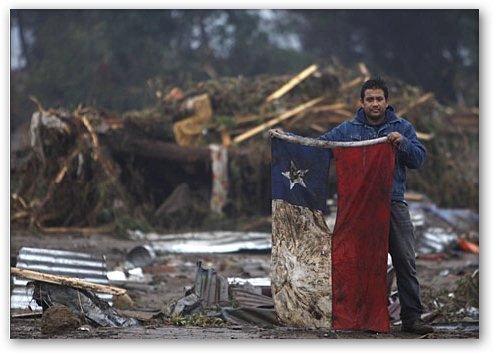
prayer for Chile

This is a prayer for all the people of Chile follow the aftermath of an earthquake that rocked their country:

My great I AM,

Fill my mind with elevation and grandeur at the thought of a Being

with whom one day is as a thousand years,

and a thousand years as one day,

A mighty God, who, amidst the lapse of worlds,

And the fall of empires,

Feels no variableness,

But is glorious in destruction.

May I rejoice that, while men die, the Lord lives;

That, while all creatures are broken reeds,

Empty cisterns,

Fading flowers,

Withering grass,

He is the Rock of Ages, the Fountain of living waters.

Turn my heart from vanity,

From distractions,

From uncertainties of the present state,

To an eternal interest in Christ.

Let me remember that life is short and unforeseen,

And is only an opportunity for unsefulness;

Give me a holy avarice to redeem the time,

To awake at every call to charity and piety,

So that I may feed the hungry,

Clothe the naked,

Instruct the ignorant,

Reclaim the vicious,

Forgive the offender,

Diffuse the gospel,

Show neighborly love to all.

Let me live a life of self-distrust,

Dependence on myself,

Mortification,

Crucifixion,

Prayer.

A Puritan Prayer taken from The Valley of Vision [104]

followership unmasked


Are disciples looking for perfect leaders or authentic leaders? As Christian leaders, it is tempting to want to put on a mask that hides the fact that at times you struggle with sin and fail in your faith too. Now I must never give glory to my sin, but glory in the grace I have in overcoming sin. Here are some biblical ways we can build trust and increase deeper counsel with those you are discipling:

Transparent prayer. Our prayers can be vague and lifeless. Learn to pray honestly and humbly. Pray expresses our neediness of God and that He is the only One able to meet our needs. Psalm 32 and 52 are great examples of transparent prayers that express need for God.

Share your life story. I am sure you have been through some valleys and climbed some mountains. Like the apostle Paul we have a story dotted with dark spots [cf. Acts 22:1-21], but those times make God really big. Sharing how you have been transformed by the power of God and continue to battle against sin take be a tremendous encouragement to those you are ministering.

Ask for Help. You are never self-sufficient or independent of your need for accountability and ministry from others. It is helpful to get others believers to pray for you and hold you accountable. You have not arrived yet, nor are you invincible. I need your help in the partnership of the gospel [cf. Philippians 1:3-18].

Admit you don’t know it all. What do I do if someone asks me a difficult theological or practical questions I do not know how to answer. I say, “That is a good question, I do not know, but I will find it out for you. I believe the Bible has the answers. Can I get back to you on that question?” [cf. 2 Tim. 3:16; Isaiah 55:9]

Be real. Do not hide your pain, sorrow, joy, heartache or frustration [cf. Romans 12:9-21]. God gave you emotions to use for His good [cf. Jeremiah and Lamentation]. Real men cry.

Point to the promises of God. Putting on the mask of sinlessness fails to help others to see the God’s faithfulness [Deuteronomy 7:9; 1 Corinthians 1:9]. Whatever good I have in my life was put their by God. I am not holy, but He that is holy has helped me to become Holy by the Power of His Spirit [cf. 1 Peter 1:13-25]. People need to see and hear that from you. Pull off the mask and let people see how God is at work in and through you.

True followers are seeking other genuine followers who are following hard after God.

pray for Leonard

pray for Leonard
and his family

While in the Congo I met a pastor, Leonard. He has been in Bukavu for 6 months waiting for work and a means to get back to his wife and children who where many kilometers away. He made a special visit to see Sarah and me. In the conversation, which Sarah translated, he asked if we could take his three sons. With big eyes his sons were sitting quiet, listening. Sarah, translated the message to me with the addition of, “Be careful how you nod.”

The Congo is a different kind of place. You see, Leonard thought he can not provide for his children and in desperation they will be better off with these Americans he barely knows. How would you respond? Our response was simple. No. We explained to him that it would be impossible to take his children. What Leonard’s children need to see their father’s struggle of faith and these difficult times will be fruitful to his family. I promise Leonard my prayers and ask that you would pray too.

Pray that his children would see their fathers faithfulness.
Pray for work and the provisions of God.
Pray that he would trust God to provide all of his needs.
Pray that God would be made famous through his example.

real men cry

man weeping

Real men cry: a study of lamentation

Sure men cry. I am not talking about the tear shed from watching Bambi, a favorite chick flick, seeing your team lose the Super Bowl or cutting an onion for dinner. What about the true gut wrenching weep of sorrow. Men can be painfully shy. To pouring out their hearts before God to be seen as less than masculine.

What I am talking about is sacred sorrow. The kind of sorrow you have at injustice or self-inflicted judgment and the only thing you can turn to is God. The book of Lamentations is a fitting thesis for sacred sorrow. The theme of Lamentations is the God who is Righteous and Faithful. The author of these poems is a real dude who is really crying. And you can see why:

The scene depicted in Lamentations is so bad that the author has to find some simile to relate to what is reality. He can still smell the rot and hear the wailing of horrific bloodshed. Jerusalem is desolate. Jerusalem is pictured as a lonely widow, weeping the death of her beloved. She once was a queen, full of splendor, invisible to attack, but now is a abandoned as a slave. She is like a raped virgin that has been rejected and cannot find anyone to comfort her. No one is invincible to God’s wrath, not even His own people. The question is not “why” has this affliction occurred for the people know God is punishing their sin.

God who was seemingly absent is now back with vengeance as an angry “enemy” who has “cast down the splendor of Israel” and “in his anger has set the daughter of Zion under a cloud!” (2:1) God who had once protective presence upon His people had now become a fierce storm cloud of anger. He use to fight for them, but now He is against them as their enemy as He has “thrown Israel down without pity” (2:17).

And then in the midst or ruin and rubble comes the turning point of the lament. A glimmer of hope. Exhausted towards God His enemy (3:18) the author pours out one of the richest lines of hope in God (3:22-24):

“The steadfast love of the LORD never ceases; his mercies never come to an end; they     are new every morning; great is your faithfulness. The LORD is my portion,” says my soul, therefore I will hope in him.”

The author praises God despite being bruised and bloody, hungry and destitute. “It is good to wait quietly for Him…to hope in Him…to seek Him.” Can you get any more realistic than this? There is hope in a God who is his enemy, but whose “compassion never fails.” The author may be left alone in silence, may have to bury his face in the dust or give his cheek to the one who strikes, but God promises “men are not cast off by the Lord forever.” (3:28-31)

The author acknowledges that they are now orphans, weary, hungry, bearing the punishment for their fathers sins, women are ravished, princes hung by their hands, ruled by slaves, joy has ceased, and their dancing has turned to mourning. He pleads in prayer to the the LORD to “remember” them (5:1) that they might be “restored” (5:21). In the midst of their cataclysmic circumstances there is hope in the LORD who “reigns forever” and whose “throne endures to all generations” (5:19). This God, the only God, is again to begin again with the people.

What can we learn from Lamentations?

A theology of Suffering from A to Z. Lamentations reveals a complete and exhaustive expression of sorrow. The suffering of Lamentations explains the ways of God to humanity. Human suffering always brings about probing questions about God. The faith of many Jews must have been shattered by the events of Jerusalem’s destruction for they believed that Jerusalem was invisible and that God’s temple could not be destroyed because He dwelt there.

Lamentations gives us a glimpse into individual suffering (Ch.3) and national suffering (Ch.5). Lamentations that helps us gain a perspective on suffering when we see the famine, warfare and genocide in places like Cambodia, Columbine, Congo, and countless others. Suffering can make you bitter towards God or better understand God’s purposes.1 From the personalization of the author and front-row-seat depictions of the nations suffering we see suffering mixed with hope. Lamentations is a “theodicy”: despair amid suffering should always give root to hope in the presence and rule of God. Here are some principles Lamentation offers as a theology on suffering, when suffering comes:

  • Confess your sins (1:5, 8, 18, 20, 22).
  • Recognize who is the Judge (2:1-8, 17).
  • Give special attention to God’s leaders (4:16).
  • Pray for the future (5:1, 21-22).
  • Hope in God (3:21-42).

A Balance between God’s Righteousness and Hesed. Throughout the painful memories of Lamentations God’s righteousness is never throw to the wayside. God’s judgment is not viewed as wrong by those who strolled through Jerusalem’s ashes, rather they see their sinful ways. God keeps His promises of punishment for disobedience. “The LORD has done what he purposed; he has carried out his word, which he commanded long ago” (2:17).

His righteousness demands that sin be dealt with fairly. He is also faithful to Israel and will be their hope for the future (3:22-23; cf Deut.30; Is.65-66; Jer.30-33; Ezek.36-37). His faithfulness (hesed) demands His promises to be kept. God’s righteousness and faithfulness are equally relevant facets to the nature of God, which are illustrated horrifically and beautifully in Lamentations.

Sacred sorrow is okay as long as one acknowledges that God is righteous and faithful. Praise God in the midst of pain (3:21-42). There must come a point in our lamenting that is it turned to joy. In the case of Lamentations, out of the destruction rose a song of praise for the faithfulness of God.

“How” not “why”. When sin is in the “camp” we must not question God’s vengeance for it is the inevitable promise for disobedience. Rather we must access the consequences of how His vengeance is displayed in our lives and how we will will respond. Jerusalem’s wounds were self-inflicted. The book of Lamentations is one long illustration of the eternal principle that “a man reaps what he sows.” (Gal.6:7b)

When all is gone, all you have is all you need. Everything is destroyed, the days seem dark and God distant He is still there. We have a hope in the God who reigns forever. God does not abandon those who turn to Him for help.