Jesus Our Great High Priest

Today, we are concluding a series of messages on the theme of the priesthood. This has been an enlightening Bible study. Honestly, it’s a theme that can seem nebulous and can mean little to Christians today. Maybe you’re like me and didn’t grow up in a culture or system with priests. I was born into a Catholic family. However, priests were more like pastors. They were different from the priests we read about in the Bible.

In the Bible, the priesthood is one of those threads that helps us to understand God and His redemptive plan. The Scriptures are like a beautiful golden tapestry on a loom. The loom represents the span of human history, from creation to the eventual fulfillment of God’s promises. Each thread represents a specific event, character, or theme within the Bible. God is like an artist weaving each thread. The threads sometimes seem out of order, but ultimately they interconnect with the overall design. 

Corrie Ten Boom reflected on this through a poem called the The Tapestry. It was a testimony of her experiences in a WWII concentration camp and how she connected with God in such. hard place. As she held a small tapestry in her hand she would say,

“Oft’ times He weaveth sorrow; / And I in foolish pride / Forget He sees the upper / And I the underside.”
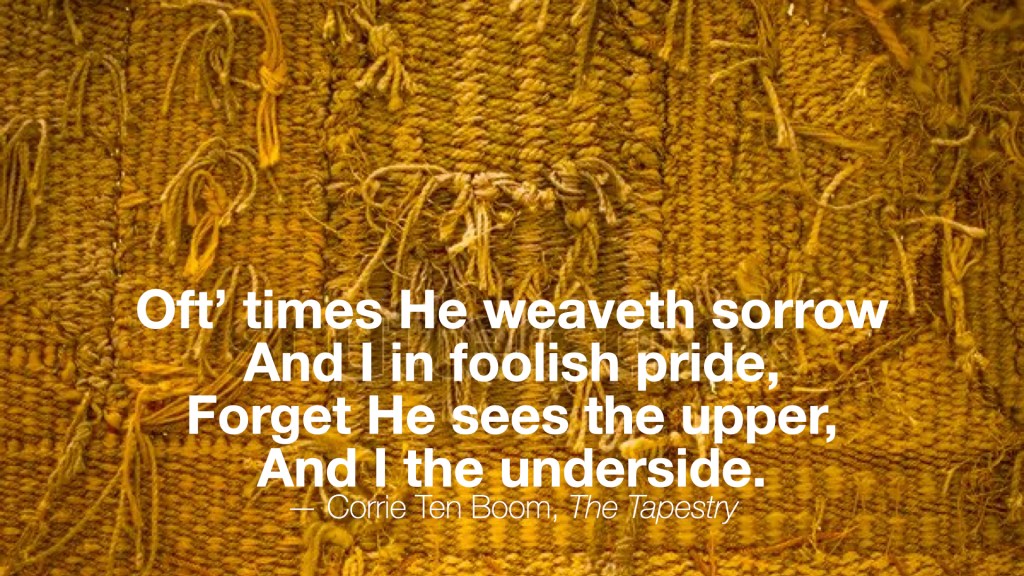
Looking from the backside of a tapestry can seem like a mess, but from the front it’s a masterpiece. Today, we can see most of God’s tapestry from the upper, but there is still some that remains a mystery. However, what we can see is sufficient to help us know God and His plan for mankind.

When God laid out His plan, He took His time. He didn’t rush history. Before the creation of the world, he wove history with redemption story (cf. Revelation 13:8). Why would God wait so long to unveil His plan? Like a Master Storyteller, he laid down the perfect script. He introduced and developed key characters. He followed patterns to build up a climactic moment. The moment came at the most opportune time and revealed His ultimate purposes.

The Bible, especially the OT, gives categories and identities that help us to know and understand who God is. The three primary categories are Prophet, Priest, and King. Embedded within these categories are central descriptors and identities. We must grasp these categories from Scripture. We must also understand their context within biblical history. Otherwise, our understanding of God will be impersonal. It will also be superficial. These categories help us to see what God is like and why He came to do, did, and does now.
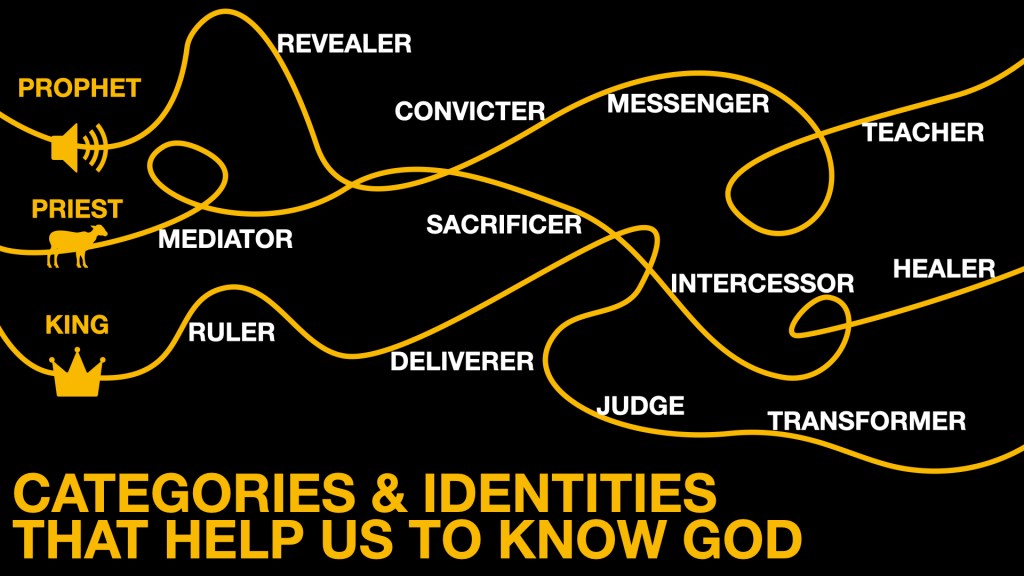
As the Bible progresses, there are touch-points on the loom. These points help us to see and know God as a priest. As we follow the thread, God’s purpose for the priesthood becomes clear. Notice how the characters model the priesthood. Observe how God acts as a priest. Each story touches on a promise.

  • Adam was given the role of caregiver of creation and the first family. It was a priestly and kingly role. When he sinned, God becomes the Sacrificer who covers sin and shame. God promised a future self-sacrificing Messiah who’d rescue mankind.
  • Abel was like a priest who gave an honoring sacrifice for God sees the heart.
  • Melchizedek is described as a priest-king of Salem (Peace) who foreshadowed the future Messiah.
  • Abraham was like a priest who willingly offered his only son on the altar. God provided a substitute sacrifice and promised a Messiah who’d come from Abraham’s lineage.
  • Moses becomes a mediator between the people and God. During the last plague, the people of Israel sacrificed lambs. They painted the lambs’ blood on their doorposts. This was to protect them from the Passover. This event would be memorialized by the Jewish sacrificial system and within the tabernacle/temple.
  • Aaron & Levites were chosen and designated as imperfect human priests to guide the people in worship of the Lord.
  • David acted like a new type of priest-king when he ate the bread from the tabernacle. He marched into the city of Peace with the ark of the covenant. God approved and later promised the Messiah who’d come from David’s lineage.
  • OT Zechariah was robed in priestly garments as a picture of the future Messiah.
  • NT Zechariah’s priestly prayers were answered as he’d be the father of the forerunner to the Messiah.
  • Jesus came and performed priestly acts—He healed, forgave sins, called people to worship God, and claimed to be the Messiah.
  • Today, Jesus sits in heaven as the intercessor who promises to come back as the Priest-King.
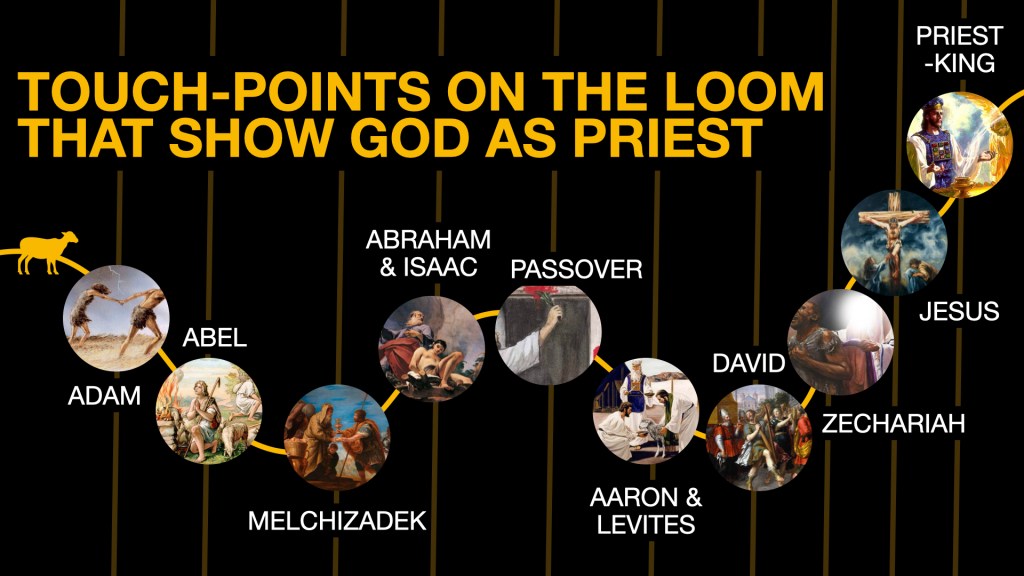
Imagine if you didn’t have any of these stories or their contexts. Your understanding of the priesthood of God would be quite vanilla or incomplete. Instead, these stories add color and comprehension to who God is and they signal His plan.
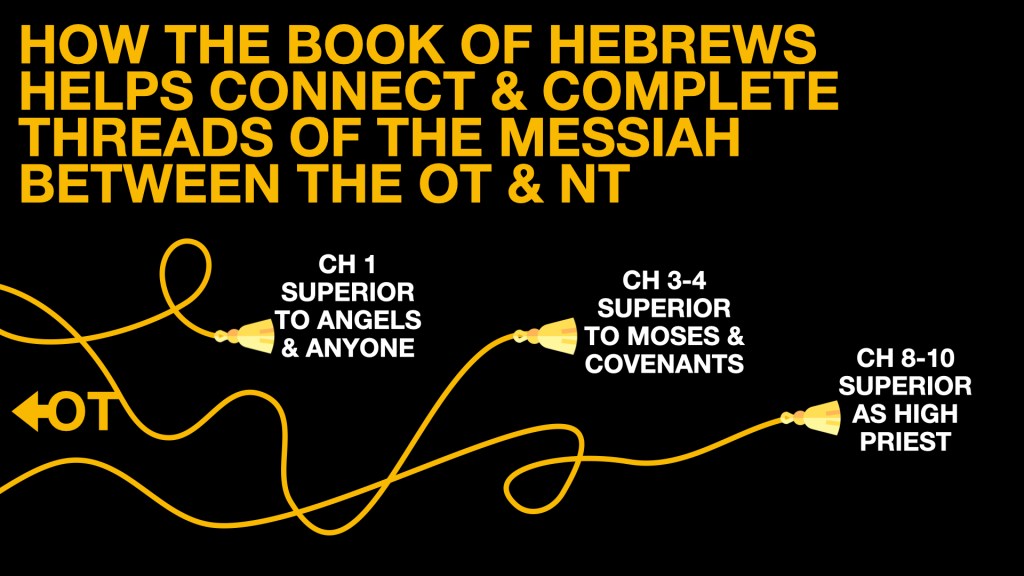
That brings us to the Letter to the Hebrews. Hurrah for Hebrews! This lengthy letter helps connect and complete a lot of threads and strands between the Messiah of the OT to Jesus of the NT. It’s the one NT book that wrestles with the OT categories, characters, and processes. It helps us to make sense of the Bible’s tapestry. It all points to Jesus. He is the One toward whom the whole story, history, and the Scriptures are supremely about. Even Jesus said it, “You study the Scriptures diligently because you think that in them you have eternal life. These are the very Scriptures that testify about me, yet you refuse to come to me to have life.” (John 5:39-40)

So let’s unravel this thread by seeing the what, the so what, and the now what of Hebrews 4:14-16. This text pierces the chaos of our crazy-busy lives. It touches our brakes. We stop and consider how wonderful our Jesus really is as a priest.

WHAT?

“We have a great high priest.” In case you and I didn’t know, we have a priest. This title tells me that we don’t need a greater something. We need a greater Someone. We need a priest. We need Jesus as a priest. Why a priest? (cf. 5:1-3, high priest job description) Overall, a priest was a symbolic service. First, a priest was chosen among men and called by God. Second, a priest represented God to the people, and the priest represented the people to God. Think of them as links between heaven and earth with a divine and human function. Third, a priest offered sacrifices to God for the sins of the people. Fourth, a priest was someone who embodied the compassion and gentle-heart of God towards others. This last point is what endears us to the role of a priest compared to a prophet or king. He isn’t cold or ceremoniously religious. We see the priest’s heart.

Jesus isn’t an ordinary priest. He is a “high” and “great” priest. A high priest, different from an ordinary priest, was chosen to offer the annual sacrifice. This sacrifice occurred on the Day of Atonement for the sins of all the people. Also, he isn’t just a high priest, but he’s The-Great-High-Priest. To be “Great” means that there isn’t anyone like him. He is far superior. He is in a category of his own. When we see Jesus as this Great High Priest, we see one who was chosen by God. He represented God to humanity. He loved mankind compassionately and gently. He also sacrificed once and for all for all people. Jesus connected all the loose ends of history. He joined them with God’s story. This was done to show Jesus as the great high priest. It is meant to be an ah-ha moment!

Since serving in Chad, I have enjoyed walking with seekers and BMBs through the OT. In the process, we cover many of these threads along the way. By the time we arrive at the NT, Jesus makes so much more sense. The most rewarding moments in discipleship are when you see eyes widen. Lights turn on. Fingers point back. Mouths say “ah ha!”

SO WHAT?

We get it that Jesus, the great high priest is like no other. So what? So there is more that we need to know about Him to make sense of Him. Hebrews 4:14-16 expands the so what:

1) Jesus had “gone through the heavens.”

We get a glimpse into Jesus’ cosmic journey. An earthly priest would pass through the temple courts. They would push back the veil to enter into the holy of holies. We get an image of the heavenly temple in Isaiah 6, where the train of his robe fills the temple and all are calling the Lord “Holy”. Jesus has access to the holiest places on earth and heaven. Again, Jesus is in a category of his own as the “Son of God.”

2) Jesus can “sympathize with our weaknesses.”

Sympathy is a psychological word. Our English definition is narrow than the biblical definition which includes sympathy, empathy and compassion. Literally in the Greek it means “to suffer with”. Jesus feels for, feels with, and feels in it with us. This is what theologians call solidarity. Jesus has a witness and nearness to us. Jesus got down to earth and really felt it with you. Listen, Jesus gets you. He’s been where you are. He knows what it’s like to live with nagging weakness, probing pain, loss and rejection, exhaustion from serving others, and daily struggles. Jesus understands. He lived it. He was exactly there. Jesus knows the intimate terrors, tensions, and toils of life—and moves to heal them. If you’re like me, then that truth gives me more sympathy for the weaknesses of others. Jesus’ perfect sympathy shapes my approach to those I serve and lead.

This week I took became more aware of my weaknesses and jotted them down each day in my journal. Here is a sampling of the weaknesses that stuck out to me:

  • I’m not able to be present with each of my four kids and my wife at the same time.
  • I’m tired and not ready to be hospitable or generous to my neighbor knocking at the door.
  • I’m tempted to compare myself with a colleague.
  • I’m seriously considering a shortcut to success.
  • My mind is cloud and I can’t for the life of me get my daughter’s algebra story problem.
  • During Friday prayer group, I’m discouraged praying for the same thing for five years with little visible results.
  • I saw the cooling system of another laborer and envied it.

Speaking of cooling systems, I recently read a NASA study that said that when temperatures are above 100 F (37 C) our work productivity is about 40%. That’s humbling, especially living in a place like Chad where it is hot most of the time. Sometime I think about my solar batteries and inverter that shutdown under the heat and I think that I can do better. My body is just as limited and my brain is defective trying to to power through. Weakness remind me that I’m not omniscient, omnipotent, and omnipresent. Not even close. I forget meeting times. I sometimes step on toes. I accidentally leave doors open. Sometimes, I burn the rice on the stovetop.

3) Jesus “has been tempted in every way.”

Some can hear that and think, “Sure, well, Jesus was tempted, but He was God. He had all the power to resist.” While that is true, it is one side and incomplete. Like Frodo on Mount Doom, the closer he got, the heavier the ring became. Jesus knows well the fullest weight of temptation because he withstood all of it. Only the sinless can know its full intensity. The one who falls yields before the last strain. We will never know temptation’s full intensity as Jesus knows. He understands the battle because He enlisted in the war. Jesus went through it so much worse because He did not yield to it. He took it to the cross!

You’ve likely faced some terrible and intense temptations. These are the kind where you sweat and agonize through the night. You might pace the room and weigh the consequences. God promises that He won’t let you be tempted beyond what you can endure. This promise is found in 1 Corinthians 10:13. You don’t have to hack through the jungle as Jesus has already made a path. He has lit the exit signs to show you the way out.

4) Jesus “was without sin.”

This is where Jesus was unlike all other human priests. He never had to cleanse Himself or wear bells on His ankles. Jesus was both a Priest (consecrated one) and a Lamb (sacrifice for others). Jesus as “our great high Priest” revealed to us what God considers to be our greatest need. We need someone to make us righteous before God. We also need to be reconciled with God. Without Him, we would be stuck in a symbolic and cyclical system of sacrifices without end. Jesus ended it! There is no more need of it.

NOW WHAT?

The priesthood might seem like an archaic and irrelevant system. However, it is hugely important to understanding who Jesus is. It explains why He and His work are important. It also shows how you and I can interact with Him today. Hebrews 4:15-16 gives two clear applications of what this means for us now:

First, “let us hold firmly to the faith we profess.” Herein, there is an action and a belief. We believe that Jesus is God and man. We believe that Jesus is prophet, king, and priest. As the Great High Priest, we believe that forgiveness is costly, the punishment due to sin was death, and without the shedding of blood, there can be no removal of sin. We believe that Jesus is both the priest and sacrifice. These are the beliefs that must act by grasping onto and professed among one another. Let’s fix our eyes on the author and finisher of our faith (Hebrews 12:2).

Second, “let us then approach the throne of grace with confidence.” Herein, we see our role and place with God. Where is God now? He’s on His throne. He is both in a heavenly and bodily temple. Both are His holy sanctuaries. Most holy places are only accessible by holy people, God considers you as such. He offers you a life-transforming invitation, “Come to the throne!” His throne is always open! Jesus is always there. He is always available and always attainable. He is always attentive and always listening. He is always joyful to see you. He is always caring and always loving.

You can approach the throne because you are a priest and you are a holy place. God dwells within you. Your body is the temple where God dwells. You are living stones being built up into a spiritual house. You are a royal priesthood. (1 Peter 2:5,9) AND in God’s story, God wraps you in His priestly robe. You represent God before the people. You represent the people before God. You may be a team leader, project manager, embassy staffer, teacher, translator, visitor, hospital worker, or church planter. Yet, you are also priests in the order of the Lord Jesus Christ. You mediate, sacrifice, intercede, heal, reconcile, serve, bless, care, love, and call others around you to worship.

PRAYER

Take a moment to step into the presence of Jesus, your Great High Priest. How do you feel in His presence? … What is His face toward you? … Would you approach his throne of grace with confidence? … What do you need from Him as your priest today? Compassion? Gentleness? Forgiveness? Purification? Restoration? Salvation? … What is He asking you to hold onto firmly? To profess about Him? … Who is He calling you to serve? What is He nudging you to do? Who is He calling you to be?

Now may the God of peace, who through the blood of the eternal covenant brought back from the dead our Lord Jesus, that great Shepherd of the sheep, equip you with everything good for doing his will, and may he work in us what is pleasing to him, through Jesus Christ, to whom be glory for ever and ever. Amen. – Hebrews 13:20-21

PRAYER

DIG DEEPER

What happens when we consciously or unconsciously leave out one of Jesus’ categories or identities? How can you see this playing out in Christian communities?

How can we guard against striping Jesus from some of His hats and at the same time striping ourselves from our responsibility in imitating Jesus?

While Jesus is the Great high Priest, what does it look like in your day being and serving as a priest?

Proclaim the Year of the Lord’s Favor

“To the strongest,” these were Alexander the Great’s last words spoken on June 11, 323 BC, when asked to whom his vast empire should belong after his death

Famous last words. They get a lot of attention as the one saying them has something important to say usually before they die. Like last words, first words are often important too. Think about the first words of a child to their parent, a coach to his players before the season starts, a teacher to his students on the first day of school, a manager to his new team, or a president’s speech on inauguration day. First words can carry as much weight as last words.

The first words that Jesus read publicly were from the prophet Isaiah (Luke 4:18-19),

“The Spirit of the Lord is upon me,
because he has anointed me
to proclaim good news to the poor.
He has sent me to proclaim liberty to the captives
and recovering of sight to the blind,
to set at liberty those who are oppressed,
to proclaim the year of the Lord’s favor.” — Isaiah 61:1-2

Let’s travel back to when Isaiah spoke those words, which were around 700 years before Jesus stepped into the world. Isaiah spoke those words to a people and nation who had walked away from the Lord. While warning them he infused hope that God promised to send a Deliverer—a Messiah.

Isaiah is like a fifth Gospel. No other book in the Old Testament paints so many pictures and promises tied to Jesus. Almost every chapter highlights the One who would come to save and suffer for his people and the nations.

Why did Jesus choose this Scripture? It might seem like he randomly opened the scroll and just read. It wasn’t random, but chosen. Jesus had just begun his speaking ministry throughout Galilee. Everyone praised him for his wisdom and divine insight (Luke 4:14-22). Then he came to his hometown of Nazareth and at first even they were wowed that this was the carpenter’s son and boy who used to play in their streets.

When Jesus spoke from Isaiah it would have drawn hope. The people listening would have considered themselves the poor who were captive to foreigners and pagans. They were tired of waiting and longing for freedom. They saw themselves as superior, moral, good, religious people who God should owe something. So what Jesus said next brought their hope to the next level,

“Today this scripture is fulfilled in your hearing.” — Luke 4:21

Notice what He didn’t say. He didn’t say, “Someday this Scripture will be fulfilled” nor “This Scripture has already be fulfilled.” No, he said, “Today, renight here, it is being fulfilled.” In so many words, he said loud and clear, “What Isaiah said about that Someone—I am that Someone. I am your promised Messiah.” This caused a stir and they liked what they heard. They were ready to go and get their freedom with their Messiah.

Jesus didn’t play it safe and stop there. He saw they didn’t get who he was and who he came for. So he tells a story about a poor foreign widow and a rich man who was sick. As examples, they starred both moral and religious outsiders, yet God showed mercy to them, even when God’s people would have nothing to do with them. It would be his prophets who took action and they suffered for it. So Jesus made the connection that his hearers were just like God’s people of old—thinking they were alright and hoarded mercy for themselves.

The people whiplashed in their reaction from amazed fans to a crazed mob. They were so ticked that they tried to drag Jesus out of town and throw Him off a cliff. Tough crowd, right?

So what did Luke 4 mean for its original hearers and us today? Jesus meant for his hearers and home-towners to know who he was and who he came for. He knew they would reject him, even though what he was saying was true. The hearers weren’t cut to the heart. They didn’t see themselves as poor or blind. They thought that God owed them because of who they were and what they did.

Unlike Alexander the Great, Jesus didn’t come for the strongest (noblest, toughest, most upright, best put together), but for the weakest, poor, and needy. Jesus was sent to proclaim the good news, to release the captives, to open the eyes of the blind, and to set free the oppressed. Why? So, the people would be called oaks of righteousness, the planting of the Lord (Isaiah 61:3b), priests of the Lord, and ministers of God (Isaiah 61:6) by turning to the Lord. All of this was to happen for the purpose—that an everlasting covenant would be made with them (Isaiah 61:8), that they would rejoice in the Lord, delight in him (Isaiah 61:10), that he may be glorified (Isaiah 61:3b), and so that they would be clothed with salvation (Isaiah 61:10) and praise would spring up before all the nations (Isaiah 61:11). Yes, all that!

Heaven’s Son gave up his wealth and emptied himself by becoming poor to reach the poor. As Joseph’s son, he was born dirt poor. Follow his steps and you will see that he deeply cared for the poor, inferior, marginalized, and unclean. He lived as a vagabond to bring good news to those who were ripe to receive it.

Good news is only for those who are spiritually needy.

Jesus wasn’t attracted by physical poverty but by spiritual struggles, stuck in strongholds, and those who didn’t fit into religious norms. It’s important to let go of spiritual laziness, self-righteousness, and the illusion that we can control God, and instead recognize our flaws and need for God’s help. Only those who see that they can do nothing to save themselves and overcome their sin can find hope and healing in the good news. Do you see yourself as spiritually poor and brokenhearted? Have you seen yourself as once a blind prisoner captive to sin? Do you know others like this? These are the kinds of people that Jesus came to serve and save.

Good news is especially for those who are physically needy.

The good news is felt by those on the edges of society, like women, racial outsiders, outcasts, downcast, and the powerless. In Chad, it can be the blacksmiths, beggar boys, and weaker clans. The more needy usually understand their need for God’s grace. The message of God’s help is best understood when we admit our spiritual need, which was seen in Jesus’ own surrender of power and dependence on his Father.

Good news is received deeply by those who are both spiritually and physically humble.

Accepting the good news is the most humble of things one can do. It is laying down everything and admitting that we can do nothing because God does everything. The good news changes then how we see wealth, status, and righteousness, freeing us from letting it define our value and security, and in turn, motivating us to share generously with those in need.

If you read Isaiah 61 you will notice that Jesus stopped mid-sentence. This was intentional. The first time Jesus came, he fulfilled the actions and he received the judgment. When he comes again, he will give judgment rather than receive it. The next time that Jesus comes he will finish the sentence.

As you proclaim the good news, the hearers will likely reject your message. They might even get angry and try to drive you out. Jesus’ message isn’t received well by a hostile and hell-bent world who think they are holier-than-thou. As Jesus’ followers—like those first disciples, who associated themselves with the radical Rabbi—we must be prepared to speak “uncomfortable” truth. To be alive in the adventure of Jesus is to hear his challenging first sermon, as for today, and to receive that risky invitation to follow him, and to take the first intrepid step on the road as a disciple into his harvest fields making more disciples.

Download as a PDF

Christ is King

Who created His dominion and made it good.
Whose image is stamped on us through and through.
Who walked among His creation.
Who gives life to all. Who is sovereign over all.
Who feeds and sustains all life.
Who gives to both the just and unjust.
Who watches over (sees) His creation.

Who protects and fights for His own.
Who leads angel armies.
Who is the lion of Judah.
Who wrote the law and put it in our hearts.
Who made a royal lineage from David to Jesus and a royal priesthood from Melchizedek to Jesus.

Who is the light to the nations and shines His glory for all to see.
Who incarnated Himself among us.
Who walks with us.
Who is present among His people.
Who serves us, loves us, and give to us without return payment.
Who died for us.
Who took the ridicule, crown or thorns, regal robe to redeem, reconcile, and restore us.

Who comes to us, steps toward us, and humbles Himself before us.
Who invited us to the banquet with Him.
Who lavishes us in the riches of His grace.
Who gives authority to His own to go into all the world and make followers among the nations.
Who is the One we represent as ambassadors—the King’s servants.

Who sings over His children (King’s kids).
Who is the wise King who gives freely to all who ask.
Who judges with the scepter of justice.
Who holds the scroll and opens them.
Who tears the veil.
Who built Zion for His own—the eternal kingdom.

Who is coming back for us to rule and reign with him as his princes and princesses.
Who has sealed us for the day of redemption.
Who keeps us in His hand forever.
Who wields the sword and will crush the head of the enemy.
Who sits on his throne forever and ever.
Who will receive honor and glory.

Col 1:16
1 Timothy 6:13-6
Phil. 2:8-11
Rev 17:14; 19:11
Eph. 1:19-23
Ps. 93:1; 149:2-5

O Come, Let Us Adore Him

I don’t know what’s occupying your mind right now. Maybe you’re replaying a chat in the car with your spouse or child. Maybe a situation back home or on your team. Maybe something ahead of you this week. Or maybe an anxious thought. I have the task to enter that space with the lyrics of Psalm 2. If you give me a few minutes, I promise this psalm won’t disappoint.

Psalm 2 is a song that David penned as a coronation anthem for the future kings of Israel. It was a reminder to earthly kings that there exists a heavenly king. It was a prophetic vision of God as the King of kings who rules His kingdom and therein is a hope that God would set his True King in Zion. The context and themes might seem foreign, abstract, or outdated—from another culture or time. Yet may you get a refreshed vision of who God is through this psalm.

Psalm 2 was used throughout church history to soothe God’s anxious people when it seems like the world was out of control. Do you ever feet that things in this world are shaky? Like the world is on the edge of chaos? Like the future of our well-being and our children’s is in the hands of very unstable or untrustworthy leaders? Have you felt like this? If not, that may mean you haven’t scanned the news lately. I can summarize the global headlines for you by saying that things are going particularly well. Why is there never peace? Why are people so angry? When will the war in Gaza and Israel end? These questions are not unique to us today (though you and I certainly feel it)—they are questions felt across history and every generation.

Psalm 2 begins with poignant questions, “Why do the nations rage?” and “Why do kings and rulers counsel against the Lord and His Anointed?” Nations rage because nations seek peace through war. Kings and rulers plot because by playing god they seek peace their way. Psalm 2 sums up all of history to the present day It’s a summary of the entire Bible in a gospel song. Here are my 3 points—We don’t want a King, We are given a King, and We need this King.

1) We don’t want a King (vs.1-3)

It is in our human nature refuse a king. It is in our genetic code, since Eden to push back against authority and resist the kingship of God. At our core, we are repelled by being ruled.
Within every heart there is a war—we want a king and we don’t want a king. When presented with a king we aren’t happy about it because of what it means for us. We want a king we can submit to when he fits or supports our agenda, our vision, or our wants.

Consider the American mindset. As an American, I represent a people who rebelled and rejected the rule of a king (and there were good reasons for that). What my forefathers did was divorce themselves and declare independence from a king that they called “unfit to be the ruler of a free people.” One could make the case that most Americans resist most kinds of authority (like king, president, boss, parent). I’m not anti-American. I love my country. Yet as much as we Americans abhor royalty or ruler, we have an incurable curiosity for the crown…at least from a distance. How many of you watched the coronation of King Charles? 10 million Americans watched the coronation of King Charles while only twice as many Britons tuned in. As Americans, we are fascinated by royalty—it’s wealth, fashion, spectacle, and soap operas.

I could make a case that within all humans is a memory trace to a true, good, and wise king. From birth, we’re raised with heroic legends and folklore like Richard the Lionheart or Arthur and his Knights of the Round Table. We flock to cinema to see the romanticized stories of Disney princesses like Cinderella and Elsa [I have three girls who all played dress up]. We dream of fantastical kingdoms like Middle Earth and Narnia or the real kingdom conquests of the Roman Empire or the British Empire on which the sun never set.

The world’s history of monarchs (even in the Bible) has been overall terrible. We are familiar with the truism coined by Lord Acton, “absolute power corrupts absolutely.” Today in our modern world, since the Enlightenment, most monarchies have toppled and become democracies (or voices of the people). Royalty seems to be a thing of the past. Yet one could argue that today there is a new kind of royalty that goes by other names—celebrities, sports stars, billionaires, politicians, and influencers (rulers of public opinion). We adore them, we give them riches, we treat them as kings, and we secretly fantasize about their fame.

As the story goes, nobody wants a king, therefore, everybody wants to be king. Not much has changed about us. It has been this way since the Garden. After God created the world, he said to mankind, “Be fruitful and multiply and fill the earth and subdue it, and have dominion over the earth.” (Genesis 1:28) God created us to be dominioneers, but the thought that God still has his hand in things doesn’t sit well with us. Like the kings and rulers of Psalm 2:3, we think of God’s rule as a “chain” or “restraint”. We see God as a chain-maker, not a chain breaker. He feels like an unnecessary weight or choking burden.

I can think to myself, “I don’t want God’s cords wrapped around my life. Get it off me!” I feel owned and used. I feel like God is meddling and toying with me. I am repulsed by the notion that I am someone’s possession, certainly not God’s (v.8). In my being, I buck against this. And God can sometimes give me exactly what I want, like Westley from the Princess Bride who always said to Princess Buttercup, “As you wish,” but what he meant by that was “I love you.”

In rebelling against God, we believe we are creating freedom and peace for ourselves. Yet when we remove ourselves out from under God’s power, protection, and peace, the opposite is actually true. It becomes a hell. George MacDonald, a mentor of C.S. Lewis, had said, “The central conviction of hell is, I AM MY OWN. This will create a living hell for you.” This mindset dominates most humans’ worldviews. And we wonder why the nations rage and peoples plot.

There is war within me. I know my mutinous heart and the misery it brings me. Deep down, I don’t like being told what to do and I rebel. And there, I do the same thing as the people who plot against the Lord’s anointed. I want all the blessings and benefits of the kingdom, but I don’t want to listen to the instruction of the King. When Jesus says love your neighbor as yourself it can feel to me like a chain. Whose my neighbor, I ask? Jesus says your worst one—your enemy. That seems a bit over the top Jesus! Then Jesus says I’m to live pure and holy. And that feels so restrictive. Or Jesus says to be generous and give to everyone who asks of you. Come on? Really? I can’t do that. Maybe when I have a little extra or they pay me back. But then Jesus says forgive as you’ve been forgiven. What!? That surely doesn’t apply to me. The bitterness I have is the only power I can hold onto. I don’t think that God has in mind the level of hurt that I have endured. Except, yes. He does. He wants my freedom and yours.

I still rage against God like this every time I sin. I am in my mid-40’s and have walked with Jesus for 3 decades. And I am alarmed that I still sin so frequently. Every time I do I am making a trade. I say to God, my way looks more free—more joyful. I am a better manager of my human flourishing than you. My path looks more promising and productive. What I don’t realize, in that moment, is that I am raging and plotting against the Anointed.

Charles Spurgeon said, “To a graceless neck, the yoke of Christ is intolerable, but to the saved sinner, it is easy and light. We may judge ourselves by this—Do we love that yoke or do we wish to cast it from us?” To be honest, I often want to cast off the lightest of yokes in exchange for something that looks lighter, but more often then not ends up being a bigger burden too heavy for me to carry. Listen, I have never once regretted obeying God…and yet I still rage.

You and I are called to fight back against the rage and plots by submitting ourselves to the Good King who says, “Come to me, all who labor and are heavy laden, and I will give you rest. Take my yoke upon you, and learn from me, for I am gentle and lowly in heart, and you will find rest for your souls. For my yoke is easy, and my burden is light.” (Matthew 1:28-30)

2) We are given a King (vs.4-6)

How does God respond to the rebel heart? “He who sits in the heavens laughs” (v.4). That’s an interesting image. What does it mean that God laughs? Like an adult chuckling at the feeble effort of a kid. Who scrunch their faces, fold their arms, stomp around in angst, and say boldly, “No!” Sometimes as a parent, it’s hard not to laugh. We laugh and say, “Aw. How cute. Jimmy is pretending to be a totalitarian dictator. Sorry son, but resistance is useless.”

According to Psychology Today, laughter is “one of the distinguishing features of human beings” and maybe “the most contagious of all emotional experiences”—yet “little is known about the mechanisms behind it.” Laughter is social. It’s an effort to communicate to others.

We get laughter from God. And when he laughs, he does so for our sake, to communicate to us. He laughs to give off signals—that are horrible to his enemies and wonderful to his friends. As God laughs his enemies are terrified and cower in fear. But his friends, rise in comfort and he quiets their fears. God’s laughter warns those who commit cosmic treason of their impending doom. But to his friends, his laughter reminds them that the best is yet to come.

God laughs because his plan was already coronated as He says, “I have set my King on Zion, my holy hill.” (v.6) There is no need to crown him as he has already been crowned before the world was created. Whether you acknowledge it or not, you have been given a king. You’ve always had a King. His name is Jesus (Matthew 3:17). He is a good, gracious, gentle, humble, and kind King. When the time was right, God sent his Son to earth—to live among us. He had no beauty or earthly majesty (Isaiah 53:2). He was accepted and then rejected as king. He was plotted against by the kings and rulers of the day. He was mocked. He was clothed in weakness and shame—dressed in a royal robe and twisted a crown of thorns on his head. He was despised and the people pulled a mutiny and sought to unseat Jesus. They marched him to a hill outside the city and hung him on a criminal’s cross. They slapped a little sign above his head that read, “Here hangs the king of the Jews.” (Mark 15:17) They laughed. And Psalm 2 was being fulfilled. But God would have the last laugh. As the Son of God breathed his last breath the earth shook. Nothing would defeat the Son of Man who came to seek and save the lost. Three days later, Jesus rose from the dead as a conquering king, and sits to this day at the righthand of the throne of God readying the day when he will come back and establish his eternal kingdom and call us home.

As Spurgeon put it so poetically, “God’s anointed is appointed and shall not be disappointed!” When you are distressed by the chaos of the world. Look to the holy hill. When you feel defeated by the rebellion in your own heart. Look to the holy hill. When you are tired and things seem outside of your control. Look to the holy hill. When you are weary of your own ability to do the things you know you ought not to do and fail to do the things you ought to do. Look! On the hill is Jesus who loves you. Who defeated, even your rebellion (and love you still). Who is currently standing on your behalf. And will never ever be moved.

3) We need this King (vs.7-9)

You need this King to conquer your enemies. The King is not the enemy (as is common for me to think); he is the enemy crusher. When kings of old were crowned, they were given a scepter (authority) and orb (wisdom). Then the names of the enemies of the kingdom were written on shards of pottery and placed at the king’s feet. The king in symbolism would crush the shards to dust and the people would cheer.

This is what happens to the enemies of God’s people. Jesus is not intimidated by your enemies. They are already defeated. Compared to Christ, your enemies are fragile and impermanent like a shard of pottery. What an image of our Lord! And if that’s your King, what are you so afraid of? This picture speaks to the certainty of what Christ has done, who Christ is, and what he is doing in the world. Don’t declaw the lion of Judah. With the great multitude we can say, “Hallelujah! For the Lord our God the Almighty reigns…On his robe and on his thigh he has a name written, King of kings and Lord of lords.” (Rev. 19:6,16) When I hear Jesus like this, it right-sized my image of him, his power, and his authority. It also right-sizes my enemies and my rebel heart. “To be intimated by the world is as spiritually fatal as being overly attracted to it.” Tim Keller

You need this King for true peace and joy. His yoke is your freedom. Jesus came to save you from you. Rather than you owning you, God considers you his treasured possession. I bring good news of great joy… for all people…the Savior of the world, from the royal line of David, the promised Messiah, the prince of peace, wonderful counselor, and Mighty God—has come for you! I don’t know what the next year holds for you, your family, your ministry, or your work in Chad. It will likely be difficult. I promise Jesus has the nations of the earth as his possession. Do not fear!

In the final stanza of Psalm 2, King David gives us a powerful application (vs.10-12). That is comes from David himself is significant. Remember, he is the king, yet he understands who is the True King. He acknowledges that God is his +1. He decrees these final words to all the kings and rulers of the earth—all peoples—you and me. He begins by saying, “O”. That’s a hard word to translate because it’s from the gut (it comes out of the mouth, down the vocal cords, into the diaphragm, and deep from the gut). Say it. Feel it? David begs for a response…

3 Responses:
1) “Serve the LORD with fear,” Give yourself to the One—Most High King—who rules over all.
2) “and celebrate his rule with trembling,” Laugh out loud with comfort and peace…because in Christ, you’re the freest of all people.
3) “Kiss his son…” This is an ancient sign of reverence…bowing low…bending the knee…of tender and intimate obedience.

1 Result: “Blessed are those who take refuge in him.” To think this King is also … a mighty fortress…a strong tower…a hiding place…and a safe refuge.

Listen, brothers and sisters, there is no refuge from the King. There is refuge in the King.

In the early church, the world was raging against Jesus’ servants. Kings and rulers were counseling together against the Lord’s anointed. His people felt threatened. Their faith was being challenged. Yet let’s take comfort and strength in how they took refuge in the God-King,

“When [Peter and John] were released, they went to their friends and reported what the chief priests and the elders had said to them. And when they heard it, they lifted their voices together to God and said,

“Sovereign Lord, who made the heaven and the earth and the sea and everything in them, who through the mouth of our father David, your servant, said by the Holy Spirit,

“‘Why do the nations rage,
and the peoples plot in vain?
The kings of the earth set themselves,
and the rulers were gathered together,
against the Lord and against his Anointed’—

for truly in this city there were gathered together against your holy servant Jesus, whom you anointed, both Herod and Pontius Pilate, along with the Gentiles and the peoples of Israel, to do whatever your hand and your plan had predestined to take place. And now, Lord, look upon their threats and grant to your servants to continue to speak your word with all boldness, while you stretch out your hand to heal, and signs and wonders are performed through the name of your holy servant Jesus.”

And when they had prayed, the place in which they were gathered together was shaken, and they were all filled with the Holy Spirit and continued to speak the word of God with boldness.”

Acts 4:23-31

As come to the Lord and take refuge in Him, may he vanquish your anxious thoughts and give you courage and boldness.

Sing: O Come let us adore him (x3), Christ the Lord. / For He alone is worthy (x3), Christ the Lord. / We give him all the glory (x3), Christ the Lord.

the name of the rejected

Have you ever felt rejected? Rejection is known by all.

If you follow Jesus, then you know rejection. In the Book of Acts, you see you’re in good company as many of Jesus’ followers were rejected because of their message.

In Acts 21-22, Paul returned to Jerusalem for one last time before he took the gospel to the city of Rome. In Jerusalem, Paul got arrested and almost killed. His trial resembled the trial of Jesus as the people yelled, “Kill him!” Before the crowd of people Paul spoke and shared his life story (22:3-21). If Paul’s story were a mountain, then the top of the mountain would be verse 8 when Jesus introduces himself to Paul. In just a few words Jesus changed Paul’s life.

Do you notice what Jesus called himself in verse 8? He said, “I am Jesus of Nazareth.” It is interesting that Jesus referred himself a Nazarene. Why is his name so important? To understand why this is important you need to go back into history. Do you know that in the Bible there are more than 700 names for Jesus? Each name describes an aspect of his work and character. For example, he is called lamb of God, son of God, king, lord, Prince of Peace, shepherd, and more. It is a good study to study all the names of Jesus. But what does it mean that Jesus Christ was called “a Nazarene”? Why is this important for you and me today?

1. Jesus chose the name.

Jesus chose to greet Paul for the first time by saying “I am Jesus of Nazareth.” He could have chosen many other names, but he used this one. It is a strange one and often misunderstood.

2. Jesus identified with the rejected and despised.

Jesus grew up in the village of Nazareth. it was the home of his earthly father (Matthew 2:22-23). Jesus worked with Joseph as a carpenter until he was 30 years old.

Nazareth had a bad reputation. It was a no good town outside of the boundary of Jerusalem. Many Jews did not live there and they did not like it. They thought people there were rebellious. It was the town on the other side of the tracks (see John 7:52).

After a few years, when Jesus returned to Nazareth he was rejected by the people (Luke 4:16–30). A prophet is without honor in his own country and among his own people (Matthew 13:57).

3. Jesus died with the name of the rejected.

Luke 9:22 says that Jesus must suffer refection (see Luke 17:25). Before Jesus died Pilate wrote a sign for Jesus and put it above Jesus on the cross. It said, “Jesus of Nazareth, the King of the Jews” (John 19:19). Jesus didn’t fight back and say, “I was born in Bethlehem. I am from king David’s city. I am of the family of the king. I am the King of kings.” He was okay with being disposed and rejected. He knew this was his fate.

Isaiah wrote 700 years before Jesus came that Messiah was “despised and rejected by men; a man of sorrows and acquainted with grief” (Isa. 53:3). This was a description of the humiliation and rejection of the Messiah who was Jesus. Jesus would die rejected.

4. Jesus resurrected with the name of the rejected.

When the people came to the tomb of Jesus, an angel said, “You seek Jesus of Nazareth” (Mark 16:6). The angel didn’t change his name or give him a new name. Before and after he resurrected Jesus continued to be called by the name of the rejected.

5. Followers of Jesus are called by the name of the rejected.

The enemies of Jesus called the early Christians “the sect of the Nazarenes” (Acts 24:5). This not a compliment. It was like calling them a curse word.

No matter where you live, no matter how rich or poor you are, no matter how unimportant you may seem in the eyes of other people, Jesus Christ comes to you where you are. He identifies himself with people who have needs—the despised, and the rejected. Jesus lived and met with sinners, lepers and sick people—people who were unwanted, abused, ignored, and rejected. Jesus hasn’t changed. Although he is now exalted on the throne of heaven, he is still “Jesus of Nazareth” and identifies with rejected people.

Isn’t it good to know that Jesus calls himself by the name of the rejected? He died with the name, he rose with the name, he shared the name with his followers because he cares for people who are despised and rejected (see Luke 18:35-43).

Missing Jesus: Cleopas

A few Sunday’s ago after church, our family went to a restaurant that we enjoy. All weekend I was salivating as I thought about having a piece of strawberry rhubarb pie at this restaurant. After church I hurried my kiddos—a little too quickly out the door. As we drove, I got giddier and giddier. When I could see the restaurant, I could almost taste that pie in my mouth. We pulled into the parking lot, but I got a sinking feeling when I noticed there were no cars. I shuffled my feet to the door and read a handwritten sign that said, “Sorry. Due for unforeseen circumstances the restaurant will be closed today.” Argh! Stupid expectations!

My story may seem trivial. I started with something small because starting big may be overwhelming for some. I could tell you of my expectations and the disappointments that made me wonder whether I am cut out for the ministry or mission field. I could tell you of some unmet expectations I’ve had for my marriage that made me wonder if we’d make it another year or another day. Some of you have had great expectations for a relationship, a spouse, a child, a job interview, a career, a vacation, a retirement, a 401k, a dream house or a situation to turn around only to have it unmet. Have you ever had an unmet expectation?

When we dive into the Gospels we get to see and discover the story of Jesus. Like a Where’s Waldo book we find Jesus, ourselves, and others in the story or we can miss Jesus.

When you think of a character that missed Jesus in the story who do you think of? We have looked at Judas and Caiaphas. Today we will look at Cleopas. If we’re honest, there is a little bit of Cleopas in all of us. Like Cleopas we feel the tension of expecting one thing from Jesus and experiencing another thing. When our expectations are unmet doubts creep in, discouragement, disappointments, disillusionment and frustrations can occur. Expectation is the mother of all frustration—the root of all heartache (Shakespeare).

How many times has life, even God disappointed you? It’s tough when you have unmet expectations in connection to a spouse, a child or a friend, but it’s really tough when it’s God. We don’t like to think about God disappointing us. Maybe you thought God was going to do things one way, but he had different plans. God can act or behave in ways that you might not expect. What happens when the character of God doesn’t come through the way you thought? What happens when God’s provision is later than you thought? What happens when you trust God, yet it seems like God fails you or abandons you? What happens to your view of God when life gets chaotic and God seems silent?

Today we are going to take a walk on the Emmaus Road. A road that began with unmet expectations, but led to a marvelous meeting with Jesus. We will step into the shoes of two men who had an expectation of Jesus, but that expectation wasn’t met like they had thought,

“That very day (the day Jesus resurrected) two of them were going to a village named Emmaus, about seven miles from Jerusalem, and they were talking with each other about all these things that had happened.” (Luke 24:13-14) Italics include my thoughts.

emmaus mapLet’s do a short Bible Study and ask who, what, where and why of the text. Who were these men? We will learn one has a name and the other remains nameless. We aren’t sure if they’re related, worked together or were neighbors. Let’s just call them friends. Where were they going? They’re walking to a village named Emmaus. Archeologists don’t know the exact location of the town or the road. Likely, it was west of Jerusalem—in the opposite direction from where the two men were headed. Why were they leaving Jerusalem? The Passover was over. The big feast in the big city had finished and the roads around Jerusalem would have a steady flow of people leaving to go to their homes and villages.

What are they talking about? News! The text tells us what they talked about,

“While they were talking and discussing together, Jesus himself drew near and went with them. (Yes, Jesus teleported!) But their eyes were kept from recognizing him. And he said to them, “What is this conversation that you are holding with each other as you walk?” And they stood still, looking sad. Then one of them, named Cleopas, answered him, “Are you the only visitor to Jerusalem who does not know the things that have happened there in these days?” (Seriously, where you been? Haven’t you check you FB or CNN feed?) And he said to them, “What things?” (like he didn’t know?) And they said to him, “Concerning Jesus of Nazareth, a man who was a prophet mighty in deed and word before God and all the people, and how our chief priests and rulers delivered him up to be condemned to death, and crucified him.” (Luke 24:15-20)

The two friends (now plus one) unpacked the events of the past few days. This years Passover was unlike any other that they’d ever been to. It looked like it was going to be the best party ever, but it ended up being a dud. It looked like the stars had aligned and the Prophet’s words were being unveiled before their very eyes, but the hopeful Messiah goes and dies. This didn’t make sense to them. Many like these men sold everything they had to follow Jesus (some for 3-years). It’s as if they bought into a pyramid scheme and thought they got scammed. They saw Jesus die with their own eyes. They saw his body removed from the cross and carried to the tomb. The chaos of the weekend caused them to question God. Their hopes and expectations were drowned in sadness. They were deeply disappointed, if not devastated.

Have you been in their shoes? Have you felt what they felt? Have you thought that Jesus was one person—you placed your faith in him, you had great expectations of him—but something shattered who you thought he was, how he was to act and behave, what he was to do for you? Surely, you have. Let’s be honest. Following Jesus isn’t glamorous. It isn’t easy. It doesn’t make all your problems or pain go away. Following Jesus takes you down a dusty and rocky road—a risky and dangerous road. A road not well traveled. A lonely road. A road filled with temptation and persecution. A road of suffering and sacrifice.

You lose hope when thing don’t happen as you’d expect. When Jesus doesn’t meet your expectations you can easily become sad, angry, despaired, depressed, and hopeless. You can lose hope in the character of Christ when the journey of following Jesus gets a little chaotic. Isn’t it during times of chaos or difficulty that we tend to question God’s character? When everything is going good there isn’t need to question God. We got it good. Our relationship is good. Our trust is good. Our hope is good. Yet when my marriage is sour or my kids are playing the prodigal or I lose my job or I find out from the doctor bad news, it is then that I question the goodness of God. I question his plans. I question his character (e.g. wisdom, sovereignty, omnipresence, etc.).

Does God work through your frustrations? Doubts? Disappointments? Unmet expectations? You bet! It is often in those chaotic times that you see God work best. Is God there with you, even in the chaos? Certainly! Chaos can cloud your vision. You can miss seeing him walk beside you—with you. You may not recognize God as he does his work. Sometimes you may be kept from recognizing him or what he’s doing (Ex: Job, Abraham, Cleopas, etc.).

Let’s give these two men on the Emmaus Road a little grace. 48-hours earlier Jesus was unrecognizable. He was beaten, bruised and bloody. His beard was plucked. He was naked and scarred. Some of their last images of Jesus were traumatic and grotesque. To think that Jesus survived the ordeal, cleaned himself up and ran to catch up with these men walking to Emmaus just to have a conversation with them would have seemed absurd and unthinkable. Yet Jesus in his resurrected body had a little fun. It’s something you can look forward to when you get yours. He could teleport and walk through walls. That’s so cool!

Seriously, we learn six amazing truths about the character of Jesus on the road to Emmaus. First, Jesus pursues people. He pursued the two men. He initiates provoking question not because he did not know the answers, but that he wanted show how he pursues people.

Like Cleopas and his friend, we can be tempted to grumble and argue about the unmet expectations we experience. To this Jesus asked, “What things?” Jesus knows all those things. He wants you to know he knows those things. He understands those things. In fact, Jesus encountered those things first hand. He experienced those things. What things are you facing (or feeling) that Jesus has too? Likely all those things.

Jesus knows what you feel. He knows pain. He knows hurt. He knows anger. He knows sorrow. He knows despair. He knows because he’s been there. What if you took your complaints to God instead of just your friends? Can God handle it? Jesus could handle these two men and their honesty. He can handle yours too. He isn’t put off by it, in fact, Jesus invited the men to speak and share their sadness. Some of you need to know that today!

The men explained,

“But we had hoped that he was the one to redeem Israel (the one Moses, David and Isaiah talked about). Yes, and besides all this, it is now the third day since these things happened. Moreover, some women of our company amazed us. They were at the tomb early in the morning, and when they did not find his body, they came back saying that they had even seen a vision of angels, who said that he was alive. Some of those who were with us went to the tomb and found it just as the women had said, but him they did not see.” (Luke 24:21-24)

They heard about Jesus’ resurrection, but sadly they didn’t see him themselves.

Jesus is in control, even if life feels chaotic. Remember when Jesus taught, “Don’t worry about tomorrow,” or “Come to Me heavy laden, I will give you rest.” Listen to Jesus’ response on the road,

“And he said to them, “O foolish ones (stupid, sightless, shallow—What? That was a little harsh stranger! We bear our hearts to you and you call us foolish? Who are you to say that?), and slow of heart to believe all that the prophets have spoken! (You don’t see the whole story!) Was it not necessary that the Christ should suffer these things and enter into his glory?” And beginning with Moses and all the Prophets, he interpreted to them in all the Scriptures the things concerning himself.” (Luke 24:25-27)

Jesus models suffering comes before glory. This was important to the story and theology of the Messiah. Cleopas and his friend missed the detail that suffering always precedes glory. It gets harder before it gets better.

During a dark night of the soul hang on! Joy will come in the morning. If you suffer it will pass. Sadness will pass. Despair will pass. Disappointment will pass. Doubt will pass. Frustration will pass. Glory will come. I promise. Jesus promises!

Jesus teaches still. This is the greatest unrecorded sermon in the Bible. What I’d give to get my hands on that Podcast! Jesus unpacked centuries of prophecies from the beginning to the present. He gave these men a tour behind the scenes of the Story of stories. He gave the director’s cut commentary with bonus features. That must have been the best Sunday School lesson ever! The truth is you have this lesson. It’s in the Bible. You can hold it. You can hear it. You can read it. You can know it. You can be taught it by the Spirit of Jesus!

Do you realize that even after this Bible Study of Bible studies that Cleopas and his friend still didn’t recognize Jesus? Yes, it can happen. You can read the Bible from cover to cover, have the explained by the best teacher, preacher or commentator and still miss Jesus!

“So they drew near to the village to which they were going. He acted as if he were going farther, but they urged him strongly, saying, “Stay with us, for it is toward evening and the day is now far spent.” So he went in to stay with them. When [Jesus] was at table with them, he took the bread and blessed and broke it and gave it to them (Reminiscing the Upper Room). And their eyes were opened, and they recognized him. And he vanished from their sight. (Yes, Jesus just teleported again!) They said to each other, “Did not our hearts burn within us while he talked to us on the road, while he opened to us the Scriptures?” And they rose that same hour and returned to Jerusalem. And they found the eleven [disciples] and those who were with them gathered together, saying, “The Lord has risen indeed, and has appeared to Simon!” Then they told what had happened on the road, and how [Jesus] was known to them in the breaking of the bread.” (Luke 24:28-35)

Cleopas and his friend boogied back towards Jerusalem (7 miles)—in the right direction. They told Jesus’ disciples what had happened to them. Not many would walk that journey at night. It was too dangerous. But they had breaking news! Jesus was alive—he appeared to them! They didn’t have to prove it as Jesus would appear among them again (24:36). Cleopas and his friend were eyewitnesses to the powerful testimony of Jesus’ resurrection. They became founding members of the fellowship of burning hearts.

You gain hope when you see Jesus has been with you all along. You may be so caught up in your disappointment or unmet expectations that you fail to recognize God is with you. Like Cleopas and his friend does your heart burn within you. Jesus knows if it’s ice or fire. Jesus sets the Fahrenheit of your heart, even in the midst of chaos and difficulty. May he give you eyes to see his goodness, his grace, his love, his presence, his tender hand leading you along the road. May he ignite a fire in your heart. You too got a story to tell!

The death and resurrection of Jesus are the most powerful events in history to hinge your faith upon (1 Corinthians 15:14-17). When you are tempted to doubt, despair, or drown in unmet expectations, come back to the cross and empty tomb. What will you do with Easter now that Easter Sunday is over? What will you do with Jesus? What will you allow Jesus to do within you as he walks alongside you? Will you see how God redeems chaos as a part of his story? See how he is with you through it?

Missing Jesus: Caiaphas

There is a story of an 11th Century king of England with Viking roots named Cnut. His advisors would often say, “King, you are the greatest man that has ever lived. There can never be another man so mighty as you. There is nothing in the world that dares disobey you.” In order to prove his power Cnut ordered that his throne be carried onto the seashore at low tide. He then sat on his throne and ordered the tide to stop rising. The tide, of course, didn’t listen. It literally dampened the mood, his robe, and his kingly honor.

Screen Shot 2019-05-13 at 11.02.08 AM

The resurrection of Christ is the story of a tide rising. More than the tide it was a tsunami that couldn’t be stopped. The resurrection allows us to dive into the Gospels and discover the story of Jesus. Like a Where’s Waldo book we find Jesus and others in the story. This happens on two levels: First, we find our story—our redemptive story—is in Jesus. Second, we find ourselves in the characters surrounding Jesus. Sadly, like many of them we can miss Jesus in the resurrection story.

When you think of a character that missed Jesus in the story who do you think of? Last week we saw Judas. Today we will look at Caiaphas. If we’re honest, there is a little bit of Caiaphas in all of us. Like Caiaphas we feel the tension to resist God and guard what is important to us no matter the cost. We strive for control, even if it be a little control. We are tempted to resist the God we say we trust and guard what we think is important.

Let’s be honest. Have you resisted God? You know you should stop doing this thing, but this is so fascinating and addicting. You know you should start doing that. You know you shouldn’t go there. You know you shouldn’t spend your money on those things, but you just this once. You know you should forgive, but the hurt seems to big. Everything in you tells you it’s wrong yet it feels so right. You find yourself resisting God when you know you are best-off trusting him.

What do those outside the church call this? They call it hypocrisy. We in the church call it hypocrisy too. Meaning we don’t actually do what we say or believe. In all fairness, it is difficult to surrender to a God we cannot see. Except we can see him. When Jesus stepped into the world he was God with skin on—the invisible God made visible. He certainly looked and acted different than many imagined God looking and acting, particularly to the religious people.

Joseph Caiaphas was the religious poster child. He grew up in a wealthy, political, and aristocratic family who controlled the temple. He was groomed to be a Sadducee (Sad-You-See!). He married the daughter of the high priest Annas. He himself became high priest between 18-36 AD, which was during most of Jesus’ life and all of his ministry. He was the most powerful man in Israel and the most influential man in Jerusalem. He was the go-between Israel and Rome. Other than Roman oppression, things went well for Caiaphas. Until a carpenter turned rabbi from Galilee started gaining notoriety with crowds.

The problem Caiaphas had with Jesus were his crowds. Everywhere Jesus went the crowds went too. Sometimes 1000’s of people came to hear Jesus speak. He spoke with authority. People also came from all over the nation bringing sick to be healed by him. The crowds were a threat to peace for Rome and a threat to the Jewish order. They had reason to worry since Jesus didn’t have a good rapport with the Jewish leaders. He made their questions seem foolish. He called them names,

“You serpents, you brood of vipers, how are you to escape being sentenced to hell?” (Matthew 23:33)

You wouldn’t let your kids talk like that nor kiss their mama with a mouth like that! But that’s Jesus talking. Jesus echoes Jeremiah,

“Woe to the shepherds who are destroying and scattering the sheep of My pasture, declares the Lord.” (Jeremiah 23:1)

Jesus had big issues with the Jewish leaders as they were responsible for leading the people to God. And Caiaphas had big problems with Jesus, his crowds, and his criticism! Ironically, it was Caiaphas who was oppressing the people by funding the temple and scheming against God.

The final straw that broke Caiaphas’ back was not a conversation or confrontation with Jesus, but it was an act of compassion by Jesus (like Judas, both at Bethany). Have you ever been frustrated or jealous when someone was shown compassion? Like Caiaphas, we can miss what God is doing in front of us because we are nearsighted. We are raging when we should be rejoicing. We are grudge-filled when we should be grateful. Our spiritual eyes are blurry and blind to what God is doing. We lose perspective and only see what we want to see. We don’t see the whole story.

Jesus had raised Lazarus from the dead. The crowds swelled in Bethany to see the miracle man and the Miracle Maker. The crowds marveled and believed. Jesus had raised a man from the dead! Wow! That would be enough reason to follow Jesus,

“Many of the Jews therefore, who had come with Mary and had seen what [Jesus] did, believed in him, but some of them went to the Pharisees and told them what Jesus had done. So the chief priests and the Pharisees gathered the council (The Sanhedrin; three groups who couldn’t agree) and said, “What are we to do? For this man performs many signs. If we let him go on like this, everyone will believe in him, and the Romans will come and take away both our place and our nation.” But one of them, Caiaphas, who was high priest that year, said to them, “You know nothing at all. Nor do you understand that it is better for you that one man should die for the people (really?), not that the whole nation should perish.” (John 11:45-50) Italics are my thoughts.

Caiaphas’ strategy of discrediting Jesus publicly had failed. The priest’s questions towards Jesus backfired too many times. Now it was time for a final plan. Caiaphas’ agenda was clear: kill Jesus and the problem will go away. He was sincere and he believed he was acting on behalf of God (John 11:51-53). It was a plan that the Jewish House, Senate, and Supreme Court all agreed upon. Unknown to them, they were actually facilitating the will of God (John 10:17-18). And all Caiaphas could think about was getting Jesus to lose his crowds,

“The crowd that had been with him when he called Lazarus out of the tomb and raised him from the dead continued to bear witness. The reason why the crowd went to meet him was that they heard he had done this sign. So the Pharisees said to one another, “You see that you are gaining nothing. Look, the world has gone after him (1/3 of world Christian; spreading like a wildfire that couldn’t be contained).” (John 12:17-19)

Interestingly, later in Acts, we discover that many of the priests and Jewish leaders became followers of Christ. This is how John got his insider information on Caiaphas. Certainly, many Jewish leaders knew they were resisting what God was doing through Jesus, yet they held tightly to their plan because it would mean letting go of their power, their prestige, their pride, and their piety—everything that was important to them. Trusting Jesus was too costly.

When you decide to follow Jesus it will cost you something. It may cost you relationships, position, respect, money, standard of living, time, beauty, GPA or entertainment. The cost is too high for too many people. And therein lies the tension. It can be a wrestling match between what Jesus values and what you value. Many tap the mat to get out of the ring. You either consider the cost or you don’t. You are either hot or cold. You are all in or you aren’t.

If you’re a parent you’ve likely heard your kids plot out their future. I hear my daughters say, “When I grow up I am going to work at a Thai restaurant that way you can eat Thai food whenever you want.” “When I am an adult I am only going to eat all the candy I want.” “My house is going to be a barn so I can live with horses.” As parents we smile and laugh. We also know those plans will change as they get older. They may change moment to moment. Do you think God has a similar response to our adult plans and the ways we resist his plans? Do you think he shakes his head when we try to make our own plans? Do you think it breaks his heart when we ignore his wisdom being the Creator and Author of life?

Caiaphas couldn’t just get rid of Jesus. He didn’t have the authority to crucify him. He needed the permission of the Roman government. He needed case. He needed a legitimate charge against Jesus to show he was a threat to the empire. He needed to catch Jesus confessing that he was god or king (John 8:37-40; 10:31-39). So Jesus was led to Annas, Caiaphas’ father-in-law (18:12-14). Jesus turned the question back on Annas and he was slapped for it (18:19-24). Then Jesus was sent to Caiaphas where he was interrogated,

“Are you the Christ, the Son of the Blessed?” And Jesus said, “I am (ego emi; John 8:58), and you will see the Son of Man seated at the right hand of Power, and coming with the clouds of heaven.” (Mark 14:61-62)

That’s what Caiaphas needed. He had his case. He had witnesses. Without hesitation Caiaphas took Jesus to Pilate, the Roman governor. Pilate thinking it was a petty issue punted Jesus back to the Jews (18:28-32), but the Jews persisted, twisted and tied Pilate’s political arms. Pilate still wasn’t convinced Jesus’ title “King of the Jesus” was a threat, until he heard the rumble of the crowd. By this time Caiaphas owned the crowd (or mob). Pilate opted for peace and willingly traded Jesus for Barabbas the murder (18:40). The case that Jesus was a self-proclaimed King—a threat to the empire worked (19:7). Pilate brought Jesus before the crowd,

“He said to the Jews, “Behold your King!” They cried out, “Away with him, away with him, crucify him!” Pilate said to them, “Shall I crucify your King?” The chief priests answered, “We have no king but Caesar.” (Really?) So he delivered him over to them to be crucified.” (John 19:14b-16)

Pilate wrote a sign that hung above Jesus that read, “Jesus of Nazareth, the King of the Jews.” (John 19:19b) Can you feel the rejection? Can you hear the mockery? It was irony—a blood bathed resistance.

Jesus would die on a cross in a matter of hours. He would be buried in a borrowed tomb. But 3-days later, on a Sunday morning 2,000 years ago, a squad of the Roman guards would come huffing into Caiaphas’ house, march down the hall to where he was and say, “The tomb where Jesus was buried is empty.” (John 20:1-10) Can you feel the weight of that? Can you see Caiaphas’ face drop and go pale? His worst fear realized. Jesus was raised from the dead as he said. Within days there would be sightings of Jesus all around Israel (1 Corinthians 15). Caiaphas’ plan crumbled with the resurrection of Christ, yet he still resisted. He paid hush money and created a story that the disciples stole Jesus’ body (Matthew 28:11-15).

Following the resurrection we only hear about Caiaphas one-time,

“And as [Peter and John] were speaking to the people, the priests and the captain of the temple and the Sadducee’s came upon them, greatly annoyed because they were teaching the people and proclaiming in Jesus the resurrection from the dead. And they arrested them and put them in custody…But many of those who had heard the word believed, and the number of the men came to about five thousand. On the next day…Annas the high priest and Caiaphas…and all who were of the high-priestly family…inquired,

“By what power or by what name did you do this?” Then Peter, filled with the Holy Spirit, said to them, “Rulers of the people and elders, if we are being examined today concerning a good deed done to a crippled man (an act of compassion), by what means this man has been healed, let it be known to all of you and to all the people of Israel that by the name of Jesus Christ of Nazareth, whom you crucified, whom God raised from the dead—by him this man is standing before you well. This Jesus is the stone that was rejected by you, the builders, which has become the cornerstone. And there is salvation in no one else, for there is no other name under heaven given among men by which we must be saved.” (Acts 4:1-12)

Caiaphas tried to muzzle their mouths, but it was futile. The name, reputation, and resurrection of Jesus was spreading like a tsunami. He couldn’t stop it. From that moment on, we hear no more about Caiaphas, but we hear a lot more about Jesus.

Remember King Cnut? I left out an important detail from his story. Sitting on his throne in the sea he was making a point. He knew he couldn’t stop the tide from rising. He knew he was just a man. He knew he wasn’t more powerful than God. We can be quick to judge the old king in a wet robe, but listen to what he said, “Let all men know how empty and worthless is the power of kings. For there is none worthy of the name but God whom heaven and earth and sea obey. There is only one King who is all-powerful and it is he who rules the sea and hold the ocean in the hallow of his hand. It is he whom you ought to praise and serve above all others.”

Caiaphas stood in the presence of the Savior of the world, but refused to abandon his quest for control. As a Sadducee, Caiaphas acted as a Judge, but his judgment of Jesus was wrong. Jesus is the Judge. He said, “The one who rejects Me and does not receive My words has a judge; the word that I have spoken will judge him on the last day.” (John 12:48) His judgement is sure and final. If only Caiaphas humbled himself and bowed his knee to the King of kings and the Great High Priest whom he represented. Caiaphas should have said sorry, retired from his job, and joined the world changing movement, yet he resisted to give up his hat.

Can you relate to Caiaphas? Are there hats you’re holding onto? Generally, your greatest regrets are connected to attempts to preserve something that isn’t even a part of your life anymore. Pressure to preserve or prop it up will eventually drive you to extremes that harm you or others. And what you try to preserve will always disappoint and eventually disappear.

Caiaphas’ story of resisting Jesus illustrates the futility of resisting God. Resistance is futile (Borg, Vogon). You know well that resisting Jesus is futile. It’s easy to dismiss Caiaphas, but you and I are also prone to resist God by putting something else in his place. And those things quickly diminish in value.

Screen Shot 2019-05-13 at 11.03.04 AM

Accepting Jesus will cost you something, but resisting him will cost you more. It may cost you a relationship, position, respect, standard of living, time, etc. Jesus died and rose for that! Those things won’t be important 100 years (or 1,000 generations) from now, but Jesus will. Don’t miss seeing and believing in Jesus!


Missing Jesus: Judas

A cultural aspect of African life that I didn’t enjoy at first but enjoy now is bargaining. After 8-years I’ve become good at it. So good that some of my local friends are surprised that I can get a deal just about as good as they can. The basics of bargaining is that the seller seeks to make a profit and the buyer seeks to strike a deal with both getting what they want. Both win.

Bargaining in Africa

Have you ever tried to bargain God? That question may offend you, but be honest. Universally, anyone from kids to adults have tried to make deals with God. You may have said or thought, “God, if you do this, then I will (never/always/give)…” Bargaining God tries to get God in on your thing—trying to leverage God for your gain. You may do it with good reason. For example, you or a loved one may have a medical issue, you’re desperate, there’s no hope things will change and you say to God, “I will do anything to see it better or healed.”

We subtly bargain with God. We bargain him with our prayers, our church attendance (I go don’t I?), our giving (I give 10%. See my generosity?), our promises (I’ll stop __ if you…), and our obedience (See what I’ve done?). Everyday we are tempted to use God to get our way. We will do what God wants us to do, so that he will do what we want him to do. In bargaining with God we ask: What do I need to do to get God to do what I want him to do? We think we can maneuver God because we think God owes us, yet none of the deals we make cause God to pay up because that’s not how our relationship with God works. God needs nothing from us, but we need him for everything. Bargaining God isn’t a win-win, rather it’s lose-lose. Bargaining with God only short changes, if not forfeits, your relationship with God.

Dennis Prager, a Jewish talk show host addressed the issue of deal-making with God in his book Think a Second Time:

“I have come to realize that many religious people, of all faiths, believe that they should be able to avoid the calamities that afflict the less pious. They believe, in effect, that they can make a deal with God—‘I’ll do what You want so that You do what I want. The problem is not merely that of reconciling the terrible injustices of this world with a just Creator—a problem that I and many others have. For countless religious people, this issue is compounded by their belief that God has reneged on a deal with them.”

Maybe you’ve tried bargaining with God in the past and it didn’t work out well for you. So you said forget it to God. You became disappointed or frustrated with him. He failed to act or behave like you thought he should. You lost trust in him. (Not the Palm Sunday you expected?)

When we dive into the Gospels and discover Jesus—God in the flesh—we can see how God acts and behaves. Sadly, we can miss Jesus in the story. Like a Where’s Waldo book we find Jesus in the story, we find our story is in Jesus, and we even find ourselves in the characters surrounding Jesus.

When you think of a character that missed Jesus in the story who do you think of? I think of Judas. You might be thinking, how do I to find myself in the character of Judas? That’s a bit harsh, don’t you think? If we’re honest, there is a little bit of Judas in all of us. Like Judas we feel the tension of bargaining with God to get our way.

Judas tried to get Jesus to do what he wanted without any regard for Jesus’ life, ministry, or authority. He was willing to trade his relationship with Jesus for something else. For Judas it was about ‘what’s in it for me’. Jesus was a means to an end. That seems so silly, yet how often do you find yourself thinking the same thing? Let’s not be too critical of Judas. All of Jesus’ disciples struggled with what they wanted Jesus to be for them.

Remember the story of the Rich Young Ruler? He wanted Jesus to be someone different than he was,

“And as [Jesus] was setting out on his journey, a man ran up and knelt before him and asked him, “Good Teacher, what must I do to inherit eternal life?” And Jesus said to him, “…You know the commandments: Do not murder, Do not commit adultery, Do not steal, Do not bear false witness, Do not defraud, Honor your father and mother.’” And he said to him, “Teacher, all these I have kept from my youth.” And Jesus, looking at him, loved him, and said to him, “You lack one thing: go, sell all that you have and give to the poor, and you will have treasure in heaven; and come, follow me.” Disheartened by the saying, he went away sorrowful, for he had great possessions.”(Mark 10:17-22)

Jesus then turned to his disciples and taught them that people with a lot have a lot to lose. Yet people with nothing have everything to gain with Jesus (Mt. 5:3; 2 Cor. 8:9).
Peter responded in a way that many of us might respond,

“See, we have left everything and followed you. What then will we have?” (or “What’s in it for us?”) (Matthew 19:27)

Judas was there. He heard what Jesus said to the rich young ruler. He heard Peter’s question. He’d soon have his turn to ask Jesus, “What’s in it for me?”

Have you ever thought that? Have you ever wondering what’s in it for you?

Let’s get into Judas’ thinking. He had Old Covenant thinking. He thought God would send the Jews a Messiah (Savior). Judas like most Jews thought he would be a military leader, a political power player, someone who would bring Israel back to the good old days of King David and Solomon. He like all Jews hated living under Roman oppression. A Messiah could change that!

When Jesus entered Jerusalem on Palm Sunday he looked a lot like the Messiah (Matthew 21:1-11). Judas was there. He likely put his cloak on Jesus’ donkey. He must have been thrilled. Judas thought this was Jesus’ moment. However, there were just a few things that made Judas question whether Jesus as really the Messiah. First, Jesus didn’t hate the Romans. When the Jewish leaders tried to stir up conflict between Jesus and the Romans, Jesus didn’t take the bait (Matthew 22:21). Second, Jesus wasn’t in good standing with the Jewish leaders. They weren’t ever on Jesus’ side nor was Jesus on theirs. Third, Jesus was too passive and not aggressive enough when it came to a Messiah’s agenda. He gave away too much of their money. It wasn’t enough to create a movement against the Romans. Anytime the money chest got any size, Jesus would shave off a chunk and give it to the poor.

Judas as the team treasurer may have thought that Jesus didn’t have the energy, plan or focus to be a Messiah like he imagined. Judas lost patience and faith in Jesus. The last straw for him was an extraordinary act of generosity on Jesus behalf that he thought was ridiculous.

The Straw that broke Judas’ trust in Jesus happened in Bethany, an eastern suburb of Jerusalem. Jesus was invited to a meal. It is an extravagant moment, a beautiful moment, also a moment of hushed disgust for Jesus’ disciples.

“Now when Jesus was at Bethany in the house of Simon the leper, a woman came up to him with an alabaster flask of very expensive ointment (a years salary), and she poured it on his head as he reclined at table (Can you see it? smell it? feel the tension?). And when the disciples saw it (John 12:4-6 singles out Judas for the stir), they were indignant, saying, “Why this waste? For this could have been sold for a large sum and given to the poor.” (Jesus’ normal practice) But Jesus, aware of this, said to them, “Why do you trouble the woman? (“It’s her perfume/choice.”) For she has done a beautiful thing to Me. For you always have the poor with you, but you will not always have me. In pouring this ointment on my body, she has done it to prepare me for burial.”(Matthew 26:6-12) Italics are my thoughts.

What Jesus said would have been disturbing and emotionally devastating to the disciples. They would have forgot about the perfume and the woman. All ears turned to Jesus’ reference to his burial. If he was to be buried then he’d have to die! They’d have thought, “No, Jesus you can’t die. You’re the Messiah. Messiah’s don’t die! Do you know how long we’ve waited for you? Since our father, Abraham! Do you see how bad this Rome thing is? Do you realize we’ve followed you? We believed you are the One the prophets spoke about! Do you realize we placed all hope in you? What’s this talk about burial and funeral? If you die what about us?”

What Jesus said next was amazing. He took the attention off himself and put it back on the woman,

“Truly, I say to you, wherever this gospel is proclaimed in the whole world, what she has done will also be told in memory of her.” (Matthew 26:13)

Jesus points to the fact that they are part of something big here. Bigger than this moment. They might be in this small place, at a small table, with a small group of people, but what is happening is big. They are making history. This moment will be shared around the world. It will go global in thousands of languages, nations and generations. It’s big! Have you heard this story before? That’s proof, it’s big!

Judas only thought about the perfume—a stench rather than the fragrance of life. He thought it was a waste. He thought it was a little too much about Jesus. He thought Jesus wasn’t doing what he should do. He thought there wasn’t much in Jesus for him. He thought maybe he had wasted time following Jesus. He wanted to be reimbursement for his time with Jesus. He wanted his part of the deal.

We don’t know if Judas was angry, impatient, discouraged, or disappointed with Jesus, but he did excuse him from the table. He walked away from the deal,

“Then one of the twelve, whose name was Judas Iscariot, went (1.5 miles away) to the chief priests and said, “What will you give me if I deliver him over to you?” And they paid him thirty pieces of silver. And from that moment he sought an opportunity to betray him.” (Matthew 26:14-16)

According to Judas and the Jewish leaders it was a win-win deal. Judas got his payment and the priests got Jesus. There was one problem. The crowds, which kept the priests from capturing Jesus. Everywhere Jesus went the crowds went. The crowds loved him. Judas knew where Jesus would be away from the crowd.

Think about this. Judas sailed on a boat with Jesus. He walked Israel’s countryside with Jesus. He ate meals with Jesus. He saw Jesus’ do miracles. He heard Jesus’ speak. He was with God in the flesh, yet he could not get Jesus to do what he wanted him to do. He willingly traded his relationship with Jesus for 30 pieces of silver—the going rate for a slave.

What have you been tempted to sell your relationship with Jesus for? Doesn’t it seem cheap like 30 pieces of silver? But in the moment, it seems like the best option.

The opportunity Judas looked for had arrived. It was Passover. The disciples found a room above a home (Matthew 26:17-29). They gathered together. Jesus sets the tone. He took off his robe. He took a towel and washed the disciples feet. Again, they are indignant thinking ‘Why would a rabbi serve me?’ They missed who Jesus was. They ate bread and drank wine,

“When it was evening, [Jesus] reclined at table with the twelve. And as they were eating, he said, “Truly, I say to you, one of you will betray me.” And they were very sorrowful and began to say to him one after another, “Is it I, Lord?” He answered, “He who has dipped his hand in the dish with me will betray me. The Son of Man goes as it is written of him, but woe to that man by whom the Son of Man is betrayed! It would have been better for that man if he had not been born.” Judas, who would betray him, answered, “Is it I, Rabbi?” (Judas knew that Jesus knew. Jesus always knows, right?) He said to him, “You have said so.” (Matthew 26:20-25)

John adds,

“Then after [Judas] had taken the morsel, Satan entered into him. Jesus said to him, “What you are going to do, do quickly.” (Yes, Jesus knew!) Now no one at the table knew why he said this to him. Some thought that, because Judas had the moneybag, Jesus was telling him, “Buy what we need for the feast,” or that he should give something to the poor. (They assumed the best!) So, after receiving the morsel of bread, he immediately went out. And it was night.” (John 13:27-30)

This is shocking! Jesus gave Judas the out he needed and didn’t stop him. He didn’t resist. It seemed too easy. Or is it planned? It was.

“When [Judas] had gone out, Jesus said, “Now is the Son of Man glorified, and God is glorified in him.” (John 13:31)

In other words, everything was working out exactly as planned! Jesus wasn’t surprised. God’s hand couldn’t be forced. God’s will cannot be thwarted.

After the meal, Jesus leads the disciples to the Garden of Gethsemane. It was late and dark. There was no one around. Jesus wanted to spend time praying. The disciples wanted to spend time sleeping. Jesus prayed three times After the third time (hitting the snooze button), he came to the disciples and said,

““Sleep and take your rest later on. See, the hour is at hand, and the Son of Man is betrayed into the hands of sinners. Rise, let us be going; see, my betrayer is at hand.” While he was still speaking, Judas came, one of the twelve, and with him a great crowd with swords and clubs, from the chief priests and the elders of the people. Now the betrayer had given them a sign, saying, “The one I will kiss is the man; seize him.” And he came up to Jesus at once and said, “Greetings, Rabbi!” And he kissed him. Jesus said to him, “Friend, do what you came to do.” Then they came up and laid hands on Jesus and seized him.” (Matthew 26:45-50)

As Jesus was arrested, all his disciples fled (Matthew 26:56). They ran away. They were like bats in daylight.

Judas likely didn’t think the situation would get out of hand because when he found out that the Jewish leaders went to the Roman government he knew it wasn’t to slap Jesus’ hand but to seek permission for his death sentence,

“Then when Judas, his betrayer, saw that Jesus was condemned, he changed his mind and brought back the thirty pieces of silver to the chief priests and the elders, saying, “I have sinned by betraying innocent blood.” (Feeling shame and disgust) They said, “What is that to us? See to it yourself.” (That’s your responsibility!) And throwing down the pieces of silver into the temple, he departed, and he went and hanged himself.” (Matthew 27:3-5)

What had great value in a moment didn’t have lasting value. What was worth trading in Jesus brought shame and regret. What was worth sacrificing the relationship, indeed forfeited it.

Perhaps this is where some of you are living today. It could have ended differently for Judas. It can be different for you too. There is no mistake that Judas and Peter’s stories are intertwined in Matthew’s gospel. Both Judas and Peter blew it on the same night, but only Peter returned to Jesus repentant and Jesus restored him. It was a new beginning for Peter. It can be a new beginning for you too if you surrender all to Jesus!

Peter & Judas

Bargaining with God

When you bargain with Jesus rather than surrender, you are responsible for the outcome. God won’t get in the way of you having your way. He won’t undermine your freedom even it it means you undermine him. That should put a little holy fear in you.

Bargaining is easier than surrendering. Resisting and arguing God is easier than trusting God. Judas’ greatest regret was trying to force God’s hand. His great bargain only led to a great betrayal. You may think it’s risky to surrender to Jesus, but it is far riskier to bargain with him. Remember, bargaining with God only short changes, if not forfeits, your relationship with God. Beware of bargaining with God. Like Judas, the moment you trade Jesus for whatever, the value of what you get begins to diminish. Like buying a car and driving it off the lot. It’s never as valuable as it was.

Surrendering to Jesus

When you surrender to Jesus, he takes responsibility for the outcome. If you can’t bargain with Jesus and succeed that means you must accept his terms. When you surrender all to Jesus he has his best and your best in mind—a win win. When you bargain with God, you espouse a God who keeps score, rather than the God who loves you no matter what. God is not a cosmic scorekeeper who makes tallies and gives rewards, but as a Father who withholds no good gift. He gave you the inexpressible gift of Jesus. To have Jesus you need nothing, you may lose some things, but with him you gain everything (Mark 8:36-37)! Look to Jesus, not as a genie who grants wishes, but as a Savior who has paid the debt of your sin. Trust that Jesus never loses value and keeps his end of the deal. Jesus doesn’t negotiate a contract; he keeps a covenant sealed by his blood.

What have you been bargaining with God that you need to surrender instead? Are you willing to say, “Jesus have your way—your will? I am done trying to bargain (my relationships, my future, my decisions, my hopes, my career, my agenda) with you?” What do you need repent, so Jesus can restore?

Don’t miss Jesus in the story. Discover him, again!

Refreshed by Christ

Where is the most refreshing place you’ve been?  You know, a place where you see full, free and fully alive.

From the opening part of the Paul’s letter to Philemon we learn a lot about Paul, Philemon and the church. The opening is really a prayer. In the prayer we learn of God’s concern for healthy relationships within the church family and how the church is called to do life together as we take the gospel into the world we live in. For Paul the gospel is not just something to think about, it is to be acted upon. For us—the church—there is a lot of great application here.

Refreshed People are Refreshed by Christ

“I thank my God always when I remember you in my prayers, because I hear of your love and of the faith that you have toward the Lord Jesus and for all the saints” Philemon 4-5

Paul is refreshed by Philemon. Why? From what Paul knows about Philemon, from the first time they met until now, from what he hears (present tense) others say about him, Paul sees the visible characteristics of Christ are literally “spilling over” from Philemon, like a waterfall into a deep pond. He sees Philemon’s faith in Jesus and his love for others. Isn’t that a great compliment? Think of the alternative.

Some might argue that Paul is just buttering up Philemon in preparation for the hard thing he’s about to ask him. No. He’s not buttering up, he’s building him up. There’s a difference. Buttering up manipulates, but building up matures. Paul gives genuine reasons for building up his brother: he gives thanks to God and he prays over his brother. The word that Paul uses later in verse 7 is exactly the right word—“refreshed.”

Do you know anyone like this? I hope you do! Are you someone like this? I know that some of you are. You are a Philemon, one who brings joy, comfort, love and refreshment to others around you because of your willingness to encourage people and be there to ease their burdens. It brings you joy, and brings joy to the ones you help. You show us the heart of Christ, often when we need to see it the most. You point us to Jesus not problems. You renew our faith in God and revive our weary souls. And we smile when we think about you. Through you we are “refreshed.”

Screen Shot 2019-02-24 at 4.03.45 PM

Do you know anyone like this? I do.

The past three Springs, our family has traveled from the desert of North Africa to green England.  Each time we have visited our friends the Franklin family. They have refreshed us from a tall glass of milk to ordering our favorite Indian takeout to walks in London’s green space. Their church has refreshed us through prayer, encouragement, and warm clothes for our children who literally got off the plane in flip flops.  Just after Christmas Megan got sick with a debilitating brain disease.  She was eight months pregnant with their seventh baby.  The baby was taken by C-section and a healthy boy was born.  Within days Megan passed into glory.  Our hearts grieve for Brad and the Franklin family, but we were refreshed even through Megan’s death and the way she committed to give generously so that the nations may know Jesus Christ.

What would a person close to you say are the visible characteristics of Christ pouring out of you? Can you imagine the encouragement it would be to have them tell you that? That would be a wonderful application of today’s text.

There are two types of people in the church that Paul most often addresses in his letters. The first type are people who build up. This is Philemon. They are the kind of person who encourage, see the good, speak truth in love, and have a knack of pointing you back to Christ. Paul’s letter to Philemon helps us to see what building up one another looks like. Building up in the church never stops because until Christ returns the church is a relational construction zone.

Screen Shot 2019-02-24 at 4.03.56 PM

The second type are people who tear down. They are the kind of people who look for ways to cut others down. They are quick to complain. They find faults and failures in others. They are the kind of person you will avoid if you need encouragement, but you will seek out if you need empathy for your own critical spirit. Tearing others down is not a strength or a spiritual gift. It is hurtful, divisive, and from Satan. You can’t punch a hole in the bricks of God’s house without hurting yourself too. How many people have been hurt trying to damage the building they are part of themselves?

Paul spent a lot of breath in his letters airing out about bad theology in the church, conflict among members, and wolves among the sheep. Paul’s letter to Philemon is not about being aware of wolves, but encouraging the sheep. Martin Luther, a man acquainted with both wolves and sheep said, “Fight vigorously against the wolves, but on behalf of the sheep, not against the sheep.” In other words, don’t be a flock of sheep fighting sheep. Sheep don’t fight. Sheep are gregarious, which means sheep band together and protect one another.

Oh, how the church needs Philemon’s—people who are known for their love and faith towards Jesus and others. And the church also needs Paul’s who see the way people reflect Jesus.

You may recognize the name William Wilberforce. Wilberforce was a Christian politician who made it his lifework to abolish slavery in Great Britain. It was an impossible task. He was young and at the beginning of his career. On the other side of the pond in America, John Wesley, was nearing the end of his career. Wesley heard of Wilberforce’s story and wrote him a letter (6-days before his death),

“Unless God has raised you up for this very thing, you will be worn out by the opposition of men and devils. But if God be for you, who can be against you? Are all of them stronger than God? O be not weary of well-doing! Go on, in the name of God and in the power of His might, till even American slavery (the vilest that ever saw the sun) shall vanish away before it… That He who has guided you from youth up may continue to strengthen you in this and all things is the prayer of, dear sir, Your affectionate servant, John Wesley”

Wesley had the right words at the right time to help his brother continue on the right path.

Paul also had the right words at the right time to help Philemon on the right path. He focused on Christ’s refreshing work in Philemon, which will be the very character needed as he reunites with Onesimus.


Questions for Reflection:

How have you been refreshed by a Philemon in your life?

When you look at your life, do you see the same qualities alive in your heart like they were in Philemon’s?

Are there areas in your life where Christ’s love hasn’t taken on action towards Him and others? If so, what are they?

Why is thankfulness so powerful, especially when you have to say something difficult to someone you love?

followers make followers

Matthew’s last words record Jesus before he ascended to heaven,

“Go therefore and make followers of all nations, baptizing them in the name of the Father and the Son and the Holy Spirit, teaching them to observe all that I have commanded you. And behold, I am with you always, to the end of the age.”

Between Matthew 4 and Matthew 28, Jesus transformed twelve followers into a new kind of fishermen. In the Book of Acts—or Acts of the Jesus Followers—you see these men going into all the world telling the world about Jesus. Why? Because Jesus was the answer to the world’s problems. Jesus and his followers would turn the world upside down.

Maybe God will never call you to be a pastor or a missionary. Maybe you will never be called to go to the desert of Chad or the jungles of Brazil. You have your own jungle. As a church God has placed you strategically in a dark, broken, and hurting community.

As Daniel 12:3 says,

“Men and women who have lived wisely and well will shine brilliantly, like the cloudless, star-strewn night skies. And those who put others on the right path to life will glow like stars forever.”

If you are a follower of Jesus, then you are those stars shining brightly for others to see the Light of the World. It was a title he also passed onto his followers. The mark of a committed follower of Jesus is if he is making more followers of Jesus.  Followers make followers.

Are you a curious, convinced, or committed follower of Jesus?

Curious: Will you accept Jesus call to follow him today? Spend time with Jesus. Read Matthew.  Put yourself in the shoes of a follower.

Convinced: Do you resemble your Rabbi? What nets do you need to leave to cling to Jesus?  Are you ready to spend the rest of your life following Jesus?

Committed: Who is following you to Jesus?  Make more followers.

consider the cost of following Jesus

Most people in Jesus sandals would be enamored by the types of crowds that followed him, but Jesus wasn’t. He could see through their facade and into their hearts. He knew not all who followed him really believed. Notice how Jesus talks about fo-followers or fad followers:

“Now when Jesus saw a crowd around him, he gave orders to go over to the other side. And a scribe came up and said to him, “Teacher, I will follow you wherever you go.” And Jesus said to him, “Foxes have holes, and birds of the air have nests, but the Son of Man has nowhere to lay his head.” Another of the disciples said to him, “Lord, let me first go and bury my father.” And Jesus said to him, “Follow me, and leave the dead to bury their own dead.” (Matthew 8:18-23)

Some follow Jesus until the going gets tough or until there is an excuse not to follow. Where Jesus traveled there wasn’t a Holiday Inn or a Sleeper Number beds. In fact, Jesus didn’t know where he would sleep most nights. Also in Jesus day, the pink slip out of any situation would be sickness or death in the family. It may seem like Jesus was insensitive towards the man whose father was dying, but Jesus knew that this man had many excuses.

I’ve seen firsthand how Chad, Africa has chewed up many missionaries. I’ve felt it too.  It is a difficult place. You have to deal with isolation, sickness, slowness of ministry, discouragement, and physical and spiritual deserts. It’s the kind of place you choose to live and most choose not to.  Few are called. The cost is high. Honestly, there are no easy places on earth. Following Jesus anywhere is difficult.

If you’re truly following Jesus, he will call you to walk on the water sometimes—to trust him so completely that if you take your eyes off him you will sink. (Matthew 14:22-33)

Following Jesus will take you into a broken and hurting world, but will get a front row seat to see how Jesus can mend it.

Following Jesus means worshiping him even when I don’t feel like it. Believe me there are days when that will be tested.

Following Jesus will make you look like a fool sometimes. If your life makes complete sense to unbelievers, then you aren’t really following Jesus.

Following Jesus means others will hold you to a higher standard . Following Jesus will reveal your shortcomings.

Following Jesus demonstrates you acknowledge the great cost Jesus paid for your sin. There is a cost to following Jesus. Jesus knows about cost. The cost may be loss of comfort or all-in commitment. Jesus has his way of separating the crowd from those who were curious, convinced or committed.

Have you considered the cost of following Jesus? What nets do you need to drop in order to cling to Jesus? Nets are anything you cling to other than Christ.  Look at your hands, then look at Jesus.  Let them go.  And follow.

your calling is to follow

Calling can be a confusing thing.  Often times people talk about calling in relation to their profession, place of belonging, premonition or personal prowess.  However, calling in Scripture is more often related to a Person.

Likely you follow Jesus because he called you to follow. The fact that Jesus calls you and me to follow him is utterly amazing. It is unexpected. I am unworthy. Think about it. God is the only one who completely and perfectly knows you, he undoubtedly cares for you, and he infinitely loves you. And Jesus, God with skin on, calls you and me to follow him. Wow!

Jesus is the Caller.

In essence, Jesus is popping the question. Will you marry me? Will you live in covenant with me? Will you give your life to me? Will you spend your life with me? Sickness or health? It is a question to think about. He is not looking to have a fling. He isn’t into dating you and then ditch you because of irreconcilable difference. He’s into you for life.

I think back on my relationship with Sarah.  We’ve known each other for 18 years, but 12  years ago we began dating.   I was  curious about everything from the food she liked, to her favorite music and hobbies, and I’d happily stay up late talking on the phone to learn everything I could about her.  After about a year I became convinced that she was the woman I wanted to spend the rest of my life.  It has been almost 10 years since we walked an aisle and spoke vows to each other.  Those words held a lot of weight and demonstrated our commitment to each other.  They still do.  Those commitments would be tested.

screen shot 2019-01-09 at 9.11.51 am

The stages of a growing relationship aren’t linear though.  We don’t move from one stage to another in order and the previous ones pass away.  In a healthy relationship all three are happening together.  We must never cease to lose curiosity.  We must never forget why we became convinced that we wanted to give ourselves for the one we love. And we must renew our commitment daily.

screen shot 2019-01-09 at 9.12.03 am

So it is with our relationship with Jesus.  Interestingly, he made the first call.  He took the initiative.  He has proven his love.  He showed that he is into the small and big things of your life.  And he delights in you.

If Jesus calls you listen.

To ignore Jesus invitation is rebellion. Rebellion is the essence of sin. Sin says, “I will do what I want. I will listen to no one. I call the shots. I will not follow. I’m just not that into you. I’d rather be single.”

You are either drawn to Jesus or you are repelled by Jesus. All throughout Matthew he shows the contrast between the disciples who are drawn to follow Jesus and the Pharisees who are repelled and reject Jesus.  The contrast between the rebels and followers is seen best in Matthew 9:9-13, which is also Matthew’s autobiography:

“(Jesus) saw a man called Matthew sitting at the tax booth, and He said to him, “Follow me.” And he rose (left everything) and followed Him. And as Jesus reclined at table in the house, behold, many tax collectors and sinners came and were reclining with Jesus and His (followers). And when the Pharisees saw this, they said to His followers, “Why does your teacher eat with tax collectors and sinners?” But when He heard it, He said, “Those who are well have no need of a physician, but those who are sick. Go and learn what this means: I desire mercy, and not sacrifice.’ For I came not to call the righteous, but sinners.”

There is a lot to say there about Jesus, but what I want to focus on is what Jesus focuses on.

Jesus sees you.

Most people wouldn’t even make eye contact with a taxman out of fear of having to cough up some coins. Matthew’s identity is his job title. It wasn’t a title to brag about as it was one of the most hated of professions. It would be like saying he is a dentist, parking warden, telemarketer, or debt collector today. However, Jesus connects with Matthew. He calls Matthew. Jesus didn’t care about Matthew’s title. He gave him a new one.

Jesus sees ordinary people. People with labels and reputations. He doesn’t care about peoples titles. He cares about people. He cares about you. He sees you mess and all. He invites you. He cares about everything—that you leave everything—because he makes everything in your life different. And He gives you a new title.  Think of some the new titles he gives.  It can be life-changing to be called a son/daughter to one with imperfect parents, beloved to one with a sour marriage, or treasure to one who feels like a peanut rather than a precious stone.

To Jesus you are seen. You exist. And He calls you to follow.

you are known by what you follow

You and I are born to follow. As children we naturally follow by watching and imitating others. We are told to follow the herd, the leader (footsteps), the rules, even the yellow brick road. Something happened between childhood and adulthood, when we are taught to lead our own life and follow our dreams or follow our heart. You are a follower before you are a leader.

The truth is, you won’t hear a graduate say, “I want to be a follower when I grow up!” His parents won’t spend thousands of dollars sending him to Followership Academy. As adults we don’t want our legacy to be known as a world class follower.

However, we are followers more than we’d like to admit. We are closet followers of various sorts. We follow things from fashion, passions and interests. We follow the lives of the famous, favorite sports team, even things we like on Facebook or Instagram. While we don’t want to be known as being a follower, we are known by what we follow.

In a sea of a million things to follow it is good to ask why follow Jesus? I am sure you’ve thought about it. I am sure someone has asked you why do you follow Jesus?

That’s what brings me to the book of Matthew. Matthew is a Handbook for Followers. Matthew was a founding member of Jesus’ 3-year apprenticeship on followership.

I will begin near the beginning of the story. In Matthew 4:18-22, Jesus had already began his ministry. He wasn’t well known yet. Matthew says of Jesus,

“While walking by the Sea of Galilee, (Jesus) saw two brothers, Simon (who is called Peter) and Andrew his brother, casting a net into the sea, for they were fishermen. And he said to them, “Follow me, and I will make you fishers of men.” Immediately they left their nets and followed him. And going on from there he saw two other brothers, James the son of Zebedee and John his brother, in the boat with Zebedee their father, mending their nets, and he called them. Immediately they left the boat and their father and followed him.”

Jesus must have been a compelling man. Four men who were tied to their family fishing business left everything after Jesus said only ten words, “Follow me, and I will make you fishers of men.” Their response is wowing. They immediately left their nets, boat, livelihood, and family to follow Jesus. Let that weight of that sink in for a moment. Jesus was that compelling. And he still is.

It might not startle us today, but it would have startled the early hearers of this story to learn about the type of people Jesus called. They were fishermen. They smelled like fish. They mouth was foul. They were a dirty bunch much like you’d see at the local pub, biker’s bar, or blue collar hangout. Yet Jesus called these men as his first followers. They were the most unlikely, unexpected, unworthy men. Some of us need to hear that today!

What is even more startling is what Jesus is calling them to do. He wasn’t calling them to a better fishing spot (that comes in a later story). He wasn’t calling them to a better job as good as “fisher of men” may have sounded. That’s until you understand how challenging people can be compared to fish.

These men knew who was calling them. Remember, Jesus was considered a rabbi. To follow a rabbi was a lifelong commitment. A student shadowed his rabbi and resembled his rabbi. Jesus asking these men to follow him would have been a high honor. The highest honor!

However, Jesus throws a major cultural curve-ball: rabbi’s didn’t call for followers. It was the other way around. Interested students would make a request to their rabbi of choice without guarantee of being chosen unless they were a star student. Jesus does the exact opposite he called students to follow him. He wasn’t acting like a normal rabbi. That’s okay because Jesus was the Rabbi of rabbis.

God throughout history is the main pursuer between man and God. In the garden, God pursued Adam. God called Abraham to go to the land of promise. God called Moses out of the burning bush. God led Joshua into the promised land and fought his battles for him. God called Samuel, Elijah, and Jeremiah to be prophets. As you look back over your life, surely God is the ultimate pursuer.

And Jesus pursued each of his followers. Jesus fielded his team with people that not only would have been picked last, but likely not at all. When you build a team you most often look for the strongest, wisest, or most skilled players. The misfits and stragglers are usually picked last. No mistake about it, Jesus oddly picked the last to be first. He picked the most unordinary team of ordinary men. Isn’t that a little comforting?

Imagine if Jesus had an assessment for his disciples. Something like this,

To: Jesus, Son of Joseph
Woodcrafter’s Carpenter Shop
Nazareth 25922
From: Jordan Management Consultants
Dear Sir:

Thank you for submitting the resumes of the twelve men you have picked for managerial positions in your new organization. All of them have now taken our battery of tests; and we have not only run the results through our computer, but also arranged personal interviews for each of them with our psychologist and vocational aptitude consultant.

The profiles of all tests are included, and you will want to study each of them carefully.  As part of our service, we make some general comments for your guidance, much as an auditor will include some general statements. This is given as a result of staff consultation, and comes without any additional fee.

It is the staff opinion that most of your nominees are lacking in background, education and vocational aptitude for the type of enterprise you are undertaking. They do not have the team concept. We would recommend that you continue your search for persons of experience in managerial ability and proven capability.
Simon Peter is emotionally unstable and given to fits of temper. Andrew has absolutely no qualities of leadership. The two brothers, James and John, the sons of Zebedee, place personal interest above company loyalty. Thomas demonstrates a questioning attitude that would tend to undermine morale. We feel that it is our duty to tell you that Matthew had been blacklisted by the Greater Jerusalem Better Business Bureau; James, the son of Alphaeus, and Thaddaeus definitely have radical leanings, and they both registered a high score on the manic-depressive scale.

One of the candidates, however, shows great potential. He is a man of ability and resourcefulness, meets people well, has a keen business mind, and has contacts in high places. He is highly motivated, ambitious, and responsible. We recommend Judas Iscariot as your controller and right-hand man. All of the other profiles are self-explanatory.

We wish you every success in your new venture.
Sincerely,
Jordan Management Consultants

Eating Problems for Breakfast by Tim Hansel, Word Publishing, 1988, pp. 194-195

Aren’t you glad Jesus doesn’t give us assessments or look at our resumes like that before becoming his followers?  I sure am.  I wouldn’t make the cut.  Few of us would.

Jesus was calling these four men away from the only job they knew to something completely unknown. He was calling them to a career change without term limits. These men wouldn’t be going home at the end of the day. They would walk wherever Jesus walked, sleep where he slept, eat all their meals with Jesus, and listen intently as Jesus shared the Scriptures. By spending time with Jesus, these young men would grow to become just like him.

Later in the Acts of the Apostles, it is said,

“Now when [the council] saw the boldness of Peter and John, and perceived that they were uneducated, common men, they were astonished. And they recognized that they had been with Jesus.” (Acts 4:13)

Peter went on to be the rock of Jesus’ church. John became Jesus’ beloved friend. And Andrew would give up his life for the sake of Jesus—as did the other followers.

And then there’s you too! You are known by what (or Who) you follow. How do you resemble your Rabbi and who is follow him behind you?

Matthew is about a King

Recently, our family read through the Gospel of Matthew.  It was wonderful to immerse ourselves into the life of Jesus.  More than any other gospel Matthew displays Jesus as the King of all.  He’s your king!

The images below come from the MATTHEW: FOLLOW THE KING Study Guide.

STORIES FROM THE KING ABOUT THE KINGDOM

stories from the king about the kingdom

GEOGRAPHICAL FLOW IN THE GOSPEL OF MATTHEW

geographical flow in the gospel of matthew


THE OLD TESTAMENT FORECASTS THE KING’S CRUCIFIXION

ot forecasts crucifixion


PASSION WEEK TIMELINE

passion week timeline


Matthew: Follow the King

King’s sit on thrones in palaces.

King’s wear royal clothes and crowns.

Kings enjoy the best things the world has to offer.

King’s make laws and command kingdoms.

King’s don’t live and work among their people.

The Gospel of Matthew is about a King—a different sort of king.  His family tree is traced back to the great king David, but he is born to an unknown young couple.   Rather than a palace, he has nowhere to call home.  He wears a crown, but it is made of thorns.  He commands obedience, a loving obedience that comes from the heart.

Matthew’s King doesn’t sit on a throne surrounded by a royal court; he spends time with sinners and outcasts.  Matthew wants his readers to know one thing above all: Jesus is King.  He is the king who guides his people like a shepherd into his kingdom. He forgives them, offers rest to their souls, and promises never to leave them.  Though he calls his people to follow him in suffering and the cross, he promises that this is the way to eternal life.

Matthew also shows that Jesus is King through his actions.  Storms are silenced by his voice.  Evil spirits are cast out with a word.  The sick are healed by his touch.

The day is coming when he’ll return revealed in all his power and glory—the reigning and ruling, eternal King.  Matthew wants his readers to know, follow, and be like the King.

I want to know this King, how about you? Let’s discover him together through Matthew.

FOLLOW THE KING is a study guide of 111 devotionals through the Gospel of Matthew.

Click here to Downloads the MATTHEW Study Guide

screen shot 2019-01-04 at 11.22.23 am

belonging together

Block by block God is building a house. He isn’t building it with ordinary stones. His stones are living and breathing and worshiping. His stones are people. He isn’t building a bunch of different buildings, but we are being built up together into one glorious building. We belong together.

God is a master architect. He has had a blueprint in mind since before creation. He has built everything resting on Jesus. Without Jesus everything crumbles. Jesus is the centerpiece—the cornerstone—of God’s plan. As the Cornerstone, Jesus is also a living stone. While living in the world, he was rejected by men. However, God honored and accepted his sacrifice (vs.4-5). This was part of the plan.

“As you come to him, a living stone rejected by men but in the sight of God chosen and precious, you yourselves like living stones are being built up as a spiritual house, to be a holy priesthood, to offer spiritual sacrifices acceptable to God through Jesus Christ.” – 1 Peter 2:4-5, ESV

Today, we can have one of two responses toward Jesus: belief or unbelief (vs.6-8). Jesus is either your precious cornerstone or he is your stone of stumbling. Jesus either saves you from shame or he offends you. You trust in him or he trips you up.

“For it stands in Scripture: “Behold, I am laying in  Zion a stone,a cornerstone chosen and precious,and whoever believes in him will not be put to shame.”

So the honor is for you who believe,  but for those who do not believe,“The stone that the builders rejected has become the cornerstone,” and “A stone of stumbling, and a rock of offense.”

They stumble because they disobey the word, as they were destined to do.” – 1 Peter 2:6-8, ESV

Christians are unlike anything the world has ever seen. They are different. They stand out. In Christ, they have a new identity, which displays itself in four ways: 1) they are chosen by God (v.9a), 2) they are given a position of privilege with direct access to God (v.9b), 3) they are holy before God (v.9c), and 4) they are treasured by God (v.10).

“But you are a chosen race, a royal priesthood, a holy nation, a people for his own possession, that you may proclaim the excellencies of him who called you out of darkness into his marvelous light. Once you were not a people, but now you are God’s people; once you had not received mercy, but now you have received mercy.” – 1 Peter 1:9-10, ESV

Like Jesus, we live in the world. We are living stones. While living in the world we are to walk with a new integrity. No longer do we walk in darkness. We walk in the light. No longer do we live for ourselves. We live to glorify God. No longer do we want to live like the world. We live like we are sojourners (vs.11-12). We live within the new reality that this world is not our home. We live for the new home God is building for us.


Questions for Reflection:

  • What is the meaning of “living stones of a spiritual house”? Who or what are these “living stones”? How does this illustration help you understand God’s plan?
  • What is a cornerstone? Why is Jesus described as the Cornerstone? What happens to your life if Jesus isn’t your cornerstone?
  • What does it mean that Jesus is a stumbling stone? What are some things Jesus said or did that offended people? Does it bother you that Jesus would be a stumbling block?
  • What titles are Christians given in this passage? (see v.9) What is the significance of each title? Which of those titles are most encouraging to you? Which title would you like to understand better?
  • What is the purpose of the priesthood? What is your ministry as a priest?
  • According to this passage, what is the expected response of people to the gospel?
  • Why is it important to maintain a good reputation with those who are not Christian? Why does worldliness damage our reputation? What is your reputation?
  • What darkness has Christ called you out of? What does the light look like in your life?
  • What passions of the flesh wage war with your soul? How does your new identity help or hinder your battle against these things?