The Legacy of Saint Patrick

The legend of Saint Patrick is almost mythical, but he was actually a real man who lived 1558 years ago. The story of Patrick is fascinating, but the legacy he left behind was also amazing.  His legacy is not parades, shamrocks, and beer. His legacy is bigger than that!
Screen Shot 2019-03-13 at 12.05.54 PM

Patrick’s legacy is Christ! Being “in Christ” and proclaiming Christ was by far his greatest legacy. Christ changed him. Christ saved the Irish. Christ changed a nation. Christ built his church. Patrick opened of his Confession by saying,

“My name is Patrick, I am a sinner, a simple country person, and the least of all believers. I am looked down upon by many.” (Confession, 1)

Like the apostle Paul, Patrick’s humility (Eph. 3:8; 1 Cor. 15:9), was less of him and more of Christ,

“For [Christ] I perform the work of an ambassador, despite my less than noble condition. However, God is not influenced by such personal situations, and he chose me for this task so that I would be one servant of his very least important servants.” (56)

Patrick was a simple and humble slave of Christ. Patrick was no longer a slave to the Irish; he had a new Master. It was because of this grace that he first tasted as a slave in Ireland that he could not be silent,

“God came along and with his power and compassion reached down and pulled me out, raised me up, and placed me on top of a wall. Because of this I must proclaim my good news…I must pay God back in some way for all that he has done for me here on earth and what he will do in eternity.” (13)

Screen Shot 2019-03-13 at 12.06.03 PM

Patrick knew nothing about the Americas, so when he looked across the Atlantic he believed that Jesus’ command to go into all the world had been carried out. He thought Ireland was the “ends of the earth.” (38)

Patrick’s passion was to spread the fame of Jesus’ name (40),

“I can say: Who am I, Lord, or what is my calling, that you have worked with me with such divine presence? This is how I come to praise and magnify your name among the nations all the time, wherever I am, not only in good times but in the difficult times too.” (34)

He was willing to spend his life for the sake of Christ (36-39, 53, 58-59). This was heart and soul of his Confession,

“If I be worthy, I am ready even to give up my life most willingly here and now for his name. It is there that I wish to spend my life until I die, if the Lord should grant it to me.” (37)

William Carey, the English missionary to India, was influenced by Patrick. He said, “Surely it is worthwhile to lay ourselves out with all our might in promoting the cause and kingdom of Christ.”

Screen Shot 2019-03-13 at 12.06.12 PM

History tells us prior to Patrick, the Irish worshiped the sun (and mountains and rivers), which was almost universal in early times. People naturally worship creation rather than the Creator. Patrick tells us the Irish worshiped, “idols and unclean things.” (41)

Irish Druids were known to sacrifice their first born sons to please their gods. They worshiped trees, wells and pillar stones which are so common throughout the country. Later Christian missionaries carved crosses on the pillar stones in order to draw away people from superstition and turn their attention to the Gospel of Christ.

Many of Patrick’s British friends were offended and angered that he would spend priority time with pagans, sinners, and barbarians (46-48). They thought since the Irish were illiterate brutes that they were out of reach of the gospel.

Does this sound familiar? It sounds a lot like the Pharisees who called Jesus a “friend of tax collectors and sinners,” and who said of Himself, “I came not to call the righteous, but sinners” (Mark 2:17). Patrick was just following in his Master’s footsteps! His Confession was a defense of his mission to pagans and resembles Romans 10:12-14,

“For there is no distinction between Jew and Greek; for the same Lord is Lord of all, bestowing his riches on all who call on him. For “everyone who calls on the name of the Lord will be saved.” How then will they call on him in whom they have not believed? And how are they to believe in him of whom they have never heard? And how are they to hear without someone preaching? And how are they to preach unless they are sent? As it is written, “How beautiful are the feet of those who preach the good news!”

Little did Patrick’ murmuring friends know that within a 100 years Ireland would become a reservoir of knowledge and faith, he instilled a sense of literacy and learning that some historians would say “The Irish saved civilization.” The Irish guarded for centuries manuscripts and records on Western civilization that on their island were untouched by the wars and plagues.

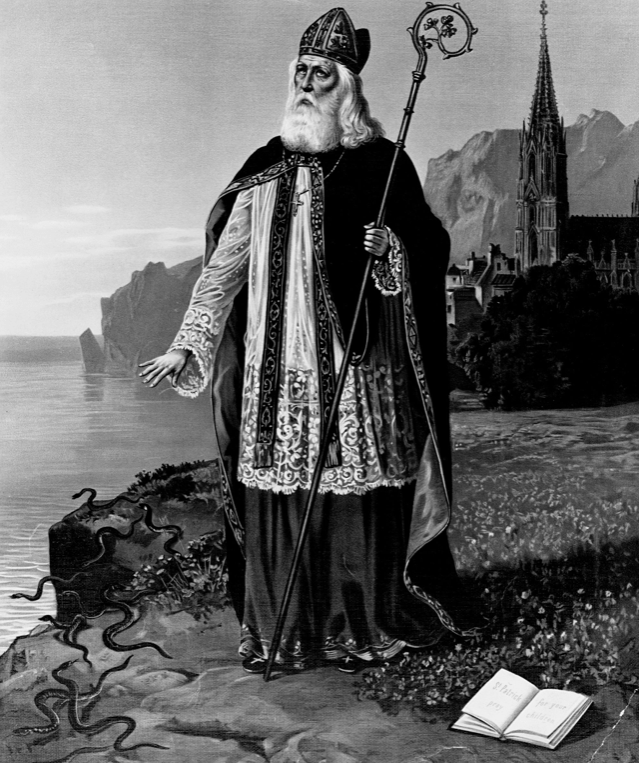
Although Patrick loved pagan’s he boldly spoke out against their evil practices. There is a famous saying, “Patrick was a gentleman, who through strategy and stealth. Drove all the snakes from Ireland.” While there is no fossil record of snakes ever existing in Ireland it can be safely said that these snakes weren’t snakes, but pagan teachers.
Screen Shot 2019-03-13 at 12.07.01 PM

After being threatened of an ambush by the Irish King of Tara. It is said that Patrick sang this prayer of protection,

“Christ, be with me, Christ before me, Christ behind me, Christ in me, Christ beneath me, Christ above me, Christ on my right, Christ on my left, Christ where I lie, Christ where I sit, Christ where I arise, Christ in the heart of every man who thinks of me, Christ in the mouth of every man who speaks of me, Christ in every eye that sees me, Christ in every ear that hears me. Salvation is of the Christ.”

The Druids didn’t care much for Patrick (52). He faced from them many threats, assassination attempts and betrayal. His response to these threats was,

“I fear none of these things, because of the promises of heaven. I have cast myself into the hands of almighty God, who is the ruler of all places.” (55)

He appeared like a bare-footed child walking in a minefield on D-day. It reminds me of Nate Saint and his colleagues who died at the hands of the Auca Indians in Ecuador, Nate Saint said, “I would rather die now than to live a life of obvious ease in so sick a world.”

You can see the love that Patrick had for the Irish in what he wrote to King Coroticus, a Welsh man who raided Ireland. In the letter, Patrick encouraged church leaders in Britain to shun the king and his bandits who killed Christians and stole Christian woman. Patrick’s grief over his lost loved ones is still felt 1500 years later,

“My newly baptized converts, still in their white robes, the sweet smell of the anointing oil still on their foreheads—you murdered them, cut them down with your swords! . . . With tears and sorrow I will mourn for you, my beautiful, beloved family and children—from the countless number born into Christ through me . . . Don’t they know that the same God is father of us all? No, they hate you—they hate us—because we are Irish.”

Screen Shot 2019-03-13 at 12.07.15 PM

As you read through Patrick’s Confession you see his love for prayer and hearing from God. To Patrick, God was a friend, Father, mentor, and Master. Prayer was his source of power for ministry and his armor against spiritual attack. Prayer for Patrick was birthed in the soil of difficulty and need. His prayer life launched he he was a teenager and slave,

“After I arrived in Ireland, I tended sheep every day, and I prayed frequently during the day. More and more the love of God increased, and my sense of awe before God. Faith grew, and my spirit was moved, so that in one day I would pray up to one hundred times, and at night perhaps the same. I even remained in the woods and on the mountain, and I would rise to pray before dawn in snow and ice and rain. I never felt the worse for it, and I never felt lazy – as I realise now, the spirit was burning in me at that time.” (16)

May the story and legacy of Patrick inspire you today 1558 years beyond his life. May we mimic his humble life and his Christ!

Screen Shot 2019-03-13 at 12.07.33 PM
Slemish Mountain, supposedly where Patrick was a slave and began to pray.

The Story of Saint Patrick

There are many myths about Saint Patrick. What I gleaned about the real Patrick, I did from his two writings: Confession (which I will quote from a lot) and Letter to the Soldier’s of Coroticus. I also recommend a church history book by Michael Haykin.

Birth

Patrick was born around AD 390. He grew up in a rural coastal village near what is today Wales, England. He lived under Roman rule, but by this time the empire was shrinking and crumbling.

Screen Shot 2019-03-13 at 11.25.29 AM
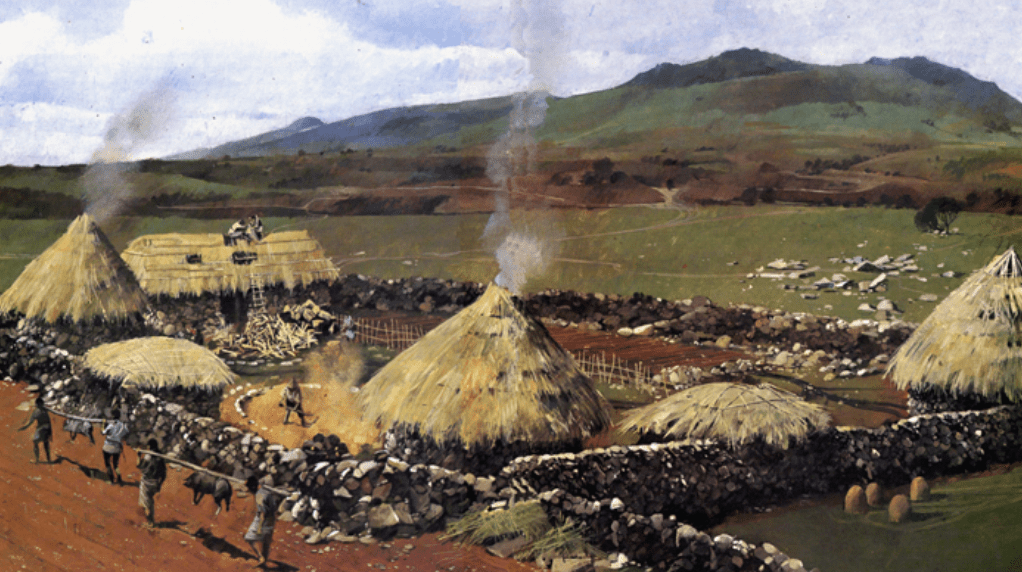
A 4th Century Irish homestead.

Teen Years

Patrick’s grandfather was a pastor and his father was a deacon. His family members were devote Christians and he learned the Scripture from a young age. However, as Patrick put it, he wasn’t serious about his family’s faith nor their teaching, rather he lived on the wild side (as a stereotypical pastor’s kid). He would be considered a practical atheist living as if God did not exist.

Do you have a pastor or church leader as a close relative? While this is a wonderful blessing a Christian family doesn’t guarantee you will be a Christian yourself. A young person must follow in the footsteps of Jesus and have faith in him alone, not just that of his family.

Slavery and Salvation

Historically, Rome never conquered Ireland. As Roman soldiers began pulling out of England there were more organized attacks by the Irish. On one occasion Patrick’s village was attacked. He said,

“I was about sixteen at the time. At that time, I did not know the true God. I was taken into captivity in Ireland, along with thousands of others. We deserved this, because we had gone away from God, and did not keep his commandments. We would not listen to our priests, who advised us about how we could be saved. The Lord brought his strong anger upon us, and scattered us among many nations even to the ends of the earth. It was among foreigners that it was seen how little I was.” (1)

In fact, Patrick became a Christian during his captivity in Ireland,

“It was there that the Lord opened up my awareness of my lack of faith. Even though it came about late, I recognized my failings. So I turned with all my heart to the Lord my God, and he looked down on my lowliness and had mercy on my youthful ignorance. He guarded me before I knew him, and before I came to wisdom and could distinguish between good and evil. He protected me and consoled me as a father does for his son.” (2)

After six difficult and dangerous years as a slave (35), Patrick, escaped Ireland by walking 200 miles to the coast and found a boat to England (16-22). The journey itself was his intro to missions. Overall, God used his time in Ireland for good. He said,

“That is why I cannot be silent – nor would it be good to do so – about such great blessings and such a gift that the Lord so kindly bestowed in the land of my captivity. This is how we can repay such blessings, when our lives change and we come to know God, to praise and bear witness to his great wonders before every nation under heaven.” (3)

Screen Shot 2019-03-13 at 11.25.39 AM

Calling and Training

After Patrick returned to England and reunited with his family he said,

“Again with my parents in Britain. They welcomed me as a son, and they pleaded with me that, after all the many tribulations I had undergone, I should never leave them again.” (23)

Isn’t that sweet!?

Patrick stayed for a while in England (and possibly in France) to study the Scriptures. This time made a huge impact on him and his love for the Bible. His writings are saturated with quotes from the Bible. He did cite parts of a creed, which may have been used in his home church in Britain. The creed shows the influence of the Nicene Creed from AD 381.

Although, Patrick was a contemporary of Jerome who wrote the Vulgate (Latin Bible) and Augustine, you don’t see them referenced in Patrick’s writings. They lived far from each other and their educations were very different. Patrick by his own admission said he had a meager education (9-13), yet this likely helped him relate to the Irish who looked down on the high-minded Celts and Gauls of Europe. Yet God uses both educated and uneducated in his service!

Ordained as a pastor, Patrick, shepherded in Britain for many years. At the age of 48 (the average life span was 35), when he should be cashing in on his retirement, he instead had a dream. In the dream a group of Irish called him to return and share the good news (23). Echoing Paul’s call to Macedonia (Acts 16:9), he believed the dream was from God. He was appointed bishop to Ireland by his church and was sent out as a missionary. This is when took on a common Irish name Patricius or Patrick.

Screen Shot 2019-03-13 at 11.26.00 AM

Return and Mission

Patrick returned to the place of his pain with the message of joy—place where he was once a slave he now brought good news of true freedom. In those days there were not many Christians in Ireland. It would have been considered unreached and unwanting (34). Palladius, the first known missionary to Ireland failed and went home discouraged after only a few years.

Patrick understood the Irish. He had lived with them before for six years. He already knew their culture and language. And he loved for them. When the people know that you understand them and love them, they infer that maybe God understands and loves them too. Patrick wasn’t about making civilized Roman Christians, he aimed to see a people and a culture transformed by Christ. He traveled all over the island staying mostly in the northern half. He preached boldly against paganism and got arrested many times by the Irish for stirring up the people against their customs.

Once Patrick stepped foot in Ireland he never returned home to England (43). He spent nearly 30 years in Ireland. He planted around 300 churches, established various Bible schools, and baptized “countless number” into the Church (est. 120,000). He led both kings and peasants to faith in Christ. He never cashed in on that retirement. He died in Ireland around March 17, 461 AD.

Screen Shot 2019-03-13 at 11.26.10 AM
A stone marking a spot near Patrick’s burial place.

The Celtic Church that Patrick helped to advance and establish became for 600 years one of the most evangelistic and mission-minded movements in all of Europe before it was absorbed into the Roman Catholic Church in 1100 AD. The churches Patrick planted believed in salvation by faith through grace. Celibacy was not forced or a requirement. Women were a vital part of ministry. The Bible was intensely emphasized, studied and memorized. Missions was a high priority.

Now that’s a legacy!  And I will share more about Patrick’s legacy in my next post.

7 Myths about Saint Patrick

Do you come from Irish descent? If so, you’re not alone.  34 million Americans have Irish in their DNA. That is seven times the population of Ireland itself. Tomorrow is Saint Patrick’s Day. It’s a day known for wearing green, drinking Guinness, and parades in big cities, but there is a man associated with this day—Patrick.

Patrick was a Jesus follower. It is not common for protestant or evangelical churches to pause to talk about a church father or missionary, particularly one that Roman Catholic’s have adopted as their own. Growing up in the Catholic church I didn’t know any different. However, Patrick lived at a time when the established Catholic church was in its infancy and he was far enough removed from its influence. Evangelical churches aren’t about venerating saints for it believe that all genuine followers of Jesus are “saints” in the “holy” sense of the word (e.g., Acts 26:10; Rom. 1:7; 1 Cor. 1:2).

Sometimes it is hard to separate the man from the myth. Over the years many embellished stories were told about Patrick, even by the church. It is good to remember that Patrick was just a man—an ordinary man extraordinarily used by God.

Here are seven common myths about Patrick:

  1. He wasn’t Irish. He was actually born in British.
  2. His real name wasn’t Patrick. He had a Roman name—Maewyn Succat.
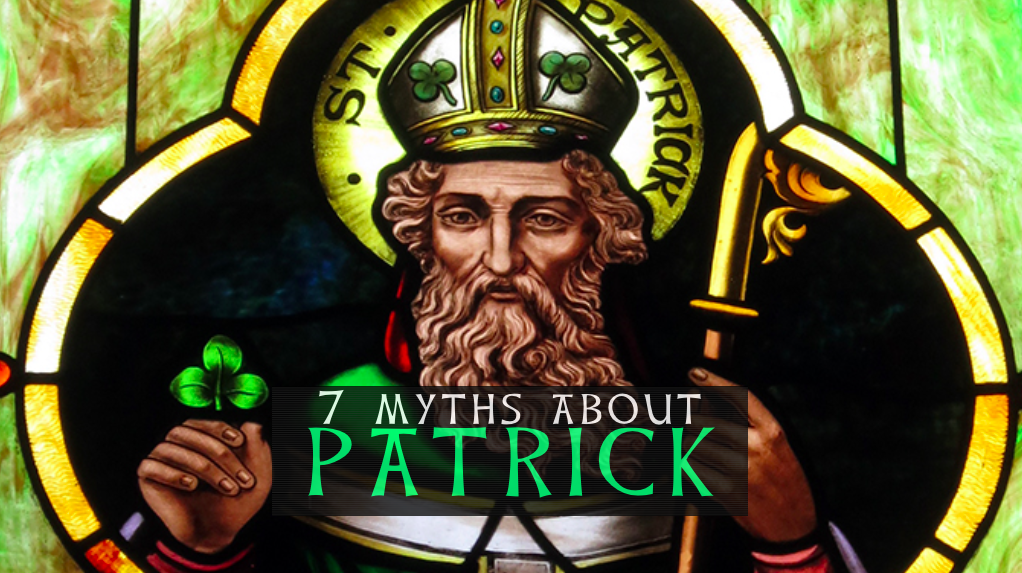
  3. He didn’t wear lots of green nor funny bishops hats.
  4. His first trip to Ireland wasn’t as a missionary nor was he Ireland’s first missionary.
  5. He didn’t identify with the Roman Catholic nor was he officially canonized by a pope or the church as a saint.
  6. He didn’t use the shamrock to teach luck, rather he may have used it to teach the Trinity.
  7. He is memorialized on March 17th, but we aren’t sure of the actual date of his death.

Tomorrow, I will peek into the life and mission of the real Patrick.  I will share about his amazing story and legacy.  It is worth knowing about!

Restored (Part 2)

This is a continuation of Part 1 that you can view here.

Shoulder the Debt (vs.18-20)

Paul went on to say, “If [Onesimus] has wronged you at all, or owes you anything, charge that to my account. I, Paul, write this with my own hand: I will repay it” In essence Paul said, “Don’t worry about what Onesimus owes you. I got it covered. I am good for this. Trust me.” Paul didn’t have much, but he was prepared to draw from his own tent-making funds to make things right between his friends. He was willing to pay for whatever Onesimus stole or whatever fractured their relationship. Whatever it cost.

Onesimus took responsibility for his sin by coming to Philemon, but he didn’t have the means to repay what he owed. He was a slave. He had nothing. Everything was his masters. All that Onesimus had he held in his hand—the letter and Paul’s promise to shoulder the debt.

Paul even took the pen in his hand and signed the letter. He made it official. The letter was his IOU. Now Paul took more than the financial or legal debt, he also took upon himself the emotional debt—the hurt, the pain, the injury, the betrayal. That was an immense burden, but it is the weight of the burden your shoulder when you put yourself in-between. Restoration takes you to the place of shame and pain and death.

Does that bring an image to your mind? It should. You and I had a debt we could not pay. Jesus stepped in-between and paid it. He stood in your place. He was rejected and despised. He took your pain and suffering. He took the eternal consequence for your sin. Theologians call this the doctrine of imputation or “to put on one’s account.” Jesus puts your debt on his account. He shouldered the debt, the pain, the shame, the injury, and betrayal. And he says to the Father on your behalf, “[Justin] no longer owes You a debt because I paid it fully on the cross. Receive [Justin] as You would receive Me. Let [Justin] come into the family circle!”

We, like Onesimus were disobedient and useless servants. But by God’s grace and forgiveness, we became useful again—to him, the church, and the kingdom. While Paul sealed the promise with his signature, Christ sealed it with his own blood. Interestingly, Philemon is the only letter where Paul doesn’t talk about the death and resurrection of Jesus. Because he is acting it out. It is the gospel in real life—in a real relationship.

Paul became like Jesus to Philemon and Onesimus. And this is what you look like when you help restore. You become an image of Jesus and the gospel when you bring two people together who need to be restored.

Restoration ministry is not just for pastors or professionals. If you’ve been restored to God, then you are equipped to restore people to God and others too, “All this is from God, who through Christ reconciled us to himself and gave us the ministry of reconciliation; that is, in Christ God was reconciling the world to himself, not counting their trespasses against them, and entrusting to us the message of reconciliation.” (2 Cor. 5:18-19; cf. Colossians 1:13-22) The implications of the gospel are very personal, never private.

Paul makes it as personal as one can get. He says, “—to say nothing of your owing me even your own self.” Wow! Boom! Knockout punch! Paul isn’t saying he is Philemon’s Savior, but that he led him to the Savior. He says “Philemon, your eternal life is indebted to me. And by comparison, Onesimus’s debt is pretty puny.” Paul puts his relationship on the line here. He pushes all the chips to the center of the table. He’s all in. He blows the roof off what we tend to think of Christian friendship or fellowship. Biblical friends are willing to get uncomfortable, press in, poke around, even land a loving punch so that their friends are right with God and others. As Solomon said, “Faithful are the wounds of a friend.” (Proverb 27:6)

Paul’s true motivation comes out, “Yes, brother, I want some benefit from you in the Lord. Refresh my heart in Christ.” Jesus wants Philemon and Onesimus restored. Paul wants it too. Paul can’t think of anything more refreshing to his heart (lit. “guts”) than see them restored. He simply wants Philemon to do what he is so good at doing—loving Jesus, others and Onesimus.

Do you need to act like Jesus and put yourself in-between two people? What resources do you need to free up to shoulder the debt of someone who needs to be restored?

Trust God will help Make it Right (vs.21-25)

These final verses show us how to encourage, motivate, follow-up, and ultimately trust God with the results. Restoration can’t be forced. All you can be is faithful.

First, Paul says, “Confident of your obedience, I write to you, knowing that you will do even more than I say.” Paul is confident in the work God has done in Philemon, confident in his love for Christ, confident that “love believes all things,” confident in what God can do through the fruit of obedience, and confident Philemon will do “more.” Possible referring to Onesimus’ freedom or sending him back to Paul. Could this confidence be said of you?

Second, Paul adds, “At the same time, prepare a guest room for me, for I am hoping that through your prayers I will be graciously given to you.” What does Paul mean? Is he hinting that he will come to follow up on Philemon? As if Paul says, “I am coming to check up on you.” It seems that way. We don’t know this for sure. We do know that Paul cared about both of these men. He loved them. He wanted to see the fruit of their restoration with his own eyes.

Third, Paul connected Philemon to people they both knew, “Epaphras, my fellow prisoner in Christ Jesus, sends greetings to you, and so do Mark, Aristarchus, Demas, and Luke, my fellow workers.” Paul mentions five men in these verses calling them “coworkers”. The list is identical to the list as the of the letter to the Colossians. Presumably, each of these people would vouch for Onesimus and concur with Pauls’ request for restoration.

These men were assistants to the gospel. They were no less important than Paul, they are essential team players who know their role on the team. They are often selfless, not ball hogs. John Stockton holds the record for the most assists in the NBA. Over his 19 seasons he had 15,806 assists. His record is seen by many as one of the most untouchable records in any sport. He has early 4,000 assists more than #2. He has half the amount of assists as Kareem Abdul-Jabbar has points (38,387) over 20 seasons.

What is ironic about this list of assistants is that Paul had problems with many of them, yet he includes their names nonetheless. Relationships are plagued with problems, but as Paul would attest this doesn’t make them less or more valued. They are all brothers.

Epaphras founded church in Colossae. Pastored a church with a lot of problems and was in prison with Paul (Col.1:7-8; 4:12-13).

Mark was the writer of the second Gospel. He had a falling out with Paul on their first missionary journey (Acts 12:12). Paul hinted that Mark couldn’t hack it because the mission was too hard so he bailed on Paul. Before his second journey, Paul, urged Mark stay back, but Barnabas took Mark and split from Paul. Like Onesimus, Mark had been useless, but was now useful to Paul, Barnabas, and Christ (Acts 15:38; 2 Tim. 4:11).

Aristarchus was loyal to Paul and went to prison for his association with Paul (Acts 19:29; 20:4; 27:2; Col. 4:10). Demas had a good start to his ministry, but ended badly. 2 Timothy 4:11 informs us that Demas deserted Paul, “because he loved the present world.” Paul was deeply hurt by Demas (Col. 4:14).

Luke was “the dearly loved physician” (Col. 4:14) who penned the third Gospel and the book of Acts. He traveled with Paul, helped care for him, and became a dear and faithful friend. He was the only person with Paul in his last days before his execution (2 Tim. 4:11).

Paul and Philemon had some pretty important friends. Each of them were one in Christ. And they backed Paul on behalf of Onesimus.

Finally, Paul ends this letter in the same way he began: with Jesus, “The grace of the Lord Jesus Christ be with your spirit.” Now with the context of this letter in the rearview mirror, this verse makes a lot of sense. Paul opened and closed the letter with a prayer for God’s grace to be upon Philemon, not to simply hear the information, but to do it—to reconcile—to restore, and serve the health of God’s family by mending a broken relationship. This word grace in Greek is karis. It speaks of God’s power and ability to do what he said he would do.

How do you think the story of Philemon and Onesimus ended? We don’t know for sure.  The evidence points to a “happy ending.” The fact, that we have the letter gives some proof. Ignatius wrote in the first century about a “loving” pastor in Ephesus by the name of Onesimus. Is this the same Onesimus or a guy who shared his name? Because of the date and proximity to Colossae it makes sense that this could be the same Onesimus.  We’ll never know, but I bet he ended up with a far better result than if Paul had never wrote the letter to begin with.

It is likely that the Spirit of God has put someone or more people on your mind that need restoration—two friends, parents, former members of the church. You may be the only emissary that God has put into their lives to help them make things right. Will you put yourself in-between them? Would you be willing to shoulder their debt? Will you trust God to do the the ultimate work of making it right? Can I pray for you to be a friend, brother, and peacemaker he has called you to be?

Questions for Reflection

What was Paul’s IOU? What significant point is he making when he says “charge it to my account”? How should that effect how we deal with conflicts within our church?

Do you think you have played a pivotal role in certain relationships in your life? How can God use you to bring a godly influence on the people and relationships around you?

How might the respectful treatment of individuals, reparation of harm done, and intentional face-to-face connection have contributed to healing in the meeting between Onesimus, Philemon, and then their church?

What lessons can you draw from Paul’s efforts as a peacemaker as you consider how to be a peacemaker yourself?

Are there any Christ followers that you personally know who are at odds with each other? Is there anything that you could do to help them reconcile?

Why does grace play a key role in all that is going on in this book? How do you need to have more grace for people around you?

Restored (Part 1)

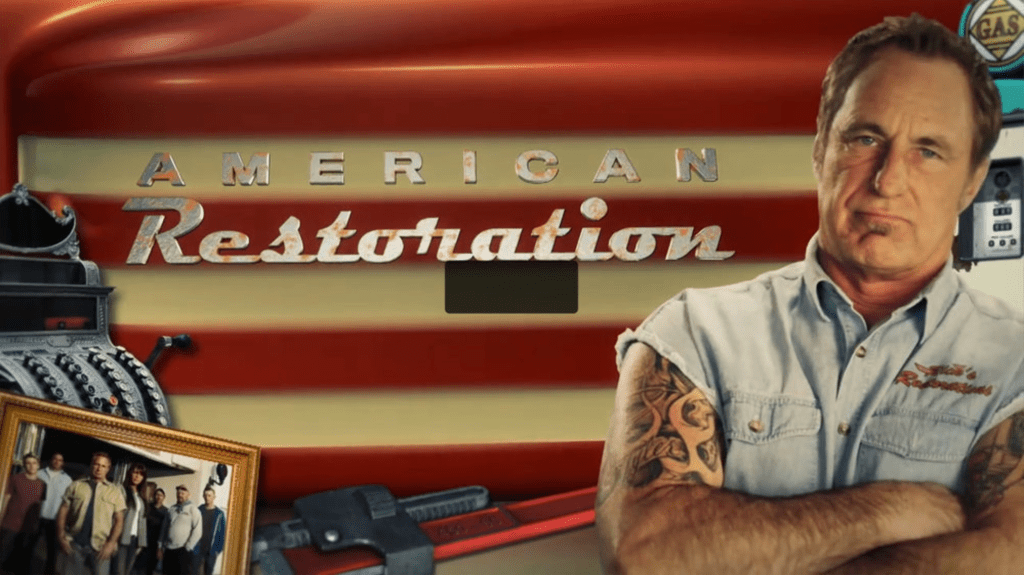
Do you enjoy watching TV shows about restoring things? I do. There is Fixer Upper, Property Brothers, or Good Bones. One of the shows that I like is American Restoration where, Rick Dale, restores old cars, gas pumps, collectables or Americana. What is fascinating about shows like these is how people take rusted, deteriorated or rundown things and make them beautiful again—restoring them to what they once were or even better than they were.

How many of you have renovations going on around your home? How many of you have had renovations going on at your home for more than a year, three-years, or ten-years? Sometimes the longer we postpone projects the harder it is to get back to them. It can be the same when it comes to restoring relationships, which can be much harder than restoring things.

Do you know two people who are not in a right relationship with one another, but you are in a right relationship with both of them? Can you think of a situation like that? This message is for you. This is a message about how to bring restoration to relationships around you.

Today we will complete our journey through the letter to Philemon. It is one of the most personal and powerful letters in the Bible. In the letter, Paul, is mediating a rift between two believers—Philemon, a wealthy man who Paul led to Christ while visiting Ephesus, and Onesimus, Philemon’s runaway slave who Paul had recently led to Christ in prison in Rome. Paul had just sent Onesimus back to Philemon to make things right with this letter in hand.

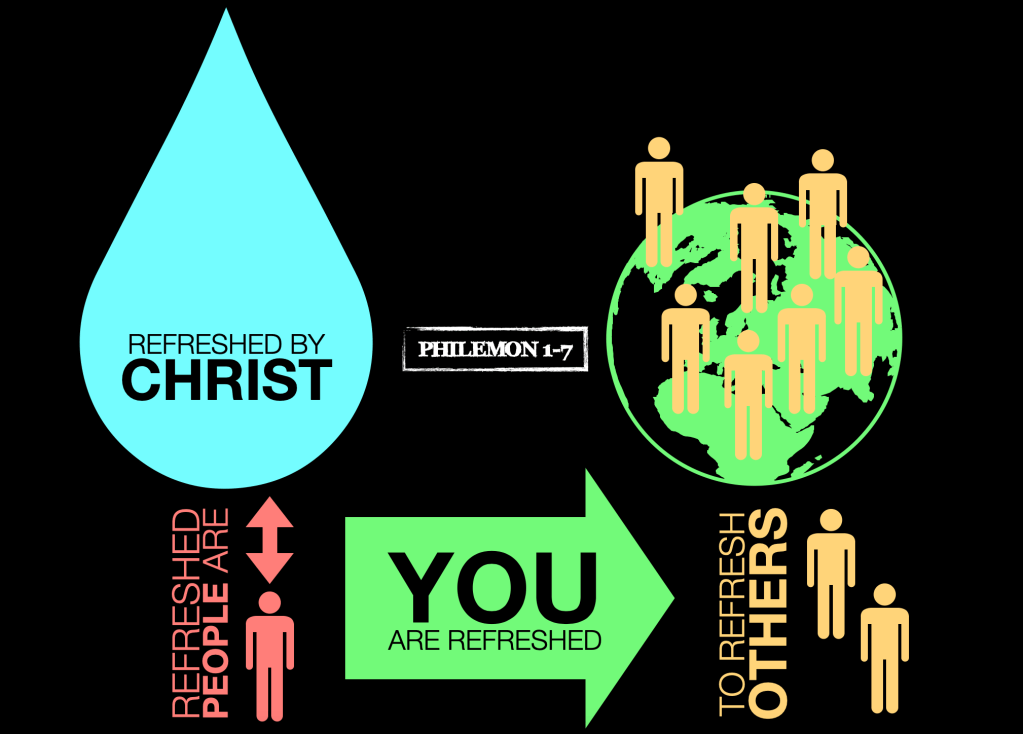
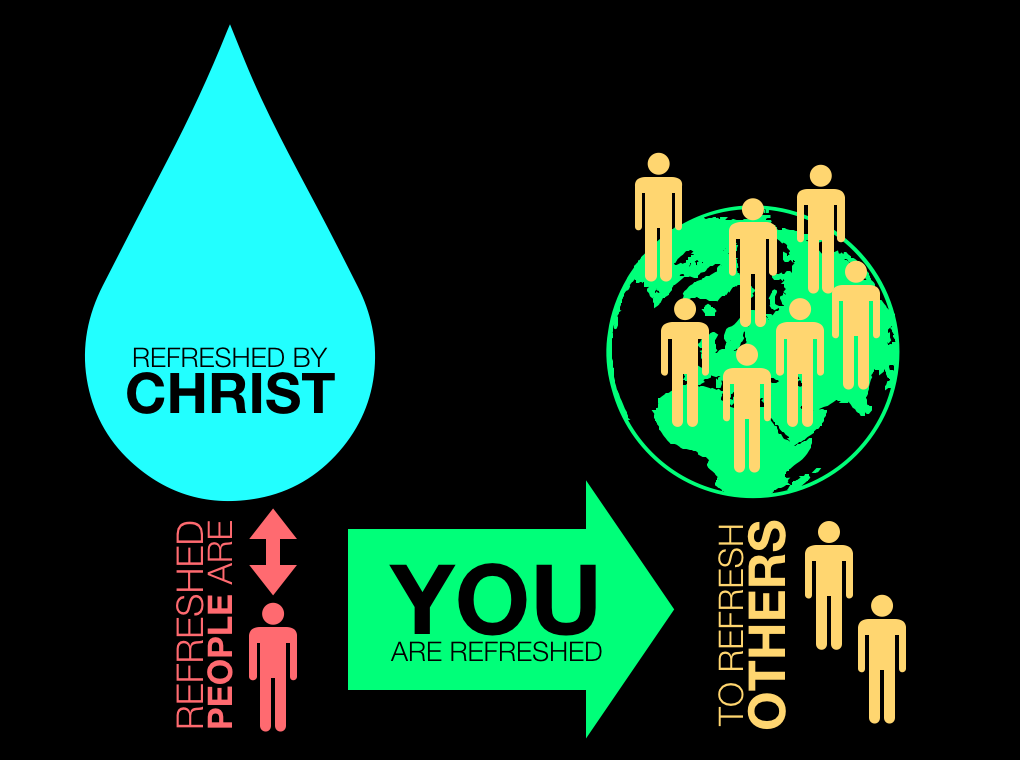
So far we have learned together how to be people or a church refreshed by Christ and by one another (vs.1-7). Refreshed people are refreshed by Christ and you are refreshed to refresh others. Paul expressed immense gratitude and gentleness, which set the tone for the entire letter. Then Paul asked Philemon to forgive Onesimus. Paul didn’t focus on the sin or offense, rather he focused on the big picture of what God was using for good, particularly when people are forgiven much in Christ they can forgive others (vs.8-16). Today, we will learn what it means to be restored and how to make things right in our relationships as Paul moves these men from forgiveness to restoration (vs.17-25).

You might ask, is there a difference between forgiveness and restoration? Yes, there is. Do you know people who “forgave” but the relationship remains unchanged? This where restoration comes in.

I have four children. Trying to get them to forgive and restore is difficult. After they have a tiff I get them together, “Say sorry to your sister.” It’s not uncommon for them to glance at each other and say rapidly, “Sorry.” To which I respond, “No. Stop. Really, say you are sorry.” They say, “Soooorryyyyyy!” “Now give your sister a hug.” And they become as stiff as a board as if to say, “Nope. No way. Saying sorry was enough. This has gone too far.” Restoration can’t be forced!

Restoring relationships is difficult. Period. Paul models how it can happen. Today we will discover how to know if you are an emissary (aka: representative or model) of restoration.

Put Yourself In-between (v.17)

Paul put himself in-between two people in conflict. He cared for both. He took his theology from his head to the streets and walked it out. He approached it from two angles:

First, Paul approached it from the angle of his relationship with Philemon. Paul said, “So if you consider me your partner,” The word for “partner” here is from the word koinwnos which in Greek is translated “sharing one faith” or “fellowship” (cf. v.6). It would be as if Paul said, “The one thing we share above all is Christ.” They were truly partners and teammates that shared one faith in Christ and one mission to spread the name and fame of Christ.

Second, Paul approached it from Onesimus’ new relationship to Philemon. He said, “receive [Onesimus] as you would me.” This is the first thing Paul tells Philemon to do. I can hear Paul saying, “I know it may be a surprise to see that Onesimus is back, but think of him as me. I can’t come because I’m in chains. Welcome him with open arms as if I was there instead.”

Does this remind you of another story in the Bible? It certainly reminds me of Jesus’ story of the Prodigal Son. When the prodigal son returned, the father ran with open arms to meet him and welcome him home. This is the image Paul gives here, “Philemon, welcome your prodigal slave.” Think for a moment how God receives you through Christ. As a Christian you are so identified with Jesus that God receives you as he receives his Son! You are “accepted in the Beloved” (Eph. 1:6) and clothed in his righteousness (2 Cor. 5:21). One day, God will welcome you into eternity and throw a banquet honoring your partnership with his Son!

Paul gets involved. He stands in the middle. He puts his arms around Onesimus. He puts his arms around Philemon. He brings them together. Paul becomes an in-betweener. Have you ever had to be an in-betweener? Can you think of two people not in a right relationship with each other, but you are in a right relationship with both? May this letter encourage you.

It isn’t natural for us to put ourselves in-between two people in conflict. It puts our relationship with both people at risk. Therefore, we can remain uninvolved and ignore the conflict. We wash our hands of the mess. We stay comfortable. We justify it by saying, “It’s not my problem,” “Someone else will deal with it,” “I’m not qualified,” “Who am I to judge?” “It will take too much time and I’m busy,” or “It’s not that big of a deal.”

Truly, if you have knowledge of two people in conflict with each other, then you are already involved. You may be the only one who knows. Unlike Cain, you are your brothers keeper. You may think that avoiding or dodging conflict is a strength, but it is a huge weakness for Christians and bypasses being a restorer of relationships in Christ’s church.

If there are two people, two believers in your family or church, do you think God’s heart is grieved that those two people are not in a right relationship with one another? Yes! He is grieved when two people say they love God, but hate each other. Do you think that God cares that you would care about their relationship as much as he does? Yes!

God is a restorer. God’s heart is restoration. All throughout the Bible God models restoration. From Adam and Eve to King David to the Apostle Peter, God takes the initiative to restore people to himself. In the Law, God gave rules that encouraged offenders to payback what they stole and make things right (Deut. 30:3-14 Num. 5:5-10). Later God sent prophets to encourage his people to turn back to him and promised to restore them to former glory (Joel 2:25). And Jesus said, “Blessed are the peacemakers, for they shall be called sons of God.” (Matthew 5:9) Jesus, the Prince of peace, was the ultimate restorer.

Questions for Reflection:

Are there people you need to allow back into your space, and open up your heart again to trust, love, and even serve? God will help you, as he cares about restoration and health in God’s family like nobody else! As I said last week, you are most like God when you forgive. It is also true to say you are most like God when you restore—when you put yourself in-between.

Have you ever stood up for someone or stepped into a situation to try to make things right? What happened and what did you learn from it?

What potential barrier or roadblock does Paul attempt to alleviate in the restoration of Philemon and Onesimus?
What is the difference between forgiveness and reconciliation? How did Paul help achieve both in this letter?

What was Paul’s IOU? What significant point is he making when he says “charge it to my account”? How should that effect how we deal with conflicts within our church?

Do you think you have played a pivotal role in certain relationships in your life? How can God use you to bring a godly influence on the people and relationships around you?

Forgiven (Part 2)

This is a continuation of a study on Philemon 8-16.  You can review Part 1 here.

Forgiveness doesn’t end with the words, “Forgive me.” Paul knew this. Philemon could say, “I forgive you, Philemon, but the Roman law says I can still have you killed or at least beaten.” There were a number of things that Philemon could do if he wanted.

You know this feeling, right? A person comes to you, admits they are wrong. You know you have to forgive them, but what about after that? Now they’re on your turf! They’ve admitted they’re wrong! They’ve opened themselves up to anything! The temptation is to strike, right? Hurt them as much as they hurt you. Make them pay. See how sorry they really are. Maybe keep the offense in your back pocket and slap them with it later. After all, it’s your right!

The world would say to Philemon, “Onesimus owes you. Make him pay. Make him feel what you felt. Pour on the pain. Crush him. Unleash the punishment. Tighten his chains.”

You may have a right to punish your offender, but you don’t have to punish them before you forgive. All over scripture you are told to treat your enemies well—how much more when a brother or sister in Christ comes to you repentant and in need of forgiveness! If they are a follower of Jesus, then Jesus was punished for their sin. You need not add to it. Don’t answer forgiveness with more pain and punishment.

“I appeal to you for my child, Onesimus, whose father I became in my imprisonment. (Formerly he was useless to you, but now he is indeed useful to you and to me.) I am sending him back to you, sending my very heart.” – Philemon 10-12

Paul doesn’t shy away from Onesimus’ offense, but notice how he comes to his defense. It’s as if Paul says, “Onesimus is a new man. He has truly repented. He has made things right with God and he wants to be right with you, Philemon. Yes, he became a “useless” person, no good to anyone, but now he is living up to his name and is “useful” again—to God, to me and to you! Now honor him and what God is doing in him by NOT acting on your right to punish him or take what you are due. Rather give him what he doesn’t deserve—mercy and grace.”

Screen Shot 2019-02-25 at 6.59.27 AM

Forgiveness gives mercy and grace

Do you notice that within the word “forgiveness” is the word “give”? Forgiveness comes with a gift. Forgiveness gives up resentment or payback and gives grace and mercy in its place.

Forgiveness is costly. It gives up what you think you deserve for what the other person deserves. Yes, it’s awkward, often risky, usually emotional, and definitely challenging. Onesimus traveled over 1,000 miles from Rome to Colossae to seek it. And Jesus left heaven to come to earth and died to give it. We ought to follow this example and go the distance to forgive too. Forgiveness may be costly, but not forgiving is more costly costing you intimacy with God and people. But with the great cost comes great reward—a relationship deeper, richer and stronger than it ever was before.

Jesus didn’t withhold words about the swiftness and seriousness of seeking forgiveness,

“…if you are offering your gift at the altar and there remember that your brother has something against you, leave your gift there before the altar and go. First be reconciled to your brother, and then come and offer your gift. Come to terms quickly with your accuser…” (Matthew 5:23-25)

This is your one pink slip from Jesus to get out of church or to be late for church. I had to use this slip recently with my wife. On the way to church, I said something stupid pretending to be smart. It offended her. In the church parking lot Sarah said,”I’m not going in there like this.” She was the smart one. I was ready to go in there pretending everything was alright. But you know the misery of worshiping God when you are in the wrong with someone. I sought her forgiveness and we ended up being awkwardly late to church.

In Ephesians 4:26 Paul said, “…do not let the sun go down on your anger, and give no opportunity to the devil.” The implication here are that you need to take the time and make the effort to seek forgiveness or you put out a welcome mat for Satan and give him a key to enter in to cause more pain and harm. You know what it’s like to go through a night of uncertainty and misery after a fight with someone. You ask yourself, “Do they still love me? Are we still friends? What happens now? Why did I say that? What can I do? Maybe it’s too late.”

Martin Luther rightly said that we are all Onesimus. Outside of Christ we too were runaway slaves, created to serve God, but guilty of sin we ran as far away from him as we could get. Yet God in his mercy took us who were once useless and made us useful in his kingdom. Forgiveness is about God and his glory, not ours. This is about God’s mercy, God’s kindness, God’s grace, and God’s forgiveness. God is the hero of this story, Paul’s story, Philemon’s story, Onesimus’ story, your story, and everyone’s story. Forgiveness is a story bigger than us.

Screen Shot 2019-02-25 at 6.59.50 AM

Forgiveness is used by God for good

This is probably my favorite part of the letter. If Philemon were a made for TV movie this one-liner would be a tearjerker. Paul says,

“For this perhaps is why he was parted from you for a while, that you might have him back forever, no longer as a bondservant but more than a bondservant, as a beloved brother—especially to me, but how much more to you, both in the flesh and in the Lord.” – Philemon 15-16

It is almost as if Paul says, “Philemon, I know it’s hard to hear right now. And I know that it doesn’t make sense, and that there’s real pain in your life. Perhaps this was God’s plan all along. Perhaps this is the only way you would be able to see Onesimus as more than just your slave, but now be able to see him as a human, a brother in Christ. Perhaps this is part of God’s plan to finally break down the walls between masters and slaves, between classes, and bring unity to your home, your church, and your nation. Perhaps God is setting you up as an example to follow so that more people will throw away prejudice and embrace their brothers and sisters in Christ. This could be the beginning of something beautiful and redemptive—and you’re on the forefront of it! Don’t get in the way of what God is using for good!”

Paul willing risked his friendship with Philemon because he knew that God was doing something much bigger. Paul invited Philemon (and you and me) to see past arguments, hurts, and relationship pain to the bigger, gospel picture. The one that displays to the whole world that we are people of love, mercy and grace; and nothing does that better than when people see forgiveness your relationships.

When you hold onto unforgiveness, you are no different than the world. Eventually, as someone said, “Unforgiveness is like drinking poison yourself and waiting for the other person to die.” Or unforgiveness is like a cancerous tumor. The longer it remains the harder, messier and more complicated it is to remove. Unforgiveness makes you like a dog on a leash and your master is the one who has offended you.

When you hold onto unforgiveness you think you own your offender, but really it is the hurt, rejection, anger, and shame of the offense that owns you. You become a slave to it. When you realize that you can’t own no one, forgiveness breaks the chains of both the offense and the offender. This doesn’t mean the hurt completely goes away or that it will be erased from your memory, but forgiveness takes the power out of the poison. It hands the reigns over to God who handles vengeance better than you can.

It’s important that we address the issue of slavery within this letter. When we think of slavery today, we tend to think of it through the lens of colonial America. Images emerge of race and color, masters beating their slaves, and ships sailing from Africa to America. It was horrific. However, this image doesn’t line up with the Roman Empire in the first-century. In the Roman Empire some slaves became property through battles or by being the children of slaves, but people also became a slave to repay debts. This is similar to our credit system today, except that the debtor worked directly for their creditor.

Let’s be clear, nowhere does the New Testament provide theological support or justification for slavery. The way of the Empire was not the way of Christ. Although Paul didn’t speak directly against slavery, letters like Philemon provided the seedbed that eventually led to the abolition. Paul’s concern for slavery wasn’t primarily about brotherly love and equality, though those are good things, but about people being “in Christ”.

If you are in Christ, it removes labels such as “Jew or Greek, free or slave, male and female,” and replaces it with brother or sister (cf. Col. 3:11).

You are no longer a slave. You are a child of God—a new creature in Christ.

Physical slavery is a picture of our spiritual slavery. Paul reminds us that we were all once slaves, ultimately betrayers against God, chained to our sin, holding a debt we can’t pay. While there are many stories about forgiveness in the Bible, Philemon is a living example of the Jesus’ parable of the Unforgiving Servant (Matthew 18:21ff). In the story, a servant was forgiven $10 million dollars by his master. Never in a lifetime could he repay it. But when that servant’s friend owed him $10 dollars he nearly killed him. The master made his servant come back, called him wicked, and now asked him payback his debt. Forgiveness cancels the debt. Jesus was the master. He forgave the greater debt.

Paul knew that the #1 thing that destroys the church, its mission, and the reputation of Christ is when two believers live in unforgiveness. On the flip side, two believers who forgive show the world the power of the gospel.

“When you were dead in your sins…God made you alive with Christ. He forgave us all our sins, having canceled our debt, which stood against us and condemned us; he has taken it away, nailing it to the cross.” –  Colossians 2:9-14

You may find yourself in the position of Philemon—someone who has been wronged by someone else and struggle to forgive. Or you might find yourself in the position of Onesimus—someone who has wronged someone else and is in need of repentance. Throughout our lives we find ourselves in both places, people needing to forgive and people needing to be forgiven. The hardest word God asks you to say is “Forgive me,” or “I forgive you.”

Where are you at today in the relationships around you? Do you need to receive God’s forgiveness?  Is there someone that you need to ask forgiveness from, or is there someone you need to talk to and let them know that what they did hurt you?

Remember who you are “in Christ”: One who is forgiven much who can forgive much too.


Questions for Reflection:

What is the meaning of Onesimus’ name? How does Paul play on his name? How was Onesimus useful to both Paul and Philemon?

How does our modern history of slavery shade slavery in Onesimus’ day? In most of the world there are groups of people severely restricted by economic and social barriers in ways that strongly resemble slavery. There are also people actually enslaved. How can you help them find freedom?

Why is the reality and analogy of ‘slavery’ so important to understanding our salvation and who you are?

Forgiven (Part 1)

Since going to Chad, Africa I have learned three foreign languages—French, Arabic and a tribal language. Each are unique and difficult. I’m not bragging. I’m no linguist genius. Those who know me well know that I often slaughter the English language!

English is a difficult language. Just ask those trying to learn it.  Here are the Top-10 hardest words to say in English for a non-English speaker:

  • anemone
  • colonel
  • isthmus
  • Massachusetts
  • worcestershire
  • sixth
  • asterisk
  • defibrillator
  • squirrel.

But the hardest thing to say in English is “forgive me.” Undoubtedly it is the hardest thing to say in any language!

Screen Shot 2019-02-25 at 6.24.18 AM

Today we will continue discovering Paul’s letter to Philemon. As a review, remember Paul began the letter by thanking Philemon for how he has been refreshed in Christ through him because of his love for others, but now Paul will have hard words for Philemon asking him to forgive his runaway slave, Onesimus, who returned home with Paul’s letter in hand.

If all we had to the New Testament was this letter and no other, we would still see Christianity was a radical new way—a counter-cultural, society-altering, demographic-unifying way of life. It still is. And today we will discover how this letter tackles issues like slavery, betrayal, and forgiveness.

It was likely this letter was read publicly by Philemon’s son and all the church in his home listening. Can you imagine the scene? Can you feel the weight of it? What will Philemon say? What will he do? What would I do? This letter isn’t theoretical, it’s true to life because in life we will find ourselves in both Philemon’s shoes and Onesimus’ shoes. This letter is a guide to how the gospel touches relationships. Philemon verses 8-16 are really a practical theology of forgiveness

Screen Shot 2019-02-25 at 6.23.09 AM

Forgiveness isn’t Optional

Paul began by saying, “Accordingly, though I am bold enough in Christ to command you to do what is required…” (v.8) Paul could have played the trump card. He had the scriptural authority, pastoral authority, spiritual authority and apostolic authority to command Philemon to make things right with Onesimus, but he didn’t. He didn’t abuse his power for personal gain. He didn’t ignore the issue either. He didn’t push it under the rug. He didn’t say, “Oh, let’s just forget about it.” No. He simply and pastorally put the issue of forgiveness into Philemon’s hand. He honored Philemon and honored the process.

Forgiveness isn’t optional. It isn’t dependent on how you or the other person feels, how long it’s been, or anything else. Forgiveness is a command (an imperative). Jesus teaches this in the Lord’s Prayer. He says when you pray say,

“Our Father in heaven, hallowed be your name. Your kingdom come, your will be done, on earth as it is in heaven. Give us this day our daily bread, and forgive us our debts, as we also have forgiven our debtors. And lead us not into temptation, but deliver us from evil.  For if you forgive others their trespasses, your heavenly Father will also forgive you, but if you do not forgive others their trespasses, neither will your Father forgive your trespasses.”  (Matthew 6:9-15)

Jesus commands forgiveness. Without even pausing for a breath, Jesus connects our understanding of forgiveness with God to our willingness to forgive others. The implication is that we cannot say we understand how much we are forgiven if we are unwilling to forgive others.

C.S. Lewis when reflecting on Jesus’ words about forgiveness said this,

To be a Christian means to forgive the inexcusable, because God has forgiven the inexcusable in you. This is hard. It is perhaps not so hard to forgive a single great injury. To forgive the incessant provocations of daily life—to keep on forgiving the bossy mother-in-law, the bullying husband, the nagging wife, the selfish daughter, the deceitful son—how can we do it? Only, I think, by remembering where we stand, by meaning our words when we say in our prayers each night, “Forgive us our trespasses as we forgive those that trespass against us.” We are offered forgiveness on no other terms. To refuse it is to refuse God’s mercy for ourselves. There is no hint of exceptions and God means what he says.” from Weight of Glory

Why forgive? You’ve been forgiven much! To Colossae, Philemon’s church, Paul said, “Bear with each other and forgive one another if any of you has a grievance against someone. Forgive as the Lord forgave you,” (3:13) to the Ephesus he said, “Be kind and compassionate to one another, forgiving each other, just as in Christ God forgave you.” (4:32)

If you have wronged someone and you haven’t made it right, forgiveness isn’t optional. If you were wronged and the other person has asked for your forgiveness, then forgiveness isn’t optional. If you are a Christian, then forgiveness is a command.  The alternative is dangerous.

Screen Shot 2019-02-25 at 6.23.46 AM

Forgiveness is an expression of God’s love

Forgiveness when expressed is a beautiful thing. There is nothing that makes you more like God than when you forgive. Paul was already confident in Philemon’s love, but that would be tested to forgive Onesimus. Paul is not going to twist Philemon’s arm, rather he says, “I am bold enough in Christ to command you to do what is required, yet for love’s sake I prefer to appeal to you…” (v.9) Paul adds in verse 14 that he doesn’t want Philemon to forgive out of compulsion, but to love Onesimus with Christ’s love that is so natural to him (cf. vs, 5-7).

C.S. Lewis said, “Everyone says forgiveness is a lovely idea until they have something to forgive.” Lewis hints at the many rationalization or ideas we use to explain away why we shouldn’t forgive. For example, “The hurt is too big to forgive,” Time will heal it,” or “Why forgive if they’ll for it again?”

God doesn’t want you to forgive people because you have to. He wants you to want to because of Christ’s love for you, your love for Christ, and your love for your siblings in Christ.

The idea of loving and serving out of compulsion is an interesting conundrum in Scripture. When Paul told the Corinthians to give to help suffering Christians in Jerusalem he said, “Each one must give as he has decided in his heart, not reluctantly or under compulsion, for God loves a cheerful giver.” (2 Corinthians 9:7) Giving is better if done with love.

When Peter spoke to the elders of the church he said, “…shepherd the flock of God that is among you, exercising oversight, not under compulsion, but willingly, as God would have you …” (2 Peter 5:2) A leader in the church is not to serve because he feels he has to, but because he wants to. The same goes for preaching, counseling, teaching Sunday School, and helping in the nursery.

Which is better, the gift given out of love or the one out of compulsion? It sort of deflates the gift and the giver when you hear on your birthday, “Here’s your birthday gift. I had to get it because it’s your birthday.” Or on Valentines Day you hear, “Here’s a rose, babe. I’m supposed to get you flowers because I saw it in a commercial.” Everything is better when motivated by love rather than obligation, right?

God’s love is most visible when you forgive. Forgiveness is a visible expression of the gospel in Romans 5:6-11, “but God shows his love for us in that while we were still sinners, Christ died for us.” Paul is putting that theology into practice. Forgiveness dies to self for the sake of loving like God loves. Forgiveness removes the ugly graffiti in your soul and lets God’s love shine.

Part two is coming soon…


Questions for Reflection:

What do you learn about forgiveness from Paul, Philemon and Onesimus? What do you learn about the forgiveness you have received from Christ? What is your motivation to forgive (cf Ephesians 4:32-5:2)?

Philemon had a difficult choice to make.  He had been wronged by someone who he had power over but apparently had come to believe in Jesus. A spiritual leader in Philemon’s life (Paul) was strongly urging him to forgive the man who had wronged him. Put yourself in Philemon’s shoes. Could you forgive? Would you build a friendship across a cultural divide? Could you trust God to make this right? Would you do the right thing? Could you love the one who had wronged you?

Do you have anyone who has wronged you to whom you can extend forgiveness? What would that look like?

Refreshed by One Another

You are Refreshed to Refresh Others

“and I pray that the sharing of your faith may become effective for the full knowledge of every good thing that is in us for the sake of Christ. For I have derived much joy and comfort from your love, my brother, because the hearts of the saints have been refreshed through you.” Philemon 6-7

In return for being refreshed by Christ and Philemon, Paul asks God to refresh Philemon. Specifically, that God would refresh Philemon by making his knowledge of all the good things he has in Christ, full. Paul is asking God to give Philemon more of Christ. What a prayer! It is a powerful prayer for Philemon who will be asked to show partnership not just with his friend Paul, but with his runaway slave who betrayed him.

Screen Shot 2019-02-24 at 4.23.53 PM

You will only refresh others with the capacity you’ve been refreshed by Christ yourself. Christ refreshes you so that you can refresh others and so that others when refreshed will want more of Christ. Only Christ can bring this level of fullness to your relationships, especially hard, fractured, and strenuous relationships, even in the church, especially in the church. Here there are two implications for you—the church:

First, you cannot truly love Christ if you do not love His church. Christ and his church are two separate things and they are the same thing. They are separate things in that love for Christ and love for his church are different loves. They are the same thing in that love for Christ leads to a deeper love for his church. The more you seek to love Christ the more you’ll find your heart growing to love the very things that Christ loves.

What does Christ love the most? His glory! What is the way Christ displays his glory among the nations? His church. Therefore the more you grow a love for Christ, the more you will naturally grow a love for his church.

More so, Christ and his church are intimately connected so that if you turn away from one you inevitably turn away from the other. God placed this twofold love in the heart of Philemon and Paul loved it, and thanked God for it.

What do you love about the church? Do you feel a love, respect, yearning to be in it and used by God so it grows? Do you want to see its influence spread?

Second, love for the church equates to a love for those in the church. Philemon was not a spectator or attender of the church, rather he was an active and effective member of it. He touched lives. He inspired faith. He refreshed others. He comforted people with his love. Where does that love come from? It comes from Christ. Paul saw the gospel of Christ pouring into him and flowing from him to others. As wise king Solomon said, “Those who refresh others will themselves be refreshed.” (Proverbs 11:25)

Screen Shot 2019-02-24 at 4.24.19 PM

What if I am not feeling refreshed? What if I feel discouraged, bruised, hurt, drained? First, acknowledge the source of refreshment—Christ himself. He is a river that never stops flowing, a powerful waterfall of refreshment that is never ending, always giving. Refreshment begins with Christ. Sit at his feet. Listen to his words. Let them wash over you.

Second, allow gratitude to remove the plug in the dam of agony (fear, anger, etc.). Paul purposefully began this letter by giving thanks. Gratitude opens the floodgates of refreshment (Colossians 3:12-17; 4:2). Likely, the Spirit of God has brought someone to your mind—a relationship that needs building up. Maybe you should write a letter to them this week. Tell them how you have been refreshed by God through them. Then send mail it (or deliver it).

Third, be an active member of the church family. When it comes to the church we are all bricks. The Bible says we are from dirt or clay. We are messy. No brick exalts itself above another because each brick knows it came from the pit and it’s only by God’s grace he builds those bricks into a something wonderful—the church. Relationships are a messy, but they are a mess worth making. Let’s look at the church as Jesus does—a beautiful bride!

This love that Paul is celebrating in the life of Philemon isn’t an abstract love. It’s not vanishing and changing with our culture. No, quite opposite. Love in the church stands out in contrast. It’s a love that’s demonstrated and lived out by people like you. People who do what Christ commands them to do—to love others the way that Christ has loved you. The greatest sign of this love is the fact that Jesus gave up his life on behalf of others. This is love. It is a messy sacrificial love. It is love that caused Jesus to take on flesh and die in our place. Love was bleeding, broken, rejected, and crucified.

The gospel gets real in relationships. Paul knows the gospel of Christ will impact the world, the church at Colossae, and his little brother Onesimus. Paul says, “Philemon, you’ve got all these great characteristics that remind me of Jesus. Now, act on the gospel with your new brother, Onesimus.” More on this next week!


Questions for Reflection:

Who is able to speak into your life in various areas, both small and great? Who points out things? Who challenges you? And these people are present in your life, are you offended when they do or do you listen, and consider what they say?

How does Paul’s letter to Philemon display the gospel in relationships? Why is this helpful and powerful for your church?

How is church about “we” more than “me”?

Have you ever considered how a short note, a little letter, a text message or an email could have lasting impact on those that receive it? Write a letter of thanks to the Philemon in your life. You may consider mailing it to them this week or holding onto it until next week if you have something difficult to say.