
WHAT GOD ASKS OF US AND MAKES OF US
There came an insidious temptation—a striving for success. Mark found himself subtly crafting his prayer letters to highlight the few, dramatic breakthroughs, downplaying the years of quiet, unseen labor. He shared photos of large gatherings, even if only a handful were genuinely interested in the gospel. He found himself subtly comparing his “fruit” to other missionaries, feeling a pang of pride when he had a “good story” and a sense of guilt when he didn’t. He wanted his supporters and colleagues to be impressed, to see him as “successful,” the one who was truly “making a difference.” And for a time, it worked. The numbers looked good on paper, the photos told a convincing story. But the focus subtly shifted from God being glorified through his faithfulness to Mark being praised through his results. He started to believe that if he could just show enough “success,” the gnawing pressure would finally ease, and he could finally feel approved, productive… and perhaps, even at peace. But that peace never came.
There can be a temptation to prove our work, embellish the stories, highlight “wins” or numbers, and show more than we are doing. We can minimize the often long, slow, and seemingly unproductive periods – the unglamorous, messy realities where true growth often happens. This can lead to zeroing in on exciting stories rather than the grinding, unglamorous path of faithfulness and obedience that God asks of us, which, paradoxically, leads to His kind of fruitfulness within the mess.
BIBLICAL REFLECTION ON SUCCESS
“Success” can be a profound source of motivation or, if misunderstood, deep disillusionment. The world’s metrics often clash with God’s. A biblical theology of success can help pioneers maintain joy, perseverance, and a healthy perspective amid the demands of cross-cultural ministry.
God defines and empowers success. From a biblical perspective, success is ultimately tied to God’s faithfulness and promises, not solely human effort. (Deuteronomy 7:9; Psalm 36:5; 1 Corinthians 1:9) When God gives a command and a mission, His definition of success involves faithfulness and obedience to the task according to His will and by His enablement. (Isaiah 55:11; Philippians 1:6; John 15:5)
God asks of us faithfulness and obedience. While God accomplishes the outcome, our role is clear: to be faithful and obedient. Our “success” in God’s eyes is primarily measured by our diligent, obedient response to His commands and our faithful stewardship of the gifts and opportunities He provides, regardless of the visible “results.” (Matthew 25:21; 1 Corinthians 4:2; Luke 16:10)
God has a different metric for success. Often the world measures by visible results, numbers (disciples, churches), financial gain, power, recognition, influence, comfort, or rapid growth. Failure is seen as the absence of these. The pioneer views success primarily by faithfulness to God’s call, obedience to His commands, and conformity to Christ’s character, irrespective of immediate or visible outcomes. God’s metric is internal (heart), not external (appearance or worldly status). How often do we forget this in our own lives, caught in the world’s endless tallying? Biblical “success” can even involve apparent “failure” or death, leading to greater long-term fruit. (1 Samuel 16:7; Galatians 1:10; John 12:24)
God makes us fruitful. God gives the capacity for fruitfulness by creating the potential for life, growth, and productivity within creation and by empowering people to fulfill His purposes. This includes the physical world, where God designed land to produce plants, animals to multiply, and humanity to be fruitful. Furthermore, God’s provision extends to spiritual fruitfulness, enabling believers to live out their faith and make an impact on the world and His kingdom. (Genesis 1:28; 2:15-20; Deuteronomy 28:1-4; John 15:5, 16; Galatians 5:22-23; Psalm 1:1-3)
Abiding is the source of fruitfulness: Jesus explicitly states, “I am the vine; you are the branches. If you remain in me and I in you, you will bear much fruit; apart from me you can do nothing” (John 15:5). True fruitfulness is not something we conjure up through our own effort or genius, but it is the overflow of Christ’s life flowing through us as we remain intimately connected to Him.
Producing fruit of character: The first and most fundamental kind of fruit is the transformation of our inner character to be more like Christ. Galatians 5:22-23 lists the “fruit of the Spirit”: love, joy, peace, patience, kindness, goodness, faithfulness, gentleness, and self-control. This character fruit is evidence of God’s work in us.
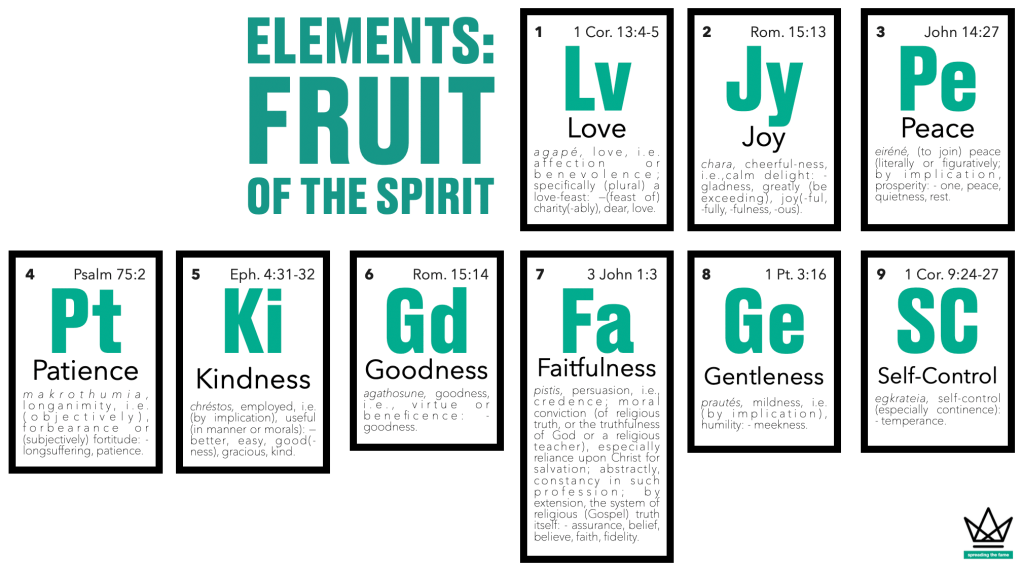
Growing in the fruit of righteousness: As our character is transformed, it naturally expresses itself in actions that honor God and bless others. These are “good works” that God has prepared in advance for us to do (Ephesians 2:10). This includes acts of service, compassion, and justice.
Fruit of the harvest: As we abide in Christ and live out His character, the Holy Spirit works through us to draw others to Him, leading to disciples and the formation of new communities of faith (John 4:35-36, Romans 1:13). This is the harvest fruit that pioneers long to see. Ultimately, all fruitfulness redounds to the glory of God. Jesus said, “This is to my Father’s glory, that you bear much fruit, showing yourselves to be my disciples” (John 15:8). Our fruitfulness points to His power and goodness, not our own.
God redeems failure. God’s view of “failure” is profoundly redemptive and gracious, not condemning. When we stumble, when our plans crumble, God doesn’t abandon us. Instead, He steps into that very space, saying ‘But God…’ He doesn’t see setbacks as final defeats but as opportunities for growth, learning, and verifying His power. God’s response to our shortcomings and sins is always grace and forgiveness when we repent. He doesn’t hold our failures against us when we are in Christ. (Romans 8:1; 1 John 1:9) Failures that aren’t sinful often serve as powerful teachers, revealing our weaknesses, increasing our dependence on God, and refining our character. (Romans 8:28; 2 Corinthians 12:9-10; John 21)
What other Scriptures or biblical aspects come to mind when you consider “success”? Take a few moments to look up 1-2 of these verses and journal what the Lord highlights for you.
“You did not choose me, but I chose you and appointed you so that you might go and bear fruit—fruit that will last.” — John 15:16
THE IMPORTANCE OF BEING FAITHFUL, BEING OBEDIENT, AND BEARING FRUIT
While many will define success by visible results, performance, and numbers, God defines success by inward faithfulness, obedience, and fruitfulness, which cannot be seen as clearly as numbers of disciples, churches planted, or movements launched. Yet what may be invisible to human eyes pleases the Lord, and that’s what matters most. To be successful, then, we must be faithful to Him, be obedient to Him, and bear His fruit.
Faithfulness as a Foundation:
Commitment to God’s Word: Faithfulness begins with a deep commitment to God’s Word and His revealed will. Pioneer missionaries must be grounded in Scripture, seek to understand God’s commands, and intently live out the truth.
Character of Dependability and Trustworthiness: Faithfulness is rooted in the unchanging faithfulness of God Himself. He is utterly reliable, true to His promises, and consistent in His character. Faithfulness implies being dependable and trustworthy in all aspects of life and ministry. This includes fulfilling commitments, maintaining integrity, and being honest in interactions with others.
Growing Perseverance: Faithfulness enables pioneers to walk through challenges, setbacks, and discouragements, remaining steadfast to the mission. Focusing on external results (which are mainly beyond our control) in difficult fields leads to exhaustion and departing the field prematurely. Faithfulness, however, is always attainable by God’s grace. This enables missionaries to endure seasons of apparent “failure” or slow growth, knowing their labor is not in vain in the Lord (1 Corinthians 15:58).
Obedience as a Pathway:
Don’t do nothing. Sometimes there is just so much to be done that we don’t know where to start obeying. It can be tough to do anything. Some will freeze by the fear of failing and think their job is so big they’d rather do nothing than do something wrong. Don’t forget, missions is not about missionaries, it is about God. He can do everything Himself. He chooses to use missionaries. Submit to God, just do something, don’t fear failing, learn, improve, and glorify God.
Don’t do everything. One of the fastest paths to burnout and short-lived mission experiences is the pioneer who can’t say no to those they serve, supporting churches, or fellow missionaries. They try to “earn” the favor of their financial partners by working long days without rest. Every missionary wants to be a good investment, but working themself sick or crazy is bad for everyone. To stop thinking God can’t do it without them obeying takes humility.
Risk-Taking: Obedience may involve taking risks and stepping outside of comfort zones, trusting that God will guide and provide for them.
Fruitfulness as a Result:
Glorifies God: Fruitfulness is ultimately God demonstrating His power and grace through the lives of missionaries. Faithfulness and obedience attribute all true fruit and transformation to God, joyfully giving Him the glory He deserves. God is the fruit giver. We are the fruit bearers.
Joy and Reward: God always blesses obedience. While fruitfulness is not the primary motivation, it brings joy and a sense of reward as we see the impact of our work in us or around us. Fruitfulness is the result of connecting and abiding with Jesus. (John 15:4–5)
Produces Tangible Results: Fruitfulness is the natural outcome of faithfulness and obedience. It manifests in the sanctification of the pioneer, the transformation of believers, and the establishment of healthy churches. Jesus used the analogy that “you will know them by their fruit.” (Matthew 7:16-20) Inward transformation leads to outward results. In other words, a pioneer or disciple’s true character and faith will be revealed and identified by their actions, behaviors, and the consistent outcomes of their life.
Interconnectedness unto Success:
Faithfulness as a Means to Fruitfulness: Faithfulness how missionaries pursue fruitfulness. By remaining faithful to God’s Word and His leading, they create an environment where fruitfulness can flourish.
Obedience as the Foundation for Faithfulness: Obedience is the foundation upon which faithfulness is built. Without obedience, faithfulness becomes inconsistent and unreliable.
Fruitfulness as a Validation of Faithfulness and Obedience: Fruitfulness provides a tangible confirmation that the missionary is on the right path and is effectively fulfilling God’s purposes.
A right view of success, rooted in God’s faithfulness and the pioneer’s obedience, liberates the missionary to serve with joy, seeing that God alone gives the increase and fruit.
PRAYER ACTION
Consider the Scriptures you cling to above. Consider success. Write a prayer for the kind of person you want to be.
BUILDING A PRACTICAL MINI-THEOLOGY OF SUCCESS
Take some time to prayerfully draft your practical mini-theology of “success” by responding to these questions:
What is success in God’s eyes? How is that different than the world’s view of success?
example: God is… We are the kind of people who… It is most like us/me to… We/I will… We/I hold to…
How does God measure success? What does faithfulness and obedience look like? How does God use failure?
How does God provide fruitfulness? What does fruit look like?
Once you finish, share your responses with your mentor. Ask for feedback. Adjust your draft as needed.
Additional Resources for Going Deeper:
Livingstone’s Failure and Christ’s Success, by 1517
The Insufficient Missionary, by MTW
No Shortcuts to Success, by Matt Rhodes
The Need for a New Paradigm, by Sarita Hartz
A Biblical Interrogation of Success and Failure, by Seedbed
Focus on Fruit, Encounter Training
On Golden Shore, by Courtney Anderson
Escaping the Missionary Productivity Trap, Amy Young
WAYS SUCCESS IS SEEN ON THE FIELD
For a pioneer missionary, faithfulness, obedience, and fruitfulness are not separate entities but rather interconnected aspects of a holistic approach to ministry. Faithfulness and obedience are essential for a fruitful life and effective ministry, and they are how missionaries bring glory to God.
Christ-likeness (Fruit of the Spirit): A pioneer’s patience, love, joy, and peace in difficult circumstances (isolation, cultural stress, persecution) are a powerful testimony. Their character becomes a living testament to Christ.
Steady Witness: A missionary who is genuinely faithful and obedient, even amidst hardship, is more credible than one who only boasts of numbers. When “success” is measured by God’s faithfulness, it prevents pride in visible achievements and fosters humility.
Honesty and Transparency: Exaggerating numbers or fabricating stories in reports to maintain support or impress others is a form of lying and dishonesty. A faithful pioneer will genuinely be okay with seasons of fruitlessness, even failure, seeing that God is the One who brings breakthrough.
Faithful Seed Sowing: Sharing the Gospel, discipling individuals (even if only one or two), translating Scripture, building relationships, and praying for breakthroughs, even if immediate “fruit” is not evident.
Deeper-Level Discipleship: Pressure to produce numbers can lead to “conversions” without genuine repentance or discipleship. Local disciples may adopt a similar false view of success, leading to legalism, comparison, and a lack of grace-driven living.
Healthy Church Growth: Churches built on human-driven metrics rather than Spirit-led faithfulness may lack true spiritual vitality and long-term sustainability. Servant-based approaches garner greater and deeper growth.

 spreading the fame