
Today, we are concluding a series of messages on the theme of the priesthood. This has been an enlightening Bible study. Honestly, it’s a theme that can seem nebulous and can mean little to Christians today. Maybe you’re like me and didn’t grow up in a culture or system with priests. I was born into a Catholic family. However, priests were more like pastors. They were different from the priests we read about in the Bible.
In the Bible, the priesthood is one of those threads that helps us to understand God and His redemptive plan. The Scriptures are like a beautiful golden tapestry on a loom. The loom represents the span of human history, from creation to the eventual fulfillment of God’s promises. Each thread represents a specific event, character, or theme within the Bible. God is like an artist weaving each thread. The threads sometimes seem out of order, but ultimately they interconnect with the overall design.

Corrie Ten Boom reflected on this through a poem called the The Tapestry. It was a testimony of her experiences in a WWII concentration camp and how she connected with God in such. hard place. As she held a small tapestry in her hand she would say,
“Oft’ times He weaveth sorrow; / And I in foolish pride / Forget He sees the upper / And I the underside.”
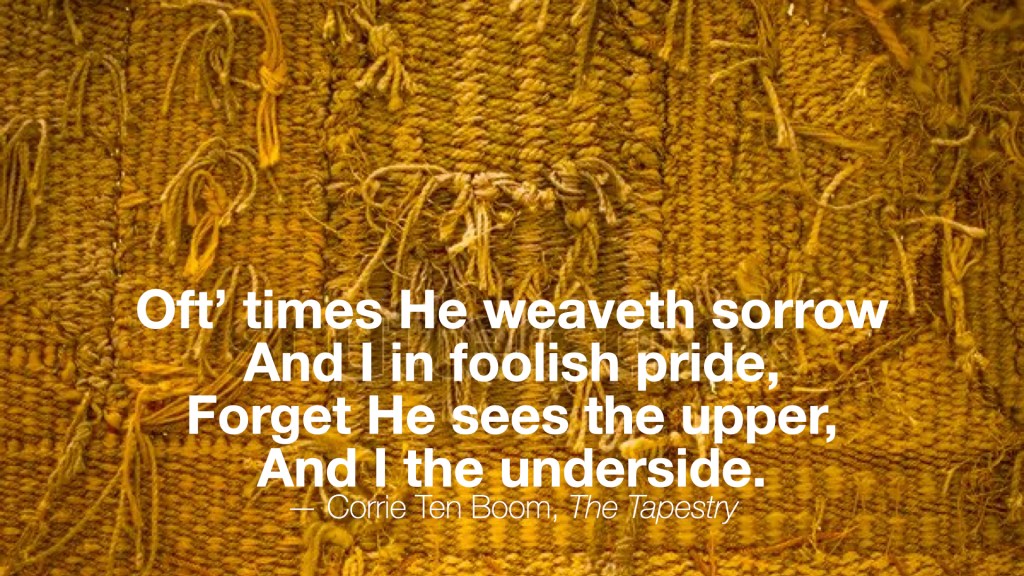
Looking from the backside of a tapestry can seem like a mess, but from the front it’s a masterpiece. Today, we can see most of God’s tapestry from the upper, but there is still some that remains a mystery. However, what we can see is sufficient to help us know God and His plan for mankind.
When God laid out His plan, He took His time. He didn’t rush history. Before the creation of the world, he wove history with redemption story (cf. Revelation 13:8). Why would God wait so long to unveil His plan? Like a Master Storyteller, he laid down the perfect script. He introduced and developed key characters. He followed patterns to build up a climactic moment. The moment came at the most opportune time and revealed His ultimate purposes.
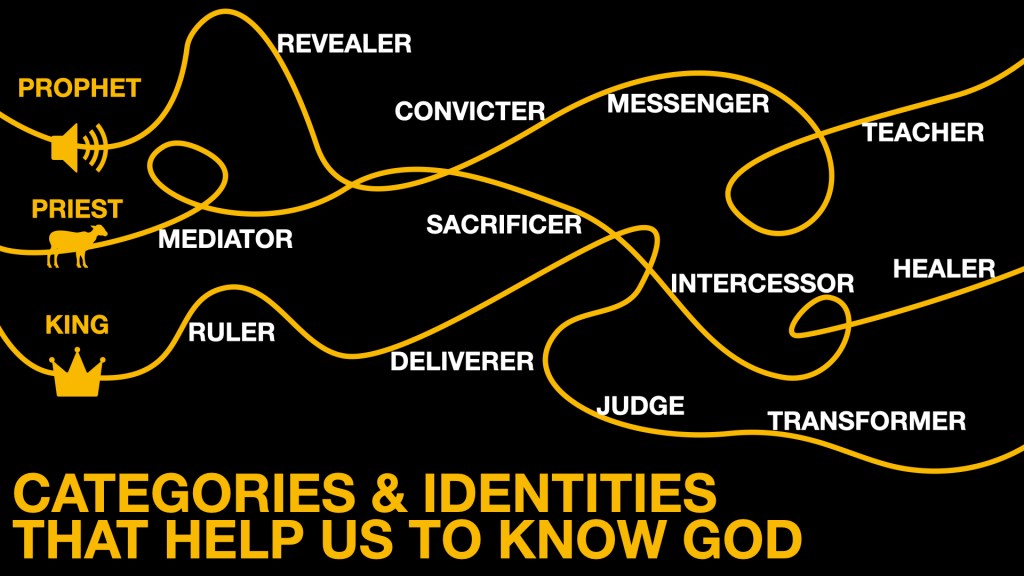
The Bible, especially the OT, gives categories and identities that help us to know and understand who God is. The three primary categories are Prophet, Priest, and King. Embedded within these categories are central descriptors and identities. We must grasp these categories from Scripture. We must also understand their context within biblical history. Otherwise, our understanding of God will be impersonal. It will also be superficial. These categories help us to see what God is like and why He came to do, did, and does now.
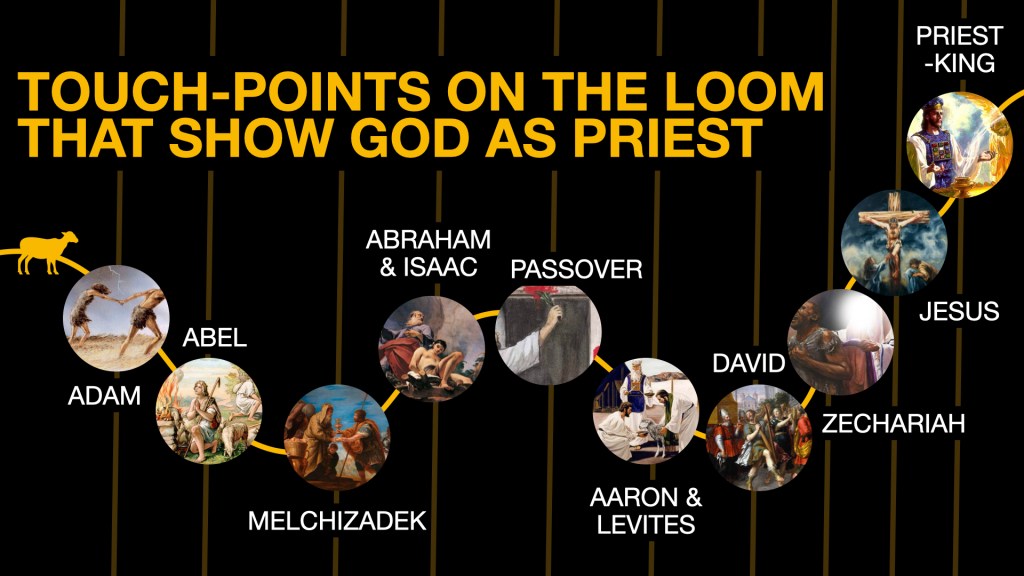
As the Bible progresses, there are touch-points on the loom. These points help us to see and know God as a priest. As we follow the thread, God’s purpose for the priesthood becomes clear. Notice how the characters model the priesthood. Observe how God acts as a priest. Each story touches on a promise.
- Adam was given the role of caregiver of creation and the first family. It was a priestly and kingly role. When he sinned, God becomes the Sacrificer who covers sin and shame. God promised a future self-sacrificing Messiah who’d rescue mankind.
- Abel was like a priest who gave an honoring sacrifice for God sees the heart.
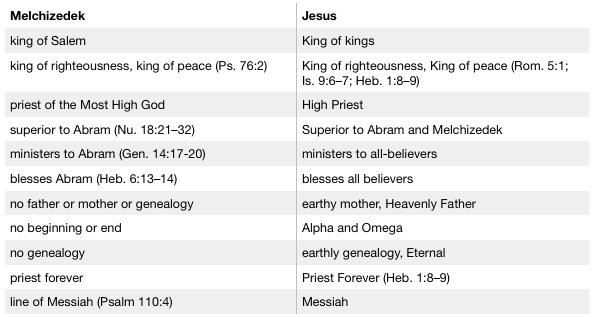
- Melchizedek is described as a priest-king of Salem (Peace) who foreshadowed the future Messiah.
- Abraham was like a priest who willingly offered his only son on the altar. God provided a substitute sacrifice and promised a Messiah who’d come from Abraham’s lineage.
- Moses becomes a mediator between the people and God. During the last plague, the people of Israel sacrificed lambs. They painted the lambs’ blood on their doorposts. This was to protect them from the Passover. This event would be memorialized by the Jewish sacrificial system and within the tabernacle/temple.
- Aaron & Levites were chosen and designated as imperfect human priests to guide the people in worship of the Lord.
- David acted like a new type of priest-king when he ate the bread from the tabernacle. He marched into the city of Peace with the ark of the covenant. God approved and later promised the Messiah who’d come from David’s lineage.
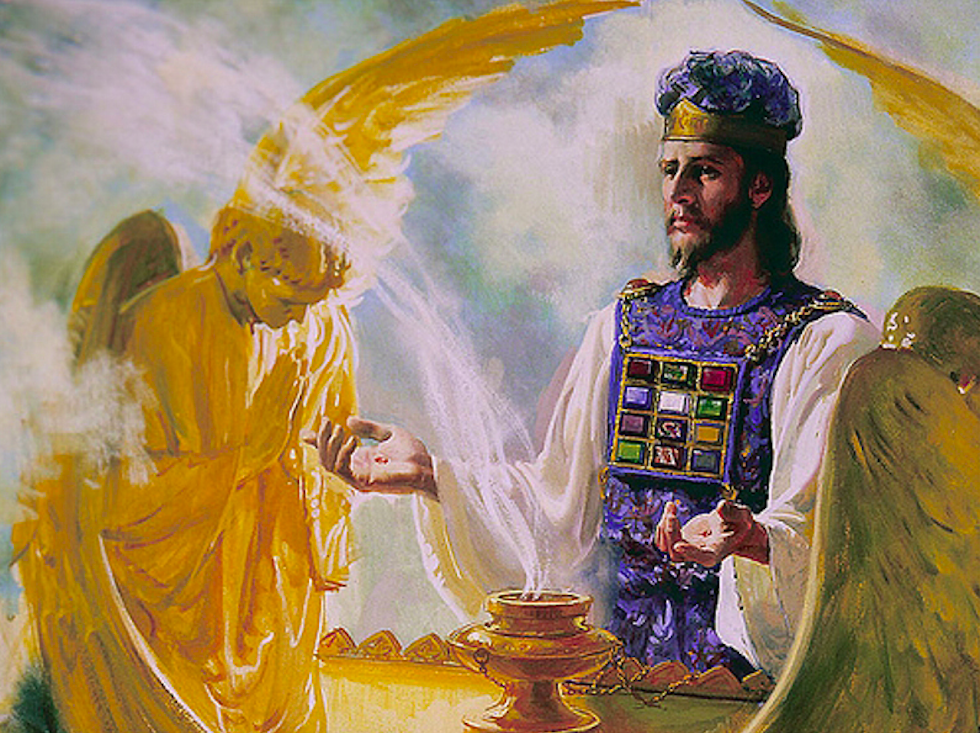
- OT Zechariah was robed in priestly garments as a picture of the future Messiah.
- NT Zechariah’s priestly prayers were answered as he’d be the father of the forerunner to the Messiah.
- Jesus came and performed priestly acts—He healed, forgave sins, called people to worship God, and claimed to be the Messiah.
- Today, Jesus sits in heaven as the intercessor who promises to come back as the Priest-King.
Imagine if you didn’t have any of these stories or their contexts. Your understanding of the priesthood of God would be quite vanilla or incomplete. Instead, these stories add color and comprehension to who God is and they signal His plan.
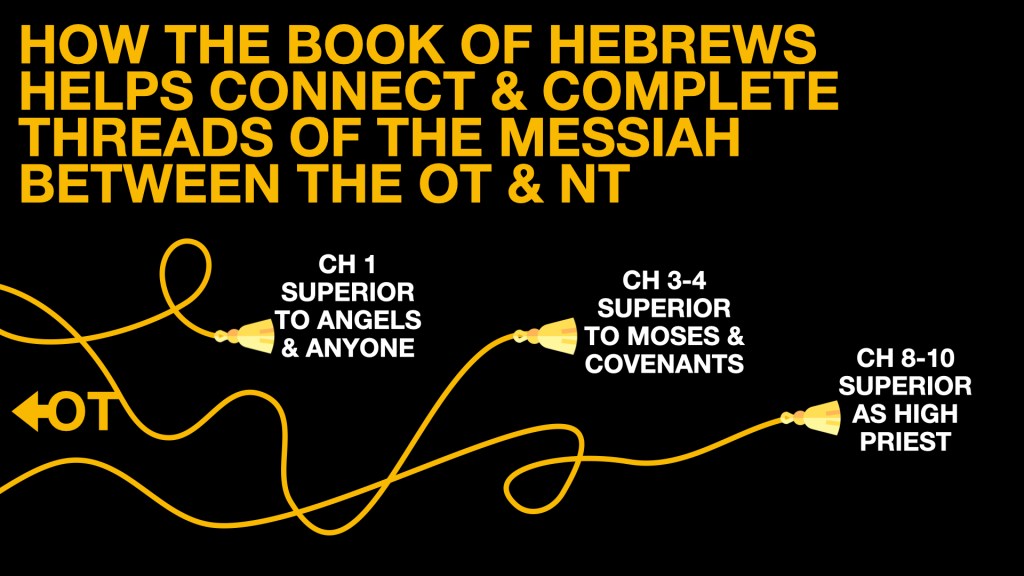
That brings us to the Letter to the Hebrews. Hurrah for Hebrews! This lengthy letter helps connect and complete a lot of threads and strands between the Messiah of the OT to Jesus of the NT. It’s the one NT book that wrestles with the OT categories, characters, and processes. It helps us to make sense of the Bible’s tapestry. It all points to Jesus. He is the One toward whom the whole story, history, and the Scriptures are supremely about. Even Jesus said it, “You study the Scriptures diligently because you think that in them you have eternal life. These are the very Scriptures that testify about me, yet you refuse to come to me to have life.” (John 5:39-40)
So let’s unravel this thread by seeing the what, the so what, and the now what of Hebrews 4:14-16. This text pierces the chaos of our crazy-busy lives. It touches our brakes. We stop and consider how wonderful our Jesus really is as a priest.
WHAT?
“We have a great high priest.” In case you and I didn’t know, we have a priest. This title tells me that we don’t need a greater something. We need a greater Someone. We need a priest. We need Jesus as a priest. Why a priest? (cf. 5:1-3, high priest job description) Overall, a priest was a symbolic service. First, a priest was chosen among men and called by God. Second, a priest represented God to the people, and the priest represented the people to God. Think of them as links between heaven and earth with a divine and human function. Third, a priest offered sacrifices to God for the sins of the people. Fourth, a priest was someone who embodied the compassion and gentle-heart of God towards others. This last point is what endears us to the role of a priest compared to a prophet or king. He isn’t cold or ceremoniously religious. We see the priest’s heart.
Jesus isn’t an ordinary priest. He is a “high” and “great” priest. A high priest, different from an ordinary priest, was chosen to offer the annual sacrifice. This sacrifice occurred on the Day of Atonement for the sins of all the people. Also, he isn’t just a high priest, but he’s The-Great-High-Priest. To be “Great” means that there isn’t anyone like him. He is far superior. He is in a category of his own. When we see Jesus as this Great High Priest, we see one who was chosen by God. He represented God to humanity. He loved mankind compassionately and gently. He also sacrificed once and for all for all people. Jesus connected all the loose ends of history. He joined them with God’s story. This was done to show Jesus as the great high priest. It is meant to be an ah-ha moment!
Since serving in Chad, I have enjoyed walking with seekers and BMBs through the OT. In the process, we cover many of these threads along the way. By the time we arrive at the NT, Jesus makes so much more sense. The most rewarding moments in discipleship are when you see eyes widen. Lights turn on. Fingers point back. Mouths say “ah ha!”
SO WHAT?
We get it that Jesus, the great high priest is like no other. So what? So there is more that we need to know about Him to make sense of Him. Hebrews 4:14-16 expands the so what:
1) Jesus had “gone through the heavens.”
We get a glimpse into Jesus’ cosmic journey. An earthly priest would pass through the temple courts. They would push back the veil to enter into the holy of holies. We get an image of the heavenly temple in Isaiah 6, where the train of his robe fills the temple and all are calling the Lord “Holy”. Jesus has access to the holiest places on earth and heaven. Again, Jesus is in a category of his own as the “Son of God.”
2) Jesus can “sympathize with our weaknesses.”
Sympathy is a psychological word. Our English definition is narrow than the biblical definition which includes sympathy, empathy and compassion. Literally in the Greek it means “to suffer with”. Jesus feels for, feels with, and feels in it with us. This is what theologians call solidarity. Jesus has a witness and nearness to us. Jesus got down to earth and really felt it with you. Listen, Jesus gets you. He’s been where you are. He knows what it’s like to live with nagging weakness, probing pain, loss and rejection, exhaustion from serving others, and daily struggles. Jesus understands. He lived it. He was exactly there. Jesus knows the intimate terrors, tensions, and toils of life—and moves to heal them. If you’re like me, then that truth gives me more sympathy for the weaknesses of others. Jesus’ perfect sympathy shapes my approach to those I serve and lead.
This week I took became more aware of my weaknesses and jotted them down each day in my journal. Here is a sampling of the weaknesses that stuck out to me:
- I’m not able to be present with each of my four kids and my wife at the same time.
- I’m tired and not ready to be hospitable or generous to my neighbor knocking at the door.
- I’m tempted to compare myself with a colleague.
- I’m seriously considering a shortcut to success.
- My mind is cloud and I can’t for the life of me get my daughter’s algebra story problem.
- During Friday prayer group, I’m discouraged praying for the same thing for five years with little visible results.
- I saw the cooling system of another laborer and envied it.
Speaking of cooling systems, I recently read a NASA study that said that when temperatures are above 100 F (37 C) our work productivity is about 40%. That’s humbling, especially living in a place like Chad where it is hot most of the time. Sometime I think about my solar batteries and inverter that shutdown under the heat and I think that I can do better. My body is just as limited and my brain is defective trying to to power through. Weakness remind me that I’m not omniscient, omnipotent, and omnipresent. Not even close. I forget meeting times. I sometimes step on toes. I accidentally leave doors open. Sometimes, I burn the rice on the stovetop.
3) Jesus “has been tempted in every way.”
Some can hear that and think, “Sure, well, Jesus was tempted, but He was God. He had all the power to resist.” While that is true, it is one side and incomplete. Like Frodo on Mount Doom, the closer he got, the heavier the ring became. Jesus knows well the fullest weight of temptation because he withstood all of it. Only the sinless can know its full intensity. The one who falls yields before the last strain. We will never know temptation’s full intensity as Jesus knows. He understands the battle because He enlisted in the war. Jesus went through it so much worse because He did not yield to it. He took it to the cross!
You’ve likely faced some terrible and intense temptations. These are the kind where you sweat and agonize through the night. You might pace the room and weigh the consequences. God promises that He won’t let you be tempted beyond what you can endure. This promise is found in 1 Corinthians 10:13. You don’t have to hack through the jungle as Jesus has already made a path. He has lit the exit signs to show you the way out.
4) Jesus “was without sin.”
This is where Jesus was unlike all other human priests. He never had to cleanse Himself or wear bells on His ankles. Jesus was both a Priest (consecrated one) and a Lamb (sacrifice for others). Jesus as “our great high Priest” revealed to us what God considers to be our greatest need. We need someone to make us righteous before God. We also need to be reconciled with God. Without Him, we would be stuck in a symbolic and cyclical system of sacrifices without end. Jesus ended it! There is no more need of it.

NOW WHAT?
The priesthood might seem like an archaic and irrelevant system. However, it is hugely important to understanding who Jesus is. It explains why He and His work are important. It also shows how you and I can interact with Him today. Hebrews 4:15-16 gives two clear applications of what this means for us now:
First, “let us hold firmly to the faith we profess.” Herein, there is an action and a belief. We believe that Jesus is God and man. We believe that Jesus is prophet, king, and priest. As the Great High Priest, we believe that forgiveness is costly, the punishment due to sin was death, and without the shedding of blood, there can be no removal of sin. We believe that Jesus is both the priest and sacrifice. These are the beliefs that must act by grasping onto and professed among one another. Let’s fix our eyes on the author and finisher of our faith (Hebrews 12:2).
Second, “let us then approach the throne of grace with confidence.” Herein, we see our role and place with God. Where is God now? He’s on His throne. He is both in a heavenly and bodily temple. Both are His holy sanctuaries. Most holy places are only accessible by holy people, God considers you as such. He offers you a life-transforming invitation, “Come to the throne!” His throne is always open! Jesus is always there. He is always available and always attainable. He is always attentive and always listening. He is always joyful to see you. He is always caring and always loving.

You can approach the throne because you are a priest and you are a holy place. God dwells within you. Your body is the temple where God dwells. You are living stones being built up into a spiritual house. You are a royal priesthood. (1 Peter 2:5,9) AND in God’s story, God wraps you in His priestly robe. You represent God before the people. You represent the people before God. You may be a team leader, project manager, embassy staffer, teacher, translator, visitor, hospital worker, or church planter. Yet, you are also priests in the order of the Lord Jesus Christ. You mediate, sacrifice, intercede, heal, reconcile, serve, bless, care, love, and call others around you to worship.
PRAYER
Take a moment to step into the presence of Jesus, your Great High Priest. How do you feel in His presence? … What is His face toward you? … Would you approach his throne of grace with confidence? … What do you need from Him as your priest today? Compassion? Gentleness? Forgiveness? Purification? Restoration? Salvation? … What is He asking you to hold onto firmly? To profess about Him? … Who is He calling you to serve? What is He nudging you to do? Who is He calling you to be?
Now may the God of peace, who through the blood of the eternal covenant brought back from the dead our Lord Jesus, that great Shepherd of the sheep, equip you with everything good for doing his will, and may he work in us what is pleasing to him, through Jesus Christ, to whom be glory for ever and ever. Amen. – Hebrews 13:20-21
PRAYER
DIG DEEPER
What happens when we consciously or unconsciously leave out one of Jesus’ categories or identities? How can you see this playing out in Christian communities?

How can we guard against striping Jesus from some of His hats and at the same time striping ourselves from our responsibility in imitating Jesus?
While Jesus is the Great high Priest, what does it look like in your day being and serving as a priest?




 spreading the fame