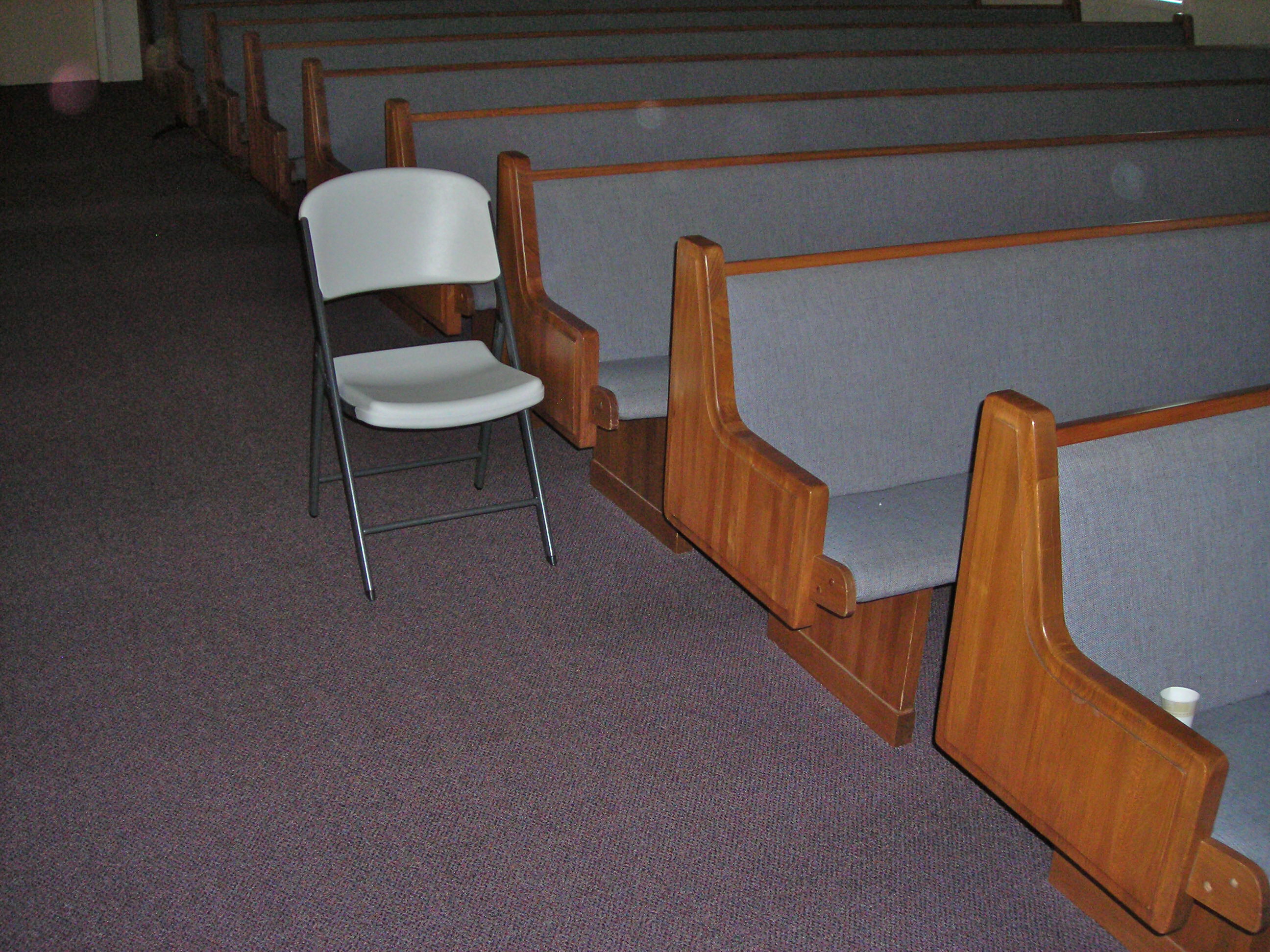
the case of the white chair

For months Sarah and I have been pondering the mysterious appearance of a single white chair strategically placed in the isle of church during our wedding. We do not know how it got there or who put it there. At first it bothered us, but now it has become a picture of something sweetly divine.

The empty chair has reminded us of our most important guest of honor at our wedding: Christ. We desired to make Christ the focal point of our wedding and it couldn’t be more fitting to have him in the center of the room sitting within the white chair. I won’t go to much further with this analogy for the sake of heresy, but I know  for certain Christ is with us and will continue to be the centerpiece and highest seat within our marriage. Thanks to whoever put the chair in the isle. It has been a source of great frustration turned to joy!!

inside the fire

inside the fire logoOur theme for FUEL Student Ministries in 2009-2010 is inside the fire. You are aware that there are times of trial or testing for even just standing up for your faith at school or wherever. In Daniel 3:28 when king Nebuchadnezzar says, “praised be the God of Shadrach, Meshach and Abednago… who were willing to give up even their own lives rather than worship anyone but Him”

These dudes were lights in their world and it is our choice to shine (or stand inside the fire) in such a way that others around us will say “praised be the God of [insert name] who will do anything for their God.” Thus our vision and passion this year is to challenge one another to be bold to stand out and stand in the fire for our God.

FUEL Student Ministries kicks off again on September 2nd @ 6:30pm. We are looking forward to an exciting Fall and hope many will join us in the action.

back in the US of A

DSCN2599

We are back! Wow, what a journey!! I am sad that it is over, but looking forward to taking the lessons learned and applying them back home. The trip has put a greater fire within my inward parts to head back to the land of great need. Here are some of the lessons I have learned while in the Congo:

People everywhere have needs. The people of the Congo have needs and so do those in the USA, Canada, and uttermost parts of the world. The job is daunting and daring. In reality, it is a job no man can do alone, but only a force of people motivated by compassion for the needy, impoverish, and broken.

I can only do so much alone. We were able to meet over a hundred different people while in the Congo. Mostly pastors, youth leaders and youth. They have many questions and various needs. I can only give so much. I can count on my hands and toes the numbers of individuals who approached us for food, clothing and money. I make more in a day than they do in a year, yet I was unable to fulfill the needs of everyone. Am I required to. No. However, as the old proverb states, “to whom much is given much is required.”

Need is a strong word. A need is something I cannot live without (ie. food, water, and shelter). We think we need lots of things. When truthfully we want a lot and need little. It is hard to be convinced you need little. It is equally as hard to convince other who have little that you (who have much) cannot fulfill their needs.

God is the only one able to fill the void. I cannot throw money or resources at physical or spiritual poverty. If I do I will spoil rotten a growing baby (for more on this click here). Only God change change a life. I can make ones life better for a time, but God can make it better for eternity.

I need more of God. I think of Jesus countless encounters with wealthy and poor, needy and satisfied throughout the Scriptures. His motto to all peoples is, “I must increase and you must decrease,” “follow Me,” “bear your cross,” and “in your weakness I will be made strong.” In other words may there me less of me and more of God. The greatest need I have is not more spiritual books, money for a new roof or garments to keep me warm, but a wholly relationship with my Creator and Sustainer. I need the Great Provider, God.

Check out our travel photos.

a spoiled baby

Victoria Crying

I am stunned by the number of NGO’s (Non-Government Organizations) based in the Congo. Many people around the world have compassion on this country. Yet I am concerned. Could all this compassion be causing long-term harm? Could they be creating a spoiled baby who cries for milk, nurture, clothing, and more, but cannot help itself? This is a country that relies so much about outside help. What the Congo really needs is to know how to grow up and live on their own. Or in other words stop acting like selfish babies.

I grew up having all that I wanted and more. I know the struggle of having to grow up and provide for myself. I suppose that is why I like the movie “Empire of the Sun” so much. It is the story about a wealthy British boy growing up in Japan during WWII. He has everything and more. It is obvious he is spoiled. The war strikes and he is separated from his family. He now has nothing. He is force to live on the streets, in containment camps, and is forced to grow up. He becomes a man. In the end he is reunited with his parents and has an appreciation for them unlike he had before.

Spoiled is all a matter of cultural definition. What it comes down to: being spoiled is selfish living. One who is spoiled says, “You do the work and I get the reward.” It is much the same in the USA as it is in the Congo. You can have a lot and be spoiled, and you can have little and be spoiled.

lost in translation


August 16 lost in translation. Sarah and I traveled to two churches this morning. At the first church we just observed and sang. Can I say it again? The singing here is amazing. At the second church I preached. The gentleman that translated for me was a rookie. I suppose we had something in common!? Overall the sermon was communicated without too many verbiage distractions. Interesting I was speaking on commitment. There is no word in the Swahili that can be translated “commitment.” The closest is “standing firm.”

Most people in the Congo can speak 4-5 languages: Swahili, French, tribal languages, and maybe English. I am such a monolingual American. I took 4 years of French in high school. I wish I could remember some of that!? Sarah speaks great Swahili, which is great. Some of Swahili the phrases I have picked up (it is all phonetic so that helps):

Jambo = hello

Habari = how are you?

Bwana Asifiwe = praise the Lord (what else do you need to know?)

Ndyo = yes

Hapana = no

Mungu = God

Muzungu = white guy (I hear this a lot walking in the streets)

kivukutu = hot

asanti = thank you

tokainje = get out of here (mostly for fun during games with the youth)

FYI-We just heard that Kenya Airlines was on strike this week, but praise the Lord they are back to work! We will be boarding a small bus at the Congo/Rwanda boarder Tuesday morning to head to the

August 17 free day. Sarah and I are now finished with all our projects. We headed out for a few meetings with pastors and friends. The rest of the day we saw sights and went to the market. I relaxed. Tomorrow we head to the boarder to catch a bus for a 5 hour ride through the winding Rwandan hillside. Wednesday morning we fly out of Rwanda to Kenya to Amsterdam to NYC to Buffalo where Sarah’s family will pick us up for her brother’s wedding over the weekend. Bon Voyage Congo!!

a congo camp

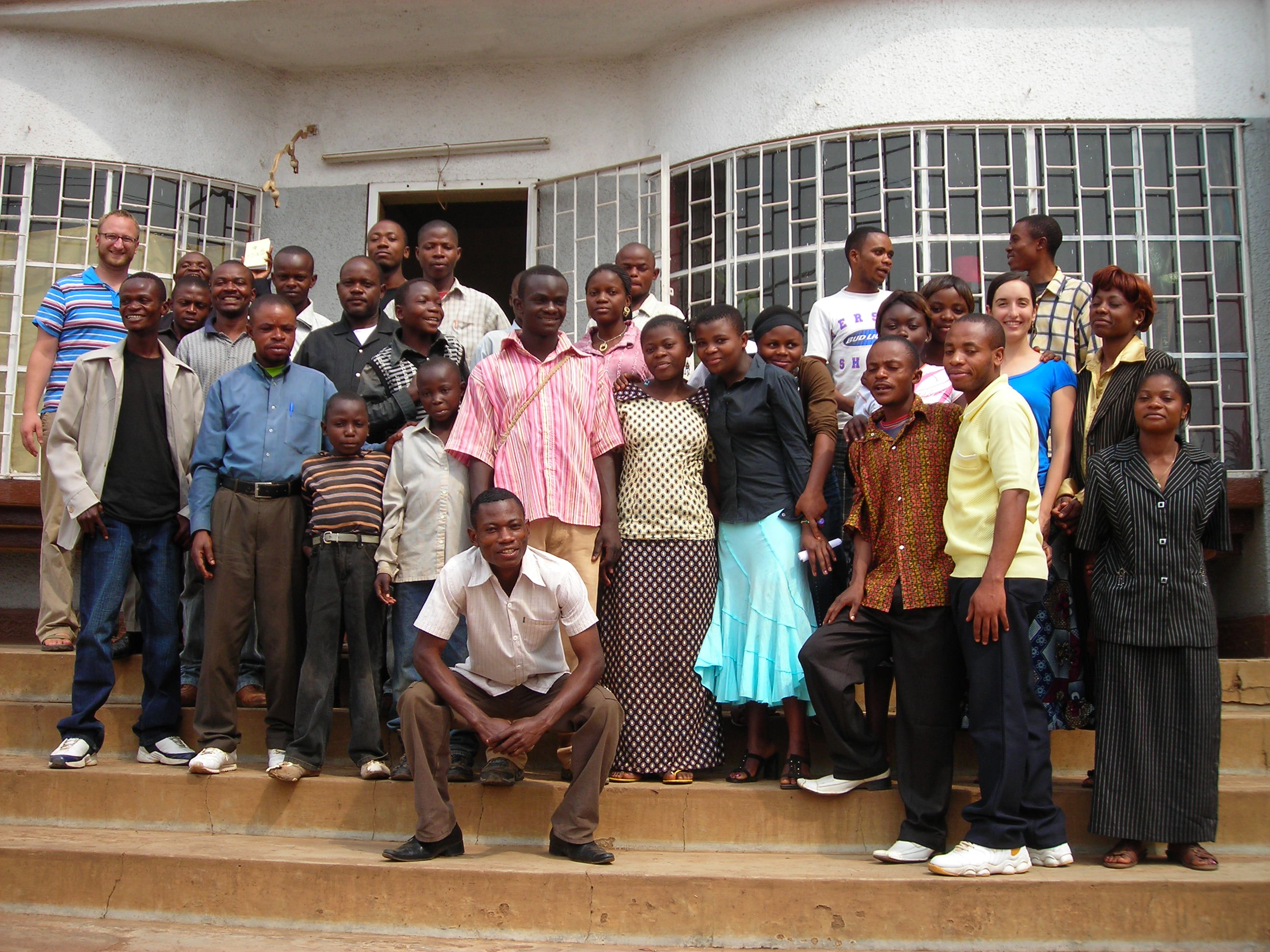
August 14-15 A Congo Camp. For two days we are holding a half-day retreat for youth. We have about 20 youth and 20 adult leaders that are attending. This gives the leaders attending our seminars a practical application to what they are learning. Each of the adult leaders has a responsibility: teaching, leading worship, prayer, administrating, cooking, serving, scheduling, leading activities and more. The leaders did an amazing job and took ownership of their responsibilities. On a side note they all love the game HUWA. It is all they want to play!!

We met with a group of the leaders from the seminar that now have a vision to start a camp that travels across the country to churches that could use a camp/retreat as a means to reaching out or growing their youth. It is great to see their passion for God and youth. We walked through the process of beginning such an organization (theological structure, government legalization, and more). My experiences with the ReFUEL Retreats, Shakamak Bible Camp and Checkpoint Bible Camp have proved to be valuable.

seminars

August 11-13 The seminars begin. And we are off… So we had about 49 people the first day. Many more than we expected. We had a wonderful discussion about the biblical basis of youth ministry and the ground level instructions on how to structure a camp/retreat for youth. It was so wonderful to see such faithful servants passionate about the youth of their country and desiring to learn more about the Truth. Their faith inspires me, their heart of prayer convicts their desire and me for God moves me.

On Wednesday we started our morning with some discouraging news. One of the leaders was given word on the way to the seminar that the soldiers down country killed his brother. He and a few others went to help him prepare shelter for his family coming in from out of town. We prayed for him at the seminar. This is painfully common in the Congo. It set a somber mood for our seminar this day. After each session in the workshop we allow time for questions. They have many good questions. I don’t always have the answers. So I am studying the Bible answer give them adequate answers.

Thursday was our final day of the seminar and we prepared for our retreat for tomorrow and Saturday. Sarah and I are confident that they are going to do a great job. Each of the leaders have a specific role and ownership of the retreat. My translator Rafael has been excellent!! Praise the Lord for all your prayers!

dust


August 10 Dust. There is dust everywhere here in Bukavu. Since it is dry season the the vehicles and people walking about stirs up clouds of red clay dust. Sarah and I walked through the city markets and streets of Bukavu. We are full of dust. People were selling anything from bait fish to sandals, avacados to palm nuts, leaks to cell phones.

We visited a hospital and visited with Dr. George. He walks with a limp and specializes in pediatics. For the Congo the hospital seemed large and organized because it used to be a private Catholic hospital. We also met Dr. Gila, a Messianic Jew, who works with Moriah Africa an organization that networks churches and hospitals with helpful resources. For lunch I tried some local sombe (rice, greens, palm oil and a side of sardines) and a bottle of Coke. It was satisfying and filling.

We set up a few meetings today with youth leaders from the area. Many of them are headed to our seminars this week. The meetings are times we can discuss the week in the seminars in advance and answer any questions they might have. We were expecting about 15-20 leaders, but it now looks like we will have over 40. This will prove to be logistically challenging, but God has show His faithful. At one meeting we met a pastor by the name of Leonard and his son. Just months ago his village just 3 hours away was burned to the ground, except for their church because it was made of brick. The soldiers told him to leave so he has moved to Bukavu to look for work. He has 6 children and a wife who is expecting. He asked if we would take in some of his children. How would you respond to this proposition. We prayed together that he would trust God to supply His needs for our God is faithful.

going to church

August 9 Going to Church. This morning we woke up to the sounds of Bukavu: roosters crowing, car horns honking, men whistling, children playing, UN soldiers marching, and motor scooters racing. I took a bath with a bucket of cold water. It was surprisingly refreshing after such long travels. We are staying with Renee, a single missionary who ministers with the deaf and runs a coffee shop next door that employes locals. We had dinner there last night and it was fabulous.

We attended Berean Church (CEEBCO) today. The singing was incredible and unforgettable. Sarah and I presented our ministry (leadership seminar and camp for youth) before the church. They sang a song to welcome us. After the service the elders of the church prayed over us and we had an opportunity to pray over them.

We had lunch with the Lindquist’s our sponsoring family. They had hamburgers covered with Goma cheese and homemade icecream. In the afternoon we headed to a missionary fellowship with people from Food for the Hungry International, Crossworld Press, braodcasting and aggriculture (headed by a Purdue grad), and others. It was an encouraging time of worship, fellowship and devotion from Daniel 7.

getting to the Congo


August 6-8 Getting to the Congo is no easy feat. Our journey the past few days has taken us through Chicago, Detroit, Amsterdam (Netherlands), Nairobi (Kenya), and Kigali (Rwanda). Once we landed in Kigali we ventured a 6 hour bus trip through the curly roads of the agriculturally patterned hills and jungles of southern Rwanda. The bus dropped us off near the boarder of the Congo where we checked out of Rwanda, crossed a small bridge and entered Bukavu Congo. The immigration building was a small room will a curtain and a man sitting behind a rickety table with a small lined notebook. Once he entered our info into the notebook by hand we were free to enter the country. Much different than the excruciating checks and rechecks of the US Immigration Service.

I wish I could give you a glimpse of the sights, sounds, and smells we have experienced the past few days. It is a lot like camping here in the Congo: electricity is limited, there is little to no water pressure, and a mosquito net to keep the bugs out. There are no tents, rather layers of housing that overlook a massive lake. Bukavu is a city of 600,000 people comprised of locals and war refugees, but that varies because people come and go often. The city has seen better days. 12 years of civil war have taken their toll. The city is alive, but needs the life of Christ.

touch the knot

Camp Photo

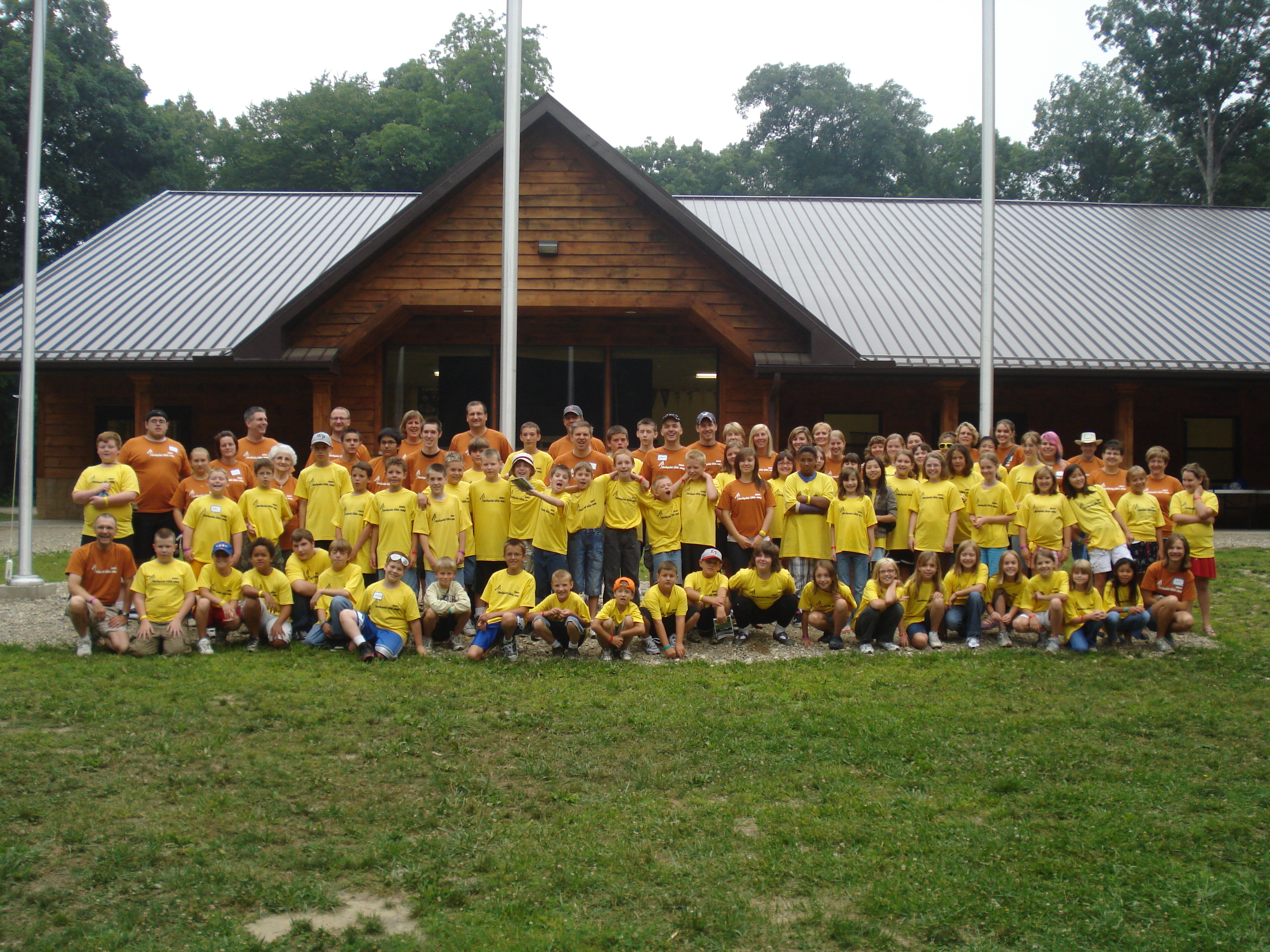
I had to depart from Checkpoint Bible Camp mid-week to head to the Congo. I praise the Lord for the 7 decisions for Christ that were given at camp this year. What a great group of staff and leadership!! 2010 cannot come soon enough!! Our new location in Buffalo, IN was perfect. We look forward to growing our camp from 60 to 100 junior camper and adding a Middle School camp next year.

Touching the knot comes from a tree on the campground that has a gigantic knot that looks like a brain. It is now the new camper initiation to “touch the knot”.

leavin on a jet plane

The time has arrived. Tomorrow Sarah and I leave for the Congo. We start out from Chicago and find our way to Africa sometime on Saturday afternoon. It will be a long trek, but a I will be with my wife! We have spent the better part of the last two weeks apart because of ministry camps in Indiana connected to our church.

Here are a few ways you can pray for us the next 3-days:

  • Thursday: rest for the journey
  • Friday: bags protected from theft
  • Saturday: 6-hour bus trip from Rwanda to Congo to be safe.

a consuming fire

Getting a glimpse of God

I remember as a young whipper-snapper that a group of us went to Green Bay to see the Packers practice. As a little boy this was a big deal, a real cheeseheads dream. You could see the big stars practice. The players would ride in on their bikes, high five the kids, stop for autographs. I got to meet actual players. I still haven’t washed my right hand!? Thousands of people would flock around the practice field just to get a glimpse of their favorite football player. We are all excited to get a glimpse into the lives of the rich and famous, get a sneak peak at the summers hot new blockbuster, and more.

I wonder what would your response be to getting a glimpse of God?

1. Fear God’s Holiness (Hebrews 12:18-21)

Modern people are not accustomed to fearing God. Fearing God is something primitive people do—along with bowing down to the sun and sacrificing virgins to volcanoes.

Even Christian people are not used to fearing God. You might say, “That sounds way too Old Testament. What about the love and grace of God? After all, John says: “Perfect love casts out fear.” Fear is for the spiritually immature, right?”

There’s a tendency for modern folk to think in terms of God offering man a contract—agreement between equals. “You’re ok, I’m ok. Every thing is ok.” NOT!! Ancients did not make that mistake. The 10 Commands were like terms of a treaty—the kind made between the conqueror and the conquered. No complaining or bargaining. Accept the terms unconditionally.

SHOULD WE FEAR THE LORD?

Let’s look at what the Bible says:

  • “The Fear of the Lord is the beginning of wisdom” (Prov.1:7; 5:21; 8:13; 9:10).
  • “The end of the matter; all has been heard. Fear God and keep His commandments, for this is the whole duty of man.” (Ecc.12:13)
  • “Do not call conspiracy all that this people calls conspiracy, and do not fear what they fear, nor be in dread. But the LORD of hosts, Him you shall regard as holy. Let him be your fear, and let Him be your dread” (Isa. 8:12-13)

You say, “That’s all from the OT!” What about Phil.2:1? “work out your salvation with fear and trembling”

The meaning of fearing God comes into clearer focus if we can imagine what it would be like to actually see God. This hasn’t happened too many times, but it is awesome to have an unfiltered experience with the living God! Isaiah said, “woe is me. I am a man of unclean lips,” (6:1-5) and when John saw the awesomeness of Christ and fell at His feet as a dead man (Rev.1:9-18).

When I was a kid I randomly bumped into things. My mom finally realized after multiple bruising that I needed glasses. I where glasses to see and protect me from potential danger. Fearing the Lord protects me from destruction. Sin makes me dumb. Following God is so smart.

The Bible clearly commands us to fear the Lord. It is a mixture of terror and awe, not just reverence and respect. Fear of the Lord is an appropriate response to the practical awareness of who I am before God. John Piper says, “To fear God is to view God as so powerful and awesome that I would not dare run from Him, but to Him.”

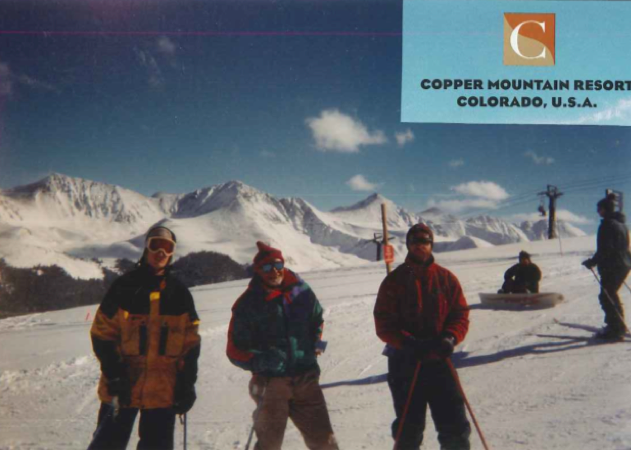
copper 1copper 2When I was in high school I took a ski-trip with my step-dad out West. We skied a lot. I have one memory that sticks out in my mind. On our last day we went to Copper Mountain (12,300ft.) We decided to take a trip to the summit. The ski lift got us close, but we still had about a half-mile climb to get to the peak. I thought I was going to die. When we got to the summit it was an amazing experience (“This is the sanctuary of God”). You could see for miles, the air was brisk, and God’s glory was awesome. I remember crying out to God. Then it dawned on me we had to go down this mountain. The only way down was to jump about a 20-foot cliff to the powdery slope. I had the feeling of terror mixed with wonder was one of the most exhilarating experiences of my life. This must have been something like the Israelites’ experience with the living God–terror mixed with wonder. It was something God did not want Israel to forget.

Who is your God? Is He feared? One day you will appear before this God. Every person who has ever lived will appear before Him. You think you will tell Him how you’ve been a good boy or girl; or give Him a piece of your mind for how your live went on earth. No, you will approach Him in fear and trembling. You will be there, we will all be there. This is the God we will meet. The story doesn’t end there. Ready for some good news? There is this holy God “but…”

2. Gratitude for God’s Grace (12:22-24)

The amazing grace showered on you when you come to the God:

  • to Mount Zion—we may come to a literal mountain in Jerusalem that represented the heavenly Zion
  • to the city of the living God, the heavenly Jerusalem—but we come to the dwelling of God.
  • to innumerable angels in festal gathering—we come backed by a 10,000 x 10,0000=100,000,000 (minimum) member choir of angels in their party clothes.
  • and to the assembly of the firstborn who are enrolled in heaven—the believers, church (ecclesia), any firstborns here today? All receive a special rank and privilege. We will be “enrolled in the Book of Life (Rev.3:5; 13:8; 17:8; 20:12, 15) If you are not enrolled you are not there!
  • and to God, the judge of all—God is there.
  • to the spirits of the righteous made perfect—we will be like Christ! All that things that bug me about you, and you about me will not be there!!
  • and to Jesus, the mediator of a new covenant—HE IS THE CENTERPIECE OF HEAVEN. We come to see the One and Only, the Supreme, who gave us the New Covenant. We come to our Savior and Redeemer.
  • and to the sprinkled blood that speaks a better word than the blood of Abel—we come through the Atoning blood of Christ through which we have forgiveness of sins. Christ’s sacrifice was better than Abel’s (cf. Gen.4:10). Though Abel’s sacrifice (and ours) is acceptable to God because of faith—it has no atoning power (it represented judgment and vengeance). Jesus’ is (Col.1:20).

Whoohoo! That will be the day!! Are you grateful for the work of Christ? Do you know the God of Mount Zion? (1 Jn. “These things were written that you might know you have eternal life through Jesus Christ”) Do you know that you know that you know Him. Forgiveness and repentance in Christ!

How should I respond to this holiness and grace of God?

3. Worship by Total Submission (12:25-29)

My Response (v.25): I will do what He says. When He says jump, “I will say how high?”

My Response (vs.26-29): I will worship. I give my best to God, I give my first to God, I reserve the most to God. I honor Him, respect Him, awe Him. I do not walk through life casually, placing a checkmark on my fridge that I went to church today. I totally submit to Him and worship for our God is a consuming fire.

Getting a glimpse of God means…
I fear God’s holiness: Do you fear God? Does it show up in your actions?
I have gratitude for God’s grace: Are you thankful for His mercy?
I worship by total submission: Do you worship Him as a living sacrifice?

Shakamak 09

DSCN2521

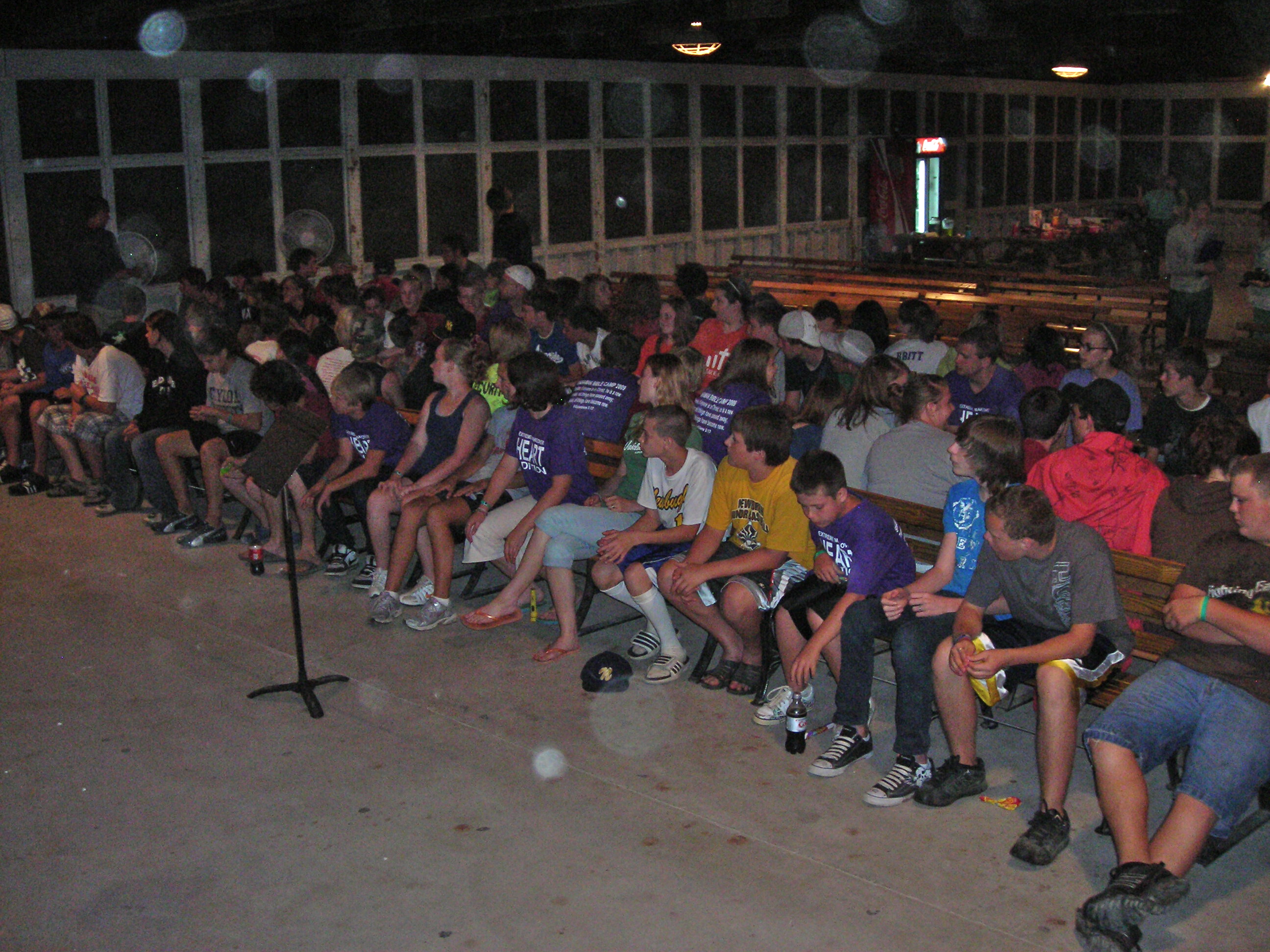
It was a lot of fun teaching the Word at Shakamak Bible camp this summer. This week I spoke to a group of 200 teenagers at Shakamak Bible Camp. I love camp.

The theme of the camp was “extreme makeover: spiritual edition” which had a thrust of encouraging the teens to live within the refining fires of God’s plan. I was encouraged by the number of teens desiring to live for God. We had a great group of senior campers. It was a privilege to talk with many about their lives, faith and God. I am encouraged there are so many teens that desire to walk with God and make a difference for Him. I am praying that God would use these teens to shake their schools, work places, homes and youth groups from Christ. Fear God, not man.

real men cry

man weeping

Real men cry: a study of lamentation

Sure men cry. I am not talking about the tear shed from watching Bambi, a favorite chick flick, seeing your team lose the Super Bowl or cutting an onion for dinner. What about the true gut wrenching weep of sorrow. Men can be painfully shy. To pouring out their hearts before God to be seen as less than masculine.

What I am talking about is sacred sorrow. The kind of sorrow you have at injustice or self-inflicted judgment and the only thing you can turn to is God. The book of Lamentations is a fitting thesis for sacred sorrow. The theme of Lamentations is the God who is Righteous and Faithful. The author of these poems is a real dude who is really crying. And you can see why:

The scene depicted in Lamentations is so bad that the author has to find some simile to relate to what is reality. He can still smell the rot and hear the wailing of horrific bloodshed. Jerusalem is desolate. Jerusalem is pictured as a lonely widow, weeping the death of her beloved. She once was a queen, full of splendor, invisible to attack, but now is a abandoned as a slave. She is like a raped virgin that has been rejected and cannot find anyone to comfort her. No one is invincible to God’s wrath, not even His own people. The question is not “why” has this affliction occurred for the people know God is punishing their sin.

God who was seemingly absent is now back with vengeance as an angry “enemy” who has “cast down the splendor of Israel” and “in his anger has set the daughter of Zion under a cloud!” (2:1) God who had once protective presence upon His people had now become a fierce storm cloud of anger. He use to fight for them, but now He is against them as their enemy as He has “thrown Israel down without pity” (2:17).

And then in the midst or ruin and rubble comes the turning point of the lament. A glimmer of hope. Exhausted towards God His enemy (3:18) the author pours out one of the richest lines of hope in God (3:22-24):

“The steadfast love of the LORD never ceases; his mercies never come to an end; they     are new every morning; great is your faithfulness. The LORD is my portion,” says my soul, therefore I will hope in him.”

The author praises God despite being bruised and bloody, hungry and destitute. “It is good to wait quietly for Him…to hope in Him…to seek Him.” Can you get any more realistic than this? There is hope in a God who is his enemy, but whose “compassion never fails.” The author may be left alone in silence, may have to bury his face in the dust or give his cheek to the one who strikes, but God promises “men are not cast off by the Lord forever.” (3:28-31)

The author acknowledges that they are now orphans, weary, hungry, bearing the punishment for their fathers sins, women are ravished, princes hung by their hands, ruled by slaves, joy has ceased, and their dancing has turned to mourning. He pleads in prayer to the the LORD to “remember” them (5:1) that they might be “restored” (5:21). In the midst of their cataclysmic circumstances there is hope in the LORD who “reigns forever” and whose “throne endures to all generations” (5:19). This God, the only God, is again to begin again with the people.

What can we learn from Lamentations?

A theology of Suffering from A to Z. Lamentations reveals a complete and exhaustive expression of sorrow. The suffering of Lamentations explains the ways of God to humanity. Human suffering always brings about probing questions about God. The faith of many Jews must have been shattered by the events of Jerusalem’s destruction for they believed that Jerusalem was invisible and that God’s temple could not be destroyed because He dwelt there.

Lamentations gives us a glimpse into individual suffering (Ch.3) and national suffering (Ch.5). Lamentations that helps us gain a perspective on suffering when we see the famine, warfare and genocide in places like Cambodia, Columbine, Congo, and countless others. Suffering can make you bitter towards God or better understand God’s purposes.1 From the personalization of the author and front-row-seat depictions of the nations suffering we see suffering mixed with hope. Lamentations is a “theodicy”: despair amid suffering should always give root to hope in the presence and rule of God. Here are some principles Lamentation offers as a theology on suffering, when suffering comes:

  • Confess your sins (1:5, 8, 18, 20, 22).
  • Recognize who is the Judge (2:1-8, 17).
  • Give special attention to God’s leaders (4:16).
  • Pray for the future (5:1, 21-22).
  • Hope in God (3:21-42).

A Balance between God’s Righteousness and Hesed. Throughout the painful memories of Lamentations God’s righteousness is never throw to the wayside. God’s judgment is not viewed as wrong by those who strolled through Jerusalem’s ashes, rather they see their sinful ways. God keeps His promises of punishment for disobedience. “The LORD has done what he purposed; he has carried out his word, which he commanded long ago” (2:17).

His righteousness demands that sin be dealt with fairly. He is also faithful to Israel and will be their hope for the future (3:22-23; cf Deut.30; Is.65-66; Jer.30-33; Ezek.36-37). His faithfulness (hesed) demands His promises to be kept. God’s righteousness and faithfulness are equally relevant facets to the nature of God, which are illustrated horrifically and beautifully in Lamentations.

Sacred sorrow is okay as long as one acknowledges that God is righteous and faithful. Praise God in the midst of pain (3:21-42). There must come a point in our lamenting that is it turned to joy. In the case of Lamentations, out of the destruction rose a song of praise for the faithfulness of God.

“How” not “why”. When sin is in the “camp” we must not question God’s vengeance for it is the inevitable promise for disobedience. Rather we must access the consequences of how His vengeance is displayed in our lives and how we will will respond. Jerusalem’s wounds were self-inflicted. The book of Lamentations is one long illustration of the eternal principle that “a man reaps what he sows.” (Gal.6:7b)

When all is gone, all you have is all you need. Everything is destroyed, the days seem dark and God distant He is still there. We have a hope in the God who reigns forever. God does not abandon those who turn to Him for help.

plinko vs. the Bible

bible plinko

Who doesn’t like the Price Is Right? If you were on the game show, which game would you want to play? If I were on the Price Is Right I would love to play Plinko. You get the little puck, stand on the platform and try for $10,000. It’s a complete game of luck. It really doesn’t matter where you put the puck. It’s all in the bounce.

Sometime I treat  quiet time with God a lot like Plinko. “What should I study today?” I open the Bible and bounce from passage to passage without a plan and hopefully I will luck out and win big “truths” for the day. I admit there are times when I come to God like this!? Sure God might bless my efforts, but God wants me to approach His Book with a bit more respect and purpose than “drop the puck and hope for luck” approach.

There are some great plans out there for reading the Bible with a purpose. Even for ADHD people like me who do not have long attention spans. Here are a few for starters:

  • Study a theme. i.e. love in 1 John, one another in the letters of Paul, kingdom in Matthew, etc.
  • Look at how a particular book of the Bible describes God.
  • Discover how OT books picture Christ. Be careful not to read into the text too much.
  • Trace the hymns of Revelation and write God a new song for the day.
  • Start a quiet time journal that tracks promises, commands and truths.
  • Read the same book over and over from 5 or more translations and note similarities or differences.
  • Read a psalm a day for 5 days a week. You can go through the Psalms twice in a year this way.
  • Read a chapter of Proverbs a day for an entire month. There are 31 chapters and works perfect for some months with the same number of days.
  • For the heavy reader, read through the Bible in a year. At a pace of 4-5 chapters a day you can read through the entire book.

Be creative. There are an endless amount of ways to study the treasures of God’s Word. God wrote it for a purpose, shouldn’t we have a purpose in studying it?

Deuteronomy 6:4-9, “Hear, O Israel: The LORD our God, the LORD is one. Love the LORD your God with all your heart and with all your soul and with all your strength. These commandments that I give you today are to be upon your hearts. Impress them on your children. Talk about them when you sit at home and when you walk along the road, when you lie down and when you get up. Tie them as symbols on your hands and bind them on your foreheads. Write them on the doorframes of your houses and on your gates.”