prayer for Chile

This is a prayer for all the people of Chile follow the aftermath of an earthquake that rocked their country:

My great I AM,

Fill my mind with elevation and grandeur at the thought of a Being

with whom one day is as a thousand years,

and a thousand years as one day,

A mighty God, who, amidst the lapse of worlds,

And the fall of empires,

Feels no variableness,

But is glorious in destruction.

May I rejoice that, while men die, the Lord lives;

That, while all creatures are broken reeds,

Empty cisterns,

Fading flowers,

Withering grass,

He is the Rock of Ages, the Fountain of living waters.

Turn my heart from vanity,

From distractions,

From uncertainties of the present state,

To an eternal interest in Christ.

Let me remember that life is short and unforeseen,

And is only an opportunity for unsefulness;

Give me a holy avarice to redeem the time,

To awake at every call to charity and piety,

So that I may feed the hungry,

Clothe the naked,

Instruct the ignorant,

Reclaim the vicious,

Forgive the offender,

Diffuse the gospel,

Show neighborly love to all.

Let me live a life of self-distrust,

Dependence on myself,

Mortification,

Crucifixion,

Prayer.

A Puritan Prayer taken from The Valley of Vision [104]

followership unmasked


Are disciples looking for perfect leaders or authentic leaders? As Christian leaders, it is tempting to want to put on a mask that hides the fact that at times you struggle with sin and fail in your faith too. Now I must never give glory to my sin, but glory in the grace I have in overcoming sin. Here are some biblical ways we can build trust and increase deeper counsel with those you are discipling:

Transparent prayer. Our prayers can be vague and lifeless. Learn to pray honestly and humbly. Pray expresses our neediness of God and that He is the only One able to meet our needs. Psalm 32 and 52 are great examples of transparent prayers that express need for God.

Share your life story. I am sure you have been through some valleys and climbed some mountains. Like the apostle Paul we have a story dotted with dark spots [cf. Acts 22:1-21], but those times make God really big. Sharing how you have been transformed by the power of God and continue to battle against sin take be a tremendous encouragement to those you are ministering.

Ask for Help. You are never self-sufficient or independent of your need for accountability and ministry from others. It is helpful to get others believers to pray for you and hold you accountable. You have not arrived yet, nor are you invincible. I need your help in the partnership of the gospel [cf. Philippians 1:3-18].

Admit you don’t know it all. What do I do if someone asks me a difficult theological or practical questions I do not know how to answer. I say, “That is a good question, I do not know, but I will find it out for you. I believe the Bible has the answers. Can I get back to you on that question?” [cf. 2 Tim. 3:16; Isaiah 55:9]

Be real. Do not hide your pain, sorrow, joy, heartache or frustration [cf. Romans 12:9-21]. God gave you emotions to use for His good [cf. Jeremiah and Lamentation]. Real men cry.

Point to the promises of God. Putting on the mask of sinlessness fails to help others to see the God’s faithfulness [Deuteronomy 7:9; 1 Corinthians 1:9]. Whatever good I have in my life was put their by God. I am not holy, but He that is holy has helped me to become Holy by the Power of His Spirit [cf. 1 Peter 1:13-25]. People need to see and hear that from you. Pull off the mask and let people see how God is at work in and through you.

True followers are seeking other genuine followers who are following hard after God.

rebel without a cause

This week I have been watching the Olympics on TV. It is interesting to watch the Olympians take the podium with their bouquet and medal. What does copper, silver or gold look like before it becomes an Olympic medal? It is an ugly rock covered with mud. Before it becomes a beautiful medal you wear around your neck it must first become chiseled and purified. This is often how God uses authorities in your life. He puts parents, teachers, bosses, pastors, and authorities in your life to chisel and shape you into precious metals. You have to be willing to get under authorities in order for God to you them in our lives.

The Fall of Saul and Us All [1 Samuel 13:11-12] Saul was a bold, brunette and a beautiful man [i.e. the Brawny Man]. On the outside he was the man for the job. He was a tall, intimidating [6’6’’ to be exact], muscular warrior king of Israel. He was anointed by God to be the political, economic and spiritual leader of God’s chosen people. Though Saul was king he still had authorities to get under: God and Samuel [God’s spokesmen]. Every time the people were to go into battle Saul had to wait for Samuel to make a sacrifice to God.

One day Saul was camped at a place called Michmash. The Philistine enemies were pressing in and Saul was freaking out with fear. Saul sent for Samuel and was asked to wait seven days. After the seventh day Saul had a conniption and couldn’t wait any longer so he took matters into his own hands. He made the sacrifice himself. [Side note: going through the motions of worship never pay off spiritually] It wasn’t long after the smoke from the sacrifice cleared that Samuel showed up and asked Saul, “What have you done?”

“When I saw that the men were scattering, and that you did not come at the set time, and that the Philistines were assembling at Michmash, 12 I thought, ‘Now the Philistines will come down against me at Gilgal, and I have not sought the Lord’s favor.’ So I felt compelled to offer the burnt offering.” [1 Samuel 13:11b-12].

Does this sound familiar? When I rebel against authority I usually rationalize by saying “I saw…I thought…I felt…” We are kings and queens of excuses: I saw someone else do it, I thought it wasn’t that bad of an idea, or I felt compelled even though it was not right. Despite Saul’s disobedience God gives him a second chance.

Can We Try this Again? [cf. 1 Samuel 15:1-19, 20-22] How do you think Saul responded? Did he learn his lesson? Saul was given one command: destroy everything. Samuel showed up after the battle and not everything was leveled. Saul gives an academy award winning response, but truly lame excuse [1 Sam.15:20-21]. Saul blames the soldiers, and then says he is going to give all the remaining stuff to God as an offering. Sounds admirable, eh? God is not impressed [1 Sam.15:22].

What are the Consequences of Rebellion? [1 Samuel 15:23] We take ourselves out from under the protection of God. The prophet of God Samuel says to Saul, “Rebellion is the sin of witchcraft.” [1 Samuel 15:23] What is witchcraft? It is the same as saying you putting yourself under the authority of Satan. Rebellion is having the spirit as the devil that allows him to rule our lives.

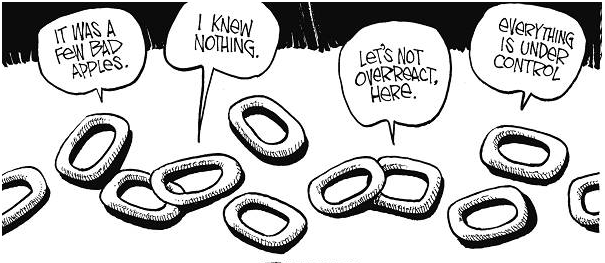
God works through authority. You are a link in God’s chain of command. God always works through authority. You have to find where you fit and place myself within that chain. If we take ourselves out of that chain we will never discover the greatness God has for us. Saul missed out on God using him personally and professionally.

What if my authorities are or ask me to do things that are illegal, immoral or unbiblical? This is a good question. What if some in authority over me are doing drugs, promoting sexual or verbal abuse, stealing money, lying to cover up, and more? I know what it is like to live daily under an authority that treats you unfair and is against you for no reason at all. In school, I had this teacher that hated me. She would send me to the principle just for smiling or raising my hand. This really tested my view of authority. Here is how God says to deal with authority:

1) Pray believing God can change hearts. You are accountable and responsible to obey God first and foremost [1 Peter 2:16-23]. 2) Confront in love and humility: Be like Samuel and call sin what it is [Matthew 18:15-20]. Humble and joyful submission to authority is a root to intimacy with God. Submission sounds like a dirty word, but when we submit to God it is the most delightful thing we can do. Submission to God is not easy, nor does it promise an easy life. Sometimes getting under authorities and obedience to God might require sacrifice, require you to surrender, and/or require you to suffer. The question is: will you allow God to use the authorities [even the bad one] in your life to chisel, mold and purify you as gold? [cf. Job 23:10]

you can’t tell me what to do

What do you think of when you hear the word, “rebellion”? I think of Darth Vadar. He is doctor of rebellion. How would you feel if he were your father?

Whose authority do you struggle to submit to? Could it be an unfair teacher that everybody agrees has unrealistic expectations, an abusive parent, a coach who will not play you, a boss who doesn’t listen and shows favoritism to others, or a friend who is trying to help you? How do you react to their authority in your life? We live a day when it is cool to be rebellious. You hear people say, “I am the boss. I call the shots. I will do what I want to do, when I want to do it. This is my life. I make my own choices. I…I…I… me…me…me…You can’t tell me what to do.” You’d think people were trying out for the selfish opera.

Why do we think like this? Why are some people so rebelliousness? There are many reasons why people are prone to rebellion: jealous for control, delusional from a false view of authority, ungrateful for the place God has put them, stubborn, disappointed by their situation, or simply untrusting of anyone. In that last few generations we have seen an enormous upswing in rebellion against authority. Rebellion didn’t start in the “rebelutionary” 1960’s. It began in the beginning [Genesis]. Rebllion is the oldest sin in the Book.

The story of Satan is rebellion against God: also known as the me, myself & I monster. Satan was the worship leader of heaven. He didn’t like his gig. He wanted to be the top dog and run the show. He wanted to usurp God’s authority or so he tried [cf. Isaiah 14:13-14, “I will ascend to heaven, above the stars of God I will set my throne on high…I will make myself like the Most High.”]. This story sounds like a lot of people I know, myself included. When I rebel I try to take the place of God in my life.

Throughout the Bible we read story after story of rebellious people. In 1 Samuel, we read the story of Saul, King of Israel, who is the poster child for having authority issues. The prophet of God Samuel says to Saul who repeatedly disobeys God commands says, “Rebellion is the sin of witchcraft.” [1 Samuel 15:23] What is witchcraft? It is saying you are on the same team with Satan. Rebellion is having the spirit as the devil that allows him to rule our lives. Let’s see how God deals with this in the Bible:

Summary of Rebellion in the Bible:
Genesis 1—God sets up His authority over mankind and makes man in His image
Genesis 2-3—man rebels and listens to the serpent [Adam & Eve]
Genesis 4—man rebels again with an unworthy sacrifice [Cain & Abel]
Genesis 6—man rebels with worldwide wickeness [Noah]
Genesis 10—man rebels trying to aspire to God [Tower of Babel]
Exodus-Deuteronomy—man rebels by complaining in the wilderness [Moses]
Rest of the OT—man rebels against the prophets message [i.e. Jonah]

So are you wondering where authority issues lead? It should be somewhat clear from our summary of Scripture. Satan is cast out of heaven, Adam and Eve are cast out of the Garden, the children of Israel are cast out of Promised Land, Jonah is cast out of the boat, and we will be cast out of the presence of God for rebellion. There is a common theme of rebellion in the heart of man and common response by God: cast out.

If you look in the word authority the word “author” is in its beginning. God is the author of authority. What does good authority look like? Sovereignty: His rule in our lives. God has established His authority in our life from the beginning. He shows us and teaches us what good and godly authority looks like.

Jesus is the author and finisher of our faith [cf. Hebrews 12:1-4]. He is submitted Himself to the Father even to the point of death. Jesus submitted to God’s authority and the authority of man [Mt.22:21 “Give to Caesar the things that are Caesars and God the things that are His.”]. Lack of submission to authority is cowardly. The world thinks just the opposite. However, the manliest man in the entire world submitted Himself to sinful authorities that forced Him to carry the cross to His death. He did this for your example and your salvation.

Paul thought he was the authority of his own life. He was brilliantly smart, fanatically religious, came from a strong family, and was respected by his compadres, which fueled his pride and rebellion against God [cf. Philippians 3:4-8]. One day on the Road to Damascus he came under the submission of Christ. He finally realized what true authority was all about [cf. Romans 13:1-2]. God has appointed authorities in our life for our good. So what are we to do?

We need to get under the things God has put over us, so we can get over the things God has put under us.

Why does God put authority over us? First, to protect you. God want us to live under authority for our protection. He is like an umbrella that protects us from harsh elements. If I take myself out from under His authority I am vulnerable to all sorts of pain, temptation and mess. Second, God desires to mature you. As I look back in my life God has used some authorities in my life to help me grow up in my faith. Even those some were unfair, ungodly or abusive; they were placed there by God to mold me like clay into the person He wanted me to be. Third, God desires your worship. I am made in the image of God [cf. Gen. 1:26-28, You are a dominioneer]. Everything I do is about worship. 24/7 I am worshiping someone or something, and God desires that it be He alone.

Again, whose authority do you struggle to submit to? Is it a parent, spouse, mature friend, teacher, coach, boss or God? Do you believe God’s authority can transform the way you submit to the authorities or Darth Vadar’s in your life?

gospel gumbo

This week Louisiana celebrated Mardi Gras. When I think of New Orleans and Bourbon Street I can almost smell Gumbo. Mmm. Just thinking of it makes my mouth water and forehead sweat. There are myriads of recipes for make a good gumbo. Some add unique ingredients because they like it spicy, others like it soupy, while others like it meaty. The gospel on the other hand has only one recipe. It is important to get the recipe for the gospel right. There are essential ingredients that make up the gospel and without them there is no gospel. Here are good questions to ask to make sure you have the right gospel:

Am I sure of the seriousness of my sin?
[Romans 3:21-23] The doctrine of sin is serious stuff. Life and death hang in the balance depending on how you deal with this doctrine. We often have a low view of sin, though we sin it so often we struggle to accept that we are sinners. We become so familiar with sin that we come to accept it.

The Bible is realistic about my condition: I am rebellious to the core. Just ask my wife. I am selfish. I am gravitated toward sin more than obedience to God. My heart is utterly wicked. God does not want to just change my behavior, He wants to change me from the inside out. Lasting and permanent change comes from the heart, the hub and control center of the human soul [Proverbs 4:23].

Am I awestruck by the substitutionary atonement of Christ?
[Romans 3:24-25] There is so much wrapped up this theological statement. The substitutionary atonement of Christ is the biblical truth that Jesus made the only sufficient sacrifice for sin to appease my sinful state. Jesus Christ and His work are the essence of hope. This hope is not in my theological knowledge or experience, but it is in the awesome bloodshed of my Savior [Galatians 2:20]. It is He that desires to rule in my heart this moment and forever [Ephesians 2:22-23].

Am I really aware of my need to repent of my sin? And am I aware of my need to follow through with real faith in Christ? [Romans 3:26; cf. Acts 26:20; Galatians 3:11] I put repentance and faith together because they really do go together. With all that God has done for me I cannot simply be passive. The gospel calls me to action. A gift so great doesn’t deserve just a “thank you,” it desires, “I can never repay you God, but I will do whatever you ask from now on and forever more.” The gospel not only affects the moment I commit my life to Christ, but also my walk with Him thereafter. The struggle of sin never ceases until I leave this sod, so I need His grace daily [Titus 2:11-13].

Without a submission of your spirit to the Scripture behind these questions, there is no gospel. The gospel is different than gumbo. The gospel is not just a mishmash of facts or a buffet of manufactured ideas, rather it is the life-transforming truth of Jesus’ death, burial and resurrection that will forever change you. That is good news!

I have adapted this post from Is It Soup Yet?

being comes before doing

“I AM the True Vine, and My Father is the Vinedresser…Abide in Me, and I in you. As the branch cannot bear fruit by itself, unless it abides in the Vine, neither can you, unless you abide in Me.” [John 15:1-5] Abiding in Christ appears eleven times in this passage and it also appears throughout the Bible [cf. 1 John 2:6]. If a word appears like this as often as it does, it is probably important.

The phrase abiding in Christ [μείνατε ἐν ἐμοί; John 15:4] is an aorist active imperative. In other words,  “You are to keep on remaining/abiding in Me.” Abiding is not something you get, it is something you are. If you are in Christ, stay there. Don’t go anywhere else. I am an American: by birth, citizenship and passport. As a follower of Christ we are already have a passport to the kingdom, adopted as citizens of heaven. Having this divine imperative brings a lot of freedom for living in the here and now. I abide in Christ because I know I will be with Him one day, but I can also strive to be like Him today.

What is the difference between being and doing? How do I be? Some followers of Christ get so worked up over performance and playing the part that they forget that Jesus has already performed the work. Children are taught from a young age, even by godly parents or teachers at the church kids program, that if you do this you will be a good Christian. If you memorize these verses, complete this Bible study or workbook page, if you follow all the commandments and pray you will be a complete bonifide follower of Christ. Now each of these disciplines are valuable in themselves: hiding Gods Word in your heart that you might not sin against Him [Psalm 119:9-11], saturate yourself with God’s Word [Psalm 63:1; 2 Timothy 3:16-17], and keep the commands of Christ [John 15:10-17], but doing is not as important as being.

Doing simply leaves you and others exhausted and unmotivated. Each of the verses above and the disciplines within them have a common artery: to have my heart parched for the greatness of our God and utter dependent upon Him for daily nourishment. It is not do this and you will be this, rather it is be like Christ and you will live [do things] like Christ. Being in Christ is what I am because I am grafted into the Vine. I am to be a branch that is abiding in the life-giving, fruit bearing doing of Christ. Christ’s doing [sacrificial death] comes before my being [saving faith], and my being [saving faith] comes before doing [sacrificial living].

So how do I love people who are hard to love? I be like Christ. Sure, I am commanded to love [John 15:12], but just because I am commanded to do it does not mean I am motivated to do it. When I consider the Gospel and how Christ became love [John 15:13], it gives a new perspective on how I can become love to others [John 15:17].

lies we believe about following Christ

How are you doing as a follower? As a follower of Jesus? Are you making follower of Jesus? Depending on your answer you might be joyful and excited or confused, guilty, and frustrated.  There are some misconceptions of what a follower of Jesus is and what the process of becoming more like Jesus really looks like.  The following are common misconceptions of what discipleship is:

“I attend church and that’s enough for me.” Following Christ is a relationship. It is a lifestyle within a community. It cannot be tied to a program or church. A lot of followership can happen at church, but most of the time it doesn’t and shouldn’t. Following Christ happens in a community of followers doing life with one another [Hebrews 3:12-13; 10:24-25]. Following never happens alone. If your only following is sitting under your pastor for an hour or two a week that is a poor view of followership.

“I can grow on my own.” Left to ourselves following Christ does not happen–for long [Luke 9:57-62; Romans 12; 1 Corinthians 12; Ephesians 4:11-16]. I grow by becoming constantly confronted with the gospel of Jesus. Lone Ranger and Tivo Christianity do not cut it. I must be willing to count the cost and commit to be vulnerable within a family of followers.

“I am more mature now; following is for new Christians.” You are never too old to be discipled. Seasoned Christians realize that problems do not go away because they are Christian, they simply realize they are sinners [1 Peter 4:12-13]. Until we leave this planet we will continually struggle with sin and our faith. As a follower of Christ, I am not quite like my Master yet, so there is room for followership.

“I read my Bible.” We must not be content with only reading and knowing more about the God of the Bible. Some Christians are like an overstuffed Chipolte burrito. It is not just what you know, but what you do with what you know [James 1:19-27]. There is a great difference between being a student and a follower.

“I am not responsible to change everything.” Following Christ cannot be compartmentalized or systematized. It is all of me or none of me. Christ wants to be all and in all. Christ wants to be involved with my money, parenting, marriage, singleness, career, resume, fashion, habits and more. Sound intrusive? That is discipleship. It is not behavior modification, rather it is dealing with sin and living like Christ. True followership takes all of Christ’s teaching and applies them to our life.

“I do not have time.” If someone in your family dies you make the time to be with the ones you love. You ask off of work, you reschedule your plans because family matters [Luke 9:57-62]. So it is with your faith and the faith of others around you. Followers understand they have been given a whole new identity, a whole new agenda, a whole new mission, a whole new community, and a whole new life through the gospel. Followers of Christ make the time because it is a relationship with a living God and our faith at times of dying.

“I don’t know enough about the Bible.” Followers are not just theology PhD’s or seminary trained pastors. In Jesus day, they were fishermen, tax collectors and everyday people fired up about what Christ can do in a life. If you have a Bible, if you have one verse memorized or if you are a follower of Christ that is breathing you can disciple [1 Corinthians 11:1]. Sharing the gospel is enough.

“I am worried I will lead other followers astray.” If you stick to the Word of God and teach the truth therein you are not accountable for how others respond to God [2 Timothy 3:16-17, 4:1ff]. Speak the truth in love. Even your struggle with sin is a great teacher [Colossians 3:13; Philippians 3:12-13]. Authentic followers attract more followers than they distract.

Following Christ is learning what it means to live your whole life in light of the gospel of Jesus. Living as a follower of Jesus is learning how to live in the reality of this new life you’ve been given through faith in the gospel. Not that it’s easy, or without pain or cost. The joy and excitement of living in light of all that God promises in the gospel outweighs any pain or cost.

the uncool Jesus

Is it politically or even spritially correct to say that I don’t like Christian bookstores? Marketing the Christian faith is silly. Do you think Jesus could imagine His image of clothing, bobble-head doll, iTunes, a superstar Broadway show, and crucifix’s. Nothing fires me up more than a walk through a over-advertised faith-based bargain bonanza. I admit I am quite biased and bruising in my characterization of Christian bookstores, so please forgive me if you are offended. However, I did buy a worthwhile book at a Family Christian Bookstore last week.

Here is my point: Quit trying to make Jesus hip. He wasn’t cool back in His day. Many followed Him because of His miracles and teachings, and like He said, “Not all follow me because they are believers.” [John 20:24-29; Luke 14:25-33; Luke 9:23-27, 57-62] Today, a plethora of books by cool pastors or popped-collar authors are portraying Jesus as fashionable and palatable for the masses. The billboard of their message states, “Hey, check me out, if I am cool, Jesus is too.”

Jesus is uncool. He challenges your status-quot. He convict us of sin. He rocks the religious. He baffles those who bank an afterlife on their own merits. He infuriates those who demand rights. He belittle the sacred systems some establish. He was a revolutionary that didn’t do what the people demanded. His way was a paradigm shift. He was simple, common and if He were in today’s world would be a guy who would have hung drywall in new housing developments. He was friends with the losers, infected, handicap, psychotic loonies, IRS agents, and women of the red-light district. He probably had dirty feet, coarse hands and olive colored skin. He made people feel awkward, enraged and overwhelmed. Jesus was beaten up by bullying mockers. He was killed by people who thought they were cooler than Jesus and his claim to save them of their sins.

I am convinced Jesus is the sweetest, but I do understand to many He is the smell of stench [2 Corinthians 2:14-16].

unchurched

Why do most people not ahead church? Do people that don’t go to church believe in God? Some often assume that just because someone doesn’t go to church that they do not believe in God. The fact is, many do not understand the unchurched. If you were to interview an unchurched you would come to understand:

1. Unchurched believe that any religion is okay, as long as it helps you.

We live in a universalistic world that thinks it is sophisticated and politically correct to say that all roads lead to God. I hear the masses say, “You can believe what you want, I will believe what I want, and we are all okay.” The fastest growing religion in America and the world is tolerance which has the motto’s: “everything can be right” or “nothing is certain.”

Is that really true? Can anyone make that claim? What we understand from each of the major religions of the world is that everyone thinks they are right and others are wrong, even those who claim to be agnostic or atheist. Can they all be right or wrong when they are all truly different at their core? No.

2. Unchurched are curious about the spiritual, but put off by religion.

People are generally fascinated and intrigued by the spiritual. However, they do not want to be tied down by any one belief or give up control to God. As I talk to many unchurched youth I am overwhelmed by their desire to know about God, faith, and the afterlife, but not commit to it. 4 out of 5 American’s call themselves deeply spiritual [Aug.26, 2002 Barna Update], but base their faith on their circumstances not on absolute truth or formal religion. People do not want a religious system running their lives, telling them to stop sleeping with their partner, to obey “stupid” moral standards, to quit abusing substances, or to start forgiving their parents.

3. Unchurched do not know what Christianity really is all about.

A few weeks ago I was meeting someone for lunch. While waiting I was talking to another person waiting for a friend too. This person began to complain about their work and how they were glad to be on lunch break.  Every other word that came out of their mouth was an expletive. When they were finished venting they asked, “What kind of work do you do?” I have to laugh inside when people ask this question. Mostly for the response that follows, “I am a pastor”. He just looked at me with that I-am-embarssed-for-cussing-like-a-sailor-in-front-of-a-minister-look.

After an awkward pause he said, “Oh, you know, I am a Christian too!”

I did not doubt him, but I did question, “That’s great. Where do you go to church?”

“Oh, I do not go to church.”

“Why is that?”

“Well you do not have to go to church to be a Christian,” was his dogmatic reply.

Many consider themselves Christian by default because they live in America, their mom was a Christian, or because they went to a denominational church sometime in the past.  Two-thirds of people who do not go to church say that they are Christians [Barna, 2000], while half of those same people do not celebrate Easter which is a big Christian holiday. It doesn’t take you long to learned that not everyone who says their a Christian really believes that Jesus Christ can save them from all their sins or that He is the only way to eternal life.

4. Unchurched do not know what to believe for certain.

Many who claim that they are Christians in the previous point are uncertain about one thing: where will I go in the afterlife? That is the age old question. The common answer is, ” I do not know. Does anybody? I think I am good enough.” Today, there are many unfounded theories about God and His plan for life after death. Some will say, “God is a good God and will be gracious to me. Of course, He will forgive everybody.”

5. Unchurched are searching to fill an empty void.

How good is good enough? Who sets the standard of the scale of goodness? We like to set the standard by weighing our goodness against anthers goodness. I might think, “Well, I am not as bad as Hitler or that molester I heard about on the six o’clock news.” Who says you are not as bad? We like to project upon God our good standing and impose upon Him mercy.

I would like to propose that when reading the Bible from cover to cover it is clear–I do not deserve His mercy, I am not a very good person at all, I desperately need God’s grace to cover my sin, and belief in God’s Son is the only means to an afterlife of peace. I absolutely believe that a daily relationship with Jesus Christ is what will fill the empty void and longing of our heart. Jesus is certain, poses great questions to the ultra-religious [John 8:54-59], and claims to be the way truth and life [John 10:20]. Nobody goes to heaven but through Him [John 14:6].

a map of true follower

Before you take any trip you have to map out where you are going or you might get lost and watt a lot of time and money. It is also the same with discipleship in the church. Before you guide another on the journey of transformation you must consider the keys to the map.

Being a follower begins and ends with God, not man. God calls us into a relationship with Him by following Him. In Jesus day students would usually ask their Rabbi’s if they could follow them, but with Jesus that Master of all He asks us to follow Him. God initiates the relationship. He is the starting point of our relationship with Him [Rom.8:29-30].

Being a follower means knowing Christ personally and intimately. Is a relationship with God personal. Yes, it is really personal. It is not just knowing facts about Jesus, but a lifelong commitment. When a student would ask a Rabbi to be a mentor it was a life long commitment. The same for a relationship with Christ. He asks us to commit for the long haul. Knowing what the Bible says about Jesus is not enough. Jesus is the living God [John 1:14].

Being a follower has to do with the image of God. We were created in God image and likeness. We are dominioneers [Ge.1:27]. This gives and eternal and valuable aspect to our following Christ, the King of the dominion of man. Discipleship is not our agenda, but Gods, “teaching them to observe all I commanded” [Matt.28:19-20].

Being a follower means God is for us, not against us. Do not believe in the god of your own opinion, but the God of the Bible. The way we view God, can be on of the biggest distraction to our spiritual growth. A little view of God can mean little growth.  God is not a gregarious ogre, He is a Rescuer, Savior, Lover, Helper and Care-giver.

Being a follower starts and end with God. If we think we have any part in changing a person we are prideful and overly arrogant. Give God the credit and glory for what He can do in a followers life. Followership is not a program, behavior modification, a magical formula seen in Scripture, or a sacred system that works for every person. It is a daily delightful relationship with the God of the universe. This is the journey to discovering the life of a true follower.

Hugo Liborio

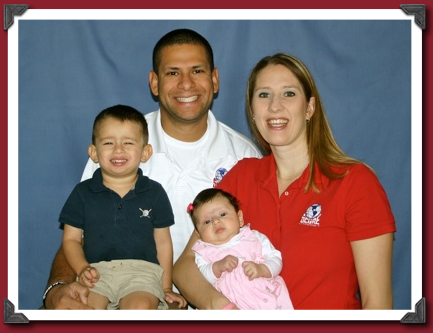
The past two summers we have taken our groups from our church down to the Dominican Republic for ministry among the sugarcane villages. This last year our trip leader was Hugo. He is a man of contagious love for God and a joy for Christ. Our team quickly came to admire his passion for Jesus, the church, and his family. He is an example of a true follower of Christ.

The Lord to Hugo home early this year.

On Saturday, January 20, 2010, SCORE International celebrated Hugo Liborio‘s life at church plant Villa España in the Dominican Republic. Hugo spent the last year of his life working as a missionary in the Dominican with his wife, Sarah, and two children who are continuing in the work.

can you rewind the tape please?

I used to live with my grandparents during my elementary years. I remember my reward for good behavior was a trip with grandma to the mall and visit to McDonalds. Now McDonalds back in the day was not like the massive metro-play-lands that they are today. It was just a sit-down meal in a box with a toy, commonly known as a Happy Meal. I would always get the fish filet, fries, with orange High-C. I loved those Happy Meals with grandma.

The Bible talks about another Happy Meal [John 6:1-14]. Jesus had performed a fish filet and French fry Hebrew Happy Meal miracle for 5000 people. His popularity was at an all-time high. After this miracle everyone wanted to crown Jesus King [not the burger King, v.15]. Jesus had something else in mind. How about taking a boat trip? What? So Jesus’ 12-followers boarded a boat across the Sea of Galilee to Capernaum and Jesus meets them later taking a stroll on the water [6:16-24].

Meanwhile all the people who received the Happy Meal were looking for Jesus. What about another free meal? The crowds caught up with Jesus on the other side of the sea. Jesus was not looking to draw a big crowd. When crowds showed up Jesus would get all OCD [Operation Crowd Deduction]. Jesus says something really strange, “I know why you are here. You want another free meal.” [6:25-26] I could imagine what the disciples were thinking, “Jesus cool it. You got all these crowds captivated and you go ahead and say something crazy like this?” Jesus continues to talk about food, rather spiritual food and what really matters is relying on eternal food that on He can offer [6:27-29]. This brings about some serious questions in their minds:

“What miraculous sign then will you give that we may see it and believe you? What will you do? Our forefathers ate the manna in the desert; as it is written, ‘He gave them bread from heaven to eat.’” [6:30-31] This brings up a Hebrew History 101 lesson. Do you remember the Sunday School lesson when the people of Israel were wandering in the wilderness and God miraculously feed them? The manna miracle proved to the Jewish people that Moses was their leader. The people were making the same connection with Jesus, but wanted more proof. However, Jesus was not interested in being some miracle producing David Copperfield, rather he answered their doubts and corrected their wrong thinking [6:32-33]. Doubts or questions either draw us to God or away from Him.

Jesus now gets controversial by removing the cape from a Jewish superheroes: Moses. And makes one of the most radical claims of all that either labels Him a lair, lunatic and/or Lord: He says He is the cosmic carbohydrate [6:35]. The disciples must have thought He flipped out. He even goes on to say cannibalistic things like, “eat my flesh and drink my blood.” Surely Christ’s career is over.

Sometimes it would be nice if life and God’s plans were recorded on DVD. Could I have season 8 please? There are times when watching a movie that I miss an important line or did not completely understand something. It is easy to rewind and replay. At times you want to fast forward to the good part. What happens when God does something you do not understand? What on earth are you doing here God? How should we respond?

Don’t press pause [6:60]. Don’t get all bent out of shape over unanswered questions. For Jesus’ followers it was a tough day. They had a lot of questions. I have felt like that after reading some of Jesus’ words. Pausing in our questions and doubts can handicap us. If you are in a boxing match and you pause for a moment you will become a TKO. Why pause? Is it because you do not want God to look under your hood and see all that is broken?

Don’t push eject [6:66-67]. Many bailed on Jesus even after they saw His miracles and heard His teachings. They were not ready to commit after counting the cost. Stay to the course.

Press fast forward [6:68-69]. Look ahead. Consider the long-term benefits of following Christ: Life eternal. What are the alternatives? “The only thing more difficult than having a personal relationship with an invisible God is having no such relationship”—Phillip Yancey. Is it a personal relationship? Yes, really personal.

Press rewind. Look back. Remember what God has done. He has a proven track record. For Peter the changes were dramatic—from fish to following Jesus. What is your story? How has God changed your story? [ie. David; 1 Sam.17:37 & Ps.77:11-12]

Push play. Press on. The best remedy for questions and doubt is “faith.” In the boxing match and blows to your faith, when you are against the ropes faith is the where we can regain strength. Sometimes God and our faith are difficult to understand. Like many who have gone before you and will come after have said, “God this is hard for me to accept, but I have faith you are who you say you are and you will do what you say you will do because you have already done so much.”

Does God really care for me? Even when my life seems to be falling apart? He cares more about me than I care about myself [1 Pt.5:7]. During my freshmen year of college I had major doubts. Why am I here? Does it really even matter? I have distant friends, my grades are collapsing, my family is splitting again, and God seems distant. I was to the point of taking my own life to escape the misery. I was at a crossroads: I am either going to throw away my faith and life or come running to God. I had a heart to heart with a professor. In that moment, my pride crumbled, I didn’t have the answers. I wept in relief, broken before God. God has given us the church to encourage our faith, to ask questions to one another and build on our faith.

mercy for haiti

The pictures and reports coming from Haiti are heart wrenching. We cannot imagine the carnage and devastation they are experiencing. We cannot smell the rotting corpses, hear the weeping in the light of the moon, hunger after a meal you are unsure you will receive, and feel the rage of those have lost ones they love. How can this happen? Where is God in all of this? How should we respond?

Haiti is broken. Rescue is coming. Revival is possible. Christ is King.

I plea to God for mercy. With David in the midst of tragedy and doubt, I sing a song. I praise the God who is in control of creation and thank him that it was not my home that was shaken and torn. I plea for His mercy over Haiti and me.

1 To you, O Lord, I call; my rock, be not deaf to me,
lest, if You be silent to me, I become like those who go down to the pit.
2 Hear the voice of my pleas for mercy, when I cry to You for help,
when I lift up my hands toward Your most holy sanctuary.
3 Do not drag me off with the wicked, with the workers of evil,
who speak peace with their neighbors while evil is in their hearts.
4 Give to them according to their work and according to the evil of their deeds;
give to them according to the work of their hands; render them their due reward.
5 Because they do not regard the works of the Lord
or the work of His hands, He will tear them down and build them up no more.
6 Blessed be the Lord! For He has heard the voice of my pleas for mercy.
7 The Lord is my strength and my shield; in Him my heart trusts, and I am helped;
my heart exults, and with my song I give thanks to Him.
8 The Lord is the strength of His people; He is the saving refuge of His anointed.
9 Oh, save your people and bless Your heritage! Be their shepherd and carry them forever.

Psalm 28

10 things I love and hate about teenagers in 2010

I get the privilege of ministering and serving with teenagers almost every day. There are some things that challenge me, fascinate me and drive me absolutely coo-coo about our teenagers. I love’m and hate’m at times.

Love’m
1. Authentic. What you see is often what you get. They can be genuine and real. They can see through your junk. Sometimes brutally honest.
2. Commited to relationships. They want significant and deep relationships. Friends are really their most important desire. If you got their trust you got a loyal friend.
3. Open-books. They are curious and willing to engage questions and doubts in their faith and God, more so than the older giants.
4. Momentous. They have constant energy and think they can change the world. They had contagious passion and willing to light the world up for Christ
5. Cultured. They know a little bit of everything from the past hundred years of music, movies and media.
6. Williams Carrey-ites. They expect great things from God and expect to do great things for God. They often have a big view of God.
7. Learners. They are sponges that soak up Gods Word. They want to know truth, to be challenged in their thinking, and discover how it applies to them right now!
8. Complex. They are simple, yet sophisticated.
9. Crafty. They have brilliant ideas. Sometimes those ideas can get them into trouble.
10. Contagious. They forever make me want to be youthful and spunky.

Hate’m
1. Busybodies. They have jam-packed schedules and pride themselves on busyness.
2. Entitlement. They think they can have want ever they want when they want it. They are horrible at waiting sometimes. They are big consumers, but I think they learn this from wasteful parents.
3. Compartmentalizatism. They are good at separating areas of their lives. They do not mix faith with school, parents, sports and other things. They are quite bi-polar in their faith.
4. Media Addicts. They are a gajillion times better at texting, facebooking, gaming, iPoding, and technology than any generation. And they flaunt it.
5. Worldly. They are easily influenced by what the world was is wonderful. They are swayed by sex, listen to toxic philosophies that cloud their faith, and chose to be torn between two radically different worlds.
6. Family Mess. They often have families that are absent, broken, and not living biblically.
7. Authority Issues. They do not trust or listen to those who are over them. They back talk in disrespect, often to God too.
8. Lazy. They do not like to say more than one word at times and think about it. They zone out to what matters at times.
9. Discernment. They will make decisions based on what others think of them. They do not make decisions often based on personal convictions.
10. Pants on the ground [check out this video]. Whoever invented the idea of young dudes wearing low-ride pants with boxers should be sent to fashion school.

a plastic faith

Doubt can be a good thing. Some are taught never to question God or their faith. That is silly. Even Billy Graham had doubts. Doubt can strengthen and secure your faith. They can also drive you away if you are unprepared. Stats say that 50% of Christian teens will abandon their faith by the end of college. Jesus was more comfortable with doubt than most Christians are.

You can take some major blows your can take for your faith. Like a boxing match we can take intellectual upper cut, this is when you are sitting in science class at school and your view of creation is challenged, or in philosophy faith is reasoned as irrational, or spirituality is stated as not for the smart. Then there are psychological gut checks, which can happen when you experience a flawed view of fatherhood, have a bad church situation, or observe hypocritical Christians. The most common is the sinful right and left hook. By its very nature sin separates us from God. Sin fuels pride, arrogance, or invincibility from God.

When we receive these blows it can leave our faith damaged, bruised, and scarred. When I was in high school I took a baseball to the face. My nose was even more crooked and broken than it was today. I visited my doctor Rocky, and the he said the only way to fix my face was through plastic surgery and a face-lift. When we take blows to our faith we need a faith lift. As a messenger of truth I need to help bandage and repair sagging faith and God’s Word comes into your life like a surgical knife. How do I know if I need a faith lift? Can you answer ‘yes’ to any of these questions?

Are you convinced God doesn’t listen to doubters? God never says doubting is dumb. He never calls us stupid for using our brains to question or consider our faith and relationship with God. It really takes faith to enter a relationship with Him. God is more comfortable with our doubts than many Christians are. Take the example of Thomas from the Bible [John 20:24-27]. Thomas had good reason to doubt. His friend, teacher and Savior had been unrecognizably beaten to death and executed on the cross. People were saying Jesus was alive. How could he believe that after all we saw? Jesus didn’t give Thomas all the answers for how He rose from the grave, but He did give Thomas enough to believe and relieve him of doubts.

Are you searching for absolute proof? You want every questioned answered to satisfaction before you make the leap of faith. Truth is, having every questioned answered removes the need for faith. Jesus did not answer all of Thomas’ questions [John 20:28-29]. Doubt and faith go hand in hand. If you have no doubt, you have faith. If you doubt, you do not have faith. [note: Abraham had endless examples faith mixed with doubt.]

Faith is attached to trust. I have faith every day and I often take it for granted: I have faith my alarm will wake me up in the morning because the electricity works. I have faith my car will start. I trust my office chair will keep me sitting up straight. All of these have failed me from time to time, but over time they have been faithful. I do not understand electricity, mechanics or the engineering behind an office chair, but I trust they will work. I do not have to have all the proof before I trust. That is faith.

We may not have proof that Jesus rose from the grave, but we do have evidence. What is some of the proof or evidence we have that Jesus rose from the grave? Christianity has some very compelling evidence, but what it comes down to is do you have faith that it is all truth? What I have found is that sometimes people can have all the facts before them, all the proof and evidence to their questions, but they still doubt because they want to keep their lives hidden from God. They do not want to change their lives because they are too comfortable in their sin and keeping God distant.

Are you waiting for a miracle? You say, “If God would just speak to me, or write it in a book, or come down here to my level, then I would believe.” Do you really? People posed that same question in Jesus’ day. God did speak to them, He did write them a Book and He did come down to their level, and many did not believe [note: miracle of Lazarus; John 12:9-11]. A miracle does not guarantee faith, but assists it [John 20:30ff].

Are you waiting until it feels right? You might think to yourself, “It just doesn’t feel right. I will know in the moment. If Jesus is really for me then I will feel it.” As a good friend once told me, if you are looking for a warm and fuzzy feeling, wet your pants. Feelings are often a byproduct of faith, but not always. Feelings can be freaky. There are some songs and movies that really move me, but they do move me the same as my wife. The other night I was watching Rudy with Sarah, I was in tears at the end, Sarah said with a straight face, “He should have quit the team.” Does that mean I have more feelings than her? No. We are all wired differently. God is emotional and emotions are not wrong, but faith is not anchored in feelings.

Are you bargaining with God? You might think that if you have faith you will get everything and more from God. Just because you have faith doesn’t mean you will all of a sudden ace all your future exams, your family will be pieced back together, you will never again struggle with sin, and a new car will show up in the driveway with you name on it. You cannot use faith to bully God to get what you want. So what is in faith for me? Life. Eternal life. Being with God forever, and being spared from His ferocious wrath that would shun me out of His presence forever.

So tell me what I need to do to get a faith lift? Get off the couch of doubts and talk to someone who has a strong faith. Get into good books: Bible, apologetics, and more. Go to church and immerse yourself into some good teaching and relationships. Faith is a gift [Eph.2:8-9]. You do not earn it or deserve it. God gives it to you because He infinitely loves you. From God it is a gift, but for us the decision is to take it or leave it, to receive it or reject it, to give up on trying yourself, and give your life over to God in faith. Is your faith borrowed from your parents? Is your faith real? Do you see your faith lived out everyday? Do you love the world more than your faith? Will you keep your faith?


what if those I am pouring my life into have gone empty?

Sometimes relationships go sour. Sometimes discipleship hurts. Sometimes those we invest our lives into bail on life and our efforts seem bankrupt. What do I do when I pour my life into someone and there are empty returns? What do I do when I am left speechless on the other end of and unanswered call? Or your cries are unheard or ignored?  Here are some good thoughts to remember:

Discipleship is intentional. When I invest in someone’s life I want him or her to know that I am. I intentionally let them know that I want to spend quality time encouraging their relationship with God not because I have it all together, rather together we can begin sharpening iron. Echo the voices of Jesus and Paul, “follow me.” [Matthew 4:19; 8:22; 9:9; 10:38; 16:24; 19:21; 1 Corinthians 11:1; 2 Timothy 1:13]

Discipleship is eternal. I am intentional about discipleship because I feel the weight of my responsibility before God: to reproduce my vertical relationship with others horizontally [John 15:16ff]. I am responsible for the spiritual growth of our teens. That is a heavy burden to bear, but God brings the fruit. My relationships matter to God. My relationships have eternal ramifications. That is huge.

Discipleship is generational. My relationship does not end with someone after a year or 12-class study. They last a lifetime [Matthew 28:19-20]. From one generation to another I must be willing to disciple and be discipled.

Discipleship is personal. When relationship end or the parking brake seems stuck that can be frustrating. Relationships do not come with 90-day money back guarantee. We might get burned and bruised. If you have some one you are investing in that does not want to be around you: give them over to God, keep tabs on them and don’t close the door on them ever. Chose another to invest in and press on. May our motto be, “I will most gladly spend and be spent for your souls.” [2 Corinthians 12:15]