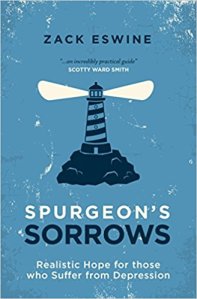
Spurgeon’s Sorrows

Is sorrow bad?  How does God use sorrow or depression?  What does the Bible have to say about sorrow?

41K11ZzwmfL._SX326_BO1,204,203,200_
http://a.co/5IdWTpw

In his book, Spurgeon’s Sorrows, by Zach Eswine, he colorfully aims to offer realistic hope for those who are suffering from depression. It traces the life of Charles Spurgeon and his own struggle with sorrow and depression. It might be unknown to many that Spurgeon struggled for much of his life with depression. The author digs into his writings, sermons and teachings and the Scripture to form a practical understanding of sorrow.

The book is divided into three parts:

  • Part 1 – Trying to Understand Depression.
  • Part 2 – Learning how to help those who suffer from depression.
  • Part 3 Learning to Daily Cope with Depression.

Reflections

Sorrow is allowed by God and at times comes from the heart of God. Therefore, it has its good purpose. As the author concludes the book by saying,

“Sorrows are caused by ugly things. But Jesus adopts them as it were. He brings them into His own counsel. The One who loves even enemies puts our sorrows on probation. He gives them His own heart and provision and house. Living with Him they reform and take on His purposes to promote His intentions. In Him, they reverse and thwart foul tidings.” (Kindle Locations 1847-1849).

The author dives into the life of Spurgeon and the Scriptures to help us understand one who suffered sorrow. The author adequately and sufficient dissects Spurgeon’s life and the Scripture to offer one who is walking through a season of sorrow hope.

In my opinion, here were some helpful tidbits and quotes from the book.

Sadness is not laziness nor sin.

“Contrary to what some people tell us, sadness is neither a sign of laziness nor a sin; neither negative thinking nor weakness. On the contrary, when we find ourselves impatient with sadness, we reveal our preference for folly, our resistance to wisdom, and our disregard for depth and proportion.” (Kindle Locations 274-276).

Sadness doesn’t always have a cure.

“In this fallen world, sadness is an act of sanity, our tears the testimony of the sane.” (Kindle Locations 283-284)

“Conversion to Jesus isn’t heaven, but its foretaste. This side of heaven, grace secures us but doesn’t cure us.” (Kindle Locations 382-383)

The grace of Jesus is our greatest medicine.

“It is Christ and not the absence of depression that saves us. So, we declare this truth. Our sense of God’s absence does not mean that He is so. Though our bodily gloom allows us no feeling of His tender touch, He holds on to us still. Our feelings of Him do not save us. He does. Our hope therefore, does not reside in our ability to preserve a good mood but in His ability to bear us up.” (Kindle Locations 392-395)

We are weak.

“The mind can descend far lower than the body, for in it there are bottomless pits. The flesh can bear only a certain number of wounds and no more, but the soul can bleed in ten thousand ways, and die over and over again each hour.” (Kindle Locations 218-220)

God has not deserted us.

“We plead not ourselves, but the promises of Jesus; not our strengths but His; our weaknesses yes, but His mercies. Our way of fighting is to hide behind Jesus who fights for us. Our hope is not the absence of our regret, or misery or doubt or lament, but the presence of Jesus.” (Kindle Locations 578-580)

Find Scriptural language to describe your sorrow.

God is gracious to give us language for sorrow. The author dips into the metaphors of the Psalms to find language for sorrow. For example,

  • Psalm 88 – ‘depths of the pit’, ‘trouble’, ‘regions dark and deep’ ‘overwhelm me with all your waves’
  • Psalm 69:15 – ‘flood sweep over me’, ‘deep swallow me up’

“Even Charles’ sermon titles began to utilize the metaphors that Scripture offers for the sorrowing; titles such as “the frail leaf” (Job. 13:25)16 , the “wounded spirit” (Prov. 18:14, kjv), the “fainting soul” (Ps. 42:6)17 , and “the bruised reed” (Isa. 42:1-3). Jesus is “the man of sorrows” (Isa. 53:3). He does not quit us amid the agony of a fleshly thorn (2 Cor. 12:7).” (Kindle Locations 864-867)

Understanding sorrow helps us to understand the sorrowful.

“we should feel more for the prisoner if we knew more about the prison.” (Kindle Locations 952-954)

Jesus’ sorrow offers hope.

Jesus himself is the man of sorrows. Spurgeon agrees,

“The sympathy of Jesus is the next most precious thing to his sacrifice.” (Kindle Location 1092) Also the author says, “To feel in our being that the God to whom we cry has Himself suffered as we do enables us to feel that we are not alone and that God is not cruel.” (Kindle Locations 1114-1115).

“To feel in our being that the God to whom we cry has Himself suffered as we do enables us to feel that we are not alone and that God is not cruel.” (Kindle Locations 1114-1115).

The promises of God fuel our hope.

“The promise isn’t a bare word, but the word of God.” (Kindle Locations 1292-1293) Again, “Promises aren’t magic. They resemble love letters more than incantations, statements of truth more than immunity passes. They often forge, not a pathway for escape from life, but an enablement to endure what assails us.” (Kindle Locations 1321-1322) (also see Psalm 138:7; 73:26; 145:14)

Good comes from sorrow.

“I am sure that I have run more swiftly with a lame leg than I ever did with a sound one. I am certain that I have seen more in the dark than ever I saw in the light, – more stars, most certainly, – more things in heaven if fewer things on earth. The anvil, the fire, and the hammer, are the making of us; we do not get fashioned much by anything else. That heavy hammer falling on us helps to shape us; therefore let affliction and trouble and trial come.” (Kindle Locations 1796-1799).

“I am sure that I have run more swiftly with a lame leg than I ever did with a sound one. I am certain that I have seen more in the dark than ever I saw in the light, – more stars, most certainly, – more things in heaven if fewer things on earth. The anvil, the fire, and the hammer, are the making of us; we do not get fashioned much by anything else. That heavy hammer falling on us helps to shape us; therefore let affliction and trouble and trial come.” (Kindle Locations 1796-1799).

The chapter that I would like to see expanded or further explained is chapter 10 on Natural Helps. The author dabs into laughter, retreats, medicines, stimulants and teachings. While there is not one thing there that is meant to be the cure-all, there are a myriad of helps available to try. They aren’t meant to stand alone, but dependent on grace of Jesus.

Chapter 11 on suicide did not leave any stone unturned. It was a difficult topic to address, but a necessary one. Most authors would skip over the subject, yet the desire to die often comes with sorrow and depression. Even some of characters in the Bible expressed this. In the end, we are meant to choose life. I am glad the author touch on this topic and brought with it so much hope.

Personal Response

First, the book helped me understand a struggle my wife has had from time to time, even during our marriage. My wife has had seasons of depression that sometimes come without warning or cause. This book helped me understand that sometimes the causes to sorrow or depression aren’t so obvious nor the cure so plain. In the past, I’ve tried to understand my wife in order to fix or find a solution for her, but that hasn’t always been helpful or what she has needed. She’s more often needed a friend who seeks to understand or an encouragement from God’s precious promises.

Second, the book has helped me understand my own seasons of sorrow.  Even recently, I’ve been a season that has required endurance and trust in the promises of God. These were difficult seasons and I had looked at them in a new light, as I’ve read in this book. I gain a lot of hope in “the Man of Sorrows” and his grace that is sufficient for all seasons. As I look back, I see God’s goodness. This helps as I move ahead.

Third, the book reminded me to be more sympathetic and understanding to those who are suffering from sorrow or depression. Using the example of Jesus and others from Scripture it is clear that there is a purpose and example to follow. God offers real hope as he walks with those living within seasons of sorrow.

Conclusion

The book is an easy yet hard read. It is easy because the chapters are short and well illustrated. It is hard because of the content. If you are one acquainted with sorrows it may rub some old scars, but may offer some deep healing in the process.

I strongly recommend this book to any pastor or counselor who works closely with people. I also recommend this book to one who have walked through the valley or one who is walking with a friend through the valley. My wife and I read this book together. She says it is one of the best and most hopeful books on depression from a Christian she’s read. The book doesn’t give claim to having all the answers, but it does help one to get into the mind of a sufferer and the mind of God when suffering.

Biblical Theology of Standing Firm

We are in a war and it is real. The enemy is relentless. The battle does not get easier with time and it can be exhausting. Yet in the Bible we learn that the battle is not uncertain, the turf is not individual, the enemy’s schemes are not unknown, nor is our strategy a mystery.

It is natural when under attack to fight or flee, yet what we discover is that we cannot hide from the attack and we are often too weak to fight on our own. There is another option—a better option. God’s primary battle strategy for trials, suffering, doubt, discouragement, and spiritual warfare is to “stand firm.” There are more than a dozen situations in Scripture where God or his messengers told those in difficult circumstances to stand firm. Within each of these real life stories we learn about the multifaceted battle and God’s strategy of standing firm.

Moses and the Red Sea

After the tenth and final plague, Pharaoh had lost his firstborn son. Egypt was swimming in a sea of sorrow. Moses didn’t have to beg Pharaoh to leave; Pharaoh asked Moses and the Israelites to leave in a hurry (Exodus 12:29-33).

When the Israelites arrived at the shore of the Red Sea they were stuck. Pharaoh knew this and he had a change of heart. He recruited a revenge army and chased after the Israelites.

In their rearview mirror, the Israelites saw the dust clouds from chariots and the glistening swords from Pharaoh’s army barreling towards them. They feared greatly and they cried out to the Lord. Moses responded,

“Fear not, stand firm and see the salvation of the Lord, which he will work for you today. For the Egyptians whom you see today, you shall never see again. The Lord will fight for you, and you have only to be silent.” (Exodus 14:13)

It sounds like odd advice. The Israelites had no weapons. They were slaves. They had no place to run. They were pinned between the army and the sea. However, God had a plan. God asked Moses to put his staff into the sea, the sea split and the Israelites passed through on dry ground. When Pharaoh and his chariots tried to pass, the sea closed and drown them. That day the Egyptians saw who was the Lord and the Israelites learned to trust the Lord. The Lord won the day.

Jehoshaphat’s Prayer and Interruption

In a similar situation to Moses and Pharaoh’s army, king Jehoshaphat was being hotly pursued by a vicious horde. He was afraid. He knew his army was powerless. So he sought the Lord and proclaimed a fast throughout all Judah to seek help from the Lord.

Jehoshaphat stood before the men, women and children, not knowing what to do other than call upon the Lord. He said,

“O Lord, God of our fathers, are you not God in heaven? You rule over all the kingdoms of the nations. In your hand are power and might, so that none is able to withstand you.” (2 Chronicles 20:6)

The king knew who God was. He heard stories told by his father’s how God fought for his people. He recalled from Abraham to the present day how God had driven out their enemies and they built altars to praise God. With a fierce army at their doorstep, he said no matter what they would stand before the house of God and before God (v.9).

As Jehoshaphat was speaking, the Spirit of the Lord came upon a man in the assembly named Jahaziel. He interrupted the king by saying,

“Listen everyone, including you King Jehoshaphat, Thus says the Lord, “Do not be afraid and do not be dismayed at this great horde, for the battle is not yours but God’s…You will not need to fight in this battle. Stand firm, hold your position, and see the salvation of the Lord on your behalf.” (vs. 15-17)

After Jehoshaphat heard this he bowed to worship God knowing only God could save them. The next day the king went out before the people and charged them to believe that they heard. They sang a song to the Lord before the army, “Give thanks to the Lord for his steadfast love endures forever.” (v.21) At that exact time God set an ambush upon the enemy armies. Again, God won the battle that day.

Job’s Friend Gives Good Bad Advice

Job lost everything: his family, his home, his herds, and his health. Job’s friends came to him to offer their advice and were quick to point to his sin as the result for his calamity. In other words, you must have done something bad to have all this bad happen to you. They didn’t have great theology nor did they know God was allowing Satan to sift Job. Even though Job’s friends didn’t understand and missed the diagnosis they did give some good advice,

“Yet if you devote your heart to [God]
and stretch out your hands to him,
if you put away the sin that is in your hand
and allow no evil to dwell in your tent,
then, free of fault, you will lift up your face;
you will stand firm and without fear.
You will surely forget your trouble,
recalling it only as waters gone by.” (Job 11:13-16)

In the right place with the right proof, it would have been good advice. Job may have lost everything, but truly he had everything. He stood firm in what he knew about God,

“Then Job answered the Lord and said:
“I know that You can do all things,
and that no purpose of Yours can be thwarted.
Who is this that hides counsel without knowledge?’
Therefore I have uttered what I did not understand,
things too wonderful for me, which I did not know.”” (Job 42:1-3)

Indeed, God was with Job, even in the middle of such great loss and evil. His story is written for our example, “Behold, we consider those blessed who remained steadfast. You have heard of the steadfastness of Job, and you have seen the purpose of the Lord, how the Lord is compassionate and merciful.” (James 5:11)

Ethan the Ezrahite’s Song

In Psalm 89, there is a beautiful song about the steadfast love of God. The song was written by a wiseman named Ethan who lived sometime after King David. There isn’t a lot we know about Ethan, but his song captures God’s forever faithfulness from creation through to the generations of David. A time when God crushed many enemies for his people. Speaking for God and his promises to his people, Ethan writes,

“My steadfast love I will keep for him forever,
and my covenant will stand firm for him.” (v.28)

Here God is the One who stands firm (cf. Psalm 33:11; 93:5). He is a covenant keeping God who always keeps his end of the deal. He is unchanging, immoveable, and steadfast. He is compared to as a Rock, a fortress, and a strong tower.

David also wrote a song similar to Ethan,

“I waited patiently for the Lord;
he turned to me and heard my cry.
He lifted me out of the slimy pit,
out of the mud and mire;
he set my feet on a rock
and gave me a firm place to stand.
He put a new song in my mouth,
a hymn of praise to our God.
Many will see and fear the Lord
and put their trust in him.” (Psalm 40:1-3)

David who was in many sticky situations surround by armies and headhunters knew the steadfastness and faithfulness of God. He saw firsthand how God fought for him and kept his promises. Like David, Ethan believed God was a covenant keeping God even in catastrophic circumstance. He trusted that a Promised One would rule and reign from David’s lineage.

Solomon’s Wisdom

Solomon picked up where his father David left off. When God offered Solomon anything he wanted (cf. 1 Kings 3) all he wanted was wisdom. This pleased God and God made Solomon the wisest man ever to live. In his book of wisdom, Solomon says, “When the storm has swept by, the wicked are gone, but the righteous stand firm forever.” (Proverbs 10:25)

In other words, tempests of trials will come. The wind will gust, the rain will pour, the lightning will crack, and the floods will rage. The wicked will be swept away because they have unsure and untested footing, but those who are firm in God will endure forever.

Notice the proverb doesn’t shirk from the reality that life has storms or the consequences of not standing firm God. This small proverb offers hope and assurance as an anchor for the soul during the storms life brings.

Isaiah and the Sign of Immanuel

In the reign of king Ahaz, when he was marching to fight against Jerusalem to no avail, the Sovereign Lord gave a promise, “If you do not stand firm in your faith, you will not stand at all.” (Isaiah 7:9) So the Lord gave a sign to Ahaz whether he asked for it of not.

By his messenger, Isaiah, God spoke and he said, “Therefore the Lord himself will give you a sign: The virgin will conceive and give birth to a son, and will call him Immanuel.” (v.14) What might have sounded like brief word then, was chalked full of meaning. Isaiah foretold a time when a Messianic hope would come and make all that’s wrong in the world right.

For king Ahaz and Israel the call was to stand firm in the faith that God who would deliver his people. Whether that was to happen immediate or not in their lifetime was unsure, but what was sure was God’s promise.

Isaiah and the Idols of Babylon

What Isaiah saw was horrific. He saw Israel ransacked and taken into captivity. Although he prophesied and warned Israel to turn back to the Lord, they ignored him and sadly what said came to pass. The people of Israel were shackled as slaves and ushered to Babylon. God was using a wicked nation to punish the apple of his eye. Yet in the midst of the chaos and confusion, God bring a clarifying promise,

“Remember this and stand firm,
recall it to mind, you transgressors,
remember the former things of old;
for I am God, and there is no other;
I am God, and there is none like Me,
declaring the end from the beginning
and from ancient times things not yet done,
saying, My counsel shall stand,
and I will accomplish all My purpose” (Isaiah 46:8-10)

God promised to accomplish his purpose, which was to purify his people. A remnant would remain that would not bow to foreign gods, but would trust in the Most High God as in the days of old. As the people were walking from the rubble and destruction of Jerusalem to an unknown land Isaiah was calling the people to remember God, his unchanging character, his wise counsel, and stand firm because,

“I bring near my righteousness; it is not far off,
and my salvation will not delay;
I will put salvation in Zion,
for Israel my glory.” (v.13)

Ezekiel’s Warning

Ezekiel the prophet had just as difficult a job trying to convince the people of Israel to listen to God. He was alone standing against the flow of humanity. The other prophets of God had scattered and become scavengers in the land. They, like the people, turned from trusting in the Spirit of God. Worse yet, they led the people astray and into captivity. The Lord didn’t have good words for them,

“This is what the Sovereign Lord says: Woe to the foolish prophets who follow their own spirit and have seen nothing! Your prophets, Israel, are like jackals among ruins. You have not gone up to the breaches in the wall to repair it for the people of Israel so that it will stand firm in the battle on the day of the Lord.” (Ezekiel 13:3-5)

When the prophets should have unified to help the people fortify their faith and prepared the people to stand firm they acting as the enemy. In reality, they were playing into the hand of the enemy. It was a hard lesson for the people of God. In the end, God would win the day, “I will save my people from your hands. And then you will know that I am the Lord.” (v.23)

Jesus Prepares His Disciples for Persecution

Jesus ministry on earth was short. He came as the Messiah, but not to fulfill that role completely. He came to prepare his followers by saying the last days will be difficult. Nations will be at each others throats. Wars will be commonplace. Creation will be in upheaval. Persecution will be escalated. Families will be torn apart. Believers and followers of Jesus will be hated as they hated Jesus. It will not be a pretty picture.

Yet in the midst of the doom and gloom Jesus promises that not one hair will be missing from the heads of his followers. He says, “Stand firm, and you will win life.” (Luke 21:19; cf. Matthew 10:17-22; 24; Mark 13) And continues, “Be always on the watch, and pray that you may be able to escape all that is about to happen, and that you may be able to stand before the Son of Man.” (v.36)

Paul Encourages the Young Churches

Paul knew that following Jesus was difficult. He experienced firsthand the physical, emotional, and spiritual battle from the front lines. He also knew the joy of walking with Jesus in the most wretched of circumstances.

Paul was pastoral and cared deeply for the young church. Paul would encourage these first generation Christians was by writing letters as he traveled. The letters were sent throughout the Roman Empire from modern-day Turkey to Greece to Rome. The beauty is that we still have these letters today and can be encouraged by them generations later.

Writing as one who had been-there-and-done-that, Paul frequently encouraged the church to stand firm. As Pastor Paul shepherds struggling souls of the young church allow him to shepherd your soul.

On the resurrection:

“The sting of death is sin, and the power of sin is the law. But thanks be to God! He gives us the victory through our Lord Jesus Christ. Therefore, my dear brothers and sisters, stand firm. Let nothing move you. Always give yourselves fully to the work of the Lord, because you know that your labor in the Lord is not in vain.” (1 Corinthians 15:56-58)

On rapid-fire commands and last words:

“Be watchful, stand firm in the faith, act like men, be strong. Let all that you do be done in love.” (1 Corinthians 16:13)

On a change of plans:

“Now it is God who makes both us and you stand firm in Christ. He anointed us, set his seal of ownership on us, and put his Spirit in our hearts as a deposit, guaranteeing what is to come… Not that we lord it over your faith, but we work with you for your joy, because it is by faith you stand firm.” (2 Corinthians 1:21-24)

On the freedom we have in Christ:

“For freedom Christ has set us free; stand firm therefore, and do not submit again to a yoke of slavery.” (Galatians 5:1)

On the armor of God:

“Finally, be strong in the Lord and in the strength of his might. Put on the whole armor of God, that you may be able to stand against the schemes of the devil. For we do not wrestle against flesh and blood, but against the rulers, against the authorities, against the cosmic powers over this present darkness, against the spiritual forces of evil in the heavenly places. Therefore take up the whole armor of God, that you may be able to withstand in the evil day, and having done all, to stand firm. Stand therefore, having fastened on the belt of truth, and having put on the breastplate of righteousness, and, as shoes for your feet, having put on the readiness given by the gospel of peace. In all circumstances take up the shield of faith, with which you can extinguish all the flaming darts of the evil one; and take the helmet of salvation, and the sword of the Spirit, which is the word of God, praying at all times in the Spirit, with all prayer and supplication. To that end, keep alert with all perseverance, making supplication for all the saints,” (Ephesians 6:10-18)

On a life worthy of the gospel:

“Whatever happens, conduct yourselves in a manner worthy of the gospel of Christ. Then, whether I come and see you or only hear about you in my absence, I will know that you stand firm in the one Spirit, striving together as one for the faith of the gospel without being frightened in any way by those who oppose you. This is a sign to them that they will be destroyed, but that you will be saved—and that by God. For it has been granted to you on behalf of Christ not only to believe in him, but also to suffer for him,” (Philippians 1:27-29)

On straining towards the goal:

“But our citizenship is in heaven, and from it we await a Savior, the Lord Jesus Christ, who will transform our lowly body to be like his glorious body, by the power that enables him even to subject all things to himself. Therefore, my brothers, whom I love and long for, my joy and crown, stand firm thus in the Lord, my beloved.” (Philippians 3:20-4:1)

On one’s identity in Christ:

“Once you were alienated from God and were enemies in your minds because of your evil behavior. But now he has reconciled you by Christ’s physical body through death to present you holy in his sight, without blemish and free from accusation — if you continue in your faith, established and firm, and do not move from the hope held out in the gospel.” (Colossians 1:21-23)

On encouraging gospel partners:

“Epaphras, who is one of you and a servant of Christ Jesus, sends greetings. He is always wrestling in prayer for you, that you may stand firm in all the will of God, mature and fully assured.” (Colossians 4:12)

On the responsibility of the community of faith:

“But we ought always to thank God for you, brothers and sisters loved by the Lord, because God chose you as firstfruits to be saved through the sanctifying work of the Spirit and through belief in the truth. He called you to this through our gospel, that you might share in the glory of our Lord Jesus Christ. So then, brothers and sisters, stand firm and hold fast to the teachings we passed on to you, whether by word of mouth or by letter. May our Lord Jesus Christ himself and God our Father, who loved us and by his grace gave us eternal encouragement and good hope, encourage your hearts and strengthen you in every good deed and word.” (2 Thessalonians 2:13-17)

After reading through these snit bits from Paul’s letters, we find our faith being bolstered too. If Paul encourages the early church this way, how much more should we be encouraging one another to stand firm?

Peter Encourages the Persecuted Church

Peter’s early life was a rollercoaster. He was impulsive, his mouth and temper often got him into messes and he blew it bad. As difficult as it is to read Peter’s life we can easily relate.

It is beautiful to watch Peter’s relationship with Jesus. Through it all, Jesus never give up on Peter. He loved Peter. He worked with Peter where he was at.

Later in the book of Acts, we see a new Peter. A Peter who has repented, redeemed from past shame and is restored with God. Peter grows bold in his faith, shares it unashamedly, and becomes a conduit of grace. Peter went on to write two letters still in the Bible. It is clear from his words he became a counselor and pastor who deeply loved people (aka: sheep). From a pastoral heart he writes,

“Humble yourselves, therefore, under the mighty hand of God so that at the proper time he may exalt you, casting all your anxieties on him, because he cares for you. Be sober-minded; be watchful. Your adversary the devil prowls around like a roaring lion, seeking someone to devour. Resist him, firm in your faith, knowing that the same kinds of suffering are being experienced by your brotherhood throughout the world. And after you have suffered a little while, the God of all grace, who has called you to his eternal glory in Christ, will himself restore, confirm, strengthen, and establish you. To him be the dominion forever and ever. Amen.” (1 Pt. 5:6-11)

The audience to whom Peter wrote were experiencing persecution from outside the church, inside the church and within their very souls. Peter doesn’t encourage the hard-pressed to fight or flee, but to simply crawl under the mighty hand of God who promises to crush their foe at the proper time. God is the safest haven in times of suffering.

James Eyes the Lord’s Coming

James was the younger half-brother of Jesus. According to James, growing up next to Jesus was a little over-the-top, but as he grew older he realized that Jesus was who he claimed to be. His brother, Jesus, became his Savior too. Just read how he writes about him,

“Be patient, then, brothers and sisters, until the Lord’s coming. See how the farmer waits for the land to yield its valuable crop, patiently waiting for the autumn and spring rains. You too, be patient and stand firm, because the Lord’s coming is near. Don’t grumble against one another, brothers and sisters, or you will be judged. The Judge is standing at the door! Brothers and sisters, as an example of patience in the face of suffering, take the prophets who spoke in the name of the Lord. As you know, we count as blessed those who have persevered. You have heard of Job’s perseverance and have seen what the Lord finally brought about. The Lord is full of compassion and mercy.” (James 5:7-11)

James’ tells his brothers and sisters in the faith to stand firm. If Jesus said he will return surely he will keep is word. Jesus has kept all his words and promises and hasn’t gone back on any of them. Just as he waited for the right time to reveal God’s plan, he endured the cross despising the shame and the result was the salvation of our souls. Perseverance through pain, trials and suffering promises great results.

It is waiting that is often the hardest, especially if in the waiting one faces hardships. One can question, “When will it end? When are you coming?” Or like the Psalmist, “How long, oh Lord?”

Application: How to Stand Firm

Surely you can find yourself somewhere in the stories above where God’s people are encouraged to stand firm in difficult situations. The scenarios and the enemy is universal. These stories are a goldmine for the soul. They are bricks for fortifying the faith. Yet applying the charge to stand firm can be easier said than done. How do you stand firm?

Standing firm is active.

Standing firm is an act of readiness. Think of a soldier who has a shield and sword in hand, even when asleep his weapons are at his side. When awake his feet are firmly planted in the soil. The weapons of warfare in Ephesians 6, all but one (the sword), are weapons of readiness. The weapons ultimately focus on Christ and what you have in him, not what you have within yourself.

Standing firm is an act of endurance. Standing firm is not the same thing as standing still. To stand firm means you embrace faith while you wait out the storm of trials and suffering or while you await the coming of the Lord. In your relationship with God, he is the strongman. He does the fighting for you. He gives and grows the faith. When you stand firm you get a front row seat to see how God acts on your behalf.

Standing firm is directly attached to belief in the character and promises of God.

Standing firm is founded on what you know about God and his Word. God’s character is sure. His promises are kept. The two are not to be separated. For example, if we believe in the promise that God will deliver we must also believe that God is good, merciful, and loving while we wait to be delivered.

Standing firm is the opposite of fearing. When we are not standing firm we are freaking out. We have the same response as Israel when they saw Pharaoh’s army or Jehoshaphat in hot pursuit. When the odds seem stacked against us and defeat seems inevitable we are tempted to fear by fighting or fleeing. Both responses show our eyes are on what we can do and not on God with us.

Standing firm is never done alone.

Standing firm is only possible by the power of Christ. On our own we are weak, but with the Spirit of Christ we have the power to stand. Jesus knows the full weight of temptation, suffering and hardships. He endured through the power given to him by his Father. That same power is available to us who are in Christ. If we stand alone we will will falter, but with Christ we will have victory.

Standing firm is best done with other believers. An army of one does not mean one soldier, but an army of one is a massive global community of soldiers standing firm together under the banner of Christ. The life of Christ is meant to be lived in community with other followers of Christ. Standing together is better than standing alone. It is so encouraging to know that there are others who are enduring with you. Timothy calls this life the “good fight” (1 Timothy 1:18; 6:12) One day the enemy will face his certain demise, but until then standing firm against the enemy is necessary.

Standing firm adamantly resists the wiles of the world.

The enemy is cunning, crafty, and relentless. Yet God is sovereign, powerful, and wise. God has Satan on a leash. God has his purposes for Satan in the world. This does not mean Satan is not powerful and good at what he does. He is, therefore we must be adamant about resisting the enemy (1 Peter 5:9; James 4:7), refusing to give him an opportunity (Ephesians 4:27), and standing firm against his schemes (Ephesians 6:11).

“Resist the devil, and he will flee from you!” (James 4:7). It is interesting that as we stand firm by resisting it is the devil who flees not us. Again, the power to resist is not our willpower, but the power is in the blood. Look at Revelation 12:11, “They have conquered him by the blood of the Lamb and by the word of their testimony, for they loved not their lives even unto death.” Victory is possible in Christ by his blood. The blood of Jesus conquered the grave and wiles of Satan. It is by the blood of Jesus that we have power to resist too.

As this world keeps on spinning and Satan keeps raging, Jesus calls us to wartime prayer, “Watch at all times, praying that you may have strength to escape all these things that will take place, and to stand before the Son of Man” (Luke 21:36). Also, Peter encourages a similar end-time prayer, “The end of all things is at hand; therefore be self-controlled and sober-minded for the sake of your prayers” (1 Peter 4:7).

Jesus himself battled against the devil on our behalf with the weapon of prayer. He said to his friend Peter in Luke 22:31–32, “Satan has asked to have you that he might sift you like wheat, but I have prayed for you that your faith may not fail.” Isn’t it powerful to know that Jesus intercedes this prayer on our behalf?

Summary

The call to “stand firm” appears throughout the entire Bible from cover to cover, especially in critical moments of battle, temptation, persecution, or societal decay. It is a powerful and encouraging little phrase.

We are in a war and the war is real. The question is not whether you want to be in the war. You are in it. Everyone is in it. Either you are living defeated fighting in your own strength and fleeing in fear or you are standing firm.

Standing firm in faith has good results. Paul, a man who knew a lot about suffering for the sake of Christ, encouraged his younger colleague, “Share in suffering as a good soldier of Christ Jesus” (2 Timothy 2:3), and “wage the good warfare” (1 Timothy 1:18). Did you notice he called the warfare ‘good’? Why would he use that adjective? You might think of a million others words other than ‘good’. Yet Paul is on to something true. As Paul looks back, he sees how God used all the hardship, discouragement, endurance, suffering for good, particularly the good of his faith.

Jesus was the champion of Paul’s faith. He is also the champion of our faith. Jesus is no less a warrior today than in the days of Paul, Moses, Peter, Job or Jehoshaphat. So I call you as God and his messengers did: Stand firm in your faith as willing soldiers fixing your eyes on Jesus the Prince of Peace and the King of kings.
Hebrews: Jesus is Greater

Do you realize what you have in Jesus, right now?

One of the greatest truths you’ll receive in your lifetime is this: There’s nothing in your life that’s greater than Jesus. Nothing.

It is possible to grow familiar with who Jesus is and forget what he has done, is doing, and will do. You can grow discouraged and apathetic and distant from Jesus, your first love. You forgot who Jesus is. And something else becomes greater than Jesus.

This is the message of Hebrews. Jesus is greater. He’s greater than your sin. He’s greater than your enemy. He’s greater than your failure. Jesus is greater and there is no other substitute.

Hebrews is not for the shallow of faith. The author will push you into he deep end of the promises and purposes of God. As you swim in the deep waters of this Hebrew you will appreciate more wholly your Rescuer and Redeemer—Jesus the Great.

Click here to Downloads the Hebrews Study Guide

Click here

brief but big

Climbing up Mount Everest for a fit team can take almost two months from base to summit. Most climbers upon reaching the summit will stay for only 15 minutes before making their way back down. Why such a brief stay on such a big climb? One would say that they had been admiring the beauty of their surroundings during the entire climb from the base to the top. Getting to the top was a great accomplishment, but the climb was greater.

Reading the book of Hebrews could be a lot like climbing Mount Everest. All along the way we behold the beauty of Jesus. With each step we see his greatest. Once at the summit there is not much more to say, but there is a lot to celebrate.

As we reach the end of the climb, the author of the letter of Hebrews wraps up his letter by saying, “I have written to you briefly.” (v.22) Surely he is being sarcastic, right? By today’s standards, if this letter was an email it would take about an hour to read aloud. It’s the kind of email many would skim through or file for another day when there was more time to read it.

Hebrews is a big letter that makes a big difference. It desperately needs to be read and understood by Christians today. It is a letter that teaches and changes lives. So how does the author close such a letter?

“Now may the God of peace who brought again from the dead our Lord Jesus, the great shepherd of the sheep, by the blood of the eternal covenant, equip you with everything good that you may do his will, working in us that which is pleasing in his sight, through Jesus Christ, to whom be glory forever and ever. Amen.

I appeal to you, brothers, bear with my word of exhortation, for I have written to you briefly. You should know that our brother Timothy has been released, with whom I shall see you if he comes soon. Greet all your leaders and all the saints. Those who come from Italy send you greetings. Grace be with all of you.” – Hebrews 13:20-25

First, he closes with a blessing in Jesus name (vs.20-21). It is a fitting conclusion to the letter in which Jesus was the big idea from beginning to end. There is no greater document in the New Testament that explains the correlation of the Old Testament to the work of Christ, than Hebrews. Even the last few verses are jam-packed with Christology and the practical out-working of that theology. In other words, the out-working of Christ’s work has a continual in-working within Christ’s followers.

Second, he closes with a charge and good wishes (vs.22-25). Ink could not tell all he wanted to say, but it will have to do for now. In the same breath, he wishes to visit his readers soon with Timothy who was just released from prison. This in a roundabout way connects the author to Paul’s ministry, possibly in Italy. We may never know who the author was, but he certainly wrote a stellar thesis on the life and ministry of Jesus.

Hebrews may be a difficult letter to digest in one sitting. It is like a dinner of thirteen courses with each chapter being a meal of its own. Each meal filling and satisfying the soul. Each meal giving us a greater and greater taste for Jesus, the undoubted big idea of Hebrews. The author masterfully shows how there is no equal nor rival. Jesus is above all. He is not only great, he is the greatest of all.


Questions for Reflection:

  • What are your overall thoughts, impressions, and takeaways from the letter to the Hebrews?
  • What did you learn about Jesus from this letter? How did you love for Jesus grow? If you were the author of Hebrews what more would you want to say about Jesus?
  • How is Jesus the big idea of the letter? How does the letter show that Jesus is the greatest of all?
  • How does a theology of Jesus impact practice? In other words, how does knowing about Jesus’ life and work affect the way you live?
  • What would you like to go back and discover more about within the letter?
  • Write a short prayer of adoration or appreciation:

walking in obedience

What emotions stir up within you when you hear the words obedience, submission, and leadership? For many these words conger up anger, skepticism, disappointment, even rebellion. We live in a culture that bucks against authority, challenges leadership, and grumbles against submission.

Yet can you imagine a world without leadership? Homes without parents leading their children. Businesses without managers overseeing production. Nations without government protecting people. Churches without pastors caring for their flock. It may be delightful for a moment, but in the end it would be chaos.

On the flip-side, leadership can be a lonely responsibility because you have to do hard things, deal with difficult people, and lead by example. A leader has a great responsibility. Leadership is not a position with special perks and privileges. In the words of Scripture, a leader “watches over your soul.” (v.17a)

“Obey your leaders and submit to them, for they are keeping watch over your souls, as those who will have to give an account. Let them do this with joy and not with groaning, for that would be of no advantage to you.

Pray for us, for we are sure that we have a clear conscience, desiring to act honorably in all things. I urge you the more earnestly to do this in order that I may be restored to you the sooner.” – Hebrews 13:17-19, ESV

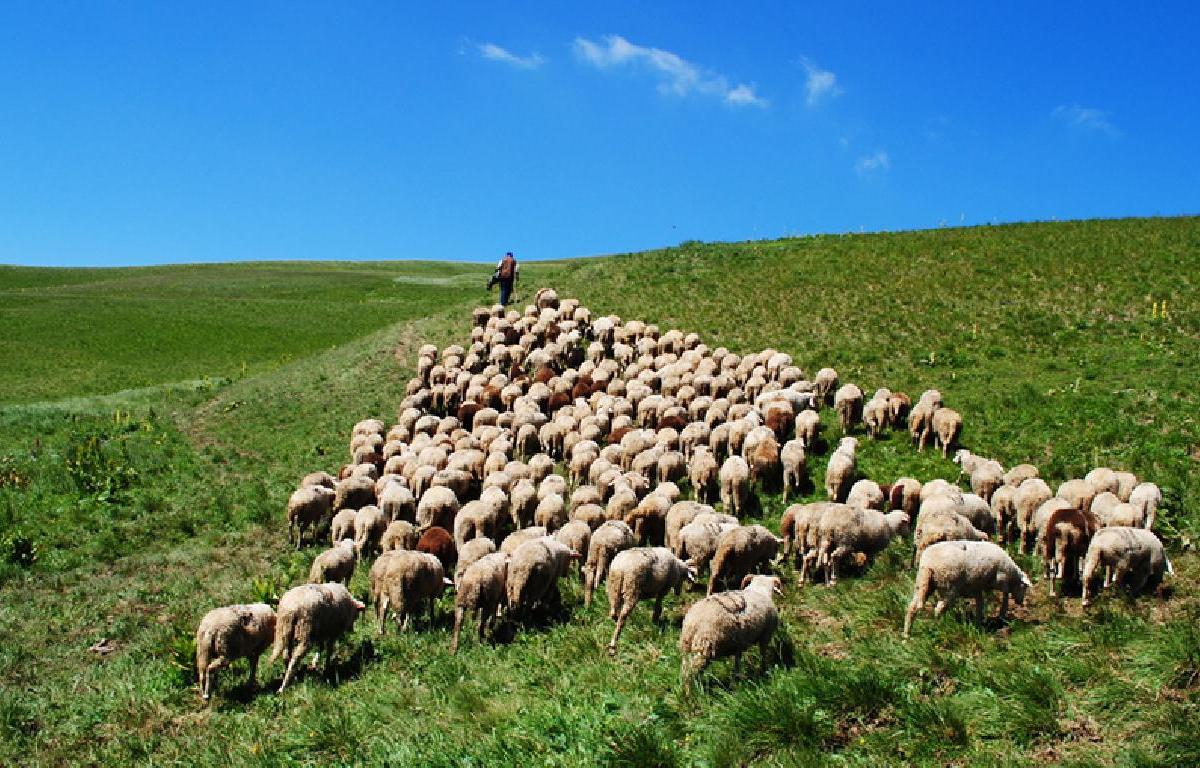
The shepherd terminology in this text is crucial to understanding leadership. The Bible often calls Christians sheep. Sheep are prone to wander. Jesus was known as the Great Shepherd knows all his sheep by name and brings them to himself (John 10:1-18). Jesus even cares to bring the one lost sheep home (Luke 15:1-7).

Pastors and leaders are essentially under-shepherds of the Great Shepherd. They, like Jesus, have the job of watching and protecting their flocks from harm. It is a job they will give an account to God (v.17b). So leaders submit to Jesus as Jesus submits to his Father. By obeying our leaders and submitting to them we are helping them to do their job with joy (v.17c). For a joyful follower makes a joyful leader.

The author of Hebrews gets personal. As a leader himself he asks prayer for a clear mind and honorable life (v.18). He feels the weight of his responsibility. He knows his weaknesses. He is is okay being vulnerable. He wishes he could be on the other end of the letter with the recipients, which shows his shepherd-heartedness (v.19).

It is wonderful when leaders seek the prayer of people they lead. Prayer is a huge ministry to leaders—entrusting them to God. This is the first step of walking in obedience.


Questions for Reflection:

  • Why are leaders often under a lot of scrutiny and criticism? Why is our culture so anti-authority or submission? What is your response to leadership?
  • Why are leaders necessary for the church? How can you encourage the spiritual leaders in your life? How can you pray for your leaders?
  • How is the term shepherd a fitting term for a leader? How is the term flock a fitting term for the church? How do shepherds watch over your soul?

walking with God

Have you heard of the song by the band, The Proclaimers, with the chorus, “But I would walk 500 miles, and I would walk 500 more, just to be the man who walked a thousand miles, to fall down at your door”? Well, one man’s girlfriend took those song lyrics and said, “If you walk 1,000 miles, I’ll walk up the aisle to you!” He didn’t know she was joking, but he did it anyway.

As strange as that story may sound God’s story is stranger. God created the world and made man from the dust of the God. God walked in the garden with the first couple. When given a choice the couple rejected God. Later generations made images of gods after their own liking. While this broke God’s heart, he loved mankind so much that he came into the world as a man and walked in our shoes. He carried the cross and sacrificed himself so that man could walk right with God once again.

To sacrifice is to give up something important or valued for the sake of something regarded as more important or worthy. We will readily sacrifice time and treasures for others who have a need. We will sacrifice reputation for something we believe in. We will sacrifice our life for someone we care about who’s in danger.

The biblical idea of sacrifice—slaughtering an animal and sprinkling its blood on the altar—may seem archaic or barbaric. The idea of sacrifice according to the Jewish law was to shed the blood of an animal to forgive the sins of a man. However, no blood of an animal could legitimately forgive the sins of a man. The people knew this. God knew this. It had to be a man sacrificed for a man. A human sacrifice. A man without blemish—no sin in him. Jesus was that man and his blood was sufficient to cover all sin.

Hebrews beautifully shows how all the Old Testament, particularly the practices and symbols, point to Jesus. For example, the tabernacle and temple had an altar on which daily sacrifices were made. The author connects this altar with Jesus’ death and sacrifice (v.10). Sacrifices for sin were to be burned outside the camp. Likewise, Jesus suffered outside the camp on a criminals cross (vs.11-12).

“We have an altar from which those who serve the tent have no right to eat. For the bodies of those animals whose blood is brought into the holy places by the high priest as a sacrifice for sin are burned outside the camp. So Jesus also suffered outside the gate in order to sanctify the people through his own blood. Therefore let us go to him outside the camp and bear the reproach he endured. For here we have no lasting city, but we seek the city that is to come. Through him then let us continually offer up a sacrifice of praise to God, that is, the fruit of lips that acknowledge his name. Do not neglect to do good and to share what you have, for such sacrifices are pleasing to God.” – Hebrews 13:10-16, ESV

Just as Jesus had to suffer and endure much, so will Jesus’ followers. As Jesus sacrificed himself for all (7:27; 9:12) so believers are called to offer ongoing praise from their lips and lives to God (vs.15-16; cf. Romans 12:1). He is pleased with these sacrifices.

Walking with God is a sacrifice. We have to sacrifice our ability to walk alone or in our power and wisdom.  When walking with God, he does the walking. He went the distance for his Bride. He made the greatest sacrifice. God longs and loves to walk with you. The reward of walking with God is a place in the everlasting city (v.14). And that’s no joke.


Questions for Reflection:

  • How did the tabernacle and the articles within point to Jesus? How did the sacrificial system ultimately culminate with Jesus’ sacrifice?
  • How did Jesus suffer outside the camp? How do believers suffer “outside the camp” like Jesus? Why would this mean great enduring for the believer?
  • What does it look like to praise God with your lips and life? How are you a living sacrifice? What sacrifices do Christians make for the name of Christ?
  • How is the promise of an everlasting city a satisfying reward? What is to look forward to in that city?

walking purely

I remember like it yesterday. The doors in the back of the church swung open wide and there walked in my bride. She was bright eyed and blazing in her white gown. It was, is and will be one of the most beautiful and purest images in my mind. There is no wonder God refers to the church as his bride.

Purity in the Church—the Bride of Christ—is just as important as purity for the individual. Continuing in the thread of Hebrews 13:1-3 the authors shares four rapid-fire characteristics for believers and the church to walk purely.

“Let marriage be held in honor among all, and let the marriage bed be undefiled, for God will judge the sexually immoral and adulterous. Keep your life free from love of money, and be content with what you have, for he has said, “I will never leave you nor forsake you.” So we can confidently say, “The Lord is my helper; I will not fear; what can man do to me?”

Remember your leaders, those who spoke to you the word of God. Consider the outcome of their way of life, and imitate their faith. Jesus Christ is the same yesterday and today and forever. Do not be led away by diverse and strange teachings, for it is good for the heart to be strengthened by grace, not by foods, which have not benefited those devoted to them.” – Hebrews 13:3-9, ESV

First, honor your marriage (Hebrews 13:4). Today less than 50% of couples get married and the majority of couples are cohabiting rather than marrying. It is more common to test-driving marriage than to actually marry. This has led to a lower level of relational commitment and a greater distancing from moral purity. Yet this is just one aspect of purity. As purity is not just an idea before marriage but within marriage too. God expects the marriage bed to be pure from any form of casual or illicit immorality. In the mind of God, marriage pictures something big—Jesus’ love for the church. When marriages disintegrate so does the testimony of the church, but when marriages fight hard for purity so flourishes the church.

Second, love not money (v.5a). The only sure way to keep your heart pure from a love of money is by being content with what you have, especially in seasons of uncertainty (v.6). Why? Attached to this call for contentment is a mammoth promise—God will never abandon you (v.5b). Allow that truth penetrate your soul deeply. If you divorce yourself from this truth it lead to a lust for money, possessions, and discontentment. Ultimately everything, including money, career, health, security, comes from God.

Third, remember your spiritual leaders (v.7; cf. vs.17, 24). Leaders are to live pure and exemplary lives, and we are to imitate their faith and study their way of life. An issue can arises when we put too much faith in a spiritual leader to meet our spiritual needs. When a spiritual leader has failure or falls we can become disappointed and disillusioned. A good leader will point people to Jesus who never fails and will forever remain (v.8).

Fourth, guard your heart from strange teachings (v.9). Our hearts are easily distracted towards teachings what tickle our ears or stroke our ego. In the process we can commit adultery of the mind as we align ourselves with unbiblical teachings. It is important to weight all teachings against the Word and walk away from teachings contrary to it. If we build on this sturdy and stable ground we will walk purely.

Purity may seem old fashion, yet modern people would not think twice about drinking pure water, eating pure foods, or breathing pure air. When purity in marriage, money, spiritual leadership, or biblical teachings are abandoned the results are as grave on the soul as breathing smog, drinking poison and eating toxins. While purity is a gift from God that we cannot get back once given, it can be forgiven and made anew again.

Are you committed to walking purely? Then “Walk as children of light (for the fruit of light is found in all that is good and right and true), and try to discern what is pleasing to the Lord. Take no part in the unfruitful works of darkness, but instead expose them.” (Ephesians 5:9-10) No matter where you are start today by walking in the light.


Questions for Reflection:

  • What is the biblical picture of marriage? How does the word tarnish and diminish this image? How does Jesus and the church redeem the image? How can we help one another keep marriage pure?
  • What is something that you don’t have that you wish you did have? Are you content without it? What makes us want what we want when we want it? How is money a huge culprit to a lack of contentment?
  • How does God’s never abandoning promise encourage you? How is God your Helper? What are things we want God to help us with that he doesn’t promise to help with?
  • Who is a spiritual leader you look up to? How do they mimic Christ? How can you follow their lead?
  • What kind of teachings tickle peoples ears and stroke their egos? Why is it good to weigh all words you hear in church against the Word of God? How can you do this without being extremely critical of teachers and pastors?
  • Is there an area of impurity in marriage, finances, leadership or teaching that you need to ask God’s forgiveness? Which area of purity is your greatest struggle? How will you allow the church to help or encourage you?

walking with others

In our first year of marriage, my wife and I took a hiking trip together in the Rockies. We got new packs and packed light. We planned our trip well. When the day came to walk the 6 miles up the mountain we knew it would be a difficult climb. It was a good thing that we were together because it would have been much more difficult to walk alone. We were able to encourage each other steps and help carry ones pack when tired.

Walking with others in the church is both beautiful and arduous. Those two characteristics cannot be separated. As we struggle to do life with one another the old adage is true—it’s hard to live with them but we can’t live without them. The way we walk with one another demonstrates the beauty of Christ and the hard work of striving to make him famous.

There are three encouragements the author of Hebrews gives for walking with others. First, love like a brother. Brotherly love is a family-like intimacy (v.1). A family member shares blood and dirt. You know things about one another that most do not. In the community of faith, we have the blood of Jesus in common, we are adopted into the family of God, and we share a level of intimacy that is otherworldly. It is a relationship we will share into eternity. This is good reason to get along in the here and now.

“Let brotherly love continue. Do not neglect to show hospitality to strangers, for thereby some have entertained angels unawares. Remember those who are in prison, as though in prison with them, and those who are mistreated, since you also are in the body.” – Hebrews 13:1-3, ESV

Second, show hospitality. Typically hospitality provides room and board to strangers, but it also demonstrates a willingness to place someones needs above your own. Jesus is our example of what hospitality looks like. He came to serve not to be served. Like Jesus we are all strangers in this world. Showing hospitality can surprise those we serve with a bountiful meal inside out and in the process we might even entertain angels (v.2).

Third, remember the persecuted (v.3). You may know brothers and sisters who are suffering for the Name of Jesus. By ministering to those who are mistreated you are pouring on them encouragement and strength (cf. 11:25,37). We will all suffer for the sake of Christ. That is a promise from the mouth of Jesus himself. It is our badge, but we’re in this together. It is a mutual blessing to carry your brothers burden, especially when he is facing mistreatment for the Name as he will likely carry yours one day too.

Walking with others is hard because walking with Jesus is hard. Yet walking through the fire together produces a beautiful Body that you are a member.


Questions for Reflection:

  • What makes people hard to love? What makes you hard to love sometimes? Who is someone that is hard for you to love? How can you demonstrate brotherly love to them?
  • How does Jesus demonstrate brotherly love? Who are some hard to love people he loved well? What do you learn from him about how to love well?
  • What do you think of the you think of hospitality? Does hospitality natural or unnatural for you? When is it hard for you to show hospitality? What is the battle to serve and be served like within you? Can you think of a time you were shown hospitality? How did that bless you inside out?
  • Do you know someone suffering right now for Christ? How are they being mistreated? How can you minister to them? We are a Body, so as they suffer how are you suffering with them?
  • As you walk with others this week, which of these characteristics do you want to grow in most? Why?